14 Powerful Loft Apartment Ideas That Fix Open Spaces
Living in a loft apartment feels exciting at first. The open space looks beautiful and full of potential. But after a while, many layouts start to feel empty or slightly uncomfortable.
I have noticed this in real homes. Without proper zoning and balance, even a well designed loft apartment can feel unfinished. The goal is not to fill the space, but to shape it so it works naturally for everyday living.
Loft apartment designs work best when layout, lighting, and materials come together to create a space that feels open, functional, and comfortable.
Why Loft Apartment Design Needs More Than Just Open Space
A loft apartment looks impressive because of its height and openness. But that openness can also create problems if it is not handled carefully. Spaces can start to feel disconnected without clear visual structure.
In my experience, the most successful loft apartment layouts are not the most decorated ones. They are the ones where each area feels intentional and connected. When zoning, lighting, and scale work together, the entire space begins to feel calm and complete.
Loft Apartment Design That Feels Open Yet Intentionally Styled
Double Height Window Styling That Creates a Dramatic Light Filled Loft Apartment
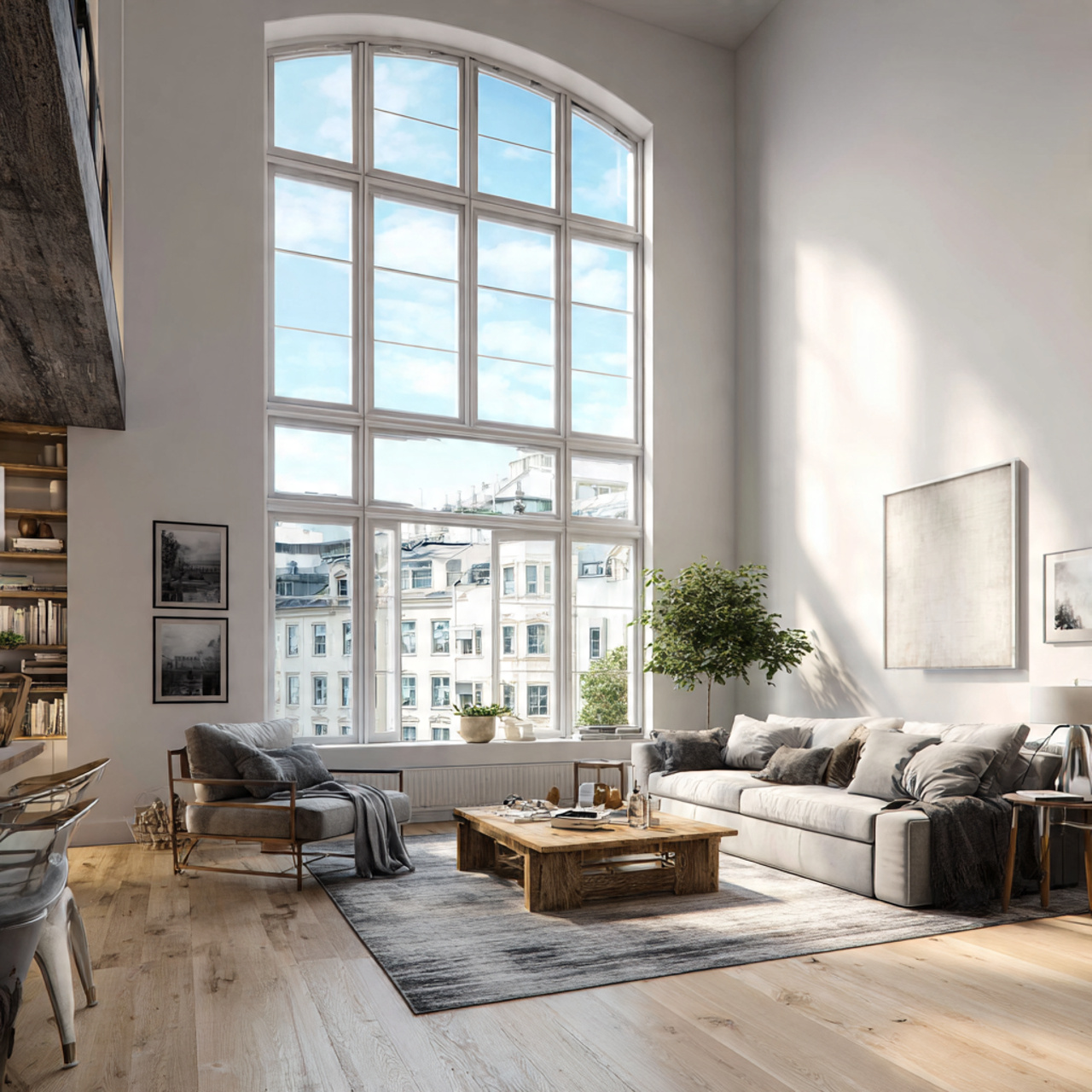
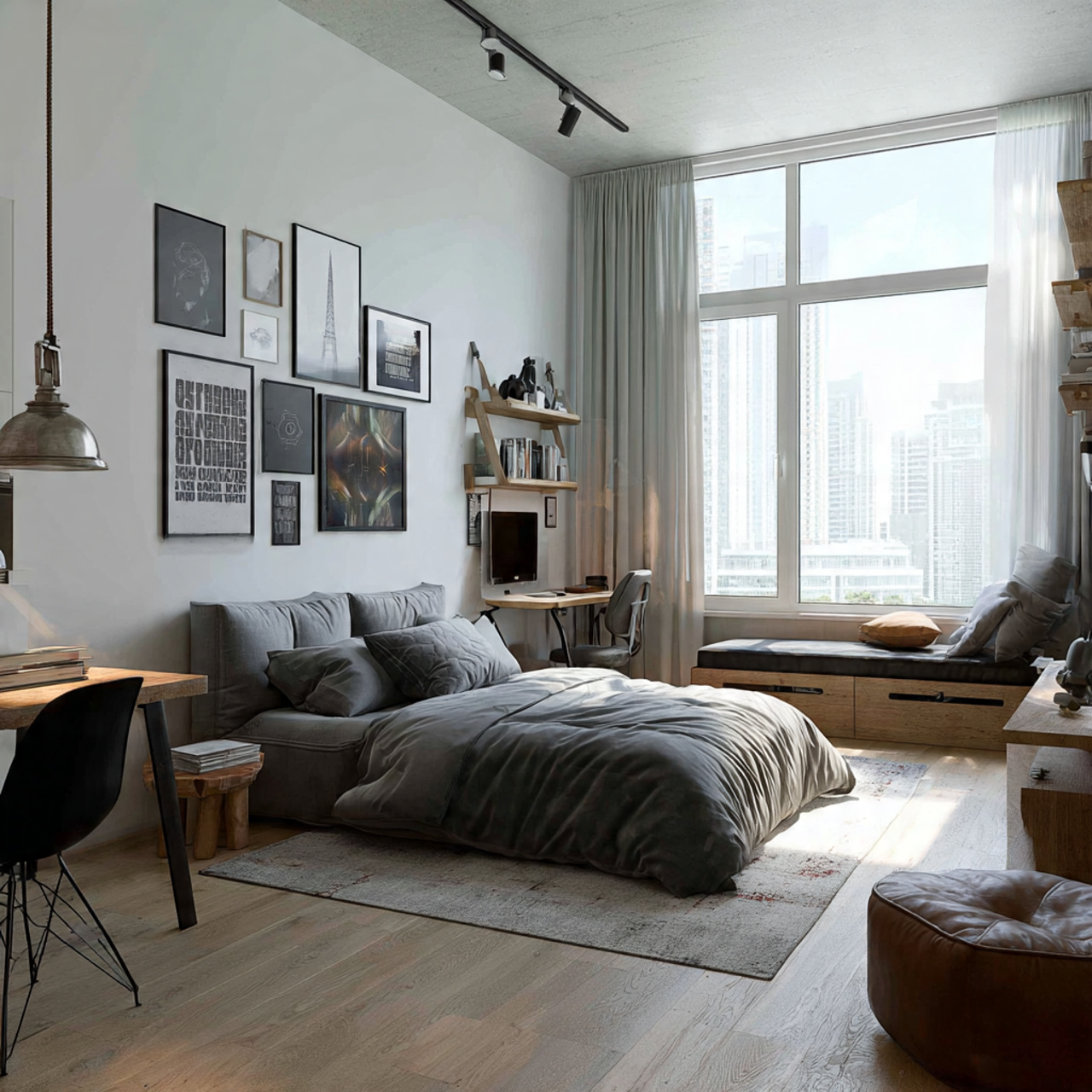
Morning light spills across the floor and slowly climbs the walls. The height of the windows pulls your eyes upward. The entire loft apartment starts to feel open, calm, and alive.
This works for a simple reason. Vertical light changes how we perceive space. In my experience, rooms with strong natural light always feel larger and more relaxed.
To apply this, keep the area near the window clean and open. Avoid blocking light with tall furniture. Let the light travel across the room naturally.
Tip: Treat your window as the main feature, not the background.
Zoning Without Barriers That Keeps Your Loft Apartment Open but Clearly Defined
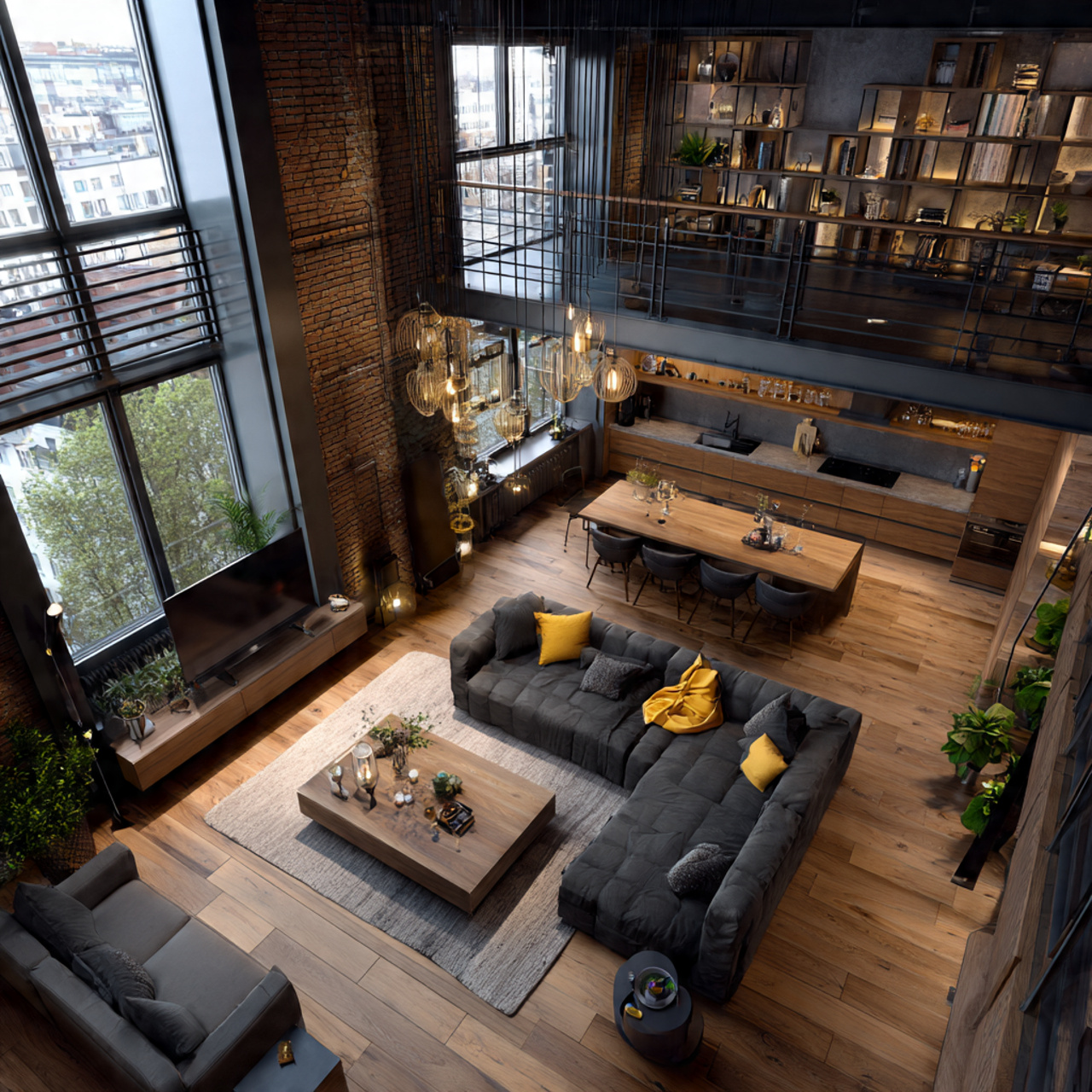
A sofa sits slightly off center, quietly shaping the space. Behind it, the dining area feels separate without any walls. The layout flows, but each zone still feels clear.
This works because the eye understands direction and placement. Most people try to fix open layouts with dividers, but that often feels forced. I have seen better results with subtle shifts in furniture positioning.
To recreate this, angle your main furniture pieces instead of lining everything up. Leave small walking gaps between zones. Let the layout guide movement naturally.
Tip: Use placement to define space, not physical barriers.
Layered Flooring Transitions That Quietly Separate Living Areas Without Walls
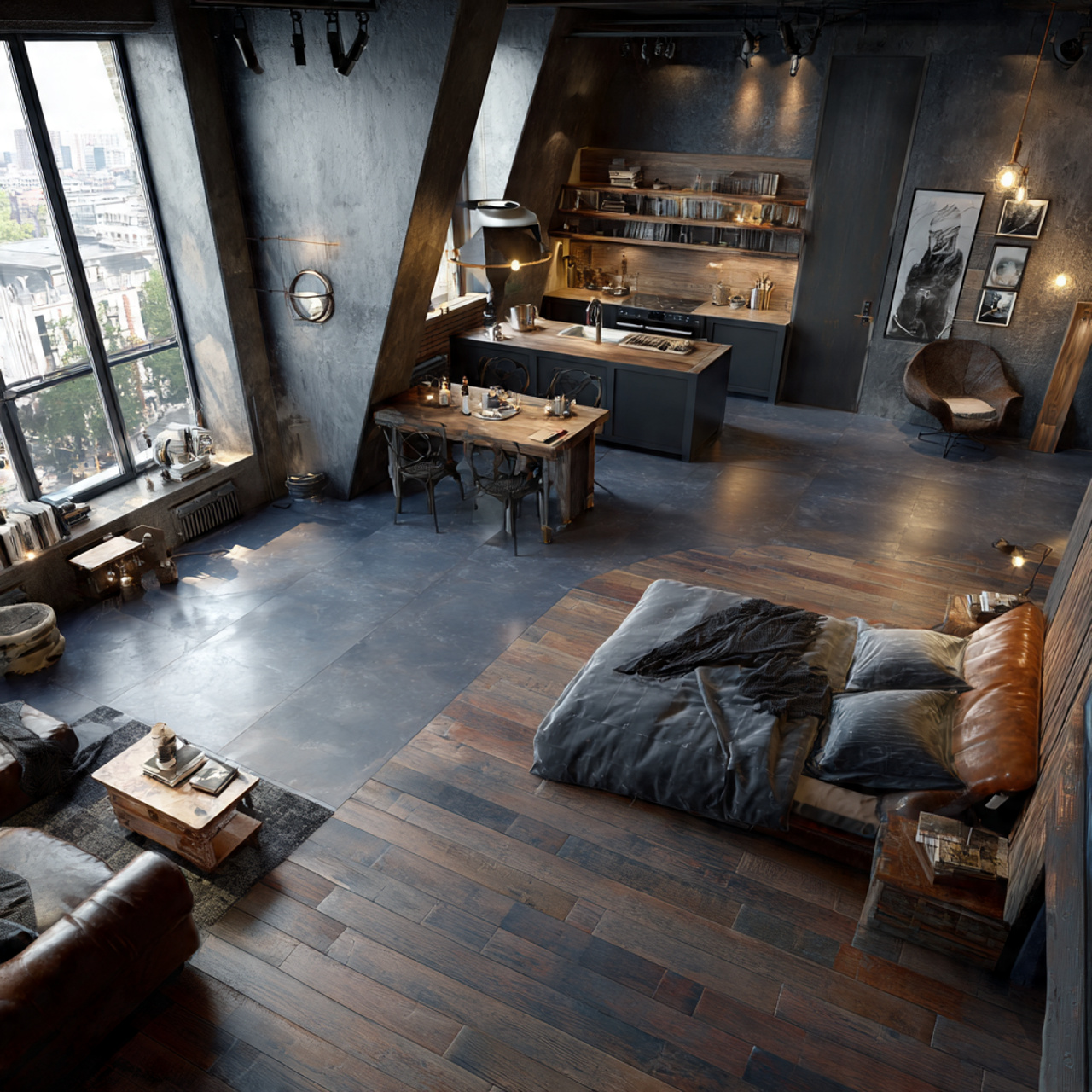
You step from smooth concrete into warm wood without even thinking about it. The change is soft but noticeable. Each area starts to feel like its own space.
This works because texture signals transition. One thing I noticed in real homes is that flooring can guide movement without adding visual clutter. It creates separation while keeping everything connected.
To apply this, introduce a second material in key zones like seating or dining. Keep the transition clean and intentional. Avoid harsh contrasts that feel abrupt.
Tip: Let flooring create zones quietly, without breaking the flow.
Oversized Furniture Scaling That Makes a Loft Apartment Feel Balanced Instead of Empty
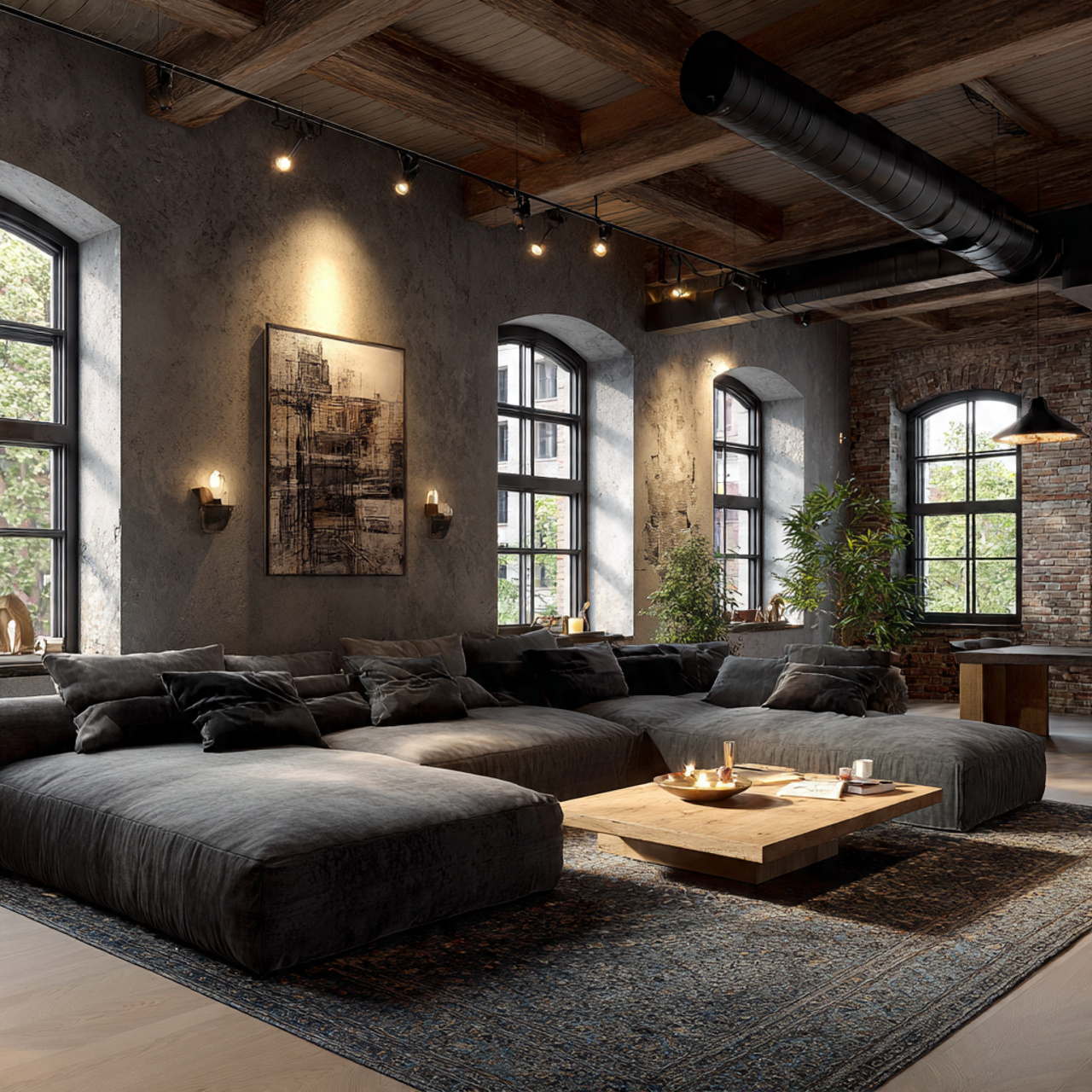
A large sofa anchors the center of the loft apartment. It feels grounded and intentional. The space no longer looks empty or scattered.
This works because scale matters more than quantity. I once saw a loft filled with small furniture, and it felt disjointed. Larger pieces bring visual weight and create balance.
To make this work, choose one or two bold pieces instead of many small ones. Give them room to breathe. Let them define the space.
Tip: One strong piece is better than several weak ones.
Softening Industrial Edges With Textures That Make a Loft Apartment Feel Warm and Livable
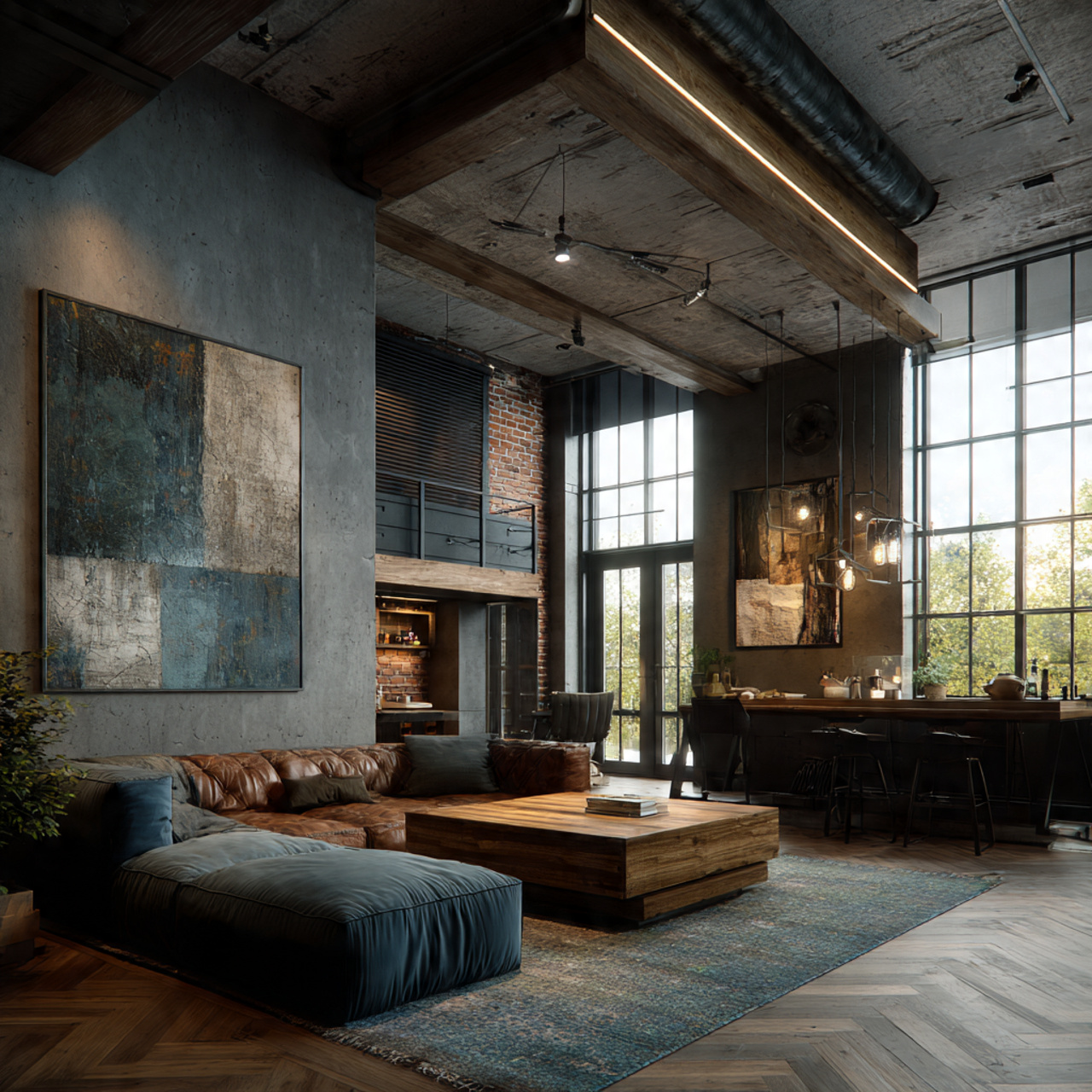
Raw concrete and metal lines feel sharp at first. Then soft textures begin to balance them. The space shifts from cold to comfortable.
This works because contrast creates comfort. After living with a very industrial setup, I noticed it started to feel harsh over time. Adding softness changed the entire mood.
To apply this, layer in fabrics, wood tones, and textured finishes. Focus on areas where you sit or relax. Keep the balance so the loft still feels true to its style.
Tip: Add softness where you spend time, not everywhere.
Vertical Storage Walls That Turn Empty Height Into Functional Design
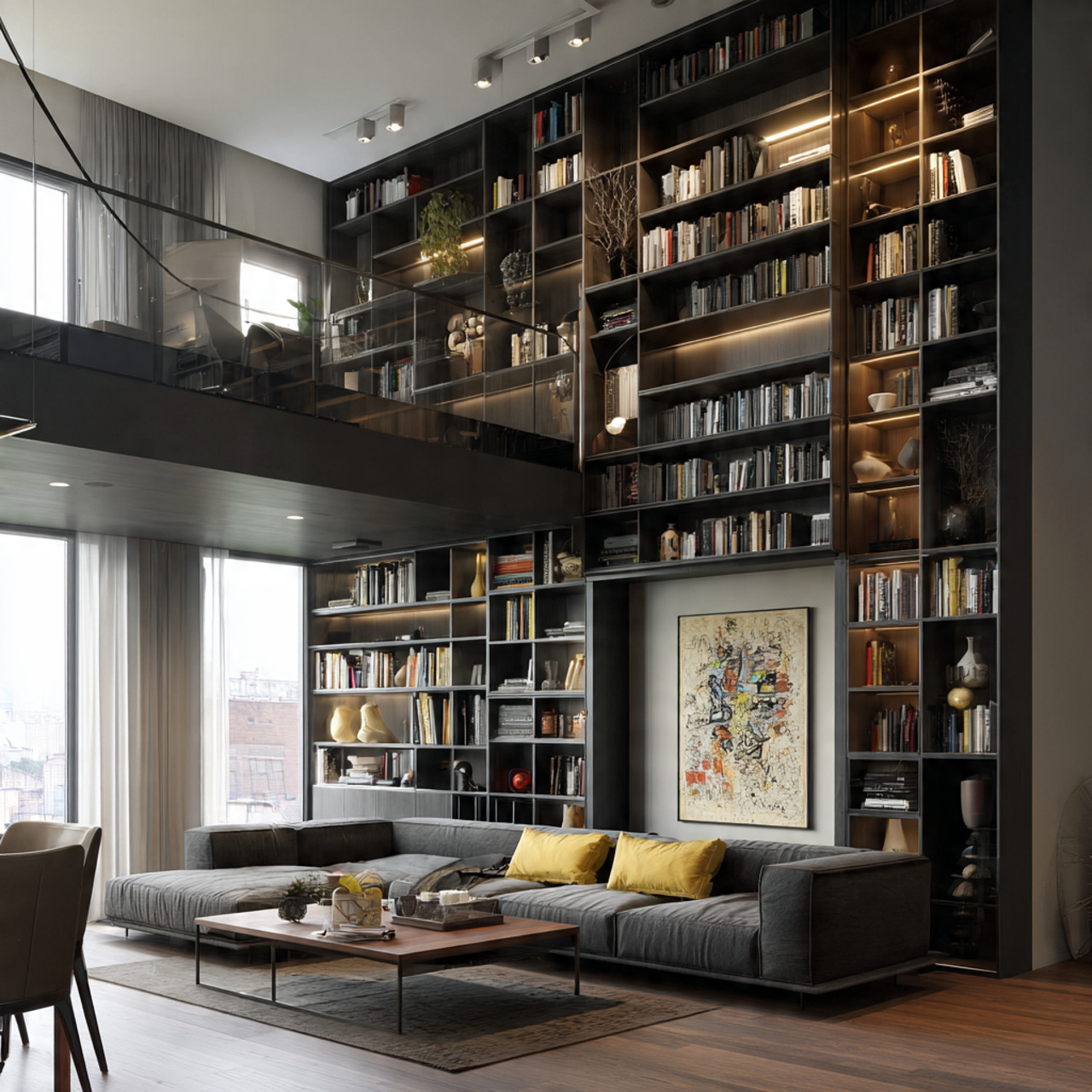
A tall storage wall rises toward the ceiling. It draws the eye upward while keeping everything organized below. The loft apartment starts to feel complete.
This works because vertical space is often ignored. Most people stop at eye level, but loft apartments offer much more. Using height creates both storage and visual impact.
To recreate this, install shelving or cabinetry that follows the full wall height. Keep the design simple and clean. Mix open and closed sections for balance.
Tip: When space feels limited, look up, not around.
Statement Lighting Scale That Matches the Height and Volume of a Loft Apartment
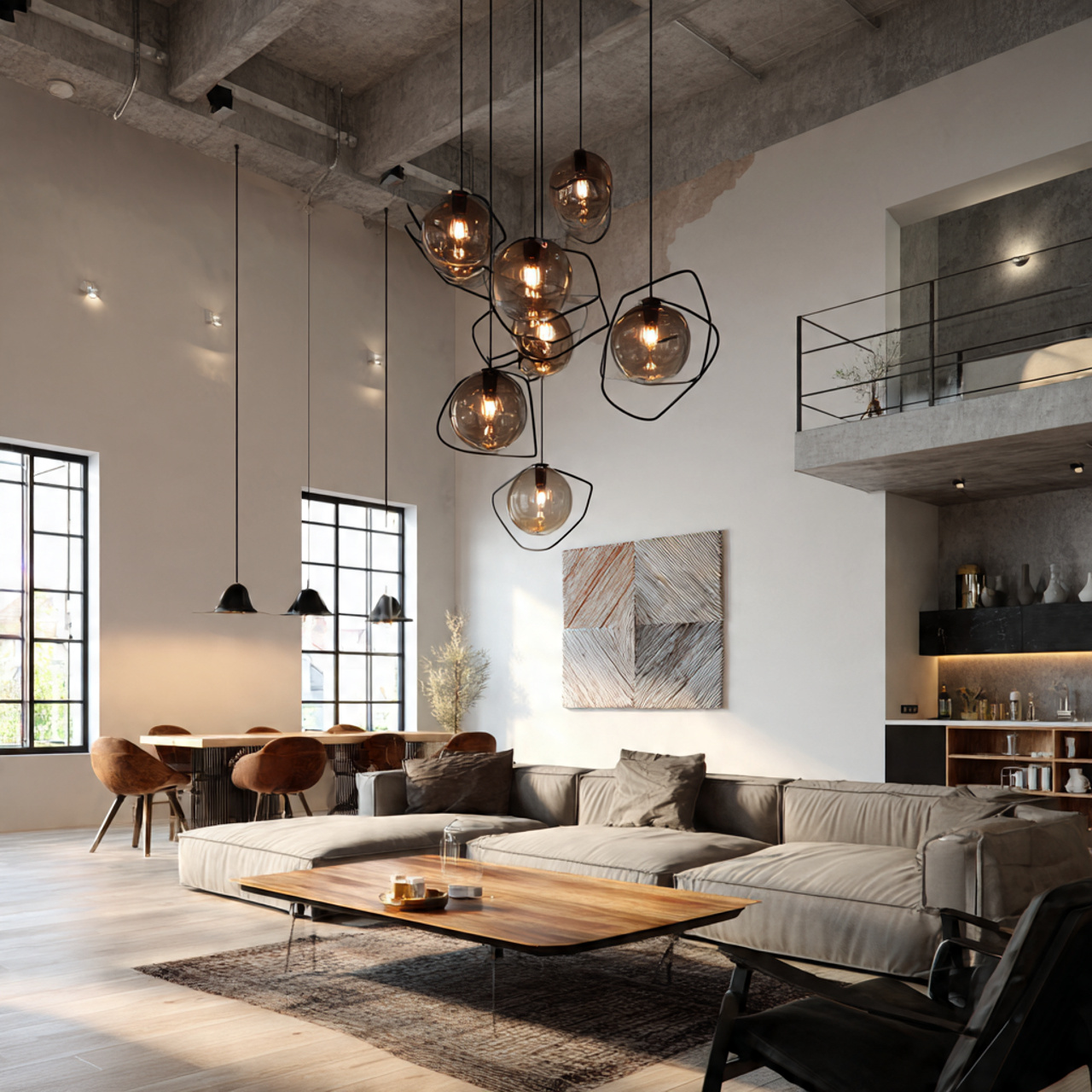
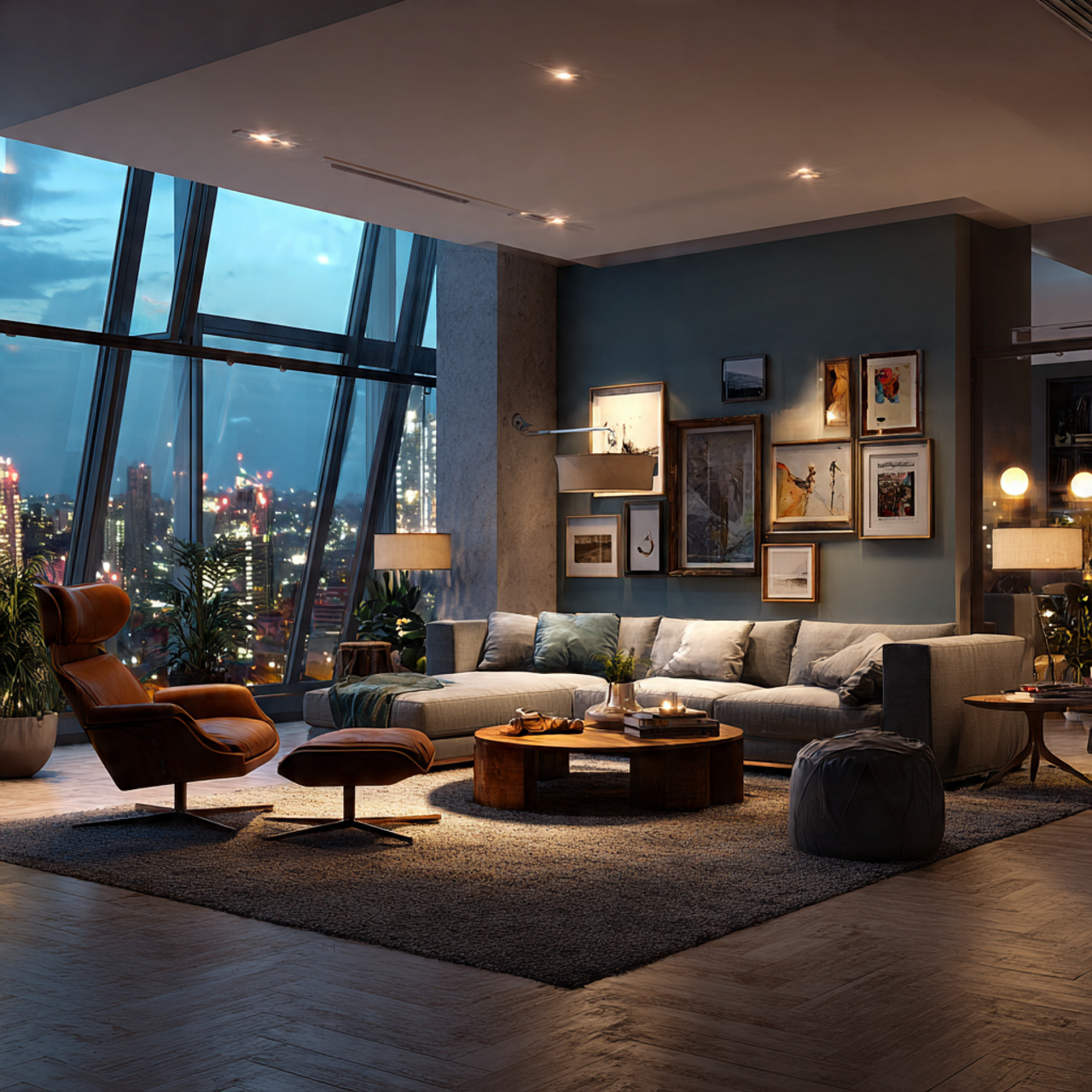
A large pendant hangs low from the ceiling. At night, it creates a warm pool of light below. The empty vertical space finally feels connected.
This works because lighting defines scale. Small fixtures disappear in tall spaces. I have seen loft apartments where lighting felt lost simply because it was too small.
To apply this, choose larger fixtures that match the height of your space. Hang them slightly lower than expected. Combine them with softer lighting around the room.
Tip: Your lighting should fill the space, not vanish in it.
Mezzanine Living Concept That Creates Privacy Without Losing the Open Loft Apartment Feel
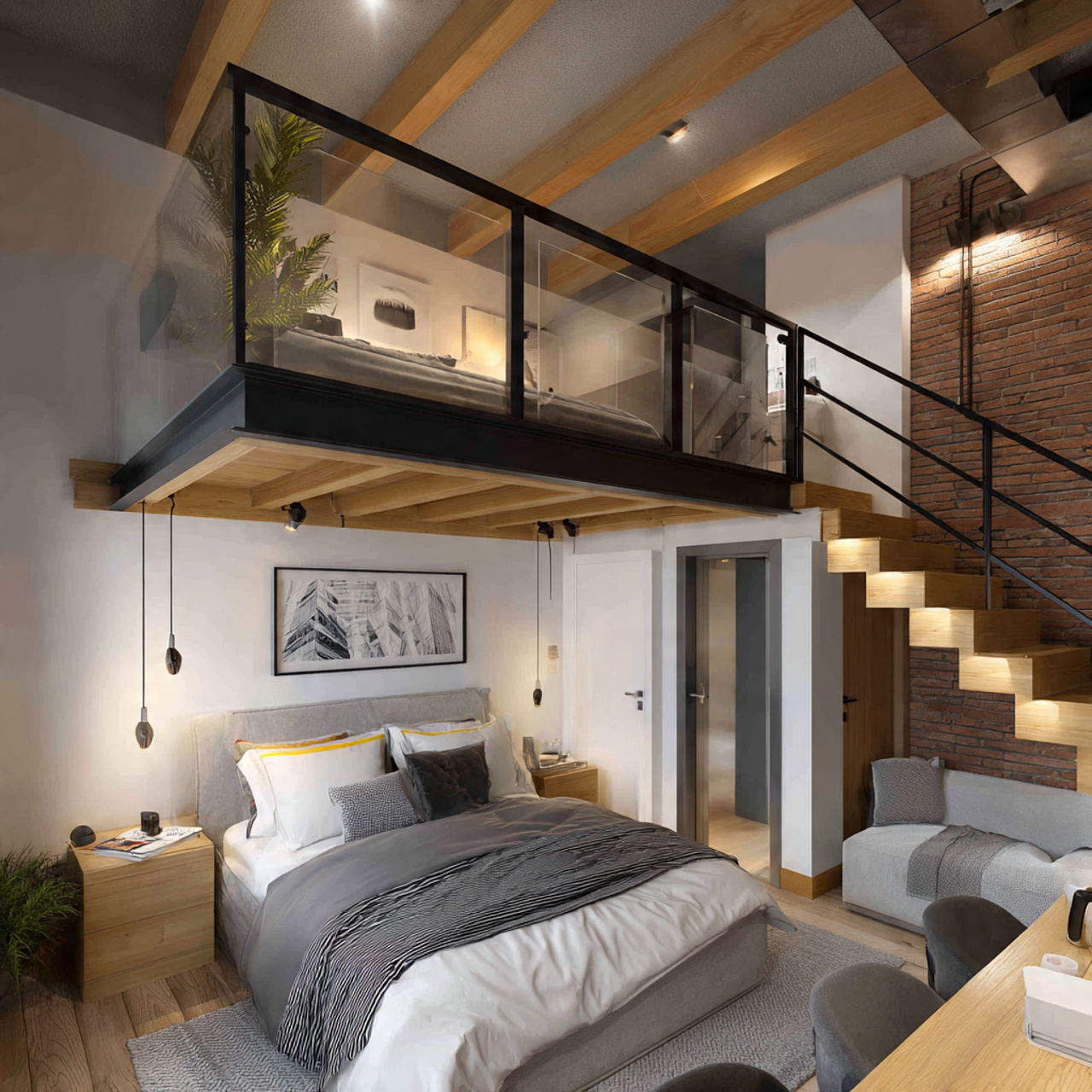
A raised sleeping area sits above the main floor. Below, the living space remains open and free. The separation feels natural and light.
This works because height can replace walls. In many loft apartments, privacy becomes a long term issue. Elevation solves it without closing the space.
To make this work, create a raised platform or mezzanine for sleeping or quiet areas. Keep the structure open and minimal. Let light pass through.
Tip: Use height to separate space instead of closing it off.
Acoustic Softening Techniques That Reduce Echo and Make the Loft Apartment Comfortable
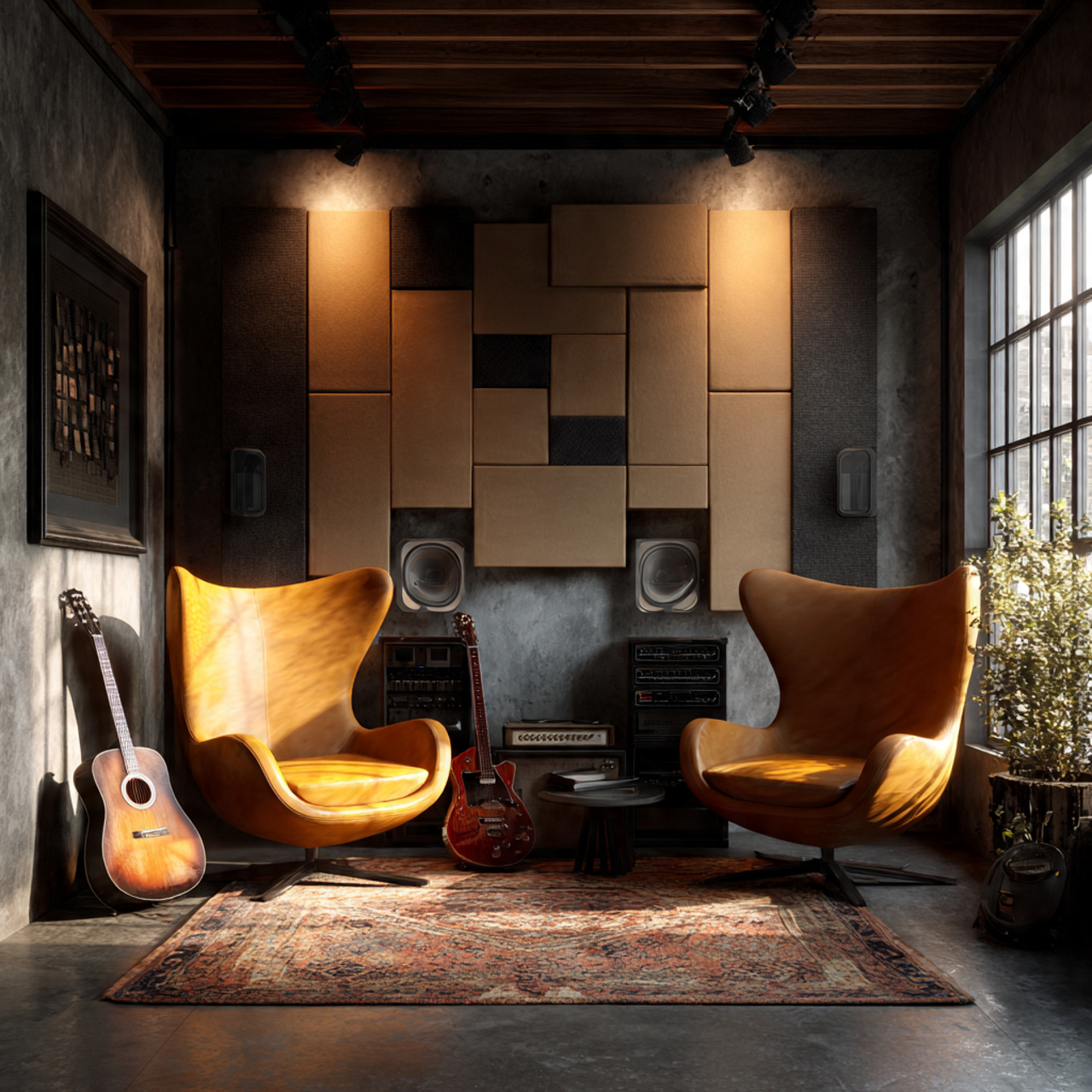
You notice your voice echo slightly across the room. Then softer materials begin to absorb that sound. The space suddenly feels calmer and more relaxed.
This works because hard surfaces reflect sound. One thing I noticed after spending time in loft apartments is how noise builds up quickly. Soft elements change that instantly.
To apply this, introduce upholstered furniture, fabric panels, or layered textures. Focus on areas where sound reflects the most. Keep everything integrated into the design.
Tip: If the sound feels harsh, the space will feel harsh too.
Mixed Material Balance That Prevents the Loft Apartment From Feeling Too Cold or Too Heavy
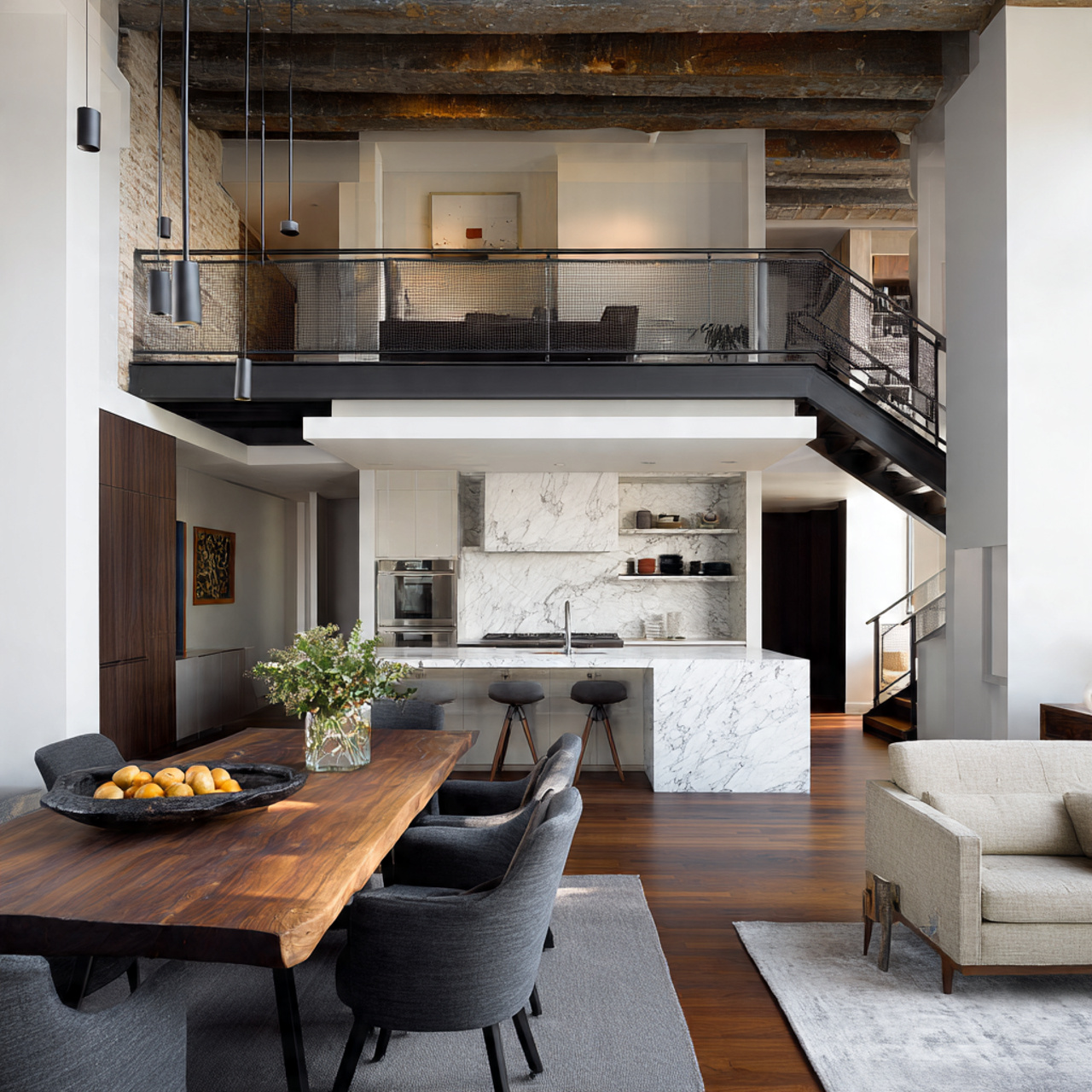
Warm wood meets cool concrete in a balanced way. Soft fabrics sit against harder surfaces. Nothing feels overpowering.
This works because too much of one material creates discomfort. I have seen spaces that felt cold simply because everything was rigid and gray. Balance makes the space livable.
To recreate this, combine at least two contrasting materials in each zone. Let one lead and the other support. Keep the palette controlled.
Tip: Balance materials the same way you balance colors.
Invisible Storage Integration That Keeps the Loft Apartment Minimal but Functional
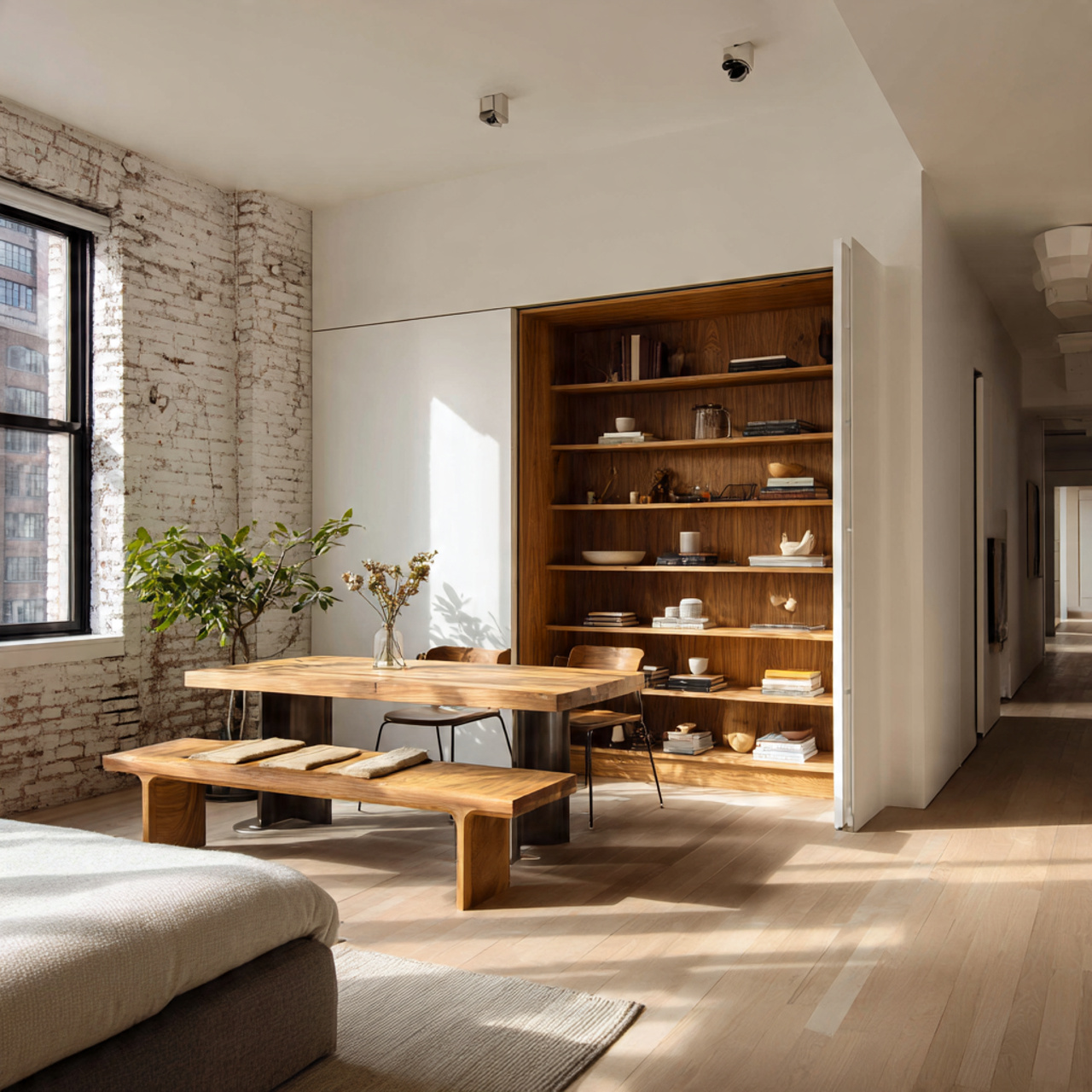
Storage blends into walls and furniture so it almost disappears. The space looks clean and open. Yet everything still has a place.
This works because visible clutter breaks the openness of a loft apartment. Over time, things pile up if storage is not planned well. Hidden storage keeps everything calm.
To apply this, use built in solutions or furniture with storage inside. Keep surfaces clear and minimal. Focus on problem areas where clutter builds.
Tip: Hidden storage keeps the space visually quiet.
Window Framing Layout That Enhances Natural Light Flow Across the Loft Apartment
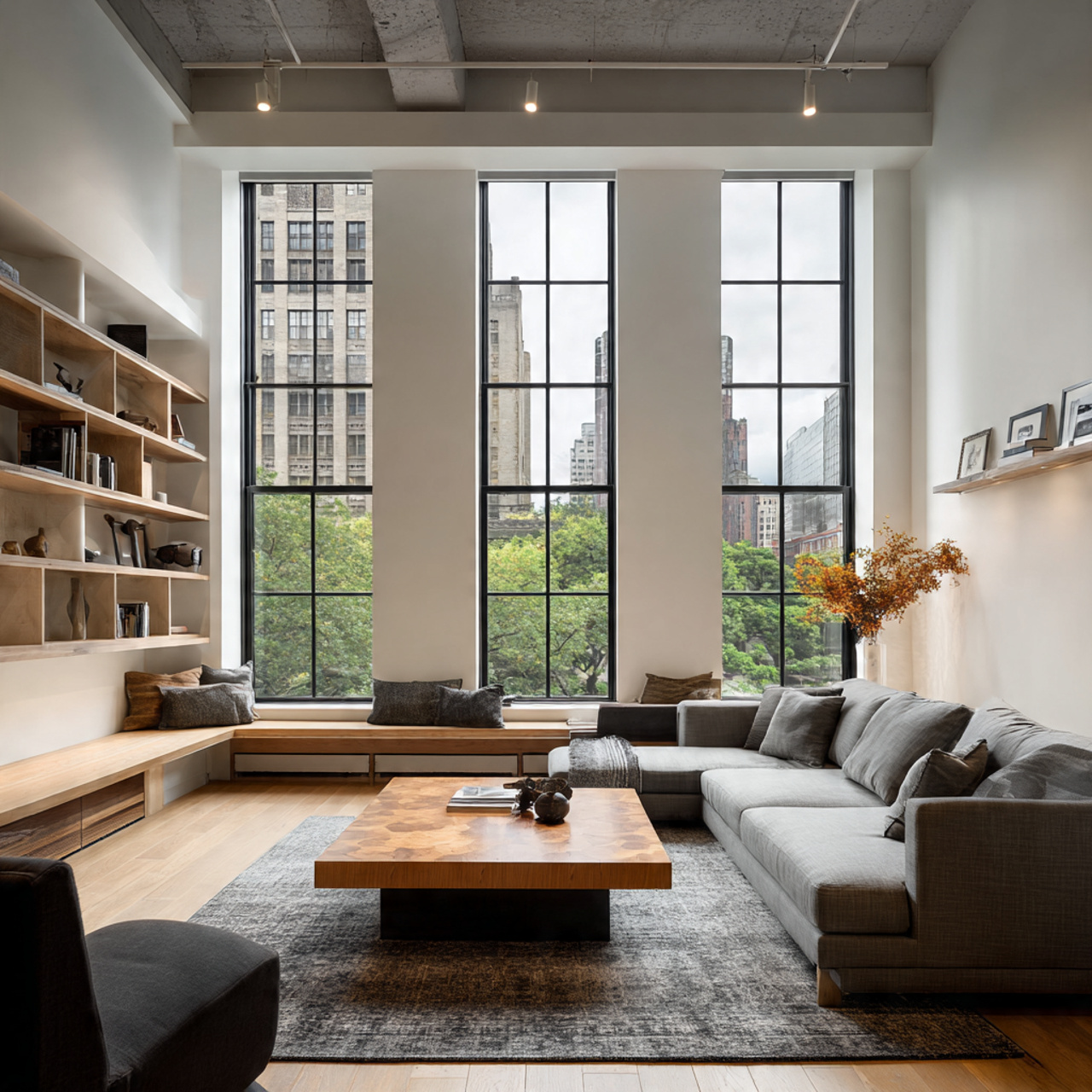
Light moves across the room as the day changes. Furniture sits in a way that allows that movement. Nothing blocks the flow.
This works because layout affects light more than people realize. I have seen spaces feel darker simply because furniture blocked the path. Light needs space to travel.
To recreate this, observe how light enters your loft apartment. Arrange furniture to support that direction. Keep tall pieces away from windows.
Tip: Let light guide your layout decisions.
Cozy Corner Creation That Adds Emotional Warmth Inside a Large Loft Apartment
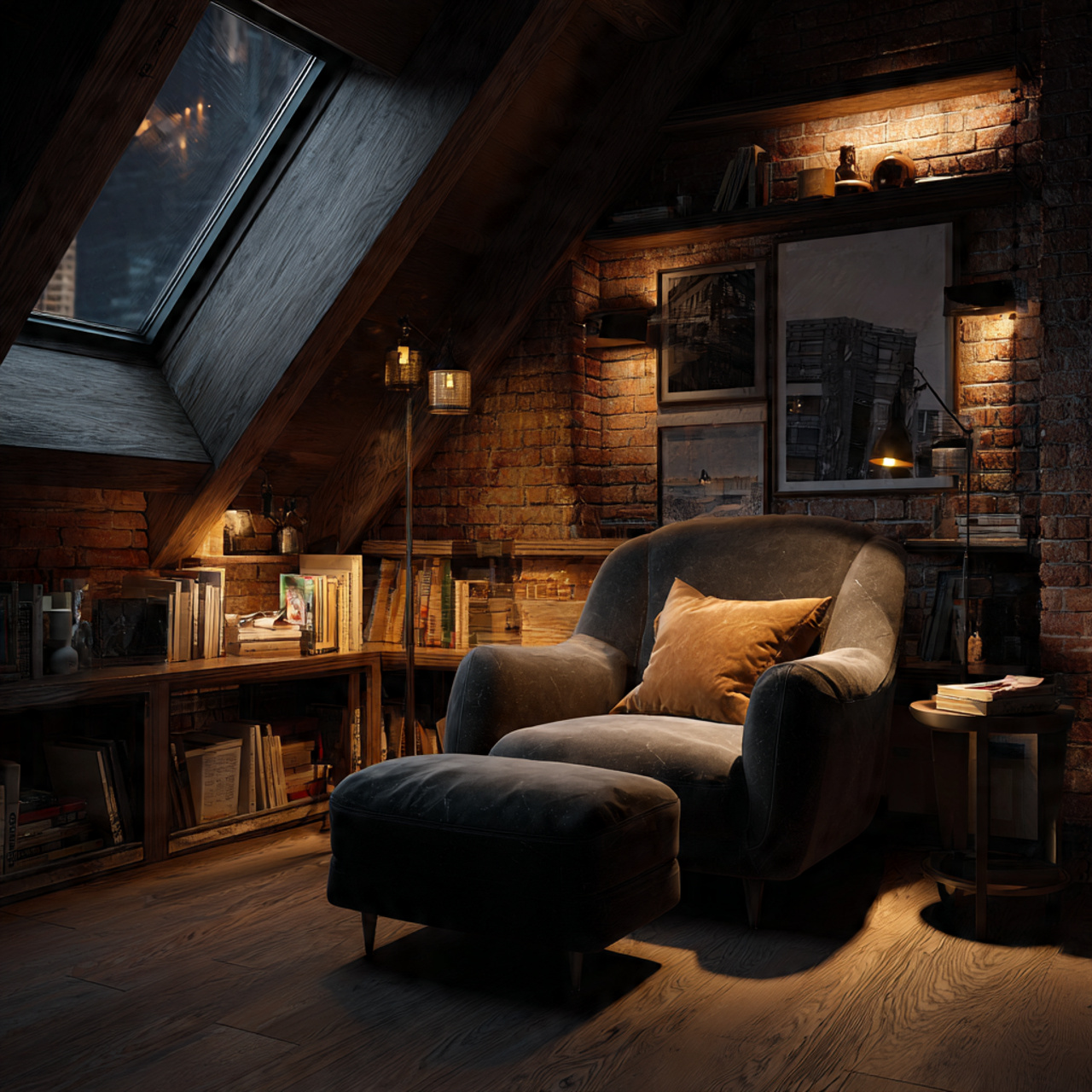
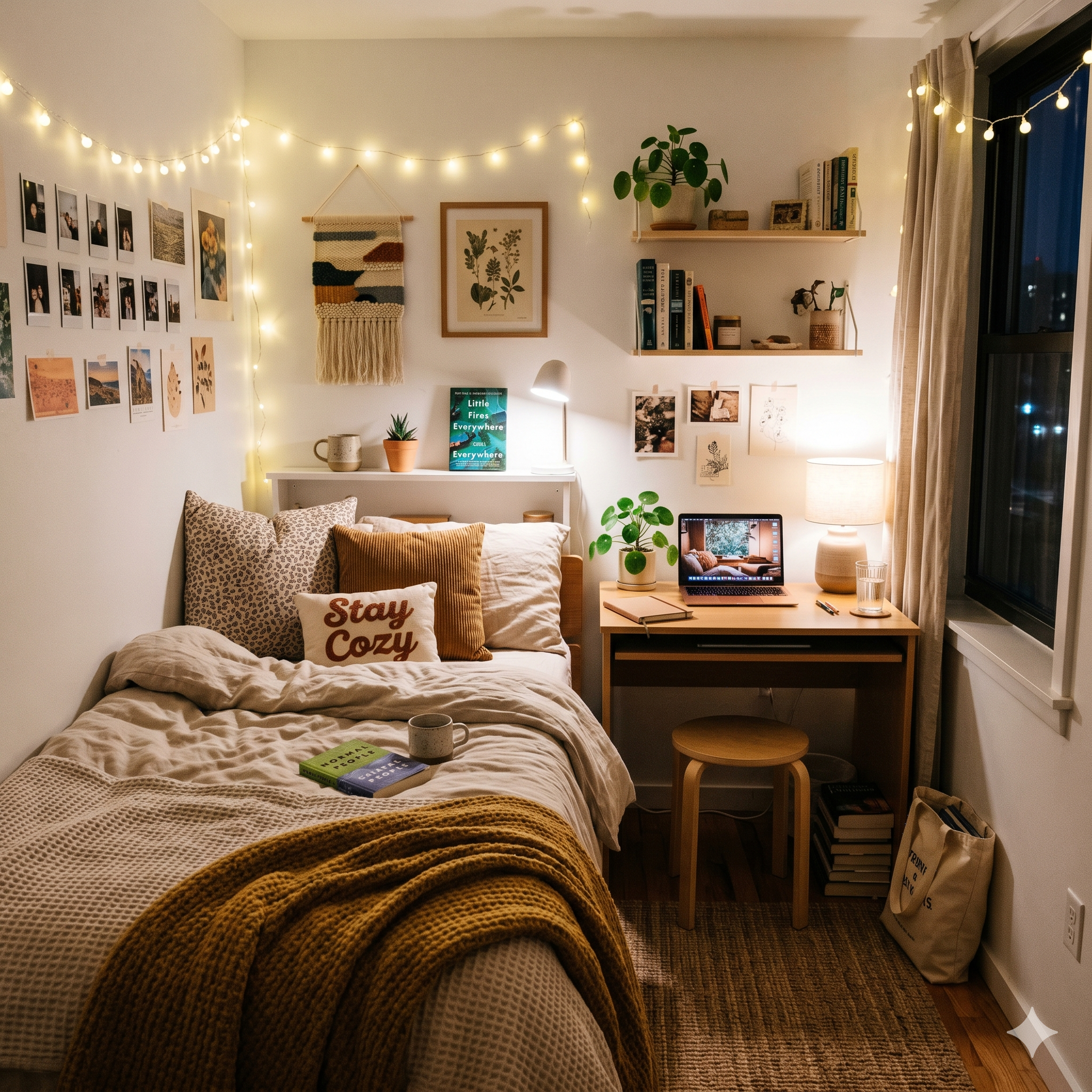
A small corner glows softly in the evening. A chair, a light, and layered textures create a quiet retreat. The large space suddenly feels more personal.
This works because open spaces can feel overwhelming. In my experience, adding one intimate area changes the emotional balance. It gives the room a human scale.
To apply this, choose one corner and design it for comfort. Add soft lighting and simple textures. Keep it focused and uncluttered.
Tip: Every large space needs one small place to slow down.
Visit Also: Dream Apartment Decor
Open Kitchen Integration That Feels Connected Without Overpowering the Loft Apartment
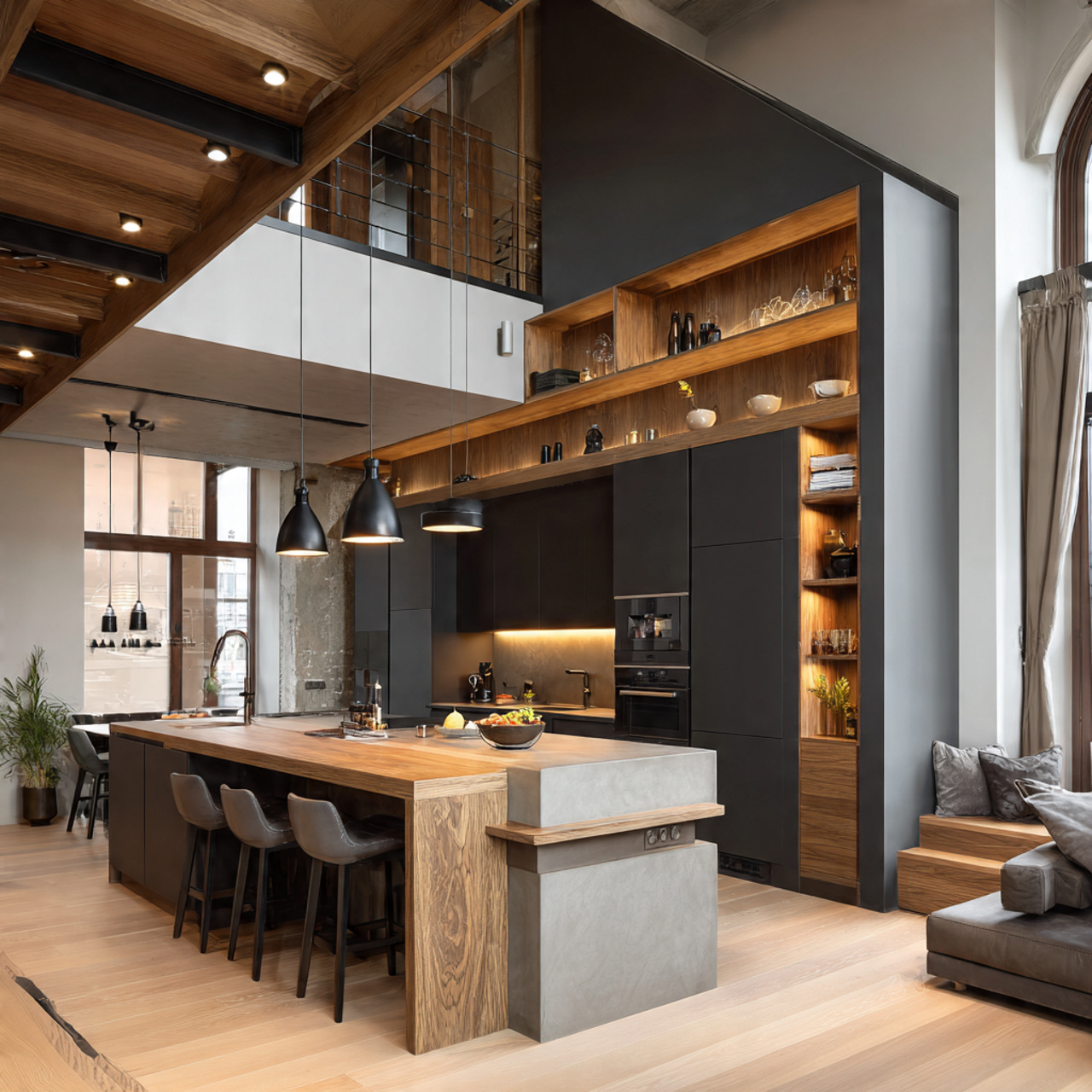
The kitchen flows into the living area without dominating it. Clean lines keep it visually quiet. It feels like part of the space, not a separate zone.
This works because kitchens can easily take over open layouts. I have seen loft apartments where the kitchen became too heavy visually. Balance keeps everything connected.
To apply this, keep the kitchen simple and aligned with the overall design. Use similar materials and tones. Avoid strong contrasts that pull too much attention.
Tip: Let the kitchen blend in, not stand out too much.
A Real Loft Apartment Layout That Feels Balanced and Lived In
Morning light moves slowly across the floor, catching the edge of a large sofa and softening the texture of the walls. The space feels quiet and open, with just enough warmth to make it comfortable. By evening, a warm glow from layered lighting settles into different corners, creating a calm and relaxed atmosphere.
The layout feels natural without trying too hard. The living area sits in the center, slightly anchored by a larger piece of furniture, while a raised sleeping zone adds a sense of privacy above. Everything flows without interruption, yet each part of the loft apartment feels intentional, balanced, and easy to live in.
Color and Material Combinations That Bring Balance to a Loft Apartment
Warm White (#F5F3EF)
Works well on walls and larger surfaces where light needs to reflect softly. It creates a calm base and prevents the loft apartment from feeling too heavy. Pairs naturally with oak wood, linen fabrics, and soft textured finishes.
Soft Greige (#D8D2C8)
Ideal for flooring or larger furniture pieces where you want subtle depth without darkness. It adds quiet warmth and helps balance industrial elements. Works best with brushed metal, matte finishes, and natural stone.
Muted Charcoal (#4A4A4A)
Used in smaller accents like lighting, frames, or structural details. It adds contrast without overwhelming the space. Pairs well with concrete, steel, and darker wood tones.
Natural Oak (#C9A97A)
Perfect for furniture, shelving, or vertical elements that need warmth. It softens the overall look and makes the space feel more livable. Combines beautifully with neutral fabrics, warm whites, and textured materials.
Room Size and Lighting Guide for a Loft Apartment
Small Loft Apartment Layout
Use lighter tones to keep the space open and easy on the eyes. Layer soft lighting so shadows do not make the room feel tight.
Large Loft Apartment Layout
Break the space into lighting zones instead of relying on one central source. Add warm lights in key areas so the space feels balanced and not empty.
North Facing Loft Apartment
Natural light tends to feel cooler and softer throughout the day. Use warmer bulbs and materials to prevent the space from feeling flat.
South Facing Loft Apartment
Strong sunlight can fill the space and highlight textures beautifully. Balance it with soft lighting in the evening to keep the mood comfortable.
Avoiding Dark and Flat Corners
Open layouts can still have areas where light does not reach properly. Add small layered lights in those spots to keep the space visually even.
Loft Apartment Mistakes That Affect Comfort and Flow
Using Small Furniture in a Large Open Space
This happens because people try to keep the space minimal and light. The result is a layout that feels scattered and lacks presence.
Choose fewer but larger pieces that match the scale of the loft apartment. This creates balance and makes the space feel intentional.
Ignoring Acoustic Comfort in Open Layouts
Many loft apartments focus only on visuals and forget how sound behaves. Over time, echo and noise make the space feel uncomfortable.
Introduce soft materials like fabric and textured surfaces to absorb sound. This improves comfort without changing the overall design.
Overusing Industrial Materials Without Balance
Exposed concrete and metal can look striking at first. But too much of it makes the space feel cold and uninviting.
Add warmth through wood, fabric, and softer textures. This keeps the style while making the space livable.
Poor Lighting Layering in Tall Spaces
Relying on one main light source is a common mistake in loft apartments. It leaves areas uneven and makes the space feel flat at night.
Use a mix of overhead, mid level, and low lighting. This creates depth and keeps the atmosphere comfortable throughout the day.
Loft Apartment Design Questions People Often Ask
How do I make a loft apartment feel more cozy?
Start by adding soft textures where you spend the most time, like seating and sleeping areas. Warm lighting also helps shift the mood, especially in the evening. In my experience, even one small cozy corner can change how the entire space feels.
How can I create privacy in a loft apartment without walls?
Use height and layout instead of closing the space off completely. Raised platforms, angled furniture, or partial separations can create quiet zones without blocking light. This keeps the openness while still giving you a sense of personal space.
What is the best lighting setup for a loft apartment?
Layer your lighting instead of relying on one main source. Combine overhead lights with softer lamps and lower lighting points. This helps the space feel balanced throughout the day and more comfortable at night.
How do I stop a loft apartment from feeling empty?
Focus on scale rather than adding more items. Larger furniture pieces and clear zones make the space feel complete without cluttering it. I have seen that a few well placed elements work better than filling every corner.
Is a loft apartment practical for everyday living?
Yes, but it depends on how well the space is planned. When layout, lighting, and storage are handled properly, it can feel both open and functional. Without that balance, it may look good but feel difficult to live in.
Final Thoughts on Creating a Functional and Beautiful Loft Apartment
A loft apartment works best when openness is shaped with intention rather than left empty. The right mix of layout, lighting, and materials can turn a large open space into something that feels comfortable and easy to live in. It is not about adding more, but about making each element work together.
In real homes, small changes often have the biggest impact over time. Adjust how light moves, refine your layout, and focus on how the space feels during everyday moments. Start with one area, improve it, and let the rest of the loft apartment evolve naturally around it.