14 Smart Bathroom Interior Design Secrets That Fix Issues
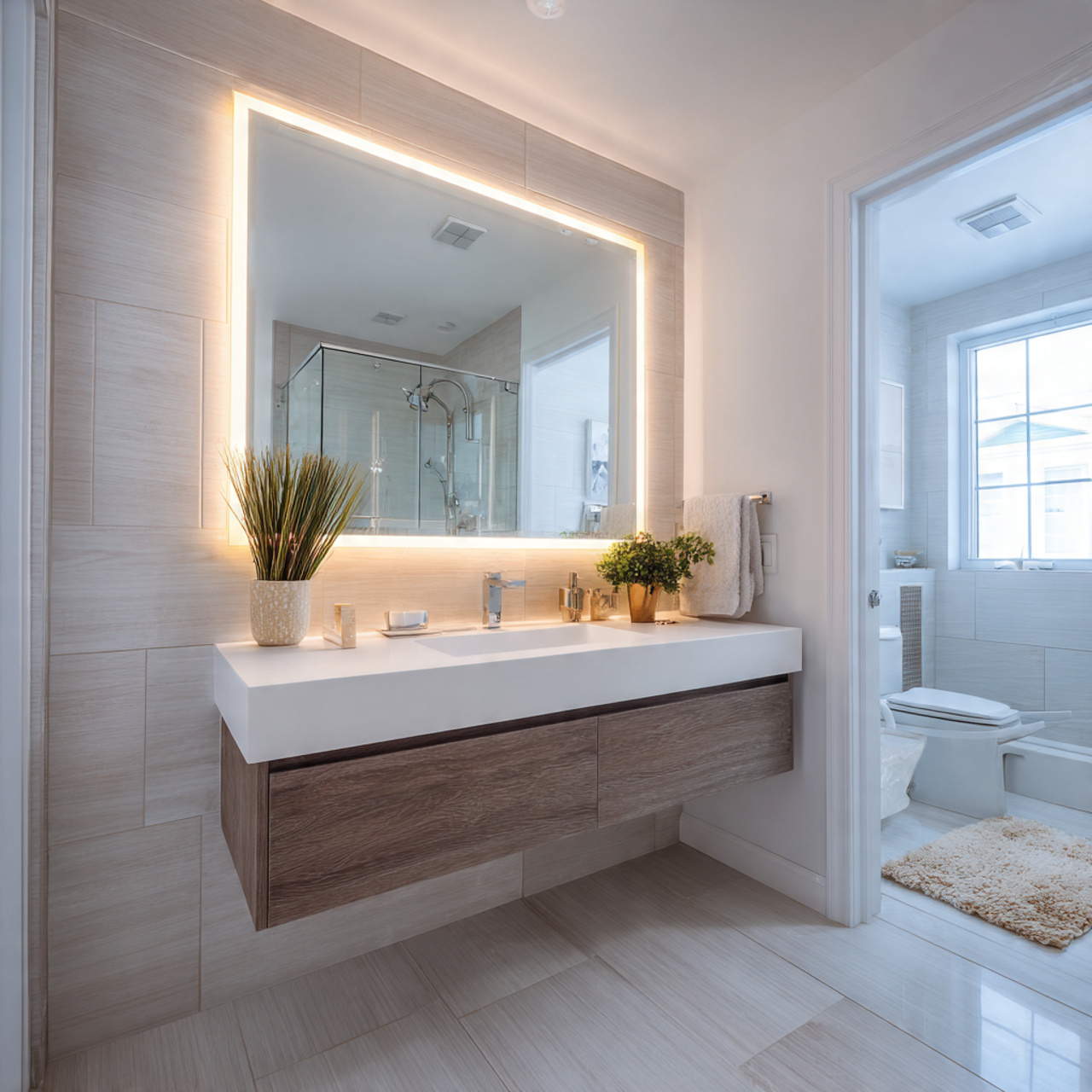
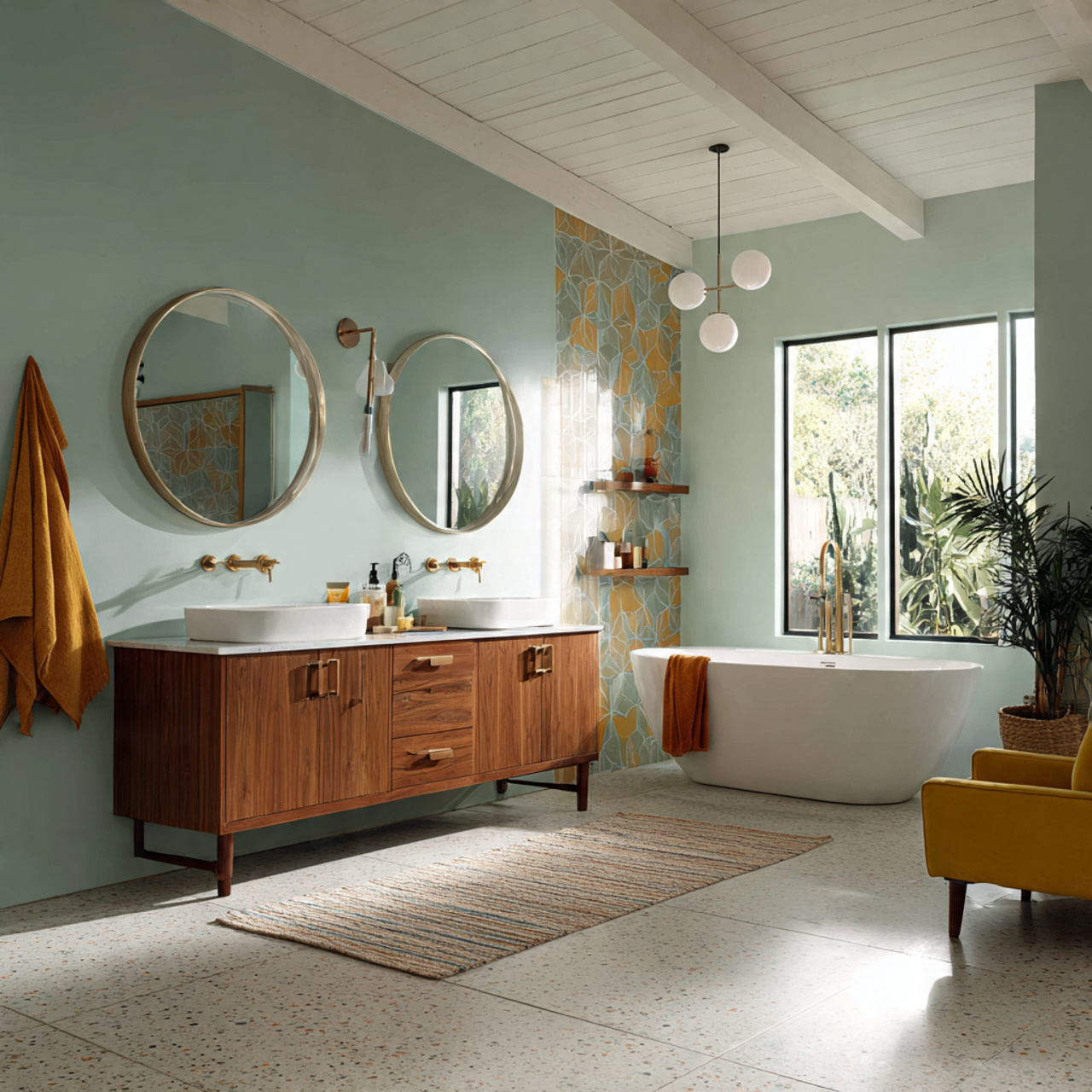
Most people think bathroom interior design is about choosing tiles, mirrors, or a stylish vanity, but the real shift happens in how the space is structured and experienced. I’ve seen bathrooms filled with expensive materials still feel off, while simpler setups feel calm and refined just because the layout works naturally. That difference almost always comes down to design systems, not decor choices.
In real homes, how you move through the space and where your eyes land first matters more than any single item. One thing I’ve noticed over time is that when flow and balance are right, the bathroom starts to feel effortless to use. This is where deeper design thinking quietly changes everything.
Bathroom interior design works best when layout, lighting, and visual flow are structured to create a space that feels balanced, functional, and naturally calming.
Why Bathroom Interior Design Systems Matter More Than Decor Choices
Most bathrooms feel slightly uncomfortable not because something is missing, but because the space is not working as a whole. When visual flow, spacing, and structure are not aligned, even beautiful materials can feel disconnected or overwhelming over time.
In my experience, once these underlying systems are corrected, the entire bathroom begins to feel more cohesive without adding anything new. The space becomes easier to use, visually calmer, and quietly more refined in a way that lasts.
Bathroom Interior Design Systems That Shape How the Space Feels and Works
Bathroom Interior Entry Sightline System That Controls the First Visual Impression
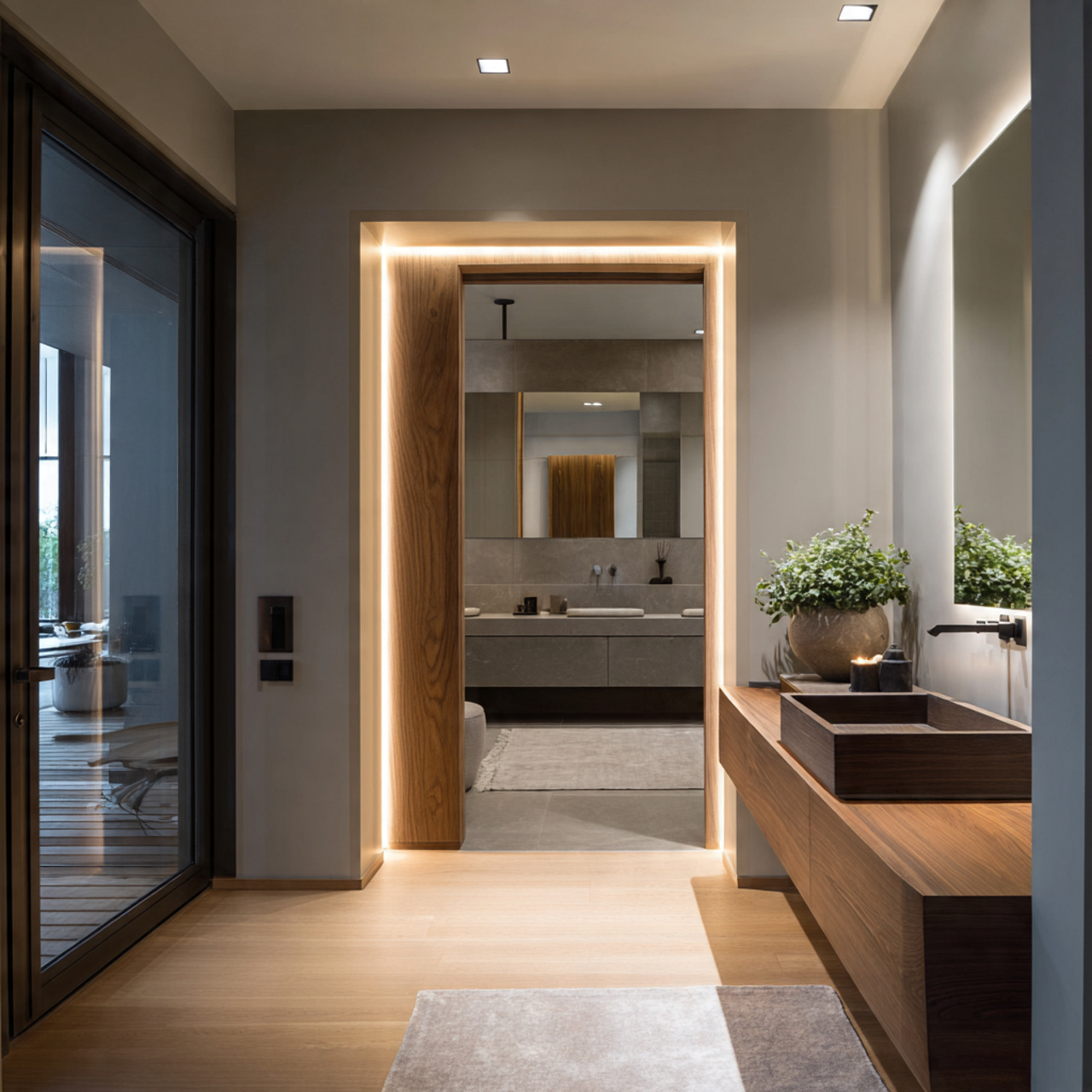
You step into the bathroom and the first view feels open, calm, and visually light. Nothing blocks your sight, and the space immediately feels larger than expected. That first glance sets a relaxed tone before you even move inside.
This works because the brain judges the entire space within seconds of entry. In my experience, when the first view is cluttered or visually heavy, the whole bathroom feels smaller and less inviting over time. A clean sightline creates instant clarity.
To apply this, keep the entry-facing area minimal and avoid placing bulky elements directly in line with the door. Let the first visual moment feel breathable and intentional.
Tip: Stand at the doorway and remove anything that disrupts a clean first view.
Focal Point Hierarchy System That Prevents Visual Competition in Bathroom Interior
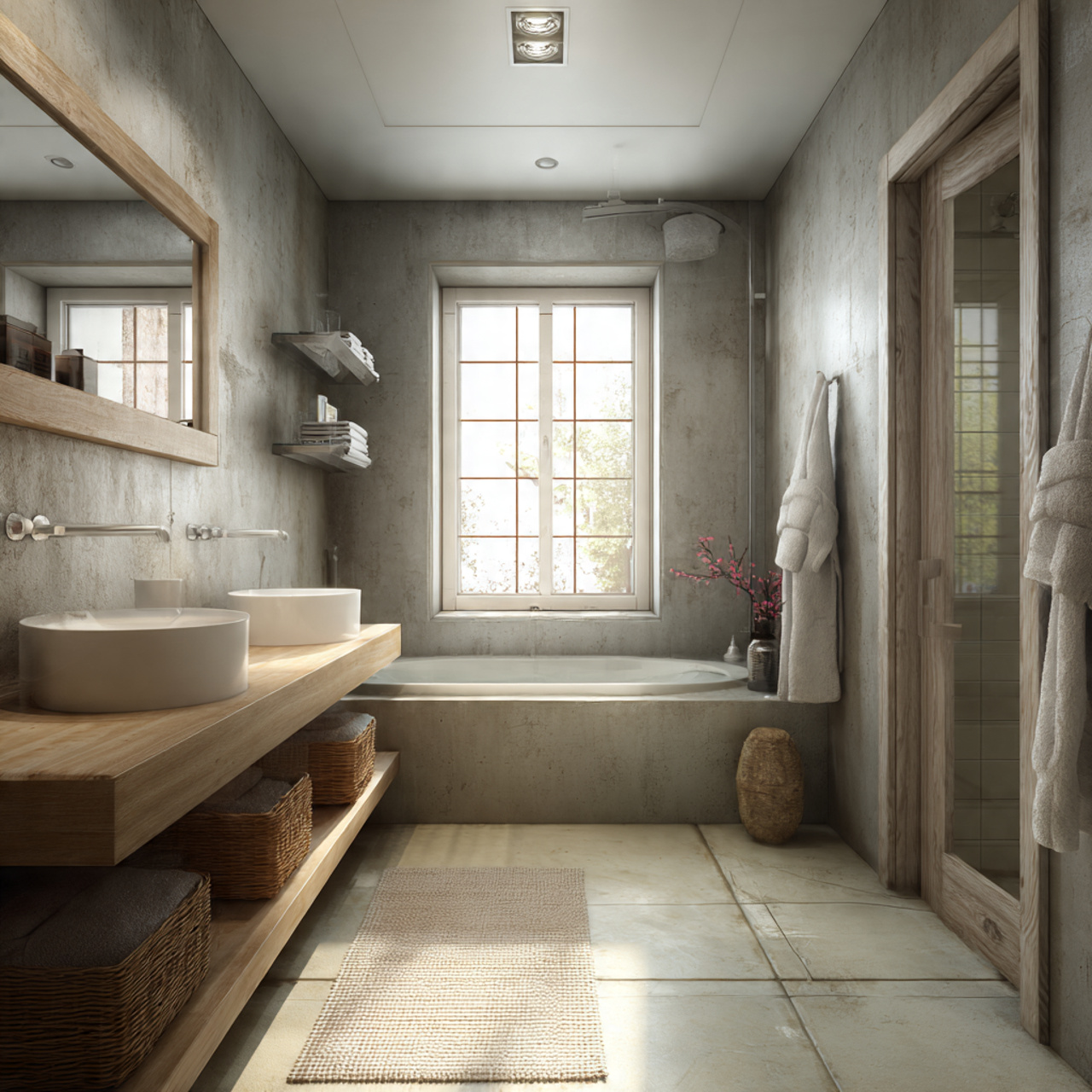
Your eyes land on one clear focal area instead of jumping around the room. The space feels organized and easy to understand at a glance. Everything else quietly supports that main visual moment.
This works because multiple competing focal points create subtle visual stress. I have seen bathrooms where everything tries to stand out, and the result feels chaotic instead of designed. A clear hierarchy brings calm.
To apply this, decide what should lead visually and reduce emphasis on surrounding elements. Keep secondary areas softer so the main focus stands out naturally.
Tip: If your eye moves too quickly across the room, there are too many competing focal points.
Wet Zone vs Dry Zone Separation System That Improves Flow and Function In Bathroom Interior
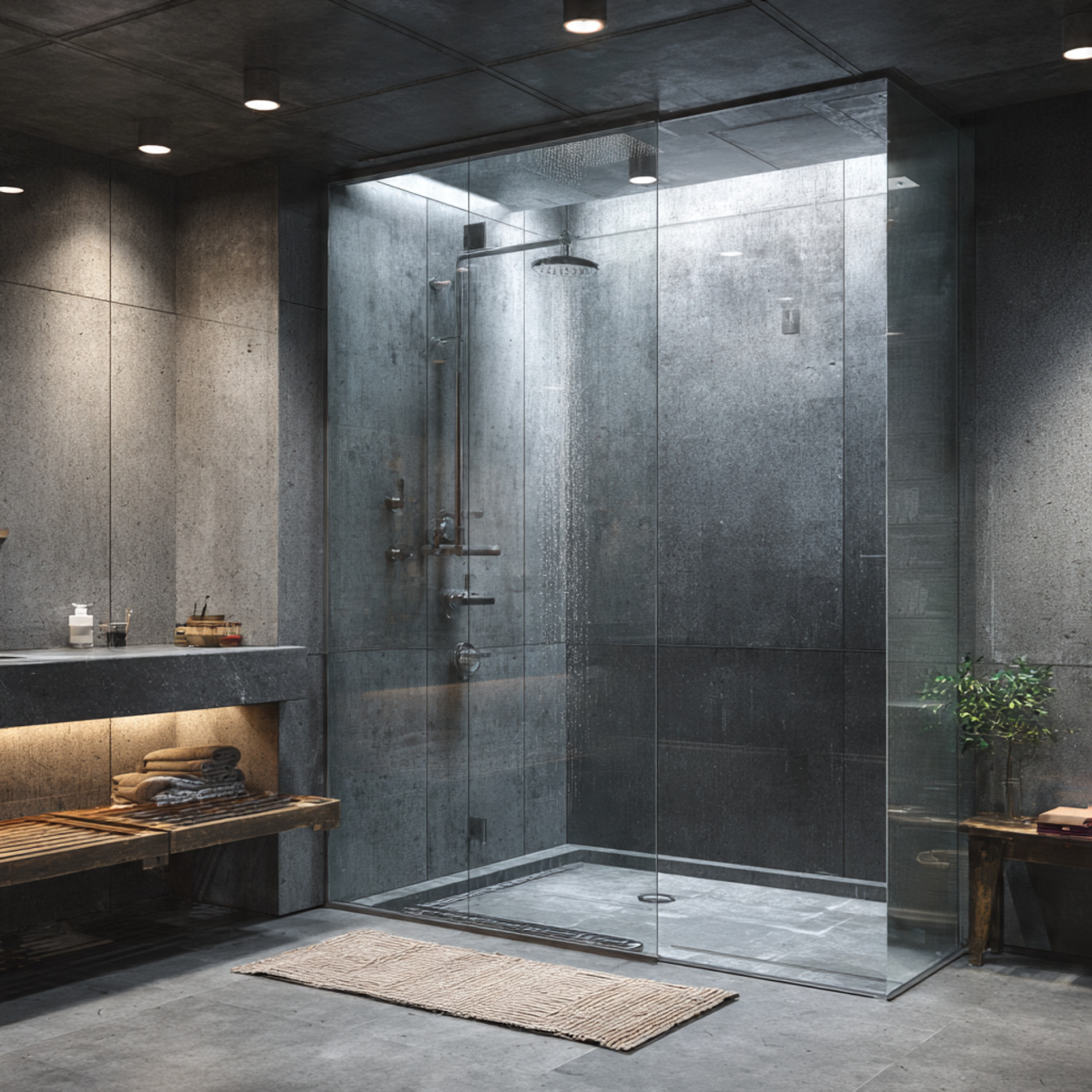
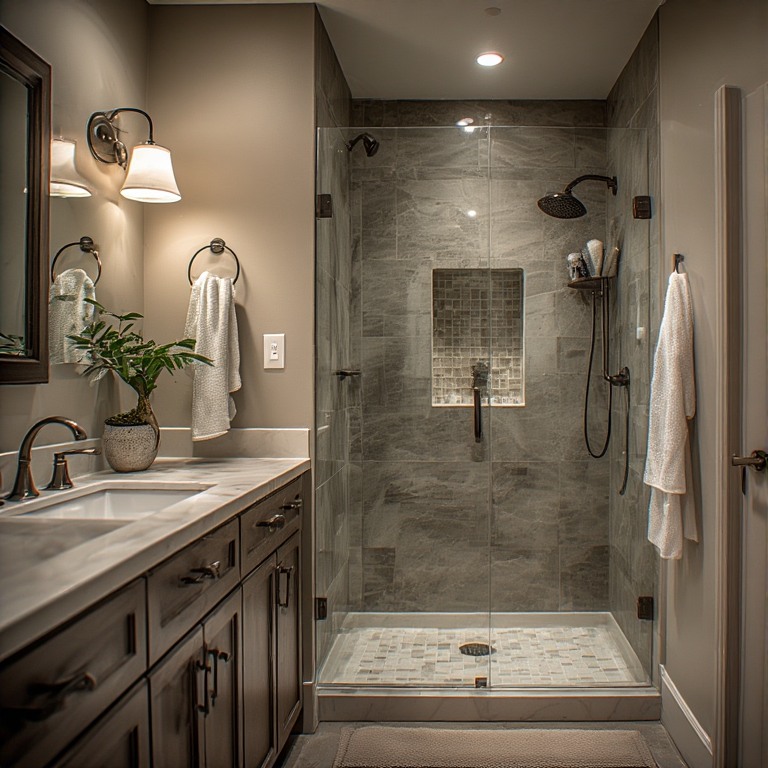
The bathroom feels naturally divided into areas that make sense without needing walls. Each section has a clear purpose, and movement between them feels smooth. Nothing overlaps or feels awkward.
This works because functional clarity reduces both visual and physical friction. One thing I noticed in real homes is that when zones are mixed, the space feels messy even when clean. Separation creates order.
To apply this, define wet and dry areas through layout and spacing rather than barriers. Keep transitions subtle but clear.
Tip: If water-prone areas visually blend with dry zones, the layout needs refinement.
Visual Weight Distribution System That Keeps the Bathroom Interior Balanced and Clean
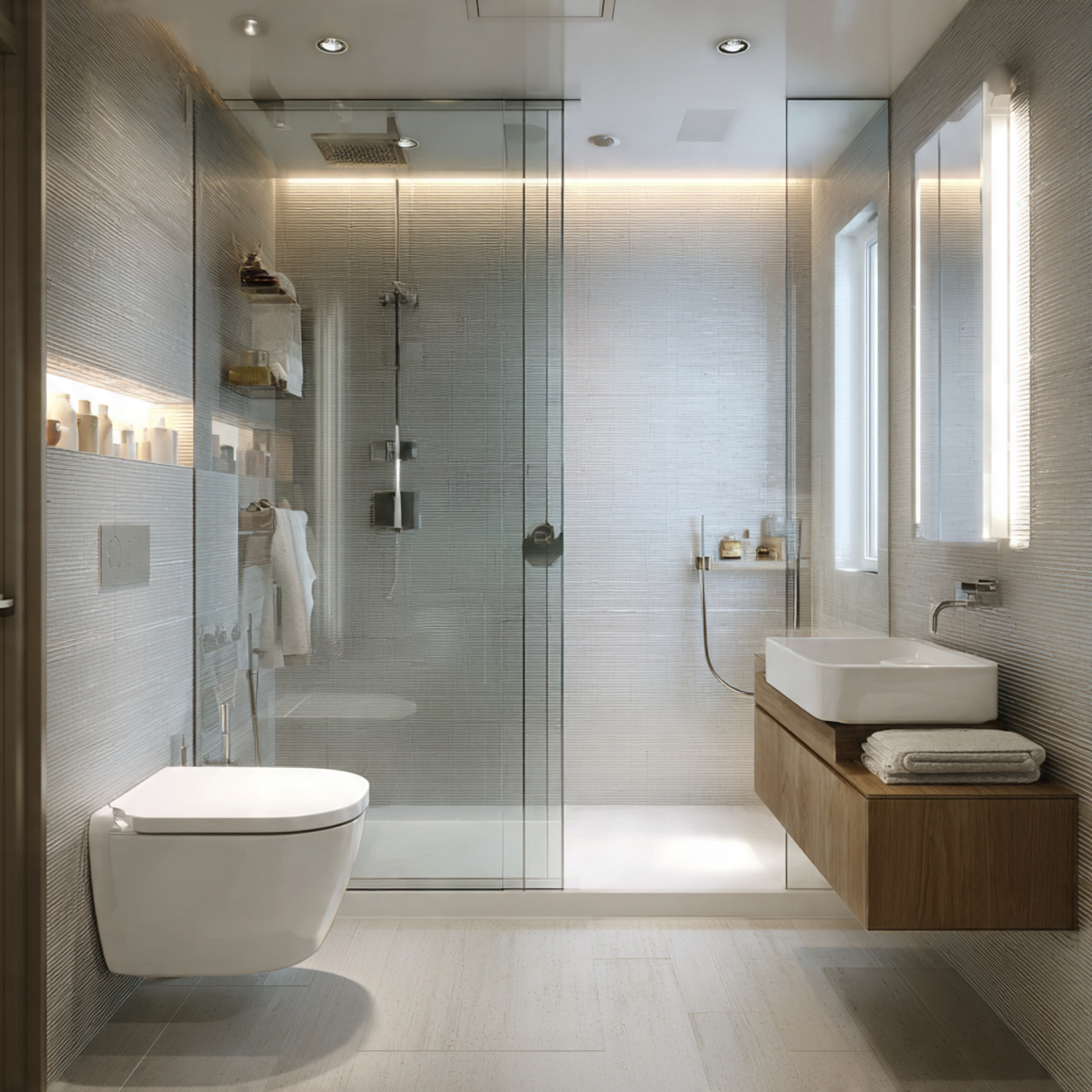
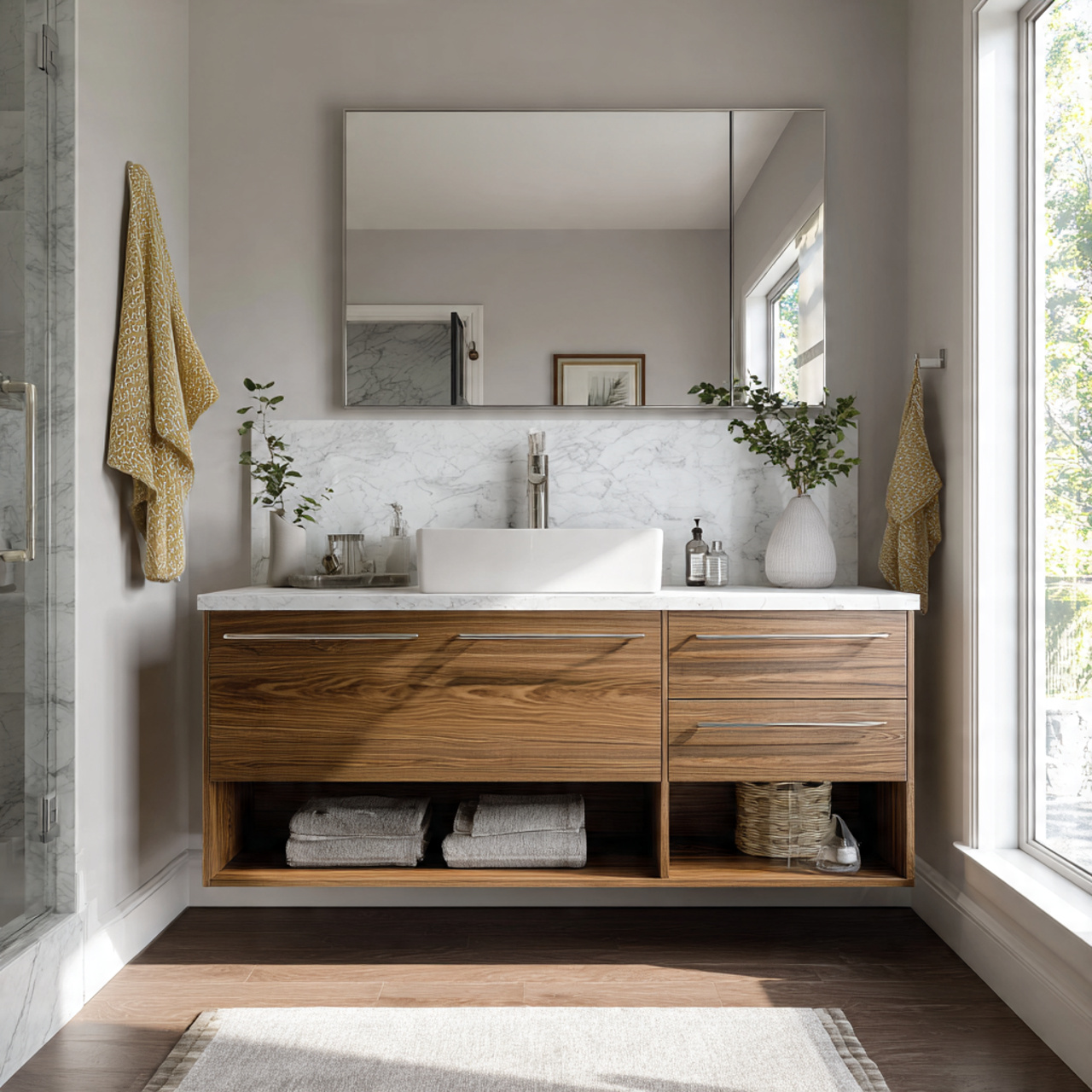
The room feels evenly balanced, with no side appearing heavier or more crowded. There is a quiet sense of stability that makes the space comfortable to be in. Nothing feels visually overwhelming.
This works because imbalance creates tension that builds over time. I once arranged a bathroom where one side carried too much visual weight, and it always felt slightly off. Balance brings ease.
To apply this, step back and observe how elements are distributed across the space. Adjust placement until both sides feel visually supported.
Tip: If one side feels dense and the other empty, redistribute the layout.
Horizontal and Vertical Line Direction System That Changes How Big the Space Feels In Bathroom Interior
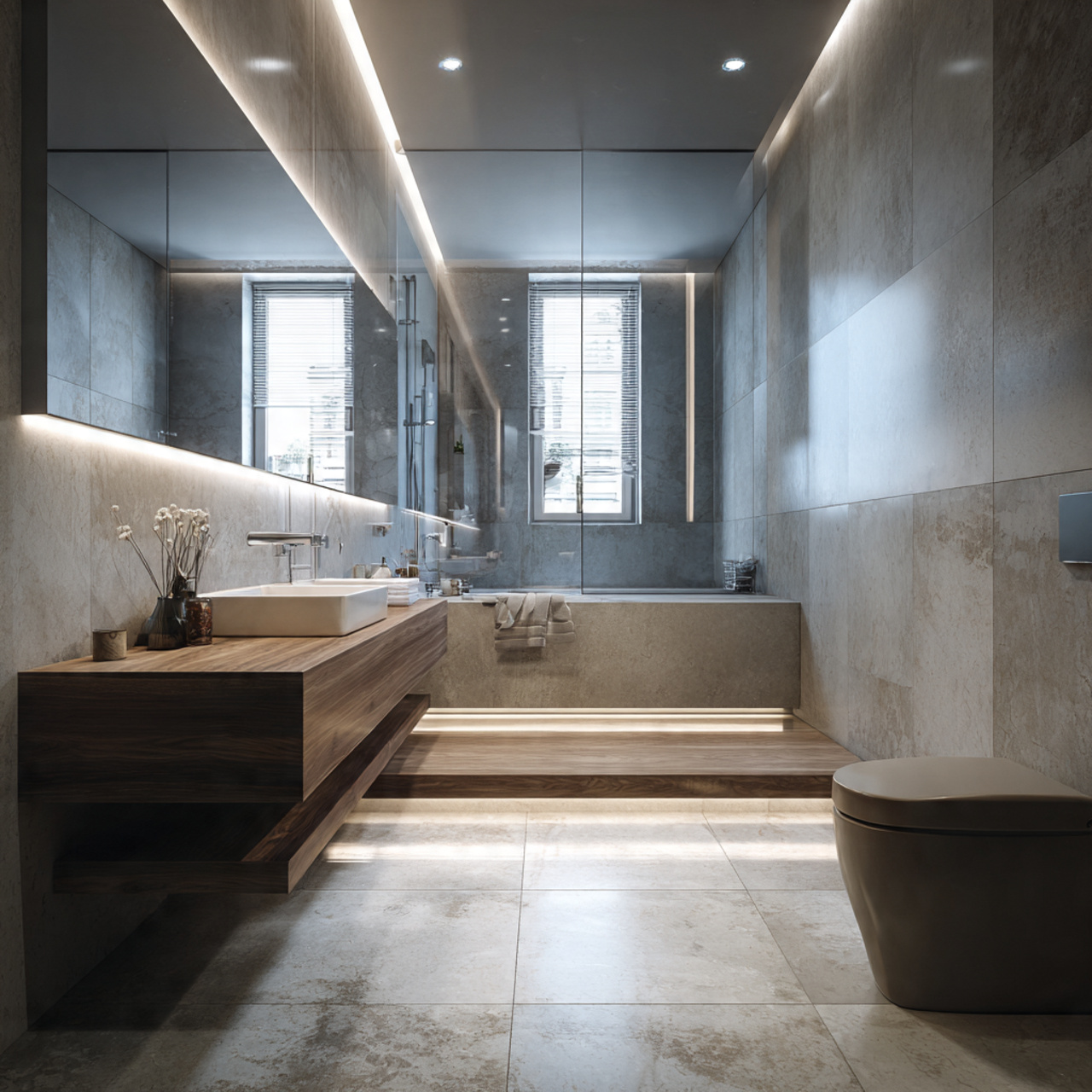
The lines in the bathroom subtly guide your eyes, making the space feel either wider or taller. The effect is quiet but powerful. The room feels more spacious without changing its size.
This works because the eye naturally follows directional lines. In my experience, incorrect line direction can make a bathroom feel compressed even when it has enough space. Direction changes perception.
To apply this, decide whether your space needs to feel wider or taller and align visual lines accordingly.
Tip: Follow your eye movement and adjust line direction to guide it.
Depth Creation System Using Layering and Perspective Instead of Decoration For Bathroom Interior
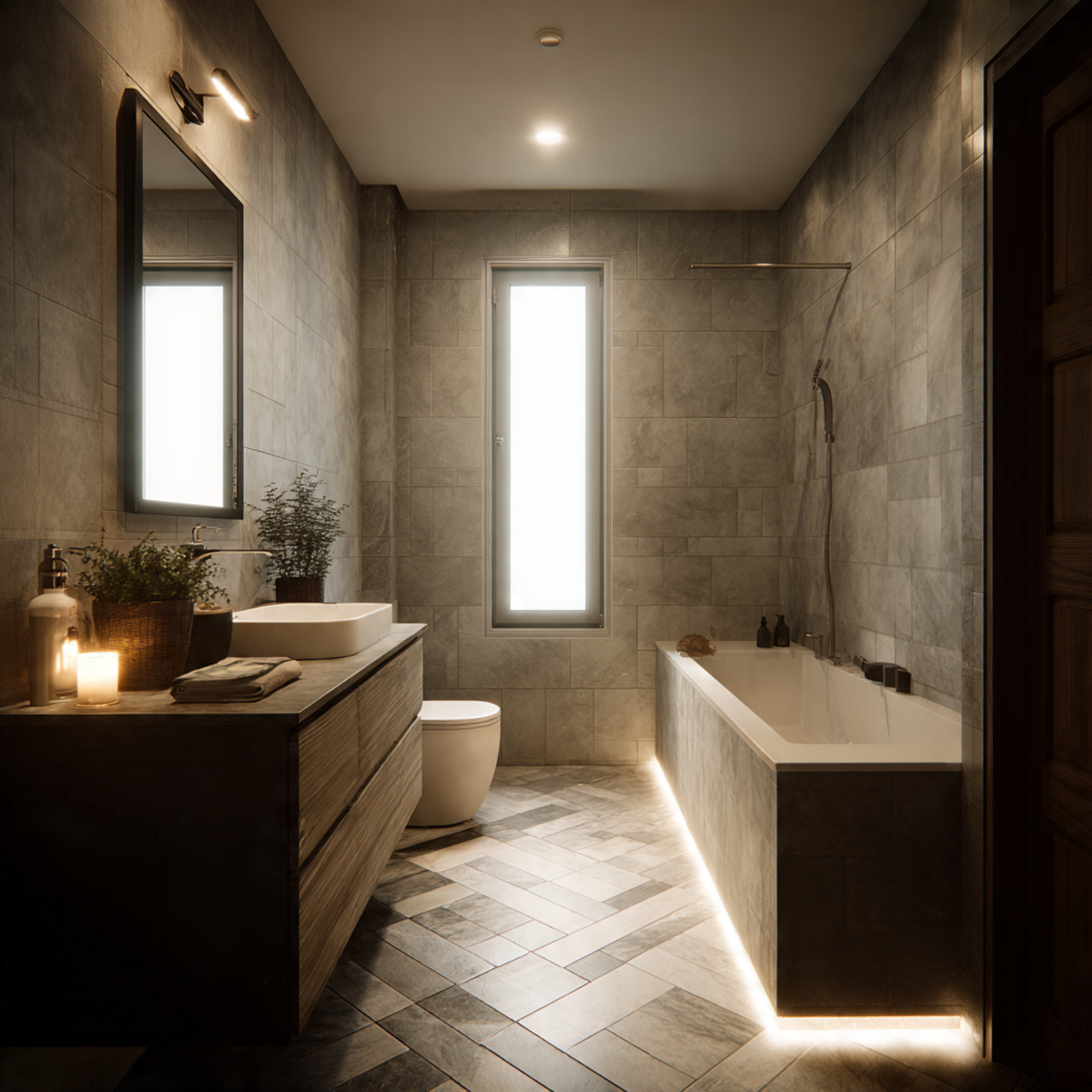
The space feels layered, with a clear sense of depth from front to back. It looks visually rich without relying on extra items. The bathroom feels complete rather than flat.
This works because depth creates interest while clutter reduces clarity. I used to think adding more decor would fix a flat space, but it never did. Layering solved it instead.
To apply this, arrange elements at different visual distances rather than keeping everything on one surface. Let the space unfold gradually.
Tip: Avoid placing everything in a single flat line.
Lighting Layer System That Builds Depth Instead of Flat Illumination In Bathroom Interior
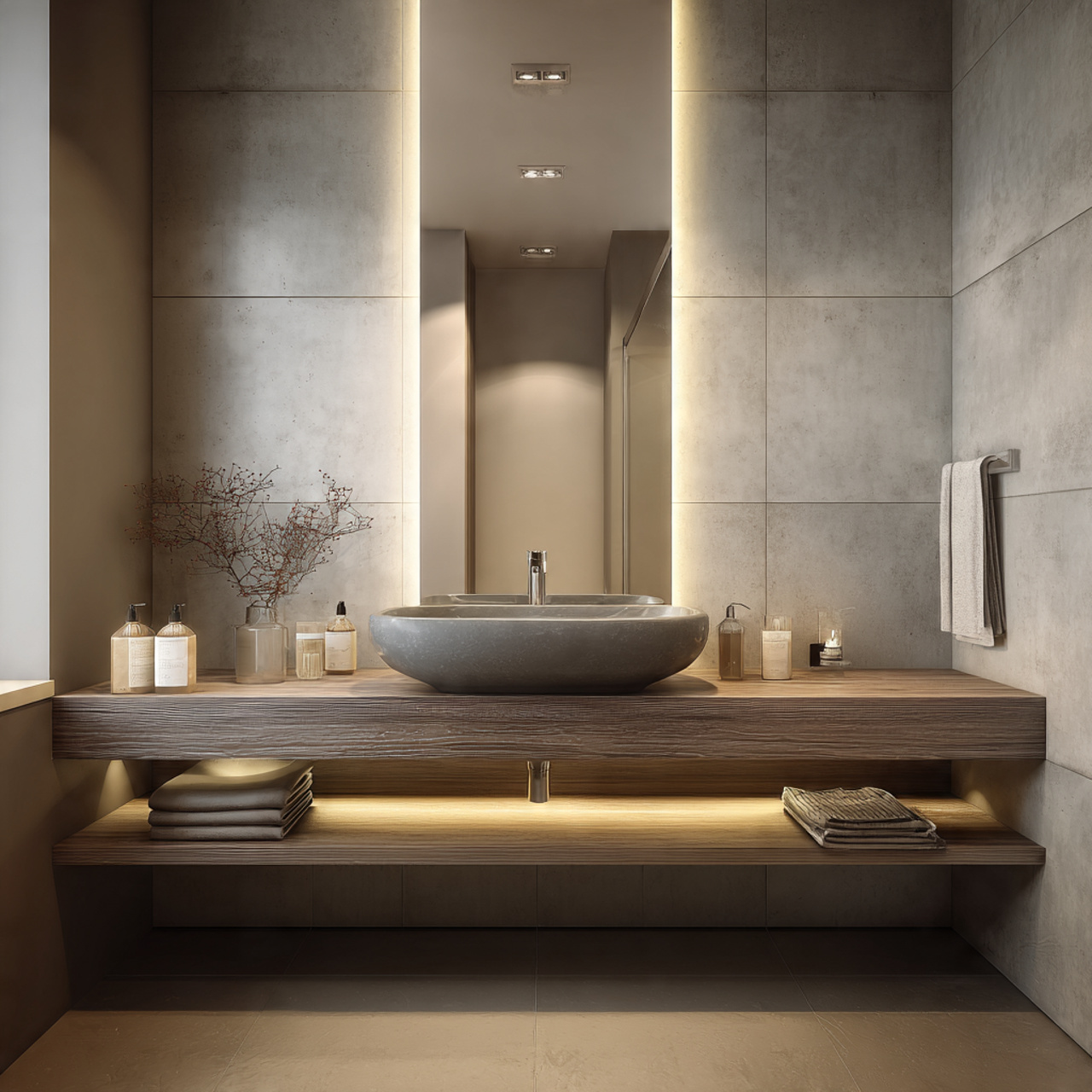
Light falls softly across the bathroom, creating gentle shadows and dimension. The space feels warm and alive instead of overly bright and harsh. It changes slightly depending on the time of day.
This works because layered lighting adds depth while single-source lighting flattens everything. I once relied on only overhead lighting, and the space always felt dull. Adding layers changed the entire feel.
To apply this, combine different light sources so illumination comes from multiple directions.
Tip: If the room looks evenly lit everywhere, it lacks depth.
Reflection Control System That Uses Surfaces to Expand or Contain Space In Bathroom Interior
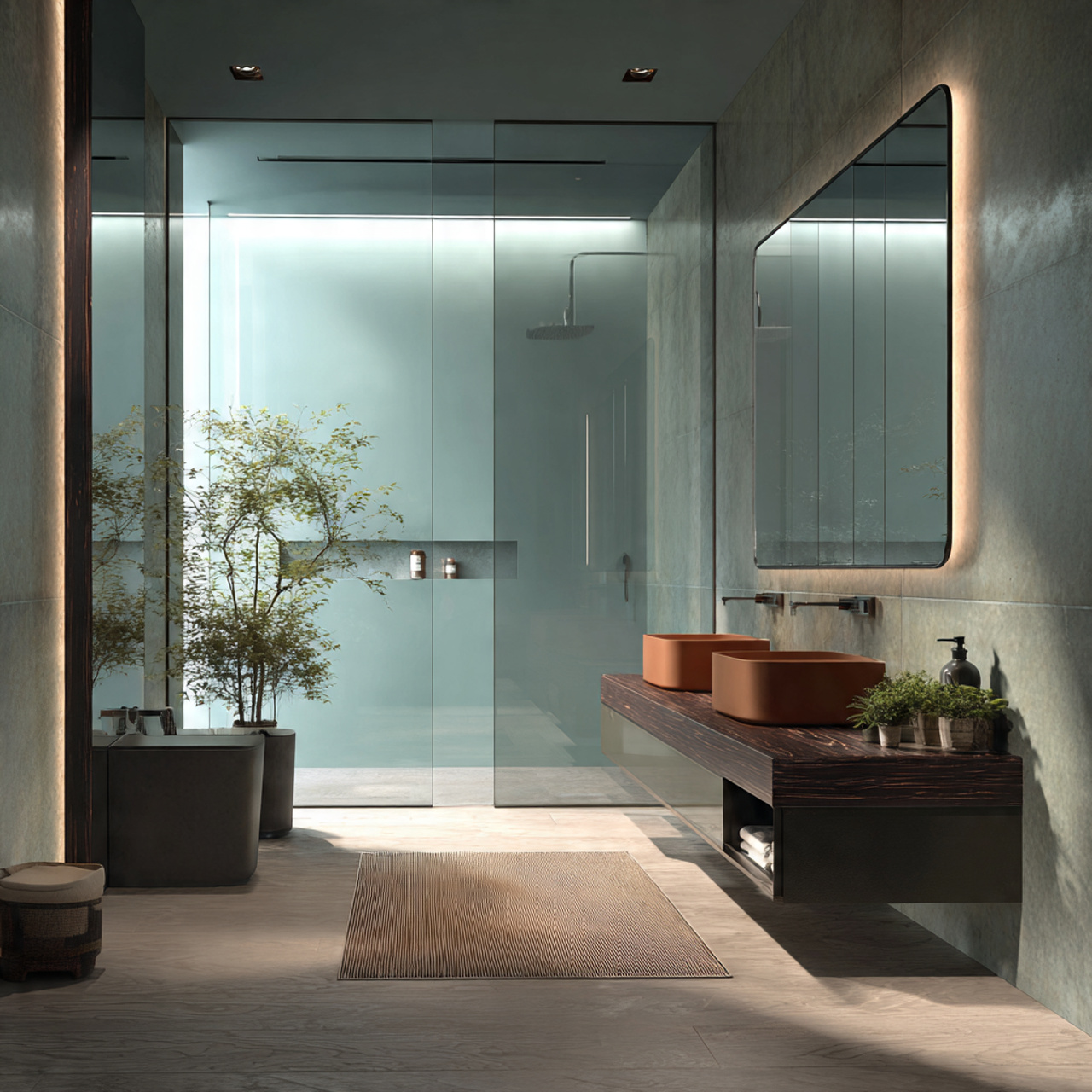
The bathroom subtly reflects light and space, making it feel more open without becoming overwhelming. Reflections feel controlled and purposeful. The room expands visually without confusion.
This works because reflections can either enhance or disrupt a space. I have seen too many reflective surfaces create visual chaos instead of openness. Control is what makes it effective.
To apply this, use reflective surfaces strategically and avoid placing them where they duplicate clutter.
Tip: Reflection should simplify the space, not multiply it.
Material Contrast System That Creates Luxury Without Adding Clutter In Bathroom Interior
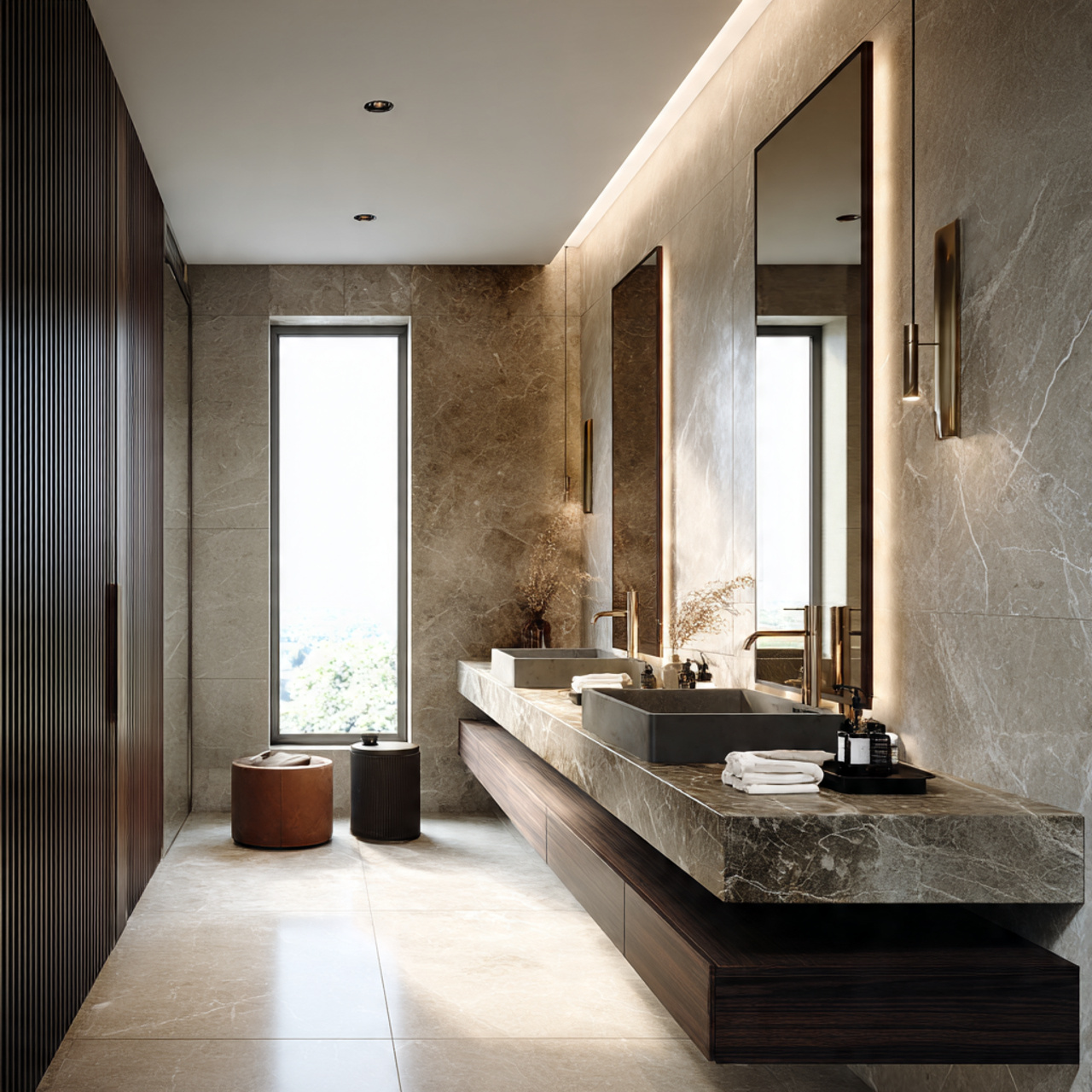
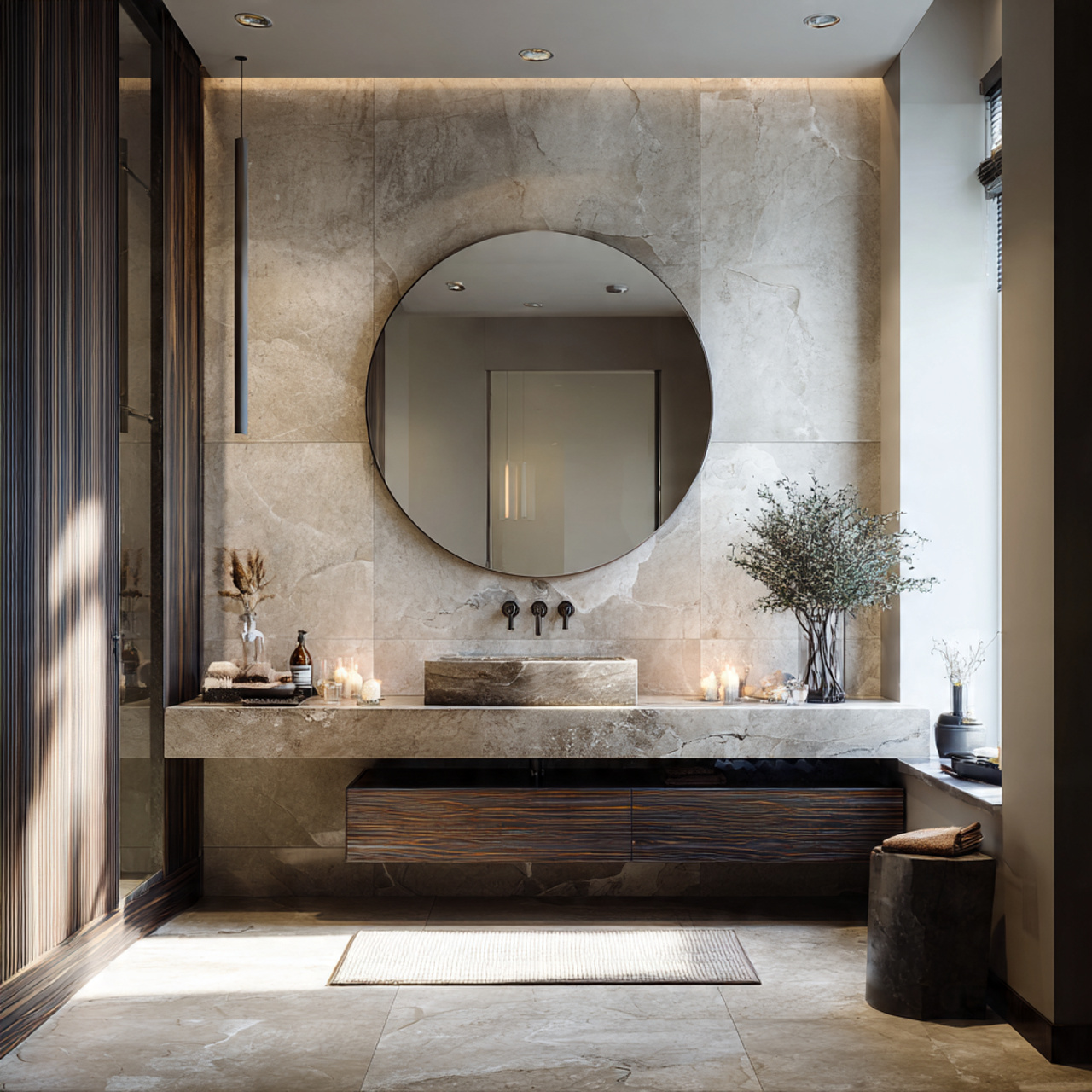
The bathroom feels rich through contrast, yet still calm and cohesive. Different textures interact naturally without competing. The space feels elevated without being busy.
This works because contrast adds interest, but too much variation creates noise. In real homes, controlled contrast always feels more refined than excessive mixing.
To apply this, limit your material palette and focus on how textures interact rather than adding more elements.
Tip: Choose fewer materials but let them contrast intentionally.
Negative Space Planning System That Makes Bathroom Interior Feel Larger Instantly
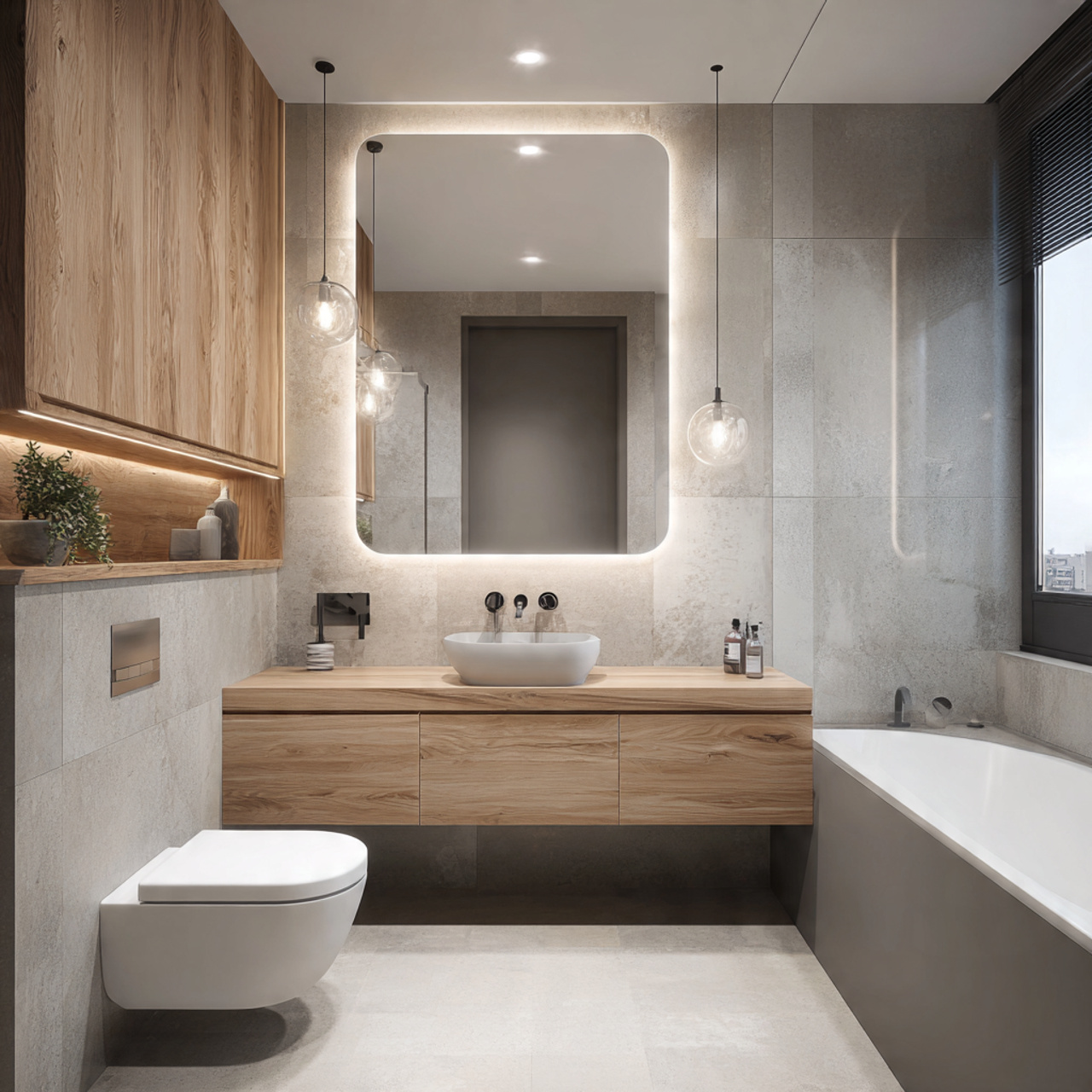
Open areas in the bathroom allow the eye to rest, making the space feel bigger. The room feels calm and breathable rather than crowded. Every element has space around it.
This works because empty space is what gives structure to everything else. One mistake I made was filling every corner, which made the room feel smaller. Leaving space creates clarity.
To apply this, remove unnecessary elements and allow certain areas to remain visually quiet.
Tip: Space is a design tool, not wasted area.
Movement Flow System That Guides How You Navigate the Bathroom Interior Naturally
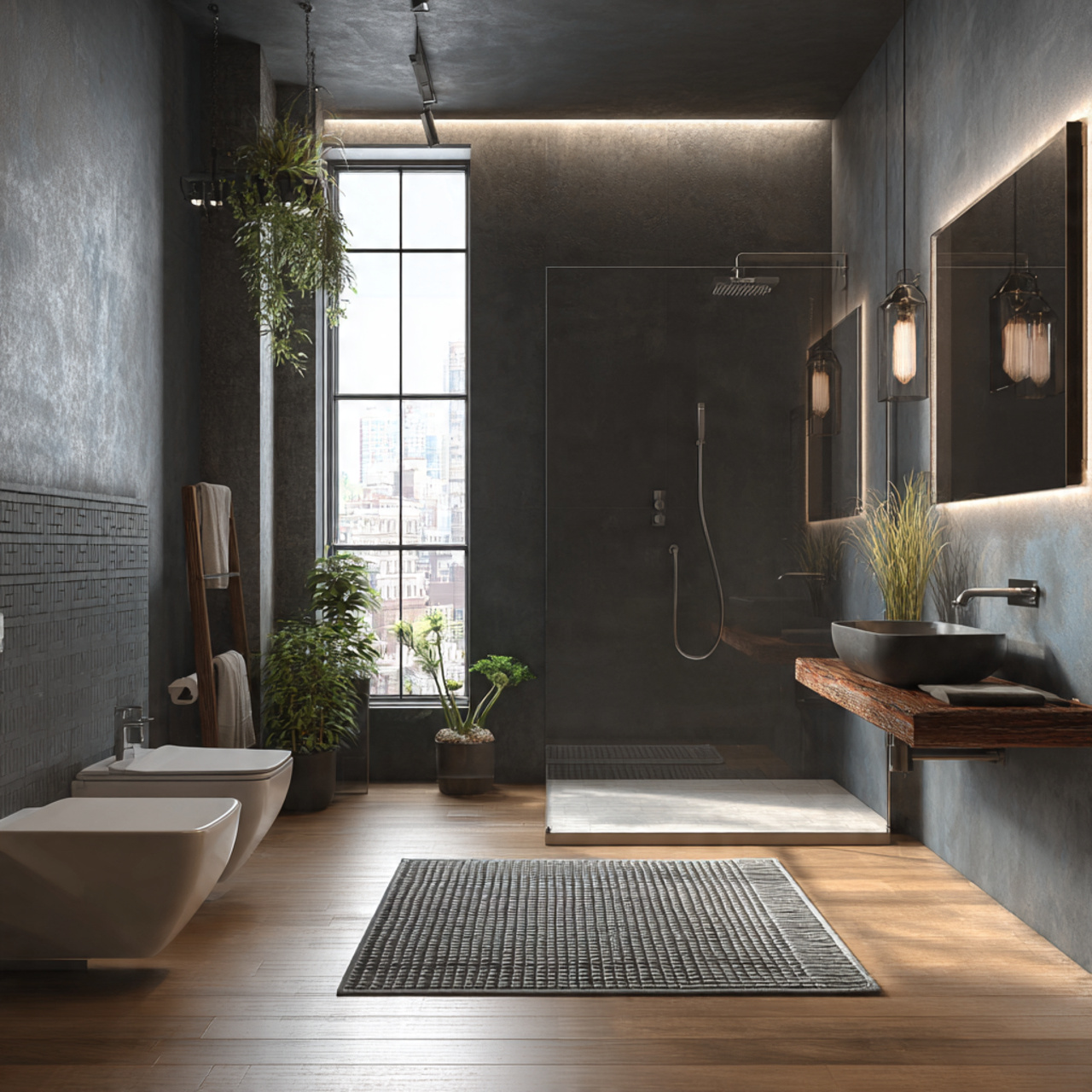
Moving through the bathroom feels effortless and intuitive. There are no awkward turns or blocked paths. The layout supports your natural movement.
This works because good flow reduces daily friction. I have experienced layouts that looked fine but felt frustrating over time due to poor movement planning.
To apply this, walk through your routine and adjust the layout to remove obstacles.
Tip: If movement feels forced, the flow needs improvement.
Symmetry vs Asymmetry Balance System for High-End Visual Composition For Bathroom Interior
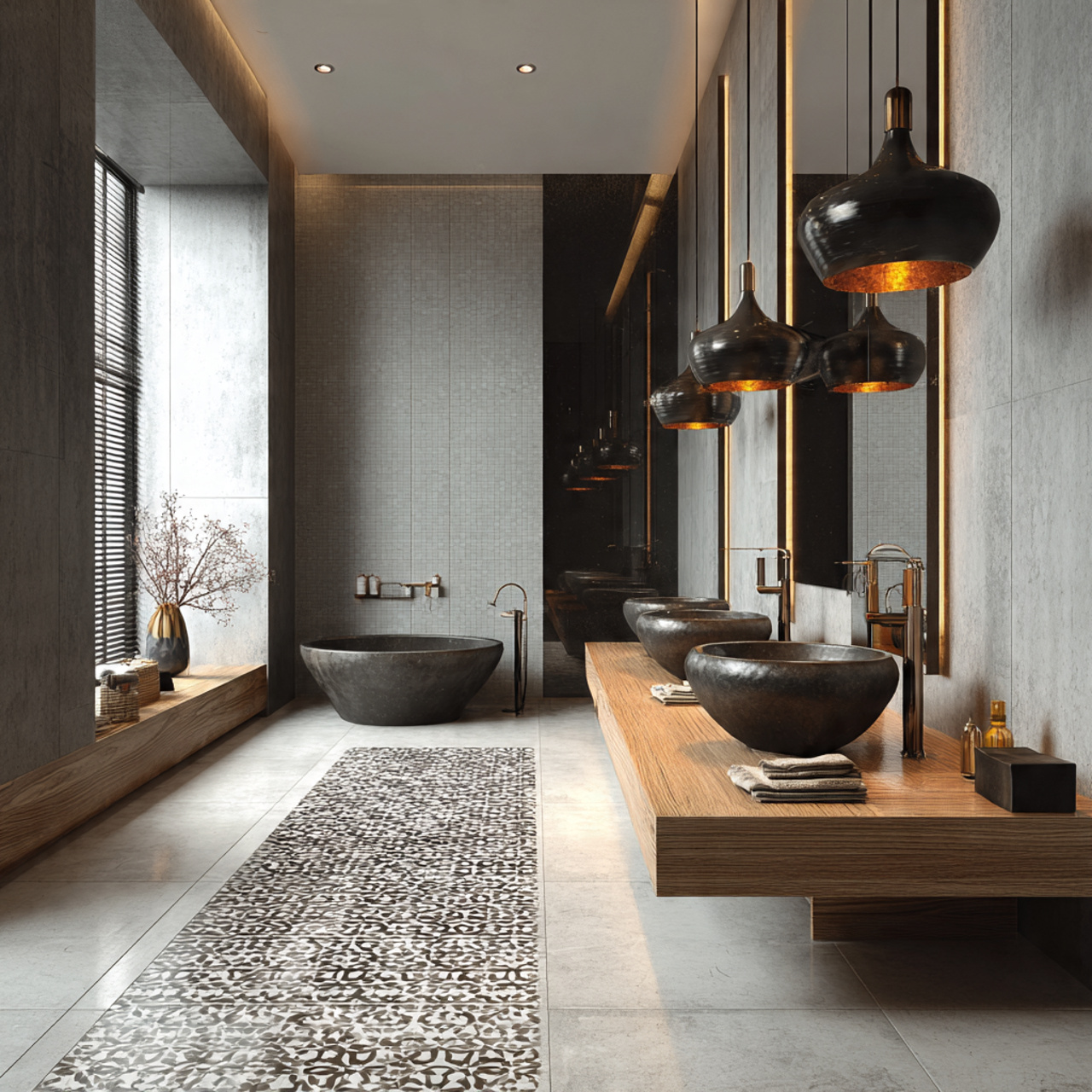
The bathroom feels visually composed, whether balanced or intentionally offset. There is a clear sense of design rather than randomness. The space feels refined and thoughtful.
This works because intentional imbalance can feel just as strong as symmetry. I have noticed that accidental placement feels messy, while planned composition feels elevated.
To apply this, choose a balance style and apply it consistently across the space.
Tip: Intentional imbalance works, accidental imbalance does not.
Visual Anchoring System That Stabilizes the Entire Bathroom Interior
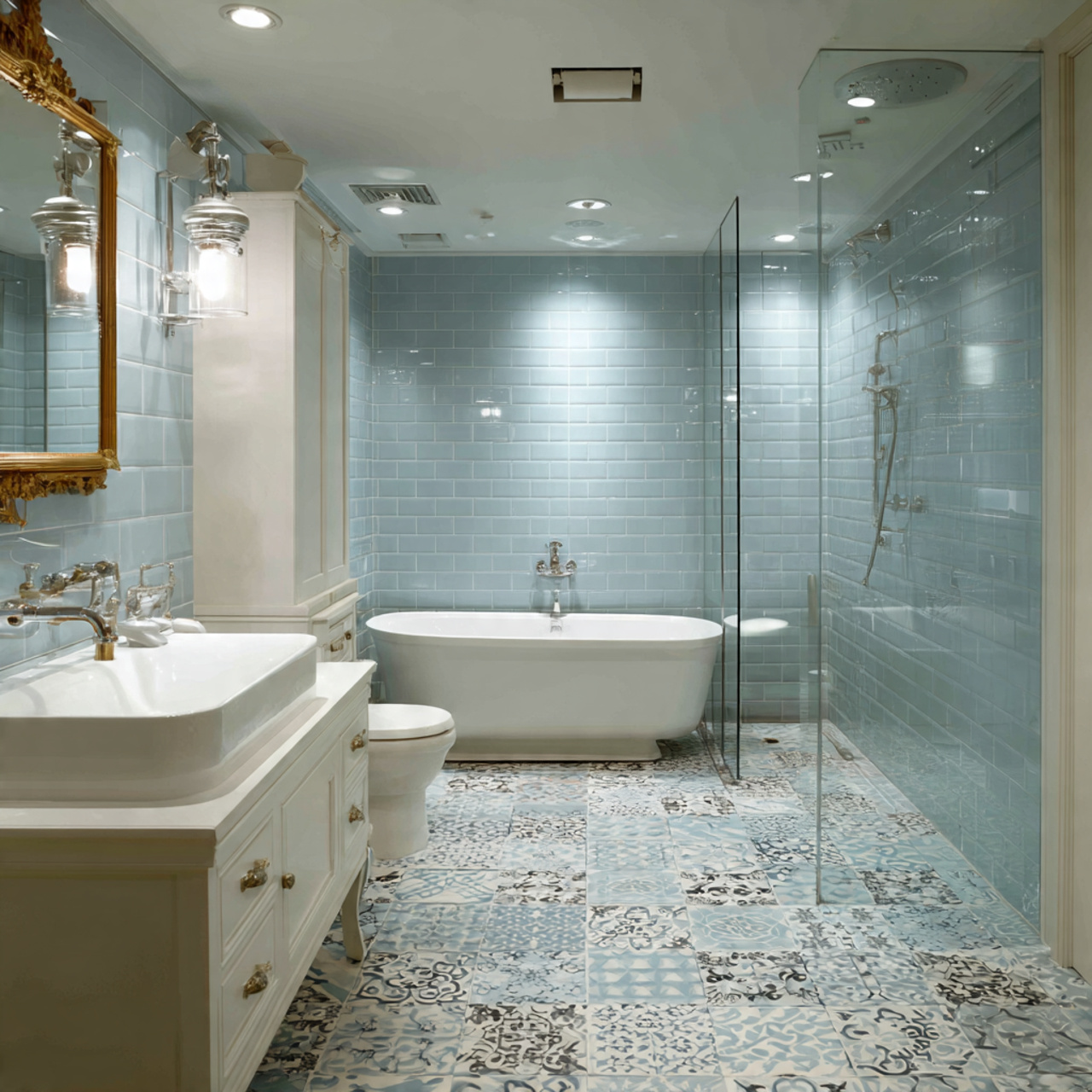
The space feels grounded with one strong visual anchor that holds everything together. Your eyes settle naturally, and the room feels organized. Nothing feels scattered.
This works because every space needs a stabilizing element. Without it, the layout feels disconnected. I have seen even simple bathrooms feel complete once an anchor is established.
To apply this, define one dominant visual area and allow surrounding elements to support it.
Tip: Every bathroom needs one point that visually holds the space.
Visit Also: Small Bathroom
Color Depth System That Adds Dimension Without Overcomplicating the Palette In Bathroom Interior
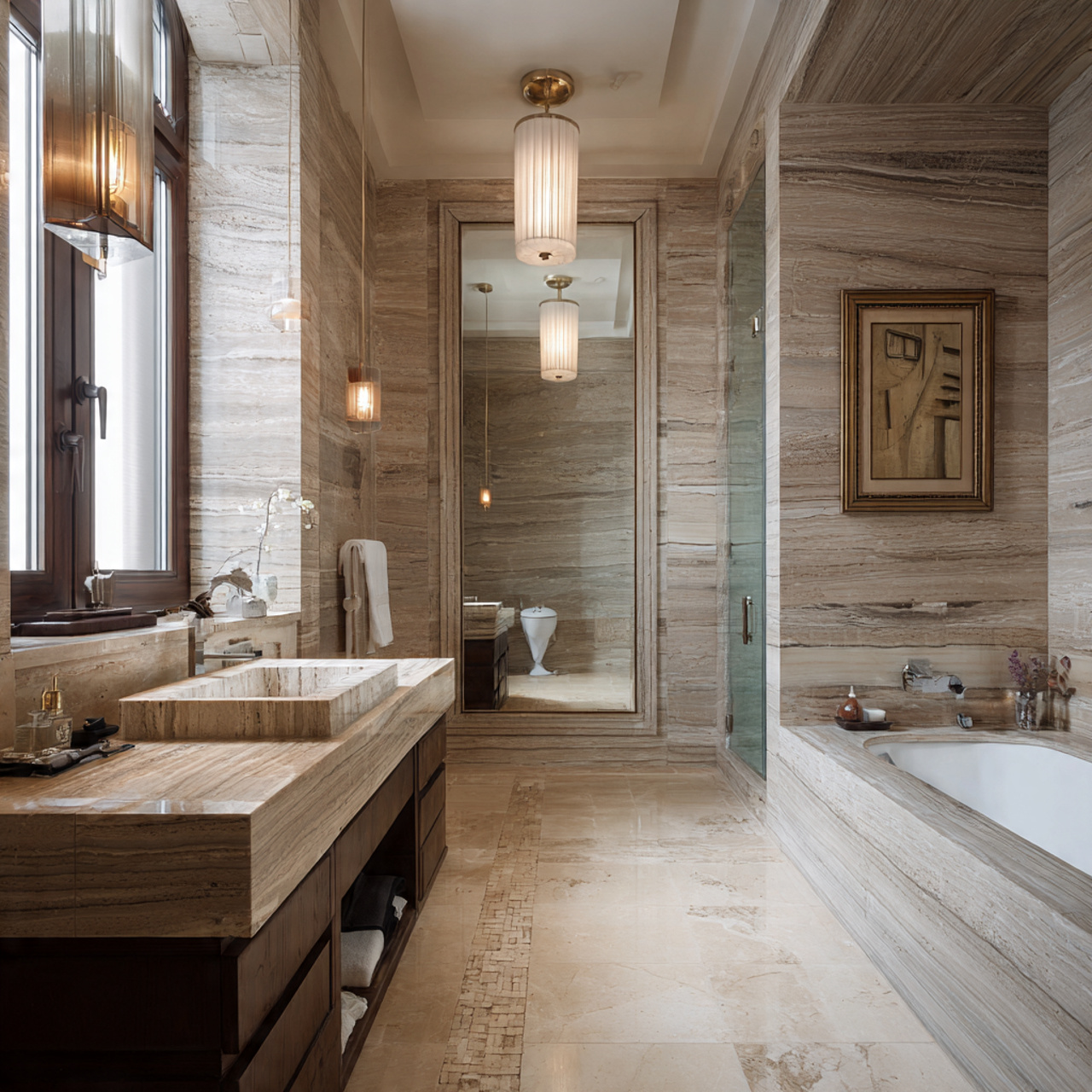
The bathroom uses subtle tonal variation to create depth while staying calm. The colors feel layered rather than flat. The space feels rich without being overwhelming.
This works because depth comes from variation within a palette, not from adding more colors. I once used a single flat tone, and the room felt unfinished. Layering tones solved it.
To apply this, use lighter and darker variations of the same color to build dimension.
Tip: Depth comes from tone, not quantity of colors.
A Real Bathroom Interior Layout That Feels Balanced and Effortless
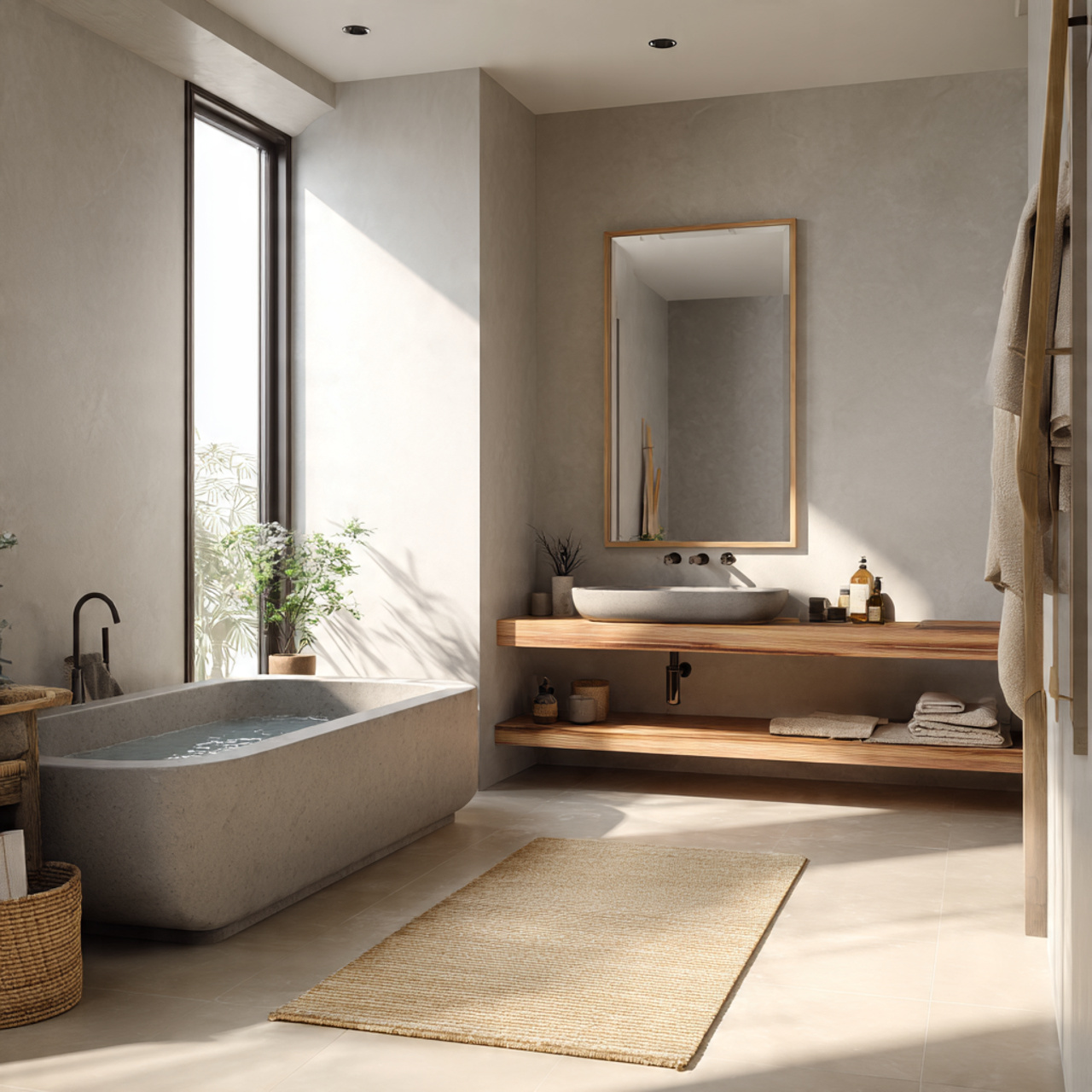
Morning light moves softly across the floor, catching subtle variations in tone and texture without feeling harsh. The space feels quiet and calm, with no visual noise pulling your attention in different directions. Even small details seem to sit comfortably within the overall atmosphere.
The layout flows naturally from one area to the next, with clear zones that never feel forced or separated. Everything feels easy to use, and nothing interrupts movement or visual clarity. In my experience, this kind of balance is what makes a bathroom feel finished, not because of what is added, but because nothing feels out of place.
Color and Material Choices That Define a Calm and Elevated Bathroom Interior
Warm White (#F5F3EF)
Works beautifully on walls and larger surfaces where you want to reflect light without harsh brightness. It creates a soft, clean atmosphere that feels open and calm. Pairs naturally with light wood and subtle stone textures.
Soft Greige (#D8D2C8)
Fits well in areas where you want warmth without going too dark or heavy. It creates a balanced, grounded mood that works across both small and large bathrooms. Combines well with matte finishes and natural textures.
Muted Charcoal (#3A3A3A)
Best used in controlled areas where you want depth and contrast without overwhelming the space. It adds a quiet sense of structure and refinement. Works especially well with smooth surfaces and subtle reflective materials.
Natural Oak Tone (#C8A97E)
Ideal for introducing warmth and a lived-in feel without making the space feel busy. It softens harder surfaces and brings a sense of comfort. Pairs easily with neutral palettes and textured materials.
Room Size and Lighting Guide for a Balanced Bathroom Interior
Small Bathroom Interiors That Need Openness and Light Control
Use lighter tones and continuous surfaces so the space feels visually expanded rather than broken. Layer soft lighting to prevent shadows from making corners feel tighter.
Medium Bathrooms That Need Balance and Definition
Combine directional lighting with ambient light so no area feels too flat or too dark. Maintain visual flow so the space feels connected instead of divided.
Large Bathrooms That Need Warmth and Structure
Break the space into subtle lighting zones to avoid it feeling empty or disconnected. Add warmer lighting layers so the room feels comfortable instead of overly open.
Low Natural Light Bathrooms That Need Brightness Without Harshness
Use soft, diffused lighting that spreads evenly without creating glare. Avoid single harsh light sources that flatten the entire space.
High Natural Light Bathrooms That Need Control and Balance
Let natural light remain the dominant source while supporting it with gentle artificial layers. Keep contrast controlled so the space does not feel washed out during the day.
Common Bathroom Interior Design Mistakes That Disrupt Flow and Comfort
Ignoring Visual Flow From the Entry
Many layouts are designed without considering what is seen first when entering the bathroom, which creates an unbalanced first impression. The space ends up feeling cluttered or awkward before you even step inside.
To fix this, adjust the layout so the entry view feels open and visually calm. Prioritize a clean sightline that sets the tone for the rest of the space.
Overloading One Side of the Bathroom
This usually happens when too many elements are placed on one wall while the other side is left empty. Over time, the room feels visually heavy and slightly uncomfortable to use.
Rebalance the layout by redistributing elements so both sides feel supported. Even small adjustments can create a more stable and calm environment.
Relying on a Single Light Source
Many bathrooms depend on one overhead light, assuming brightness alone is enough. This creates a flat, lifeless look where textures and depth disappear.
Introduce layered lighting so light comes from different directions and adds dimension. This instantly improves both mood and visibility.
Filling Every Empty Space
It often comes from the idea that more elements will make the bathroom feel complete. Instead, the space becomes crowded and loses its sense of calm.
Remove unnecessary items and allow certain areas to remain open. That empty space is what makes everything else feel intentional.
Frequently Asked Questions About Bathroom Interior Design Systems
How do I make bathroom interior design feel more organized?
Start by focusing on layout and visual flow rather than adding more elements. When the structure is clear, the space naturally feels more organized without needing extra styling.
Why does my bathroom feel cluttered even when it is clean?
This usually happens when there is no clear focal point or too many competing elements. Simplifying the layout and reducing visual noise often fixes the issue quickly.
What is the most important part of bathroom interior design?
In my experience, layout and movement flow matter more than any single design choice. When the space works well, everything else begins to feel more balanced.
How can I make a small bathroom feel bigger without renovation?
Use line direction, negative space, and controlled lighting to shift perception. These small adjustments can make a noticeable difference without changing the structure.
Is it better to follow trends or focus on layout systems?
Trends change quickly, but layout systems stay effective over time. Focusing on how the space works will always give more lasting results.
Final Thoughts on Creating a Balanced Bathroom Interior Design
Bathroom interior design becomes more effective when you focus on systems rather than individual elements. Once layout, flow, and visual balance are aligned, the space begins to feel naturally calm and easy to use.
What I have noticed in real homes is that small structural changes often have a bigger impact than adding new items. Start with one system, adjust it carefully, and you will begin to see the entire bathroom shift into a more refined and comfortable space.