13 Top Study Table Ideas That Make Small Rooms Feel Bigger
A study table can quietly change how a room feels, especially when space is limited and every corner matters. The right placement, size, and styling can turn even a small bedroom into a calm and productive environment. Even a compact desk can make a room feel more intentional and organized without adding clutter.
In many homes, a study table becomes more than just a place to work or study. It turns into a small personal corner for reading, planning, or focusing on daily tasks. When designed thoughtfully, this space can improve comfort and reduce distractions.
Over time, I have noticed that the best study table setups are not always the biggest or most expensive. The ones that work best are thoughtfully placed and balanced with the room layout. A well planned study table becomes a natural part of everyday living.
Study Table Designs That Work Beautifully in Real Bedrooms
Window Side Study Table That Creates a Calm Morning Workspace
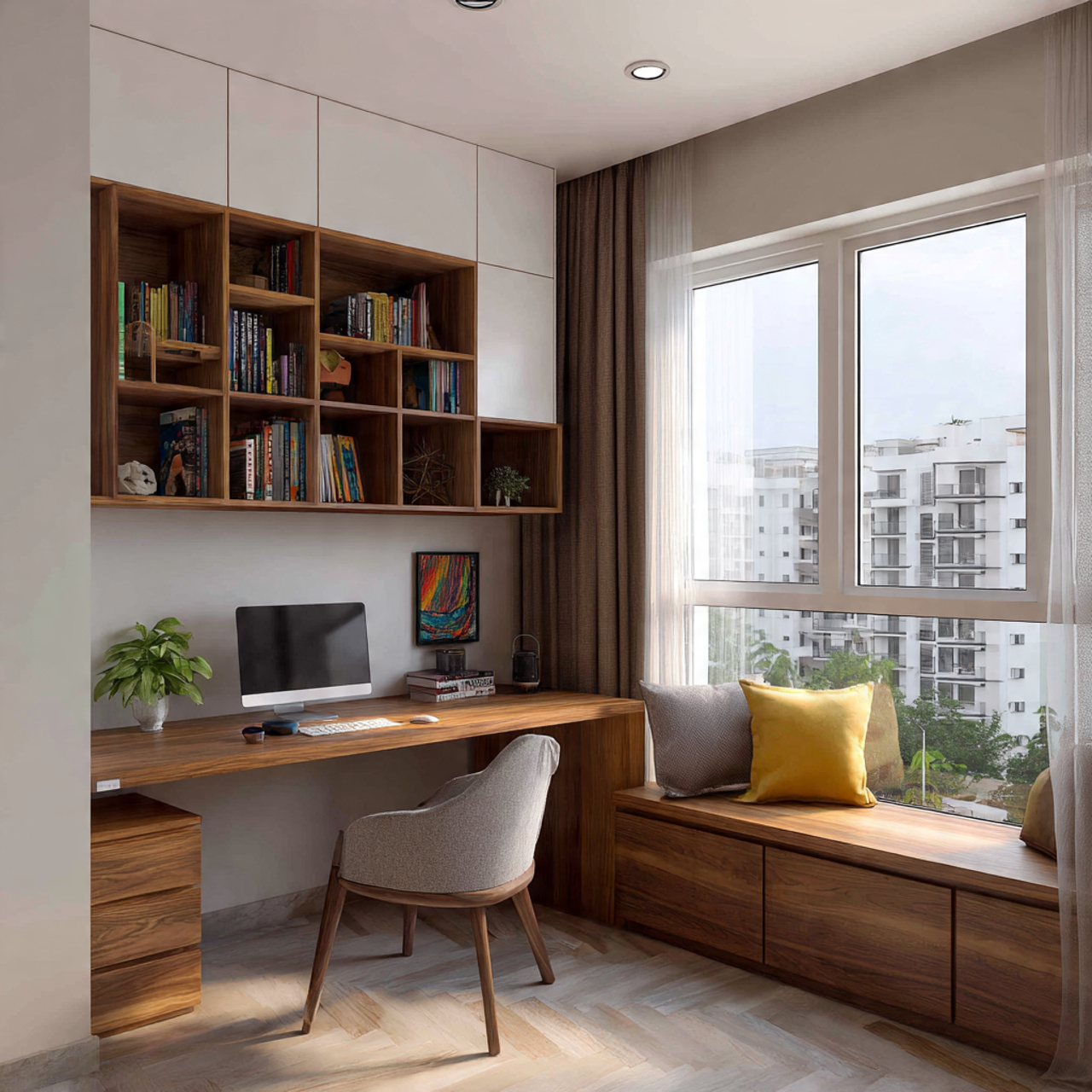
A study table placed beside a window instantly feels lighter and more inviting. Morning sunlight falling across the desk creates a calm atmosphere that naturally encourages focus. This setup often becomes one of the most peaceful corners in the room.
In my experience, this layout works especially well in small bedrooms where artificial lighting can feel harsh. Natural light softens the space and makes even a compact desk feel more open. The gentle brightness also reduces visual clutter.
Choose a simple desk with minimal accessories to keep the area calm. A small plant or stack of books adds personality without crowding the surface. This keeps the workspace practical and relaxing.
Tip: Keep the desk slightly angled toward the window to reduce glare.
Floating Study Table That Makes Small Rooms Feel Spacious
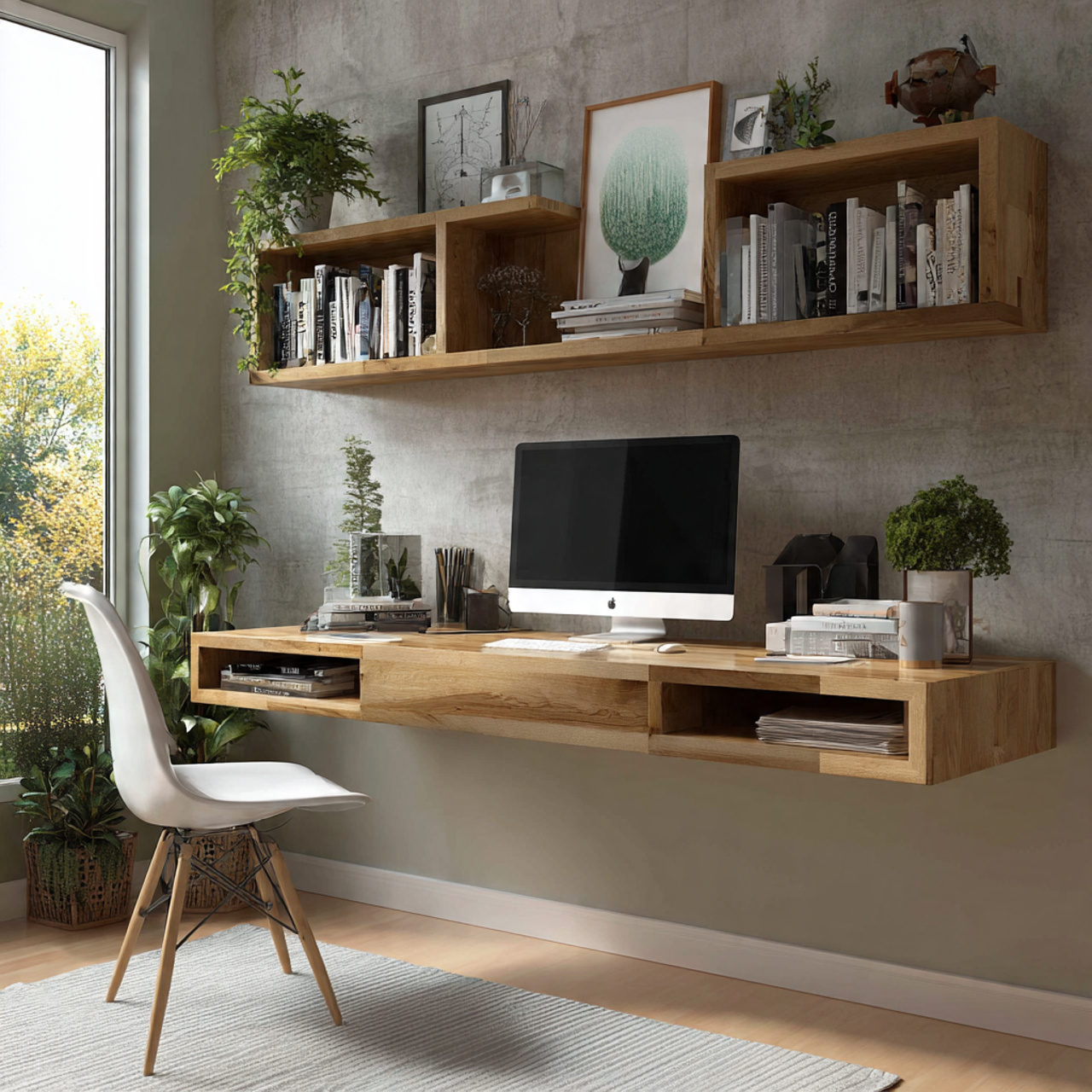
A floating study table keeps the floor visible which makes a small room feel larger. The open space underneath creates a light and modern look. This design reduces visual heaviness.
After trying traditional desks, I realized bulky furniture can make small rooms feel tighter. One regret I had earlier was choosing a thick wooden desk that crowded the room. Switching to floating design improved movement instantly.
Pair the floating desk with a slim chair and wall shelves. This creates storage without adding bulk. The space feels organized and breathable.
Tip: Install floating desks at comfortable sitting height.
Corner Study Table That Turns Empty Space Into Productivity Zone
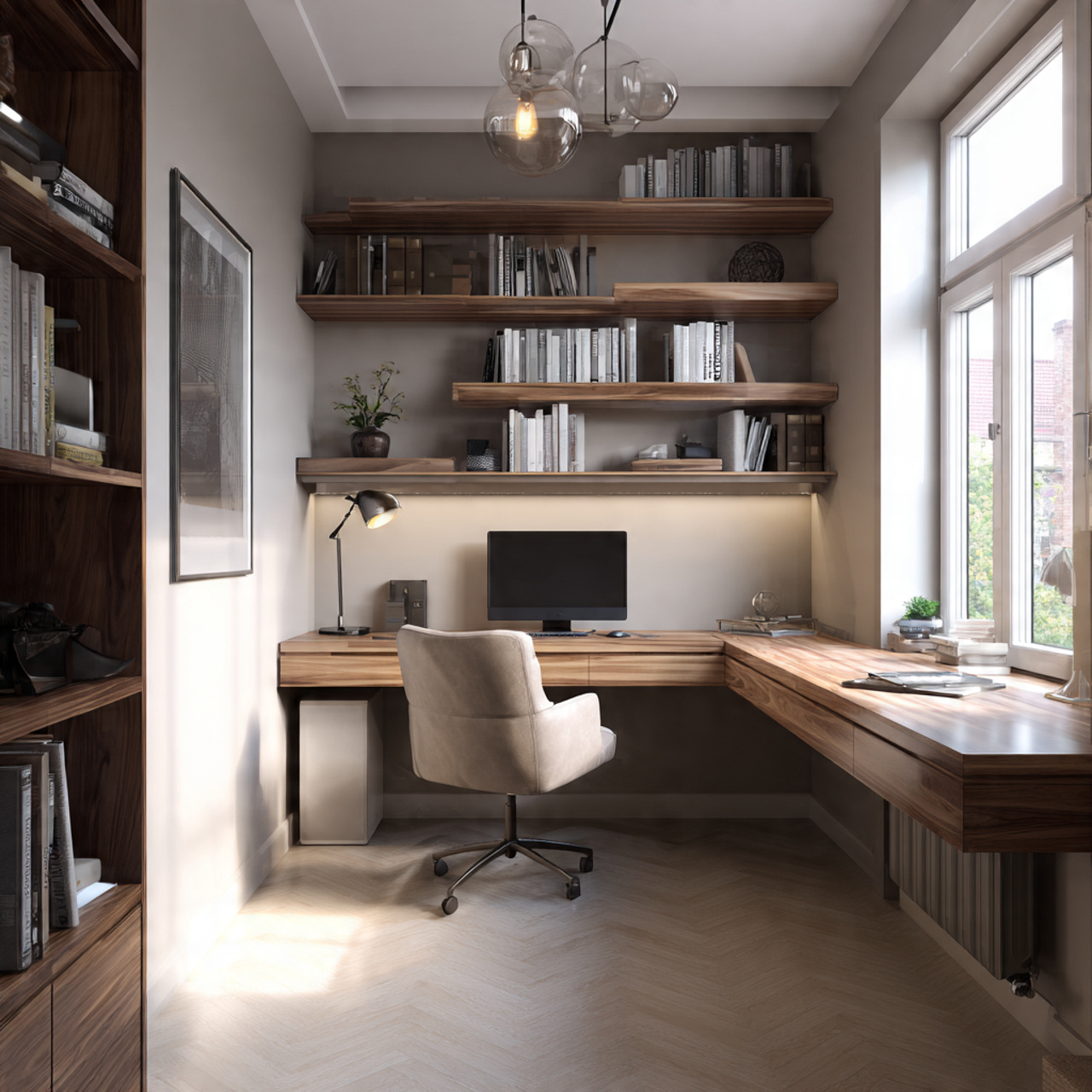
Corners often remain unused but placing a study table there transforms the space. This layout keeps the center of the room open and improves movement. It also creates a cozy study zone.
I have seen corner setups work well in compact bedrooms where standard desks block walking space. The corner naturally creates a focused area without making the room feel crowded. This layout feels intentional.
Use an L shaped desk or compact corner table. Add a small lamp or shelf above for functionality. This keeps the area practical and visually balanced.
Tip: Choose light color desk for smaller rooms.
Built In Study Table That Feels Like a Custom Designer Feature
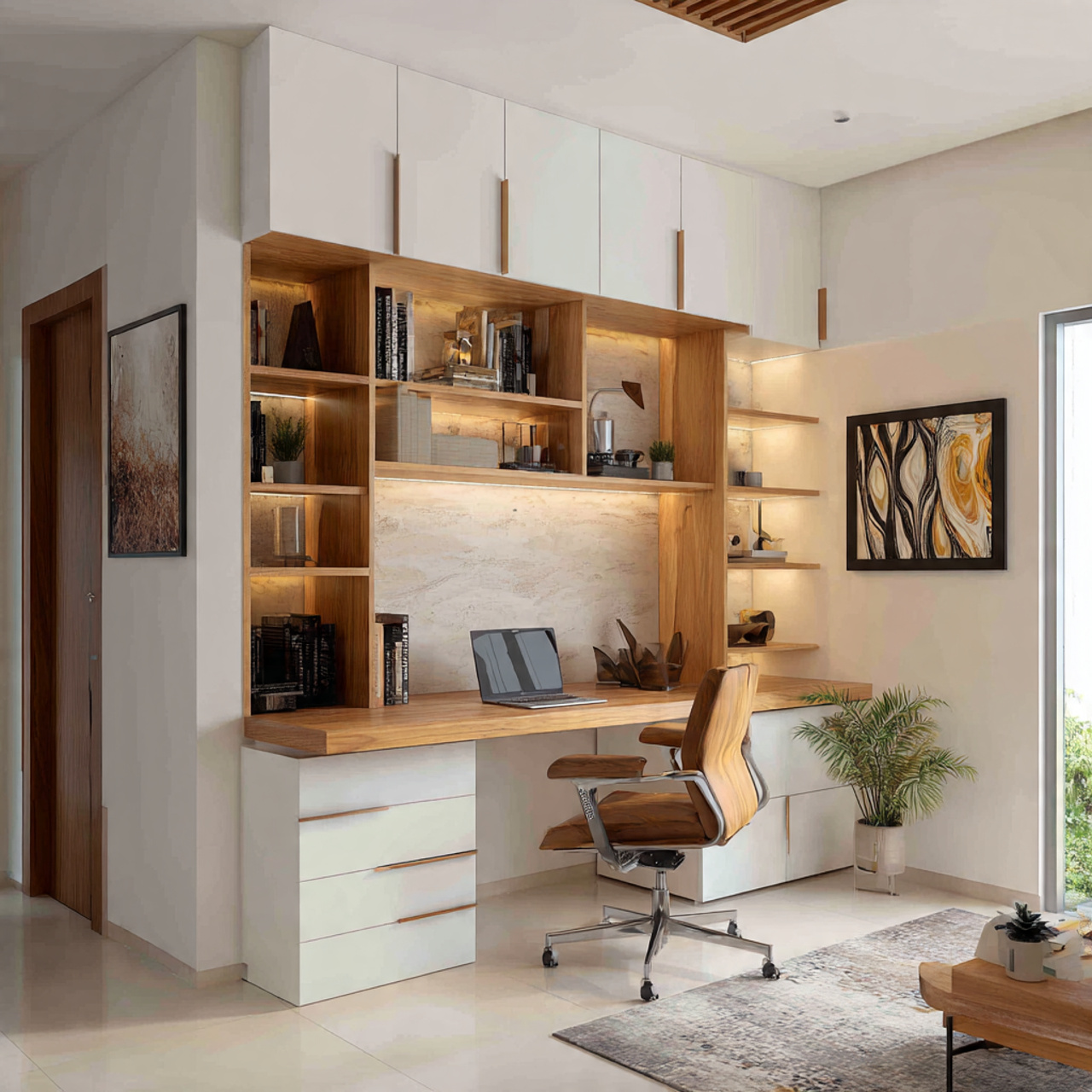
A built in study table blends seamlessly into the room layout. It feels like part of the architecture instead of separate furniture. This creates a clean and polished appearance.
After living with a built in desk, I noticed the room stayed more organized over time. Because the desk looked permanent, clutter reduced naturally. The space felt more structured.
Add shelves above and drawers below for storage. This improves function without adding visual weight. The result looks cohesive.
Tip: Match desk color with wall or wardrobe.
Wooden Study Table That Brings Warm Cozy Study Atmosphere
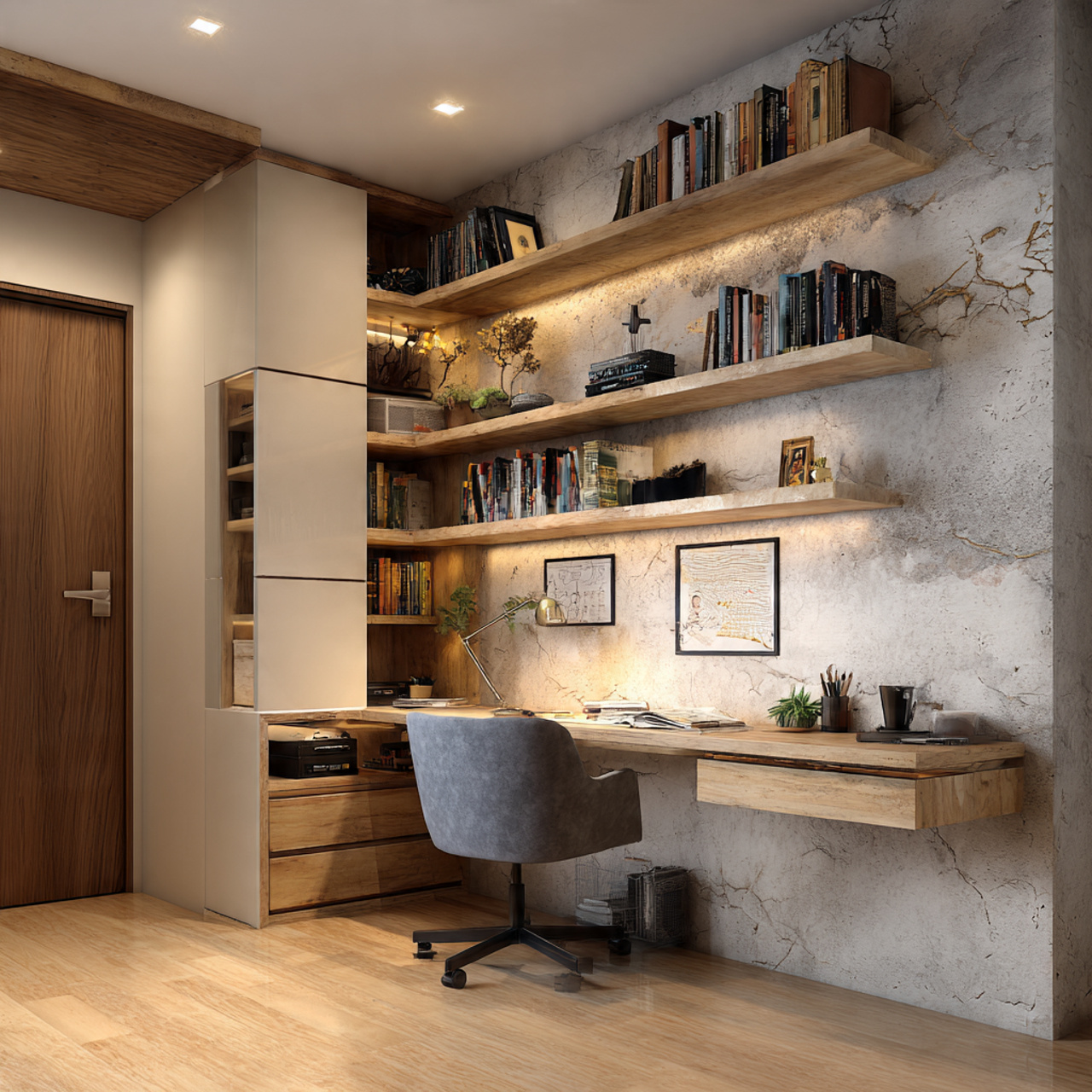
A wooden study table adds warmth that softens the room instantly. Natural textures create a comfortable and welcoming study environment. This setup works well in both modern and traditional spaces.
In real homes, wooden desks age better than glossy finishes. Small marks blend naturally into wood textures. This makes the space feel lived in rather than overly styled.
Pair wooden desks with neutral chairs and warm lighting. This creates relaxed evening reading environment. The space feels calm and inviting.
Tip: Choose light wood tones for small rooms.
Minimal White Study Table That Creates Clean Focused Space
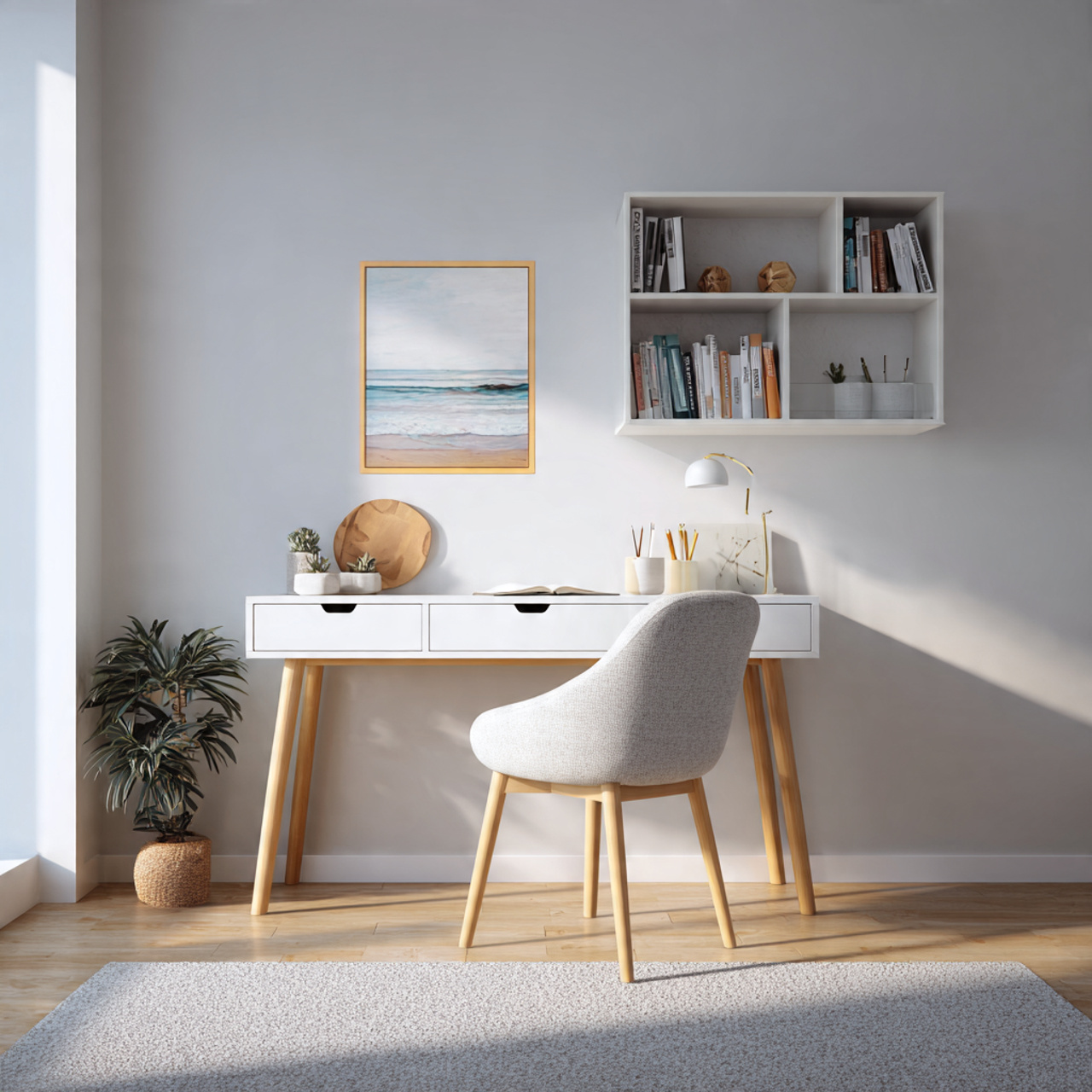
A white study table visually disappears into the room. This makes the area feel uncluttered and calm. Minimal setups improve concentration.
At first I thought white desks would feel plain, but they proved surprisingly versatile. They adapt easily to different decor styles. Small decorative accents stand out beautifully.
Keep accessories minimal and add soft lighting. This creates balance and comfort. The desk remains functional.
Tip: Use warm lighting with white desks.
Study Table With Shelves That Keeps Everything Within Reach
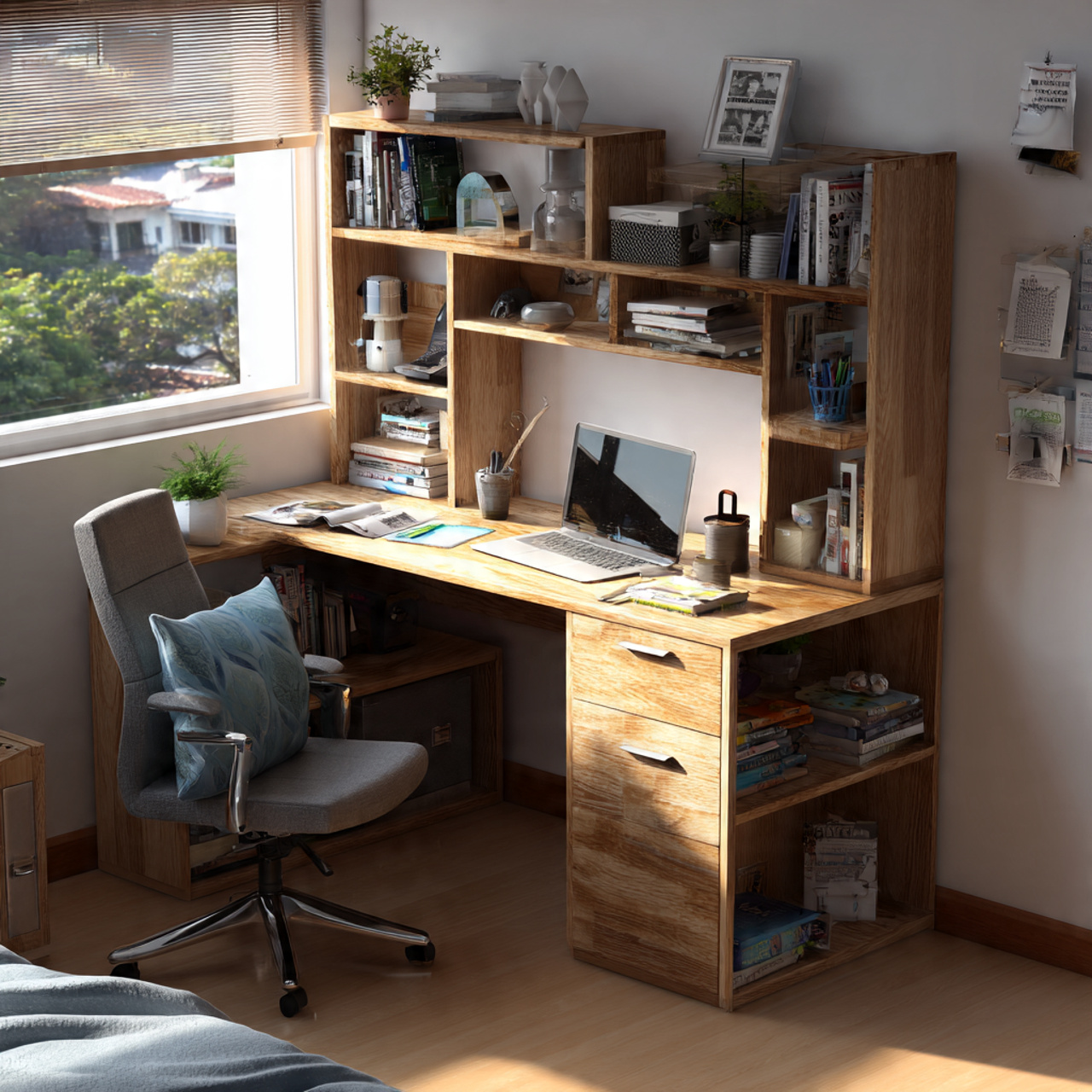
A study table with shelves keeps books and daily supplies organized in one place. This reduces the need for extra storage furniture. The workspace feels clean and easier to use.
I once used a plain desk without storage, and clutter started building up quickly. Books and notebooks covered the surface and made the space distracting. Adding shelves immediately improved the setup.
Choose open shelves to keep the space visually light and balanced. Keep only essential items on display and store the rest neatly. This helps maintain a calm and organized workspace.
Tip: Avoid overcrowding shelves to keep the study area clean and comfortable.
Bedside Study Table That Works in Very Small Bedrooms
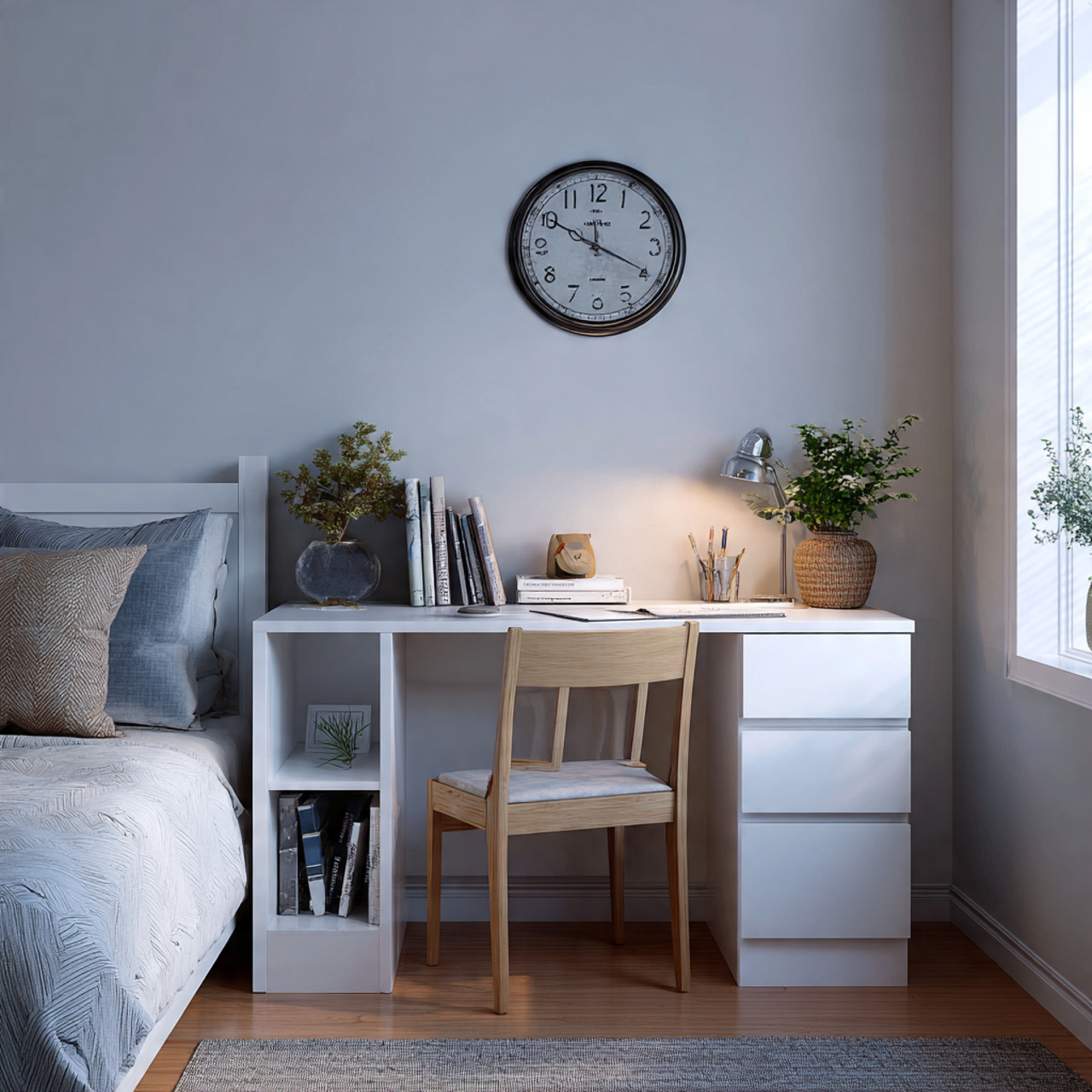
Placing a study table beside the bed helps save space in compact bedrooms. This layout uses an area that often remains unused. It keeps the room functional without adding extra furniture.
In small apartments, bedside desks can create a quiet and comfortable reading corner. Late evening studying feels more relaxed when everything is within reach. This setup also makes the room feel cozy and practical.
Choose narrow desks and lightweight chairs to avoid overcrowding the space. Keep accessories minimal so the area remains clean and balanced. A simple setup helps maintain comfort and movement.
Tip: Use wall mounted lighting to free up desk space and improve visibility.
Study Table With Soft Lighting for Relaxed Evening Studying
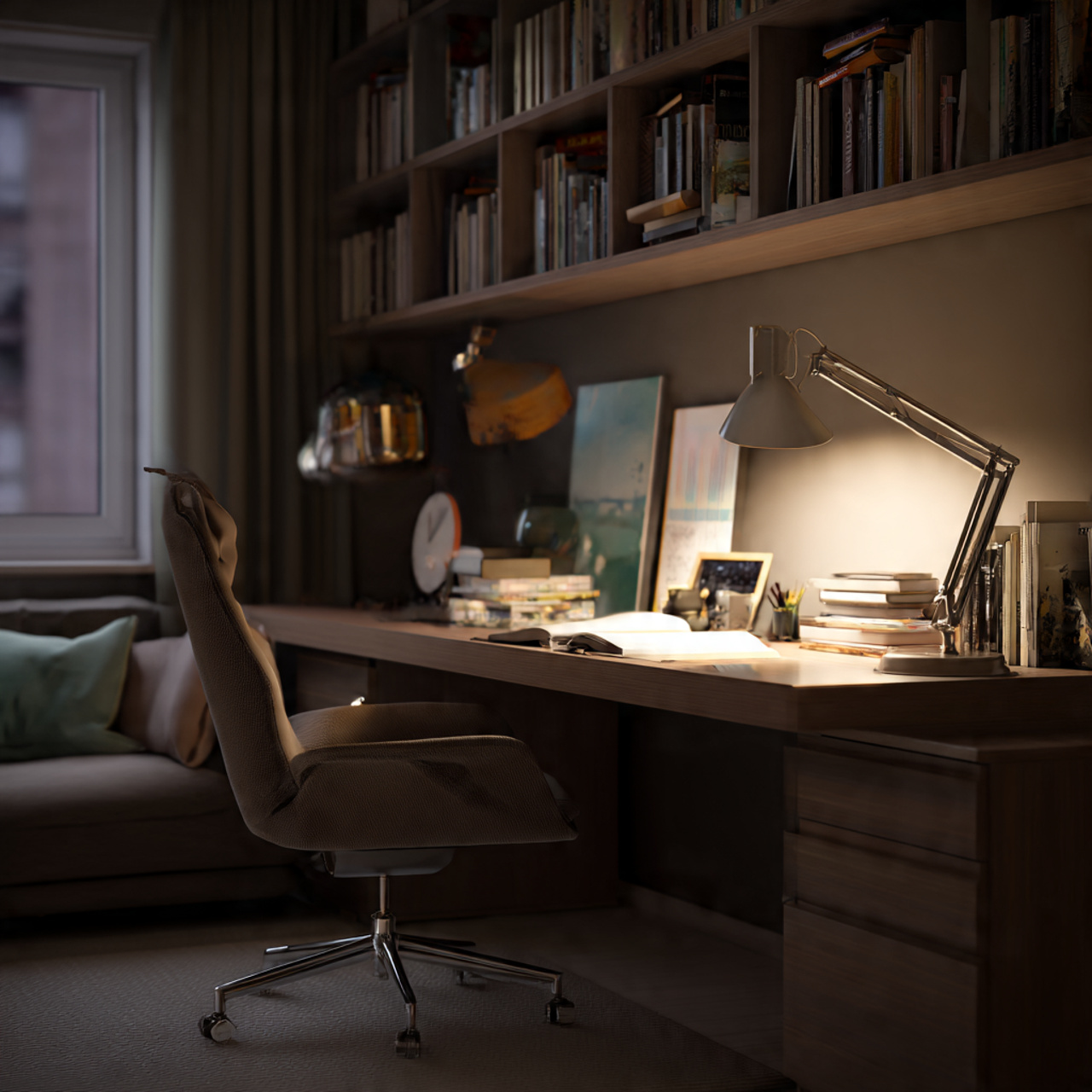
Soft lighting transforms a study table into a comfortable evening workspace. Warm light creates a calm atmosphere that feels relaxing after a long day. This setup helps improve focus without feeling harsh or distracting.
After experimenting with bright lights, I noticed softer lighting reduced eye strain significantly. The desk felt more inviting and easier to use during longer sessions. This made studying in the evening feel more comfortable.
Use a small desk lamp or wall mounted light for gentle illumination. Layered lighting helps balance brightness without overpowering the space. The study area feels warm and more welcoming.
Tip: Choose warm white bulbs to create a relaxed and cozy study environment.
Study Table for Two That Creates Shared Study Space
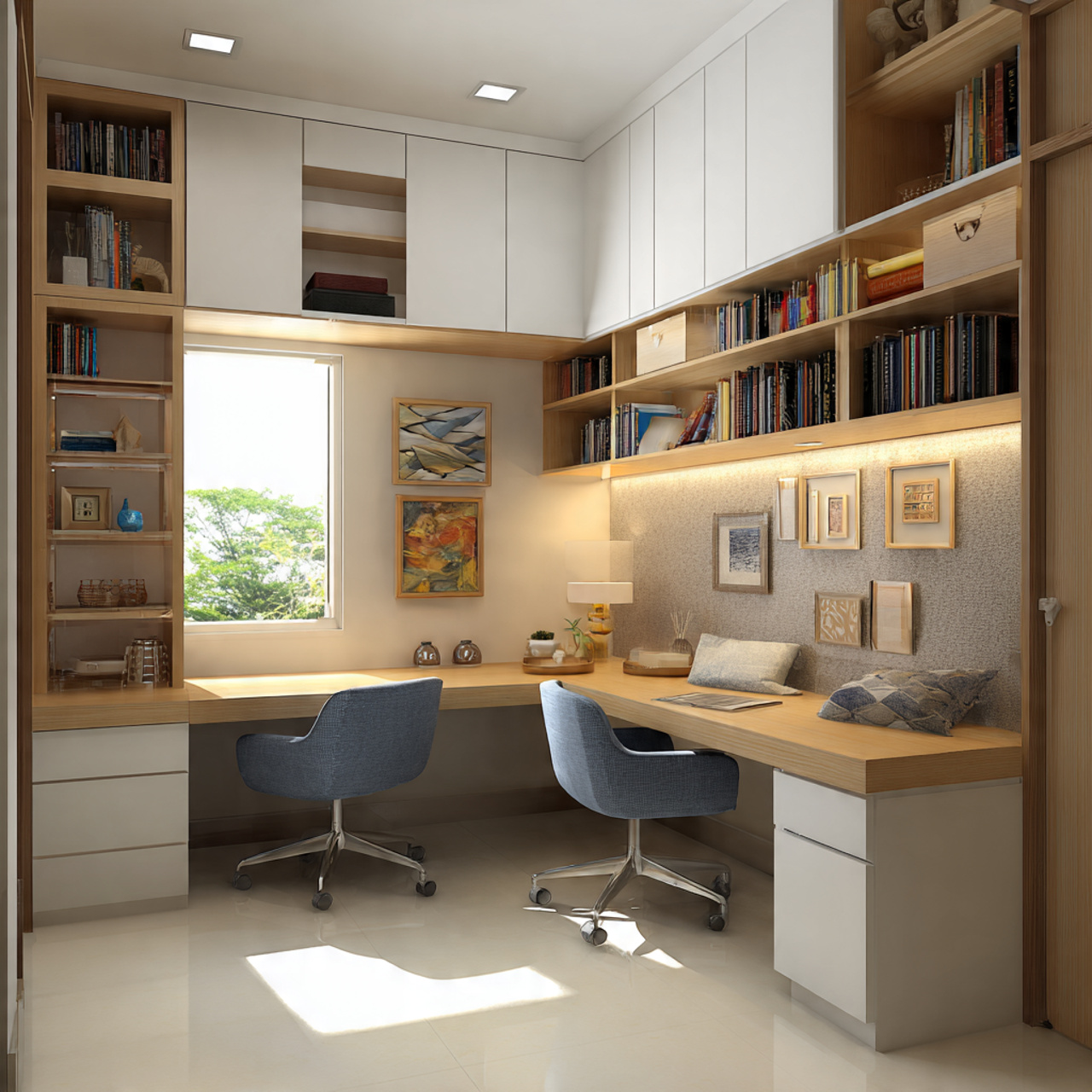
A study table for two works well in shared bedrooms where space needs to be used efficiently. This layout creates a collaborative workspace without adding extra furniture. It also helps keep the room balanced and organized.
I have seen this setup work well for siblings, roommates, and even couples sharing a room. A shared desk keeps everything in one area and reduces clutter in other parts of the room. This arrangement often improves efficiency and comfort.
Use a long desk with separate storage areas for each person. Keep the layout symmetrical so the workspace looks clean and balanced. This helps maintain a calm and functional environment.
Tip: Keep equal spacing between both seating areas for comfort and better movement.
Pastel Study Table Setup That Feels Soft and Aesthetic
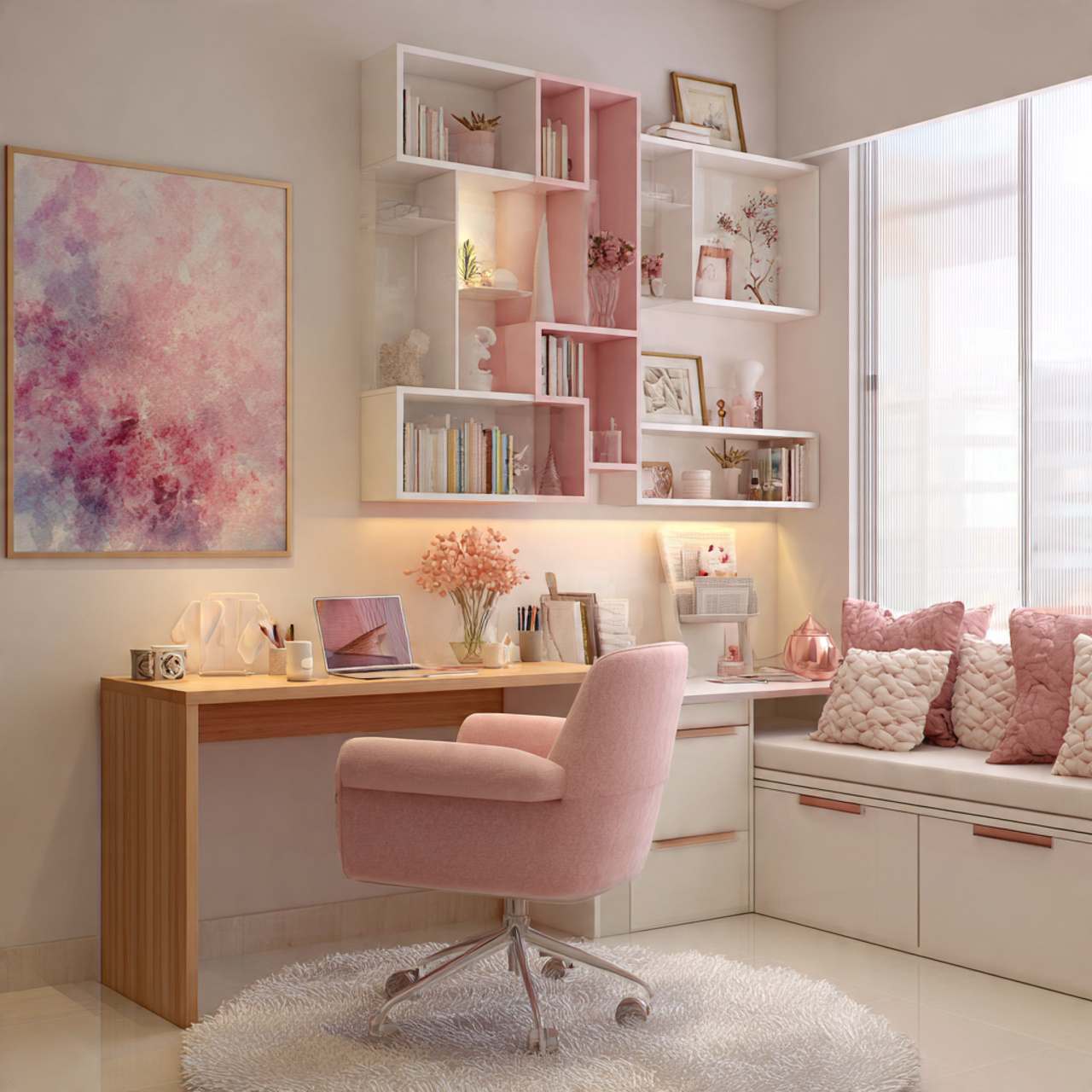
Pastel tones create a calming study environment that feels soft and inviting. Gentle colors brighten the space without overwhelming the room. This helps improve mood and makes the workspace more comfortable.
Pastel desks work especially well in small bedrooms where lighter colors help reflect natural light. The soft tones make the room feel more open and airy. This creates a relaxed and pleasant study atmosphere.
Add minimal decor and soft accessories to maintain a balanced look. Keep the color palette consistent so the workspace feels cohesive. A simple pastel setup often looks clean and aesthetically pleasing.
Tip: Use two pastel tones to keep the design soft and visually balanced.
Visit Also: Reading Nook
Study Table Near Wardrobe That Maximizes Bedroom Layout
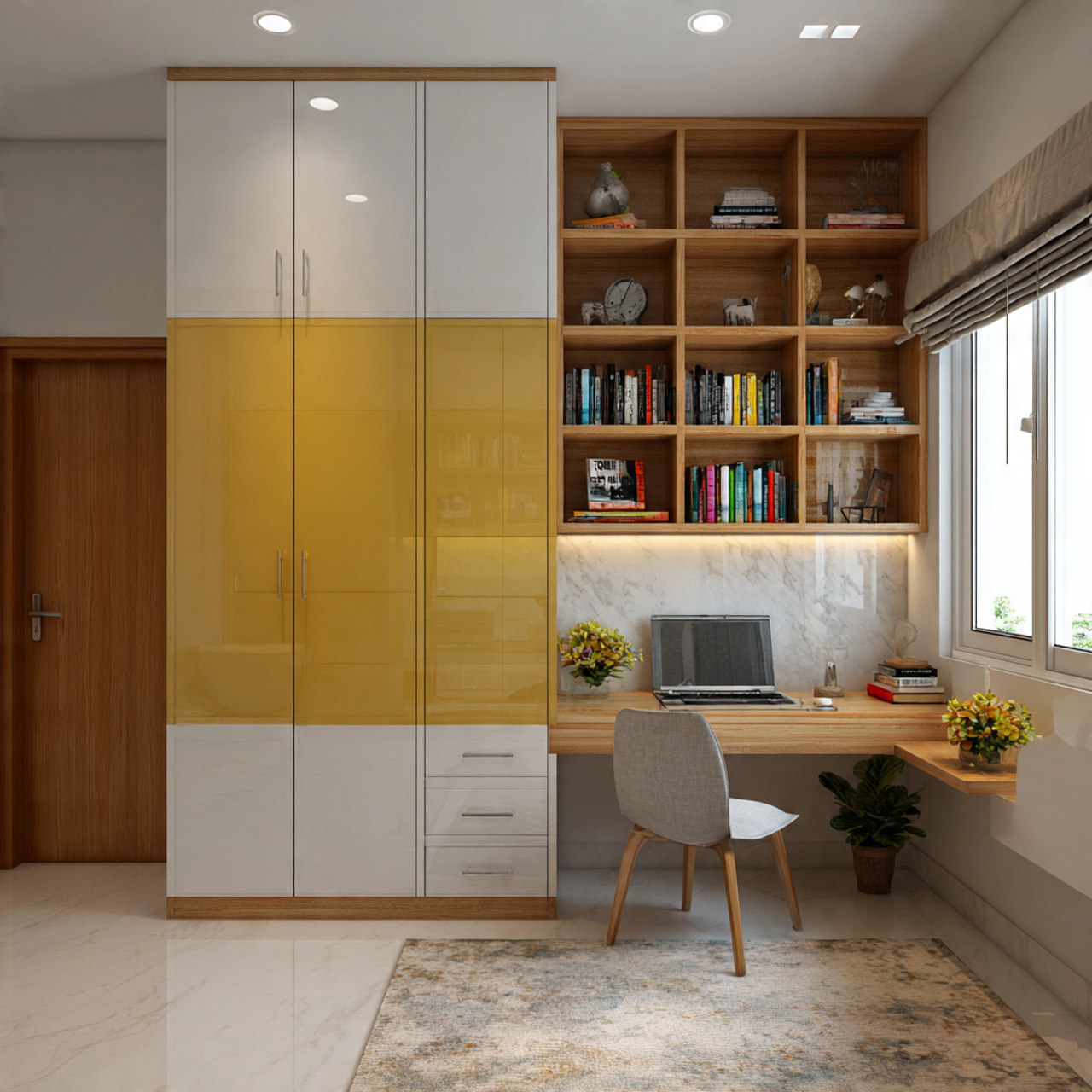
Placing a study table near the wardrobe helps group furniture in one area. This frees up other walls and keeps the room looking more open. The layout begins to feel structured and easier to navigate.
I once avoided placing desks near wardrobes, but it worked surprisingly well in smaller rooms. Keeping furniture together made the space feel more organized and less cluttered. Over time, this layout improved both comfort and functionality.
Choose a compact desk and maintain enough walking space between the wardrobe and table. Keeping the setup simple helps avoid crowding and improves movement. This approach keeps the room balanced and practical.
Tip: Keep a small gap between the wardrobe and desk for comfortable movement.
Compact Study Table That Fits Into Small Bedroom Corners
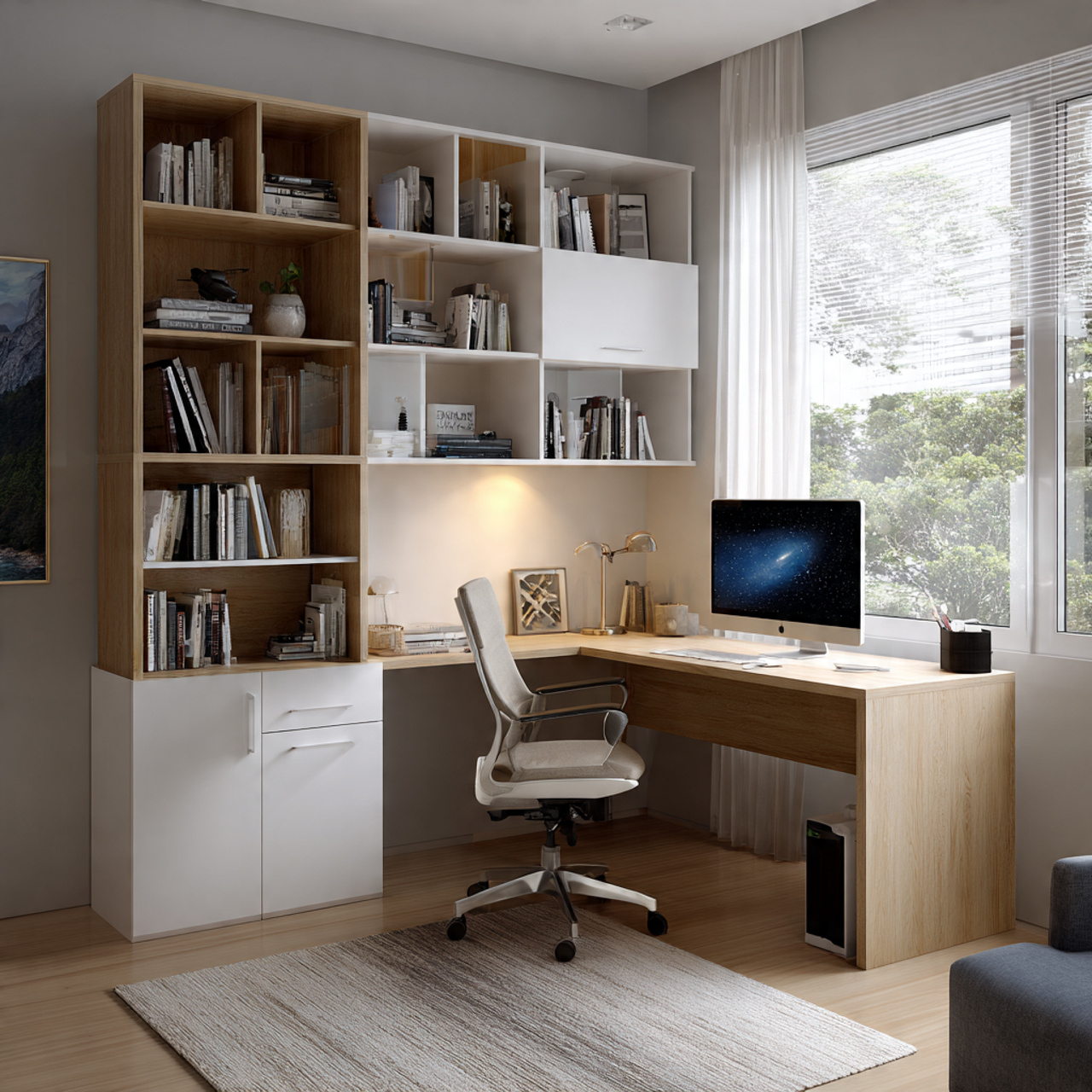
Compact study tables fit small spaces easily and help reduce visual clutter. Their smaller footprint keeps the room feeling open and easier to move around. This makes them ideal for bedrooms with limited space.
Small desks also create a focused workspace without overwhelming the room. They help maintain balance between furniture pieces and improve overall layout. The space feels cozy while still remaining functional.
Choose lightweight designs and keep decor minimal to avoid crowding the area. Leaving some empty space around the desk improves comfort and movement. This helps the room feel calm and organized.
Tip: Use a slim chair to save space and maintain a clean layout.
A Real Bedroom Layout With a Study Table
Imagine a small bedroom where a wooden study table sits beside a window with soft morning light filtering through curtains. A simple chair, a few books, and a small lamp create a calm and inviting workspace. The natural light helps the corner feel open and comfortable throughout the day.
Across the room, the bed and wardrobe remain uncluttered to maintain a clean layout. In the evening, warm lighting creates a relaxed and cozy mood for reading or planning the next day. The overall space feels balanced, functional, and comfortable for everyday use.
Color and Material Authority
Soft Warm White (#F5F5F5) works beautifully for walls and study tables, creating a bright and calm atmosphere. This shade reflects natural light and helps small rooms feel more open. It pairs well with light wood textures, neutral fabrics, and minimal decor.
Light Oak Wood (#D6B48C) adds warmth and natural texture to study tables and shelves. This tone makes the workspace feel cozy without making the room look heavy. It pairs nicely with linen fabrics, white accents, and soft lighting.
Dusty Pastel Blue (#AEC6CF) creates a calm and relaxing aesthetic for study areas. The soft color brightens the room while maintaining a gentle visual balance. It works well with white furniture, light wood, and minimal accessories.
Warm Beige (#E8DCCB) provides neutral balance and soft warmth in bedroom study setups. This color helps create a comfortable and inviting workspace. It complements wooden desks, warm lighting, and simple decor elements.
Study Table Lighting Guide
Small Room Lighting
Use soft warm lighting to prevent harsh shadows and reduce eye strain. Balanced lighting helps the study area feel more comfortable and visually calm.
Window Study Tables
Natural light works best during the day and improves focus naturally. Sheer curtains help soften brightness and prevent glare on the desk.
Evening Study Lighting
Warm desk lamps create a relaxed atmosphere for evening studying. Avoid harsh overhead lighting that can make the workspace uncomfortable.
Dark Room Solutions
Use layered lighting to improve brightness in darker rooms. Combine a desk lamp with ceiling light for balanced illumination.
Common Study Table Mistakes
Choosing Oversized Study Table
Large study tables often look appealing at first, but they can quickly overwhelm small rooms and make the space feel cramped. When movement becomes restricted, the room starts to feel uncomfortable and less functional over time. Choosing a compact or proportionate study table helps maintain balance and allows the space to feel more open and comfortable.
Poor Lighting Placement
Poor lighting placement is one of the most common mistakes when setting up a study table. Back lighting or overhead lighting alone can create shadows on the desk surface and lead to eye strain during long study sessions. Using side lighting, adjustable lamps, or layered lighting improves visibility and makes the workspace more comfortable.
Ignoring Storage Needs
Ignoring storage needs often leads to clutter building up on the study table very quickly. Books, stationery, and small items begin to pile up, making the workspace feel messy and distracting. Adding shelves, drawers, or small organizers helps maintain a clean and functional study area.
Placing Desk in Dark Corner
Placing a study table in a dark corner can reduce motivation and make the workspace feel dull. Poor lighting also makes the room feel smaller and less inviting throughout the day. Choosing a brighter location near natural light helps create a more comfortable and productive study environment.
Study Table FAQ
Where should a study table be placed?
A study table works best near a window or in a quiet corner with minimal distractions. Natural light improves focus and makes the workspace feel more comfortable. If natural light is limited, use soft layered lighting to create a balanced study area.
What size study table is best?
Compact study tables work best for small rooms because they save space while still offering enough working area. Choose a size that allows comfortable seating and easy movement. A well proportioned desk helps maintain a balanced room layout.
Should study table face window?
Facing a window creates a calm workspace and improves natural lighting during the day. This setup often makes studying feel less tiring and more comfortable. If distractions are a concern, place the desk slightly angled instead.
What material is best for a study table?
Wood and engineered wood are popular choices because they are durable and easy to maintain. Wooden desks also add warmth and blend well with most room styles. Choosing sturdy materials helps the table last longer.
How to make study table aesthetic?
Keep the desk clean and add minimal decor like a lamp or small plant. Soft lighting and neutral colors help create a calm and organized look. A simple setup usually feels more aesthetic and comfortable.
Conclusion
A study table can completely change how a room feels when placed thoughtfully and styled with intention. The right layout, lighting, and size help create a calm and productive workspace that blends naturally with the rest of the room. Even small study table adjustments can make a noticeable difference in comfort, organization, and daily focus.
Start with one simple change such as repositioning your study table near natural light or choosing a compact design that fits your space better. Adding soft lighting, minimal storage, or a comfortable chair can also improve how the area feels and functions. Small improvements often create a more balanced, inviting, and practical workspace that supports everyday productivity.