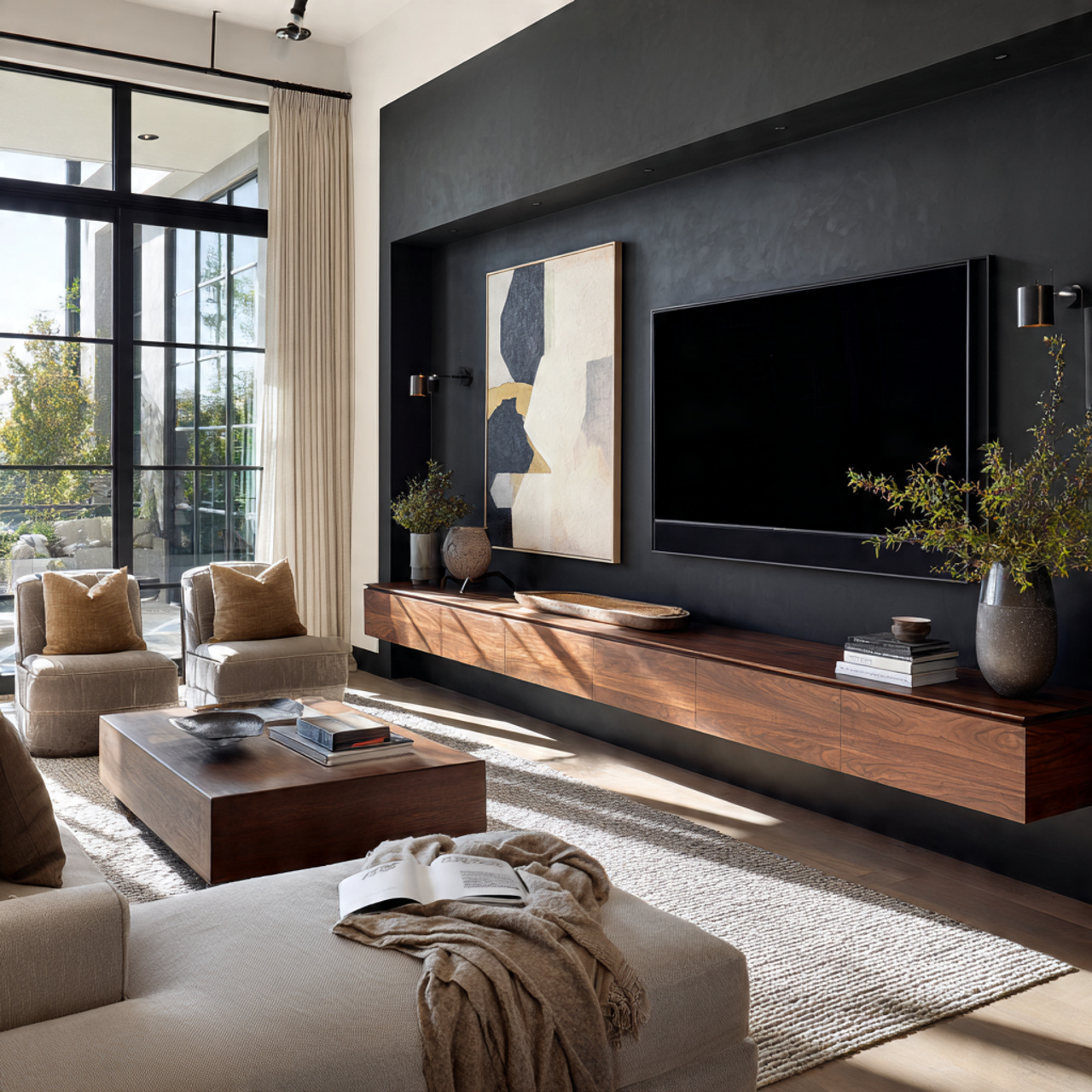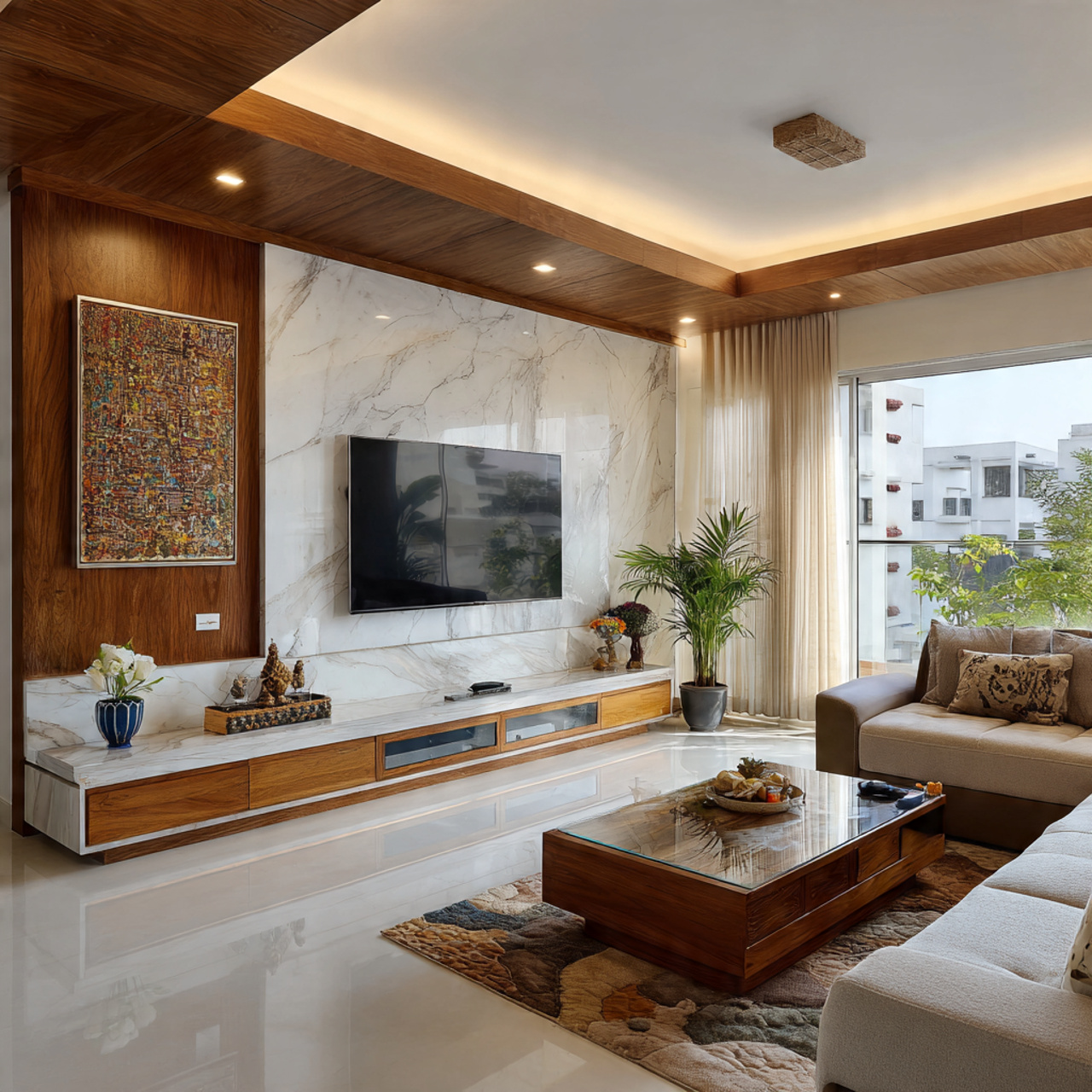
19 Smart TV Unit Design Modern Ideas for Calm Living Rooms
In many real homes, the TV wall quietly becomes the emotional center of daily life. It’s where evenings slow down after work, conversations unfold without planning, and the small messes of everyday living naturally appear.
This article on tv unit design modern focuses on ideas that continue to feel right after the excitement of installation fades. These are lived-in, practical solutions shaped by how people actually use their living rooms, helping the TV wall remain calm, functional, and visually settled for years rather than months.
Style / Trend Context of TV Unit Design Modern
Living rooms today are no longer formal, static spaces. They flex constantly between work breaks, relaxed family time, quiet solo evenings, and casual hosting, often within limited square footage.
Because of this shift, people are moving away from dramatic TV walls that dominate attention. Modern TV unit design now prioritizes designs that soften the presence of the screen and reduce visual noise. Units are expected to support daily routines quietly rather than act as decorative centerpieces.
What keeps people drawn to these ideas over time is comfort. When the TV unit blends into the room and handles wear, clutter, and changing habits gracefully, the space feels easier to live in. That sense of ease is what defines modern design today.
Color & Material Authority of TV Unit
Color and material choices determine whether a TV unit feels integrated or intrusive. In real homes, finishes must manage dust, fingerprints, and shifting daylight while remaining visually calm.
Soft Greige (#D6D1CB)
Best for full-wall panels or background walls. The warm-neutral undertone prevents flatness and reduces glare during daytime viewing. Matte or eggshell finishes pair naturally with linen or cotton upholstery, helping the space feel relaxed rather than styled.
Muted Walnut Brown (#6B4F3F)
Ideal for cabinets and floating drawers. The warmth grounds the TV visually and creates a sense of permanence. Satin finishes age well and pair comfortably with wool rugs and leather seating.
Charcoal Taupe (#4A4742)
Best for lower cabinets or slim framing elements. The neutral-cool undertone adds depth without heaviness. Satin finishes pair well with textured cotton or boucle and reduce visible dust.
Warm Off-White (#F4F1EC)
Suited for surrounding walls rather than the TV panel itself. The warmth softens contrast with the screen and feels comfortable in natural light. Matte finishes work especially well in family spaces.
Dusty Clay Beige (#CBB8A5)
Works well in accent niches or shelving zones. The warm undertone adds subtle dimension without overpowering the wall. Eggshell finishes pair easily with ceramics and woven decor.
Soft Stone Gray (#B7B9B6)
Best for minimalist units in bright rooms. The cooler undertone benefits from nearby warm wood elements. Satin paint balances cotton or wool textures without feeling stark.
In everyday use, finishes that absorb light slightly feel calmer during evening TV time than reflective surfaces. Linen, cotton, and wool help soften the area visually, while velvet or leather are better reserved for seating away from the screen.
Room Size & Lighting Quick Guide
| Room Condition | Best Approach | Avoid |
|---|---|---|
| Small rooms | Light mid-tones, floating units | Dark full-height cabinetry |
| Large rooms | Deeper wood tones, wider units | Narrow undersized consoles |
| North light | Warm woods, greige walls | Cool gray finishes |
| South light | Matte neutrals, low-gloss paint | High-gloss whites |
| Low light | Integrated lighting, lighter panels | Heavy black surfaces |
Core TV Unit Design Modern Ideas
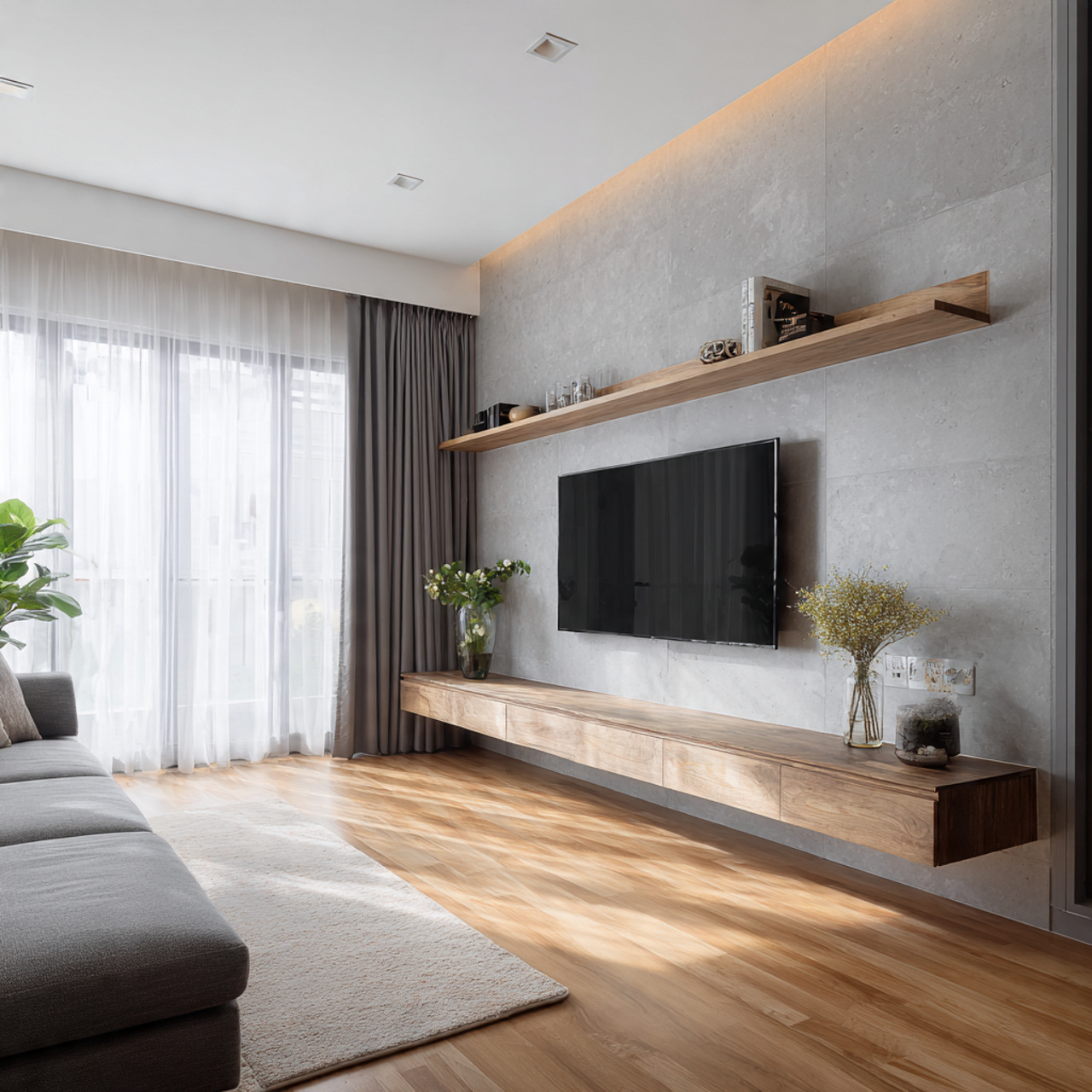
Floating TV Units That Keep the Floor Visually Open
What it is
A wall-mounted cabinet that sits above the floor, often paired with a slim TV panel or simple backdrop.
Why it works
Floating units reduce visual weight, which immediately makes rooms feel lighter and more breathable. In real homes, people notice over time that the space feels easier to clean and less boxed in, especially in apartments where every visual break matters. The uninterrupted floor line also makes furniture layouts feel more flexible rather than locked in.
How to apply it
Mount the unit 12–16 inches above the finished floor and keep depth under 16 inches to avoid bulk. Use proper wall anchors or studs. Costs typically fall between $250–$600 depending on materials and hardware.
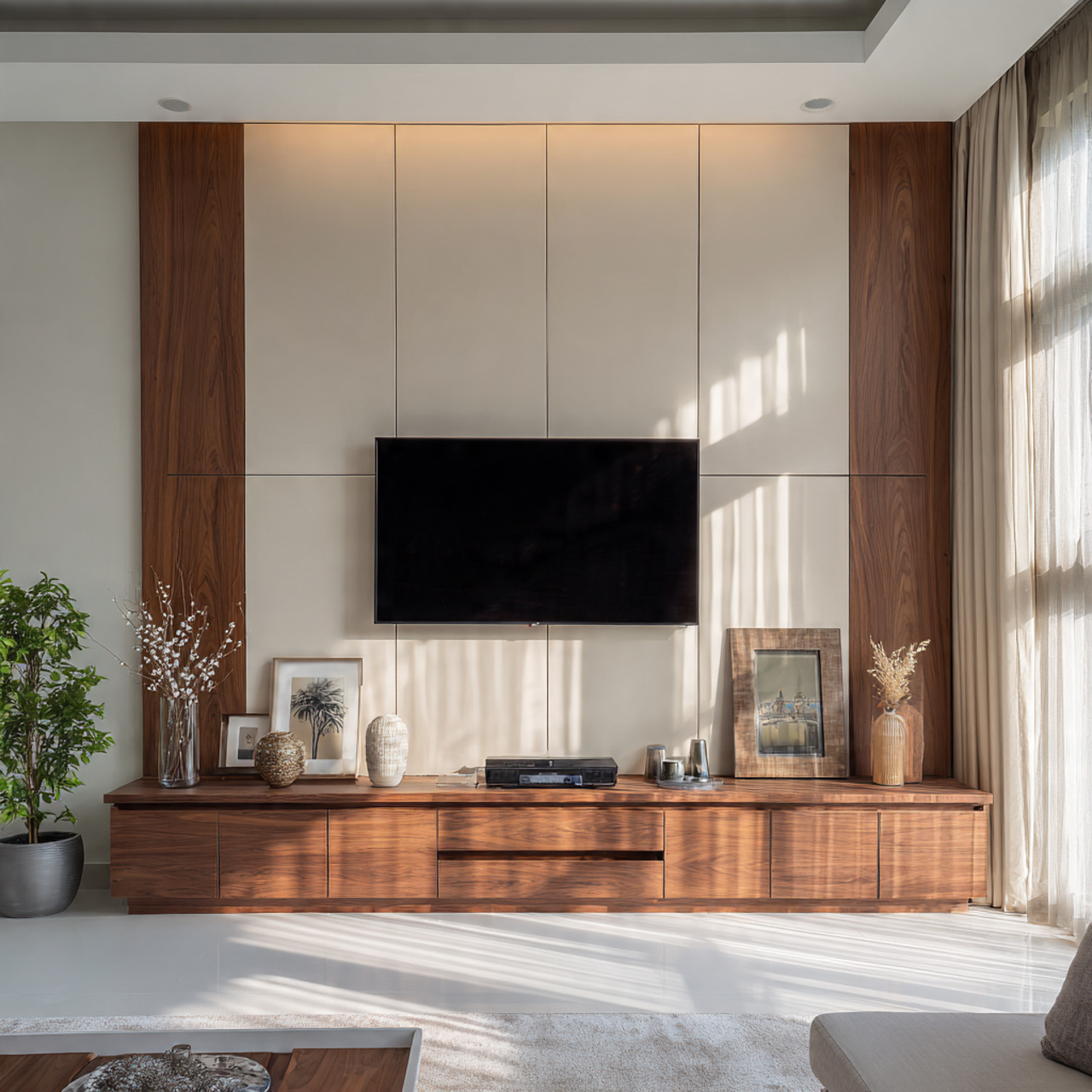
Full-Width TV Panels That Visually Anchor the Wall
What it is
A panel that extends beyond the TV on both sides, finished in veneer, laminate, or painted MDF.
Why it works
A full-width panel turns the TV into part of a larger composition instead of a floating black rectangle. Even months later, when decor changes, the wall still feels intentional. This approach prevents the TV from looking temporary or visually isolated.
How to apply it
Extend the panel 12–24 inches beyond the TV on each side. Keep thickness slim and finishes matte or satin. Installation usually takes one full day.
Low-Profile Consoles That Sit Below Eye Level
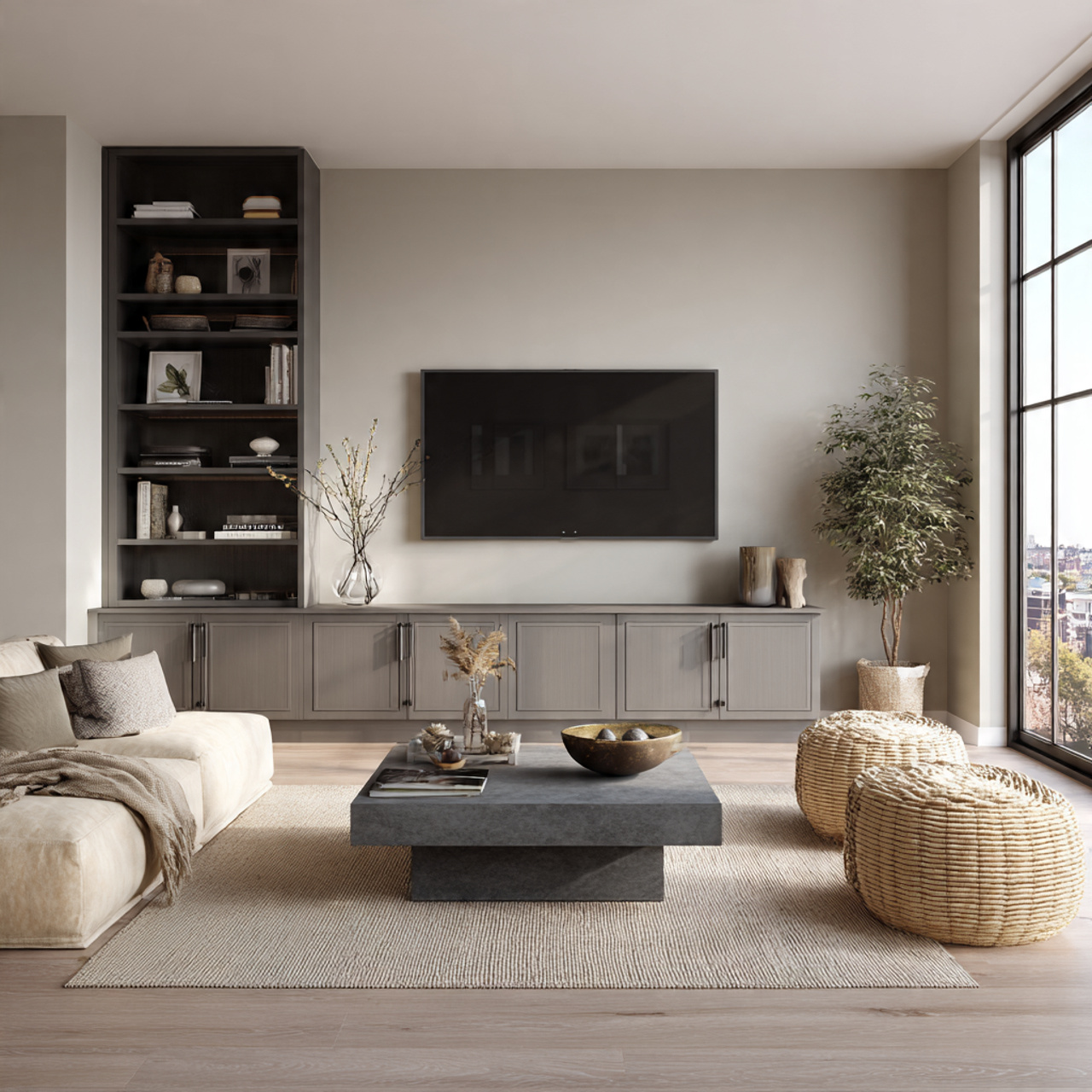
What it is
A long, low cabinet placed beneath the TV that visually grounds the screen.
Why it works
Low consoles feel calmer and more balanced in everyday use. People often regret tall units because they dominate sightlines and make rooms feel heavy. Lower profiles age better and integrate more naturally with sofas and seating arrangements.
How to apply it
Aim for a height of 18–22 inches with shallow depth. Budget ranges typically sit between $300–$800.
Open and Closed Storage Mix for Real Life
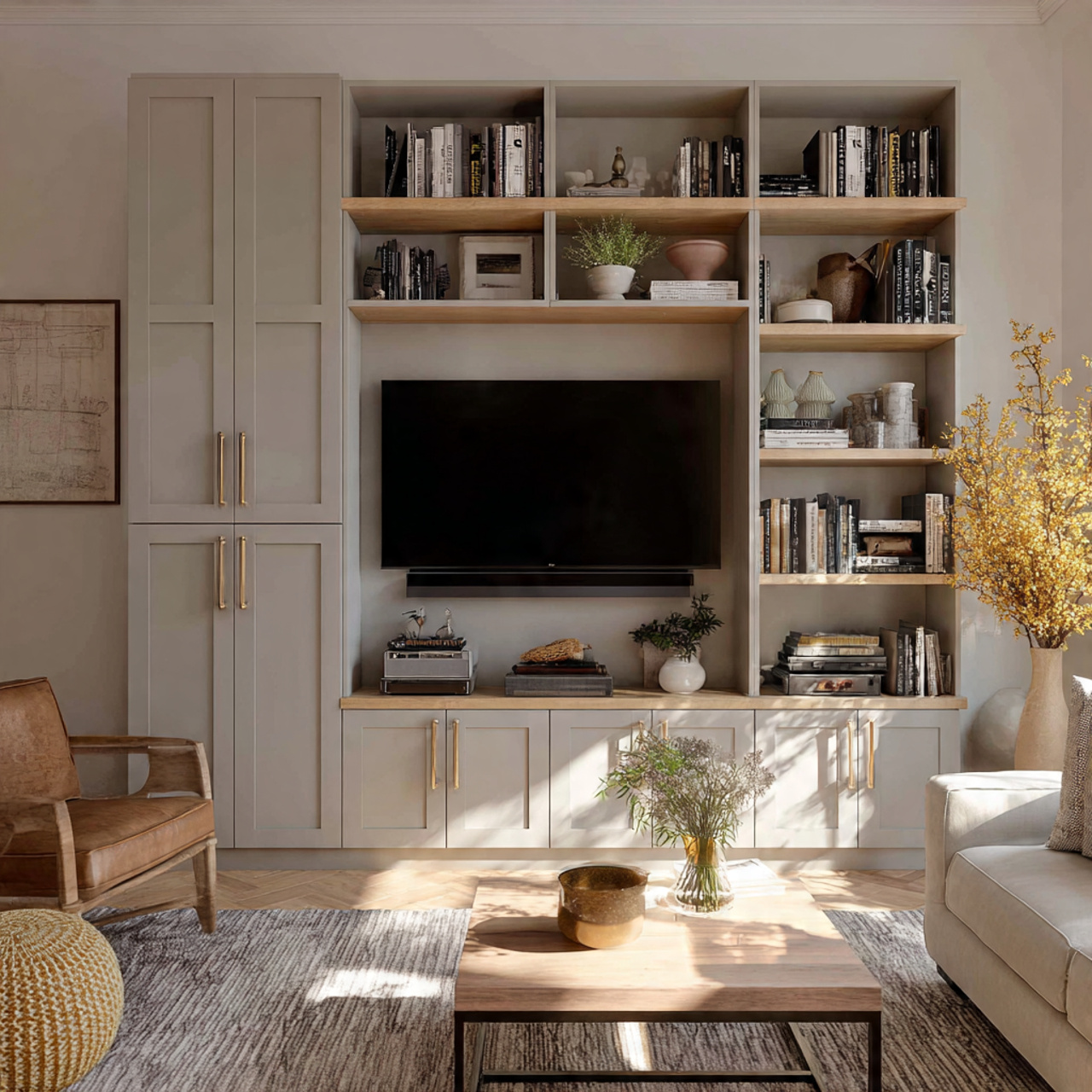
What it is
A thoughtful combination of concealed cabinets with a smaller amount of open shelving.
Why it works
Fully open shelving looks appealing initially but creates constant pressure to keep things styled. Mixed storage allows everyday clutter to disappear while still leaving room for personal items. Over time, this balance feels more forgiving and livable.
How to apply it
Limit open shelving to 30–40 percent of the unit. Reserve closed drawers for remotes, cables, and devices.
Warm Wood Finishes That Soften Modern Lines
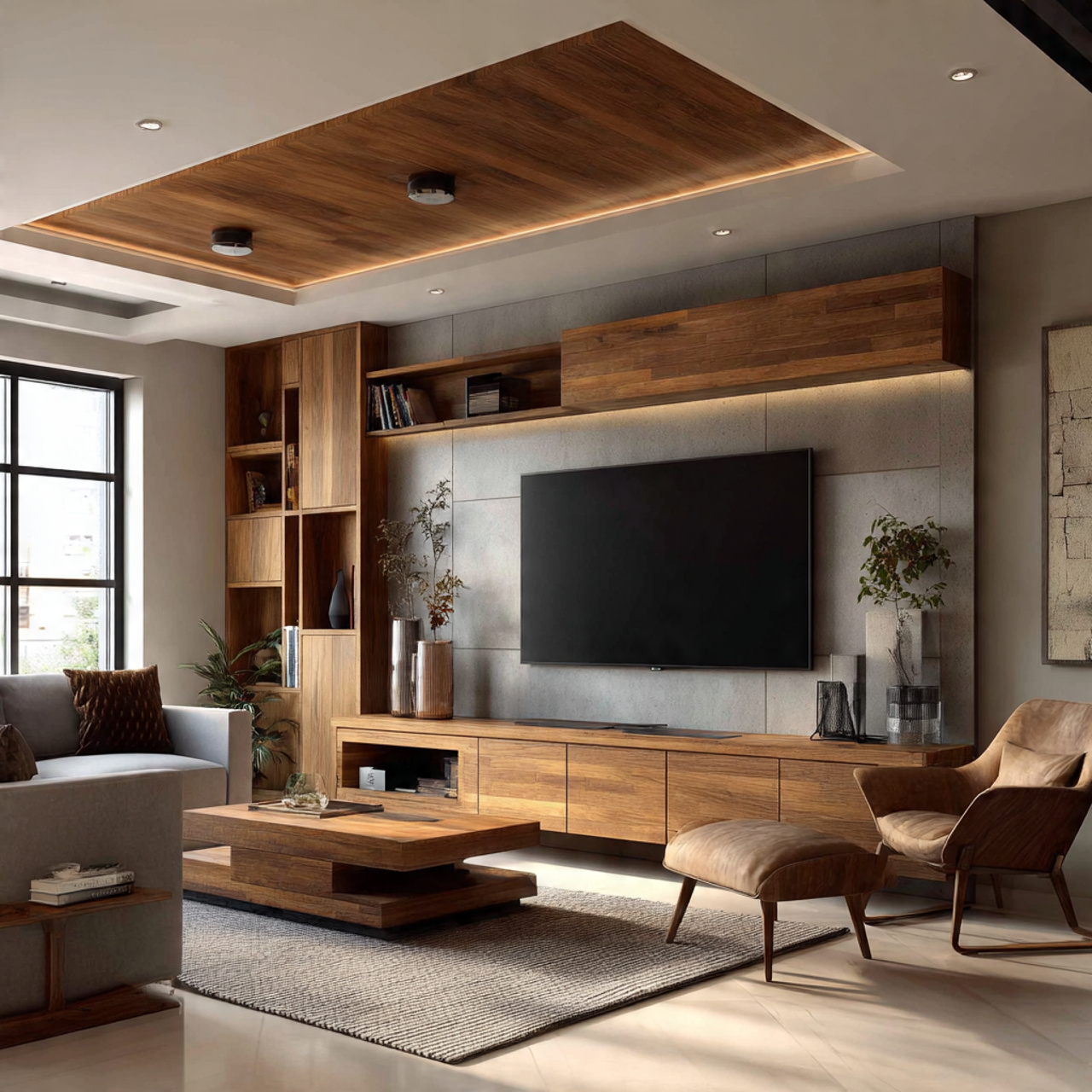
What it is
Natural wood or wood-look finishes paired with clean, modern silhouettes.
Why it works
Wood offsets the coldness of screens and adds a human quality that feels welcoming. In real homes, wood finishes hide minor wear better than glossy surfaces and continue to feel comfortable long after trends shift.
How to apply it
Choose mid-tone woods like walnut or oak with matte or satin finishes for durability and longevity.
Neutral Backdrops That Let the TV Recede
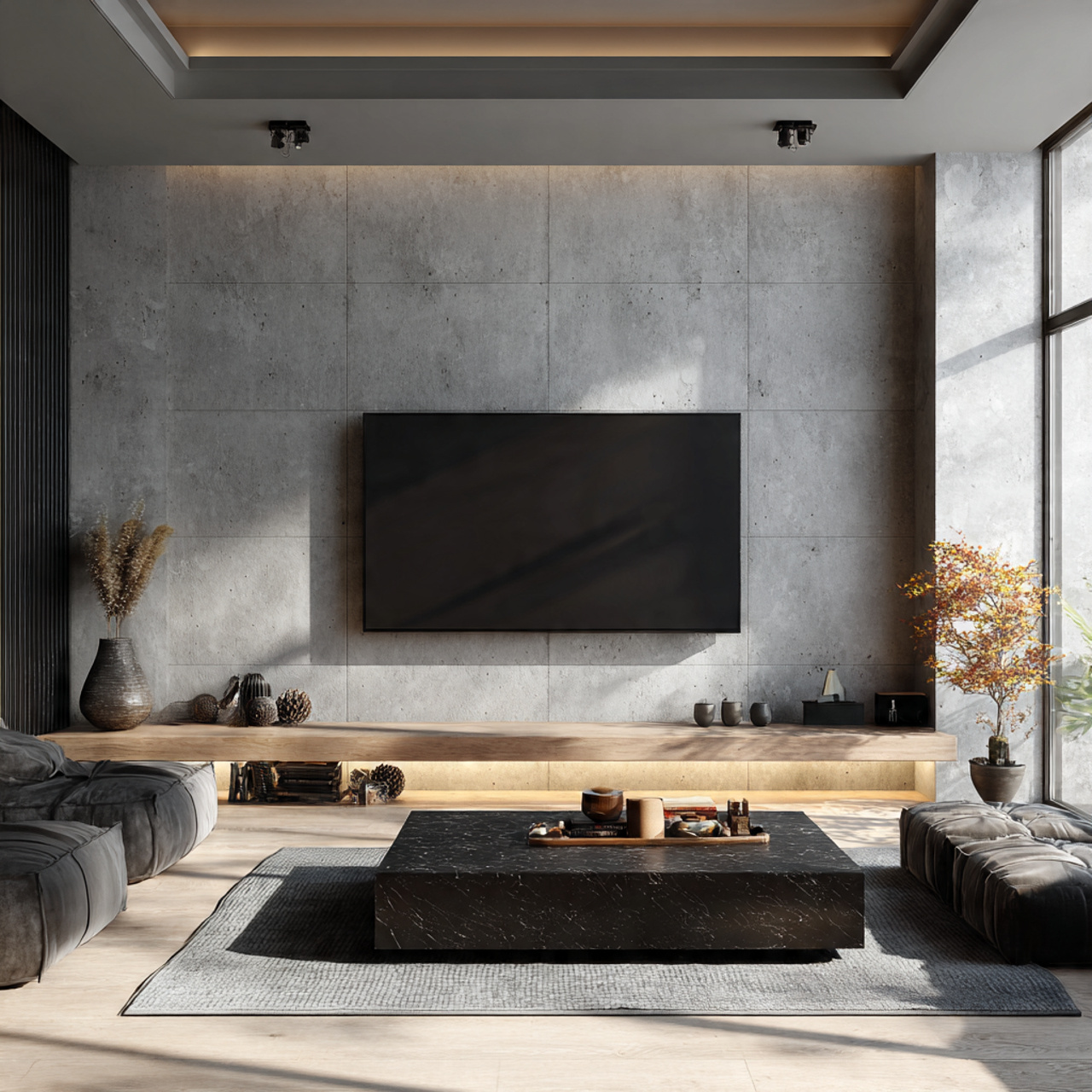
What it is
Soft, low-contrast wall colors or panels placed behind the TV.
Why it works
A neutral backdrop ensures the wall looks calm even when the TV is off. This reduces visual fatigue and keeps shared spaces feeling balanced rather than screen-dominated.
How to apply it
Use tones slightly darker than surrounding walls but lighter than the TV itself. Keep finishes consistent.
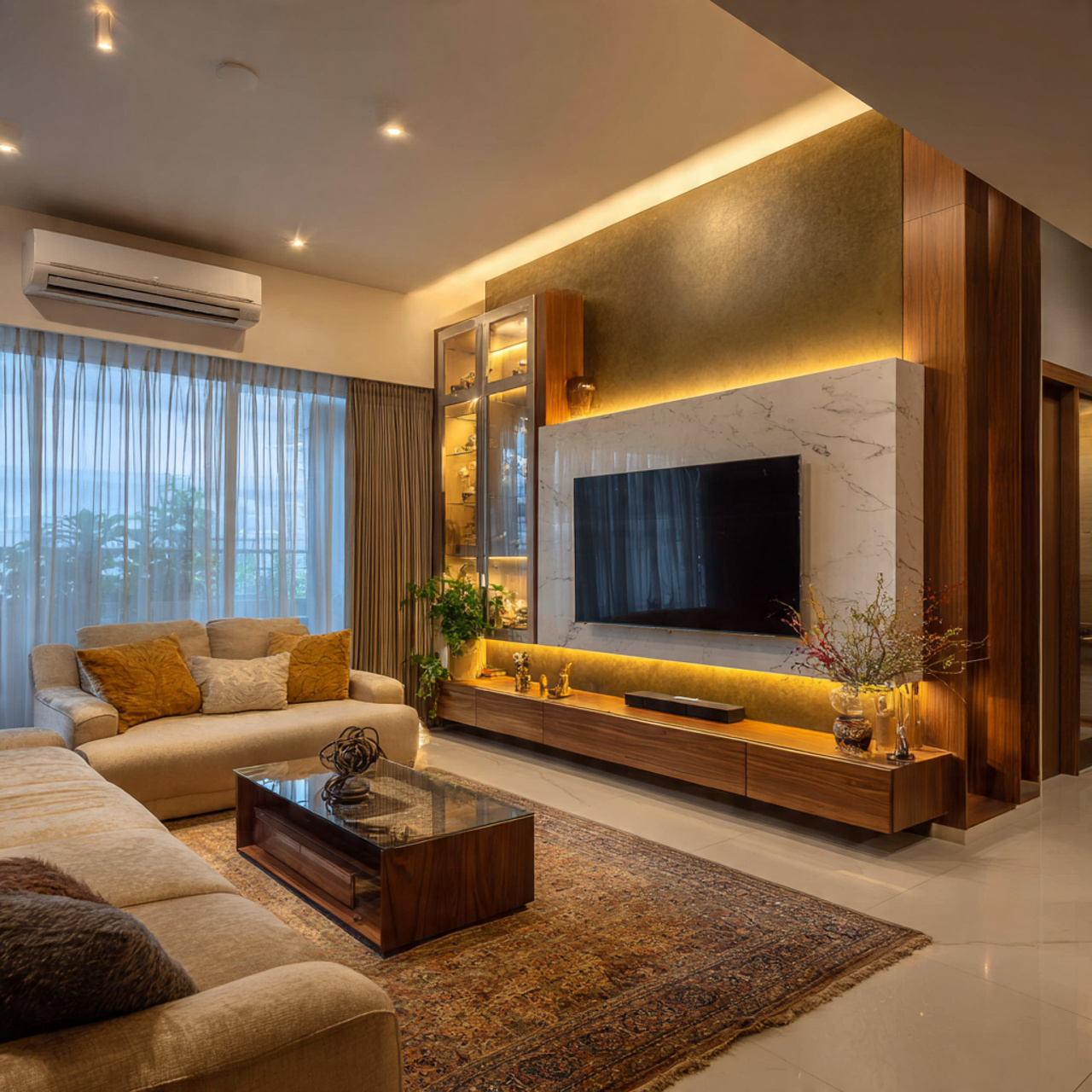
Integrated LED Lighting Used Sparingly
What it is
Soft, concealed lighting placed behind TV panels or beneath floating units so the light source itself remains invisible.
Why it works
In real homes, most TV viewing happens at night, when contrast between a bright screen and a dark room causes eye fatigue. Subtle backlighting softens that contrast and makes longer viewing sessions feel easier without turning the TV wall into a visual feature. When done correctly, people rarely comment on the lighting itself; they just notice the room feels calmer and less harsh after sunset.
How to apply it
Use warm white LEDs between 2700–3000K and always install them on a dimmer. Hide strips fully behind panels or cabinet edges. A realistic budget is $40–$120 for quality strips and drivers.
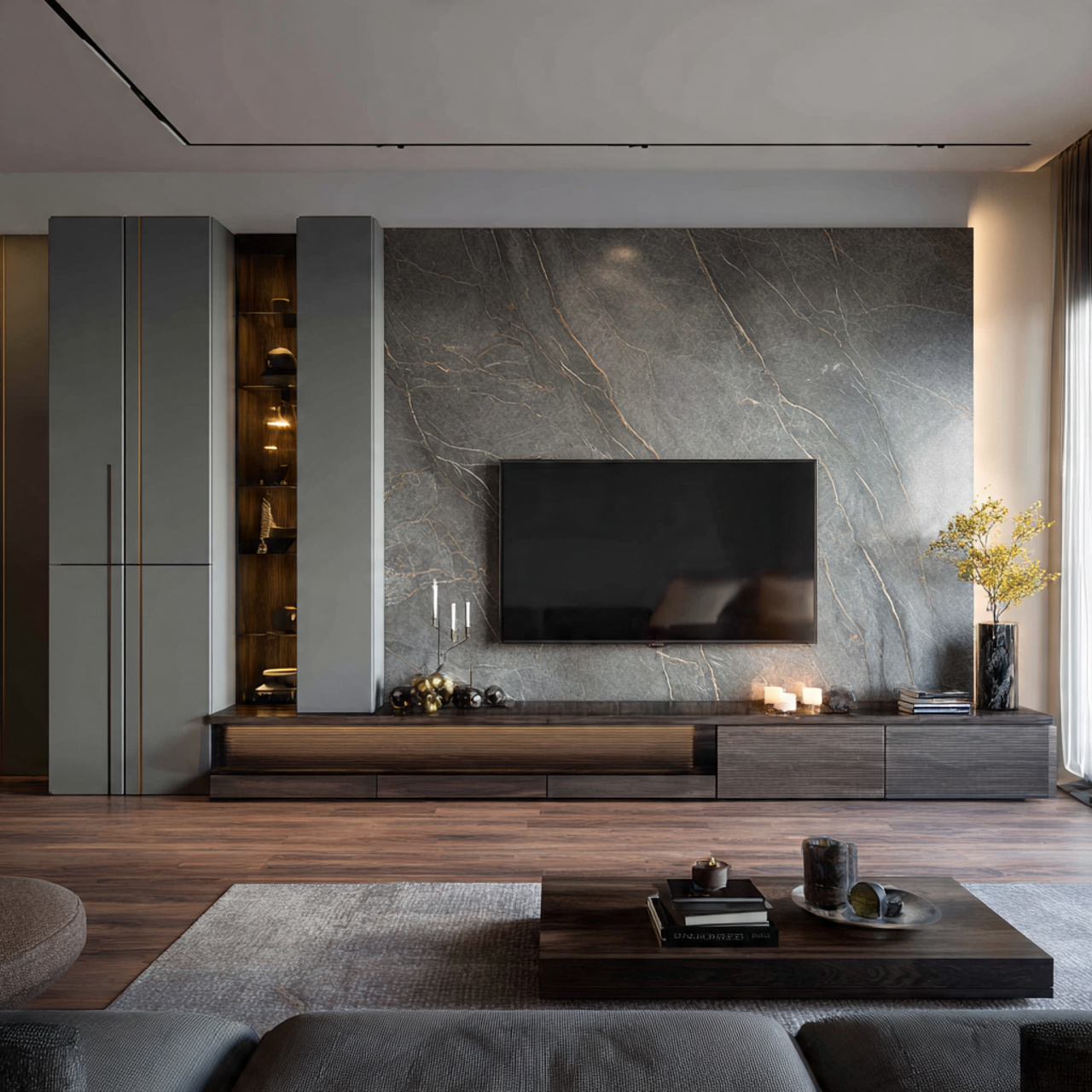
Minimal Hardware That Keeps the TV Wall Visually Quiet
What it is
Push-to-open doors, finger grooves, or recessed pulls that remove visible handles from the unit.
Why it works
Hardware creates small visual interruptions near a screen that already demands attention. Over time, these details add up and make the wall feel busier than necessary. Units without visible hardware tend to age better because the focus stays on proportion and material rather than elements that date quickly.
How to apply it
Choose soft-close hinges with integrated push mechanisms. Avoid glossy or reflective metals near the screen to reduce glare and fingerprints.
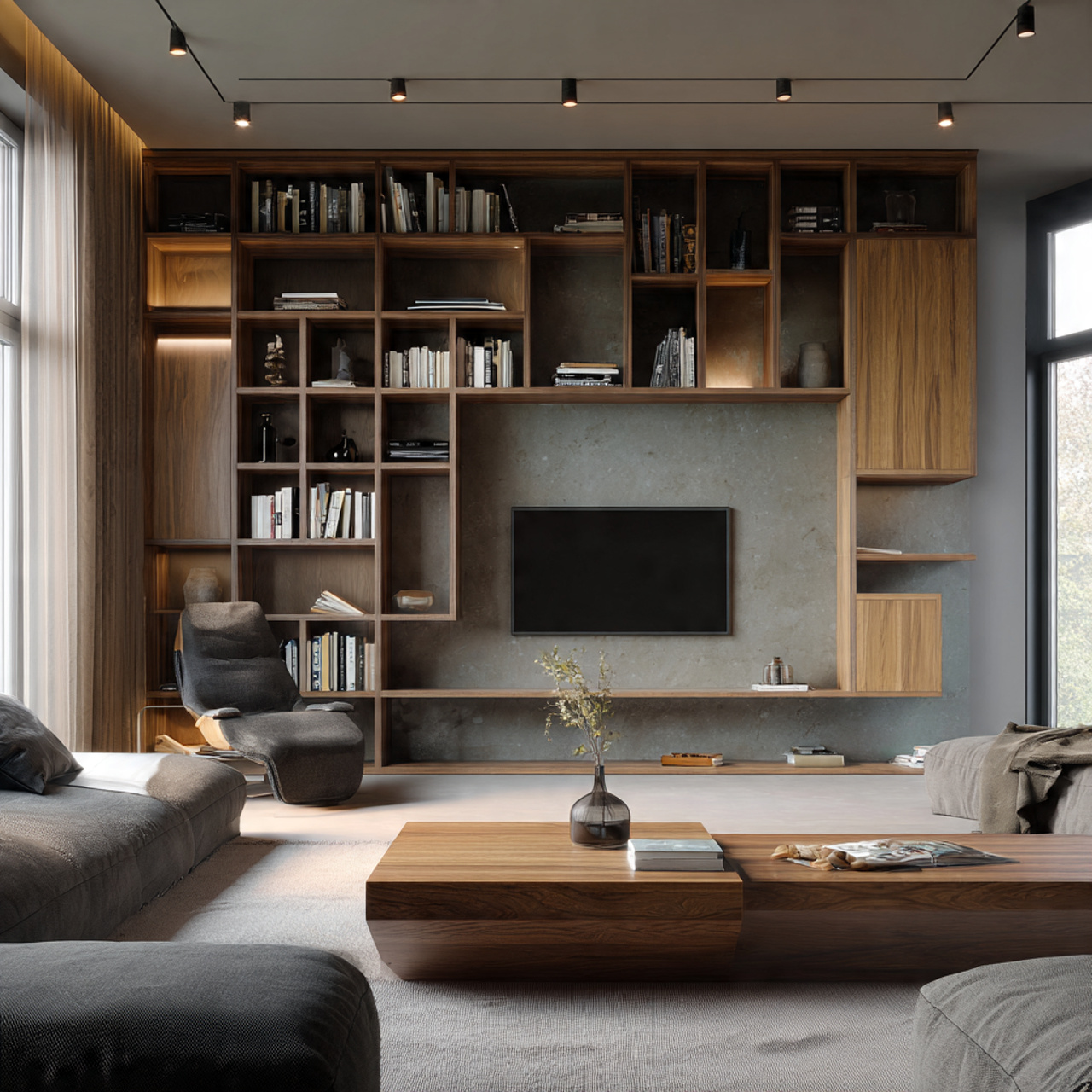
Asymmetrical Shelving That Feels Relaxed Over Time
What it is
Shelving arranged off-center rather than mirrored from side to side.
Why it works
Perfect symmetry often looks polished at first but feels rigid in everyday life. Asymmetry allows objects to change naturally without the wall feeling visually off-balance. Homeowners find this approach more forgiving as decor evolves, especially when shelves hold practical items as well as display pieces.
How to apply it
Limit shelf depth to 8–10 inches and keep heavier or darker items lower to maintain visual balance.
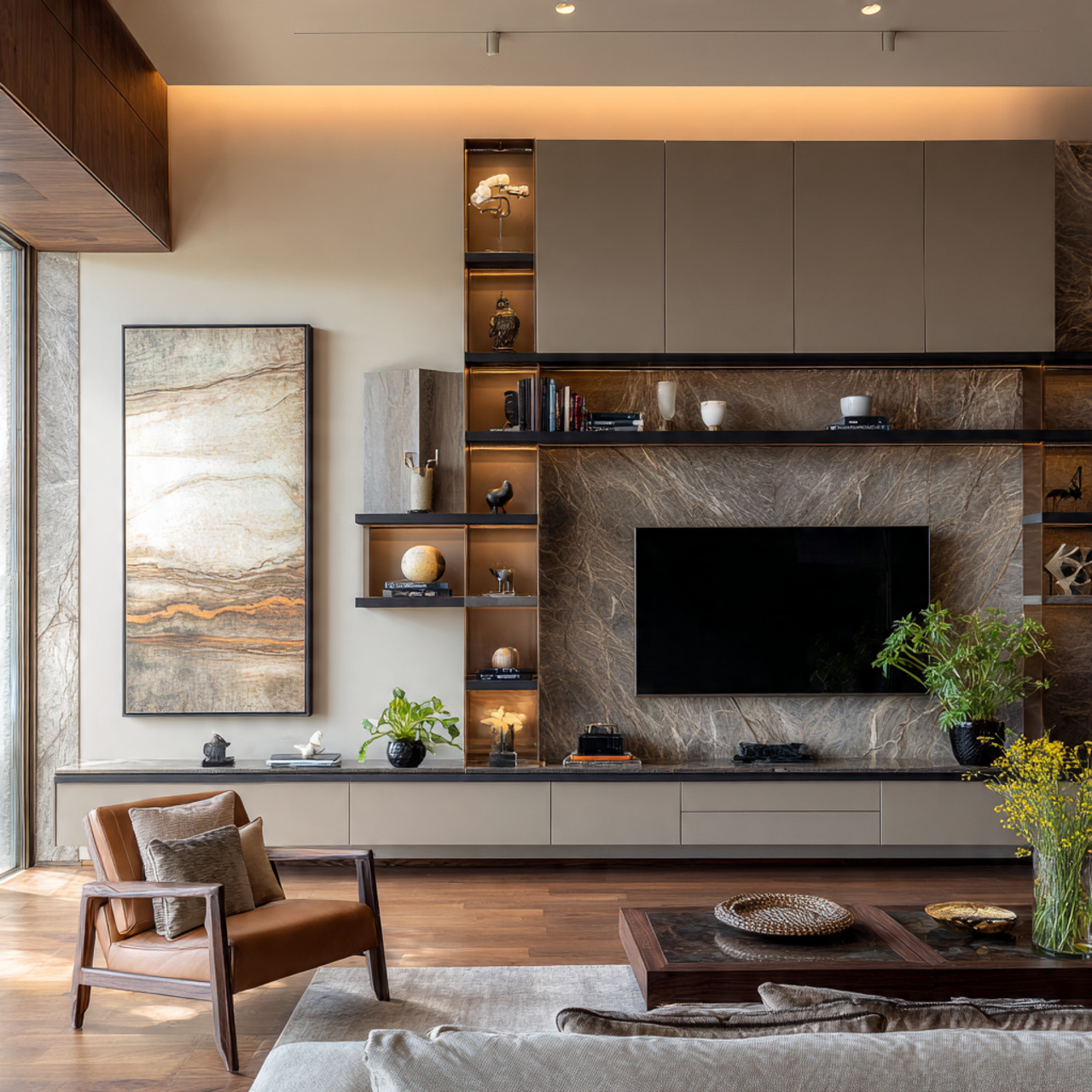
Built-In Units That Feel Architectural
What it is
Wall-to-wall or floor-to-ceiling TV units integrated into the room structure.
Why it works
Built-ins bring order and permanence. When proportions are right, people rarely regret them because the TV wall feels intentional rather than added later.
How to apply it
Plan ventilation and access early. Budgets typically range from $1,200–$3,000.
Dark Accents Used Only as Contrast
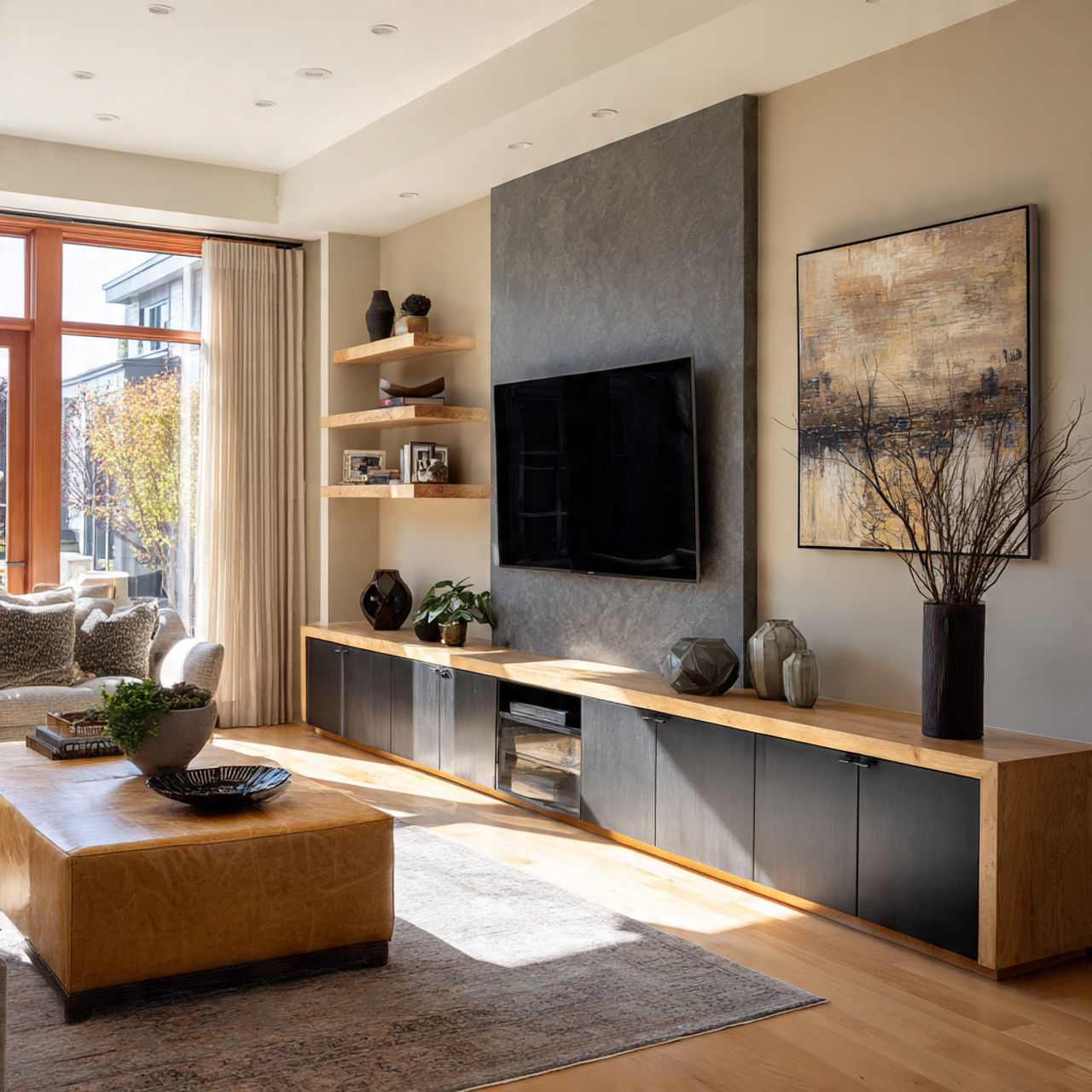
What it is
Charcoal or black elements used sparingly within the TV unit.
Why it works
Dark tones add depth and frame the screen, but overuse quickly feels heavy. Restraint keeps the room feeling balanced over time.
How to apply it
Limit dark finishes to lower cabinets, thin trims, or internal shelving.
Textured Finishes That Hide Wear
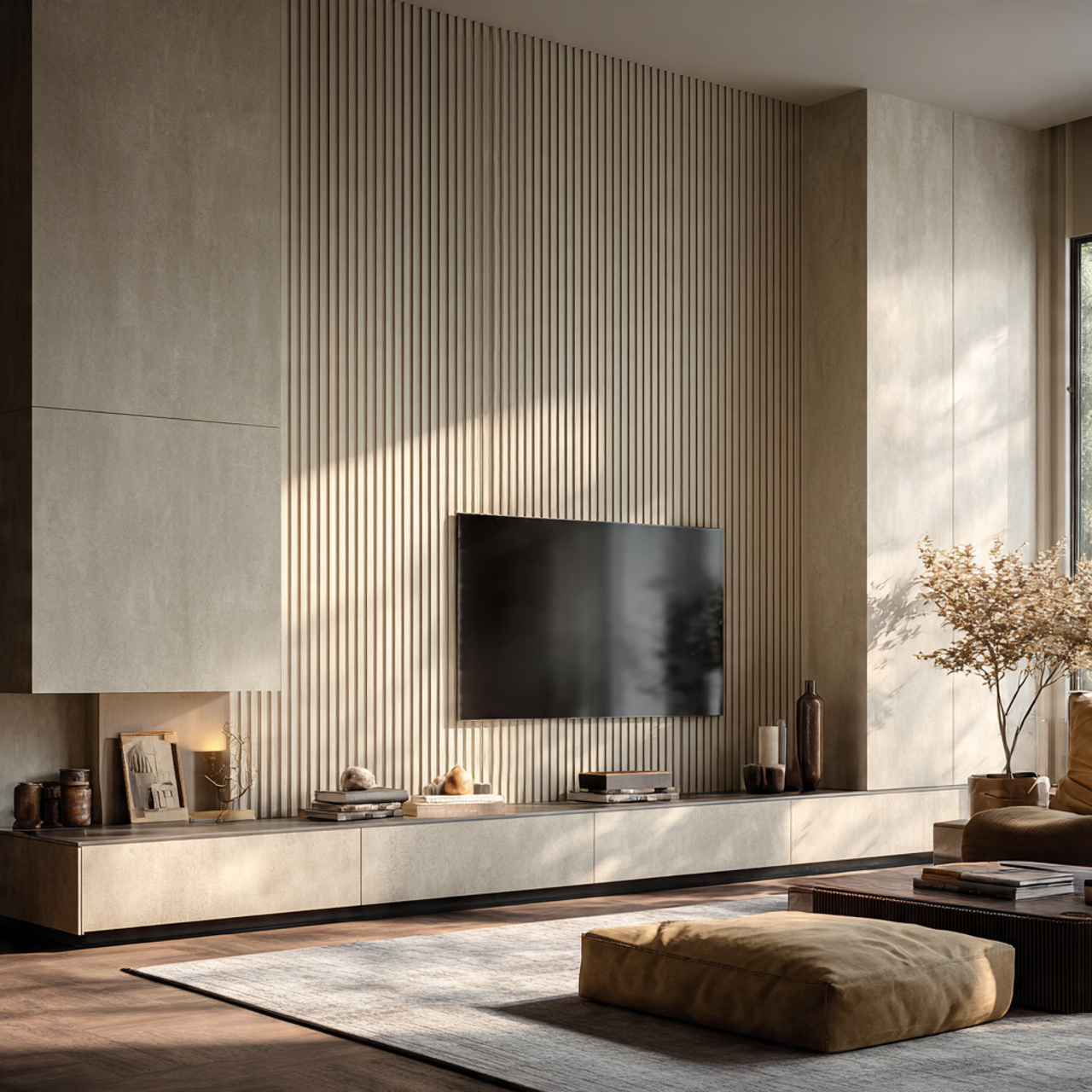
What it is
Fluted panels, wood grain laminates, or matte textured surfaces.
Why it works
Texture disguises fingerprints and dust, which matters more after months of use. Textured surfaces continue to look intentional longer than smooth glossy ones.
How to apply it
Avoid large high-gloss surfaces, especially near the screen.
Slim Vertical Panels for Ceiling Height Illusion
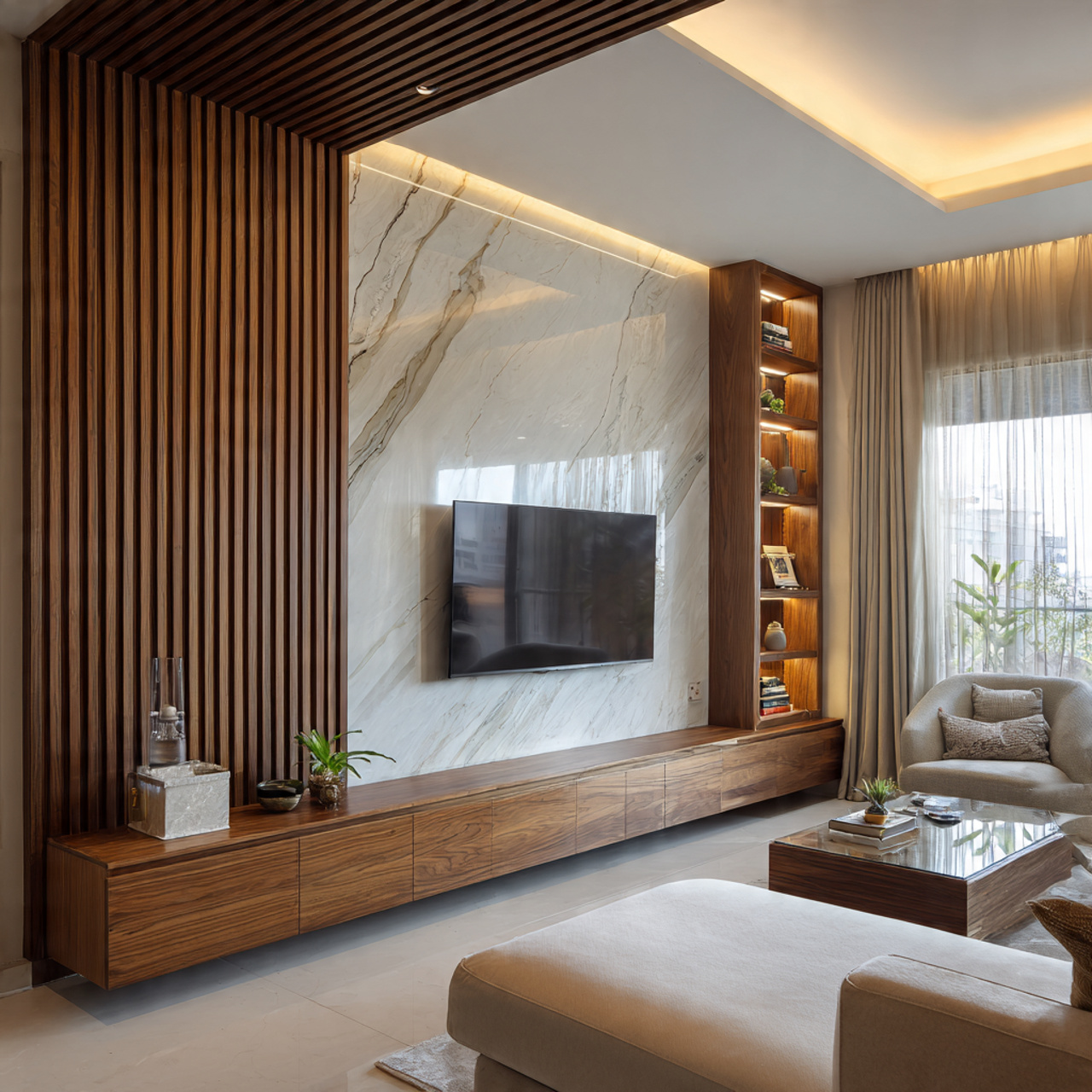
What it is
Vertical elements integrated into the TV wall design.
Why it works
Vertical lines subtly draw the eye upward, making rooms feel taller without obvious tricks. This is especially useful in standard-height spaces.
How to apply it
Keep spacing even and materials limited for a calm effect.
Neutral Decor Styling That Doesn’t Compete With the Screen
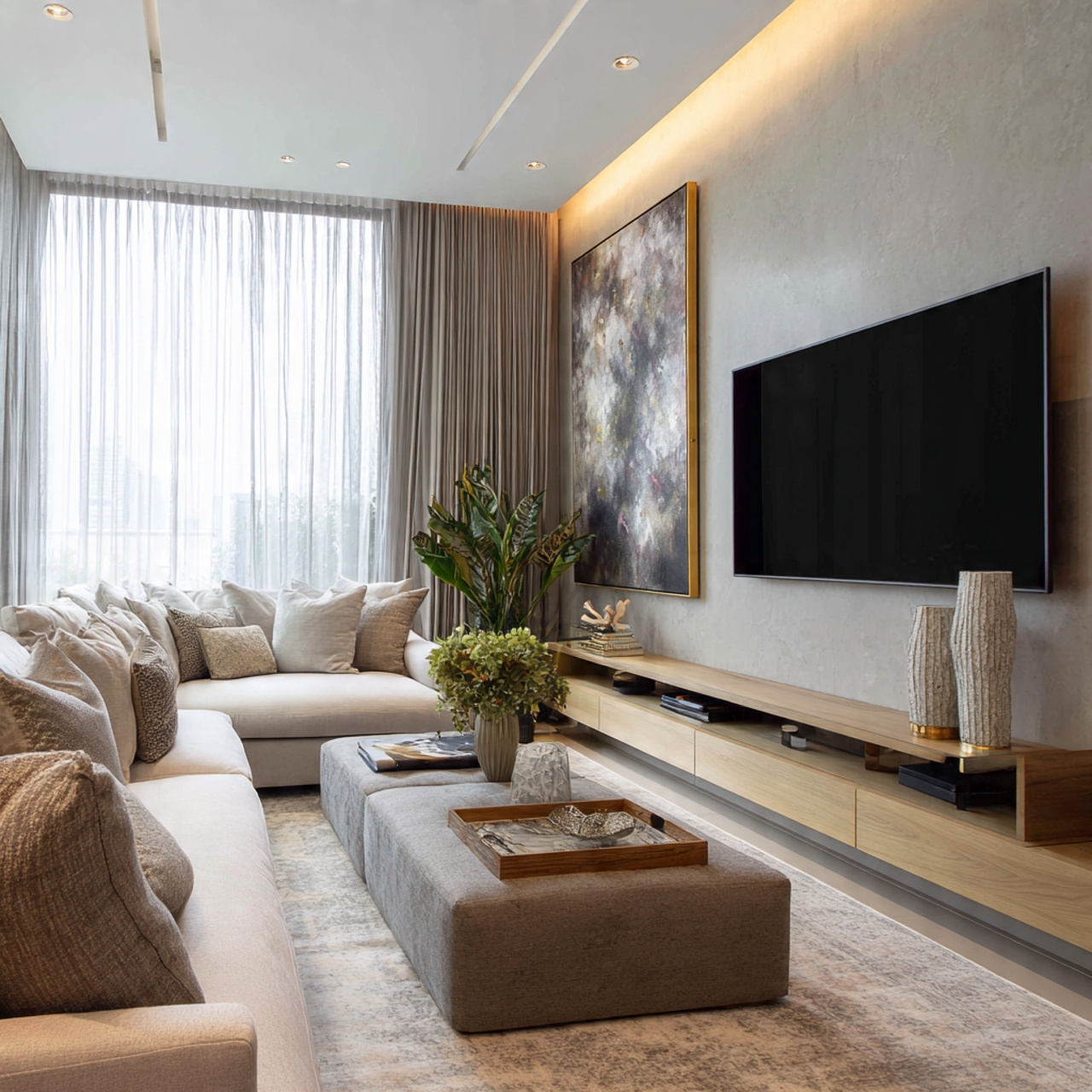
What it is
A restrained number of accessories styled in neutral tones around the TV unit.
Why it works
Over-styling around the TV quickly becomes visually tiring because the screen itself is already a focal point. Neutral, minimal decor keeps the wall calm and prevents the space from feeling cluttered or unfinished over time. Rooms styled this way feel settled rather than constantly in progress.
How to apply it
Use odd-number groupings and stay within one material or color family. Rotate items seasonally instead of adding more.
Modular Units That Can Adapt Over Time
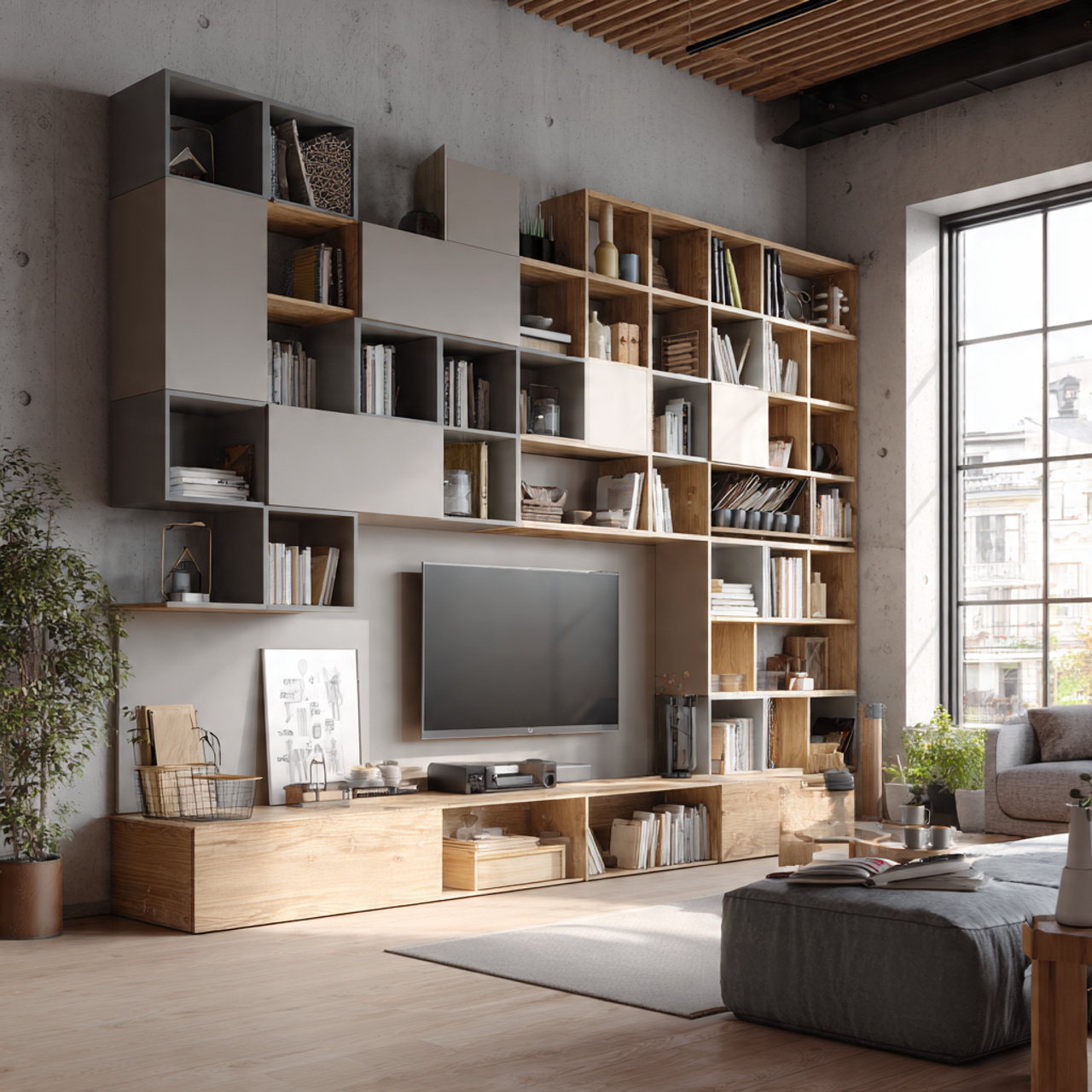
What it is
Separate components combined into a flexible system.
Why it works
Storage needs change over time. Modular units allow updates without replacing everything, reducing long-term regret.
How to apply it
Stick to standard module widths and avoid overly custom sizing.
Hidden Cable Management That Actually Works
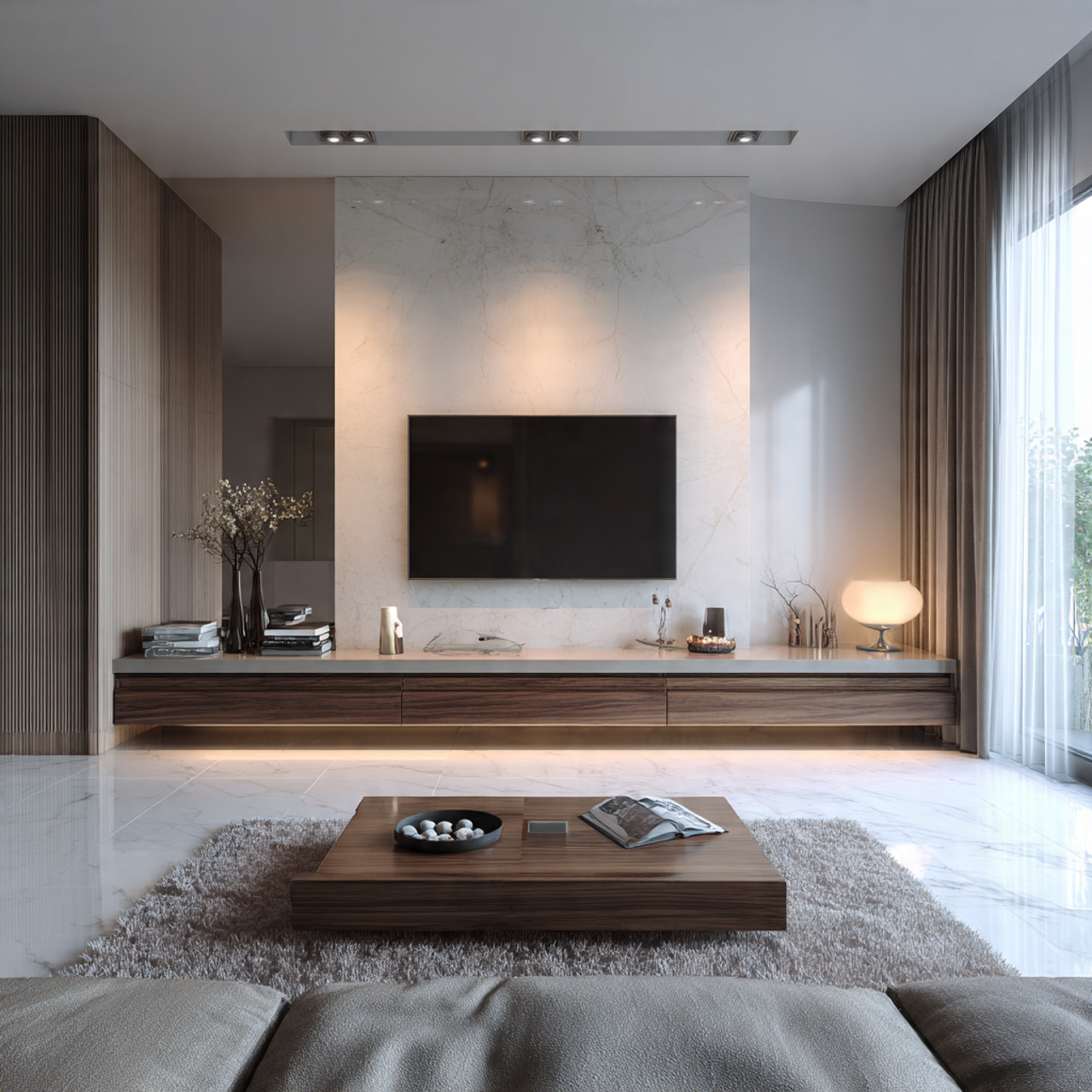
What it is
Built-in channels and concealed wiring paths.
Why it works
Visible cables undermine even the best designs. Planning ahead keeps the wall looking finished without constant adjustments.
How to apply it
Plan outlet placement early and include extra access points.
Balanced Spacing Around the TV Screen
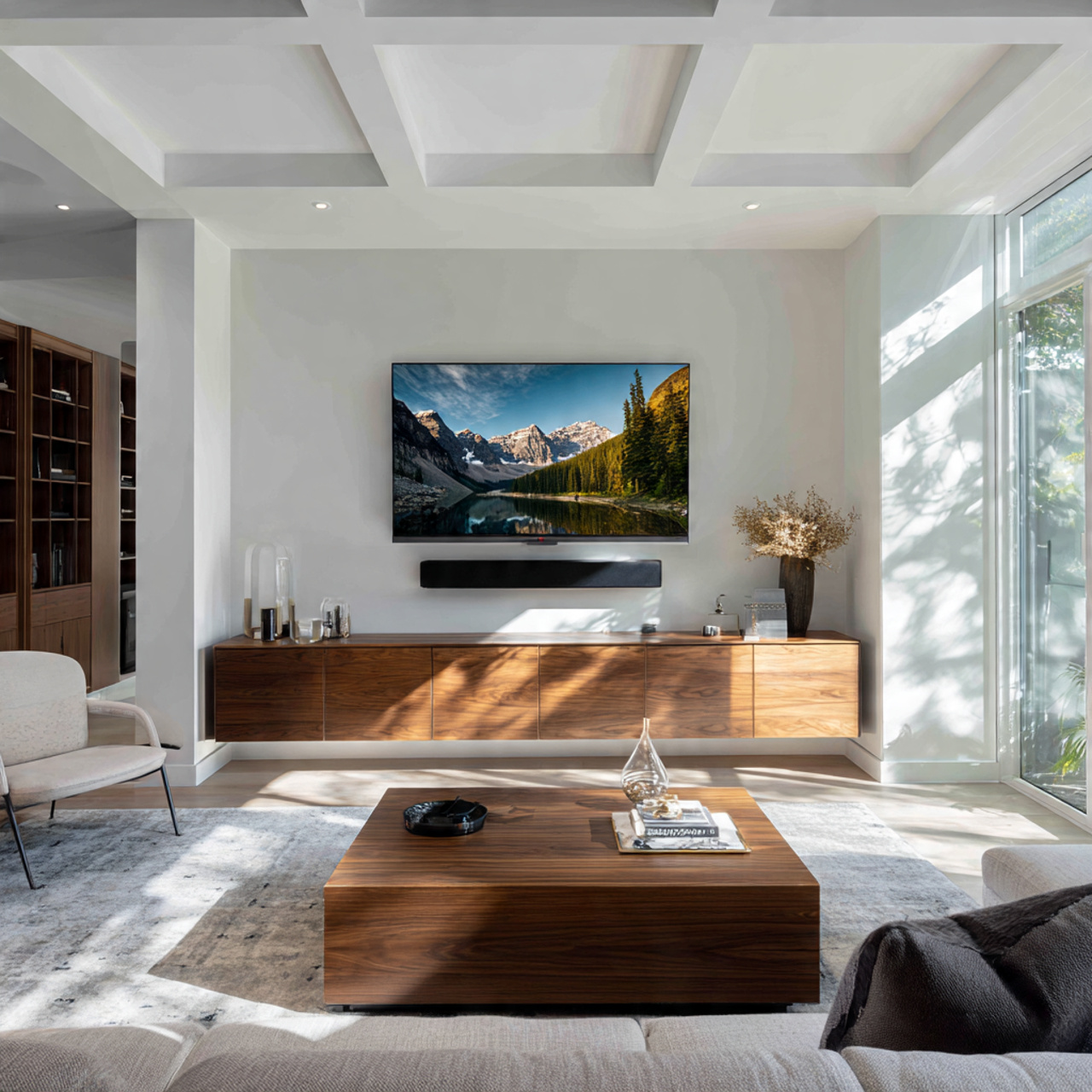
What it is
Intentional negative space around the TV.
Why it works
Breathing room improves comfort and prevents the screen from overpowering the wall visually.
How to apply it
Leave 6–8 inches of clear space on all sides.
Simple Finishing Touches That Personalize Without Clutter
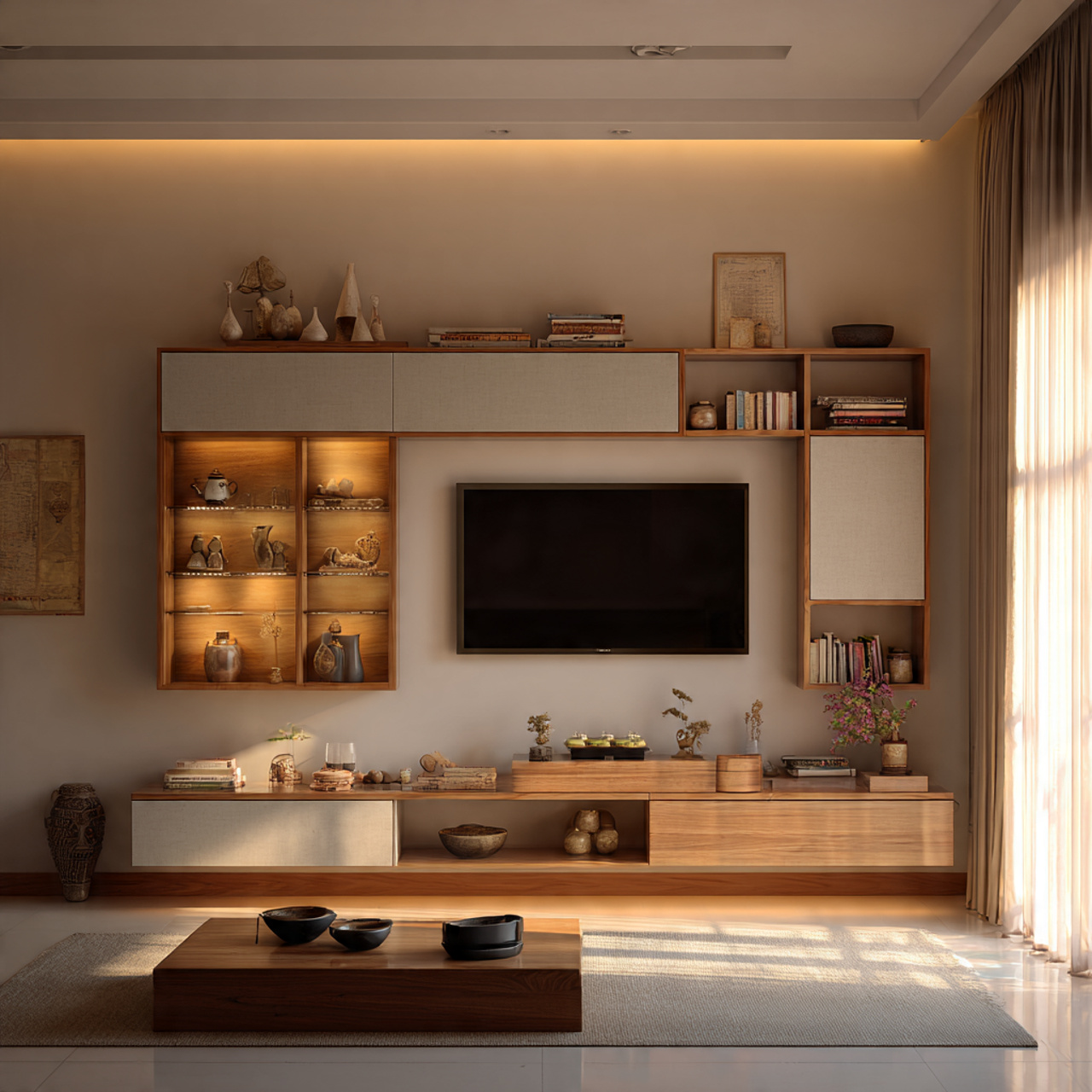
What it is
A small selection of meaningful personal objects placed thoughtfully near the TV unit.
Why it works
Personal items make a space feel lived-in, but too many create visual noise around the screen. When used sparingly, these touches add warmth without distraction. People are consistently happier long-term when personalization feels intentional rather than accumulated.
How to apply it
Limit displays to three to five items and update them occasionally instead of keeping everything out at once.
Zoned TV Walls That Separate Functions Without Dividing the Room
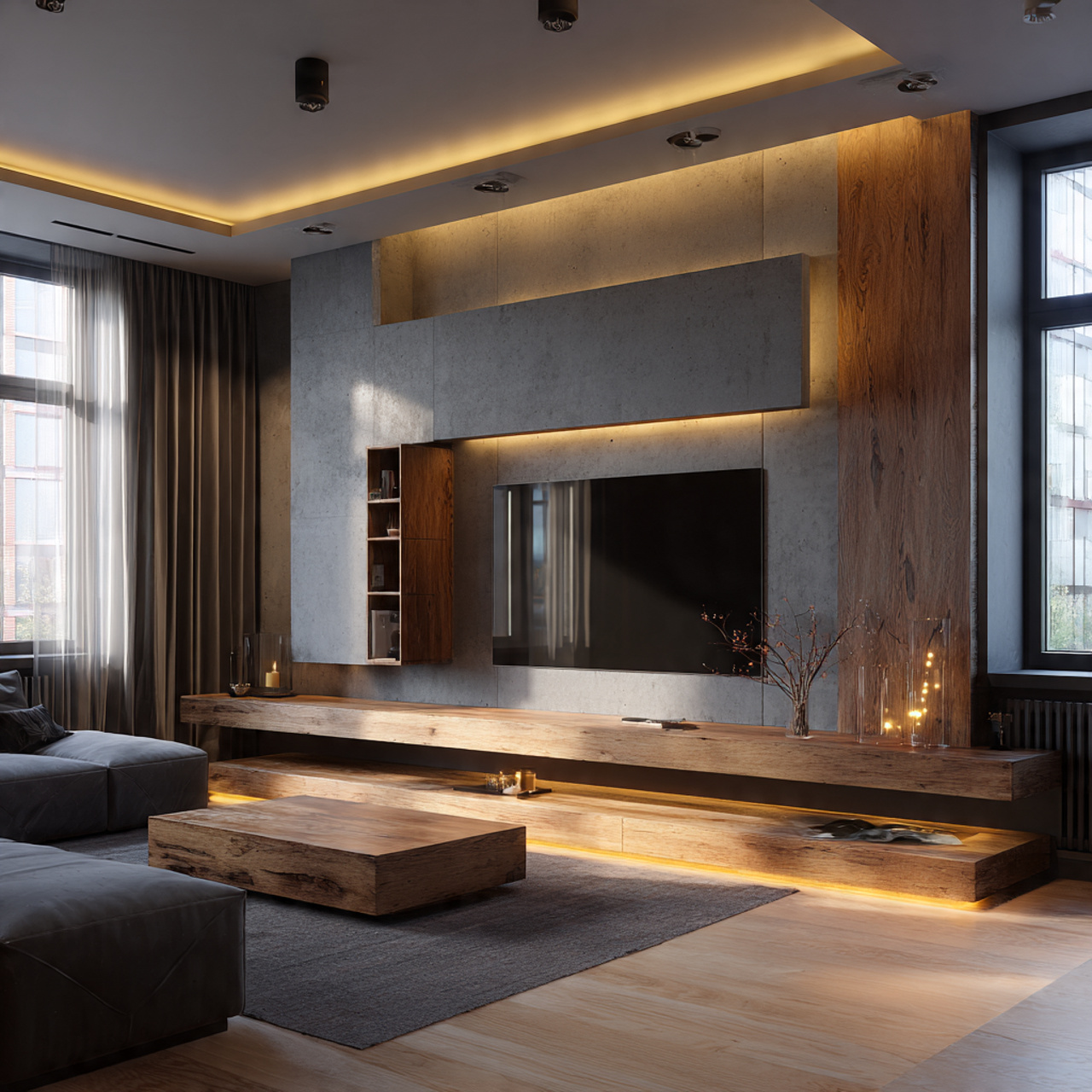
What it is
A TV wall designed with subtle visual zoning, where the screen, storage, and surrounding elements are grouped into clear sections without adding physical dividers.
Why it works
In real homes, the living room rarely serves one purpose. Zoned TV walls help the eye understand where entertainment ends and everyday living begins. Over time, this separation reduces visual clutter and makes the room feel more organized, especially in open-plan or multi-use spaces where everything otherwise blends together.
How to apply it
Use changes in material, depth, or lighting to define zones rather than walls. For example, keep the TV area flatter and darker, and storage areas lighter or textured. Maintain consistent spacing so zones feel intentional, not fragmented.
Common Mistakes to Avoid
Mounting the TV Too High
This causes neck strain and discomfort over time. Mount the TV at seated eye level.
Using Glossy Finishes Everywhere
Glossy surfaces show fingerprints and glare. Matte or satin finishes age better.
Overloading Open Shelves
Too many objects create visual noise. Balance open shelving with closed storage.
Ignoring Ventilation
Poor airflow shortens device lifespan. Include rear cutouts or ventilation gaps.
FAQs About TV Unit Design Modern
How wide should a modern TV unit be?
Extend the unit 12–24 inches beyond the TV on each side for balance.
Are floating TV units safe?
Yes, when anchored into studs or installed with rated brackets.
Which material lasts longest in real homes?
Matte laminates and protected wood veneers perform best long-term.
Should the TV wall match the room?
It should relate, not match exactly. Subtle contrast works better.
Can modern TV units work in small rooms?
Yes. Floating designs and lighter finishes are especially effective.
Conclusion
A thoughtful tv unit design modern approach supports daily life quietly instead of demanding attention. When proportion, materials, and storage are chosen with real use in mind, the TV wall remains calm, adaptable, and comfortable over time. Focusing on restraint and durability helps the space stay settled as life naturally changes.