14 TV Unit Decor Mistakes You Didn’t Know You’re Making
TV unit decor often looks fine at first, but over time something starts to feel slightly off. I’ve seen this happen even in well-designed rooms where everything matches, yet the TV area still feels heavy or unfinished. The issue usually is not the furniture, but how the space around it is styled and balanced.
Most people assume fixing it means buying a new unit or redesigning the wall, but that rarely solves the real problem. In my experience, tv unit decor comes down to layering, visual weight, and how the space feels at different times of day. Once you adjust those elements, the entire room starts to feel more intentional without major changes.
Tv unit decor works best when you soften the screen with layered objects, balanced arrangements, and warm lighting so it blends naturally into the room.
How to Style TV Unit Decor That Feels Balanced and Lived In
A TV naturally becomes the darkest and most dominant object in the room, which is why it often feels visually heavy. In real homes, leaving your tv unit decor untouched creates a flat and slightly awkward focal point. The goal is not to hide it completely, but to reduce its visual dominance through thoughtful styling.
Think of the TV as one element inside a larger tv unit decor setup rather than the main feature. When surrounding elements are layered correctly, your eyes move across the space instead of stopping at the screen. This is where most setups fail, because everything else feels secondary and disconnected.
Once balance is introduced through decor, lighting, and placement, your tv unit decor begins to feel quieter and more integrated. The space shifts from purely functional to visually styled without needing major changes. Over time, these small adjustments make the room feel more complete and comfortable.
TV Unit Decor Ideas That Make Your Space Stylish
A Warm Layered TV Unit Setup That Feels Instantly Cozy
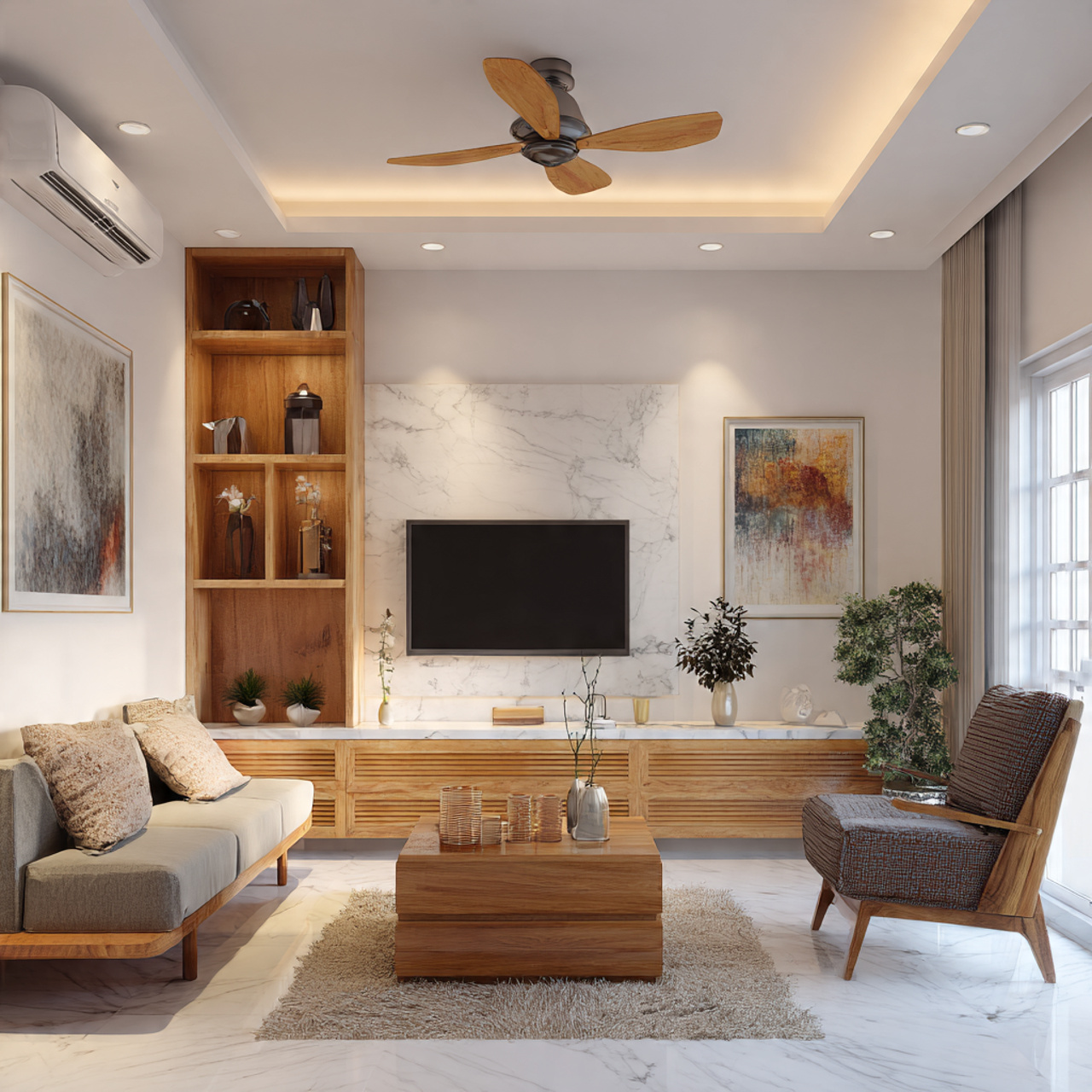
A low console with softly stacked books, a ceramic vase, and a trailing plant creates a relaxed scene that feels lived in right away. In the evening, warm light gently reflecting across the surfaces softens the contrast of the screen. It feels like a space you naturally settle into with a cup of tea after a long day.
This works because layering breaks the harsh flatness around the TV and introduces depth. In my experience, rooms that feel cozy always have slight irregularity rather than perfect alignment. I once kept everything flat and minimal, and the space felt oddly cold even with good furniture.
Start with a base like books or a tray, then build upward with one taller element. Let objects overlap slightly instead of spacing everything evenly. Over time, small adjustments will make the setup feel more natural.
Tip: Combine one tall, one medium, and one low object for instant balance.
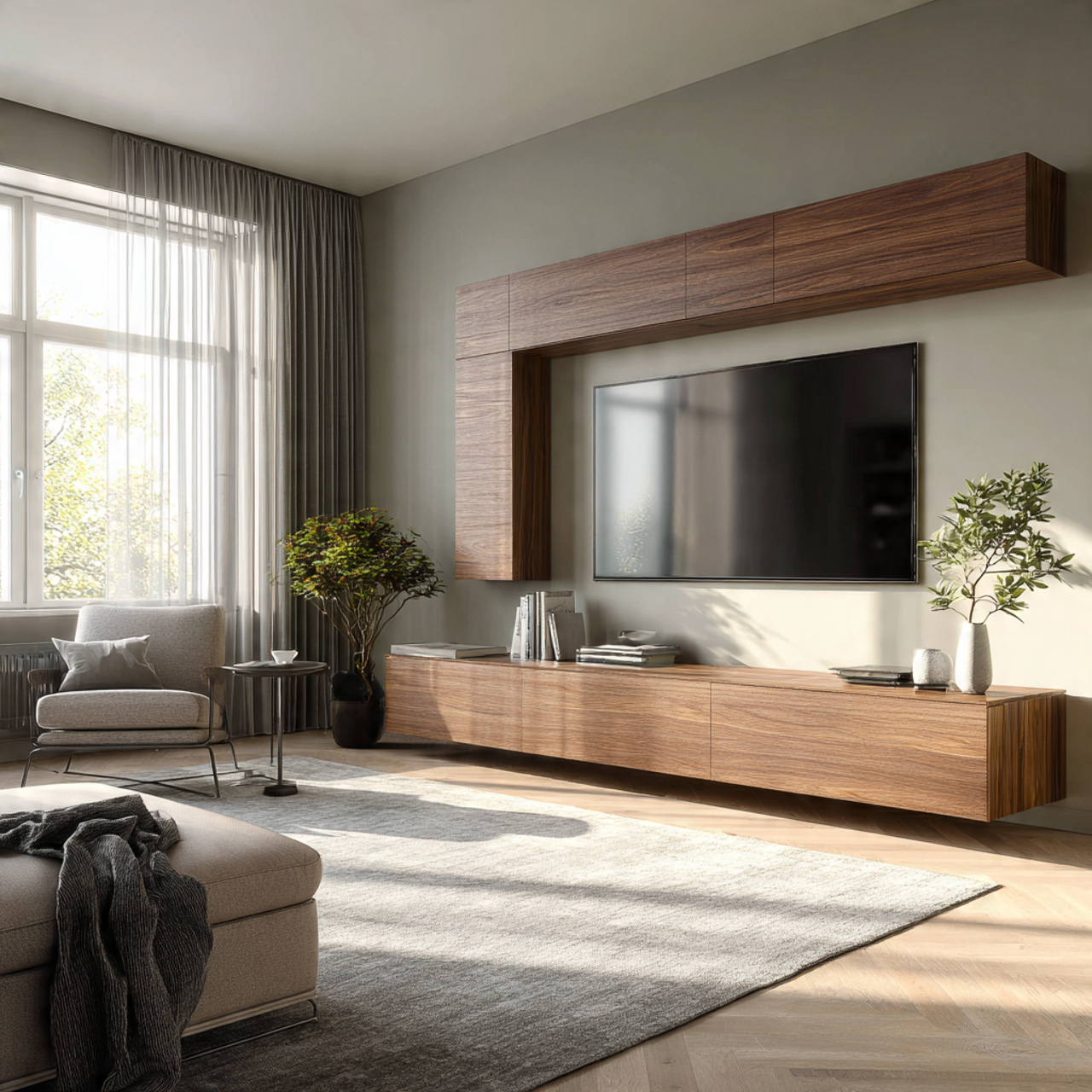
Floating Shelf Styling That Creates a Calm Balanced TV Wall
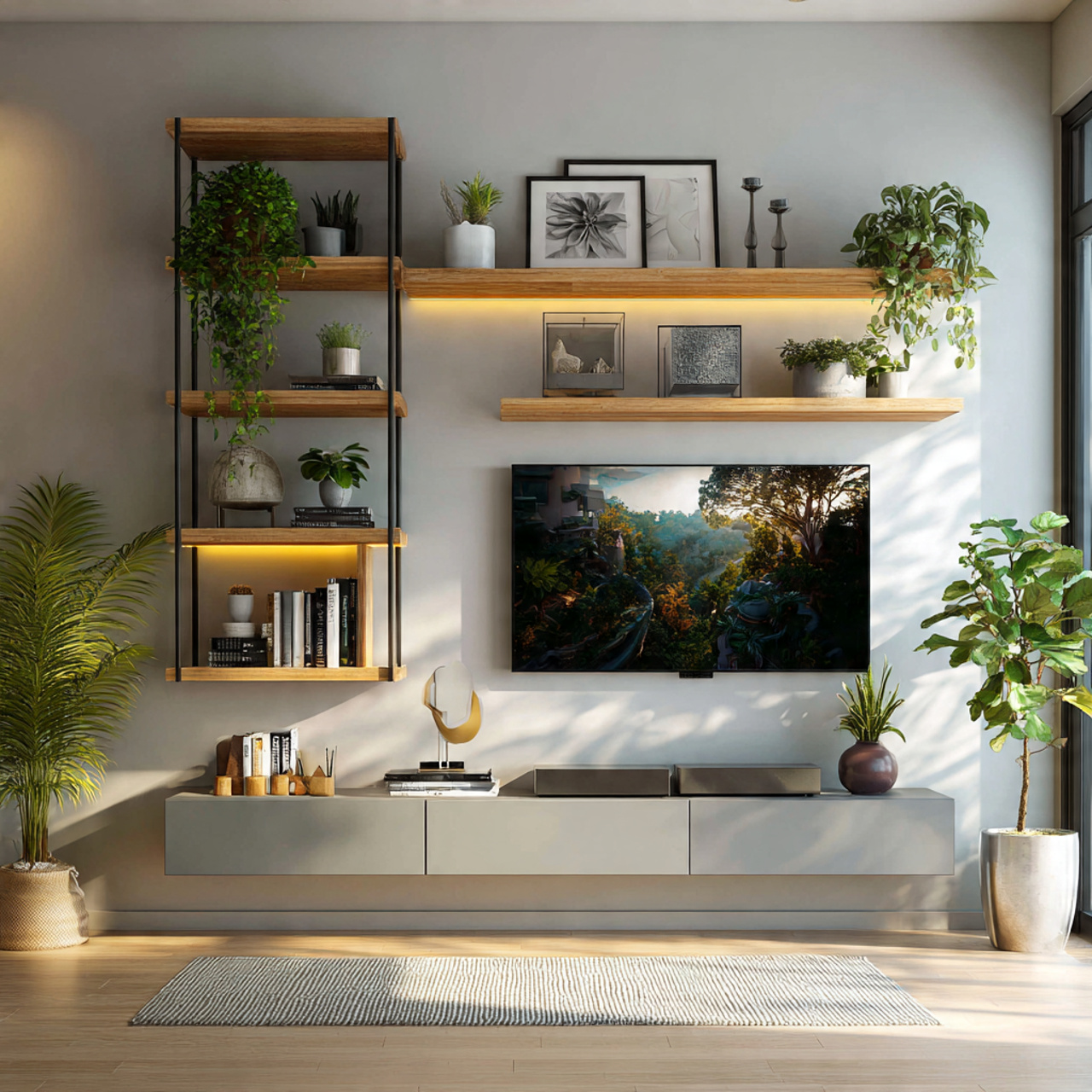
Floating shelves placed around the TV create a structured frame that makes the wall feel intentional. A few carefully spaced shelves with minimal decor allow the eye to move naturally across the wall. In soft daylight, the shadows add a quiet sense of depth.
This works because shelves distribute visual weight beyond the TV. One thing I noticed in real homes is that without this extension, the TV feels like a heavy block sitting alone. Shelves expand the composition and reduce that pressure.
Keep styling minimal and avoid filling every inch. Leave visible gaps so the arrangement feels breathable. The calmness comes from restraint, not quantity.
Tip: Leave at least one third of each shelf empty for a clean look.
A Plant Layering Trick That Makes the TV Area Feel Alive
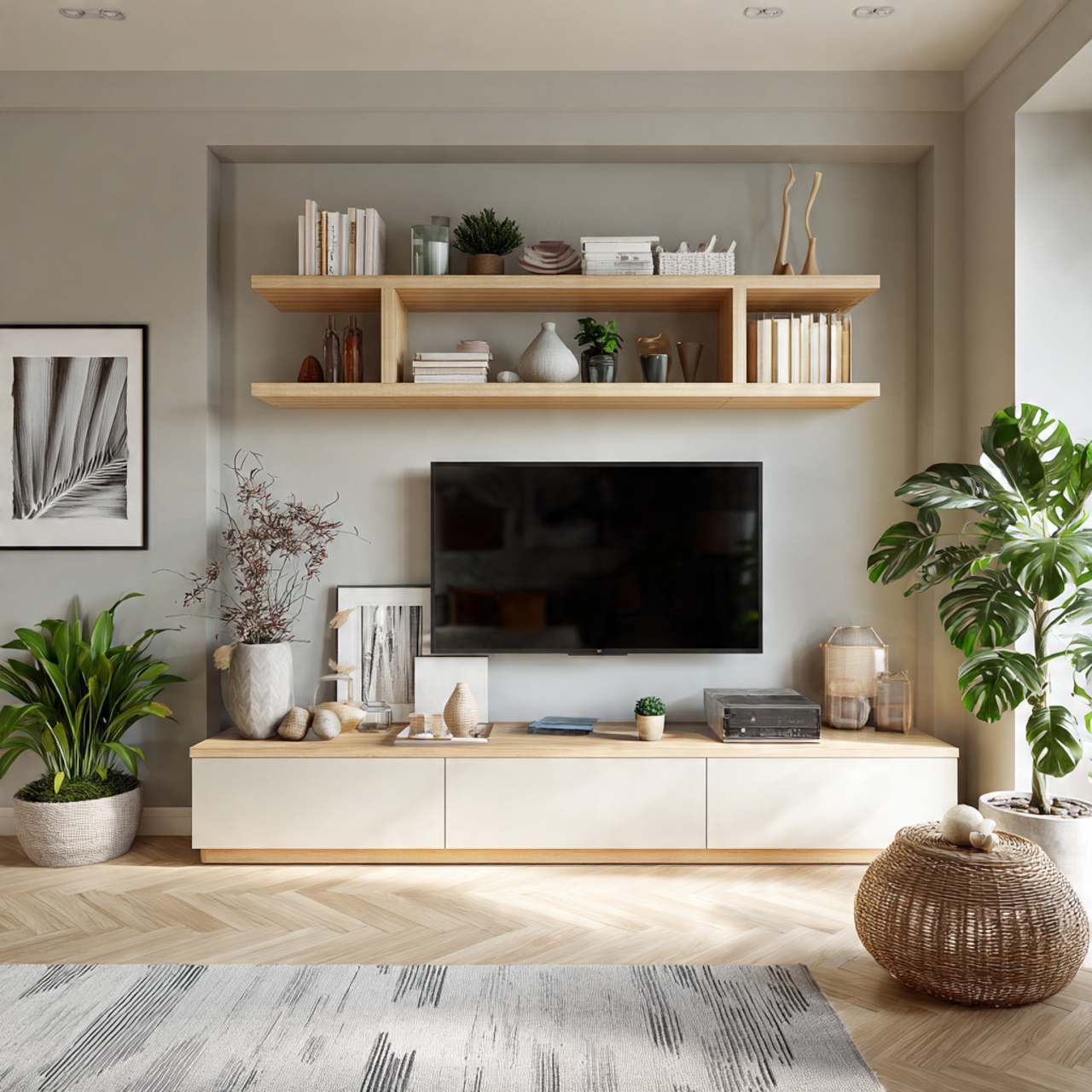
A tall plant beside the unit paired with a smaller one on the console introduces softness and movement. Morning sunlight filtering through the leaves adds a subtle sense of life to the space. It instantly feels fresher and less static.
Plants work because they contrast the rigid shape of the TV with organic flow. I once styled a TV unit without greenery, and even with decor, it felt lifeless. Adding a single plant changed the entire mood more than any object did.
Place a taller plant slightly off to one side and a smaller one on the unit. Avoid placing anything directly in front of the screen. Let the greenery frame the setup naturally.
Tip: Use plants with soft, flowing leaves instead of stiff shapes.
Minimal TV Unit Decor That Feels Clean and Effortlessly Expensive
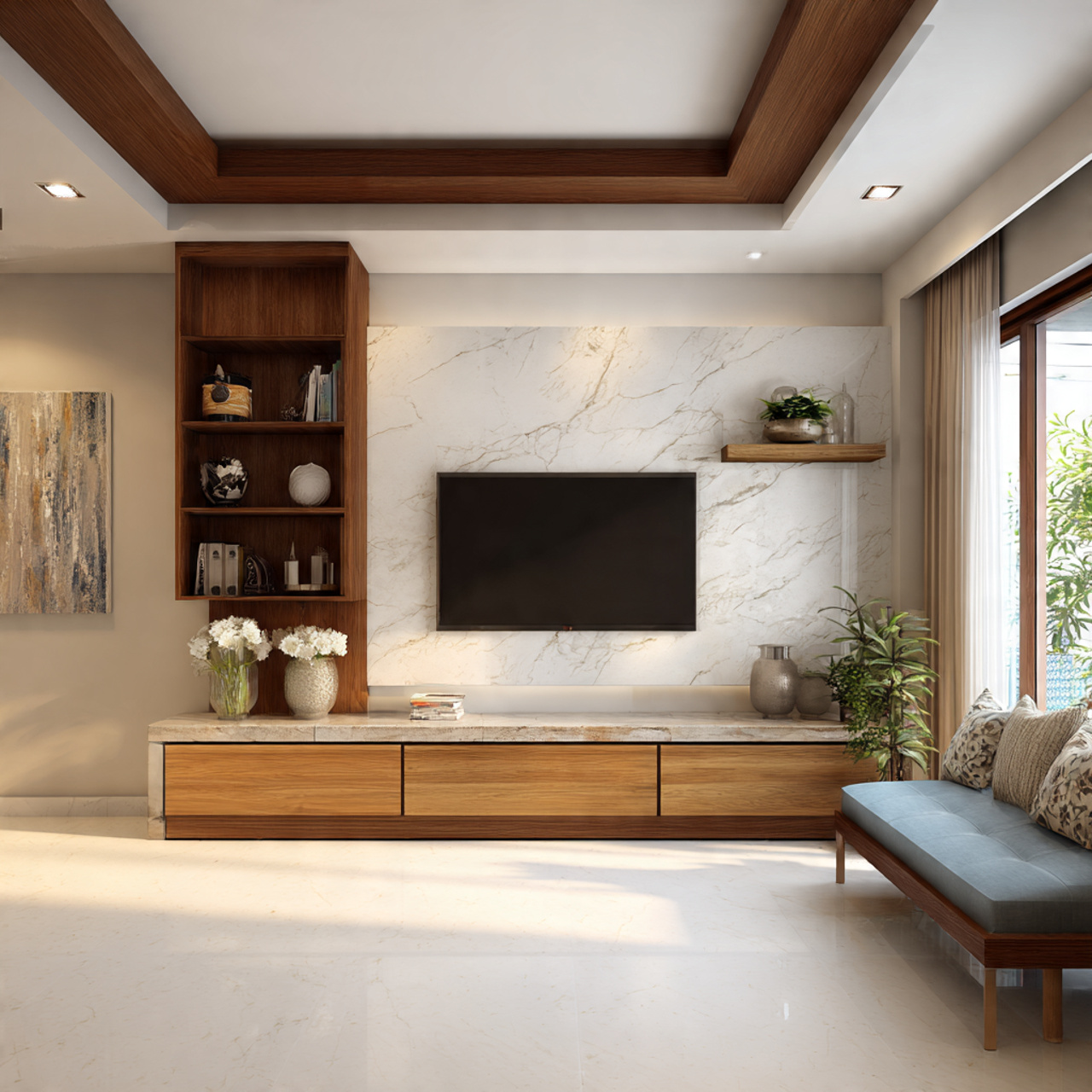
A nearly empty console with one sculptural piece and a small stack of books creates a quiet, refined look. The negative space allows materials and shapes to stand out clearly. It feels calm in a way that clutter never does.
Minimal styling works because it removes visual noise and reduces mental fatigue. After living with cluttered setups for months, I realized they slowly create tension in the room. I regret not simplifying earlier because the difference is immediate once you do.
Choose one or two strong pieces instead of many small ones. Keep tones consistent and avoid adding items just to fill gaps. Let the emptiness become part of the design language.
Tip: Limit yourself to three items maximum for a minimal look.
Warm Backlighting That Transforms Your Evening TV Experience
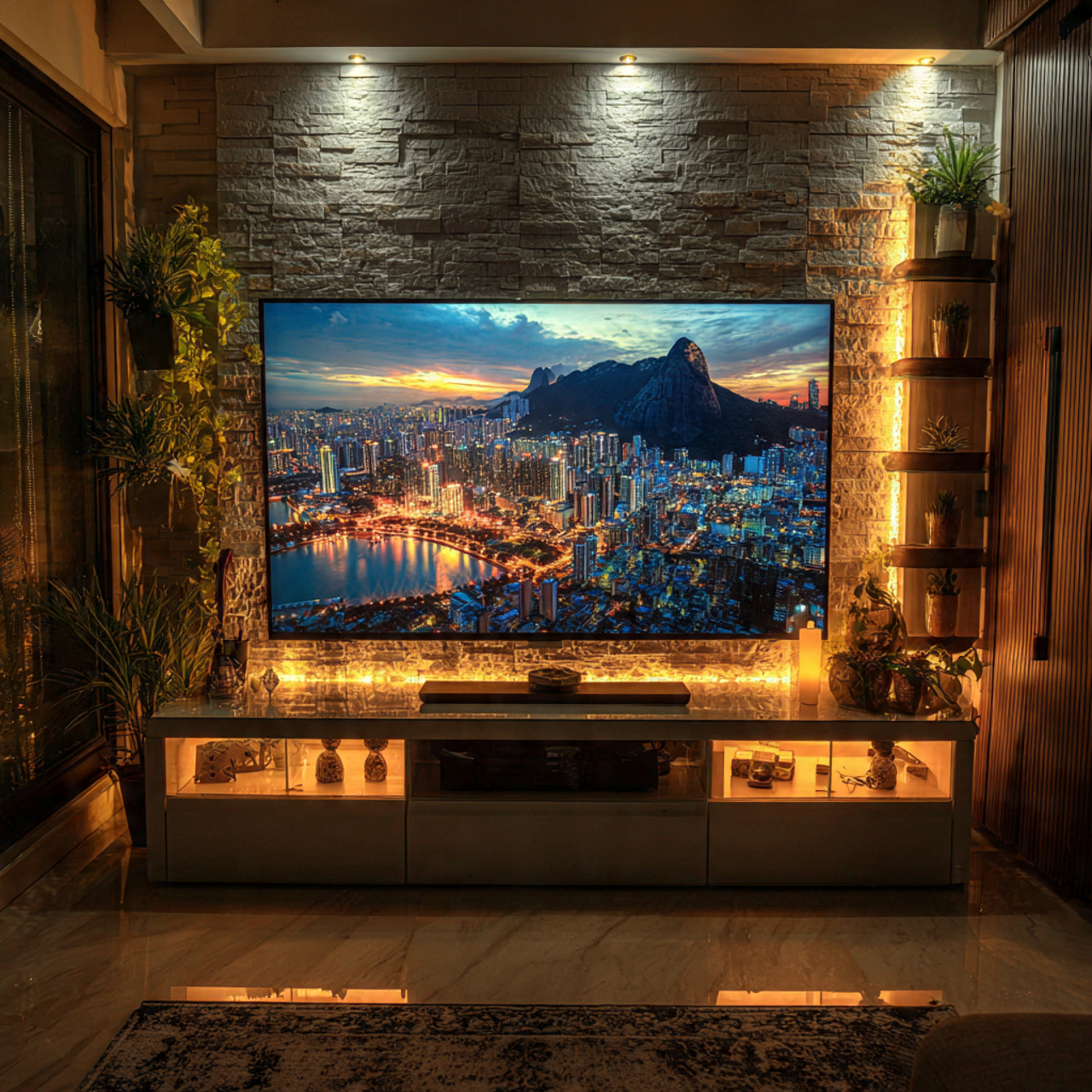
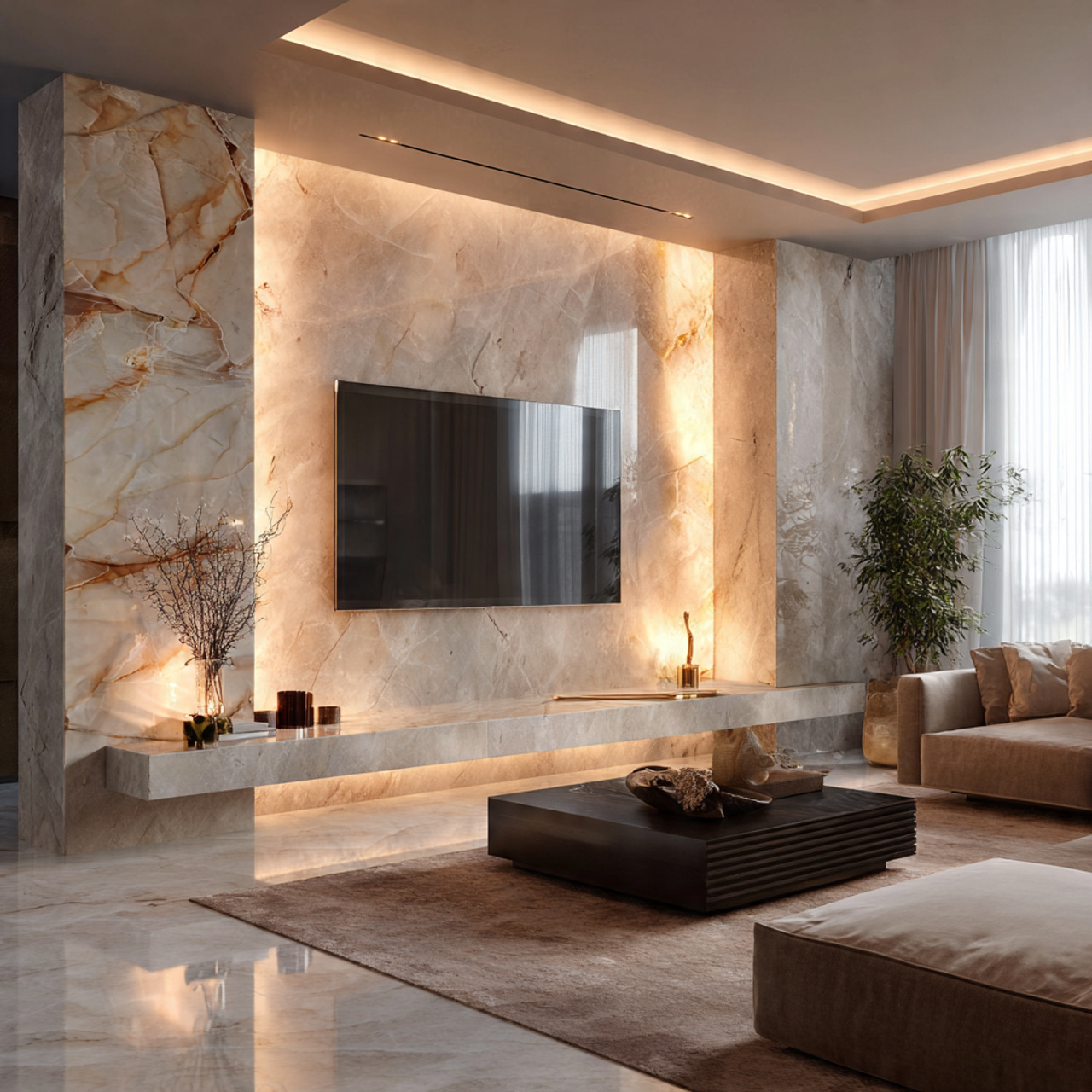
A soft LED glow behind the TV creates a halo effect that changes the entire mood at night. The harsh contrast between the black screen and the wall disappears. The room starts to feel softer and more relaxing instantly.
This works because lighting reduces visual strain and adds depth. Most people don’t realize how aggressive a bright screen feels in a dark room. Once you add backlighting, the viewing experience becomes noticeably more comfortable.
Install warm LED strips behind the TV or panel. Avoid cool tones that feel clinical and sharp. The goal is a gentle ambient glow that supports the space.
Tip: Use warm white lighting around 2700K for a cozy effect.
Books and Object Stacking That Feels Collected Over Time
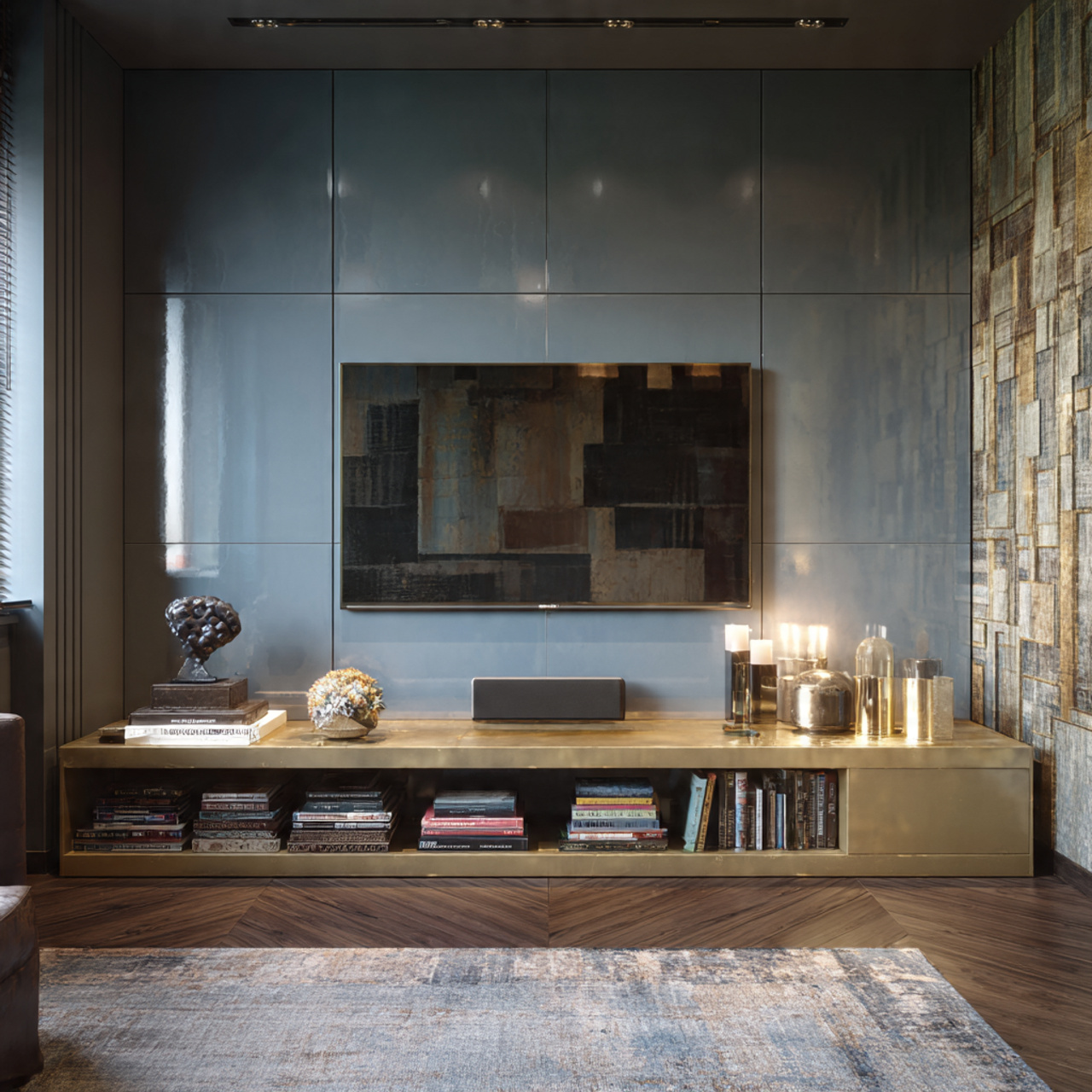
A small stack of books topped with a decorative object creates an easy layered composition. It feels like the space evolved naturally rather than being styled in one attempt. This gives the area personality without effort.
This works because stacking introduces height variation without clutter. In real homes, completely flat surfaces always feel slightly unfinished. Books provide structure while still feeling relaxed.
Use two to four books and place a small object on top. Keep tones cohesive but not identical. Slight variation keeps it from feeling staged.
Tip: Use books as a base to elevate smaller decor pieces.
Gallery Wall Styling That Softens the TV’s Visual Impact
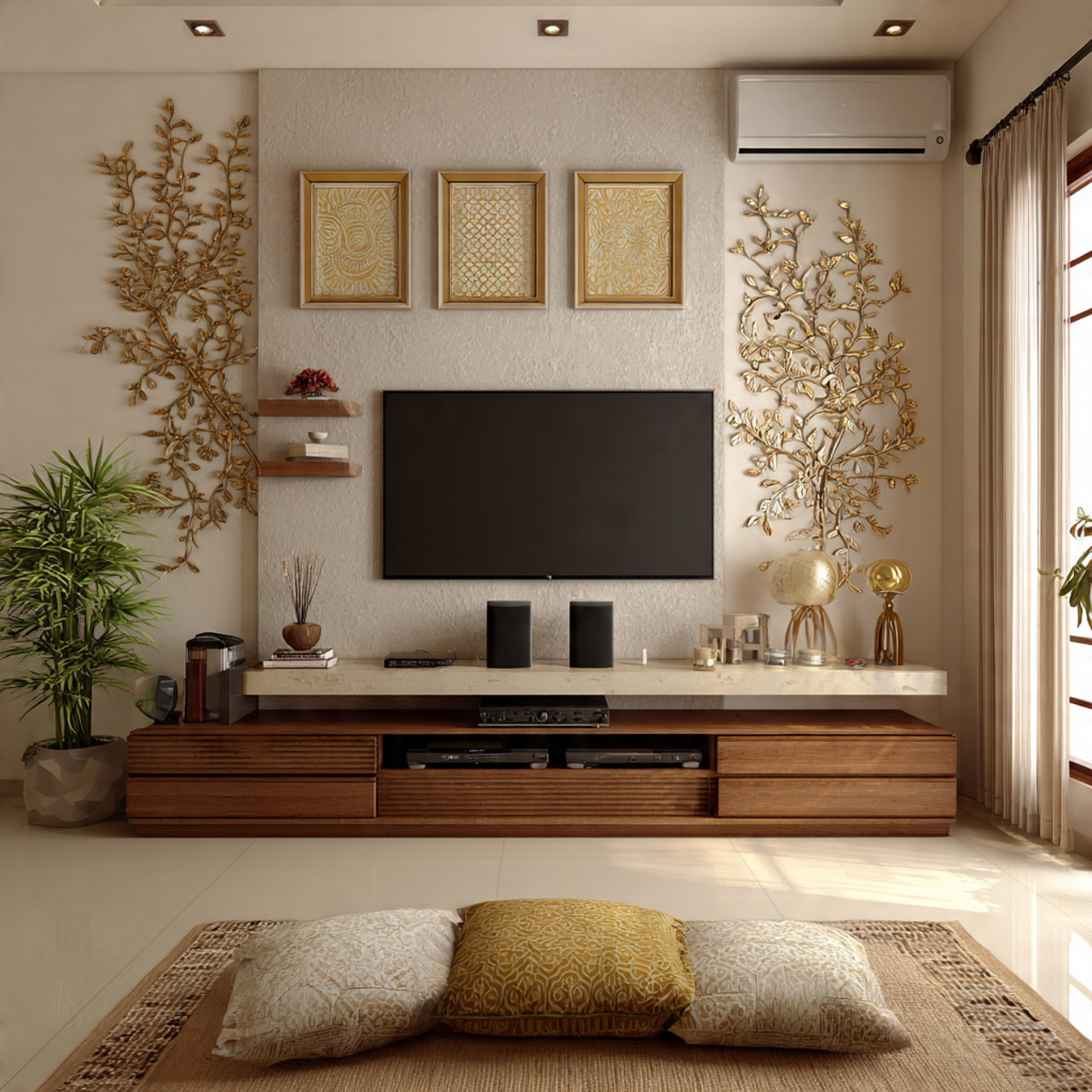
A gallery wall around the TV blends it into the larger wall composition. Instead of the screen dominating, it becomes one element among many. The space feels curated rather than screen-focused.
This works because the eye moves across multiple focal points. I once left the wall empty thinking minimal was better, but it made the TV feel overwhelming. Adding even a few frames completely changed the balance.
Use a mix of sizes but keep frames consistent in tone. Arrange them loosely without perfect symmetry. Let the layout feel slightly organic.
Tip: Start with the largest frame and build around it.
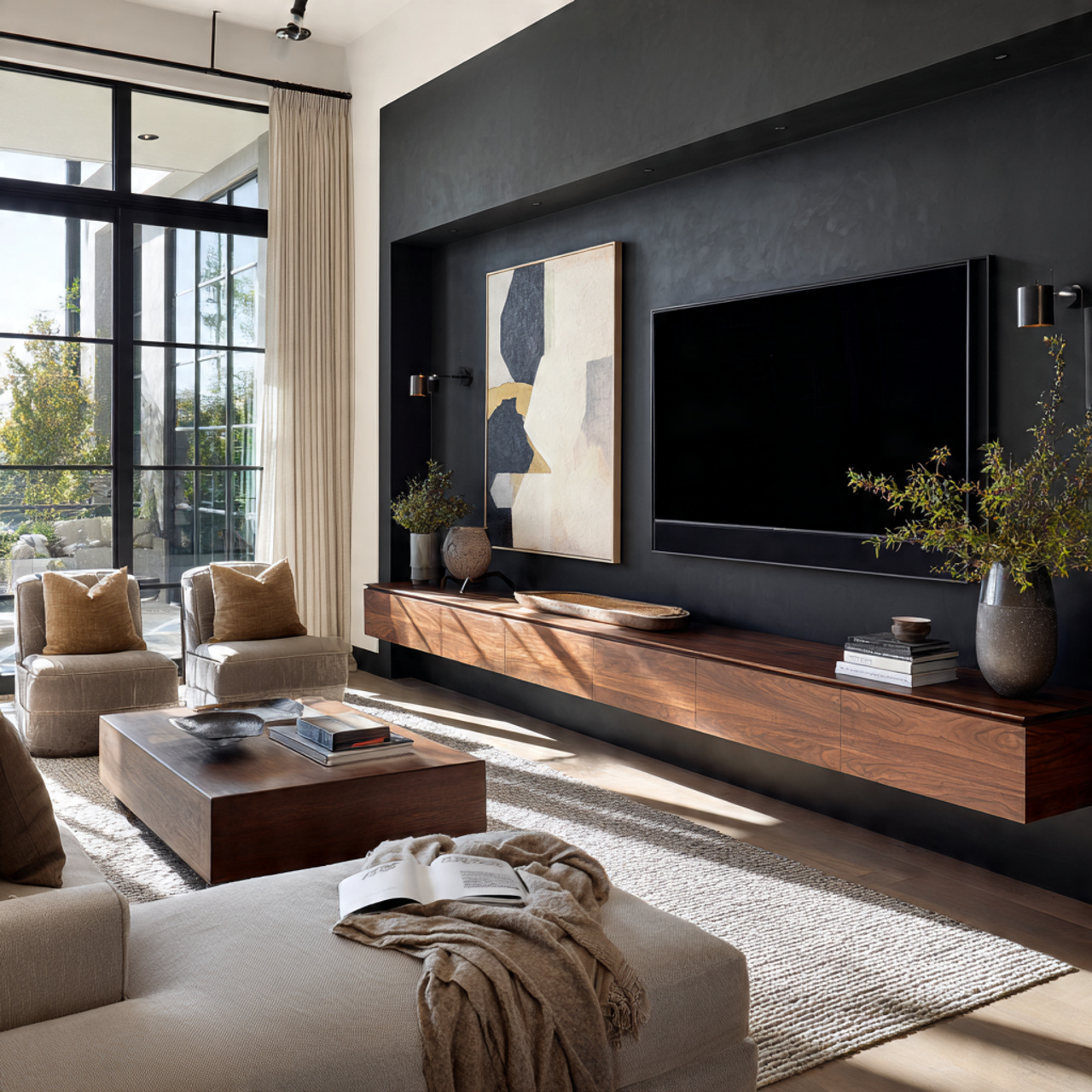
Wooden Texture Pairing That Adds Warmth and Depth to the Space
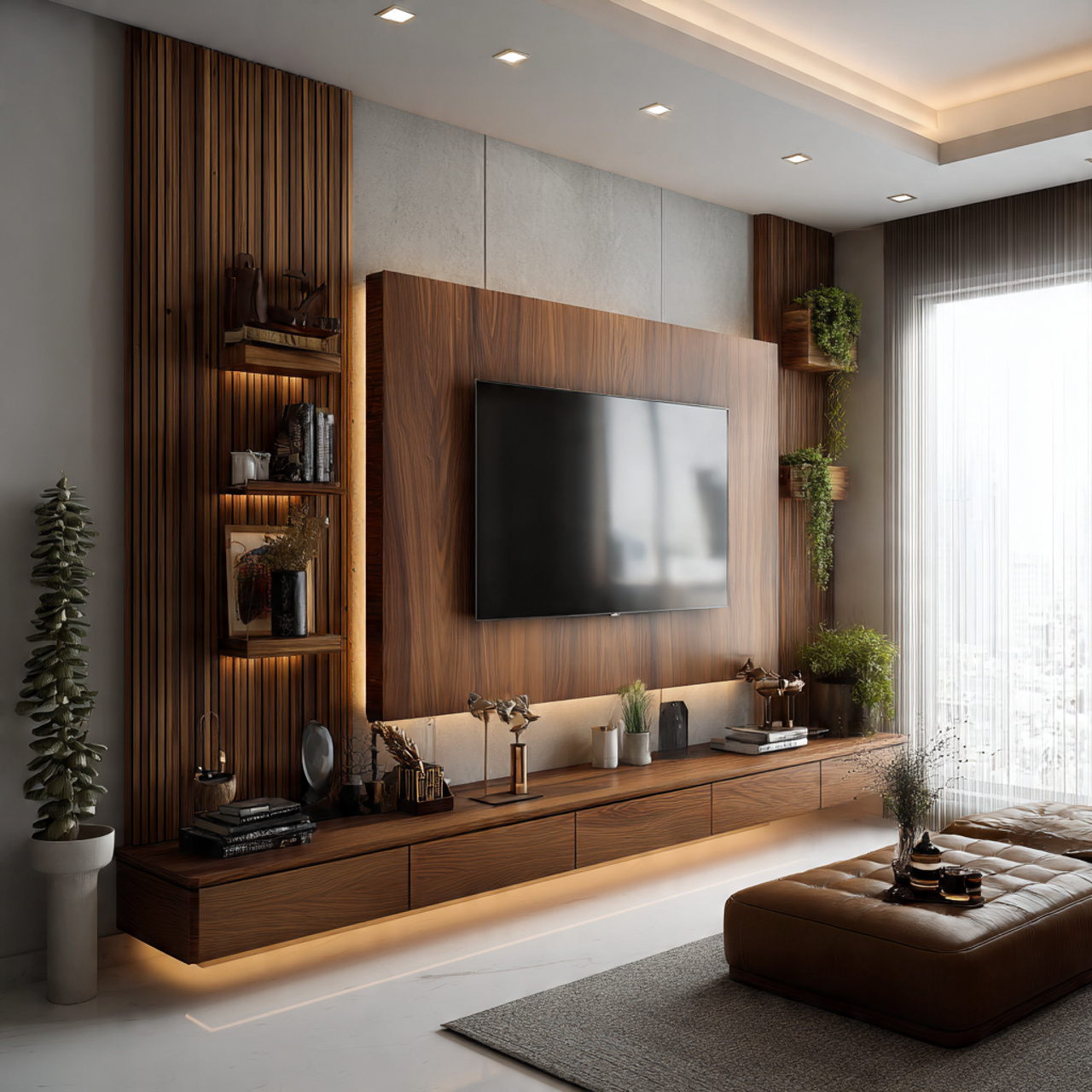
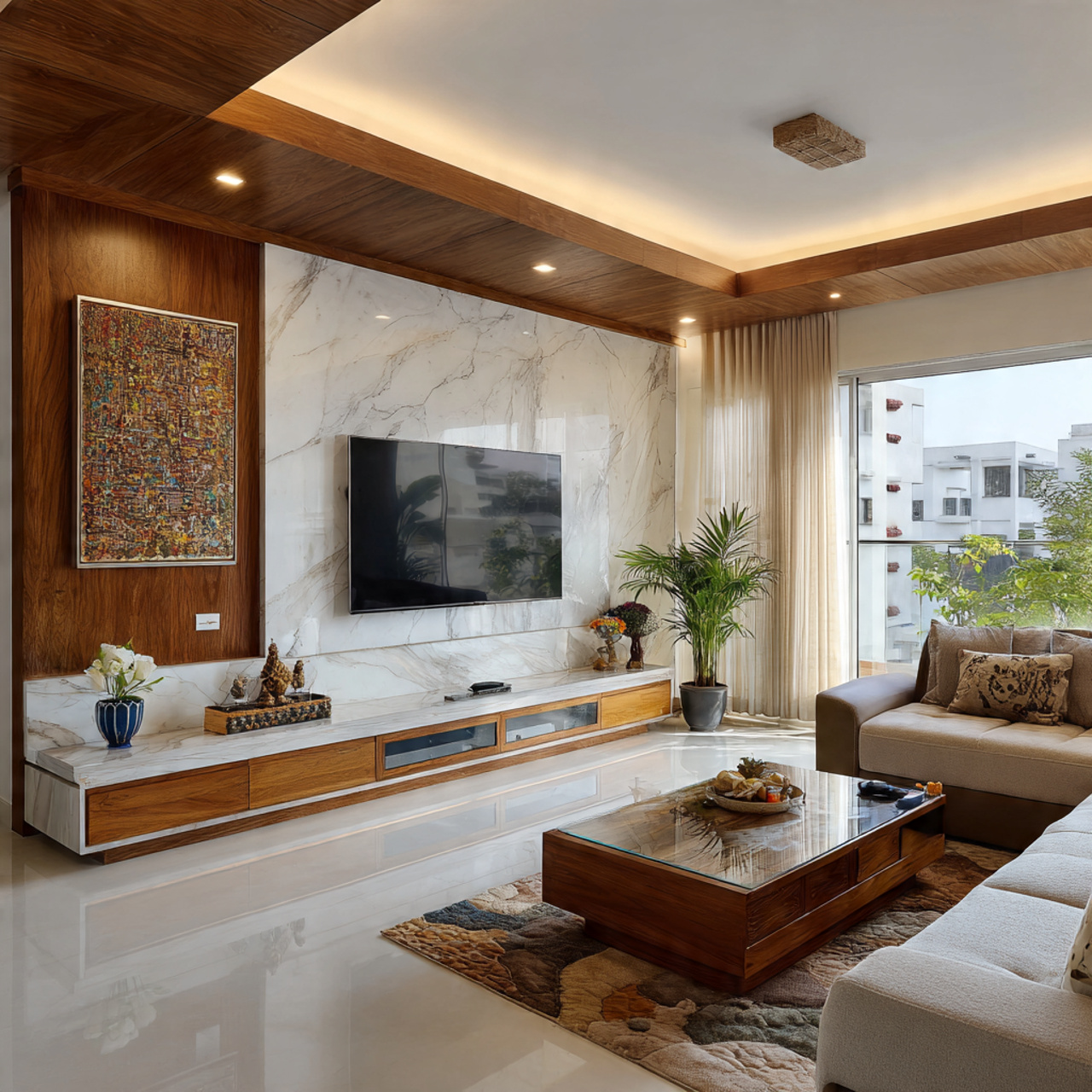
A wooden panel or textured backdrop introduces warmth behind the TV. The natural tones soften the contrast between the screen and the wall. It creates a grounded, welcoming feel.
This works because texture adds depth where flat walls fall short. Over time, I noticed smooth painted walls tend to feel colder around electronics. Wood adds visual warmth that balances the setup.
Choose medium warm tones and avoid overly dark finishes unless lighting is strong. Pair with neutral decor for harmony. Keep the texture simple and consistent.
Tip: Stick to medium warm wood tones for a natural look.
A Marble Accent Setup That Creates a Subtle Luxury TV Moment
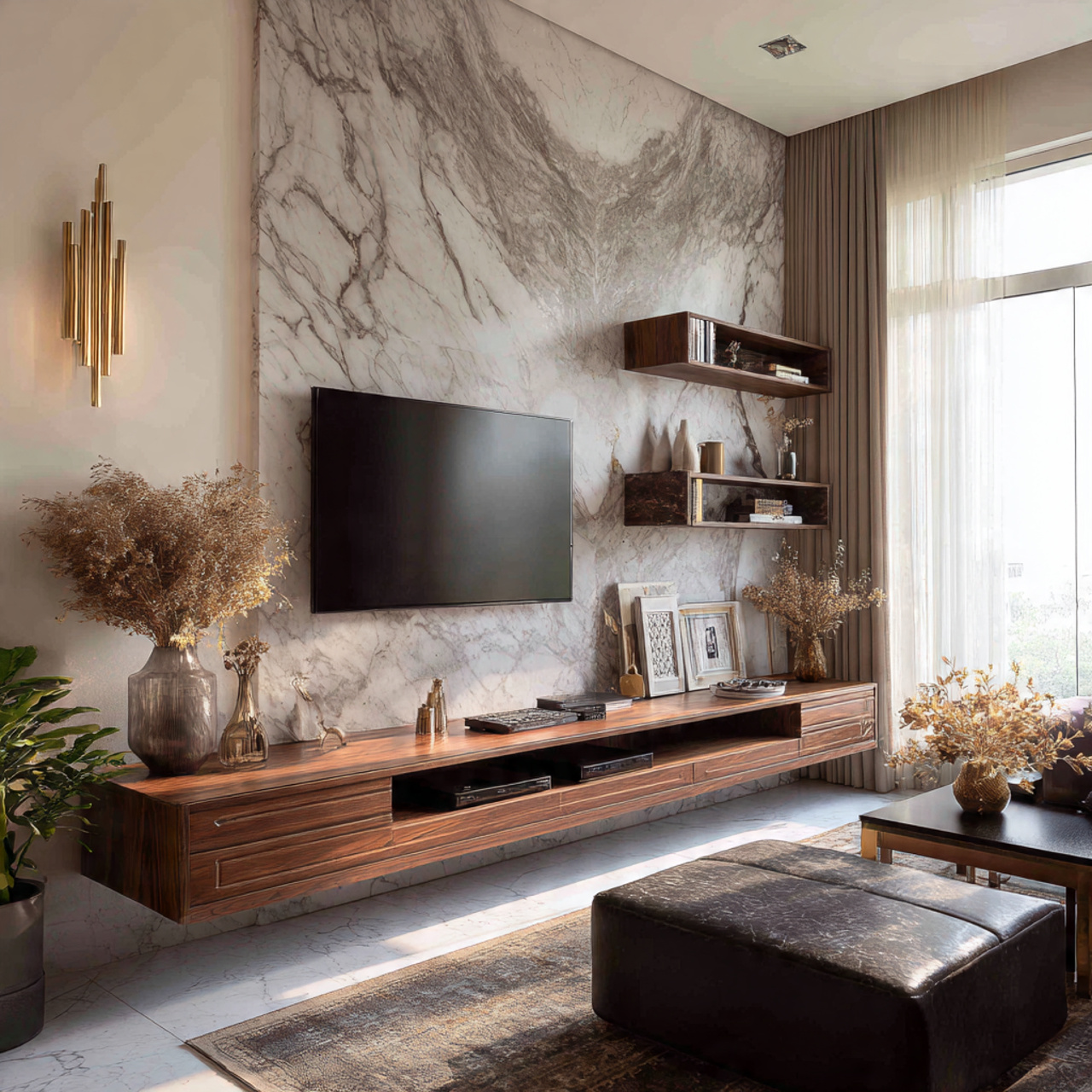
A marble accent beneath or behind the TV introduces a refined, elevated feel. The subtle veining adds interest without overpowering the space. It creates a quiet sense of luxury.
This works because marble reflects light softly and introduces controlled contrast. I initially thought it might feel too formal, but it actually balances modern setups well. It elevates the entire wall without effort.
Use marble as an accent rather than covering large areas. Pair it with minimal decor to maintain balance. Let the material speak for itself.
Tip: Keep surrounding decor minimal to highlight the marble.
Small Space TV Unit Decor That Feels Open and Uncluttered
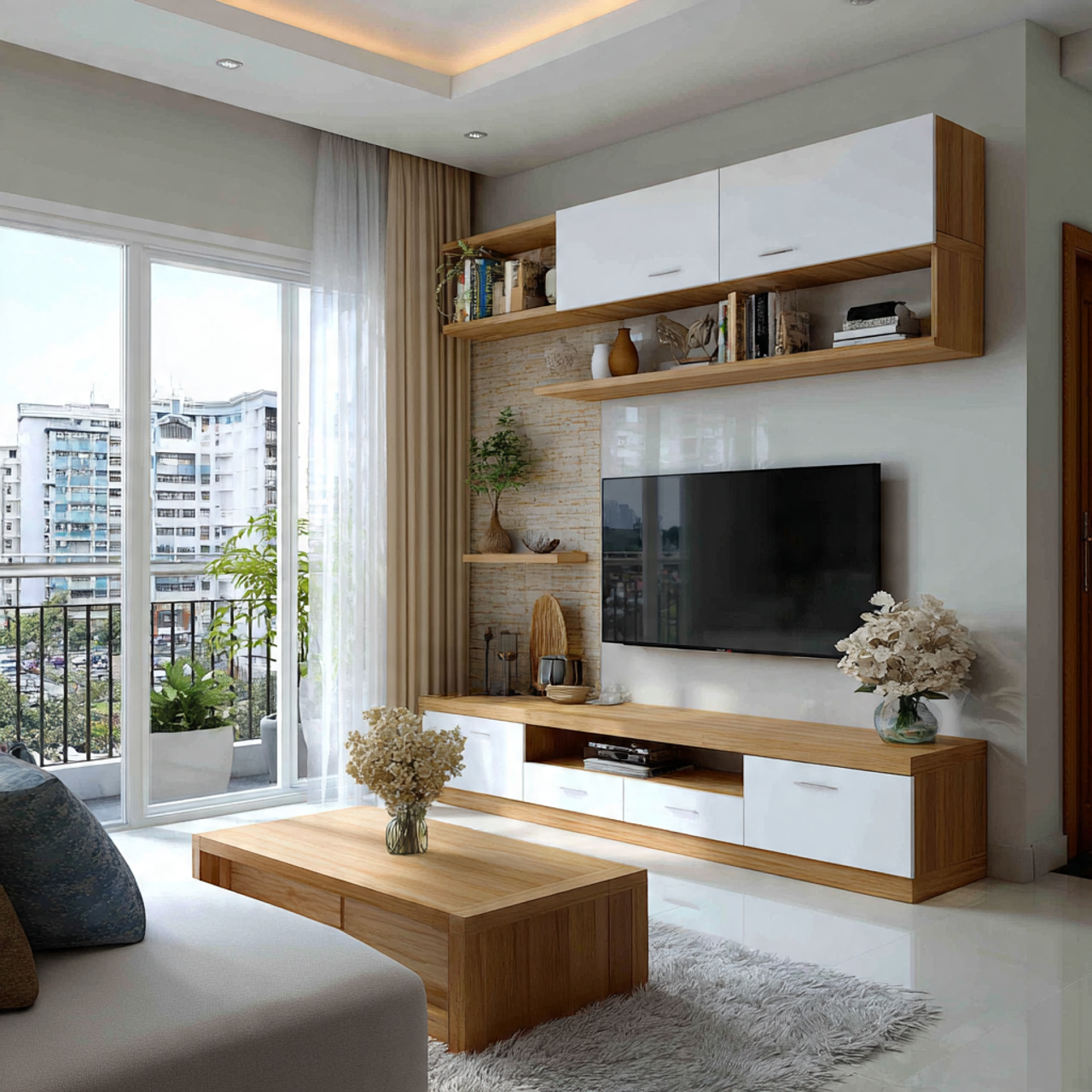
A compact TV setup with fewer items and lighter tones keeps the area feeling open. The space feels breathable and easy to move through. It is especially effective in apartments.
This works because clutter shrinks visual space quickly. I made the mistake of overdecorating a small setup once, and it felt tight instantly. Removing items created more impact than adding anything new.
Use slim decor pieces and keep colors light and cohesive. Focus on one or two focal elements. Let empty space become part of the design.
Tip: Prioritize empty space as part of the styling.
Symmetrical Styling That Feels Calm and Visually Organized
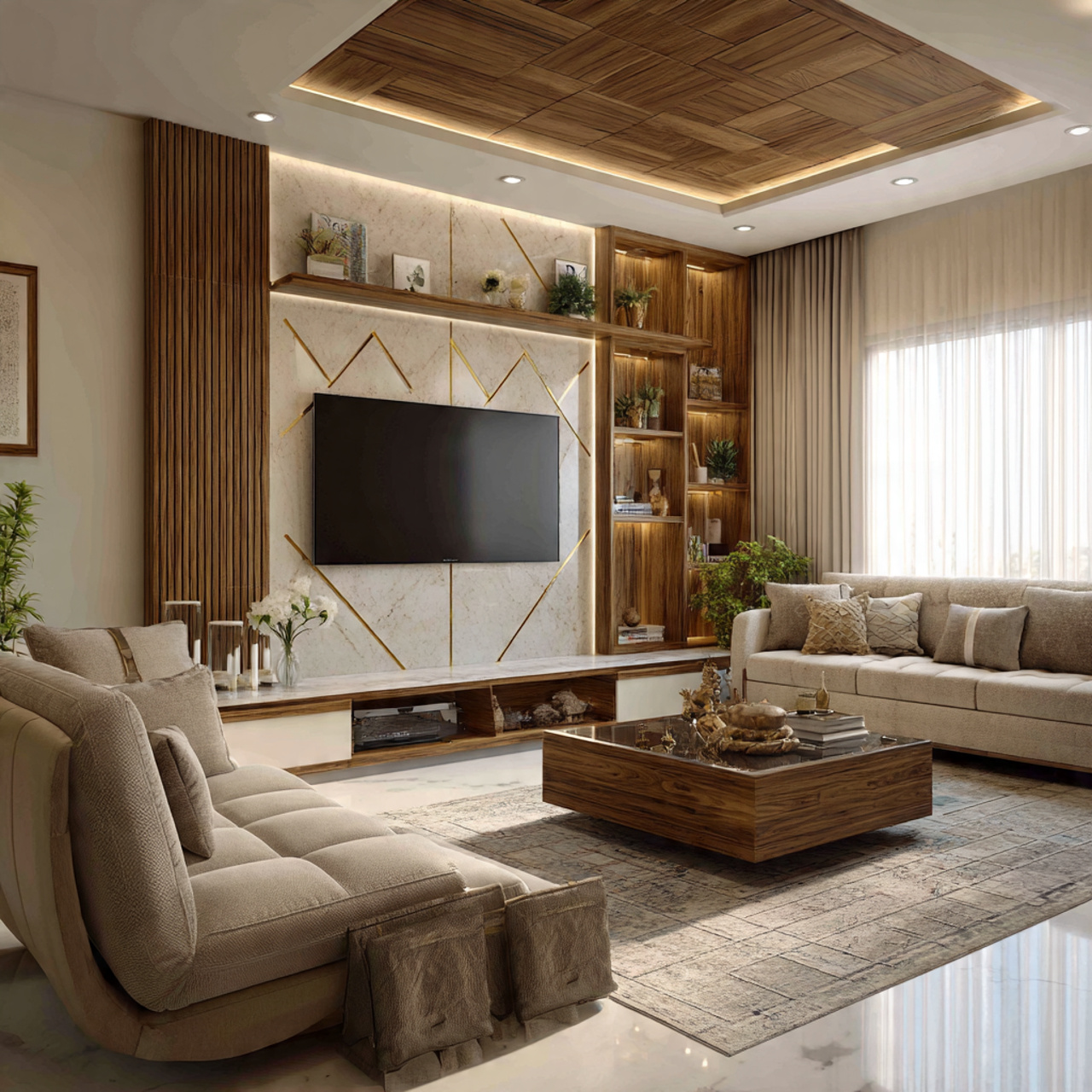
Matching decor on both sides of the TV creates a sense of order and calm. The setup feels structured and easy to read visually. This works well in modern and formal interiors.
Symmetry works because the brain naturally finds balance comforting. In homes that feel slightly chaotic, this setup brings instant clarity. It is one of the simplest ways to improve a space.
Use similar shapes or tones on both sides. Keep spacing even but not rigid. Slight variation prevents it from feeling too staged.
Tip: Mirror shapes instead of identical objects.
Mixed Material Decor That Feels Rich Without Looking Busy
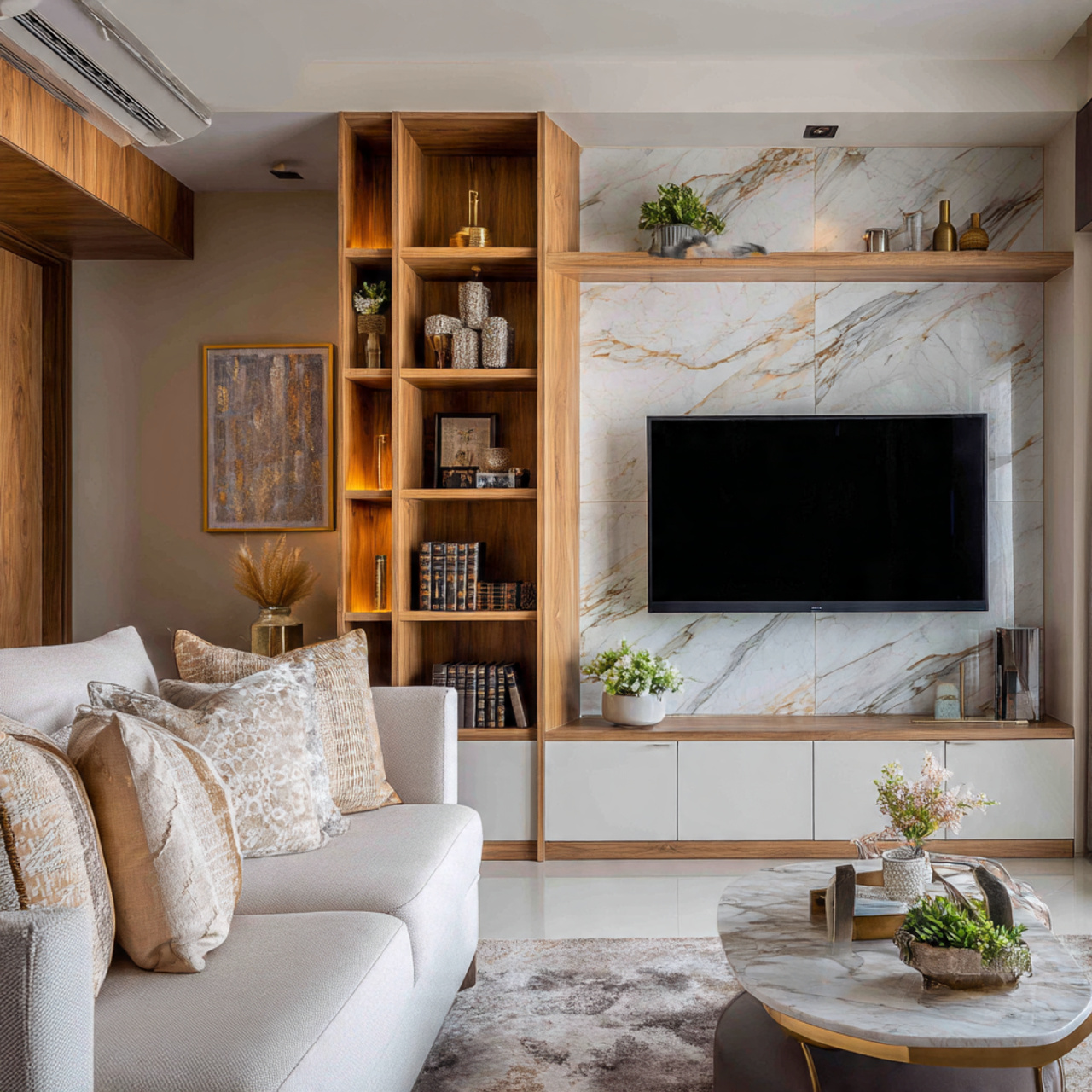
Combining wood, glass, and metal introduces subtle richness without clutter. Each material reflects light differently, adding depth to the setup. The space feels layered and intentional.
This works because variation adds interest without adding more objects. After trying single-material styling, I found it often feels flat over time. Mixing textures makes the space feel more complete.
Choose two to three materials and repeat them across decor. Keep colors consistent to avoid chaos. Avoid introducing too many finishes at once.
Tip: Limit to three materials for balance.
Seasonal TV Unit Styling That Keeps the Space Feeling Fresh
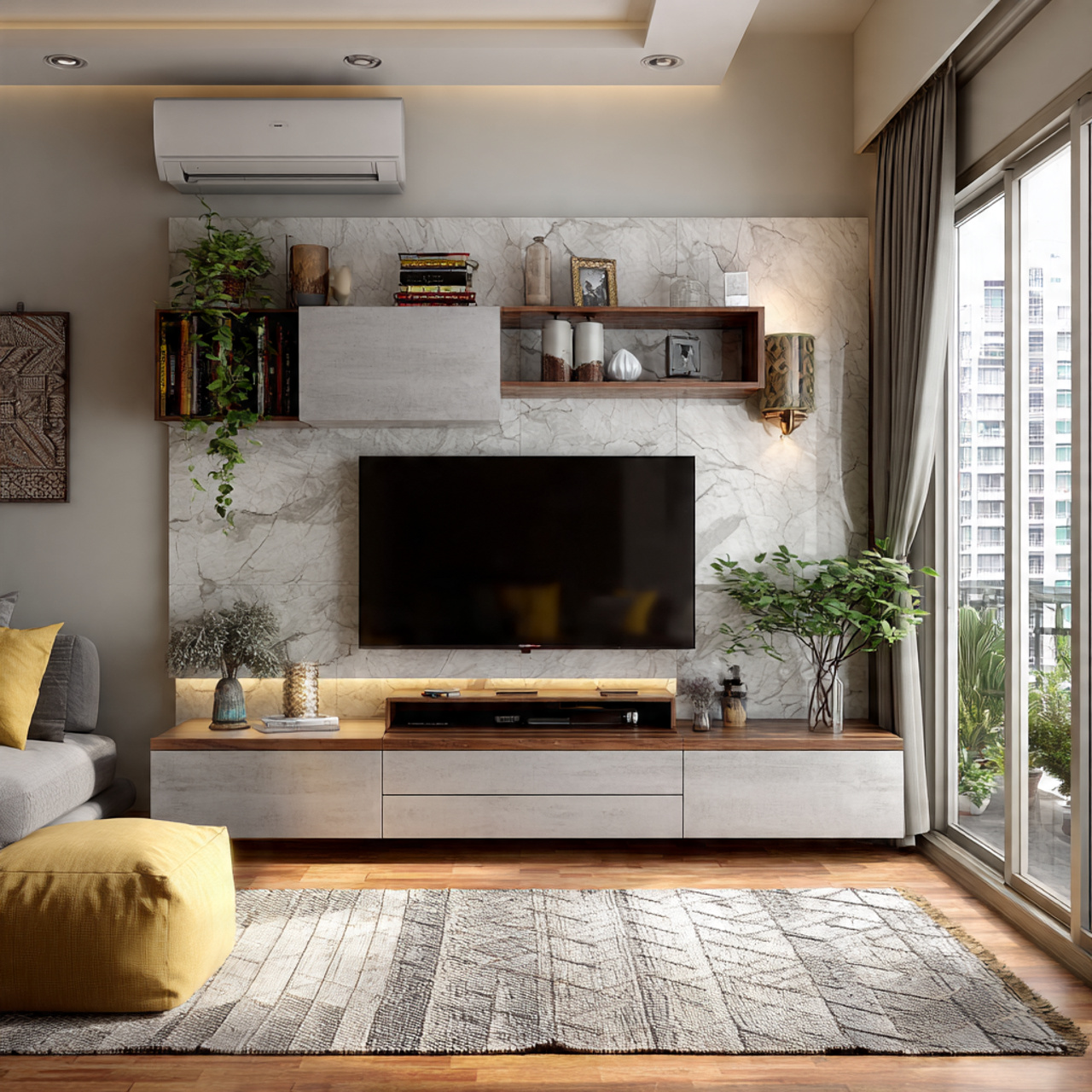
Switching small decor elements with the seasons keeps the setup feeling alive. Even subtle changes can shift the mood of the room. It prevents the space from feeling stagnant.
This works because static decor fades into the background over time. Small updates bring attention back to the area. It creates a sense of change without effort.
Swap out accents like plants, textiles, or small objects. Keep the base styling consistent. This makes updates quick and manageable.
Tip: Change only 20 percent of decor to keep consistency.
A Soft Lighting Corner That Creates a Relaxed Evening Mood
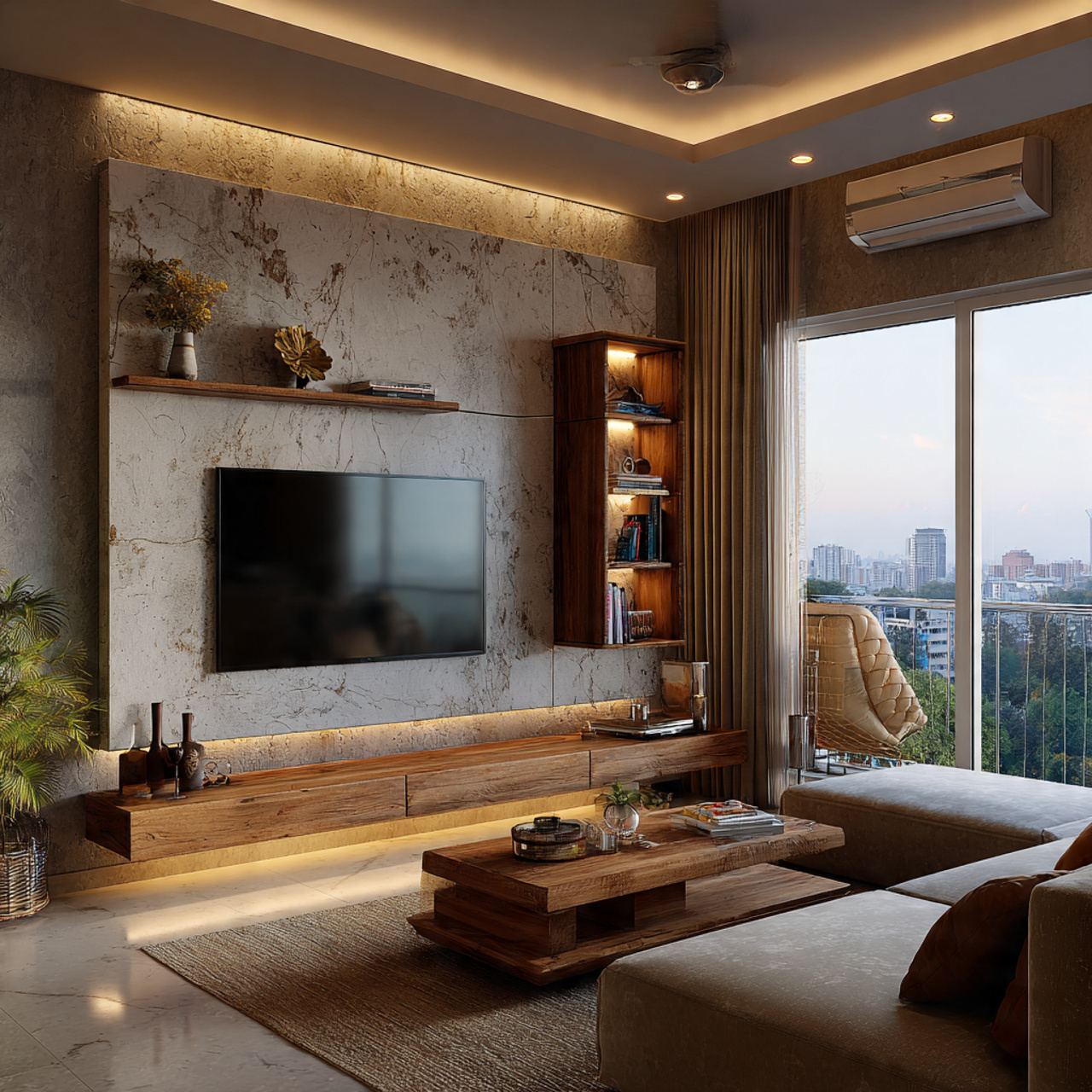
A floor lamp placed near the TV unit creates a soft, layered glow in the evening. The space feels warm and comfortable instead of dominated by screen light. It becomes a natural place to unwind.
This works because layered lighting reduces harsh contrast. In real homes, relying only on overhead lighting makes the space feel flat. Adding a secondary light source changes the atmosphere completely.
Place the lamp slightly off center for balance. Use warm bulbs to maintain a cozy feel. Let the light gently spread across nearby surfaces.
Tip: Position lamps at eye level for the most comfortable glow.
A Real Living Room Example With Balanced TV Unit Decor
Imagine a neutral living room where a wooden console sits beneath the TV, styled with books, a ceramic vase, and a soft trailing plant. Warm LED lighting glows behind the screen while a floor lamp adds gentle light to one side. Framed artwork surrounds the TV, blending it into the wall.
In the evening, the space feels calm and layered with soft reflections across wood, fabric, and glass. The TV no longer dominates the room and instead feels integrated into the overall design. It becomes a space that feels comfortable without trying too hard.
Color and Material Choices That Work Best for TV Unit Decor
Warm Beige (#E6D5C3)
Works best on walls and larger furniture surfaces to create a soft and welcoming mood. Pairs naturally with wood, linen, and light textured fabrics.
Soft White (#F5F5F5)
Keeps the space bright and airy while maintaining a clean overall look. Works well with glass, marble, and subtle metal accents.
Muted Olive (#8A9A7B)
Adds depth through plants and decor while creating a calm, grounded feeling. Pairs beautifully with ceramics, woven textures, and natural fibers.
Charcoal Gray (#3A3A3A)
Introduces contrast around the TV and stabilizes the visual balance of the space. Works best with metal finishes, dark wood, and matte textures.
Lighting Tips for Different Living Room Setups
Small Room Lighting Balance
Small rooms need soft layered lighting to avoid feeling crowded and visually tight. Use one main light and one subtle accent light to keep the space balanced and comfortable.
Large Room Lighting Distribution
Large rooms benefit from multiple light sources placed at different heights across the space. This prevents the TV area from feeling flat or disconnected from the rest of the room.
Natural Light Direction Adjustment
North facing rooms often feel cooler and need warmer light tones to create comfort. South facing rooms can handle brighter setups without losing warmth or balance.
TV Glare Control Setup
Avoid placing strong lights directly facing the TV screen to prevent visual discomfort. Position lighting slightly to the side so the glow supports the space without causing glare.
Common TV Unit Decor Mistakes That Ruin the Look
Overloading the Console With Too Many Items
Too many objects create visual clutter and make the space feel chaotic over time because everything competes for attention. This usually happens when decor is added without editing or removing older pieces.
Limit the setup to a few key items and rotate extras occasionally to maintain balance and clarity.
Ignoring Lighting Around the TV
Without proper lighting, the TV becomes too harsh and visually dominant, especially in the evening. This often leads to an uncomfortable viewing experience and a flat looking space.
Add soft ambient lighting like lamps or LED strips to create depth and improve comfort.
Leaving the Wall Completely Empty
An empty wall makes the TV feel disconnected and overly dominant within the room. This creates an unfinished look that feels slightly awkward over time.
Introduce wall art or subtle decor elements to visually integrate the TV into the overall space.
Using Mismatched Decor Styles
Too many conflicting styles create visual confusion and make the setup feel unintentional. Over time, the space loses cohesion and starts to feel inconsistent.
Stick to a clear palette and a limited mix of materials to create a more unified and balanced look.
FAQs About TV Unit Decor Ideas
How do I decorate around a TV without making it messy?
Use fewer items and balance heights carefully. Leave space between objects so the arrangement can breathe. This keeps the look clean and intentional.
What is the easiest way to style a TV unit?
Start with lighting and one layered decor setup like books and a plant. These small changes create immediate impact. Keep colors consistent for a cohesive look.
Can I decorate a TV unit on a budget?
Yes, simple items like books, plants, and affordable decor work well. Rearranging what you already have often makes the biggest difference. It is more about placement than cost.
Should I hide my TV or style around it?
Styling around it usually feels more natural and relaxed. Hiding it can sometimes look forced in everyday spaces. Blending it into decor creates better balance.
How often should I update my TV unit decor?
Every few months or seasonally is enough to keep things fresh. Small updates can shift the mood without effort. There is no need for constant changes.
Final Thoughts on Creating a Beautiful TV Unit Decor Setup
Tv unit decor becomes much easier when you focus on balance, layering, and lighting instead of trying to fight the presence of the screen. Small adjustments can completely change how the space feels and make the setup look intentional rather than accidental.
Start with one simple change like adding a plant or adjusting your lighting setup and build gradually over time. As you live with the space, you will naturally refine what works best and create a room that feels calm, comfortable, and genuinely yours without overcomplicating the process.