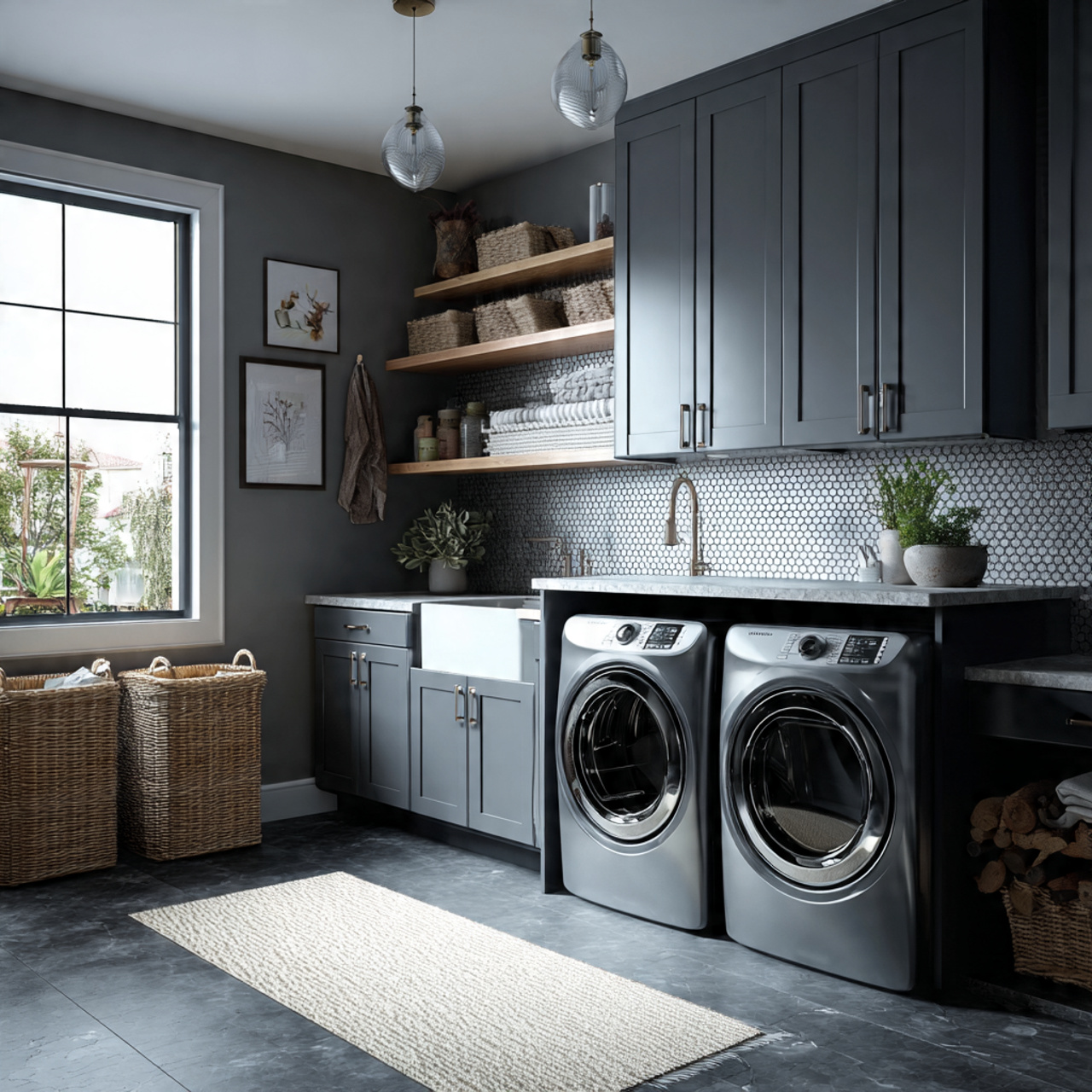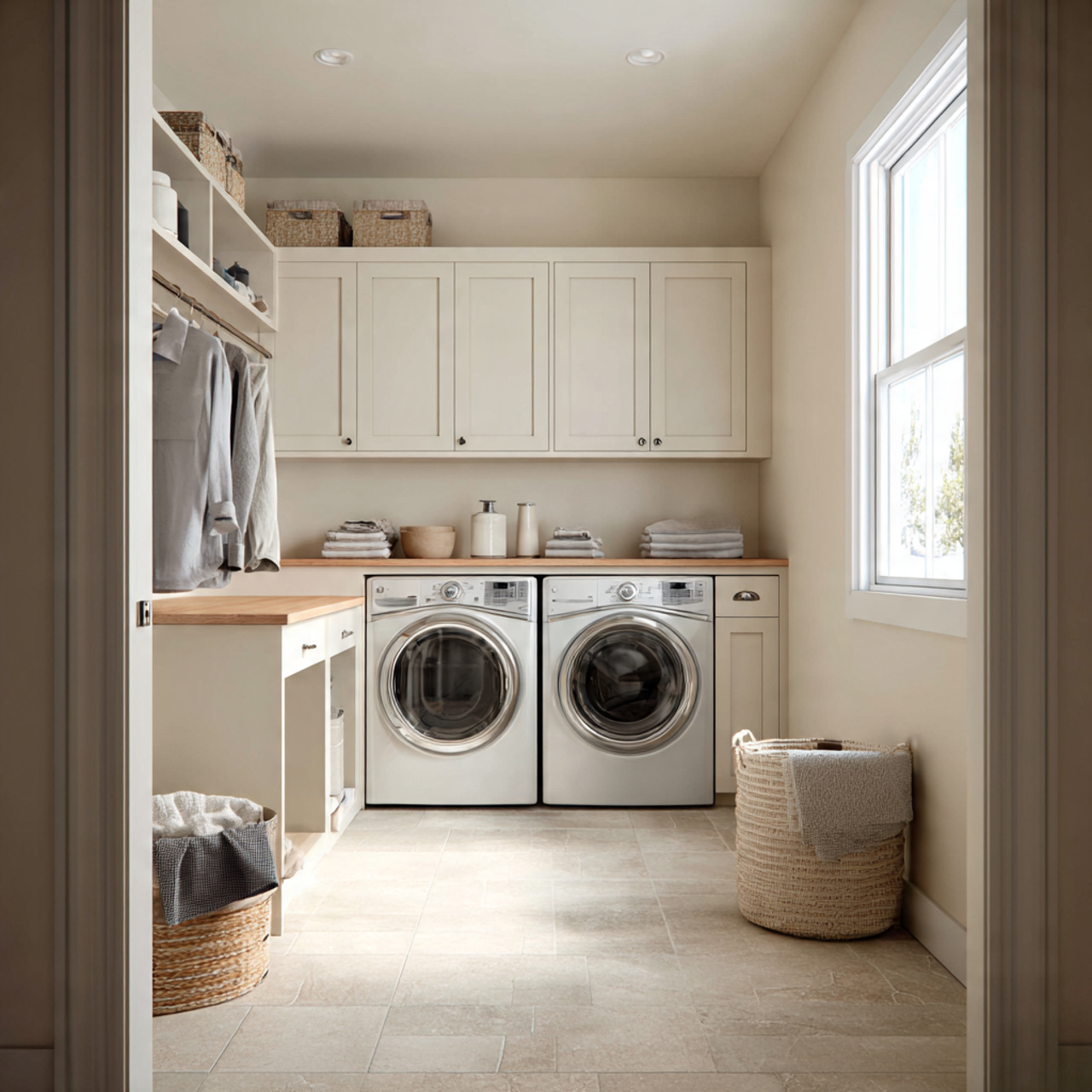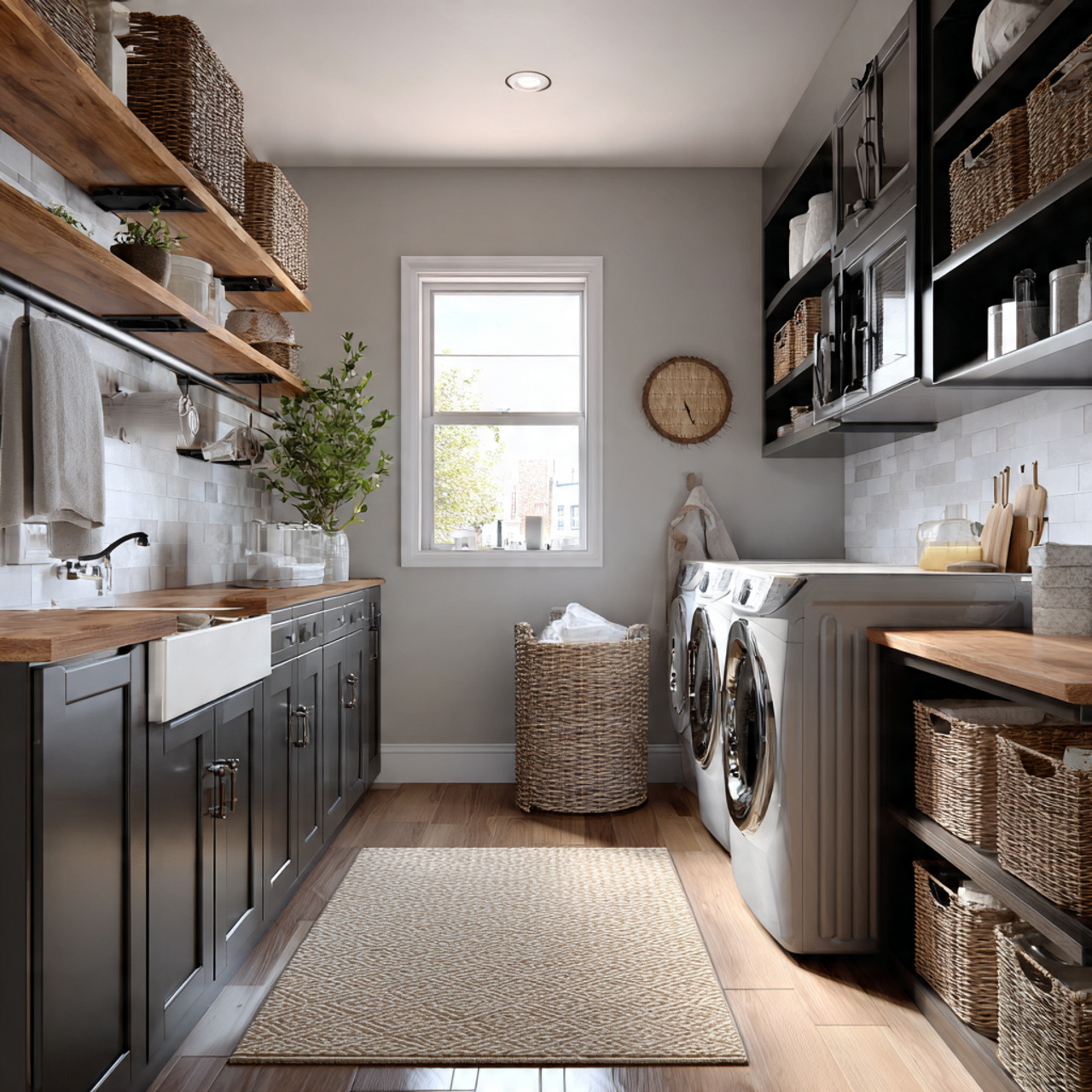
12 Genius Small Laundry Room Ideas That Actually Work
Small laundry room ideas can completely change how a tight space feels when the focus shifts from adding more items to making the space actually work. In many real homes, laundry areas are squeezed into corners, closets, or shared zones, yet they still need to support daily routines without friction. The difference between a stressful setup and a smooth one usually comes down to how movement and tasks are arranged.
In my experience, most small laundry problems are not caused by lack of storage but by poor workflow. People try to fix the space by adding shelves or decor, but the real issue is how washing, drying, and folding connect. Once the layout starts supporting your routine, the entire space begins to feel lighter and easier to use.
Small laundry room ideas work best when movement, task flow, and accessibility are designed to reduce effort and make everyday use feel natural.
Why Small Laundry Rooms Often Feel Frustrating to Use
Many small laundry rooms feel uncomfortable because tasks are disconnected and require unnecessary movement. You wash in one spot, carry clothes somewhere else, then fold in another area, which breaks the flow. One thing I have noticed in real homes is that even a well-decorated laundry room can feel frustrating if the process itself is inefficient.
The key is to think about how your body moves through the space. When each step connects naturally, the room feels easier without adding anything new. This shift from adding to organizing is what makes a small laundry room actually work.
Small Laundry Room Ideas That Improve Real Daily Use
A Small Laundry Setup That Flows Smoothly From Washing to Folding
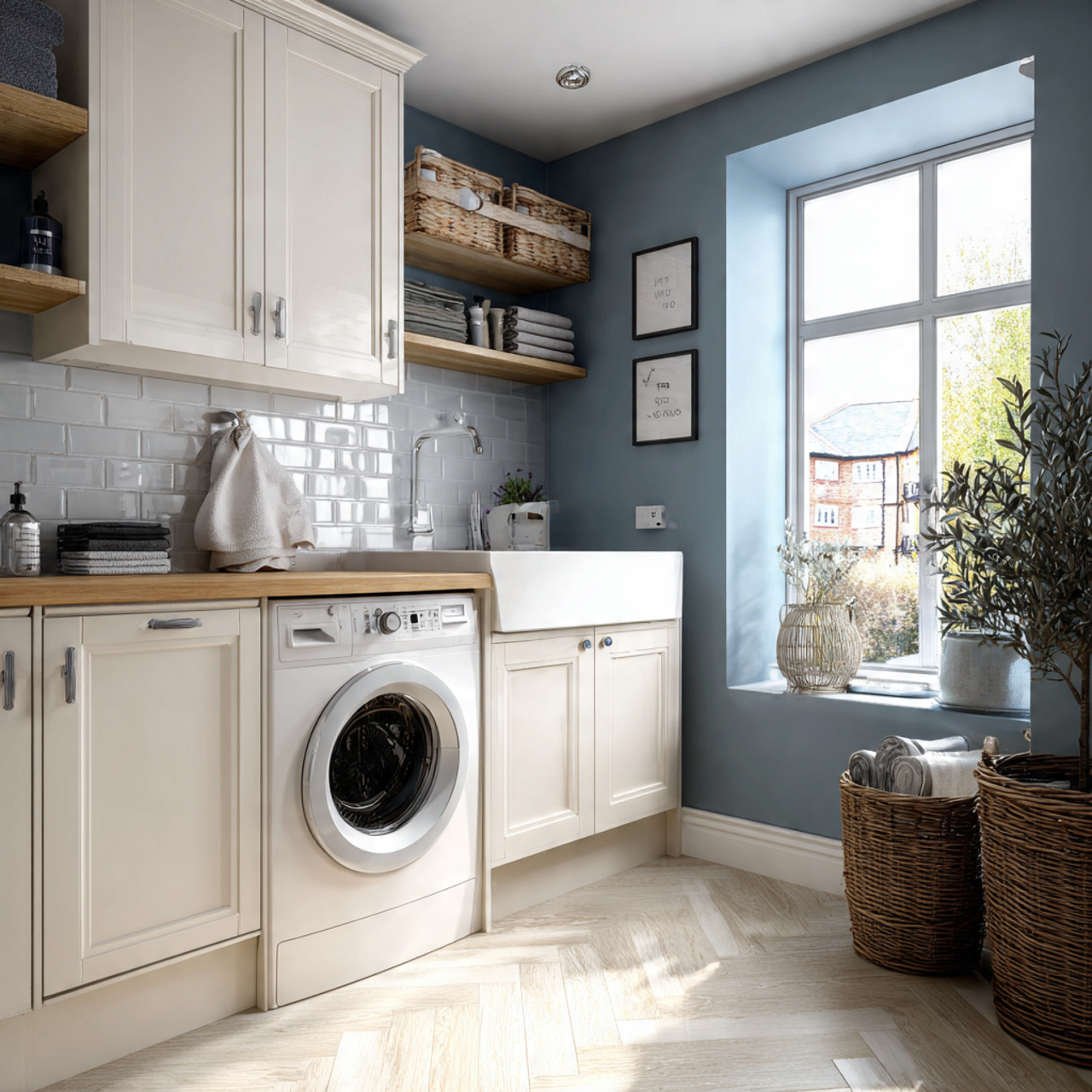
A compact setup where the washer, dryer, and folding surface sit within one step of each other creates a natural rhythm. You move from washing to drying to folding without walking across the room or stacking clothes elsewhere. The space feels calm because everything happens in one place.
In my experience, the biggest mistake is separating these steps, which causes clothes to pile up in different areas. This often leads to clutter building up without noticing. Once everything is connected, the process becomes smoother and faster.
Keep your main tasks within arm’s reach whenever possible to reduce movement. Even in very tight spaces, aligning these functions creates a noticeable difference in daily use.
Tip: Arrange your setup so you can complete one full load without stepping away.
A Folding Spot That Keeps Clothes From Piling Up Around the House
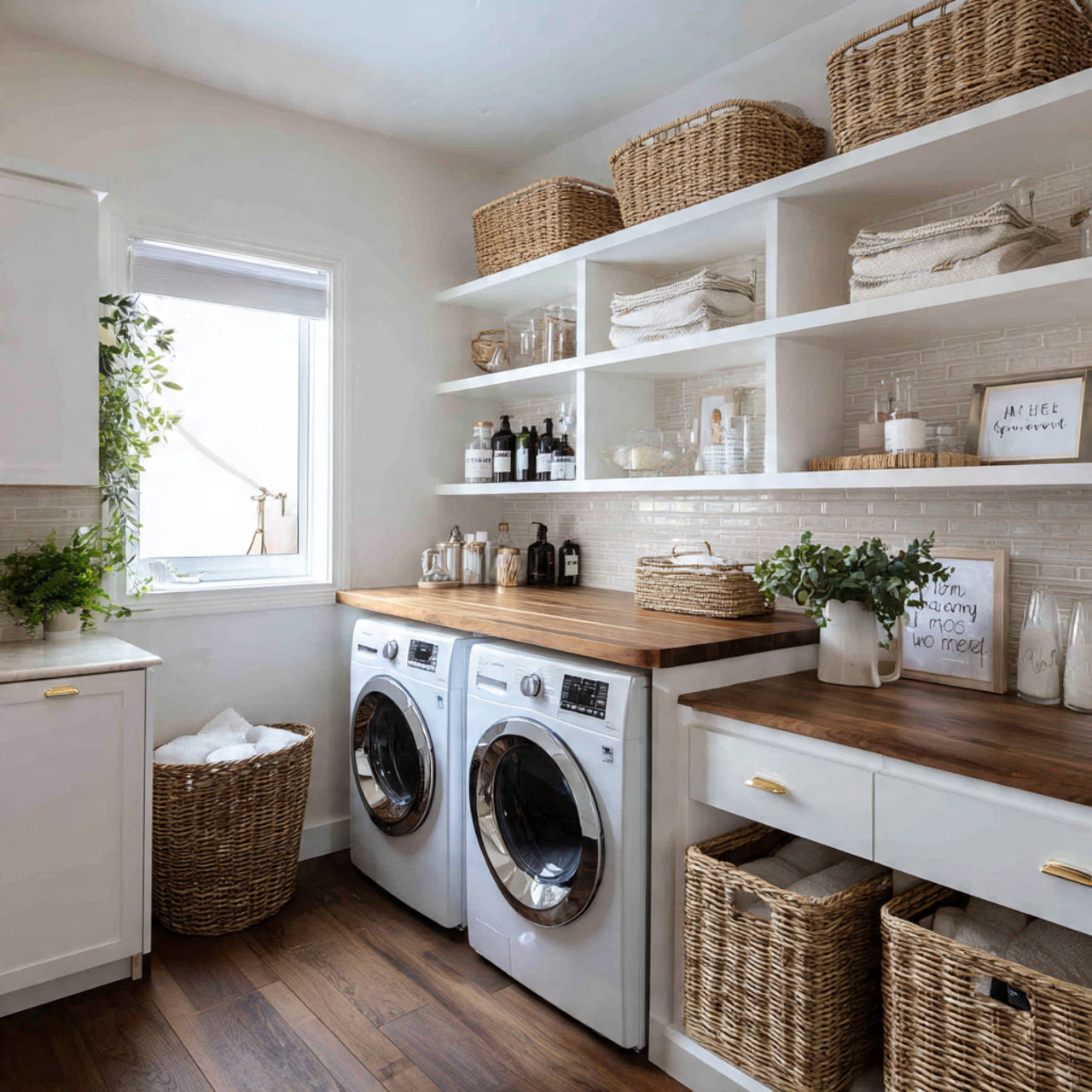
A dedicated folding surface changes how laundry flows through your home. Clothes get finished immediately instead of being moved to beds or chairs. The space feels more controlled and less chaotic.
One regret I have seen often is skipping a folding area, assuming it is not necessary. Over time, this creates hidden clutter in other rooms. Adding even a small surface keeps everything contained.
Use a compact counter or fold-down surface if space is limited. This simple addition prevents laundry from spreading beyond the room.
Tip: Always keep your folding area clear and ready to use.
A Simple Laundry Basket System That Makes Sorting Feel Effortless
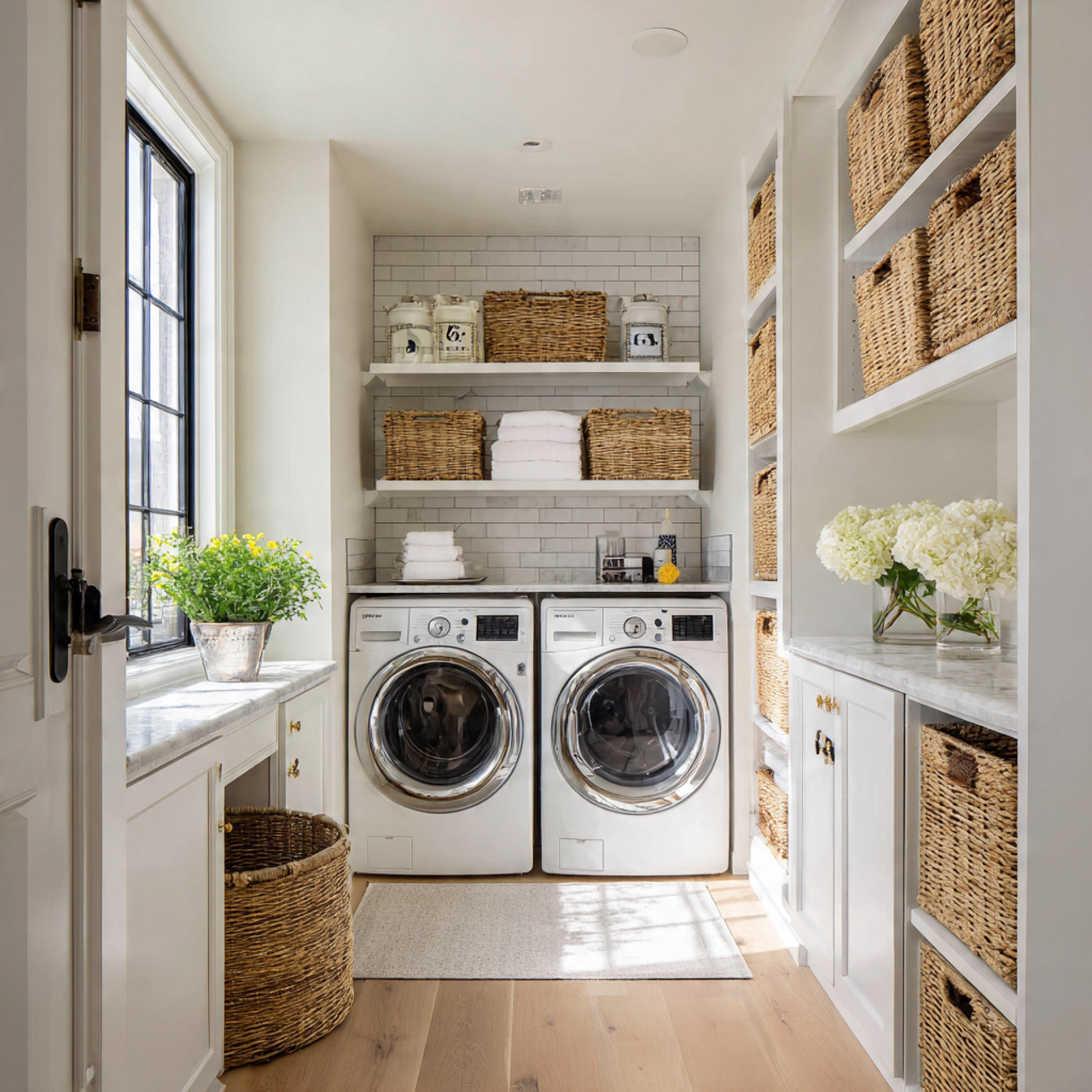
A clear basket system allows clothes to be sorted before washing, which reduces decision making later. Whites, colors, and daily wear each have a place. This small change removes friction from the process.
Most people underestimate how much time is lost sorting clothes repeatedly. After setting up a simple system, the routine becomes faster and more predictable. It also reduces mistakes during washing.
Use two or three baskets placed where clothes naturally collect. This keeps the system easy to follow without adding complexity.
Tip: Label baskets if multiple people use the space.
Storage Within Arm Reach That Makes Everyday Tasks Feel Easier
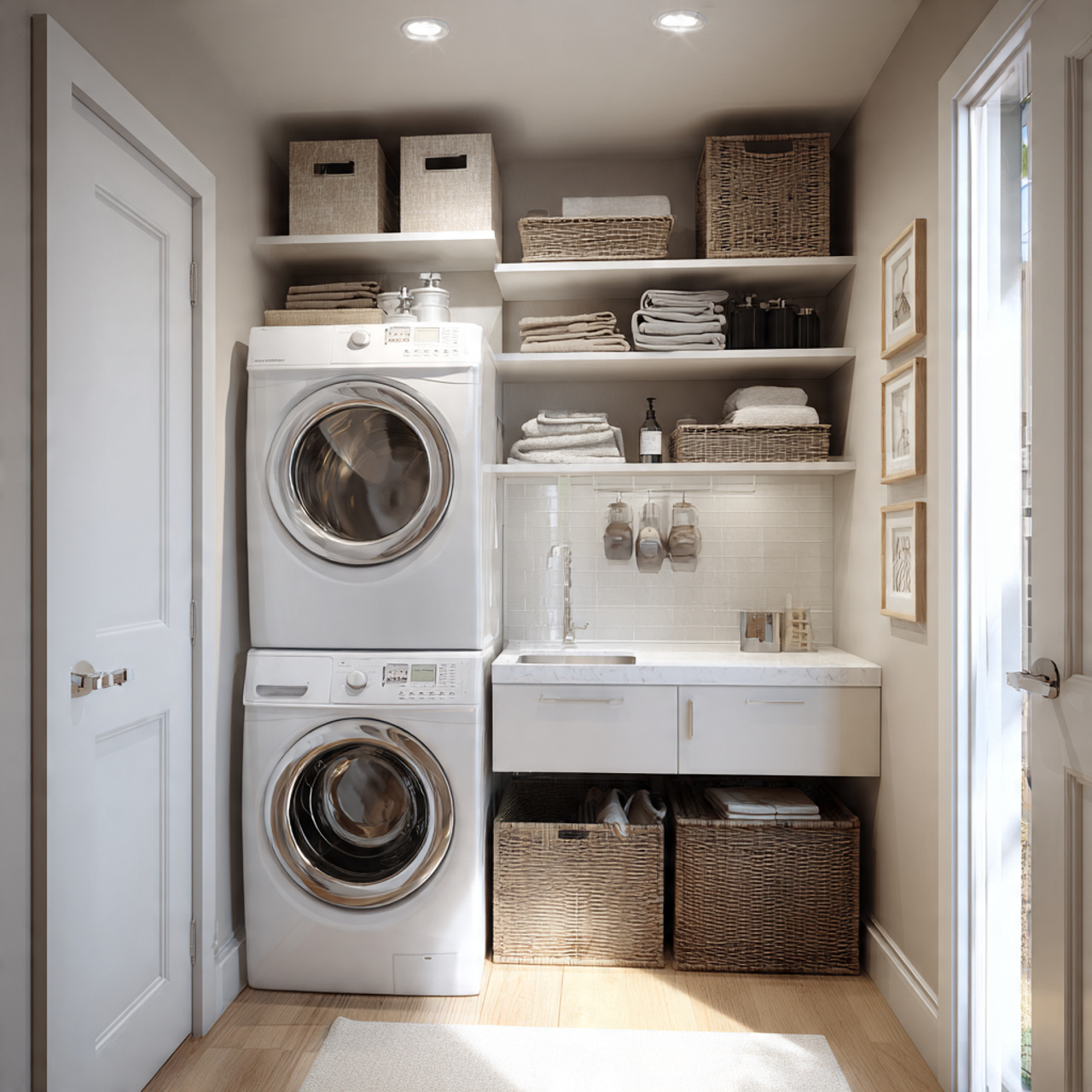
Items placed within easy reach reduce unnecessary movement during laundry tasks. Detergent, sprays, and tools should be accessible without bending or stretching. This makes the process feel smoother and less tiring.
In real use, poorly placed storage slows everything down. Reaching too high or too low repeatedly becomes frustrating over time. Adjusting placement improves comfort more than adding more storage.
Keep daily-use items at chest or waist level for quick access. This small adjustment makes a noticeable difference in efficiency.
Tip: Store rarely used items higher to keep prime space clear.
A Layout That Lets You Move Comfortably Without Bumping Into Things
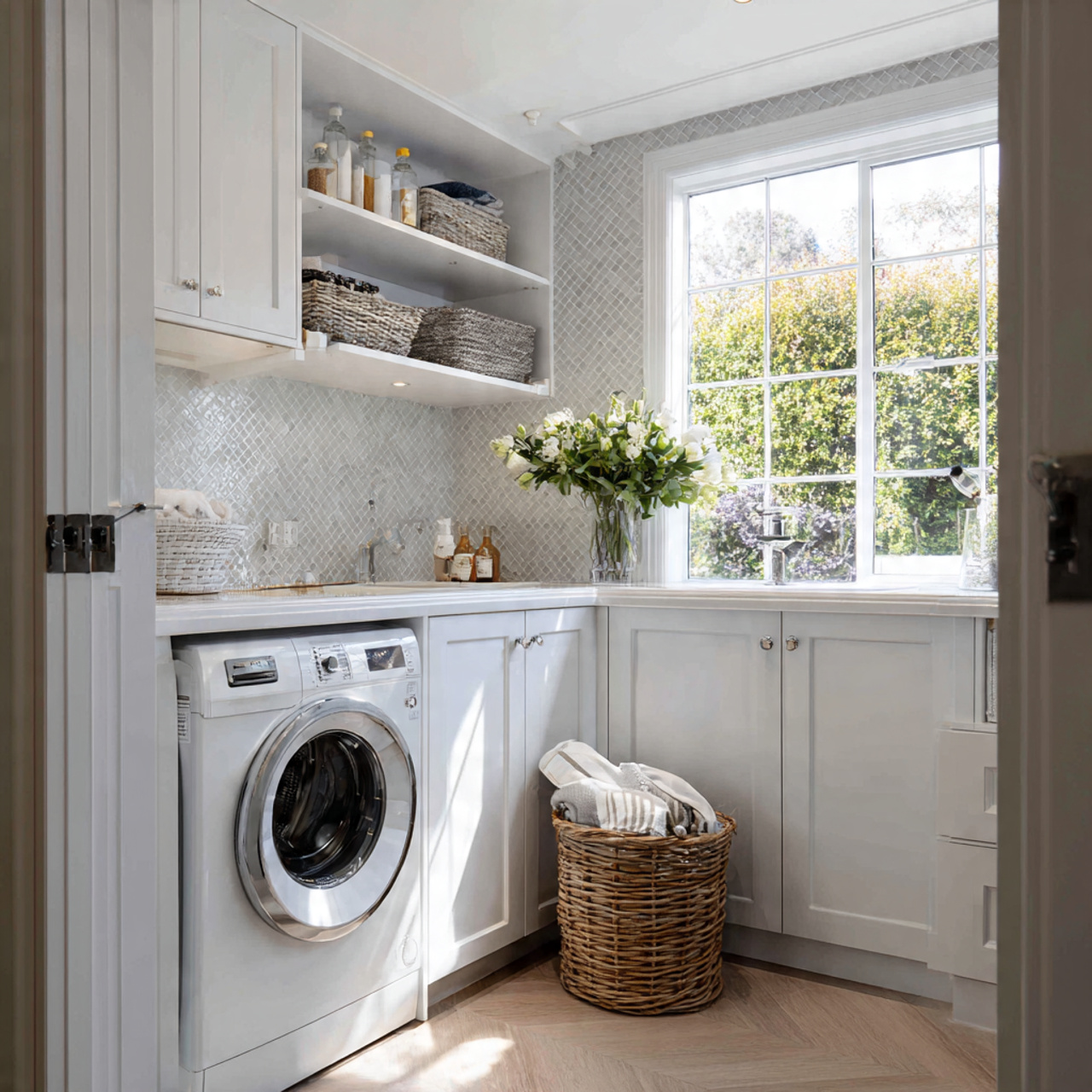
A small laundry room should allow basic movement without obstruction. You should be able to turn, open doors, and move freely without adjusting your body constantly. This creates a sense of ease in the space.
One mistake many people make is overfilling the room with storage or tools. This reduces movement space and makes the room feel tighter than it is. Removing even one obstacle can improve the experience.
Keep pathways clear and avoid placing items in walking zones. Prioritizing movement makes the space feel larger without changing its size.
Tip: Test your layout by moving through it during actual use.
A Washer and Dryer Setup That Feels Natural to Use Every Day
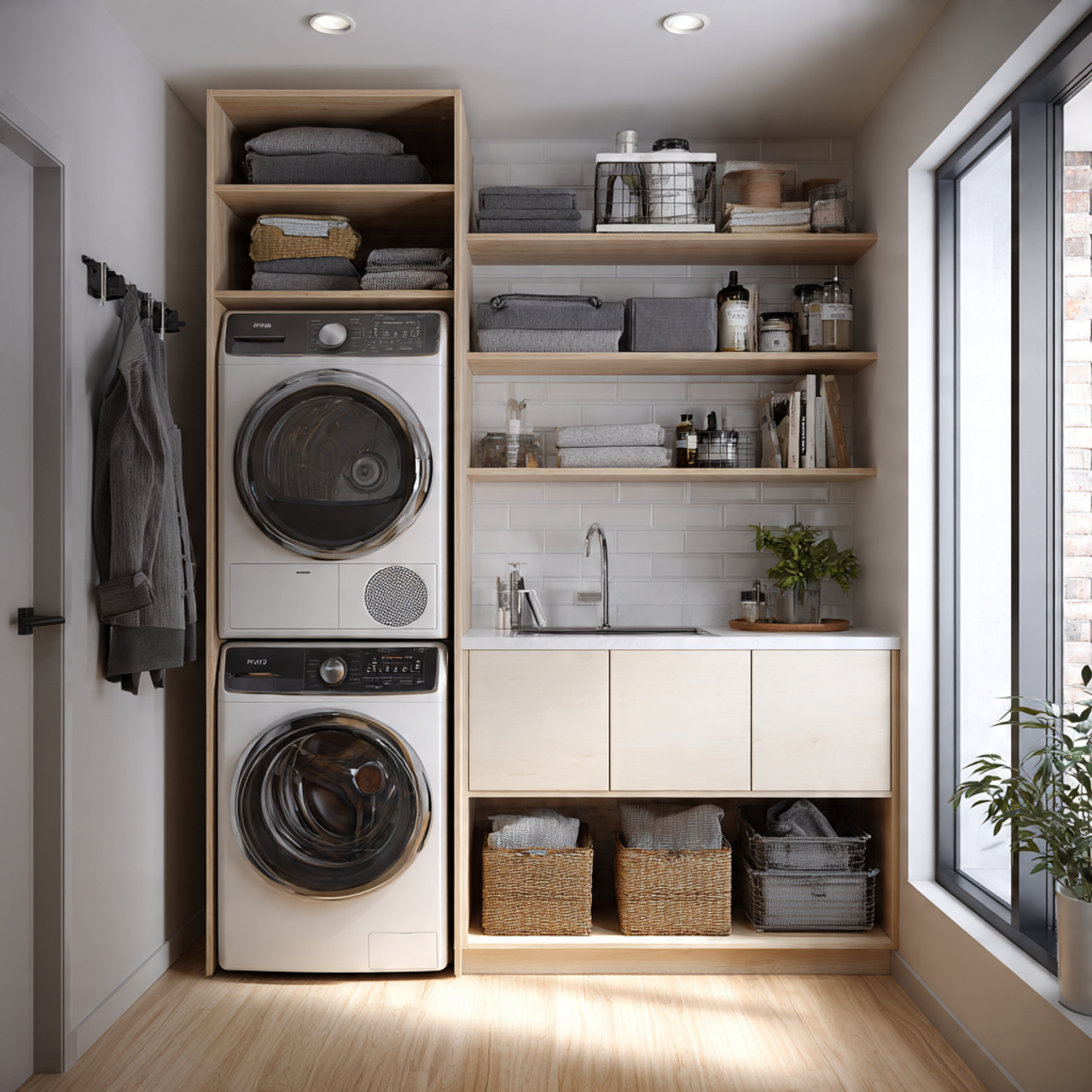
Machines positioned in a way that supports your natural movement reduce effort during daily tasks. Doors should open without blocking access, and controls should be easy to reach. The setup should feel intuitive.
In my experience, poorly positioned machines create small frustrations that add up over time. You adjust your body or change your routine to fit the space. Fixing the setup removes this constant inconvenience.
Align machines based on how you load and unload clothes. This ensures the process feels smooth rather than forced.
Tip: Leave enough space for doors to open fully without obstruction.
A Door Setup That Does Not Block Movement in Tight Spaces
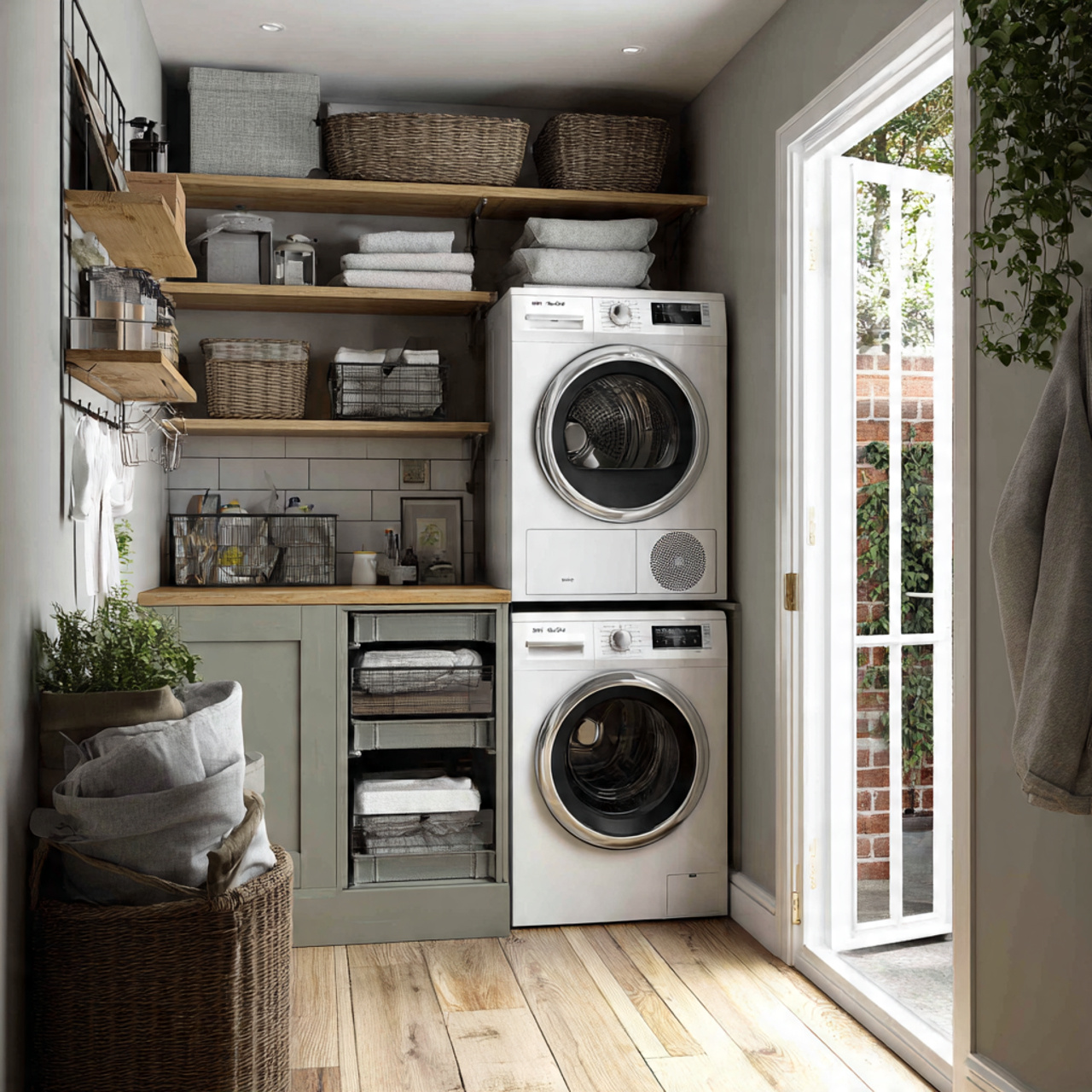
Doors in small laundry areas can easily become obstacles if not planned properly. When doors swing into walkways, they interrupt movement and make the space harder to use. A smoother setup keeps pathways clear.
This is often overlooked until daily use reveals the problem. Constantly adjusting around doors becomes frustrating quickly. Fixing this improves flow immediately.
Use sliding doors or adjust door direction to avoid blocking movement. This small change can transform how the space feels.
Tip: Check door clearance before finalizing your layout.
A Hidden Drying Area That Keeps the Room Clear While Clothes Air Dry
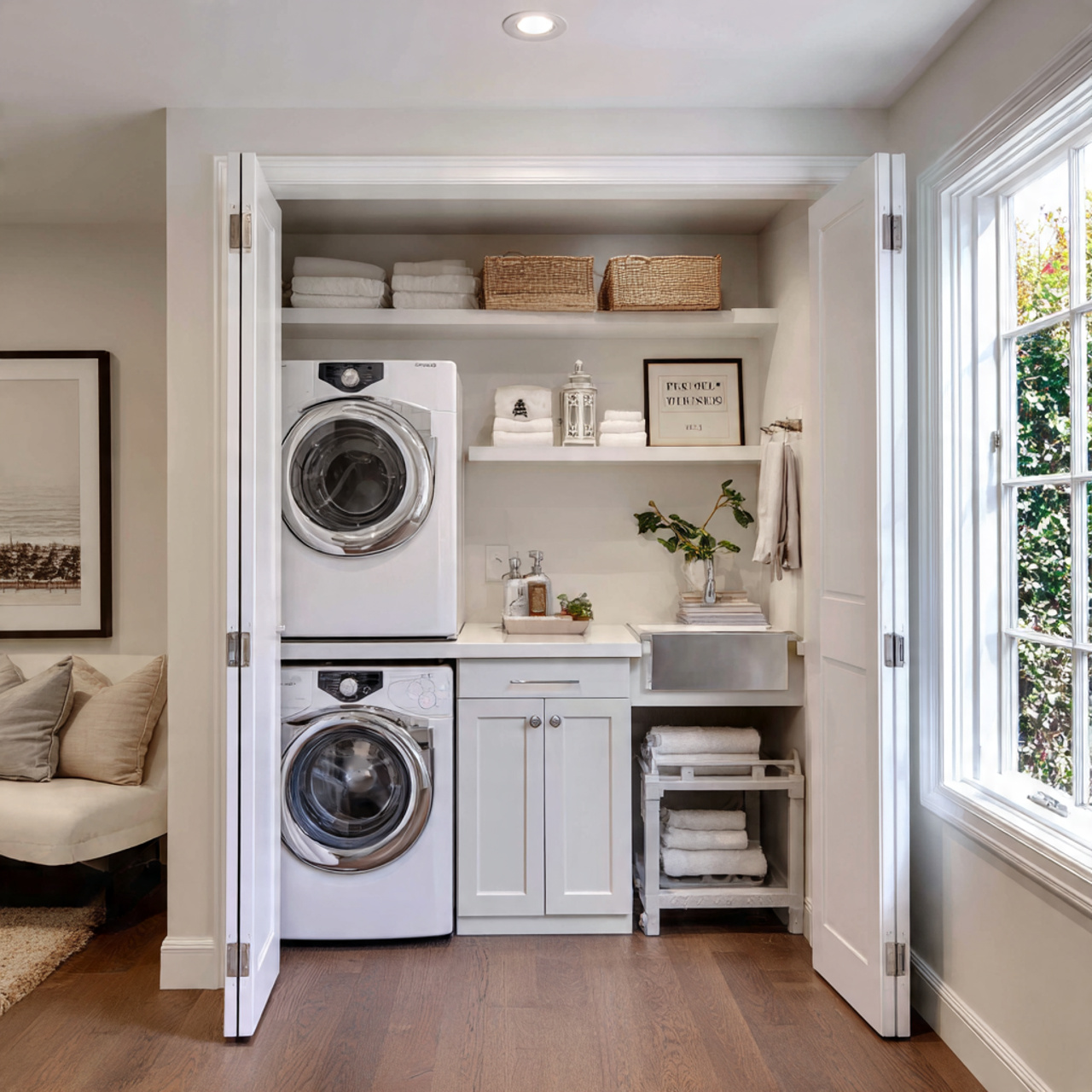
A drying setup that stays out of the way keeps the room usable even when clothes are hanging. Foldable or retractable systems allow flexibility without permanent clutter. The space remains functional throughout the day.
Leaving drying racks open all the time can make the room feel cramped. I have seen this become a long-term frustration in small spaces. A hidden system solves both function and appearance.
Choose a drying solution that can be tucked away easily. This keeps the room adaptable to different needs.
Tip: Place drying areas near airflow for faster results.
A Sink Position That Makes Quick Cleaning Tasks Feel Easy
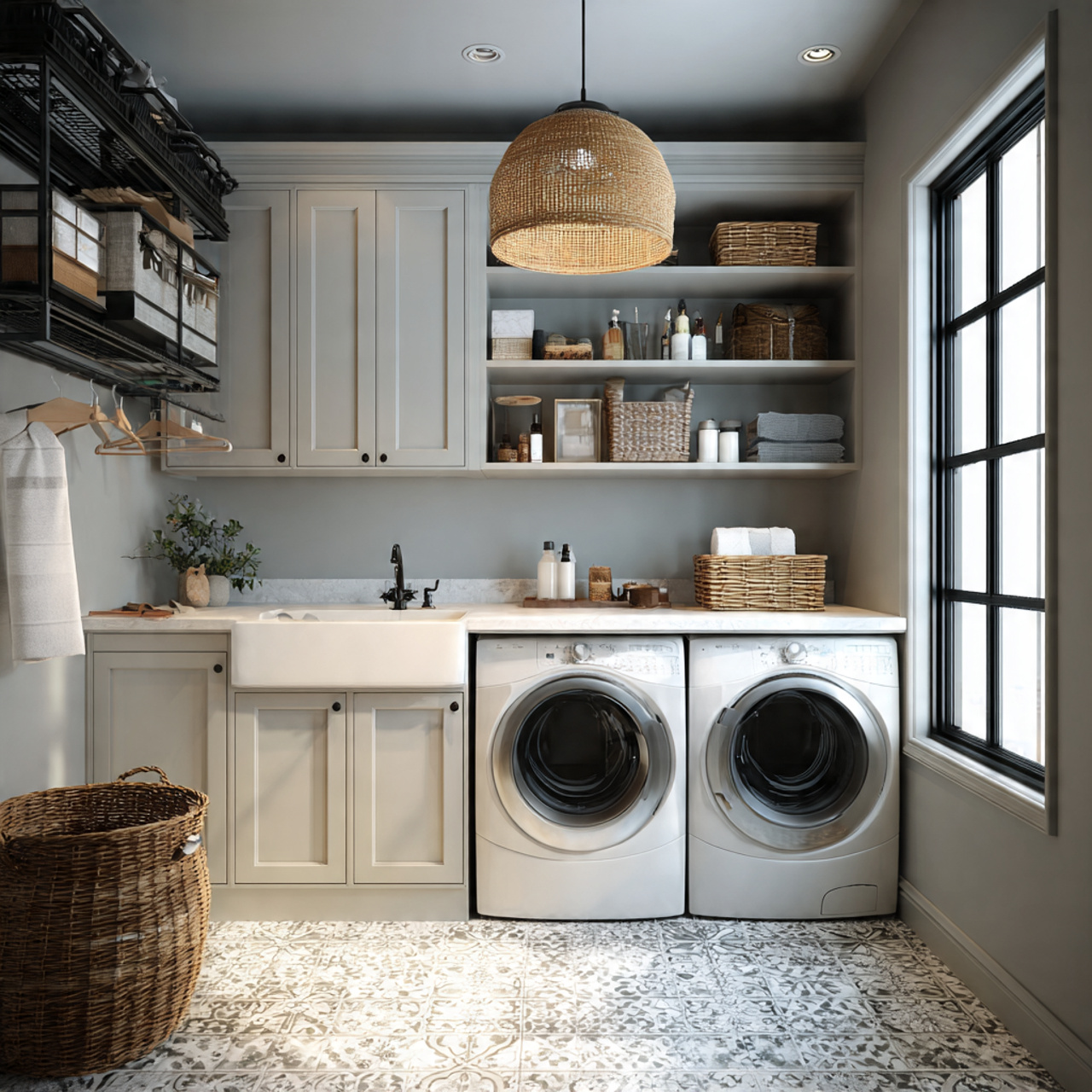
A sink placed close to your main work area supports quick tasks without interrupting flow. Rinsing or spot cleaning becomes simple instead of disruptive. The space feels more complete.
At first, many people skip a sink to save space, but this often leads to inconvenience later. Small tasks become harder than they should be. Adding a sink improves usability significantly.
Keep the sink within your main working zone for easy access. This ensures it supports your routine instead of complicating it.
Tip: A deeper sink works better than a wide shallow one.
A Compact Laundry Nook That Still Feels Smooth to Use in Shared Spaces
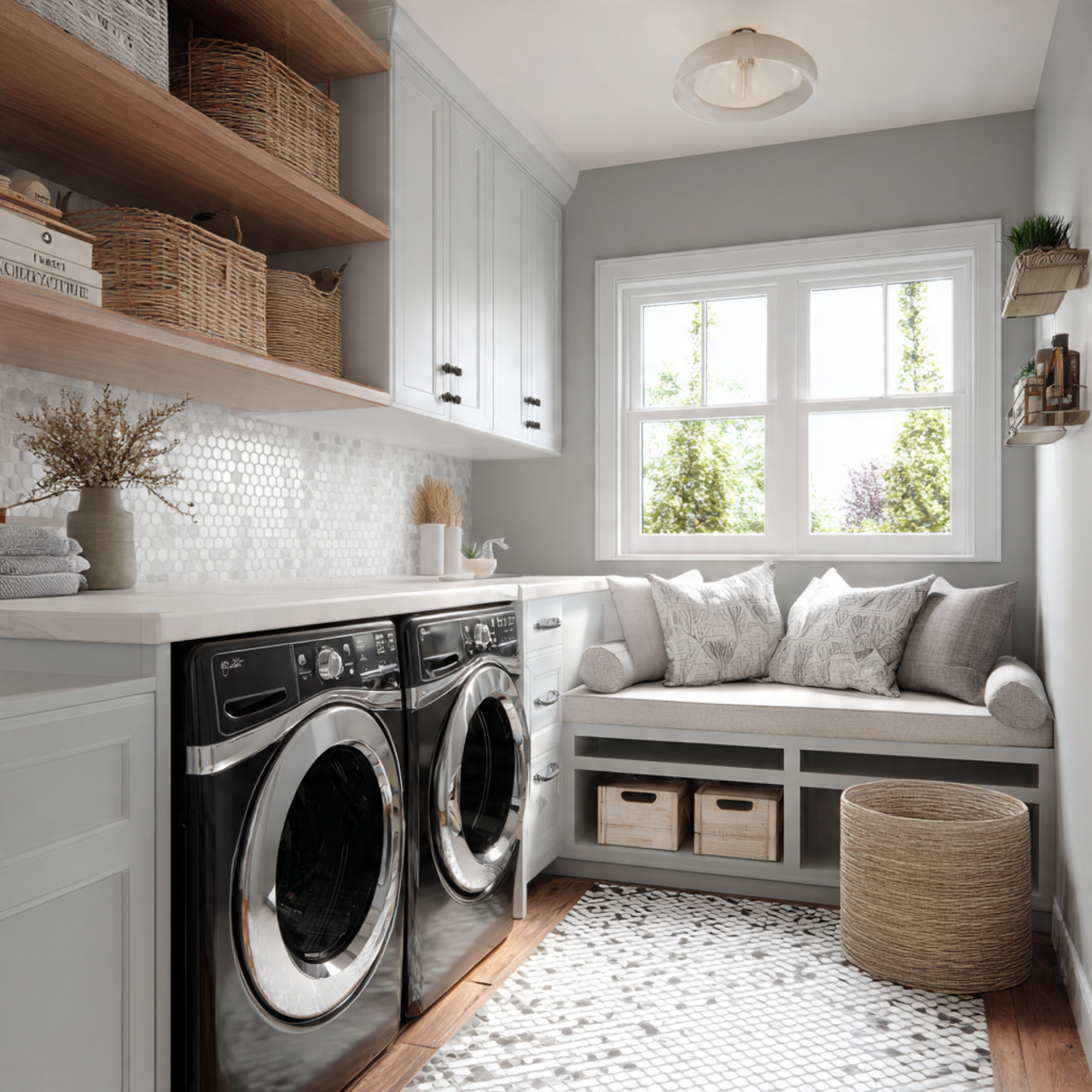
A small laundry nook integrated into another room should still maintain its own workflow. Even in shared spaces, tasks should feel connected and efficient. The setup should not disrupt the surrounding area.
In small homes, separation is not always possible, so flow becomes more important. I have noticed that when the layout is well planned, the space feels intentional rather than temporary. This improves daily use.
Keep your laundry zone compact but organized to maintain function. This works especially well in shared environments.
Tip: Keep essentials close to avoid spreading tasks into other areas.
Lighting That Makes It Easier to See and Work Without Strain
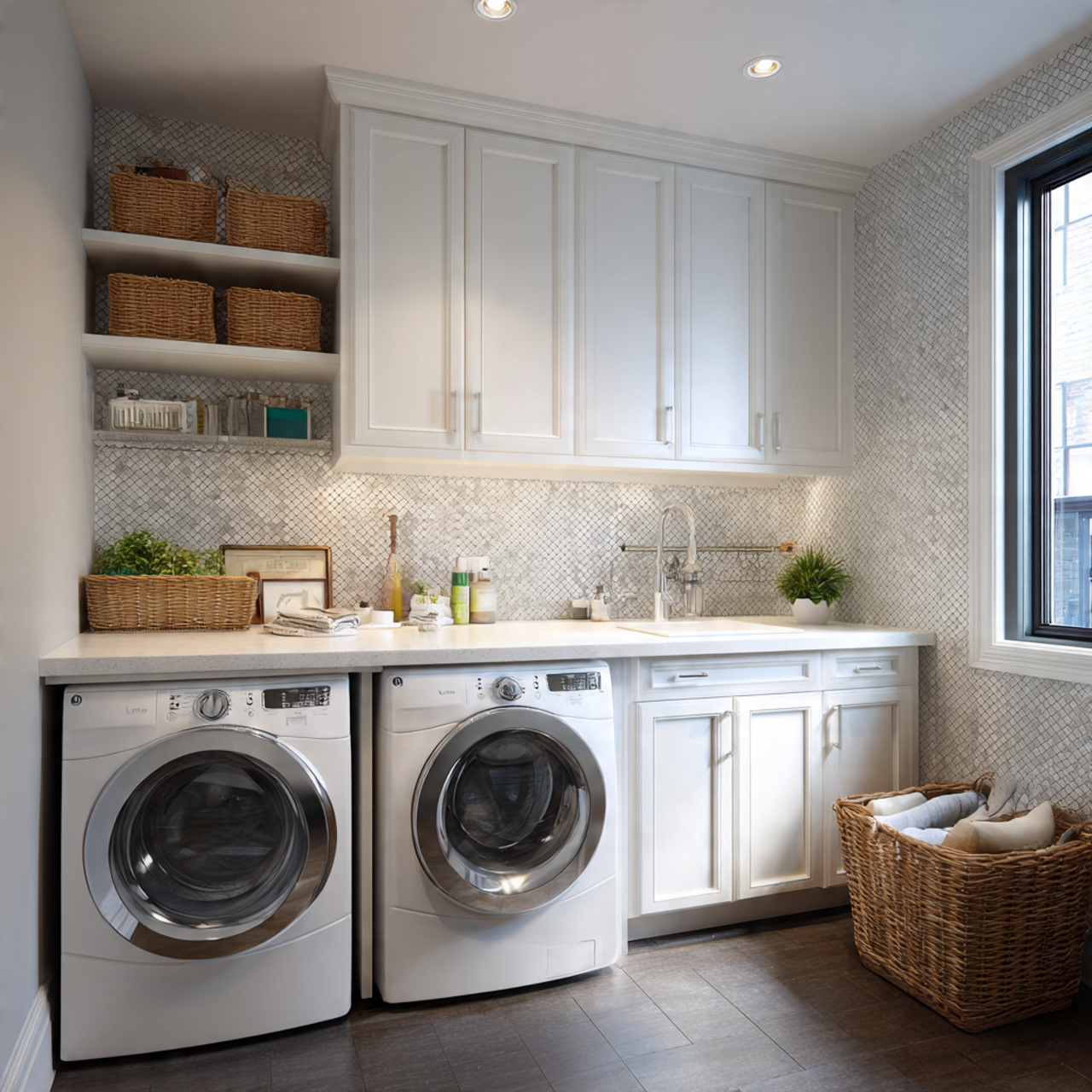
Good lighting improves visibility and reduces strain during tasks. You can see stains, sort clothes, and work comfortably without effort. The space feels more usable, especially in the evening.
Poor lighting is a common issue that goes unnoticed until it affects daily use. I have seen small laundry rooms feel much better simply by improving light. It changes how the space is experienced.
Use focused lighting near work areas instead of relying on one overhead light. This ensures consistent visibility.
Tip: Warm lighting feels more comfortable than harsh bright light.
A Minimal Setup That Prevents Clutter From Building Up Over Time
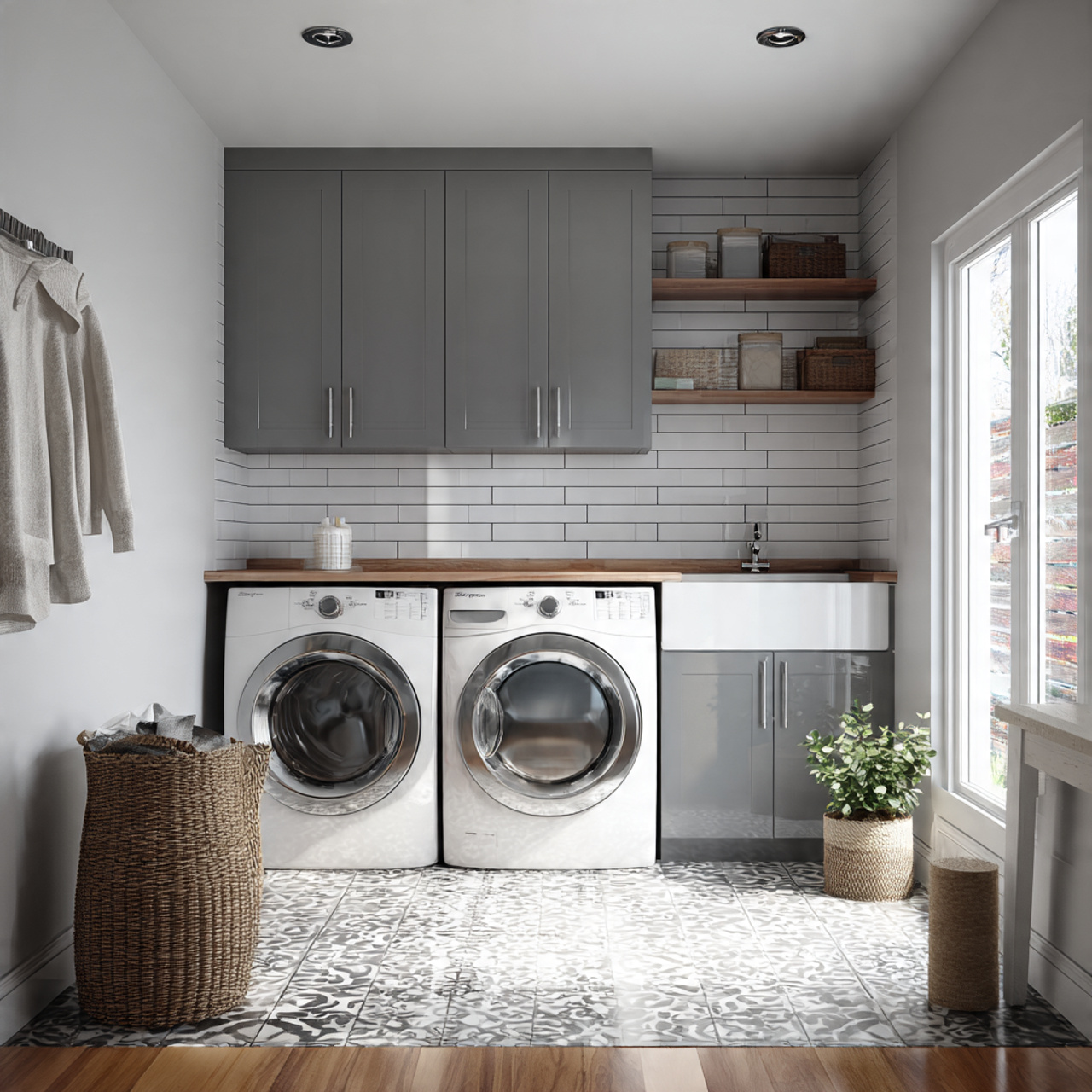
Keeping only essential items in the laundry space prevents clutter from building gradually. The room stays easier to maintain and feels more open. This creates long-term comfort.
One thing I have noticed is that clutter often builds slowly without being noticed. Over time, the space becomes harder to use. A minimal approach prevents this cycle.
Limit items to what you actually use regularly. This keeps the room functional and stress-free.
Tip: Review your setup occasionally and remove unused items.
A Real Small Laundry Room Setup That Works in Everyday Life
A small laundry setup with a washer and dryer placed directly under a clean folding counter creates a natural working line. A single open shelf above holds everyday items within arm reach while a basket stays tucked below for quick sorting. Morning light coming through a nearby window lands directly on the counter and makes the space feel easy to use.
After living with this type of setup, the biggest difference is how smoothly tasks connect without interruption. Clothes move from washing to drying to folding without being placed in random spots around the home. The space stays clear because every element supports the routine instead of getting in the way.
Color and Material Authority for Small Laundry Room Ideas
Soft White (F5F5F5)
Soft white works best on walls and cabinetry to reflect light and keep the space feeling open and easy to work in. It creates a clean calm base and pairs well with wood laminate and matte finishes.
Warm Beige (E8DCCF)
Warm beige adds subtle warmth without making the space feel heavy or dark in smaller layouts. It works well with woven baskets natural fibers and soft textured materials.
Light Grey (D3D3D3)
Light grey is useful for cabinets or flooring where you want durability without visual heaviness. It pairs well with brushed metal accents and simple modern finishes.
Natural Wood (C8A97E)
Natural wood introduces warmth and balance which prevents the space from feeling too plain or sterile. It works best on counters shelves or small accents and pairs naturally with neutral tones.
Lighting and Space Adjustments That Make Small Laundry Rooms Easier to Use
Small Laundry Room Lighting
Focused lighting placed directly above the folding or work area improves visibility and reduces strain during daily tasks. Even one well positioned light can make the space feel clearer and easier to use, especially in the evening.
Larger or Shared Laundry Spaces
Defined zones between machines and work areas help maintain flow and prevent unnecessary movement across the room. Keeping pathways open allows the space to feel less crowded and easier to move through during daily use.
Common Mistakes That Make Small Laundry Rooms Harder to Use
Separating Washing Drying and Folding Into Different Areas
In many homes, laundry tasks are spread across different spots, which breaks the natural flow and causes clothes to pile up between steps. Over time this creates hidden clutter and makes the process feel longer than it should.
Keeping these tasks connected in one working line makes the space easier to manage and prevents buildup.
Filling the Space With Too Many Items
It is common to add extra shelves baskets or tools thinking it will improve the space, but this often reduces movement and makes the room feel tighter. After a while the area becomes harder to navigate and less comfortable to use daily.
Removing non essential items and keeping pathways clear improves both function and comfort.
Relying on Poor or Uneven Lighting
Many small laundry rooms depend on a single overhead light which leaves work areas dim and difficult to use. This becomes frustrating during evening tasks when visibility matters most.
Adding focused lighting near folding or washing areas makes the space easier to work in and reduces strain.
Placing Everyday Items Out of Reach
Storing frequently used items too high or too low slows down the workflow and adds unnecessary effort to simple tasks. Over time this small inconvenience becomes part of the daily routine and makes the space feel inefficient.
Keeping essential items within easy reach improves speed and makes the process feel smoother.
Frequently Asked Questions About Small Laundry Room Ideas
How do I improve a small laundry room without adding more storage?
Focus on improving workflow and movement instead of adding more items. When tasks connect smoothly, the space starts to feel easier and more efficient without needing extra storage.
What is the most important feature in a small laundry room?
A connected workflow between washing, drying, and folding is the most important factor. When these steps are aligned, the space becomes easier to use and reduces daily effort.
Can a small laundry space still feel comfortable to use?
Yes, comfort comes from how the space functions rather than its size. When movement is easy and tasks are organized, even a small area can feel smooth and stress free.
How do I stop laundry from spreading into other rooms?
Create a dedicated folding and completion zone so tasks finish in one place. This prevents clothes from moving around the house and keeps the process contained.
What is the biggest mistake in small laundry room ideas?
The biggest mistake is focusing only on storage instead of workflow. Without proper flow, even a well organized space can feel frustrating to use.
Final Thoughts on Small Laundry Room Ideas
Small laundry room ideas work best when the space is designed around how you actually move through daily tasks rather than how it looks at first glance. In real homes, I have seen that improving flow between washing drying and folding makes a bigger difference than adding more storage or trying to fit in extra features.
Start by fixing one part of your routine such as keeping folding within reach or clearing movement space and then build from there over time. Even a small adjustment can change how the entire room feels and help your laundry space become easier calmer and more efficient to use every day.