16 Brilliant Plant Wall Art Ideas Designers Quietly Love
Blank walls can make a space feel unfinished no matter how nice your furniture is. That is usually the moment people start looking for something more than basic decor. Plant wall art solves that problem in a way that feels natural and visually rich.
Instead of adding random pieces, you are creating a wall that feels alive and styled with intention. The mix of greenery, structure, and layout changes how the whole room feels. Once you see it done right, it is hard to go back to plain walls.
Plant wall art works best when greenery, structure, and layout come together to create a space that feels balanced, fresh, and visually complete.
Why Plant Wall Art Changes the Way a Room Feels
A plain wall does not give your eyes anything to focus on, which makes the room feel flat even if everything else looks good. Plant wall art adds depth, movement, and texture without making the space feel heavy. That balance is what makes it stand out from regular wall decor.
There is also something about greenery that instantly softens a room. It brings a calm, natural feel that works in both modern and cozy spaces. When it is arranged on a wall with the right structure, it stops being just decor and starts becoming a focal point.
Core Ideas About Plant Wall Art
Framed Plant Wall Art Gallery That Feels Like Living Paintings
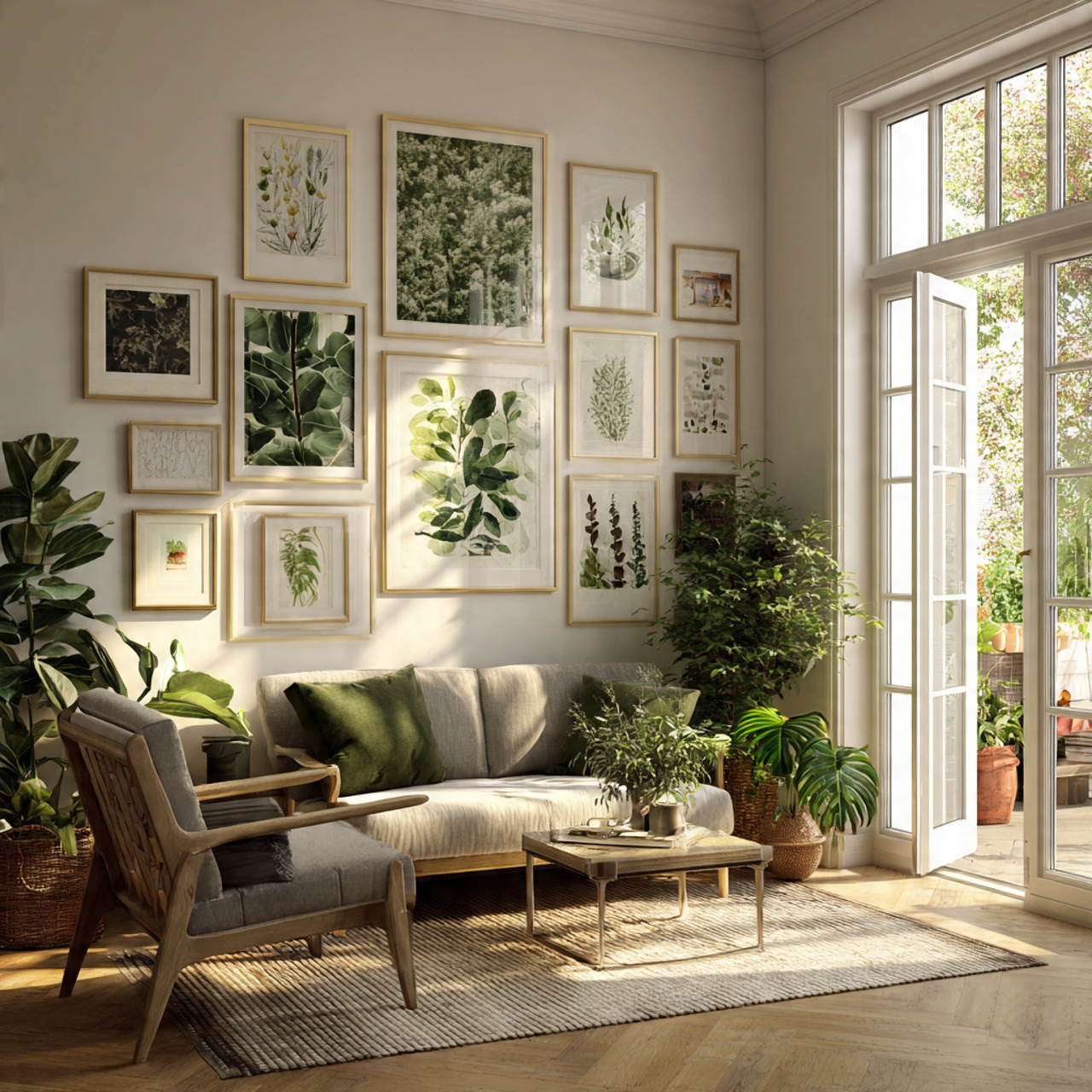
A clean white wall filled with wooden frames, each holding a small plant instead of a print, instantly draws attention. The greenery sits neatly inside the frames, creating the illusion of artwork that is alive. The setup feels calm, balanced, and quietly eye catching.
This works because it blends two familiar elements in an unexpected way. People are used to frames, but replacing art with plants creates a fresh visual twist. It feels artistic without being complicated.
To apply this, choose simple frames and keep spacing consistent. Use similar plant types so the wall feels cohesive rather than random. Let the greenery be the focus.
Tip: Stick to one frame color to keep the wall looking clean and intentional.
Geometric Wooden Shelf Plant Wall Art With Strong Symmetry
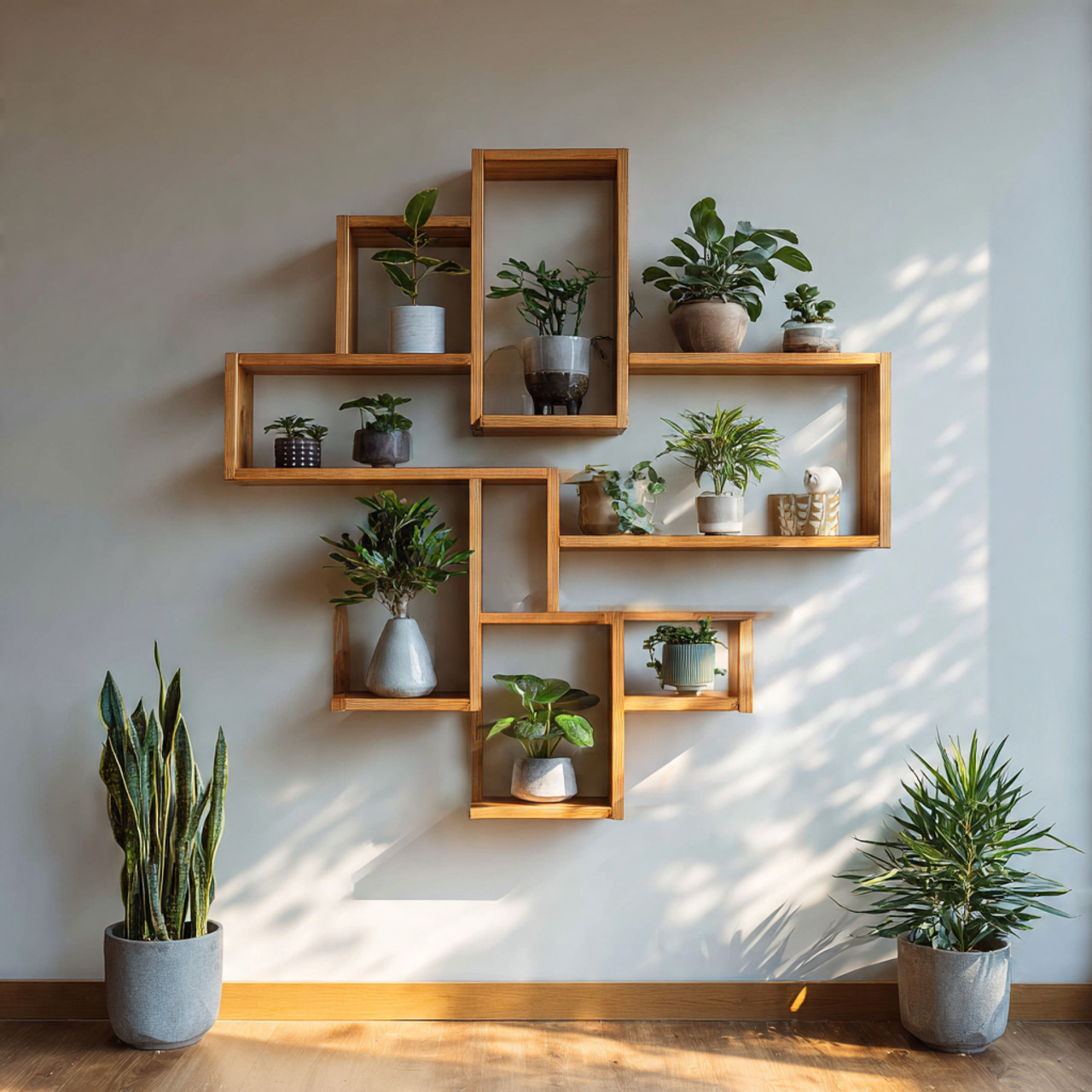
A set of geometric shelves arranged in a diamond or angular pattern instantly adds structure to the wall. Each shelf holds a small plant, creating a mix of sharp lines and soft greenery. The contrast between shapes and plants makes the wall feel styled and modern.
This works because symmetry gives the eye something satisfying to follow. The clean lines create order while the plants soften the look. It feels designed rather than decorated.
To recreate this, install shelves with equal spacing and keep plant sizes balanced. Avoid overcrowding so the geometric pattern stays visible.
Tip: Use trailing plants on lower shelves to add movement without breaking symmetry.
Vertical Wood Slat Plant Wall Art With Floating Layers
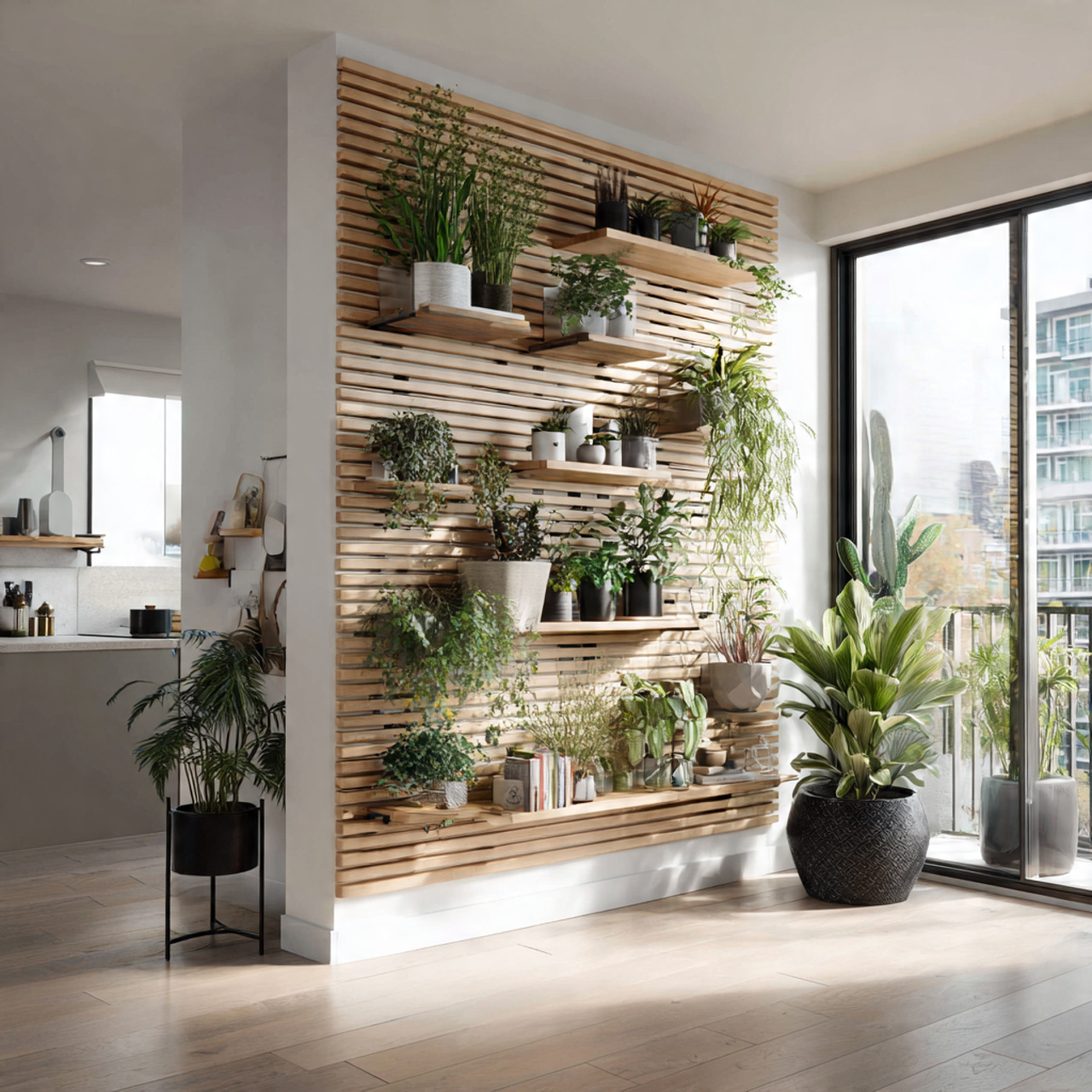
Tall wooden slats running vertically behind floating shelves create a layered wall that feels warm and architectural. Plants placed on the shelves stand out against the wood, adding depth and texture. The vertical lines naturally draw the eye upward.
This works because vertical patterns make a space feel taller while wood adds warmth. The combination creates a high end look without needing complex styling.
To apply this, use evenly spaced slats and keep shelves minimal. Let the plants create contrast against the wood instead of adding too many decor items.
Tip: Choose darker green plants to stand out against lighter wood tones.
Macrame Hanging Plant Wall Art With Soft Warm Glow
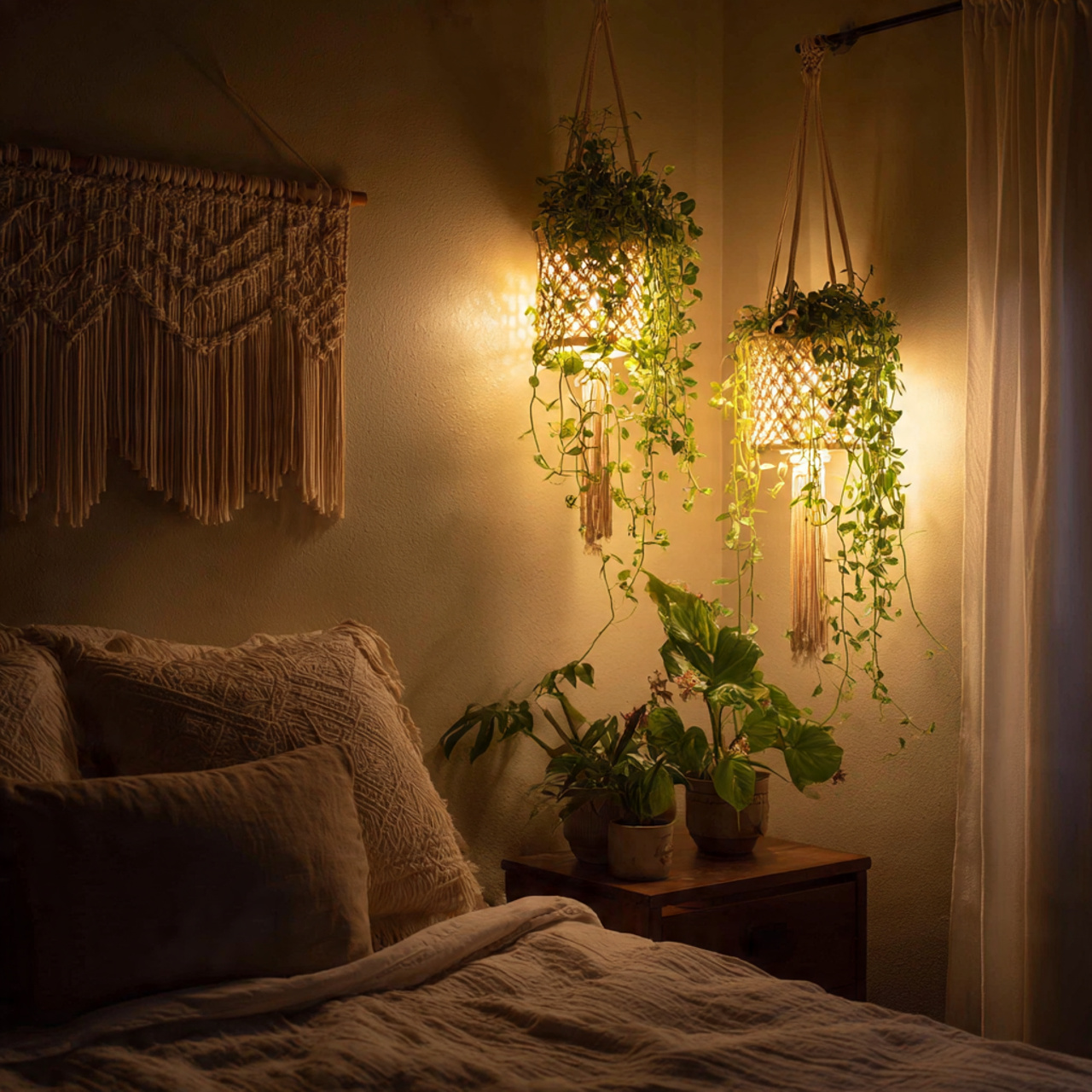
A wall filled with hanging macrame holders and trailing plants creates a relaxed, cozy atmosphere. Warm light from nearby lamps or string lights enhances the texture of the ropes and leaves. The entire setup feels soft and inviting.
This works because it combines texture, movement, and lighting in one scene. The macrame adds depth while the plants create a natural flow.
To recreate this, vary the hanging heights slightly and choose plants that drape naturally. Keep the background simple so the texture stands out.
Tip: Use warm lighting instead of bright white to keep the cozy feel.
Pause here and picture your wall for a second. The right combination of structure and greenery can completely change how it feels.
Slim Vertical Planter Panel That Fits Tight Spaces For Plant Wall Art
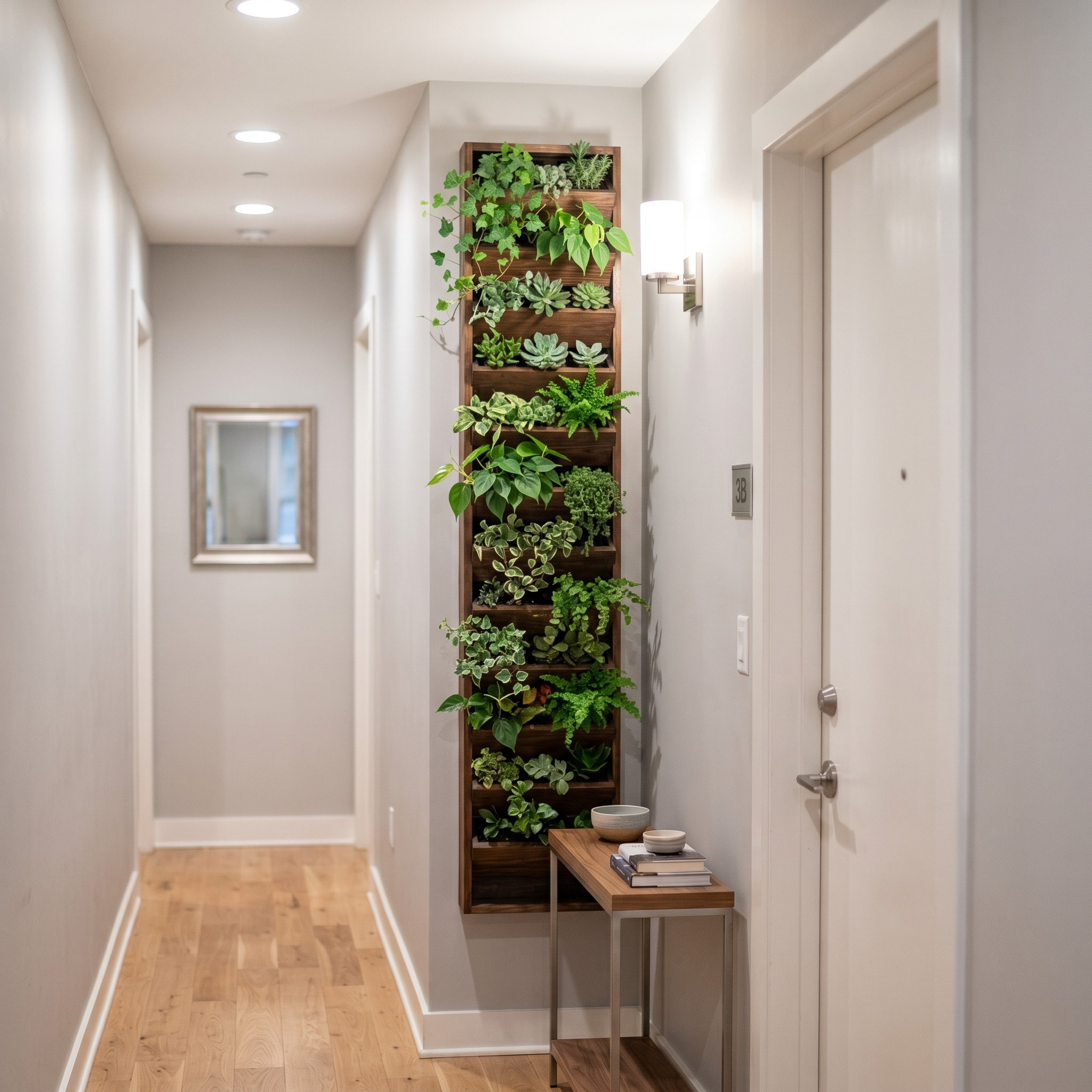
A narrow vertical panel holding small plant pots transforms even the smallest wall section. It fits easily between furniture or in unused corners, adding greenery without taking up space. The result feels compact but intentional.
This works because it solves a real problem. Many spaces are too small for wide decor, and this design uses height instead.
To apply this, choose a slim panel and keep plants evenly spaced. Stick to smaller pots so the wall stays neat.
Tip: Use identical planters to make the small setup feel more polished.
Corner Floating Shelf Plant Wall Art With Soft Light Accent
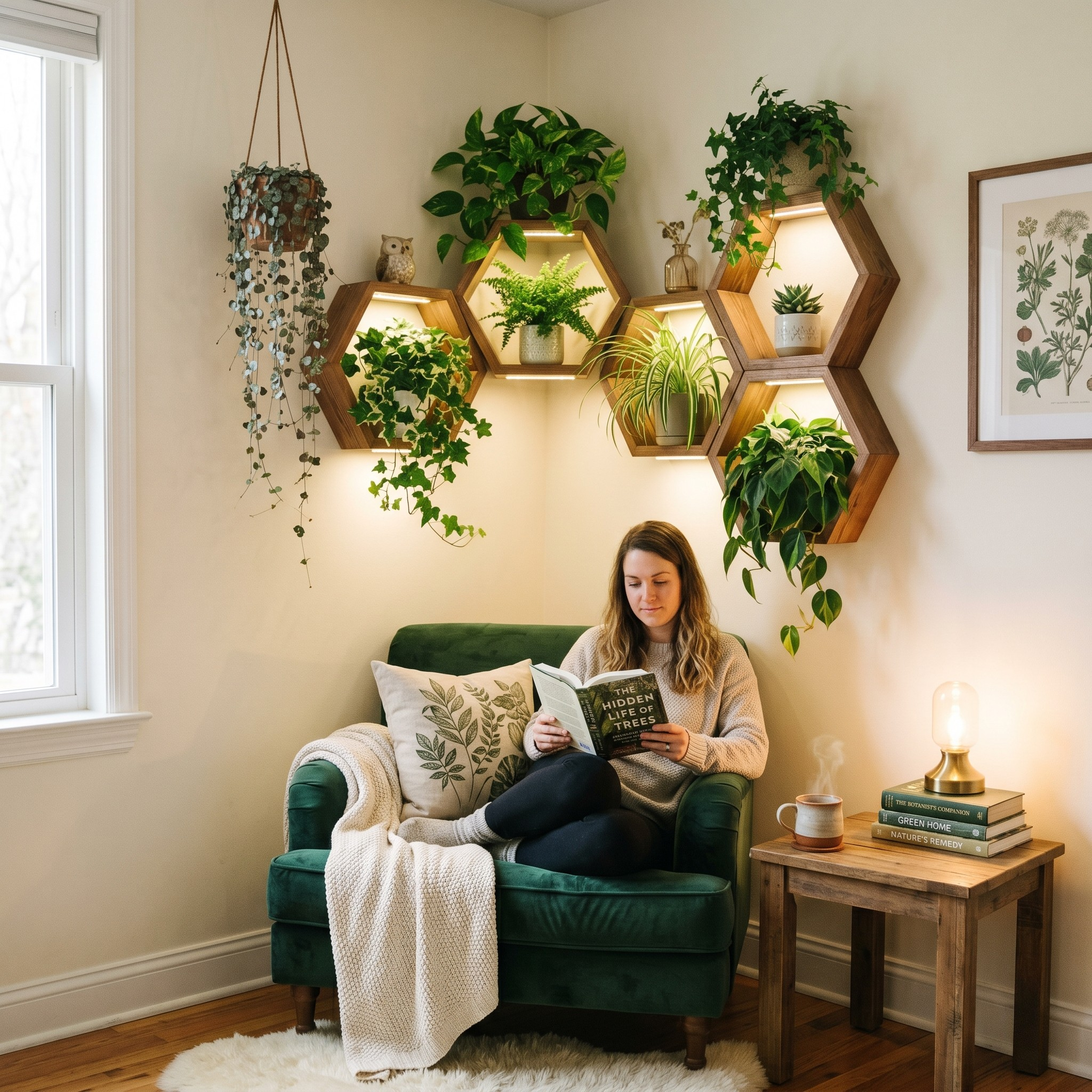
A corner often goes unnoticed, but adding floating shelves with plants and subtle lighting turns it into a highlight. The light gently hits the leaves, creating depth and a calm glow. The space suddenly feels designed instead of empty.
This works because corners are rarely styled, so any attention there feels special. Lighting adds dimension that makes the setup stand out.
To recreate this, install two or three shelves and place a small light source above or below. Keep decor minimal so plants remain the focus.
Tip: Use indirect lighting to avoid harsh shadows on the wall.
Indoor Green Feature Plant Wall Art With Bold Neon Detail
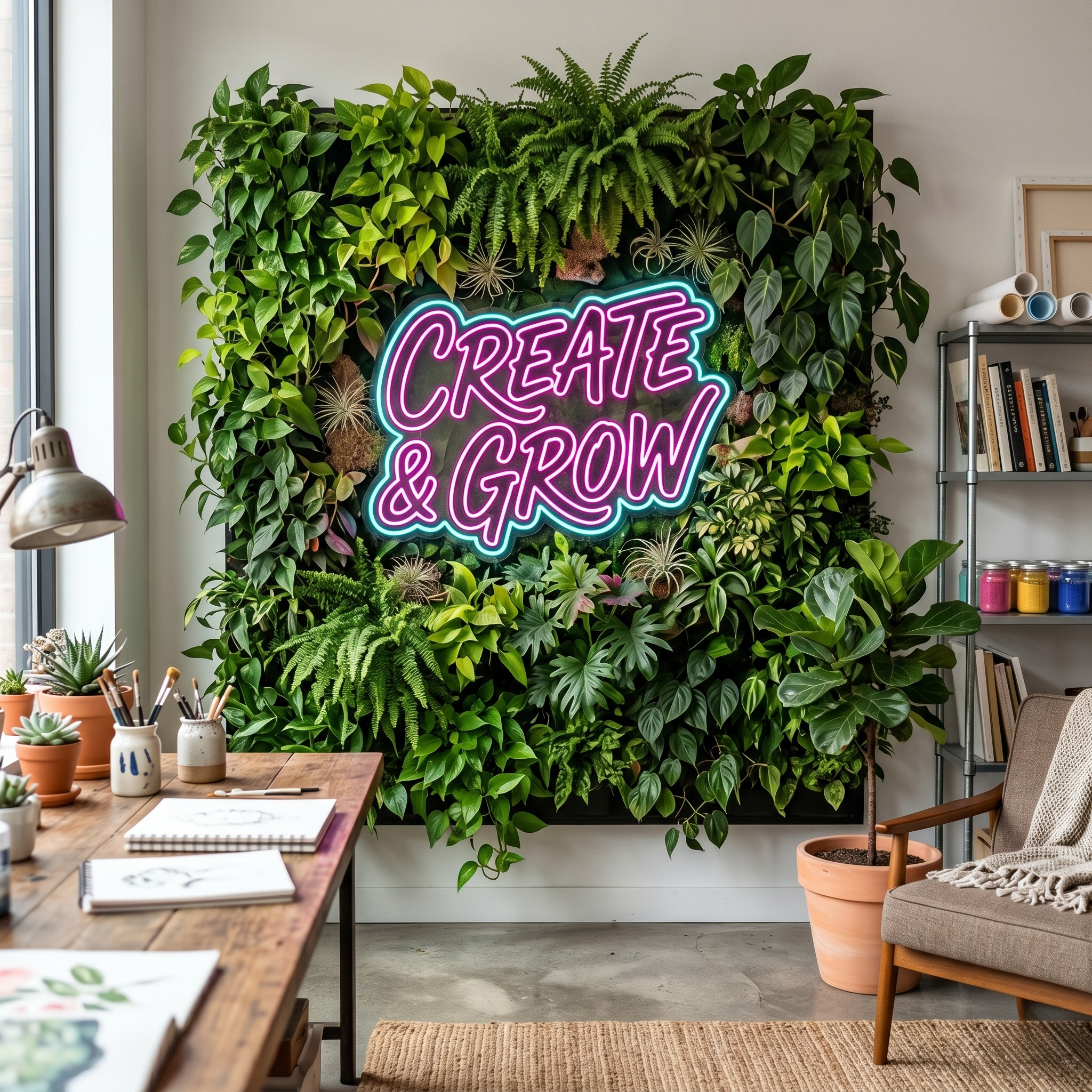
A full green wall filled with dense plants becomes even more striking with a simple neon sign placed on top. The glow cuts through the greenery and adds a modern twist. It instantly becomes a statement piece.
This works because it combines natural and artificial elements in contrast. The plants feel organic while the neon adds a sharp, unexpected edge.
To apply this, use a consistent plant base and keep the sign short and simple. Let it sit naturally within the greenery.
Tip: Choose a soft white or warm neon instead of overly bright colors.
Rustic Wooden Pallet Plant Wall Art With Layered Texture
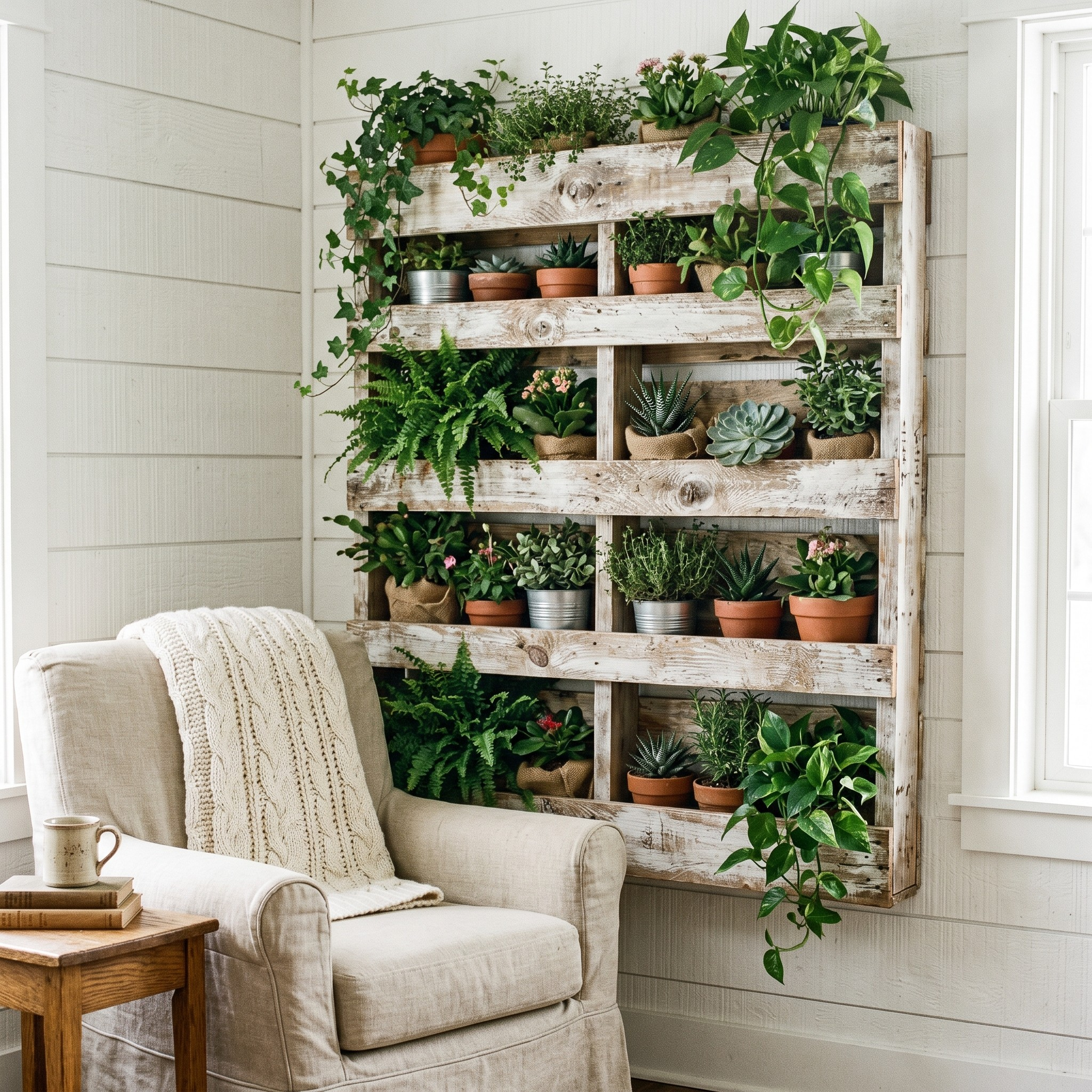
A reclaimed wooden pallet mounted on the wall with attached plant holders creates a rustic and grounded look. The worn wood adds character while the plants bring life into it. The combination feels relaxed and authentic.
This works because texture tells a story. The imperfections in the wood make the setup feel real and lived in.
To recreate this, secure a pallet and attach small pots evenly. Keep the arrangement simple so the wood remains visible.
Tip: Leave some empty gaps to avoid making the wall look too heavy.
Take a moment to notice how each idea shifts the mood in a different direction. That is where the real power of plant wall art comes from.
Bathroom Vertical Plant Wall Art With Fresh Spa Feel
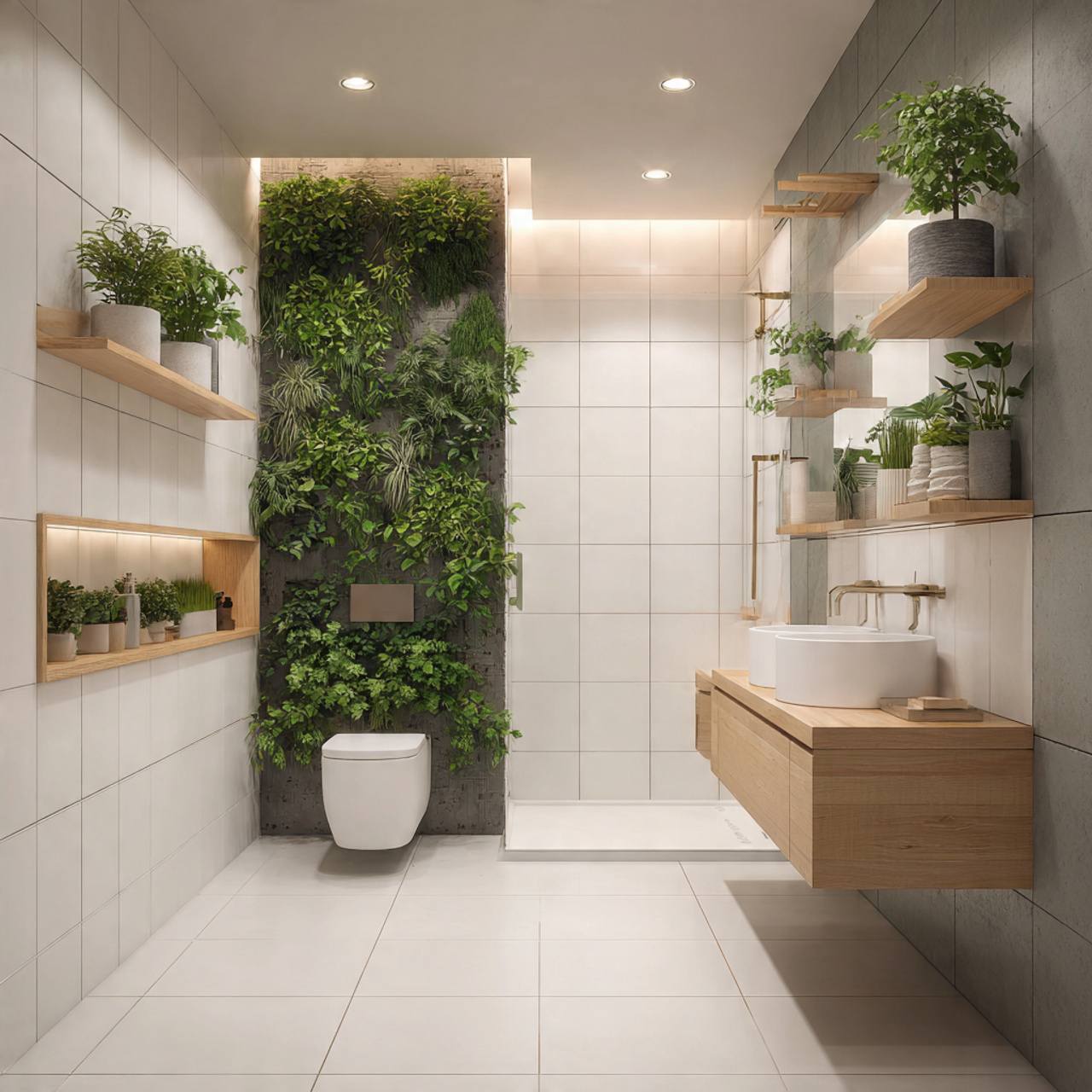
A small vertical plant wall inside a bathroom adds a refreshing and clean atmosphere. The greenery contrasts beautifully with tiles and mirrors, making the space feel calm and light. It almost feels like a mini spa.
This works because bathrooms benefit from softness. Plants break the hard surfaces and add a natural balance.
To apply this, choose moisture friendly plants and keep the layout compact. Place it where it gets some indirect light.
Tip: Stick to lighter green tones to enhance the fresh look.
Hexagon Shelf Plant Wall Art With Modern Pattern Flow
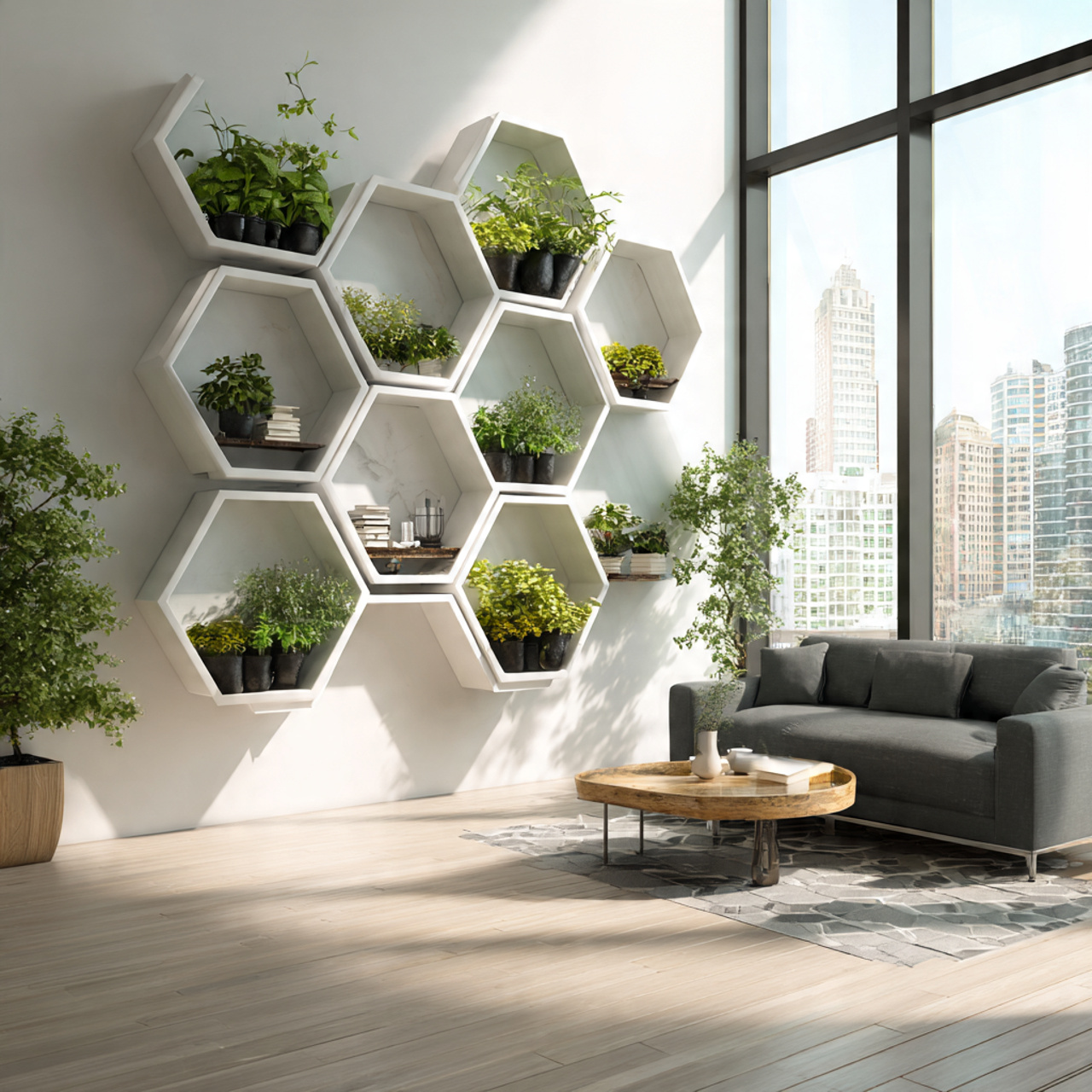
Hexagon shelves arranged across a wall create a honeycomb pattern that feels modern and visually interesting. Each section holds a plant, forming a repeating rhythm across the space. The design feels both structured and creative.
This works because patterns naturally draw attention. The repeating shapes create movement while the plants soften the geometry.
To recreate this, keep spacing consistent and avoid mixing too many colors. Let the pattern stay clear.
Tip: Use a mix of empty and filled shelves to keep it balanced.
Plant Wall Art With Circular Wooden Frame Plant Wall With Soft Sculptural Feel
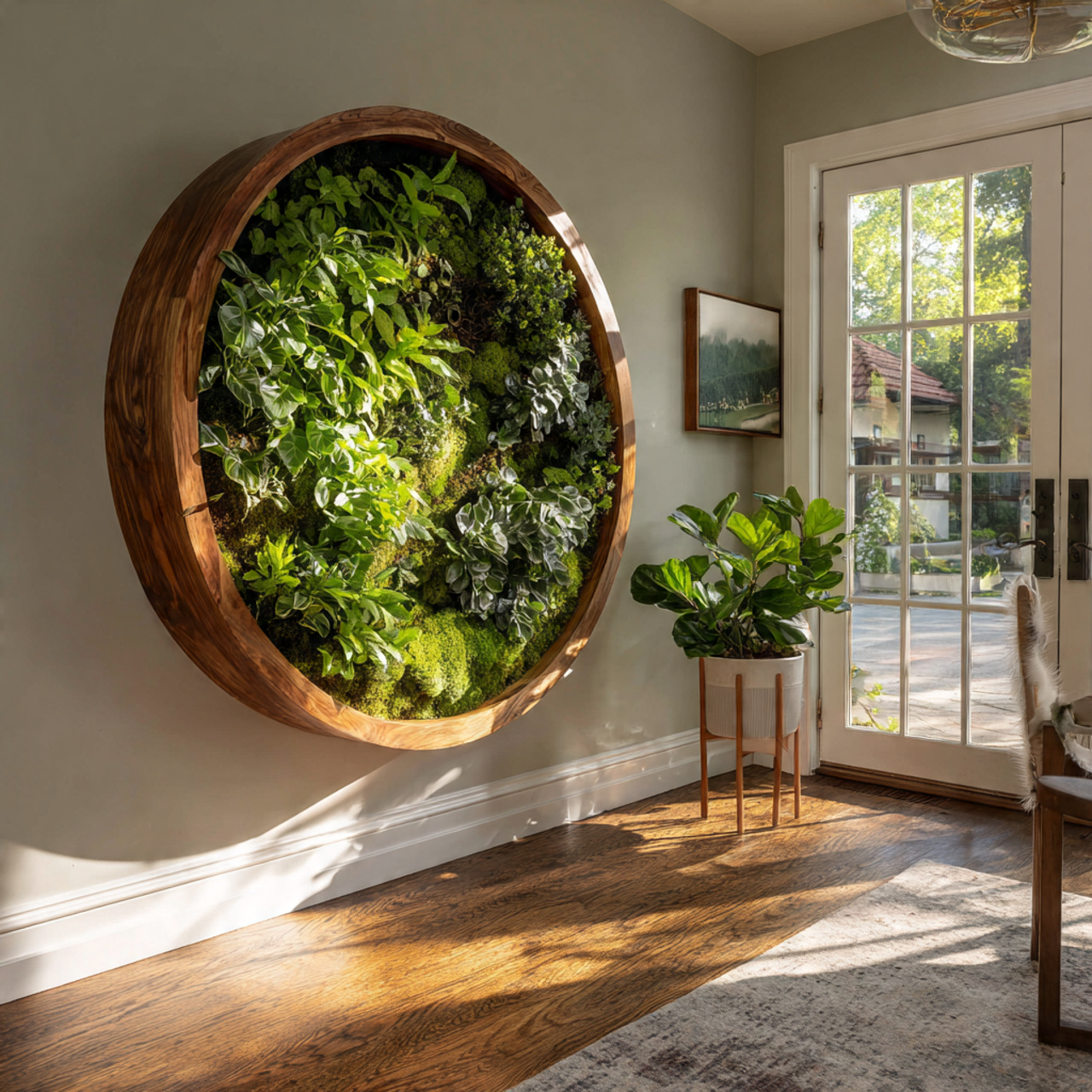
A large round wooden frame with plants arranged inside creates a sculptural wall feature. The circular shape softens the space and stands out against straight furniture lines. It feels artistic without being overwhelming.
This works because curves are less common in wall decor. The shape alone creates interest even before adding plants.
To apply this, choose one main frame and keep the arrangement simple. Let the shape lead the design.
Tip: Place it at eye level so the circular form stays the focus.
Plant Wall Art With Minimalist Plant Wall With Mirror Reflection Detail
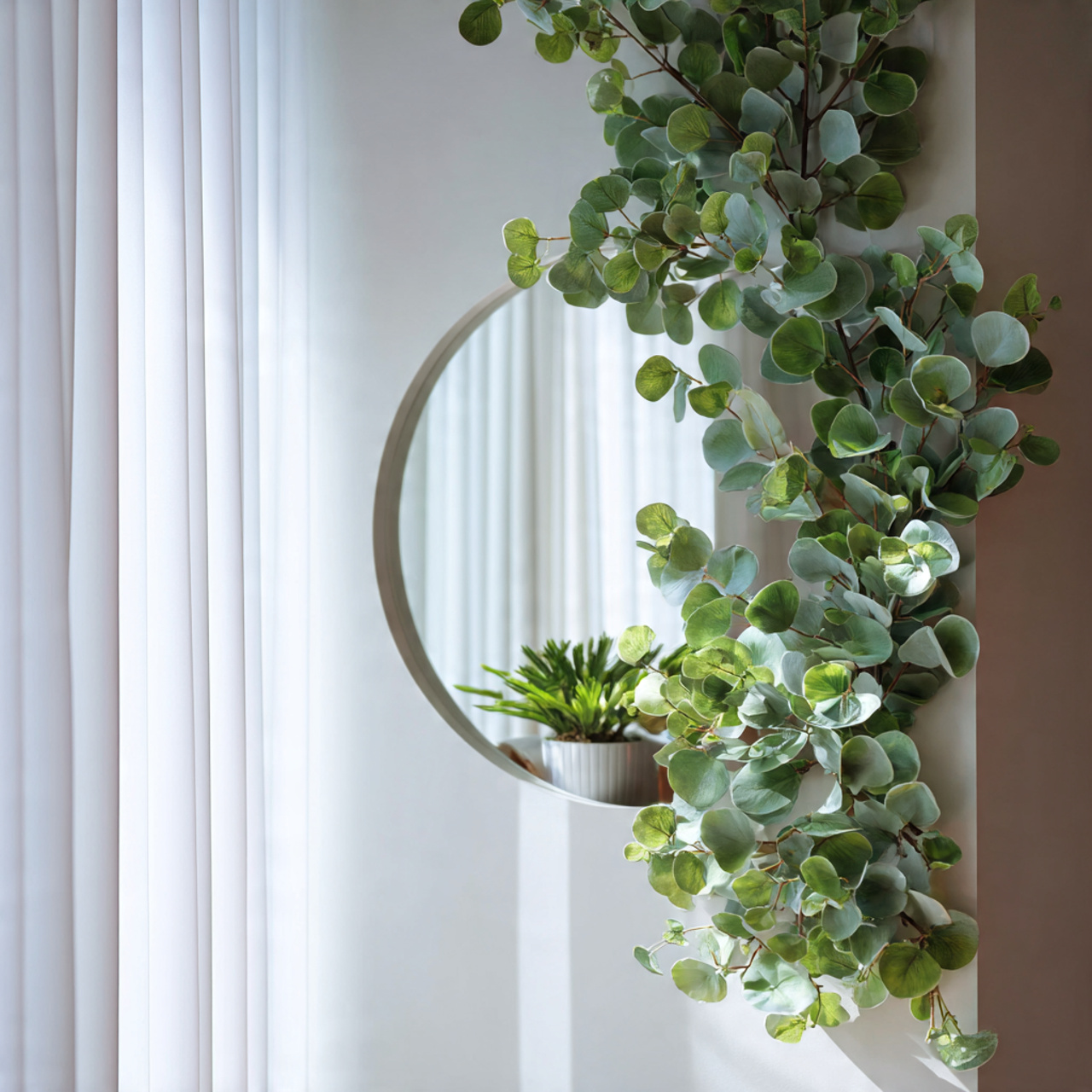
A clean wall with a simple mirror surrounded by a few well placed plants creates a light and airy look. The mirror reflects greenery, making the space feel larger and brighter. Everything feels calm and uncluttered.
This works because it uses fewer elements with more impact. Reflection doubles the visual effect without adding more objects.
To recreate this, keep spacing generous and choose only a few plants. Avoid over decorating.
Tip: Use a round or soft edged mirror for a more balanced feel.
Now you can start to see a pattern. The best setups are not the most complicated ones, they are the most intentional.
Plant Wall Art With Floating Shelf Plant Wall With Mixed Height Styling
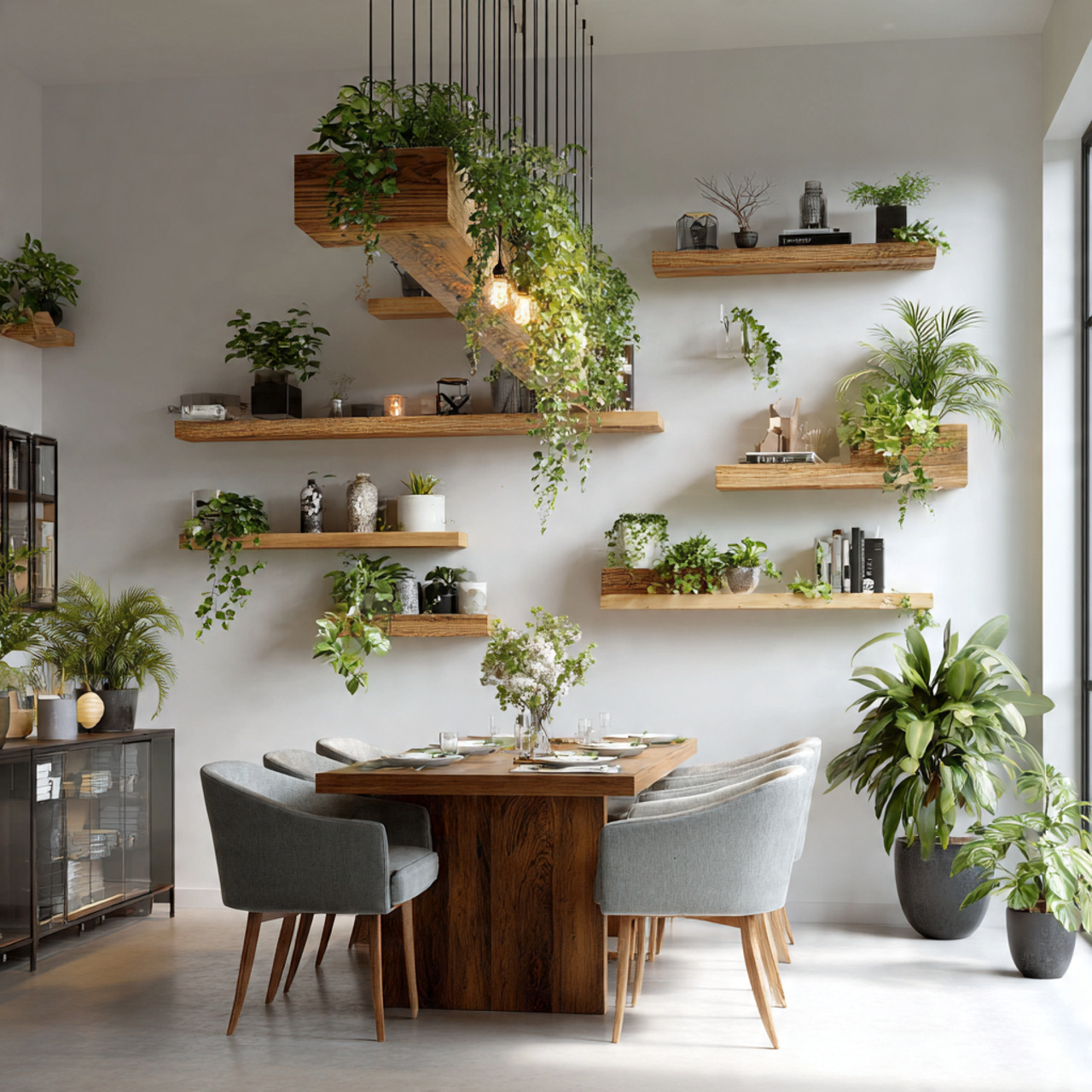
A series of floating shelves with plants placed at different heights creates a natural layered look. Some plants sit upright while others cascade down. The variation makes the wall feel dynamic.
This works because uneven heights mimic how plants grow naturally. It prevents the wall from looking too rigid.
To apply this, vary plant sizes and placement slightly. Keep shelves aligned but let the plants create movement.
Tip: Place taller plants toward the center to anchor the look.
Plant Wall Art With Indoor Moss Wall Panel With Rich Texture Depth
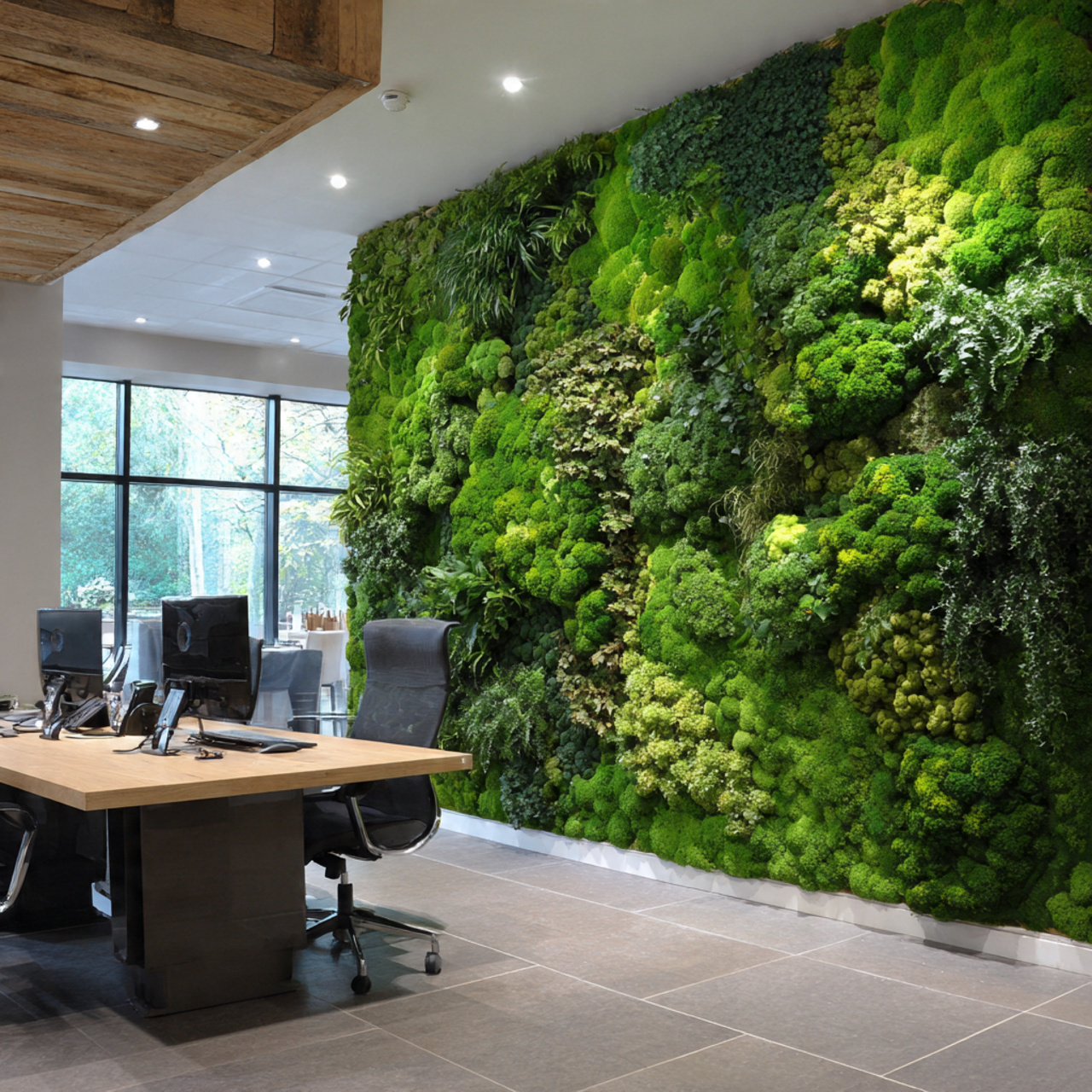
A panel covered in dense moss creates a deep green surface that feels soft and luxurious. The texture absorbs light, giving the wall a rich and calm presence. It feels high end and unique.
This works because texture adds depth without needing extra elements. The wall becomes the focal point on its own.
To recreate this, install a moss panel and keep surrounding decor minimal. Let the texture speak.
Tip: Pair it with neutral furniture to highlight the green.
Plant Wall Art With Compact Apartment Plant Wall With Clean Layout
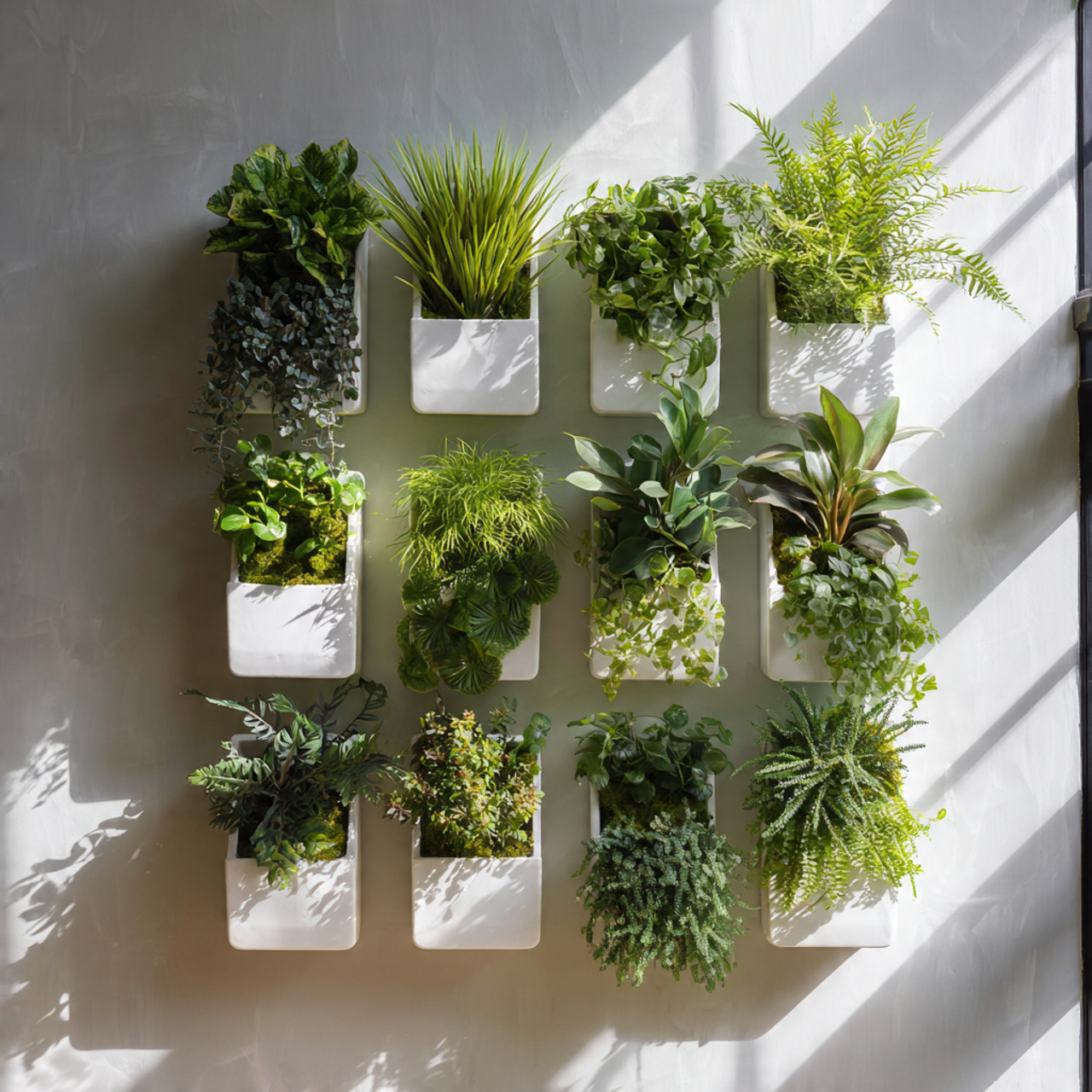
A small wall arranged with a few shelves and carefully spaced plants can still feel complete and styled. The layout stays simple but intentional. It proves that size does not limit design.
This works because it focuses on balance instead of quantity. Even a few plants can create impact when placed well.
To apply this, choose a tight layout and avoid filling every inch. Give each element room to breathe.
Tip: Stick to a limited color palette to keep the space cohesive.
Visit Also: Backyard Patio Designs
Plant Wall Art With Botanical Gallery Wall With Art and Real Plants Mix
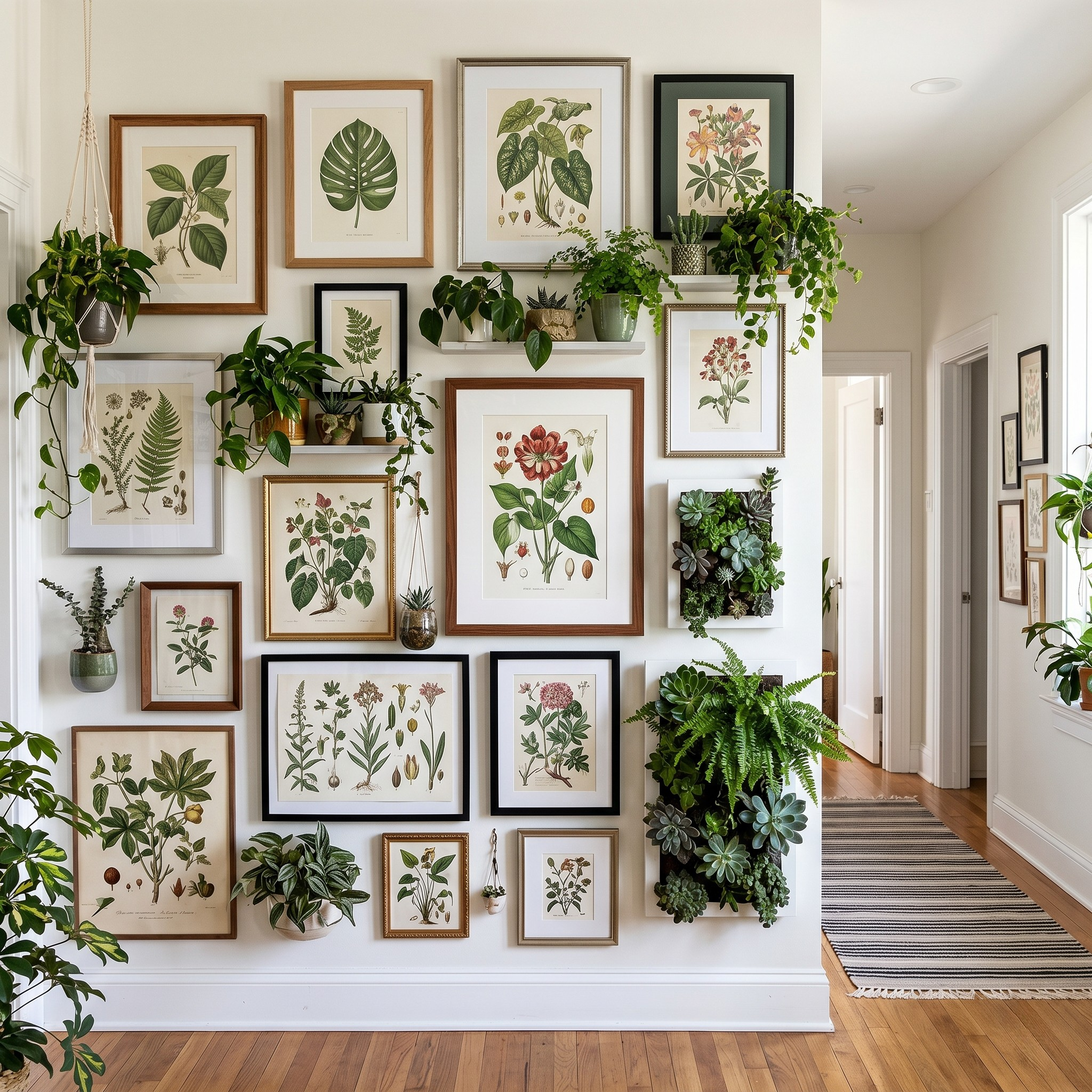
A gallery wall combining botanical prints with real plants creates a layered and interesting look. Frames and greenery interact, making the wall feel both artistic and alive. It feels curated rather than random.
This works because it mixes static and living elements. The contrast keeps the wall visually engaging.
To recreate this, alternate between frames and plants while keeping spacing consistent. Stick to a similar color theme.
Tip: Use black or wood frames to tie everything together.
A Real Plant Wall Art Setup That Feels Balanced and Lived In
You walk into a living room where one wall immediately draws your attention without feeling loud. Soft daylight comes in from the side and hits a mix of wooden shelves and trailing plants, casting gentle shadows across the wall. The greenery feels fresh but not overwhelming, and the textures of wood, leaves, and light blend in a way that feels calm and grounded.
The layout is simple but intentional, with shelves placed at slightly different heights and a few plants cascading down to break the straight lines. There is enough space between each element so nothing feels crowded. The whole wall feels complete on its own, yet it still fits naturally into the rest of the room without trying too hard.
Color and Material Authority
Deep Olive Green (#3A5A40) → Works best as the main plant tone across the wall and larger leafy elements → Creates a grounded, calm mood that feels connected to nature → Pairs well with natural wood, linen fabrics, and matte ceramic pots
Muted Terracotta (#C46A2E) → Works in planters or small accent decor pieces → Adds warmth and a slightly earthy richness without overpowering the space → Pairs beautifully with clay pots, textured ceramics, and woven materials
Soft Charcoal (#2F2F2F) → Works for shelves, frames, or metal accents to create contrast → Gives the wall a modern edge while making the greenery stand out more clearly → Pairs with matte metal, dark wood, and minimal hardware finishes
Dusty Sage (#A3B18A) → Works as a subtle wall or background tone behind the plant setup → Creates a soft, airy feel that keeps the space light and relaxed → Pairs well with light wood, cotton fabrics, and neutral upholstery
Room Size And Lighting Guide
Small Spaces
Use vertical plant wall layouts to draw the eye upward and keep the floor area open. Stick to soft lighting so the greenery feels fresh instead of heavy.
Medium Spaces
Mix shelves and hanging plants to create layers without filling the wall too much. Use warm lighting to highlight texture and keep the space feeling comfortable.
Large Spaces
Go for wider plant wall setups or full feature walls to avoid empty gaps. Combine natural light with accent lighting to give the wall depth and presence.
Common Mistakes
Overcrowding The Wall
It usually happens when you try to fill every empty spot with plants or decor pieces. The wall ends up looking messy and loses its visual impact.
Leave space between elements so each plant stands out. A little breathing room makes the whole setup feel more intentional.
Mixing Too Many Styles
People often combine modern, rustic, and boho elements without a clear direction. This creates a wall that feels confusing instead of styled.
Pick one main style and stick with it. You can still add variety, but keep it within the same visual theme.
Ignoring Lighting Conditions
Plants are sometimes placed purely for looks without thinking about light. This leads to dull or unhealthy greenery that weakens the overall look.
Choose plant types based on your lighting and position them where they can actually thrive. Healthy plants always look better.
Using Weak Mounting And Support
This happens when shelves or planters are installed without proper support. Over time, it can lead to instability or even damage.
Use strong anchors and check weight limits before installing anything. A secure setup keeps both your wall and decor safe.
Frequently Asked Questions About Plant Wall Art
What is plant wall art?
Plant wall art is a way of decorating walls using real or artificial plants arranged with shelves, frames, or panels. It turns a plain wall into a styled focal point that feels fresh and natural. The setup can be simple or layered depending on your space.
How do I make plant wall art look expensive?
Focus on clean layout, balanced spacing, and consistent materials across the wall. Using fewer but well placed plants often looks better than overcrowding everything. Good lighting also makes a big difference in how polished the wall feels.
Can I create plant wall art in a small room?
Yes, small spaces actually benefit a lot from vertical plant wall setups. Using slim shelves or wall mounted planters keeps the floor clear while adding visual interest. The key is to keep everything light and not overly dense.
Do I need real plants for plant wall art?
You can use real plants if you have the right lighting and time for care. Artificial plants work well too and require no maintenance while still giving a similar visual effect. Many people even mix both for balance.
What is the easiest way to start a plant wall?
Start with one or two floating shelves and add a few plants with different heights. This keeps things simple while still creating a styled look. Once you are comfortable, you can slowly expand the wall.
Why Plant Wall Art Instantly Makes Your Space Feel Complete
Plant wall art is one of the easiest ways to turn a plain wall into something that feels alive and visually complete. When the layout, lighting, and plant choice come together, the entire room starts to feel more balanced and inviting.
You do not need a large space or complicated setup to make it work. A few well placed elements can create a strong impact if they are arranged with intention. Start simple, adjust as you go, and let the wall grow into something that reflects your space naturally.