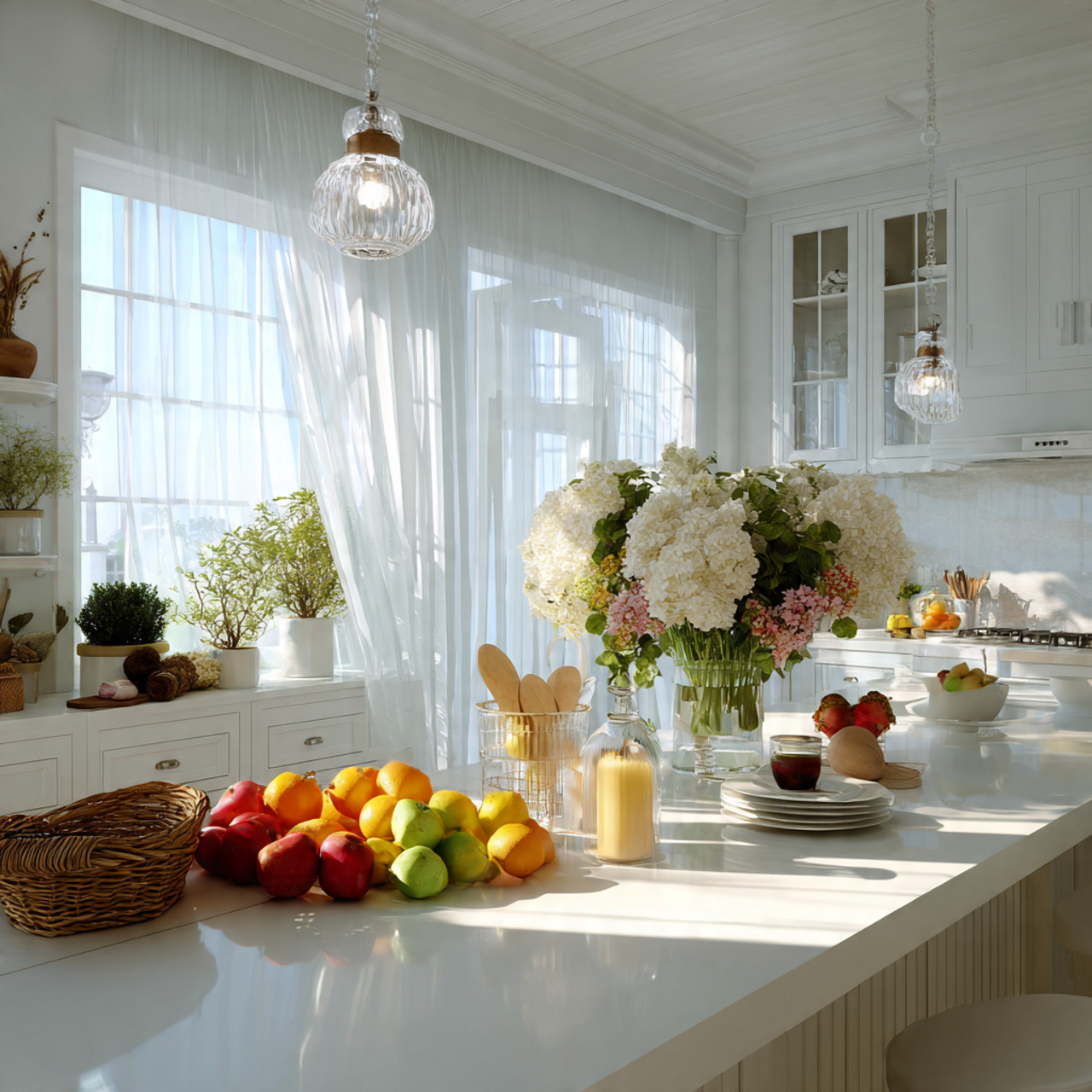
14 Smart Modern Kitchen Design Tricks That Actually Work
A modern kitchen design often looks simple at first glance, but the spaces that truly stand out always follow a deeper visual logic. You can feel when a kitchen is balanced, calm, and inviting, even if you cannot immediately explain why. That difference usually comes down to how the space is visually structured, not just what is placed inside it.
In many real homes, I have noticed that people focus on adding elements instead of refining how everything works together. Over time, this creates kitchens that feel slightly cluttered or visually off, even when the materials are expensive. When the design is approached as a system instead, the entire space begins to feel more natural, functional, and quietly complete.
Modern kitchen design works best when layout, lighting, and visual layering come together to create a space that feels balanced, warm, and easy to live in.
Why Modern Kitchen Design Feels More Comfortable When the Space Is Visually Balanced
A well-designed kitchen is not just about materials or layout, it is about how your eye moves through the space without effort. When balance is missing, even beautiful kitchens can feel distracting or slightly uncomfortable over time. You might not notice it immediately, but it shows up in how the space feels during everyday use.
Most people assume improving a kitchen means adding more features or decor, but the real shift happens when everything starts working together visually. When light, materials, and spacing align, the room feels calmer and more intentional. It becomes a space that supports daily life instead of competing for attention.
Modern Kitchen Design Visual Systems That Transform Everyday Spaces
A Centered Visual Anchor System That Instantly Grounds the Entire Modern Kitchen Design
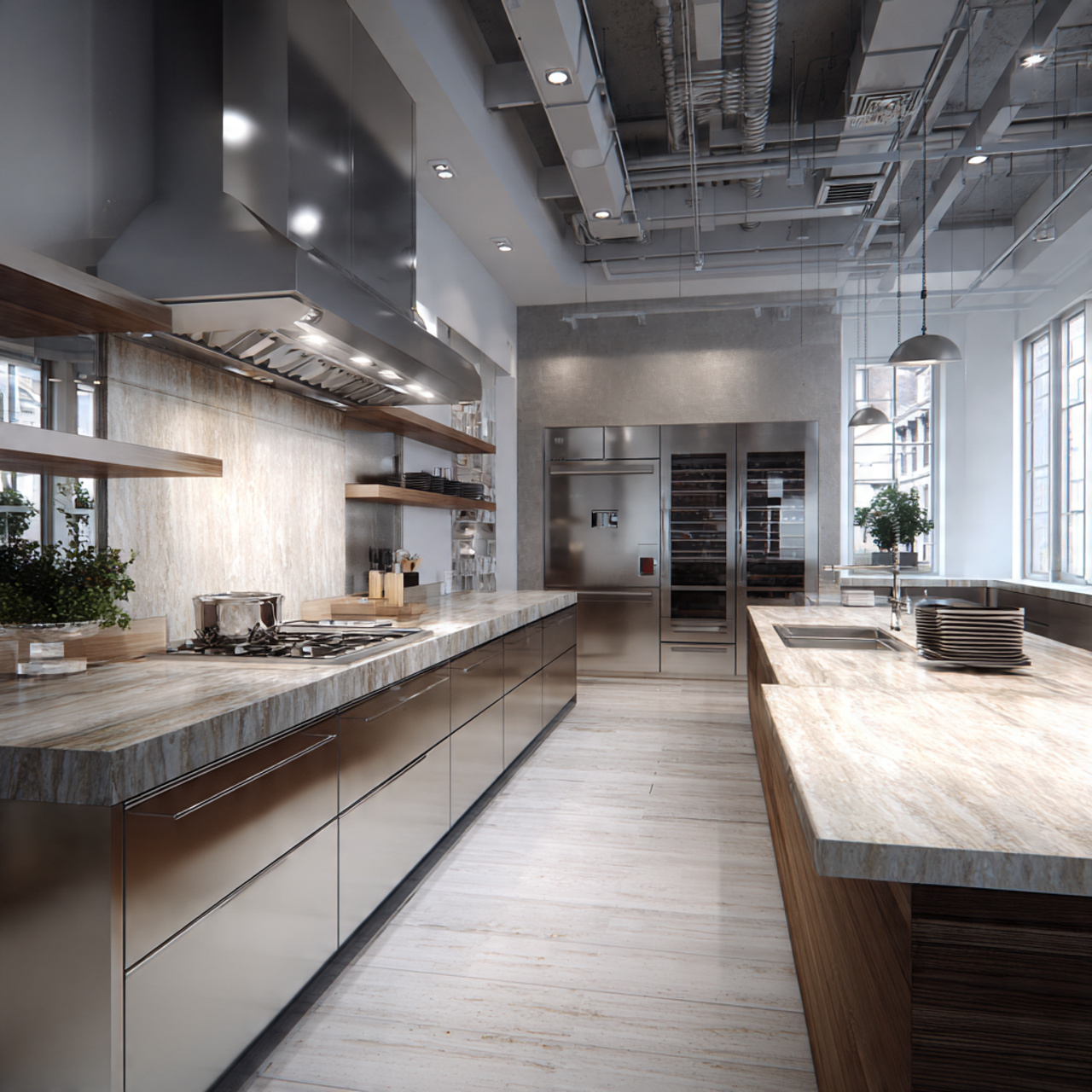
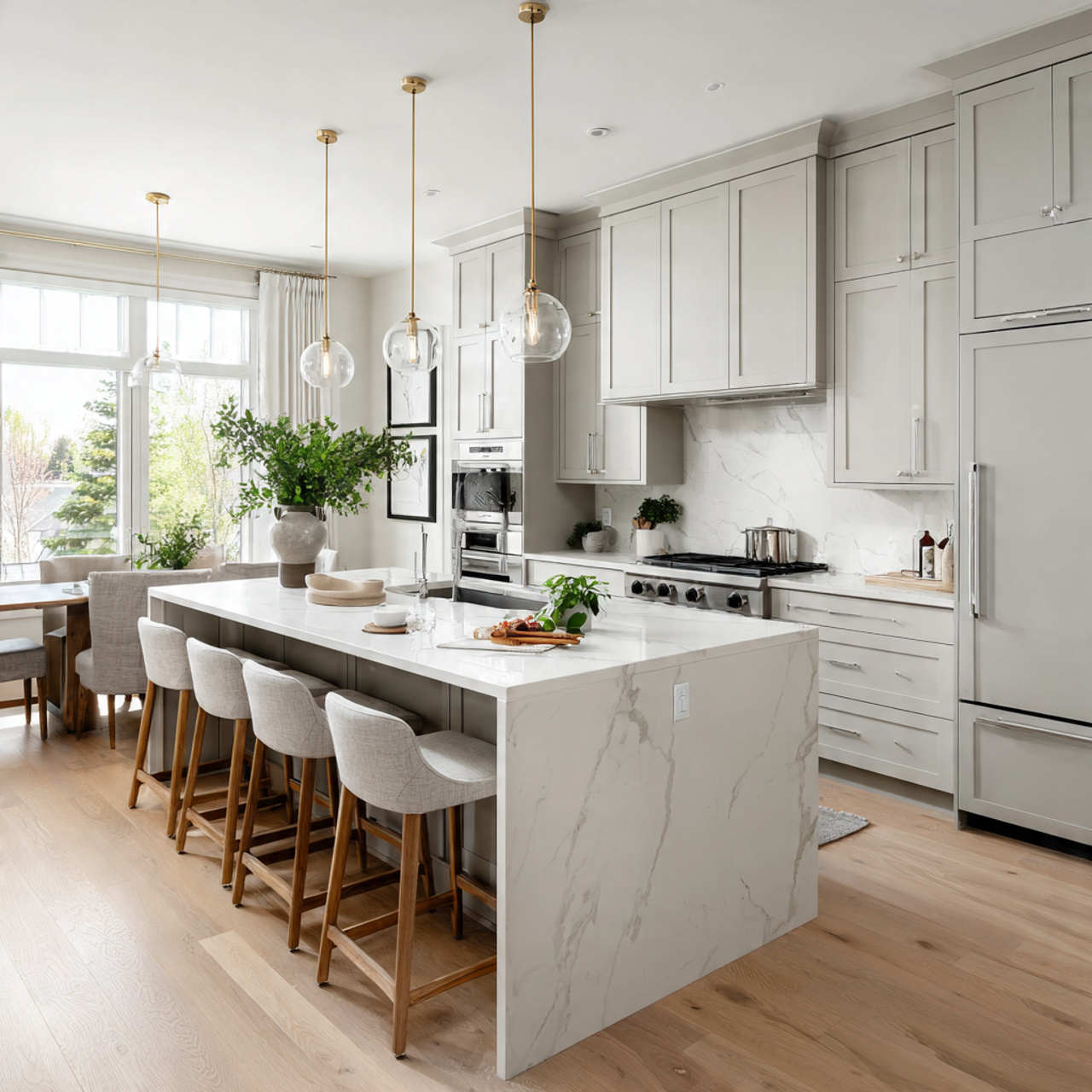
The first thing you notice in a well-composed kitchen is how your eye naturally settles on one area, often the island or a softly lit backsplash wall. It feels calm and complete, especially in the morning when light gently gathers around that central point. Nothing competes for attention, and the space feels easy to understand at a glance.
This works because the eye needs a clear starting point, and without it, everything feels slightly scattered. A centered anchor reduces visual noise and gives the kitchen a sense of structure. It quietly organizes the entire space without adding anything extra.
You can apply this by choosing one visual hero and letting surrounding elements stay softer in tone and detail. Avoid placing strong features in multiple areas that compete for attention. Let the focus feel natural rather than forced.
Tip: Keep one dominant focal point and allow the rest of the kitchen to support it.
Layered Depth Composition That Makes the Kitchen Feel Rich and Dimensional
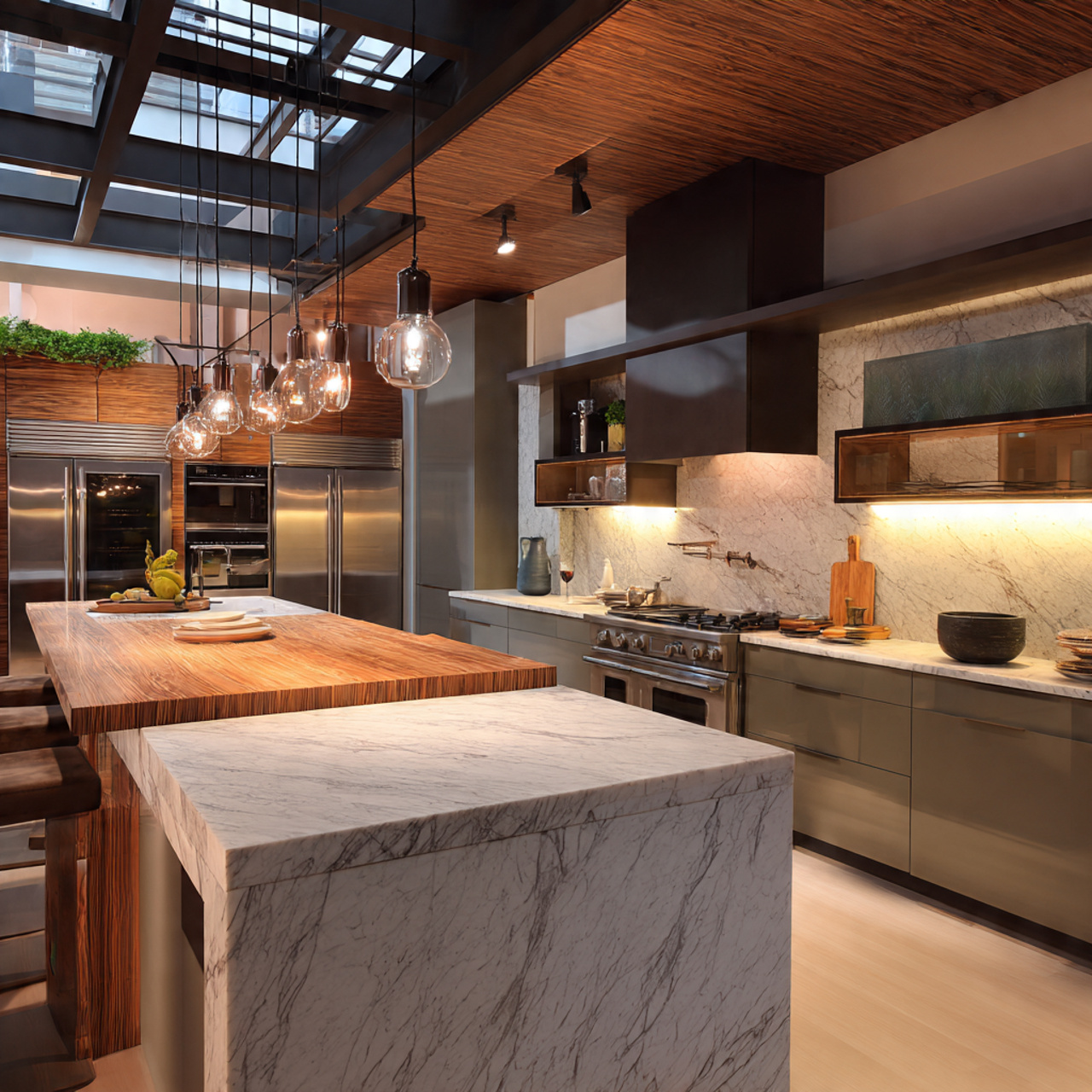
In kitchens that feel inviting, you can visually move from the front counter to the back wall without everything blending together. A cutting board or tray sits slightly forward, cabinets form the middle layer, and lighting adds depth behind. This layered look becomes especially noticeable during quiet evening moments.
This works because depth mimics how we naturally experience space, adding richness without clutter. Flat layouts tend to feel lifeless, even when well designed. Layers create subtle movement that keeps the eye engaged.
To apply this, avoid pushing everything against one surface. Introduce small elements at different distances and allow light to interact with them. Even slight depth variation changes how the space feels.
Tip: Think in layers rather than a single flat surface when styling your kitchen.
Contrast Control System That Balances Light and Dark Without Overpowering the Space For Modern Kitchen Design
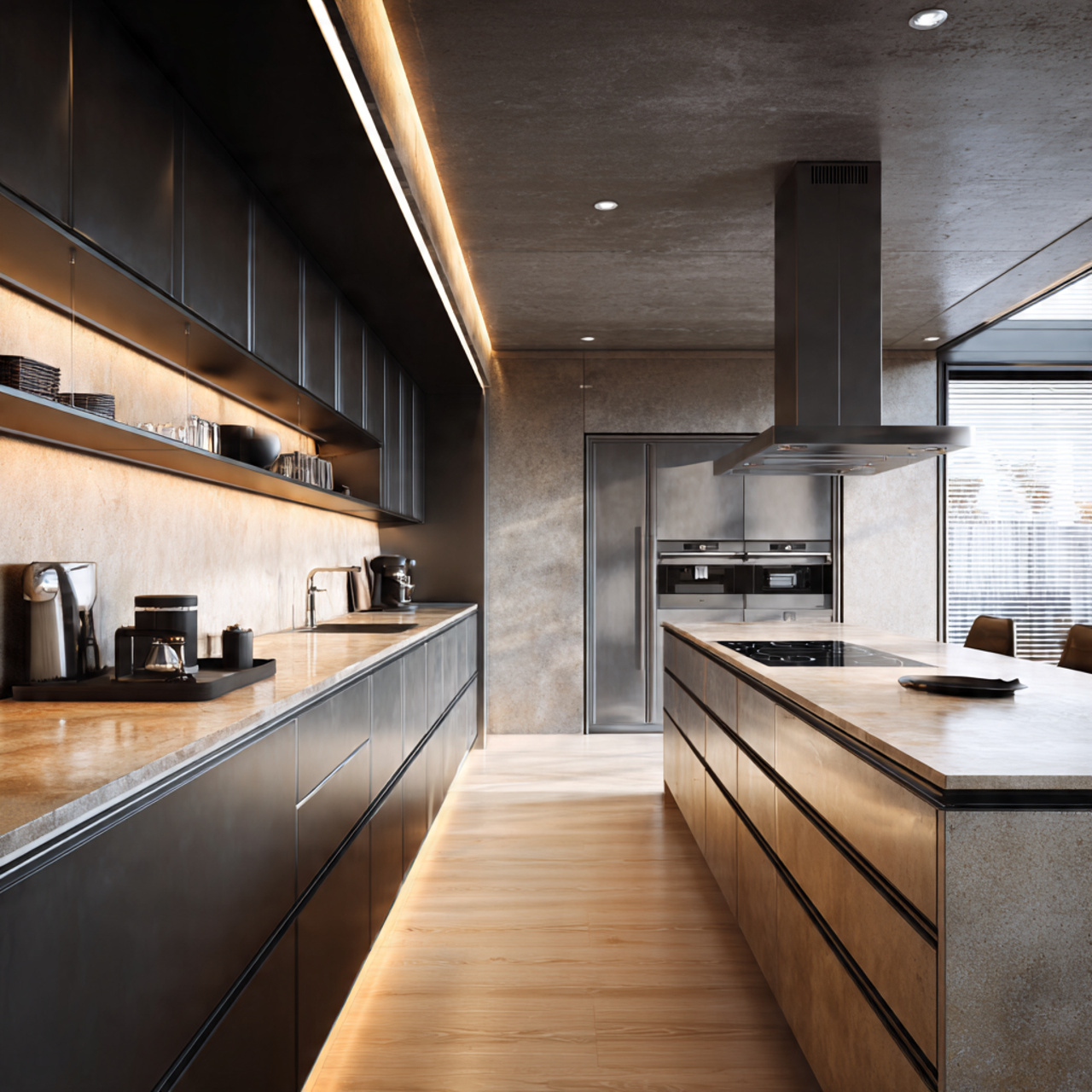
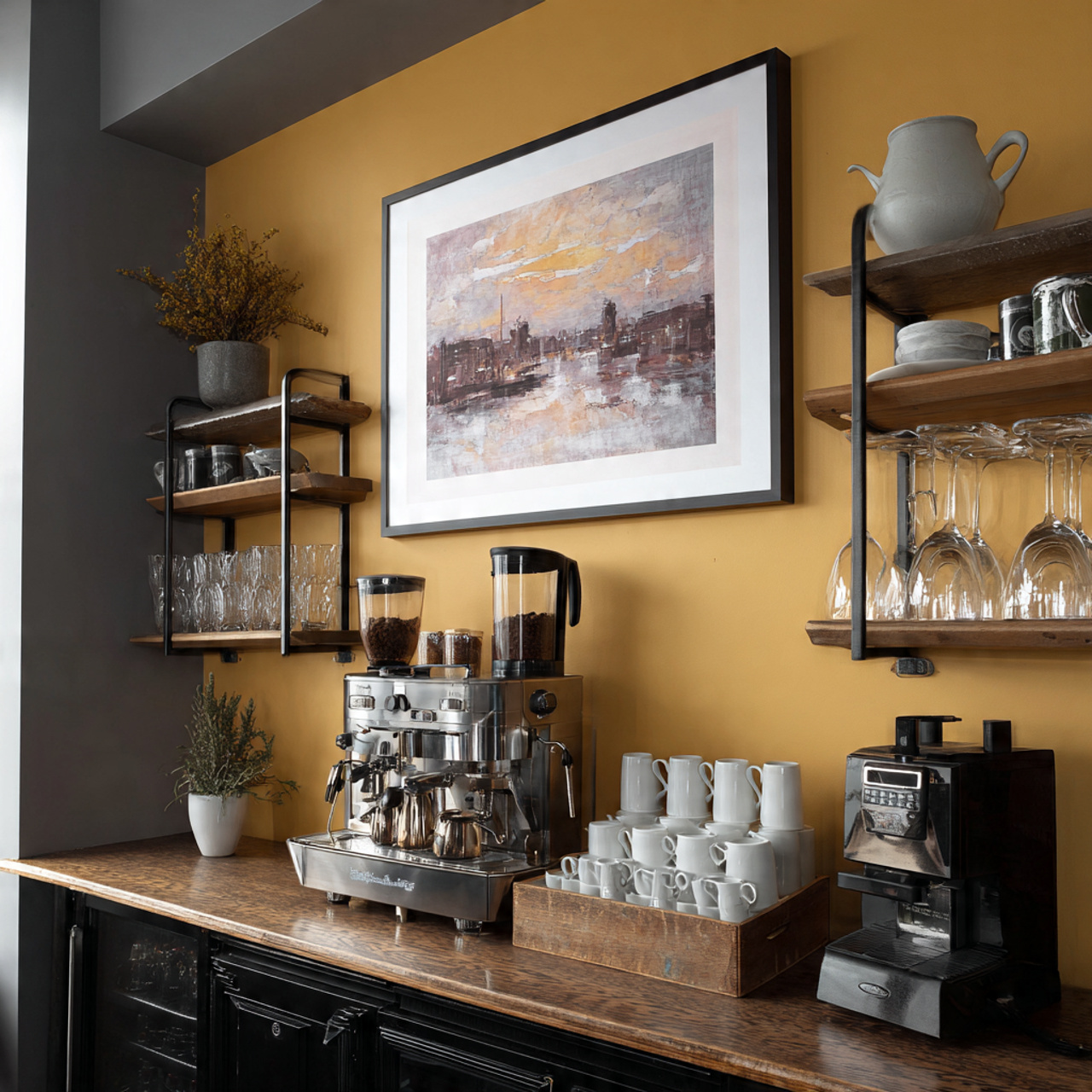
A kitchen that balances soft beige tones with deeper accents feels grounded without becoming heavy. You might notice how darker elements gently frame lighter surfaces instead of dominating them. In the evening, this contrast softens and creates a calm atmosphere.
This works because controlled contrast defines the space without creating tension. Too much difference between light and dark can feel harsh, while too little makes everything blend together. Balance allows both to coexist comfortably.
You can apply this by limiting strong contrast to one or two areas while keeping the rest cohesive. Let transitions feel smooth instead of abrupt. Subtle contrast often feels more refined over time.
Tip: Use contrast sparingly so it enhances the space rather than overwhelming it.
Horizontal and Vertical Line Balance That Creates a Clean, Structured Look For Modern Kitchen Design
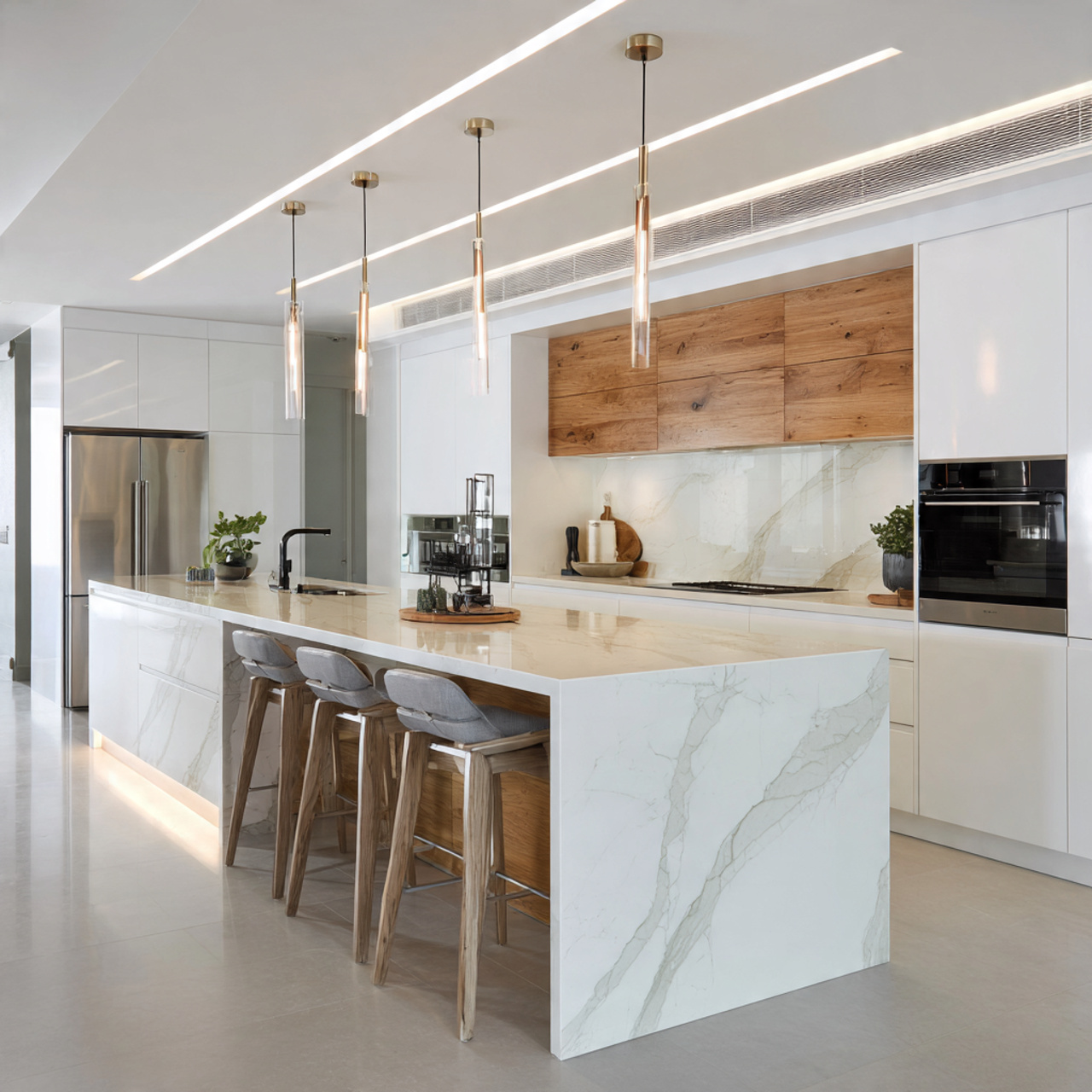
When you look across a well-designed kitchen, lines feel aligned and intentional. Countertops run cleanly, cabinet edges line up, and vertical elements feel evenly spaced. This quiet structure makes the space feel organized without effort.
This works because the eye is highly sensitive to alignment, even if we do not consciously notice it. When lines feel off, the entire kitchen can feel slightly unsettled. Balanced lines create a sense of order.
To apply this, pay attention to how edges and seams align across the space. Keep lines consistent where possible and avoid unnecessary breaks. Even small adjustments can improve visual clarity.
Tip: Step back and check if your horizontal and vertical lines feel aligned from a distance.
Visual Weight Distribution That Prevents One Side From Feeling Heavy or Empty
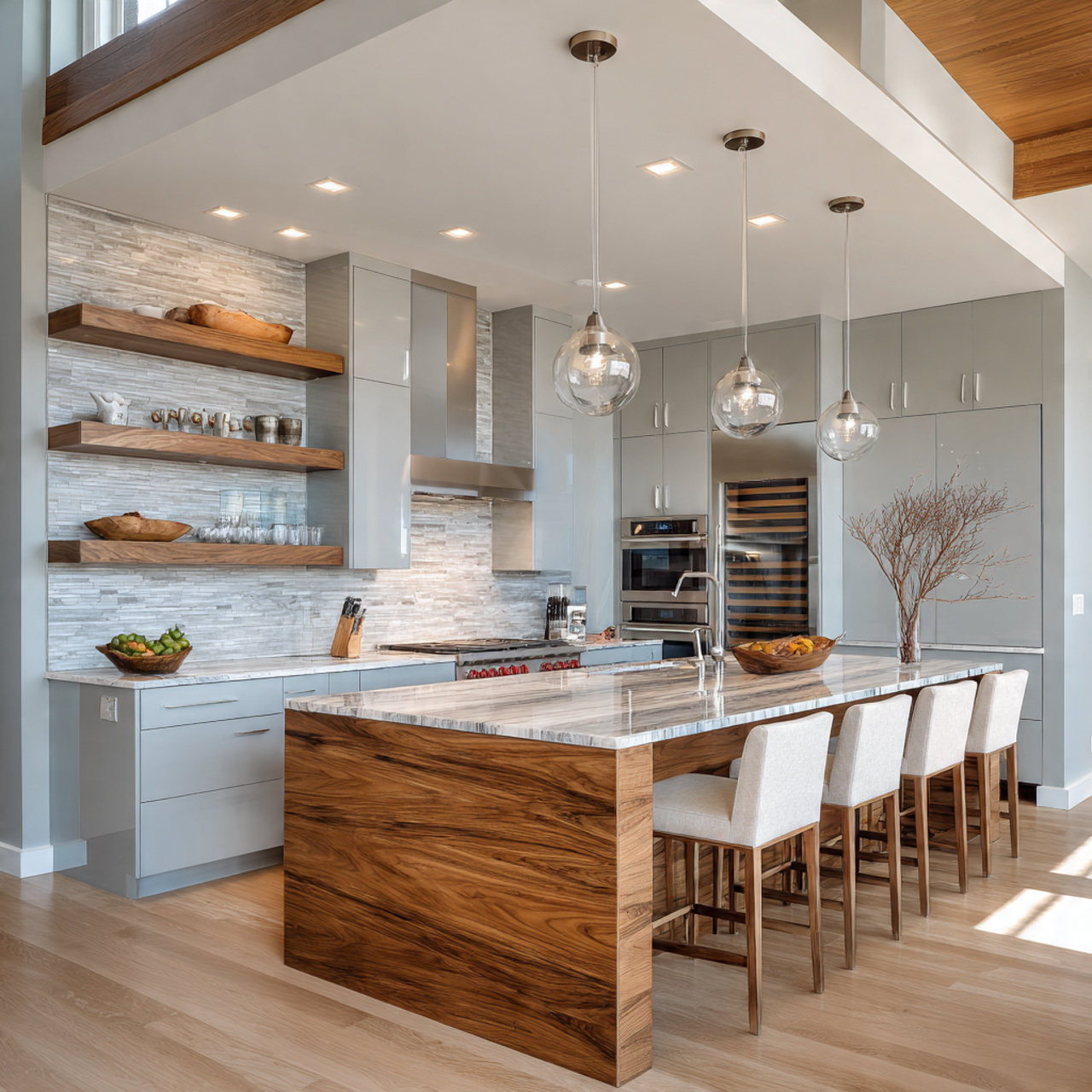
Some kitchens feel unbalanced because one side visually carries more weight than the other. You might notice darker tones or denser elements pulling attention to one area. Balanced kitchens feel steady, no matter where you stand.
This works because the eye naturally compares different parts of a room. When one side dominates, it creates subtle discomfort over time. Even distribution helps the space feel grounded.
To apply this, observe where your eye is drawn first and whether one side feels heavier. Adjust tones or add lightness to balance the space. Small changes often have a big impact.
Tip: If one side feels heavy, soften it or balance it with a lighter element opposite.
Material Transition System That Smoothly Connects Wood, Stone, and Metal In Modern Kitchen Design
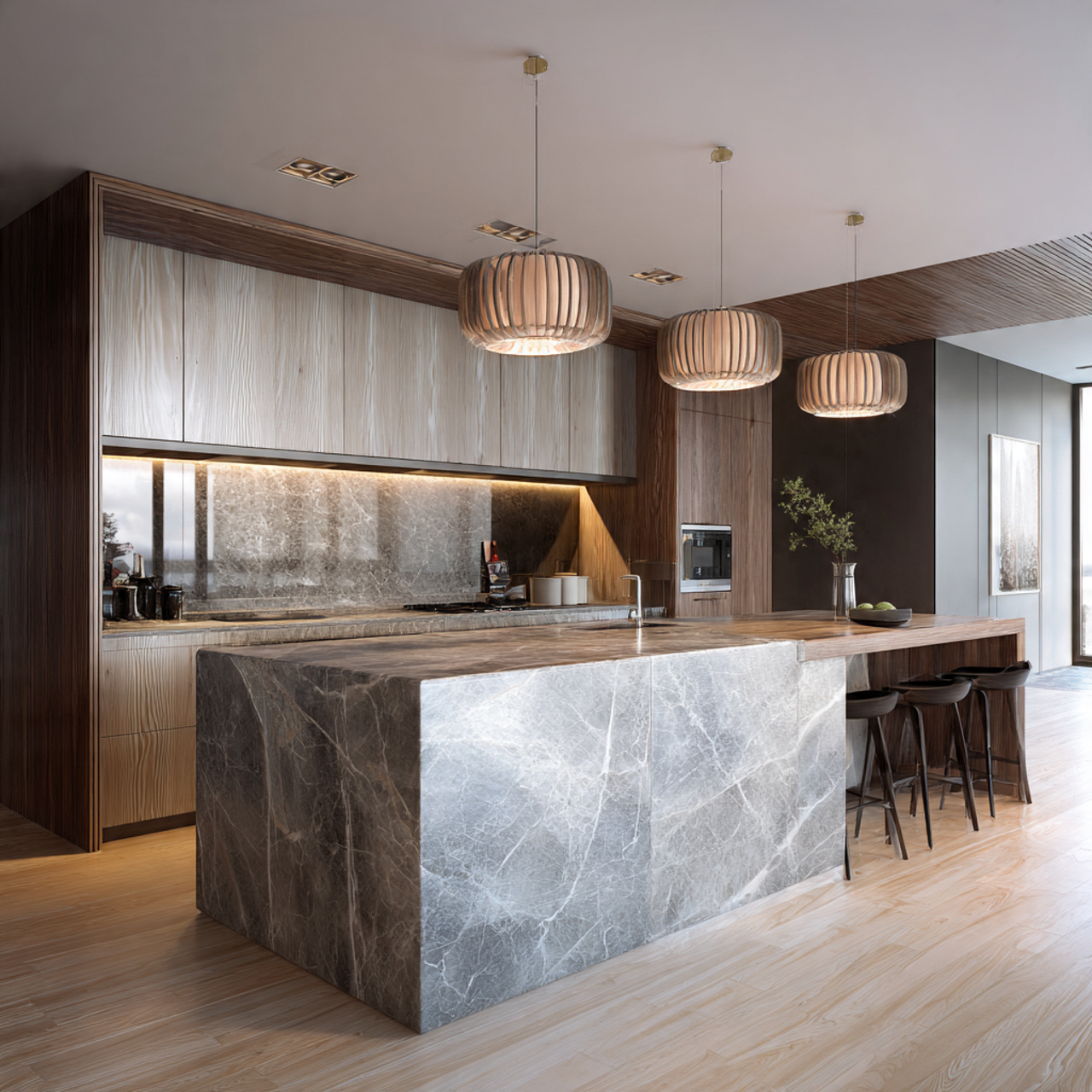
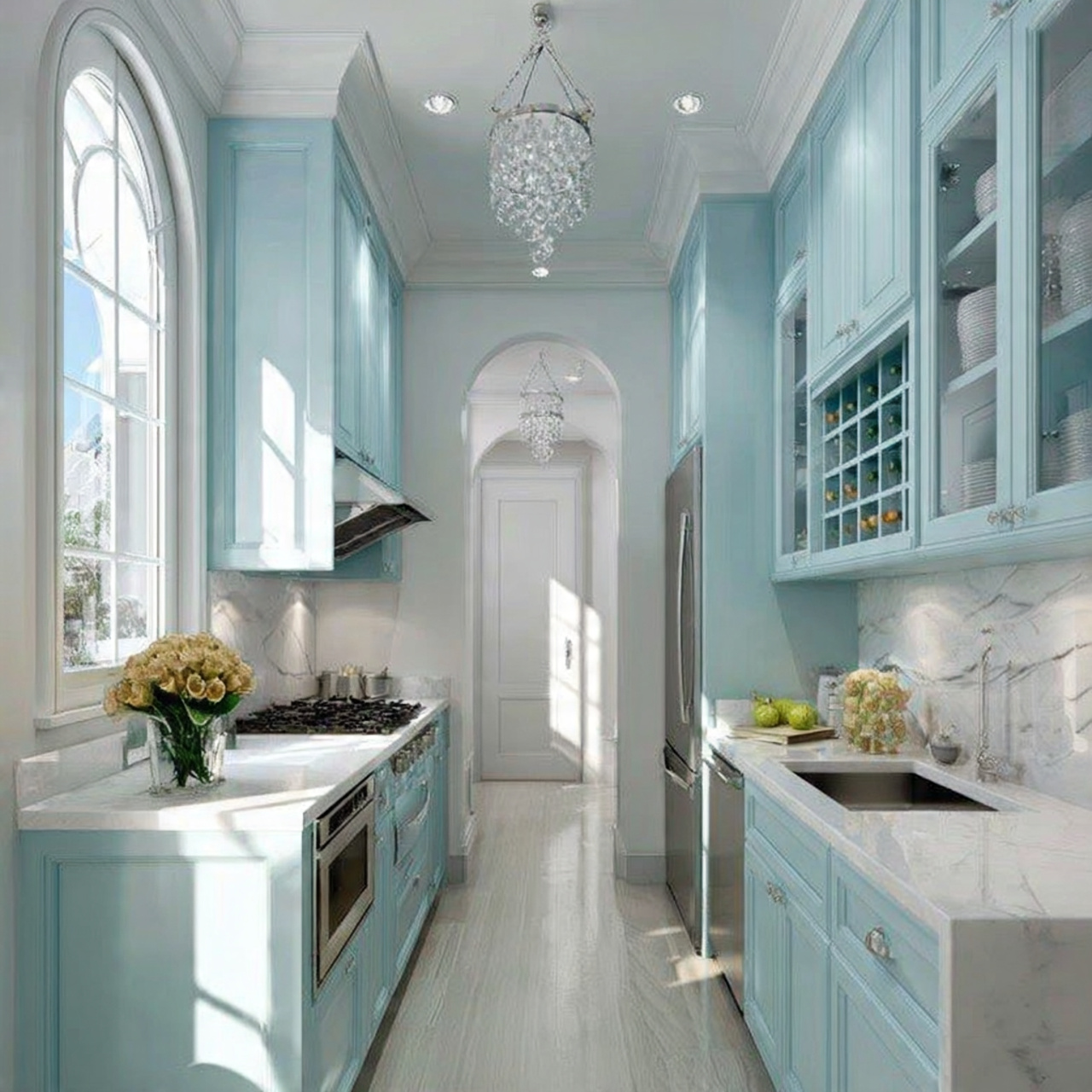
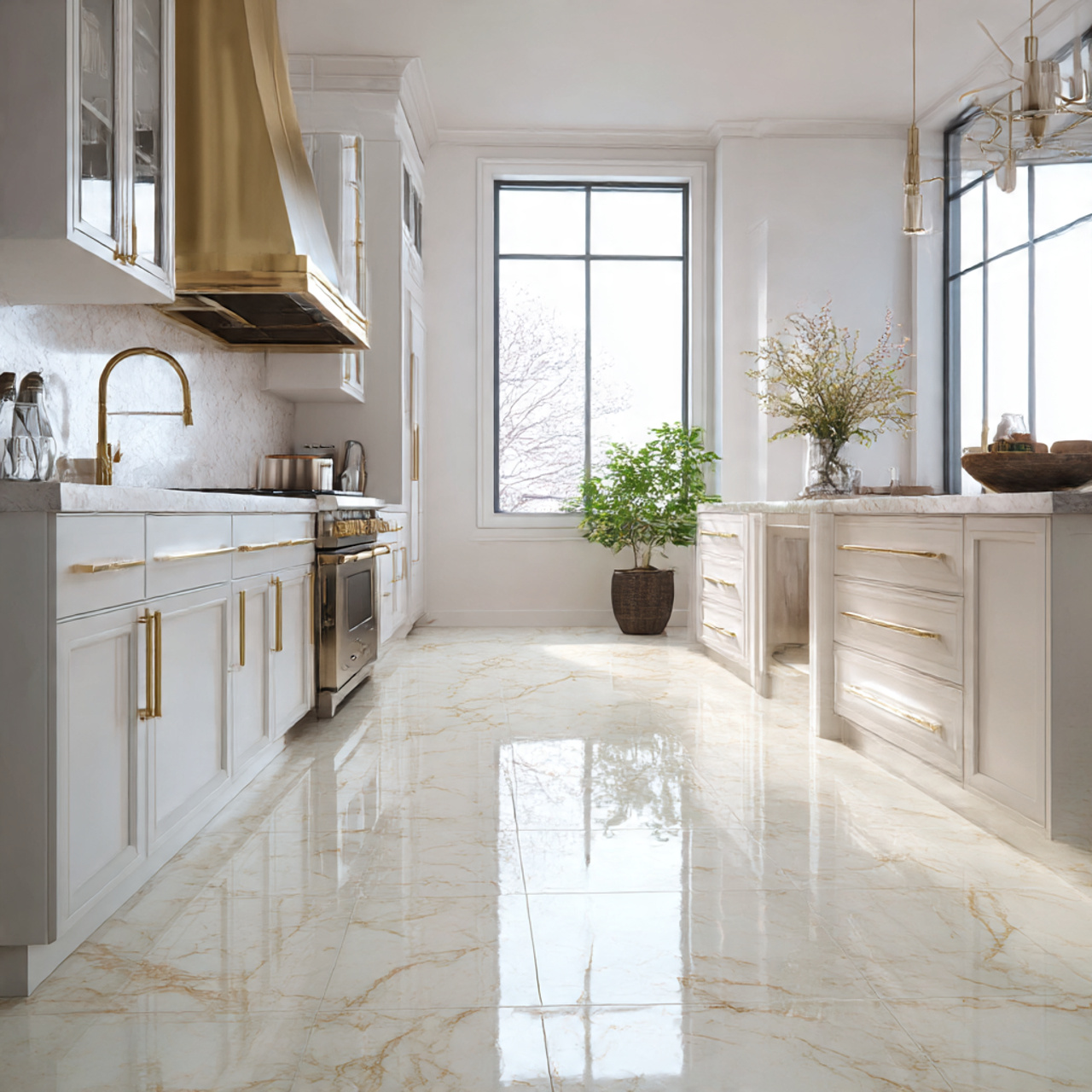
A kitchen feels more refined when materials flow naturally into one another instead of feeling disconnected. Wood softens the look of stone, while metal details add subtle contrast. The transition between these elements feels seamless rather than abrupt.
This works because smooth transitions prevent visual breaks that interrupt the flow. When materials clash, the space can feel disjointed. A connected palette creates harmony.
You can apply this by choosing materials that share similar undertones or textures. Let one material lead while others support it. Avoid introducing too many competing finishes.
Tip: Choose materials that feel related so transitions appear natural and calm.
Focal Lighting System That Highlights Key Areas Without Overlighting the Space For Modern Kitchen Design
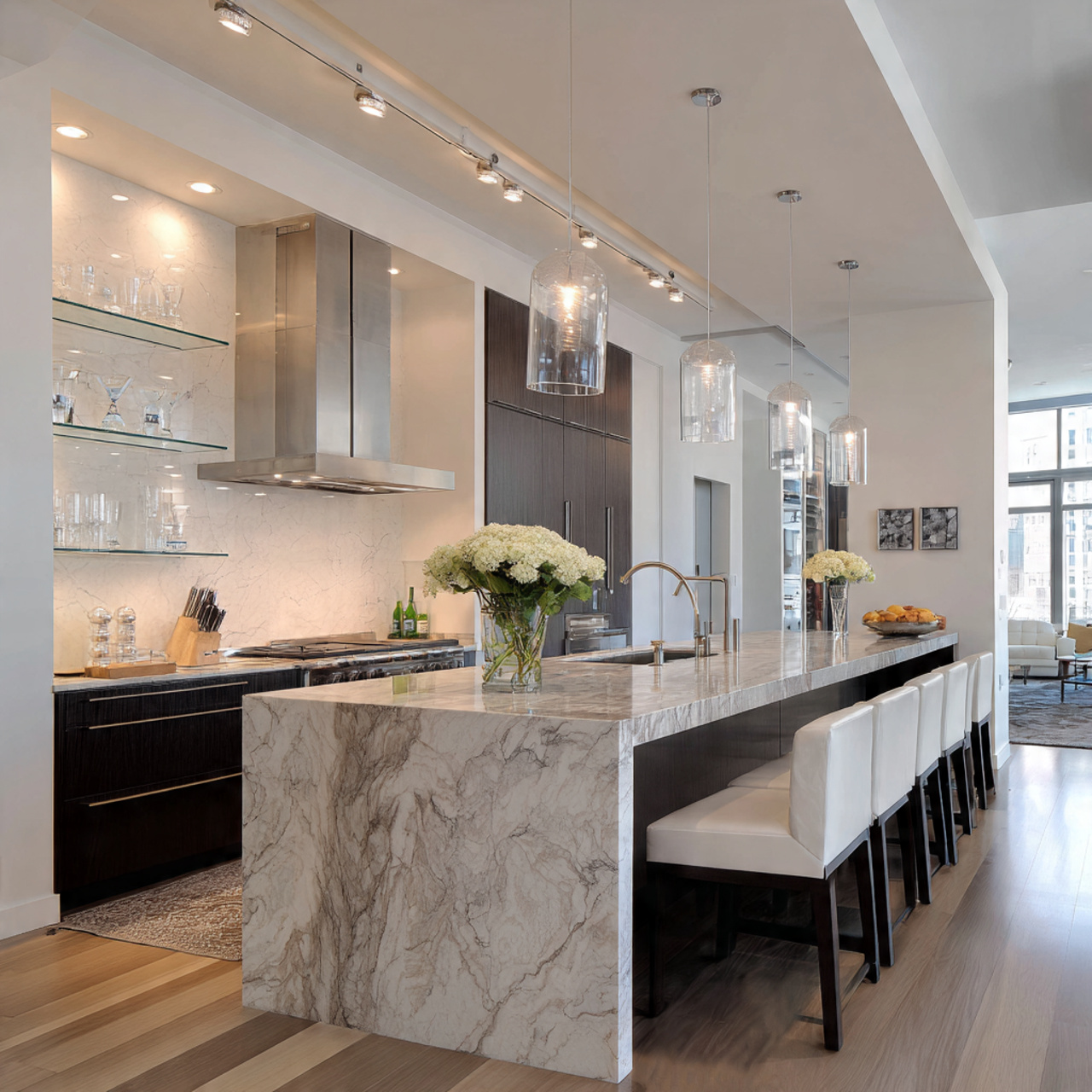
In kitchens where lighting feels intentional, certain areas naturally stand out while others remain softly lit. The island or dining area often becomes a warm gathering point in the evening. Light creates atmosphere rather than just brightness.
This works because lighting directs attention and shapes how the space feels. Even lighting everywhere can flatten the room, while focused lighting adds depth. It gives the kitchen a sense of purpose.
To apply this, layer lighting and allow one area to be slightly more illuminated than others. Avoid making every corner equally bright. Let light guide the experience.
Tip: Highlight one key area with lighting instead of spreading it evenly everywhere.
Repetition Rhythm System That Creates Visual Harmony Across Surfaces
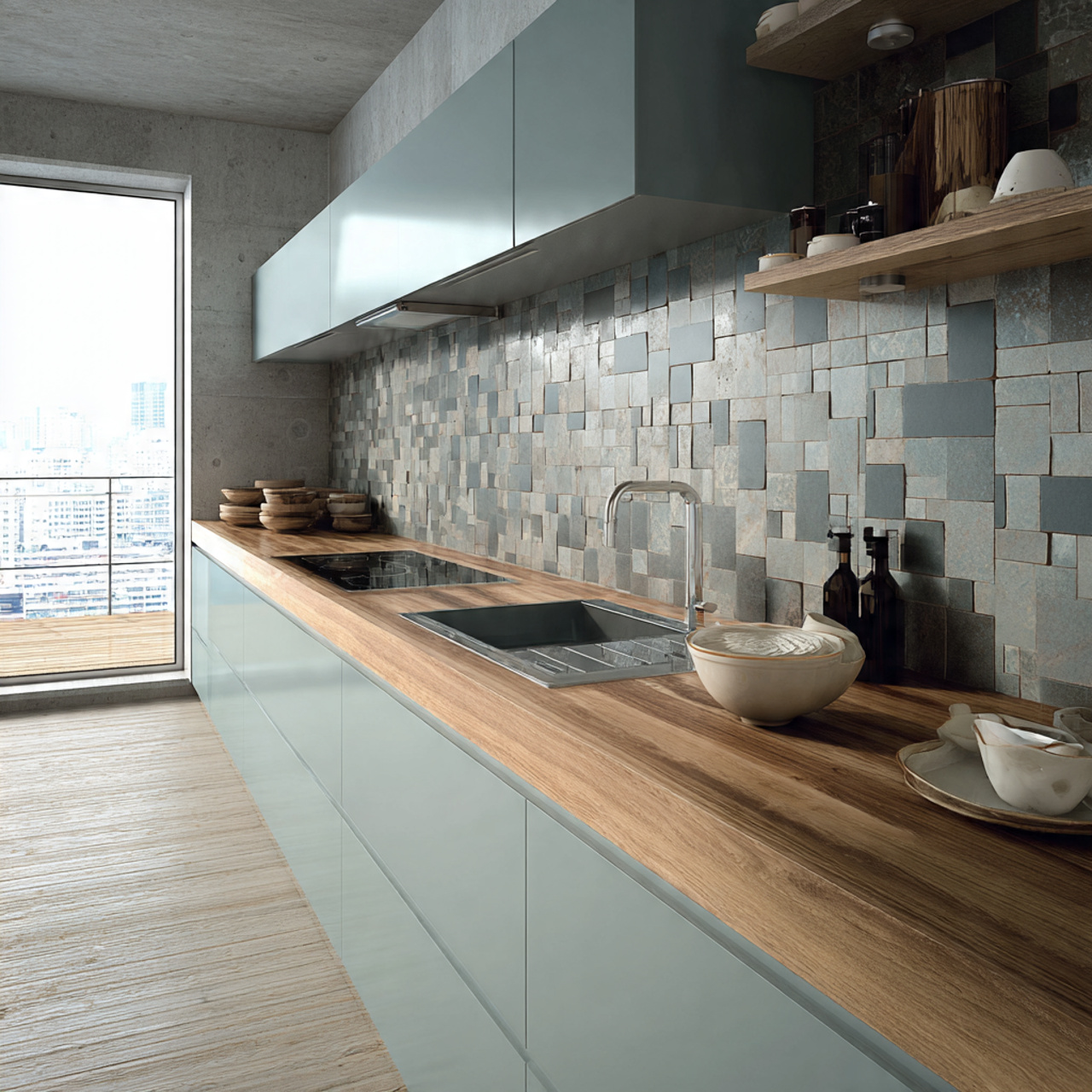
A kitchen feels cohesive when certain tones or shapes repeat subtly throughout the space. You might notice similar finishes appearing in different areas, creating a quiet rhythm. This repetition often feels natural rather than obvious.
This works because repetition builds familiarity, which the eye finds comfortable. Without it, the space can feel disconnected. Small repeated elements tie everything together.
To apply this, choose one or two features to repeat across the kitchen. Keep it subtle so it does not feel forced. Let the rhythm develop naturally.
Tip: Repeat a key tone or material in at least two places for a cohesive feel.
Negative Space Control That Keeps the Kitchen Feeling Open but Not Empty For a Modern Kitchen Design
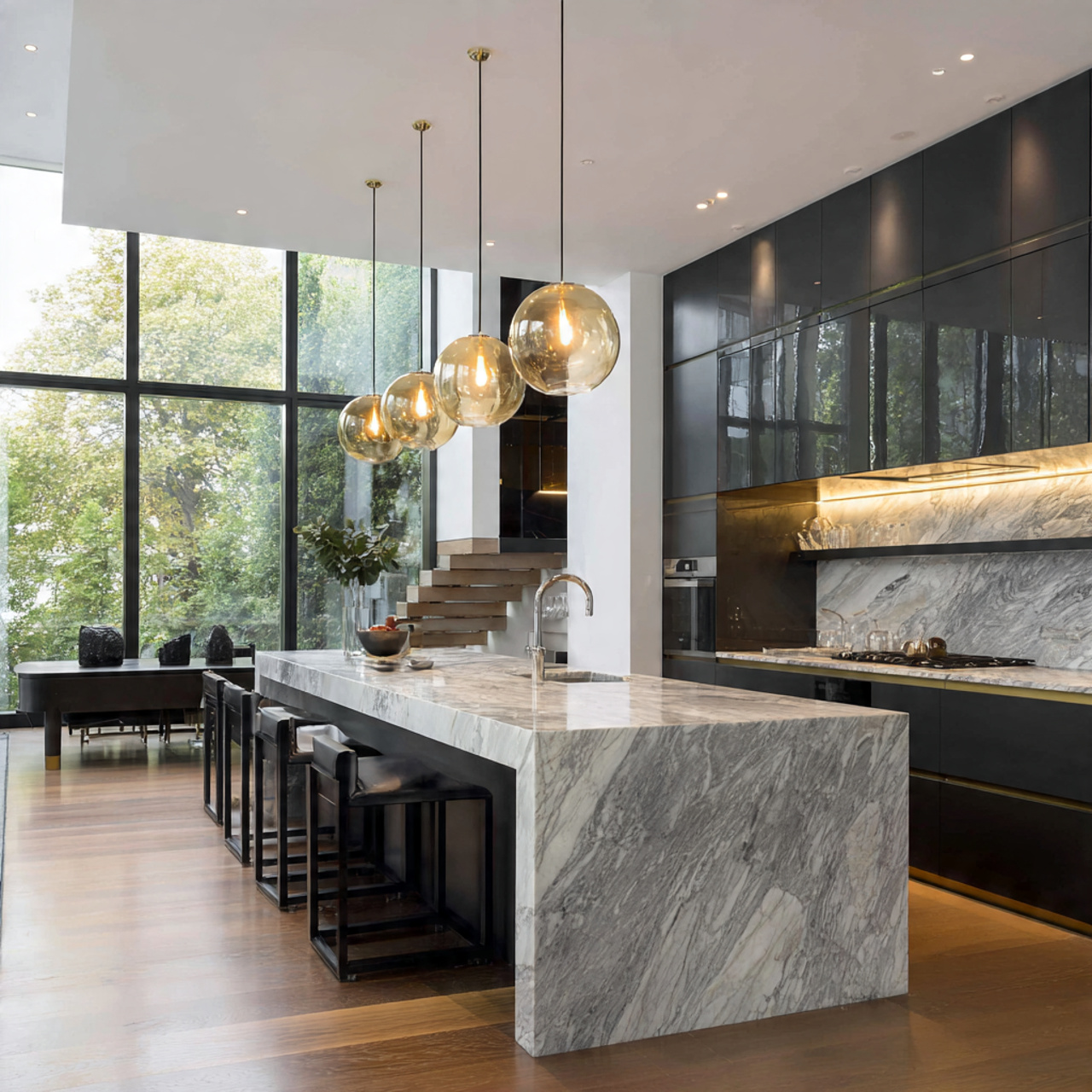
Some of the most calming kitchens include areas where nothing is placed at all. Clear counters or open wall space give the eye a place to rest. This creates a sense of openness that feels intentional rather than unfinished.
This works because negative space prevents visual overload and allows important elements to stand out. Without it, even beautiful kitchens can feel crowded. Space itself becomes part of the design.
To apply this, resist filling every surface with decor or tools. Leave certain areas intentionally empty. This makes the entire kitchen feel more refined.
Tip: Keep at least one surface clear to maintain visual balance.
Sightline Flow System That Guides the Eye Naturally Across the Kitchen For More Modern Kitchen Design
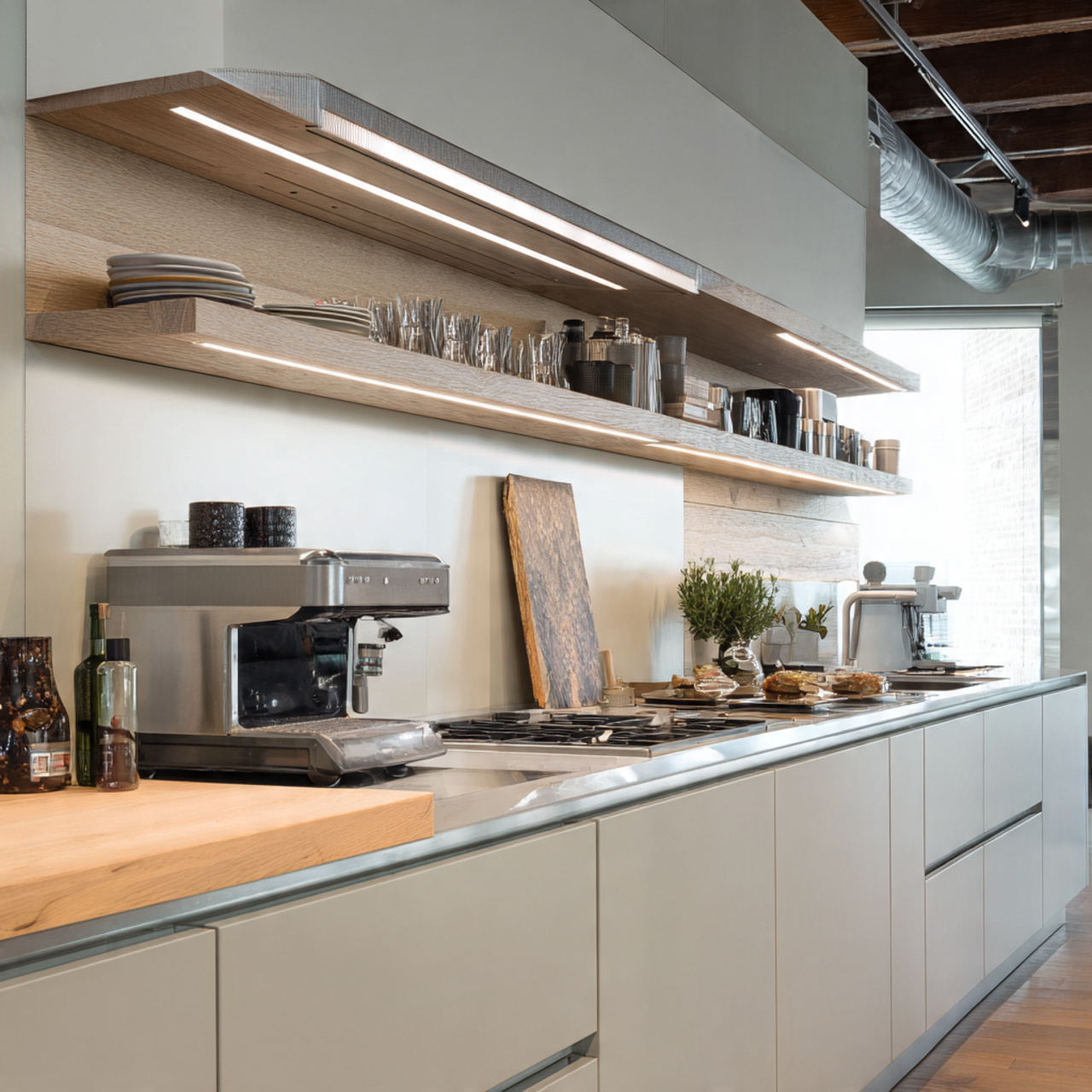
In a well-designed kitchen, your eye moves smoothly from one area to another without getting stuck. There is a natural flow that makes the space easy to take in. This often becomes noticeable when walking through the room.
This works because uninterrupted sightlines create a sense of ease and continuity. When visual blocks interrupt the view, the space can feel fragmented. Flow keeps everything connected.
To apply this, avoid placing large visual obstacles in key sightlines. Arrange elements so the eye can move freely. Think about how the space is seen from different angles.
Tip: Stand at the entrance and check if your eye moves smoothly across the kitchen.
Texture Layering System That Adds Warmth Without Creating Visual Clutter For Modern Kitchen Design
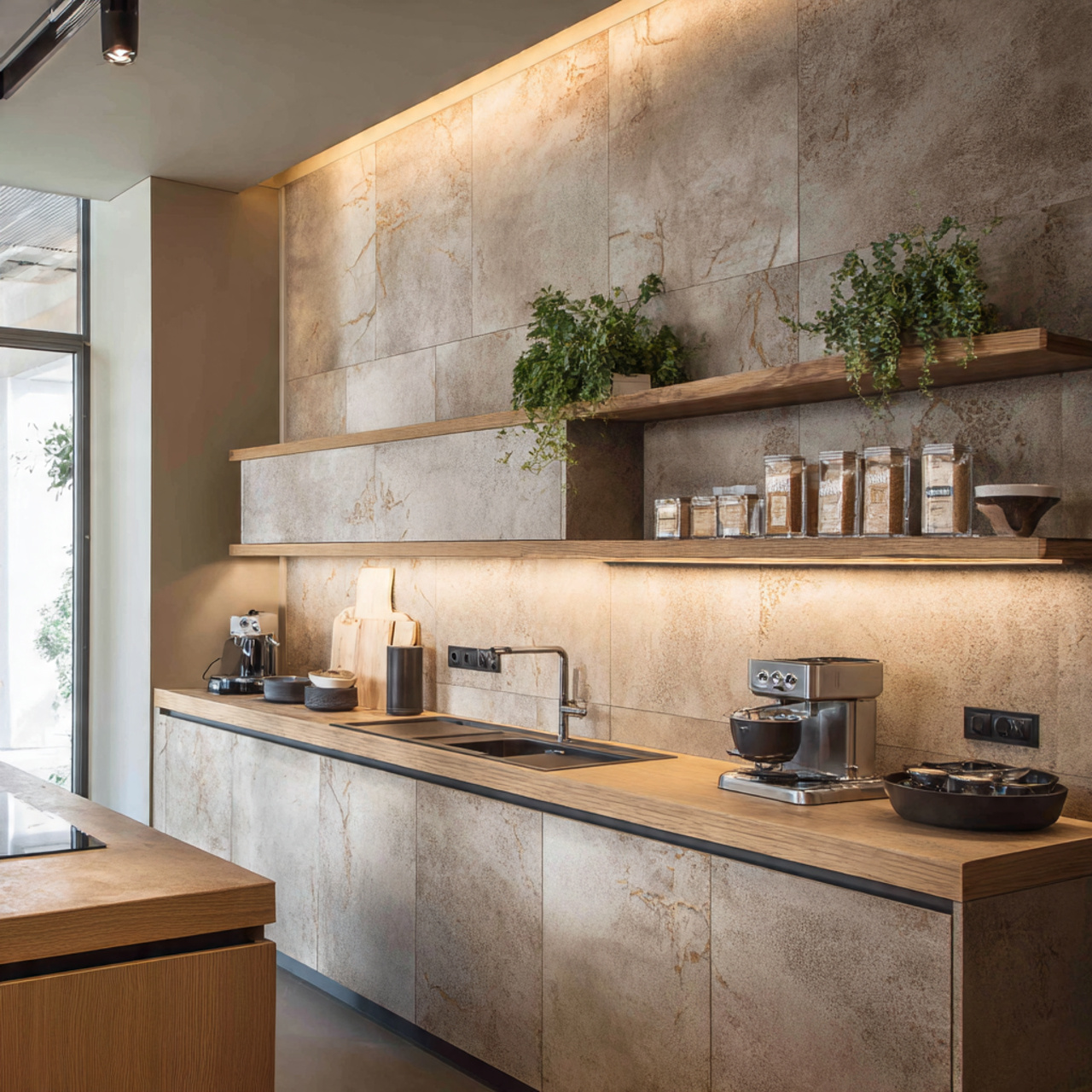
A kitchen feels more inviting when different textures are present but not competing. Smooth surfaces sit alongside slightly rougher ones, creating subtle contrast. This layering adds warmth without making the space feel busy.
This works because texture introduces depth without relying on strong colors. Too many textures, however, can create visual noise. Controlled layering keeps the space calm.
To apply this, combine a few textures that complement each other. Avoid mixing too many finishes at once. Let each texture have room to breathe.
Tip: Pair one dominant texture with one supporting texture for balance.
Shadow and Light Interaction That Adds Depth and Realism to the Modern Kitchen Design
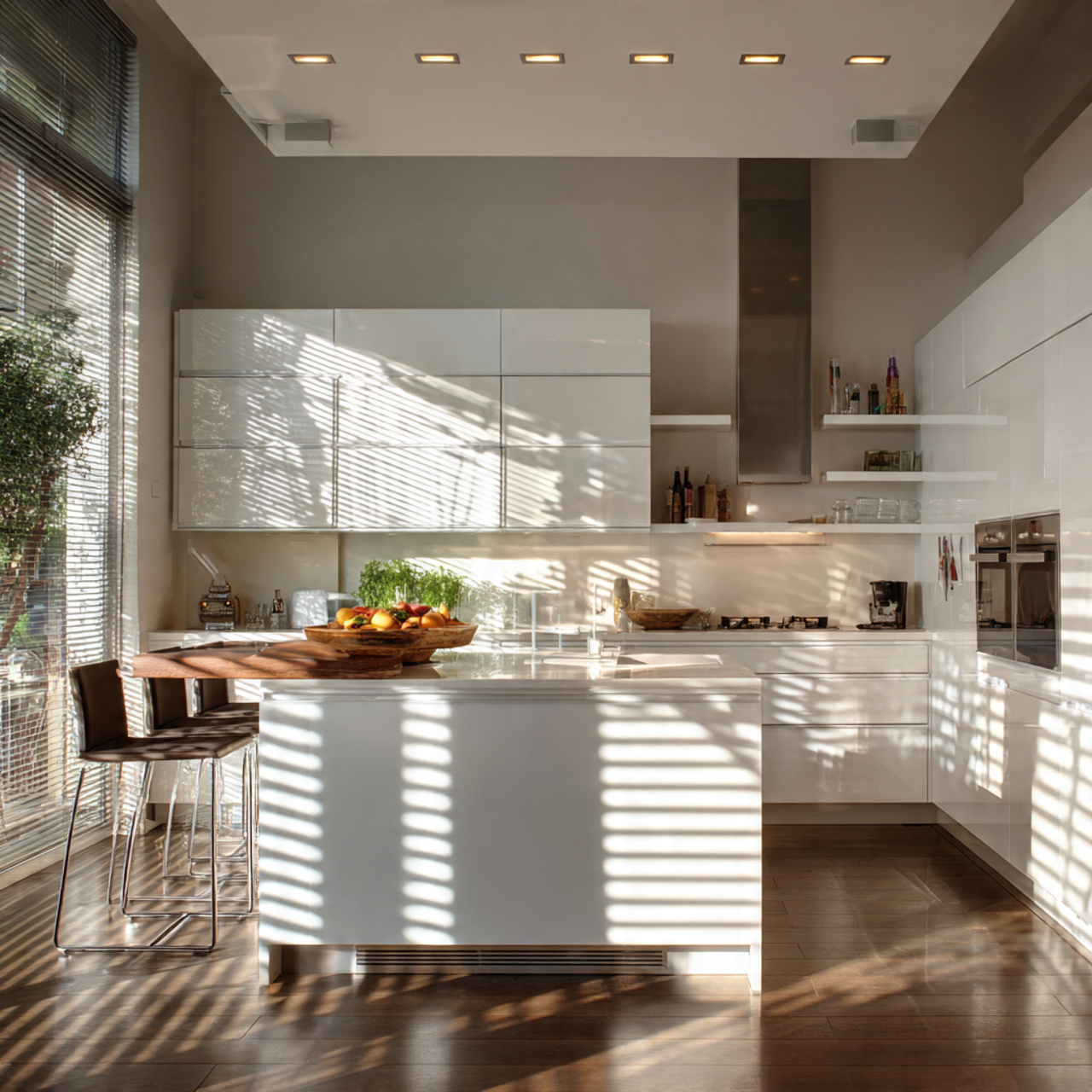
In kitchens where light and shadow interact naturally, the space feels more alive. Soft shadows fall across surfaces, adding dimension without effort. This becomes especially noticeable during early morning or late afternoon light.
This works because shadows create depth and prevent the space from feeling flat. Without them, everything can look overly bright and artificial. Light and shadow together create realism.
To apply this, allow natural light to interact with different surfaces and avoid eliminating all shadows. Position elements where light can create subtle variation. Let the space feel dynamic.
Tip: Do not eliminate shadows completely, as they add depth and realism.
Visit Also: Kitchen Decor
Edge Softening System That Reduces Harsh Lines for a More Inviting Modern Kitchen Design
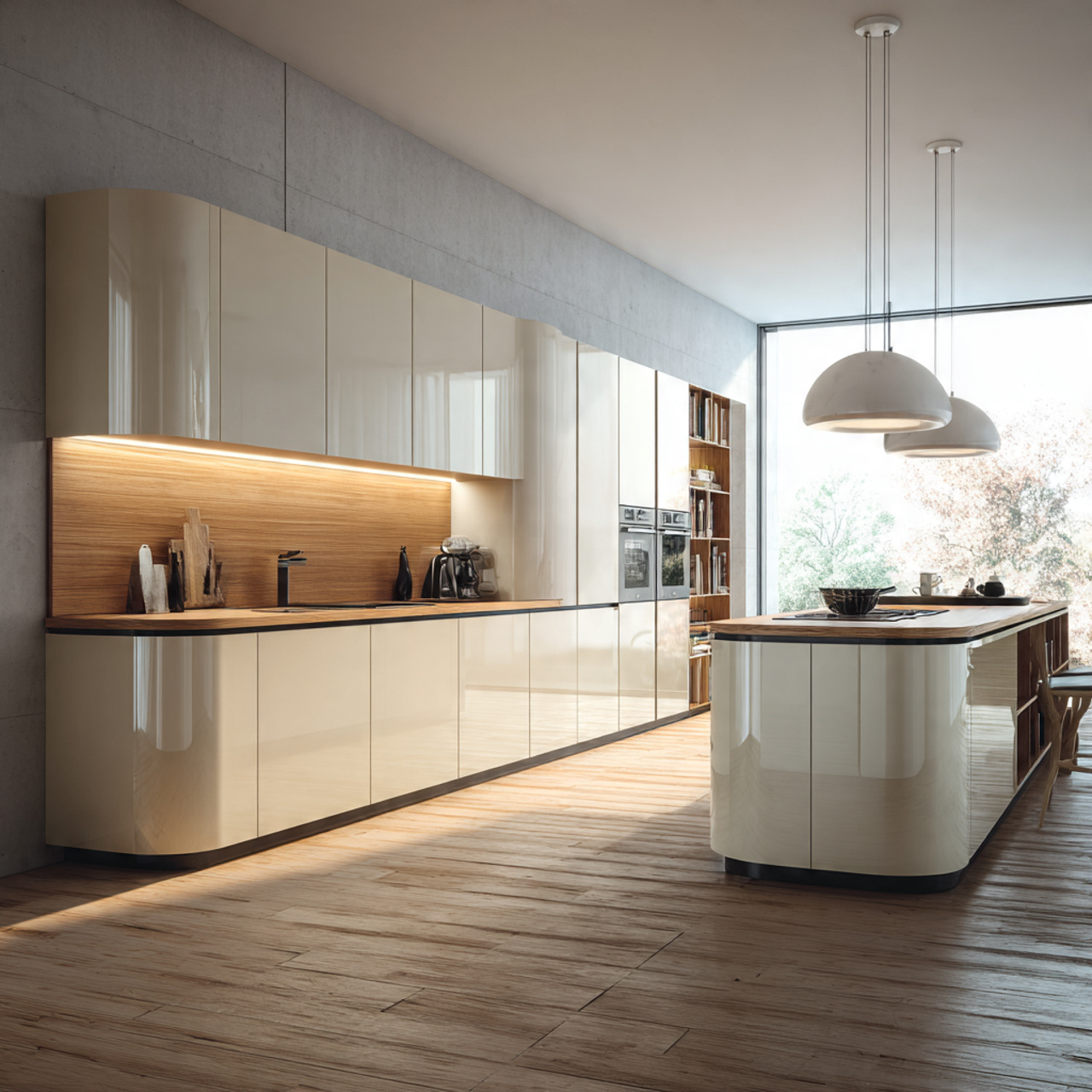
Kitchens with slightly softened edges feel more comfortable and less rigid. You may notice subtle curves or gentler transitions between surfaces. This creates a softer, more welcoming atmosphere.
This works because sharp lines can feel strict and formal, while softer edges reduce visual tension. The space becomes easier to live in and more approachable. Balance is key.
To apply this, introduce one or two elements with softer forms while keeping the overall structure clean. Avoid overusing curves so the space remains modern. Small adjustments are enough.
Tip: Add one softened edge detail to balance sharper lines in the kitchen.
Visit Also: Kitchen Decor
Visual Framing System That Defines Key Zones Without Using Physical Dividers For Modern Kitchen Design
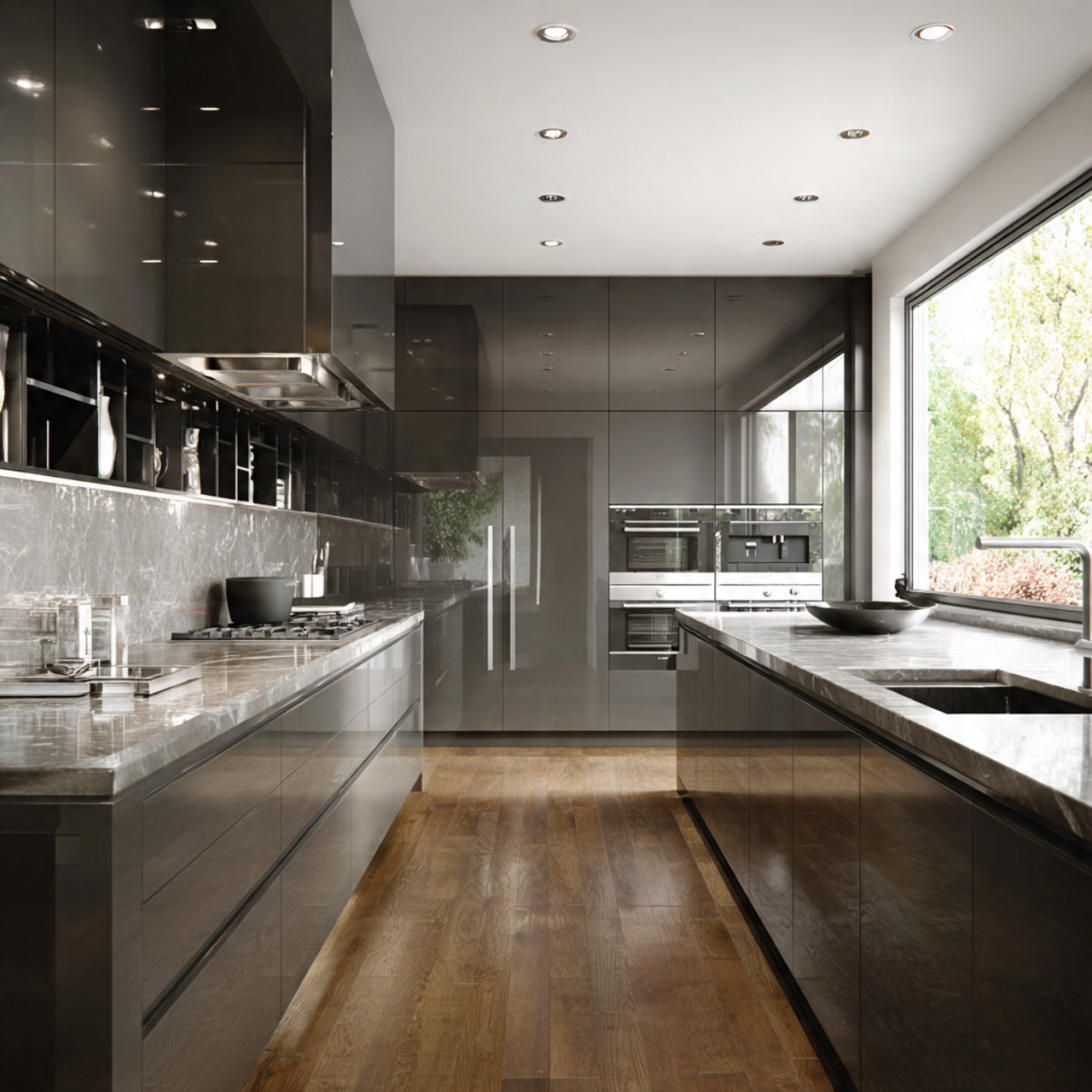
Some kitchens naturally highlight important areas without adding walls or barriers. This might be done through subtle contrast or lighting that frames a specific section. The result feels open but still organized.
This works because framing provides structure without interrupting flow. It allows the kitchen to remain connected while still defining areas clearly. The space feels both open and intentional.
To apply this, use changes in tone, light, or material to outline key zones. Avoid physical dividers that break continuity. Let visual cues guide the structure.
Tip: Use light or contrast to define zones instead of adding physical separations.
A Real Modern Kitchen Design Layout That Feels Balanced and Lived In
In a well-balanced Modern Kitchen Design, the first thing you notice is how calm the space feels without being empty. Soft daylight moves across a warm wood island while subtle shadows settle along the cabinetry, creating quiet depth. There is often a small lived-in moment, like a cup resting near the edge or a cutting board catching the light, making the space feel real rather than staged.
The layout itself feels easy to move through, with nothing blocking the natural flow from one area to another. Key elements are visually connected, so your eye travels smoothly without stopping or feeling pulled in different directions. Over time, this kind of kitchen starts to feel effortless, where everything looks right without needing constant adjustment.
Color and Material Choices That Create a Calm and Modern Kitchen Design
Warm Beige (#E8E1D9)
Works beautifully on walls or cabinetry where a soft neutral base is needed. It creates a calm, grounded mood and pairs naturally with light wood and matte stone surfaces.
Soft White (#F5F3EF)
Ideal for upper areas or surfaces that benefit from reflected light. It brightens the space while keeping the tone warm and works well with wood, marble, and subtle metallic finishes.
Natural Wood Tone (#C8A47A)
Best used on islands, shelving, or accent surfaces to introduce warmth. It creates a lived-in, organic feeling and pairs effortlessly with beige tones, stone countertops, and soft black details.
Matte Black Accent (#2F2F2F)
Works in small details like fixtures or lighting to add depth without overpowering the space. It creates contrast while maintaining a modern edge and pairs well with wood, beige, and soft white surfaces.
Room Size and Lighting Guide for a Balanced Modern Kitchen Design
Small Kitchens That Need More Visual Openness
Use lighter tones and reflective surfaces so the space feels wider than it actually is. Layer soft lighting under cabinets and above key areas to prevent dark corners from closing in the room.
Large Kitchens That Risk Feeling Too Empty
Break the space into gentle lighting zones so it feels connected instead of scattered. Add warmer light near gathering areas to create a sense of comfort and focus.
Kitchens With Limited Natural Light
Rely on warm artificial lighting instead of harsh white tones to keep the space inviting. Combine overhead light with focused task lighting so the room does not feel flat or shadowy.
Kitchens With Strong Natural Light
Let natural light highlight textures and materials instead of blocking it with heavy finishes. Balance it with softer evening lighting so the space feels consistent throughout the day.
Common Modern Kitchen Design Mistakes That Affect How the Space Feels
Overcrowding Surfaces With Too Many Elements
This often happens when trying to make the kitchen feel styled by adding more decor. Over time, it creates visual noise and makes the space feel smaller and harder to maintain.
Keep a few meaningful elements and leave intentional empty space so each detail can stand out clearly.
Ignoring Visual Balance Across the Kitchen
Many kitchens feel slightly off because one side carries more weight through darker tones or dense elements. This imbalance can make the space feel uncomfortable without an obvious reason.
Adjust by redistributing visual weight using lighter finishes or subtle contrast on the opposite side.
Using Lighting That Is Too Flat or Too Harsh
People often rely on one strong overhead light, thinking it will cover everything. This removes depth and can make the kitchen feel either too bright or dull depending on the time of day.
Introduce layered lighting with softer tones so the space feels natural and adaptable.
Mixing Too Many Materials Without a Clear Connection
This happens when trying to combine different finishes without considering how they relate. The result is a kitchen that feels disconnected and slightly chaotic over time.
Limit materials to a few coordinated options and focus on smooth transitions between them.
Frequently Asked Questions About Modern Kitchen Design
How do I make a modern kitchen design feel warmer and less cold?
Focus on layering softer tones like beige, wood, and muted textures instead of relying on stark whites or greys. In my experience, even small additions like warm lighting or natural materials can completely shift how the space feels over time.
What is the biggest mistake people make in modern kitchen design?
Many people try to add too many features at once, thinking it will improve the look. This often leads to visual clutter, while a more refined and balanced approach usually feels better in daily use.
Can a Modern Kitchen Design still feel cozy and lived in?
Yes, and this is something I have noticed in real homes more than styled photos. When you include subtle textures, soft lighting, and a few lived-in elements, the space naturally feels more inviting without losing its modern look.
How important is lighting in a modern kitchen design?
Lighting plays a bigger role than most people expect because it shapes both mood and depth. A kitchen with layered lighting always feels more complete compared to one with a single flat light source.
Is it better to follow trends or keep the design simple?
Trends can be useful for inspiration, but they do not always age well in everyday spaces. A simpler design built around balance and material harmony tends to feel right for much longer.
Final Thoughts on Creating a Modern Kitchen That Feels Complete
Modern kitchen design works best when every element feels connected rather than added in isolation, creating a space that supports daily life without feeling overwhelming. In my experience, the most successful kitchens are the ones that feel calm, balanced, and easy to move through from morning to evening.
Instead of chasing more features, focus on refining what already exists and how it interacts visually. Even small adjustments in lighting, materials, or spacing can completely change how the kitchen feels over time.