14 Living Room Lighting Ideas That Feel Warm and Expensive
Creating the right living room lighting changes more than just brightness. It shapes how the room feels at different times of the day, from calm morning light to soft evening relaxation. A thoughtfully lit living room often feels more welcoming, comfortable, and visually balanced without needing a full redesign.
Many homes rely on a single overhead light, but that rarely creates the cozy atmosphere people actually want. In real living spaces, layered living room lighting, warm tones, and carefully placed lamps make the biggest difference. Once you start adjusting lighting intentionally, the room begins to feel more relaxed and naturally inviting.
Living room lighting works best when layered light sources create warmth, depth, and a comfortable atmosphere that adapts throughout the day.
Why Living Room Lighting Makes the Biggest Difference in Comfort
Lighting quietly influences how a living room feels from morning to night. Soft ambient lighting can make a space feel calm and relaxed, while harsh overhead lights often make rooms feel flat and less inviting. Even small lighting changes can shift the mood of the entire space.
In many homes, the living room serves multiple purposes like relaxing, reading, and gathering with family. Thoughtful lighting helps support each of these moments without needing to redesign the entire room. When lighting is layered properly, the space naturally feels more comfortable and visually balanced.
Living Room Lighting Ideas That Create Warm and Inviting Spaces
Layered Living Room Lighting That Creates a Warm Relaxed Evening Atmosphere
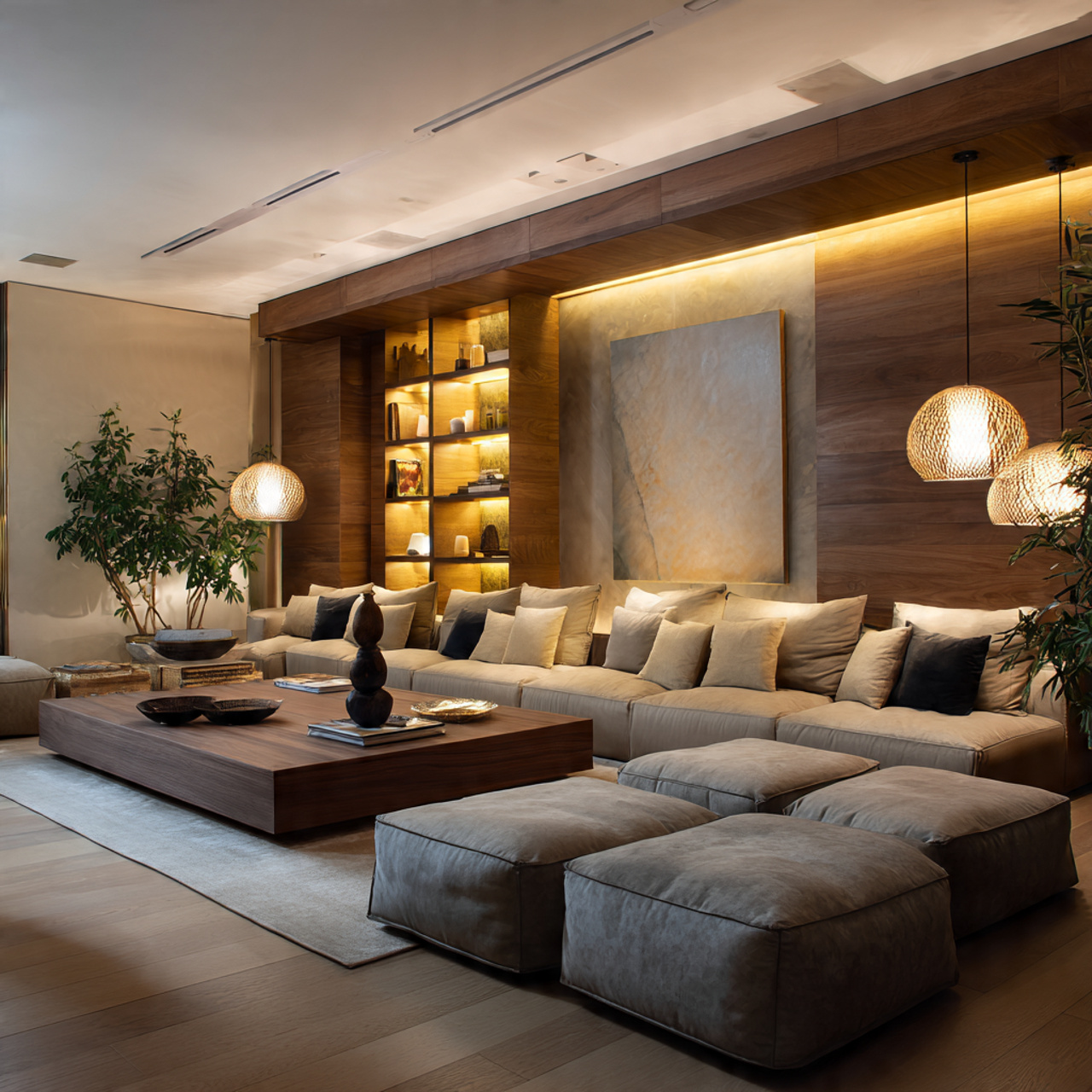
Soft light from a floor lamp gently fills one corner while a table lamp beside the sofa adds a warm glow across textured cushions. The overhead light stays subtle, allowing the room to feel calm rather than overly bright. As evening arrives, the space naturally shifts into a comfortable and welcoming retreat.
Layered lighting works because it creates depth instead of flat brightness. Multiple light sources soften shadows and make the room feel more balanced. In real homes, this approach feels more natural than relying on one ceiling light.
Start by combining a ceiling light with a floor lamp and one table lamp. Place them in different areas so light spreads evenly across the room. Over time, this layered setup makes the living room feel thoughtfully designed and more inviting.
Tip: Use warm bulbs across all light sources to keep the glow consistent.
Statement Chandelier That Becomes the Living Room Focal Point
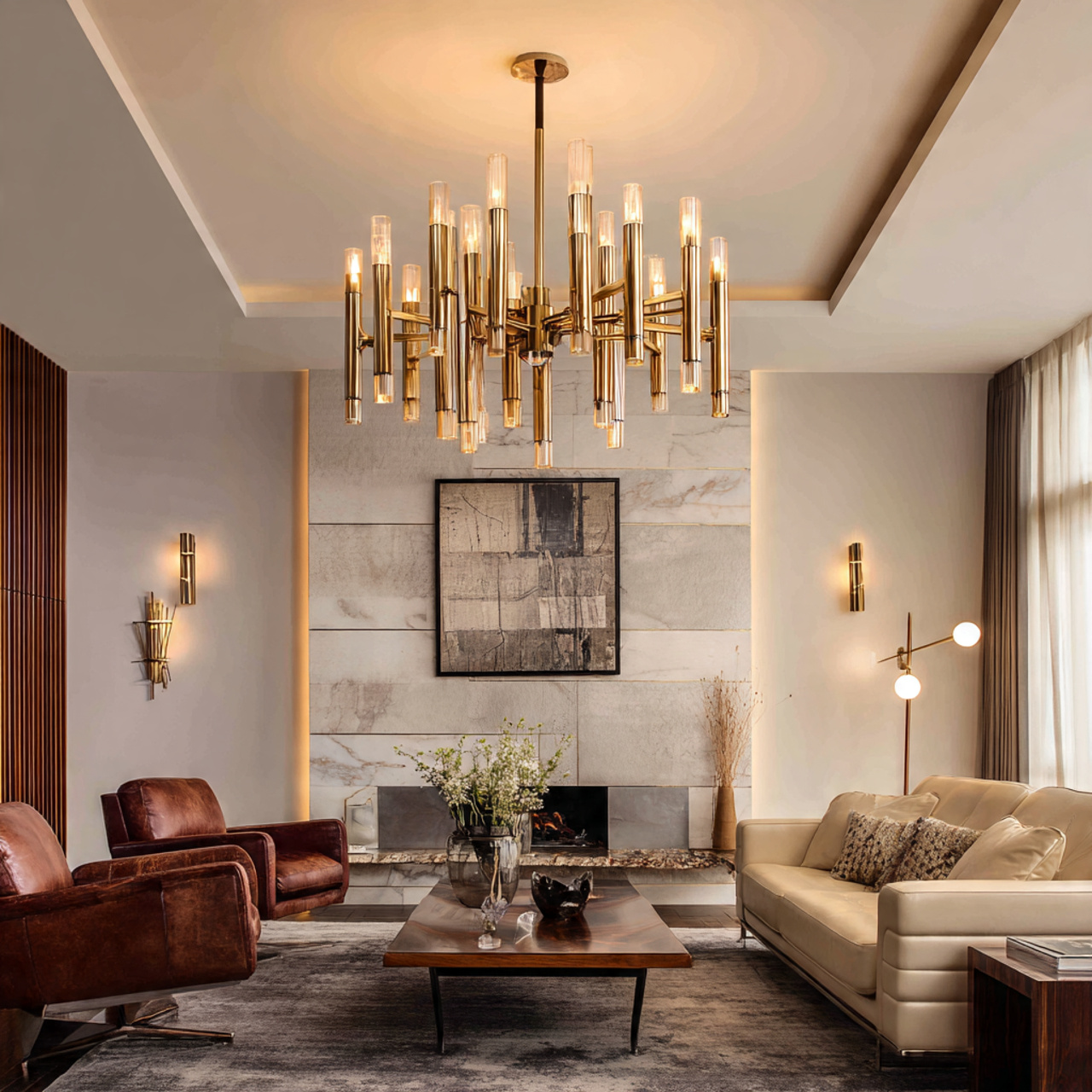
A modern chandelier hangs above the seating area and instantly draws attention. The soft glow reflects across nearby furniture and highlights artwork on the wall. The room feels elevated without needing additional decor.
A statement chandelier works because it anchors the entire seating area visually. It creates a natural center and helps distribute light more evenly. Many living rooms feel incomplete until a central light fixture defines the space.
Choose a chandelier that fits the scale of your seating area. Position it above the sofa or coffee table instead of the center of the ceiling. This placement makes the lighting feel intentional and more visually grounded.
Tip: Select a slightly larger fixture to create stronger visual impact.
Wall Sconces That Add Soft Hotel Style Ambience
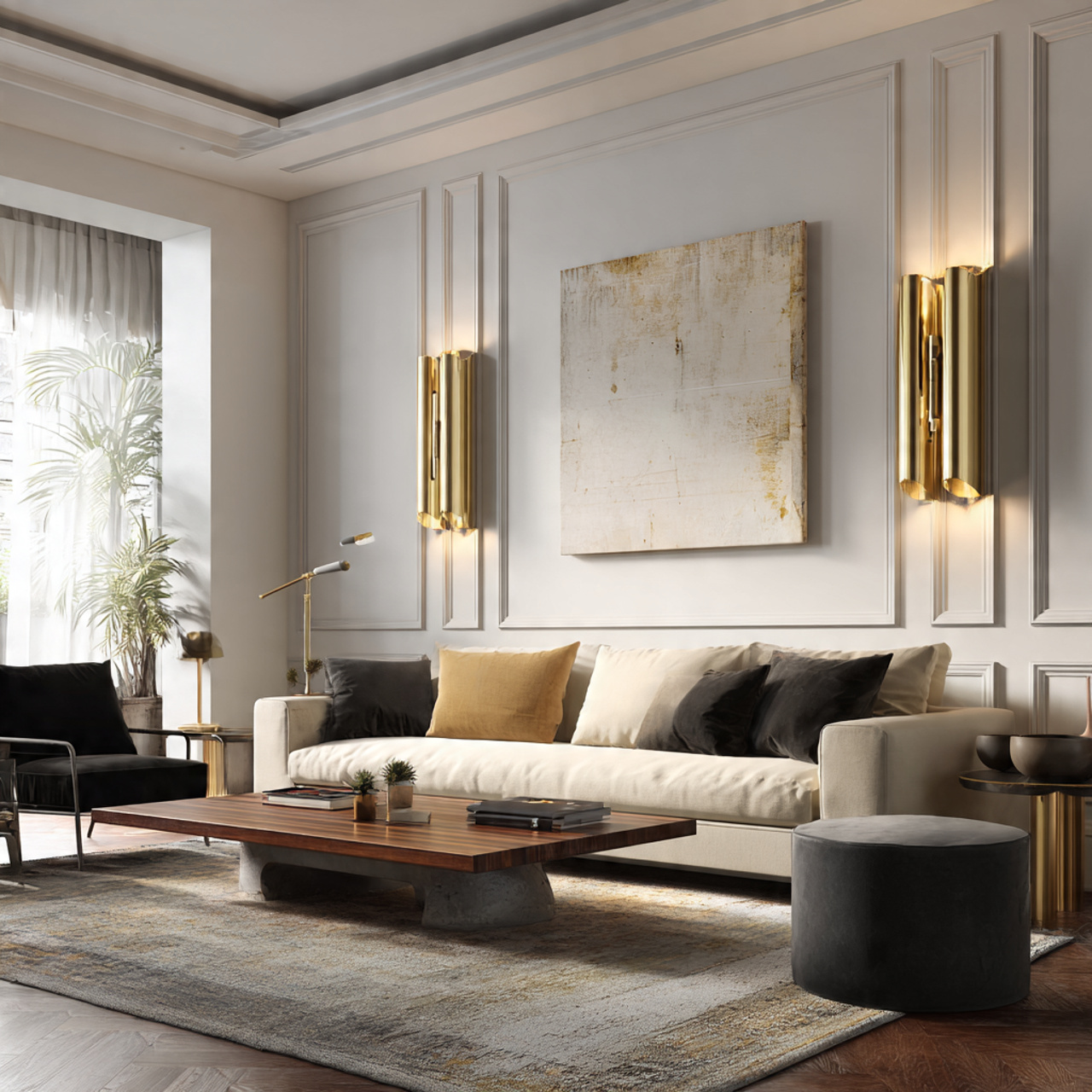
Warm wall sconces glow gently beside the sofa, casting soft light across the wall. The atmosphere feels calm, similar to a relaxed hotel lounge. The lighting adds comfort without overwhelming the room.
Wall sconces work well because they introduce lighting at eye level. This reduces harsh overhead brightness and creates a softer environment. Designers often use this approach to create cozy layered lighting.
Install sconces beside artwork, seating areas, or fireplaces. Choose warm toned bulbs to maintain a relaxed feel. Even one pair of sconces can change the mood of the space.
Tip: Position wall sconces slightly above eye level for the most flattering glow.
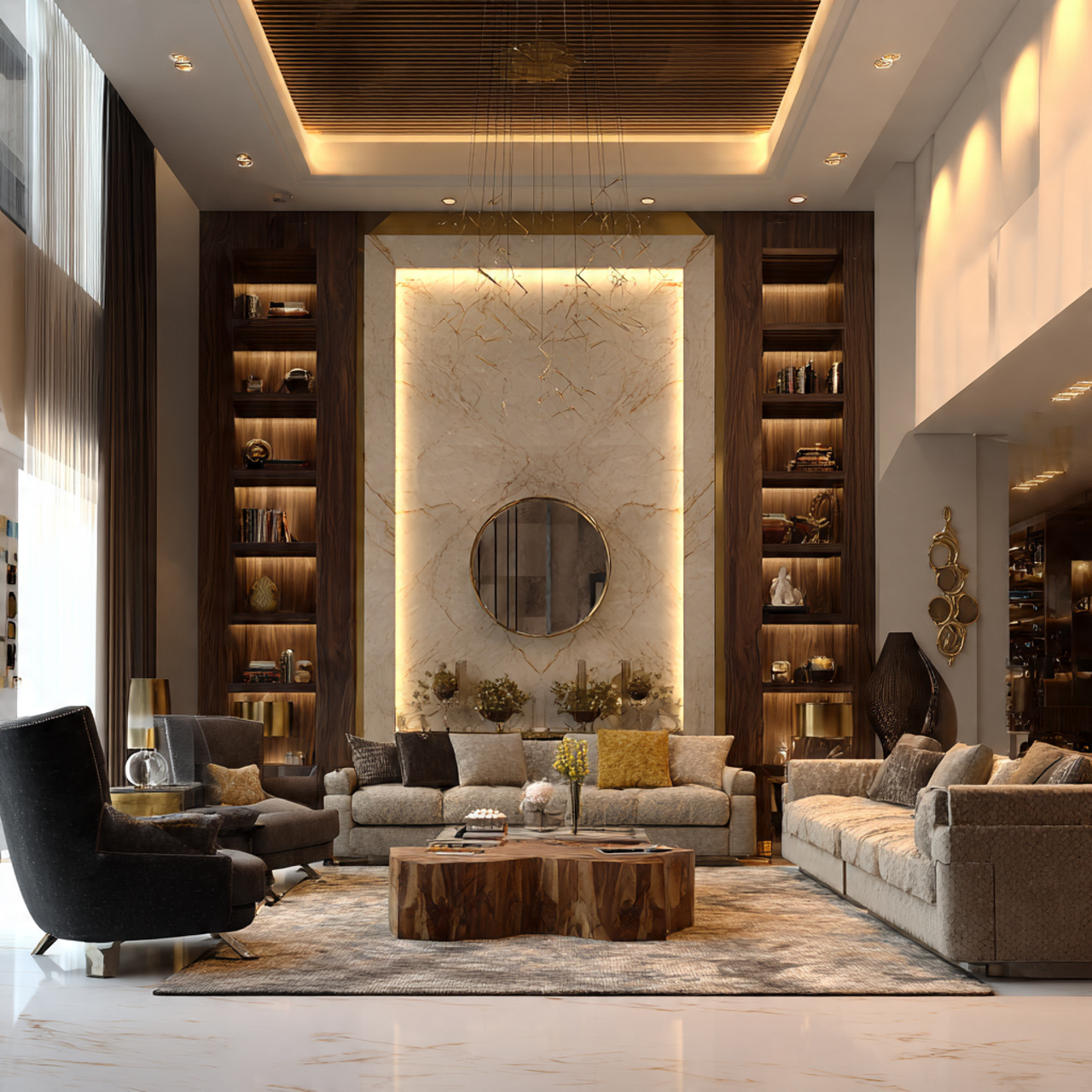
Cove Ceiling Living Room Lighting for a Soft Modern Glow
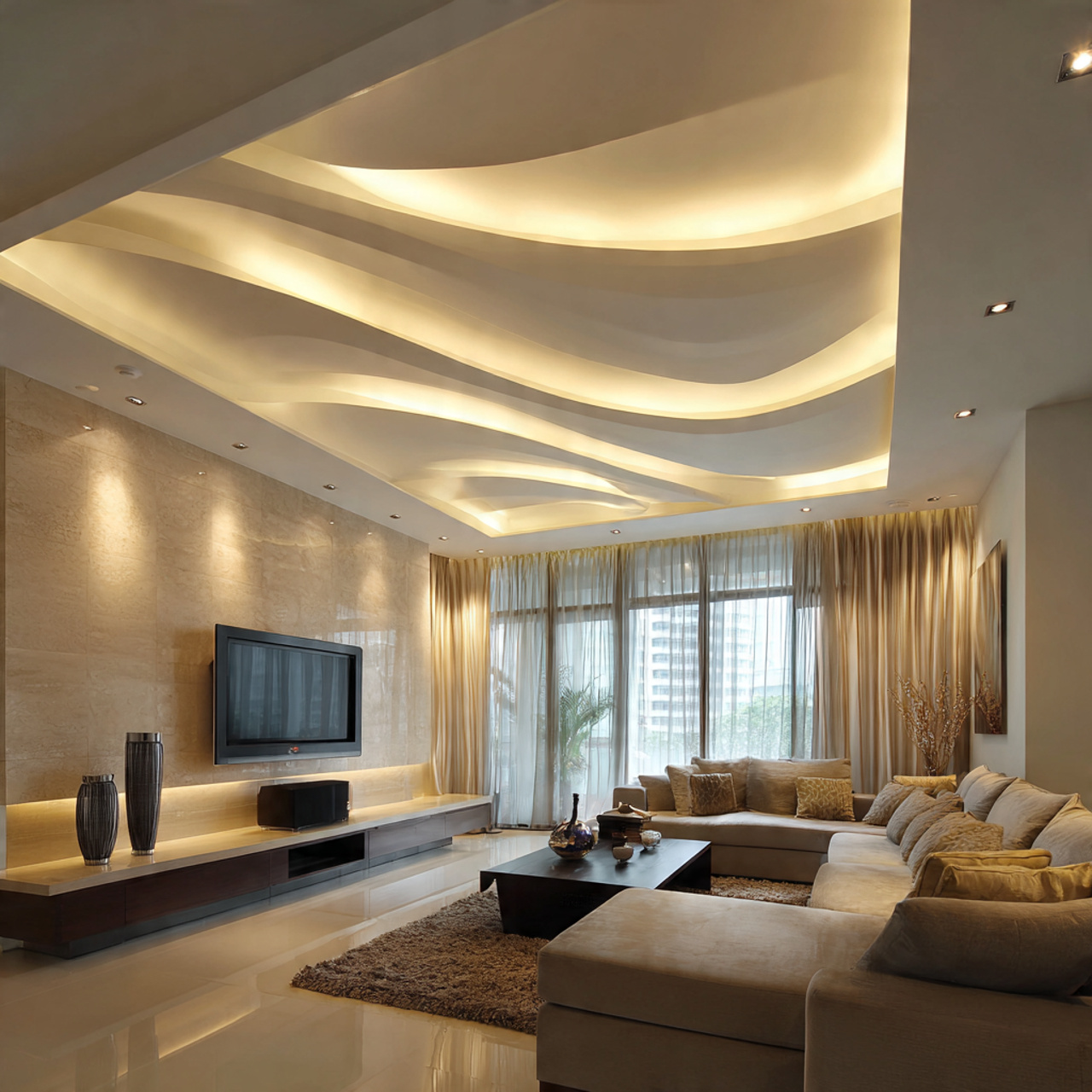
Hidden lighting along the ceiling creates a gentle glow that spreads across the room. The light reflects softly off walls and creates a calm atmosphere. The ceiling appears higher and the room feels more spacious.
Cove lighting works because it creates indirect illumination. Instead of bright downward light, the glow feels soft and balanced. This technique adds modern elegance without clutter.
Install LED strips along ceiling edges or recessed areas. Choose warm lighting to maintain comfort. This subtle addition transforms the overall mood of the living room.
Tip: Keep brightness soft to create a relaxed evening atmosphere.
Floor Lamp Corner Lighting for Cozy Reading Moments
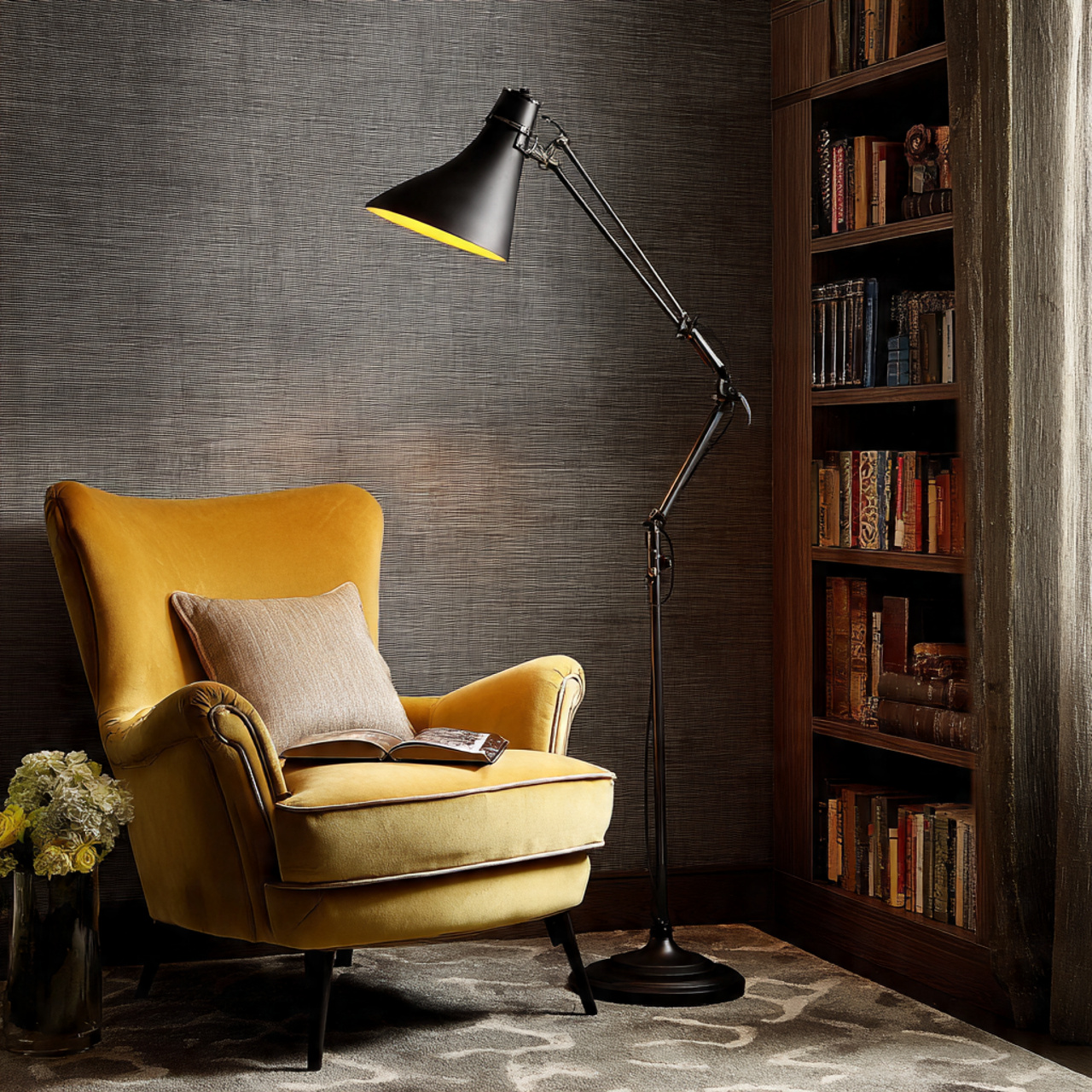
A tall floor lamp beside an accent chair creates a warm and inviting corner. The light highlights soft textures like throws and cushions. The space becomes perfect for quiet reading or relaxation.
Corner lighting works because it fills empty areas and prevents dark spots. It also adds warmth to the room without needing additional ceiling lights. Many living rooms feel more comfortable once corners are softly illuminated.
Place a floor lamp near unused corners or beside seating areas. Choose fabric shades to diffuse light gently. This creates a cozy and visually pleasing setup.
Tip: Position floor lamps slightly behind seating for softer light.
Table Lamp Styling That Creates Soft Evening Comfort
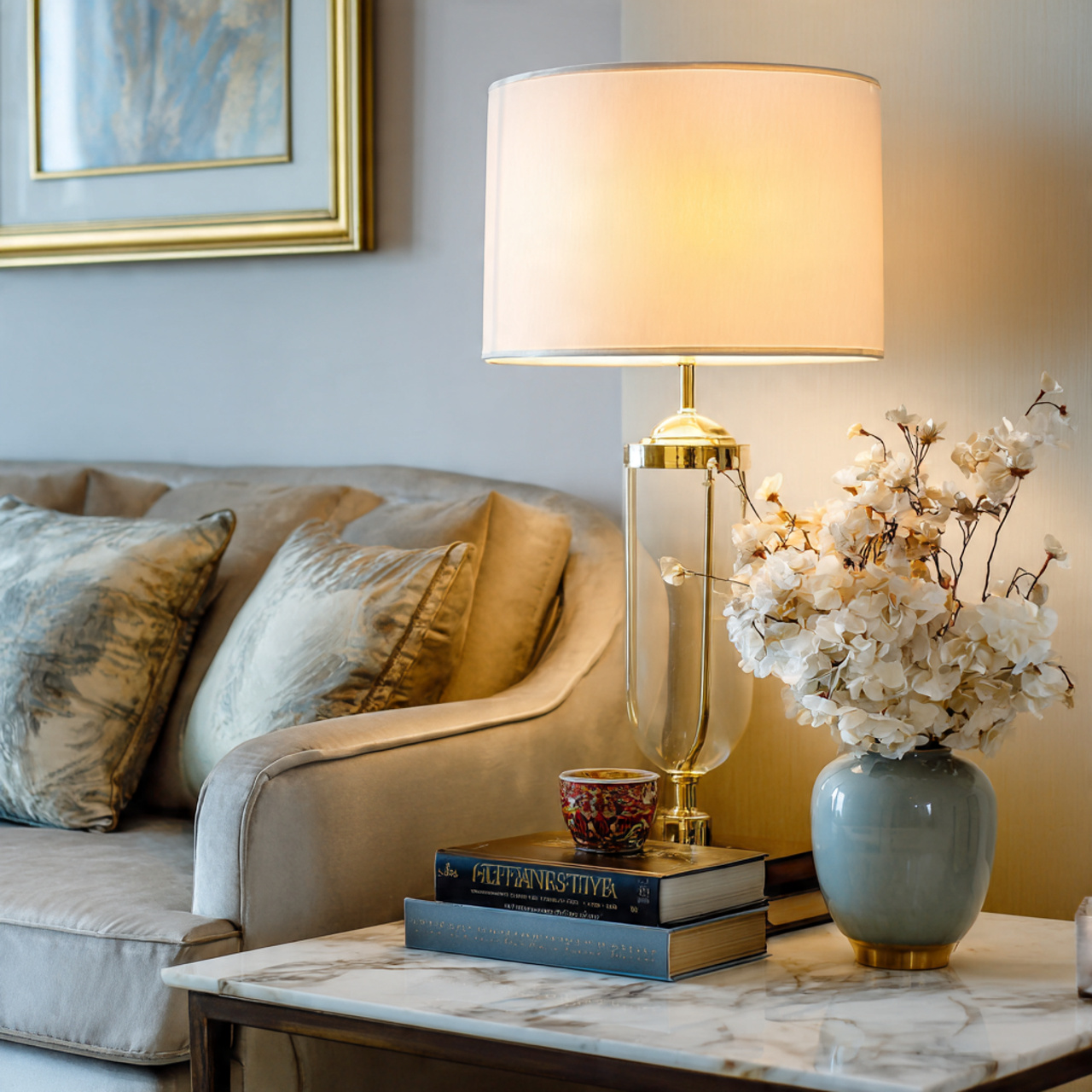
A table lamp on a side table casts a gentle glow across the sofa. The warm lighting softens shadows and makes the room feel calm. Even small lamps can shift the entire atmosphere.
Table lamps work because they add warmth at a lower level. This balances overhead lighting and creates layered comfort. In real homes, this often feels more relaxing during evening hours.
Place table lamps on side tables, shelves, or console tables. Choose warm toned shades for softer lighting. Pairing lamps creates a balanced and cohesive look.
Tip: Use two lamps across the room to create visual balance.
Pendant Living Room Lighting Over Coffee Table for Designer Style
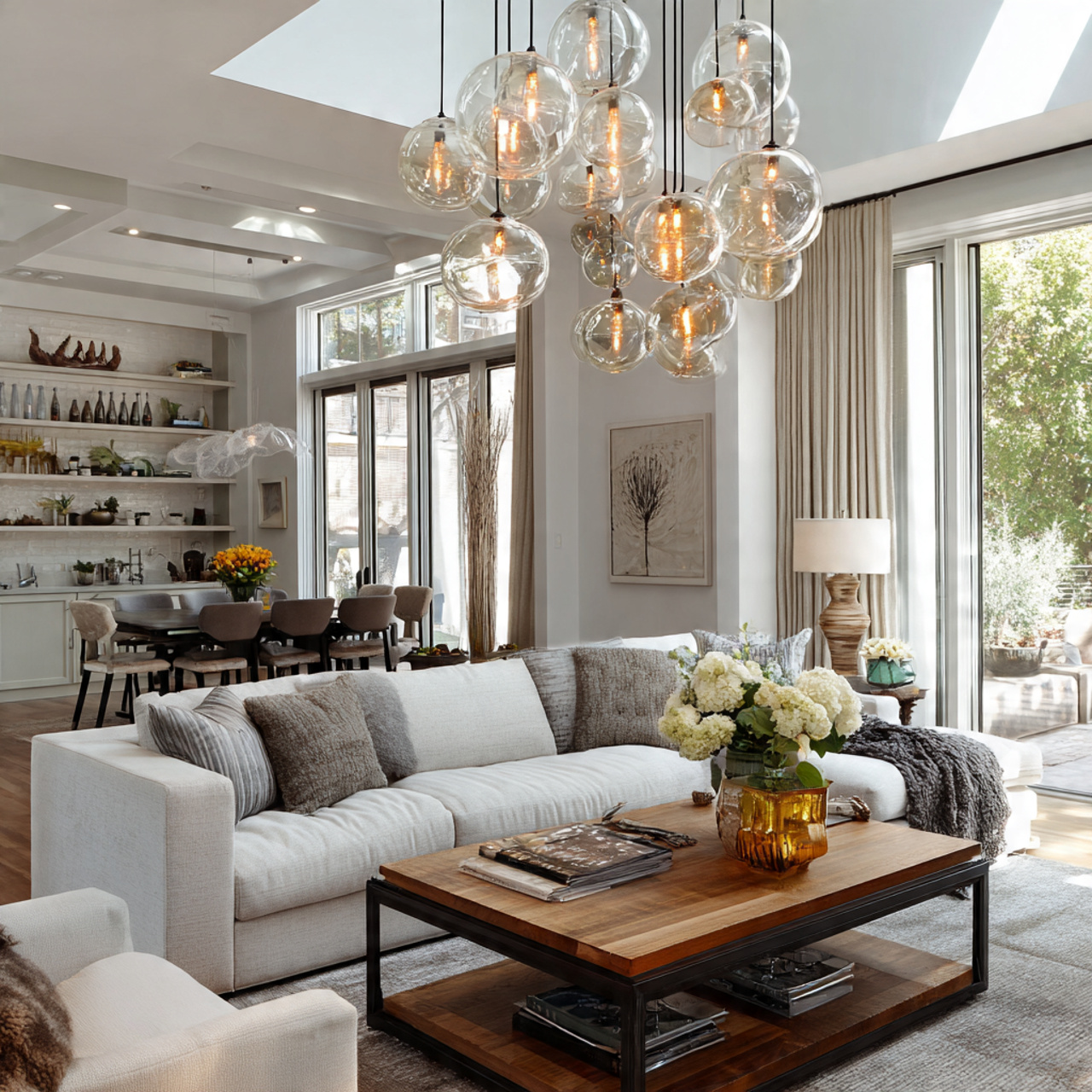
A pendant light above the coffee table defines the seating area. The glow highlights decor pieces and creates a styled focal point. The room feels more intentional and polished.
Pendant lighting works because it focuses light on the center of the space. It also adds vertical interest and depth. This technique is common in modern interiors.
Choose adjustable pendant lighting for flexibility. Position it high enough to maintain clear sightlines. This creates a stylish and functional lighting setup.
Tip: Choose simple pendant designs to maintain a clean modern look.
Indirect LED Living Room Lighting Behind the TV Wall for a Soft Ambient Glow
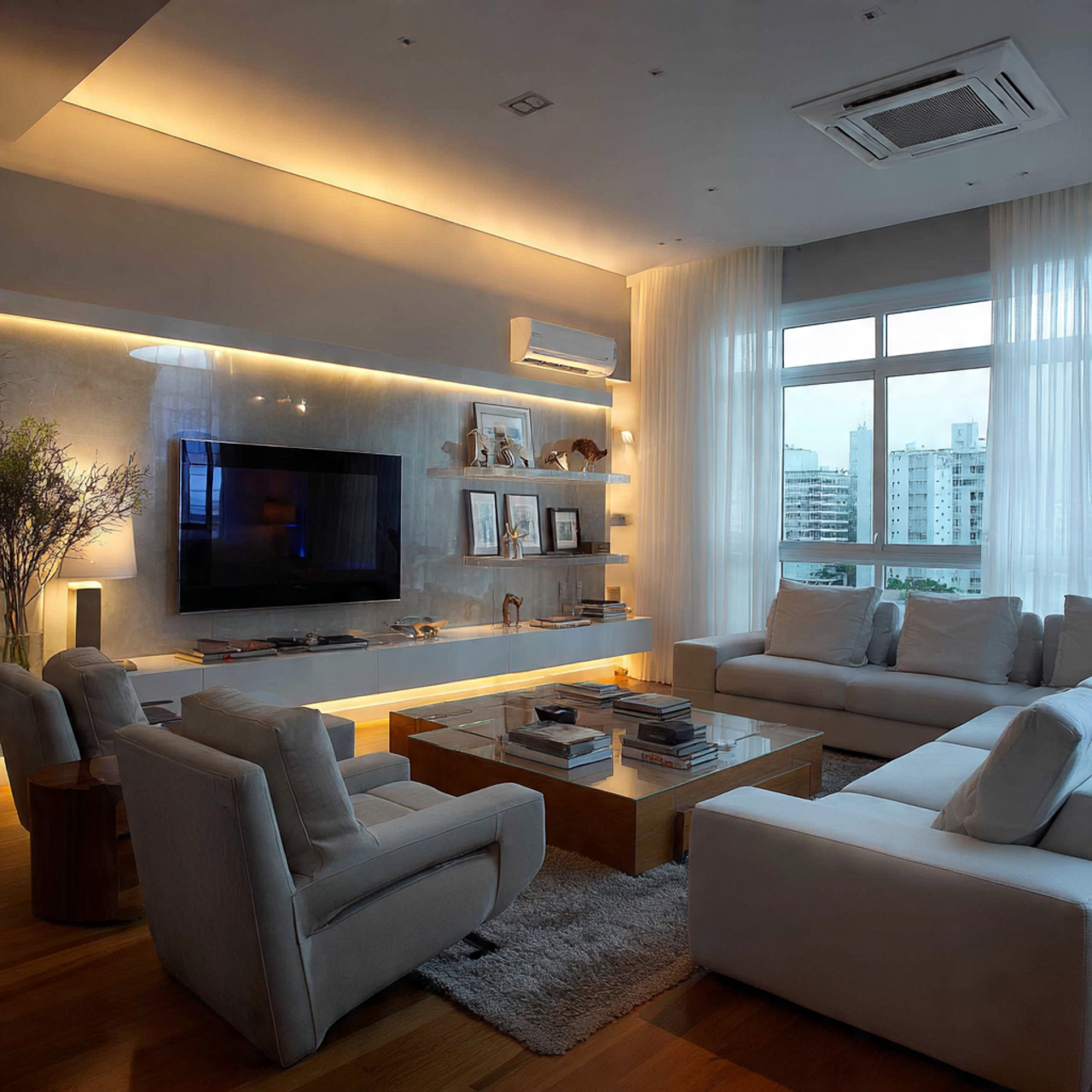
A gentle glow appears behind the television wall, creating a soft halo that spreads across the surrounding area. The light reduces contrast between the screen and the room, making evening viewing feel more relaxed. The entire living room takes on a calm and modern atmosphere.
Indirect lighting works because it softens harsh brightness and creates depth. Instead of focusing light directly into the room, the glow reflects off surfaces and feels more comfortable. This approach is especially effective in modern living rooms.
Install LED strips behind the TV panel or wall unit. Choose warm or neutral tones to maintain a cozy feel. This subtle lighting instantly makes the living room feel more refined.
Tip: Keep LED brightness low to avoid distracting from the television.
Spotlight Ceiling Living Room Lighting for a Clean and Modern Living Room
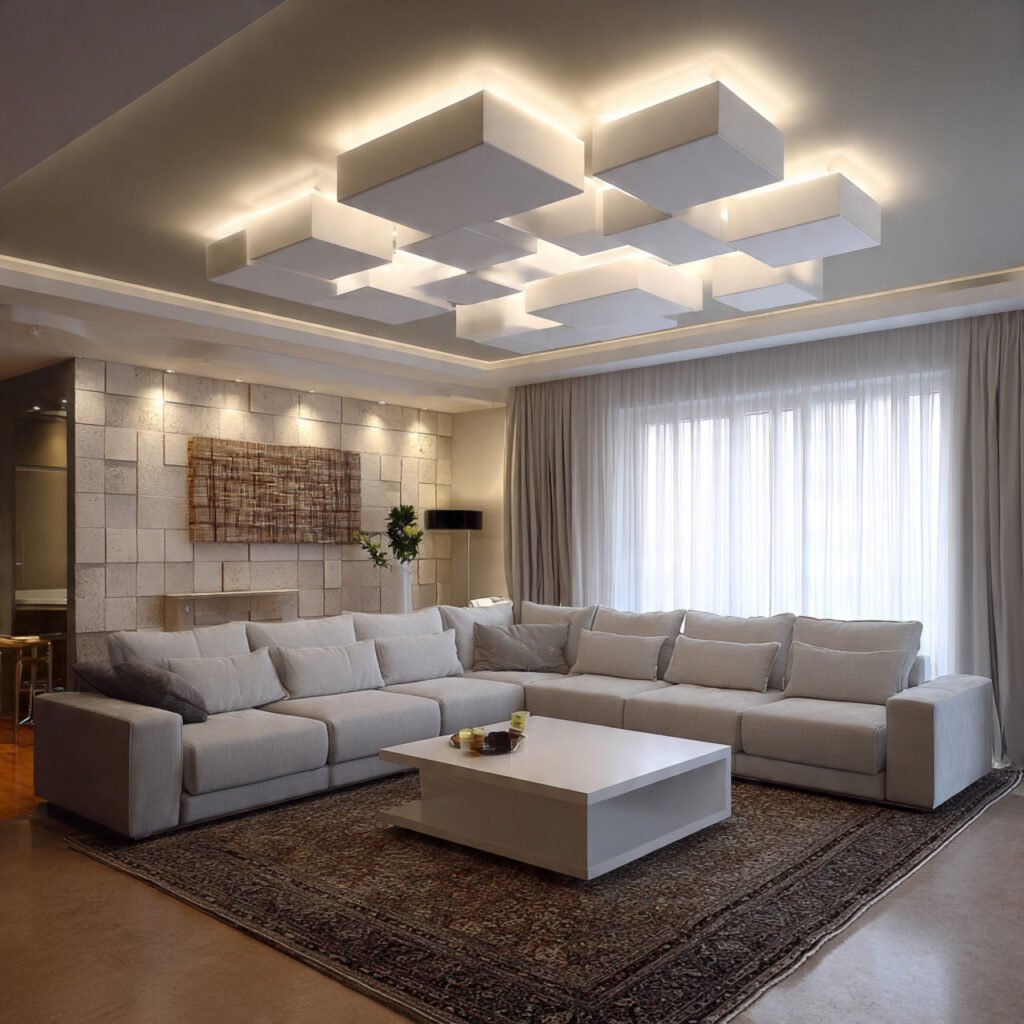
Small ceiling spotlights cast gentle pools of light across furniture and decor. The lighting highlights textures on rugs, cushions, and wall art. The room feels bright yet controlled.
Spotlights work because they allow targeted illumination instead of general brightness. This creates visual interest and reduces flat lighting. Many modern living rooms use this technique for a clean and polished look.
Install recessed spotlights across the ceiling with balanced spacing. Angle them toward seating or artwork for better effect. This creates a layered and visually interesting lighting plan.
Tip: Use dimmable spotlights to adjust brightness throughout the day.
Accent Living Room Lighting That Highlights Artwork and Wall Decor
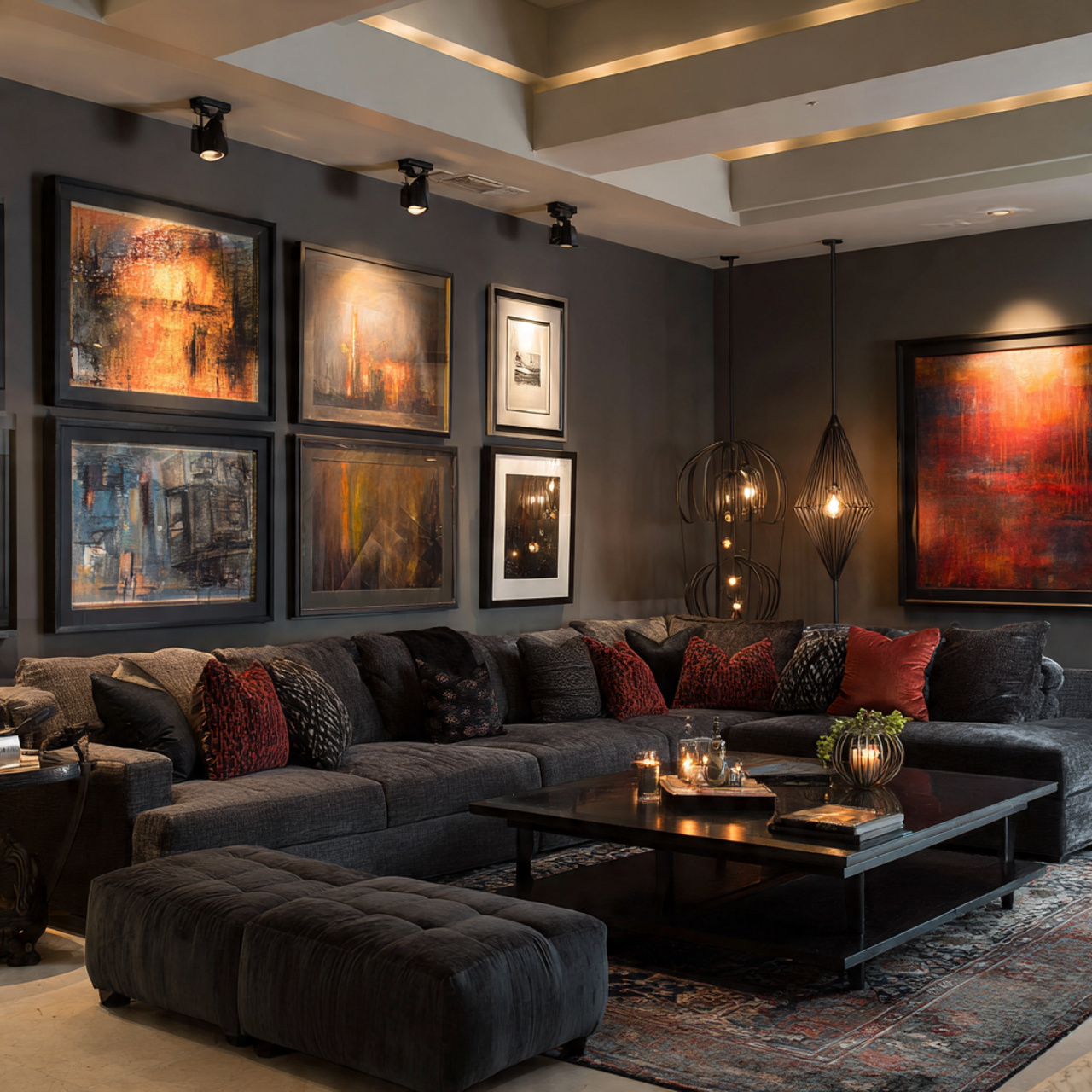
Soft lighting shines gently across framed artwork and decorative shelves. The glow draws attention to textures and colors on the wall. The living room feels curated and thoughtfully styled.
Accent lighting works because it creates focal points and adds depth. Instead of lighting everything equally, certain areas stand out naturally. This approach makes the space feel more intentional.
Use small picture lights, mini spotlights, or shelf lighting. Position lights above or beside decor elements. This creates a gallery style atmosphere.
Tip: Focus accent lighting on one or two areas to avoid visual clutter.
Minimalist Recessed Lighting for Low Ceiling Living Rooms
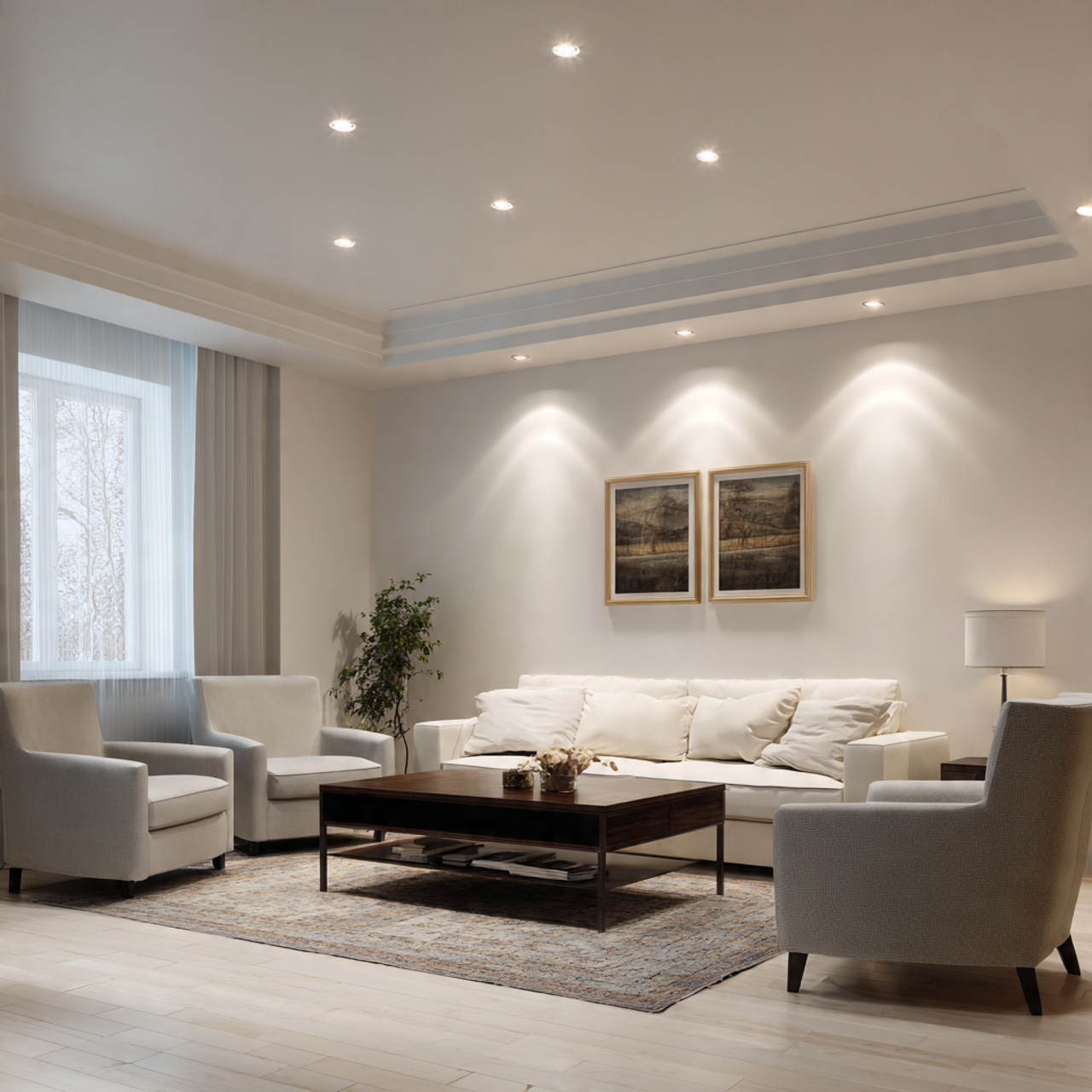
Subtle recessed lights blend into the ceiling and create even illumination. The room feels open and uncluttered, especially in smaller spaces. The lighting feels clean and modern.
Recessed lighting works well in low ceilings because fixtures stay hidden. This keeps the ceiling visually simple and helps the room feel taller. Many small living rooms benefit from this approach.
Install evenly spaced recessed lights with warm bulbs. Combine them with floor or table lamps for layered lighting. This keeps the room balanced and comfortable.
Tip: Avoid too many recessed lights to maintain a soft atmosphere.
String Lights That Create a Cozy Apartment Living Room
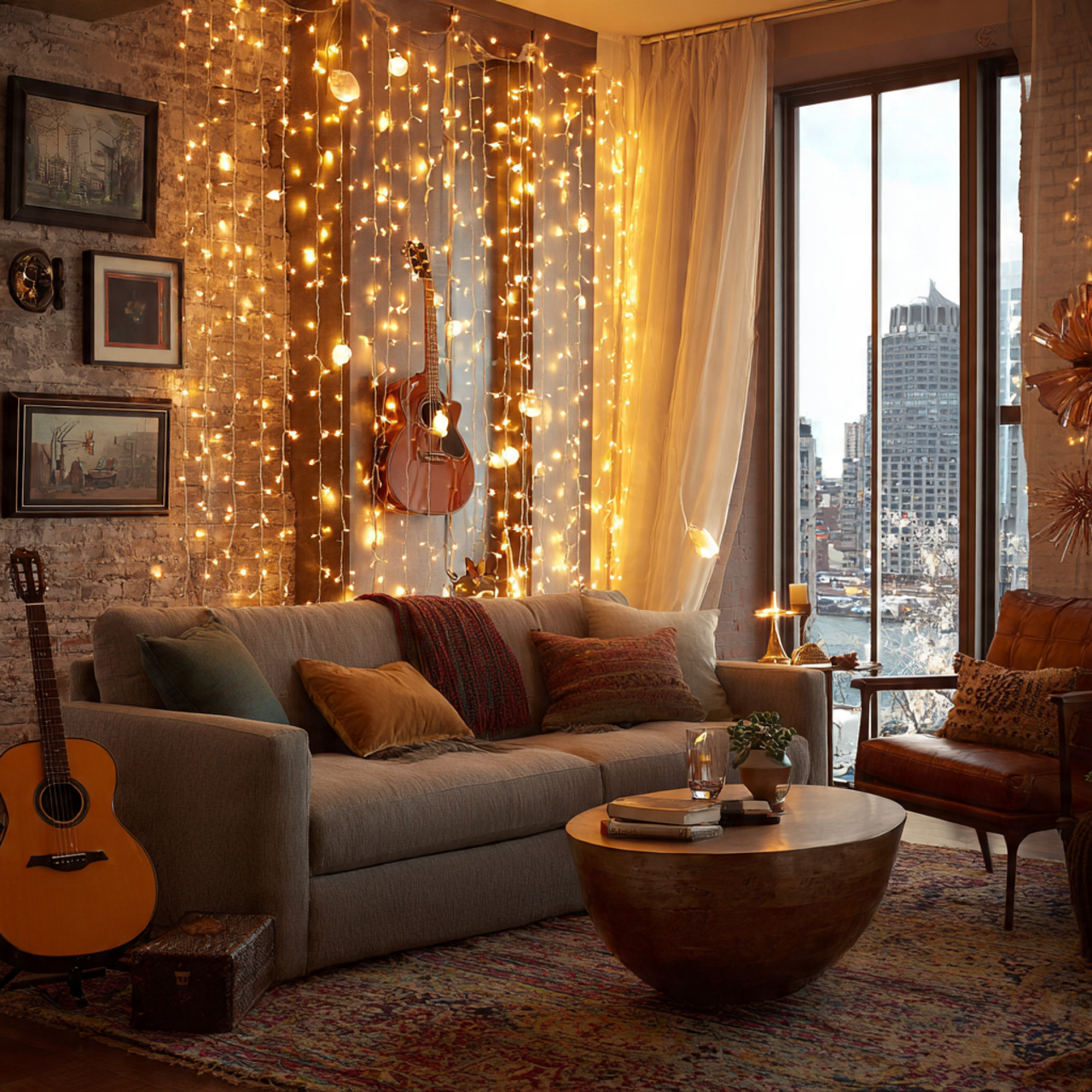
Soft string lights drape gently along a wall or shelf, creating a warm glow. The lighting feels relaxed and welcoming, especially during evening hours. The living room instantly becomes more comfortable.
String lights work because they introduce gentle ambient lighting. They also add texture and personality without heavy fixtures. Many apartment living rooms benefit from this flexible option.
Hang string lights along shelves, curtain rods, or walls. Choose warm white tones for a cozy look. This simple addition creates a relaxed atmosphere.
Tip: Keep string lights minimal to maintain a clean aesthetic.
Floor Uplighting That Brightens Dark Living Rooms
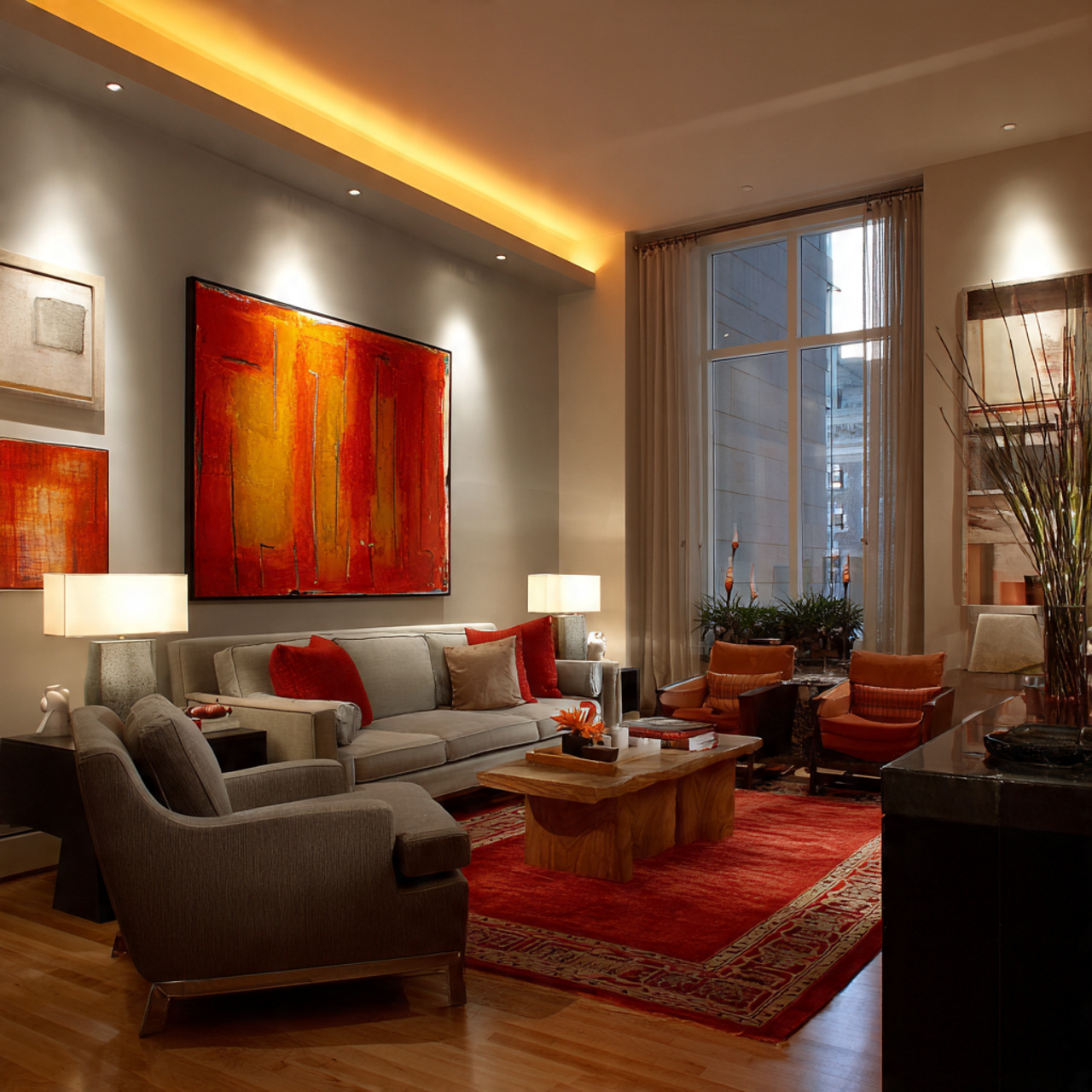
A subtle uplight placed near the wall creates a soft glow that spreads upward. The lighting brightens dark corners and makes the room feel more open. Shadows soften and the space becomes more inviting.
Uplighting works because it reflects light off walls and ceilings. This increases brightness without harsh direct lighting. It is especially helpful in darker living rooms.
Place uplights behind furniture or in corners. Choose warm tones to keep the atmosphere comfortable. This simple change improves lighting balance.
Tip: Position uplights behind plants or decor for softer diffusion.
Visit Also: Home Decor
Console Table Lighting Behind Sofa for Soft Layered Depth
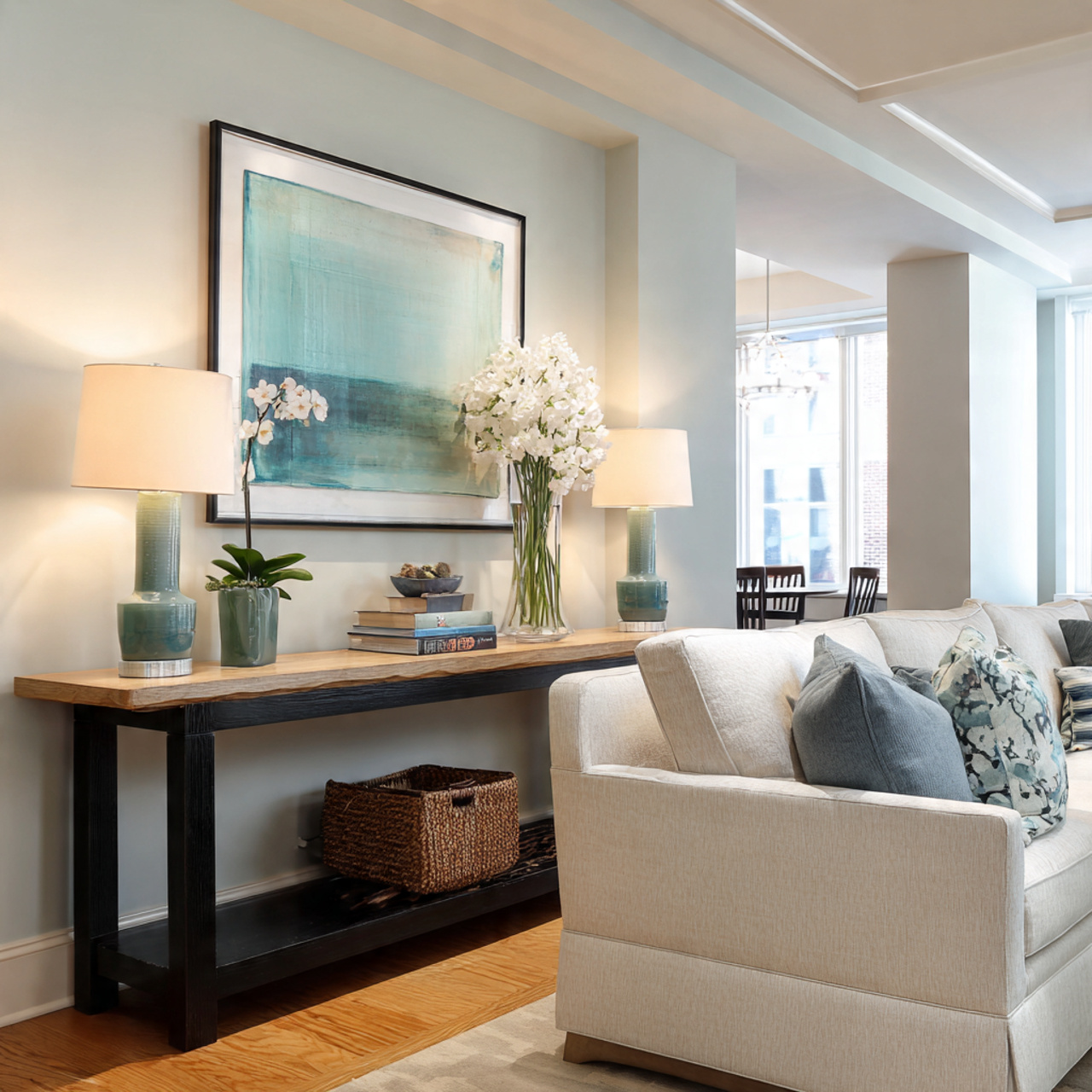
A table lamp placed behind the sofa casts a gentle glow across the seating area. The lighting adds depth and makes the space feel layered. The room feels more relaxed during evening hours.
Console lighting works because it introduces light from behind seating. This reduces shadows and balances brightness across the room. Many designers use this technique for layered lighting.
Place a console table behind the sofa and add a warm table lamp. Pair with decorative elements like books or plants. This creates a soft and inviting atmosphere.
Tip: Use a medium height lamp to create balanced lighting.
A Real Living Room Lighting Layout That Feels Warm and Balanced
Soft light from a floor lamp fills one corner while a warm table lamp glows beside the sofa. A subtle ceiling light keeps the room gently illuminated without feeling harsh. In the evening, the layered lighting creates a calm atmosphere where textures like linen cushions and wood finishes feel warmer and more inviting.
The seating area sits beneath a soft overhead glow while accent lighting highlights artwork along one wall. A console lamp behind the sofa adds depth and prevents dark areas. The layout feels balanced, comfortable, and naturally welcoming, making the living room suitable for quiet evenings, casual gatherings, and relaxed everyday living.
Color And Material Combinations That Enhance Living Room Lighting
Warm White (#F5F3EF)
Works beautifully on walls and ceilings to reflect soft lighting. Creates a calm and airy mood that feels open and inviting. Pairs naturally with light oak wood, linen fabrics, and soft neutral upholstery.
Soft Beige (#E8E2D8)
Works well on large furniture pieces and area rugs. Creates a warm and relaxed atmosphere that supports layered lighting. Pairs nicely with warm wood tones, woven textures, and matte ceramic decor.
Muted Greige (#D6D2CC)
Works on accent walls, sofas, or cabinetry for subtle depth. Creates a balanced and modern mood without feeling cold. Pairs well with brushed brass lighting, textured fabrics, and natural wood.
Warm Oak Wood (#C8A97E)
Works in furniture, shelves, and coffee tables to enhance warm lighting. Creates a cozy and grounded feeling that softens the room. Pairs naturally with warm white walls, soft fabrics, and matte metal lighting fixtures.
Room Size And Living Room Lighting Guide For Living Room Comfort
Small Living Rooms
Use layered lighting with floor lamps and table lamps to prevent harsh shadows. Soft warm lighting helps small spaces feel more open and comfortable.
Large Living Rooms
Divide the room into lighting zones such as seating, reading, and accent areas. Warm lighting keeps large spaces from feeling cold or empty.
Low Ceiling Living Rooms
Choose recessed lighting or flush mount fixtures to keep the ceiling visually open. Avoid heavy hanging lights that make the room feel smaller.
Dark Living Rooms
Use indirect lighting and floor uplights to bounce light across walls and ceilings. Light colored walls and warm bulbs help brighten the entire space.
Open Concept Living Rooms
Use pendant lighting or lamps to define each seating area naturally. Layered lighting helps create separation without adding walls.
Common Living Room Lighting Mistakes To Avoid
Using Only One Overhead Light
Many living rooms rely only on a single ceiling fixture. This creates harsh shadows and makes the room feel flat and uncomfortable.
Add layered lighting using lamps and accent lighting. Multiple light sources create warmth and balance.
Choosing Bulbs That Are Too Bright Or Too Cool
Cool toned bulbs are often selected for brightness without considering comfort. This makes the living room feel cold and less inviting.
Switch to warm bulbs between 2700K and 3000K. Warm lighting creates a relaxed and cozy atmosphere.
Ignoring Dark Corners In The Room
Corners are often left unlit because they seem unimportant. Over time, these dark areas make the room feel smaller and uneven.
Place floor lamps or small accent lighting in corners. This improves balance and visual comfort.
Hanging Lights Too High Or Too Low
Lighting placement is often guessed without considering scale. Poor placement creates uneven lighting and visual imbalance.
Position lighting according to seating and room layout. Balanced placement improves both function and appearance.
Frequently Asked Questions About Living Room Lighting
How do I choose the right living room lighting?
Start by thinking about how the living room is used throughout the day. Layering ceiling lights, lamps, and accent lighting creates flexibility and makes the space feel more comfortable. Warm lighting usually works best for creating a relaxed and inviting atmosphere.
What is the best lighting for a small living room?
Soft layered lighting works best in smaller spaces. Floor lamps, table lamps, and recessed lighting help prevent harsh shadows and make the room feel larger. Light colored walls also help reflect light and improve brightness.
Should living room lighting be warm or cool?
Warm lighting is usually more comfortable for living rooms. It creates a relaxed environment and makes textures and furniture feel softer. Cool lighting can feel harsh and is typically better suited for task focused areas.
How can I brighten a dark living room?
Use layered lighting such as floor lamps, wall lighting, and indirect LED lights. Light colored walls and reflective surfaces also help distribute light. Even small lighting additions can significantly improve brightness.
How many lights should a living room have?
Most living rooms benefit from three to five light sources. Combining ceiling lighting with lamps and accent lighting creates better balance. Multiple light sources also allow the space to adapt throughout the day.
Living Room Lighting That Creates Comfort And Style
Living room lighting plays a major role in shaping how a space feels, from soft morning brightness to relaxed evening comfort. When layered thoughtfully, living room lighting can transform even a simple layout into a warm and inviting environment that supports everyday living.
Start by adding one additional light source such as a floor lamp or table lamp and observe how the atmosphere changes. Small lighting adjustments often create the biggest impact, helping the living room feel more balanced, comfortable, and naturally welcoming over time.