Living Room Curtain: 27 Design Ideas for Stunning Drapes
Living room curtain selection is one of the most impactful choices you can make when decorating your main social space. They not only dictate the amount of natural light entering your home but also add crucial texture, color, and verticality that completes the aesthetic vision of your design, making the room feel instantly finished and polished.
Choosing the right window treatment involves balancing practical needs like privacy, light control, and insulation with style considerations such as fabric type, pattern, and header style. This comprehensive guide will break down everything you need to know, from measuring accurately and understanding different functional fabrics to picking the perfect complementary hardware for your beloved space.
Mastering Your Living Room Curtain Choices
Living Room Curtain styles are constantly evolving, driven by new fabric technologies and shifting interior design trends, but the core principles of excellent design remain timeless. Understanding the different functionalities—such as light filtering, noise reduction, and thermal insulation—will help you narrow down the perfect options before diving into the endless world of colors and captivating patterns.
The key to a cohesive and professional look is ensuring that your chosen living room curtains complement your existing furniture and wall colors without overpowering them, acting as a supportive backdrop rather than a visual distraction. We will explore 27 specific ideas to help you move beyond basic, temporary panels and truly elevate your entire living area’s design and functionality.
Blackout Curtains for Maximum Light Control

Blackout curtains are primarily designed for functionality, offering the highest level of light blocking and privacy available. These are essential for home theaters or for anyone whose living room doubles as a sleeping space for guests, ensuring no stray light gets through even during the brightest afternoon hours.
Beyond just blocking light, modern blackout fabric also offers excellent thermal properties, helping to insulate your windows and reduce energy costs by keeping cold air out in the winter and heat out in the summer. When selecting this option for your living room curtain setup, look for panels that are wide enough to fully overlap the window frame to prevent light leaks around the edges.
Sheer Panels for Gentle Daylighting

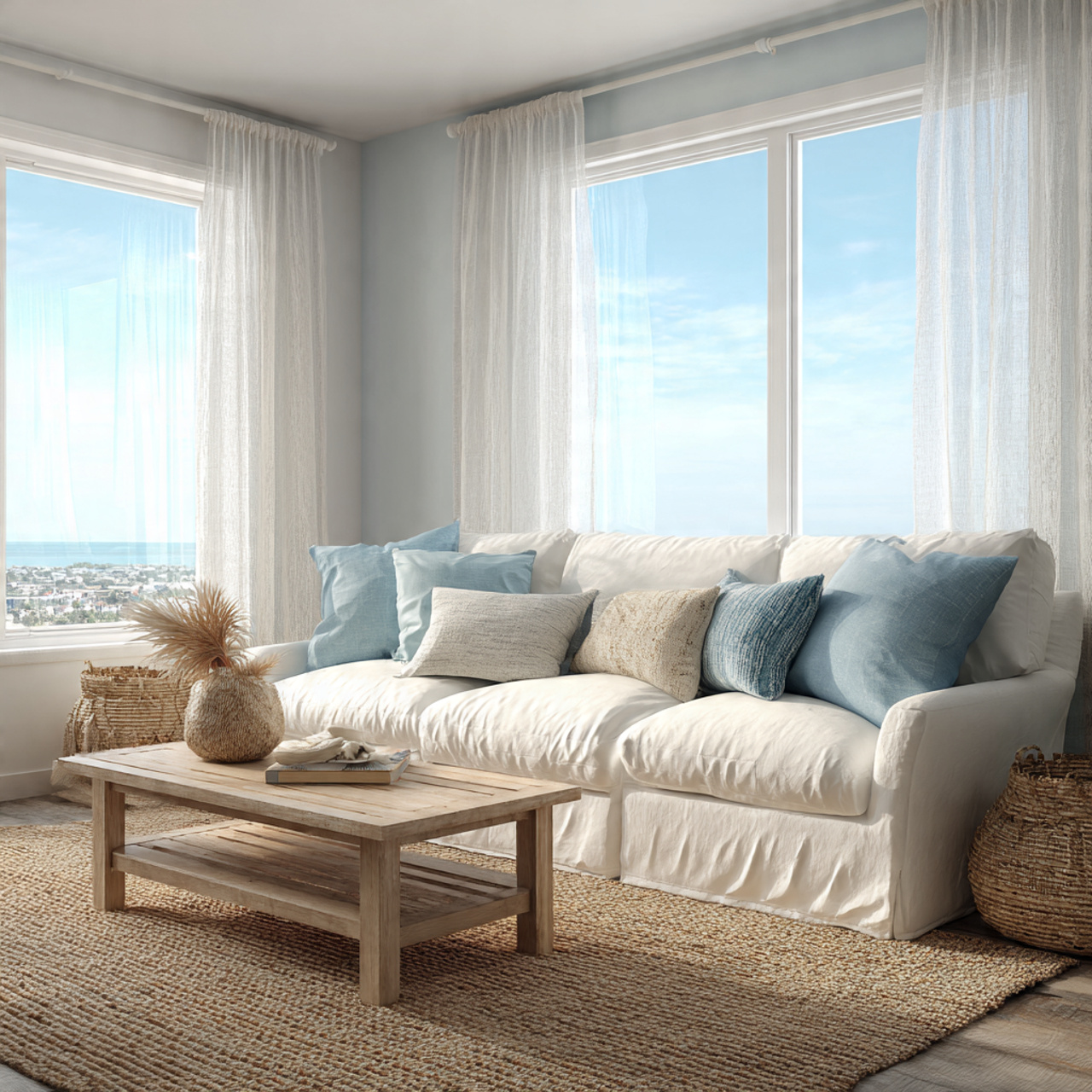
Sheer panels provide a delicate, ethereal layer that softens incoming sunlight without completely blocking it out, creating a warm and diffused glow throughout the room. They maintain a light and airy feel, making them especially suitable for smaller living rooms where heavy fabrics could feel overwhelming or cramped.
These lightweight living room curtains are perfect for adding daytime privacy, as they obscure the view into your home from the street while still allowing you to enjoy the view outside. They are often used as the first layer in a double-rod setup, allowing you to easily adjust the room’s ambience from bright and open to cozy and private.
Thermal Drapes for Energy Efficiency

Thermal drapes are a smart investment, particularly in climates with extreme temperature fluctuations, as they are constructed with layers of insulating material, often a dense foam or flannel backing. These drapes are heavier than standard panels and work hard to maintain a consistent internal temperature, significantly reducing the strain on your heating and cooling systems.
While thermal drapes are incredibly practical, modern options don’t compromise on style; they come in a variety of textures and finishes, from subtle weaves to rich velvets. Choosing a thermal living room curtain is a practical way to combine high performance with elegance, ensuring your space is comfortable regardless of the weather outside.
Measuring Curtain Width and Fullness

Correctly measuring the width of your curtains is crucial to achieving that luxurious, full look rather than a flat, stretched appearance. A general rule of thumb is that the total curtain width should be 2 to 2.5 times the width of your window frame or curtain rod to create beautiful folds and gathers when the panels are closed.
For example, if your rod measures 80 inches, you would need curtain panels totaling 160 to 200 inches in width. Remember to measure the rod, not the window itself, and always buy panels wider than you think you need. Proper fullness is what separates a custom-looking window treatment from a basic, store-bought one.
Choosing the Ideal Curtain Length

The length of your living room curtain dramatically influences the room’s perceived height and formality. For a formal, traditional look, drapes should “puddle” slightly on the floor, meaning they extend about 2–3 inches past the floor, creating a romantic cascade of fabric.
For a contemporary, tailored, and clean look, the curtains should just “kiss” the floor, meaning the hemline is precisely one-half inch above the floor. Avoid the common mistake of the “high-water” look, where the curtains hover several inches above the ground, as this makes the room look cheap and unfinished.
Best Curtain Fabrics for Living Rooms

The fabric you select for your living room curtain determines its durability, opacity, and how it drapes. Linen is a popular choice for a breezy, casual elegance, offering a crisp look that softens over time. Meanwhile, cotton is versatile, easy to clean, and provides a crisp drape, suitable for nearly any decor style.
For a more dramatic or formal living space, velvet or silk panels are excellent choices, offering a rich texture and natural sheen that catches the light beautifully. If your living room receives intense direct sunlight, opt for synthetic blends like polyester, which are more resistant to fading and sun damage than natural fibers.
Selecting the Right Curtain Rod Material

The curtain rod is the often-overlooked hardware that pulls the entire living room curtain design together, and its material should match the room’s existing metal finishes. For modern or industrial spaces, sleek matte black or brushed nickel rods provide a clean, contemporary finish.
In traditional or farmhouse-style living rooms, antique brass, oil-rubbed bronze, or warm wood rods are much more appropriate to complete the aesthetic. Ensure the rod diameter is thick enough to support the weight of your chosen fabric; heavy drapes require a rod of at least 1.5 inches in diameter to prevent bowing in the middle.
Installation Tips for Higher Curtains

One of the oldest tricks interior designers use is installing the curtain rod far higher and wider than the actual window frame to create the illusion of larger windows and taller ceilings. Mounting the rod approximately 4 to 6 inches above the window frame can instantly elevate the room’s vertical lines.
Extending the rod 8 to 12 inches beyond the window frame on each side allows the fully open curtains to rest on the wall, maximizing the natural light entering the room. This strategic placement ensures that the fabric is framing the view, not blocking it, which is especially important for maximizing the perceived spaciousness of a smaller living area.
Layering Sheer and Solid Curtains

Layering window treatments involves using a double rod to combine two different types of living room curtain panels: a sheer layer closest to the glass and a decorative, solid, or blackout panel on the outer rod. This gives you maximum flexibility over light control and privacy throughout the day and evening.
During the daytime, you can pull back the heavy outer panels and let the diffused light filter through the sheers, providing a bright, but private, setting. At night, drawing the heavy outer panels provides total darkness and insulation, showcasing the sophisticated depth that layered window treatments add to your design.
Bohemian Style Window Treatments

Bohemian design embraces texture, natural materials, and an eclectic, layered approach, and your living room curtain should reflect this free-spirited aesthetic. Look for materials like macrame, textured cotton, or heavily woven linen in natural, earthy tones such as cream, terracotta, or deep olive green.
Instead of a standard rod, a thick wooden dowel or even a piece of reclaimed driftwood can be used to hold the panels, reinforcing the organic feel of the space. Consider adding decorative tassels, fringe, or subtle pom-pom trim to the edges of the curtains to introduce playful, handmade elements characteristic of the Boho look.
Modern Minimalist Curtain Ideas

For a modern minimalist living room, the curtains should provide function without adding unnecessary visual clutter, maintaining the clean lines that define this style. Choose plain, untextured fabrics like crisp linen or polyester in neutral tones like white, light gray, or true beige.
The hardware should be discreet; opt for ceiling-mounted tracks or barely-there rods in a subtle matte finish that blends into the wall color. The key is to select a simple header style, such as a plain rod pocket or a simple grommet, ensuring the curtain hangs straight and smooth from ceiling to floor.
Classic Traditional Drapes

Classic traditional drapes are characterized by their richness, formal header styles, and use of heavy, often luxurious fabrics like velvet, damask, or silk blends. These living room curtains typically feature decorative elements such as tiebacks, tassels, and sometimes elaborate valances to emphasize their elegant design.
The preferred header style for this look is usually a French pleat or a pinch pleat, which creates tailored, permanent folds that stack neatly when opened. Choosing a rich jewel tone or a deep neutral with subtle texture, hung from a heavy decorative rod, cements the sophisticated and enduring feel of a traditional living space.
Patterned vs. Solid Color Curtains

Deciding between patterned and solid living room curtains depends largely on the existing furniture and rug choices in your space. If your sofa, rug, or accent chairs feature bold colors or busy patterns, a solid-colored curtain in a complementary neutral tone will anchor the room and provide visual rest.
Conversely, if your furniture is mostly solid and neutral, patterned curtains offer a wonderful opportunity to introduce visual interest, color, and personality to the vertical space. If you choose a pattern, ensure the scale of the design works with the room size—large patterns can overwhelm a small space, while tiny prints can disappear in a grand living room.
Curtain Colors for Small Spaces

In smaller living rooms, the goal of the curtain choice is to enhance the feeling of openness and space. The best way to achieve this is by selecting a curtain color that is only a few shades lighter or darker than the surrounding wall color, minimizing the visual contrast that can break up the wall line and make the room look chopped up.
Light, neutral colors such as white, cream, or pale gray are always effective, as they reflect light and help to visually push the walls outward. Choosing lightweight fabrics, like sheers or linen, also helps maintain an airy feel, making the entire space appear larger and less confined.
Motorized Smart Curtain Systems

Motorized smart living room curtains offer the ultimate convenience and a sleek, modern touch, allowing you to control your drapes via a remote, a mobile app, or even voice commands. These systems are fantastic for windows that are hard to reach, like those high up or behind large pieces of furniture.
Beyond the convenience, automation also enhances security and energy management; you can program the curtains to close automatically during the hottest part of the day to block heat, or to open and close on a schedule to simulate occupancy when you are away from home.
Cleaning and Maintenance for Drapes

Proper maintenance is essential for ensuring your living room curtains remain vibrant and dust-free for years. Most drapes benefit from a weekly or bi-weekly light vacuuming using an upholstery attachment to remove surface dust and prevent dirt from settling deep into the fibers.
For deep cleaning, always check the label: some fabrics are machine washable, but many higher-quality or pleated drapes are dry-clean only to preserve their shape and integrity. Never put delicate materials in a standard washing machine, as the agitation can cause irreversible damage or severe shrinkage.
Decorative Curtain Tiebacks and Holdbacks

Decorative tiebacks and holdbacks are functional accessories that also serve as powerful stylistic elements, helping to frame the window and add an extra layer of visual refinement. Tiebacks are fabric loops or cords that wrap around the gathered curtains, while holdbacks are decorative hooks or arms permanently mounted on the wall.
Choosing a metallic holdback in a finish that matches your curtain rod or using a braided rope tieback with tassels can dramatically change the look of your living room curtain. These items ensure the curtains are pulled cleanly off the window when open, maximizing light and the view outside.
Using Valances and Swags

Valances and swags are shorter, purely decorative window treatments mounted across the very top of the window frame to conceal the curtain hardware and add a touch of formality. Valances are straight, tailored fabric pieces, while swags feature dramatic, cascading folds and curves.
While less common in ultra-modern design, these elements are staples in traditional and maximalist living rooms, adding color and pattern at the top of the window. When paired with full-length living room curtains, they create a sophisticated, multi-layered look that speaks to classic elegance and tailored design.
Custom Versus Ready-Made Drapes

The choice between custom and ready-made living room curtains primarily comes down to budget, time, and the complexity of your window size. Ready-made panels are the most budget-friendly and quickest solution, available in standard sizes suitable for most windows.
However, custom drapes are meticulously tailored to your exact window dimensions, offering specialized fullness, unique fabrics, and perfect lengths that create a truly bespoke, high-end finish. While custom involves a larger investment and a longer wait time, the flawless fit is often worth it for grand or uniquely sized living room windows.
Curtains for Large Picture Windows

Large picture windows demand curtains that match their scale, which usually means opting for multiple, extra-wide panels or even continuous, custom-made sections that cover the entire wall. The primary challenge is managing the weight and movement of such large amounts of fabric.
For these expansive areas, consider installing a traverse rod or motorized system, which allows the heavy drapes to glide smoothly with minimal effort. The color should be carefully considered; a deep, rich color can frame the view dramatically, while a lighter neutral will keep the focus on the outdoor scenery.
Window Treatments for Sliding Glass Doors

Sliding glass doors present a unique challenge, as the living room curtain must not interfere with the door’s frequent movement and functionality. The best solution is often a continuous track system or a set of extra-wide, one-way draw curtains that stack neatly on the fixed side of the door.
Vertical blinds or panel track systems are also highly effective alternatives, as they move horizontally along the door’s path. Whichever you choose, ensure the hardware is sturdy and installed correctly to withstand the repeated opening and closing that a high-traffic patio or deck door requires throughout the day.
Noise-Reducing Acoustic Curtains

If your living room faces a busy street or is prone to external noise pollution, acoustic curtains are designed with tightly woven, multi-layered fabrics that absorb sound waves. While they cannot completely silence the room, they significantly dampen and reduce the level of distracting outside noise.
These curtains are typically denser and heavier than standard thermal drapes, and they work best when installed with a ceiling-mounted track that minimizes gaps around the edges of the window. This creates a sound-dampening seal, ensuring your living room remains a quiet, peaceful retreat away from the city’s hustle.
Matching Curtains to Wall Tones

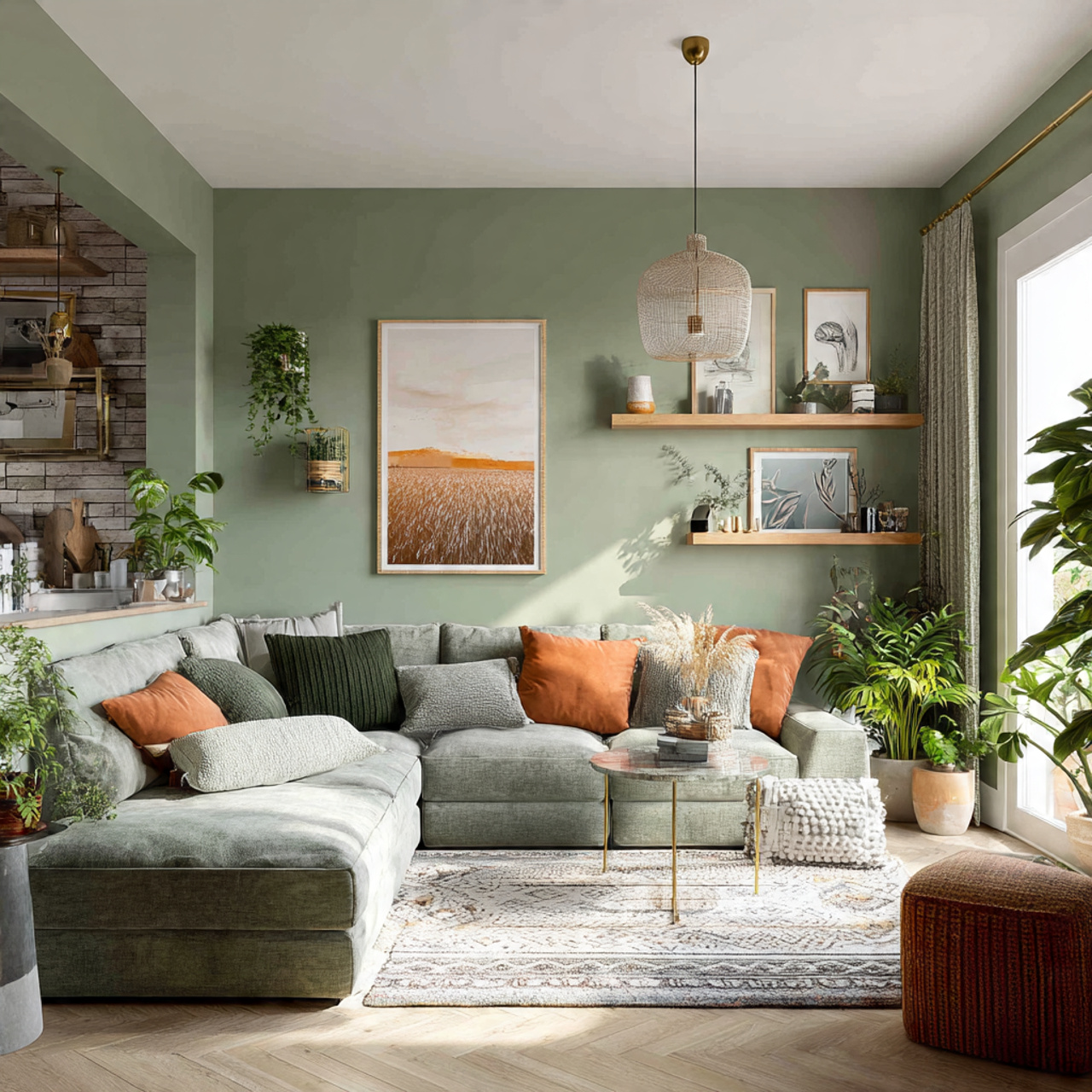
A common designer technique is to select living room curtain colors that are subtly harmonious with the wall paint, either matching the shade exactly or choosing a hue that sits right next to it on the color wheel. This creates a cohesive, wrap-around effect that makes the room feel larger and the ceilings seem higher.
If you have highly textured wallpaper or a bold paint color, stick to a solid neutral curtain to avoid visual competition and ensure the room feels balanced. Matching the fabric’s undertones—for instance, pairing a cool gray wall with a cool-toned white curtain—is essential for achieving an elegant, polished final look.
No-Drill Curtain Solutions for Renters

For renters or anyone hesitant to put holes in their walls, several innovative no-drill solutions exist for hanging living room curtains. Tension rods are the most common and simplest option, expanding to fit snugly within the window frame, ideal for lightweight sheer panels.
Alternatively, adhesive-backed curtain rod holders or magnetic rods (for metal window frames) provide a sturdy hold without causing any damage, making removal easy when you move or simply redecorate. While these options are limited in the weight they can bear, they are perfect for temporary or low-stress curtain applications.
Visit Also: Green Living Room Bliss
Curtains for Two-Story Windows

Two-story or vaulted living room windows present the challenge of scale and accessibility, requiring a dramatic curtain treatment that spans the vertical space. Often, the best choice is a motorized or extra-long custom drape installed near the ceiling to emphasize the room’s grand height.
If complete coverage isn’t necessary, sometimes stationary panels—drapes that are decorative only and never fully close—are used simply to frame the massive window and introduce color high in the room. This gives the aesthetic benefit of the fabric without the logistical complication of having to open and close several hundred inches of material daily.
Velvet Drapes for a Luxurious Feel

Velvet is the ultimate fabric choice when you want your living room curtain to exude opulence, depth, and formality. The heavy pile of velvet captures light beautifully, giving the fabric a rich, dynamic sheen that changes subtly as you move around the room, instantly elevating the perceived value of the space.
Beyond their appearance, velvet drapes are naturally insulating and noise-dampening due to their density. Opt for deep jewel tones like sapphire blue, emerald green, or burgundy to truly lean into the decadent, luxurious feel that velvet offers, pairing perfectly with classic or maximalist interior designs.
Linen Curtains for a Natural Vibe

Linen curtains are favored in casual, coastal, and relaxed farmhouse-style living rooms because of their inherently natural texture and soft, organic drape. The subtle slubs and imperfections in the weave give the fabric a beautifully relaxed character that avoids feeling overly stiff or formal.
While linen offers excellent light filtering, it is not a blackout fabric, allowing a soft, diffused light to penetrate the room, maintaining a bright atmosphere. Choosing unbleached or natural off-white linen will reinforce the earthy, organic vibe, making your living room feel breezy and effortlessly elegant.
FAQs About Living Room Curtain
What is the ideal length for living room curtains?
The ideal length is typically one of two options: the “kiss” length, where the curtain hangs exactly half an inch above the floor for a clean, tailored look, or the “puddle” length, where the fabric extends 2–3 inches onto the floor for a more romantic and formal, traditional aesthetic. Avoid having them stop several inches short of the ground, as this looks unprofessional.
Should curtains touch the floor in a living room?
For the most professional and polished look, yes, living room curtains should generally touch the floor or hover just slightly above it. Curtains that stop short of the floor often look unfinished, visually shortening your ceiling height and making the entire window treatment appear to be incorrectly sized for the room. A slight brush or break at the floor is the gold standard for most styles.
What is the difference between drapes and curtains?
The terms are often used interchangeably, but traditionally, drapes are lined, made from heavier fabric, and usually feature structured header styles like pleats, offering greater insulation and light control. Curtains are generally unlined, made from lighter fabrics like cotton or sheer materials, and are more casual in appearance and function, though modern usage blends these definitions.
How wide should living room curtains be for proper fullness?
For proper, luxurious fullness, the total width of your curtain panels should be at least two to two-and-a-half times the width of the rod or track they are covering. This essential extra fabric allows the curtains to gather into beautiful, soft folds when they are closed or pulled across the window, preventing a stretched, flat appearance.
What are the most popular fabric choices for modern living room curtains?
For modern living rooms, the most popular choices lean toward simple, clean, and functional fabrics like linen, which offers an effortless texture, and polyester blends, which provide durability, light resistance, and easy maintenance. The preference for modern design is often solid colors or very subtle, geometric weaves rather than traditional floral patterns or heavy silk.
Conclusion
The journey of selecting the perfect living room curtain is a rewarding design process that directly impacts the comfort, functionality, and overall style of your home. By thoughtfully considering the functional needs—like light control and thermal properties—alongside the aesthetic goals of fabric choice and hardware finish, you can transform a simple window into a stunning focal point.
Remember that flexibility is key; many high-quality window treatments allow for easy swapping of panels seasonally or as your design style naturally evolves over time. Implement these 27 specific tips and tricks to find the ideal drapes that you will love and that will stand the test of time, light, and changing design trends for years to come.