16 Brilliant Kitchen Design Ideas That Improve Home Space
There’s a point in many homes where the space looks complete, yet daily use tells a different story. The layout may seem correct and the cabinets may be fine, but the room doesn’t fully support how you move, cook, or pause, and that quiet friction is where kitchen design ideas start to matter in real life.
In my experience, the kitchens people stay happiest with aren’t the most expensive ones, but the ones shaped around daily habits. This guide focuses on kitchen design ideas that improve layout, storage, lighting, and flow in ways that hold up over time, so the space feels practical, balanced, and genuinely easy to live in.
Why This Style of Kitchen Design Keeps Coming Back
People keep returning to this kind of kitchen design because it solves daily friction without shouting. It balances warmth with clear purpose workable storage, easy movement between sink and stove, and surfaces that actually take wear, so the room feels useful rather than just pretty. I’ve noticed that kitchens built around small, practical decisions stay in use far longer than ones designed purely for photos.
What holds attention over time are a few quiet ingredients: reliable daylight that changes the mood, materials that patina rather than look tired, and storage that disappears until you need it. And the result is simple andyou use the room more, you stop worrying about upkeep, and the space rewards ordinary life instead of demanding constant upkeep.
Color and Material Authority for Such Kitchen Design
Soft Linen White (#F5F1E8) works best on walls with indirect light. It has a warm undertone that keeps the space from feeling flat, especially in a matte or eggshell finish. Pair it with linen textures or light oak for a soft, cohesive look.
Natural Oak Beige (#D8C3A5) is a reliable cabinet tone that adds warmth without heaviness. It works especially well with darker floors and pairs naturally with soft white countertops and subtle brass accents.
Muted Sage Green (#A3B18A) adds depth without overpowering the room. It’s best used on lower cabinets or islands and blends easily with wood and stone, which helps it age well.
Charcoal Gray (#3A3A3A) works best in small doses like base units or frames. Balance it with warm materials such as oak or brass so it doesn’t feel cold.
Warm Marble Beige (#E7DCD1) softens contrast compared to pure white. It reflects light gently and keeps the kitchen feeling calm and balanced with wood or neutral tiles.
Deep Walnut Brown (#5C4632) adds depth through flooring or shelving. It anchors lighter tones and makes the overall space feel more grounded and complete.
Room Size and Lighting Quick Guide
Small Kitchen
Works best: Light cabinetry with slight contrast in flooring or backsplash to create depth
Avoid: Using the same tone everywhere which makes the space feel flat
Large Kitchen
Works best: Kitchen island, layered lighting, or slightly darker base tones to define zones
Avoid: Leaving everything uniform which makes the space feel empty
North Facing Light
Works best: Warm tones like beige, oak, or soft linen white to balance cool light
Avoid: Cool grays or stark whites that make the space feel cold
South Facing Light
Works best: Muted green or charcoal tones that handle strong light well
Avoid: Overly warm shades that can feel too intense
East Facing Light
Works best: Soft, balanced tones that work with gentle morning light
Avoid: Dark tones that lose depth as light fades
West Facing Light
Works best: Softer neutrals that stay calm in warm afternoon light
Avoid: Very warm tones that feel overly saturated later
Kitchen Design Ideas That Improve Daily Function and Style
Kitchen with a Big Window that Pulls the Room Together
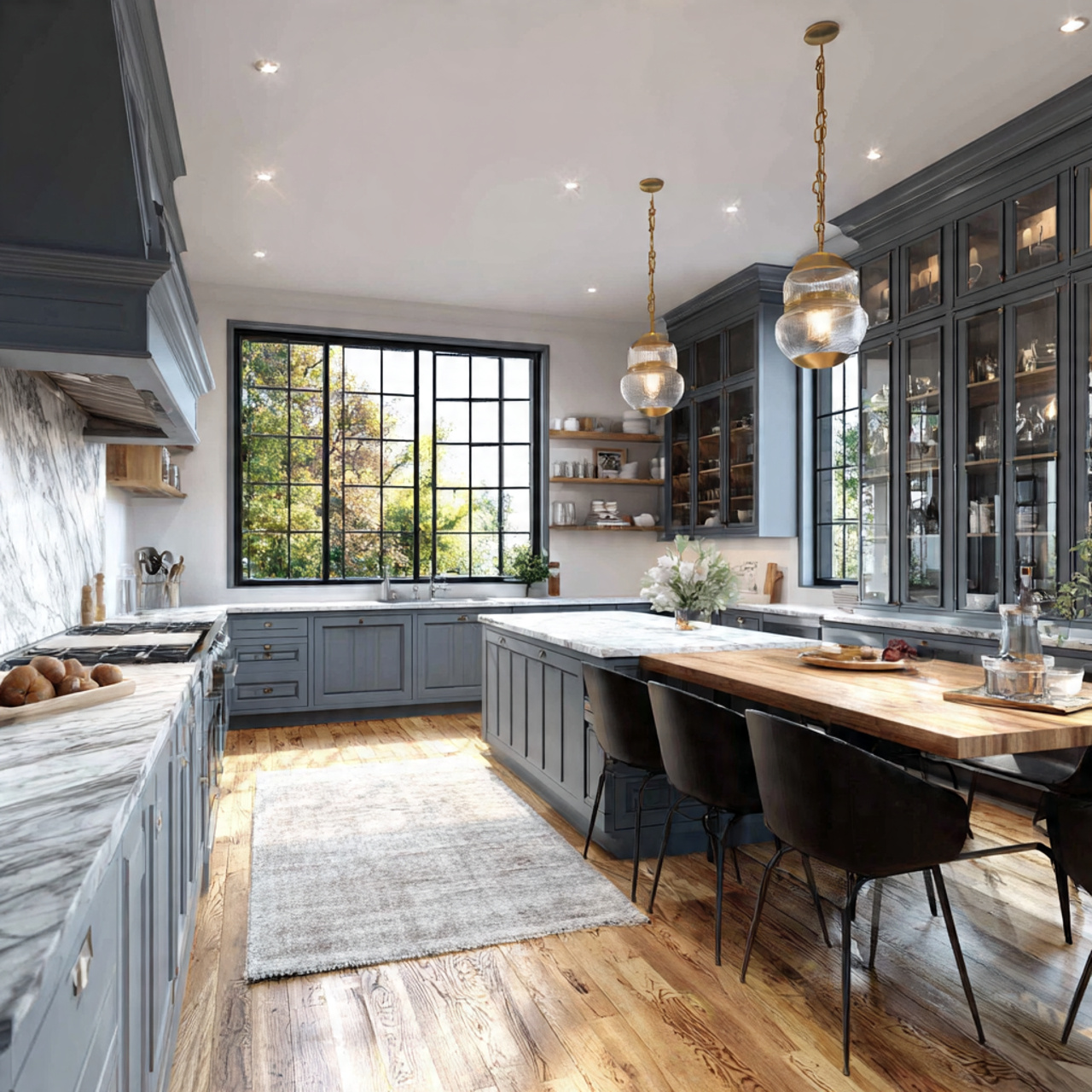
A large window changes how a kitchen behaves: morning light punches up texture, and a low sill becomes a natural landing for plants or a small herb pot. Visual balance matters more than absolute size a tall, narrower sash reads as vertical drama while a wide, low window reads as a horizontal bench that invites sitting.
The lived effect is surprisingly practical: you get reliable daylight for prep, a clear view for short pauses, and fewer electric light needs in the morning. That calm, visible moment coffee steam, light on a wooden board makes a kitchen feel used and loved rather than staged.
Practical application: set your lower sash so the bottom sits roughly 90 100 cm above finished floor for comfortable seating and standing views, and keep adjacent counter depth no deeper than 60 cm so the light reaches work surfaces. I’ve found that a 120 140 cm wide window with a 90 cm sill often reads best in medium kitchens measure before you commit.
Tip: if privacy is a worry, use a low sheer or a single sliding panel that preserves light but softens sightlines.
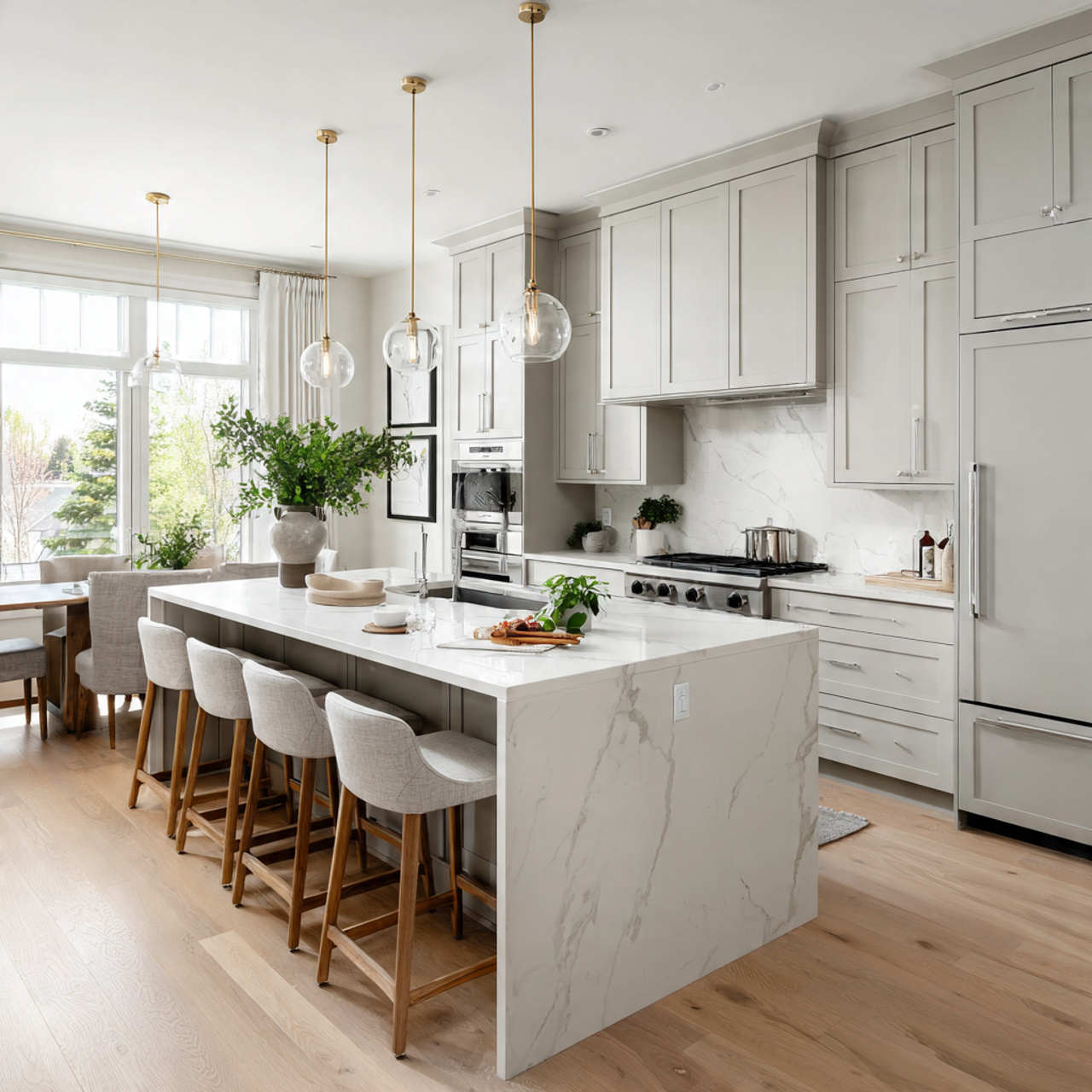
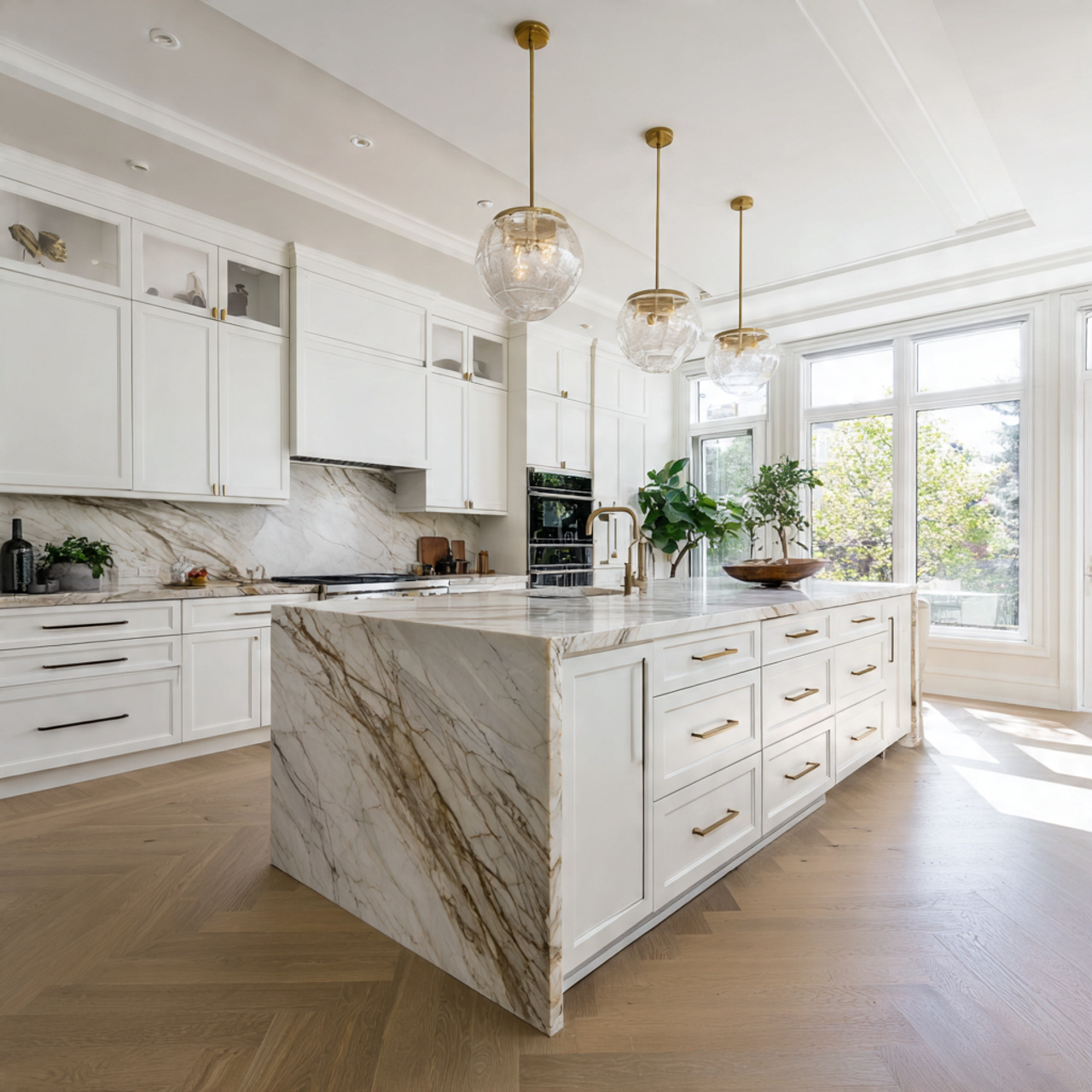
Long Island Layout for Family Flow and Sturdy Storage
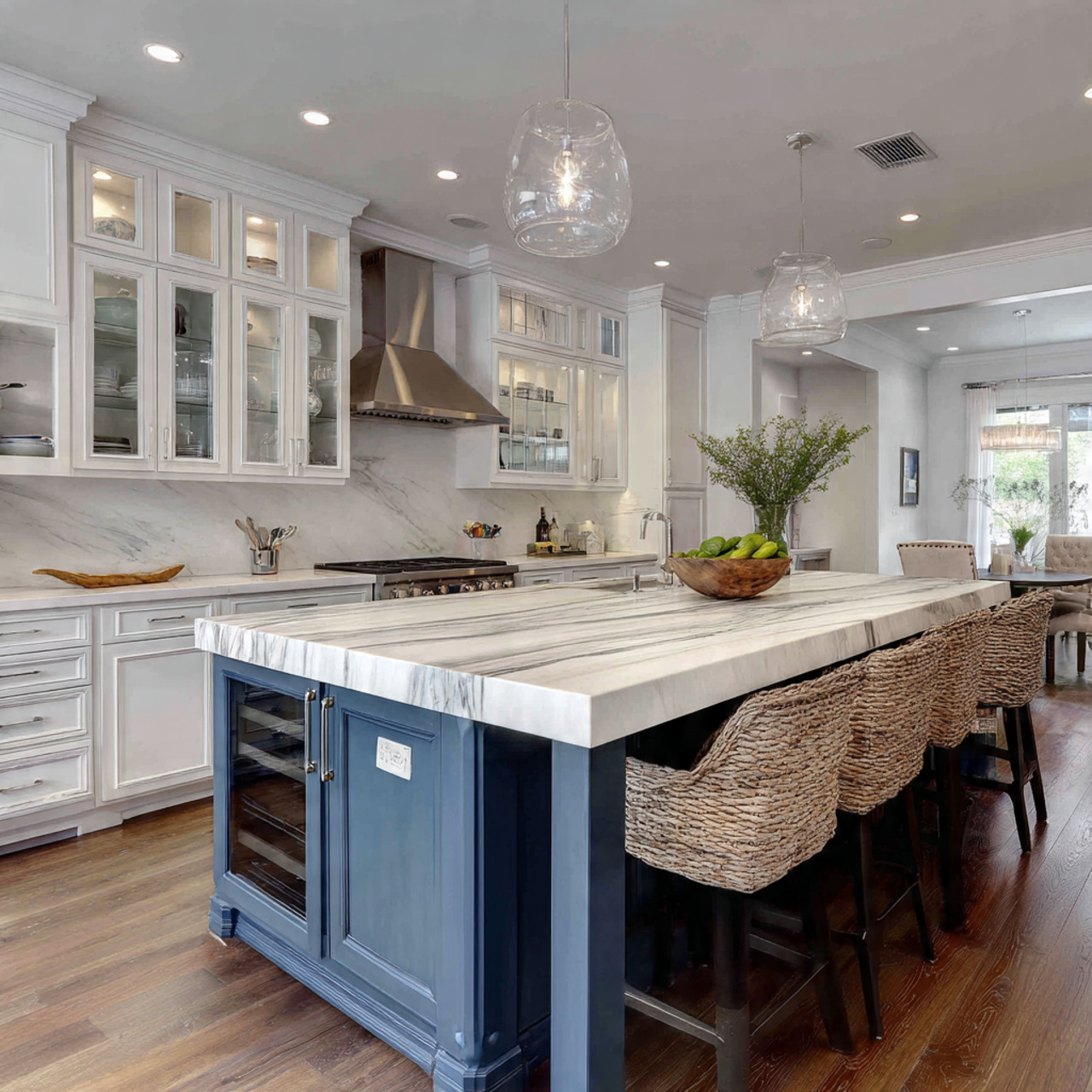
A long island does more than hold stools; it organizes movement. When the island is deep enough for a prep sink on one side and seating on the other, it separates prep from social space without putting a wall between them.
The consequence of a too narrow island is constant shuffling people step into the work triangle and bump elbows; the solution is clear zoning and sensible clearance. If traffic passes behind seating, you lose usable work clearance and the island becomes a corridor rather than a hub.
For solution: aim for an island depth of 90 110 cm and at least 100 cm of circulation on the cooktop side and 110 120 cm on the seating side if the back of chairs will see traffic. This depth allows drawers on both faces and a comfortable overhang if you want stools.
Tip: build the island with fullheight drawers on the cooktop side and shallow appliance drawers on the social side for a real twouse island.
Hidden Spice Storage for Calm Counters and Faster Cooking
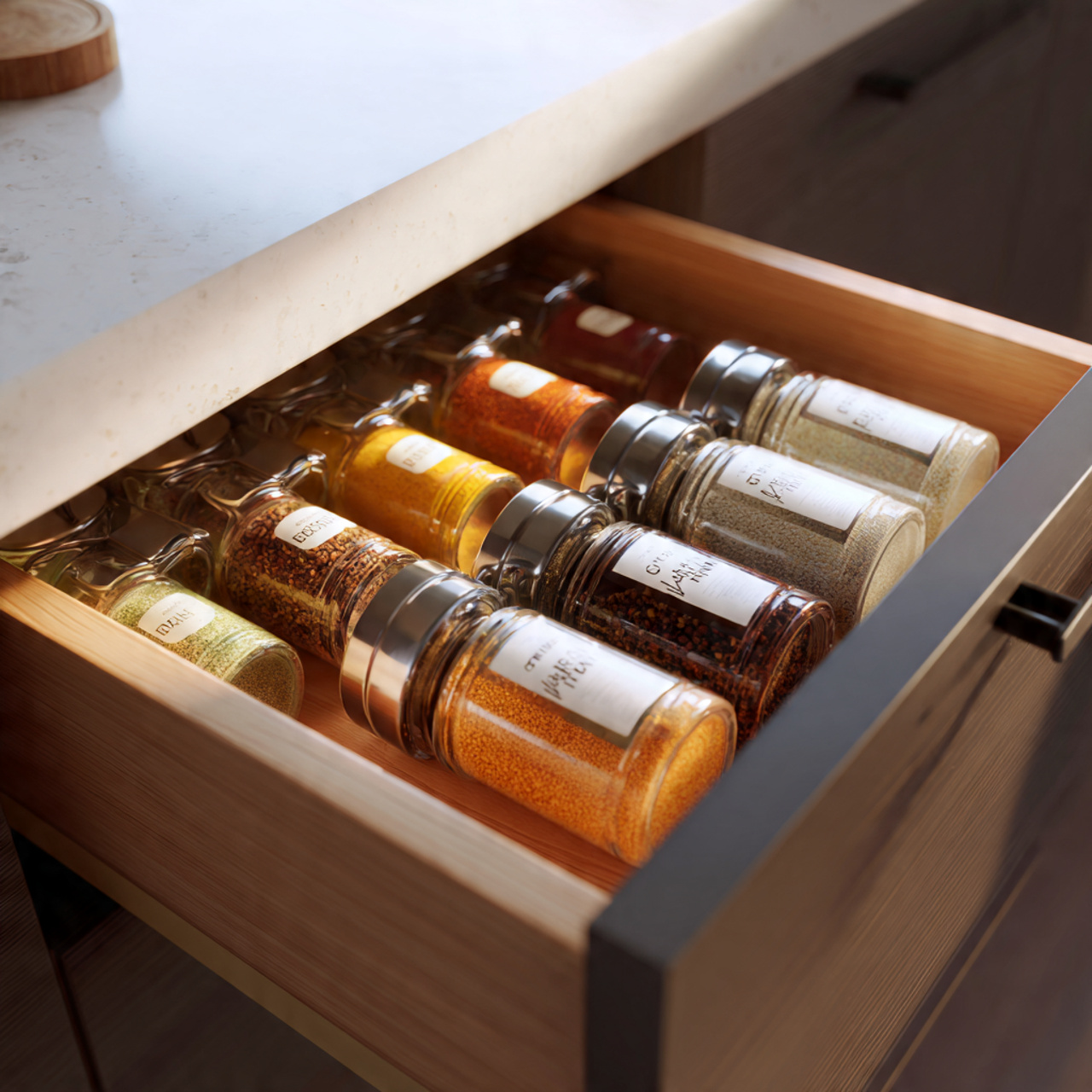
A small, concealed spice drawer makes weekday cooking faster and keeps counters clear of clutter. Design principle here is concealment with immediate reach: spices must be at hand yet out of sight to keep the visual plane calm. Use shallow horizontal jars with clear lids or labelled tops so you can read them at a glance without unpacking.
Emotionally, a tidy spice system reduces friction recipes flow, pans move, and you don’t stop mid chop to hunt for cumin. That tiny reduction in friction is what makes routines feel effortless over months and years rather than useful for a week and abandoned.
Specific guidance: fit a 30 40 cm deep indrawer spice rail near the range on the same side as prep, and use a fixed rail system so small jars don’t slide when you open the drawer. I recommend vertical labels on clearlidded jars and a shallow inner divider to stop shifting.
Tip: keep the most used five spices in the front row and refill from bulk in a pantry tub so you only restock once a month.
Pullout Pantry Systems That Save Steps and Sightlines
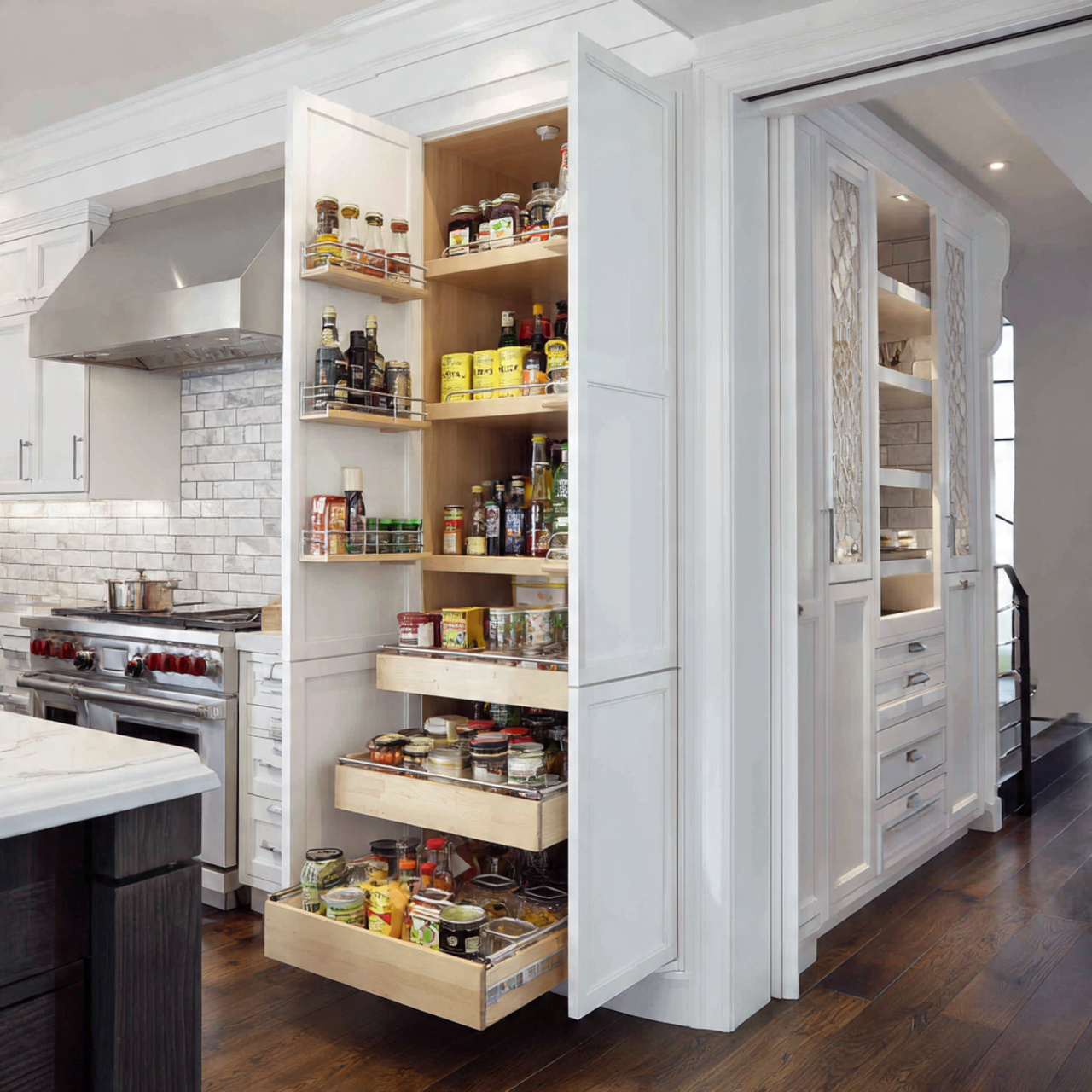
A fullheight pullout pantry replaces the stumbleandsearch that kills efficiency in deep cupboards. Experience shows that families stop using tall static shelves because items get pushed to the back; pullouts keep everything visible and at chest or hip height where it’s easy to reach. Installing them near the cooking zone preserves sightlines across the kitchen and cuts extra steps during dinner prep.
Longterm the benefit is behavioural: you actually use what you buy because it’s visible, and the kitchen stays neater since nothing gets buried. The pantry becomes a small command centre rather than a forgotten closet, which changes how people shop and cook.
Execution note: aim for 35 45 cm internal width per pullout module and choose shelves 25 30 cm deep with 30 35 mm front lip to stop cans from toppling when the unit slides. Most of the time a 300 400 mm wide module beside the fridge is the best compromise between capacity and access.
Tip: reserve one dedicated shelf for breakfast staples at eye level so mornings stay fast.
Corner Drawer Solutions for Dead Space Rescue
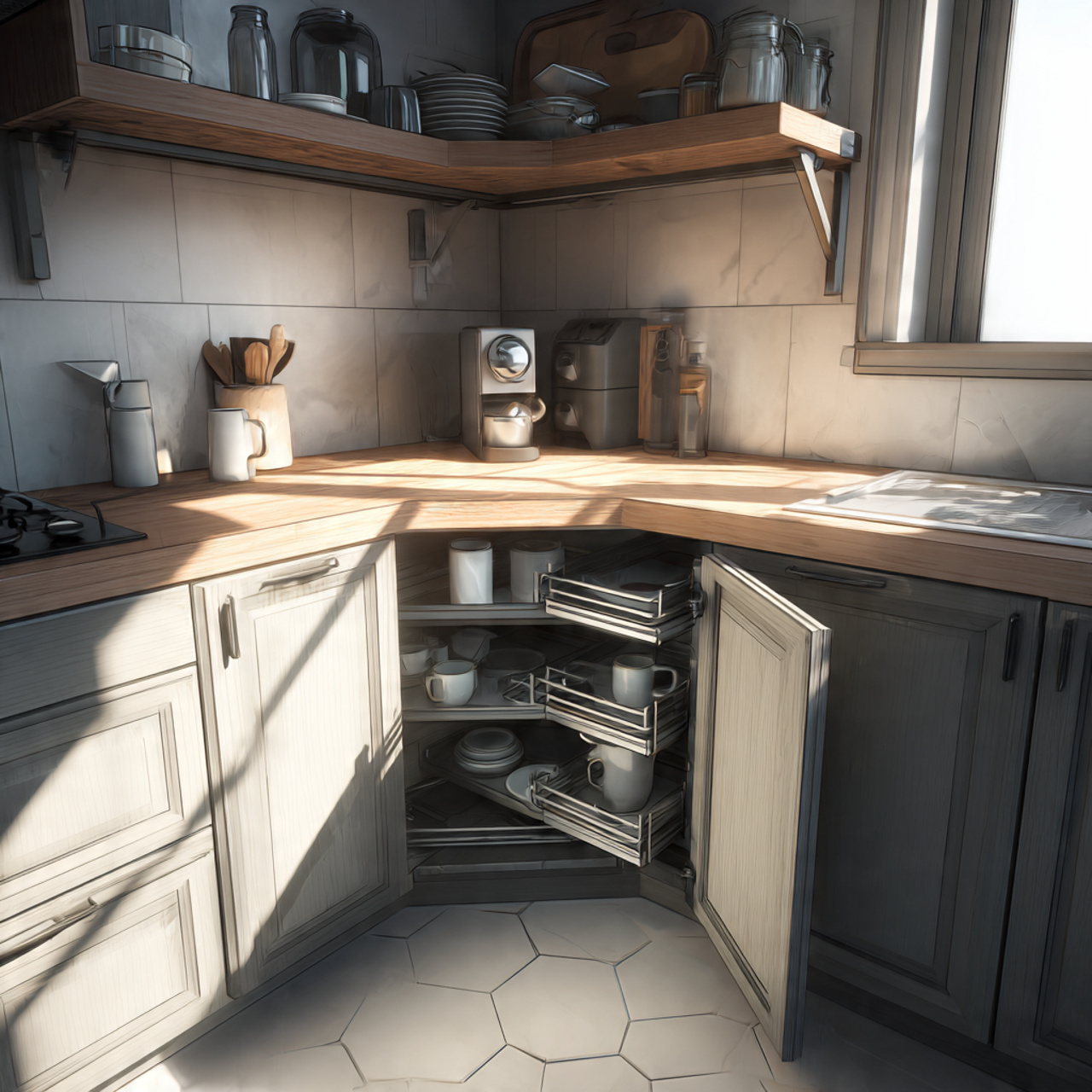
Corners are where kitchens silently lose efficiency standard lazy susans and blind corners hide things and invite frustration. Comparing a common blind corner to a well built corner drawer reveals how much usable cubic space you gain and how much less bending and extracting is required. Hardware matters: the right drawer geometry pulls items out into your hands rather than forcing a reach into a dark void.
Why this change works is simple: you trade awkward access for immediate reach, and that small convenience compounds across weekly routines. Instead of shunting seldom used bakeware back to that corner, you actually use it because it’s reachable.
How to get there: use a diagonal corner drawer with a 60 80 degree opening and check the hardware’s stopping torque cheap runners can sag under heavy loads and reduce lifespan. Also ensure the drawer front mirrors adjacent cabinet widths to preserve the visual rhythm.
Tip: store heavy, rarely moved items (Dutch ovens, casserole dishes) low in the corner drawer and keep lighter, everyday pans in a shallow nearby drawer.
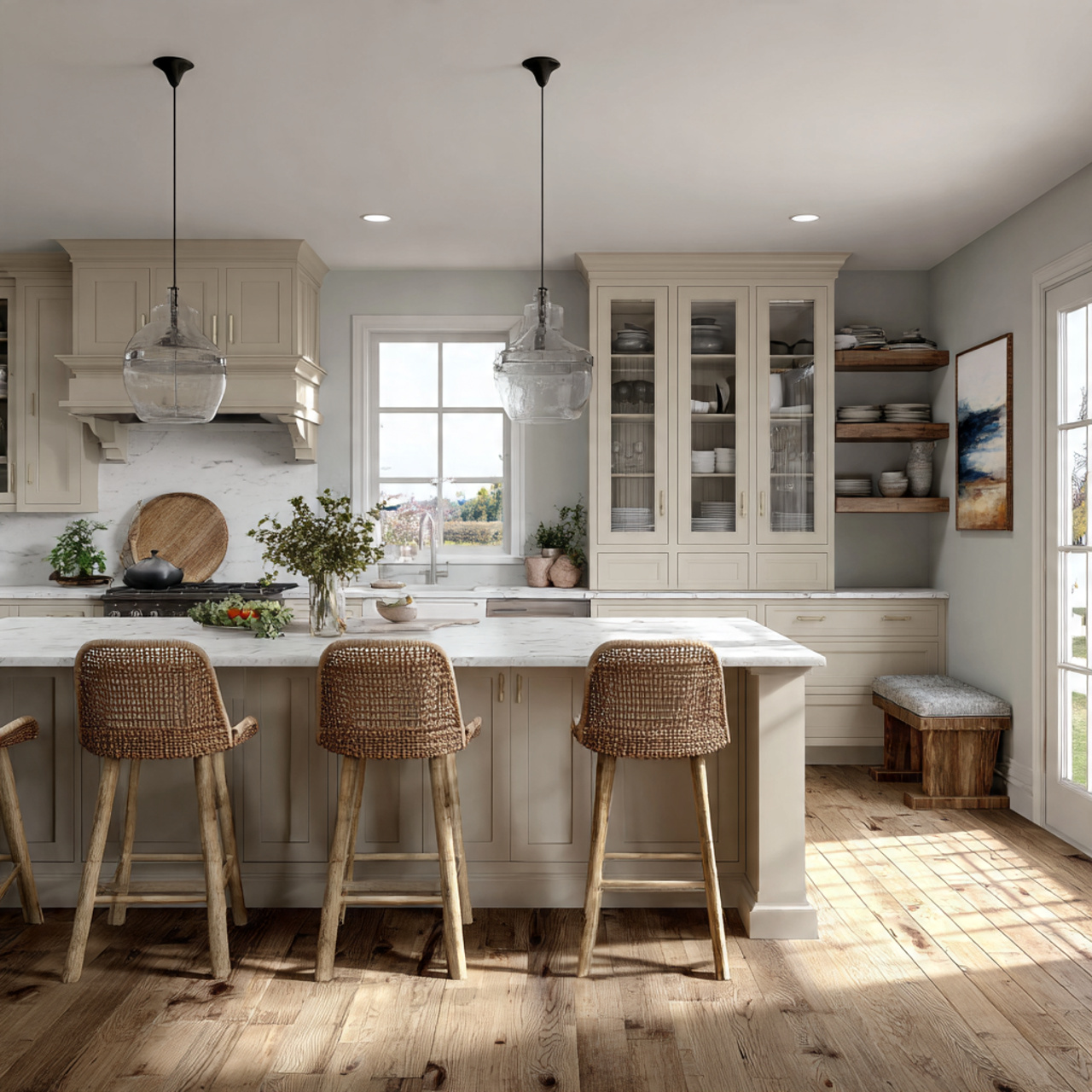
Natural Wood Cabinets with White Countertops
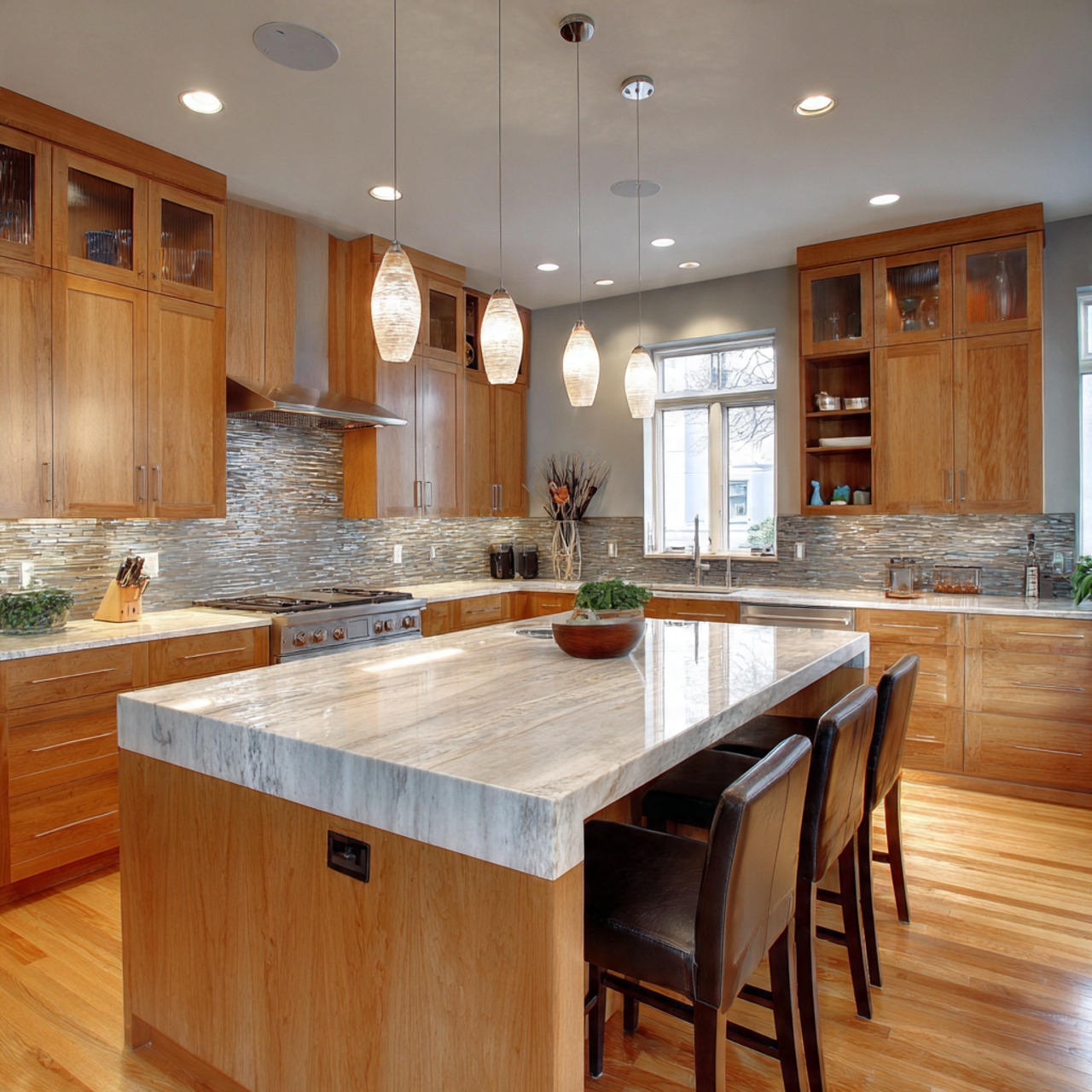
Natural wood has a way of softening a kitchen without making it feel overly styled. When paired with white countertops, it creates a quiet contrast that feels clean but still warm, especially in spaces that get steady daylight. The grain itself becomes part of the visual texture, which keeps the room from feeling flat.
Over time, this combination tends to age better than high gloss or overly dark cabinetry. Small marks and wear blend into the material rather than standing out, which is why many lived in kitchens lean toward this pairing without trying too hard. It feels stable, not temporary.
For application, stick to mid tone woods like oak or walnut and avoid overly yellow finishes that can date quickly. White countertops should lean slightly warm rather than stark to keep the balance natural.
Tip: if your space feels too plain, introduce subtle variation through open shelving in the same wood tone instead of mixing new materials.
Light Wood Cabinets with Dark Flooring for Grounded Contrast
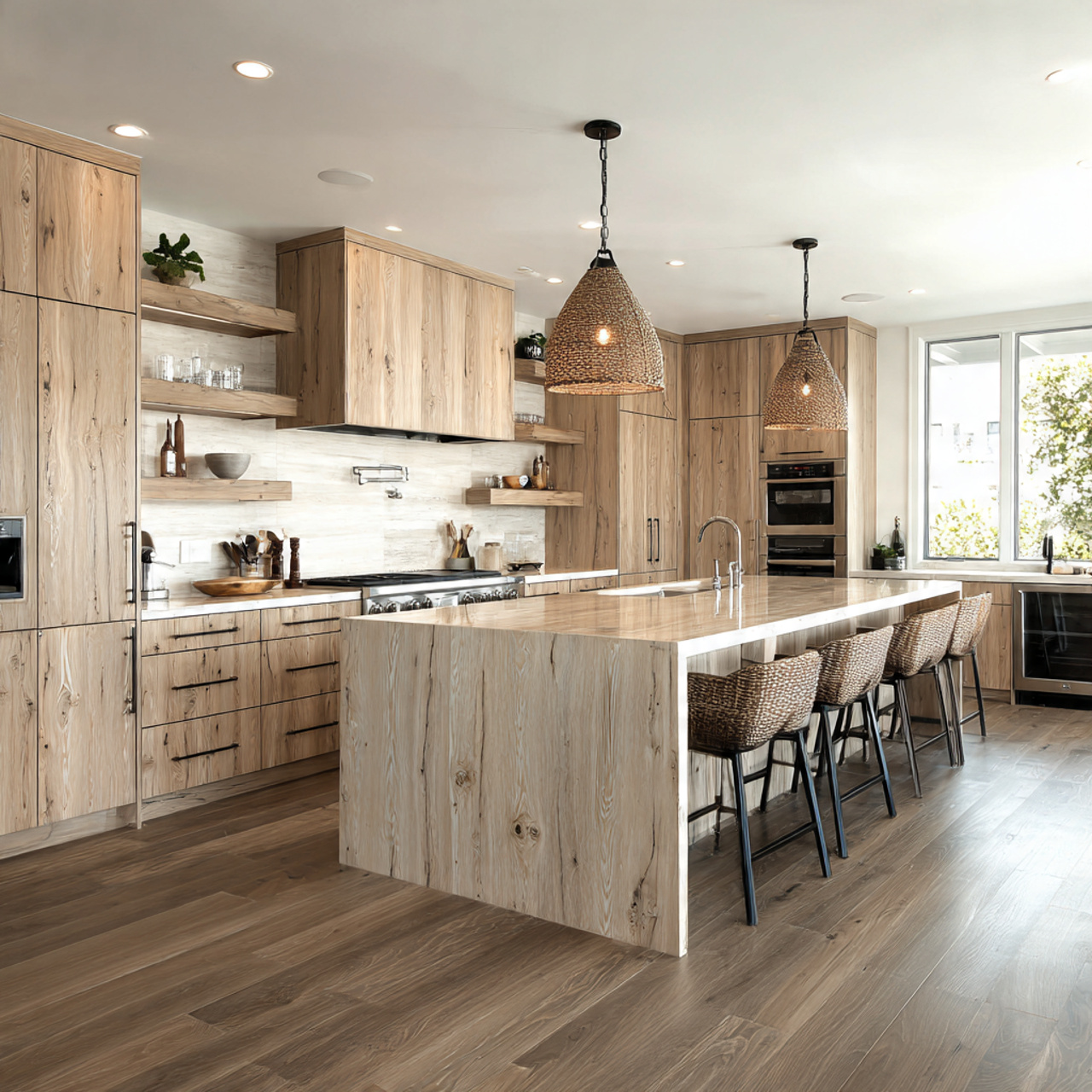
A kitchen that uses light cabinetry and dark flooring naturally creates visual balance from top to bottom. The eye settles more easily because the weight of the room is grounded below, while the upper half stays open and breathable. This becomes especially useful in kitchens that feel slightly top heavy or overly bright.
Many people assume darker floors will shrink a space, but in practice, they often do the opposite when paired correctly. The contrast defines boundaries and prevents the room from blending into a single tone, which can make even a medium sized kitchen feel more structured.
To make this work, keep the flooring matte or lightly textured so it doesn’t reflect too much artificial light at night. Pair it with cabinetry that has a soft, natural finish rather than high gloss.
Tip: choose a floor tone that is at least two shades deeper than your cabinets so the contrast reads clearly without looking forced.
Make Oak Cabinets Look Modern Without Replacing Them
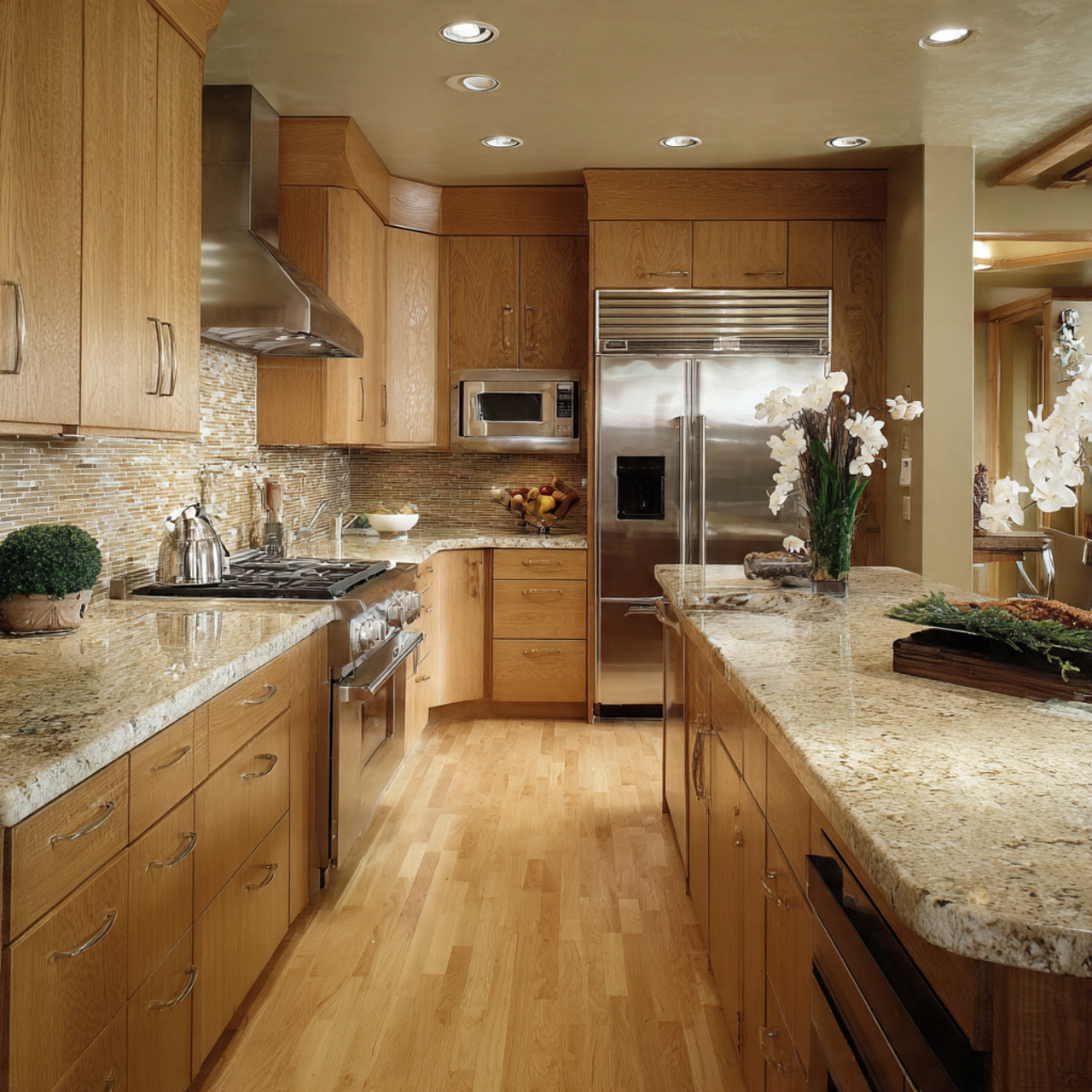
Older oak cabinets are often replaced too quickly, even though the structure itself is usually solid. The issue is rarely the wood, but the finish, hardware, and surrounding elements that make it feel dated. A few focused changes can shift the entire look without a full remodel.
In real homes, updating oak works best when you reduce visual noise rather than cover everything up. Lighter stains, simplified hardware, and cleaner surrounding surfaces help the cabinets feel intentional again instead of outdated. It becomes a refinement rather than a replacement.
Start by toning down orange or yellow hues with a neutral or slightly muted finish. Swap bulky handles for slimmer, more minimal hardware in matte black or soft brass.
Tip: avoid mixing too many new styles at once, because the contrast can highlight the age of the cabinets instead of improving them.
Deep Drawers and Pull Out Shelves That Actually Fit Daily Use
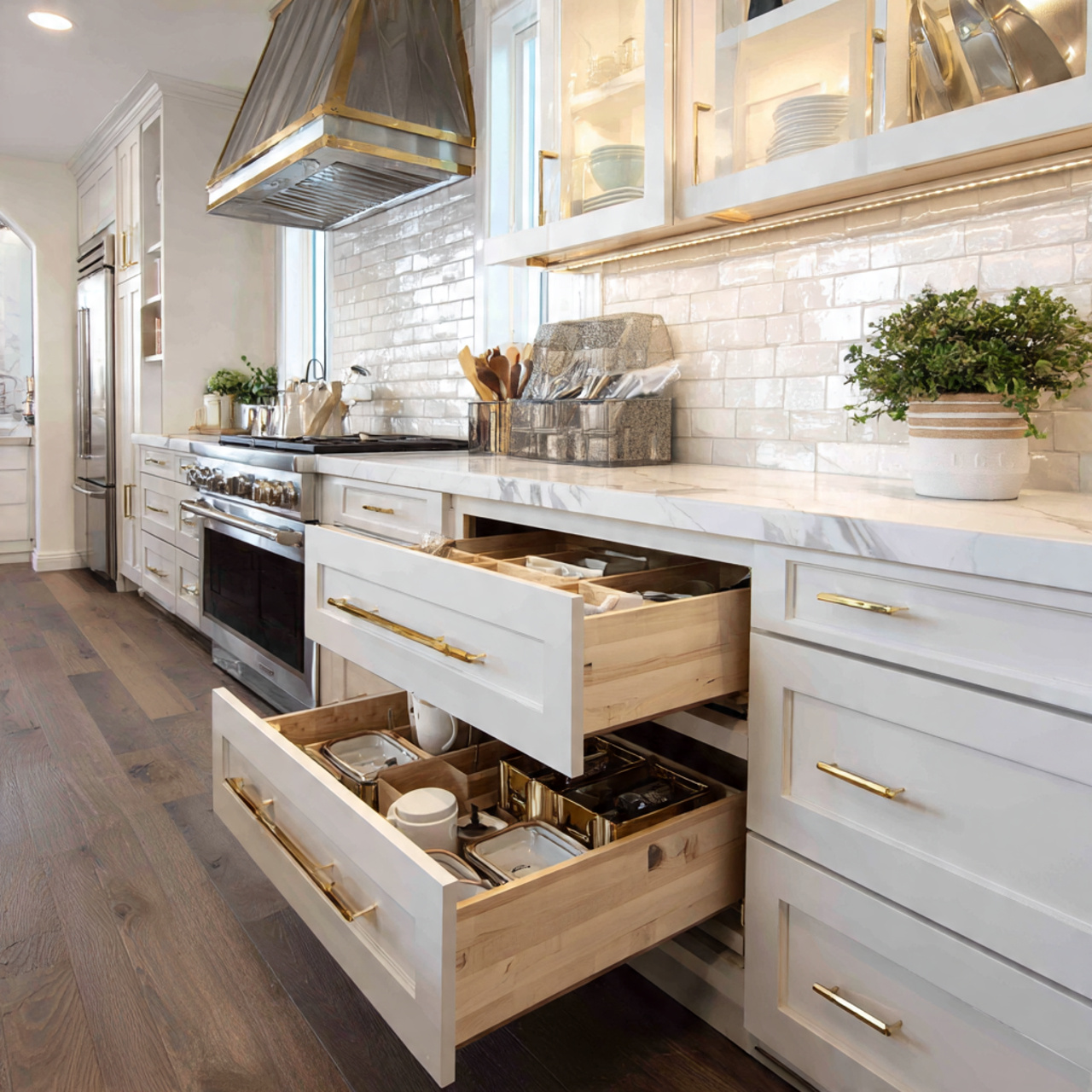
Lower cabinets often become the most frustrating part of a kitchen because items disappear into the back. Deep drawers solve this by bringing everything into view, especially for pots, pans, and heavier cookware that shouldn’t require bending or stacking.
The difference shows up in daily routines. Cooking becomes smoother because everything has a clear place, and cleanup feels faster since items return easily without rearranging layers. Over time, this reduces wear on both the kitchen and the person using it.
For best results, vary drawer heights instead of making them all identical. Taller drawers for pots, medium for mixing bowls, and shallow ones for utensils create a more usable system.
Tip: install soft close mechanisms to prevent long term stress on the drawer structure, especially for heavier loads.
Green Cabinets That Add Depth Without Overpowering the Room
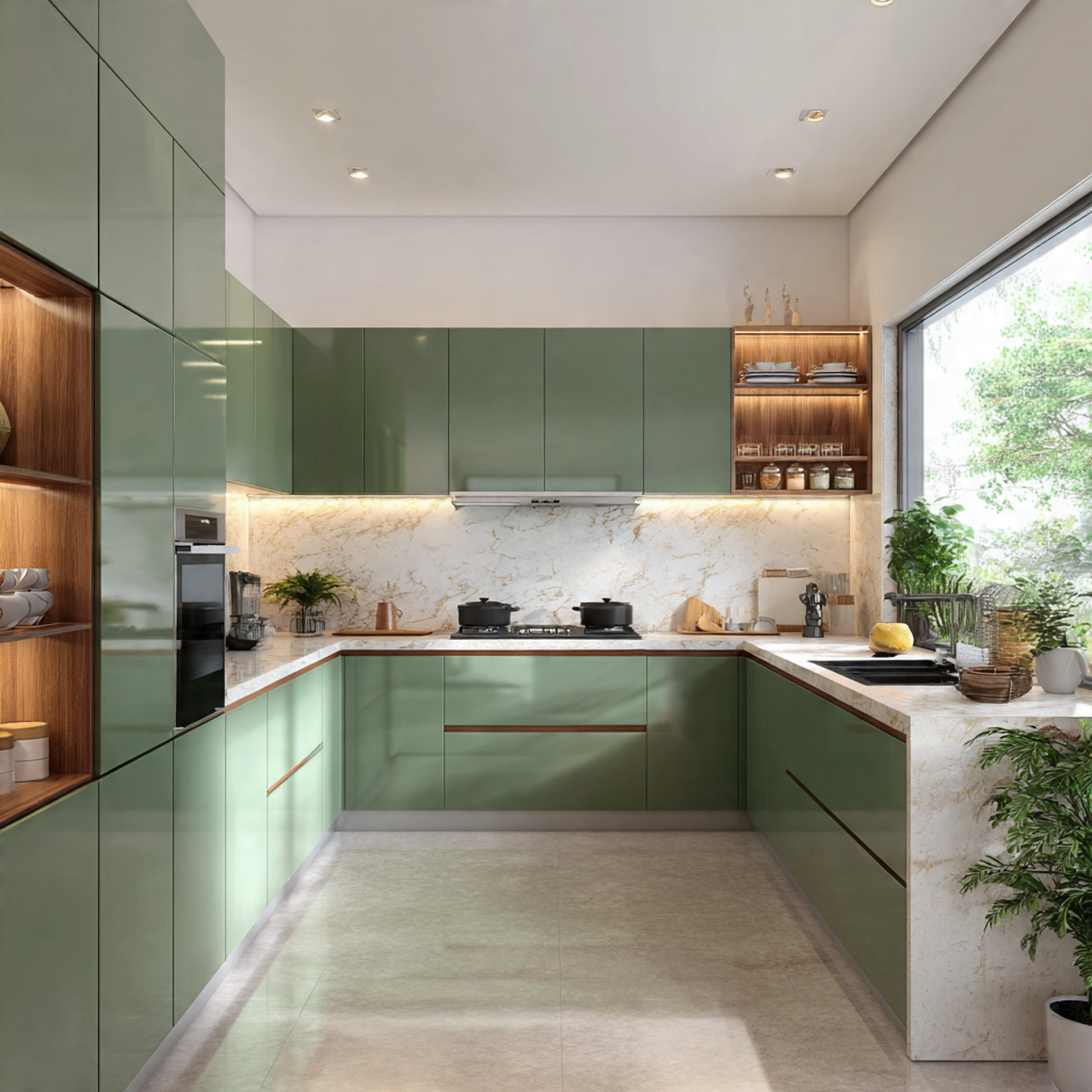
Green cabinetry has become popular for a reason, but not all shades behave the same in real spaces. Softer, muted greens tend to settle into the background while still adding depth, especially when paired with wood, stone, or brass accents.
The effect is subtle but noticeable. Instead of drawing attention immediately, the color builds atmosphere over time, making the kitchen feel calm rather than dramatic. This works particularly well in spaces that already have strong natural light.
When choosing green, avoid overly saturated tones that can feel heavy indoors. Stick to muted or slightly dusty shades that respond well to changing light throughout the day.
Tip: if you’re unsure, apply green only to lower cabinets or the island first before committing to the full kitchen.
Beige Marble and Tile Pairings That Feel Luxe Not Fussy
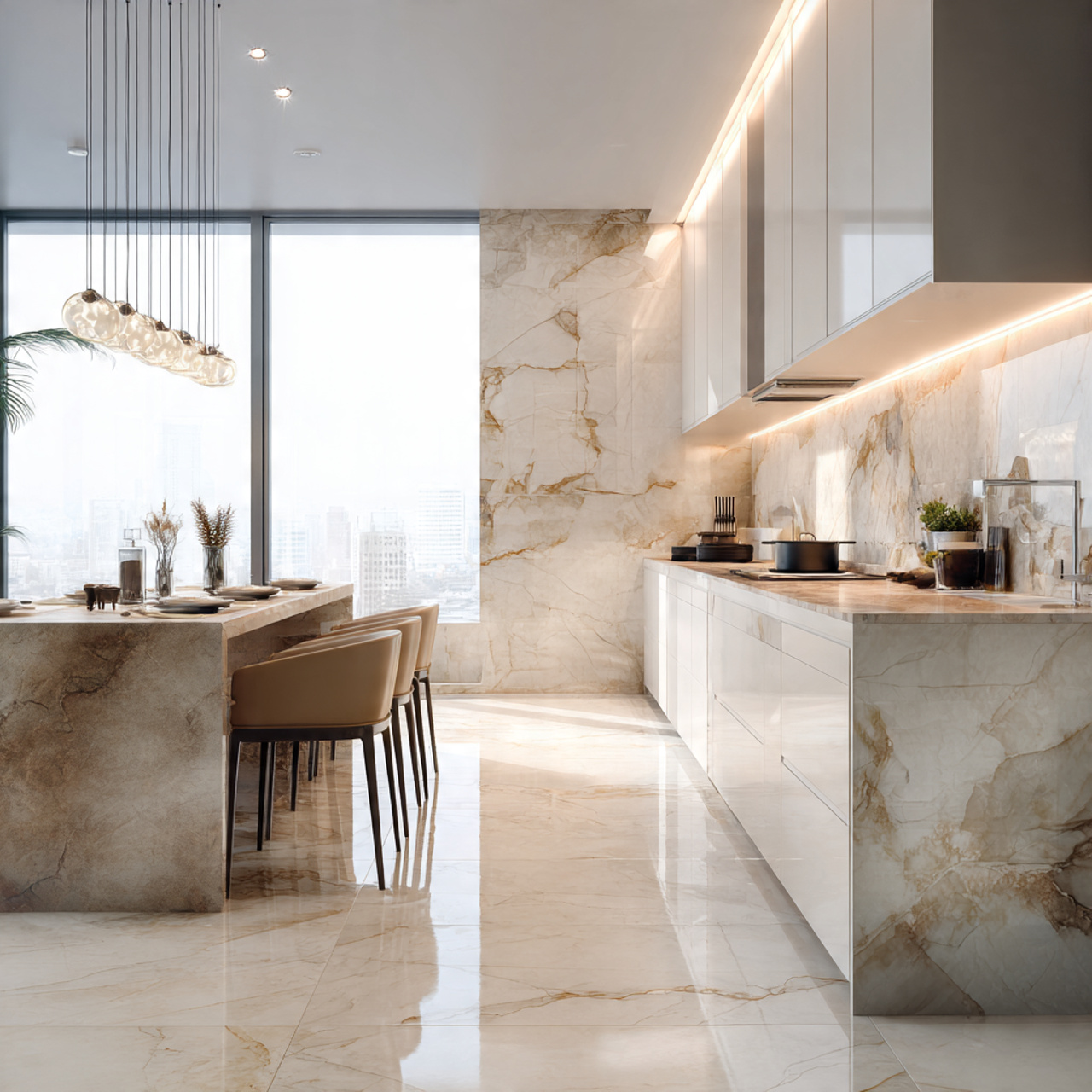
Beige marble reads warm rather than cold when paired with the right tile scale and grout tone. Think medium sized tiles and grout that matches the mid tone of the marble veins so the joints recede instead of shouting.
In practice the wrong grout or an oversized tile will make marble look inconsistent and overly busy which ages poorly. I often find that matching grout to the vein rather than the dominant stone color keeps the floor or splash subtle and editorial.
For execution choose tiles in 300 by 600 mm or 600 by 600 mm sizes and a grout one to two shades darker than the lightest vein in your marble so stains blend and joints remain calm.
Tip: lay sample pieces in natural and artificial light for three days to see how the beige shifts before you buy.
Scandinavian Backsplash Ideas for Quiet Clean Lines
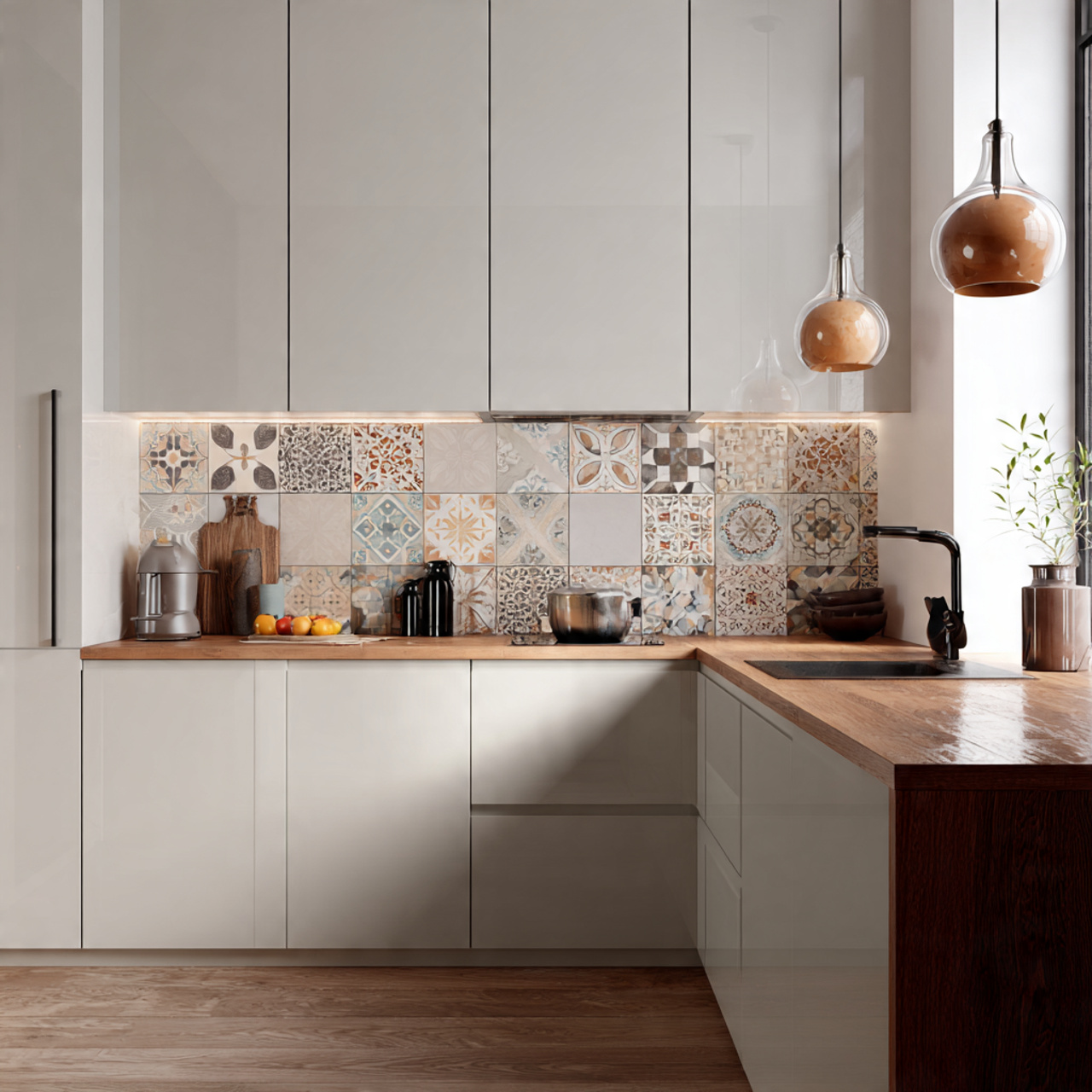
Scandinavian backsplashes favor small scale tile in simple orientations and minimal grout contrast which creates a soft backdrop for both wood and white cabinets. Stacked subway tiles or small square tiles laid in a grid read modern and approachable without calling too much attention.
This restraint helps the rest of the kitchen feel intentional rather than trendy which is important for long term enjoyment. I have seen kitchens where a loud backsplash dates the room within two years but a simple oriented tile stays calm for a decade.
Tip: choose a grout shade that subtly leans warm if your cabinetry has warm undertones to prevent an institutional look.
Hidden Broom and Cleaning Cabinets That Keep Kitchens Tidy
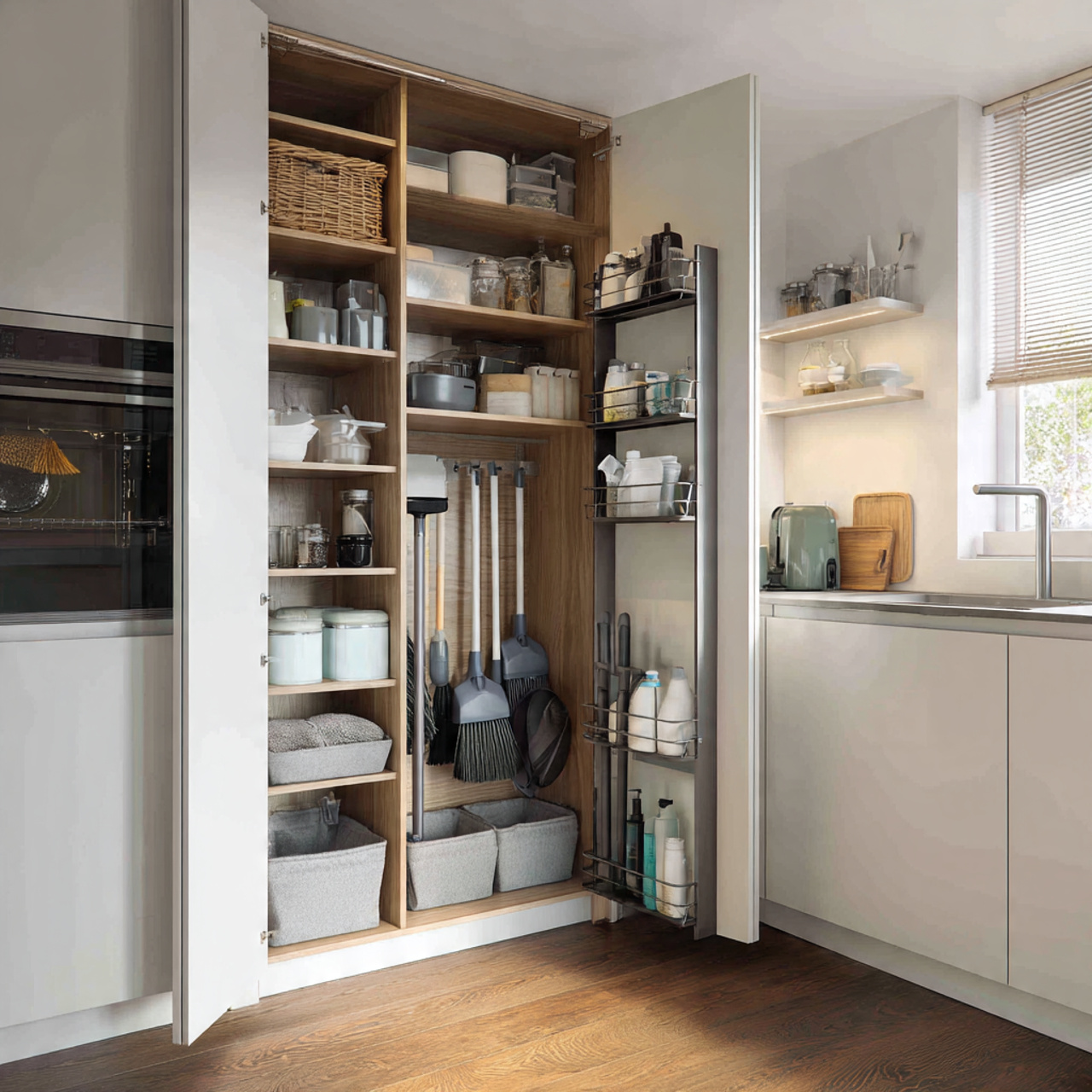
A small dedicated cleaning cabinet saves the rest of your storage from accumulating brooms mops and cleaning bottles which otherwise creep into pantry shelves. Design the space with interior clips for handles and vented panels at the back so trapped moisture dissipates.
When you ignore a specific cleaning zone those items migrate and the visual clutter slowly undermines an otherwise calm kitchen surface. I’ve noticed that households with an easy to use cleaning cabinet keep counters and pantries far neater because there is a single logical place for gear.
For layout include a 30 to 40 cm wide tall cabinet near the utility or back door to keep wet gear contained and off kitchen floors.
Tip: fit an adjustable clip rail and a removable drip tray at the base for quick cleaning.
Appliance Garage and Spice Nooks That Keep Counters Empty
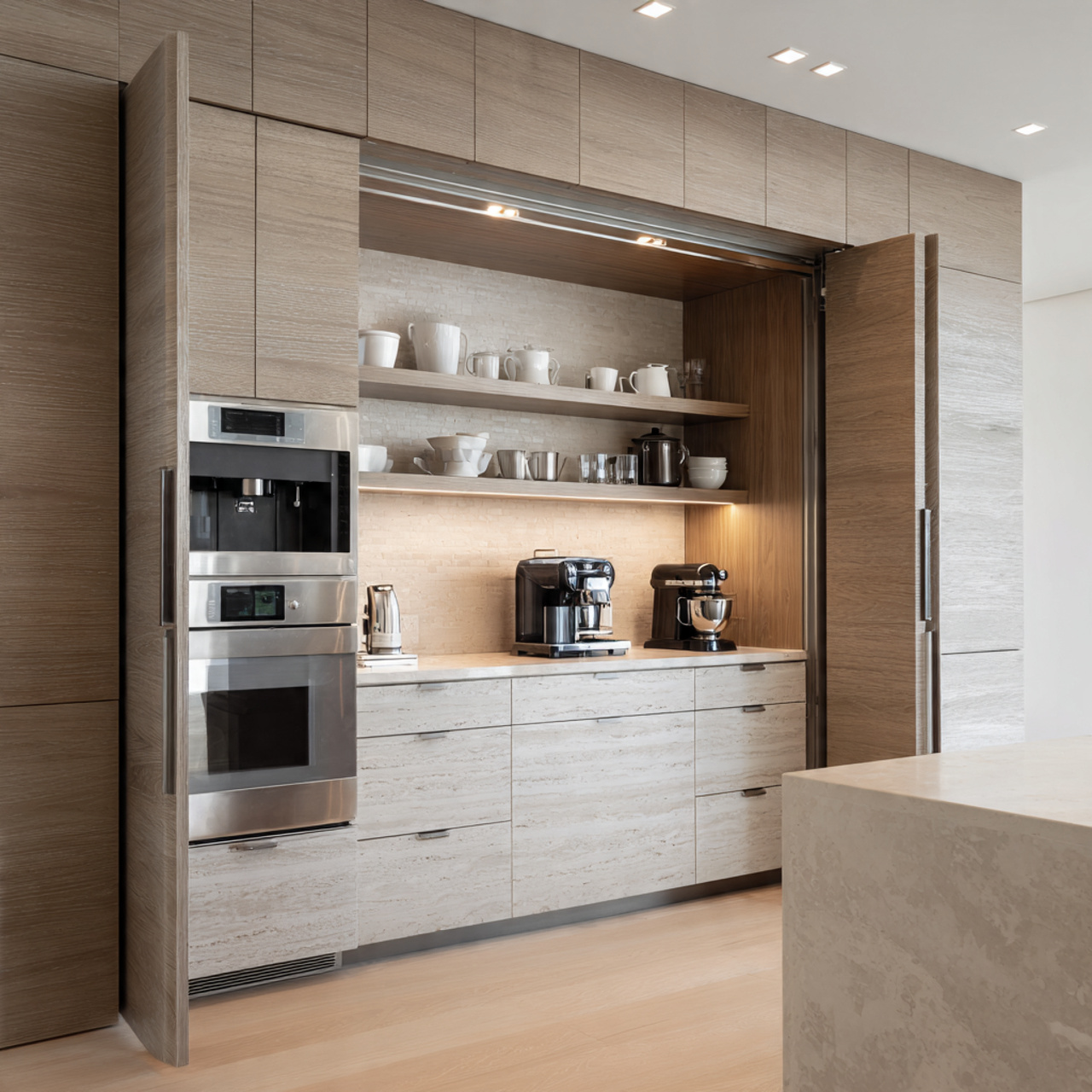
Small appliance garages hide mixers toasters and coffee gear yet keep them on demand which maintains a clean counter without sacrificing function. Place them beside prep areas and provide ventilation and easy access for cords so you are not fighting small appliances every time you use them.
Out of sight is only helpful when items are easy to retrieve otherwise they become attic clutter and get abandoned. Ive rebuilt kitchens where a well placed garage restored daily rituals simply by making the machine easy to slide out and plug in.
Design note allow at least 40 cm depth and a shallow fixed shelf for the most used appliance so it slides out smoothly without unplugging everything behind it.
Tip: install a small retractable outlet inside the garage to eliminate cord clutter.
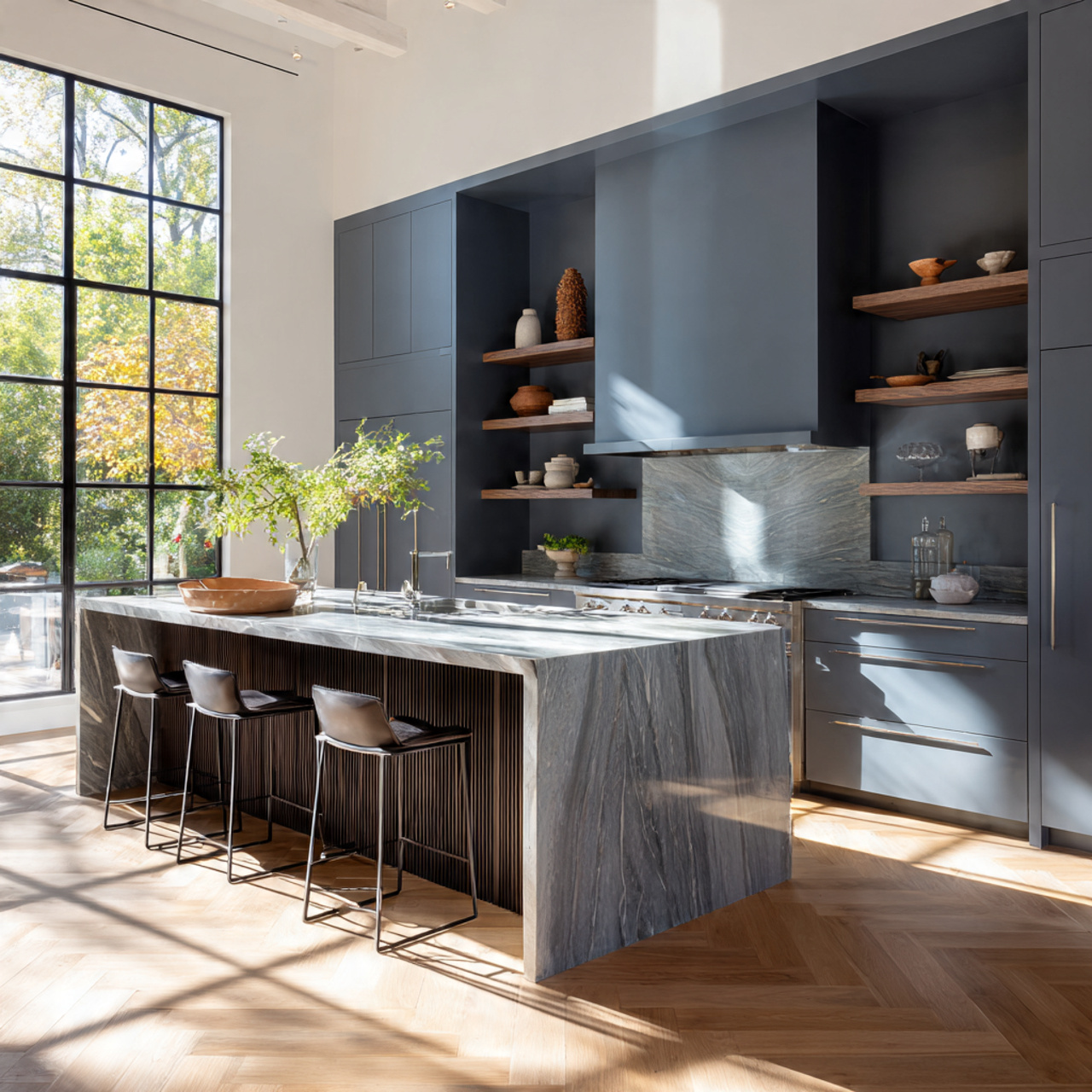
Black Gray and Brass Contrasts for a Modern Editorial Kitchen
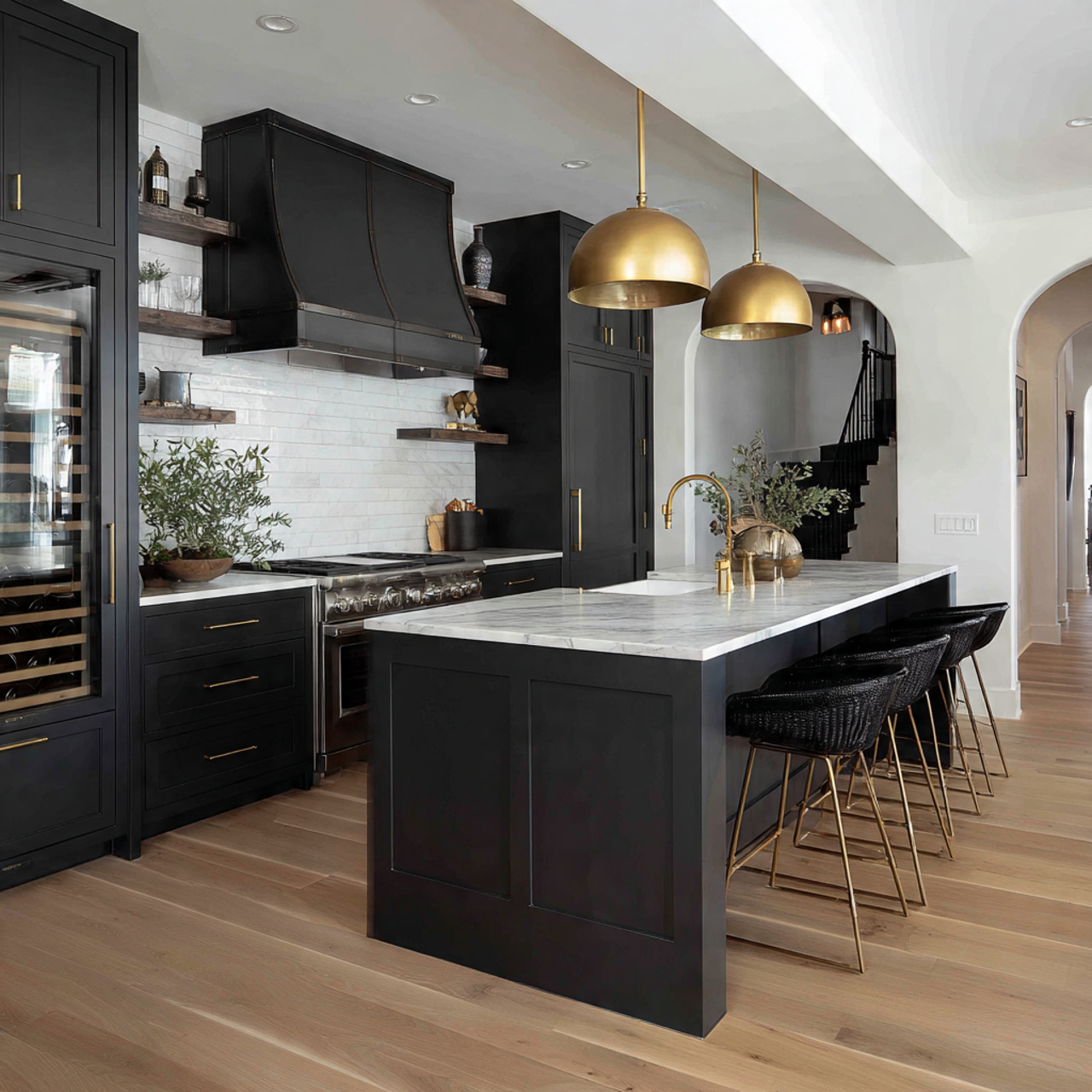
A palette that mixes black and gray with warm brass accents reads deliberate and editorial when balanced with ample daylight or warm woods. Use dark tones sparingly on base units or window frames and reserve brass for hardware and small fixtures to keep the drama controlled.
If you overdo black or choose high contrast across the whole room the space can feel closed and difficult to live in especially at night. I recommend a ratio approach with roughly 60 percent light surfaces 25 percent mid tone like gray and 15 percent dark or metallic accents so usability stays high.
Execution tip keep key surfaces reflective enough to read in dim light and use warmer task lighting to offset cooler dark finishes so cooking remains comfortable.
Tip: matte black finishes pair best with brass that has a soft patina rather than a polished mirror look.
Textiles Tray Styling and a Light Country Nod
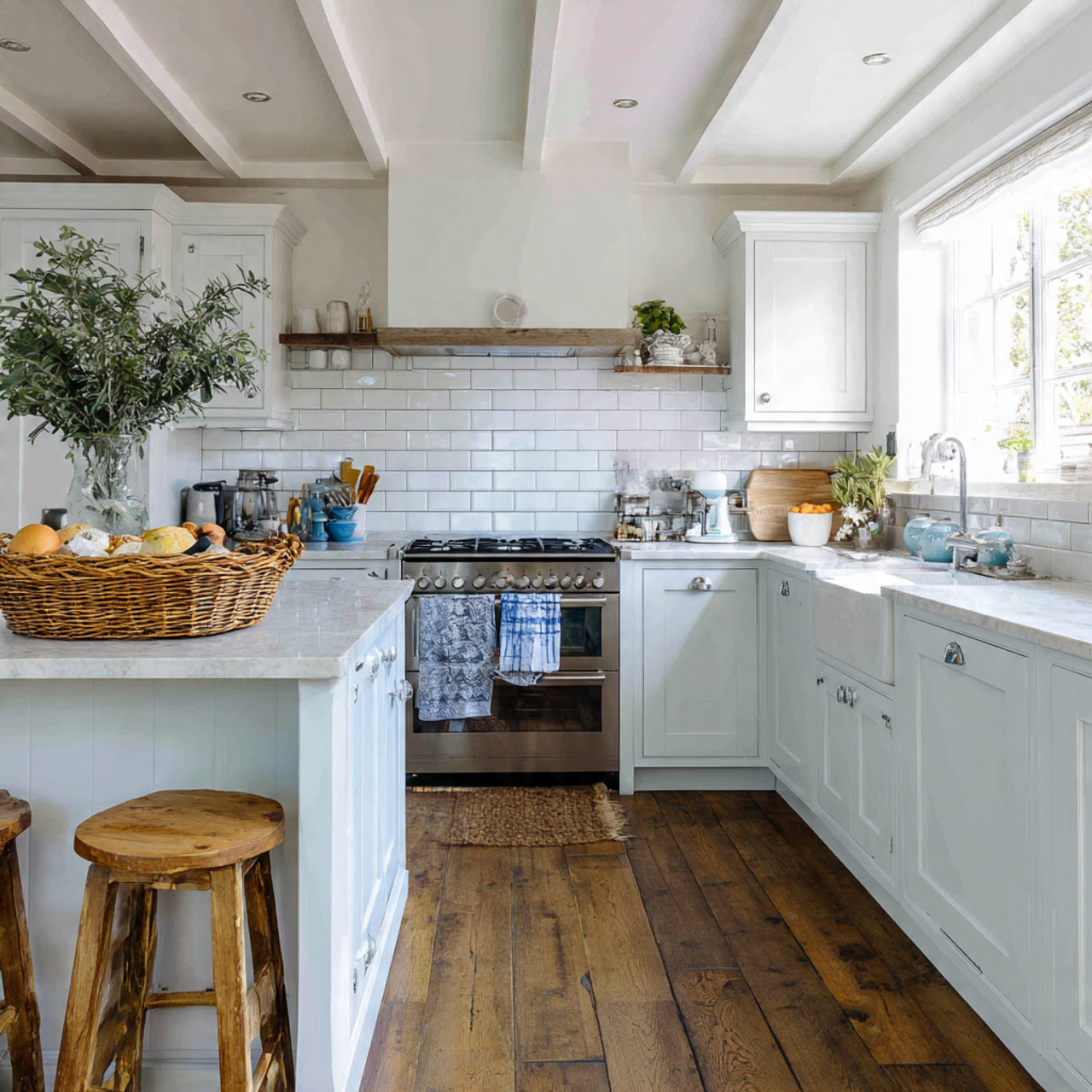
Small lived in details are what make a kitchen feel like a home not a showroom so textiles trays and a few curated objects matter more than another trend tile. Natural linen tea towels a wooden serving tray and a small stack of well used plates tell a story and soften engineered surfaces.
A light country nod may appear as a single shiplap shelf or a pair of turned wood stools but keep this subtle to avoid a heavy stylistic label. Ive found that one small country element woven into a primarily modern kitchen gives the space warmth without turning it into a themed room.
For finishing choose two to three tactile pieces and rotate them seasonally so the kitchen feels alive and not static.
Tip: store the rotated items in a drawer near the island so swapping them is simple and feels natural.
Common mistakes Regarding Kitchen Design
Over relying on open shelving as a default
People often choose open shelves because they look simple and attractive in photos. In reality, they require constant styling and cleaning, which most households don’t maintain over time.
As time passes, dust builds up and items start to look scattered instead of curated. This slowly makes the kitchen feel messy rather than lived in.
The better approach is to use open shelving in small sections and rely mostly on closed storage for daily items. This keeps the space manageable and prevents visual clutter from building up.
Using the same drawer size everywhere
It feels easier to keep all drawers the same size during planning. But this ignores how different kitchen items actually vary in shape and storage needs.
Over time, this leads to inefficient stacking and difficulty finding things quickly. Daily tasks become slower because the storage system doesn’t match real usage.
Mixing drawer sizes works much better, with deeper drawers for pots and shallower ones for utensils. This small adjustment improves flow and makes the kitchen easier to use.
Choosing countertops for looks not real use
Many people pick countertops based on how they look in photos rather than how they perform daily. This often leads to surfaces that are high maintenance or easily damaged.
After regular use, issues like stains, scratches, or etching start to appear. The surface becomes something you have to protect instead of use freely.
Choosing materials based on cooking habits and lifestyle prevents this problem. A slightly more practical surface will always feel better over time than a delicate one.
Ignoring sightlines and long term maintenance details
Details like trims and edges are often decided at the last stage of design. Because of this, they don’t always align properly with the rest of the kitchen.
Over time, these small inconsistencies become more noticeable and harder to clean. Grease buildup and uneven lines reduce the overall finish of the space.
Planning these elements early ensures cleaner lines and easier maintenance. It also helps the kitchen look more refined without extra effort later.
Frequently Asked Questions About Kitchen Design
How do I choose the right kitchen design if my space is small?
Focus on layout and movement first, especially the flow between sink, stove, and prep area. A smart kitchen design for small spaces uses light colors, efficient storage, and minimal clutter to maximize usability.
Is a kitchen island really necessary in every kitchen design?
A kitchen island is useful only when there is enough clearance for comfortable movement around it. In smaller layouts, a peninsula or extended counter often works better and supports a more practical kitchen design.
What color kitchen cabinets stay in style the longest?
Timeless kitchen design usually relies on warm neutrals like soft white, natural wood, muted green, and gentle beige. These tones adapt well to lighting changes and stay relevant without frequent updates.
How can I improve kitchen storage without a full renovation?
Focus on internal upgrades like pull out drawers, dividers, and better cabinet organization. These small changes can significantly improve kitchen design functionality without changing the layout.
Is it worth updating old cabinets or should I replace them?
If the structure is solid, updating cabinets with new finishes and hardware is often enough. Full replacement is only necessary when the kitchen design layout itself limits usability.
A Kitchen Design That Actually Works Over Time
A successful kitchen design is rarely about chasing trends or copying what looks good online. It comes down to how the space supports daily movement, storage, and comfort without creating friction. Start with one practical improvement, whether it is better storage, improved lighting, or a more usable layout, and build from there. Over time, these small decisions shape a kitchen design that feels natural, functional, and genuinely enjoyable to live with.