18 Smart House Interior Decisions for Comfortable Living
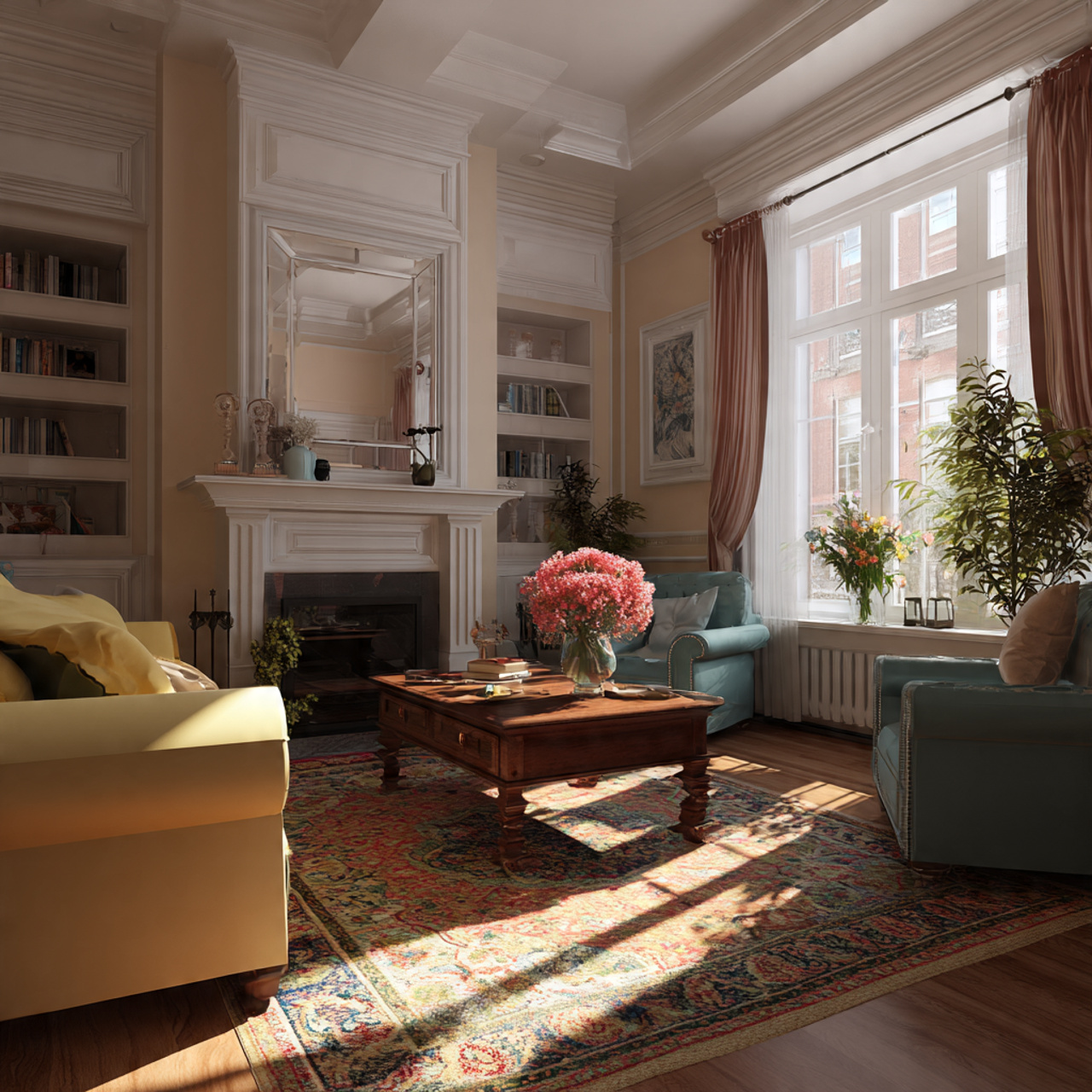
Most people realize too late that house interior design isn’t about following trends or filling rooms with furniture. It’s about creating a framework that supports how you actually move through your day, how light shifts from morning to evening, and whether spaces feel intentional or accidentally assembled over time.
This guide walks through 18 house interior decisions that hold up year after year, based on what people wish they’d understood earlier. You’ll find specific color guidance with HEX codes, material combinations that age well, and the kind of spatial planning that prevents rooms from feeling either too staged or too chaotic.
Why House Interior Design Feels More Important Now
People are spending more consecutive hours inside their homes than they have in decades, which means every room is being tested in ways it wasn’t before. A living room that looked fine for weekend evenings now needs to handle work calls, exercise routines, and the kind of extended presence that reveals whether a space actually works. House interior design has shifted from aesthetic preference to daily necessity, and homeowners are noticing what feels off.
Color & Material Authority for House Interior
Warm White (#F5F3EF) works on main walls in living areas and hallways. This shade has enough warmth to prevent sterility but stays neutral enough to let furniture define the room. Pair with linen upholstery and natural oak. Eggshell finish works best for high traffic areas.
Soft Greige (#D7CFC1) is a cool leaning greige that works in bedrooms and dining rooms where you want calm without coldness. Excellent with brass hardware and cotton bedding. Matte finish keeps it sophisticated.
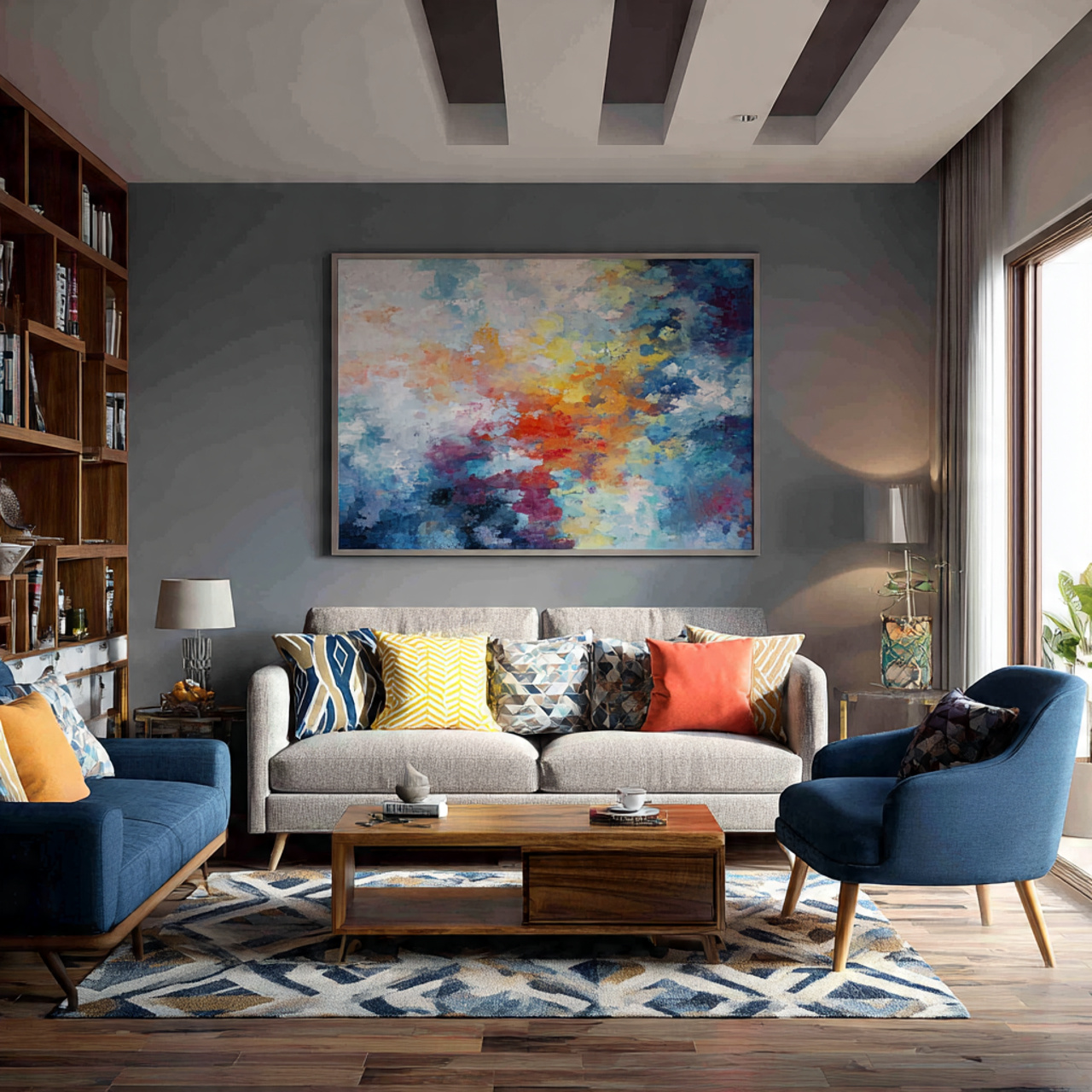
Charcoal Gray (#4A4E5A) works best as an accent wall in spaces with strong natural light, or on built in cabinetry. This shade adds weight and structure without going fully black. Works beautifully with white oak flooring and wool textiles.
Warm Taupe (#9B8B7E) is versatile in transitional spaces like hallways, mudrooms, and secondary bedrooms. Holds up well against both warm and cool palettes. Pair with linen curtains and natural fiber rugs.
Soft Sage (#B8C5B4) works sparingly in kitchens, bathrooms, or reading nooks where you want a gentle color presence without committing to full saturation. This shade pairs with marble, light woods, and cotton.
Cream (#FAF6F0) works for ceilings and trim where you want warmth without adding visual weight. This shade reflects light beautifully and prevents stark white contrast.
Room Size & Lighting Quick Guide
Small rooms (under 150 sq ft):
Use lighter walls in warm white or cream. One deeper accent works if light is strong. Avoid heavy drapes. Place mirrors opposite windows.
Large rooms (over 250 sq ft):
Deeper tones like charcoal or warm taupe work on feature walls but need lighter anchoring colors. Use layered lighting, not overhead alone.
North-facing rooms:
Cool, indirect light all day. Warm white or cream prevents grayness. Avoid cool greiges unless a subdued mood is intentional.
South-facing rooms:
Warm, direct light. Cooler tones like soft greige balance warmth. Darker accent walls work well.
East-facing rooms:
Bright mornings, dim afternoons. Mid-tones like warm taupe adapt best.
West-facing rooms:
Late-afternoon glow. Soft sage or warm white reduces evening harshness.
House Interior That Matters More Than Trends
Start with Traffic Paths Before Furniture Placement
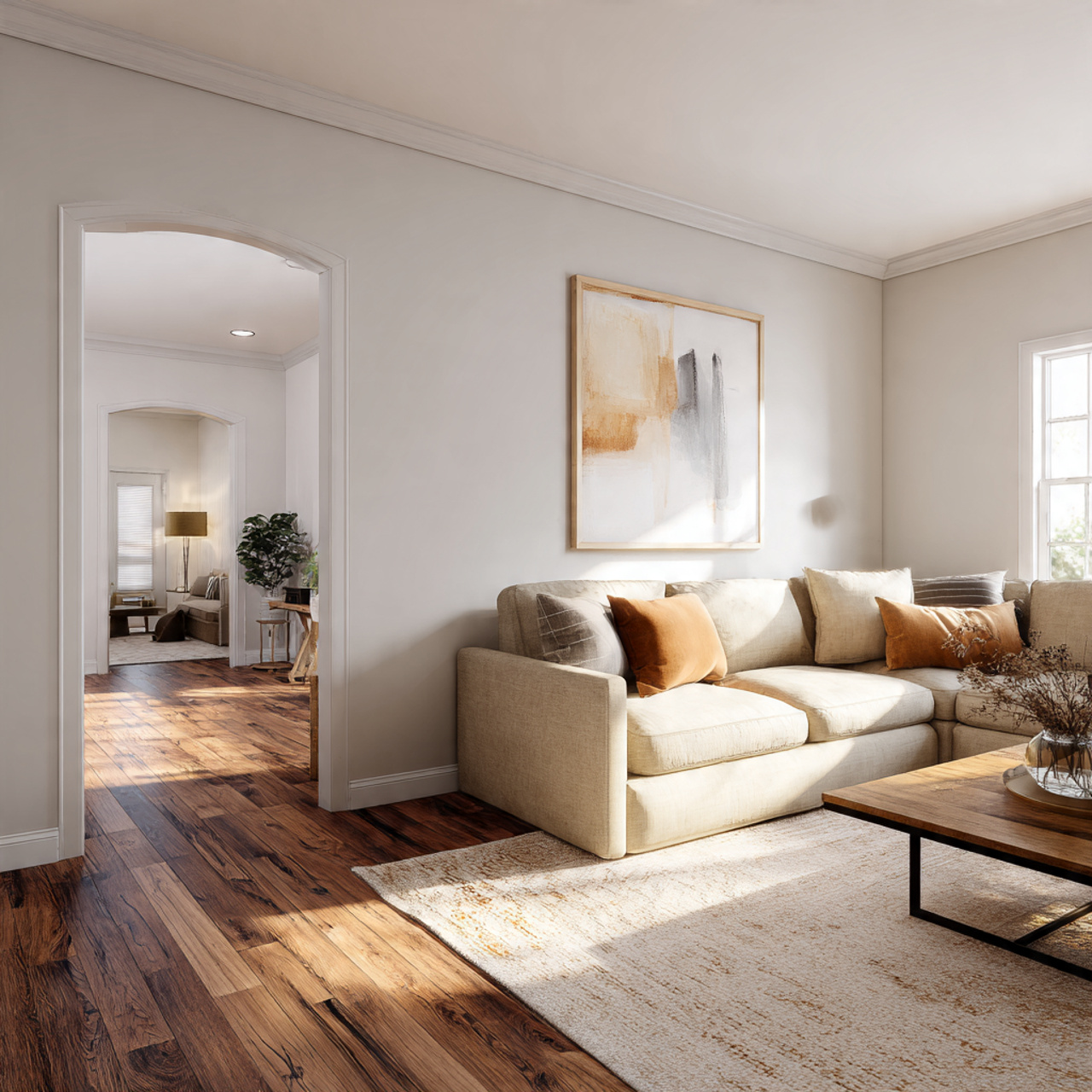
Most people arrange furniture first and realize later the room doesn’t flow. Walk your space and notice how you naturally move between doors, windows, and adjoining rooms. Those paths should remain clear once everything is in place.
When furniture blocks movement, daily irritation builds quietly. Large pieces work best parallel to walls or aligned with entryways, not cutting across circulation. Effortless homes respect how the space is actually used.
The houses that feel most effortless are the ones where you can move from room to room without thinking about it.
TIP: Walk your usual routes for a few days before placing large furniture.
Anchor Each Room with One Permanent Element
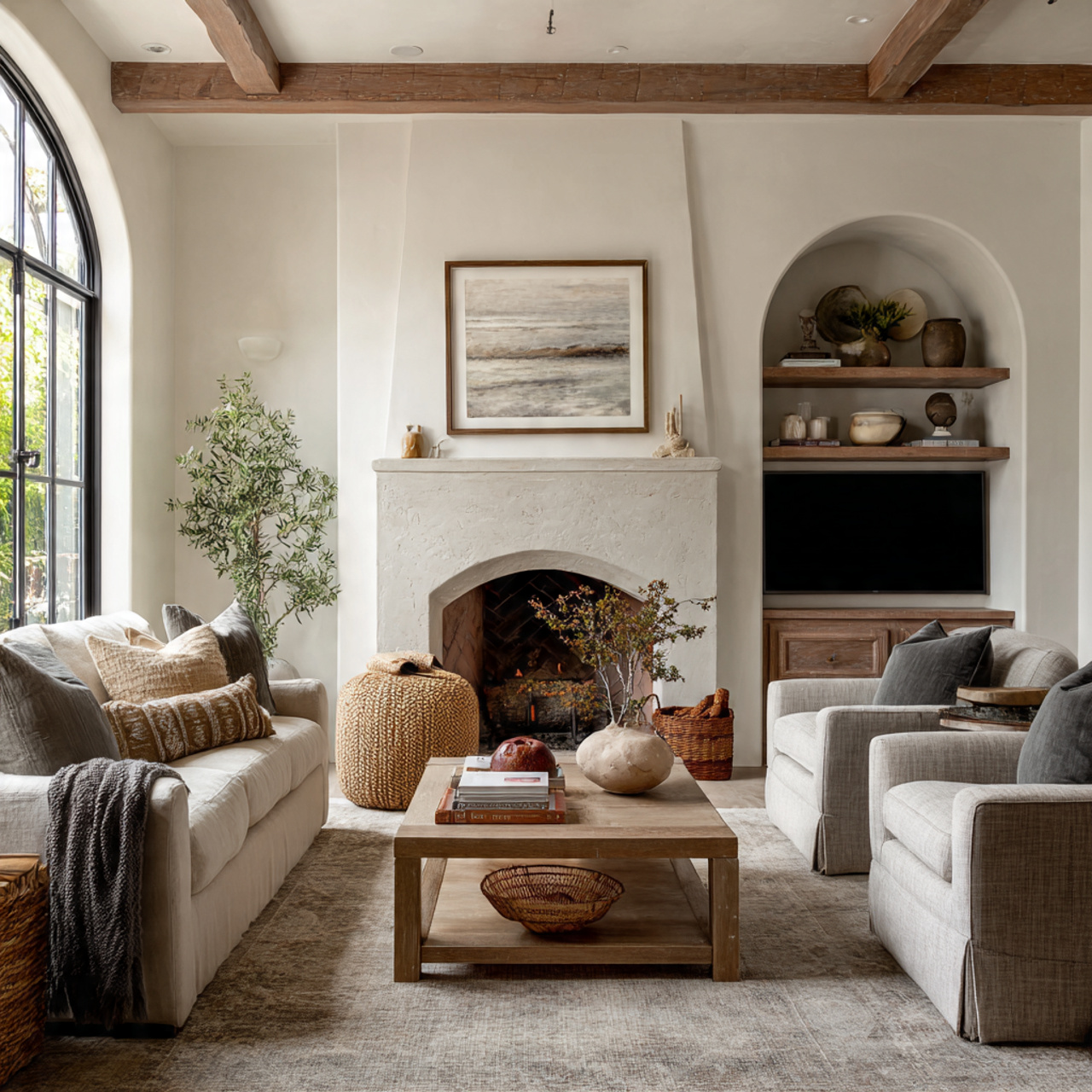
Rooms without an anchor feel unsettled and incomplete. An anchor might be a fireplace, built-in shelving, or the bed wall—something that stays put while everything else responds to it.
Once identified, placement becomes easier and more balanced. Without that fixed point, rooms drift and constant rearranging follows.
The homes that feel most complete have a structural logic you can sense even if you can’t articulate it.
TIP: If no architectural anchor exists, add floating shelves or a picture ledge.
Use Symmetry in Public Rooms, Asymmetry in Private Ones
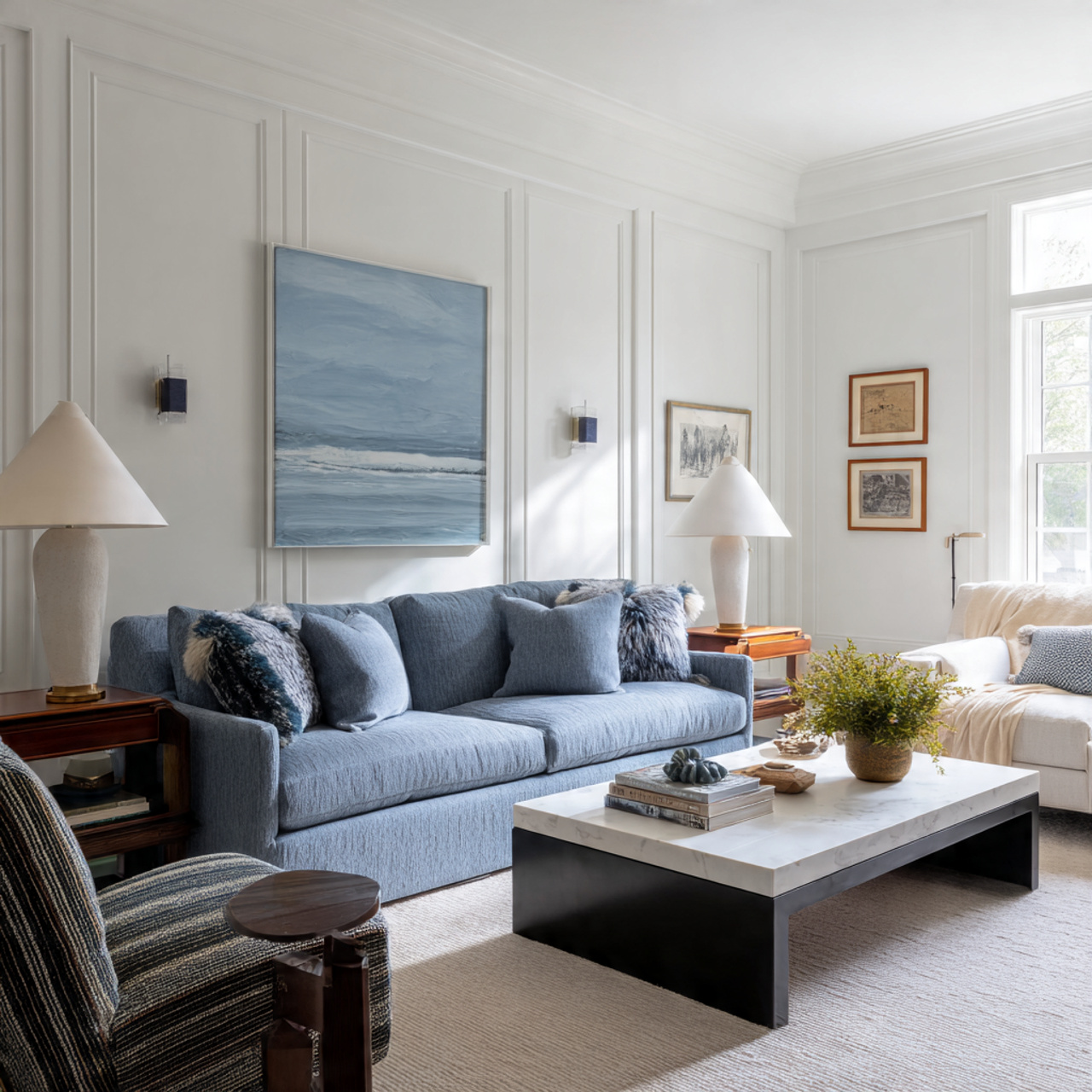
Symmetry creates calm in shared spaces like living and dining rooms. Balanced lamps, centered artwork, and paired furniture give visual clarity and rest.
Asymmetry feels more personal in bedrooms and offices. Using one strong element instead of matching pairs makes the room feel lived in rather than staged.
Fully asymmetrical living rooms can feel chaotic when you’re trying to relax.
TIP: If symmetry feels stiff, soften it with one organic piece like a plant or textured throw.
Layer Three Textile Weights in Every Room
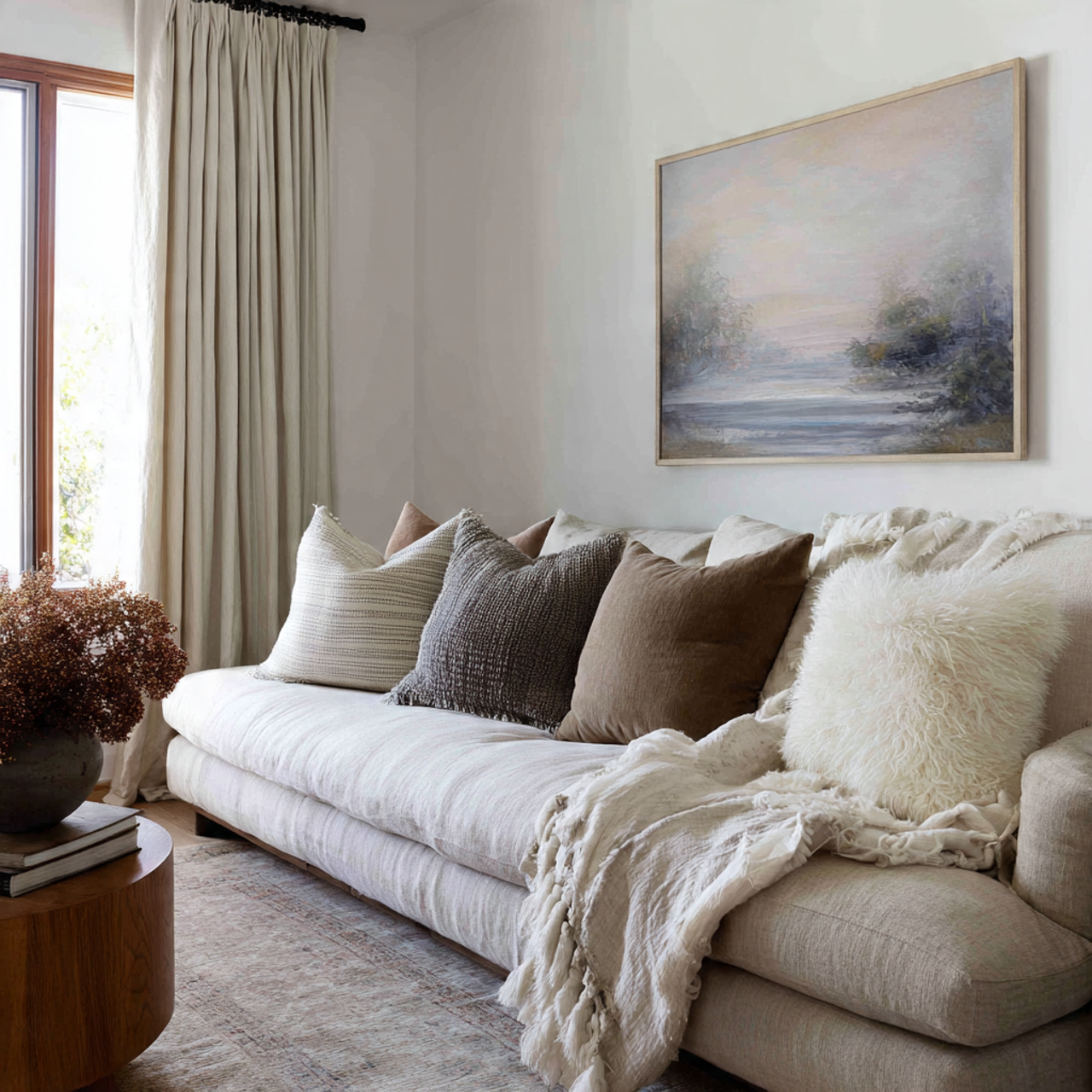
Rooms often feel thin when all textiles carry the same weight. A sofa with pillows isn’t enough if everything feels equally light. The space needs one heavier layer, one mid-weight layer, and one lighter layer to feel complete.
This mix creates depth without clutter and softens how sound moves through the room. Textiles absorb echo, which is why spaces with only hard surfaces feel loud even when quiet. Fabric changes comfort as much as appearance.
People often add furniture when the room actually needs fabric. Once layers vary in weight, the space feels intentional rather than unfinished.
TIP: Start with the heaviest textile and layer lighter ones last.
Mix Warm and Cool Metals Within the Same Room
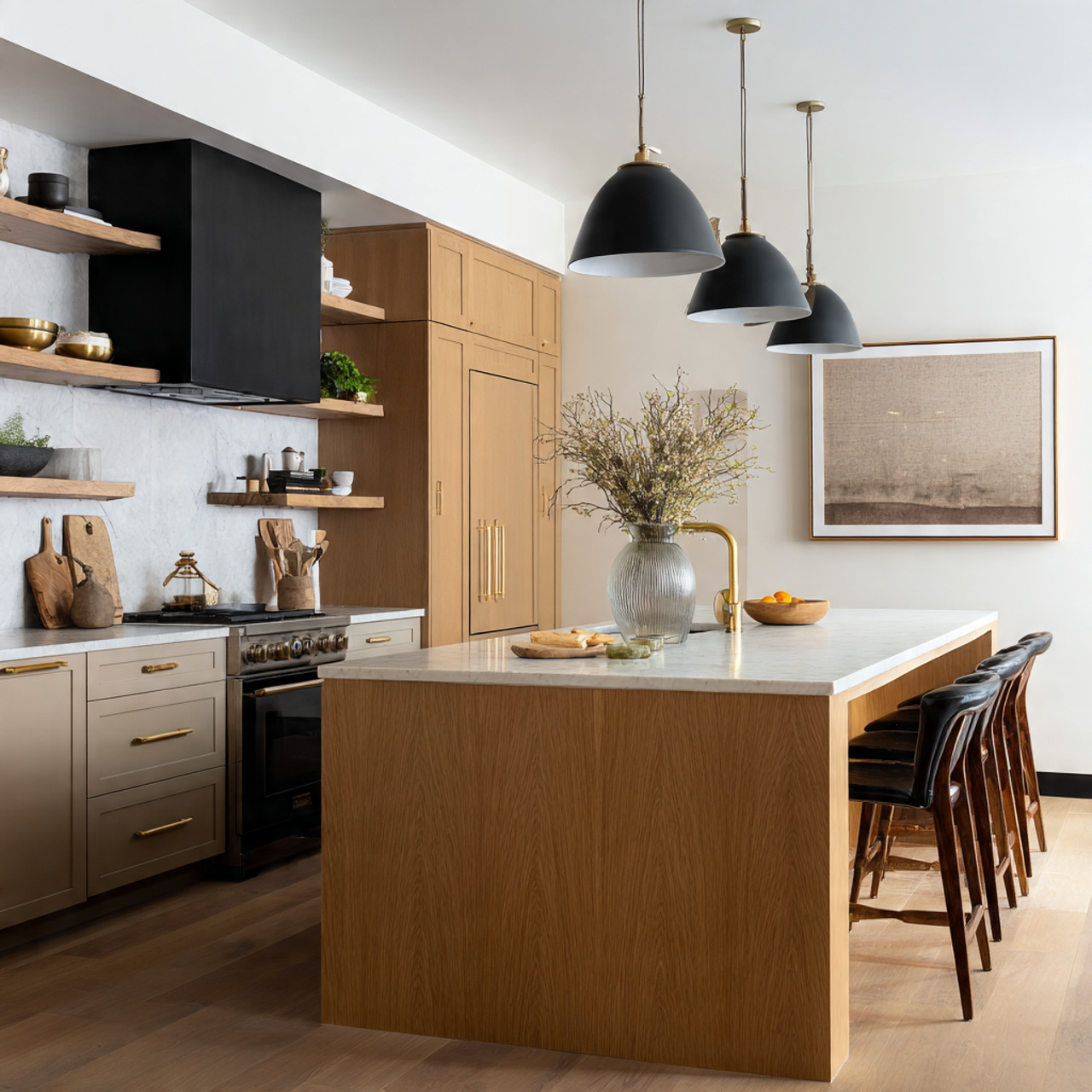
Perfectly matched metals make interiors feel overly styled. Real homes naturally mix finishes over time, such as brass with black or nickel with bronze. Balance matters more than uniformity.
Different metals work well when they serve different purposes. Hardware should match within its function, but nearby accents don’t need to. Visual separation keeps the mix calm and intentional.
Spaces feel more collected when variation is allowed. Limiting everything to one metal removes character.
TIP: Start with two metals and keep the ratio uneven, around 70/30.
Choose Furniture That Shows Wood Grain, Not Stain
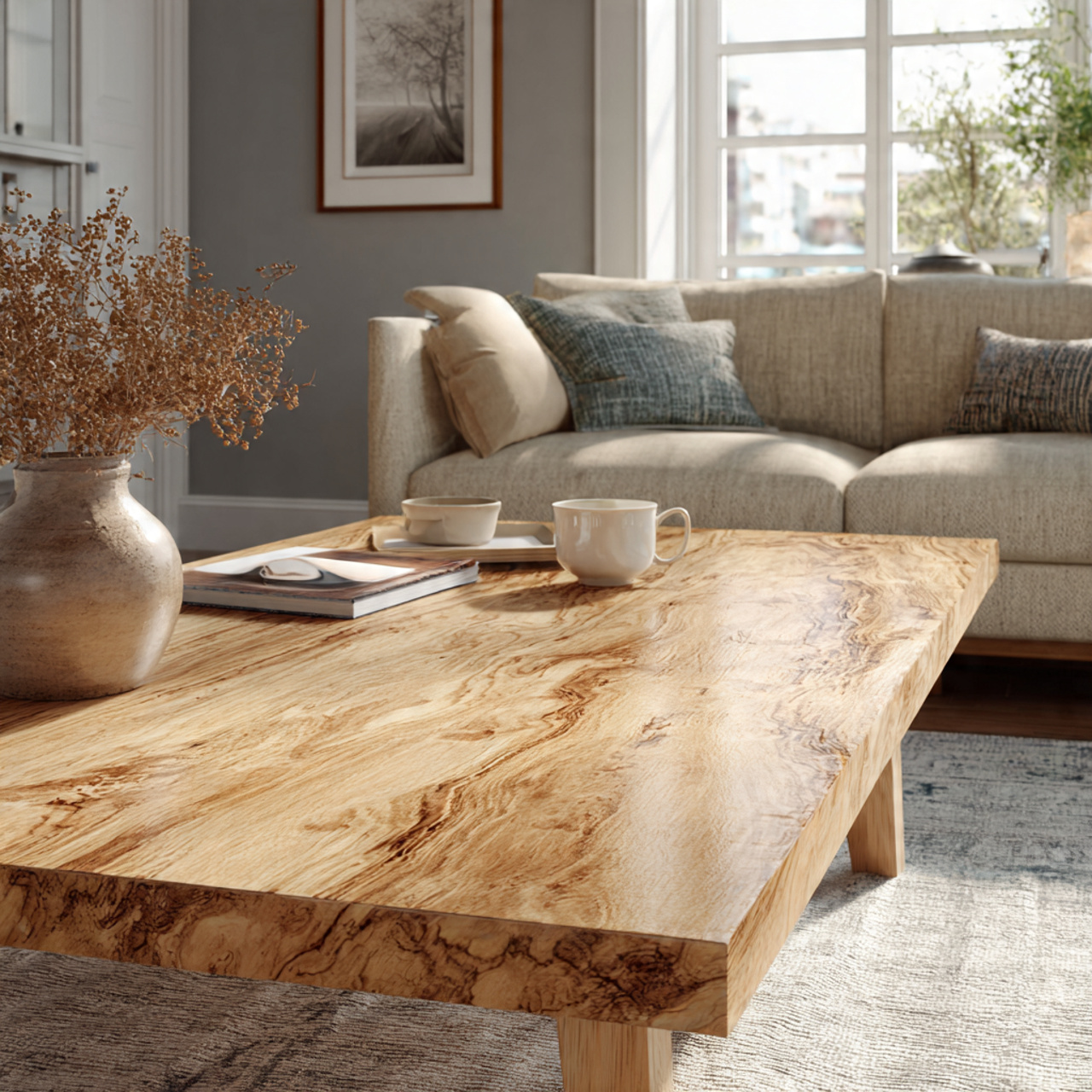
Dark stained wood shows wear quickly and dates faster. Scratches stand out and heavy finishes hold dust. Natural wood ages better because the grain itself is the design.
This doesn’t mean unfinished wood, but finishes that enhance rather than hide. Woods like white oak, walnut, and maple develop character and can be refreshed over time.
Furniture regrets often come from pieces that looked bold but aged poorly. Natural wood performs better in real homes.
TIP: Refinish dark stained pieces before replacing them.
Add One Large Scale Natural Element Per Room
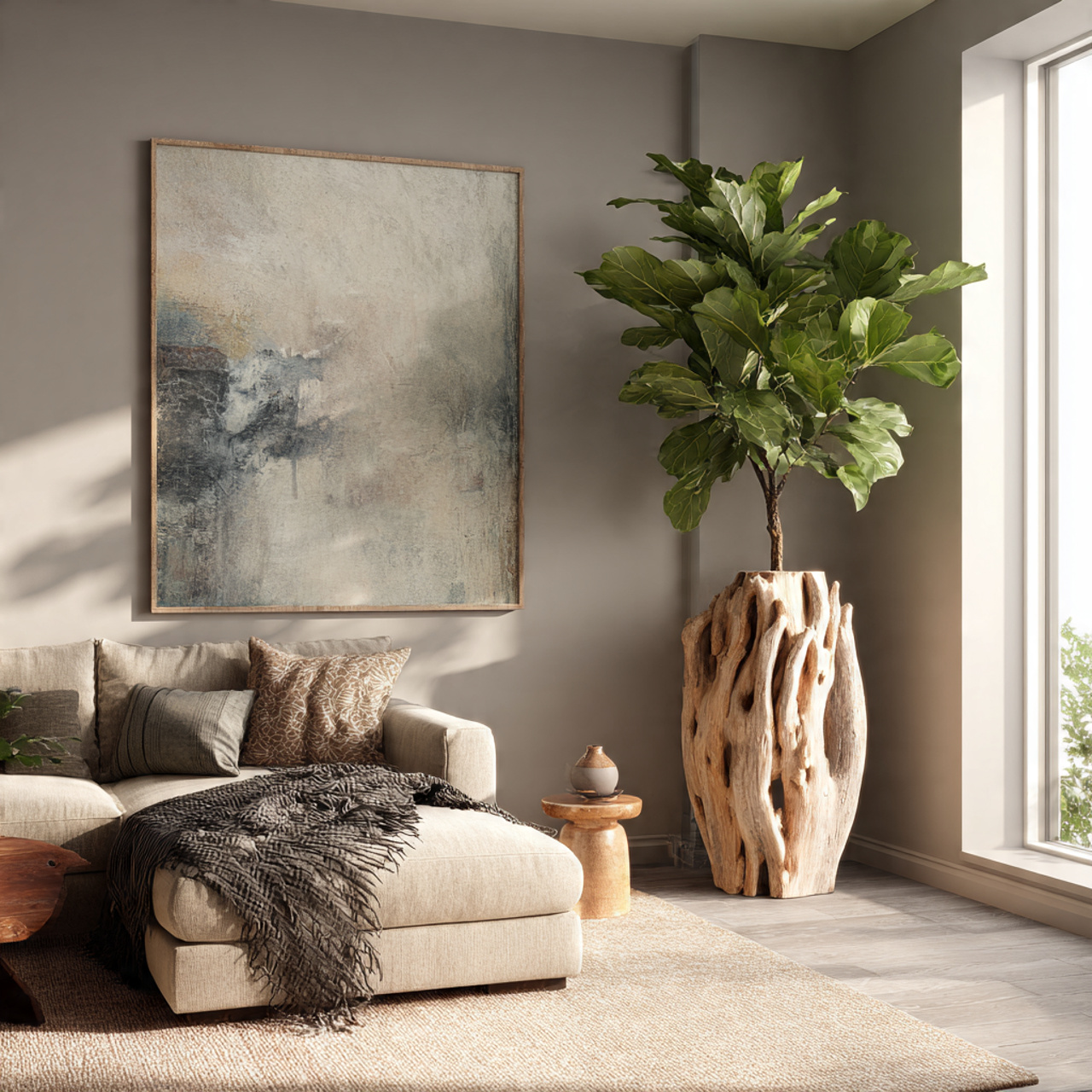
One large natural element has more impact than several small ones. Oversized plants or branch arrangements add presence without clutter. Scale brings calm and intention.
Natural elements shift with light and season, keeping rooms from feeling static. This subtle movement adds life that manufactured decor can’t replicate.
Filling space with small objects creates visual noise. One substantial natural piece grounds the room.
TIP: Choose plants based on real light conditions, not appearance.
Use Your Darkest Color Below Waist Height
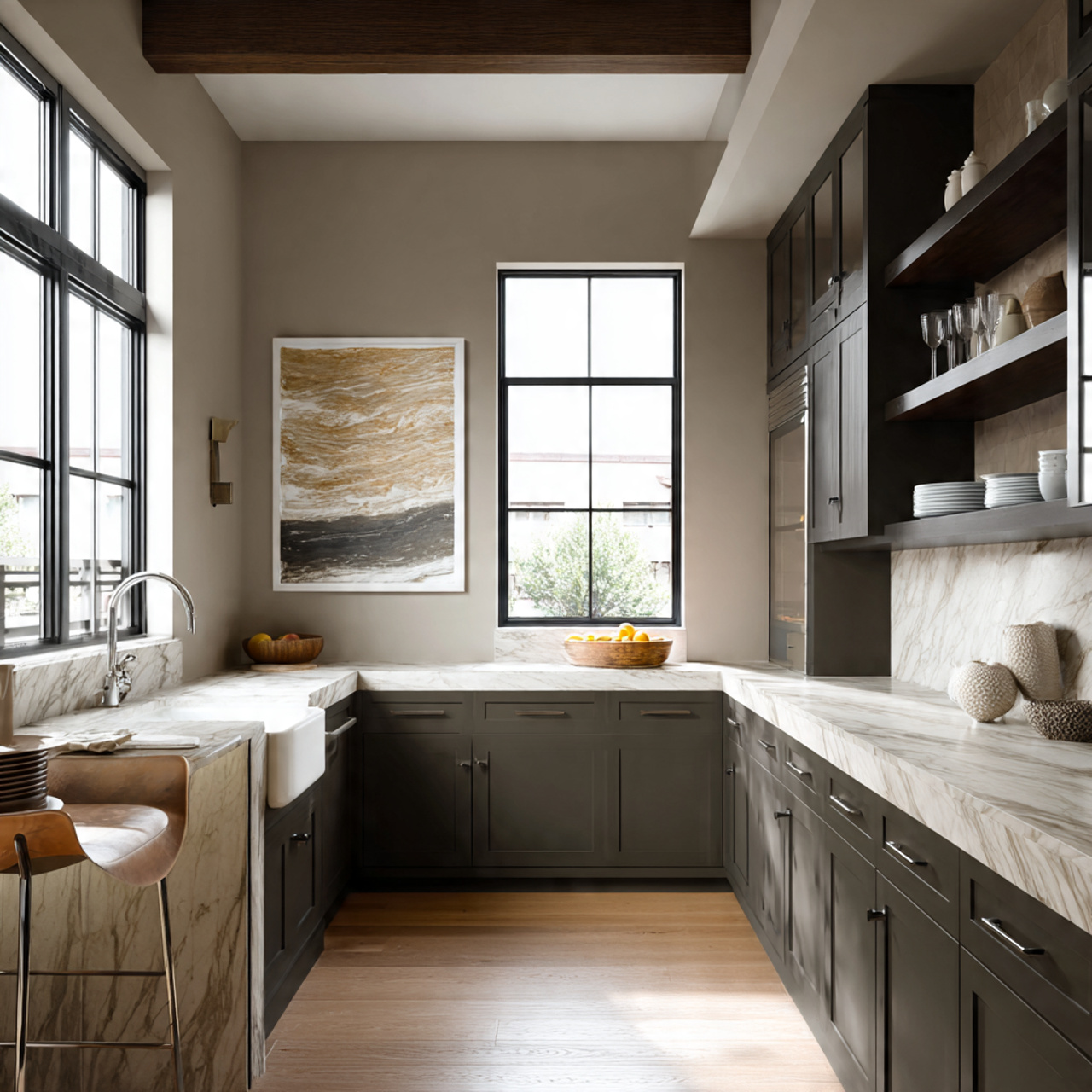
Dark walls can feel heavy, but dark lower cabinets, baseboards, or wainscoting add grounding without overwhelming a space. This approach works particularly well in kitchens and bathrooms where you want richness but need to maintain brightness above eye level.
Charcoal gray lower cabinets with warm white uppers create contrast without cutting the room in half visually. Dark baseboards in a soft greige room add definition that white baseboards can’t. This distribution of tone mimics how light naturally falls.
Rooms that feel top heavy often have dark upper walls with light floors and trim. Reversing this creates stability.
TIP: Test your darkest color on baseboards first because it’s the easiest place to gauge whether the tone works.
Keep Ceilings One Shade Lighter Than Walls, Not White
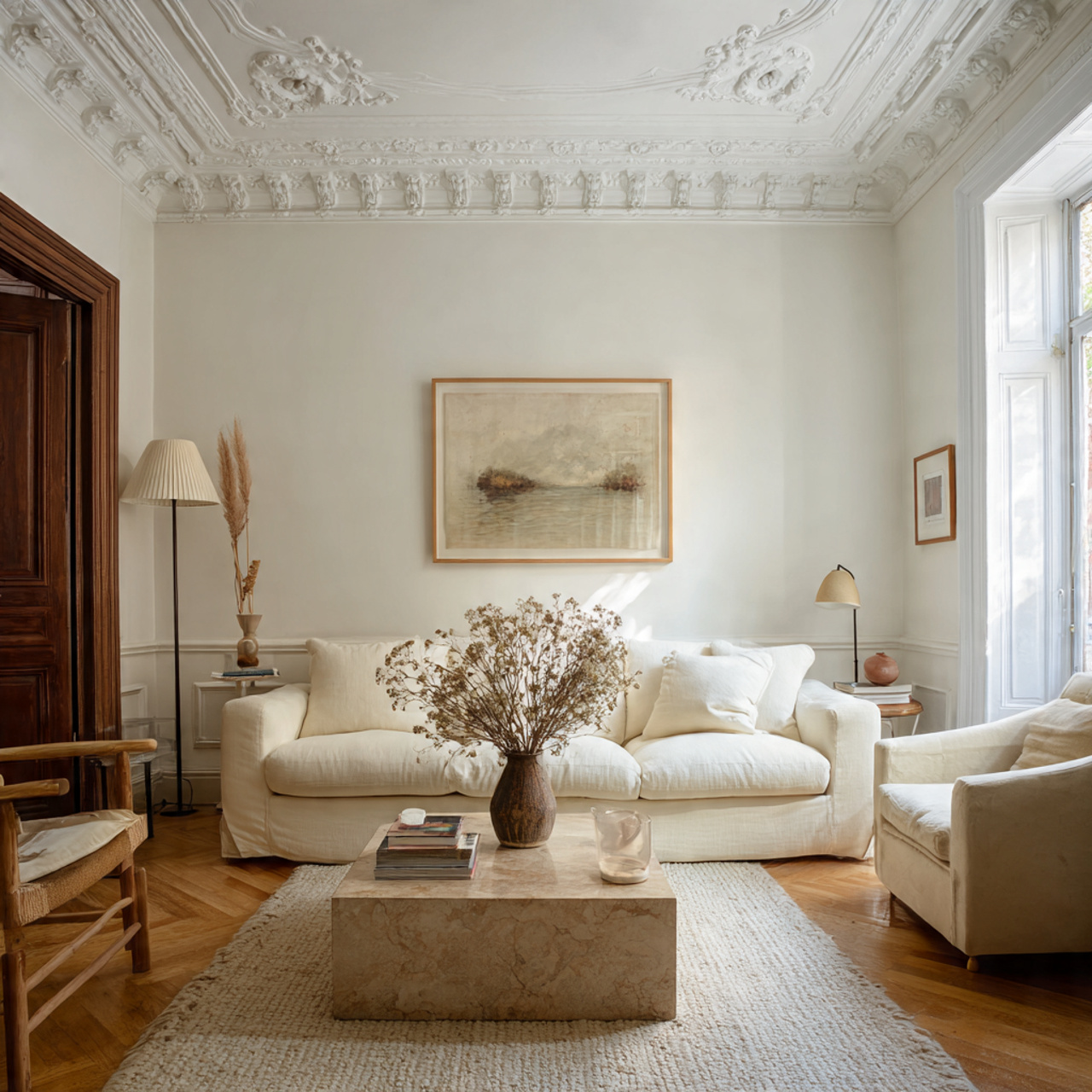
Pure white ceilings create harsh contrast that makes walls look darker than they are. A ceiling that’s one shade lighter than your wall color, cream instead of white or soft greige instead of bright white, maintains brightness while eliminating the visual cut line between wall and ceiling.
This approach also makes rooms feel taller because there’s no abrupt stop where the eye hits pure white. The transition is gradual, which reads as more space even though the dimensions haven’t changed.
People often default to white ceilings without questioning it, then wonder why their carefully chosen wall color feels off. The ceiling is affecting the entire room’s tone.
TIP: If you’re using warm white walls, use cream ceilings, never stark white unless you want a deliberately crisp modern contrast.
Create Contrast Through Finish, Not Color
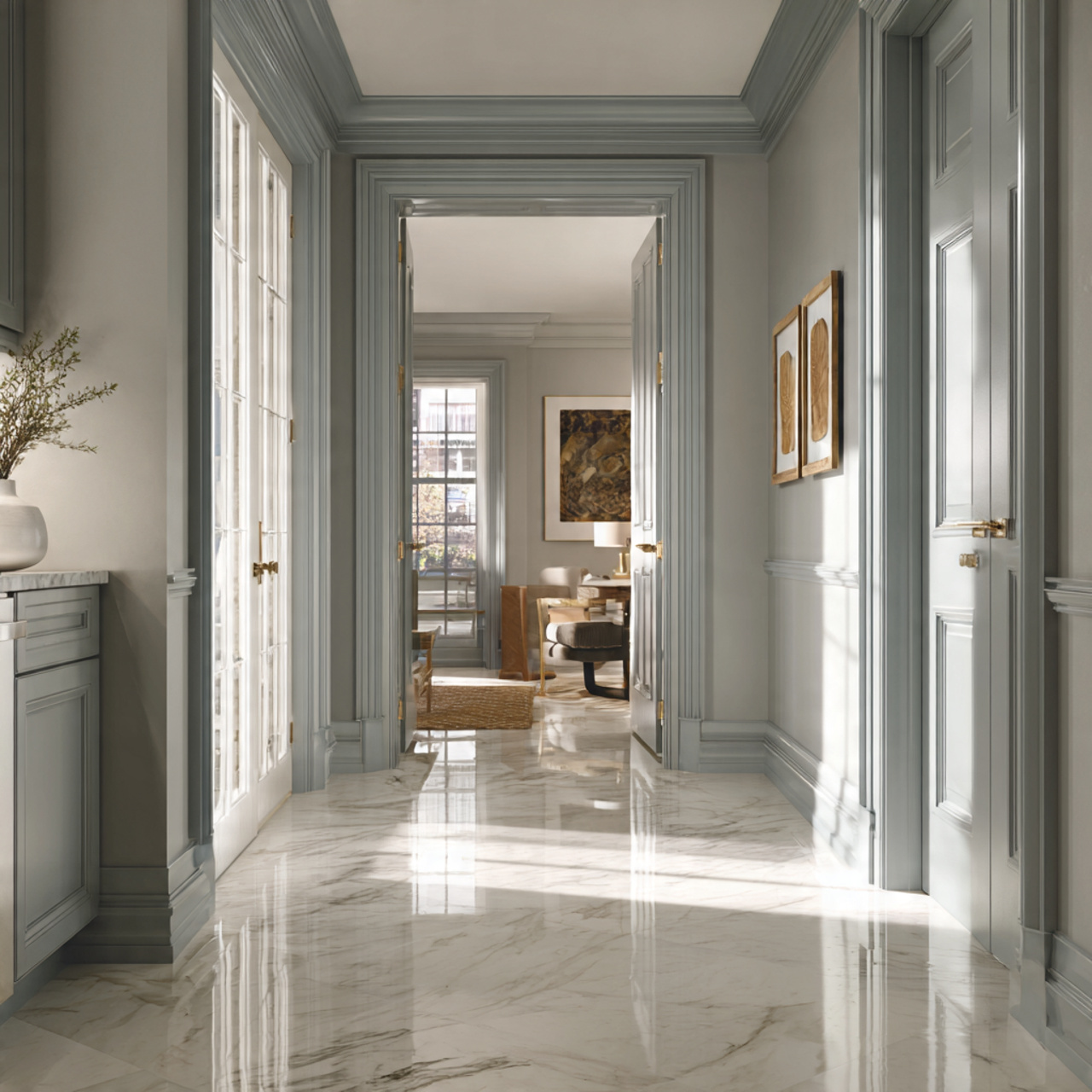
You don’t need bold color to create visual interest. Matte walls with satin trim, matte cabinets with polished countertops, eggshell paint with semi gloss doors add depth without introducing new colors. Light moves differently across each surface, which creates dimension.
This strategy is particularly useful in small spaces where too much color variation can feel chaotic. A powder room in one soft color with three different finishes feels more complex than a powder room with three colors in the same finish.
Finish also ages differently than color. Matte hides imperfections but shows scuffs. Satin reflects light but highlights texture.
TIP: Use matte on walls, eggshell on trim, and semi gloss on doors for a balanced finish strategy.
Add One Saturated Accent in an Unexpected Place
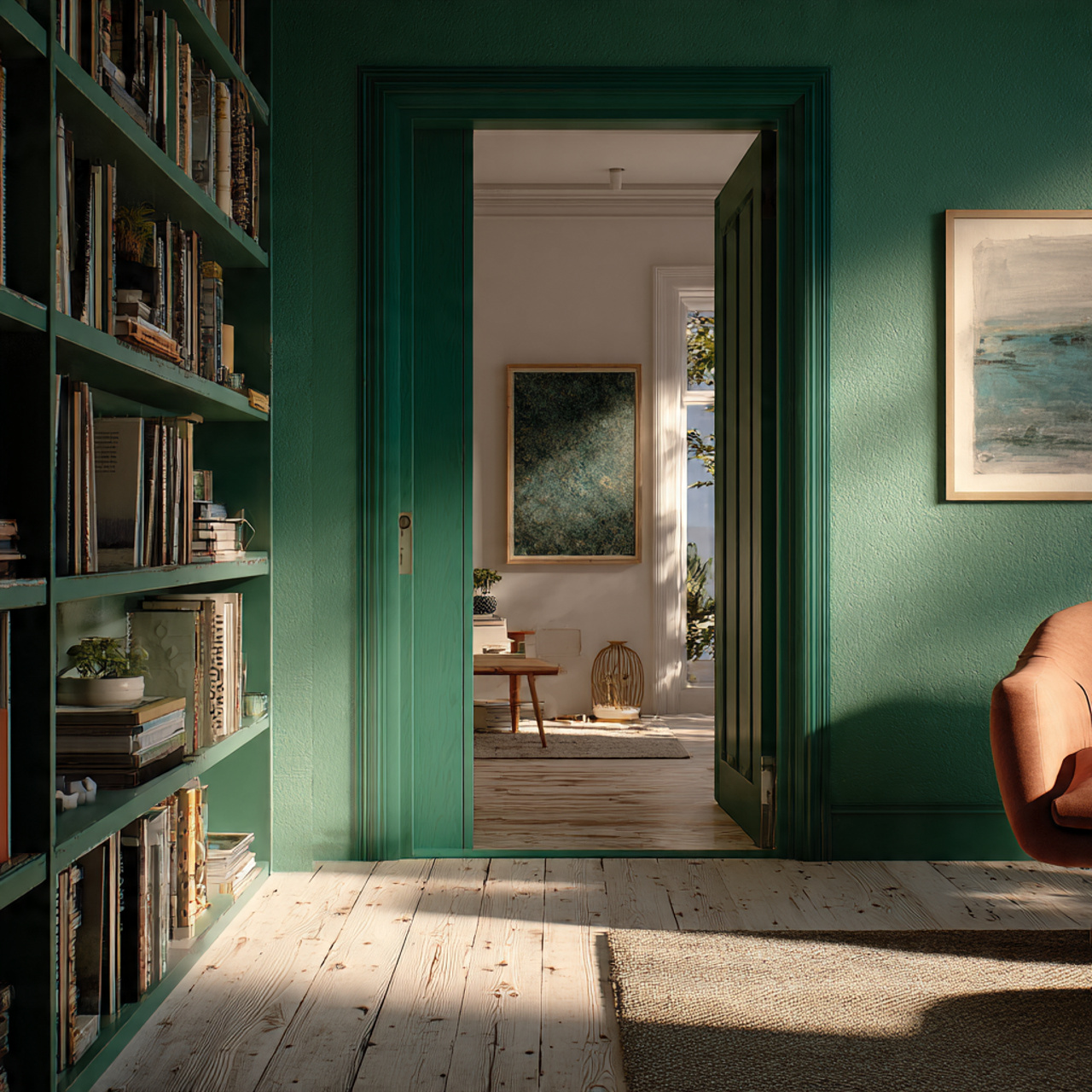
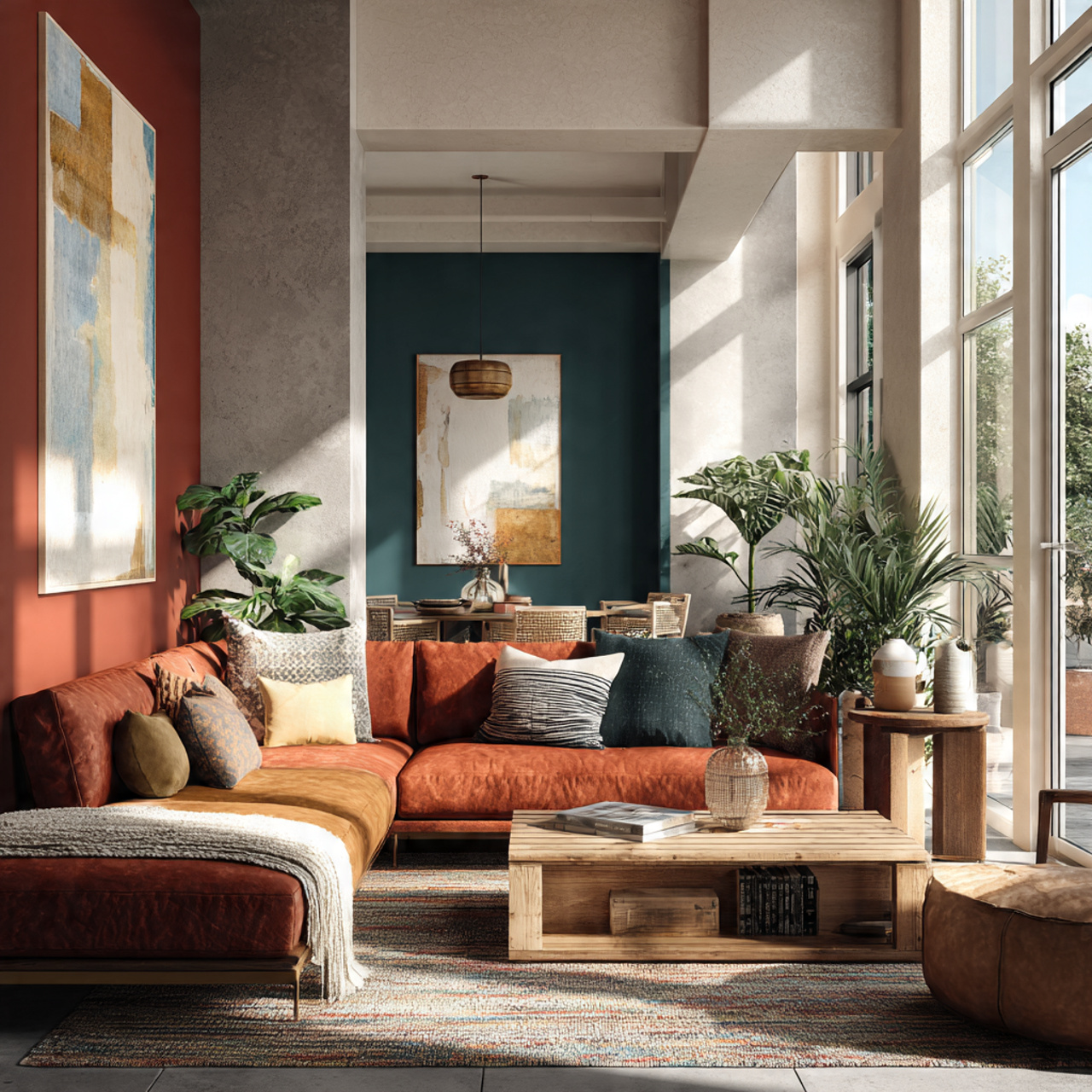
A single hit of real color, deep terracotta, forest green, or navy blue, works best when it’s not where people expect it. Inside a bookshelf, on the back of a door, inside a closet, or on the ceiling of a small powder room. These hidden moments of color feel personal and intentional without dominating a space.
When saturated color is everywhere, it stops feeling special. When it’s in one deliberate spot, it creates surprise and memory. People remember the green inside your cabinet more than they’d remember green walls.
This approach also lets you experiment with color without committing an entire room to it. If you tire of the terracotta, repainting the inside of a bookshelf is manageable.
TIP: Choose a color you’d wear because if you wouldn’t put it on your body, don’t put it in your house.
Invest in Lighting That Adjusts, Not Just Illuminates
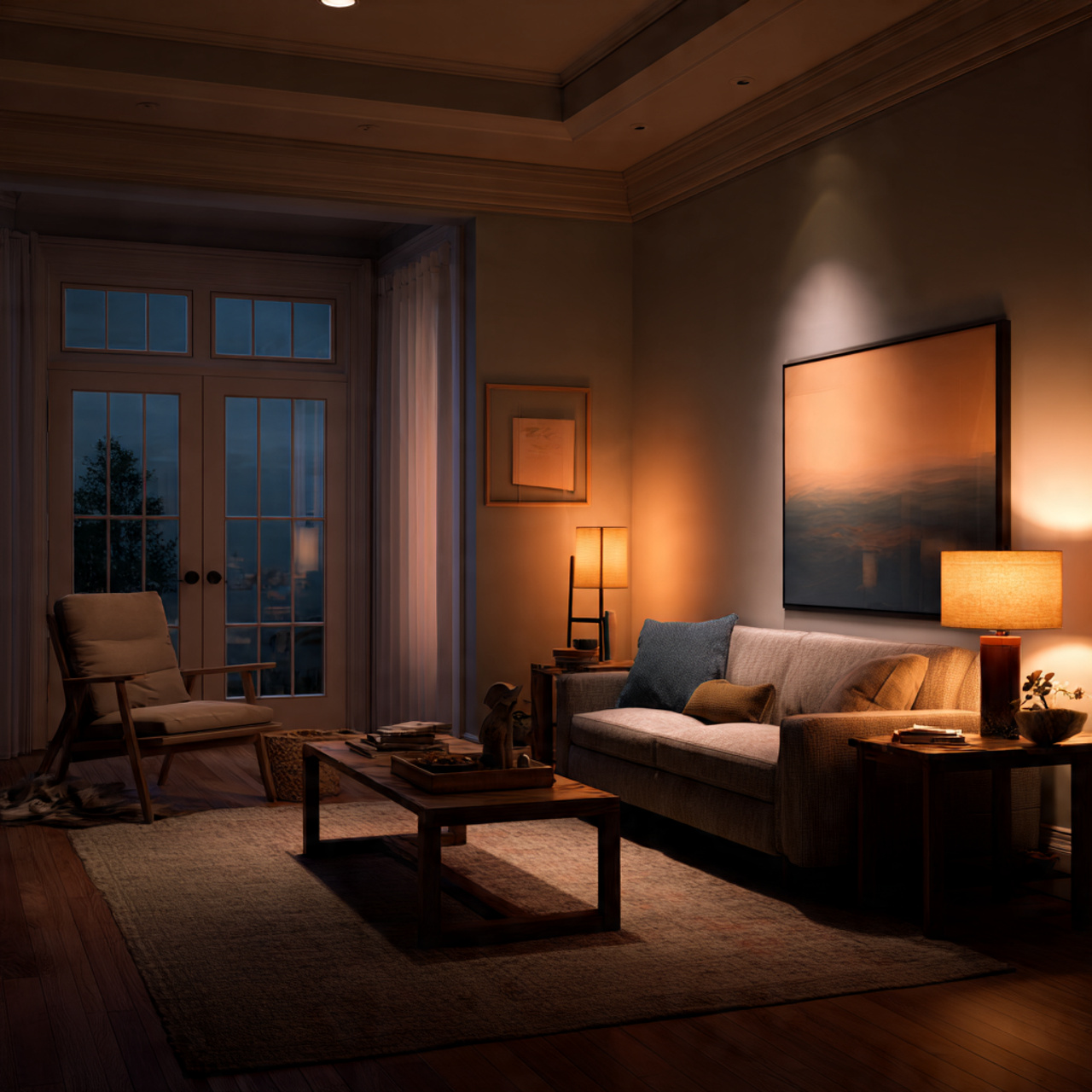
Overhead lighting alone flattens a room. Spaces that feel most livable have multiple light sources at different heights. A floor lamp for reading, a table lamp for ambiance, sconces for task lighting. More importantly, these sources should dim. Fixed brightness lighting locks you into one mood, and most rooms need to shift from functional brightness during the day to softer light in the evening.
Dimmable LEDs have improved significantly, but not all of them dim smoothly. Test before buying. Warm white at 2700K to 3000K works better in living spaces than cool white, which feels clinical.
People regret hardwired overhead fixtures that can’t adapt. The best house interiors allow you to control light intensity and placement independently.
TIP: Install dimmer switches on every overhead fixture.
Choose One Statement Piece Per Room, Not Per Wall
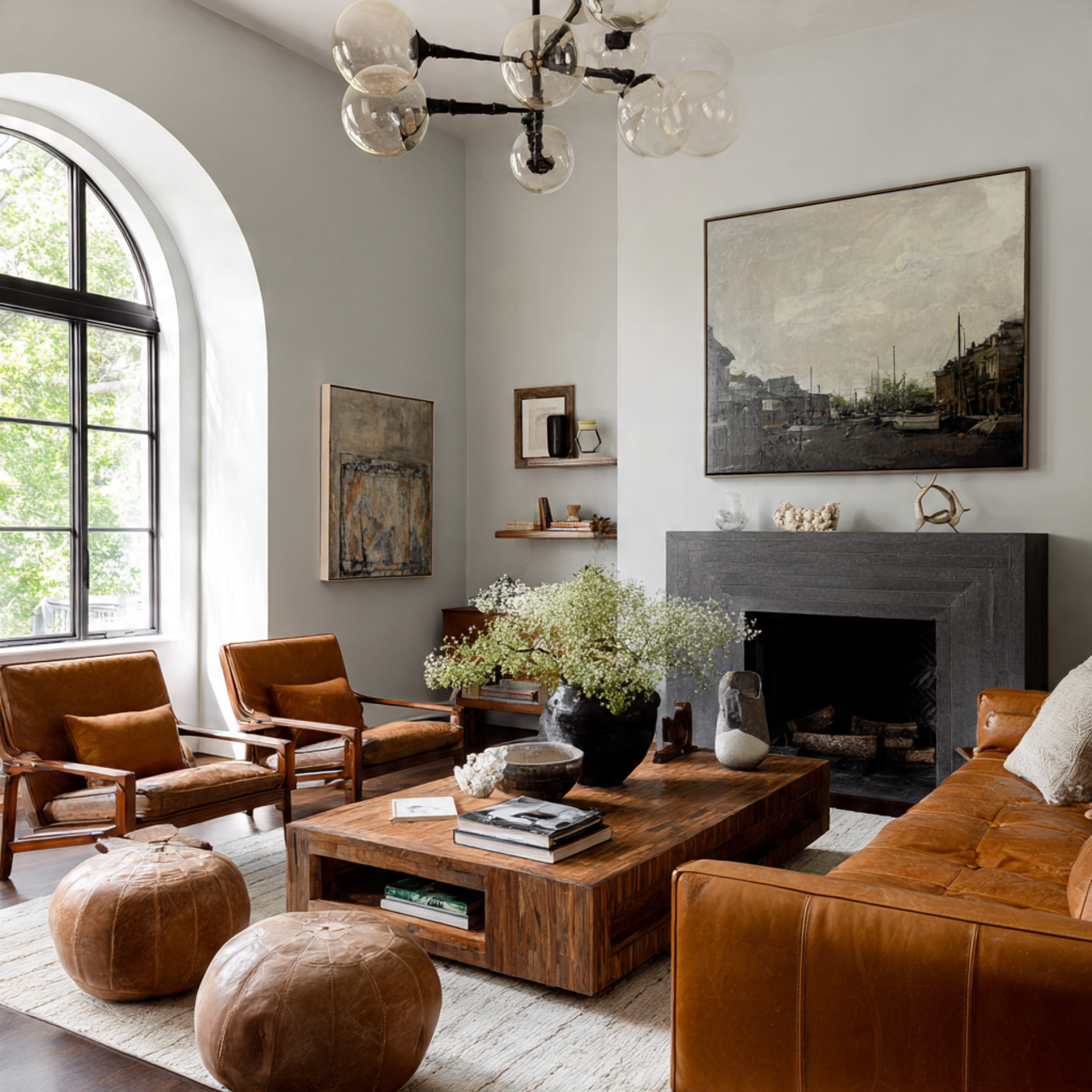
A statement piece should stand alone. When every wall has something bold, a gallery wall here, a large mirror there, an oversized clock across the room, the space feels competitive. Your eye doesn’t know where to land, so it keeps moving, which is tiring.
One piece that matters, a substantial piece of art, a unique light fixture, or an architectural element, gives the room a clear point of interest. Everything else can be quieter. This doesn’t mean the room is empty. It means there’s hierarchy.
Rooms that feel cluttered often aren’t overfilled with objects. They’re overfilled with visual demands.
TIP: If you love multiple pieces, rotate them seasonally rather than displaying everything at once.
Design Around Silence, Not Sound
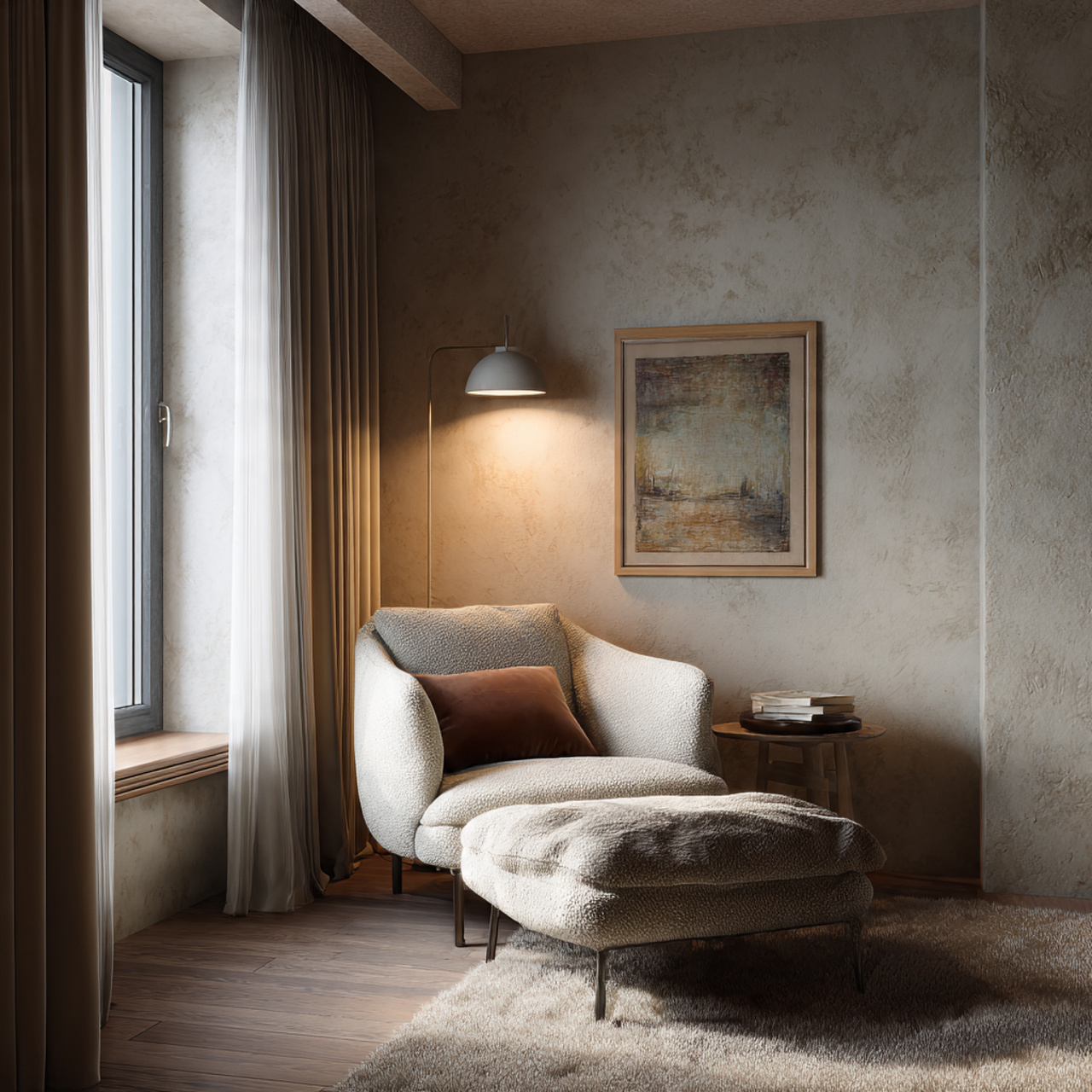
Most house interior decisions focus on what you see, but how a room sounds matters just as much. Hard floors, bare walls, and minimal textiles create echo. Conversations feel louder, footsteps announce themselves, and the space never fully relaxes. Adding rugs, curtains, upholstered furniture, and wall texture absorbs sound without requiring acoustic panels.
This is particularly important in open plan layouts where sound travels freely. A living room that shares space with a kitchen needs textile layers to prevent noise from dominating.
People often realize too late that their beautifully minimal room is acoustically uncomfortable. Sound quality affects how long you want to stay in a space.
TIP: Clap once in an empty room and if you hear a sharp echo, the space needs more textile absorption.
Leave One Wall Completely Open
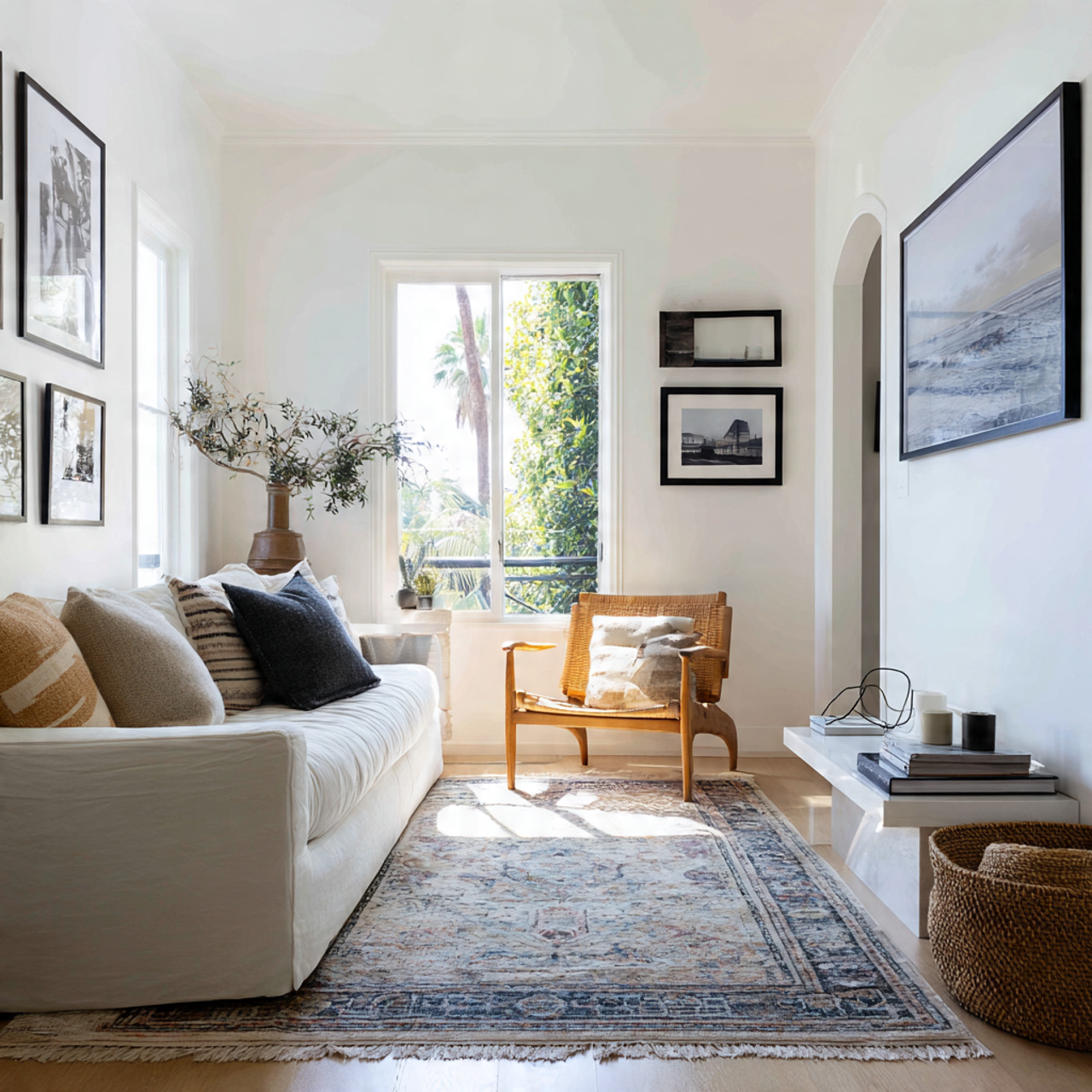
Not every wall needs something on it. One bare wall per room creates visual rest and makes the room feel larger. This is especially true in smaller spaces where the instinct is to maximize every surface. An empty wall isn’t wasted space. It’s breathing room.
This wall can hold a console table or a single plant, but it shouldn’t have art, shelves, or layered decor. It’s the pause between statements.
Homes that feel cramped often have every surface activated. Homes that feel spacious have deliberate emptiness.
TIP: Choose the wall opposite your main seating area because it’s the one you’ll look at most.
Personalize with Books and Objects You Actually Use
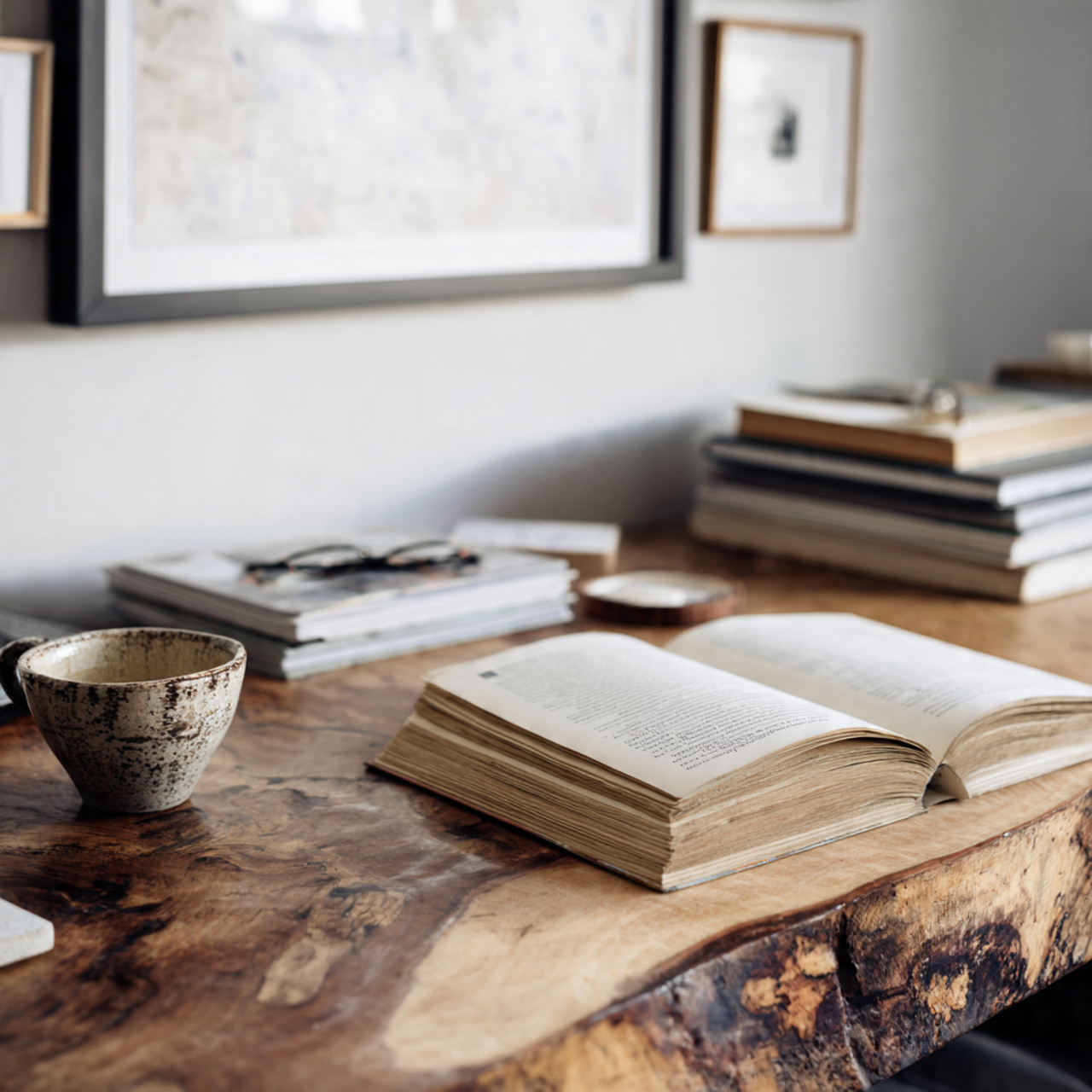
Decorative books you’ve never read signal staging, not living. The most authentic house interiors include books people reference, objects that get handled, and items with visible signs of use. A cookbook with stains, a novel with a bookmark still in it, a journal on a side table communicate that the space is occupied, not curated for display.
This doesn’t mean leaving clutter everywhere. It means the items you choose to display should reflect actual habits and interests. If you don’t cook, don’t style your kitchen with a stack of unused cookbooks.
People trust spaces that feel lived in more than they trust spaces that feel assembled. Authenticity comes through in small details.
TIP: Rotate displayed books seasonally based on what you’re actually reading or using.
Install Picture Ledges Instead of Hanging Every Frame
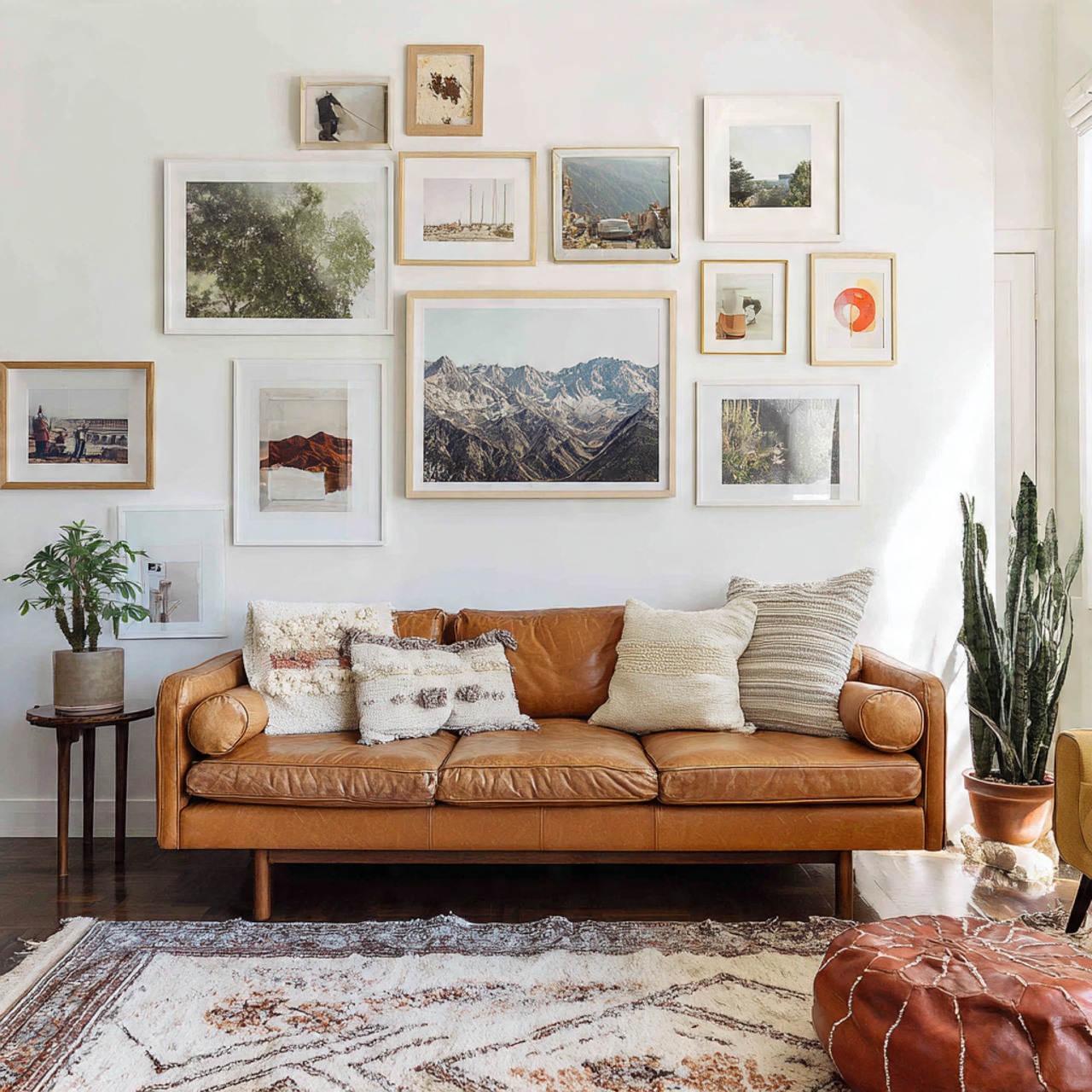
Picture ledges allow flexibility that nailed frames don’t. You can swap art, lean objects, layer pieces, and change the arrangement without creating new holes in the wall. They also create a more casual, collected look that feels less permanent and more adaptable.
Hanging art is a commitment. Ledges are a conversation. They let you test combinations, shift with seasons, and respond to how you’re using the room.
Homes that feel overly fixed often have everything hung and leveled to the point where change feels impossible. Ledges preserve the option to shift without requiring a full reinstall.
TIP: Install ledges at eye level, around 57 to 60 inches from the floor, for the most natural viewing height.
Keep Surfaces Mostly Clear, Not Completely Empty
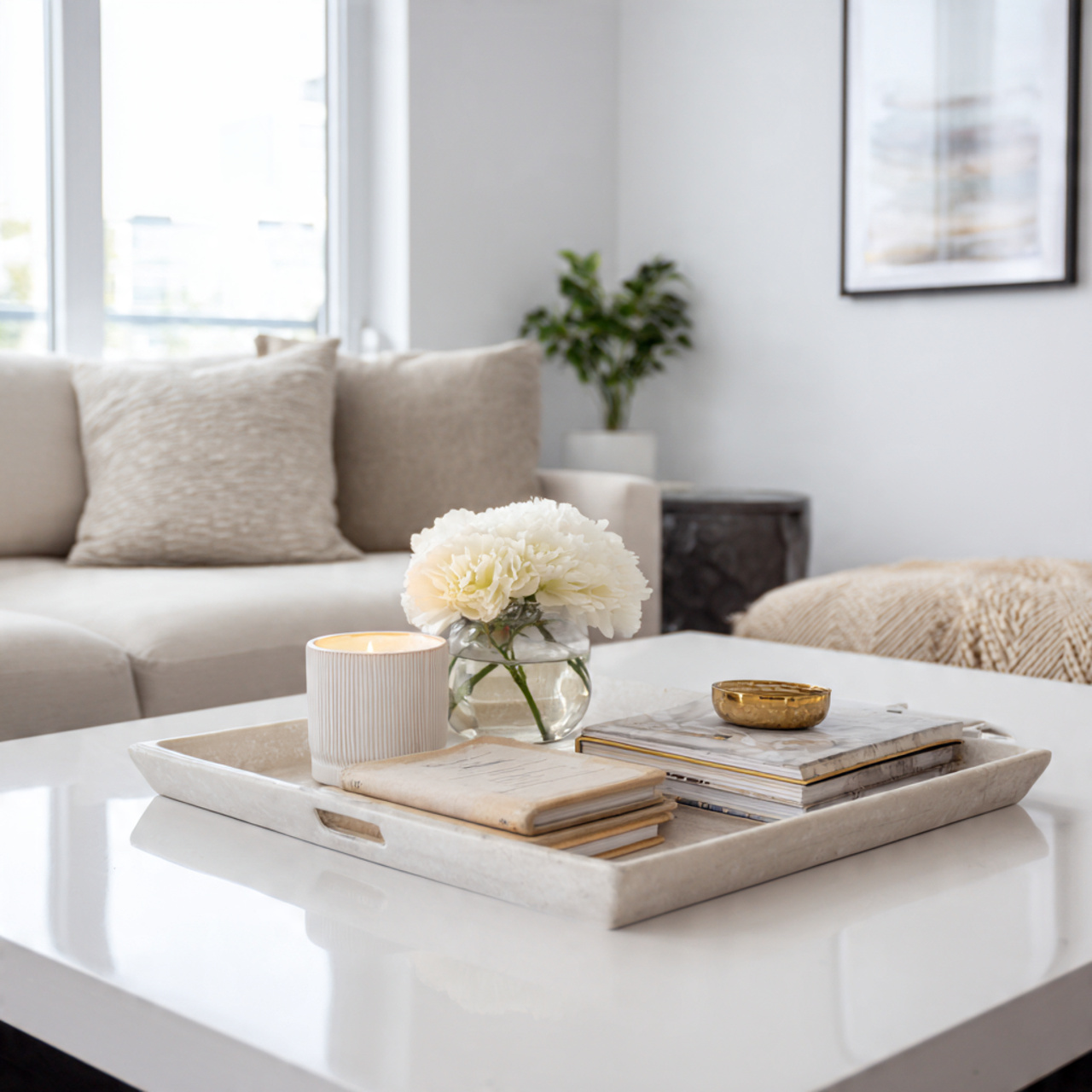
A completely bare surface looks unused. A cluttered surface looks chaotic. The balance is 60 to 70 percent clear space with intentional objects in the remaining area. On a coffee table, that might be a small tray with a candle and a book. On a nightstand, a lamp and one other item.
This approach maintains functionality while signaling that the space is active. It also makes daily tidying easier because there’s a clear baseline to return to, not an overwhelming array of objects that needs constant management.
People often swing between extremes. Either surfaces are piled high or completely bare.
TIP: Use the one tray rule where corralling small items on a tray makes them feel intentional instead of scattered.
Common Mistakes in House Interior Design
Choosing Furniture for the Room You Have
Oversized or delicate pieces often don’t match real daily use. What looks right in a showroom can disrupt movement at home. Buy after understanding how the room truly functions.
Ignoring Ceiling Height When Selecting Light Fixtures
Fixtures sized for taller ceilings can hang too low and crowd the space. Poor proportion affects comfort and sightlines. Always match lighting scale to ceiling height.
Painting Without Testing in Multiple Lights
Paint shifts from morning to evening and under artificial light. A shade that works at noon may fail at night. Test large swatches for several days before committing.
Buying Rugs That Are Too Small
Small rugs disconnect furniture and shrink the room visually. At minimum, front legs should rest on the rug. Proper scale anchors the entire layout.
Installing Open Shelving Without Considering Maintenance
Open shelves require regular cleaning and styling. Dust and clutter become visible quickly in everyday homes. Choose them only if you can maintain them consistently.
Frequently Asked Questions
How do I make a small house interior feel larger?
Use legged furniture, keep pathways clear, and place mirrors opposite windows. Visible floor space increases perceived openness.
What’s the best low-budget update?
Paint offers the highest impact for minimal cost. Swapping hardware or lighting refreshes the room quickly.
How long should I wait before making permanent changes?
Live in the space for at least a few months. This reveals lighting patterns and daily habits.
Should every room follow the same style?
Keep a consistent base in color and finishes. Let variation come through textiles and accents.
How do I balance trends with timeless design?
Invest in classic foundations first. Use trends in smaller, replaceable pieces.
Conclusion
The house interior designs that work best over time are built on careful observation rather than quick decisions. A well-planned house interior supports how you live daily, from movement and lighting to comfort and function. Start with one room where you spend the most time, apply a few of these house interior principles, and notice how the space begins to feel more intentional and balanced.
Instead of chasing trends, focus on creating a house interior that reflects real use and long-term comfort. Trust your own experience, because the most successful house interior design is the one that consistently works for your everyday life.