19 Smart Home Office Ideas for Comfortable Everyday Living
In real homes, a home office rarely begins as a perfect spare room with a closing door. More often, it’s shaped out of a bedroom corner, a shared living area, or a wall that has to quietly support work without disrupting daily life.
This guide focuses on home office ideas that feel calm, practical, and sustainable over time. You’ll see how to build a workspace that supports focus, avoids common regrets, and still feels like a natural part of your home.
Style and Lifestyle of Home Office
As work schedules become more fluid, people are rethinking how their homes support concentration without sacrificing comfort. The goal is no longer a rigid office, but a space that works quietly in the background of everyday life.
These ideas respond to real problems like visual fatigue, limited square footage, and long sitting hours. People return to them because they reduce friction, age well, and continue to feel supportive months or even years later.
Home Office Ideas
Wall-Anchored Desk Setup That Feels Focused and Grounded
WHAT it is
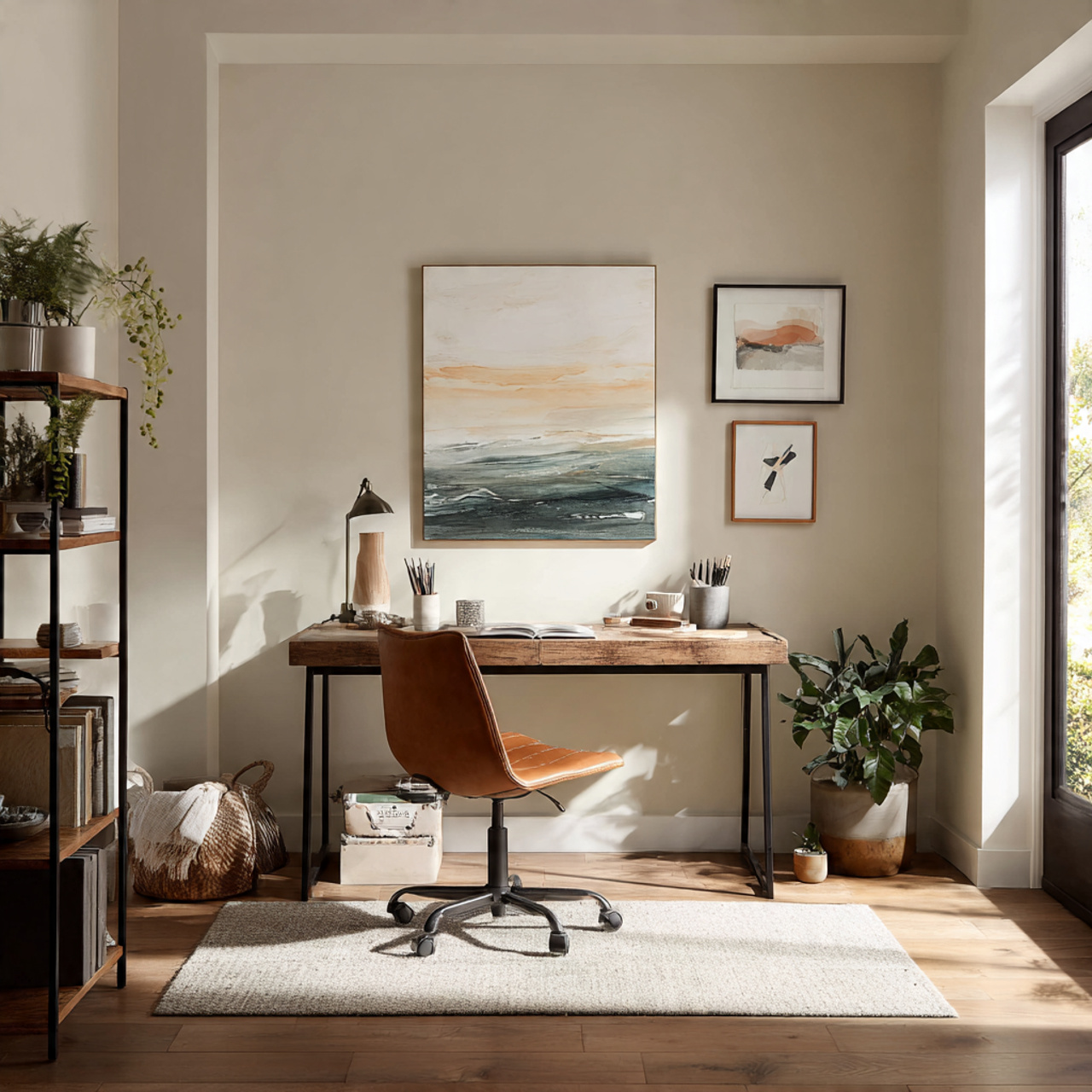
A desk placed directly against a wall or solid surface, typically 48–60 inches wide, with nothing visually competing in front of it. The setup feels anchored and intentional.
WHY it works
Emotionally, this layout helps the mind settle faster at the start of the day. In real homes, people notice fewer distractions when their desk has a clear, stable front boundary.
Over time, wall-anchored desks reduce the urge to constantly rearrange furniture. Designers often see less layout regret with anchored setups than floating desks.
From a design perspective, this approach creates visual order in shared rooms. It also makes small spaces feel calmer rather than crowded.
HOW to apply it
Choose a quiet wall with at least 30 inches of clearance for chair movement. A simple desk between $120–$300 works well when placement is clean and balanced.
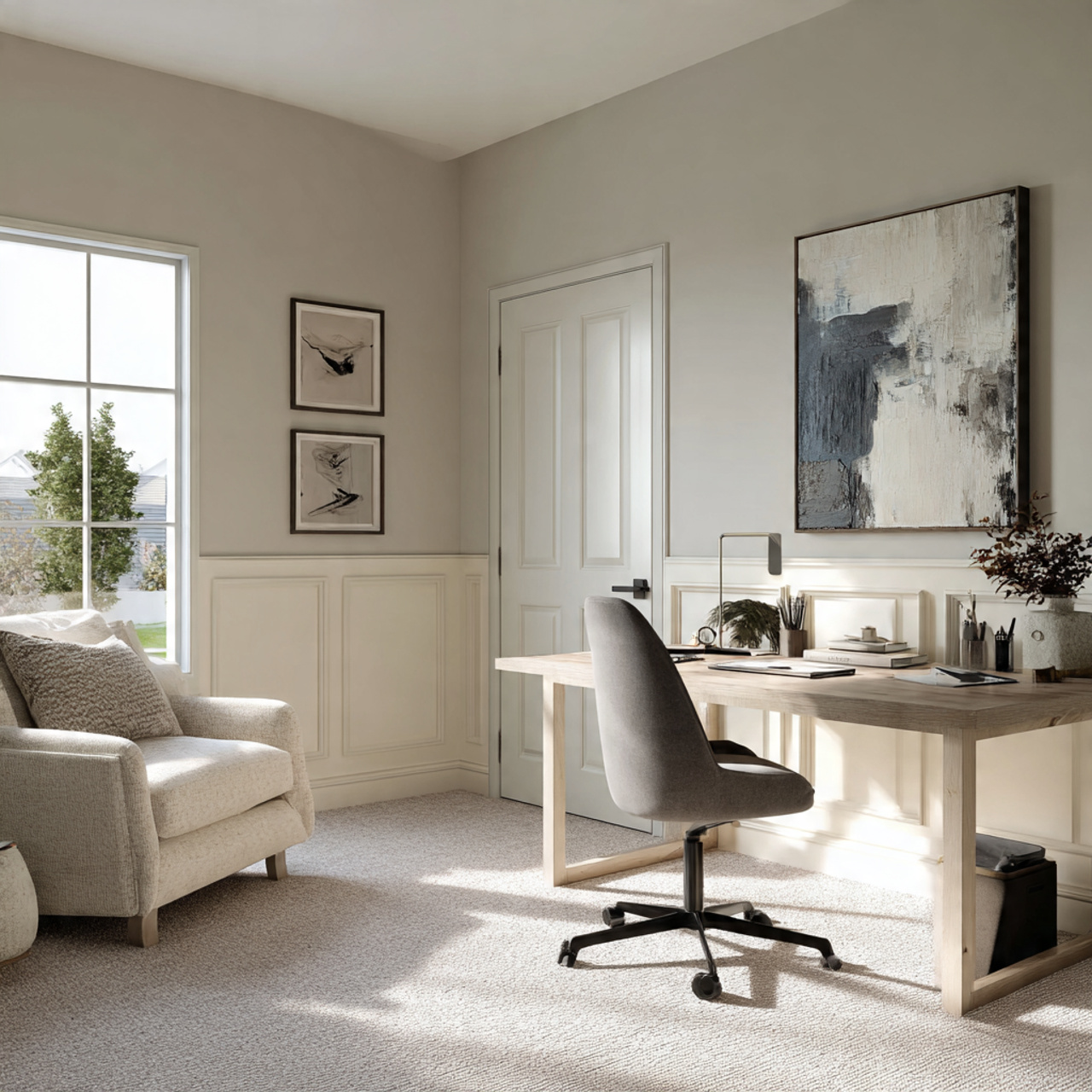
Soft Neutral Wall Colors That Keep the Workday Mentally Light
WHAT it is
Walls finished in warm white, soft beige, or light greige with low contrast. The color stays visually quiet throughout the day.
WHY it works
Emotionally, neutral walls reduce overstimulation during long work hours. Clients often say bold colors feel exciting at first, then tiring months later.
In daily life, softer tones make lighting more forgiving. Morning and evening light both feel balanced instead of harsh.
From a longevity standpoint, neutral walls age better than trend shades. Repainting regrets are far lower with restrained palettes.
HOW to apply it
Test samples in daylight before committing. A single gallon usually covers a small office wall and costs under $60.
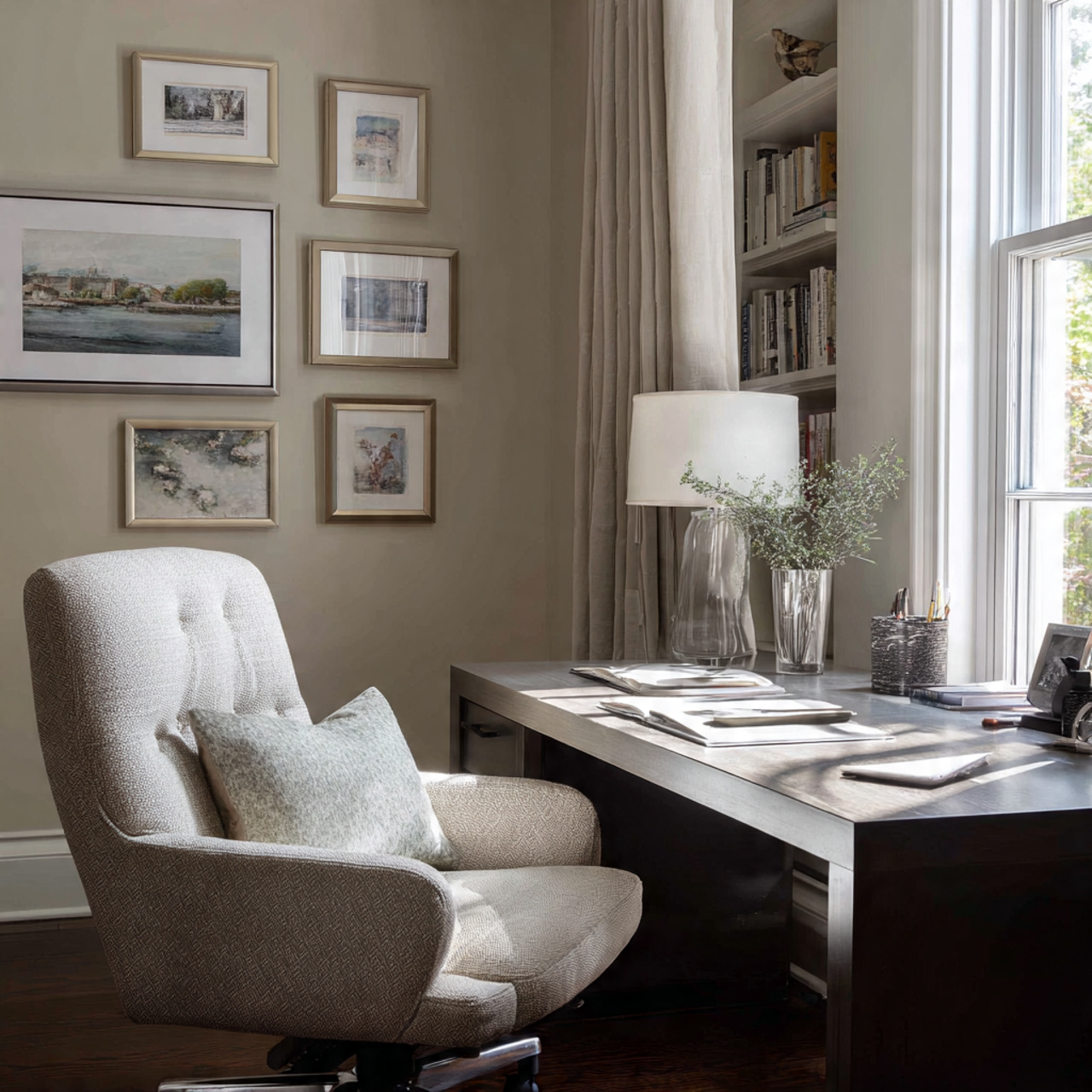
Cushioned Desk Chair That Supports Long Hours Comfortably
WHAT it is
A lightly upholstered desk chair with lumbar support and adjustable height, designed to blend into home interiors.
WHY it works
Comfort affects mood more than most people expect. After several months, poor seating quietly reduces patience and focus.
In real homes, people regret stylish but rigid chairs far more than they regret simple, supportive ones. Comfort always wins long term.
Visually, fabric chairs soften the office and prevent it from feeling clinical.
HOW to apply it
Look for seat heights between 17–21 inches and a supportive backrest. Many reliable options sit in the $180–$350 range.
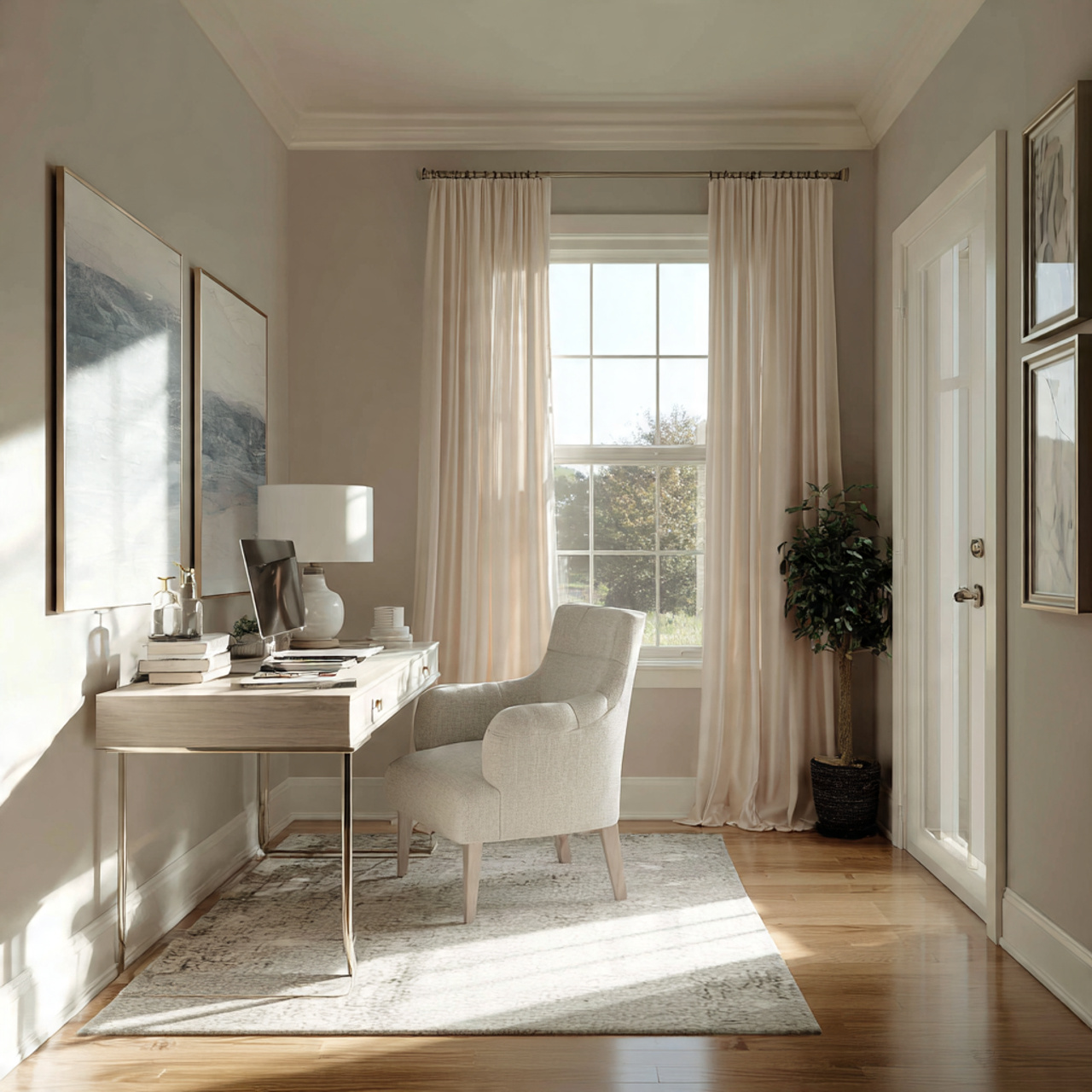
Window-Side Desk Placement That Feels Bright and Energizing
WHAT it is
A desk positioned within 12–24 inches of a window, usually perpendicular to reduce glare. Natural light becomes part of the workspace.
WHY it works
Emotionally, daylight reduces fatigue and improves alertness. People consistently report feeling less drained when working near windows.
Over time, this placement supports healthier work rhythms. Seasonal light changes feel gentler instead of disruptive.
Designers also note that window-side desks tend to remain unchanged longer, which signals satisfaction.
HOW to apply it
Use sheer curtains to diffuse light. A basic fabric panel costs little and takes under an hour to install.
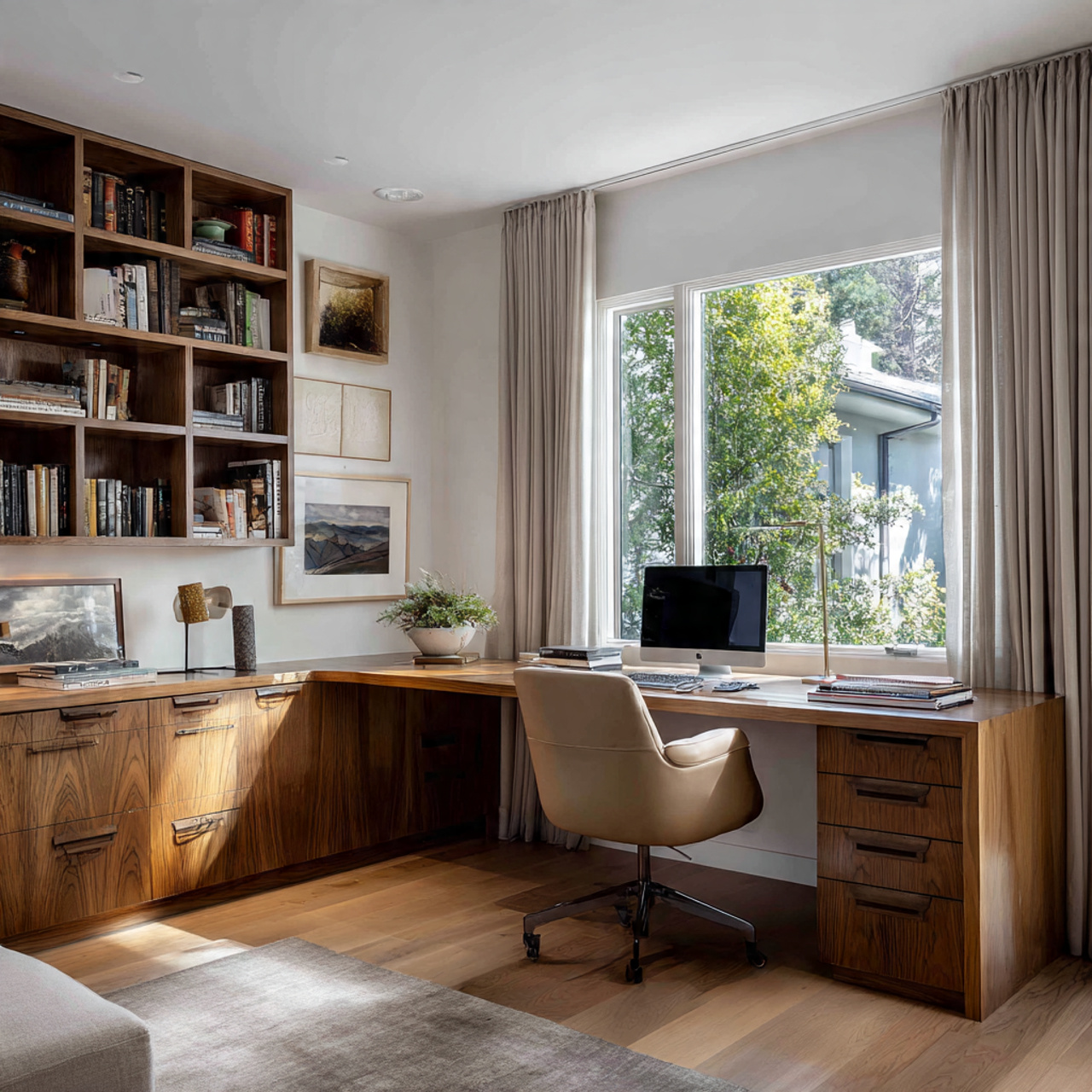
Closed-Storage Desk Design That Keeps the Room Visually Calm
WHAT it is
A desk paired with drawers or nearby closed cabinets that hide paperwork and tools. Surfaces remain mostly clear.
WHY it works
Emotionally, being able to close storage at the end of the day brings relief. The office visually rests with you.
Over time, closed storage prevents clutter creep. Designers see fewer workspace resets when storage is planned early.
Maintenance stays simple. A tidy room requires less effort, which matters long term.
HOW to apply it
Add a drawer unit under the desk or a slim cabinet nearby. Many options cost under $150 and install quickly.
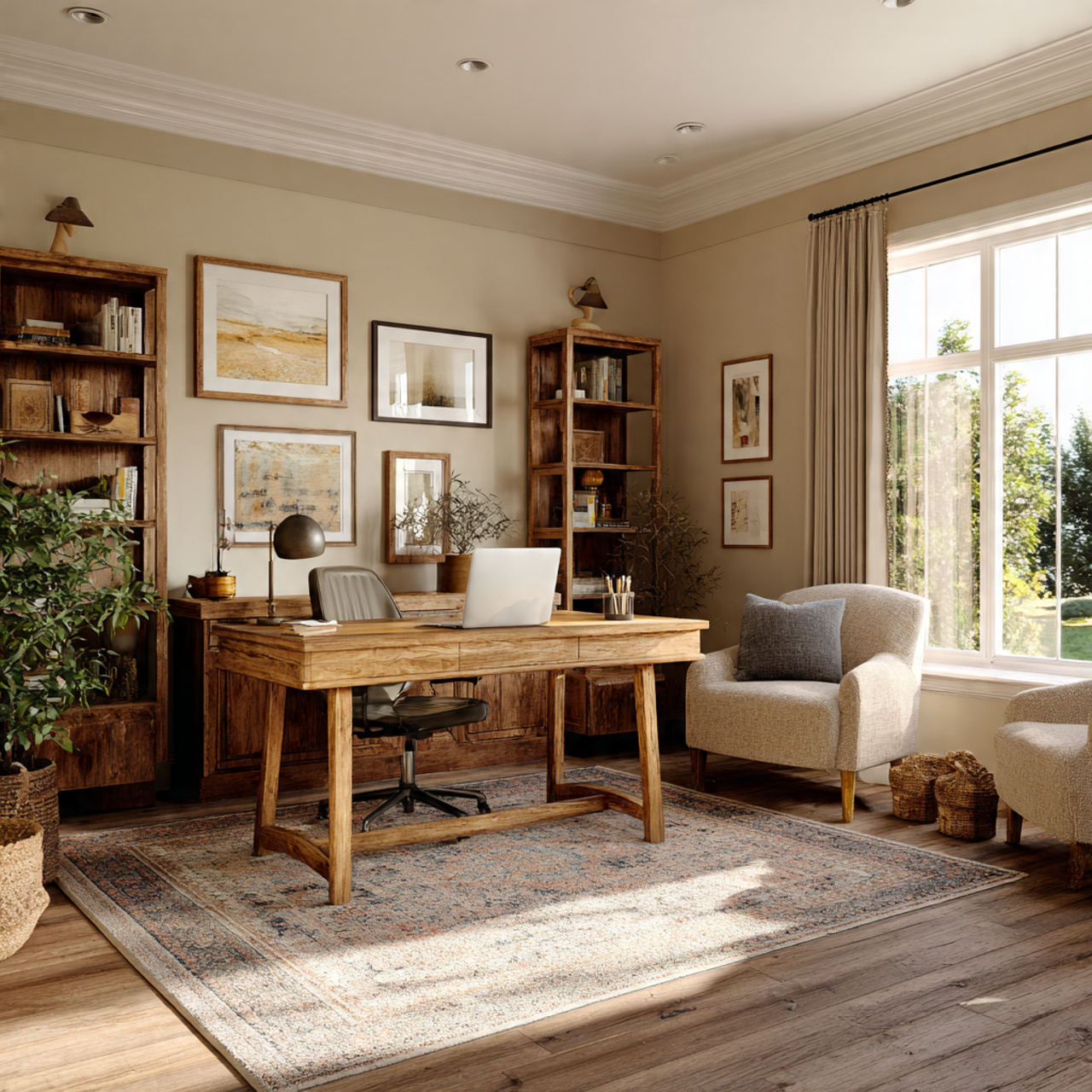
Warm Texture Layers That Make the Office Feel Lived-In
WHAT it is
The use of wood grain, fabric, woven baskets, or soft rugs to add tactile warmth.
WHY it works
Emotionally, texture makes workspaces feel human instead of sterile. People feel more comfortable sitting longer.
Over time, textured spaces stay visually interesting without needing constant updates. Flat spaces often feel dull within months.
Design logic favors texture as a low-risk way to add depth without bold color.
HOW to apply it
Start with one element, like a rug or fabric chair. Avoid layering more than two textures at once.
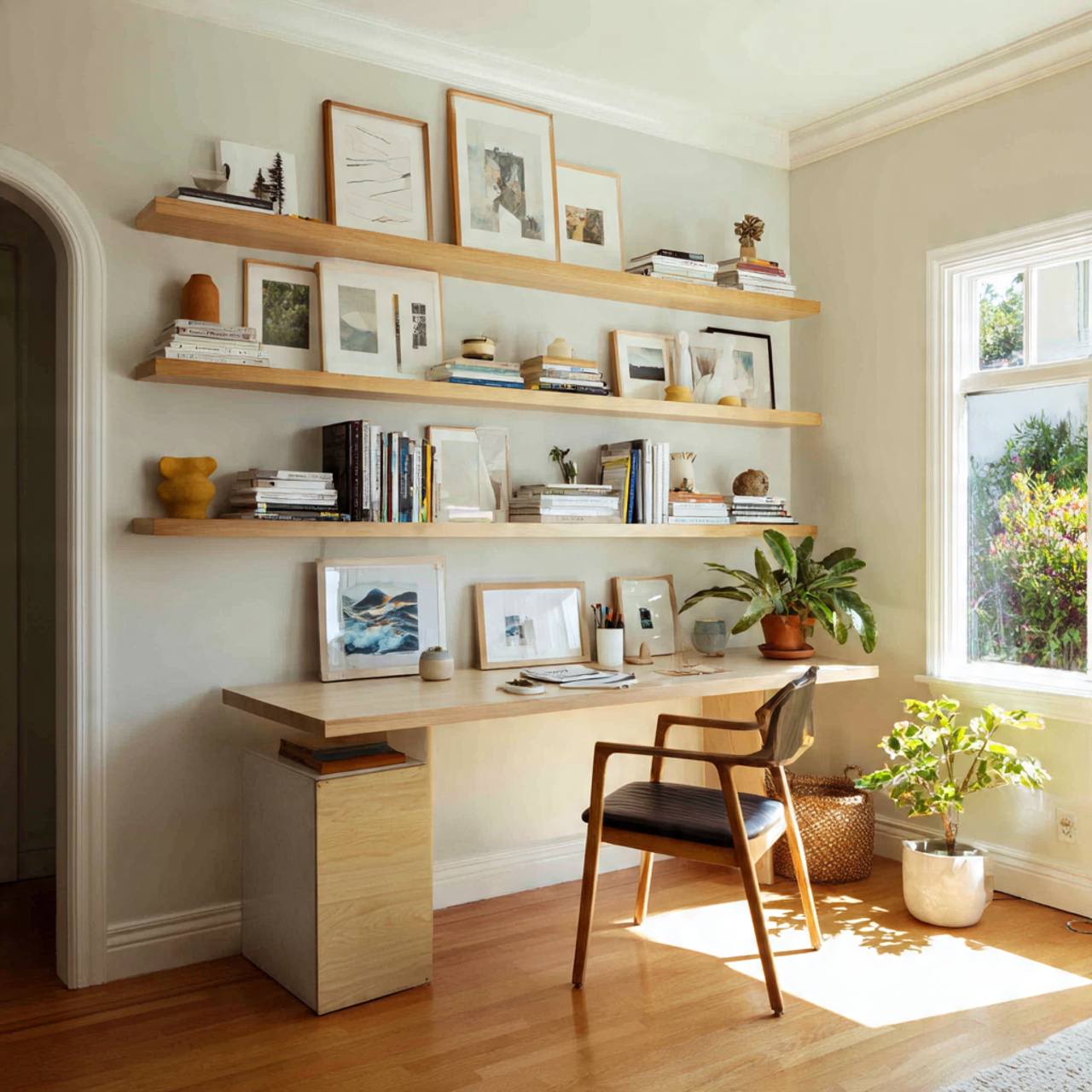
Airy Open Shelving That Looks Organized Without Feeling Busy
WHAT it is
Open shelves styled with spacing, not filled edge to edge. Items breathe visually.
WHY it works
Emotionally, balanced shelving reduces mental noise. The eye knows where to rest.
Over time, people maintain these shelves better because they don’t feel overwhelming. Overfilled shelves rarely stay tidy.
From a design standpoint, spacing creates rhythm and calm.
HOW to apply it
Limit shelves to essentials and one or two personal items. Edit every few months.
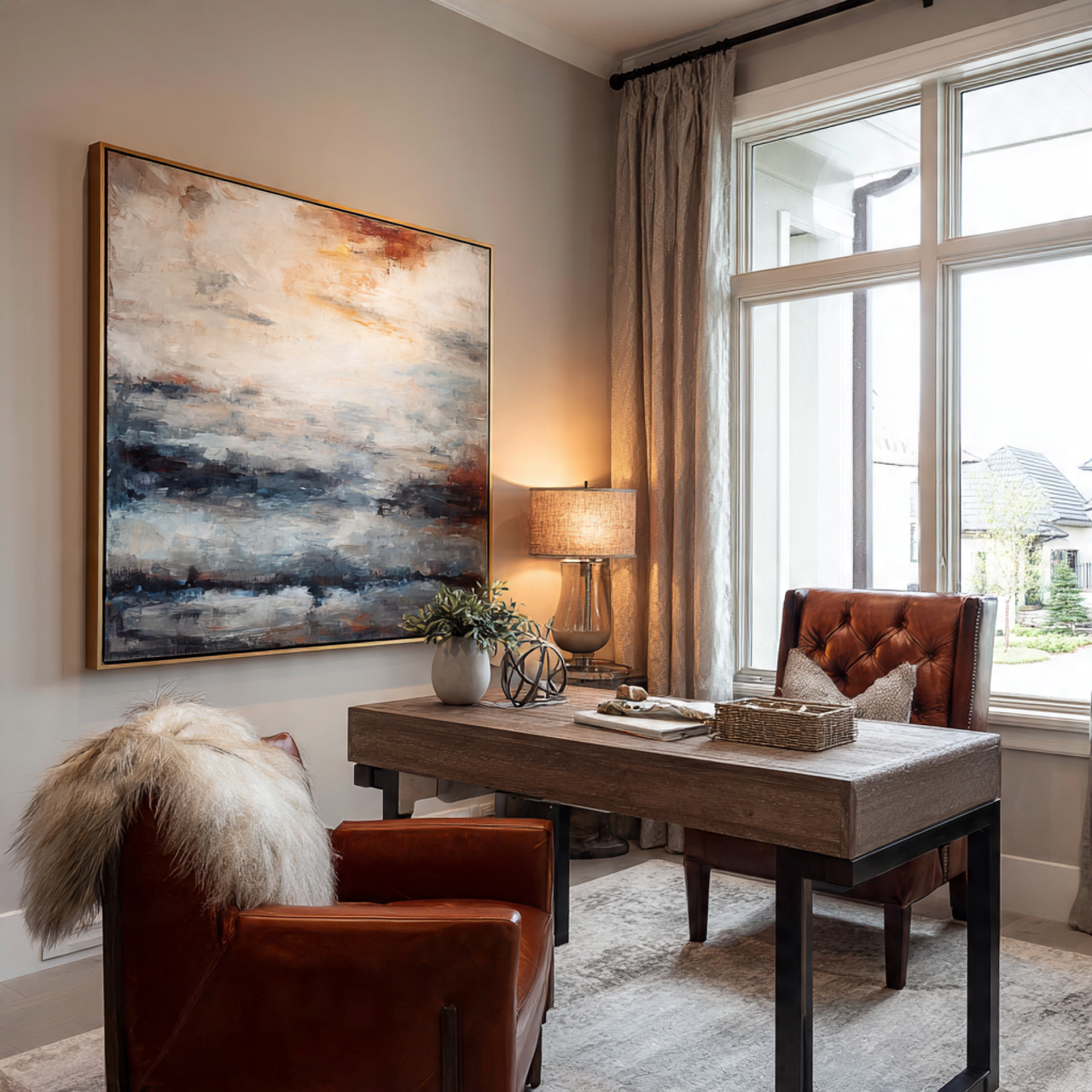
One Bold Art Moment That Adds Motivation Without Noise
WHAT it is
A single statement artwork or framed print near the desk, usually 18×24 inches or larger.
WHY it works
Emotionally, one strong visual point adds motivation without distraction. Multiple bold items usually compete.
Designers often see regret when people add too many focal pieces. One is enough.
This approach keeps the space timeless rather than trend-driven.
HOW to apply it
Choose art with personal meaning. Affordable prints or local art often work best.
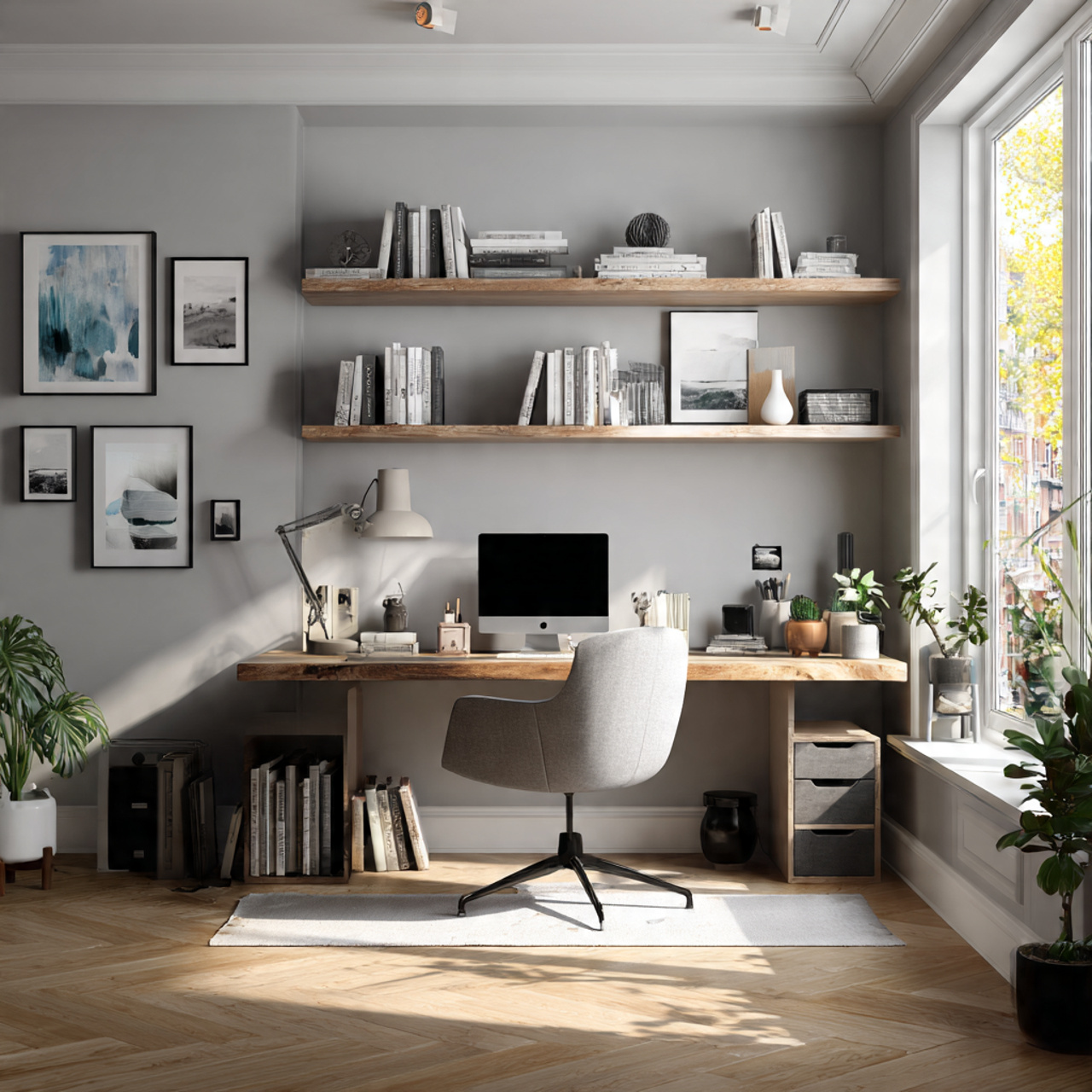
Clean Cable-Free Desk Setup That Feels Mentally Clear
WHAT it is
Cables hidden using clips, sleeves, or boxes, leaving the desk visually clean.
WHY it works
Emotionally, visible wires create subtle stress. People often feel immediate relief once cables are managed.
Over time, cable control makes cleaning and rearranging easier. Mess doesn’t rebuild as quickly.
Design-wise, clean lines always age better.
HOW to apply it
Use adhesive clips or cable boxes. Most setups cost under $40 and take 30 minutes.
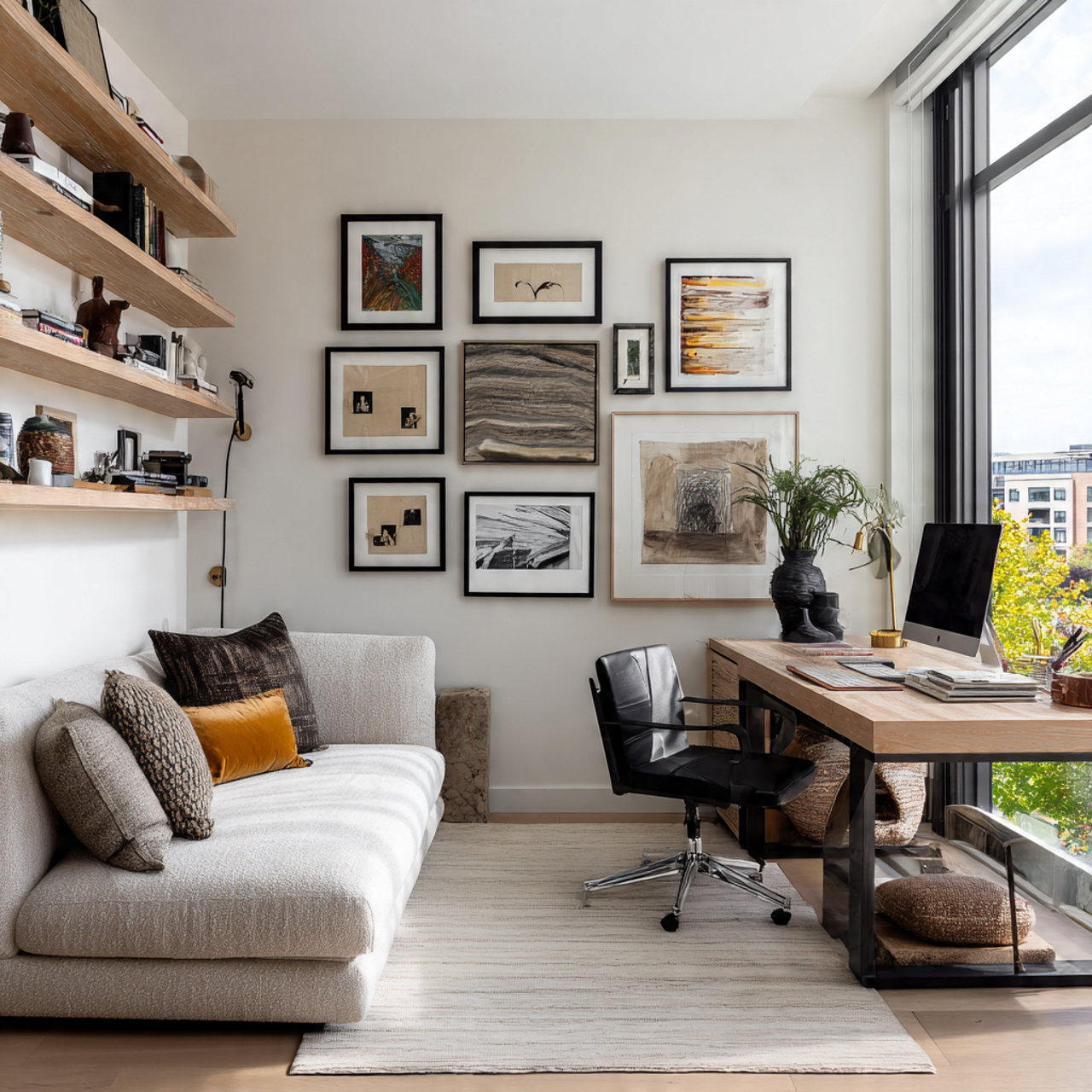
Adaptable Furniture Layout That Changes With Your Routine
WHAT it is
A layout using lightweight or modular furniture that can shift as work needs evolve.
WHY it works
Emotionally, flexibility reduces frustration when routines change. People feel less boxed in.
Over months, adaptable layouts last longer than rigid ones. They grow with life changes.
Designers recommend flexibility in any multi-use room.
HOW to apply it
Choose desks under 55 inches wide and movable storage. Reassess layout twice a year.
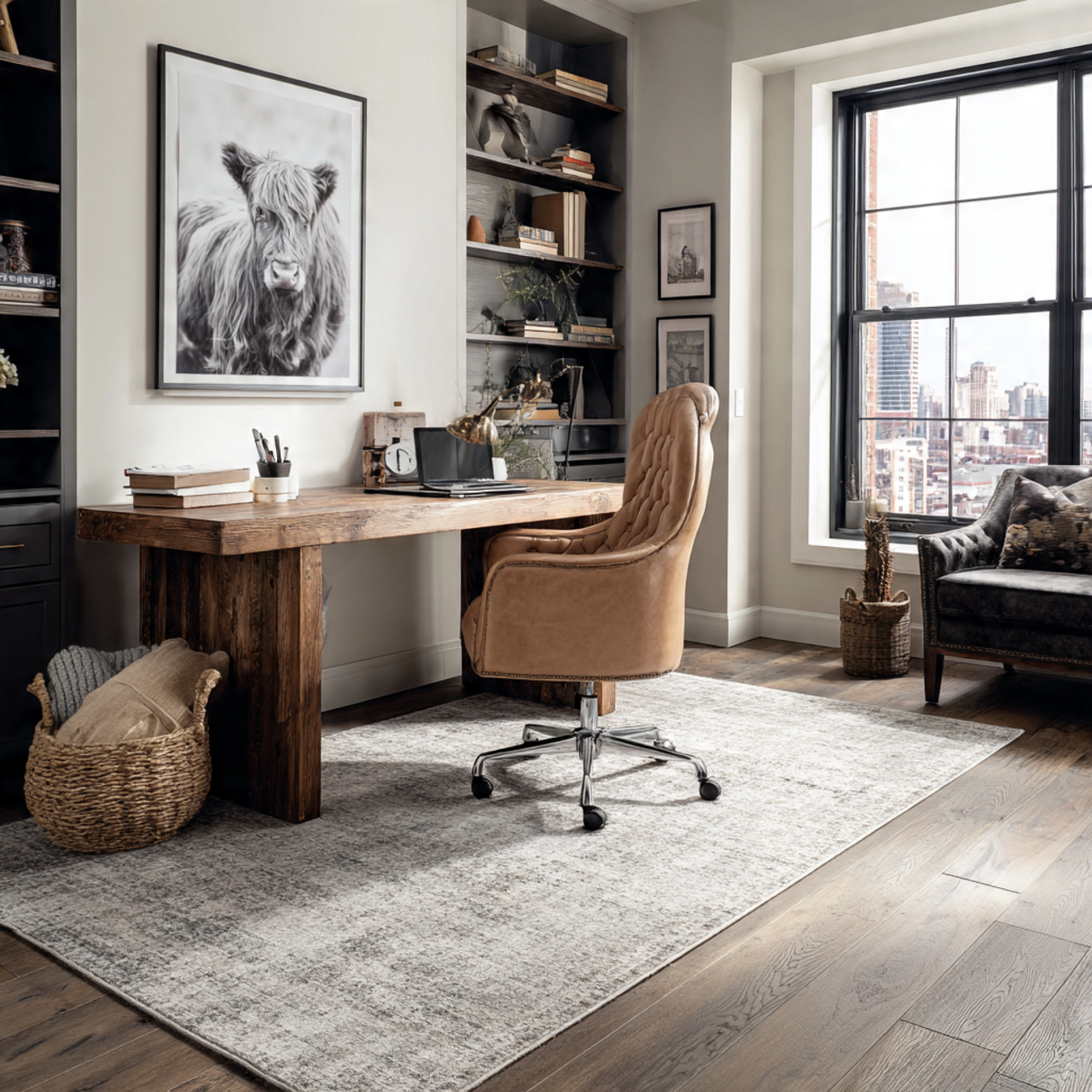
Low-Profile Area Rug That Clearly Defines the Work Zone
WHAT it is
A low-pile rug placed under desk and chair, usually 5×7 feet or smaller.
WHY it works
Emotionally, defined zones feel intentional. The office stops feeling temporary.
Rugs also soften sound and add comfort underfoot. Hard floors feel harsher over time.
Visually, rugs anchor furniture and complete the space.
HOW to apply it
Choose low-pile styles for easy chair movement. Neutral patterns hide wear best.
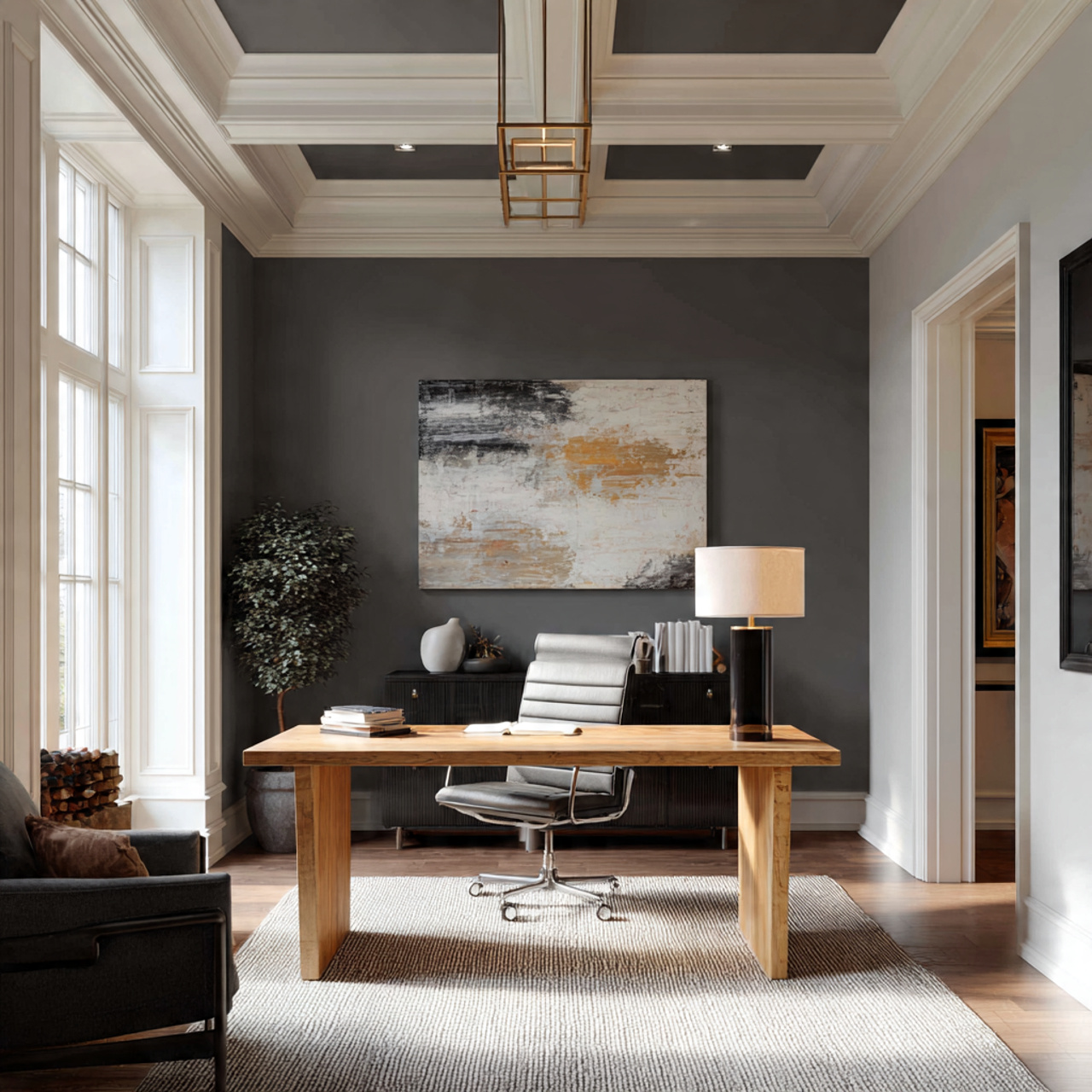
Gentle Light-Dark Contrast That Adds Depth Without Stress
WHAT it is
Subtle contrast, such as a darker desk against lighter walls or shelving.
WHY it works
Emotionally, contrast keeps spaces engaging without overwhelming them. Flat rooms feel lifeless.
Over time, restrained contrast ages better than bold color blocking.
Design logic uses contrast to guide the eye calmly.
HOW to apply it
Limit contrast to one or two elements. Keep tones within the same family.
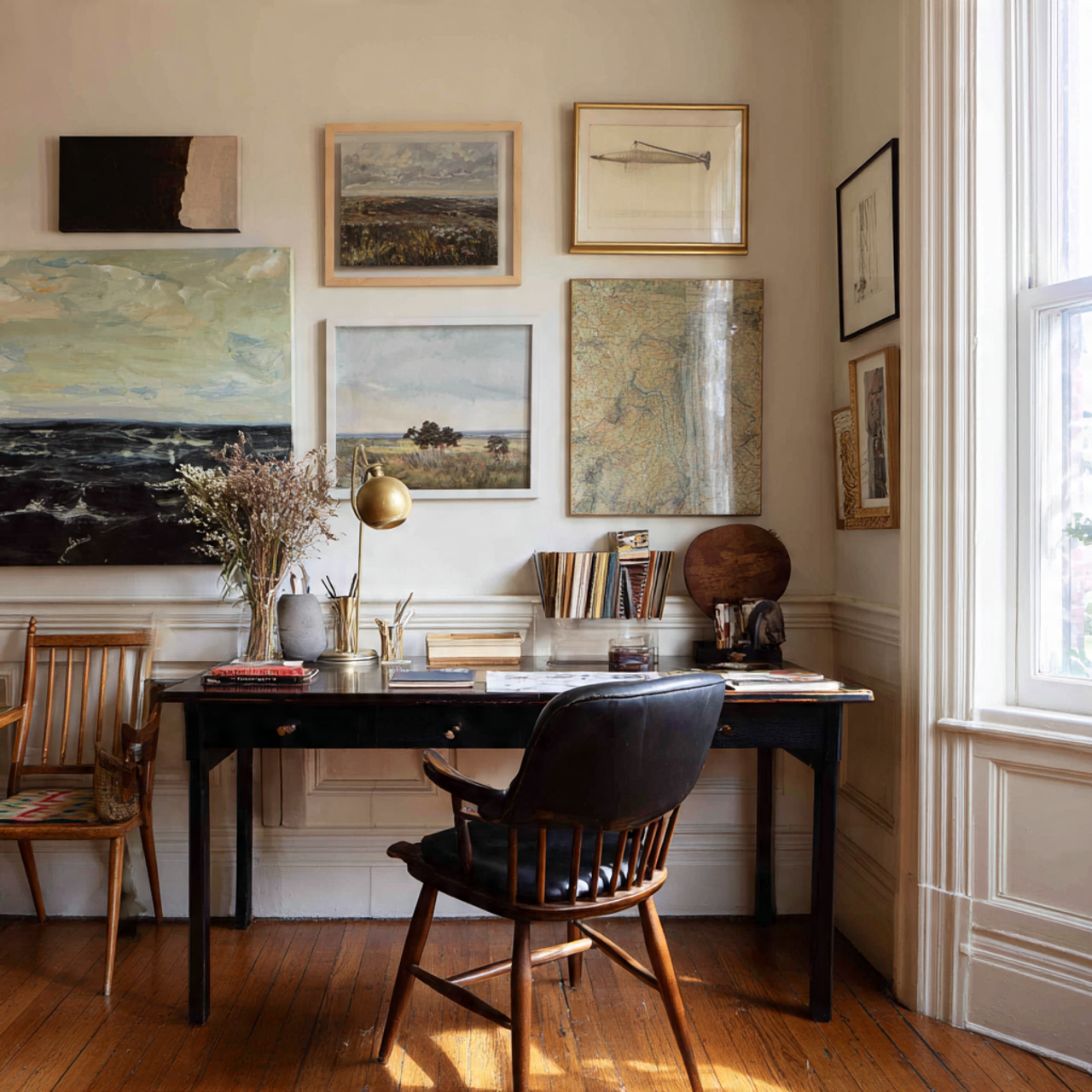
Thoughtful Personal Decor That Feels Meaningful, Not Cluttered
WHAT it is
A few carefully chosen personal items placed with intention.
WHY it works
Emotionally, meaningful objects increase comfort and belonging. Too many items dilute that effect.
Over time, restraint keeps the desk usable. Clutter builds faster than people expect.
Designers often advise editing rather than adding.
HOW to apply it
Choose items with emotional value. Rotate seasonally instead of accumulating more.
Balanced Desk Styling That Creates Visual Stability
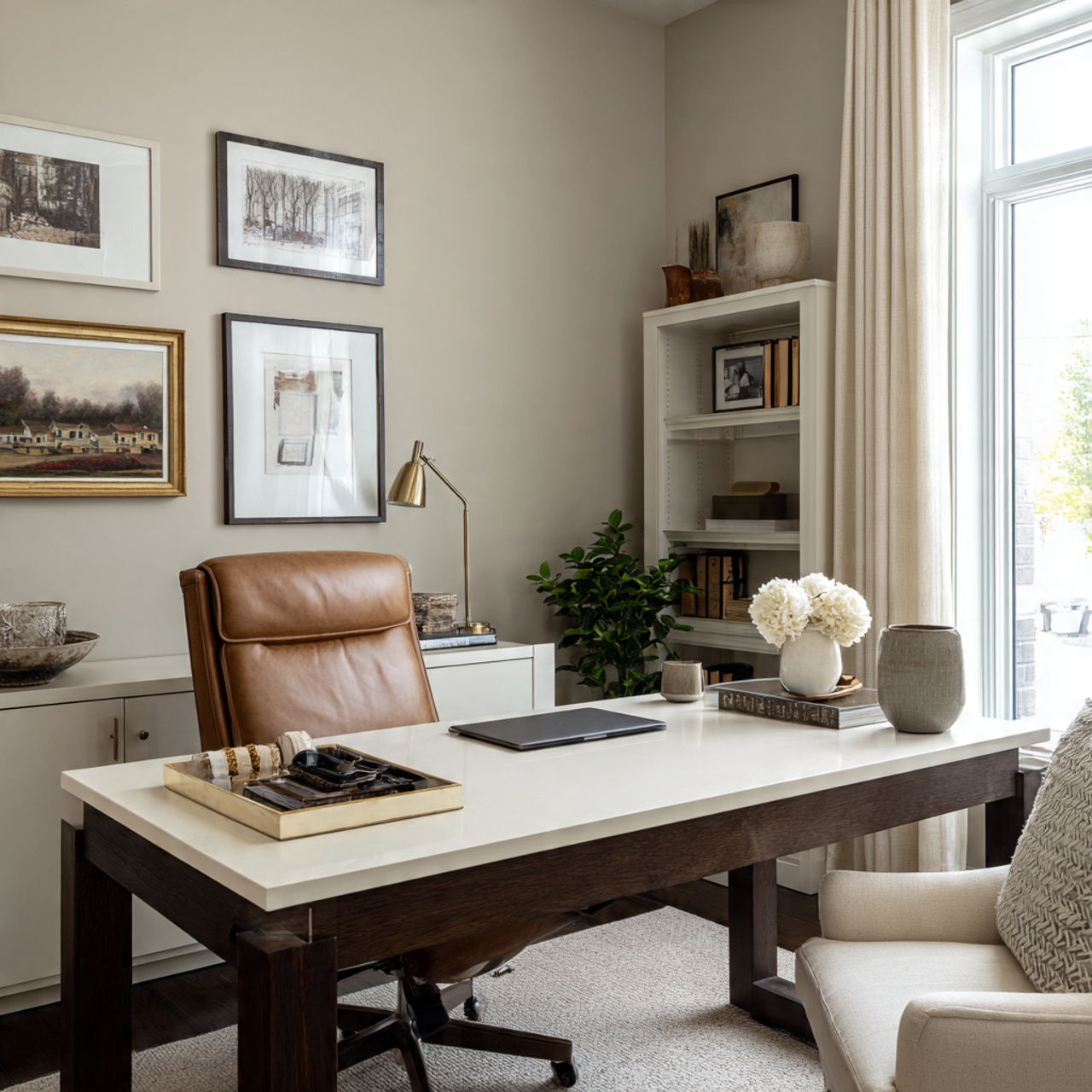
WHAT it is
Symmetrical or visually balanced desk styling using lamps, trays, or accessories.
WHY it works
Emotionally, balance feels calming and predictable. Stress reduces quietly.
Over time, balanced desks stay tidy longer. Order becomes easier to maintain.
This approach supports focus better than chaotic layouts.
HOW to apply it
Match lamp heights or spacing loosely. Avoid forced perfection.
Calm Video-Call Background That Feels Polished and Natural
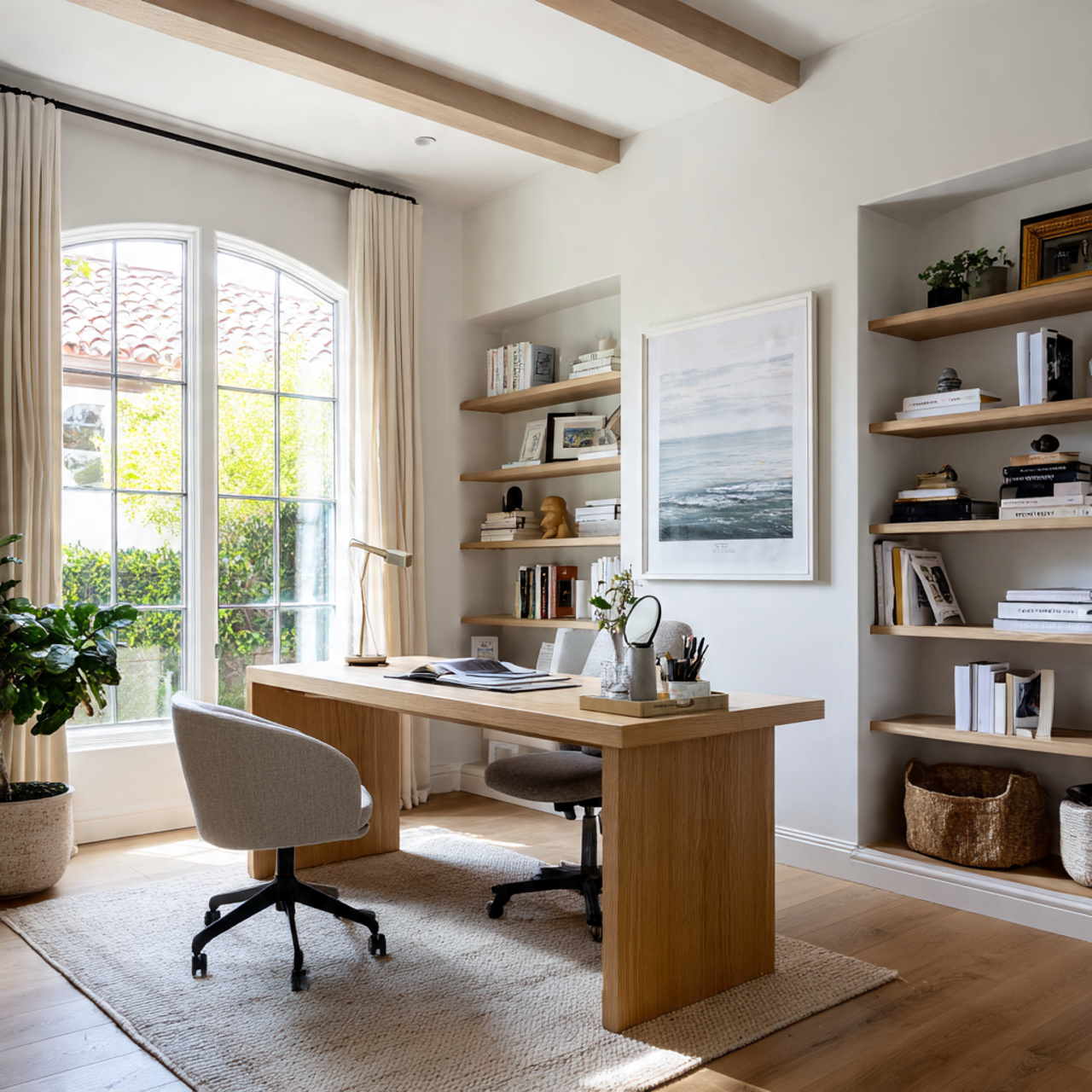
WHAT it is
A simple wall or shelf setup behind the desk with minimal distractions.
WHY it works
Emotionally, confidence improves when the background feels intentional. Calls feel easier.
Over time, a clean background avoids constant restyling.
Design-wise, simplicity reads as professionalism.
HOW to apply it
Keep one wall minimal. Use art or shelves sparingly.
Visit Also: Home Office Setup
Simple Final Touches That Make the Office Feel Finished
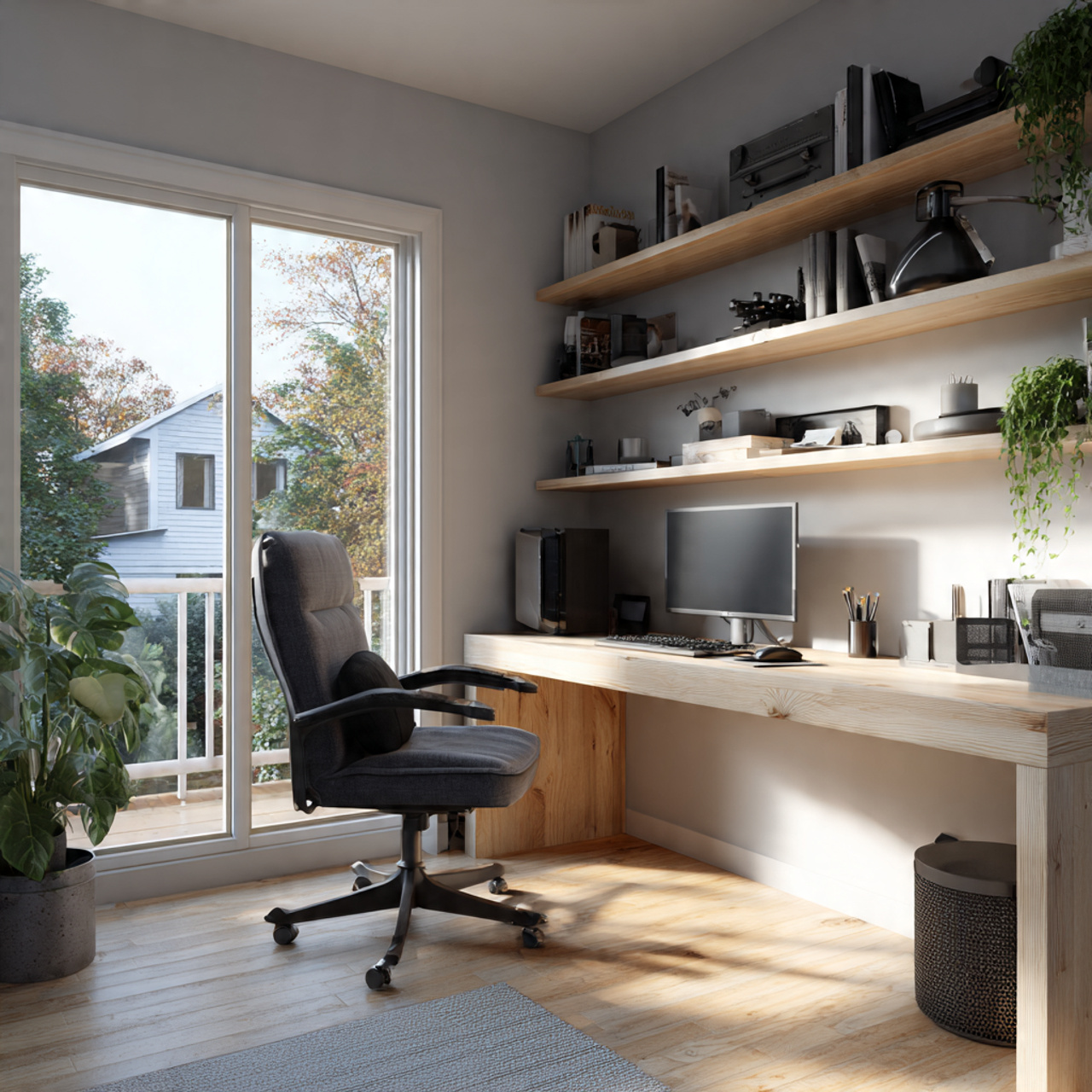
WHAT it is
Small organizers, trays, or catchalls that signal completion.
WHY it works
Emotionally, finished spaces feel satisfying. The office feels ready, not in progress.
Over time, completion reduces the urge to keep adjusting.
Design logic shows details signal care.
HOW to apply it
Add one or two functional accessories. Stop before overdecorating.
Consistent Desk Lighting Layers That Reduce Eye Strain
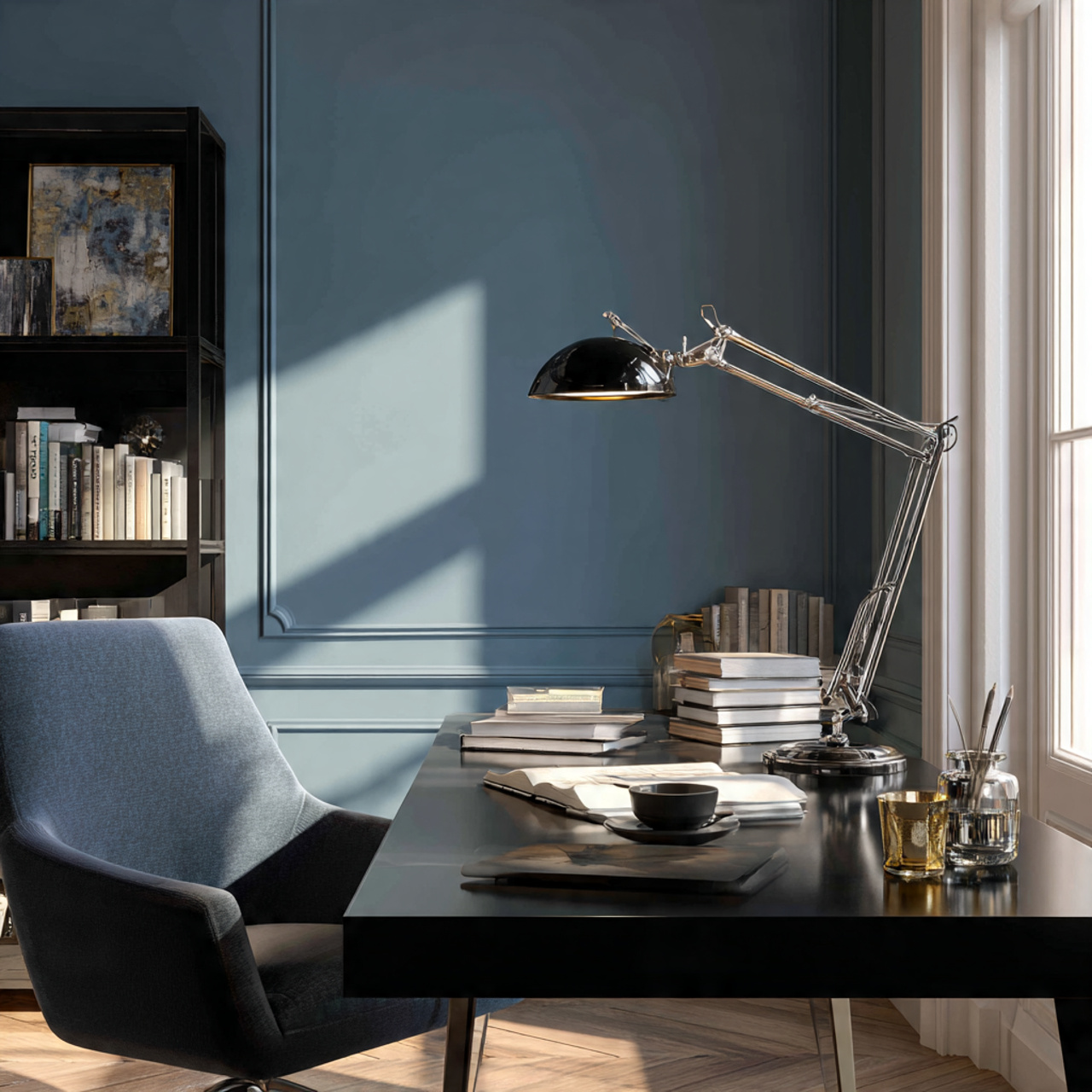
WHAT it is
A combination of ambient room lighting and a focused desk lamp positioned slightly off-center. The light supports work without glare.
WHY it works
Emotionally, balanced lighting reduces frustration during long work sessions. In real homes, people notice they feel less tired when light is layered instead of harsh.
Over time, proper lighting prevents eye strain and headaches. Many people regret ignoring lighting more than almost any other setup detail.
From a design perspective, layered lighting makes the office feel intentional and comfortable rather than improvised.
HOW to apply it
Use one overhead light and one adjustable desk lamp. Most quality desk lamps cost $40–$80 and take minutes to position correctly.
Clear Walkway Space That Keeps the Office Feeling Open
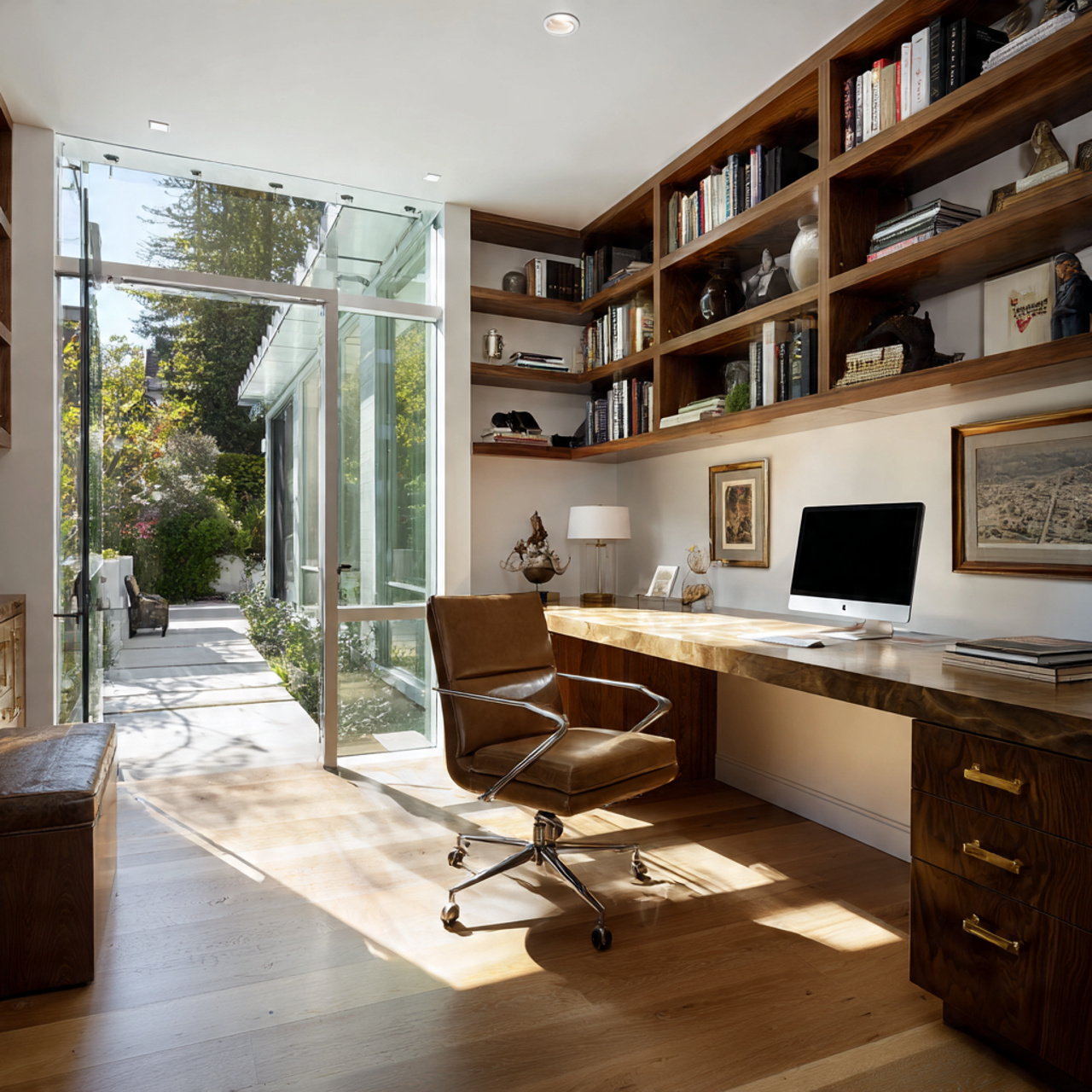
WHAT it is
Enough open floor space around the desk and chair to move freely without bumping furniture. The layout feels breathable.
WHY it works
Emotionally, cramped layouts increase background stress. People often feel calmer when movement feels effortless.
Over time, clear walkways prevent frustration and accidental clutter buildup. Designers often see layout regret when movement wasn’t planned early.
Visually, open circulation makes even small offices feel larger and more balanced.
HOW to apply it
Aim for at least 36 inches of clear walking space behind the chair. Rearranging furniture usually solves this without spending money.
Neutral Desk Accessories That Keep Focus on Work
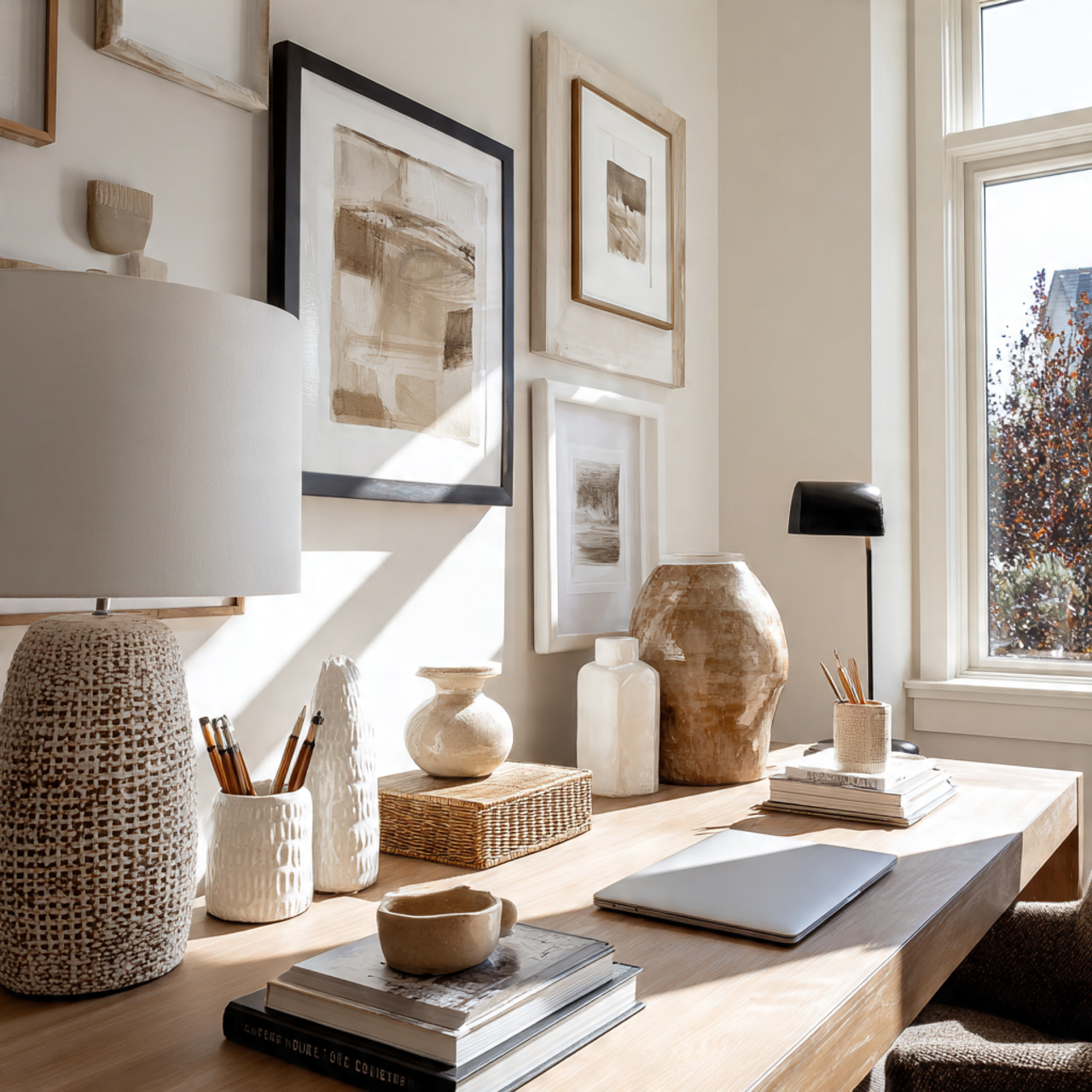
WHAT it is
Desk accessories like trays, organizers, and pen holders kept in neutral tones. They support function without drawing attention.
WHY it works
Emotionally, low-contrast accessories reduce visual noise. People feel less distracted during focused tasks.
Over time, neutral accessories age better than colorful sets. Many people regret trendy desk items once the novelty fades.
From a design standpoint, muted accessories allow the desk itself to feel calm and cohesive.
HOW to apply it
Choose accessories in wood, black, white, or soft gray. A full set usually costs under $50 and lasts for years.
Common Home Office Mistakes
Choosing Style Over Comfort
People often prioritize appearance early on. Over time, discomfort affects posture and focus.
Fix this by choosing ergonomics first. Ignoring it usually leads to replacing furniture within a year.
Overcrowding a Small Office
Adding too much feels productive initially. The space slowly becomes stressful.
Remove one item and reassess. Ignoring this causes daily mental fatigue.
Poor Lighting Planning
Relying on one light source seems fine at first. Eye strain builds gradually.
Layer lighting early. Ignoring this makes long workdays exhausting.
Skipping Storage Planning
Storage feels optional early. Papers quietly take over surfaces.
Add hidden storage early. Ignoring it creates constant clutter.
Frequently Asked Questions About Home Office
How small can a home office realistically be?
Even a single wall works if layout is intentional. Boundaries matter more than square footage.
Is a bedroom office sustainable long-term?
Yes, when visual separation exists. Rugs and lighting help protect balance.
Do I need expensive furniture?
No. Comfort and layout matter more than price. Overspending often leads to regret.
How do I keep the space calm but motivating?
Limit visual noise and choose one focal element. Too many accents distract.
How often should I update my home office?
Small seasonal edits work best. Major redesigns usually mean the setup was rushed.
Conclusion
A well-planned home office supports focus without overwhelming daily life. Thoughtful choices reduce stress and age gracefully over time. Start with one small adjustment and notice the difference. Comfort and clarity are always achievable, even in limited space.