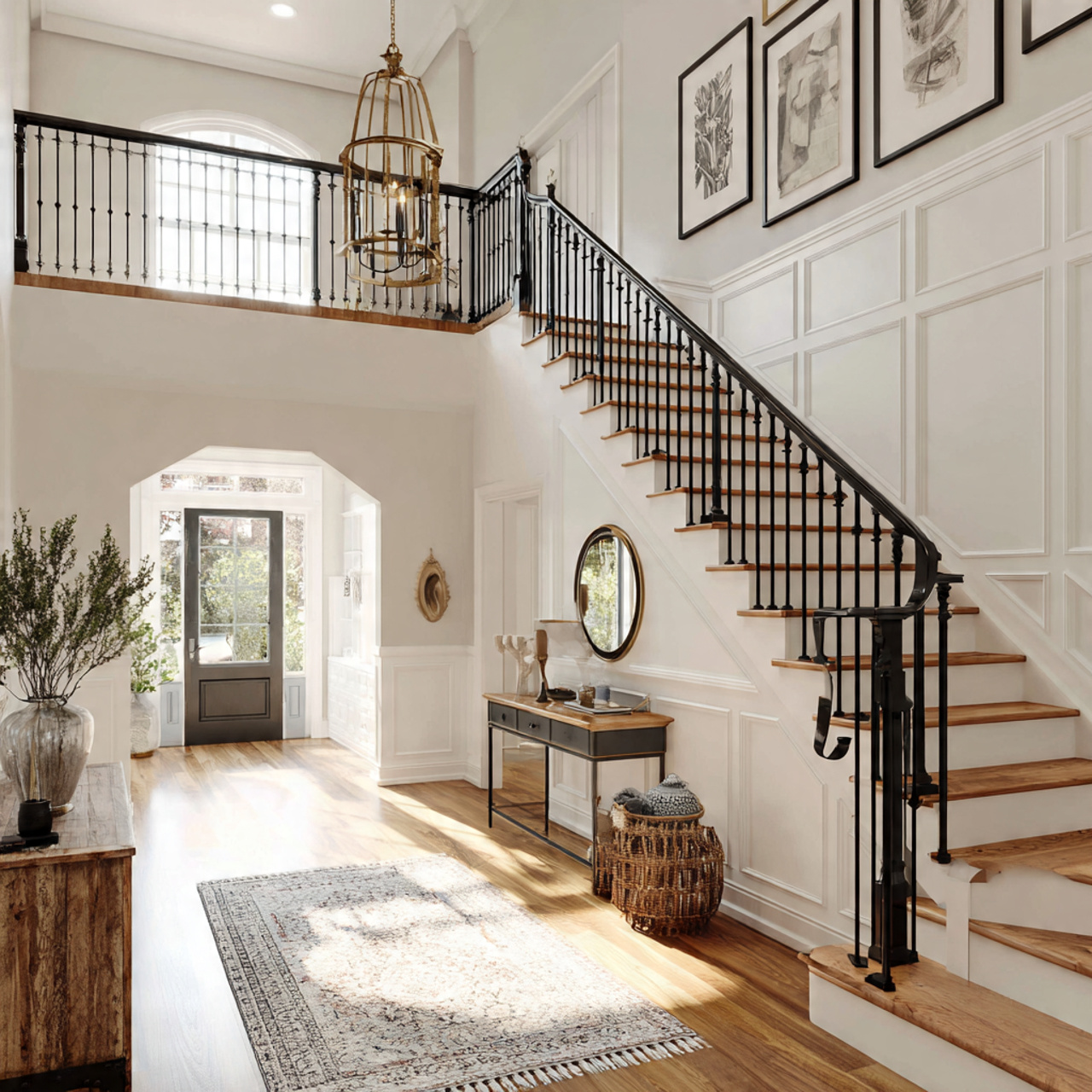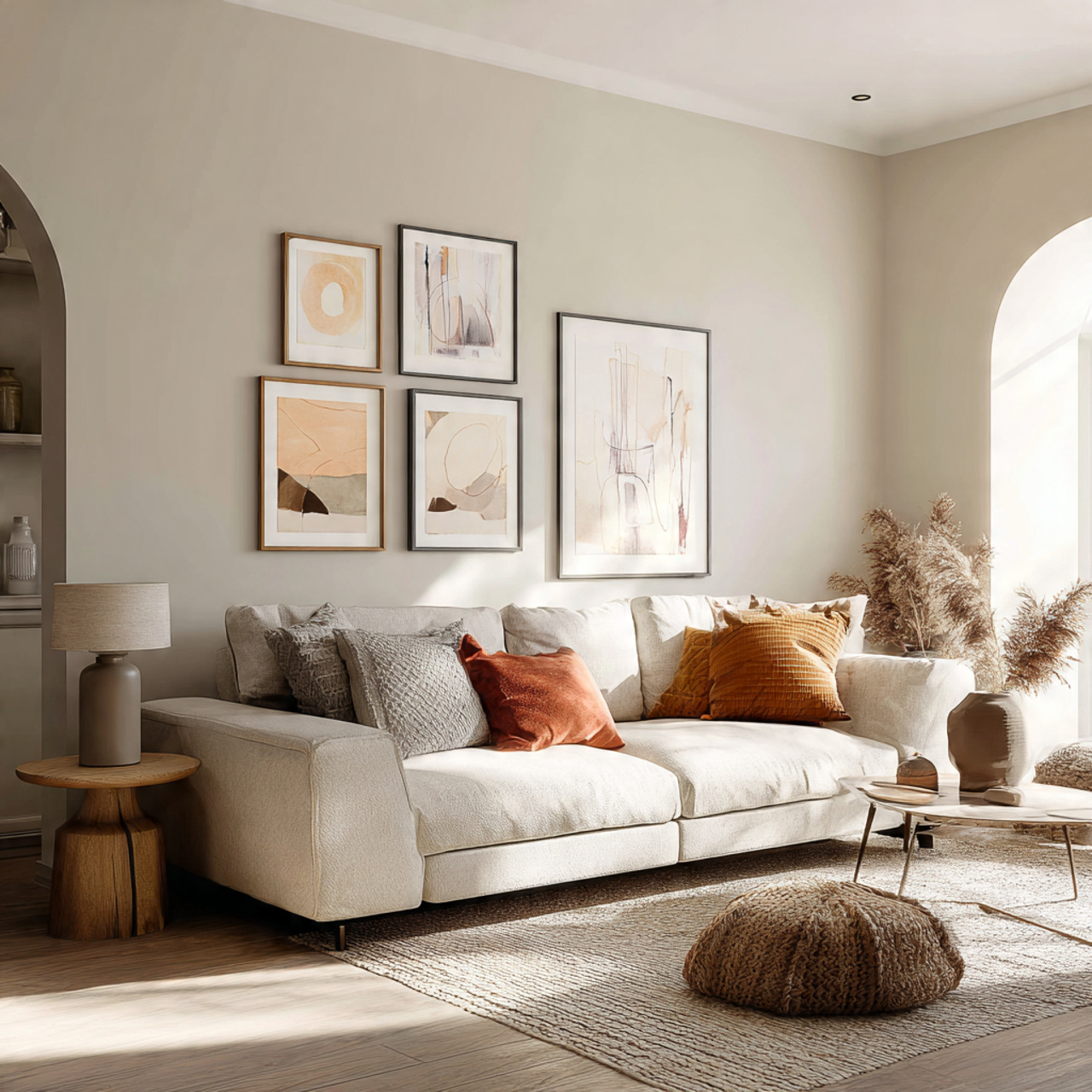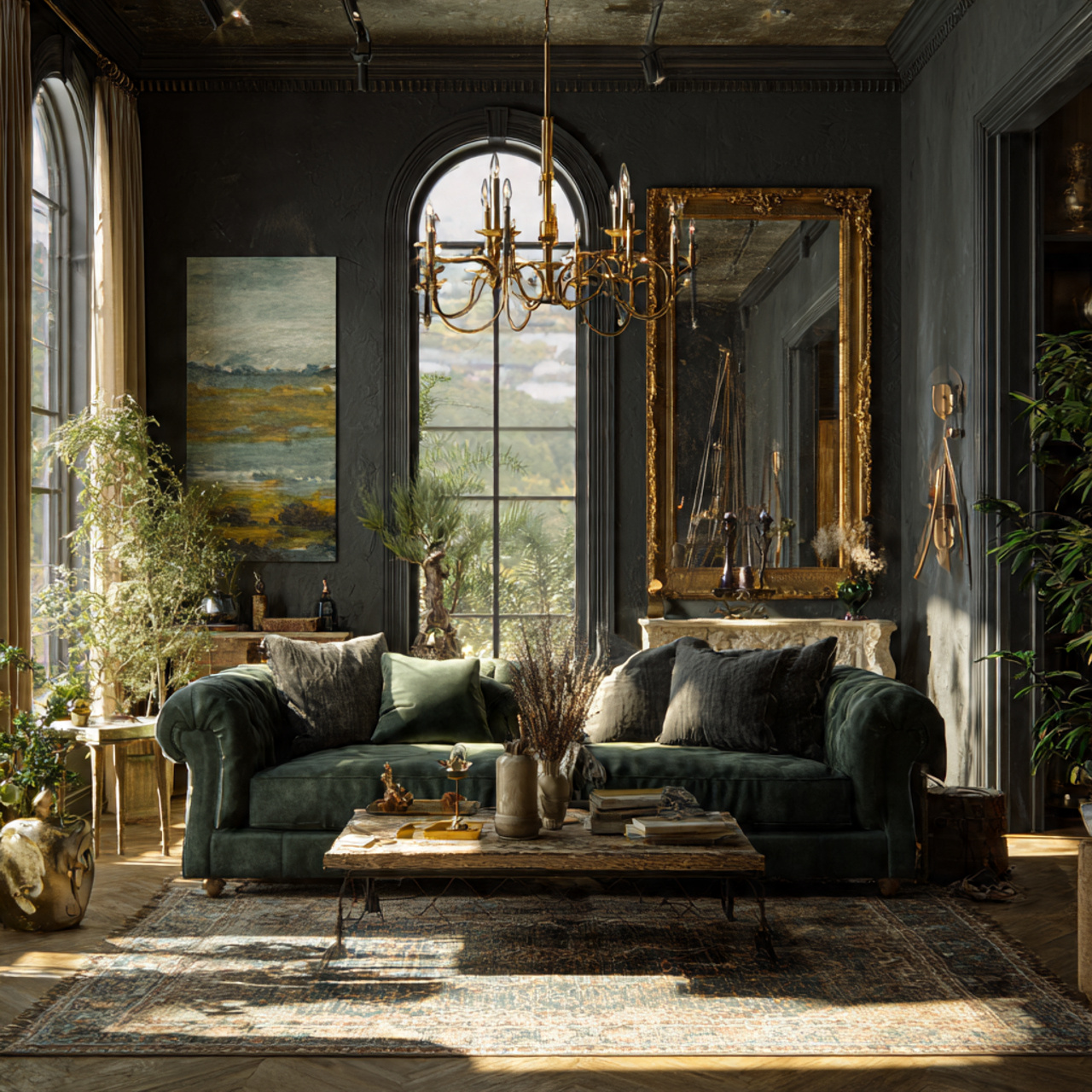
14 Genius Hallway Ideas That Make Narrow Spaces Stunning
Hallways are often the first space people see when they enter a home, yet they are usually the last place people decorate. In many houses this narrow passage quietly becomes a forgotten corridor rather than a space with personality. Thoughtful hallway ideas can turn that simple walkway into a warm introduction to the home.
Over the years I have noticed that the most memorable hallways are rarely complicated. They usually combine a few thoughtful details that feel natural in everyday life. When lighting, texture, and color work together, even a narrow hallway begins to feel like a meaningful part of the home.
Why Thoughtful Hallway Design Improves the Whole Home
Many people assume hallways are too small to matter when decorating. In reality these transitional spaces quietly influence how every room feels. A hallway that feels calm and welcoming prepares visitors for the rooms ahead.
One thing I have noticed in real homes is that hallways often hold the strongest sense of daily life. Shoes get dropped here, bags land on a table, and coats are hung after long days. When the hallway is styled well, these everyday routines begin to feel organized instead of chaotic.
Core Hallway Ideas That Improve Style and Function
Console Table Styling That Creates a Welcoming Entry Moment
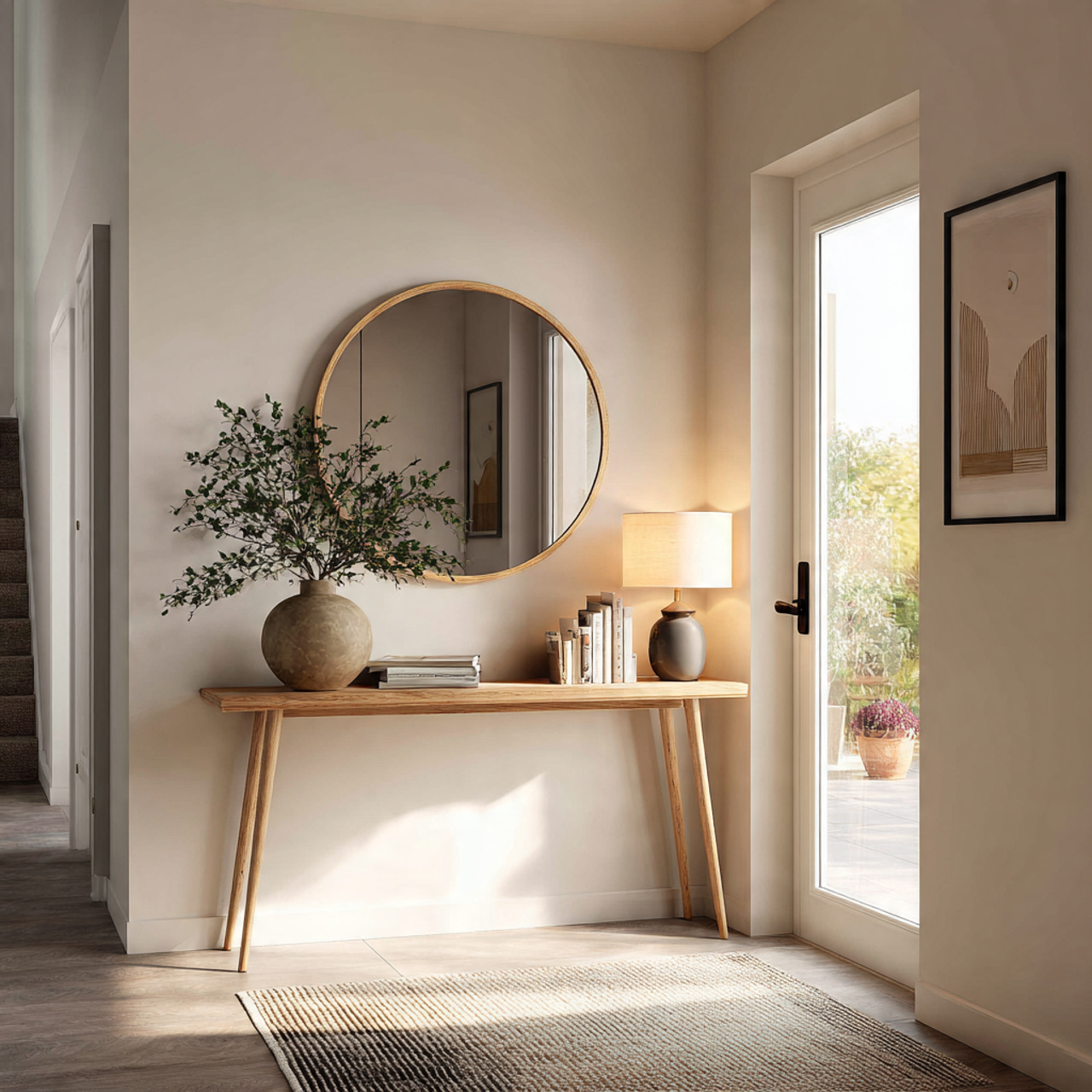
Walking into a hallway where a console table sits beneath a mirror instantly makes the space feel intentional. The table becomes a quiet focal point while the mirror reflects natural light deeper into the corridor. Even a simple arrangement of objects can make the hallway feel thoughtfully styled.
This combination works because it introduces balance without crowding the space. A narrow table keeps the walkway open while still providing a place for daily essentials. In many homes this small surface quickly becomes the place where keys, mail, and small decor items naturally gather.
Choose a console table that feels light rather than bulky so the hallway remains comfortable to walk through. Styling works best when objects feel relaxed rather than perfectly staged. A small lamp, a ceramic vase, and a stack of books usually create a natural looking arrangement.
Tip: A warm table lamp on the console table makes the hallway feel inviting in the evening.
A Gallery Wall That Turns the Hallway Into a Personal Story
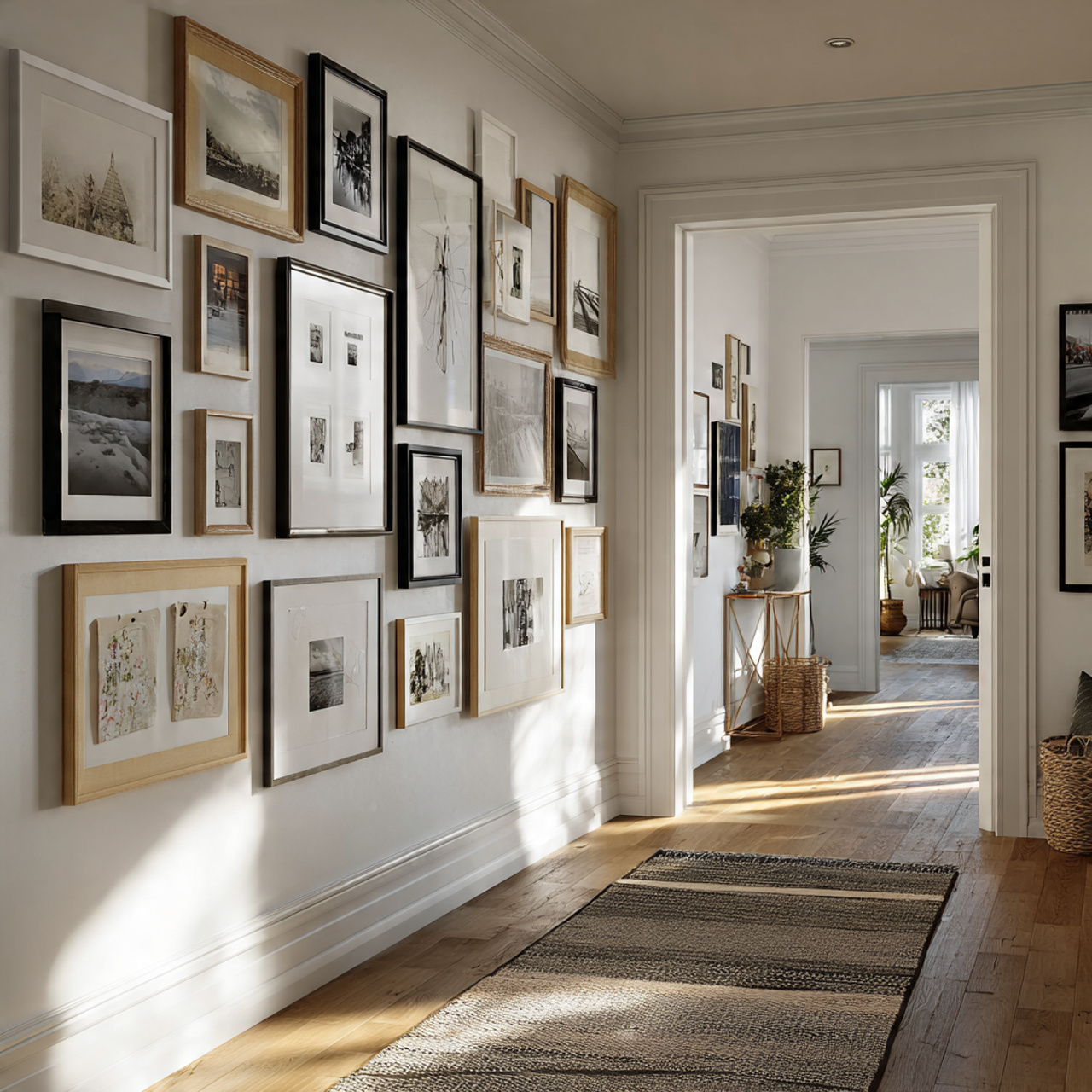
A hallway lined with framed artwork or photographs often feels more meaningful than one filled with empty walls. As people walk through the corridor their eyes naturally move from frame to frame. The hallway quietly becomes a visual story of the home.
Many homeowners worry that gallery walls may overwhelm a narrow hallway. In practice the opposite usually happens when frames share a consistent style. Matching frames help the wall feel cohesive even when the artwork varies.
Start by placing one larger frame near the center of the wall and gradually build outward. Leaving equal spacing between frames keeps the arrangement calm rather than cluttered. Over time you can add new images that reflect memories from different moments in life.
Tip: Choose frames that share the same color so the gallery wall feels balanced.
Runner Rugs That Guide the Eye Through Long Hallways
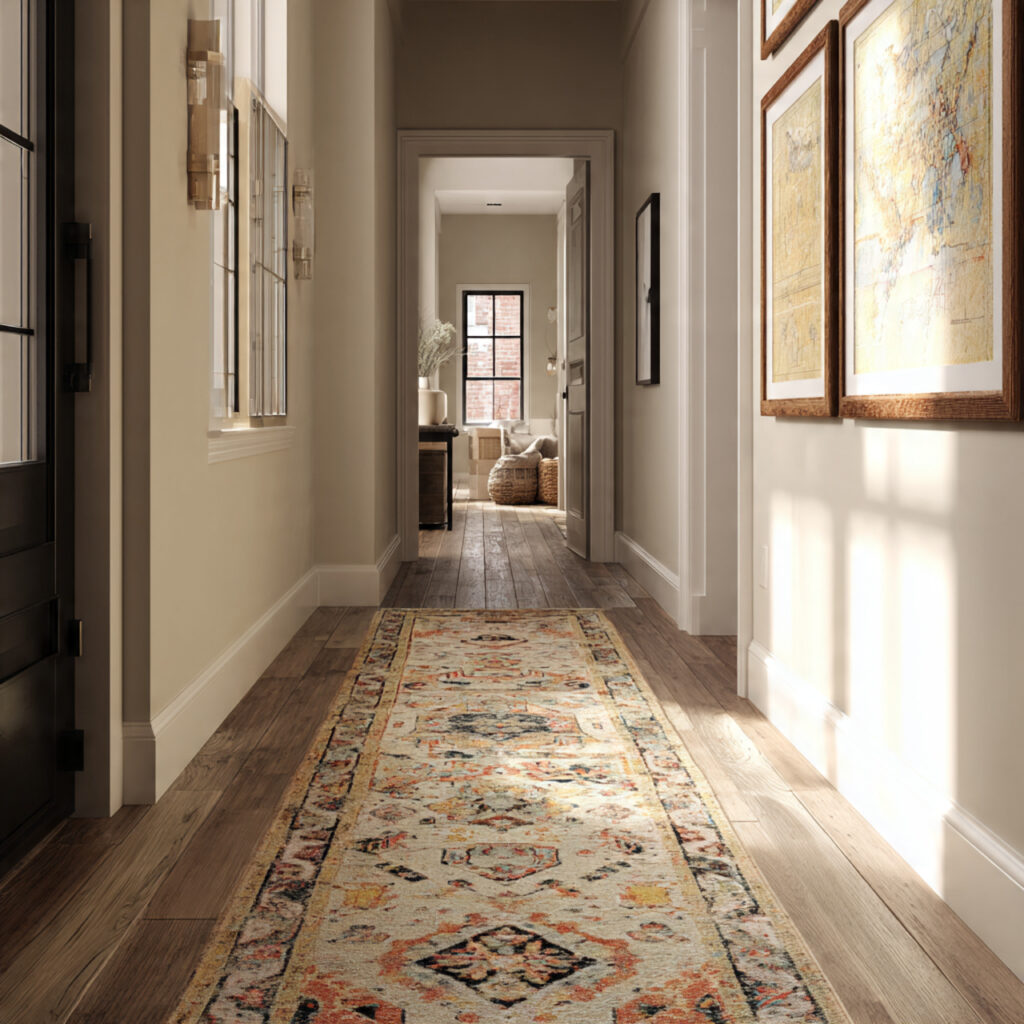
A hallway runner rug immediately changes how a corridor feels underfoot. The long shape draws the eye forward and visually stretches the length of the space. Soft texture also helps soften the hard lines created by walls and floors.
Runner rugs often become one of the most practical additions to busy homes. They protect flooring from constant foot traffic while adding warmth and color to the hallway. Homes with darker flooring especially benefit from the contrast that a lighter runner can provide.
Choose a runner that leaves visible floor space along both sides so the hallway does not feel crowded. Durable materials such as wool or tightly woven cotton hold up well in areas that receive daily use.
Tip: Patterns with subtle texture help hide everyday dust and footprints.
Arched Mirrors That Make Narrow Hallways Feel Larger
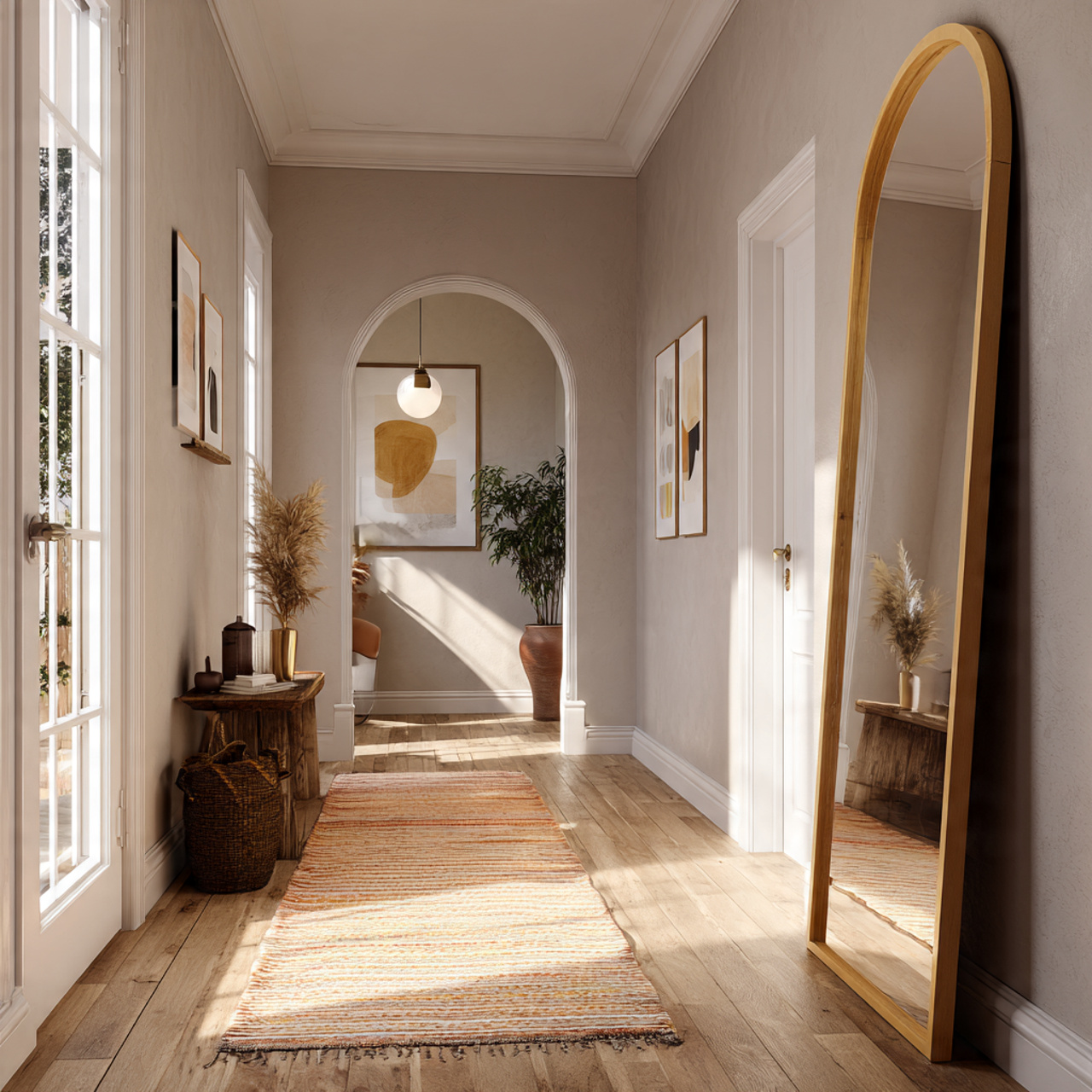
An arched mirror placed along the hallway wall can make the entire space feel more open. The curved shape softens the straight architectural lines that most corridors have. Light from nearby rooms reflects through the mirror and spreads across the walls.
Many people notice the difference immediately after adding a mirror to a hallway. The reflection creates depth and makes the corridor feel less confined. In darker hallways this simple addition can noticeably brighten the entire passage.
Choose a mirror with a simple frame so it blends naturally with the surrounding decor. Wood or metal frames both work well depending on the overall style of the home.
Tip: Place mirrors where they reflect natural light instead of empty wall space.
Vertical Wall Paneling That Adds Quiet Architectural Detail
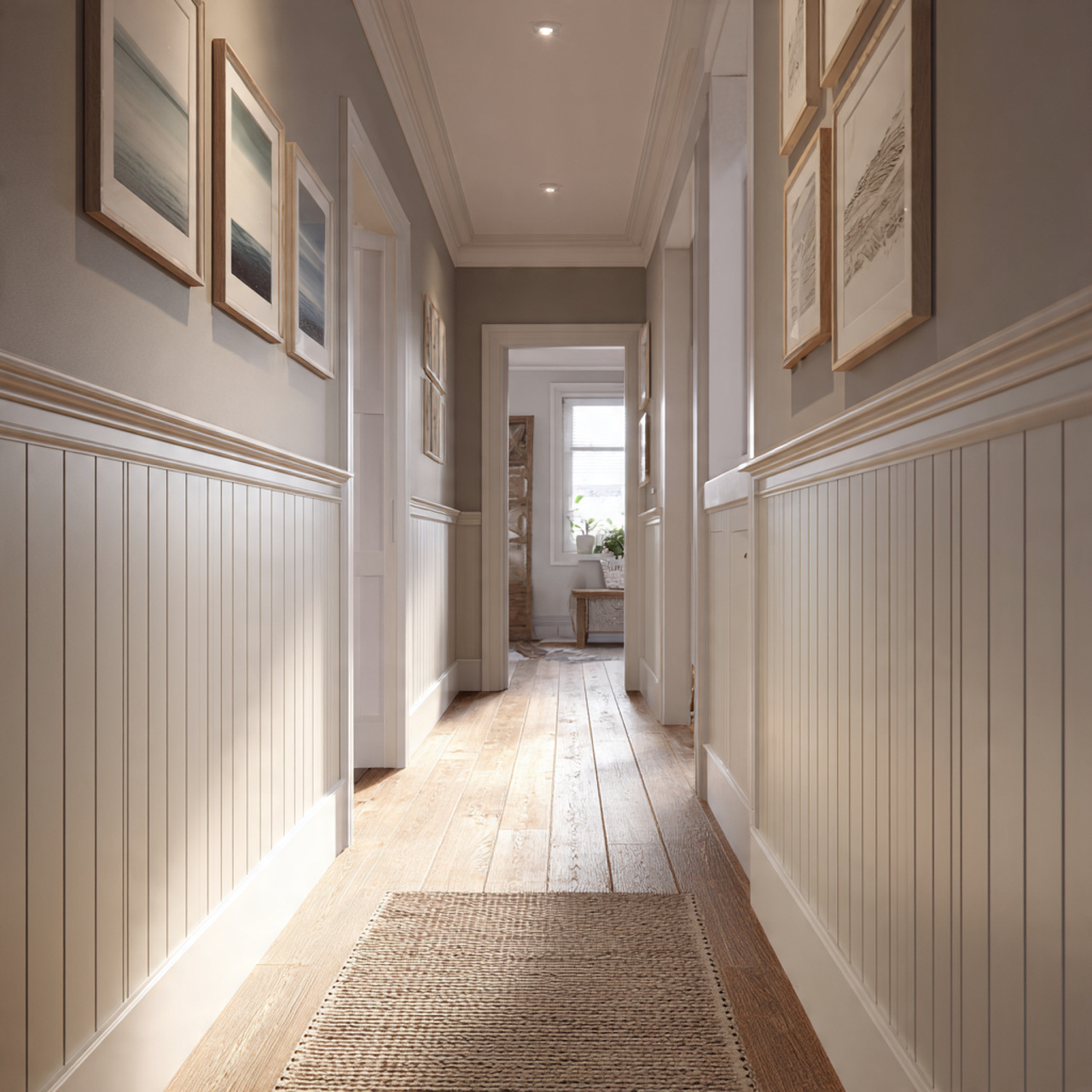
Vertical wall paneling can transform an ordinary hallway wall into something far more interesting. The repeating lines guide the eye upward which helps ceilings appear slightly higher. Even a simple corridor begins to feel more intentional.
In older homes paneling often restores the character that renovations sometimes remove. Painted paneling blends easily with neutral walls while still adding subtle structure. Many homeowners are surprised by how much depth these simple lines create.
Paneling can be installed using narrow molding strips attached directly to the wall. Once painted in the same color as the wall, the panels look like part of the architecture rather than decorative trim.
Tip: Use the same paint color on paneling and walls for a calm unified look.
Layered Lighting That Makes Hallways Feel Comfortable
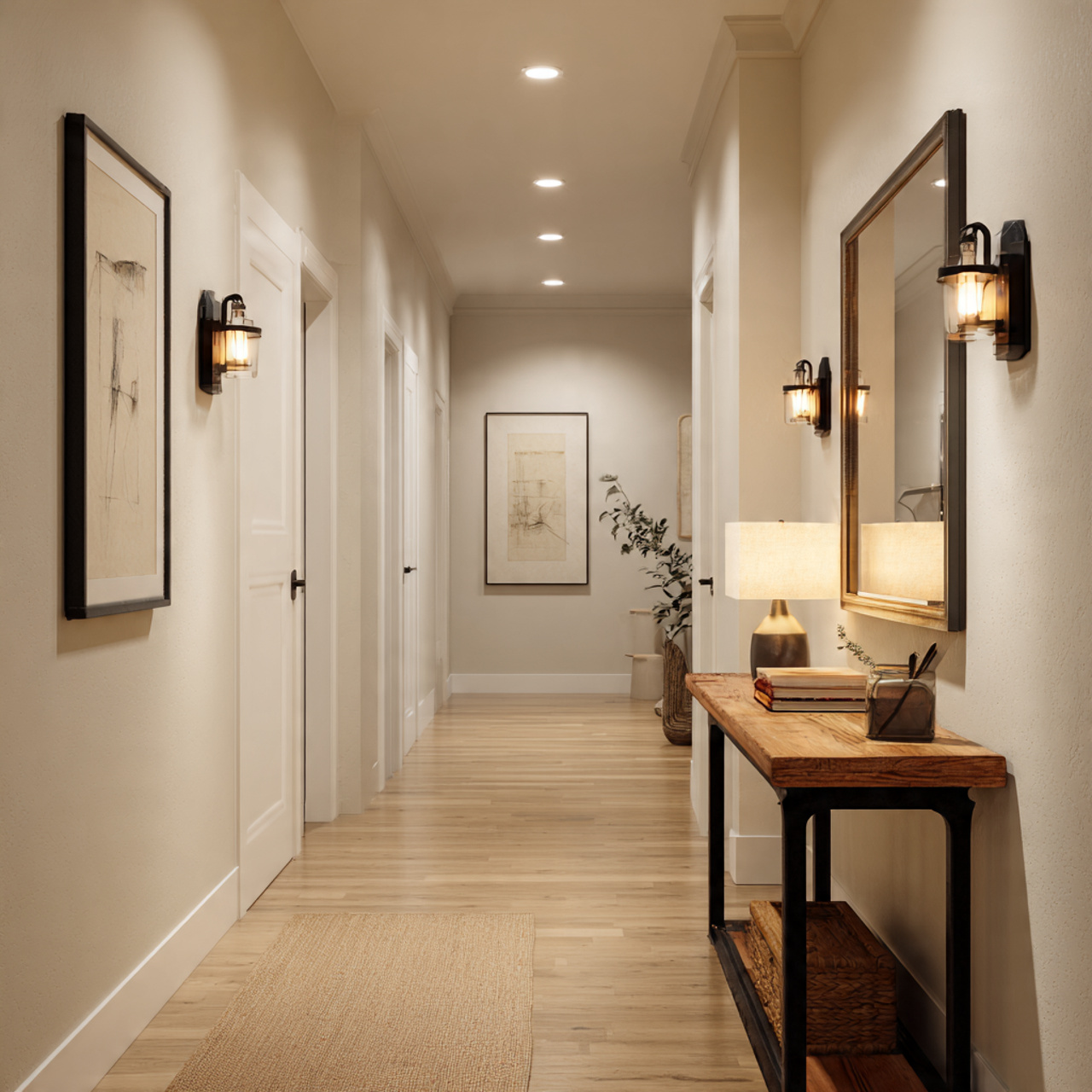
Lighting often determines whether a hallway feels welcoming or dull. Many homes rely only on a ceiling fixture which can create harsh shadows. Adding softer side lighting changes the atmosphere immediately.
Wall lights or small table lamps spread warm light across the hallway walls. The corridor begins to feel more like part of the living space rather than a simple walkway. Evening lighting becomes softer and more relaxing.
Warm toned bulbs usually work best in hallways because they soften the space. Even one small lamp placed on a console table can dramatically improve the mood of the area.
Tip: Install warm bulbs rather than bright white lighting for a comfortable glow.
Slim Storage Benches That Keep Entryways Organized
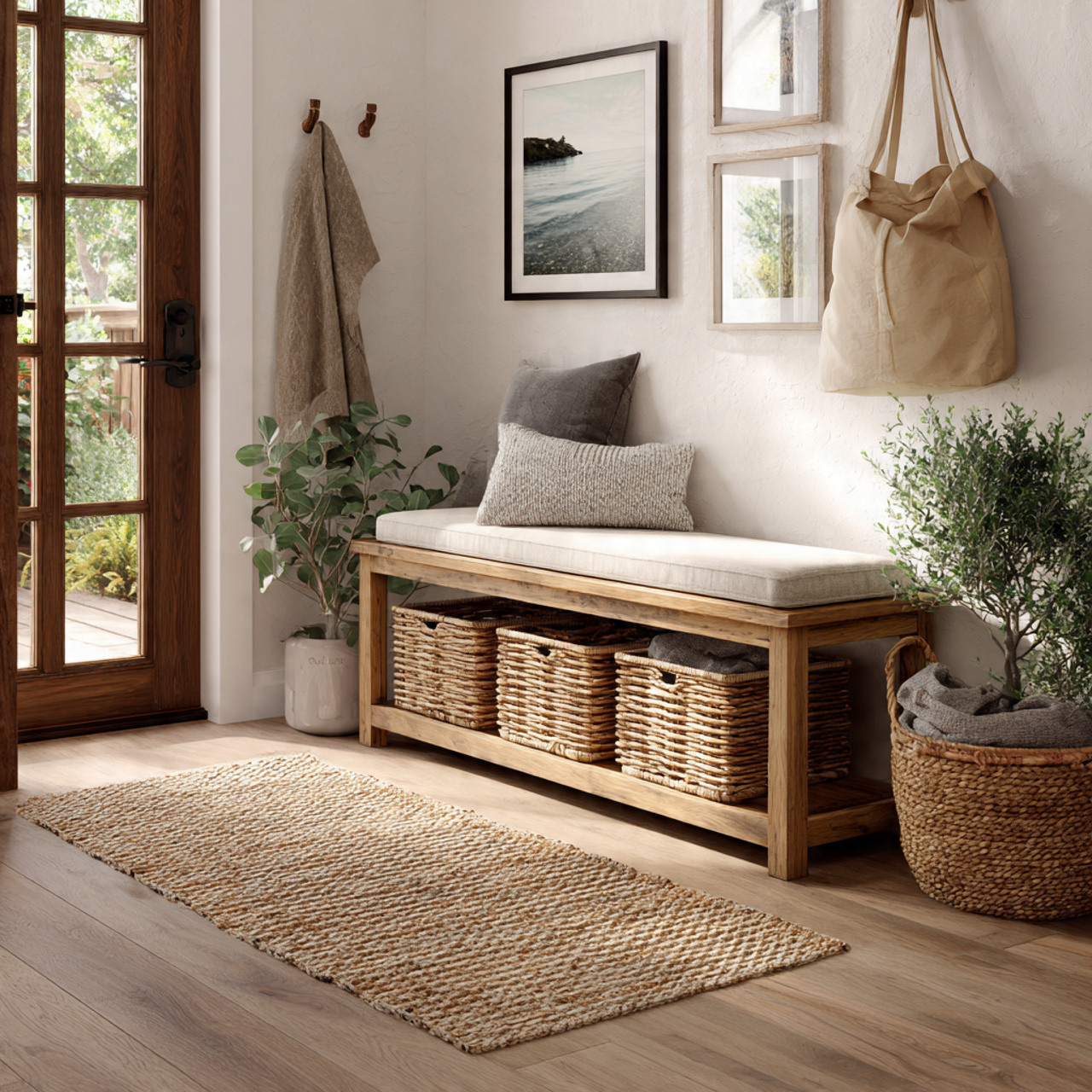
A slim bench placed near the entrance of a hallway offers both comfort and practicality. Sitting down to remove shoes is far easier than balancing while standing in the corridor. Many families quickly realize how helpful this small piece of furniture becomes.
Benches with open shelving or hidden storage help keep shoes contained in one place. Instead of spreading across the floor they remain tucked neatly under the seat. The hallway stays visually calm even during busy mornings.
Look for benches that feel narrow enough to preserve the walking space. Natural wood benches paired with soft cushions tend to blend easily into most interiors.
Tip: A woven basket under the bench can store frequently used shoes.
Wallpaper Panels That Add Pattern Without Overwhelming the Space
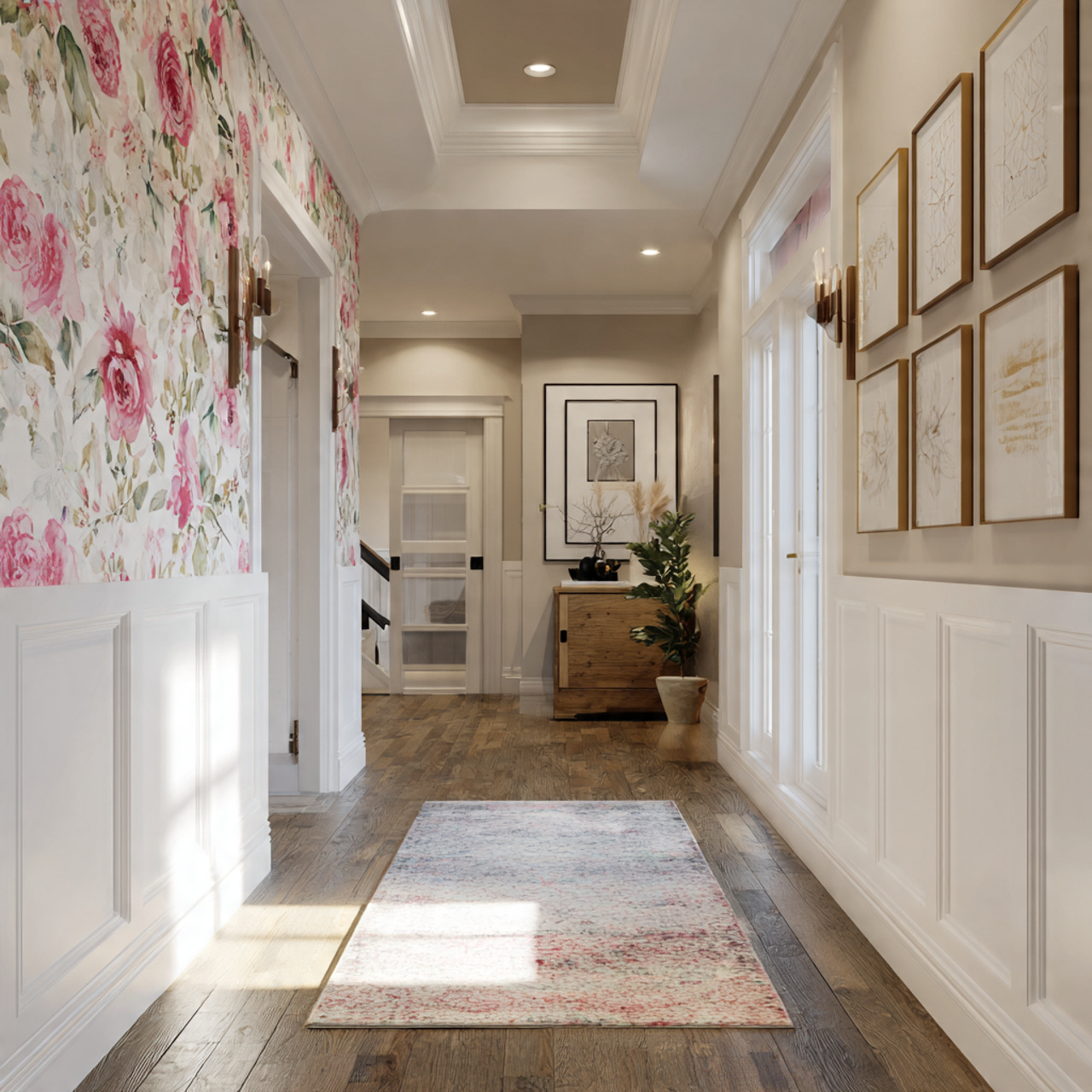
Wallpaper can add character to hallways, but covering every wall sometimes feels heavy in narrow spaces. Framing wallpaper within decorative wall panels creates a more balanced approach. Pattern appears as a feature without dominating the room.
These framed wallpaper sections almost resemble oversized artwork. The surrounding wall color keeps the hallway calm while the pattern introduces personality. Floral or botanical prints often work beautifully in this setting.
Choose wallpaper that echoes colors already present in nearby rooms. This helps the hallway feel connected to the rest of the home.
Tip: Use wallpaper on one wall if the corridor feels especially narrow.
Wooden Slat Walls That Add Texture to Modern Hallways
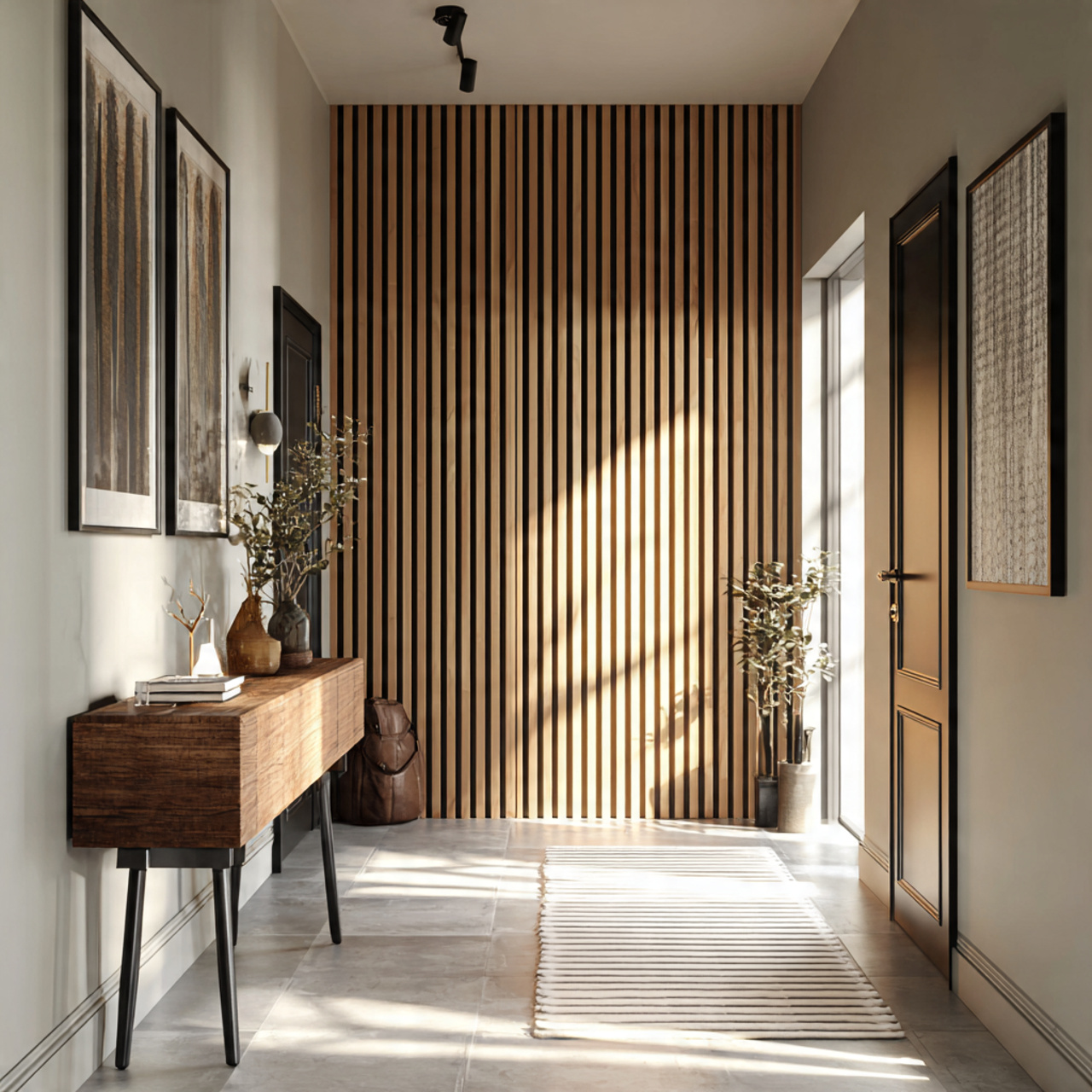
Wooden slat walls bring subtle texture without making a hallway feel crowded. The vertical lines add rhythm while natural wood tones introduce warmth. Light moving across the slats creates soft shadows that change throughout the day.
Minimalist homes often benefit from this type of texture because it replaces the need for heavy decoration. The wall itself becomes the focal point rather than the objects placed on it.
Installing slats behind a console table or along one hallway wall usually provides enough visual interest. Natural oak or walnut finishes pair beautifully with neutral paint colors.
Tip: Keep surrounding decor minimal so the slat wall remains the highlight.
Color Echo Styling That Connects Hallways to Nearby Rooms
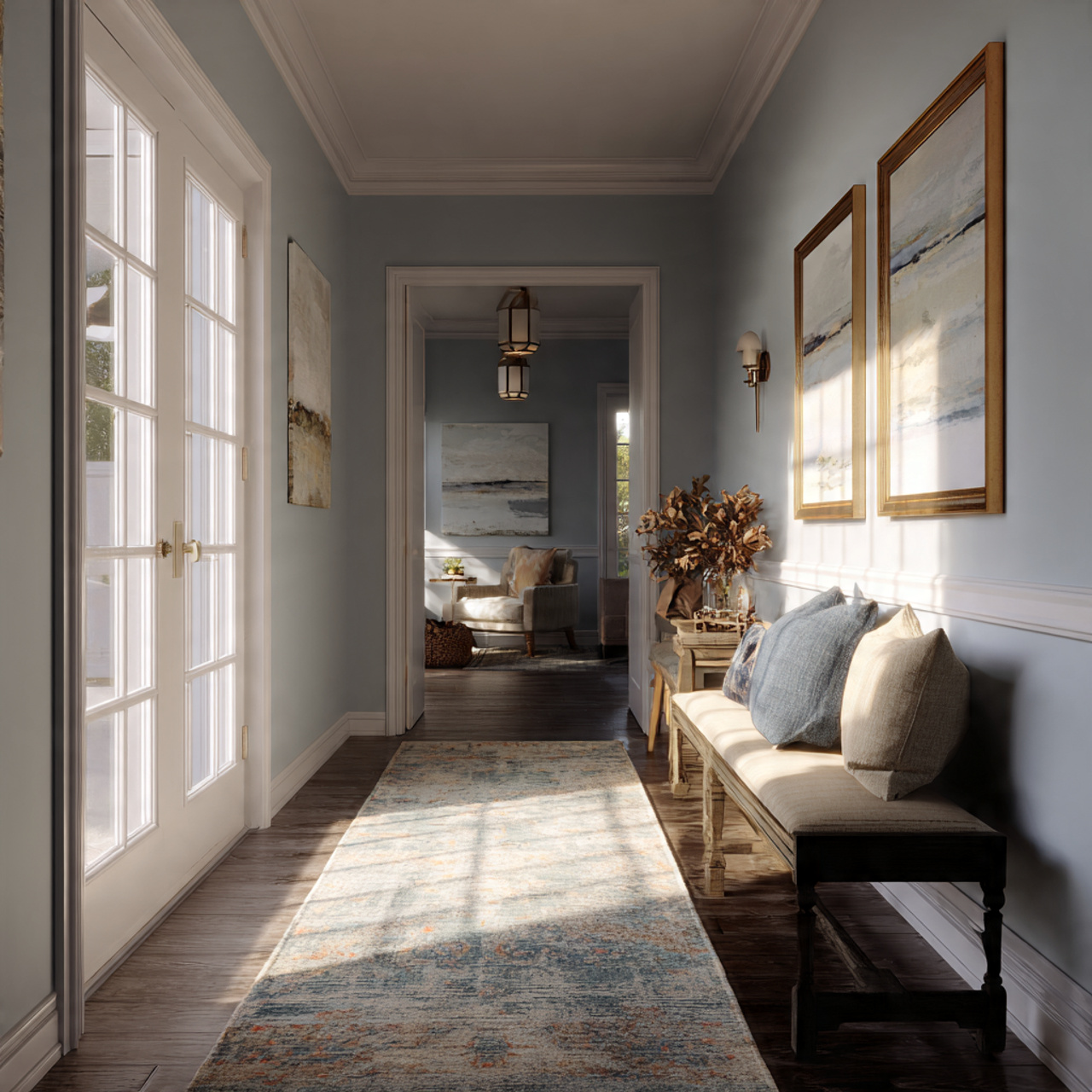
One of the simplest hallway ideas is repeating colors that already appear in nearby rooms. When a hallway quietly echoes these tones the home begins to feel more cohesive. A green vase or patterned runner can subtly repeat colors used elsewhere.
Many people assume hallways must remain neutral to avoid clutter. In reality small color connections often make the home feel thoughtfully designed. These details help each room transition smoothly into the next.
Start with one color already present in the living room or kitchen. Introduce that tone through artwork, decor pieces, or textiles in the hallway.
Tip: Repeat small accent colors rather than repainting the entire corridor.
Plants That Bring Life Into Narrow Hallways
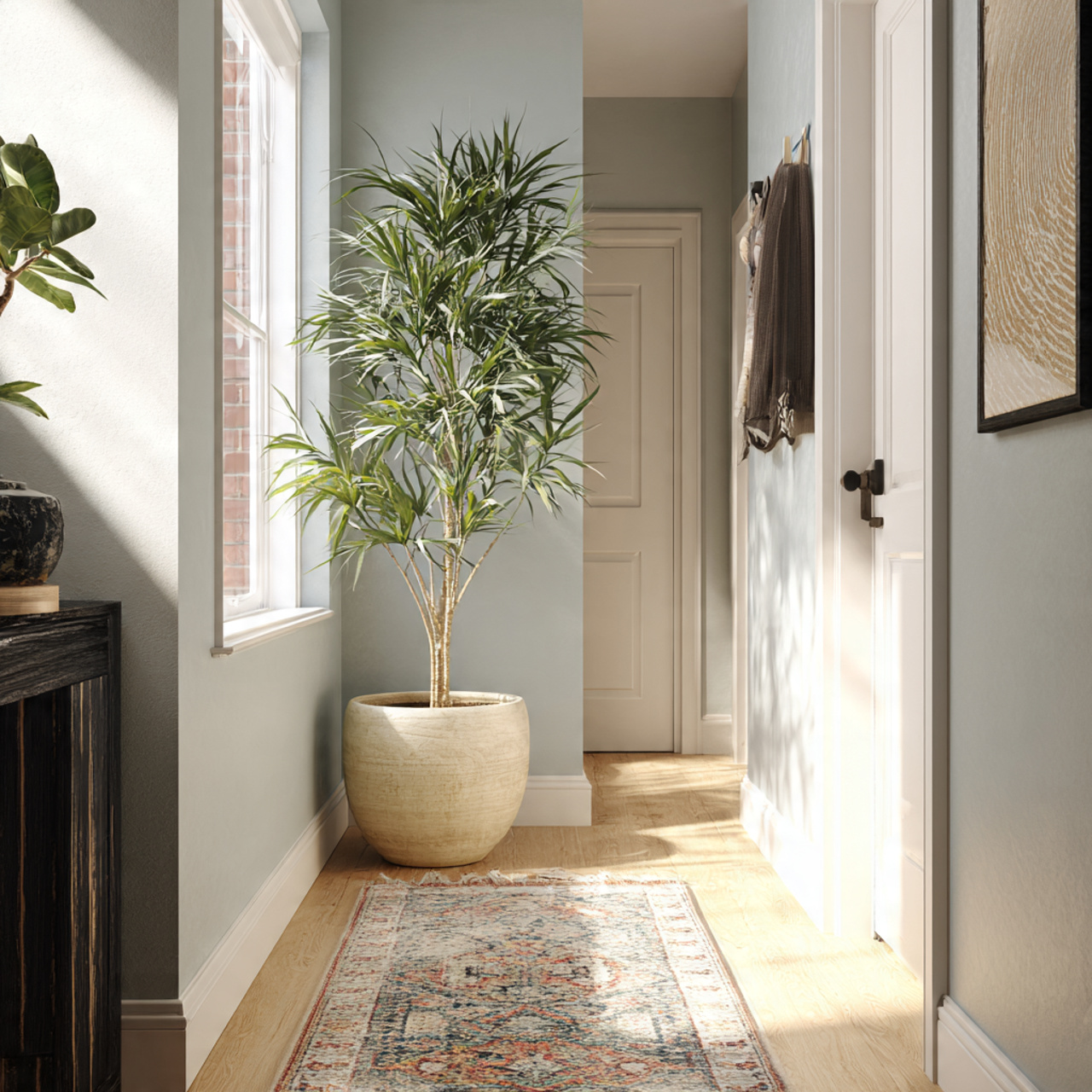
Plants soften the straight lines that many hallways naturally have. A tall plant placed in a corner introduces movement and natural color. Even a simple corridor begins to feel more relaxed.
Homes filled with neutral tones especially benefit from greenery. The organic shapes and changing leaves add life that artificial decor rarely provides.
Choose plants that tolerate indirect light since many hallways receive limited sunlight. Snake plants and ZZ plants are known for thriving in these conditions.
Tip: Place plants where they will not interrupt the walking path.
Two Tone Walls That Break Up Long Corridors
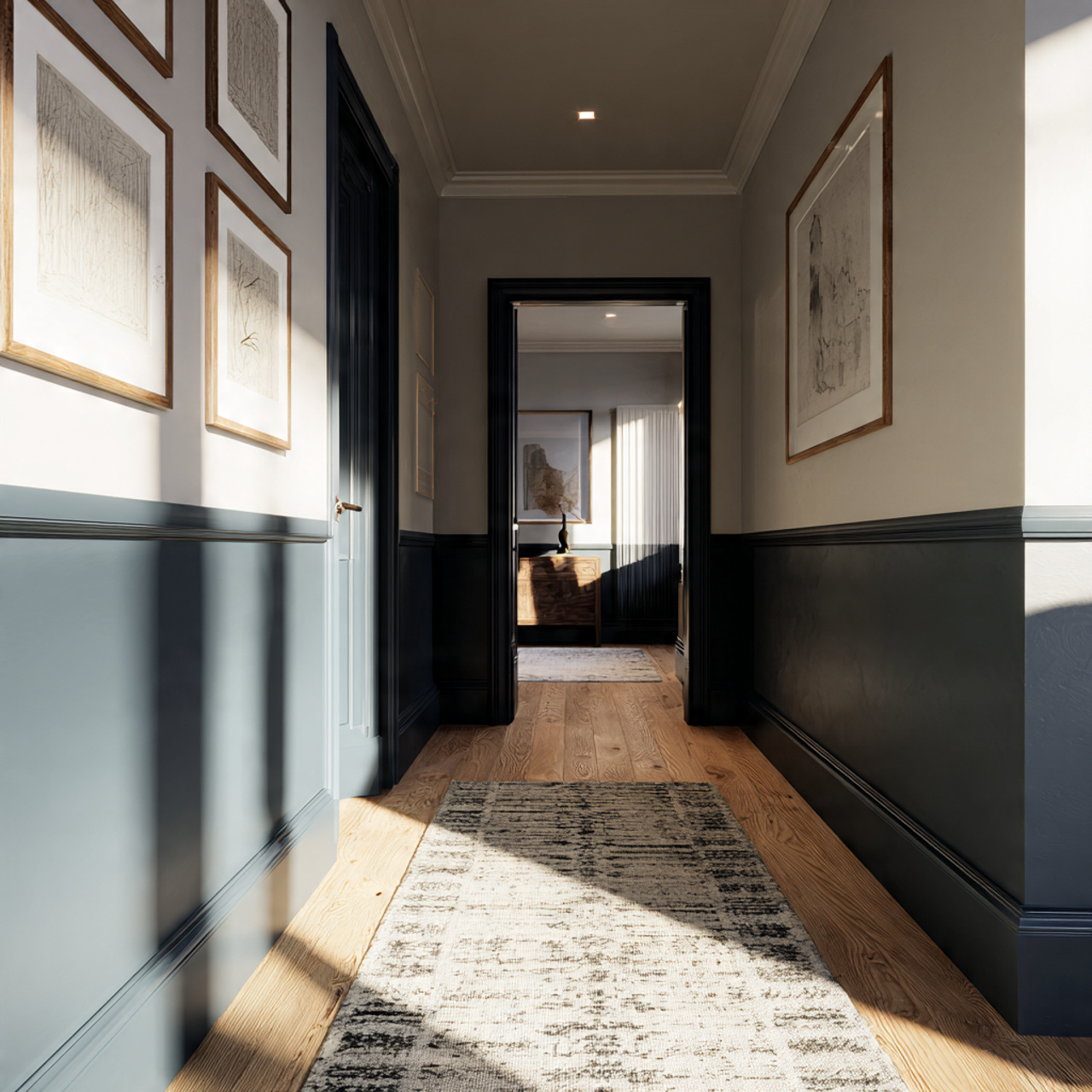
Two tone paint schemes can add depth to hallways that feel overly long. Painting the lower half of the wall in a slightly deeper shade creates a visual base that grounds the space. The upper wall remains lighter which keeps the hallway bright.
This technique introduces rhythm along the wall and prevents the corridor from feeling endless. Traditional homes often use this method but it also works beautifully in modern interiors.
Choose colors with similar undertones so the transition between shades feels natural. Warm neutrals usually create the most calming result.
Tip: Keep the darker tone on the lower portion of the wall.
Bold Door Colors That Add Character to Neutral Hallways
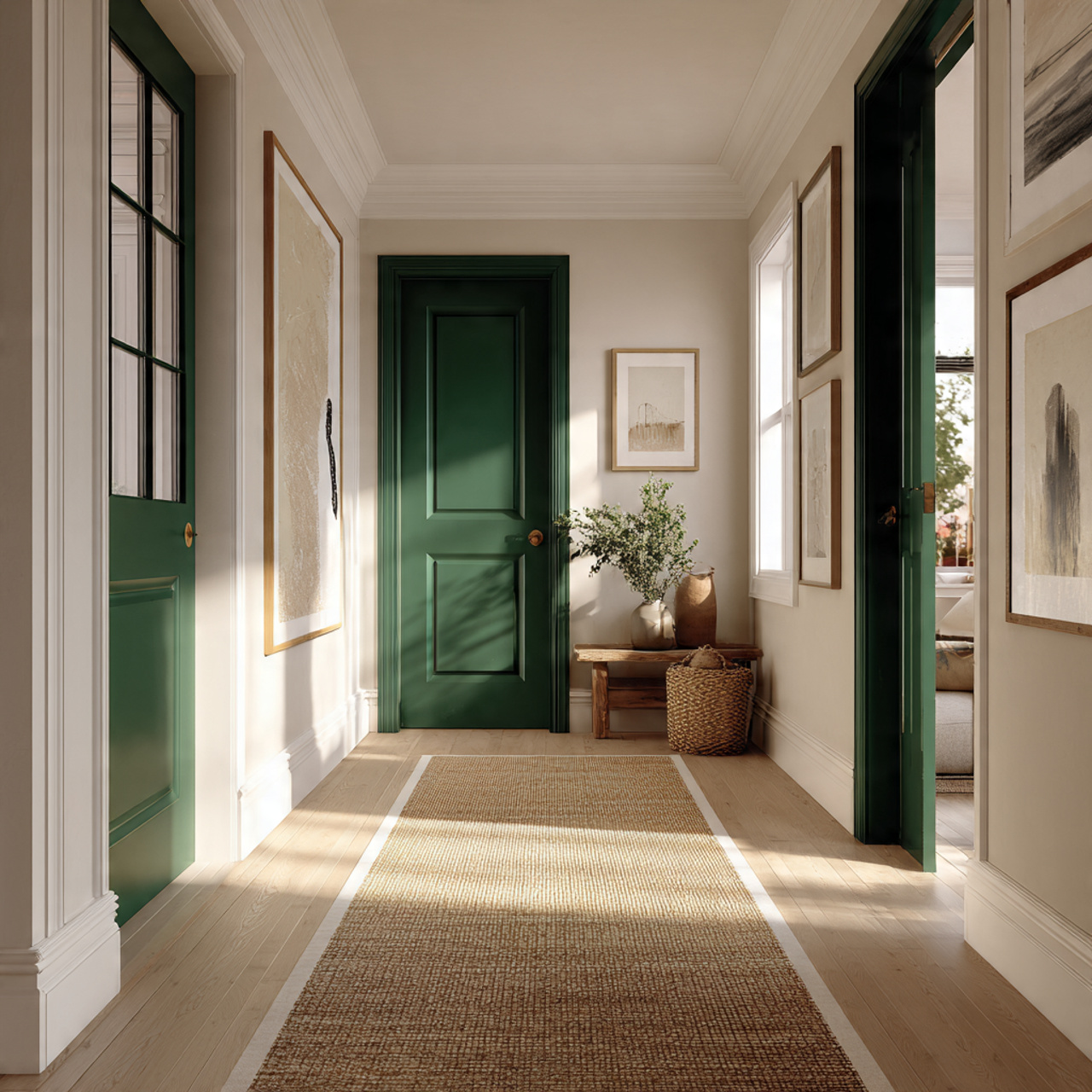
Painting hallway doors in a bold color can add personality without overwhelming the space. Deep green, navy, or charcoal doors stand out beautifully against soft neutral walls. These small bursts of color break up long stretches of wall.
Homes with several hallway doors often benefit from this idea because the repeating color becomes a design feature. Instead of blending into the wall the doors add rhythm to the corridor.
Use durable paint finishes so the color holds up to daily contact. Satin or eggshell finishes usually work well on interior doors.
Tip: Paint all hallway doors the same color for a cohesive look.
Wall Hooks That Create a Practical Entry Zone
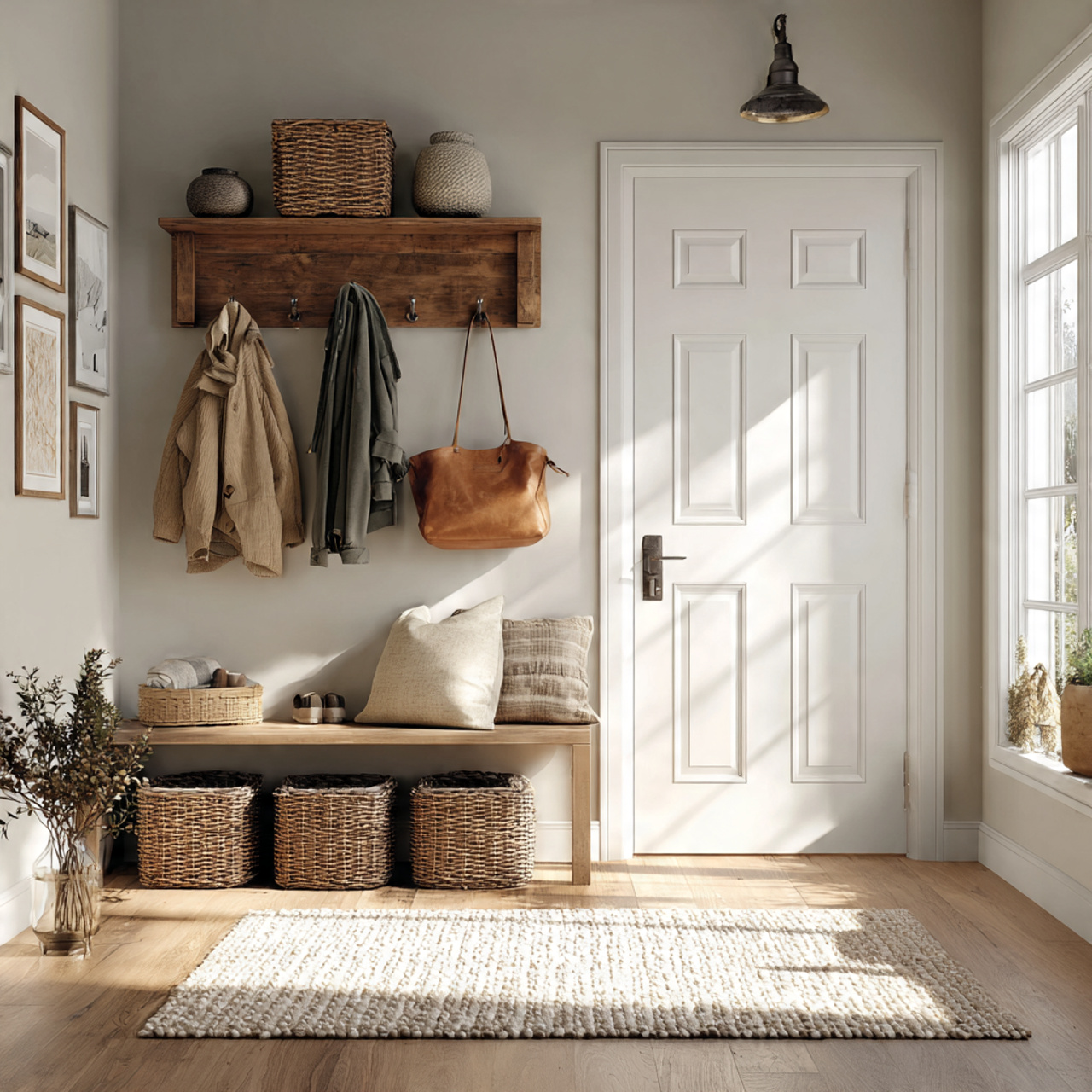
Wall mounted hooks turn a hallway into a functional drop zone for daily items. Jackets, bags, and hats remain accessible without bulky furniture taking up space. This solution works especially well in smaller homes.
Hooks can look tidy when installed in a straight line along the wall. Wooden pegs or simple metal hooks often feel more refined than large decorative racks.
Combining hooks with a small bench or basket creates an efficient entry area. Everyday items stay organized while the hallway remains comfortable to move through.
Tip: Install hooks slightly above shoulder height so coats hang neatly.
A Real Hallway Example Combining These Ideas
Imagine stepping into a softly lit hallway where a wooden console table sits beneath a round mirror. A patterned runner rug stretches along the floor while framed artwork lines one side of the corridor. Warm wall lights gently illuminate the space as evening arrives.
At the far end of the hallway a tall plant softens the corner while vertical wall paneling adds quiet architectural detail. The hallway connects nearby rooms through repeated colors and natural materials. Instead of feeling like a simple passage, the corridor becomes a calm transition between spaces.
Color and Material Authority for Hallway Design
Soft Sage Green HEX #A8BFA1 works beautifully on hallway walls where natural light may be limited. The soft green undertone feels calm and pairs naturally with oak wood, woven baskets, and linen textiles.
Warm Cream HEX #F4EFE7 keeps narrow hallways bright while still feeling warm. This shade works well with brass lighting, natural wood furniture, and light stone accents.
Deep Forest Green HEX #2F4F3A adds drama when used on hallway doors or lower wall panels. The darker undertone pairs beautifully with walnut furniture, matte black hardware, and aged brass details.
Muted Clay Beige HEX #C7A88A introduces warmth without feeling heavy. This earthy shade pairs naturally with ceramics, linen fabrics, and light oak finishes.
Room Size and Lighting Guide for Hallway Ideas
Small hallways
It benefit from mirrors and light wall colors that reflect available light. Slim furniture keeps the walking space comfortable.
Large hallways
It allow more freedom with furniture and layered lighting. Rugs and artwork help prevent the space from feeling empty.
North facing hallways
It tend to feel cooler and darker throughout the day. Warm paint tones and soft lighting help balance the atmosphere.
South facing hallways
It receive stronger daylight for longer periods. Neutral shades work beautifully because natural light already brightens the space.
Common Hallway Ideas Mistake
Overcrowding furniture is one of the most common mistakes in narrow corridors. Too many objects quickly make the hallway feel tight and uncomfortable. Keeping only a few useful pieces preserves the flow of movement.
Another mistake happens when lighting relies only on a ceiling fixture. Harsh overhead lighting can make hallways feel cold and shadowy. Adding side lighting creates a softer atmosphere.
Many homes also treat the hallway as a separate space from surrounding rooms. When colors clash the transition between rooms feels abrupt. Repeating subtle tones from nearby spaces creates a smoother visual flow.
A less obvious mistake involves choosing rugs that are too short for the corridor. Small runners break the visual line of the hallway. A properly sized runner helps the corridor appear longer and more balanced.
Frequently Asked Questions About Hallway Ideas
How can I decorate a narrow hallway without making it feel crowded?
Choose slim furniture and keep decorations simple. Mirrors and light colors help reflect light and maintain openness.
What colors work best for hallway walls?
Soft neutrals, muted greens, and warm creams are reliable choices. These shades keep the hallway bright while still adding character.
Do mirrors really help small hallways feel larger?
Yes mirrors reflect light and visually extend the space. Even one well placed mirror can make a noticeable difference.
How can I decorate my hallway on a budget?
Start with small upgrades such as framed prints, a runner rug, or decorative hooks. Simple additions often have the biggest visual impact.
Should every hallway include furniture?
Not always. Very narrow hallways may work better with wall decor and lighting alone.
Conclusion About Hallway Ideas
Thoughtful hallway ideas can quietly reshape how a home feels from the very first step inside. Lighting, texture, color, and small styling details may seem simple, but together they can transform a narrow corridor into a welcoming transition that connects each room naturally.
Start with one change that feels achievable, such as placing a mirror to reflect light, adding a runner rug for warmth, or styling a slim console table near the entrance. Over time these small improvements layer together and turn everyday hallway ideas into a space that feels organized, comfortable, and beautifully connected to the rest of the home.