12 Genius Entryway Table Ideas Designers Quietly Swear By
Walking into a home, the first thing you notice is often the entryway table, even if you don’t realize it right away. It quietly sets the tone, showing whether the space feels calm, cluttered, or thoughtfully styled. In my experience, even a simple table can completely change how a home feels the moment you step inside.
Most people focus on big furniture pieces, but the entryway table does something different. It creates that first impression you carry with you as you move through the home. When it’s done right, the whole space feels more intentional without needing a full redesign.
Entryway table styling works best when layout, lighting, and simple layered decor come together to create a space that feels welcoming, balanced, and easy to maintain.
Why Entryway Table Styling Shapes Your First Impression
An entryway table is not just a place to drop keys, it quietly organizes how your home feels from the very first step inside. One thing I’ve noticed in real homes is that when this area is ignored, the entire space can feel slightly unfinished no matter how well the rest is decorated. That small surface ends up carrying more visual weight than people expect.
When styled with intention, it becomes a natural pause point in your home. It gives structure to the space, adds warmth, and makes everyday routines smoother. Over time, this small setup often becomes one of the most used and appreciated spots in the house.
Core Ideas
Entryway Table with Oversized Round Mirror and Two Matching Table Lamps
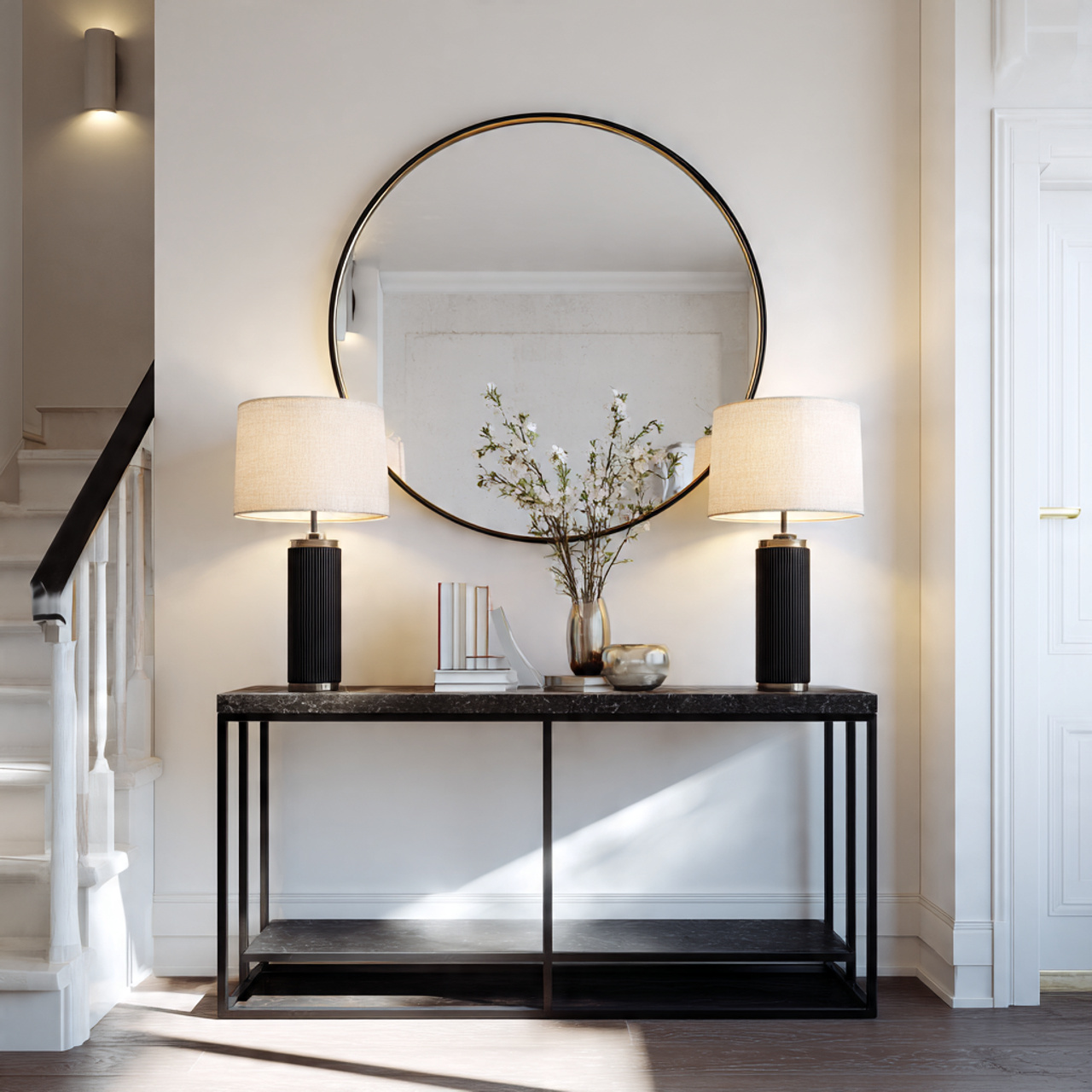
A large round mirror sits centered above the table, reflecting soft light across the space. Two matching lamps on either side create a symmetrical glow that feels calm in the evening. The setup instantly looks structured without feeling heavy.
This works because symmetry naturally brings visual balance. In many homes, uneven styling feels slightly off even when everything looks fine on its own. Matching elements create a sense of calm and order.
To apply this, center the mirror first and place lamps evenly on both sides. Keep the rest of the decor minimal so the symmetry stays clear. Let the balance become the main visual feature.
Tip: Keep both sides visually equal to maintain a calm and polished look.
Entryway Table with Wooden Tray Stacked Books Small Plant and Ceramic Vase
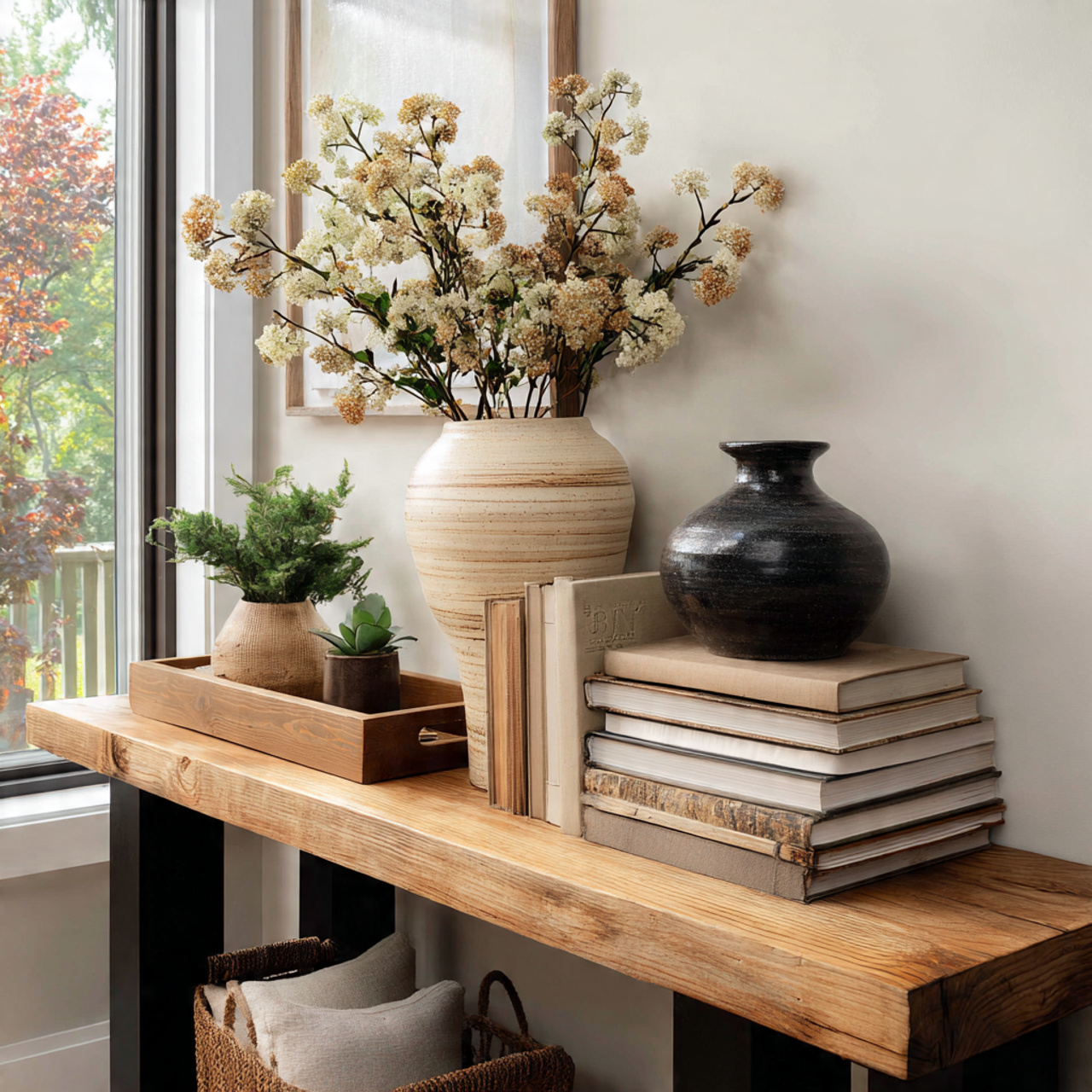
A wooden tray sits slightly off center, holding a few stacked books with a small plant and a ceramic vase. The arrangement feels relaxed, like it came together naturally over time. Nothing looks forced or overly arranged.
This works because layering creates depth without adding clutter. I once tried placing items flat across the table, but it always felt incomplete. Grouping objects adds structure and makes everything feel intentional.
Start with a tray as your base and build upward using books or decor. Add one organic element like a plant to soften the look. Keep it slightly imperfect so it feels lived in.
Tip: Use uneven heights to create a more natural layered look.
Entryway Table with Large Wall Mirror Reflecting a Hanging Chandelier
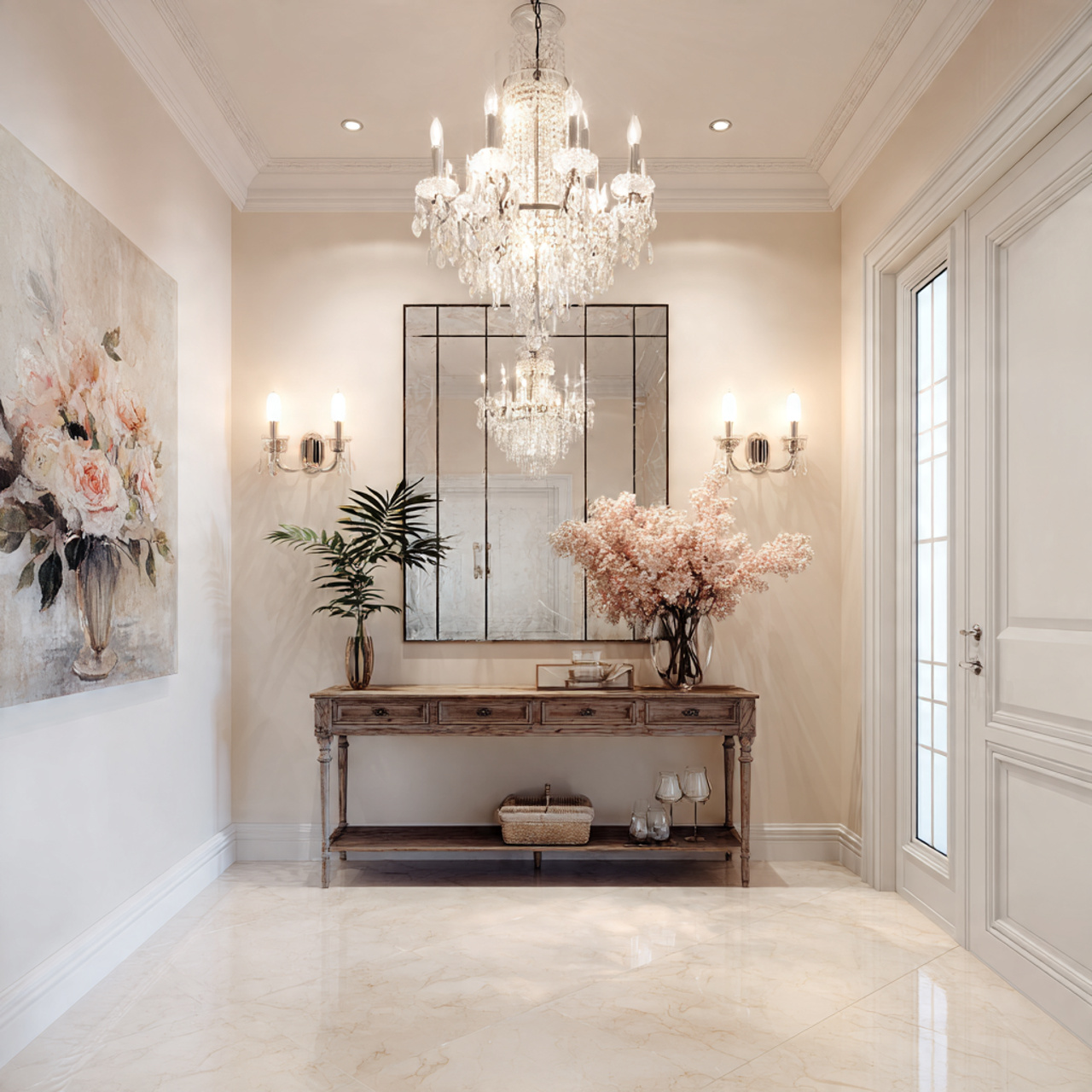
A wall mirror reflects a chandelier above, creating a soft layered glow. Light bounces across the surfaces, adding depth without extra decor. The space instantly feels more elevated.
This works because reflection adds dimension in a subtle way. Most people overlook how lighting interacts with mirrors, but it changes everything. It creates a sense of depth that feels high-end.
Position your table where light can reflect naturally into a mirror. Keep decor simple so the reflection stands out. Let lighting become part of the design.
Tip: Align your mirror to catch your best light source.
Entryway Table with Gallery Wall of Black Frames and Minimal Art
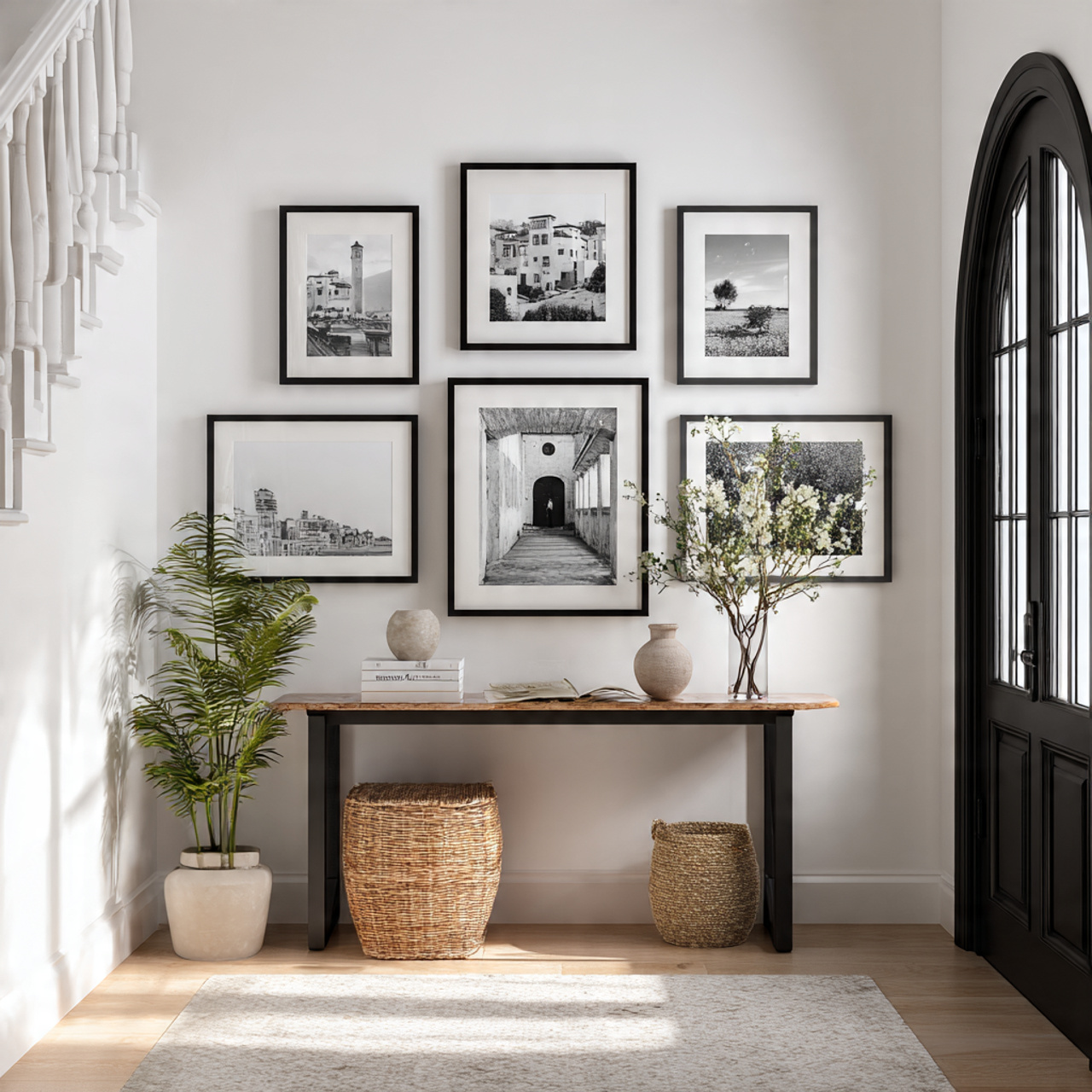
A series of black frames hang above the table, each holding simple artwork. The layout feels personal but not chaotic. The table below supports the display without competing.
This works because multiple pieces create movement and interest. A single frame can feel flat, but a gallery adds depth. I noticed this shift immediately after switching from one frame to a layered setup.
Choose frames with a consistent tone and vary their sizes slightly. Arrange them before hanging to find a natural flow. Keep table decor simple so the wall remains the focus.
Tip: Keep spacing slightly uneven for a more relaxed look.
Entryway Table with Slim Wooden Bench Underneath
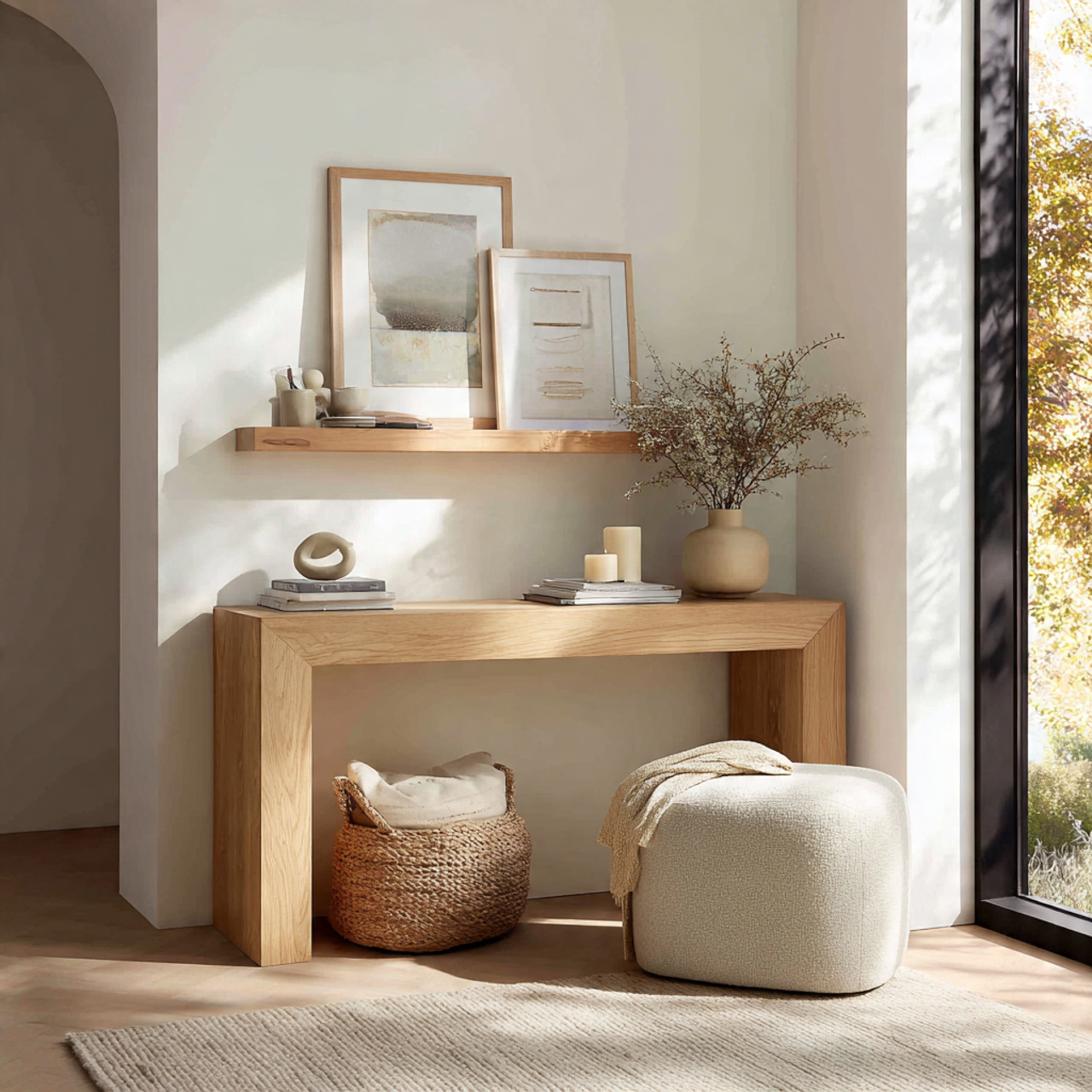
A slim bench fits neatly under the table, with baskets tucked beside it. It’s easy to sit, store items, and keep everything out of sight. The space feels functional without looking busy.
This works because it combines storage and seating in one footprint. In smaller homes, adding separate furniture can make things feel cramped. This setup keeps everything efficient.
Choose a bench that fits fully under the table. Add baskets for hidden storage. Keep the area clear so it remains easy to use.
Tip: Make sure the bench slides in completely to maintain space.
Entryway Table with Linen Runner Soft Fabric Layers and Seasonal Decor Accents
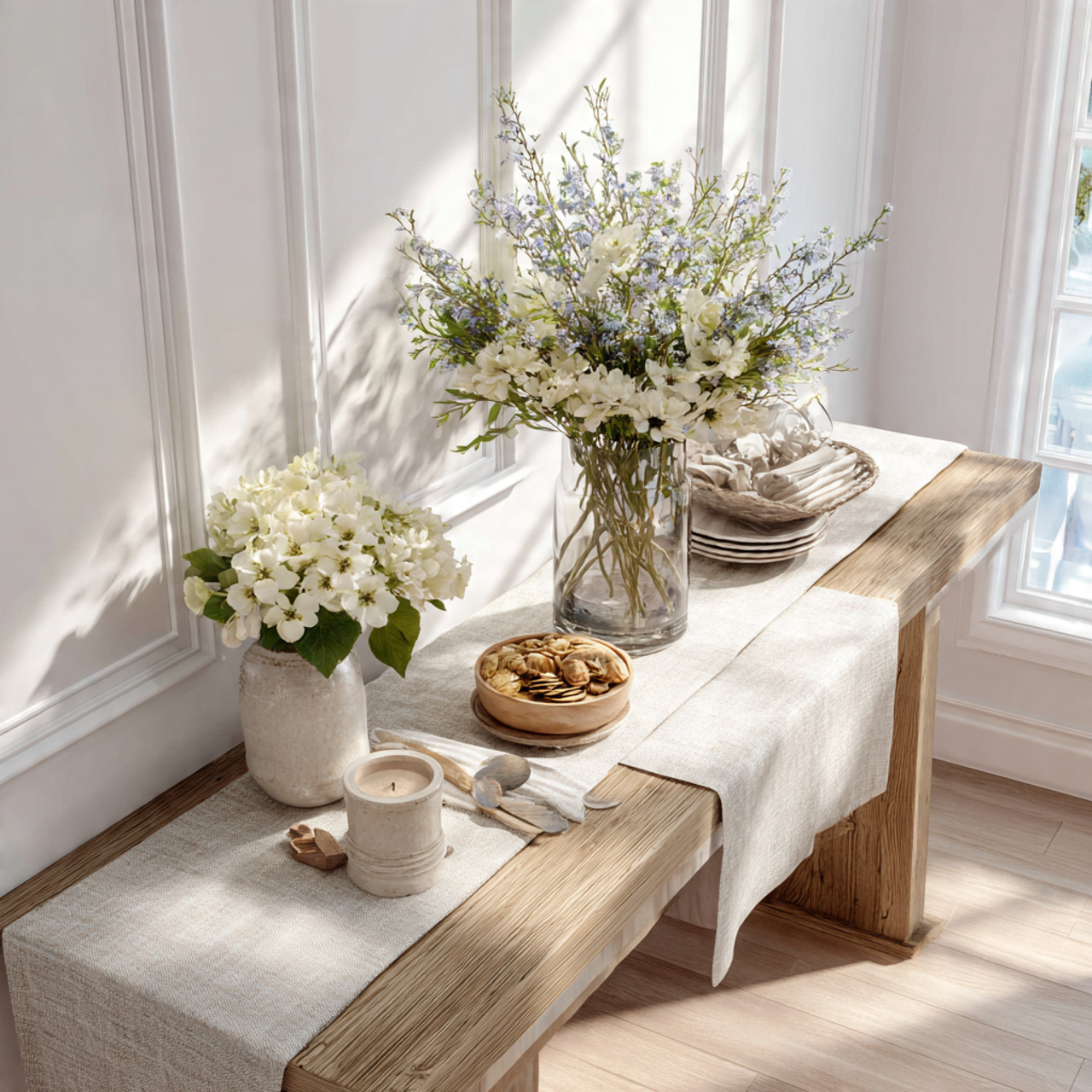
A soft linen runner drapes across the table with subtle folds. Small seasonal accents sit lightly on top, changing throughout the year. The setup feels fresh without needing a full redesign.
This works because small changes keep a space from feeling repetitive. I’ve noticed that static decor eventually feels dull. Seasonal layers bring quiet variation.
Use a neutral base and rotate small decor items. Keep changes simple so the look stays consistent. Let fabric add softness.
Tip: Change one element at a time to keep it effortless.
Entryway Table with Floating Wooden Shelf Above Holding Decor Pieces
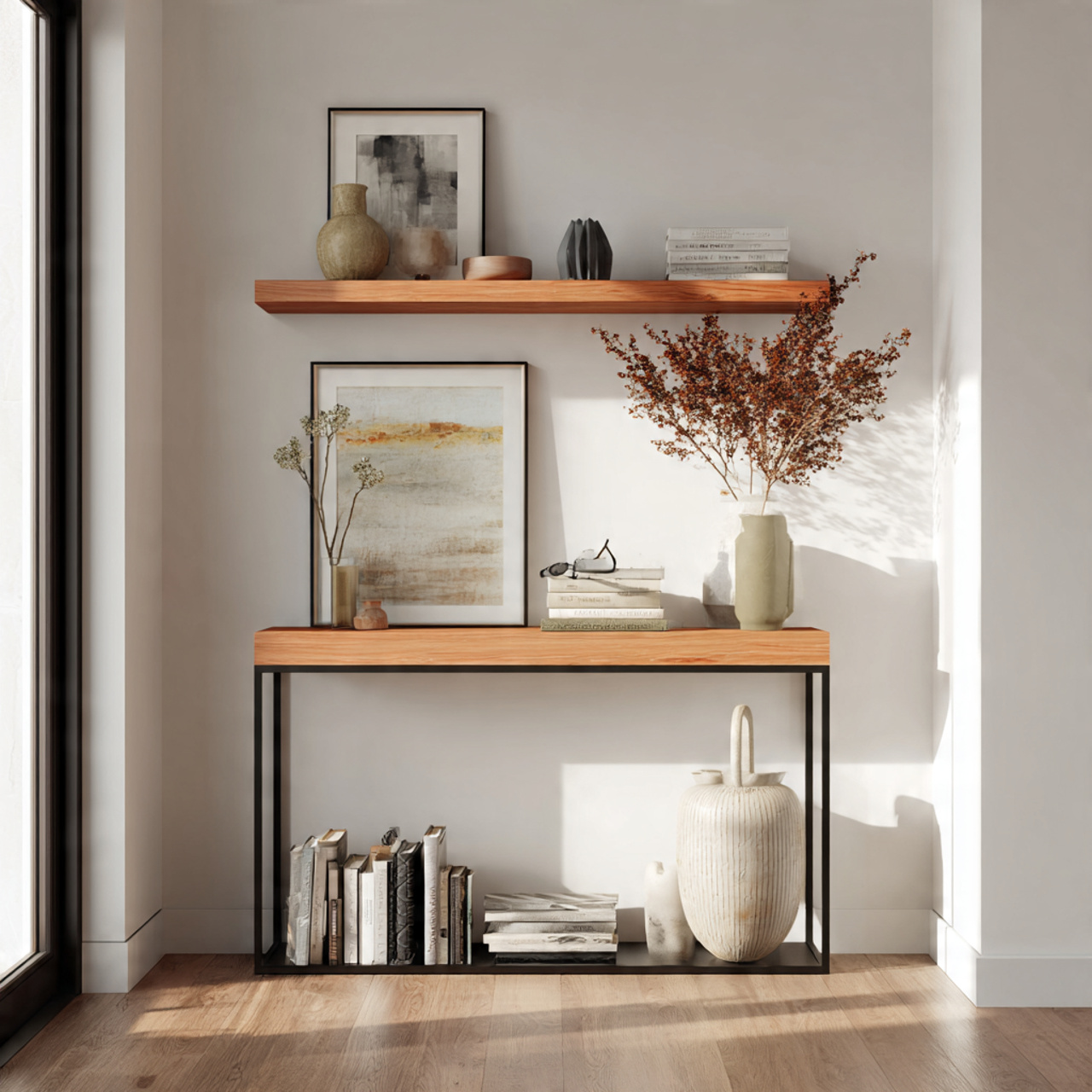
A floating shelf above the table holds a few carefully placed items. The table stays mostly clear, making the space feel open. Light moves freely across both levels.
This works because it separates visual weight. When everything sits on one surface, it feels crowded. Dividing elements creates balance.
Install a shelf above eye level and keep items minimal. Let the table remain uncluttered. Balance both layers.
Tip: Keep the shelf lighter than the table for better flow.
Entryway Table with One Large Sculptural Vase as Centerpiece
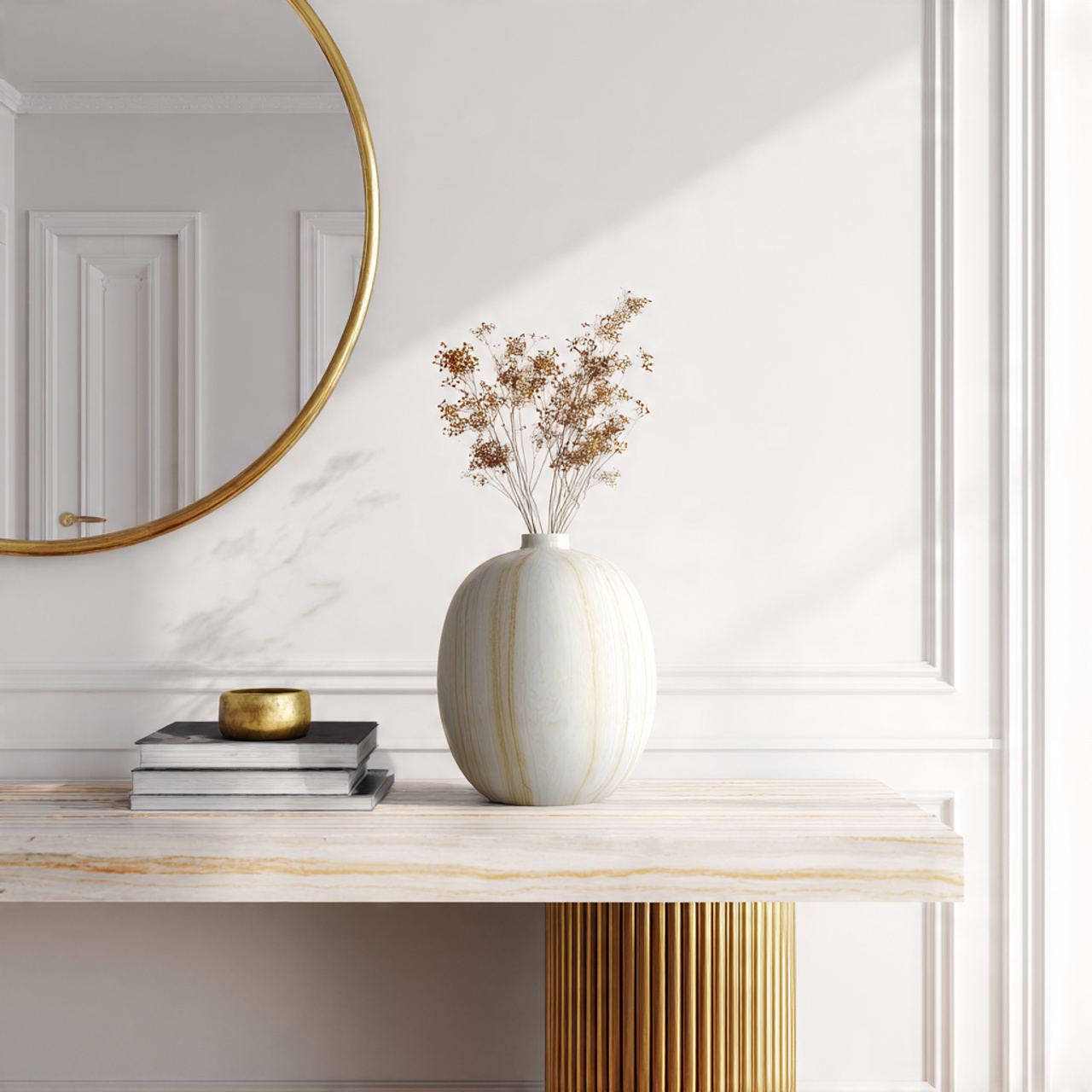
A large sculptural vase sits at the center, immediately drawing attention. The rest of the table stays clean and simple. The space feels intentional without effort.
This works because one strong focal point removes the need for clutter. I’ve seen setups fail when too many small items compete for attention. One bold piece creates clarity.
Choose a vase with shape or texture. Place it slightly off center for a natural look. Keep surrounding decor minimal.
Tip: Let one piece lead instead of adding many small ones.
Entryway Table with Warm Table Lamp and Wall Sconce Lighting
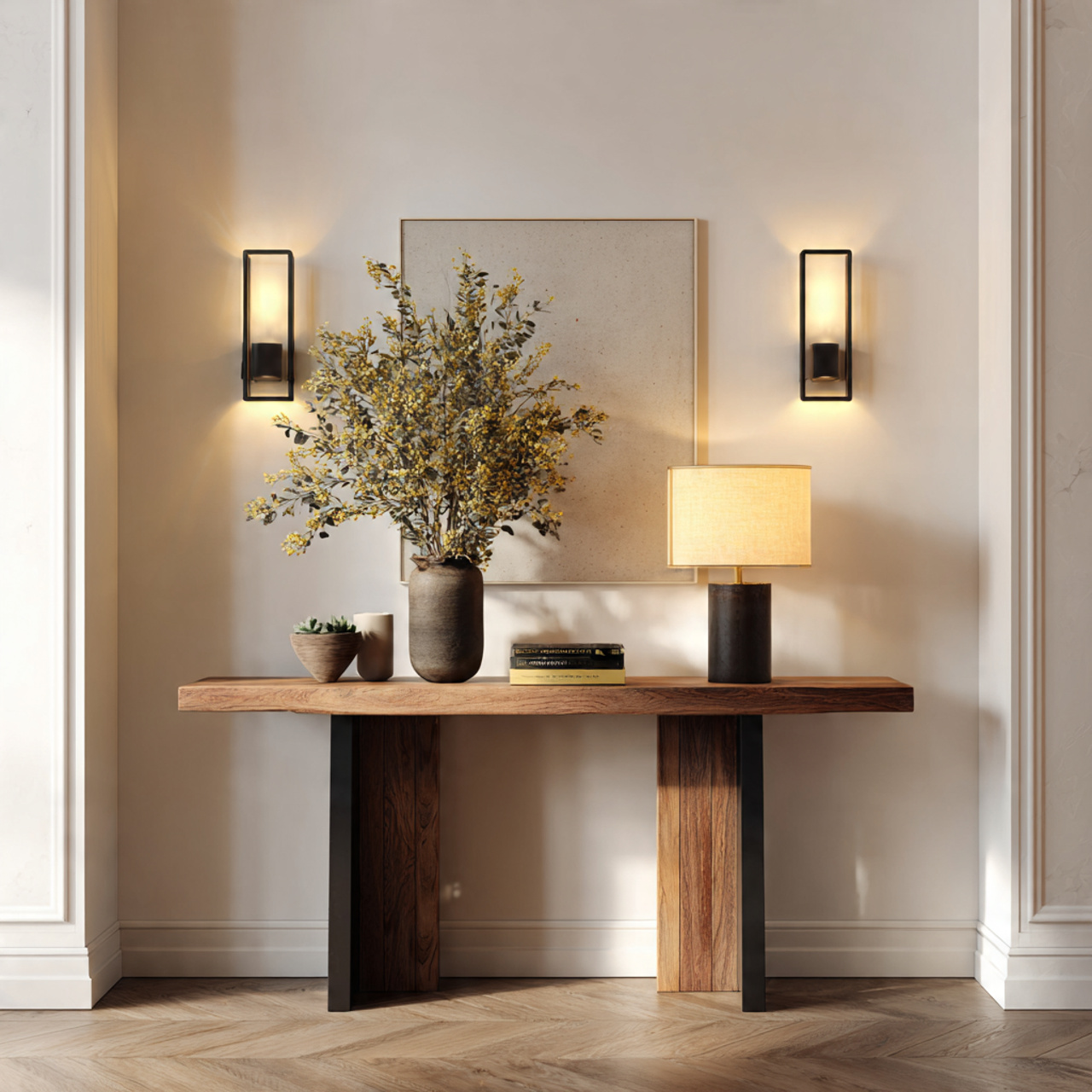
A warm lamp glows softly while a wall sconce adds layered light above. The space feels calm and welcoming in the evening. Shadows soften and the entry feels more complete.
This works because layered lighting adds depth. Overhead light alone often feels harsh. Multiple sources create comfort.
Use warm bulbs and vary light height. Keep brightness soft. Let lighting shape the mood.
Tip: Avoid cool lighting to keep the space inviting.
Entryway Table with Marble Top and Wooden Base
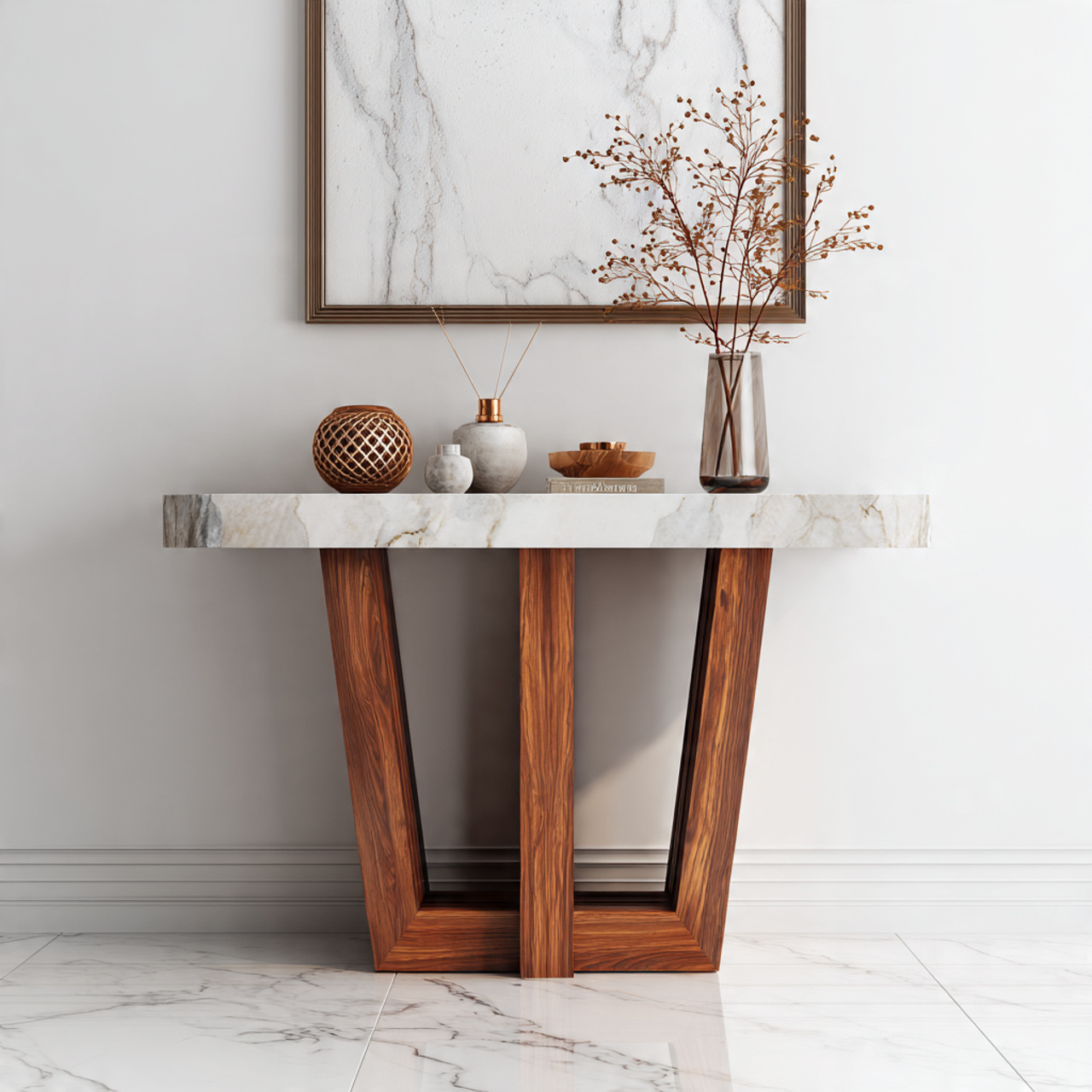
A marble surface reflects light while the wooden base grounds the look. The contrast feels balanced and refined. The table becomes a subtle focal point.
This works because mixed materials add interest without clutter. I’ve noticed single-material setups feel flat over time. Contrast adds depth.
Combine one polished material with one natural one. Keep decor minimal. Let materials stand out.
Tip: Stick to two materials to avoid visual noise.
Entryway Table with Open Lower Shelf Styled with Stacked Books and Woven Basket
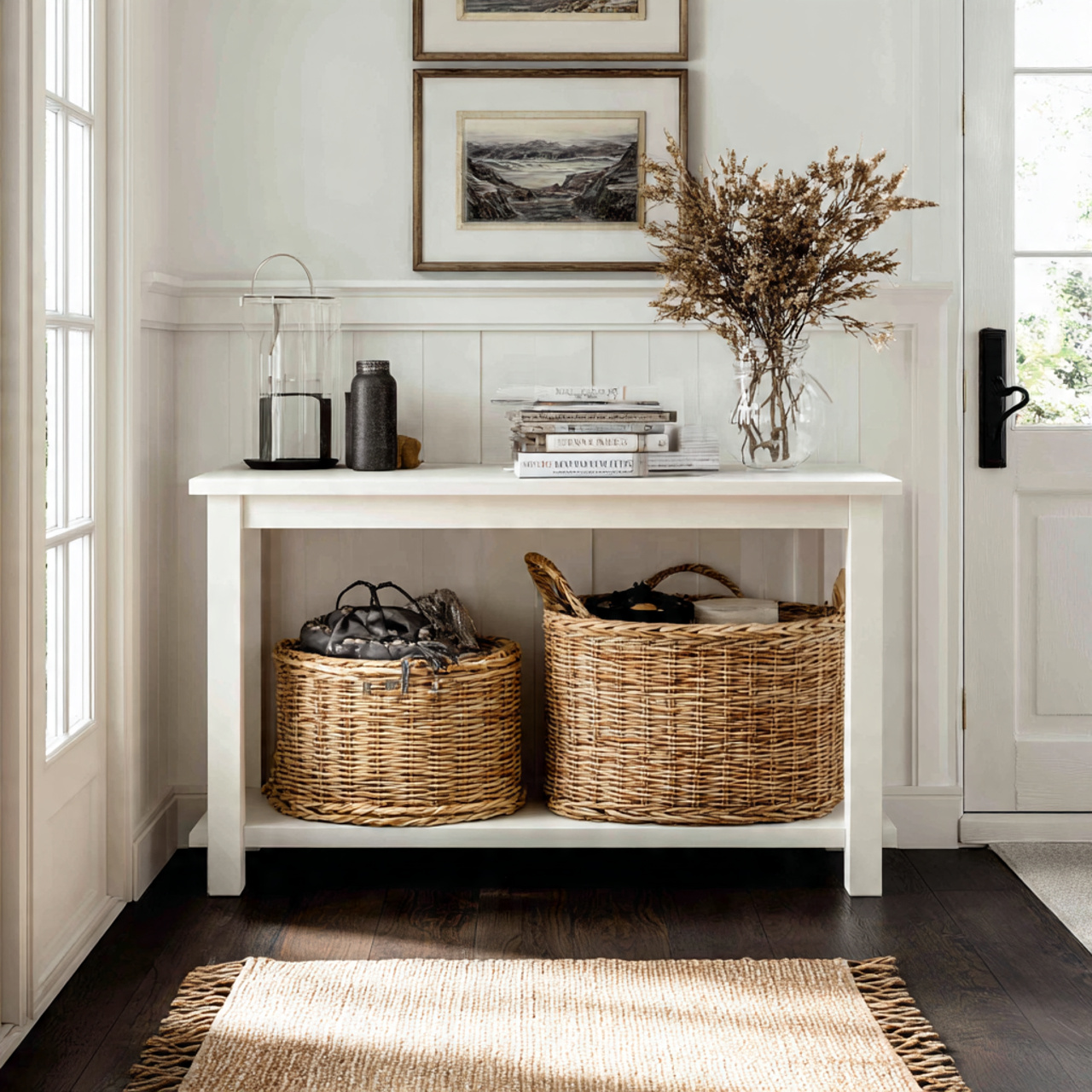
Books stack neatly beside a woven basket on the lower shelf. The arrangement feels tidy but lived in. Nothing looks forced.
This works because controlled open storage prevents clutter. Too many items make shelves messy. Limiting pieces keeps balance.
Use books for height and baskets for hidden storage. Leave some empty space. Keep colors consistent.
Tip: Never fill the entire shelf.
Visit Also: Decorative Pillows
Entryway Table with Beige Decor Pieces Light Wood Surface
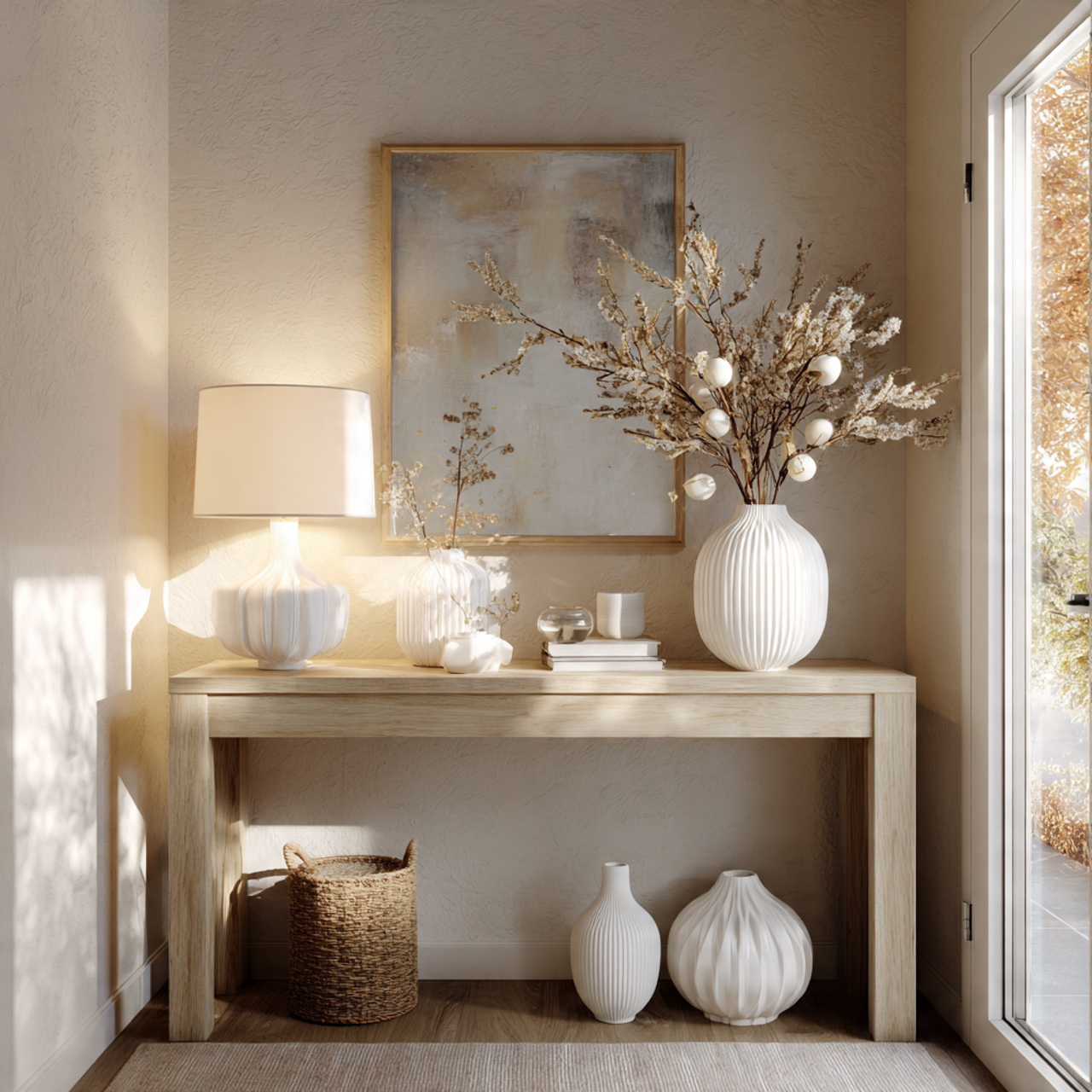
Soft beige decor sits on a light wood surface under warm lighting. The space feels quiet and welcoming. Nothing feels overwhelming.
This works because soft tones create a smooth transition into the home. Strong contrasts can feel harsh at the entrance. Neutral layers feel easier to live with.
Stick to a limited palette and repeat tones across elements. Add warmth through lighting. Keep variation subtle.
Tip: Use texture to add depth instead of color contrast.
A Real Entryway Table Setup That Feels Balanced and Lived In
Soft morning light moves across a wooden entryway table, catching the texture of the surface and the edges of a ceramic vase. A warm lamp sits quietly to one side, giving a gentle glow that feels especially calming in the evening. There’s a faint sense of stillness here, like the space naturally slows you down as you step inside.
The table sits centered against the wall with enough room to walk comfortably around it. A round mirror reflects light back into the space, while a small basket underneath keeps everyday items out of sight. Nothing feels crowded, and nothing feels empty either, which is usually the hardest balance to get right in an entryway.
Color and Material Choices That Make an Entryway Table Feel Complete
Soft Warm Taupe (#C7B8A3)
This works well on walls or larger surfaces where you want a calm, grounded base. It creates a relaxed mood without feeling dull or heavy. Pair it with natural wood and linen textures to keep the space soft and approachable.
Deep Charcoal Black (#2F2F2F)
This adds contrast through table frames, lamps, or small decor accents. It gives structure to the space and keeps lighter tones from feeling washed out. Works especially well with metal finishes and glass for a slightly modern edge.
Muted Olive Green (#7A8A6B)
A subtle accent that feels natural without being too obvious. It works best through plants or small decor pieces that bring life into the space. Pairs beautifully with woven textures and raw wood materials.
Warm Brushed Brass (#C49A6C)
Used in lighting fixtures or small hardware, this tone adds quiet warmth and a hint of refinement. It reflects light softly, which helps the space feel more layered. Works best alongside glass, marble, or darker tones for contrast.
Entryway Table Layout and Lighting That Works in Every Home
Small Entryways That Need to Feel Open
Use lighter surfaces and keep the table slim so movement stays easy. Add a mirror and soft side lighting to prevent the space from feeling tight or shadowed.
Large Entryways That Need Balance
Break the space into zones using lighting and layered decor so it does not feel empty. A table with stronger presence and warm lighting helps anchor the area.
Low Natural Light Entryways
Rely on warm lamps and wall lighting instead of overhead light alone. This avoids harsh shadows and makes the space feel more welcoming.
Bright Sunlit Entryways
Use textures and slightly deeper tones so the space does not feel washed out. Let natural light highlight materials instead of adding too many reflective pieces.
Entryway Table Mistakes That Quietly Ruin the Look
Overcrowding The Table Surface
This usually happens when every small decor piece gets placed in one spot without editing. Over time, the table starts to feel messy and loses its visual impact.
Keep only a few key items and remove anything that does not serve a purpose or add meaning.
Ignoring Lighting Layers
Most people rely only on ceiling lights without thinking about how the space feels in the evening. The result is a flat and slightly harsh look that lacks warmth.
Add a table lamp or wall light to create a softer and more inviting atmosphere.
Choosing The Wrong Table Size
A table that is too deep or too large often blocks movement without being noticed at first. This makes the entry feel uncomfortable even if the decor looks good.
Pick a size that allows easy walking space and keeps the layout functional.
Leaving The Lower Space Unused
The area under the table often gets ignored or left empty without intention. This can make the setup feel incomplete or slightly unbalanced.
Use baskets or a bench to add function while keeping the look clean and controlled.
Entryway Table Questions People Often Ask
How do I make an entryway table look more stylish?
Start by reducing clutter and focusing on a few strong pieces instead of many small ones. In most homes, balance between height, texture, and spacing makes a bigger difference than expensive decor.
What should I always place on an entryway table?
A mix of functional and decorative items works best, like a tray for daily use and one or two visual pieces. This keeps the space practical while still feeling intentional.
How do I decorate a small entryway table without overcrowding it?
Keep the surface simple and use vertical elements like mirrors or wall decor to add interest. This allows the space to feel open while still looking complete.
Is it better to use a lamp or overhead light in the entryway?
A lamp usually feels warmer and more inviting, especially in the evening. Overhead lighting alone can feel harsh and does not create the same welcoming mood.
How can I keep my entryway table from getting messy over time?
Give every frequently used item a defined place, especially things like keys or bags. Once there is a system, the space naturally stays more organized without extra effort.
Final Thoughts on Creating a Balanced Entryway Table
Entryway table styling works best when it feels natural, functional, and visually calm rather than overly decorated or forced. In my experience, small changes like adjusting lighting, simplifying decor, or adding one strong focal point can completely shift how the space feels when you walk in.
Over time, this area becomes part of your daily routine, so it should feel easy to use and comfortable to look at. Start with one simple adjustment, then build slowly, because the best entryway setups are the ones that evolve naturally with how you live.