17 Genius Entryway Ideas That Make Your Home Organized
Most entryways are set up quickly and then forgotten, even though they’re used more than almost any other part of the home. Shoes pile up, bags land wherever there’s space, and over time the area starts to feel stressful instead of welcoming. It’s rarely because people don’t care, it’s because no one shows what actually works in real, everyday entryways.
This article breaks down entryway ideas that hold up over time, not just on moving-in day. You’ll see how small layout choices, materials, and practical details can quietly improve daily routines and first impressions. The goal isn’t perfection, but an entryway that feels calm, useful, and genuinely easy to live with.
Why Entryways Matter More Than We Expect
The renewed focus on entryways comes from how much time we now spend moving in and out of our homes throughout the day. Quick errands, school runs, deliveries, and work-from-home routines have turned the entryway into a transition space we experience repeatedly. When it’s chaotic or unfinished, that feeling follows you inside.
Emotionally, a well-set-up entryway creates a pause between the outside world and the rest of the house. It helps the home feel settled, even if the rest of the day wasn’t. That’s why people return to improving this space again and again, when it works, the entire home feels more organized and welcoming without needing a full redesign.
Color and Material Choices That Work in Entryways
Entryways benefit from calm neutrals that don’t show wear or shift harshly under artificial light. A soft greige tone (HEX #D6D0C6) or a warm clay-leaning beige (HEX #C9B8A6) keeps the space balanced and easy to live with. Matte or eggshell finishes hold up better than anything glossy.
Depth works best when it’s used selectively rather than everywhere. A muted olive-grey (HEX #B7BDAF) or a soft charcoal-taupe (HEX #7A746C) adds quiet contrast on doors, trim, or one grounding surface. Natural wood, linen, cotton, and wool stop these tones from feeling heavy.
Ceilings and upper walls stay lighter with a creamy off-white (HEX #F3EFE8) that reflects light without looking stark. Real wood, woven textures, and washable fabrics age far better than delicate finishes in a space that’s used every day.
Room Size and Lighting Quick Guide of Entryway Ideas
| Situation | Best Choice |
|---|---|
| Small entryway | Light walls, slim furniture |
| Large entryway | One anchor piece, texture |
| North-facing | Warm neutrals, wood |
| South-facing | Balanced neutrals |
| Low light | Matte finishes, layered lighting |
This approach keeps entryway ideas calm, practical, and visually stable long term.
Entryway Ideas That Feel Calm, Practical, and Lived-In
A Clear Landing Zone That Instantly Reduces Daily Clutter
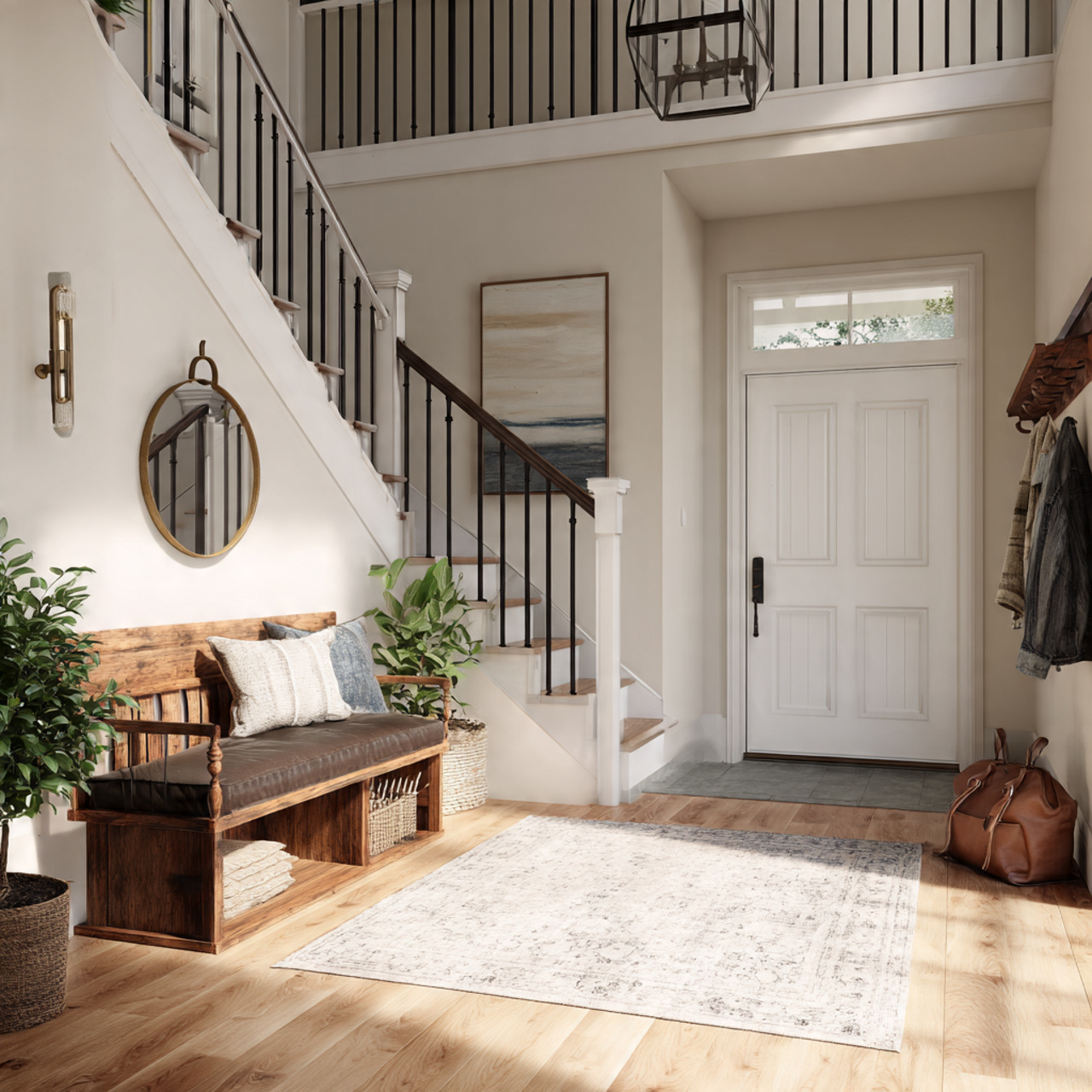
Most entryway stress comes from not knowing where things should land. When there’s no clear surface or zone, bags, keys, and mail spread out fast. A defined landing spot quietly restores order.
This doesn’t need to be large or decorative. Even a narrow console, shelf, or tray gives everyday items a predictable home. Over time, this small structure reduces visual noise.
The entryway feels calmer because decisions are removed. You stop dropping things randomly and start placing them with intention.
Tip: Limit the landing zone to only daily-use items so it never overfills.
A Slim Console That Adds Structure Without Crowding
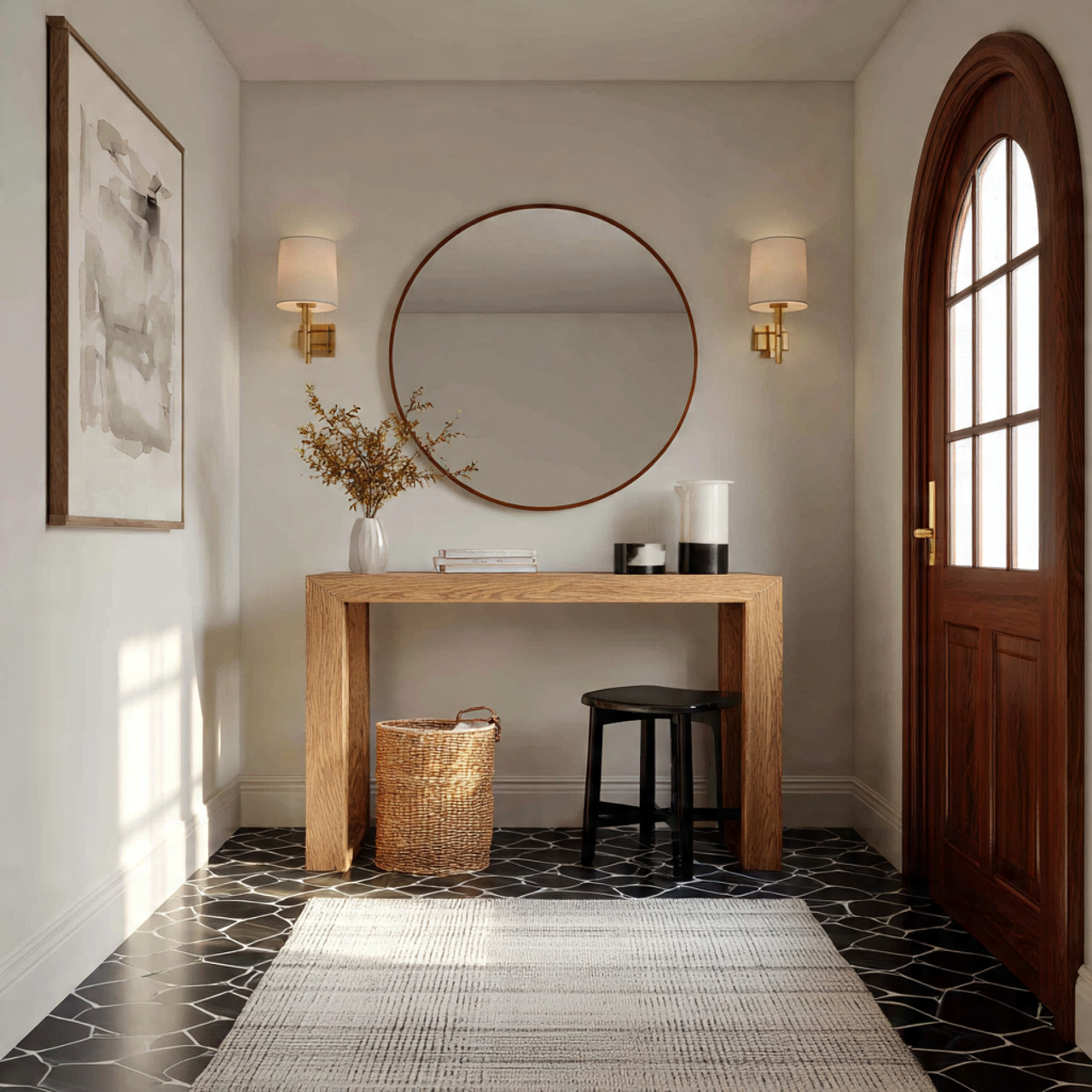
Deep furniture is one of the most common entryway regrets. It looks fine at first but quickly blocks movement and feels bulky. Slim consoles keep circulation easy.
Visually, a narrow piece adds horizontal balance without stealing floor space. It creates a sense of purpose without demanding attention. This is especially helpful in tight or pass-through entryways.
Over time, slimmer furniture keeps the space flexible. It supports daily use instead of competing with it.
Tip: Look for consoles under 12 inches deep for small entryways.
Wall Hooks Placed Where Life Actually Happens
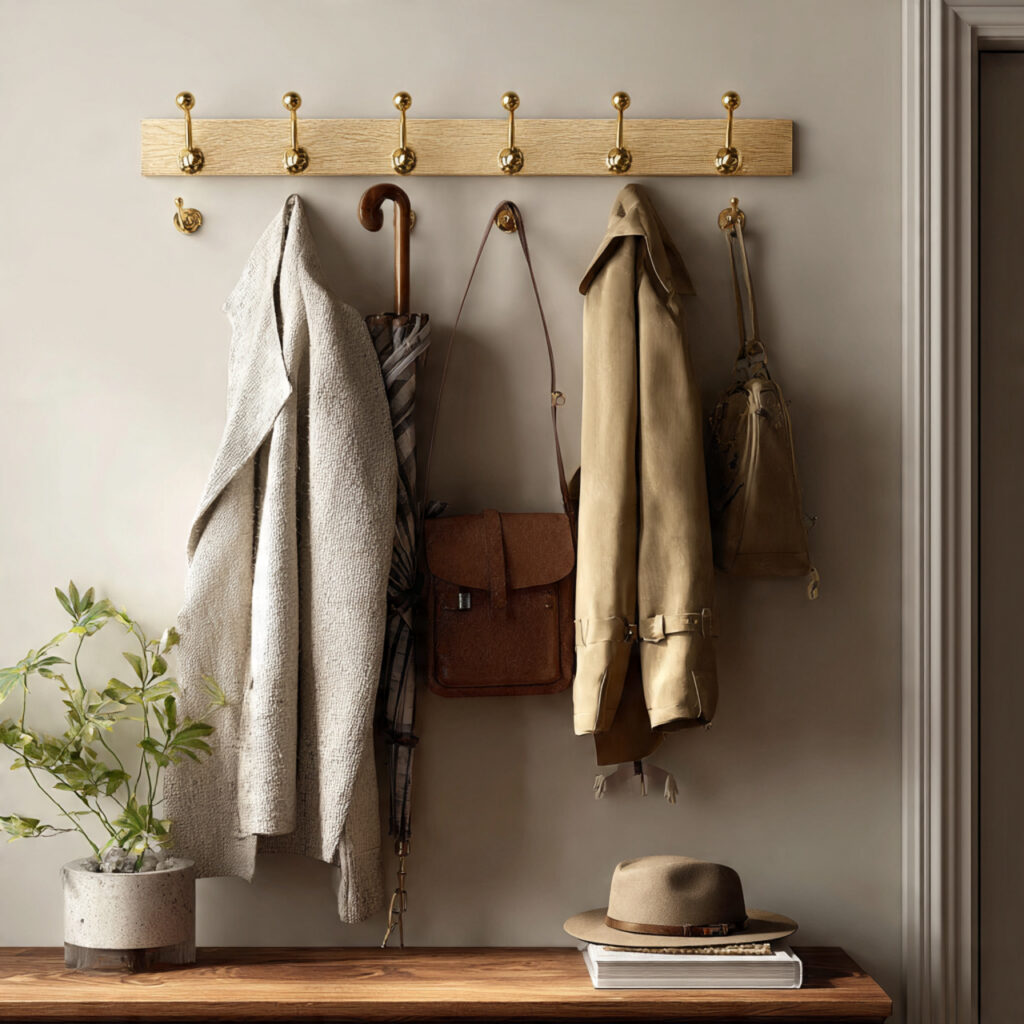
Hooks only work when they’re placed where hands naturally reach. Too high or too far away, and they’re ignored. Placement matters more than style.
When hooks sit near the door at a comfortable height, coats and bags get hung up automatically. This reduces chair piles and floor clutter. The habit forms quickly.
The entryway feels lighter because items lift off the ground. The space stays usable even on busy days.
Tip: Install hooks at shoulder height for everyday use, not display height.
A Bench That Makes Coming and Going Feel Easier
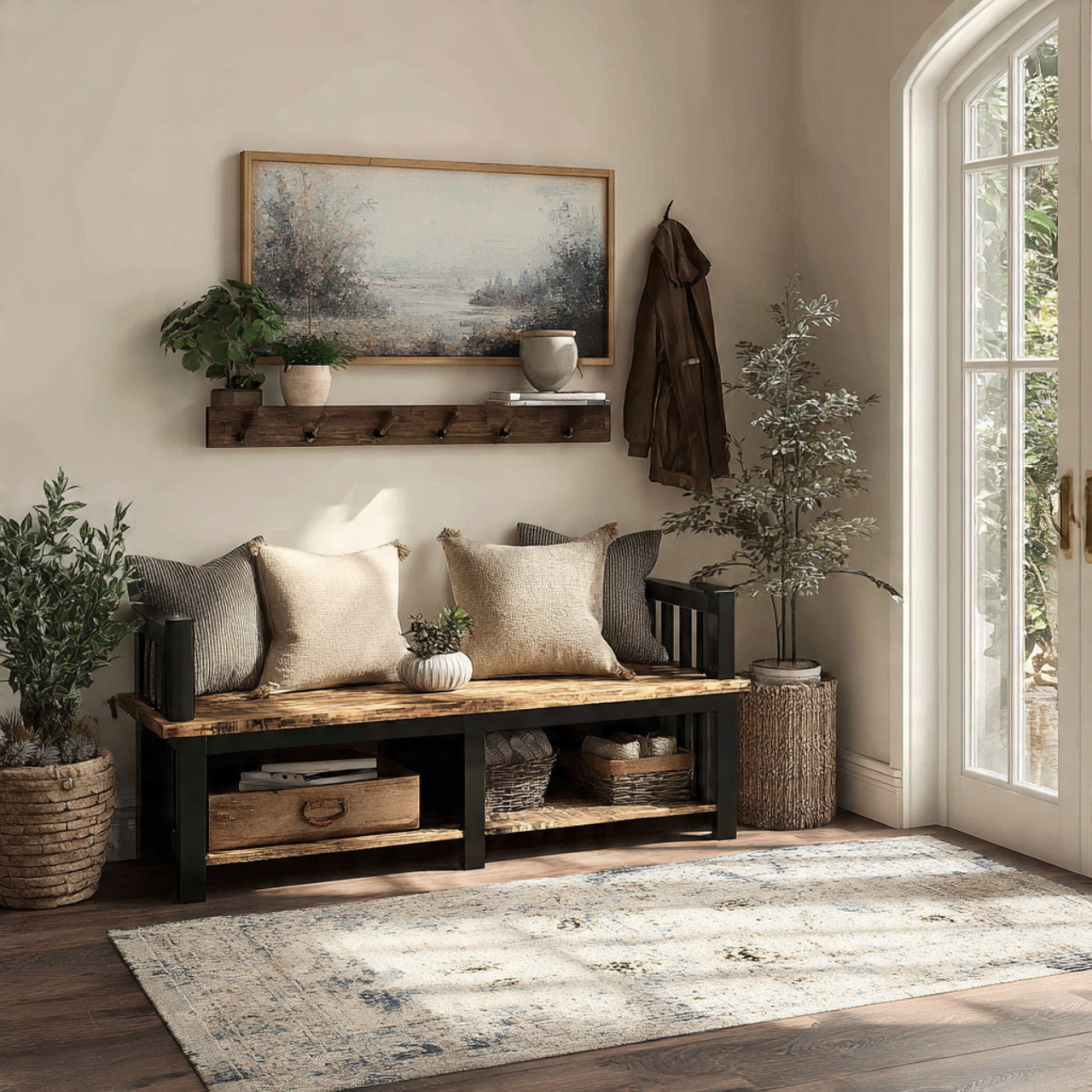
An entryway bench changes how the space functions, not just how it looks. Sitting to put on shoes slows the moment in a good way. It adds ease to routines.
Benches also visually anchor the entryway. They signal that this space is meant to be used, not rushed through. Over time, they become essential.
Functionally, benches prevent wall-leaning and shoe scatter. They quietly support daily comfort.
Tip: Choose a bench with a narrow footprint and open legs to keep it light.
Closed Storage That Hides the Mess You Don’t Want to See
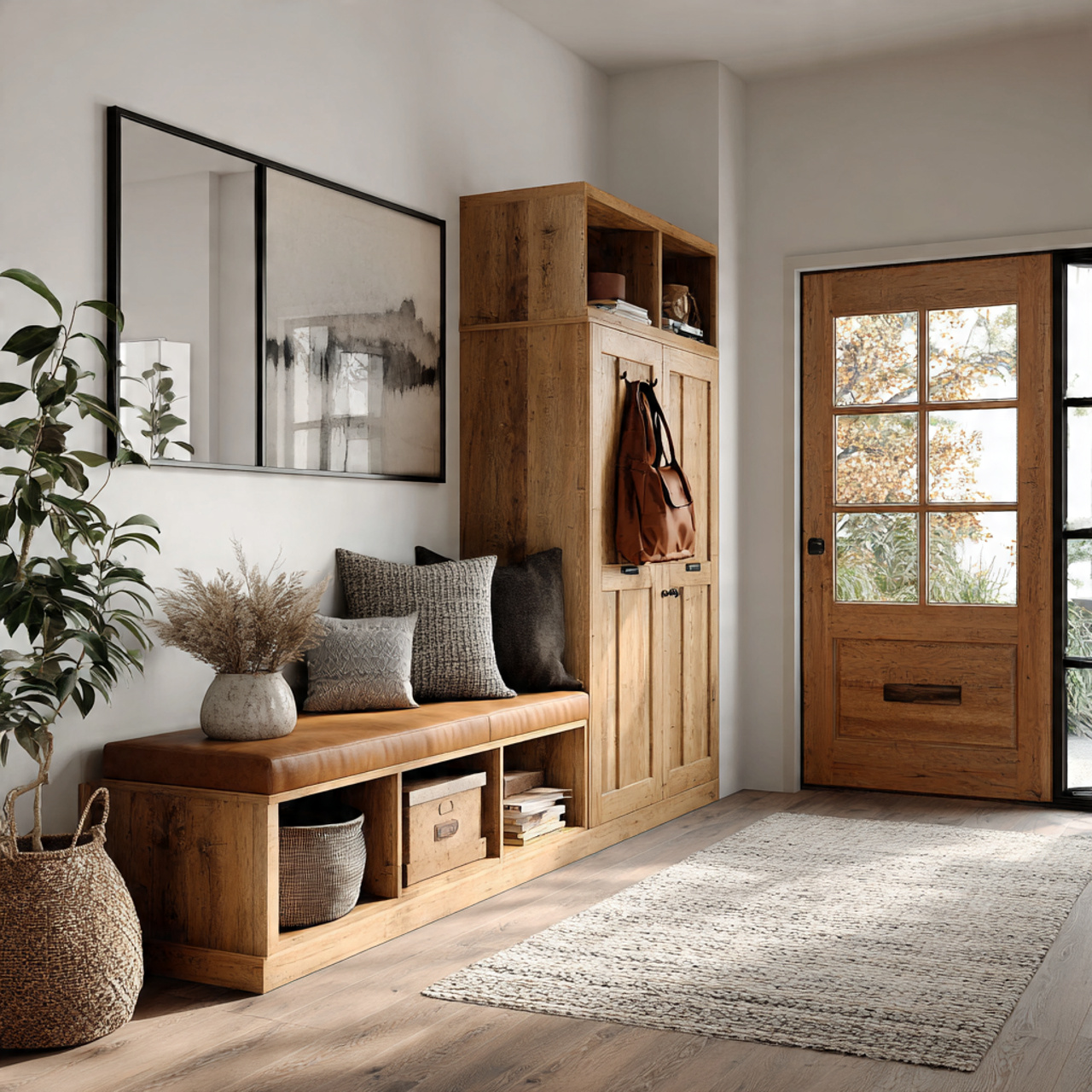
Open storage looks appealing at first but demands constant maintenance. In real homes, clutter wins. Closed storage forgives busy weeks.
Cabinets or baskets hide shoes, bags, and extras without effort. The entryway looks composed even when life is messy. That visual calm matters.
Long-term, hidden storage reduces decision fatigue. You stop managing clutter visually every day.
Tip: Use closed storage for seasonal or less-used items only.
An Entry Rug That Softens Sound and Sets the Mood
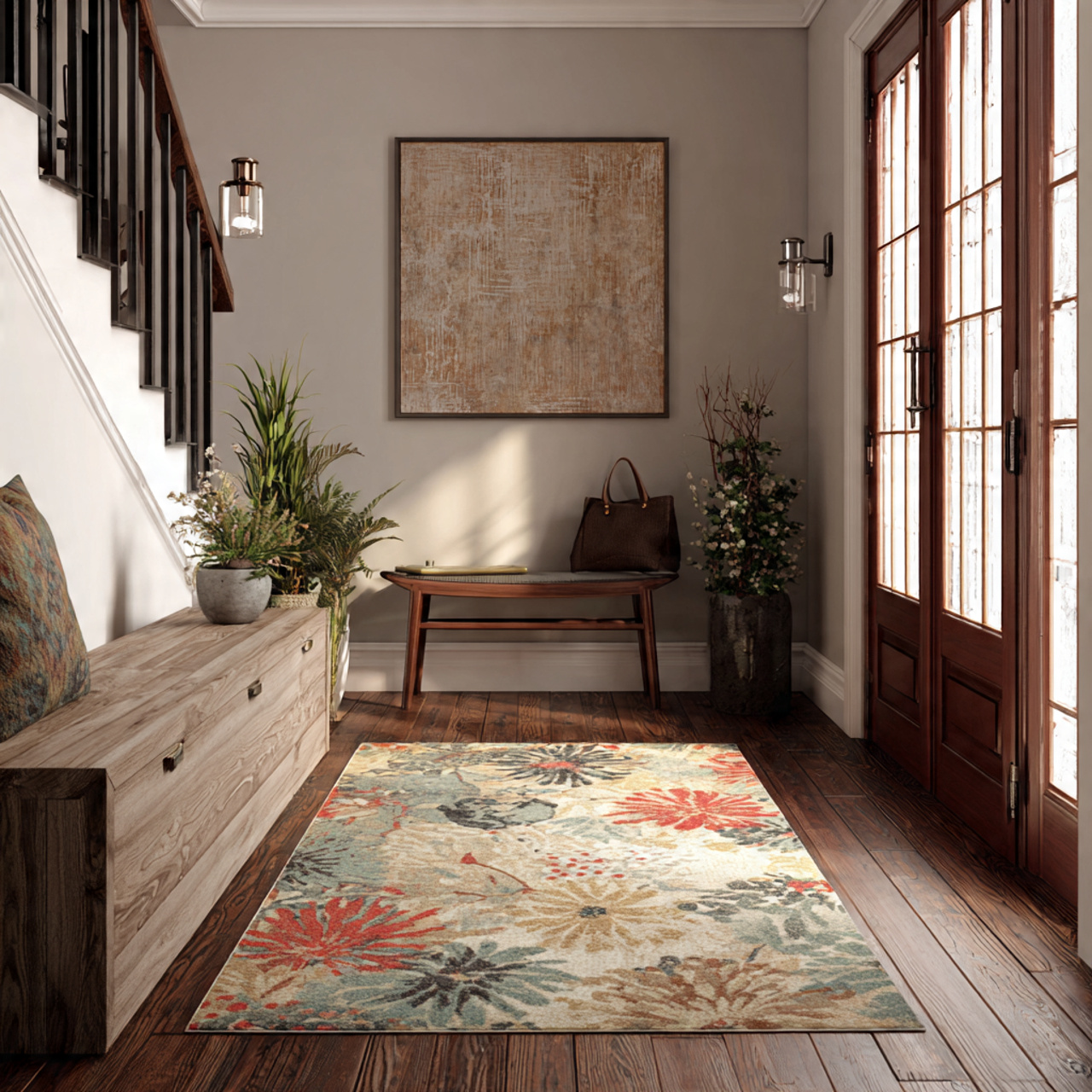
Entry rugs do more than protect floors. They absorb sound and make the space feel settled. Without one, entryways can feel cold and unfinished.
A rug also defines the entryway zone visually. It signals transition from outside to inside. That cue makes the home feel more intentional.
Over time, rugs protect flooring from wear. They quietly extend the life of the space.
Tip: Choose low-pile rugs that are easy to clean and don’t curl at edges.
Lighting That Feels Welcoming Even on Tired Evenings
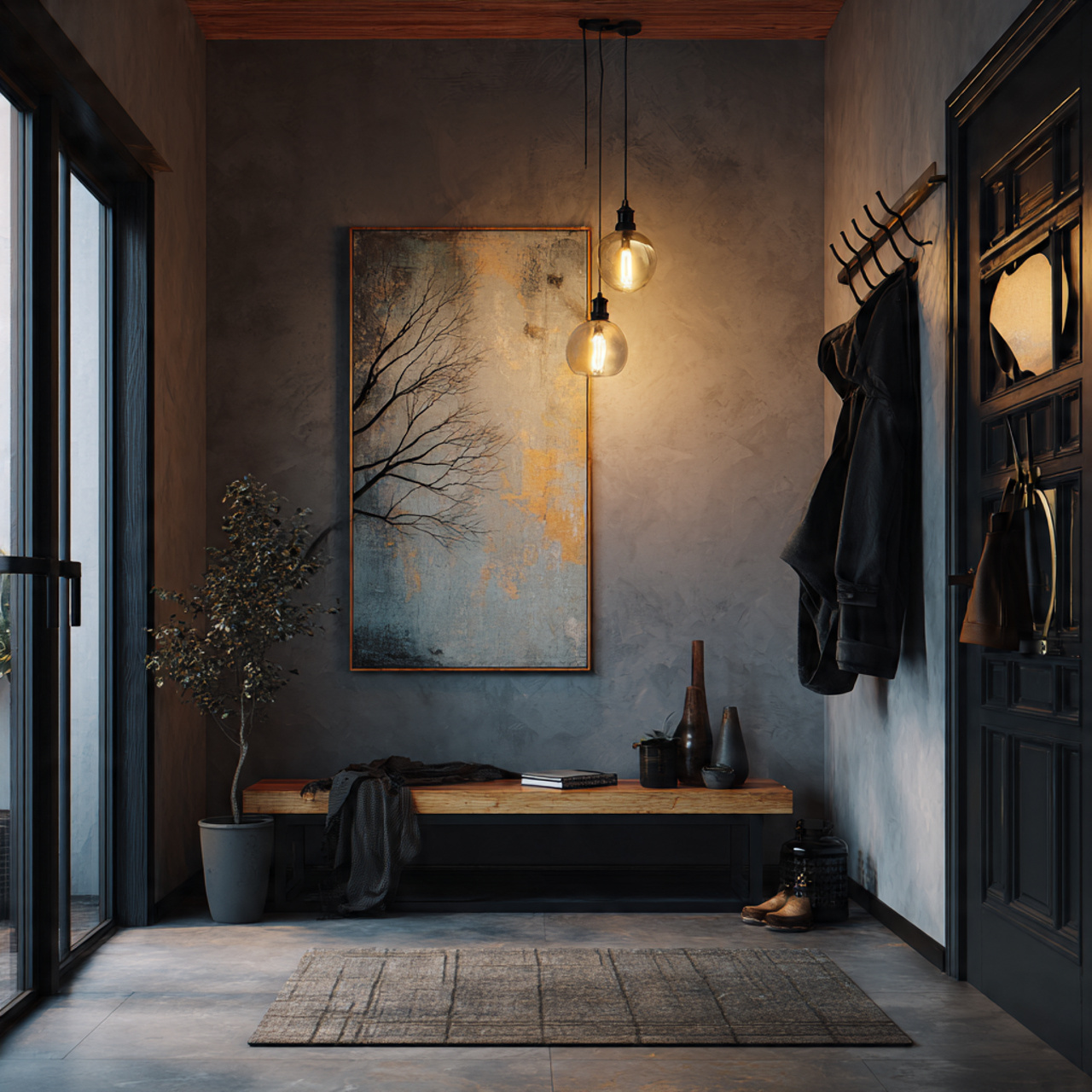
Harsh overhead lighting makes entryways feel transactional. Soft, layered lighting changes the emotional tone instantly. It makes arrivals feel calmer.
Wall sconces, lamps, or warm bulbs reduce glare. The space feels intentional rather than forgotten. This matters most at night.
Good lighting also improves safety and visibility. It supports both mood and function.
Tip: Use warm bulbs around 2700K for a softer entry feel.
A Mirror That Gently Expands Tight or Dark Entryways
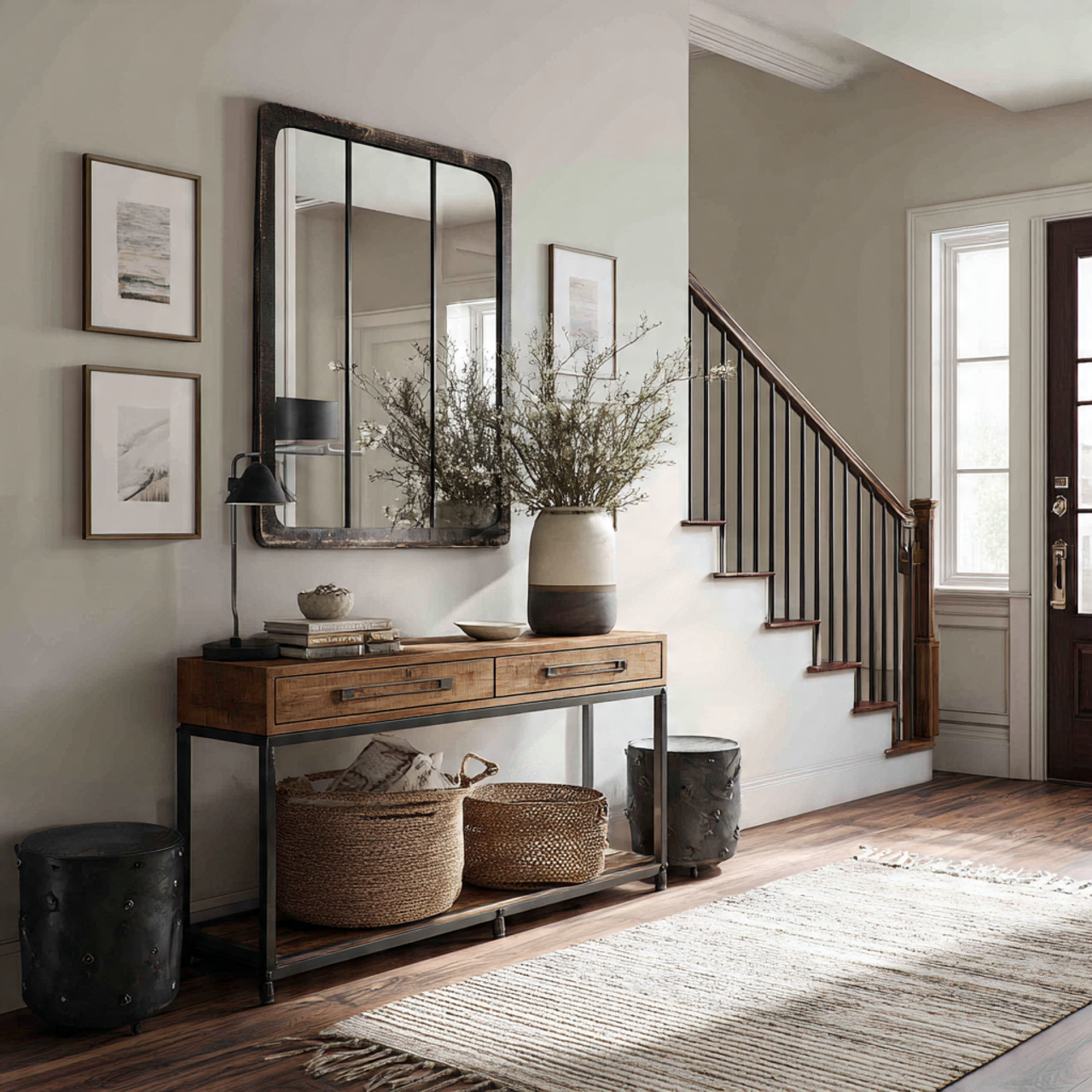
Mirrors help entryways feel more open without adding clutter. They reflect light and create depth naturally. This works especially well in narrow spaces.
Beyond function, mirrors offer a pause. A quick glance before leaving becomes part of the routine. That small moment adds comfort.
Over time, mirrors prevent the space from feeling boxed in. They quietly improve proportion.
Tip: Hang mirrors where they catch natural or adjacent room light.
Natural Wood Elements That Warm Up Transitional Spaces
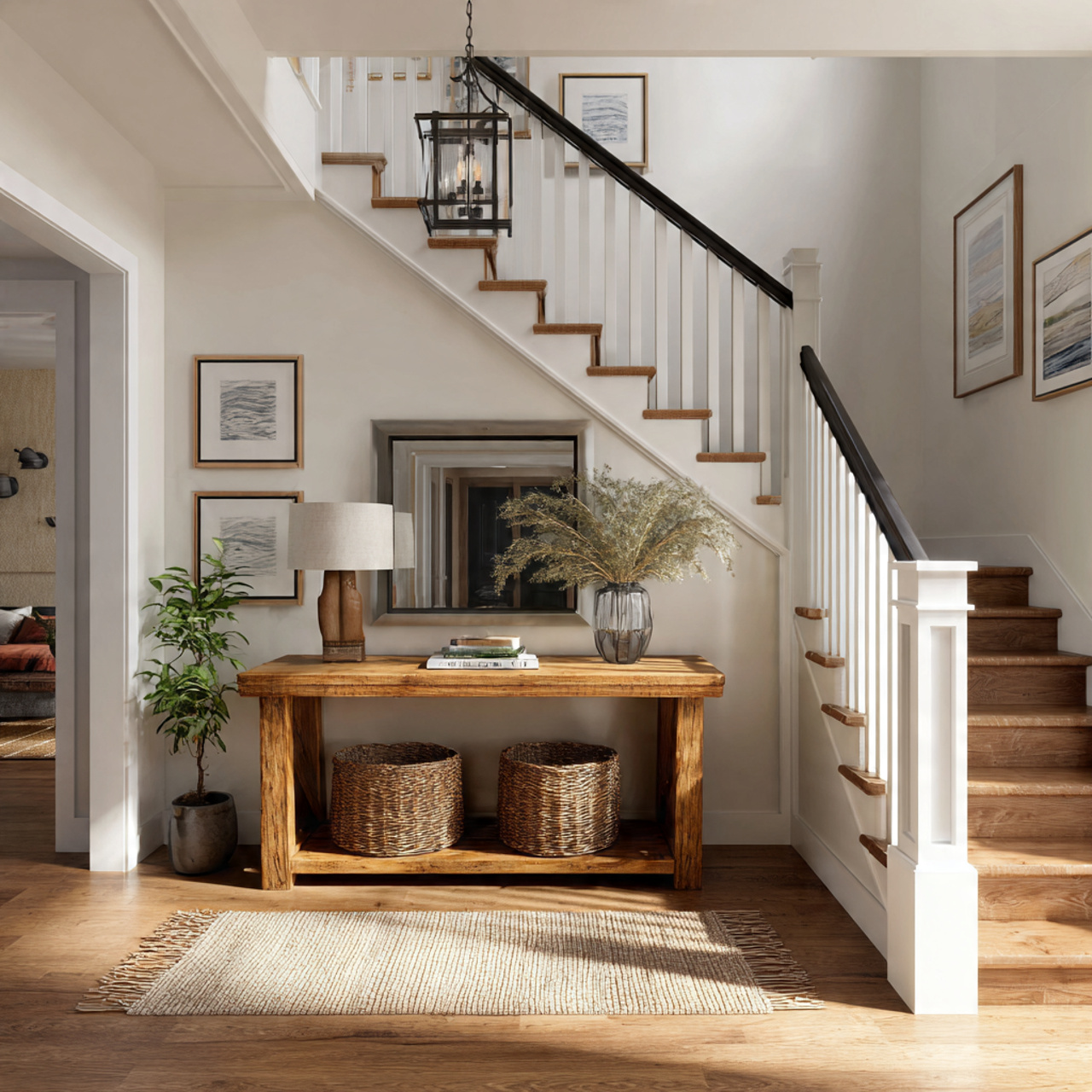
Entryways often feel disconnected from the rest of the home. Natural wood helps bridge that gap. It brings warmth without heaviness.
Wood tones soften hard edges and add texture. They make the space feel lived-in rather than styled. This effect grows stronger over time.
Emotionally, wood creates familiarity. It makes coming home feel grounding.
Tip: Repeat wood tones used elsewhere in the home for cohesion.
Soft Wall Color That Connects the Entryway to the Rest of the Home
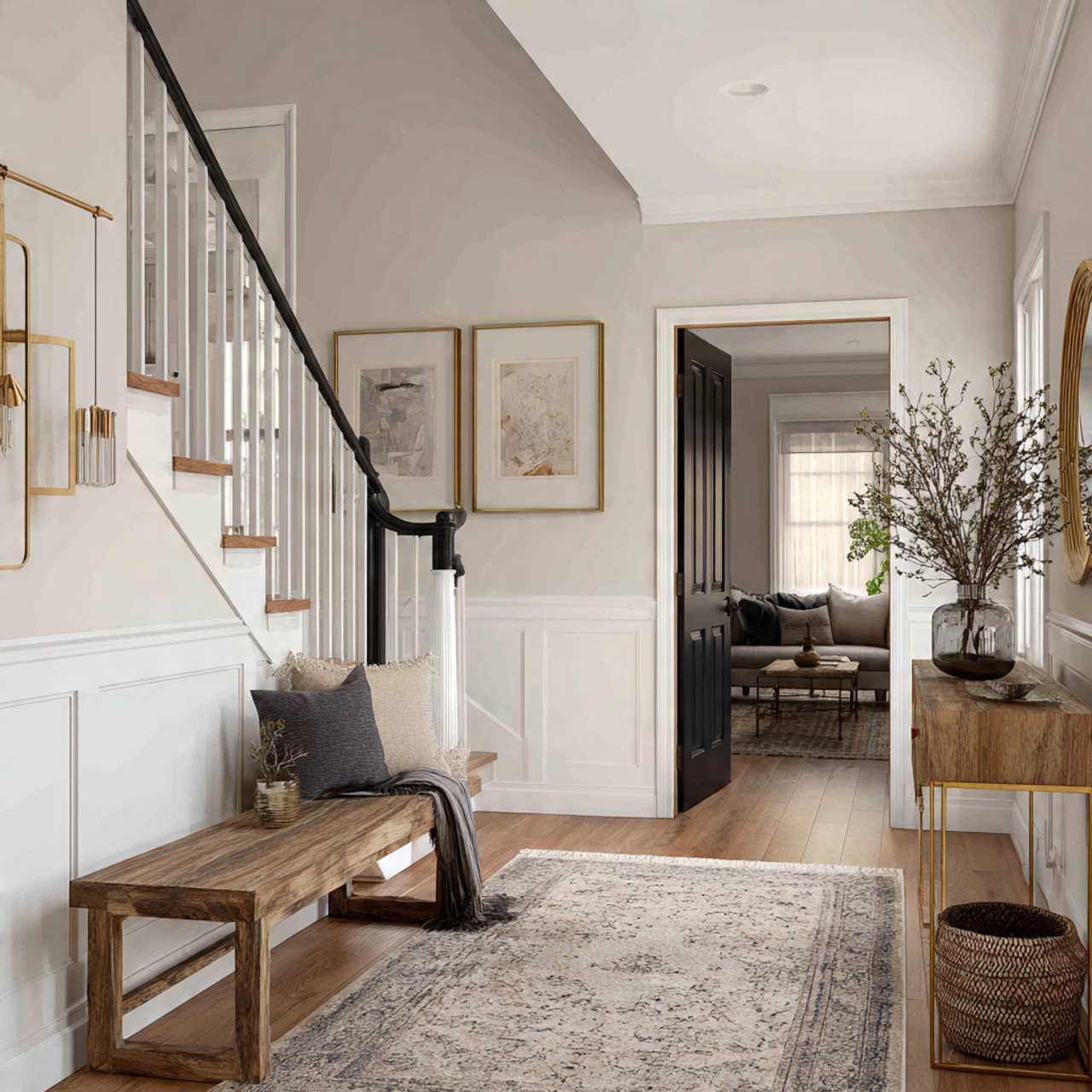
Entryways shouldn’t feel like a separate zone. Soft, continuous wall color helps them blend naturally. Abrupt color changes often feel jarring.
When the entryway color echoes nearby rooms, flow improves. The home feels larger and calmer. This works especially well in open layouts.
Long-term, cohesive color reduces visual fatigue. The space feels settled.
Tip: Use the same undertone as adjacent rooms, even if shades differ.
A Focal Light Fixture That Gives the Space Identity
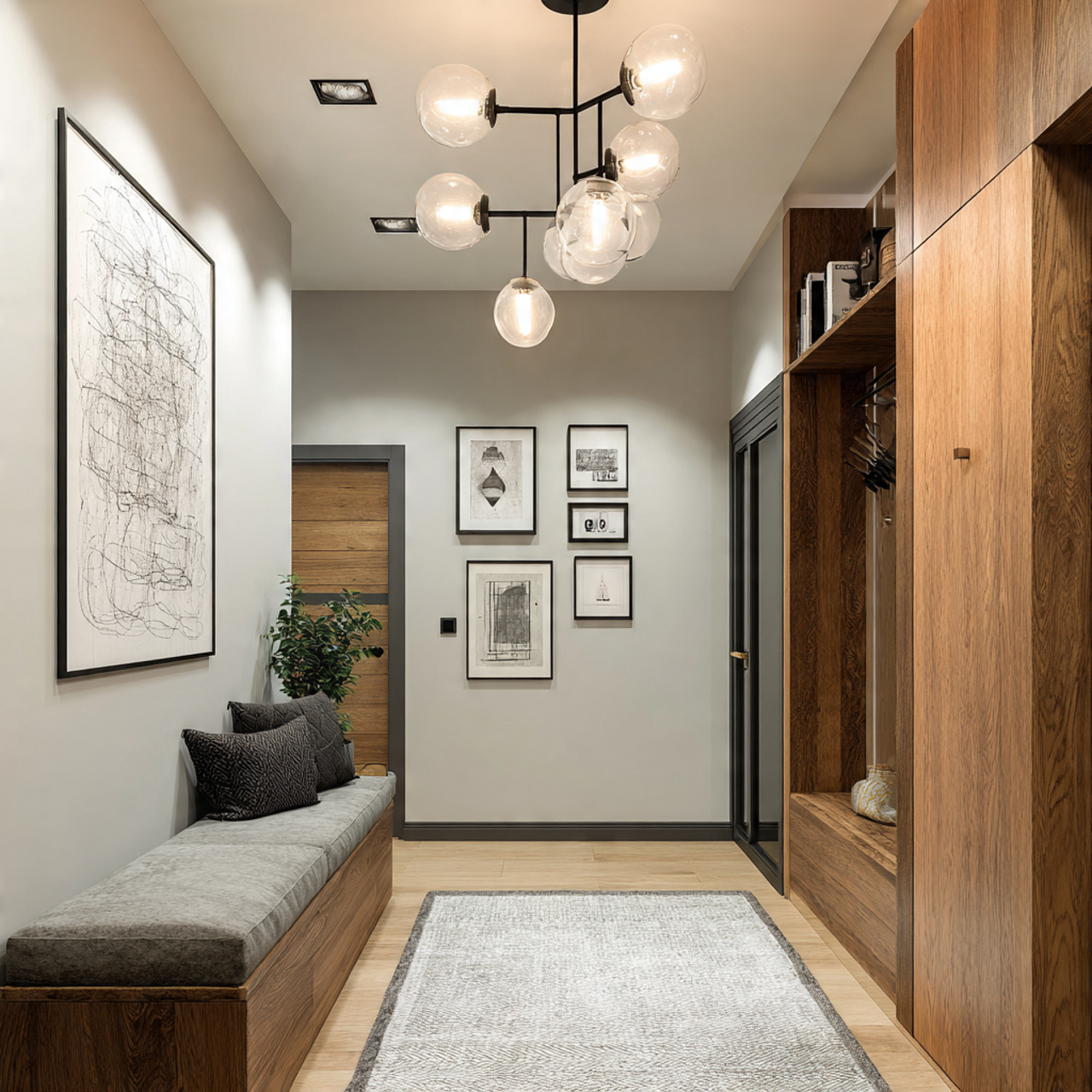
A single focal fixture gives the entryway character. Without it, the space often feels temporary. One strong element solves that.
This doesn’t need to be dramatic. Scale and placement matter more than style. The fixture should suit the space, not dominate it.
Over time, this anchor helps the entryway feel finished. It adds quiet confidence.
Tip: Choose fixtures slightly smaller than you think to avoid overwhelm.
Statement Flooring That Anchors the First Impression
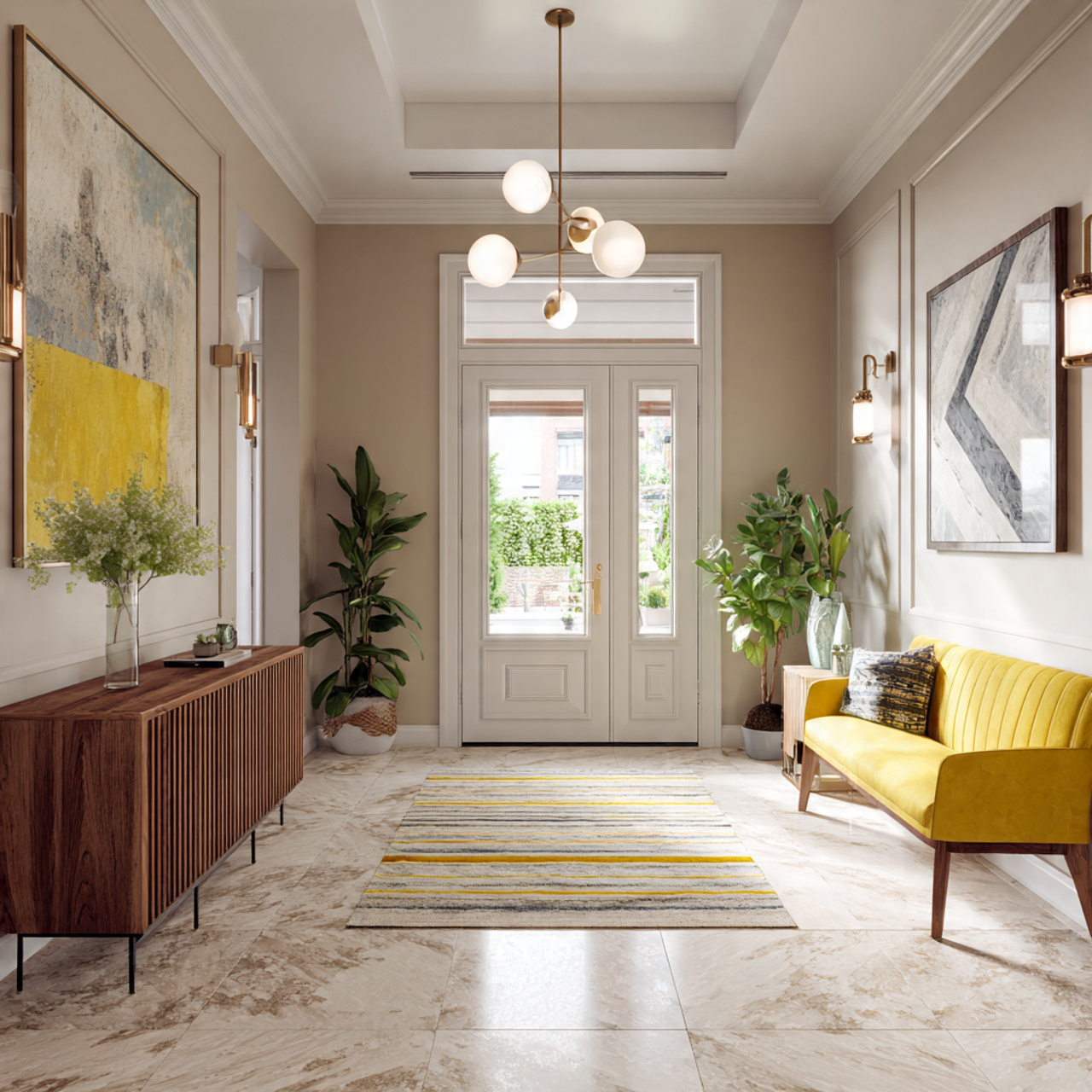
Floors are often overlooked in entryways. But they take the most wear and set the tone immediately. A strong floor choice grounds the space.
Patterned tile, darker wood, or durable stone adds intention. It absorbs daily traffic visually. The space feels designed, not accidental.
Over time, statement flooring hides wear better than plain finishes. It ages gracefully.
Tip: Keep walls simple if flooring carries visual weight.
Artwork That Makes the Entryway Feel Personal, Not Styled
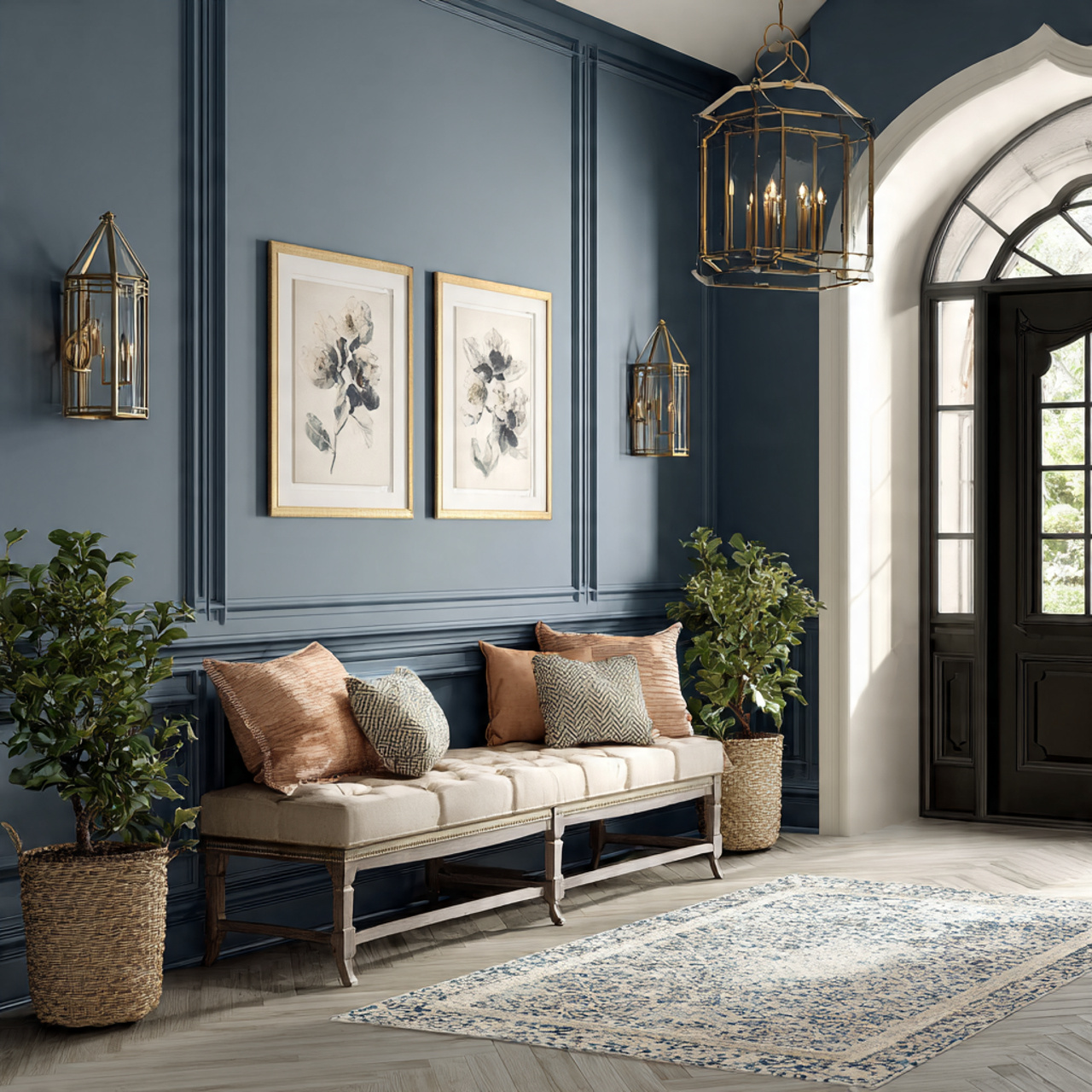
Artwork adds soul to an entryway. Without it, the space can feel generic. Personal pieces change that instantly.
Art also distracts from clutter and tight proportions. The eye lands somewhere intentional. That improves how the space is perceived.
Long-term, meaningful art creates emotional attachment. The entryway feels like home.
Tip: Choose one medium-sized piece instead of many small ones.
A Subtle Scent or Texture That Signals Arrival
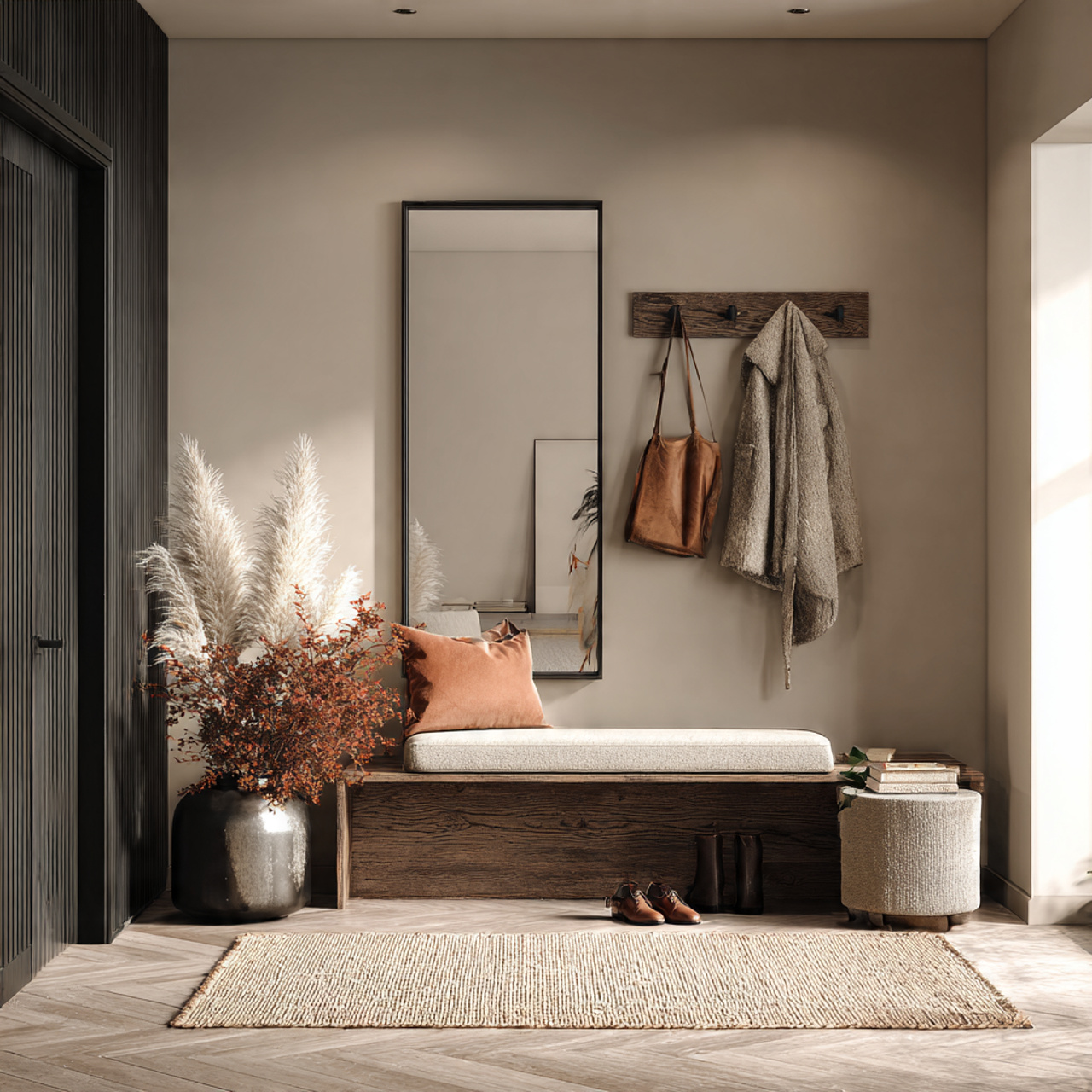
Entryways engage more than vision. Texture and scent shape first impressions quietly. This detail is often underestimated.
A woven basket, fabric runner, or light natural scent adds comfort. The space feels welcoming without effort. These cues work subconsciously.
Over time, this sensory layer creates consistency. Coming home feels familiar.
Tip: Keep scent light and neutral to avoid overwhelm.
Vertical Storage That Uses Height Instead of Floor Space
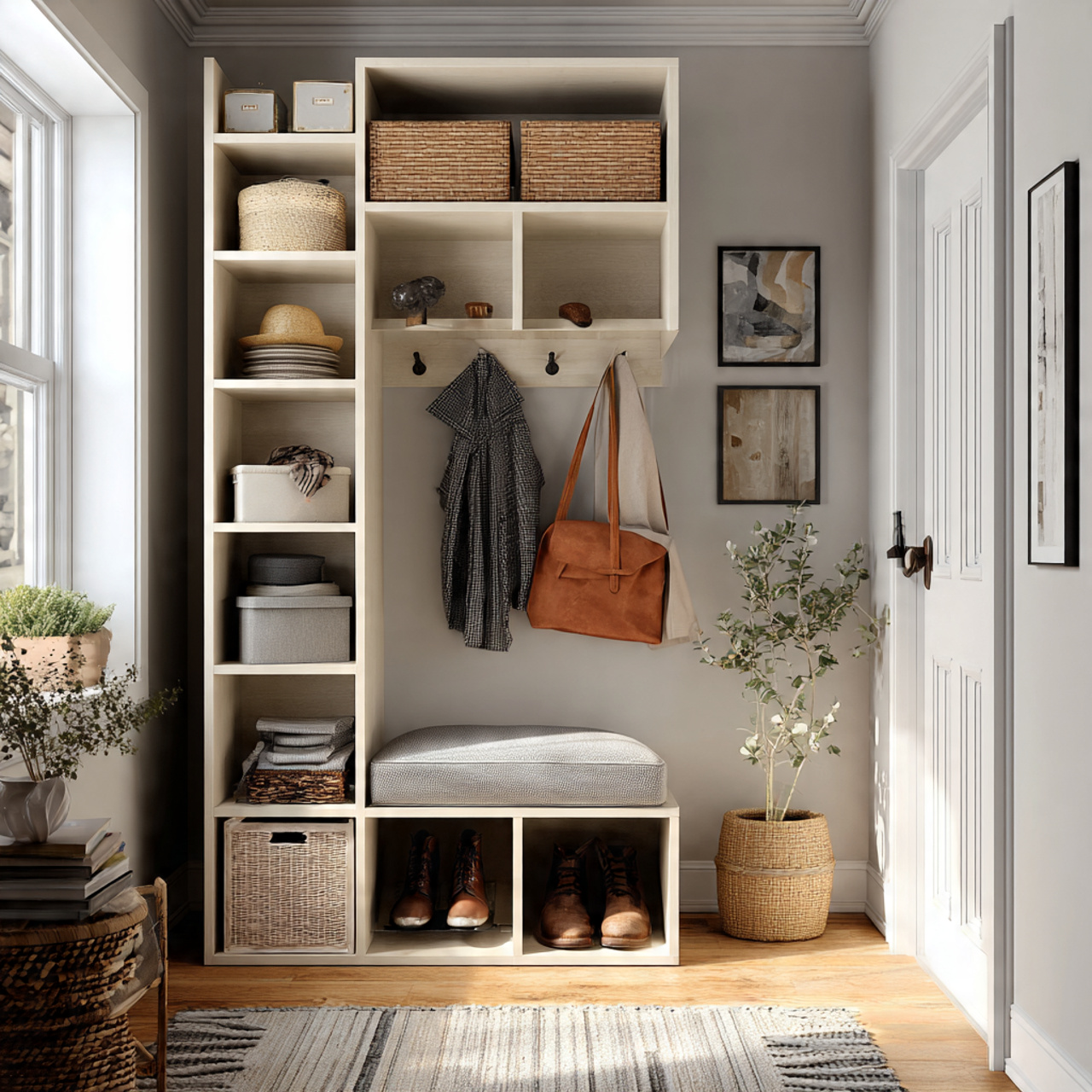
When floor space is limited, walls become valuable. Vertical storage keeps entryways functional without crowding. It preserves movement.
Tall cabinets or shelves draw the eye upward. This makes the space feel larger. The footprint stays light.
Long-term, vertical storage adapts well as needs change. It’s flexible and efficient.
Tip: Keep lower areas open to maintain visual breathing room.
Seasonal Swaps That Keep the Entryway From Feeling Stale
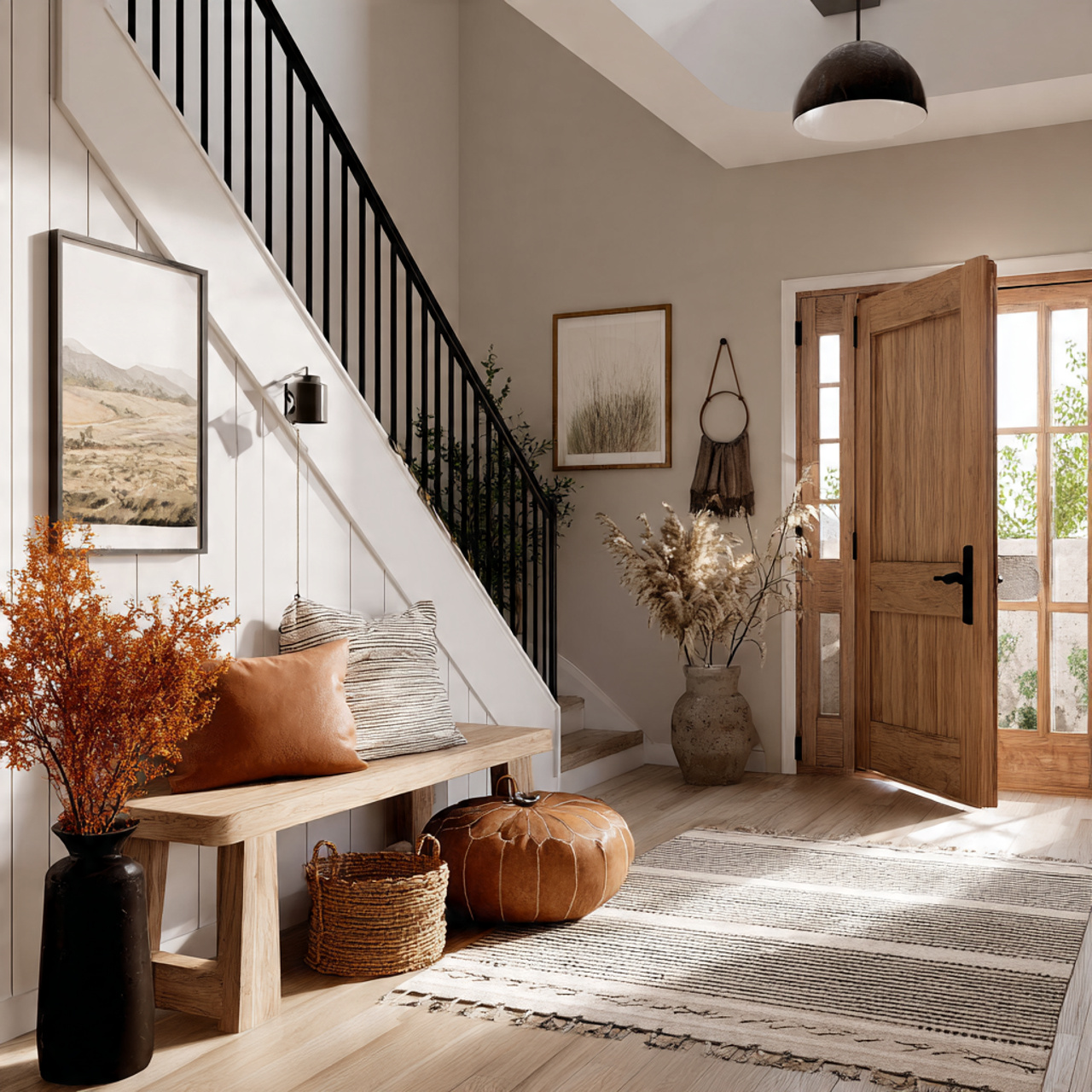
Entryways experience seasonal shifts more than most rooms. Coats, shoes, and accessories change often. Designing for that prevents clutter.
Swapping baskets, hooks, or rugs keeps things relevant. The space feels maintained, not static. This reduces frustration.
Over time, seasonal rhythm keeps the entryway working smoothly. It evolves with life.
Tip: Store off-season items out of sight to reset the space.
One Meaningful Detail That Makes the Space Feel Like Home
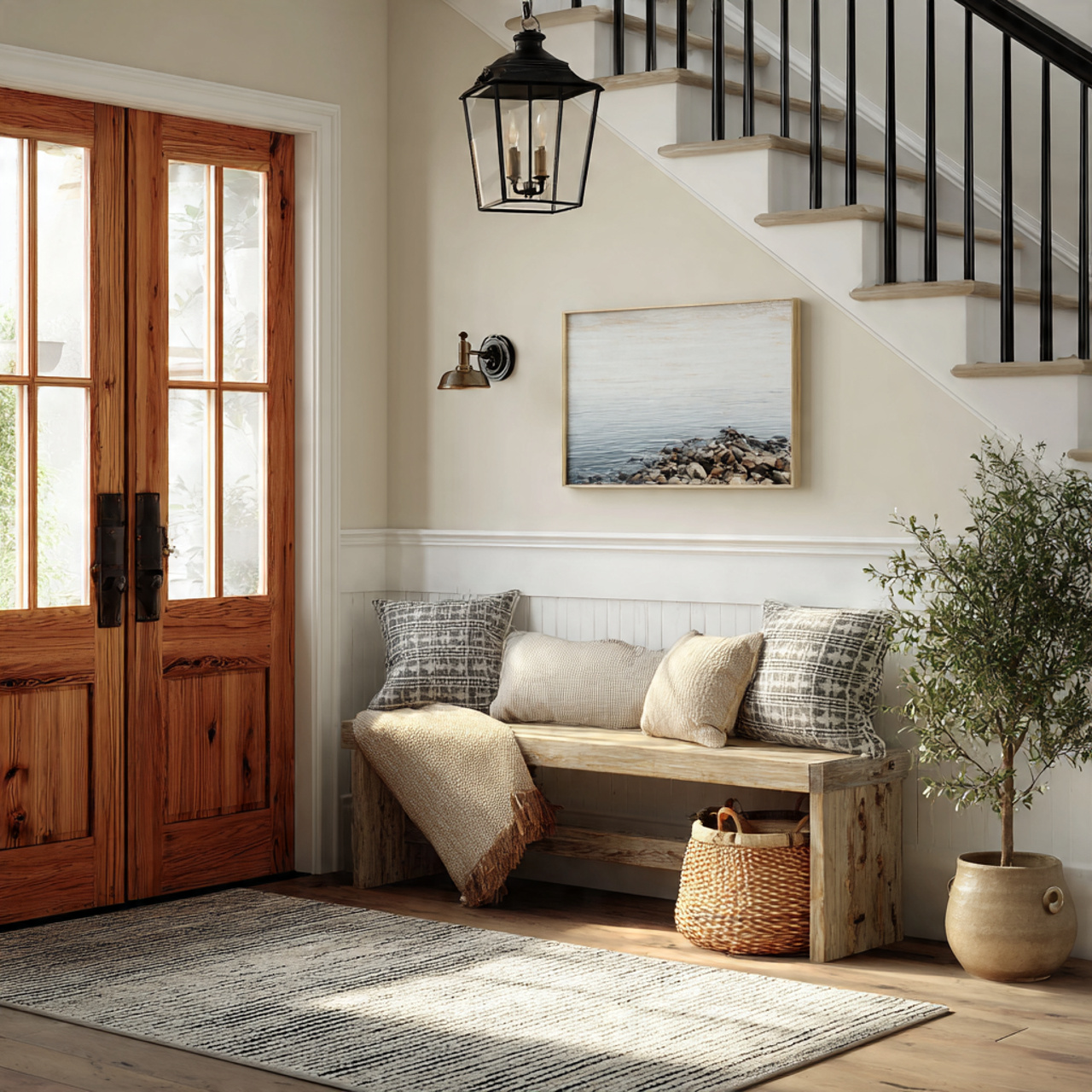
The final layer is emotional, not functional. One meaningful object gives the entryway identity. Without it, the space feels unfinished.
This could be a vintage piece, a photo, or a handmade item. It grounds the space personally. The effect is subtle but powerful.
Long-term, this detail builds connection. The entryway stops feeling generic.
Tip: Choose something that makes you smile when you walk in.
Common Entryway Ideas Mistakes
Ignoring Storage Until Clutter Takes Over
This happens because entryways are often treated as temporary spaces. Over time, shoes, bags, and mail collect with no system to contain them. The fix is simple, add even minimal closed or vertical storage early, otherwise the space will always feel messy no matter how styled it looks.
Choosing Furniture That’s Too Deep for the Space
People choose furniture based on appearance, not movement. Deep consoles or benches slowly block walkways and make the entryway feel cramped. Switching to slimmer pieces restores flow, while ignoring this leads to daily irritation and awkward circulation.
Overdecorating a High-Traffic Area
Entryways feel empty at first, so decor gets layered quickly. The problem is that too many objects compete with daily movement and clutter builds faster. Reducing decor to a few purposeful items keeps the space calm and functional long term.
Relying on Overhead Lighting Alone
Single overhead lights feel harsh and uninviting, especially at night. Without softer layers, the entryway becomes a pass-through instead of a welcome. Adding one secondary light source changes the mood completely and prevents the space from feeling cold.
Treating the Entryway as an Afterthought
This usually happens at the end of decorating when budgets and energy are low. The result is a space that never feels finished and affects first impressions daily. Giving the entryway even basic intention prevents long-term dissatisfaction.
Frequently Asked Questions About Entryway Ideas
What if my entryway is very small or narrow?
Small entryways work best when the floor stays as clear as possible. Slim furniture, wall hooks, and vertical storage prevent crowding while still giving structure. When movement feels easy, the space automatically feels larger.
Do I really need an entryway table or console?
No, but you do need a defined landing zone. This can be a narrow shelf, wall-mounted ledge, or even a tray on a bench. The goal is giving everyday items a consistent place to land.
What colors work best in dark or windowless entryways?
Soft, warm neutrals reflect light better than stark white or cool grey. Slight warmth keeps the space from feeling flat under artificial lighting. Matte or eggshell finishes also reduce glare.
How do I keep my entryway organized long term?
Organization lasts when it matches daily habits. Storage should support what actually comes in and out of the house, not ideal routines. When systems feel effortless, they’re more likely to be used.
Should the entryway match the rest of the house exactly?
It should connect, not copy. Using similar undertones or materials creates flow without making the space feel repetitive. A subtle difference helps the entryway feel intentional rather than forgotten.
Conclusion
Entryway ideas work best when they support real routines rather than chasing visual perfection. The right entryway ideas focus on smart storage, balanced lighting, and smooth flow so the space stays calm even on busy days. Small, thoughtful updates often have more impact than major redesigns, especially in everyday-use areas.
When your entryway feels organized and welcoming, it naturally improves your entire home aesthetic. Start with one practical change, and you’ll notice how much more functional, comfortable, and visually cohesive your home begins to feel over time.