14 Smart Dining Room Ideas That Make Rooms Feel Expensive
A dining room reveals the personality of a home in subtle ways. The way a table sits in the space, how light falls across it, and how materials interact often determines whether the room feels welcoming or strangely stiff.
Many people focus only on furniture when planning a dining room. In practice the atmosphere usually comes from a balance of lighting, scale, texture and thoughtful placement. Dining room ideas that age well rarely rely on trends but on decisions that continue to feel comfortable after years of daily use.
Why dining room spaces often feel harder to design than expected
Dining rooms sit between functional and social parts of the house, which means they must balance practicality with atmosphere. Most design problems appear when table size, lighting scale and wall elements compete rather than cooperate.
Core Dining Room Ideas
A warm neutral dining room centered around a natural wood table
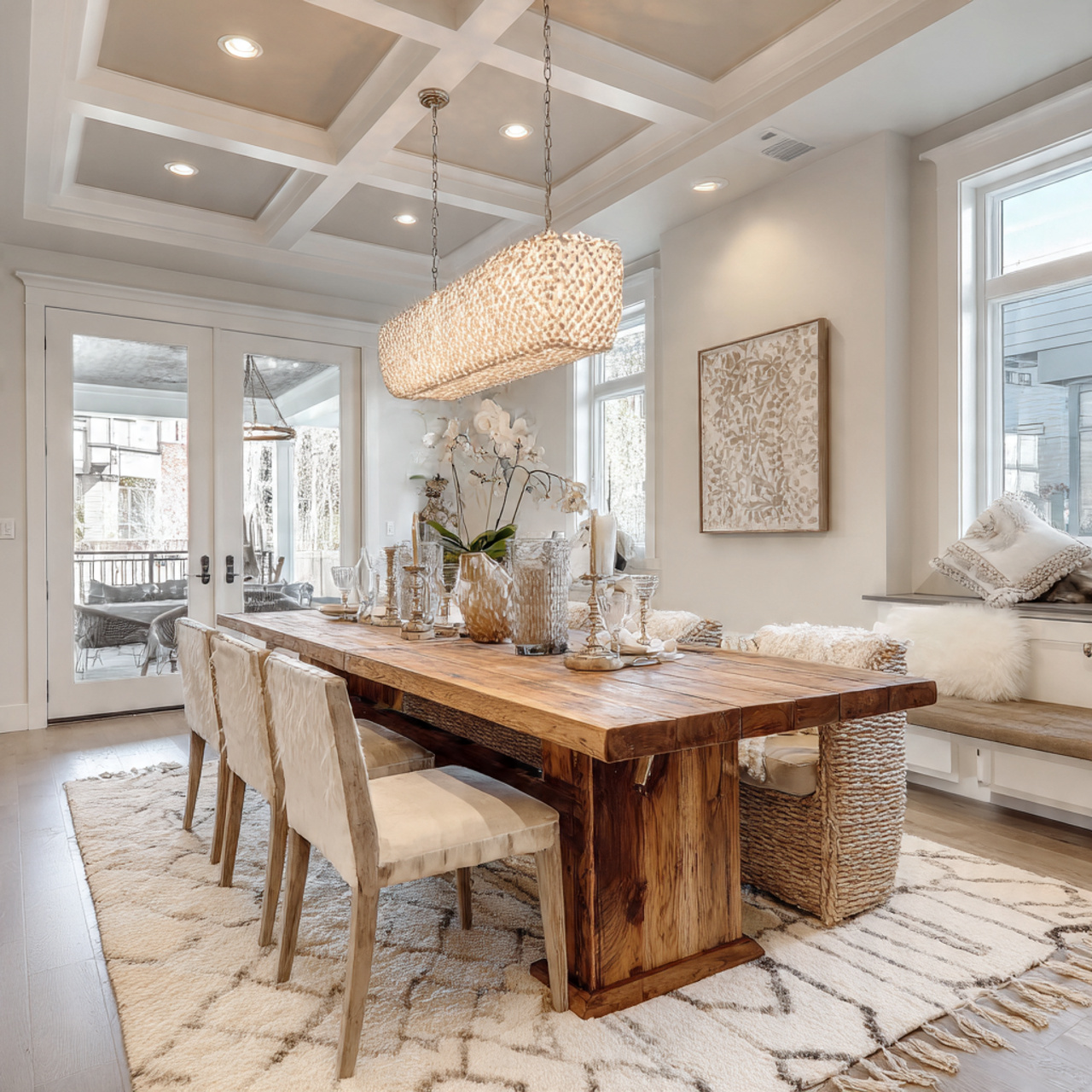
Start with a palette that feels calm rather than decorative. Warm neutral dining rooms built around oak or walnut tables tend to feel grounded because the material provides quiet visual weight without overwhelming the space.
Soft linen upholstery and light plaster colored walls allow the table to remain the natural focal point. Over several years I have noticed that rooms using this restrained palette rarely feel outdated, while trend driven color schemes tend to age quickly.
Natural wood also develops subtle patina as it is used, which quietly adds character. Many homeowners initially worry that a plain table will feel too simple, yet it often becomes the element guests remember most.
Tip: Choose a table slightly smaller than the room allows so chairs move comfortably and the space never feels crowded.
A round dining table that relaxes the geometry of the room
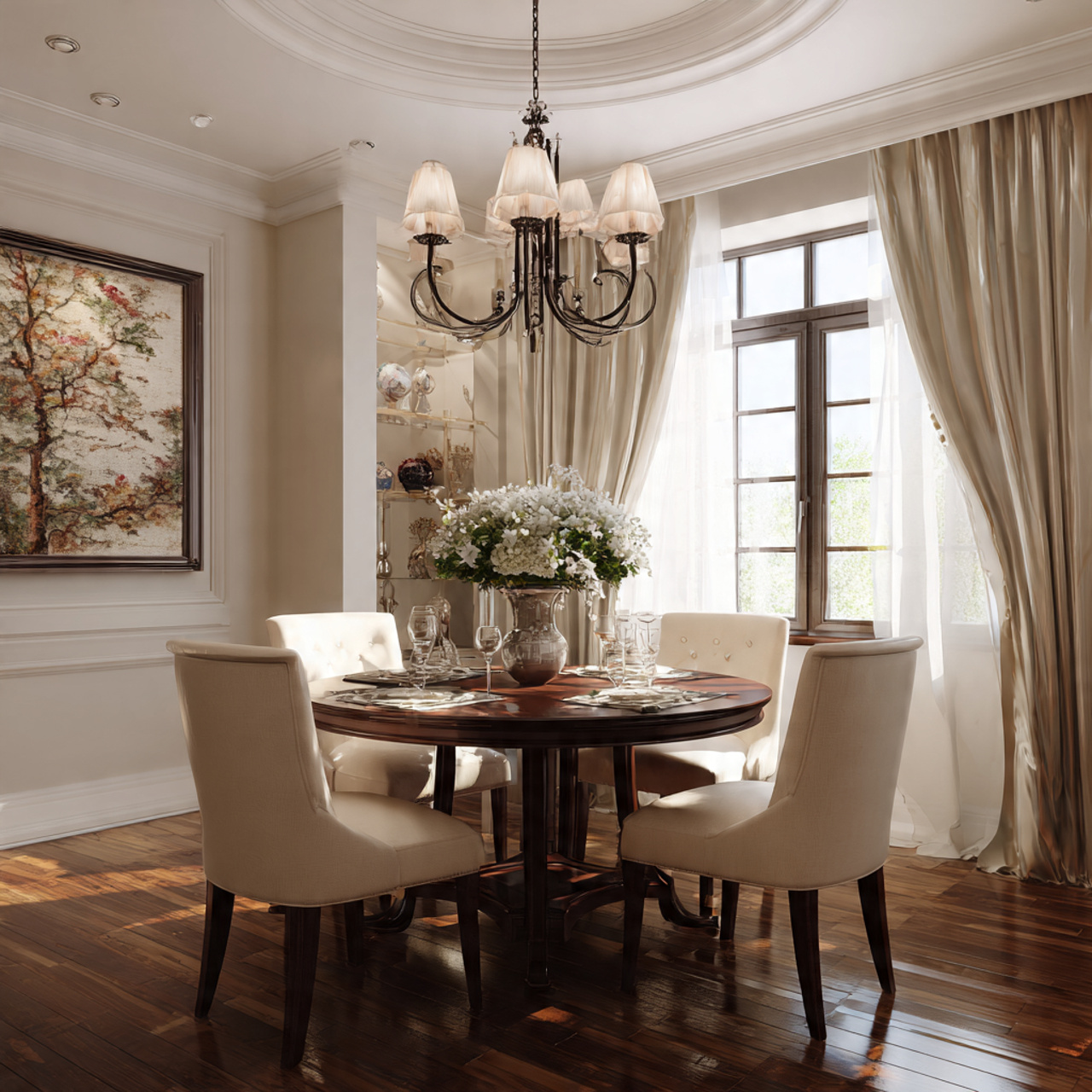
Instead of fighting rigid room proportions, introduce a shape that softens them. Round dining tables work particularly well in square dining rooms because they break the repetition of straight lines.
Many people regret placing rectangular tables into compact rooms because the corners interrupt movement. Circular tables improve circulation and make conversation feel more balanced since every seat faces the center.
Lighting also behaves differently above a round surface. A pendant positioned above the center distributes light evenly and produces a gentle glow that feels intimate during evening meals.
Tip: Maintain about ninety centimeters of clearance around the table so chairs slide easily without scraping nearby walls.
Oversized artwork that defines the dining room wall
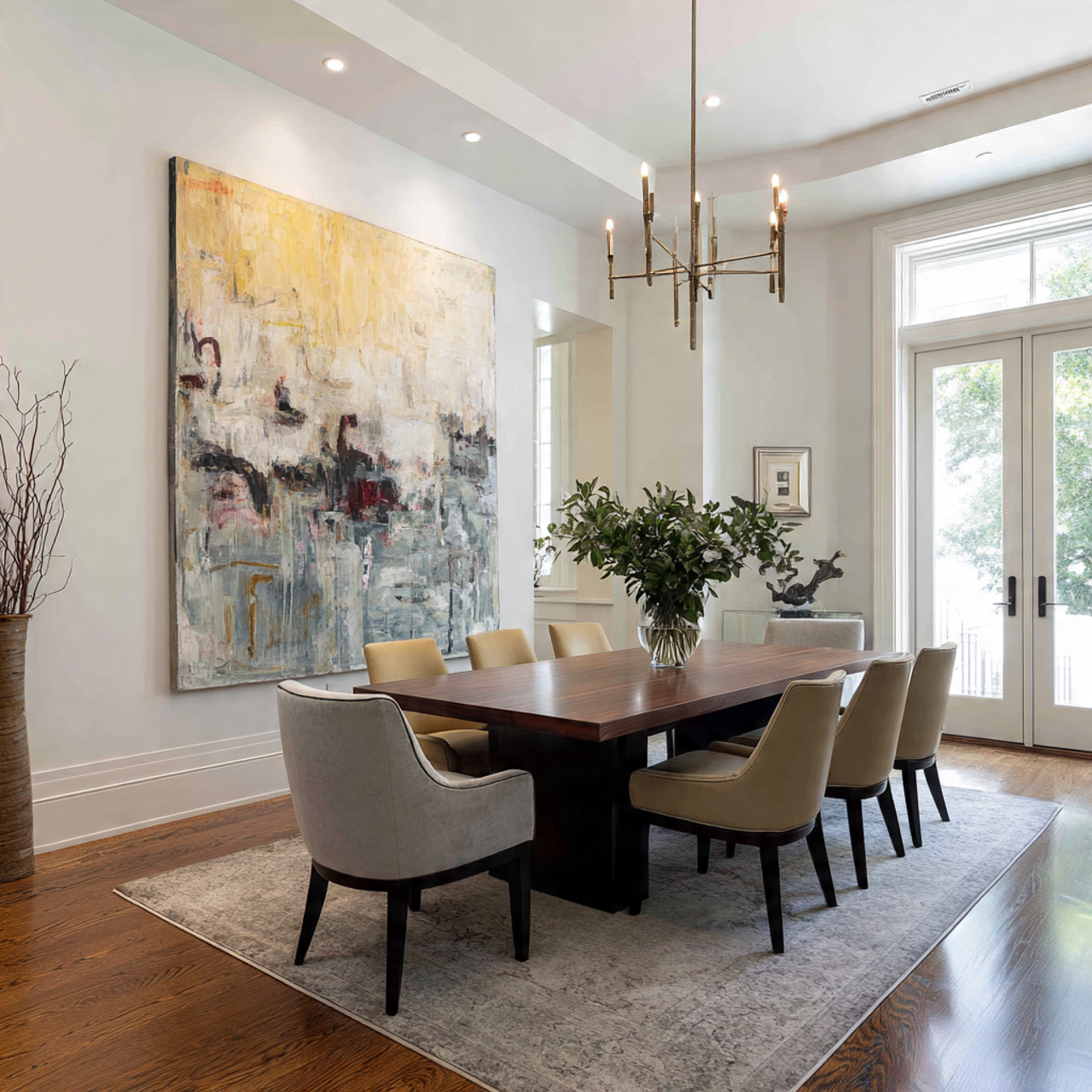
Large artwork behind the dining table can stabilize the entire composition of a dining room. Without a visual anchor the room often feels unfinished even if the furniture itself is beautiful.
Most people make the mistake of hanging artwork too high. When the lower edge sits closer to the chair backs the art feels connected to the dining area rather than floating awkwardly above it.
Color within the artwork can quietly echo upholstery tones or table finishes. I have always found that a single confident piece of art feels calmer than several small frames competing for attention.
Tip: Artwork that spans roughly two thirds of the table width usually produces the most balanced result.
A neutral glam dining room with restrained metallic accents

Neutral glam dining rooms achieve elegance through restraint rather than excess. Cream walls, velvet dining chairs and subtle brass details create a room that feels refined without appearing overly formal.
Metal finishes reflect candlelight and evening illumination in a gentle way. This reflective quality adds depth to the space and prevents the palette from feeling flat.
Most people assume glamour requires many decorative accessories, yet in practice fewer elements produce a far more sophisticated effect. Two carefully placed metallic accents usually create enough contrast.
Tip: Keep metallic finishes limited to one or two tones so the room retains visual clarity.
Cane dining chairs that bring texture to a modern dining room
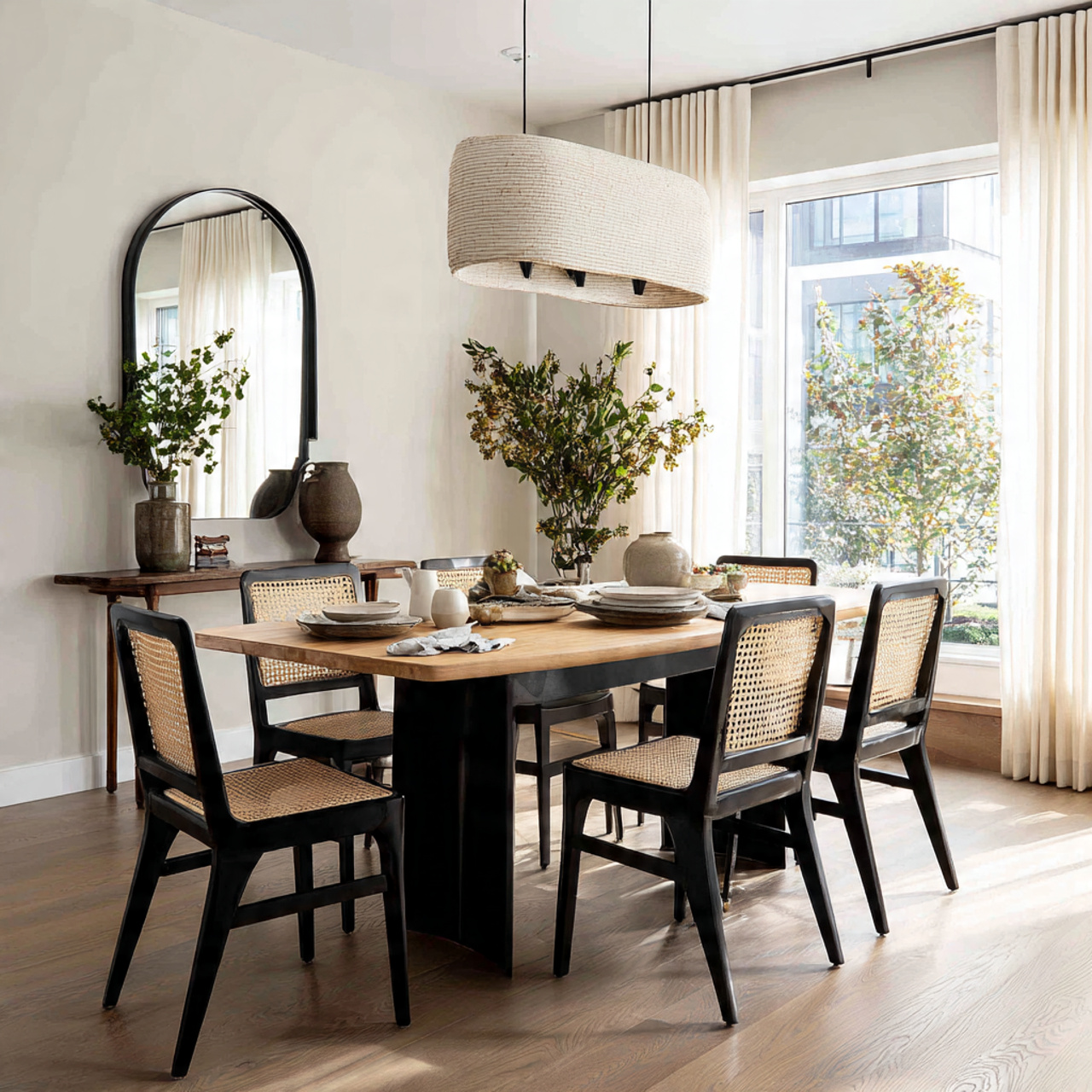
Texture often determines whether a dining room feels inviting or sterile. Cane dining chairs introduce woven surfaces that contrast beautifully with smooth tables and polished floors.
Their breathable structure also makes them comfortable for long dinners, particularly in warmer climates. Mid century modern dining rooms frequently rely on cane seating for this reason.
Over time the woven panels develop subtle tonal variation that adds character. Upholstered chairs can appear heavy in comparison, while cane maintains a lighter visual presence.
Tip: Pair cane seating with warm wood tables so the materials feel naturally connected.
A mirror behind the dining table that expands visual space
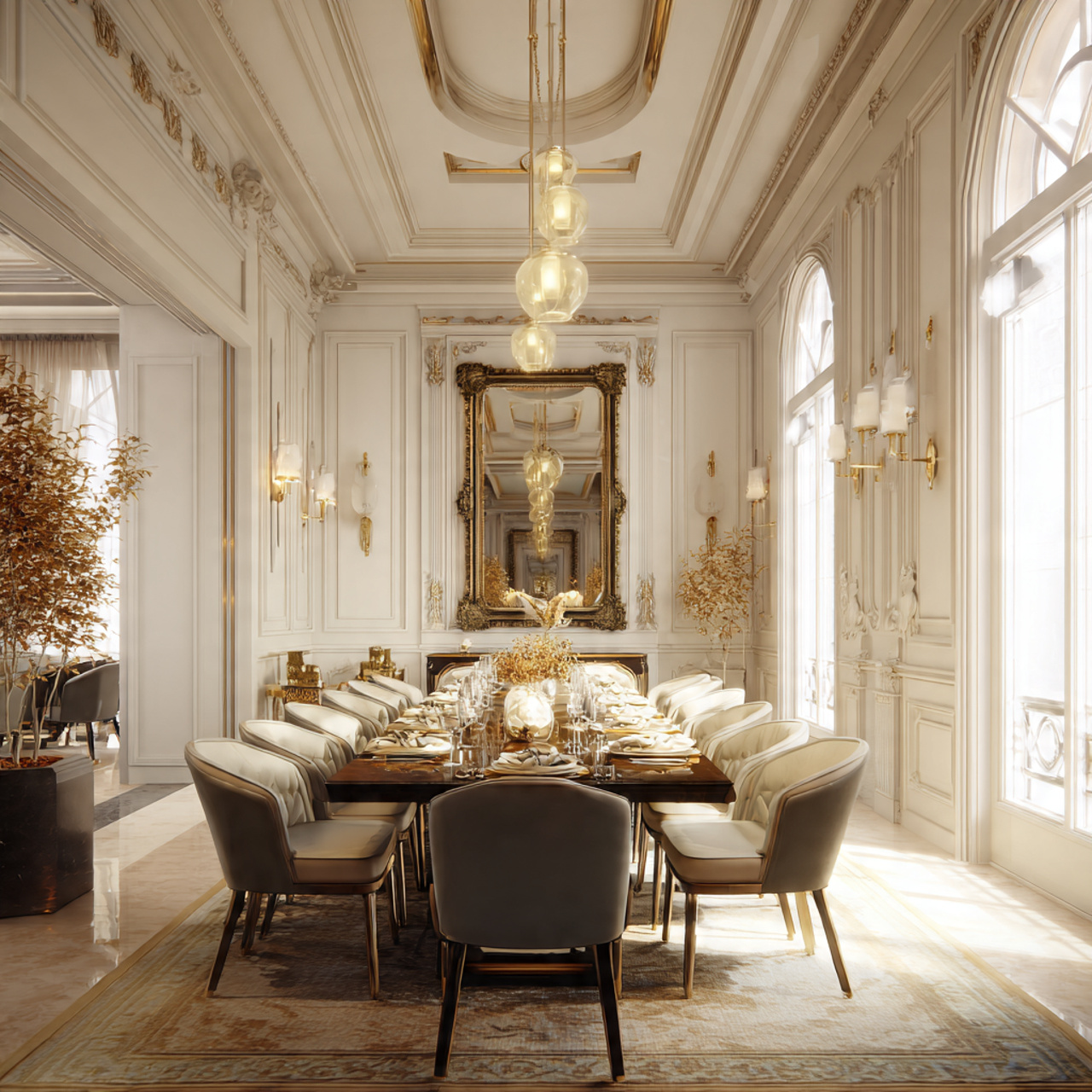
Mirrors positioned behind dining tables can dramatically change how the room feels. The reflection captures both natural light and the movement of people around the table, which visually doubles the sense of space.
This technique works especially well in apartments where dining areas sit close to walls. The reflected light prevents the room from feeling enclosed during daytime meals.
However the mirror should remain simple and generously sized. Decorative frames tend to distract from the spacious effect mirrors are meant to create.
Tip: Select a mirror nearly as wide as the dining table so proportions feel intentional.
A corner dining arrangement that transforms unused space
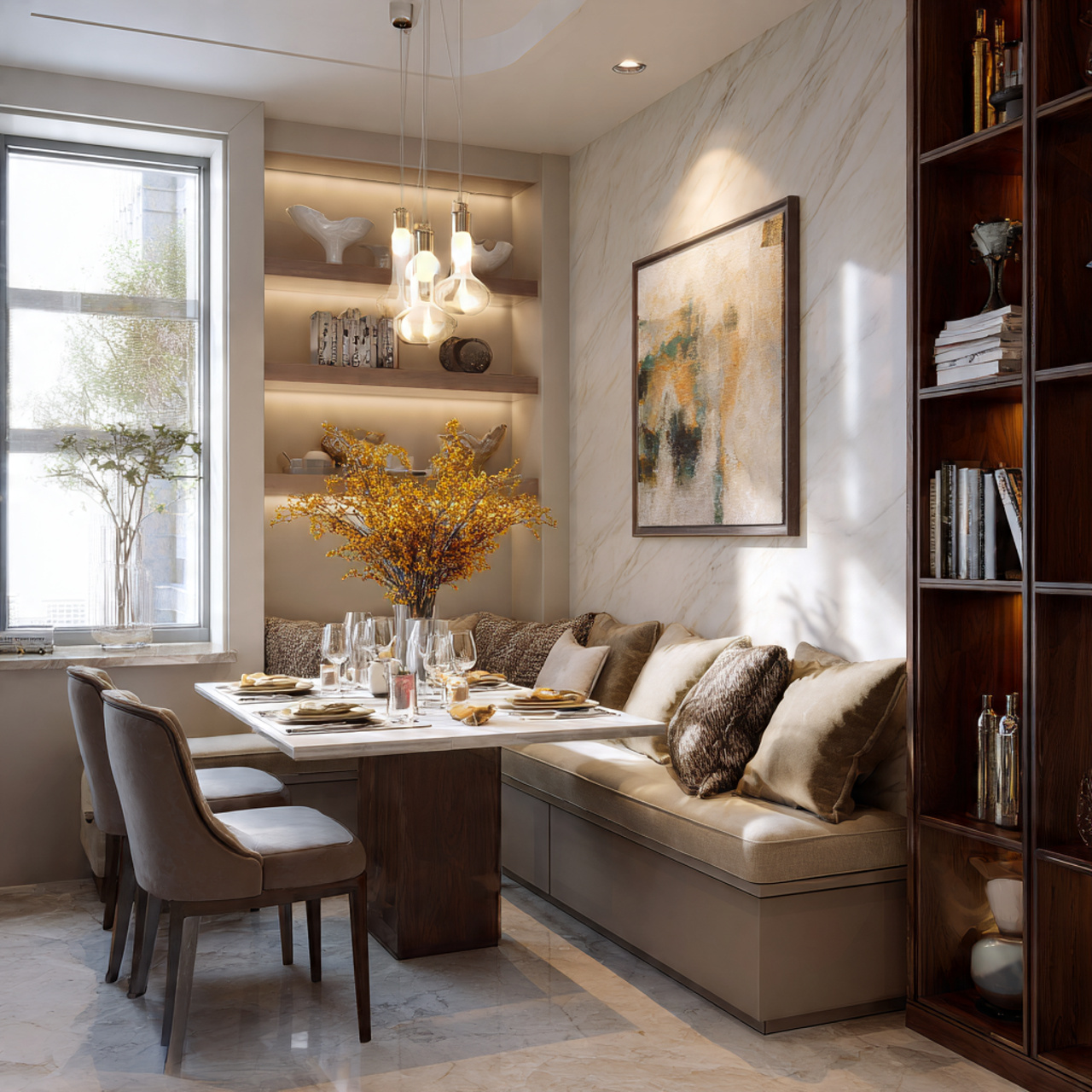
Dining rooms sometimes contain corners that feel awkward or neglected. Turning that area into a corner dining table arrangement can transform the atmosphere of the room.
A small banquette or curved bench allows the table to sit comfortably within the corner while freeing the rest of the room for circulation. This layout works particularly well in small dining room designs.
Over time these corner setups often become favorite gathering spots because they feel cozy and informal. Guests naturally settle in rather than treating the dining room as a formal area used only occasionally.
Tip: Add a small pendant or wall light above the corner table so the area feels intentionally designed rather than improvised.
A modern dining room defined by sculptural pendant lighting
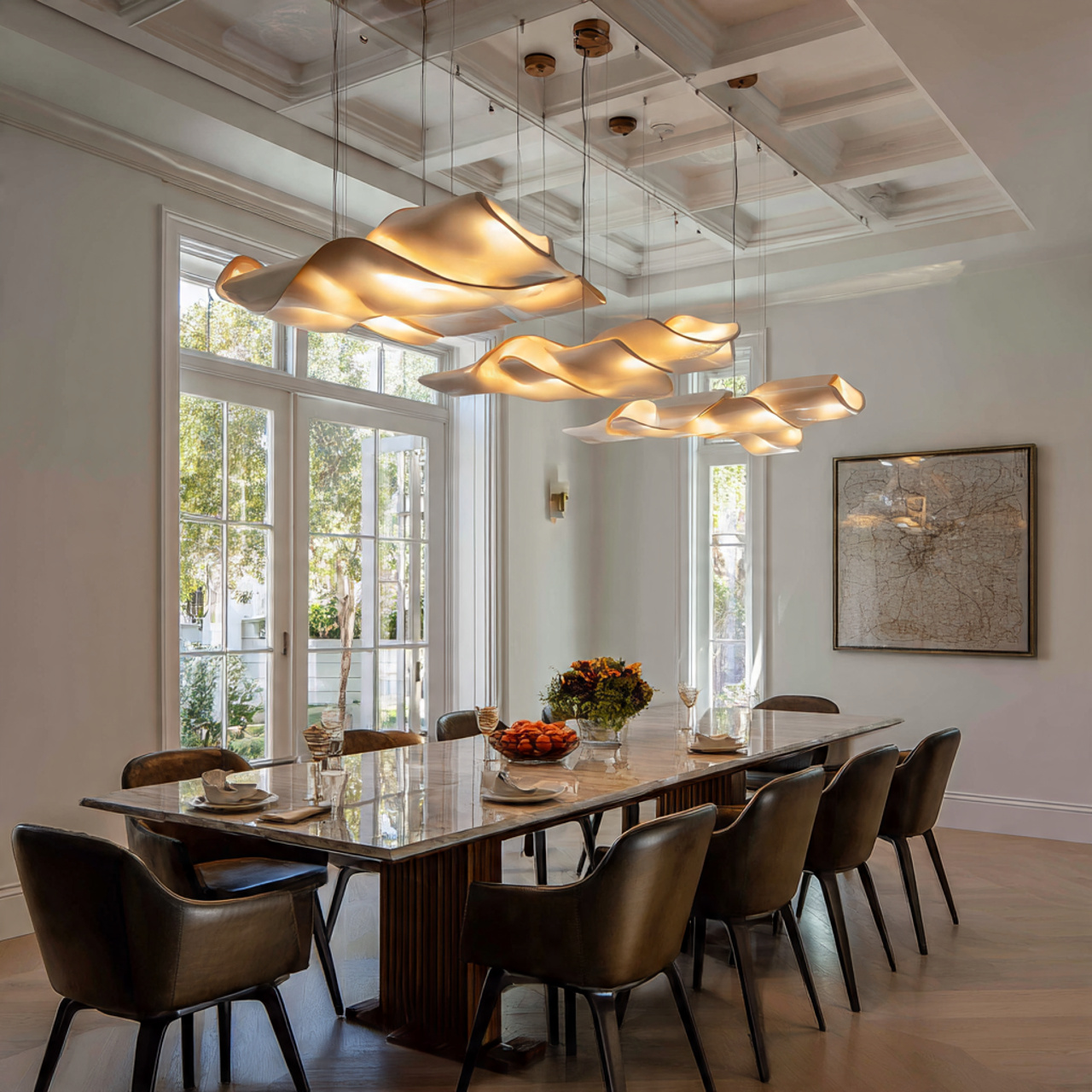
Lighting often determines whether a dining room feels memorable or forgettable. A sculptural pendant above the table immediately introduces presence and gently focuses attention toward the center of the room. In many homes the dining area only begins to feel finished once the lighting gains enough visual weight.
When the fixture has the right scale the rest of the room often settles into place naturally. Chairs, table placement and even artwork begin to feel more balanced around it.
Materials such as ceramic, frosted glass or brushed metal reflect light softly rather than harshly. That softer glow usually creates the kind of evening atmosphere that encourages people to stay at the table longer.
Tip: A pendant diameter around half the table width usually feels balanced without overwhelming the room.
A mid century modern dining room anchored by walnut furniture
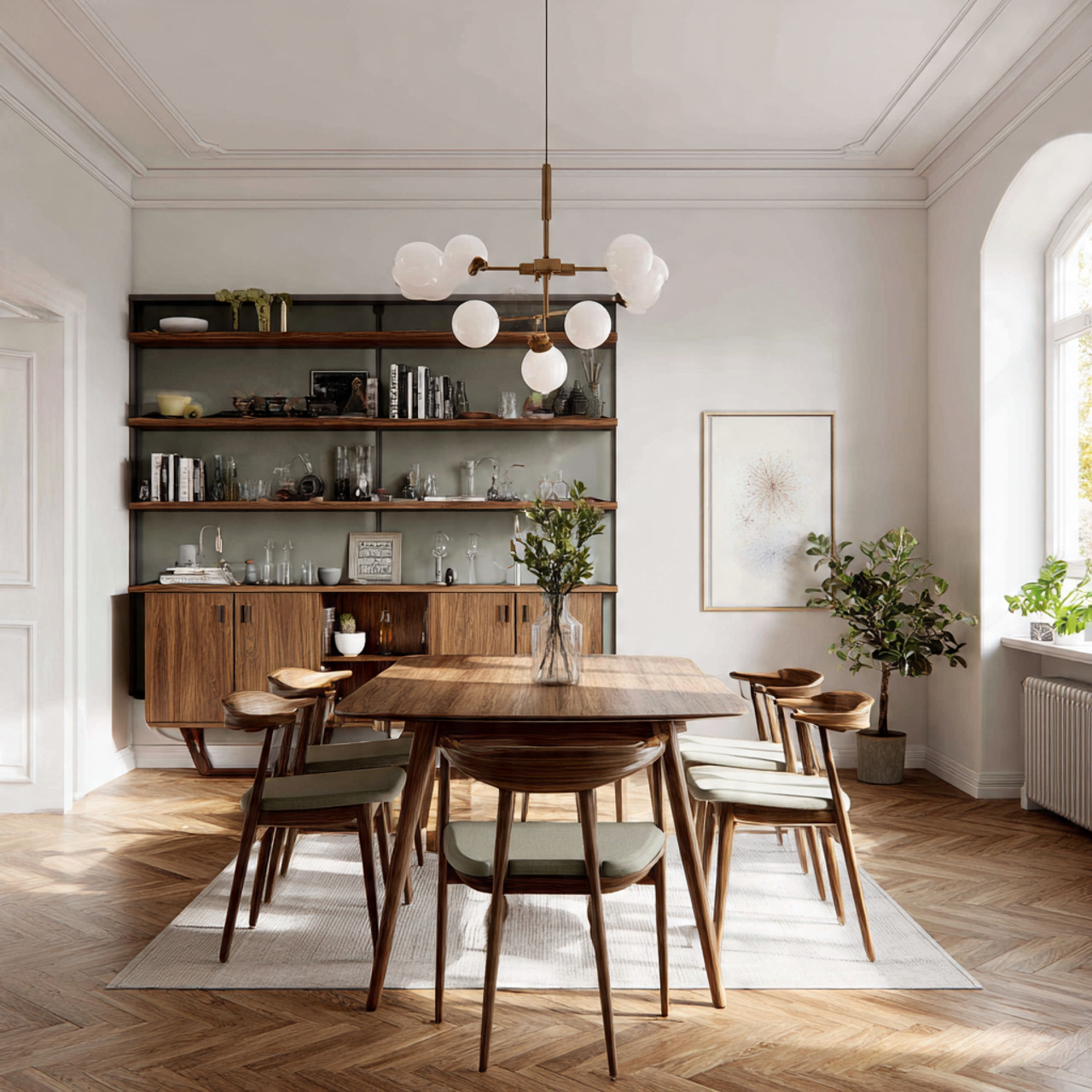
Mid century modern dining rooms feel comfortable because the furniture proportions are practical and honest. Walnut dining tables paired with simple tapered chairs create warmth without needing heavy decoration.
Over time the wood deepens slightly in tone and the room gains character. I have noticed these spaces tend to age gracefully because natural materials rarely fall out of favor.
Many people assume mid century interiors require numerous vintage accessories. In practice a few well chosen pieces usually express the style more clearly than crowded displays.
Observation: After several years the warmth of walnut often becomes the defining element of the room.
A rustic Scandinavian dining room built on pale wood textures
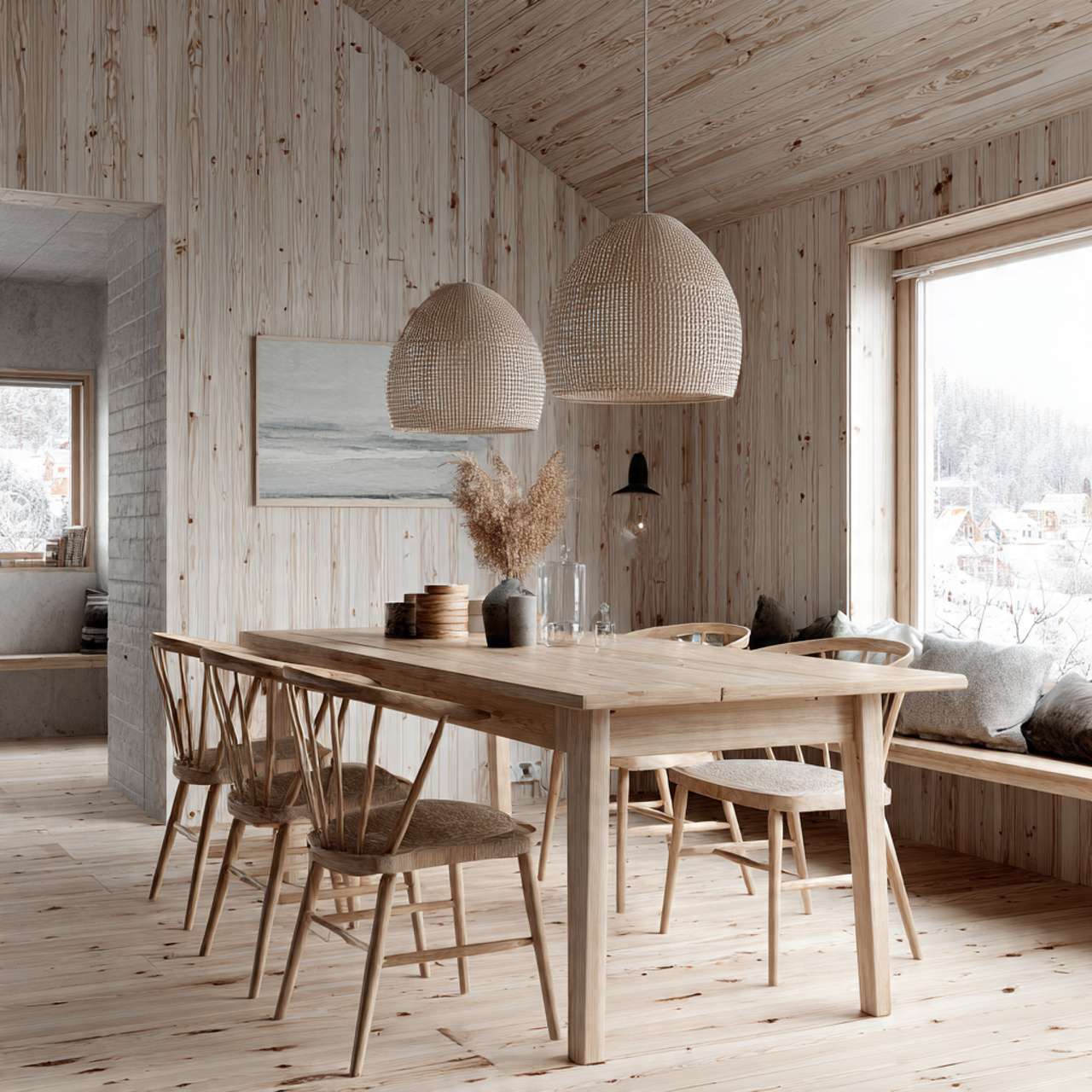
Rustic Scandinavian dining rooms combine simplicity with quiet warmth. Pale oak tables, woven chairs and linen textiles create an atmosphere that feels relaxed rather than staged.
Light colored wood reflects daylight beautifully. This quality becomes especially valuable in homes with softer northern light.
Texture plays a stronger role than decoration in these spaces. Wool runners, ceramic tableware and unfinished wood surfaces add depth without clutter.
Tip: Keeping the color palette restrained allows the natural materials to remain the focus.
Visit Also: Dining Room Decor
A cottagecore dining room layered with vintage charm
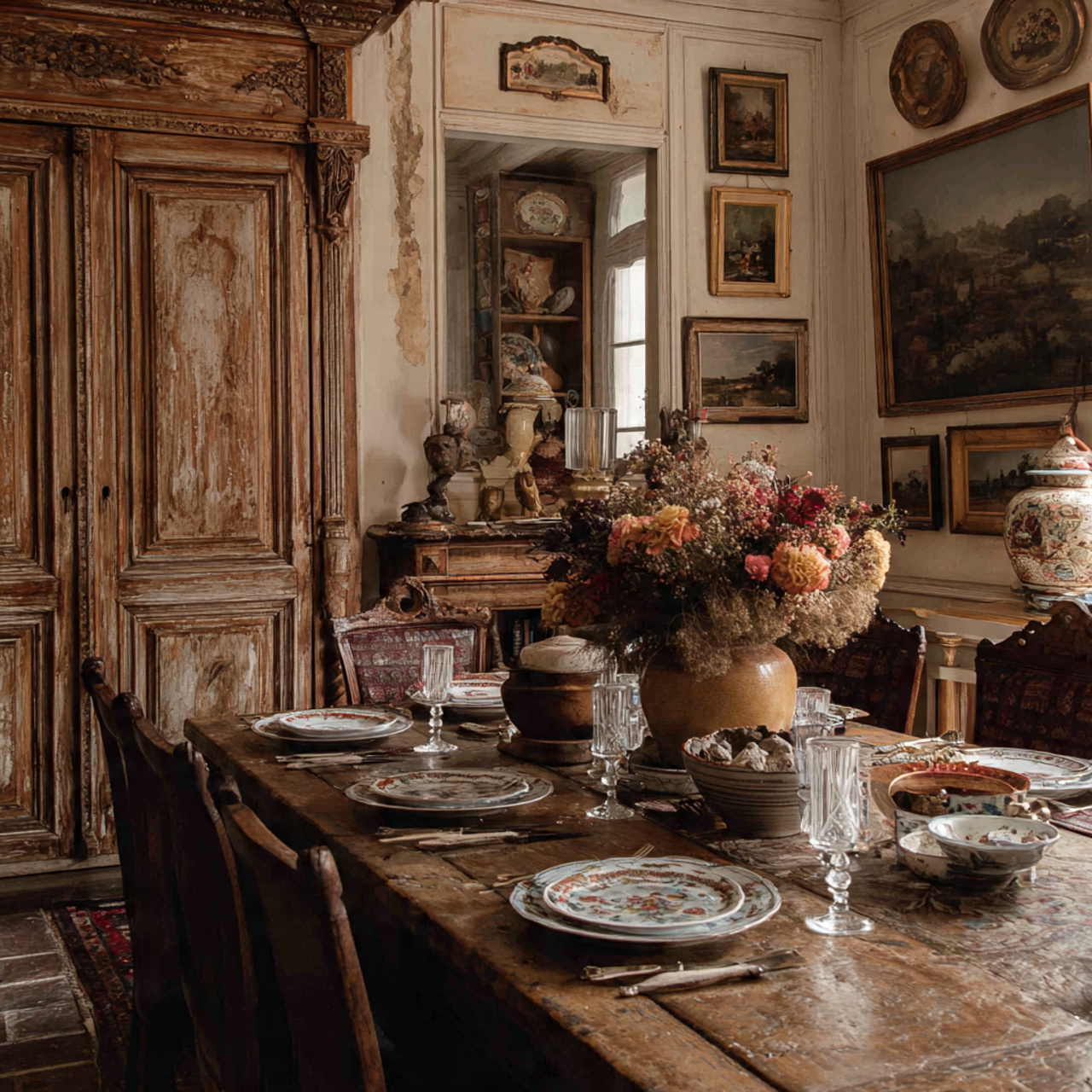
Cottagecore dining rooms celebrate pieces that feel slightly imperfect and personal. Painted wooden chairs, antique cabinets and soft floral textiles introduce a sense of history that newer furniture rarely provides.
Many homeowners regret trying to recreate this style using only brand new furniture. The room often feels more authentic when older pieces mix naturally with newer ones.
Soft daylight filtering through simple curtains reinforces the relaxed mood. The atmosphere tends to encourage slower meals and longer conversations.
Observation: In older homes these dining rooms often become the most loved space in the house.
An open plan dining space clearly defined by lighting and placement
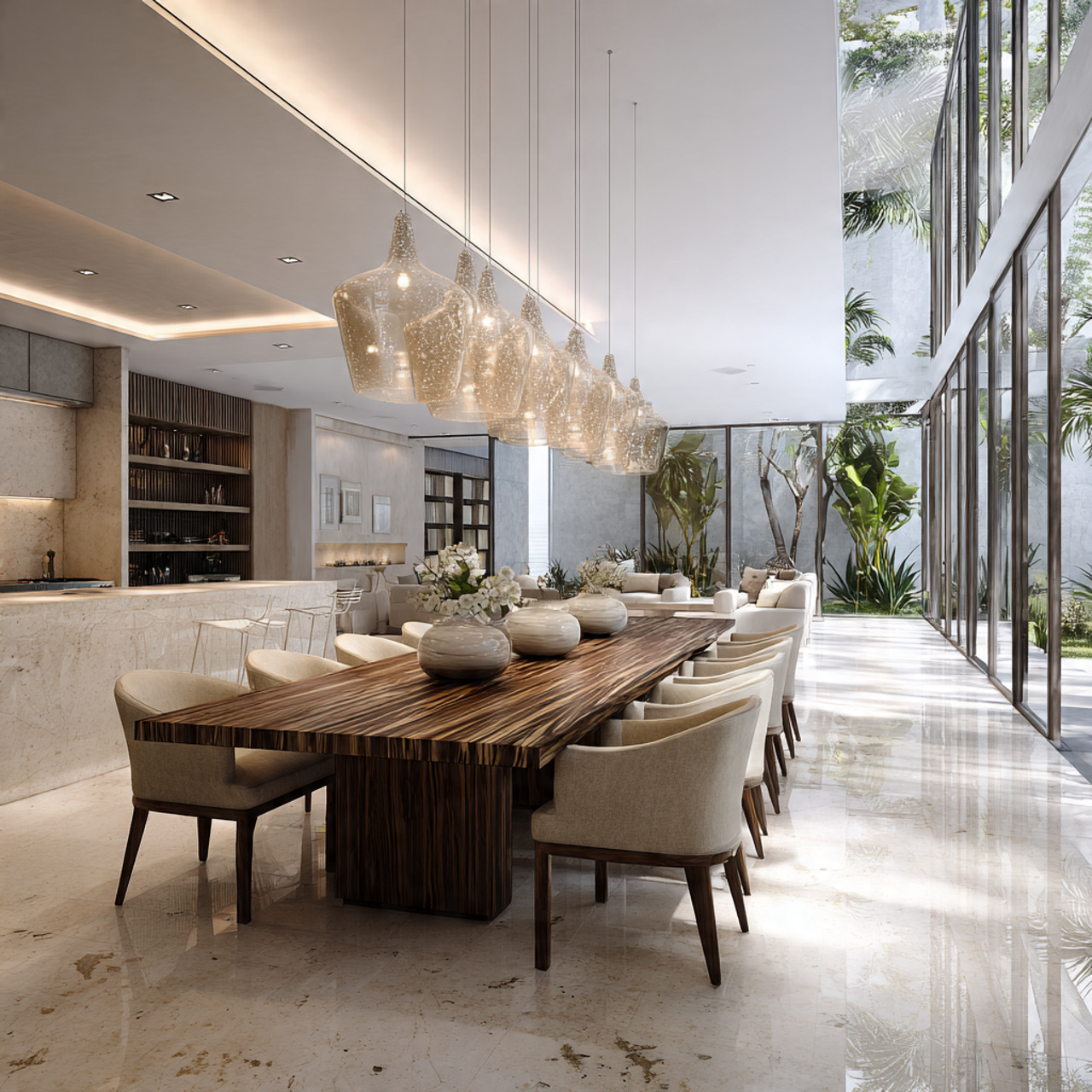
Open plan homes sometimes leave the dining area feeling temporary or undefined. A well placed pendant or chandelier above the table creates a visual anchor that clearly marks the dining zone.
Furniture placement strengthens that definition. Aligning the table with architectural lines such as windows or ceiling beams prevents the dining space from drifting awkwardly between rooms.
Consistency between materials also helps the transition feel intentional. Repeating wood tones or colors from the kitchen into the dining area usually creates visual harmony.
Tip: A rug beneath the table can further reinforce the dining zone without adding walls.
A sunroom dining area surrounded by natural daylight
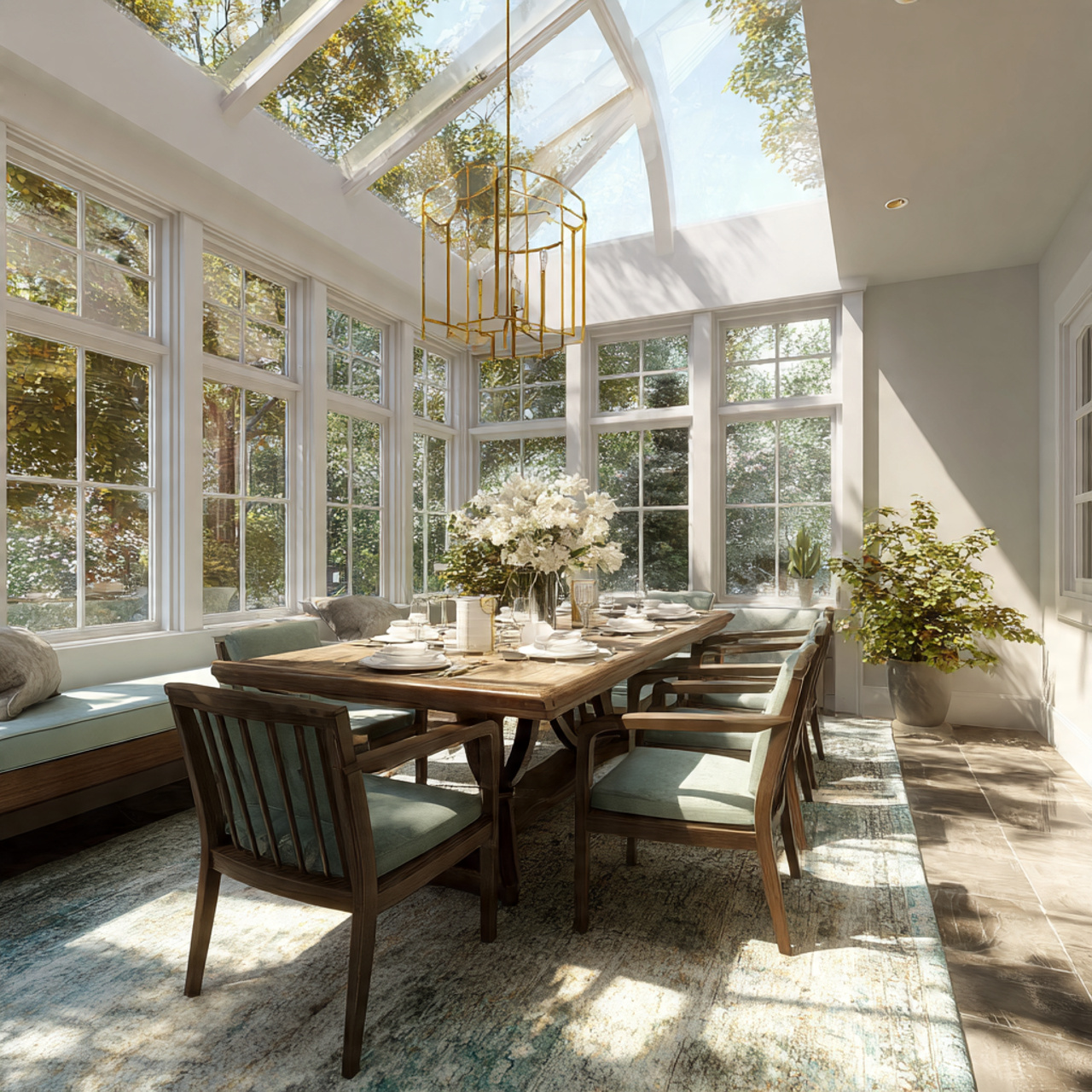
Dining tables positioned near large windows or glass extensions feel noticeably different from traditional dining rooms. Daylight shifts across the table throughout the day and introduces subtle movement into the space.
Plants, woven materials and light wood furniture work particularly well in these bright rooms. Heavy finishes can sometimes compete with the openness created by glass walls.
In several homes I have styled, these window side tables quickly became the favorite place for meals. Natural light quietly encourages people to linger.
Observation: Morning sunlight often transforms these dining areas into the calmest corner of the home.
A gallery wall dining room that tells a personal story
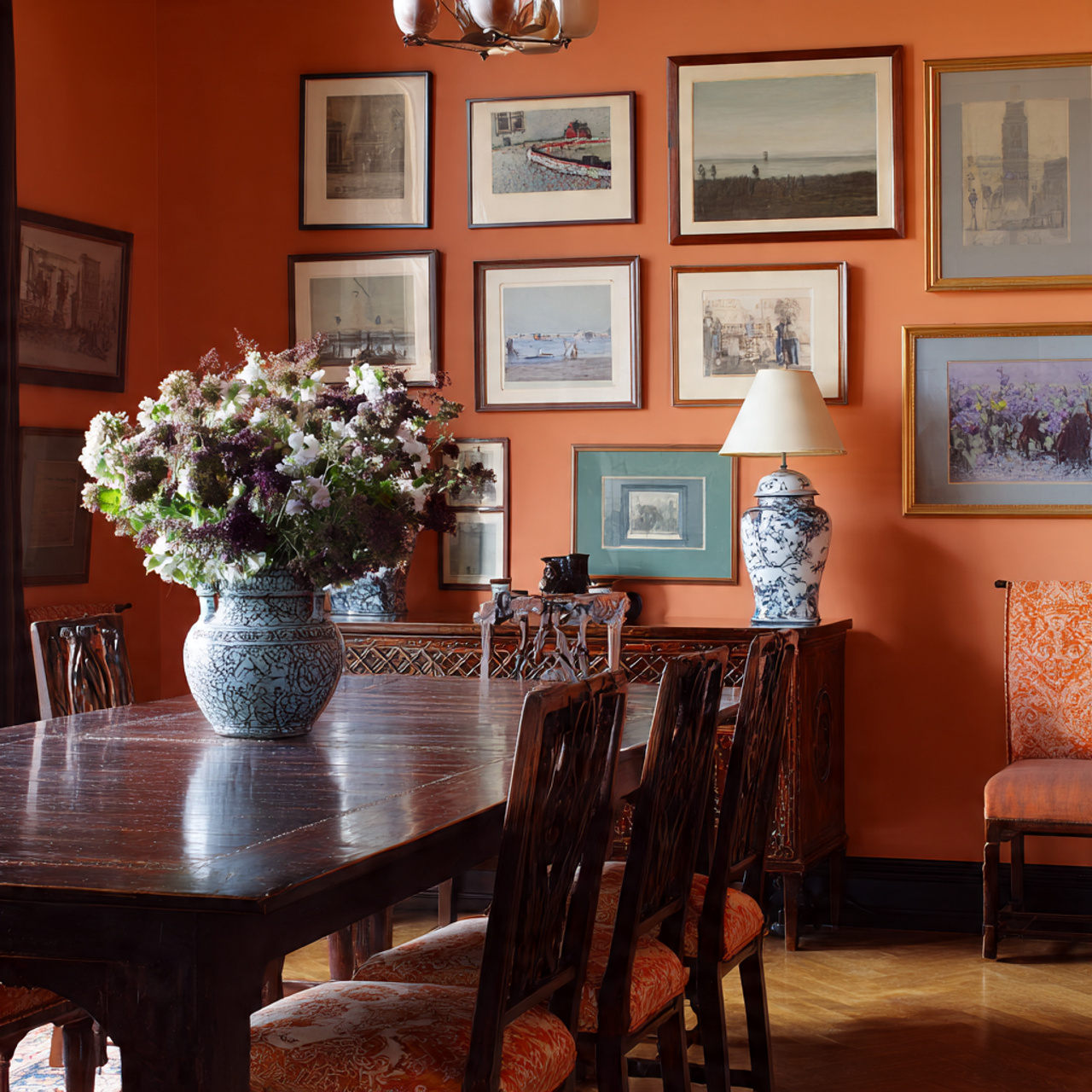
A gallery wall can turn a simple dining room into a deeply personal space. Photographs, prints and paintings arranged thoughtfully create a layered visual narrative around the table.
The arrangement works best when frames share subtle similarities in tone or material. Without that quiet consistency the wall can begin to feel chaotic rather than expressive.
Many gallery walls grow gradually over time. As new pieces are added the dining room evolves into a visual diary of the household.
Tip: Start with a central anchor artwork and expand outward slowly so the composition remains balanced.
A Real Room Example
In one home I recently styled the dining room sat between the kitchen and a bright window wall, so the goal was to keep the atmosphere relaxed yet clearly defined. A round oak dining table became the anchor, paired with cane dining chairs and a soft neutral rug that gently separated the space from the nearby kitchen.
Above the table a sculptural ceramic pendant created a warm evening glow, while a large artwork behind the chairs quietly framed the scene. Morning light from the window softened the pale wood tones and reflected lightly off a simple mirror on the adjacent wall, giving the dining room a calm balance that felt both intentional and lived in.
Color and Material Authority
Warm Linen (HEX #E9E2D6)
A soft wall color that reflects daylight gently and keeps the dining room calm. Works best with oak tables, linen fabrics and woven cane.
Soft Cream (HEX #F4EFE6)
A warm alternative to white that brightens chairs or table linens. Pairs well with brass lighting and light wood furniture.
Deep Walnut (HEX #5C3A2E)
A grounding tone for dining tables or sideboards. Adds contrast against neutral walls and complements cane seating.
Muted Olive (HEX #7A8062)
A subtle accent color for artwork or ceramics. Works naturally with wood furniture and neutral textiles.
Room Size Space Types and Lighting Quick Guide
Small dining rooms
Round tables improve circulation and keep the space comfortable.
Layered lighting prevents the room from feeling tight.
Large dining rooms
Furniture with stronger visual weight keeps the room balanced.
Oversized lighting or artwork helps anchor the table.
North facing dining rooms
Cool daylight can make colors appear flat.
Warm wood tones and warmer bulbs restore comfort.
South facing dining rooms
Bright sunlight allows deeper colors and textures.
Natural materials like linen and cane soften the light.
Common Dining Room Design Mistakes
Choosing a dining table that is too large for the room
Many homeowners believe a large table will make the dining room feel impressive. In reality oversized tables often block circulation and make chairs difficult to move.
The problem appears during everyday use when people must squeeze past chairs or walls. Leave at least ninety centimeters of space around the table so movement stays comfortable.
Hanging dining room lighting too high above the table
Lighting placed too high weakens the atmosphere of the dining area. The room may feel bright, yet the table loses the warm focus that makes meals feel inviting.
Lower lighting creates a soft pool of light that centers attention on the table. A pendant placed roughly seventy to eighty centimeters above the tabletop usually feels balanced.
Using too many decorative objects on the dining table
Many people feel pressure to decorate the dining table even when it is used daily. Too many centerpieces quickly make the table feel crowded and inconvenient.
A single ceramic bowl, runner or small arrangement often works better. Keeping most of the surface clear allows the table to remain practical.
Ignoring chair comfort and seat height balance
One overlooked mistake is choosing chairs that do not match the table height. When seats are too low or too high the dining experience slowly becomes uncomfortable.
Ideally the seat should sit about twenty five to thirty centimeters below the tabletop. Correct proportions allow people to sit comfortably through longer meals.
Dining Room FAQ
How can I make a dining room feel more welcoming?
Soft lighting, comfortable chairs and warm materials usually create the most inviting dining rooms. Natural wood tables, linen textiles and gentle lighting help the room feel relaxed.
What table shape works best in a small dining room?
Round tables often work best because they improve circulation around the room. Their shape also allows conversation to flow more naturally.
How large should artwork be in a dining room?
Artwork behind the table usually looks balanced when it spans about two thirds of the table width. Pieces that are too small often make the wall feel empty.
Do mirrors work well in dining rooms?
Mirrors can work beautifully when placed near the dining table. They reflect natural light and make smaller spaces feel more open.
How can I decorate a dining room on a budget?
Focus on a few meaningful elements rather than many accessories. Good lighting, a comfortable table and one strong artwork piece can transform the room without large spending.
A Dining Room That Feels Comfortable and Timeless
Dining rooms often become the quiet center of a home where everyday meals slowly turn into longer conversations. Thoughtful dining room ideas built around natural materials, comfortable lighting and balanced furniture placement tend to age gracefully and remain welcoming for years.
Small adjustments frequently make the biggest difference in how the room feels. Lowering a pendant light, introducing warm wood textures or placing artwork behind the table can transform the atmosphere without major renovation. Over time these subtle decisions help the dining room develop a calm rhythm that feels natural for daily life.