12 Beautiful Blue Color Palette Ideas Designers Swear By
Blue has a quiet way of shaping the atmosphere of a home. In many spaces a thoughtfully chosen blue color palette can make the room feel calmer, brighter, and more welcoming at the same time. Over the years I have noticed that blue works best when it is layered with warm materials, natural light, and a few neutral textures that soften the tone.
Many people assume decorating with blue simply means painting a wall and matching a few accessories. In real homes the most beautiful rooms rarely rely on a single shade. Instead they combine several blue tones with warm neutrals like cream, beige, or natural wood so the palette feels balanced and livable.
A well designed blue color palette usually works best when different shades of blue are layered together with warm neutrals, natural materials, and balanced lighting so the space feels calm rather than cold.
How a Blue Color Palette Shapes the Mood of a Room
One thing I have noticed in real homes is that blue changes dramatically depending on the light and surrounding materials. A dusty blue sofa can feel soft and relaxed in morning sunlight, yet the same shade might appear cooler beside gray walls or metal finishes. This is why experienced decorators rarely rely on only one blue tone.
When designers talk about blue palettes they are usually referring to a family of colors rather than a single shade. From soft baby blue to deep sapphire and navy blue palettes, each tone creates a slightly different mood. Understanding these different shades of blue makes it much easier to build a palette that feels layered and intentional instead of flat.
Materials also play an important role in how blue behaves inside a room. Warm woods, brass lighting, woven fabrics, and cream textiles soften darker shades like navy or royal blue. Without those elements even beautiful blue color palettes can start to feel colder than expected.
Elegant Blue Color Palette Ideas
Soft Dusty Blue Palette That Creates a Calm Morning Living Room
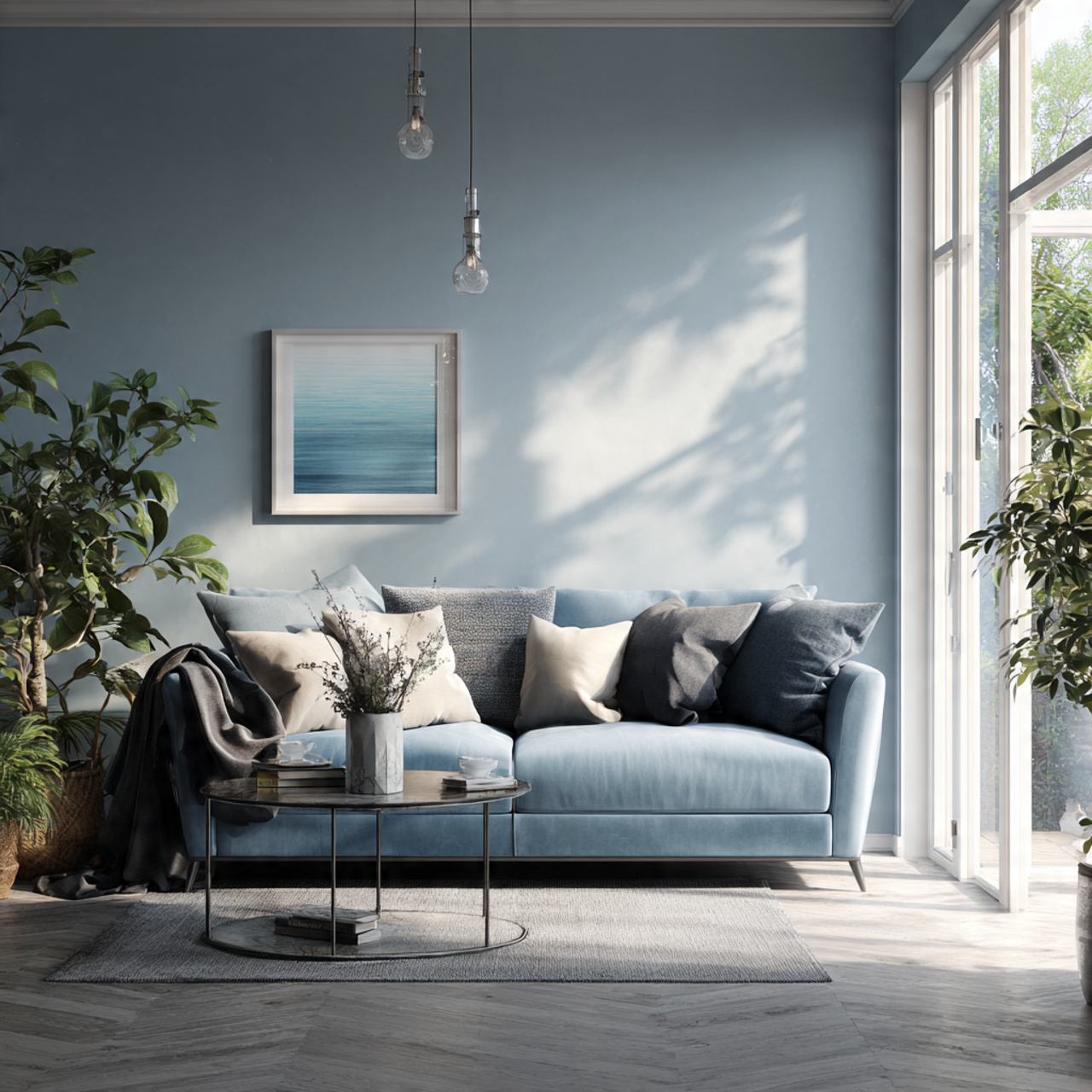
The first thing you notice in this space is a soft dusty blue sofa catching the gentle morning light near a window. Cream linen cushions and a light oak coffee table keep the room feeling warm rather than cool. Morning coffee on the oak table beside the sofa becomes a quiet daily ritual in this soft blue setting.
In my experience dusty blue works beautifully because it sits between gray and traditional blue. It has enough color to feel intentional but enough softness to blend with natural materials. Many homeowners assume stronger blue shades are better, yet softer tones usually age more gracefully in everyday spaces.
If you want to recreate this palette, start with one large dusty blue anchor piece like a sofa or accent chair. Layer cream textiles, light wood furniture, and simple artwork so the color feels relaxed rather than styled. Over time the room begins to feel naturally balanced.
Tip: Dusty blue works best when paired with warm woods and cream fabrics.
Navy Blue and Ivory Palette That Creates a Relaxed Luxury Hotel Bedroom
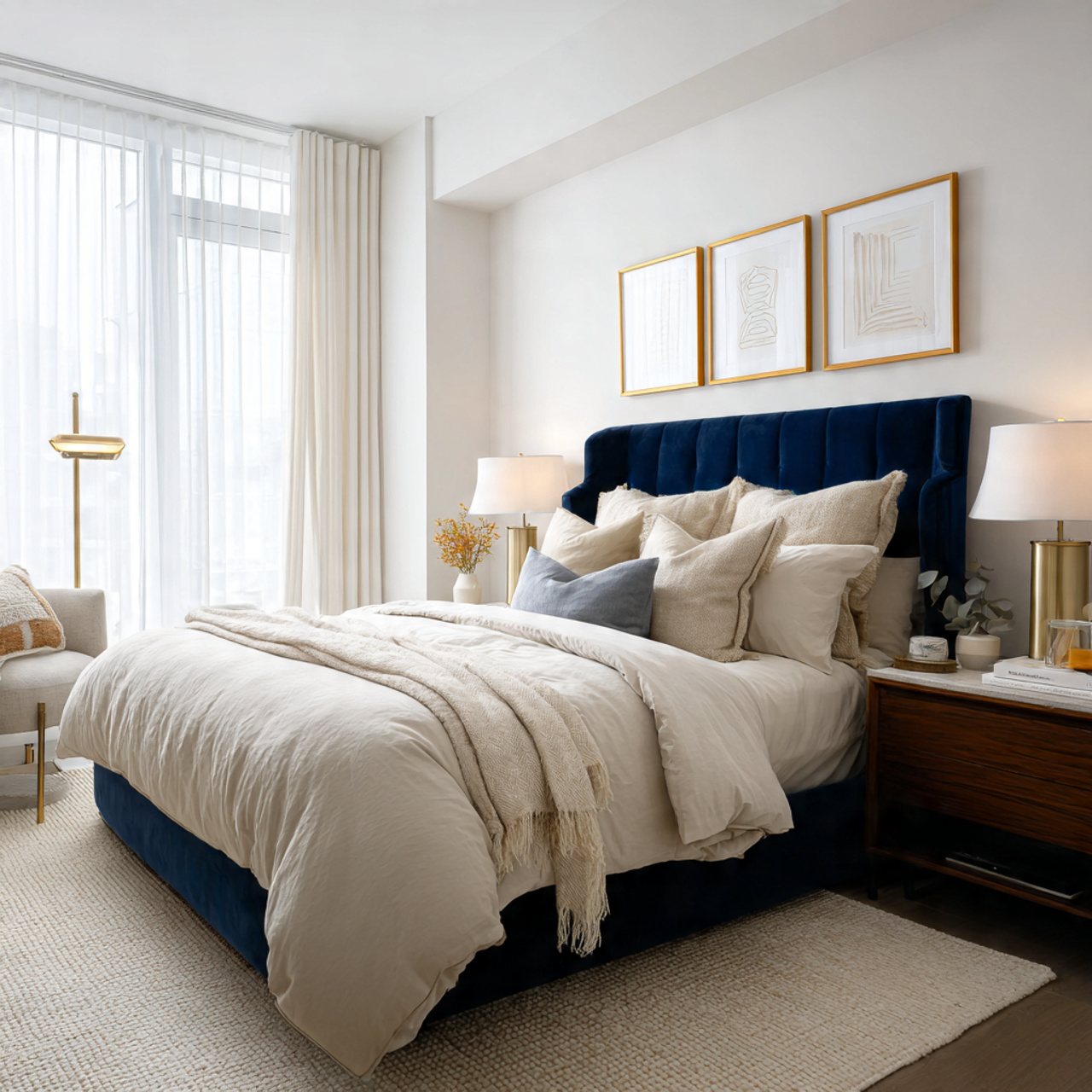
Imagine walking into a bedroom where deep navy bedding sits against crisp ivory sheets and pillows. A brass reading lamp glows softly beside the bed while a textured cream rug warms the floor. The palette creates the feeling of waking up in a calm boutique hotel room.
After living with navy bedding for several months, I noticed something interesting. Many people worry navy blue will make a bedroom feel darker, yet when paired with ivory or soft white it actually creates beautiful contrast. The darker color anchors the space while the lighter tones keep everything airy.
To build this palette, start with navy textiles rather than navy walls. Add ivory bedding, warm lighting, and light wood nightstands to prevent the room from feeling heavy. A few simple framed artworks above the bed complete the look without overwhelming the palette.
Tip: Pair navy blue with ivory instead of stark white for a softer bedroom mood.
Royal Blue and Gold Palette That Feels Bold Yet Elegant
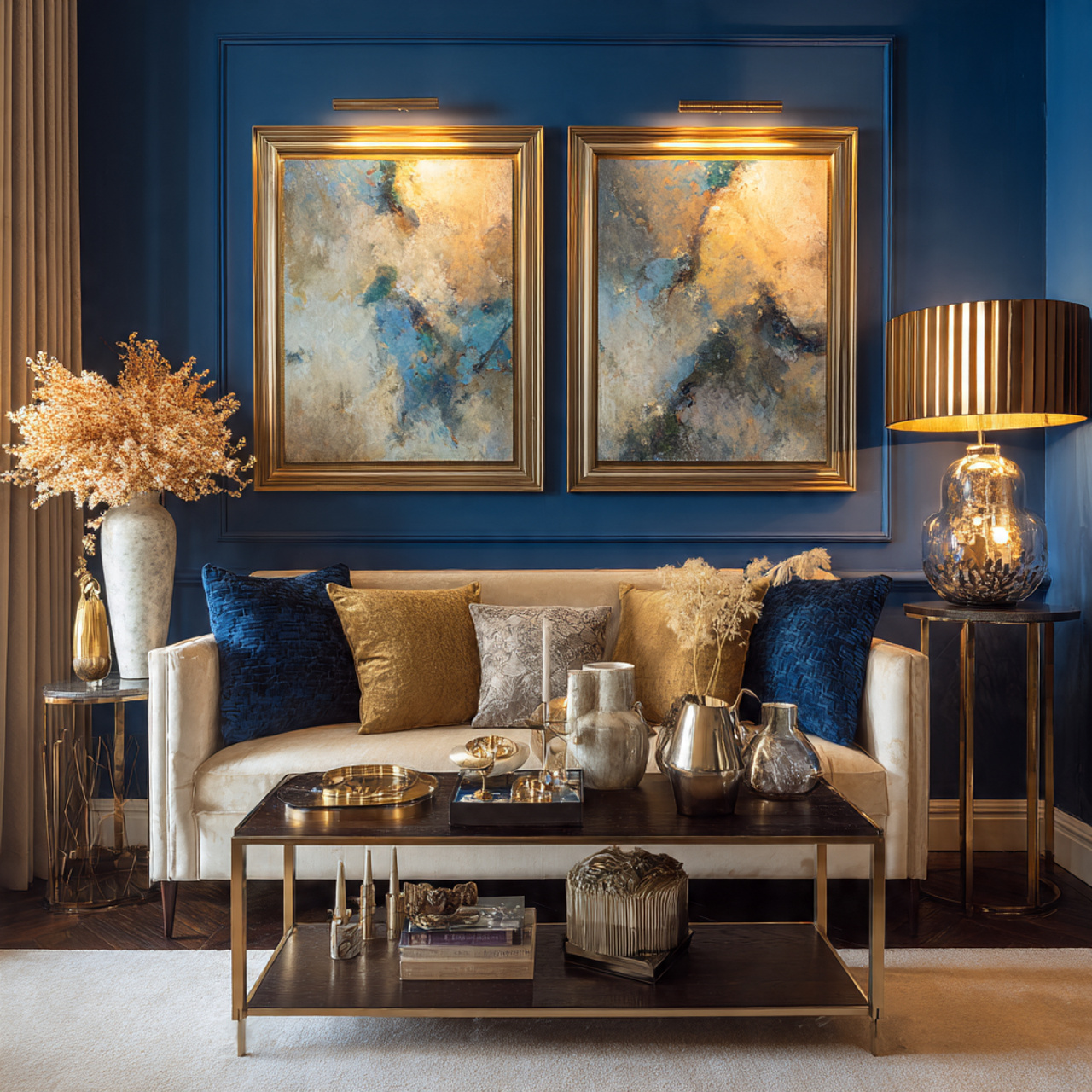
A royal blue accent wall instantly draws the eye when you enter this room. Gold framed artwork and warm brass lighting reflect gently against the deep color. Even a small amount of royal blue can transform a neutral space into something dramatic and sophisticated.
Most people assume royal blue is difficult to decorate with, and I used to think the same. In reality the color becomes much easier to manage when it appears in one focal area instead of covering an entire room. A single wall, cabinet, or upholstered chair can create a strong visual anchor.
If you try this palette at home, keep surrounding colors simple. Cream walls, walnut furniture, and gold accents allow the royal blue to stand out without feeling overwhelming. The contrast creates a polished atmosphere that still feels comfortable.
Tip: Use royal blue as a focal color rather than spreading it across every surface.
Muted Blue and Warm Wood Palette That Feels Naturally Balanced
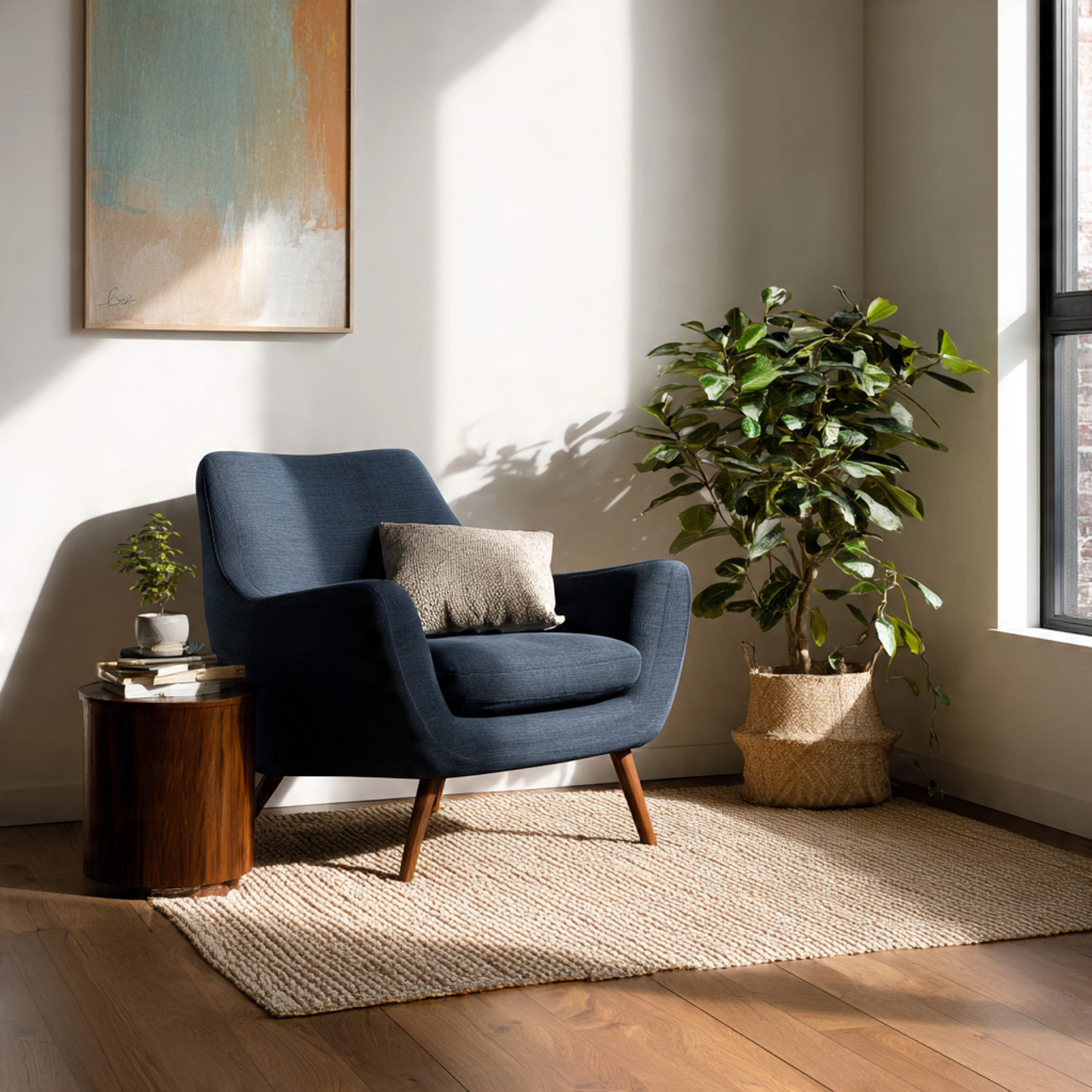
A muted blue armchair sits beside a walnut side table near the window. Sunlight warms the wood surface while the blue upholstery keeps the space feeling calm and grounded. The palette looks simple but quietly sophisticated.
One thing I have noticed in real homes is that wood changes the way blue feels. Without warm materials, blue can sometimes feel cooler than expected. When natural wood is added, the entire palette immediately becomes more inviting.
To recreate this look, combine muted blue textiles with medium or dark wood furniture. Avoid pairing the blue with too many cool metals or gray surfaces. The goal is to let the warmth of the wood soften the blue tones.
Tip: Natural wood instantly warms up cooler blue palettes.
Deep Sapphire Palette That Creates a Dramatic Evening Living Room
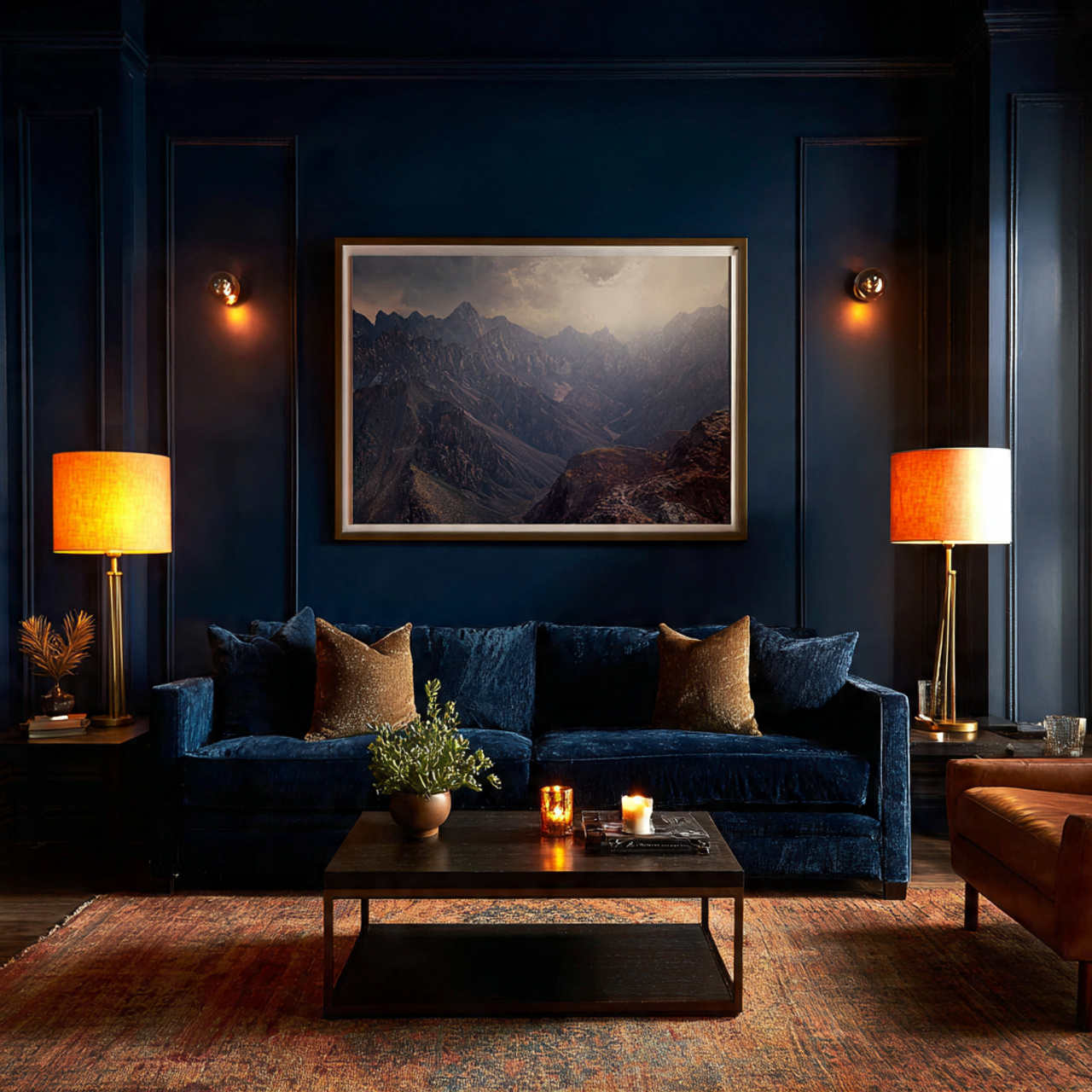
In the evening this room feels completely different from daytime spaces. A deep sapphire wall sits behind a velvet sofa while warm lamp light reflects gently across the surface. The color feels rich and cinematic rather than dark.
At first I assumed darker blues would make rooms feel smaller. After experimenting with them in real homes I discovered the opposite can happen when lighting is layered correctly. The depth of sapphire actually adds dimension when warm light sources are placed around the room.
To apply this palette, start with one sapphire focal wall or cabinet. Add warm table lamps, brass accents, and textured fabrics so the space feels cozy at night. The lighting interaction is what truly brings this palette to life.
Tip: Deep sapphire shades look best when paired with warm evening lighting.
Blue Color Palette With Cream Tones for a Soft Comfortable Bedroom
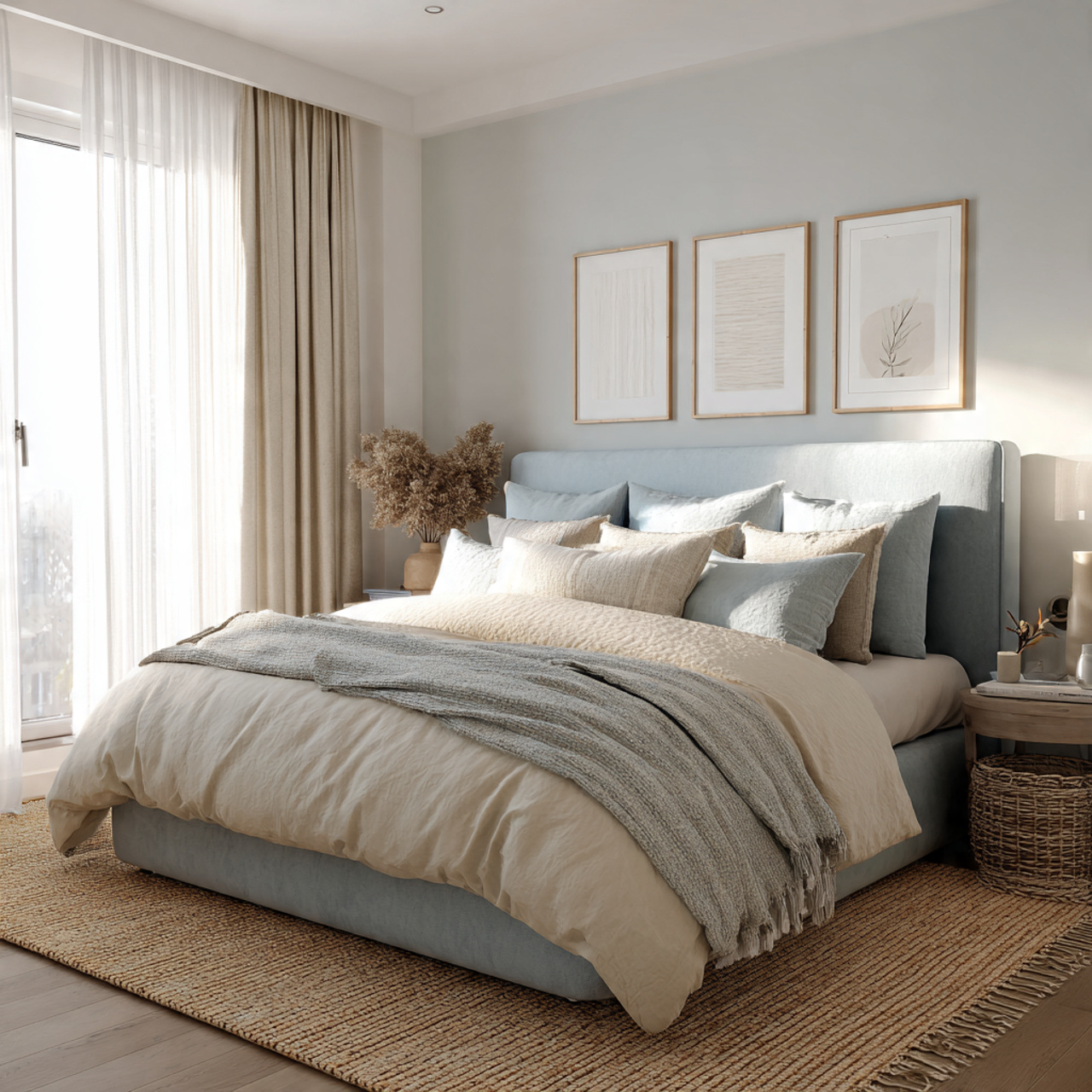
This bedroom begins with a soft blue upholstered headboard framed by cream bedding and woven textures. Morning sunlight filters through sheer curtains, creating a quiet and peaceful atmosphere. The soft colors make slow weekend mornings feel especially peaceful.
Most people assume blue bedrooms should include strong navy or bold shades. In my experience softer blues paired with cream fabrics often create a more restful mood. The room feels lighter and easier to live with over time.
To build this palette, choose a gentle blue tone for the headboard or bedding and layer several cream or ivory textures around it. Linen, cotton, and woven rugs work especially well here. The subtle contrast keeps the room interesting while still relaxing.
Tip: Cream fabrics prevent soft blue bedrooms from feeling cold.
Navy and Beige Palette That Creates a Warm Welcoming Living Room
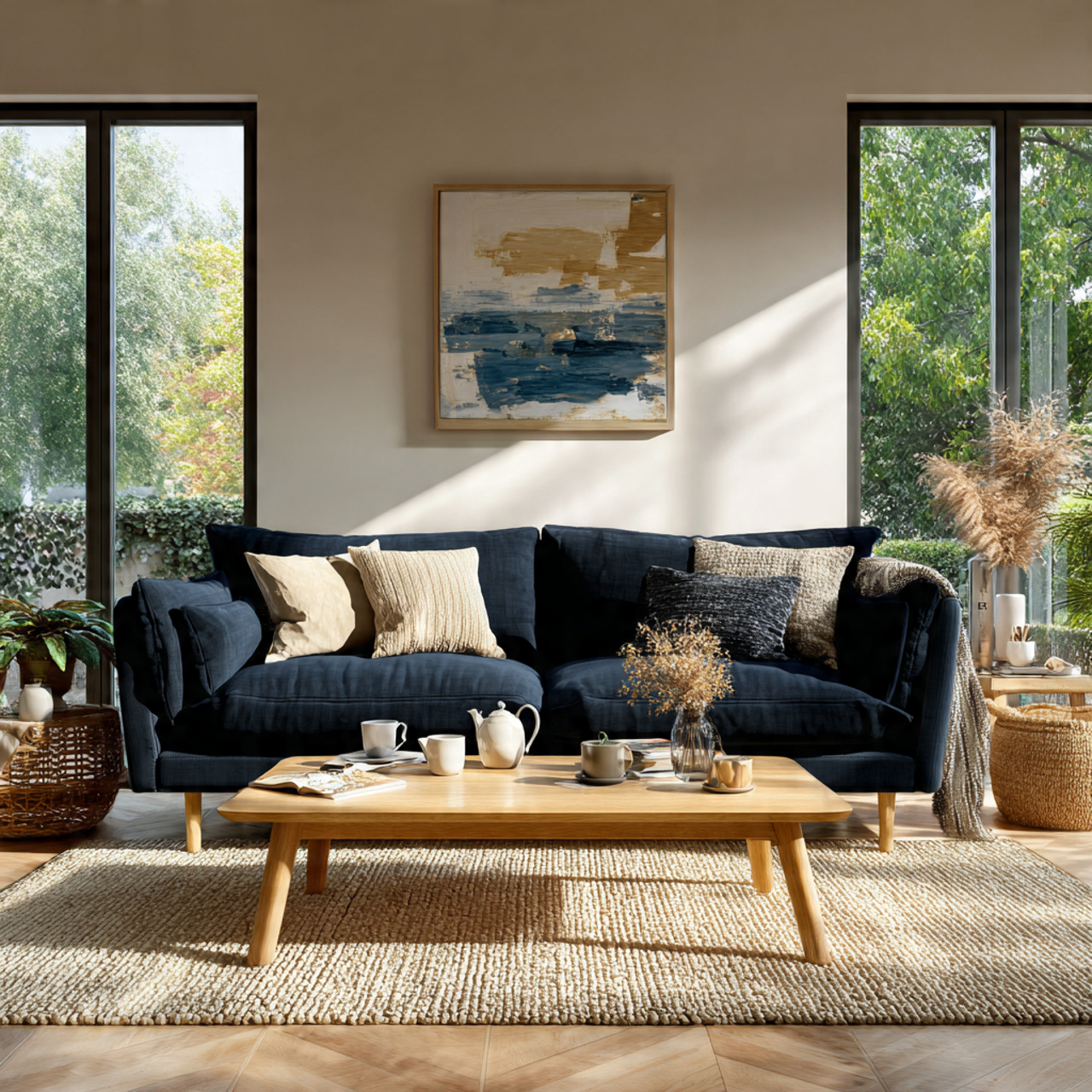
A navy sofa layered with dusty blue cushions and a pale blue ceramic vase on the coffee table creates a scene that immediately feels styled yet relaxed. The different shades of blue interact naturally with the wood furniture and soft textiles around them. This layered look creates depth without making the room feel busy.
One thing I noticed after living with this combination for several months is how forgiving it is. Navy hides everyday wear surprisingly well while beige keeps the room feeling open and comfortable. Many people assume beige looks dull, yet beside navy it actually feels warmer and more inviting.
To recreate this palette, begin with a navy anchor piece such as a sofa or large armchair. Add beige or cream rugs, neutral curtains, and wood accents so the color scheme stays warm. A few textured pillows in lighter blue shades help connect everything naturally.
Tip: Beige rugs and curtains soften navy interiors without removing their depth.
Layered Blue Color Palette With Multiple Shades for Depth
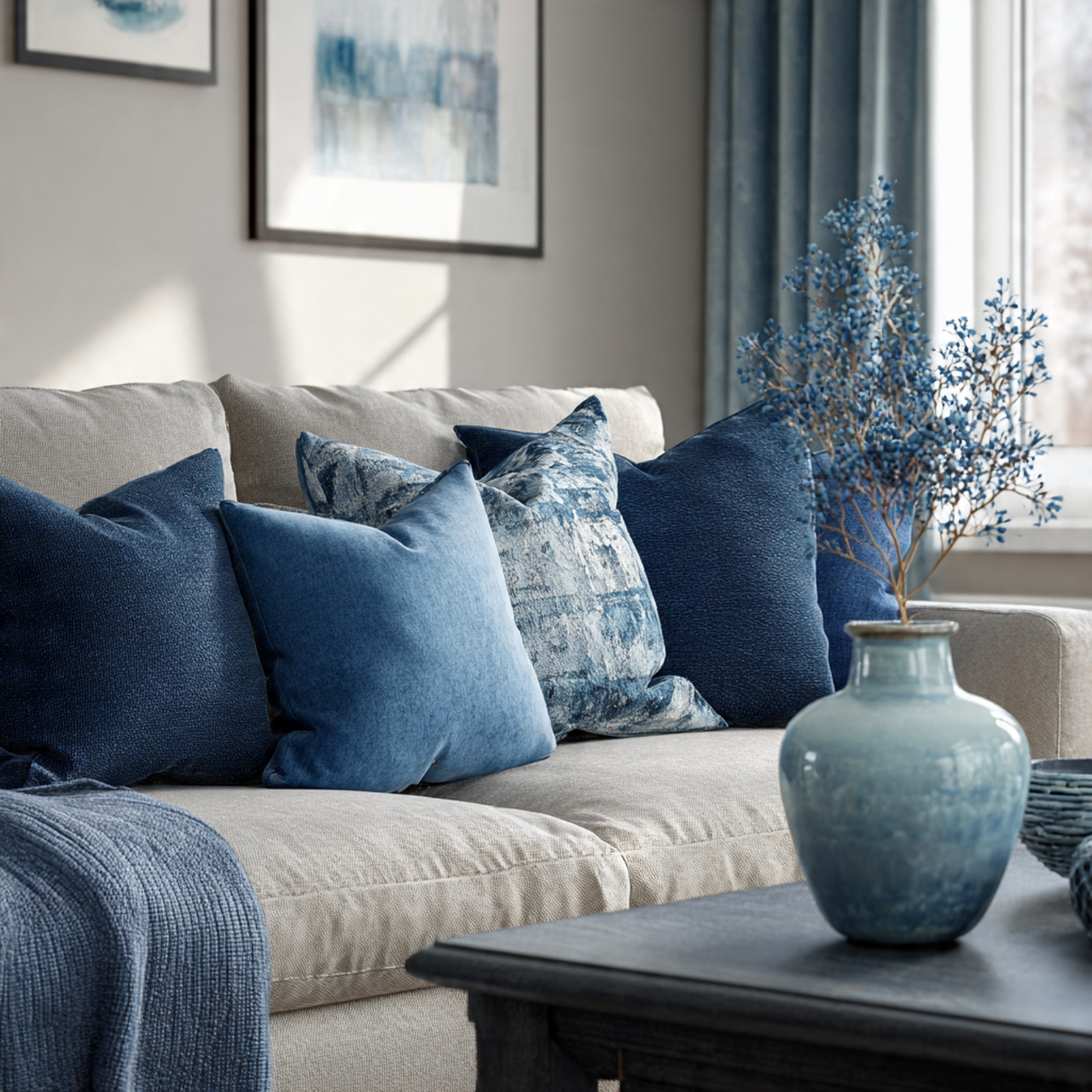
A room styled with several shades of blue often feels more natural than one dominated by a single tone. Imagine deep navy cushions beside dusty blue throws and a pale blue ceramic vase sitting on a wooden table. The layering quietly adds richness without making the room feel busy.
In my experience many people hesitate to mix different blues because they worry the colors will clash. Most of the time the opposite happens when the tones share similar undertones. Different shades of blue actually create gentle contrast that feels more sophisticated than using only one shade.
To build this layered look, combine three or four blue tones through textiles, artwork, and decorative objects. Keep surrounding materials neutral so the colors remain the focus. Over time the room begins to feel collected rather than decorated all at once.
Tip: Use darker blues for large pieces and lighter blues for accents to keep the palette balanced.
Light Blue and White Palette That Creates a Fresh Airy Kitchen
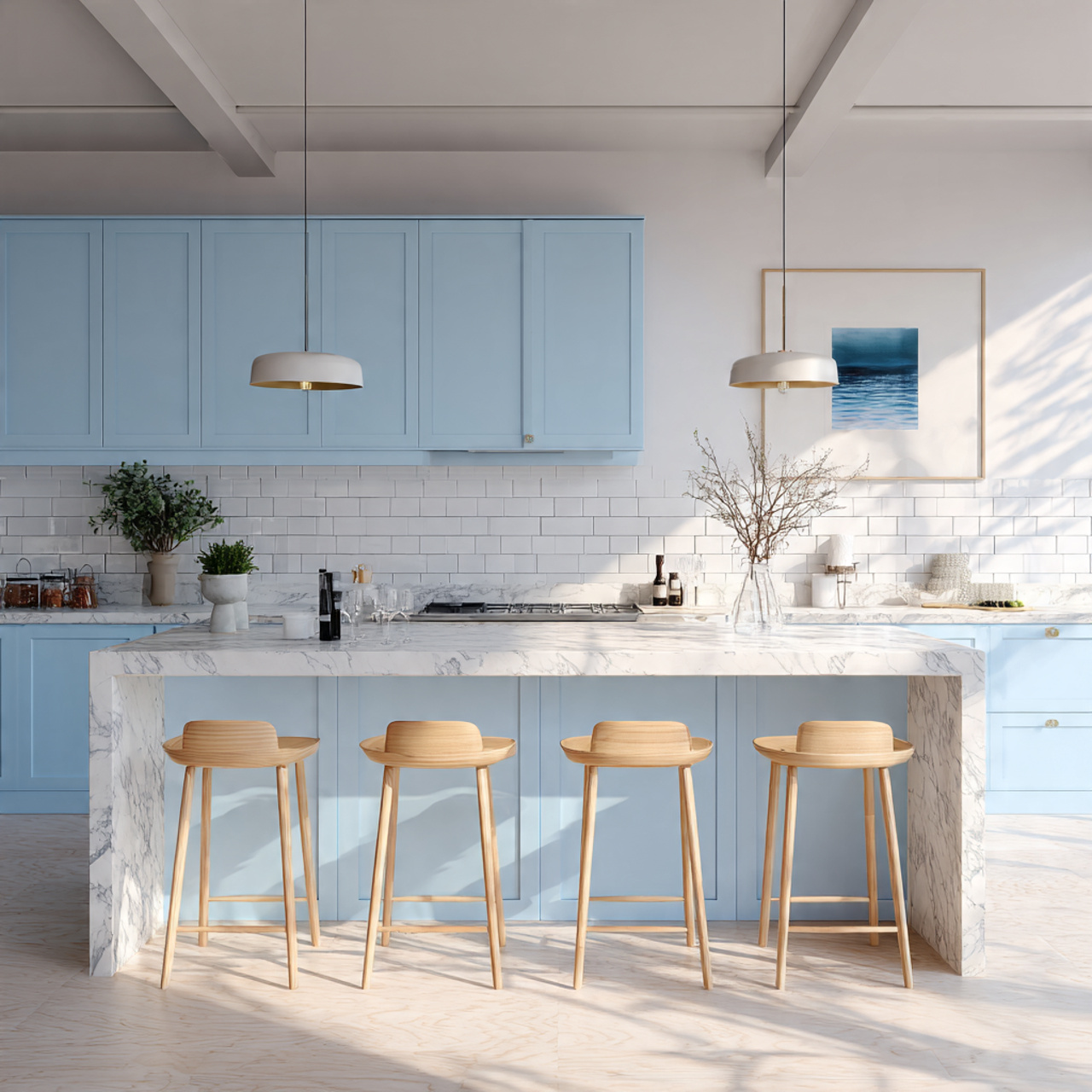
Light blue cabinets against white walls instantly brighten a kitchen. Natural daylight reflects across glossy tiles and painted surfaces, making the room feel open and refreshing. The palette has a clean coastal quality that many homeowners love.
Most people assume light blue kitchens only work in beach homes, yet I have seen them succeed in many different interiors. When paired with white surfaces and natural wood details, the color feels timeless rather than themed. The key is keeping the overall palette simple.
To recreate this look, choose a soft blue cabinet color and combine it with white countertops or backsplashes. Add wooden stools or open shelving so the room keeps a warm balance. Even small kitchens often feel larger with this palette.
Tip: Light blue cabinets reflect natural light and help small kitchens feel more open.
Dusty Blue and Brass Palette That Feels Quietly Luxurious
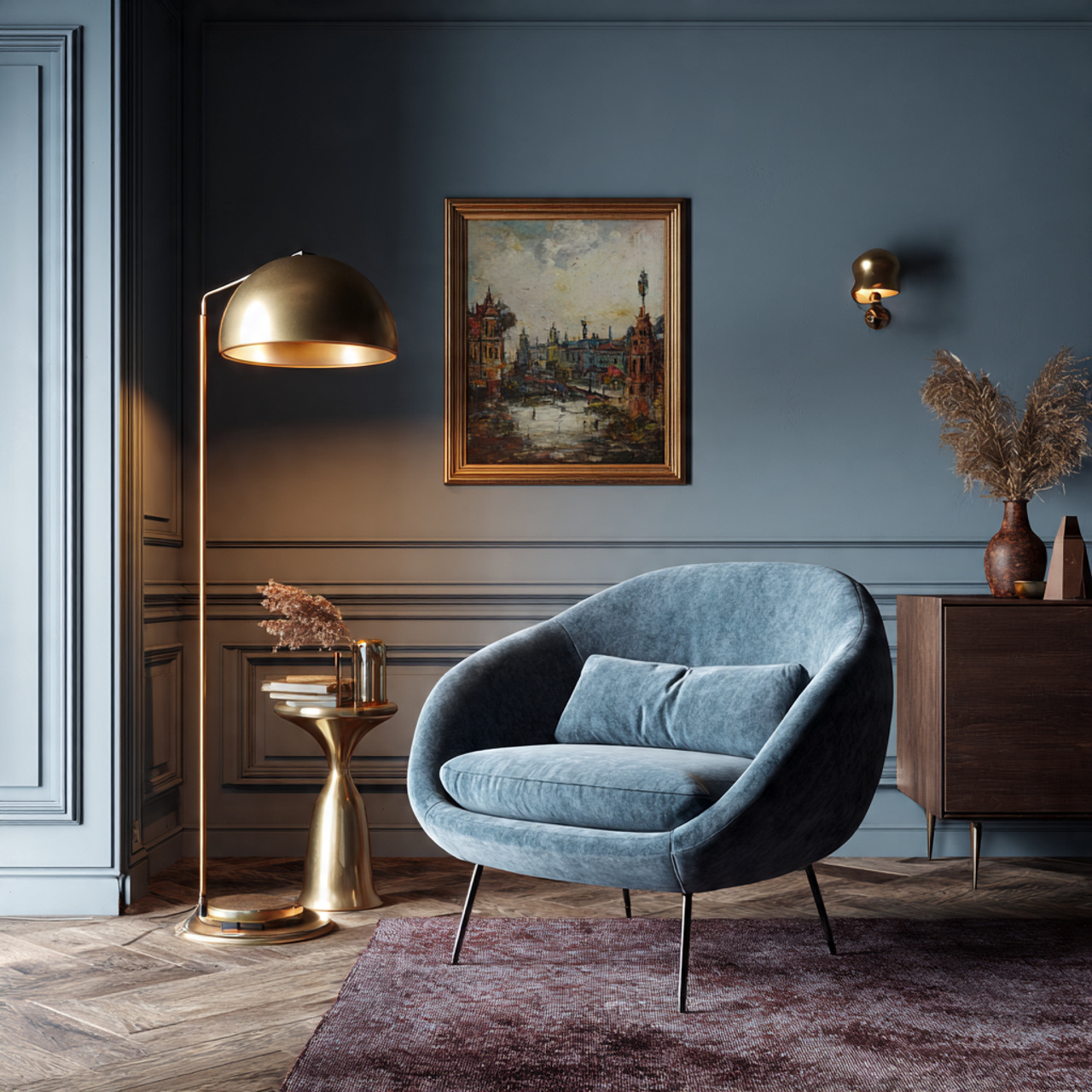
Dusty blue walls paired with warm brass lighting create a subtle yet luxurious mood. When evening lamps switch on, the metallic finish reflects softly against the blue surface. The result feels elegant without looking overly formal.
After experimenting with brass lighting in several rooms, I realized how much warmth it adds to blue palettes. Without that golden tone cooler shades of blue sometimes feel flat. Brass introduces a gentle glow that instantly enriches the color.
To try this palette at home, use dusty blue paint or upholstery as the base color. Then introduce brass through lamps, handles, or small decorative objects. Keeping the metals minimal ensures the room still feels calm.
Tip: Brass accents warm up dusty blue tones and add quiet sophistication.
Blue and Brown Palette That Adds Rich Natural Contrast
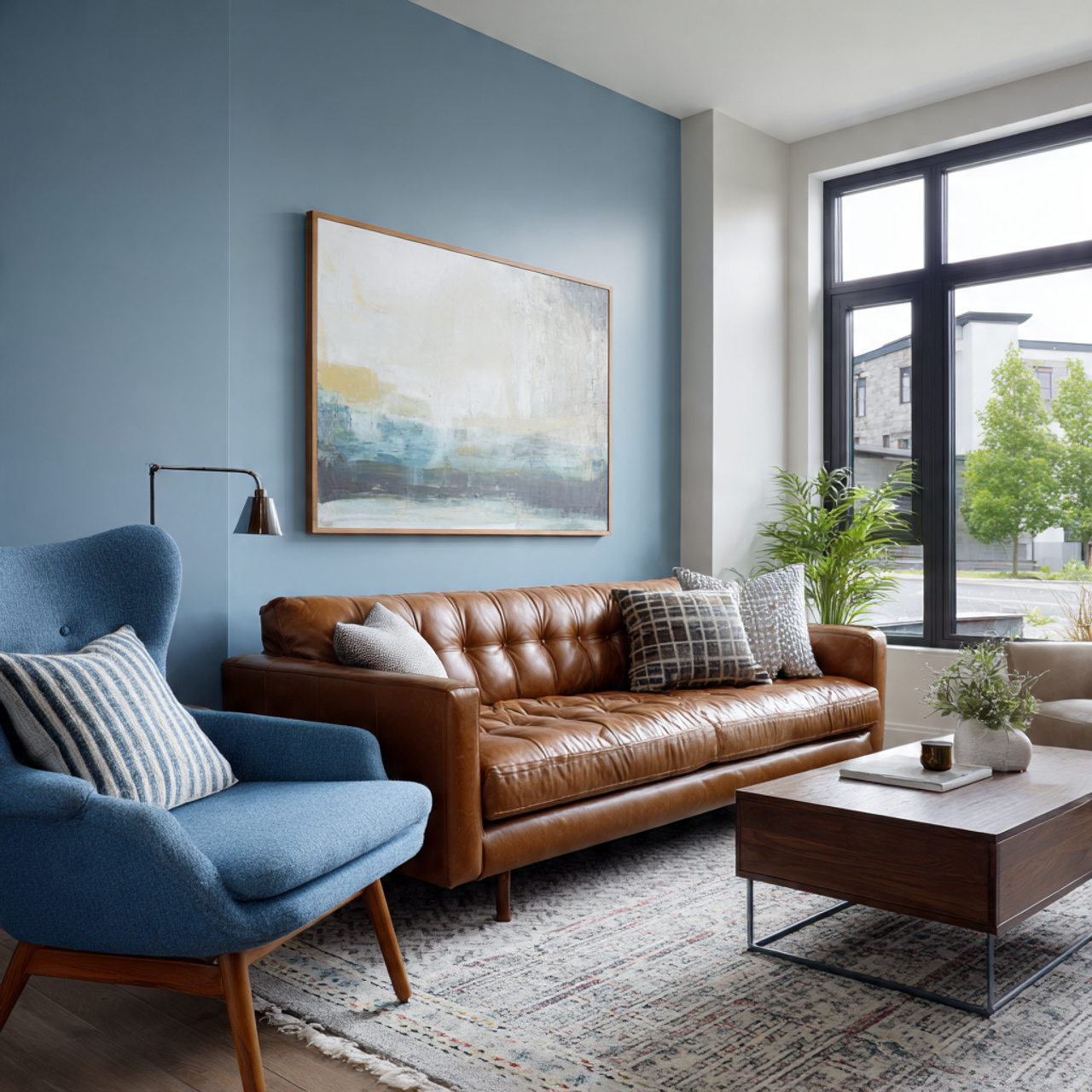
A blue armchair beside a brown leather sofa creates a palette that feels relaxed and grounded. The cool tone of the blue balances the warmth of the leather while natural wood tables connect the colors together. This pairing often feels especially comfortable in family living rooms.
Many people hesitate to mix blue with brown because they associate brown with older interiors. In reality the contrast can feel very modern when materials are chosen carefully. Rich leather, walnut furniture, and blue textiles create a timeless combination.
To apply this palette, start with one strong brown element such as leather seating or wooden furniture. Add blue through pillows, throws, or artwork so the colors interact naturally. The room gradually develops depth without becoming dark.
Tip: Blue textiles soften the heaviness of brown furniture.
Mixed Blue Shades Palette That Feels Collected and Lived In
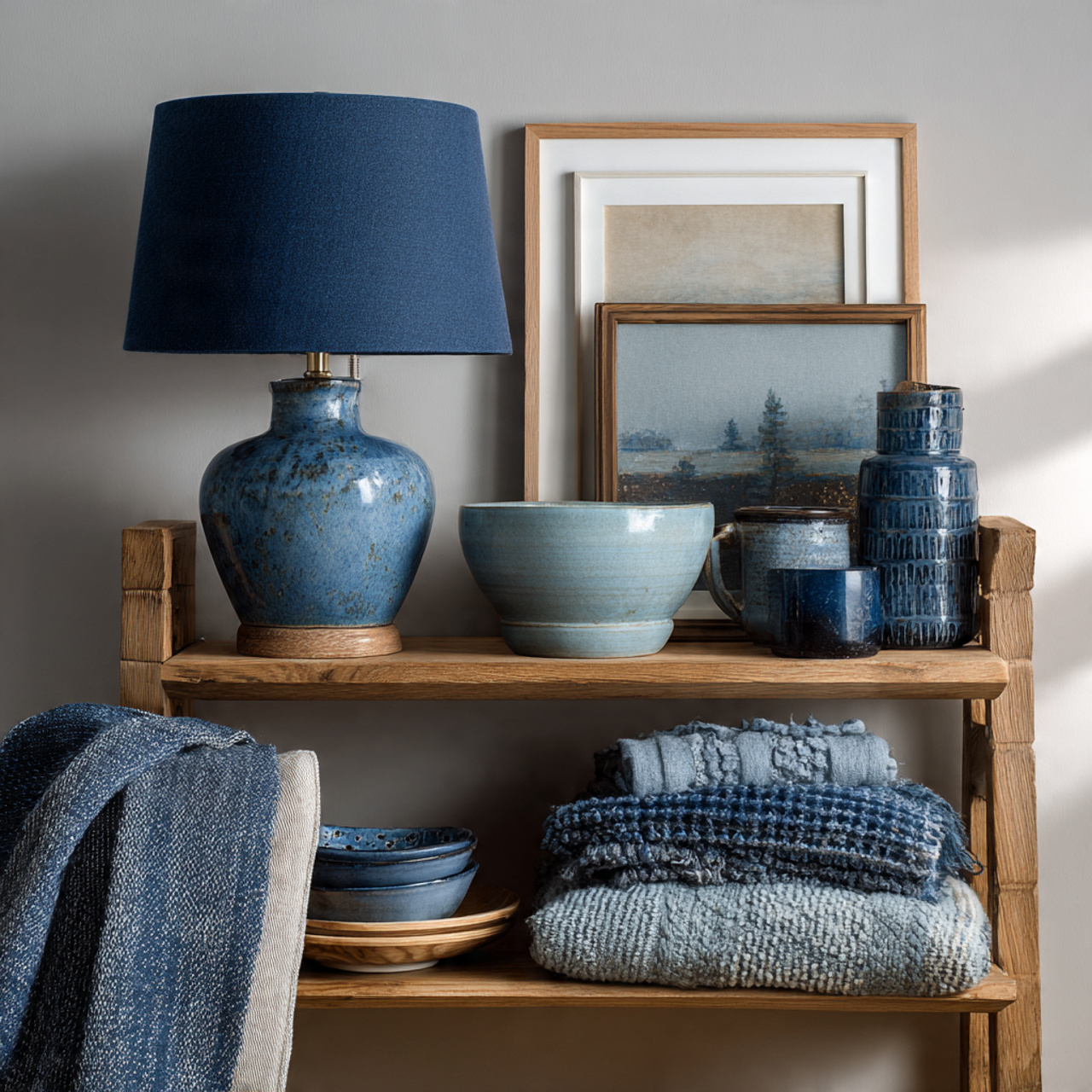
A small shelf displaying a navy lamp, pale blue ceramic bowl, and dusty blue throw instantly tells a visual story. Each shade feels slightly different, yet together they form a relaxed palette that looks naturally collected. The arrangement becomes a simple focal point that draws the eye without overwhelming the room.
In my experience this approach often feels the most authentic. When every shade of blue matches exactly a room can appear staged rather than lived in. Mixing different tones gives the space personality and warmth.
To build this palette gradually, start with one favorite blue piece and add others as you find them. Artwork, textiles, and small decor items are easy ways to introduce new shades. Over time the room begins to feel thoughtfully collected.
Tip: Mixing several blue tones creates a relaxed palette that evolves naturally.
A Real Living Room Styled With a Blue Color Palette
Picture a living room where a navy sofa anchors the center of the space. A dusty blue throw drapes across one corner while pale blue ceramic vases sit on a wooden coffee table. Cream curtains soften the window light and reflect warmth into the room.
As evening arrives brass lamps begin to glow against the deeper blue tones, creating a calm atmosphere that feels both elegant and comfortable. The different shades of blue interact quietly with natural wood and soft textiles so the room feels balanced rather than overly designed.
Blue Color Palette Shades and Materials That Work Best
Royal Blue (#4169E1) → Placement: accent walls or statement furniture → Undertone: slightly warm vibrant blue that reads energetic rather than muted → Pairs with brass lighting, marble surfaces, velvet fabrics, and walnut wood.
Navy Blue (#1A2A44) → Placement: sofas, cabinetry, or bedroom textiles → Undertone: deep cool blue with gray depth that reduces harsh contrast → Pairs with ivory fabrics, oak furniture, leather textures, and warm metallic finishes.
Dusty Blue (#6E8CA3) → Placement: calm living rooms and bedrooms → Undertone: muted blue with subtle gray softness that creates a relaxed atmosphere → Pairs with linen fabrics, woven rugs, natural oak furniture, and cream textiles.
Deep Sapphire (#0F2A44) → Placement: dramatic accent walls or evening living rooms → Undertone: rich cool blue with slight green depth that becomes luxurious under warm lighting → Pairs with brass accents, walnut furniture, velvet upholstery, and neutral rugs.
How Room Size and Lighting Affect Blue Color Palettes
Small Rooms
Lighter blue shades such as dusty blue or baby blue reflect more natural light and help smaller rooms feel open. Pairing these tones with white or cream surfaces prevents the space from feeling enclosed.
Large Rooms
Large living rooms and open spaces can comfortably support deeper tones such as navy or sapphire. Darker blues add visual depth and help expansive spaces feel warmer and more intimate.
North Facing Rooms
North facing rooms often receive cooler daylight which can make blue tones appear slightly gray. Warm materials like wood, brass lighting, and beige textiles balance the color.
South Facing Rooms
South facing rooms receive stronger sunlight which allows richer blues to appear vibrant and saturated. Navy and royal blue often look especially beautiful in these brighter spaces.
Common Blue Color Palette Decorating Mistakes
Using Too Many Dark Blue Surfaces
Many homeowners apply navy walls, dark blue sofas, and deep rugs all in the same room. While this looks dramatic in inspiration photos, darker blues absorb natural light and can make the space feel heavier over time.
The easiest fix is introducing lighter elements such as cream textiles, pale blue accents, or reflective surfaces. These additions restore balance and keep the palette from feeling dim or overwhelming.
Pairing Blue Only With Cool Materials
Another mistake happens when blue is paired only with cool materials like chrome, gray metal, or concrete finishes. This often happens because people assume blue automatically belongs in modern interiors.
Over time the room may begin to feel colder and less welcoming. Introducing warm materials like oak furniture, brass lighting, or beige textiles quickly restores warmth and comfort.
Matching Every Blue Shade Perfectly
Trying to match every blue tone exactly across walls, textiles, and furniture often removes visual depth. While the room may appear coordinated at first, it can quickly start to look staged rather than lived in.
Mixing several tones such as dusty blue, navy, and pale blue creates a more natural palette. The slight variation allows the space to feel layered and relaxed.
Ignoring How Lighting Changes Blue Tones
Blue shades often appear very different depending on the lighting conditions inside a room. A color that looks balanced in bright daylight may appear darker once artificial lighting is switched on in the evening.
Testing paint samples and fabrics under both natural and artificial light prevents this problem. It ensures the blue palette stays consistent throughout the day.
Blue Color Palette Questions People Often Ask
What colors work best with a blue color palette?
Warm neutrals such as cream, beige, and natural wood work beautifully with blue tones. Brass or gold accents also complement deeper shades like navy or royal blue and keep the space from feeling cold.
Is navy blue too dark for small rooms?
Navy can work in smaller rooms when balanced with lighter textiles and reflective surfaces. Cream walls, mirrors, and warm lighting prevent the room from feeling enclosed.
What shade of blue feels the most relaxing?
Dusty blue and muted blue tones often feel the most calming in bedrooms and living rooms. Their subtle gray undertones create a peaceful atmosphere.
Can blue color palettes work in warm interiors?
Yes, blue pairs surprisingly well with warm materials such as oak, walnut, leather, and woven fabrics. These textures soften the cooler tones and create a balanced interior.
Is decorating with blue expensive?
Not necessarily, because blue palettes can be introduced gradually through cushions, throws, artwork, or paint. Even small accents can transform the feeling of a room.
Creating a Balanced Blue Color Palette at Home
Designing a beautiful home with blue is less about choosing a single perfect shade and more about layering tones that work naturally with light, texture, and everyday living. When a blue color palette is balanced with warm woods, cream fabrics, and thoughtful lighting, the space begins to feel calm, inviting, and comfortable rather than cold.
Start with one anchor element such as a sofa, rug, or painted wall, then gradually introduce supporting shades through cushions, artwork, and smaller decor pieces. Over time the palette evolves into something that feels collected and authentic, reflecting how people actually live inside the space.