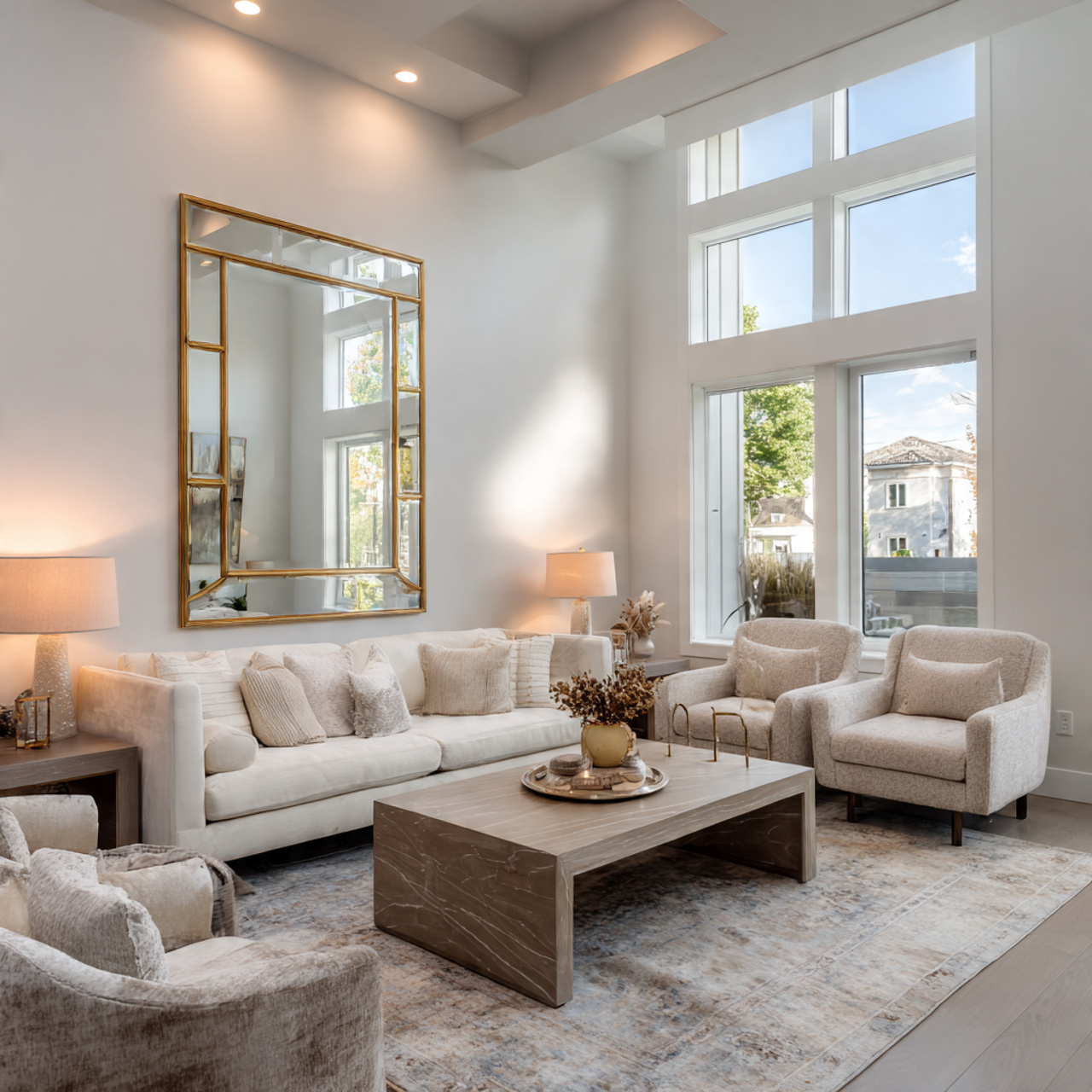
19 Black Wallpaper Ideas That Instantly Elevate Any Room
Black wallpaper is one of those ideas people admire quietly but hesitate to use in their own homes. It feels bold, emotional, and permanent, especially when rooms are not large or perfectly lit. Most uncertainty comes from not knowing where black actually supports daily life and where it quietly works against it.
This article looks at black wallpaper as it behaves in real homes over time. You’ll understand how it affects mood, light, and comfort, where it creates calm instead of heaviness, and how to apply it in ways that feel intentional rather than risky.
Why Black Wallpaper is Trending
Homes today are expected to feel more grounding than decorative. As spaces take on emotional roles like rest, focus, and retreat, darker finishes are used to reduce visual noise and create clearer boundaries within rooms.
Black wallpaper continues to return because it stabilizes spaces that feel restless or unfinished. Instead of chasing trends, it offers visual weight and consistency, helping rooms feel settled rather than in constant need of change.
Color & Material Authority
Soft Charcoal (HEX #2B2B2B) works well in bedrooms and studies where calm is essential, with a warm undertone that performs best in matte finishes.
Warm Black (HEX #1E1B18) suits living and dining spaces, pairing naturally with walnut wood, leather, and cotton in eggshell finishes.
Graphite Black (HEX #3A3A3A) leans cooler for modern interiors, with satin finishes helping avoid flatness alongside structured fabrics and brushed metal.
Inky Blue-Black (HEX #0F141A) handles north-facing light well; matte finishes keep it rich while velvet and wool add softness.
Olive-Black (HEX #1F2420) introduces depth without severity, complementing natural wood floors, linen curtains, and soft neutral textiles.
Room Size & Lighting Quick Guide
| Room Condition | Black Wallpaper Approach | Lighting Consideration |
|---|---|---|
| Small rooms | Use on one main wall only | Add warm, layered lighting |
| Large rooms | Full-room application works | Balance with soft ambient light |
| North-facing rooms | Choose warmer black tones | Avoid cool white bulbs |
| South-facing rooms | Deeper blacks hold richness | Diffused daylight works best |
Core Black Wallpaper Ideas
Black Wallpaper Behind the Bed for Visual Calm and Sleep-Focused Balance
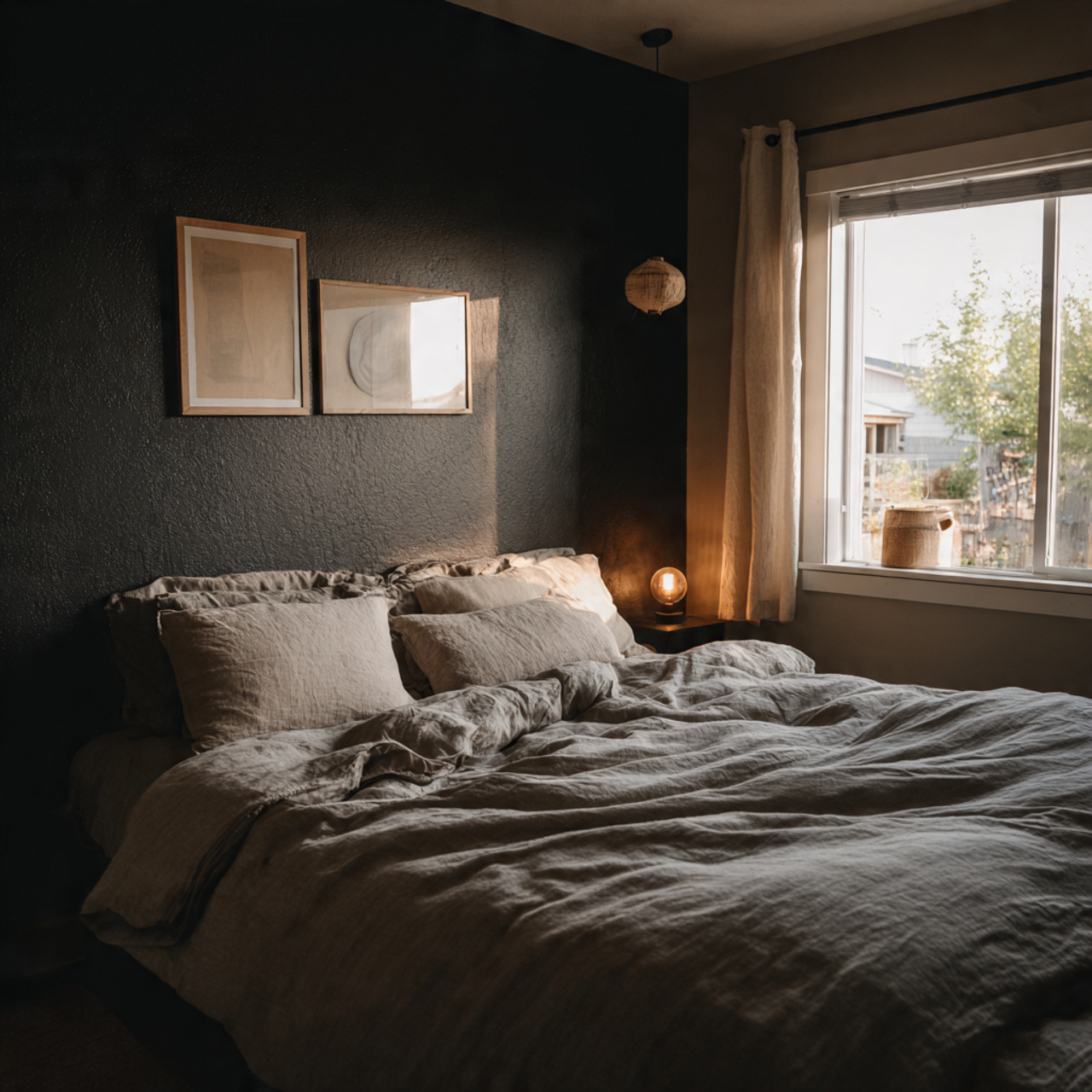
Many bedrooms have walls behind the bed cluttered with artwork or bold contrasts, keeping the eye active at night. Using black wallpaper here creates a subtle visual anchor, allowing the bed to feel settled and the room calmer. This shift immediately makes the space feel more intentional without adding decoration.
Darker tones reduce visual stimulation in the evening, which homeowners often notice only after a few months of living with it. Bedrooms tend to feel calmer and more complete, avoiding the regret of overly styled headboard walls that quickly date.
To apply this effectively, limit the wallpaper to the bed width or slightly wider. Matte finishes work best, and peel-and-stick options offer a low-commitment upgrade while maintaining grounding.
Full-Room Black Wallpaper in Dining Spaces for Intimate, Grounded Atmosphere
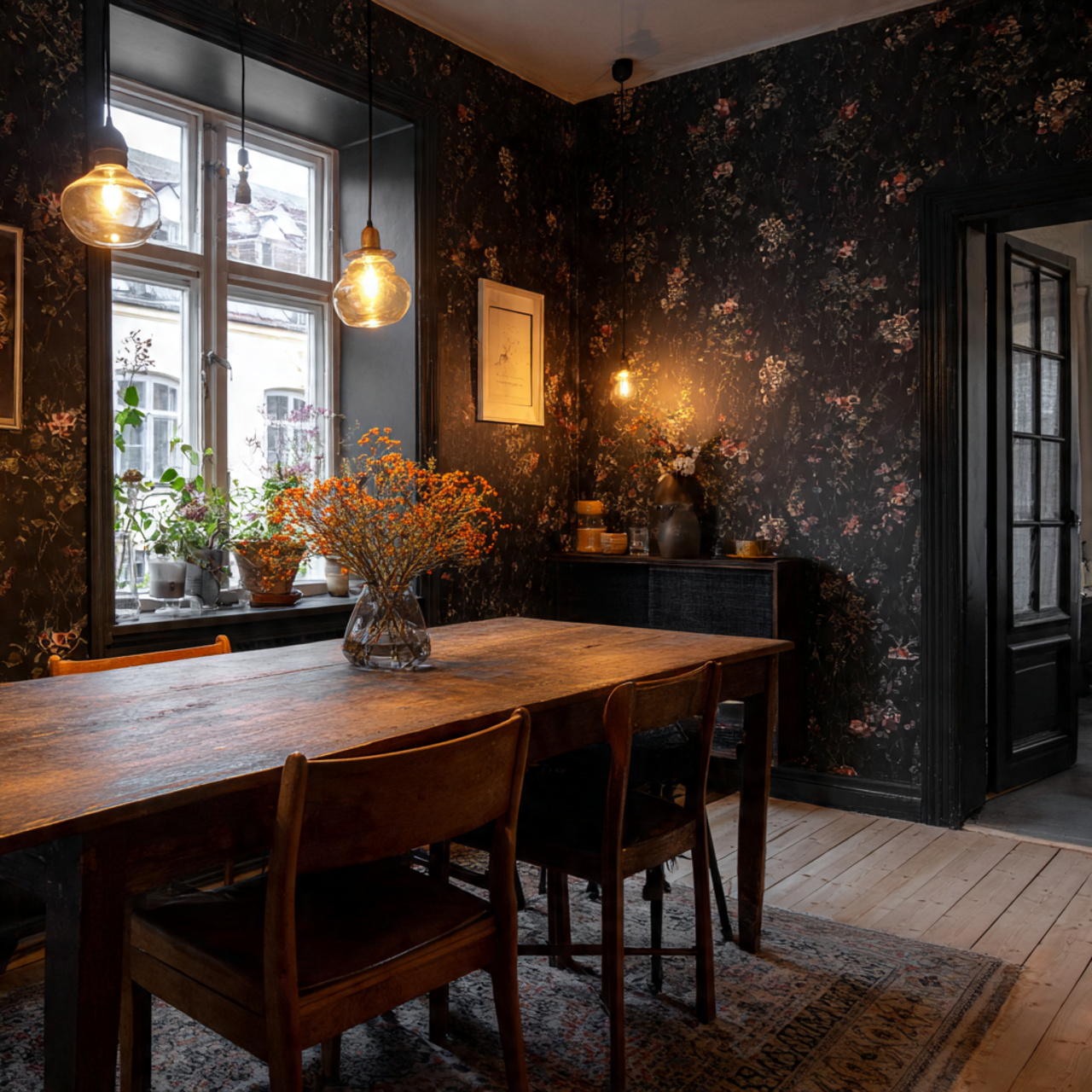
Dining rooms often feel disconnected from the rest of the home, especially in open layouts. Covering all walls in black wallpaper creates a contained environment that signals purpose without changing the architecture. The space feels enclosed in a comforting way rather than cut off.
With daily use, darker dining rooms reduce background distraction and encourage slower, more focused meals. Families frequently notice they stop adding décor because the room already feels finished, which helps it age well instead of chasing updates.
Layered lighting is essential here, with wall lights or pendants doing most of the work. Avoid glossy finishes and rely on warm bulbs to keep the room inviting rather than dramatic.
Textured Black Wallpaper to Add Depth Without Visual Heaviness
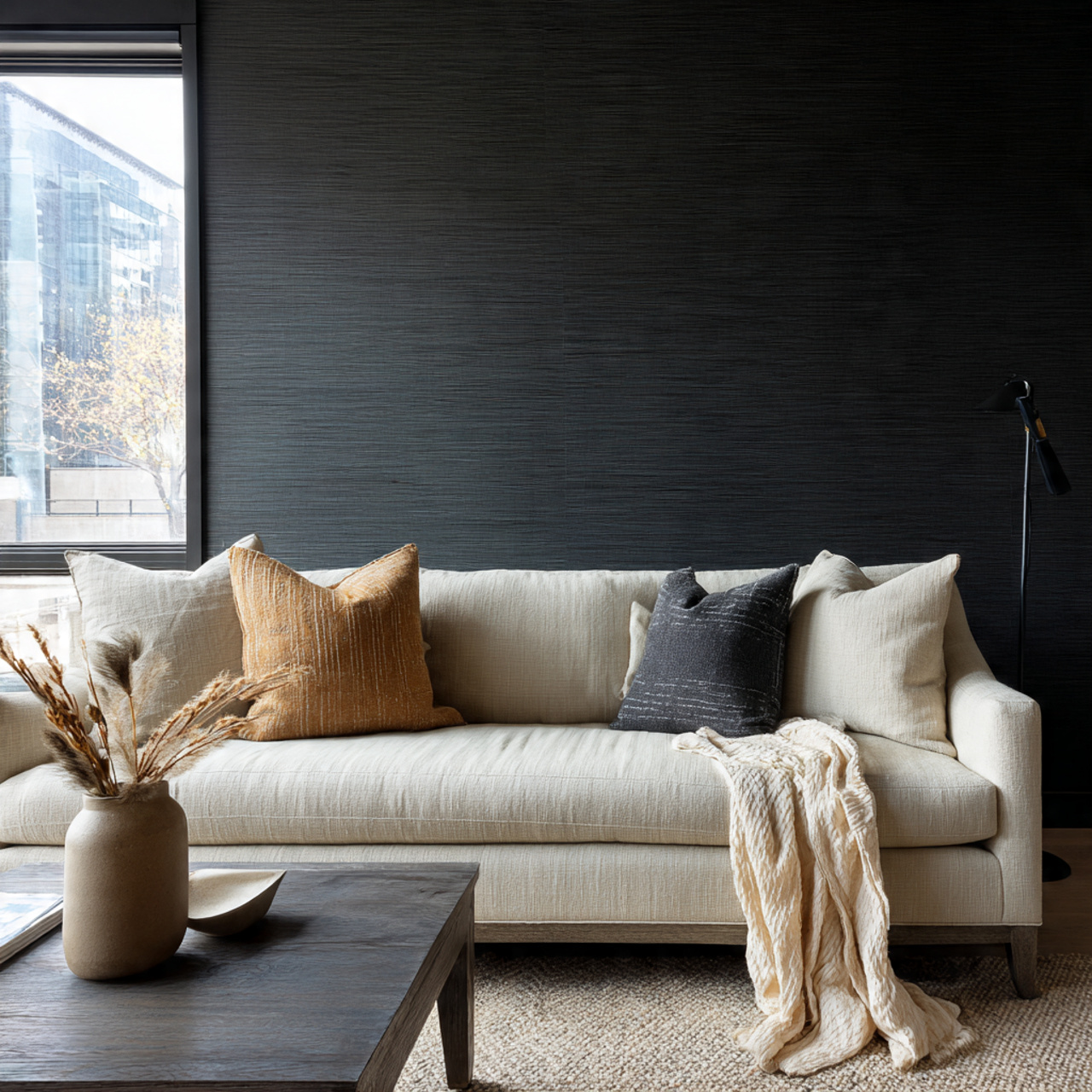
Flat black walls can sometimes feel dense or unforgiving in everyday homes. Textured black wallpaper introduces subtle movement that catches light gently, keeping the surface visually active without relying on pattern. The wall feels richer rather than heavier.
Over the long term, texture hides small marks and wear better than smooth finishes, which reduces maintenance frustration. Living rooms and studies especially benefit because the walls remain interesting even as furniture and accessories change.
Grasscloth, woven vinyl, or lightly embossed papers perform best in real homes. Keeping surrounding décor simple allows the texture to remain the focal point without visual competition.
Black Wallpaper in Hallways to Create Purposeful Transitions Between Rooms
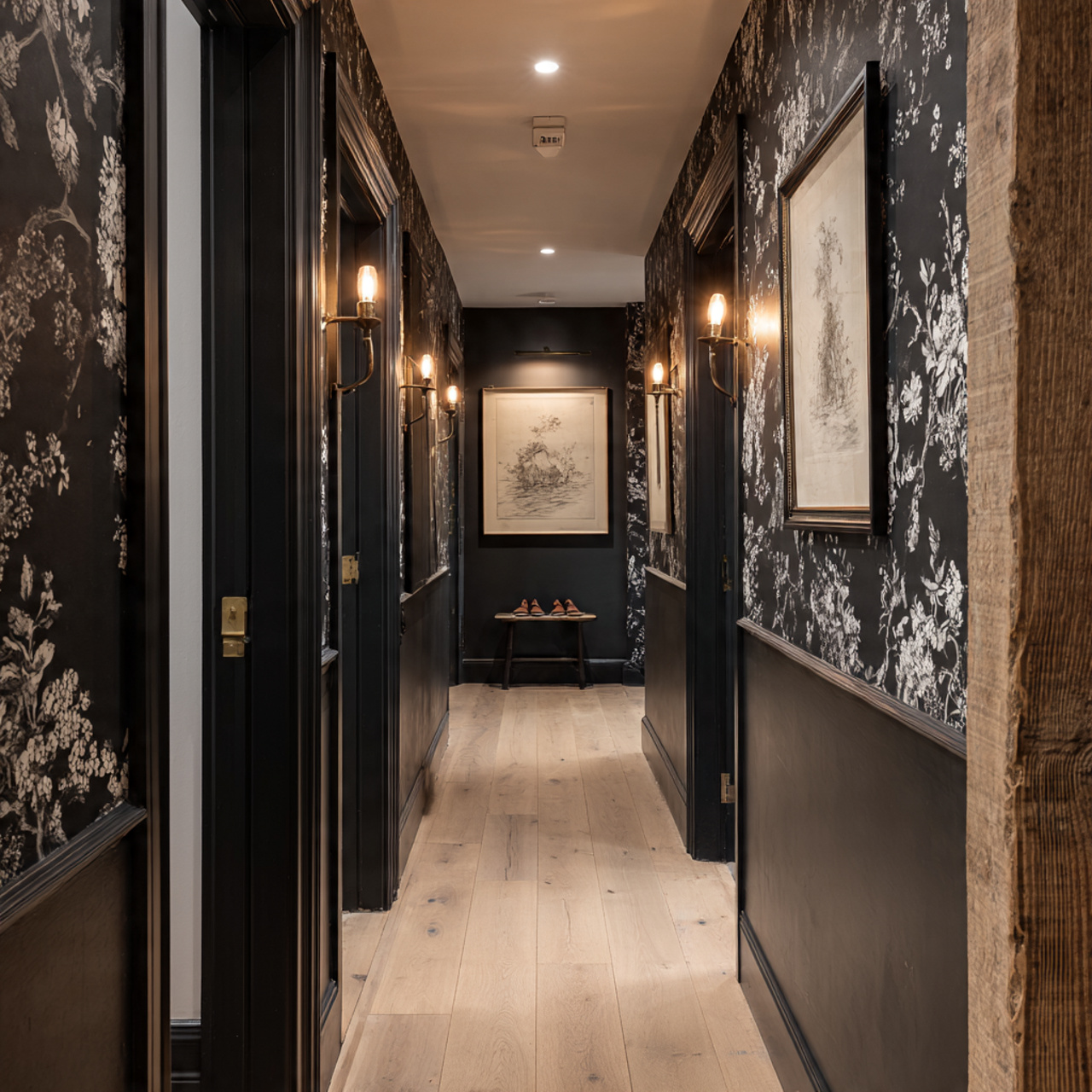
Hallways are often treated as leftover space, painted light and forgotten. Applying black wallpaper here turns them into deliberate transitions that help rooms feel more defined. The darker tone naturally signals movement from one space to another.
Psychologically, these visual pauses make homes feel more organized over time. Instead of long stretches of sameness, the house gains rhythm, which reduces the restless feeling many people experience with overly bright circulation areas.
Matte finishes paired with evenly spaced warm lighting keep hallways welcoming. Because wall area is limited, this is also one of the most cost-effective places to experiment with black.
Black Wallpaper Paired With Light Flooring for Long-Term Visual Balance
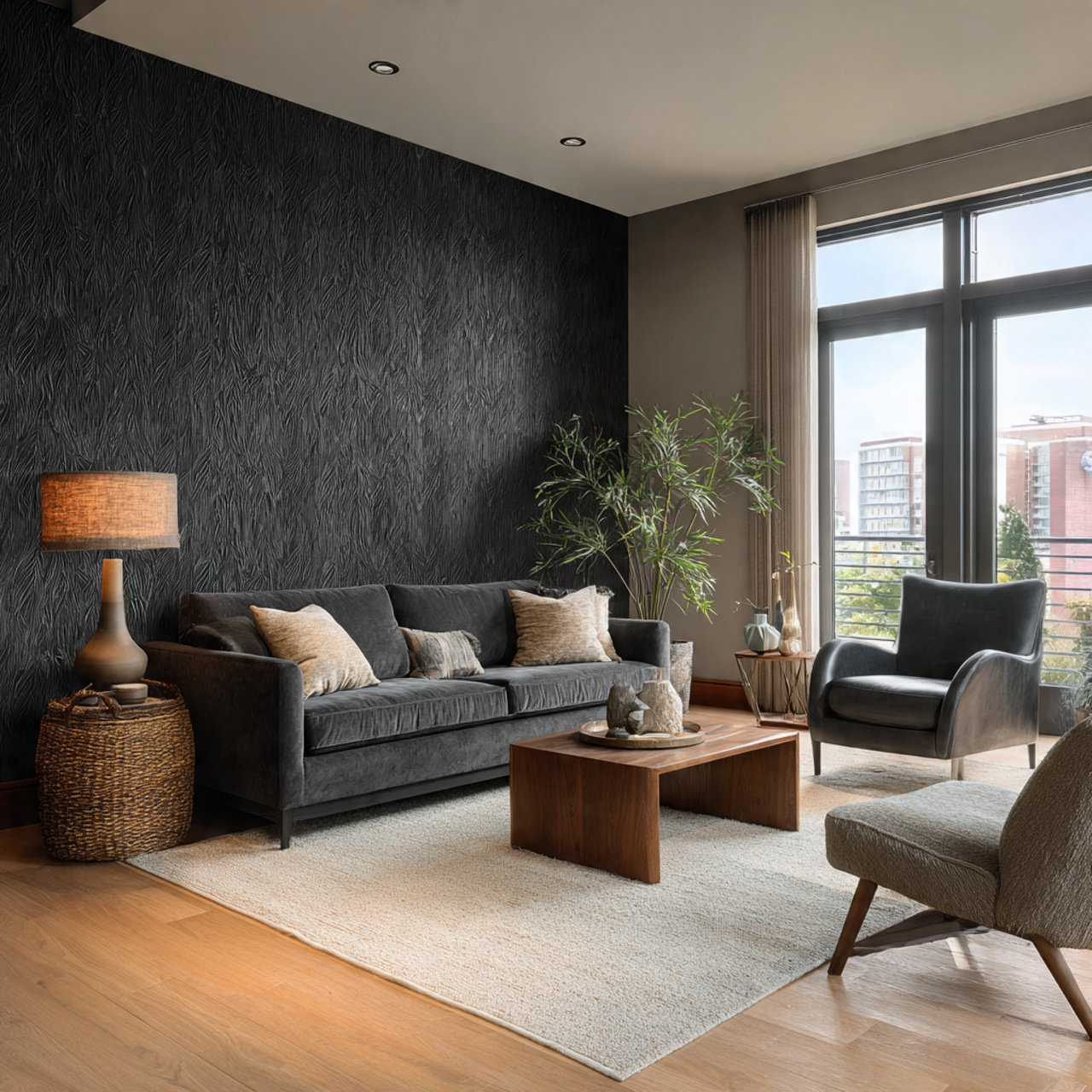
Black wallpaper feels most livable when it has something light to push against. Pairing it with pale wood, stone, or tile flooring prevents the room from closing in and keeps proportions comfortable. The contrast does the work instead of extra décor.
This balance holds up well over years because it avoids extremes. Rooms neither feel too dark nor overly trendy, which reduces the urge to repaint or replace finishes prematurely.
Light or mid-tone furniture supports the effect, allowing the floor to reflect light upward. This approach works equally well in modern and traditional interiors.
Botanical Black Wallpaper for Soft Contrast and Organic Movement
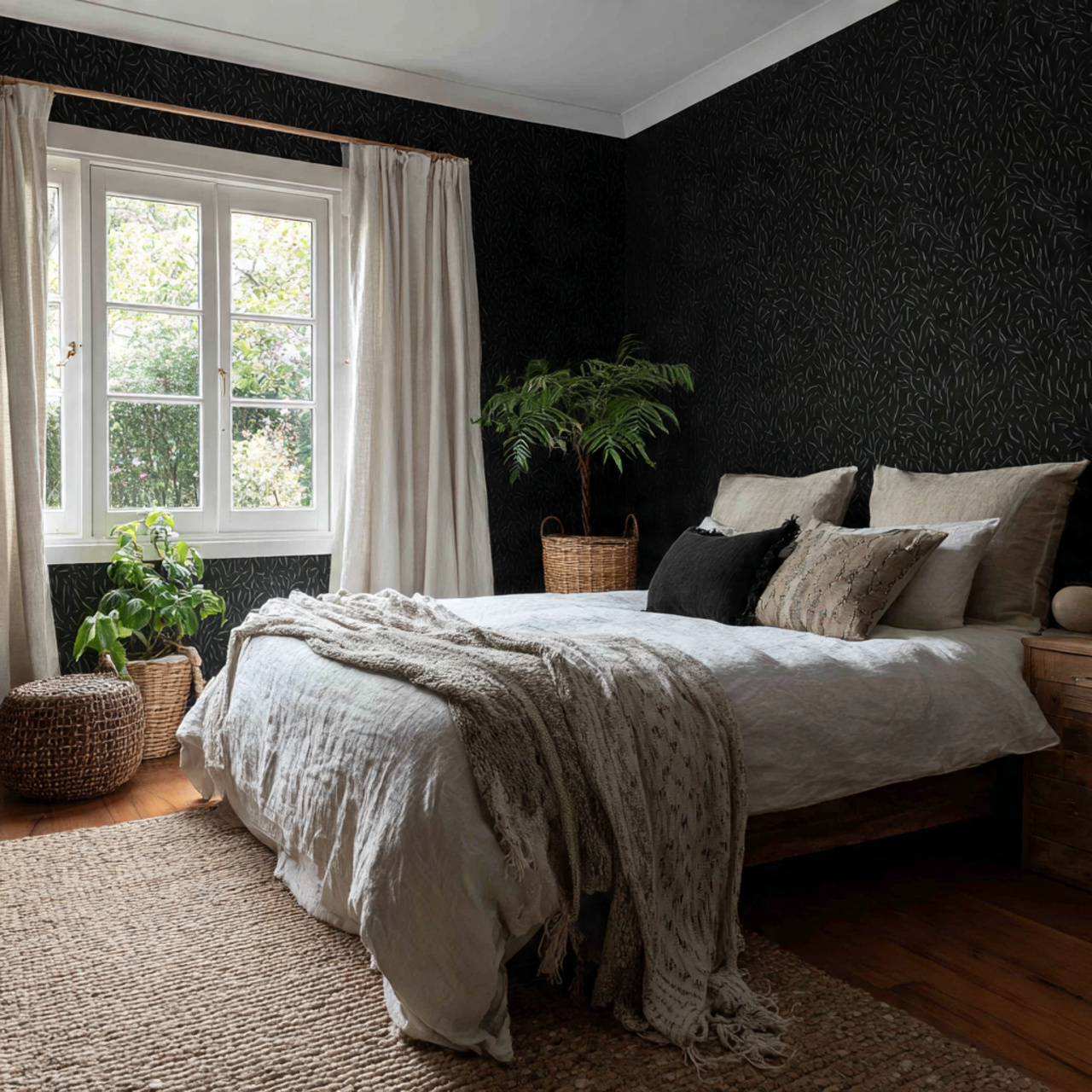
Solid black can feel stark in rooms meant for relaxation. Botanical patterns introduce organic shapes that soften the color and bring subtle movement into the space. The wall feels expressive without overwhelming the room.
People often find patterned black easier to live with over time because the eye has something gentle to engage with. Bedrooms and sitting areas especially benefit, as the pattern reduces visual fatigue.
Limiting botanical wallpaper to one or two walls keeps it calm. Matte finishes and muted designs maintain a timeless feel rather than a decorative statement that dates quickly.
Matte Black Wallpaper in Home Offices for Focused, Low-Distraction Work Zones
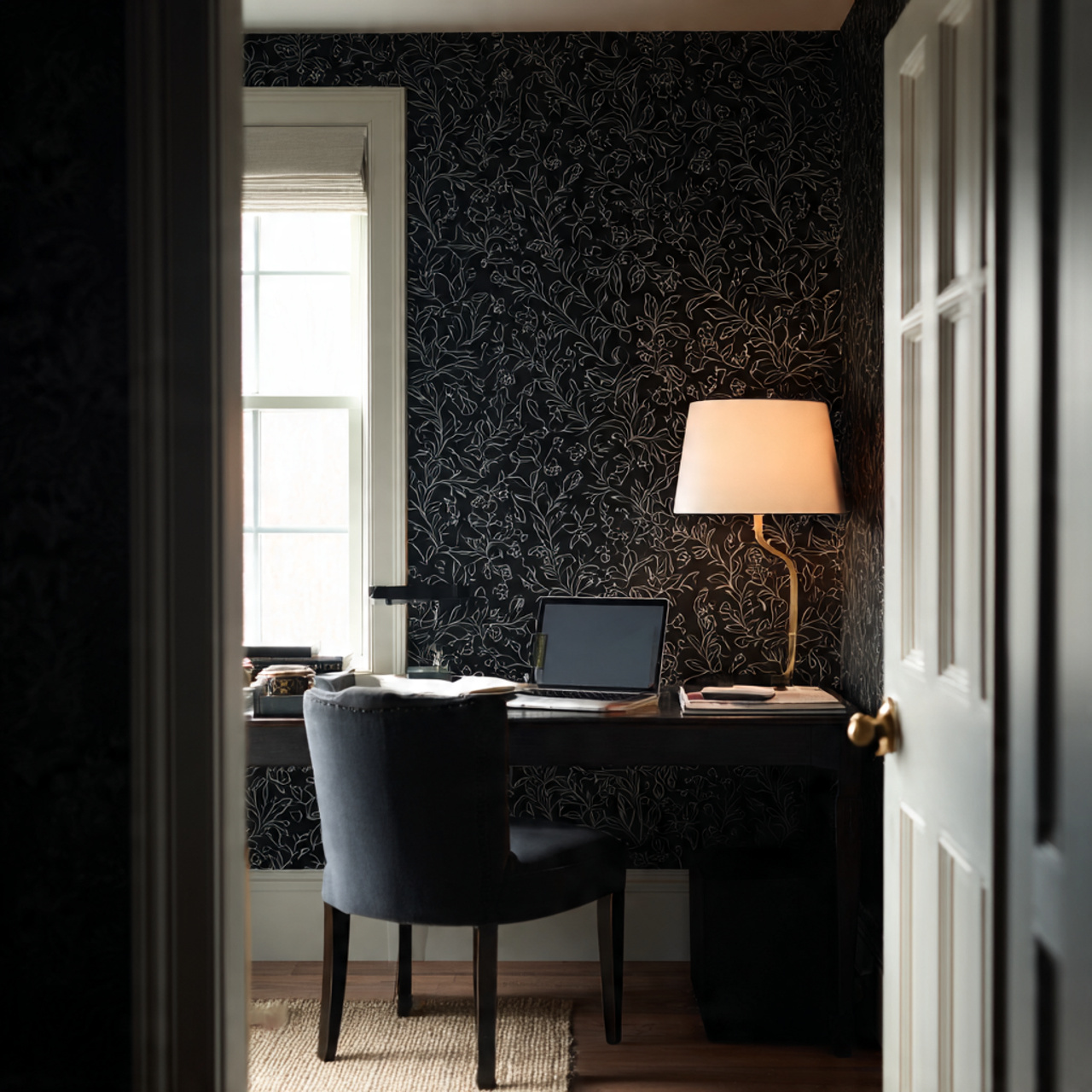
Home offices often struggle with visual noise that makes concentration harder over long hours. Matte black wallpaper absorbs excess contrast, helping the workspace feel quieter and more controlled. Screens and paperwork stand out clearly without competing with the walls.
With daily use, many people notice reduced eye fatigue and fewer distractions, especially in rooms that double as living space. The wallpaper creates a boundary that mentally separates work from the rest of the home, which helps routines settle over time.
Matte finishes are essential to avoid glare, paired with directional task lighting rather than overhead fixtures. Simple shelving and limited accessories keep the focus where it belongs.
Vertical Black Wallpaper to Visually Raise Low Ceilings in Compact Rooms
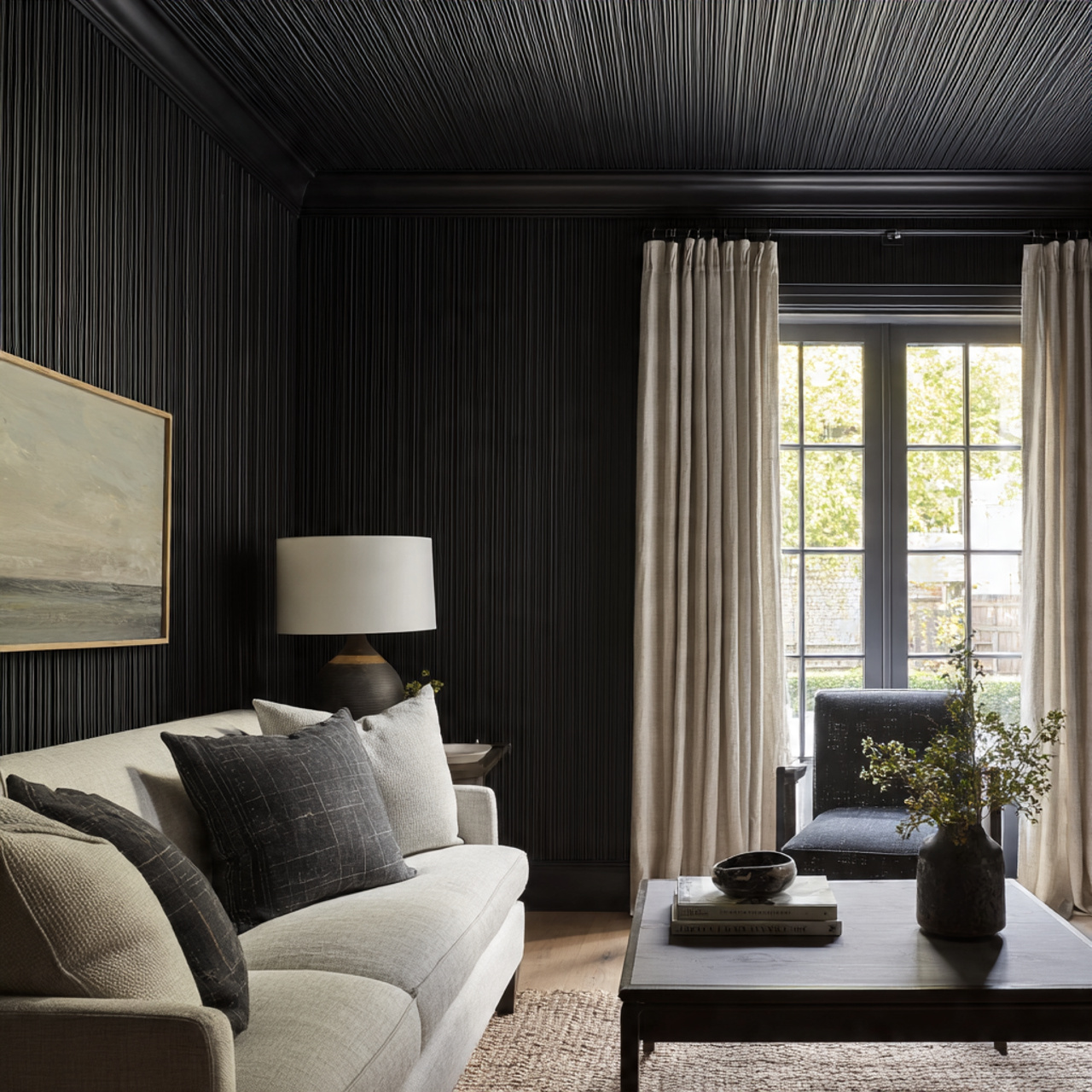
Rooms with lower ceilings often feel compressed, even when well furnished. Vertical detailing in black wallpaper subtly draws the eye upward, shifting attention away from ceiling height. The effect is understated but noticeable once the space is lived in.
Over months, this visual lift prevents the boxed-in feeling people frequently regret in older homes or apartments. The room feels taller without structural changes, which makes the solution both practical and cost-effective.
Furniture with lower profiles reinforces the vertical effect. Keeping patterns slim and finishes matte avoids visual clutter while supporting the illusion of height.
Black Wallpaper Behind Open Shelving for Cleaner Displays
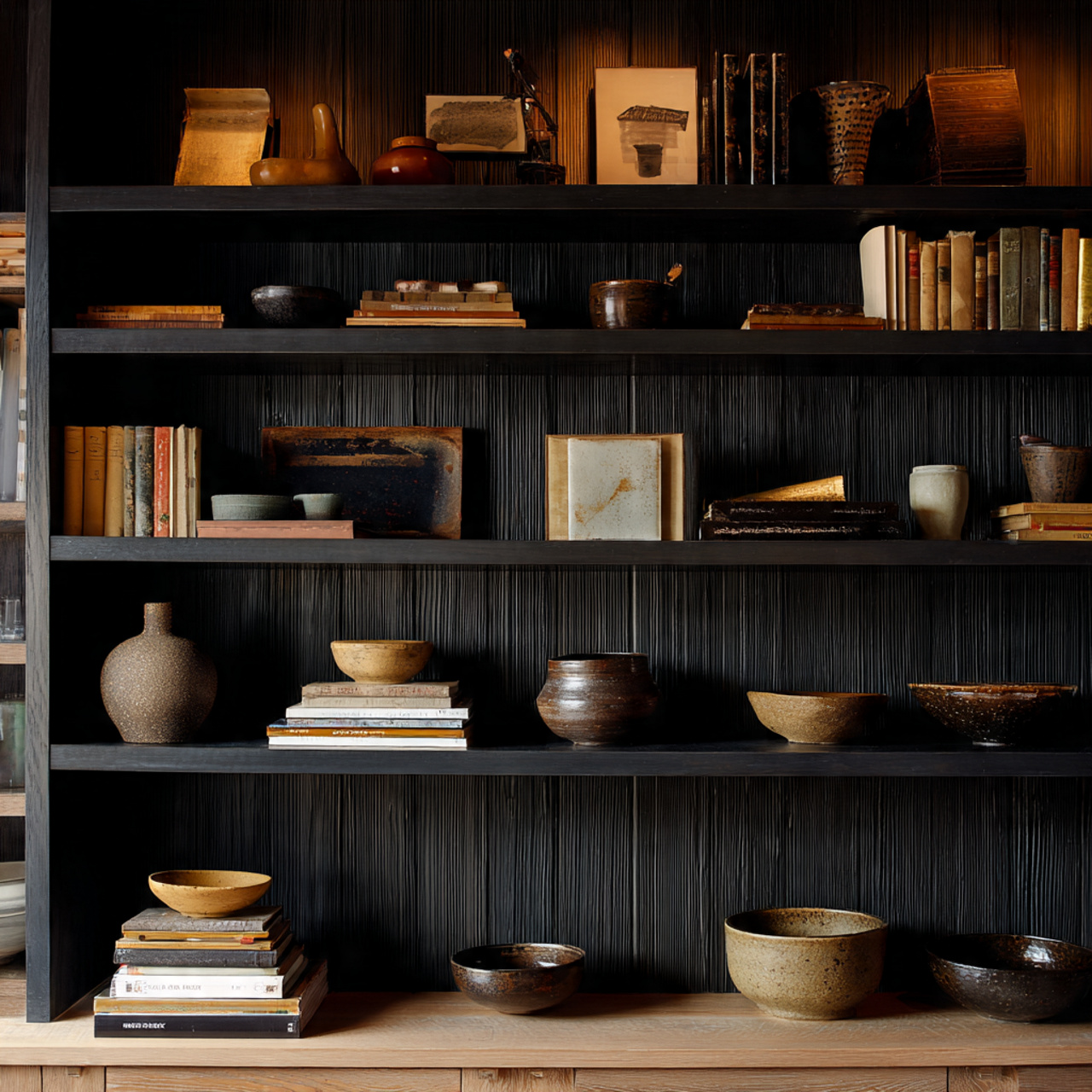
Open shelving can easily drift into clutter, even when items are well chosen. Black wallpaper behind shelves creates contrast that sharpens outlines and gives objects a sense of purpose. Items feel curated rather than simply stored.
Long-term flexibility improves because shelves can change without requiring repainting. Books, ceramics, and everyday pieces all read more clearly against a dark background, reducing the urge to constantly rearrange.
Installing wallpaper before shelving ensures clean edges and a finished look. This approach works especially well in kitchens, studies, and living spaces with mixed storage needs.
Black Wallpaper in Bathrooms for Spa-Like Depth and Modern Warmth
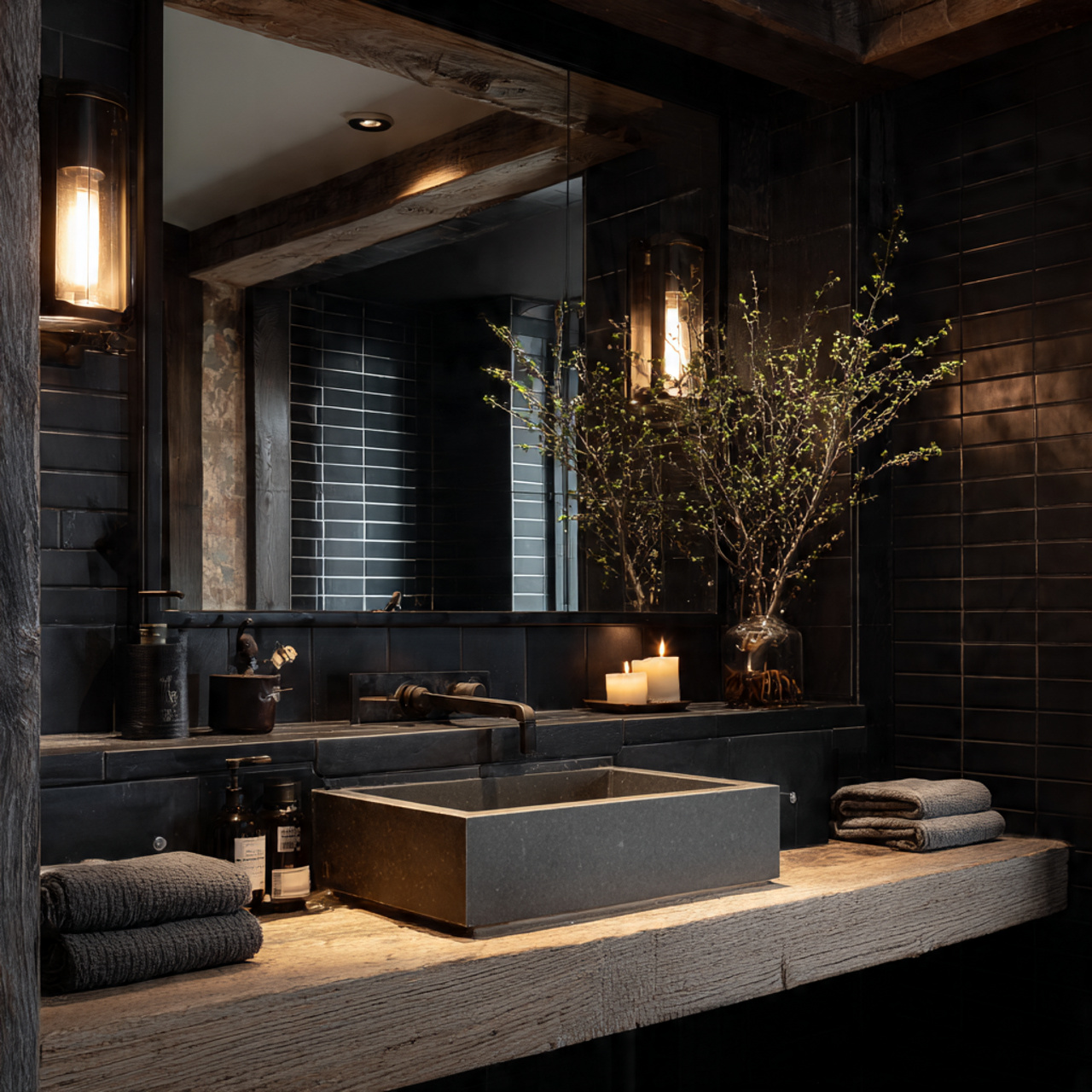
Bathrooms often rely on light surfaces to feel clean, but this can make them feel stark. Black wallpaper introduces depth that feels calming rather than cold, especially when paired with warm lighting and natural materials.
Over time, darker walls show fewer marks and water splashes than white finishes, which makes maintenance easier. The space feels more like a retreat than a utility room, even in smaller layouts.
Moisture-resistant or vinyl wallpapers are essential here, along with proper ventilation. Keeping fixtures simple allows the walls to provide the atmosphere without excess decoration.
Black Wallpaper With Subtle Metallic Accents for Controlled Warmth
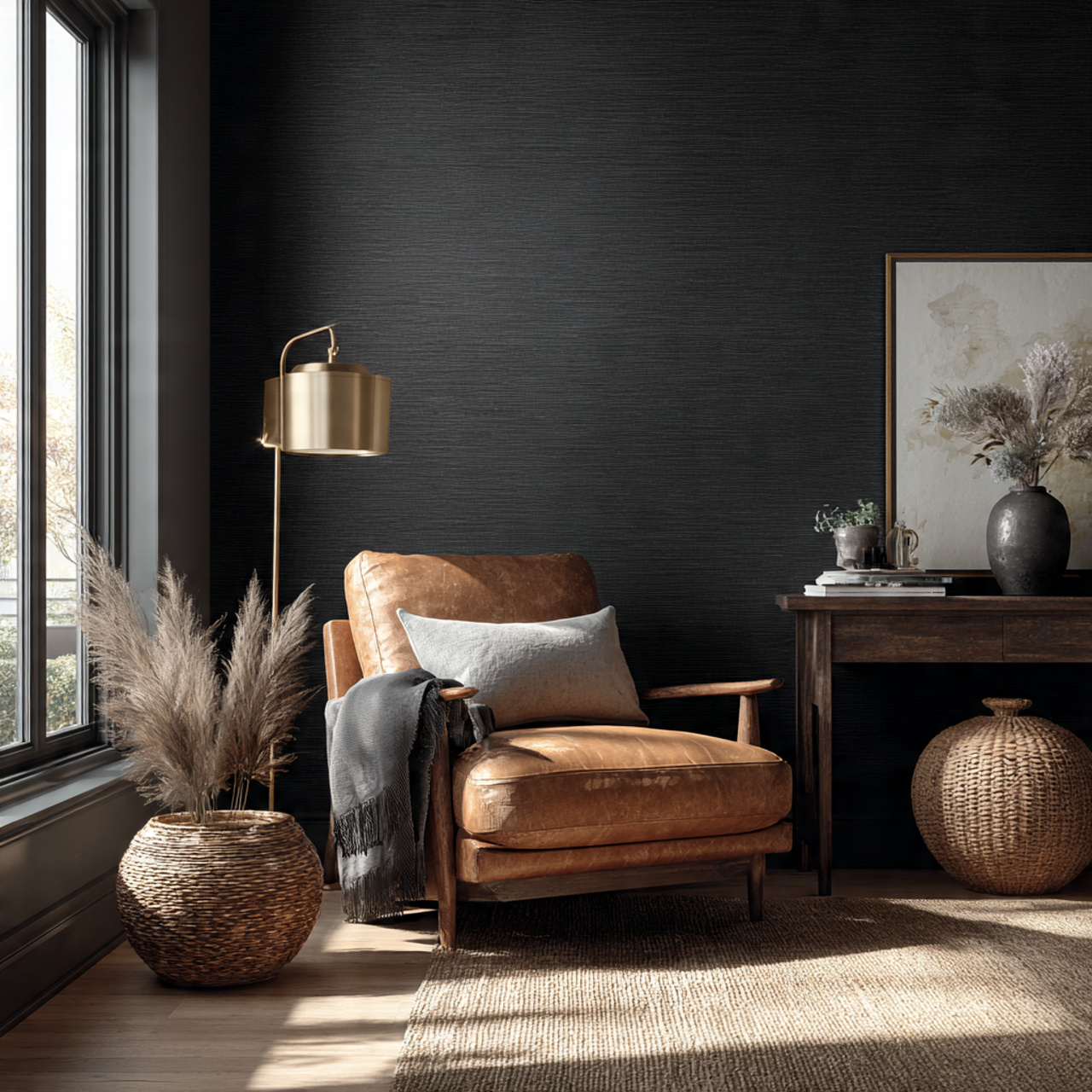
Black wallpaper can sometimes feel flat without contrast. Introducing restrained metallic accents, such as brushed brass or muted bronze, adds warmth without tipping into glamour. The combination feels considered rather than decorative.
This pairing ages well because it avoids trend-driven finishes. Over years, the room maintains its character without feeling dated, reducing the need for frequent updates.
Limiting metals to lighting, hardware, or one focal element keeps the look controlled. Soft finishes work better than polished surfaces to maintain balance.
Black Wallpaper as a Living Room Feature Wall to Anchor Seating Areas
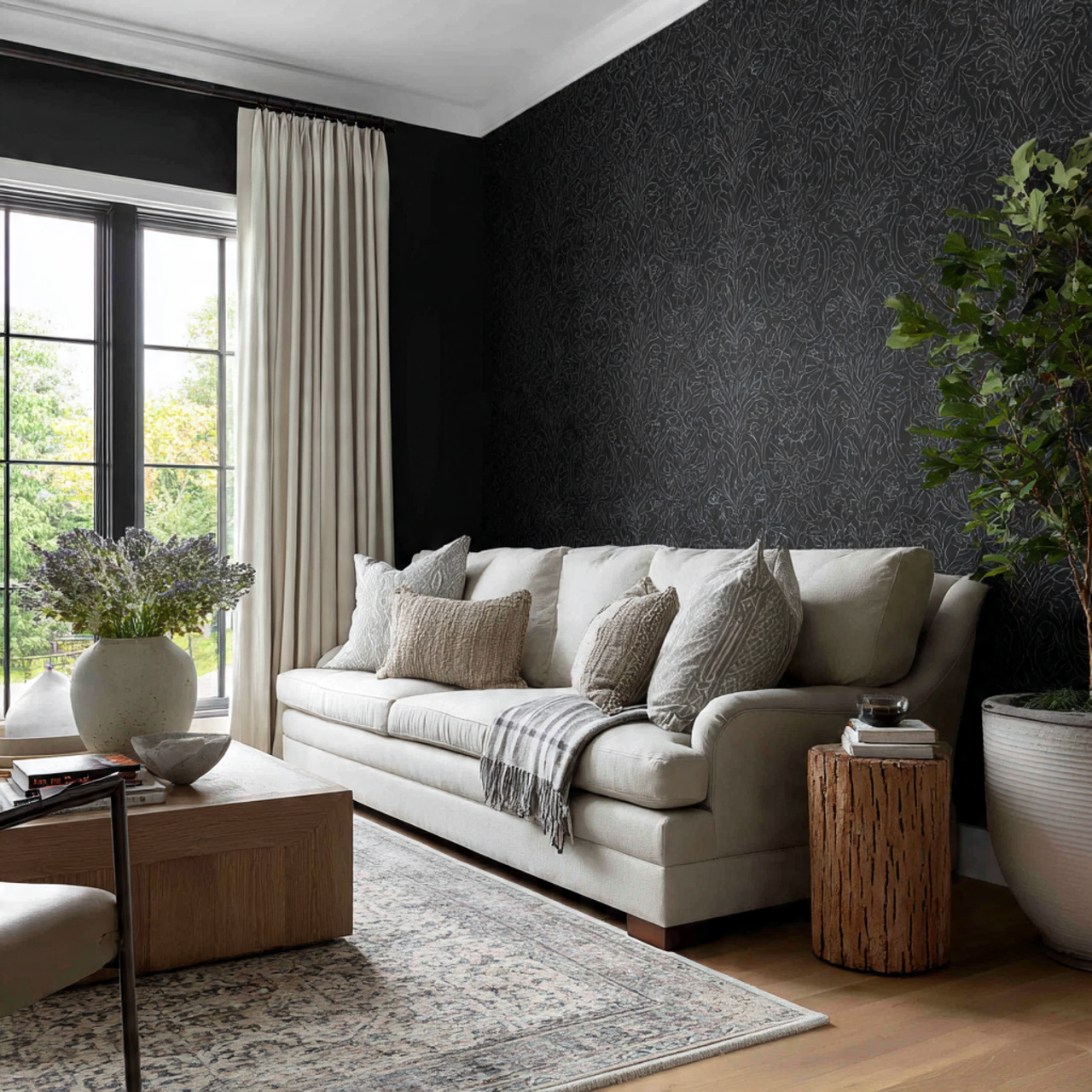
Living rooms benefit from clear visual anchors, especially in open or multi-use spaces. A single black wallpaper wall behind seating defines the area and gives the room structure without closing it in.
Long-term, this approach reduces the urge to redecorate because the wall already provides depth and focus. Furniture arrangements feel more intentional, even as accessories change.
Choosing a wall that receives natural light keeps the effect balanced. Matte or lightly textured finishes help the wall recede slightly rather than dominate the room.
Soft-Pattern Black Wallpaper in Nurseries That Grow With the Child
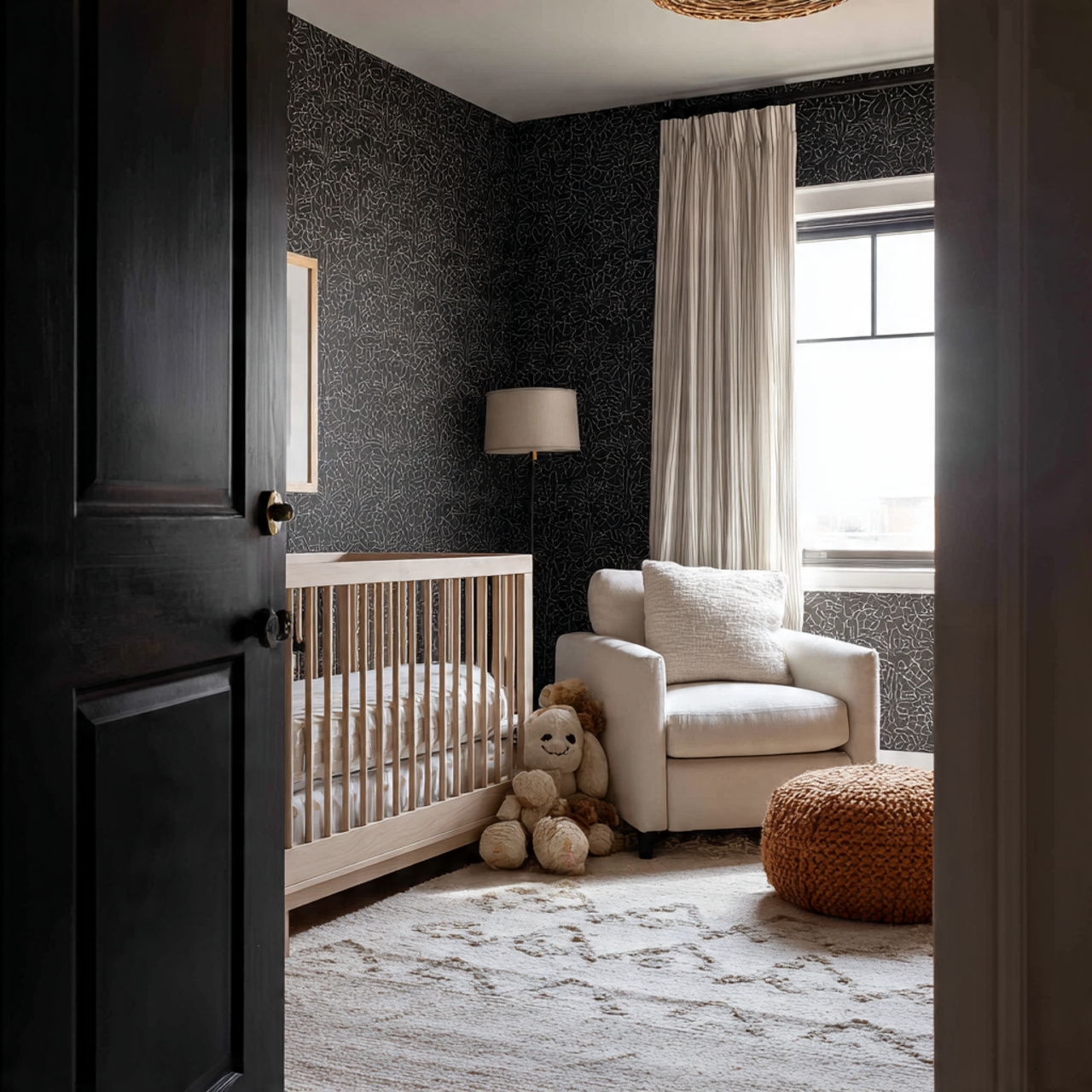
Nurseries often lean heavily on theme and color, which can feel limiting after the first year. Soft-pattern black wallpaper introduces contrast without overstimulation, creating a space that feels calm rather than childish. The room stays visually grounded while still feeling gentle.
As children grow, parents often appreciate that the room does not need constant redesign. The wallpaper adapts easily to changing furniture, toys, and artwork, which reduces both cost and effort over time.
Matte finishes and small-scale patterns work best here. Pairing them with light textiles and natural wood keeps the room warm and age-flexible.
Black Wallpaper in Entryways to Create a Clear and Calm Arrival
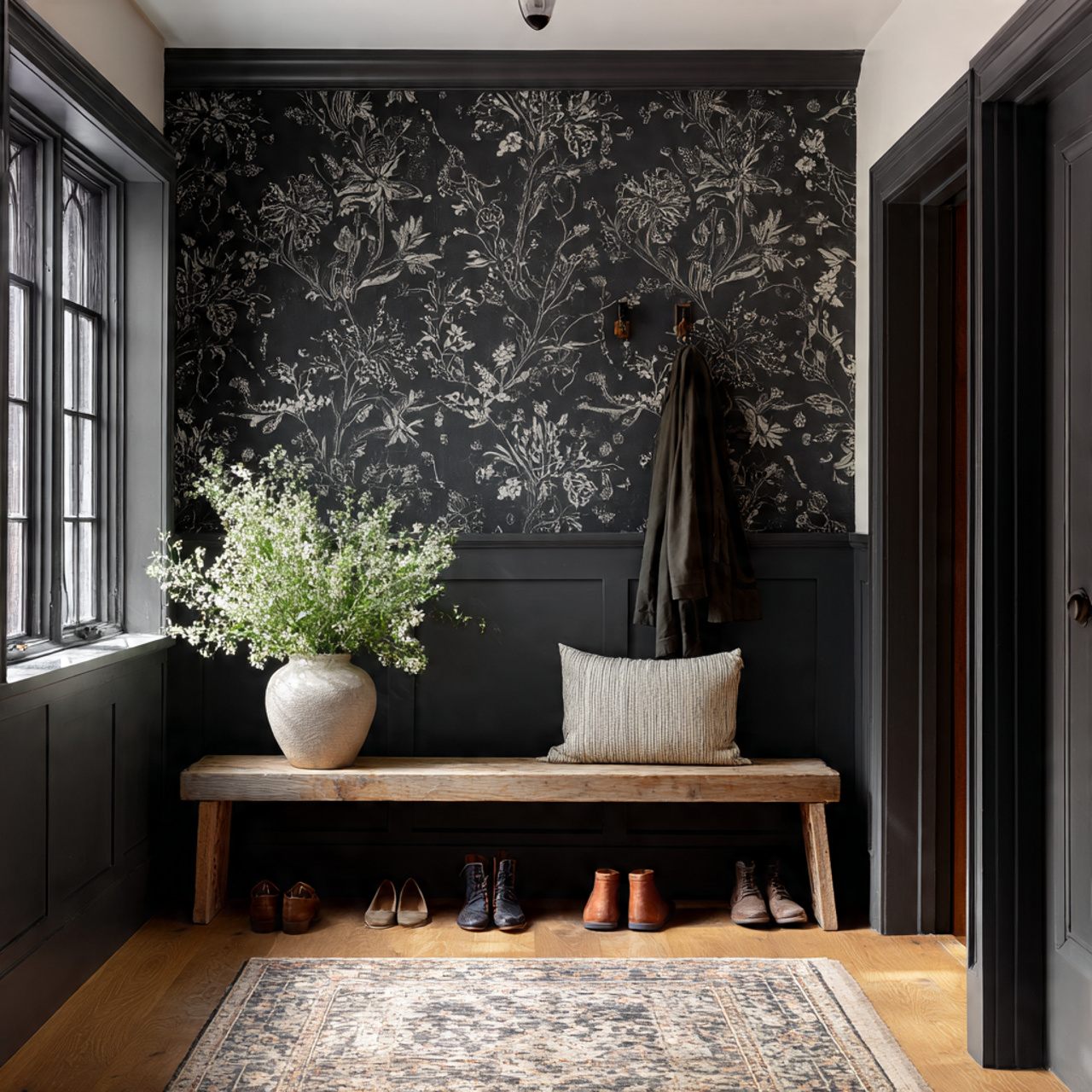
Entryways set the emotional tone for the home, yet they are often overlooked. Black wallpaper immediately signals a transition from outside to inside, making the space feel intentional rather than temporary. The effect is subtle but grounding.
Over time, darker entryways tend to feel less cluttered visually, even when shoes and coats are present. The space feels calmer because the walls are not competing for attention.
Simple lighting and minimal furniture support this approach. Limiting décor allows the wallpaper to do the work without visual noise.
Black Wallpaper as a Backdrop for Large-Scale Art With Gallery Impact
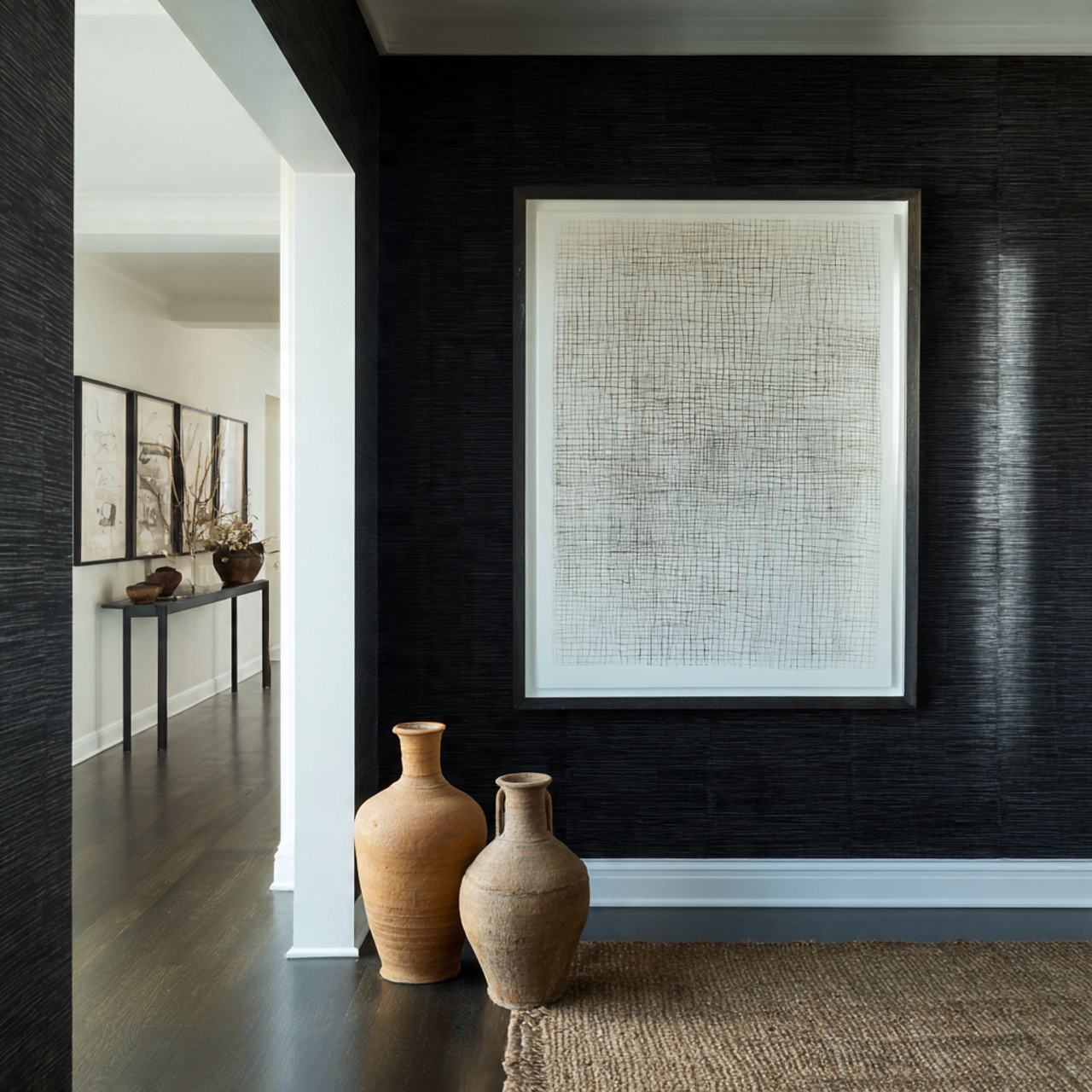
Large artwork often struggles to stand out against light walls. Black wallpaper creates a clean backdrop that allows art to read clearly, giving it presence without additional framing tricks. The wall feels curated rather than decorated.
This approach reduces decorative churn because fewer pieces are needed to make an impact. Over time, homeowners often stop adding more art because the space already feels resolved.
One strong piece works better than multiple smaller frames. Keeping surrounding walls quieter helps maintain focus.
Black Wallpaper in Reading Corners for Cozy Enclosure and Quiet Retreat
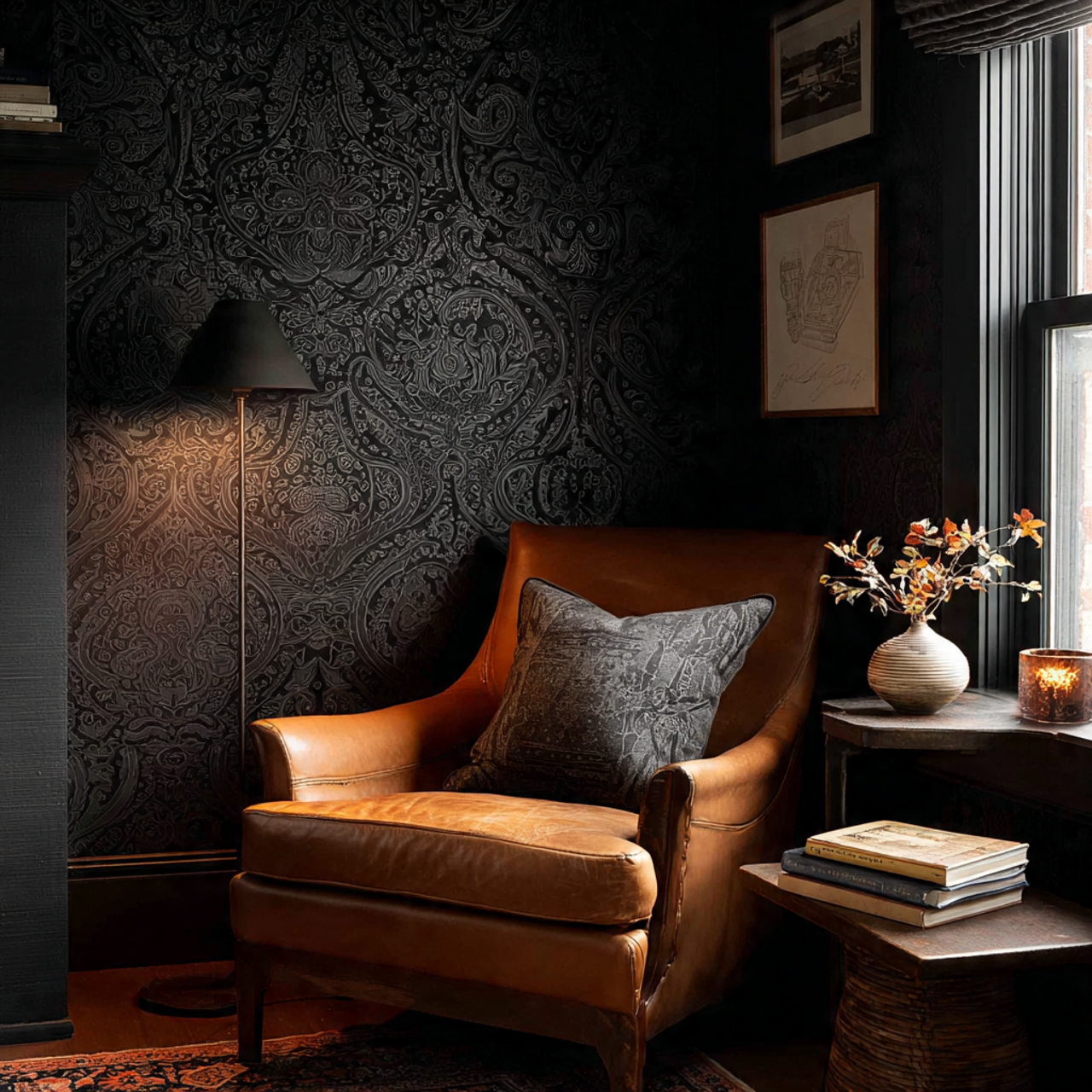
Reading corners benefit from a sense of enclosure that separates them from the rest of the room. Black wallpaper wraps the space visually, creating a cocoon-like effect that feels protective rather than dark. The corner becomes distinct without walls.
Many people find these spaces naturally become favorite retreats over time. The darker backdrop reduces distraction and encourages stillness, even in busy homes.
Soft lighting and comfortable seating are essential. Avoid bright overhead lights and rely on lamps to maintain the intimate feel.
Black Wallpaper With Gentle Sheen for Soft Light Movement Across Walls
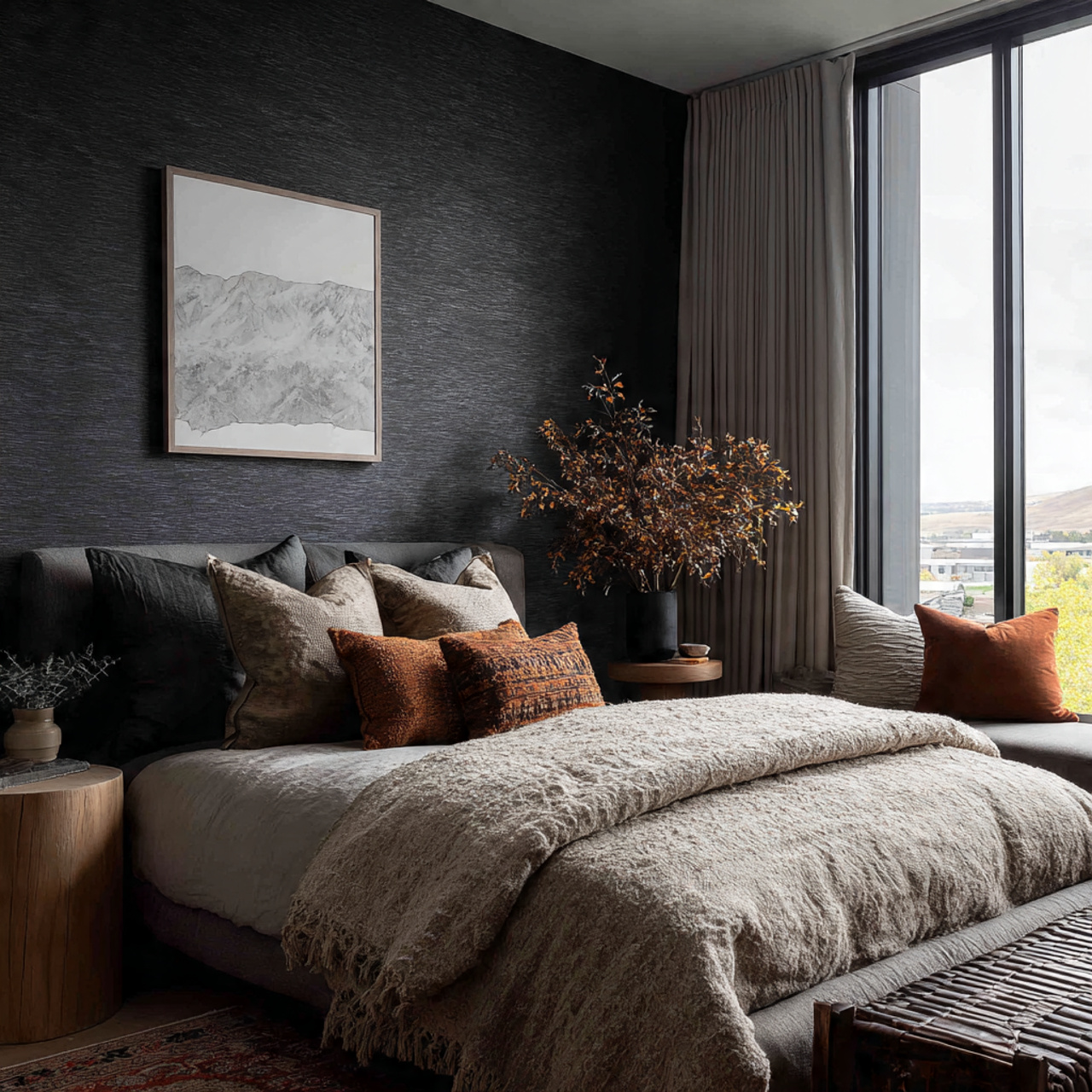
Not all black wallpaper needs to be completely matte. A gentle sheen allows light to move softly across the surface, keeping walls from feeling flat while remaining calm. The effect changes subtly throughout the day.
This adaptability helps rooms feel balanced across seasons and lighting conditions. Spaces with multiple light sources benefit most because the wall responds rather than absorbs everything.
Using this finish sparingly prevents glare. It works well in living rooms and bedrooms where light quality shifts naturally.
Black Wallpaper to Define Zones Clearly in Open-Plan Living Spaces
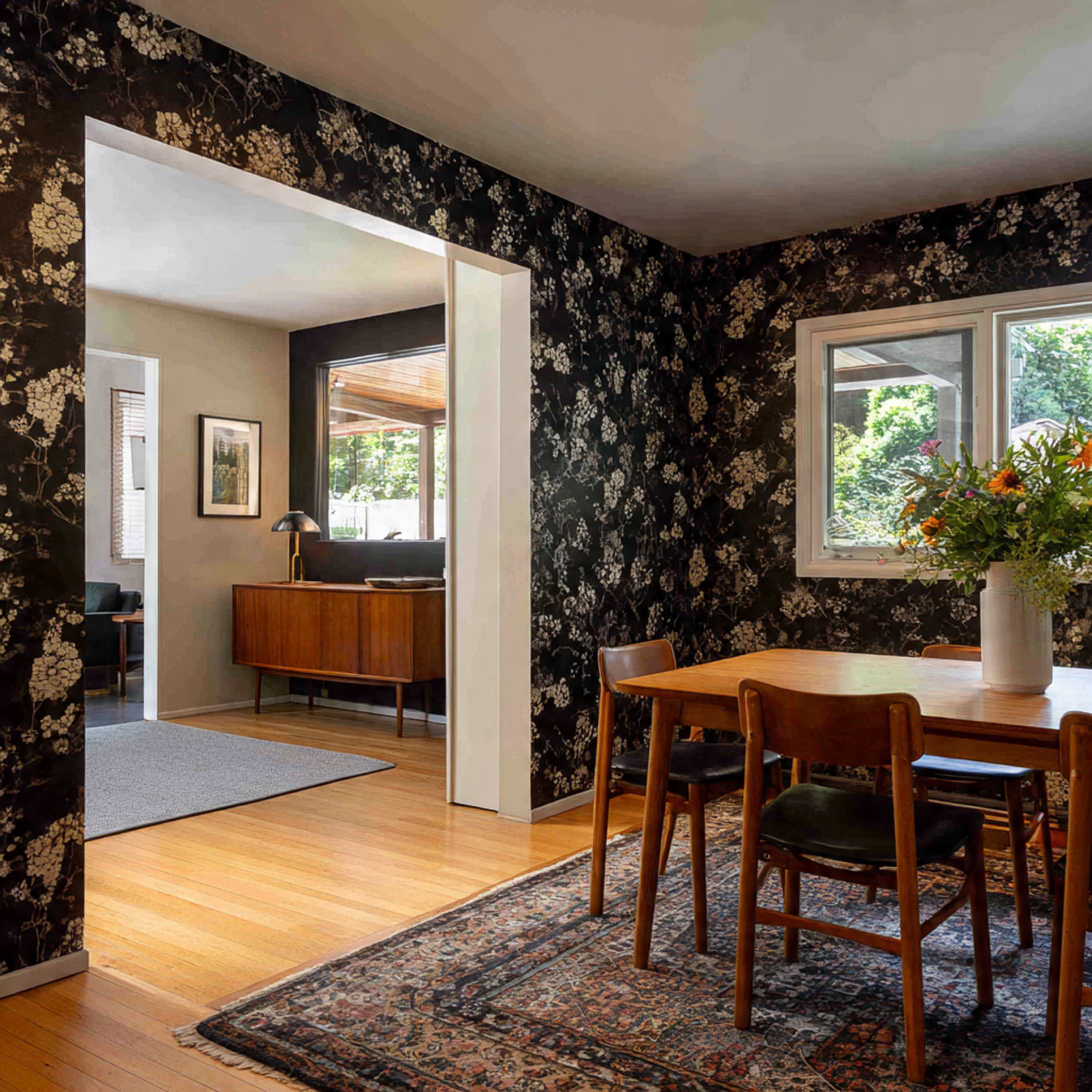
Open-plan layouts often struggle with visual boundaries. Black wallpaper can quietly define dining, work, or seating zones without introducing physical partitions. The space feels organized while remaining open.
Over time, this clarity improves daily function because each area feels purposeful. Movement through the space becomes more intuitive, reducing visual clutter.
Keeping black limited to one zone maintains balance. Adjacent areas should stay lighter to preserve flow and openness.
Black Wallpaper Paired With Warm Evening Lighting for Nighttime Comfort
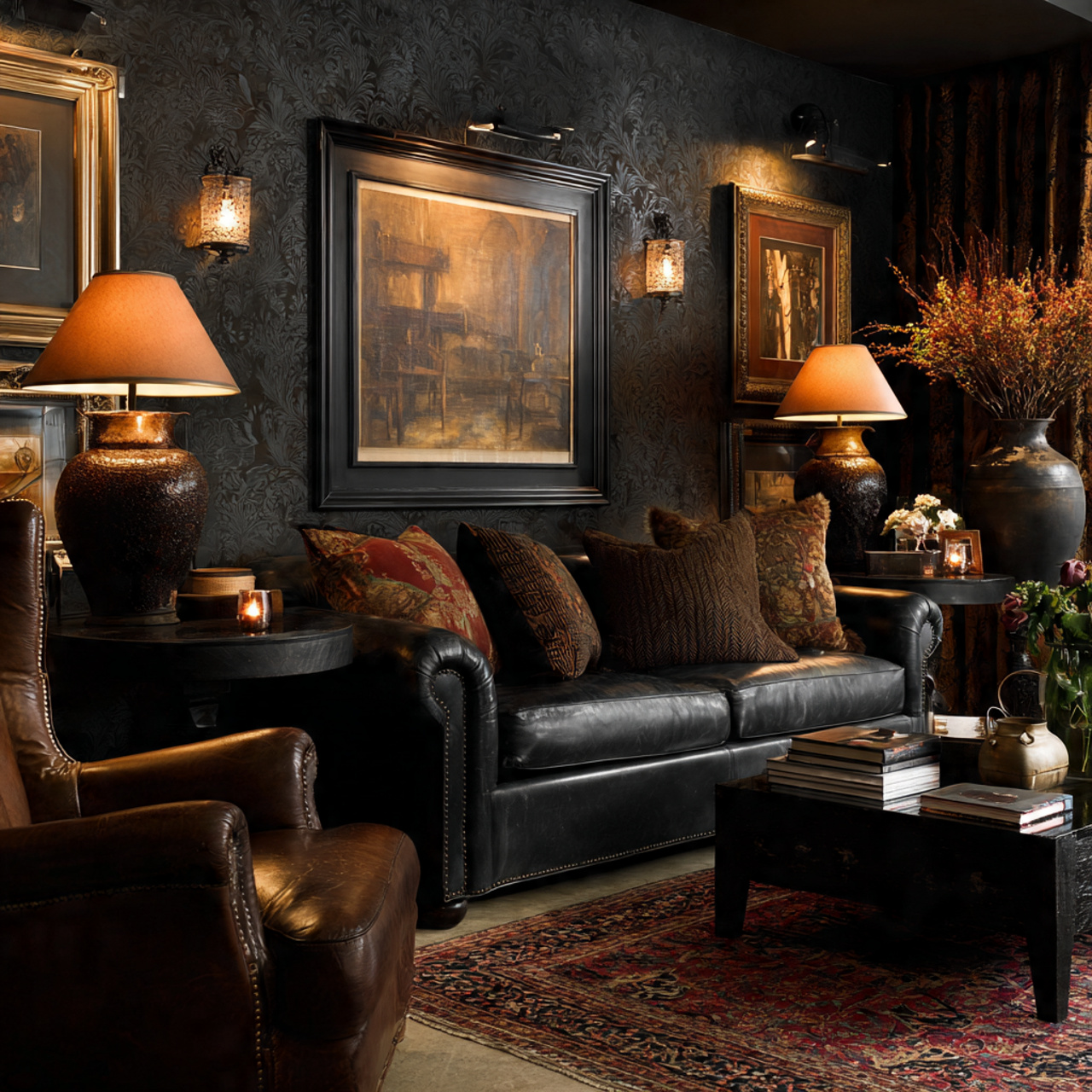
Black wallpaper can feel very different after dark. When paired with warm lamps and wall lights, it becomes inviting rather than heavy. The room shifts naturally into a more relaxed evening atmosphere.
Over time, this lighting approach prevents rooms from feeling dramatic or cold at night. The space stays comfortable even with minimal decoration.
Layered lighting is key here. Avoid relying on a single overhead fixture and instead spread light gently across the room.
Common Mistakes With Black Wallpaper
Using Black Wallpaper Without Layered Lighting
Many people rely on a single ceiling light and expect black wallpaper to behave like lighter walls. Over time, this flattens the space and makes it feel dull rather than rich.
Layered lighting using lamps or wall lights restores warmth and depth, allowing black surfaces to feel intentional instead of heavy.
Choosing the Wrong Black Undertone for the Room’s Light
Not all black wallpapers behave the same in different lighting conditions. Cool blacks in warm-lit rooms can create subtle discomfort that becomes noticeable with daily use.
Testing samples at different times of day reveals undertones before committing and prevents long-term regret.
Covering Every Wall Without Testing Scale First
Applying black wallpaper to every wall without testing often leads to overwhelm once furniture is added. Rooms can feel smaller or more intense than expected.
Starting with one wall allows the effect to be experienced safely while still delivering depth.
Overdecorating Against Black Wallpaper
Black wallpaper already provides strong visual presence, so too many accessories compete with the wall and create clutter.
Editing décor and keeping fewer, intentional pieces restores balance and calm.
Frequently Asked Questions About Black Wallpaper
Does black wallpaper make rooms feel smaller?
Black wallpaper can actually make rooms feel more intentional when balanced with light flooring, proper lighting, and contrast. The space often feels calmer rather than smaller.
What rooms suit black wallpaper best?
Bedrooms, dining rooms, hallways, and home offices tend to benefit most because they value focus, rest, and defined atmosphere.
Is black wallpaper hard to maintain?
Matte and textured black wallpapers hide marks better than light colors. With the right material choice, maintenance is often easier than expected.
Can renters use black wallpaper safely?
Peel-and-stick black wallpaper allows renters to experiment without permanent changes. Removal is usually straightforward when done carefully.
How do you balance black wallpaper with furniture?
Light and mid-tone furniture prevent heaviness and help reflect light back into the room. Natural materials work especially well.
Conclusion
Black wallpaper works best when it is chosen with intention rather than fear. In real homes, it often brings calm, depth, and clarity that lighter finishes struggle to achieve. When undertone, lighting, and placement are handled thoughtfully, black stops feeling bold and starts feeling stable. Used well, it helps rooms feel settled, finished, and genuinely comfortable to live with over time.