18 Bedroom Decor Ideas That Instantly Make Rooms Feel Calm
Bedrooms tend to reveal decorating mistakes slowly. What feels beautiful on the first day can start to feel tiring, cluttered, or uncomfortable after a few months of real life, especially when bedroom decor is chosen without considering layout, lighting, and how the space is actually used. Most people don’t notice the problem right away, but they feel it every night when the room doesn’t fully support sleep and comfort.
This guide approaches bedroom decor from lived experience rather than trends. It focuses on choices that continue to feel good over time, helping the bedroom become a place that quietly supports rest, emotional calm, and a more balanced daily routine.
Why Bedroom Decor Matters More Right Now
Bedrooms have taken on a heavier emotional role than before. They are no longer just places to sleep but spaces where people decompress, think, and recover from long days. When bedroom decor doesn’t support that function, the room can feel restless even when it looks good.
Bedroom decor that truly works tends to be returned to again and again because it feels reliable. Instead of demanding attention, it creates familiarity and ease. That sense of quiet dependability is what makes a bedroom feel like a refuge rather than a styled space.
Color and Material Authority
Soft Greige #D6D1CB works well on main bedroom walls because it adjusts smoothly to changing daylight. It has a warm undertone, performs best in matte or eggshell finishes, and pairs naturally with linen bedding and cotton curtains.
Muted Sage #BFC8B8 is effective for headboards or a single accent wall. It leans slightly cool, creates a calming effect, and works best in matte finishes with wool throws or cotton upholstery.
Warm Ivory #F4F1EC suits ceilings and trim, especially in rooms with limited natural light. Its warm undertone keeps the space from feeling flat, and an eggshell finish pairs well with sheer linen drapes.
Dusty Clay #C7A39A adds quiet warmth to benches, cushions, or art backdrops. It has a warm undertone, benefits from matte finishes, and pairs beautifully with wool, leather, and soft cotton textures.
Charcoal Brown #4A423D works best in small doses on nightstands or frames. Slightly cool in undertone, it feels grounded in satin finishes and balances lighter fabrics like linen and cotton.
Room Size and Lighting Quick Guide
| Room condition | What works best | What to avoid |
|---|---|---|
| Small bedrooms | Light wall colors, minimal contrast, fewer pieces | Dark walls, bulky furniture |
| Large bedrooms | One grounding focal wall, layered textures | Too many small decor items |
| North-facing light | Warm neutrals, layered lighting | Cool greys, flat finishes |
| South-facing light | Balanced neutrals, soft contrast | Overly warm yellows |
| East-facing light | Gentle tones, natural fabrics | Heavy dark colors |
| West-facing light | Matte finishes, diffused lighting | Glossy surfaces |
Bedroom Decor Ideas
Grounded Bed Placement That Immediately Calms the Room
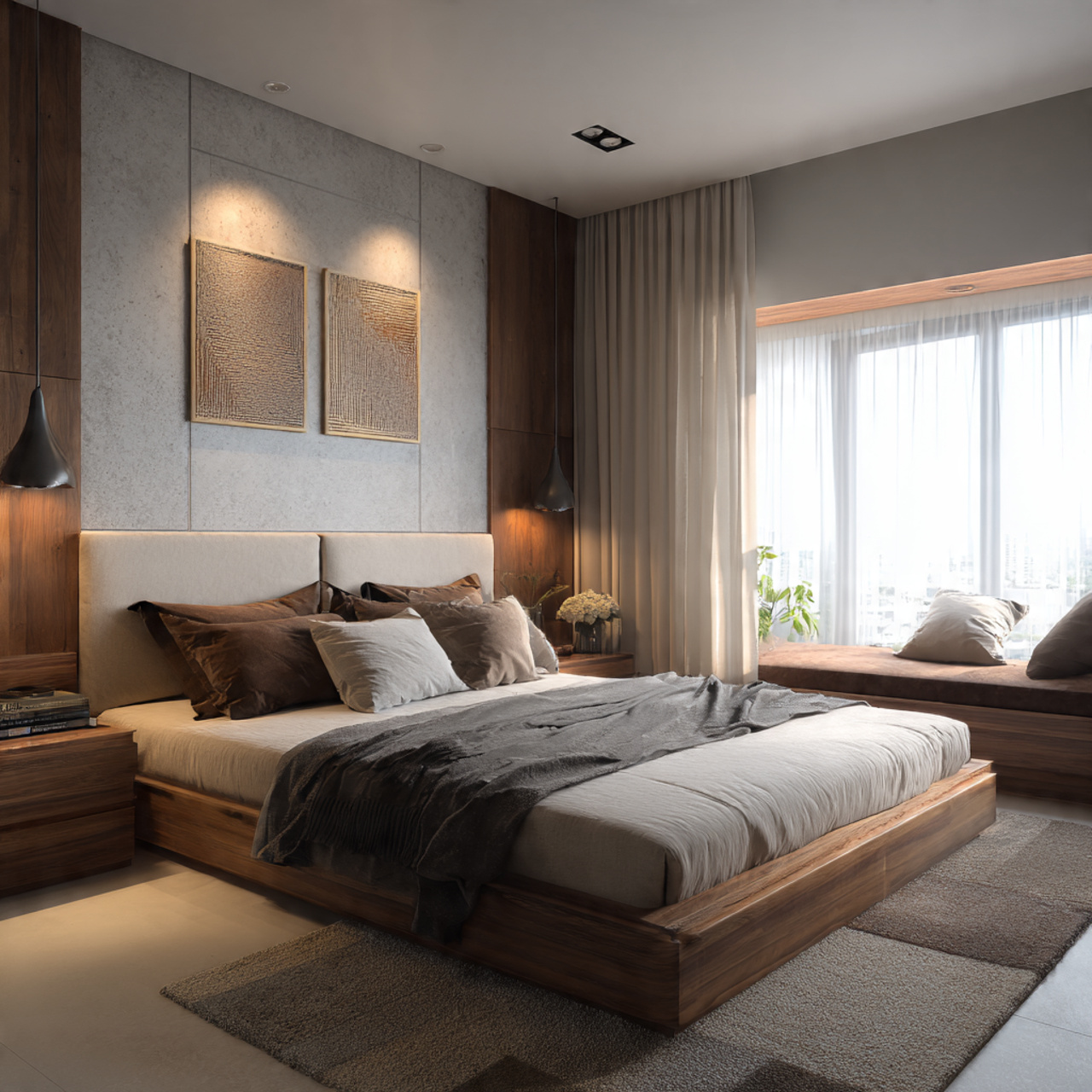
A bed that visually anchors the room creates order the moment you walk in. When it has a solid wall behind it and breathing space on both sides, the room feels intentional rather than accidental.
In real homes, poorly placed beds create low-level restlessness that people can’t always explain. Over time, this shows up as constant rearranging or a room that never feels settled.
Placing the bed for balance rather than strict symmetry allows the layout to feel natural and usable.
Tip: If a bedroom feels uneasy, adjust the bed placement before changing decor or color.
Layered Bedding That Adapts to Real Sleep Habits
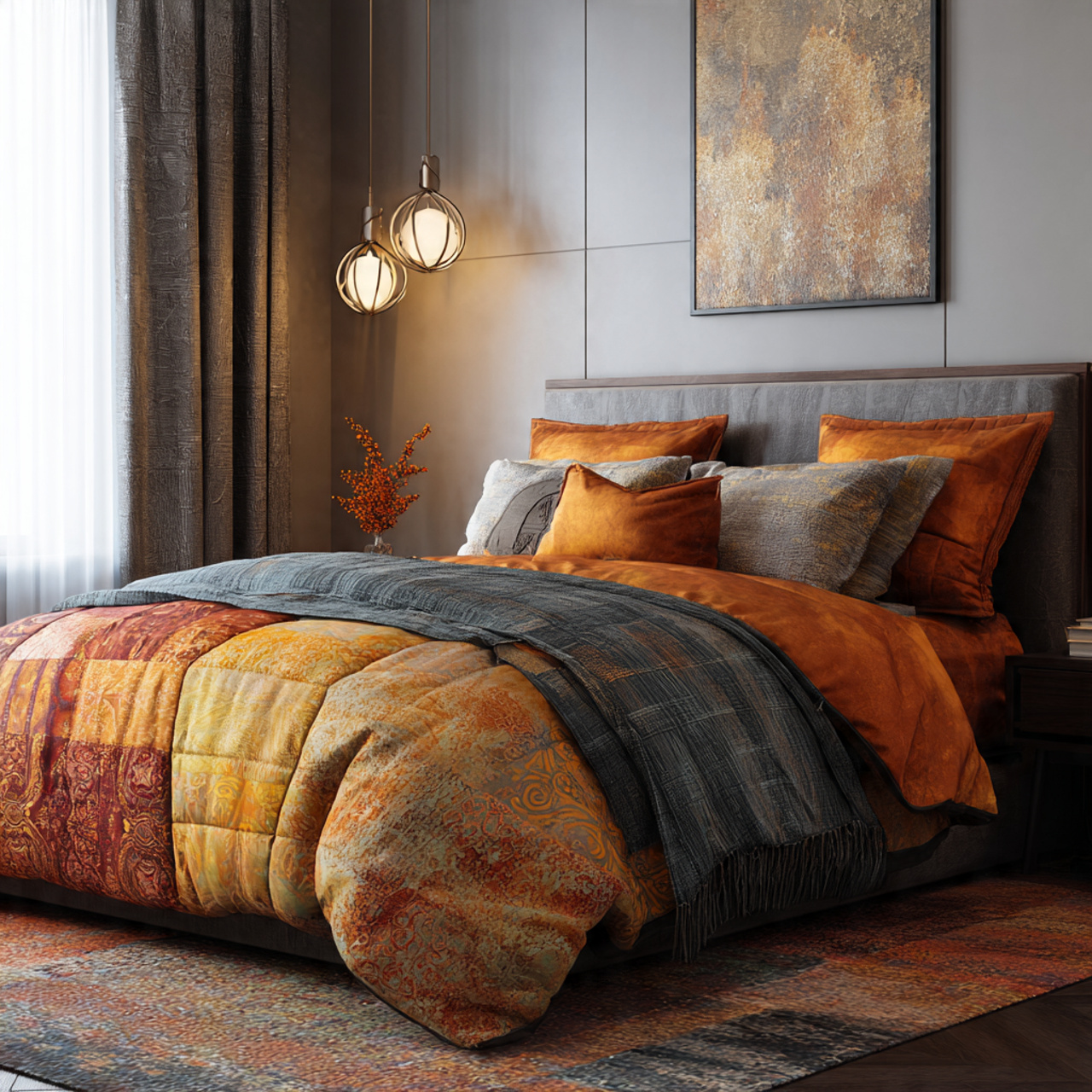
Layered bedding works because it responds to how people actually sleep, not how beds are styled for photos. A fitted sheet, breathable duvet, and light top layer allow comfort to change with seasons and mood.
Bedrooms that rely on a single heavy layer often feel either too warm or too bare. This leads to nightly adjustments that disrupt rest.
Keeping layers simple and flexible makes the bed easier to live with long-term.
Tip: Prioritize breathable fabrics before adding decorative layers.
Neutral Walls With One Quiet Contrast Anchor
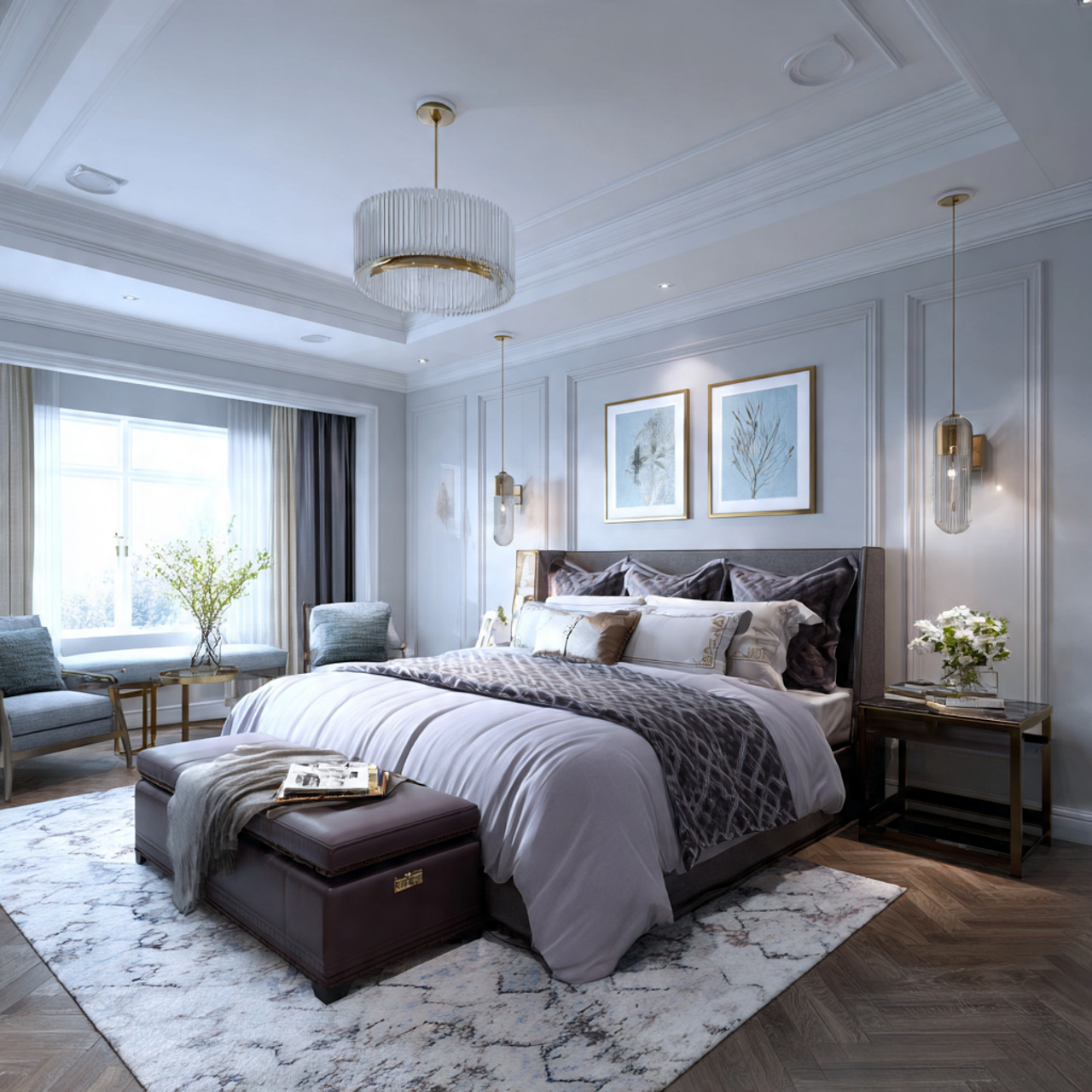
Neutral walls create a calm baseline, but without contrast they can feel unfinished over time. A single darker or textured element gives the eye a place to settle.
When contrast is missing, bedrooms often feel flat even when everything matches. People sense something is off without knowing why.
Limiting contrast to one anchor keeps the room calm while adding depth.
Tip: Vertical contrast usually feels calmer than breaking the room horizontally.
Upholstered Headboards That Soften Visual Noise
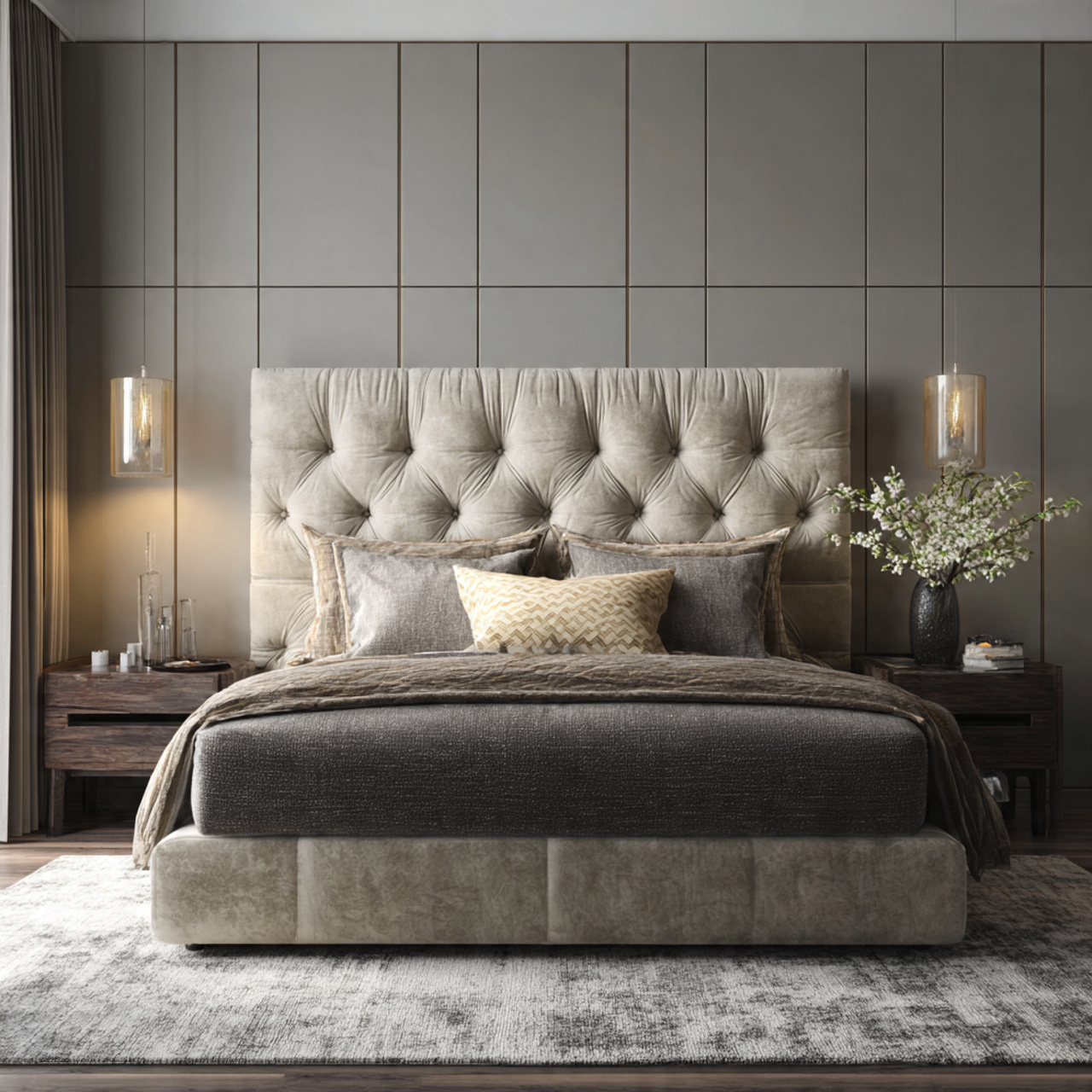
Hard edges and sharp lines tend to feel cold in bedrooms. Upholstered headboards soften the bed visually and reduce that tension immediately.
Over time, fabric headboards age more gracefully than trend-heavy designs. They adapt quietly as bedding, wall color, or lighting changes.
Choosing neutral, tightly woven upholstery keeps the look flexible and durable.
Tip: If you like change, keep the headboard simple and adjust bedding instead.
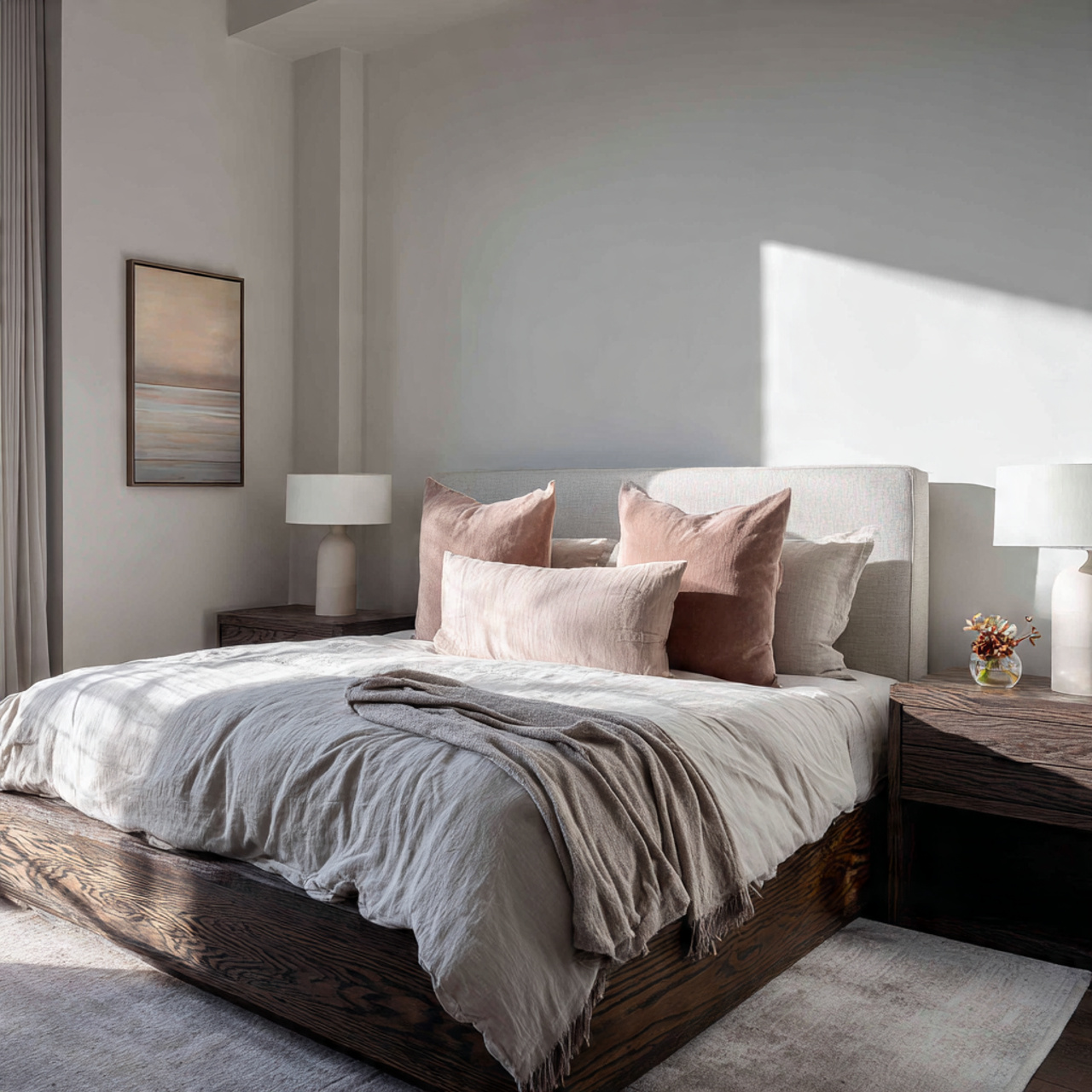
Natural Wood Nightstands That Age Gracefully
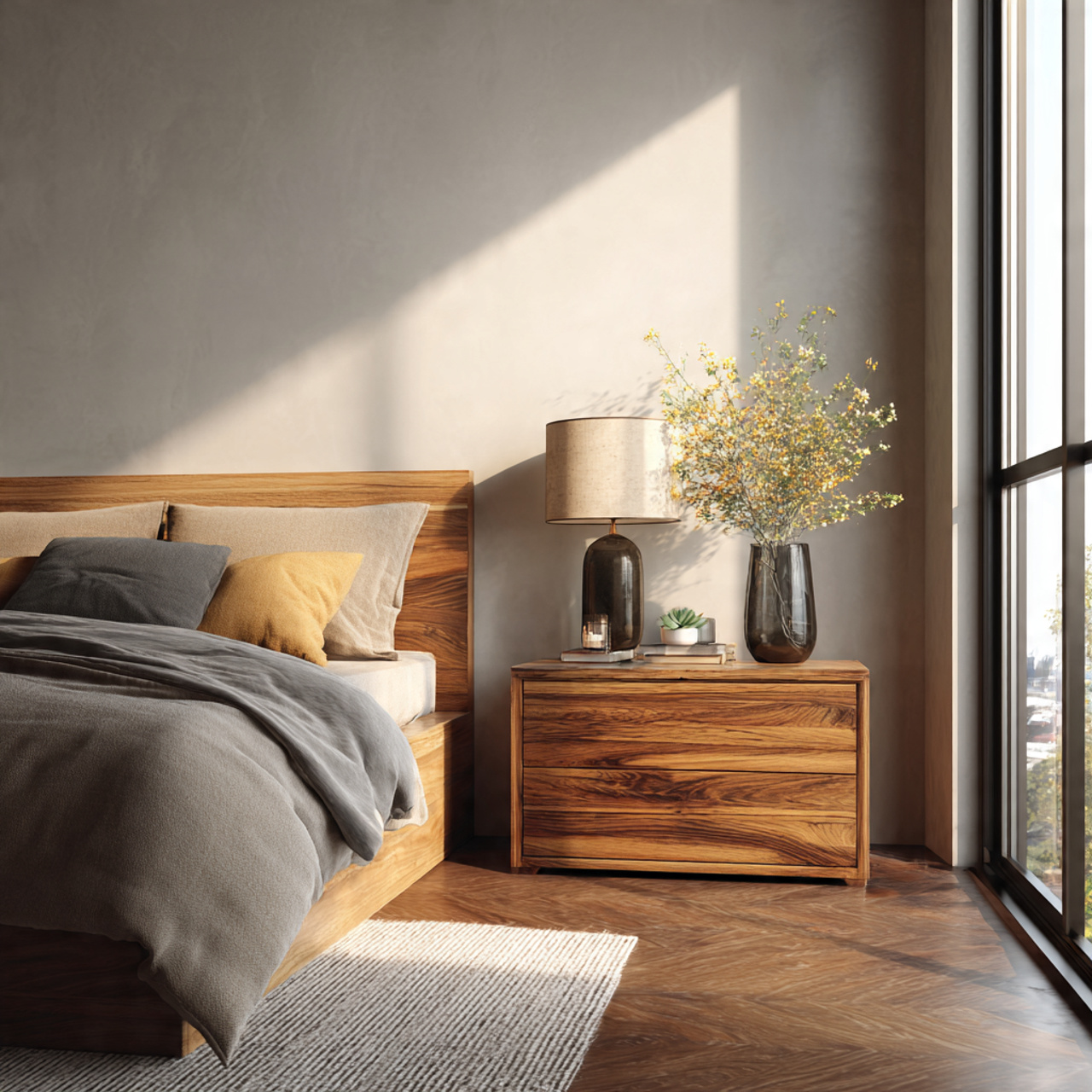
Wood nightstands bring warmth without visual effort. Simple shapes allow the material itself to carry the design.
In daily use, natural wood shows wear as character rather than damage. This helps the bedroom feel lived-in instead of worn.
Using one consistent wood tone keeps the space cohesive.
Tip: Slight grain variation looks better than perfectly matched finishes.
Layered Lighting That Supports Evening Wind-Down
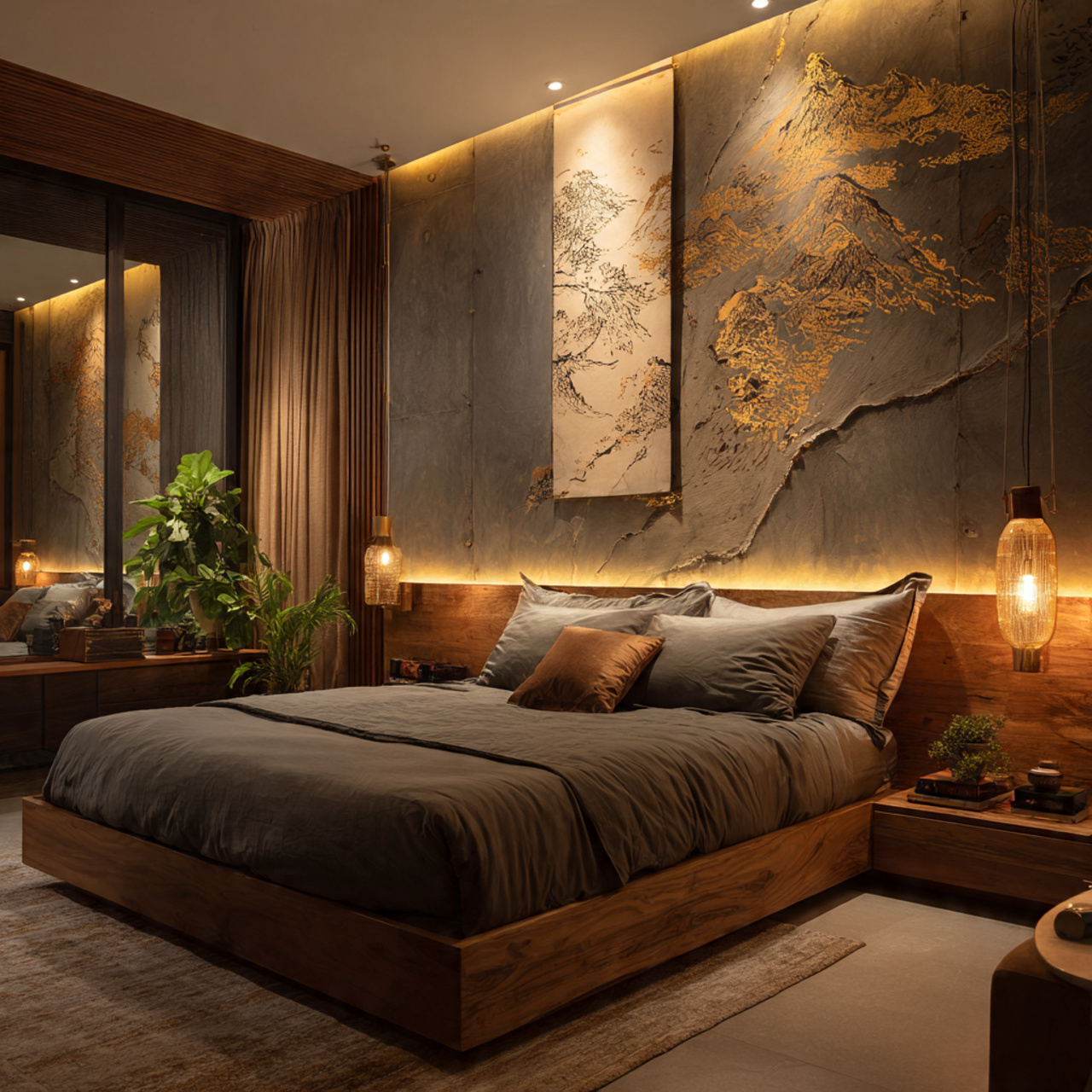
Bedrooms that rely on one overhead light often feel harsh at night. Multiple softer light sources create a calmer atmosphere.
Without layered lighting, evenings feel abrupt rather than gradual. This can subtly affect how quickly the body relaxes.
Warm bedside lamps and ambient lighting allow the room to shift gently into rest mode.
Tip: Change bulb temperature before adding more fixtures.
Textured Rugs That Change How Mornings Feel
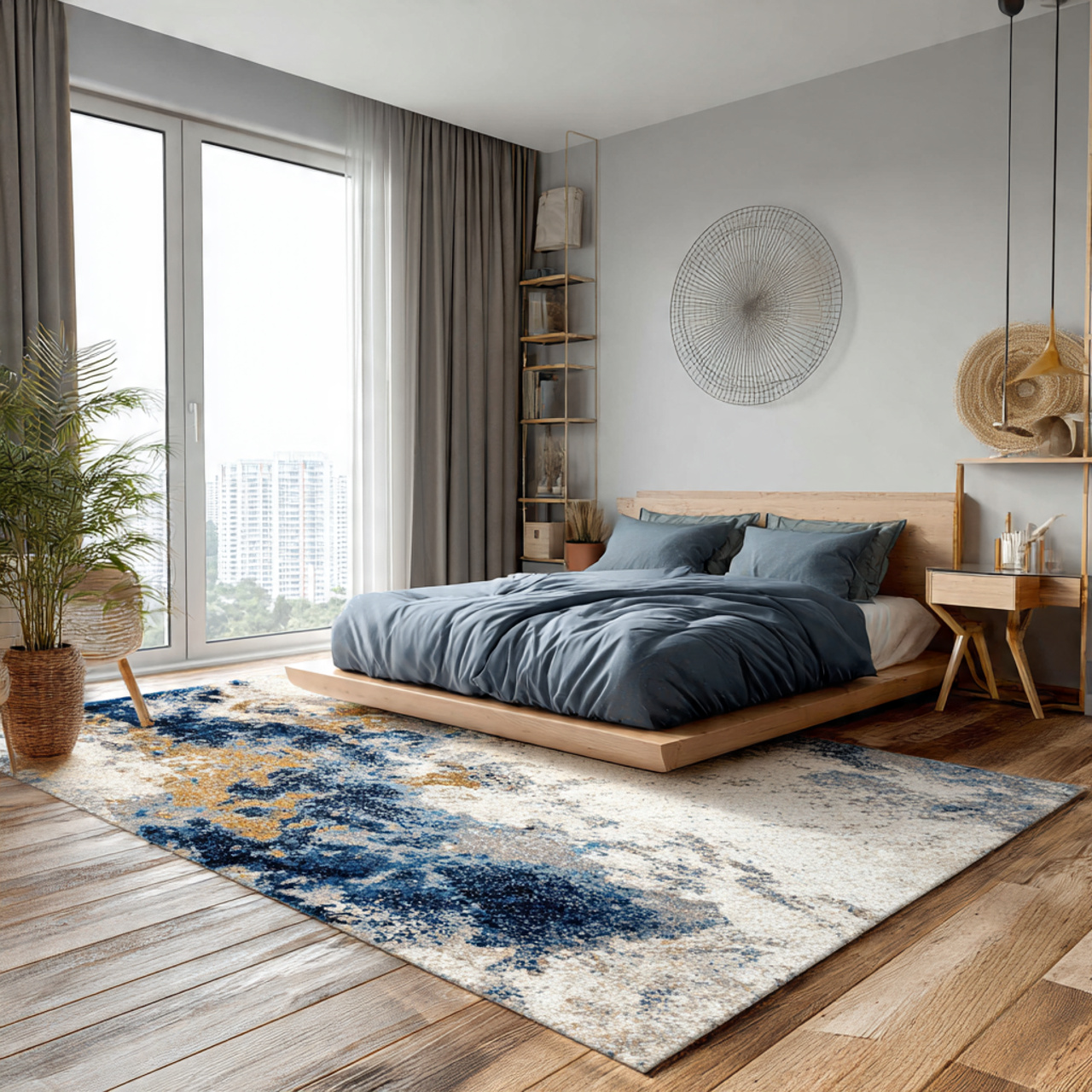
The first few steps out of bed shape how a morning begins. A textured rug softens that transition and immediately makes the room feel warmer and more grounded.
Without a rug, bedrooms can feel echoing and visually disconnected from the floor. Over time, that absence creates a space that feels colder than it looks.
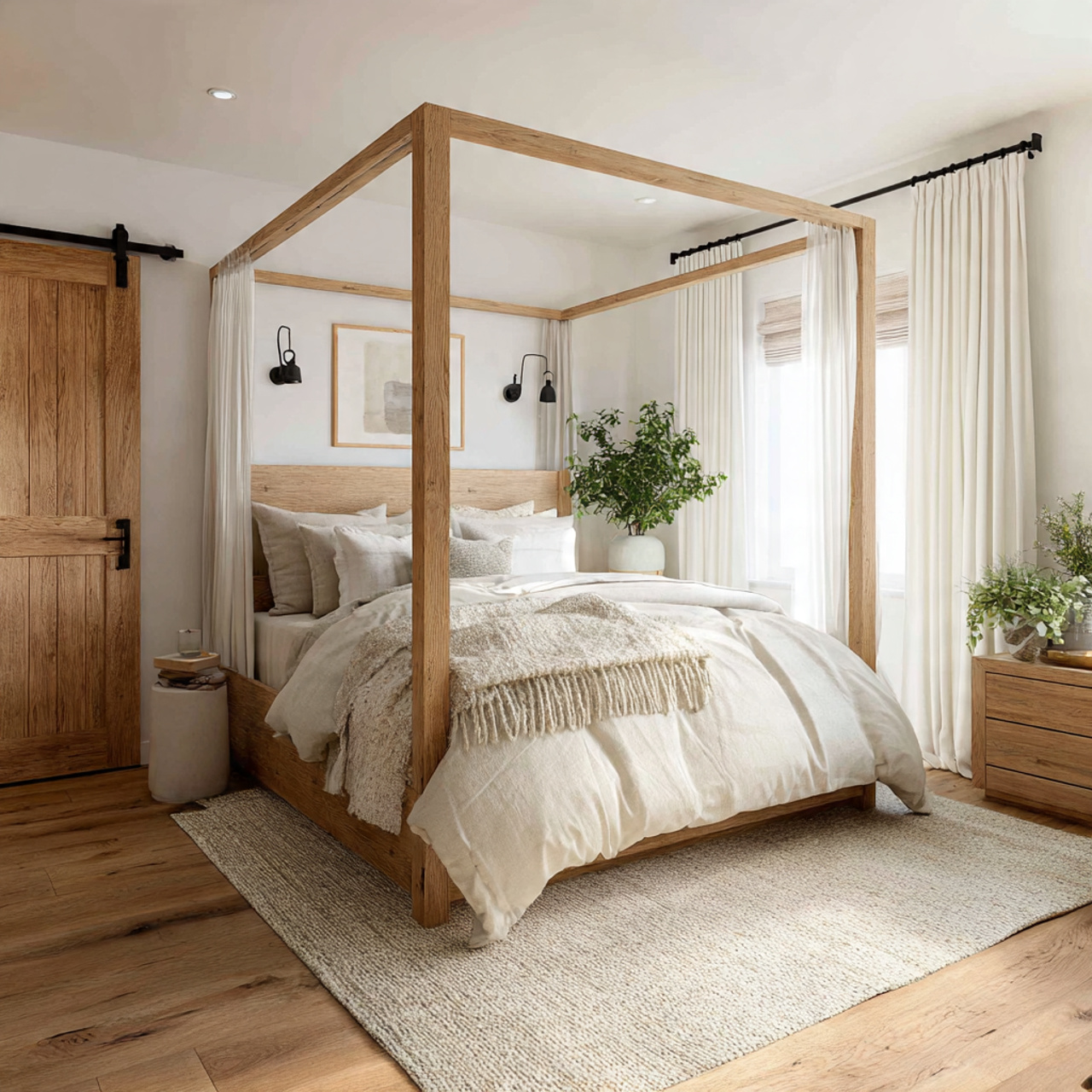
Choosing a rug large enough to extend beyond the bed anchors the entire layout visually.
Tip: Natural fibers tend to age better and feel more authentic underfoot.
Curtains That Filter Light Without Darkening the Room
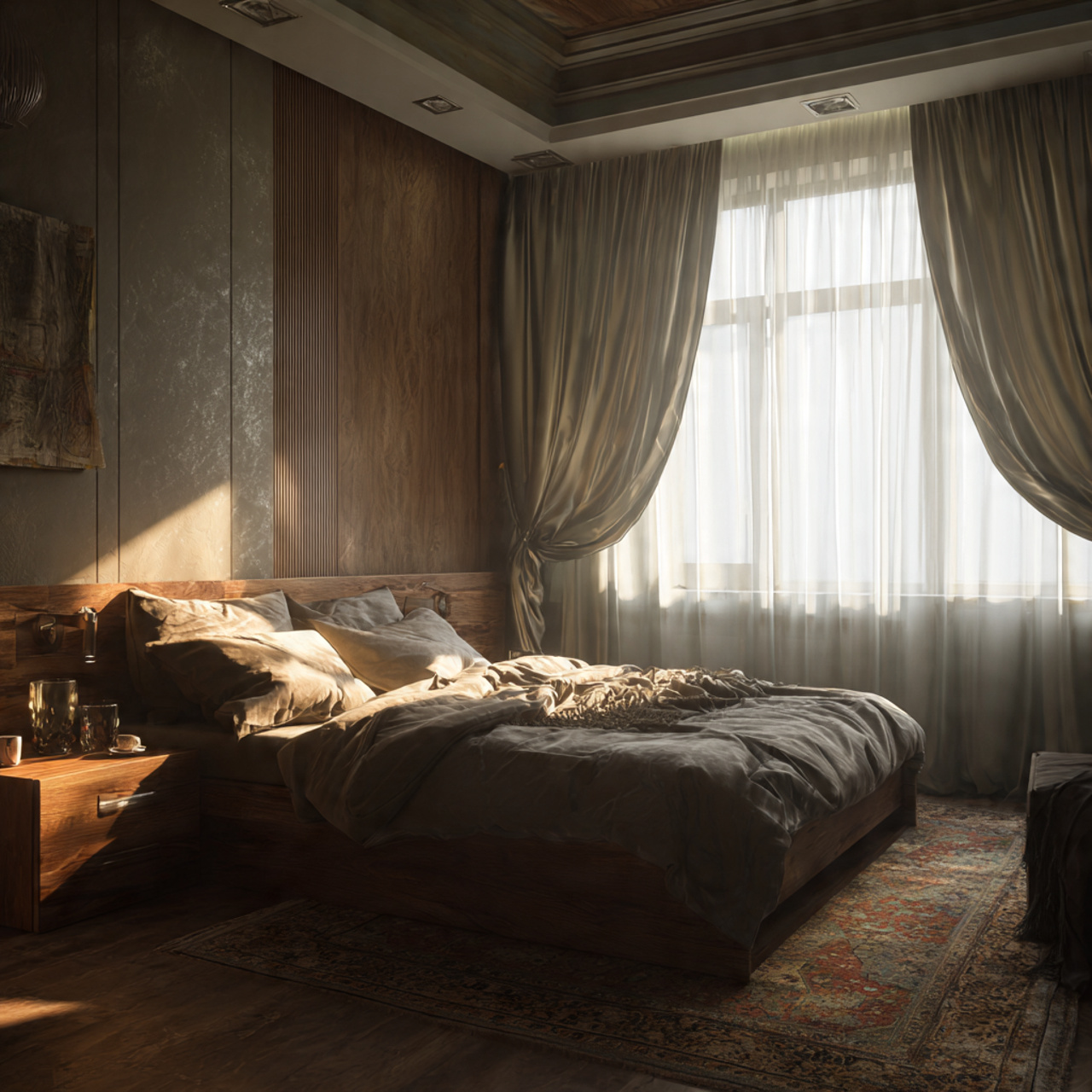
Light control in bedrooms is often misunderstood as complete blackout or nothing at all. In reality, filtering light gently creates a more balanced and breathable space.
Heavy curtains can make smaller rooms feel closed in and visually heavy. Over time, this reduces the sense of openness the room needs during the day.
Light-filtering drapes paired with optional blinds give flexibility without visual weight.
Tip: Hanging curtains slightly higher than the window frame makes ceilings feel taller.
A Defined Bed Wall That Makes the Room Feel Finished
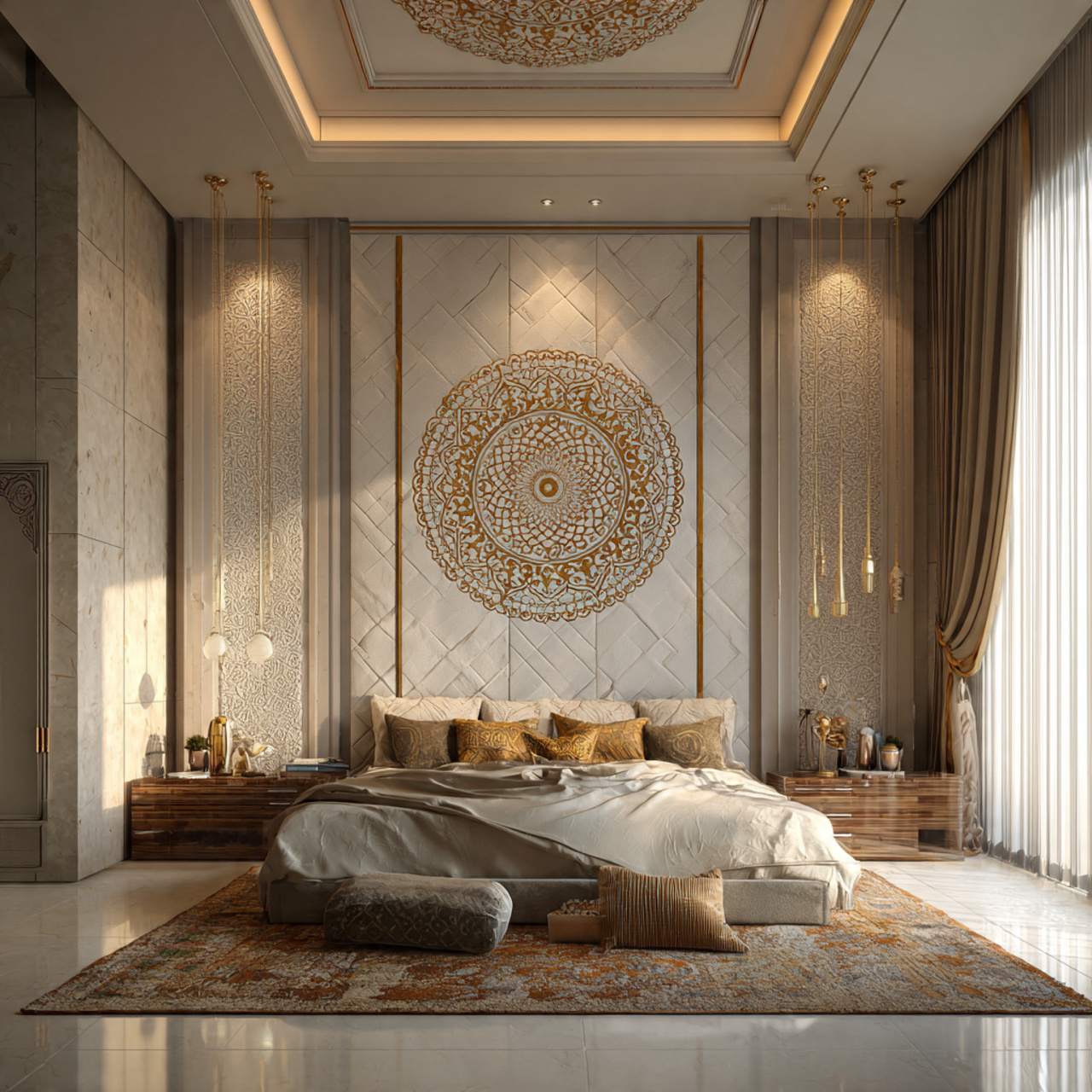
Bedrooms often feel incomplete when the bed wall lacks intention. Even well-decorated rooms can seem temporary without a clear focal surface.
When the wall behind the bed blends into everything else, the eye keeps searching for structure. That subtle imbalance makes the room feel unsettled.
Using paint, paneling, or one centered artwork creates quiet definition.
Tip: One strong focal wall is more effective than decorating every wall.
Artwork Chosen for Mood, Not Trends
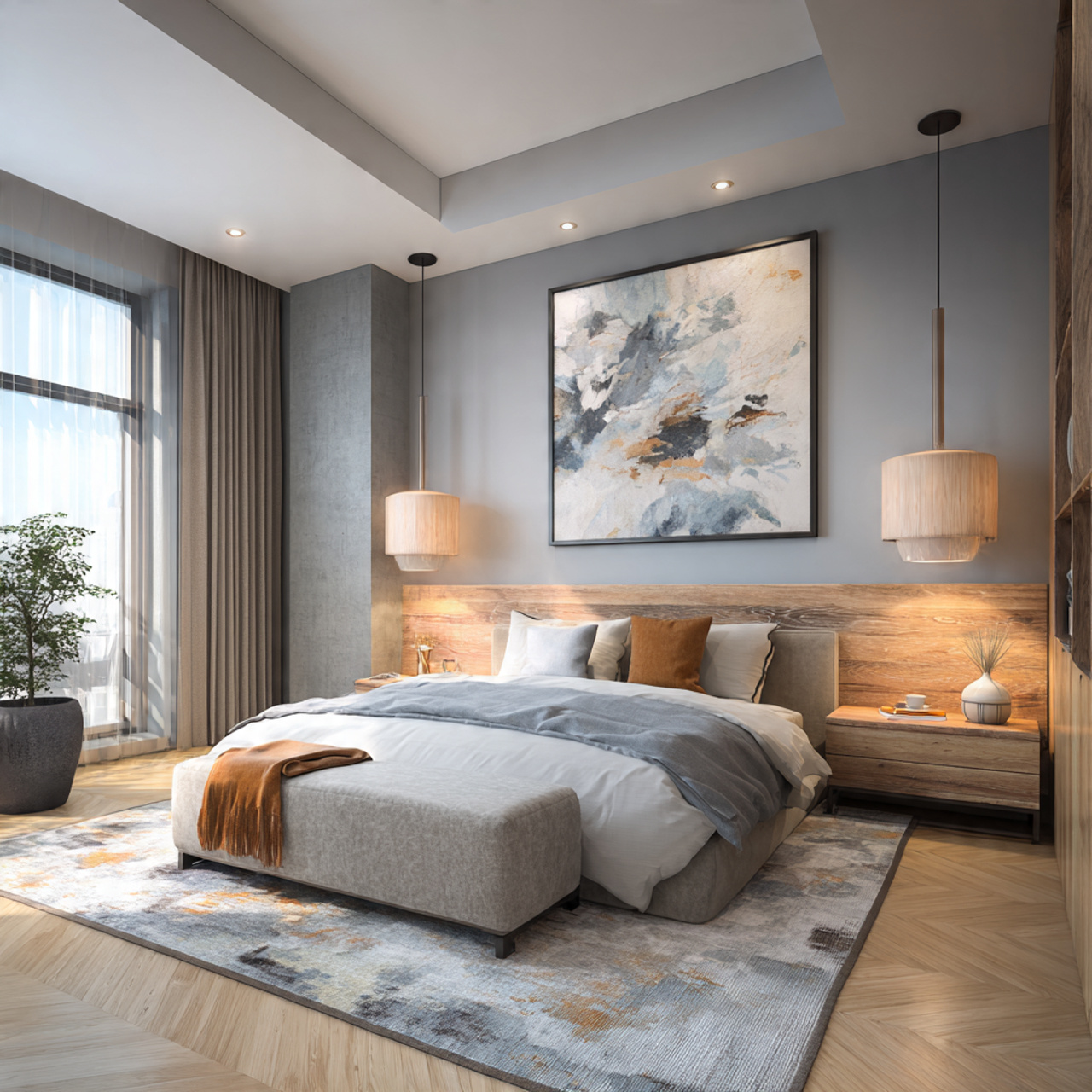
Bedrooms respond best to art that supports rest rather than stimulation. Soft abstracts, muted landscapes, or calm photography tend to feel timeless.
Trend-driven artwork often looks impressive at first but becomes visually tiring with daily exposure. What excites in a living room can overwhelm in a bedroom.
Selecting pieces based on emotional tone keeps the room stable long term.
Tip: If artwork draws too much attention, it’s likely too strong for a sleep space.
Clear Nightstands That Reduce Mental Clutter
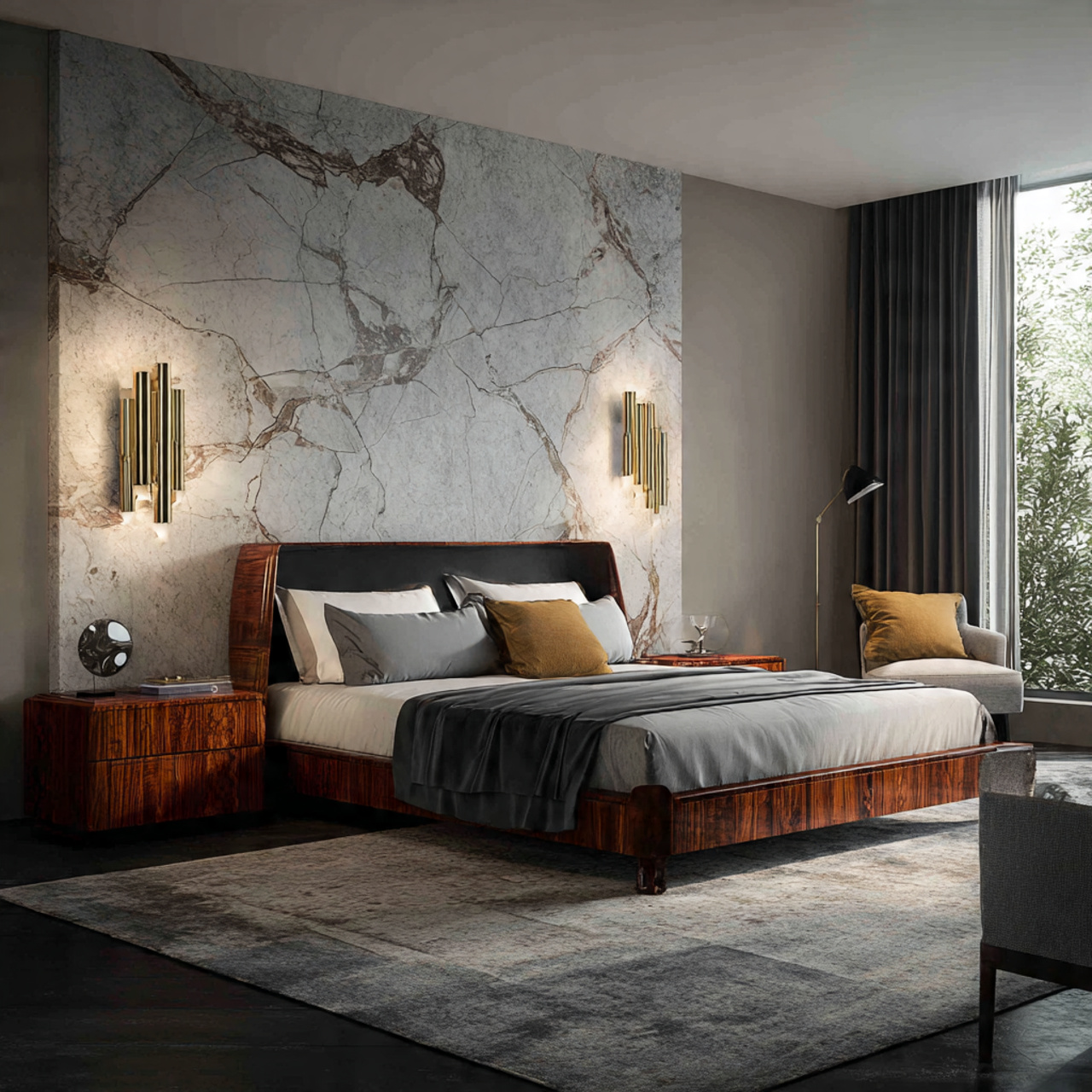
Nightstands quickly become catch-all surfaces if boundaries are not set. What begins as convenience can turn into visual noise.
Clutter near the bed affects how restful the room feels, even if the rest of the space is tidy. Over time, that small disorder creates subtle tension.
Limiting nightstands to daily essentials keeps routines simpler and calmer.
Tip: If you haven’t used an item in a week, it doesn’t belong beside the bed.
A Soft Seating Piece That Adds Balance Without Bulk
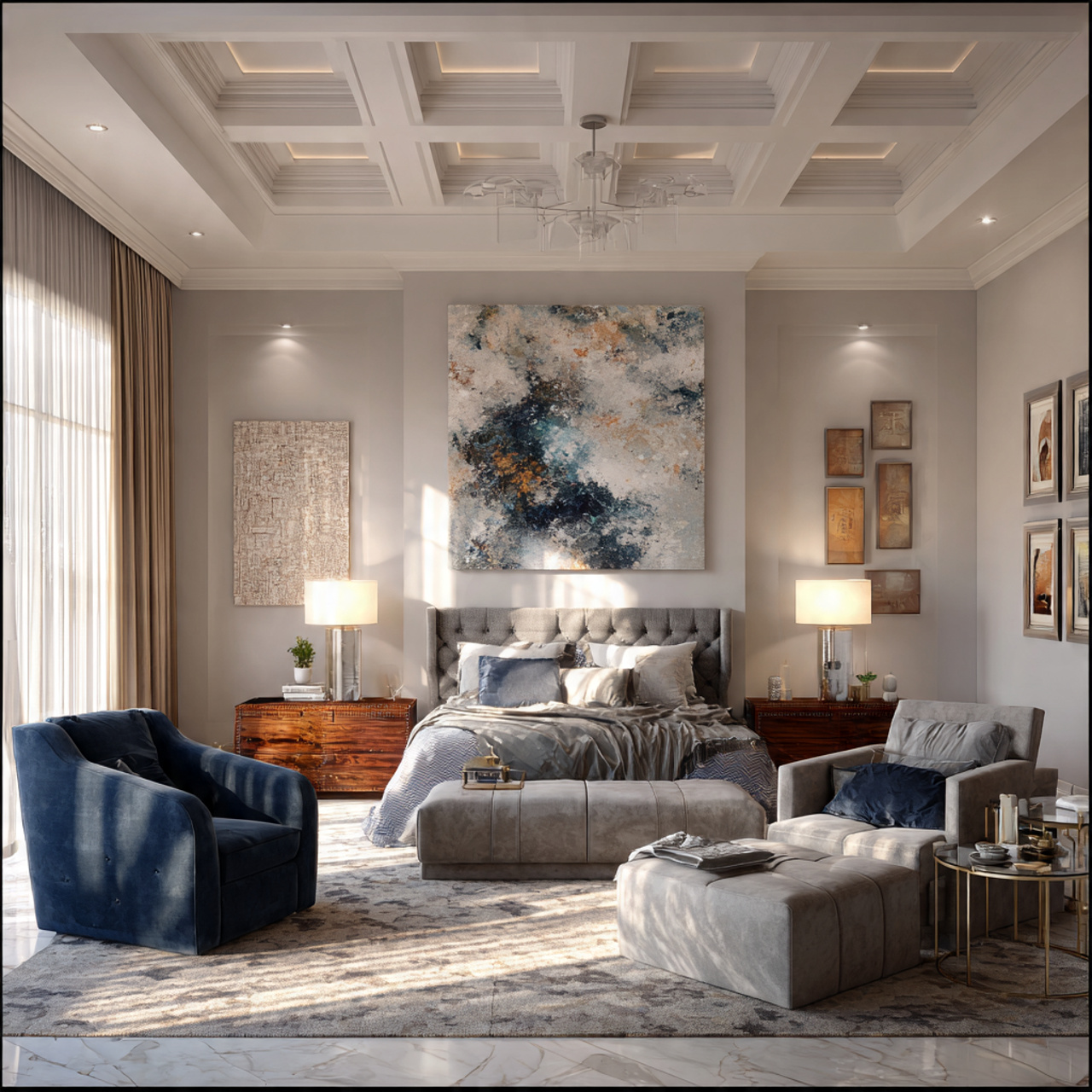
A bedroom with only a bed can feel visually incomplete. A small bench or chair introduces balance without overwhelming the layout.
However, oversized seating or poorly placed pieces often become clothing storage instead of functional elements. This adds clutter rather than comfort.
Choosing compact, upholstered seating keeps the room soft and proportional.
Tip: Place seating where it serves a purpose, not just symmetry.
Subtle Scent Elements That Support Emotional Comfort
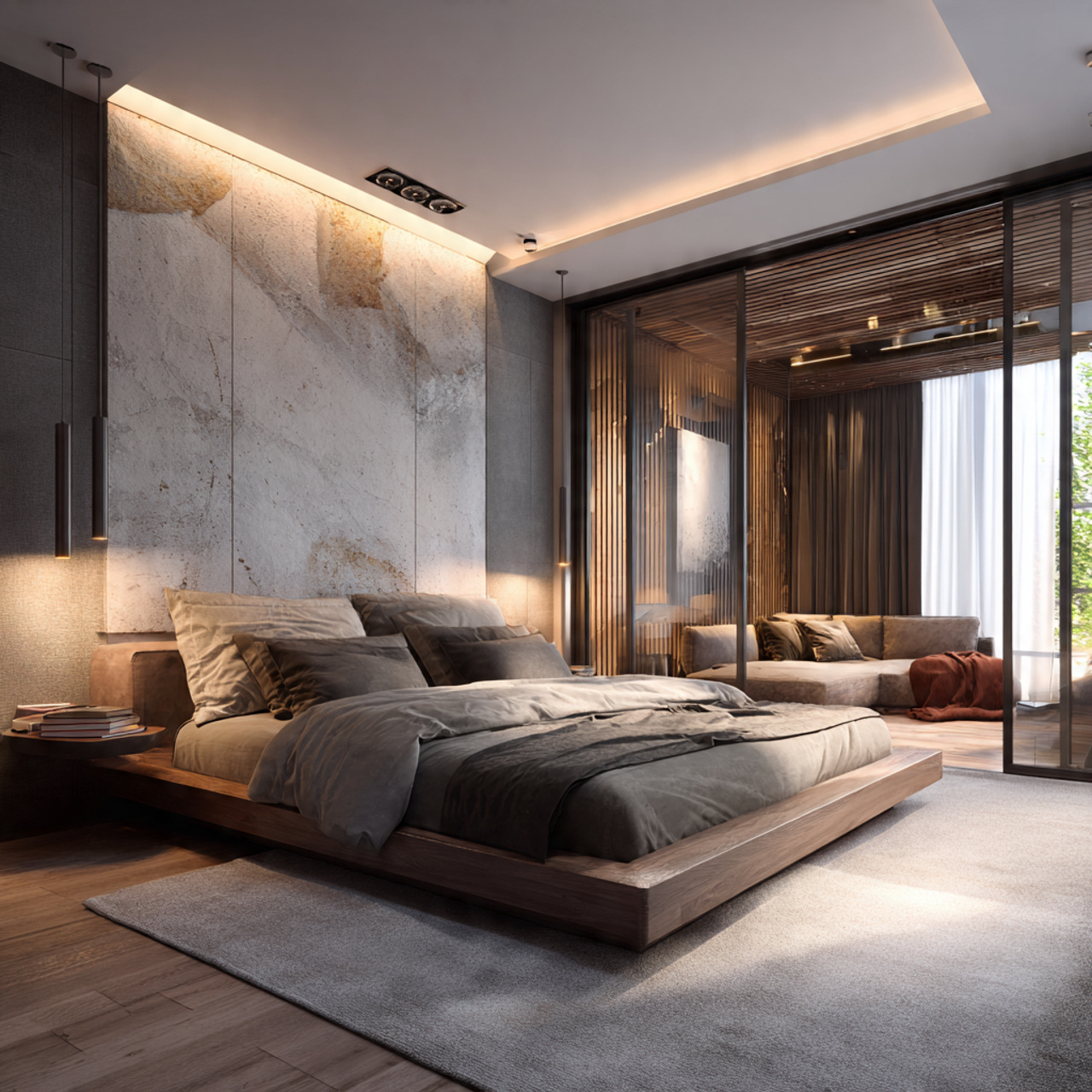
Scent influences emotional memory more than most people realize. A consistent, gentle fragrance can make a bedroom feel intentionally calm.
Strong or artificial scents tend to feel distracting after prolonged exposure. Over time, they can disrupt relaxation rather than support it.
Using one light, familiar scent keeps the atmosphere steady.
Tip: Consistency creates comfort, while constant scent changes create noise.
Storage Solutions That Disappear Visually
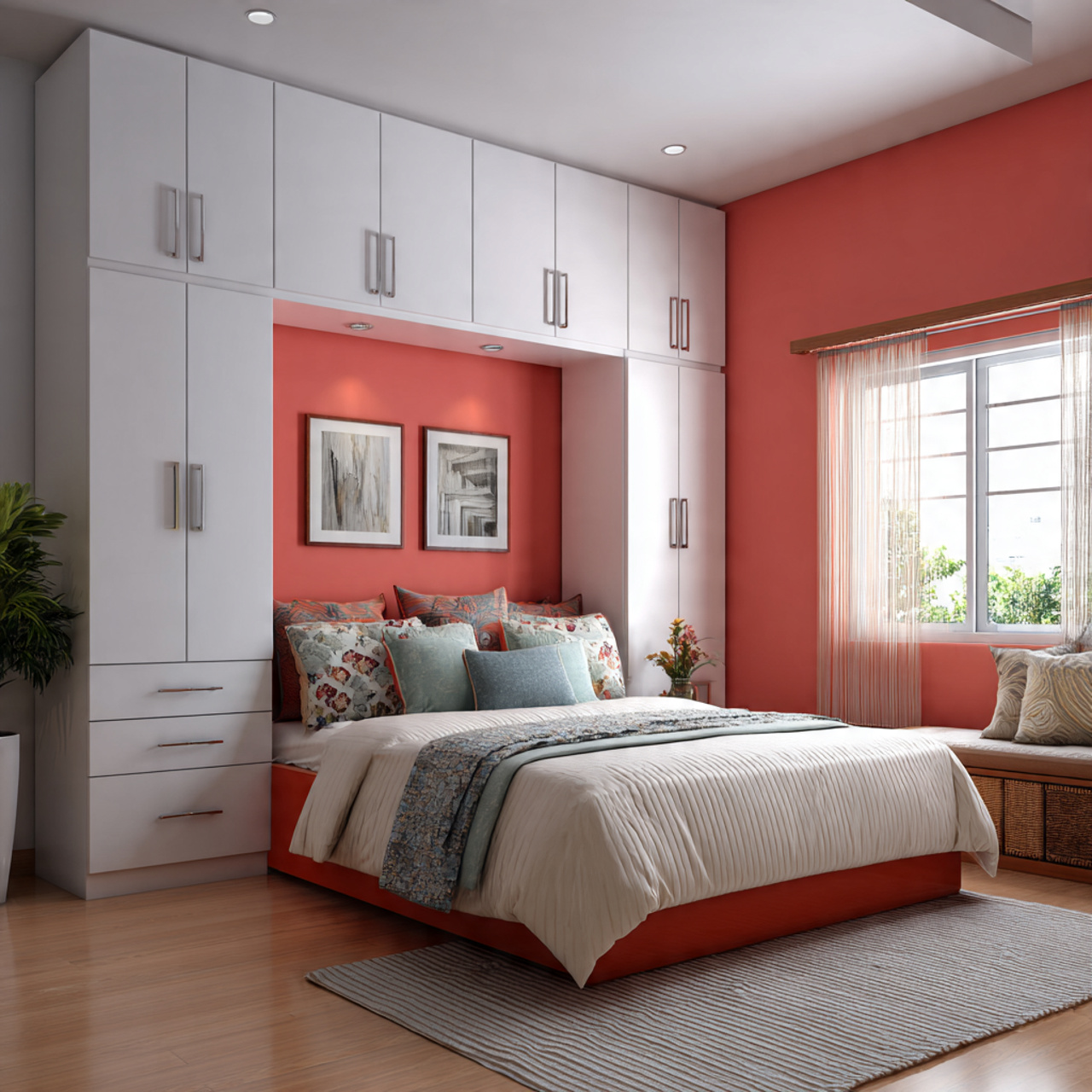
Visible storage often creates more mental noise than people expect. Even when tidy, open storage keeps the eye busy in a room meant for rest.
Over time, bedrooms with exposed storage tend to feel harder to maintain. Small visual reminders of clutter quietly add stress, even when everything has a place.
Furniture with closed or hidden storage keeps the room visually calm and easier to live with.
Tip: If storage must be visible, it should look deliberate and well contained.
Balanced Symmetry That Feels Human, Not Rigid
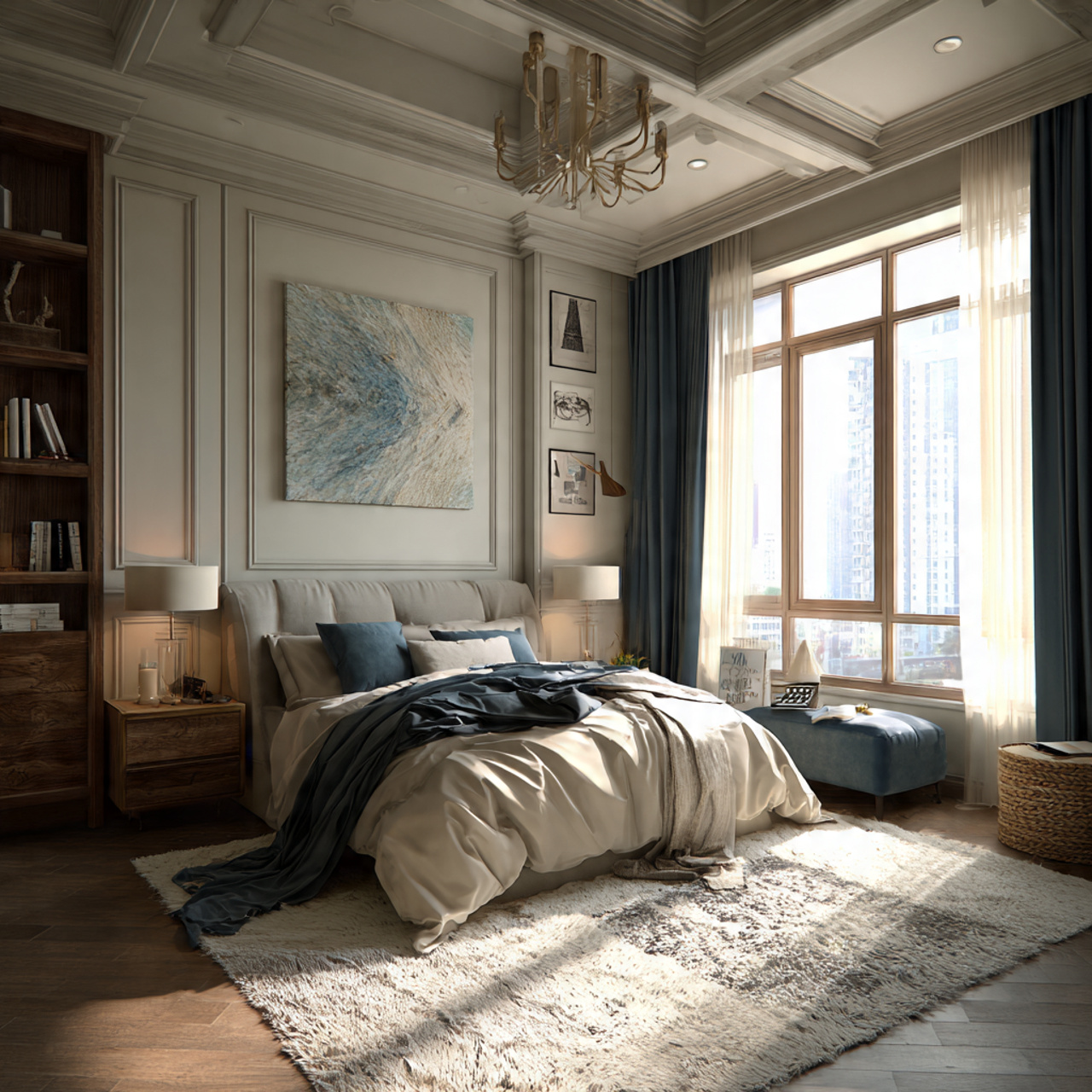
Symmetry naturally calms the eye, which is why it works so well in bedrooms. The problem appears when everything matches too perfectly and starts to feel stiff.
Strict symmetry can make a room feel staged rather than lived in. As needs change, this rigidity becomes uncomfortable rather than reassuring.
Balancing scale and placement instead of exact matches keeps the room flexible.
Tip: Aim for equal visual weight, not identical objects.
Personal Objects Used With Restraint and Meaning
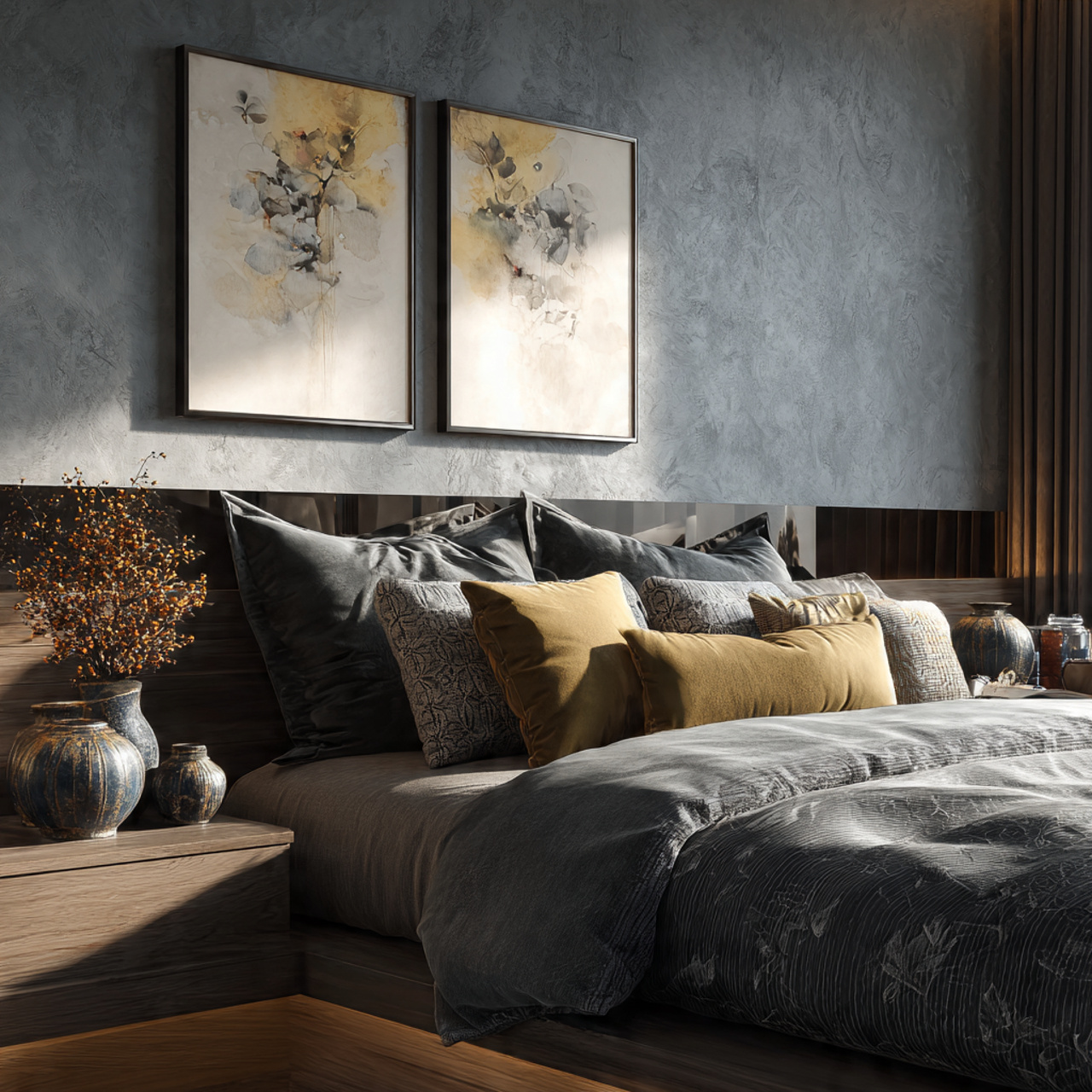
Personal objects give bedrooms emotional grounding when chosen thoughtfully. Too many items, however, dilute their meaning and create distraction.
Over time, crowded personal displays lose their impact and start to feel like clutter. The room feels busy even when nothing is technically wrong.
Selecting fewer pieces with genuine attachment keeps the space personal and calm.
Tip: If an object no longer triggers a feeling, it no longer belongs.
Soft Wall Finishes That Reduce Glare and Tension
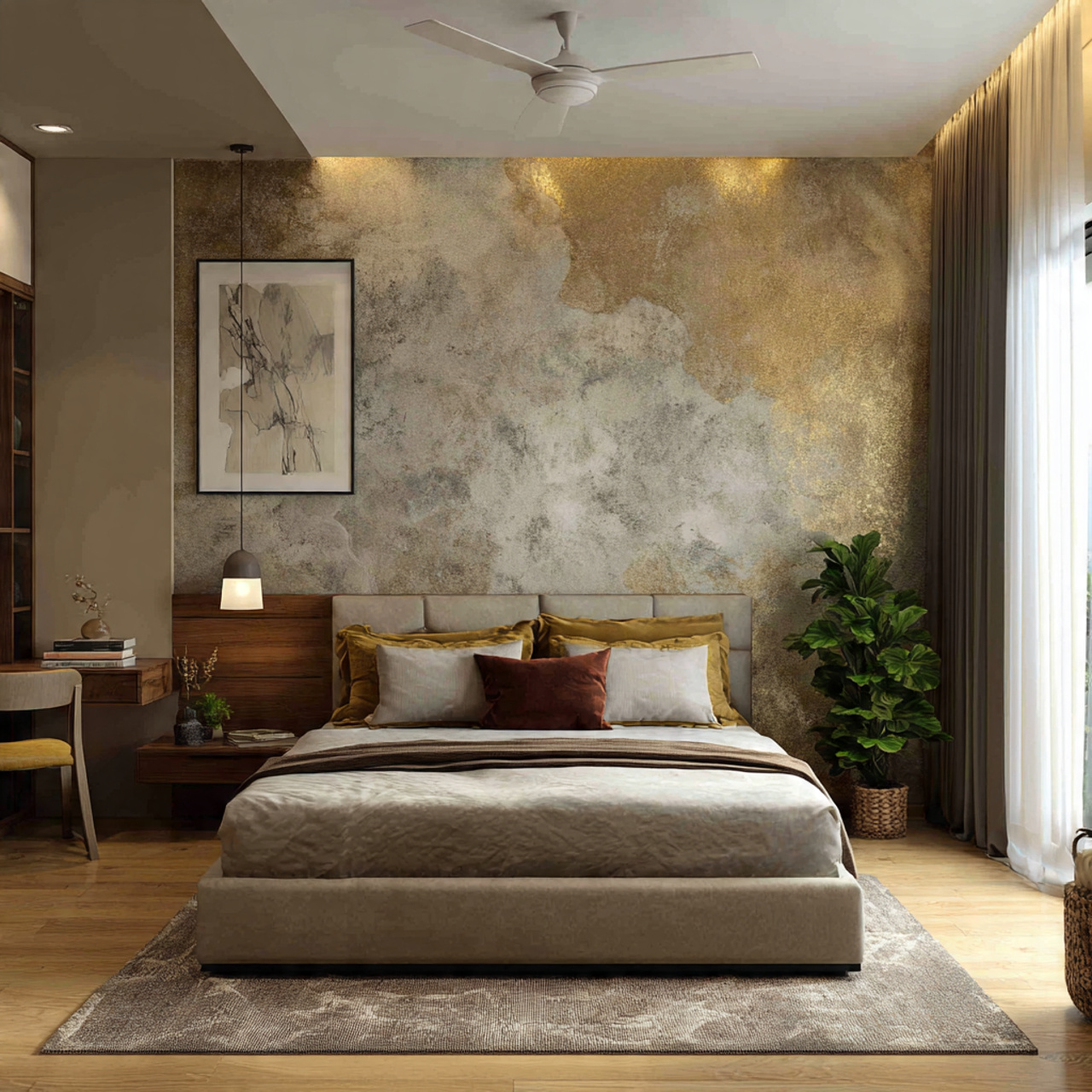
Wall finish affects how a bedroom feels at night more than most people realize. Glossy surfaces reflect light in ways that can feel sharp and unsettling.
As lighting changes throughout the evening, high sheen finishes often exaggerate glare. This subtly interferes with the room’s ability to feel restful.
Matte or eggshell finishes soften light and hide imperfections more gracefully.
Tip: Reserve high-gloss finishes for spaces that need durability, not calm.
Color Continuity That Connects the Bedroom to the Home
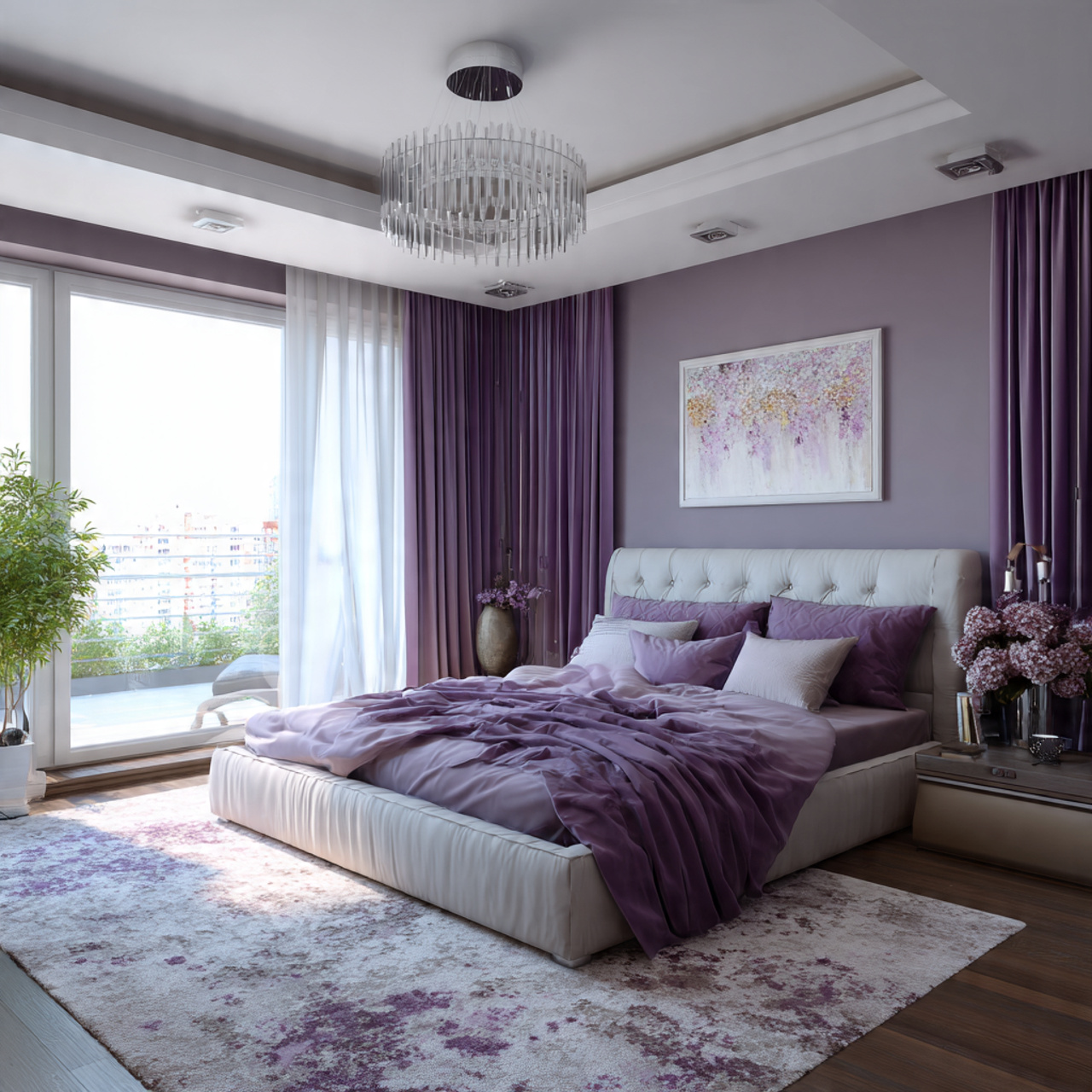
Bedrooms feel more settled when they relate visually to nearby spaces. Abrupt color changes can make the room feel disconnected from the rest of the home.
Over time, this disconnect creates subtle tension, especially in open or adjacent layouts. The bedroom can feel like a separate zone rather than part of a whole.
Using tonal variations of existing colors maintains flow without repetition.
Tip: Repeating one familiar tone elsewhere strengthens cohesion.
Common Bedroom Decor Mistakes
Decorating for Impact Instead of Comfort
This usually happens when visual inspiration outweighs daily habits. Bedrooms are styled to impress rather than to support real rest and movement.
Over time, the room begins to feel busy and mentally tiring, even if it looks polished. The space asks for attention instead of offering relief.
Reducing excess decor and simplifying key areas restores calm. If ignored, the bedroom continues to feel unsettled at night.
Ignoring Light Temperature at Night
Many bedrooms rely on cool or bright lighting because it appears clean during the day. The issue becomes clear in the evening when the light feels sharp and overstimulating.
Cool light interferes with relaxation and can quietly affect sleep quality. The room may look fine but never fully feels comfortable after dark.
Switching to warmer bulbs and layered lighting usually solves this quickly. Leaving lighting unchanged keeps the space feeling restless.
Choosing Trend Colors Too Quickly
Trend colors are often chosen without considering long-term exposure. What feels exciting at first can become tiring with daily use.
Within a year, these colors often feel dated, especially in a room meant for rest. Repainting becomes regret rather than renewal.
Using adaptable neutrals and limiting trends to accents prevents this cycle. Ignoring it leads to frequent changes and wasted effort.
Overfilling the Bedroom With Furniture
This happens when functionality is confused with quantity. Extra pieces are added without considering scale or movement.
The bedroom starts to feel cramped, and daily routines become less comfortable. Even good furniture feels heavy when there’s too much of it.
Removing unnecessary pieces restores flow and calm. If ignored, the room continues to feel crowded over time.
Frequently Asked Questions About Bedroom Decor
How often should bedroom decor be updated?
In real homes, bedrooms work best with small updates every few years rather than full redesigns. Simple changes like bedding, lighting, or wall color refresh the space without disrupting comfort or routine.
Are dark bedrooms a bad idea?
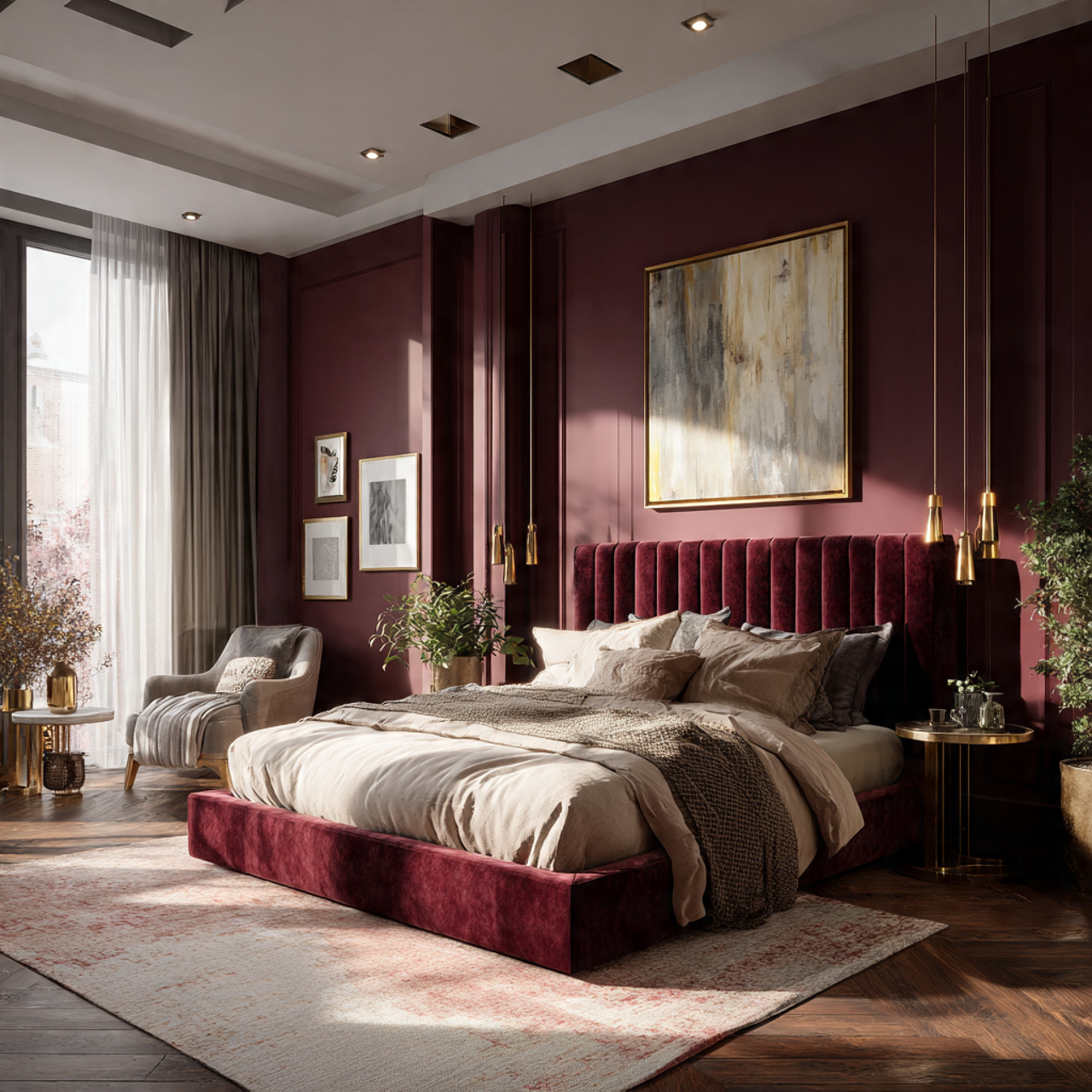
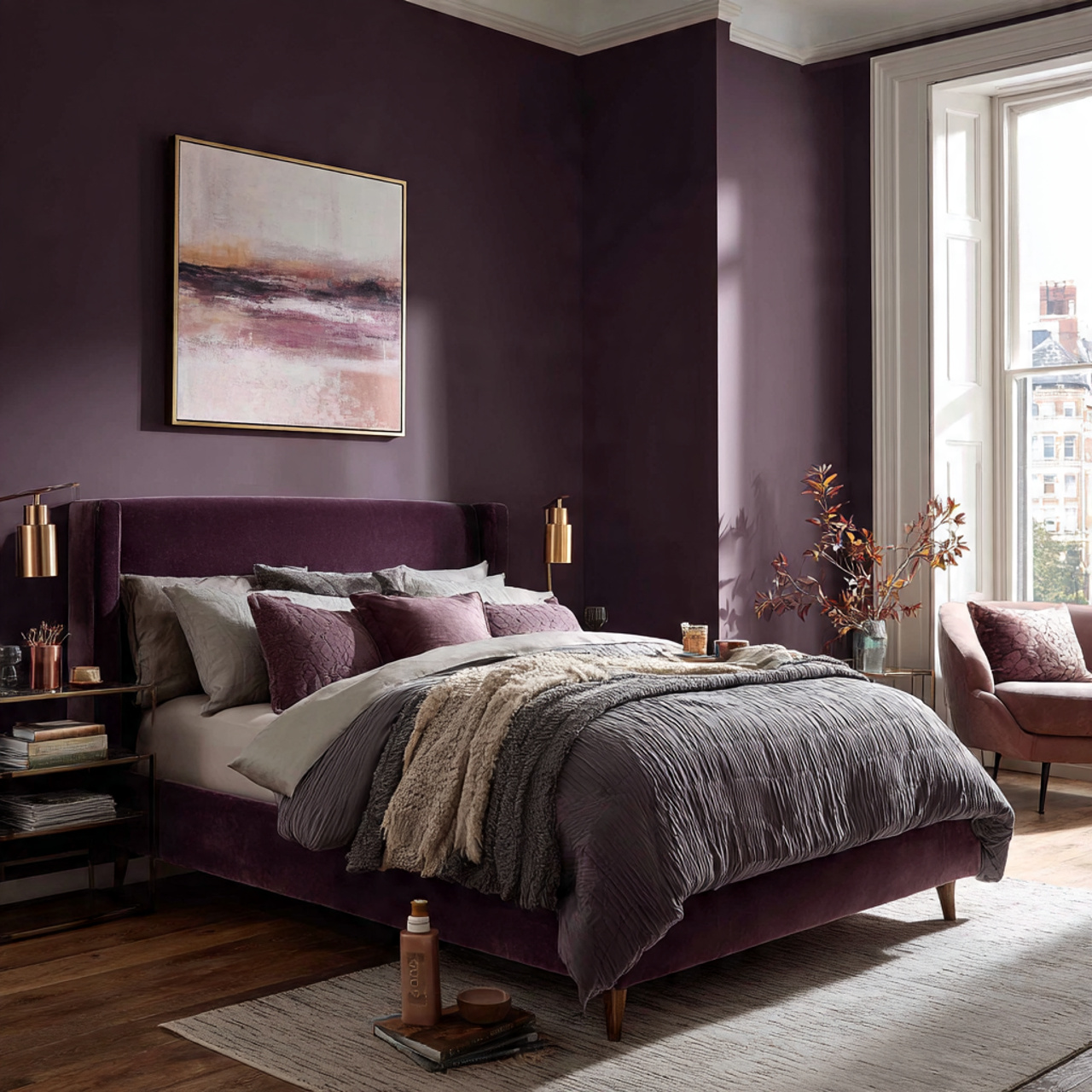
Dark bedrooms are not a problem when lighting and texture are handled carefully. In practice, darker walls often feel cozy and calming when balanced with warm light sources and soft fabrics.
Should bedroom decor match the rest of the house?
Bedroom decor should visually relate to nearby rooms, but it doesn’t need to match exactly. Homes feel calmer when there is tonal continuity rather than abrupt color or style shifts.
Is minimal decor always better for sleep?
Minimal decor helps only when it feels intentional rather than empty. Bedrooms support sleep best when visual noise is reduced but personal comfort and warmth are still present.
Can small bedrooms still feel luxurious?
Yes, small bedrooms often feel more luxurious when materials and lighting are chosen thoughtfully. Quality fabrics, soft lighting, and restrained color palettes matter more than square footage.
Conclusion
Bedroom decor works best when it quietly supports daily life rather than trying to impress at first glance. Thoughtful bedroom decor choices that prioritize comfort, layout, lighting, and long-term usability create a space that continues to feel right months and even years later. Instead of changing everything at once, begin with one small adjustment that improves how the bedroom feels at night, and allow the rest to evolve naturally with your routine.