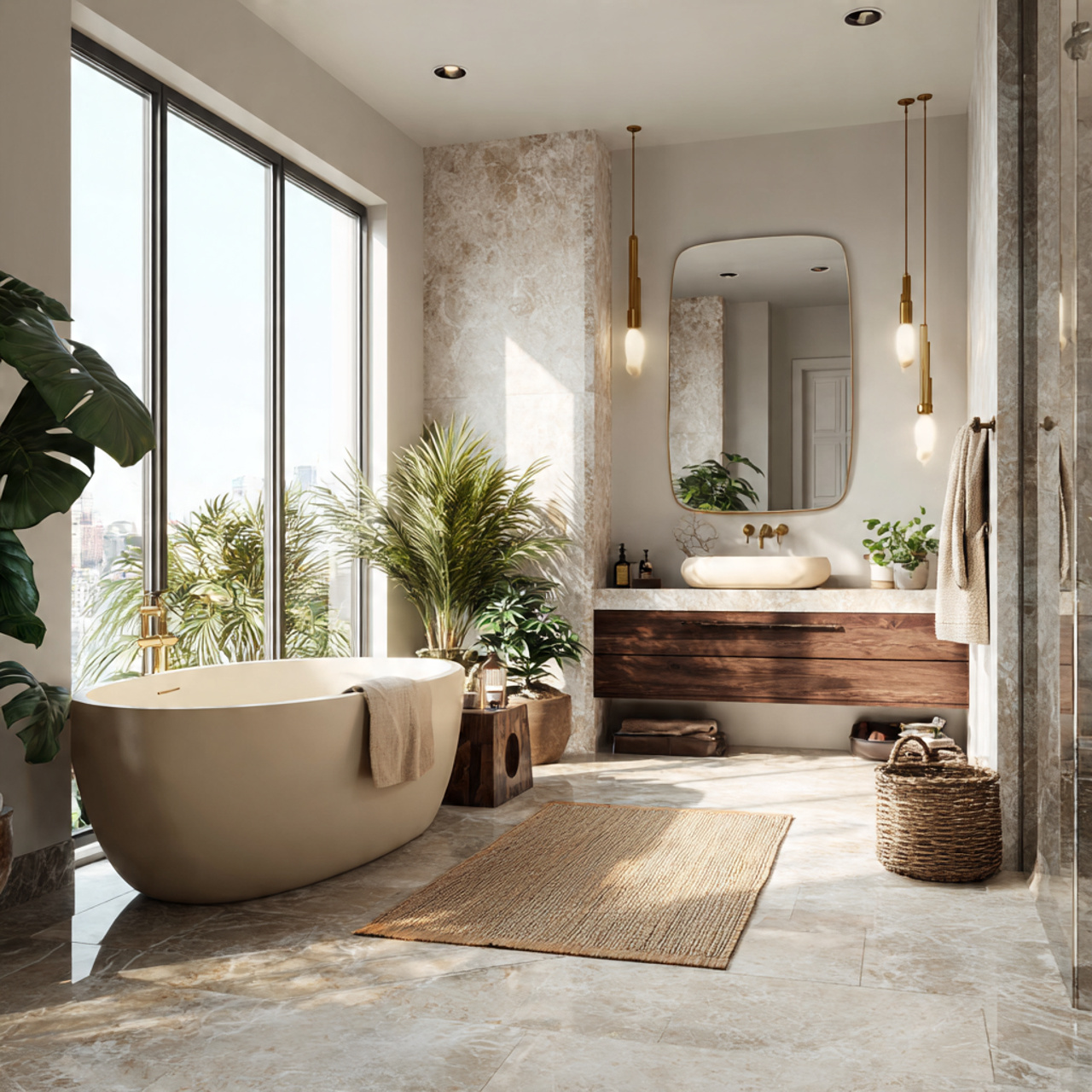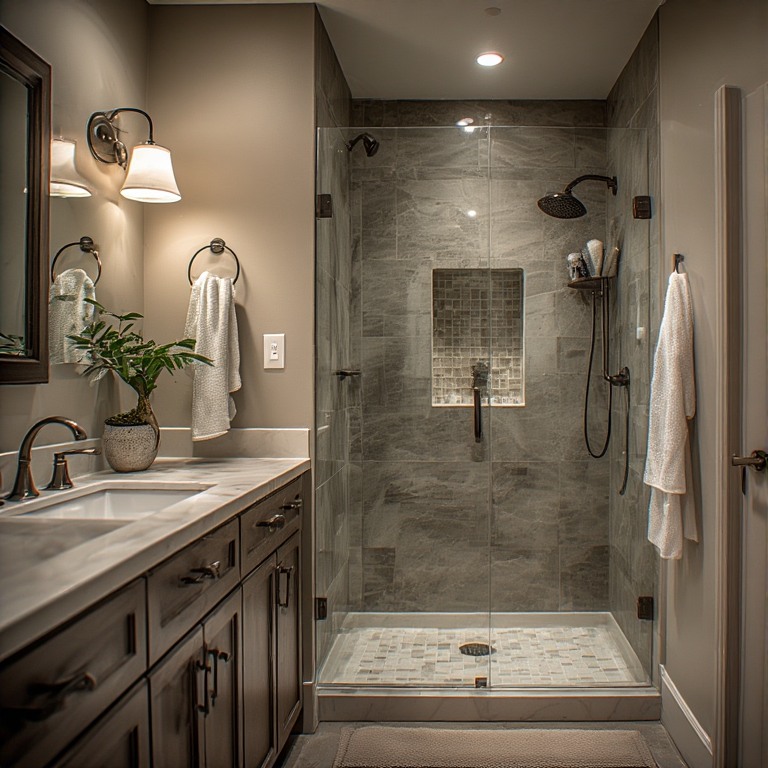
16 Earth Tone Bathroom Designs That Look Luxurious, Not Dark
Earth tone bathroom designs often go wrong in the same way. The room feels dull instead of welcoming. Beige replaces personality, and everything starts blending together.
More people are discovering this approach than ever before. The difference is that today’s earth tone bathrooms use contrast, texture, and lighting to feel layered, warm, and quietly luxurious instead of flat and forgettable.
Earth tone bathroom designs work best when warm materials, natural textures, and thoughtful contrast are balanced together rather than relying on color alone.
Why Earth Tone Bathroom Designs Feel More Inviting Than Many Modern Bathrooms
In my experience, people are not choosing earth tone bathroom designs because they want more beige. They are choosing them because they want rooms that feel calmer when life feels busy. A bathroom is often the first room you enter in the morning and the last room you visit before bed. The atmosphere matters more than most people realize.
One thing I noticed in real homes is that earth tones solve a problem that bright white bathrooms often create. White can feel sharp under artificial lighting, especially at night. Earth tones soften the experience. They make a bathroom feel lived in without feeling old, and warm without feeling heavy. That balance is exactly why people keep returning to this style.
I only share things I would actually use in my own home.
16 Earth Tone Bathroom Designs Worth Trying In Your Own Home
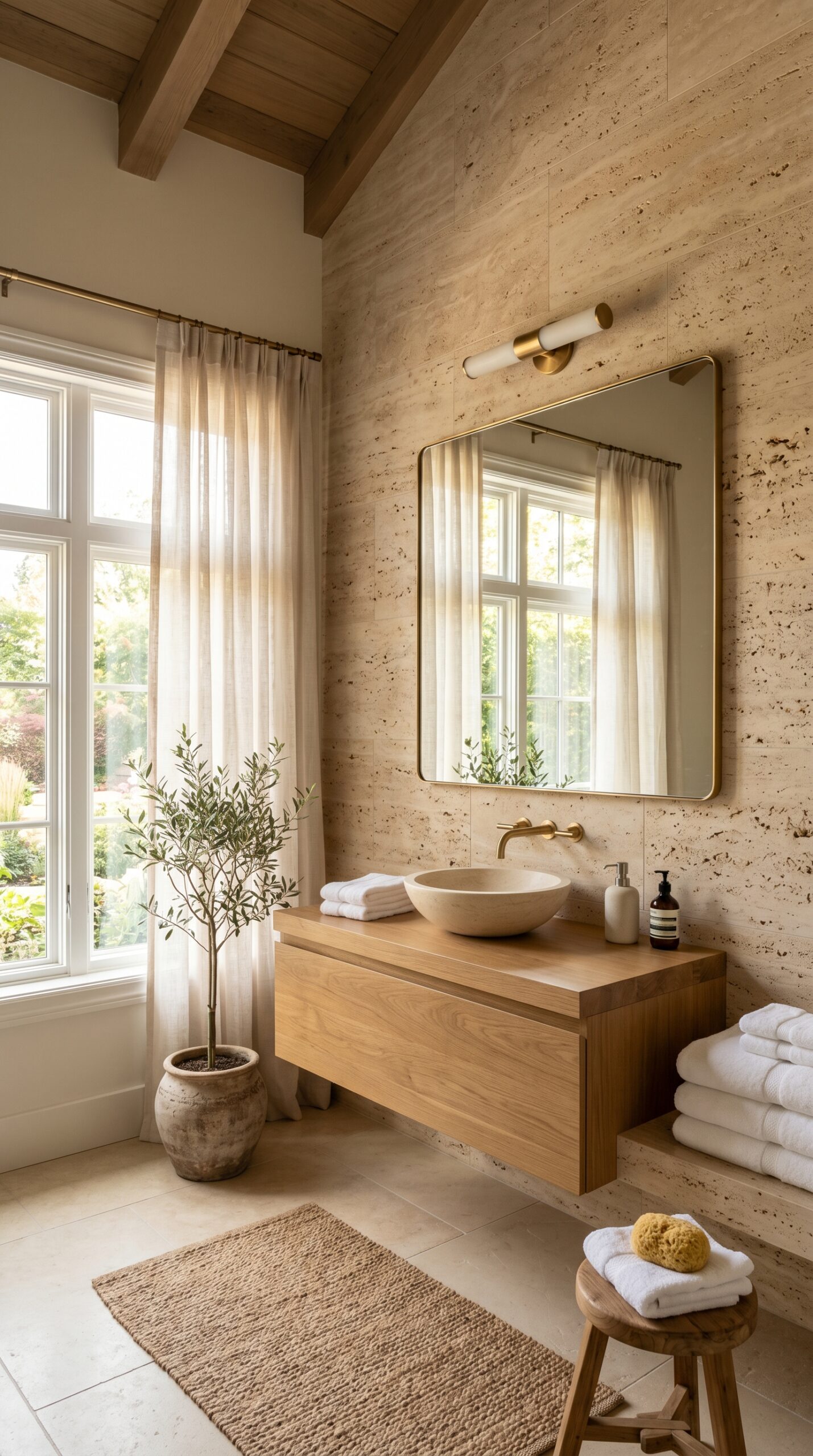
A Travertine Feature Wall With A Calm Morning Feel For A Luxury Spa Atmosphere
The room feels cold. Morning light hits plain walls and everything feels harder than it should.
Imagine stepping into a bathroom where a full travertine wall catches soft sunlight coming through a frosted window. The stone has gentle movement and subtle color shifts that make the room feel alive before a single accessory is added. Instead of staring at a blank painted wall, your eyes land on texture that immediately feels calming.
In my experience, travertine works best when paired with walnut brown, creamy ivory, and warm sand tones. This combination suits a primary bathroom particularly well because it creates the feeling of a high-end retreat without needing expensive decorative pieces everywhere. After living with natural stone surfaces, I noticed they actually look better over time because small imperfections make them feel authentic rather than damaged.
For a real-home version, install a large-format travertine wall panel system behind the vanity or bathtub. It gives the room a luxury focal point that looks far more expensive than many decorative alternatives. Once this is in place, the bathroom stops feeling like a utility room and starts feeling like somewhere you genuinely want to spend time.
Tip: Texture usually matters more than color in an earth tone bathroom.
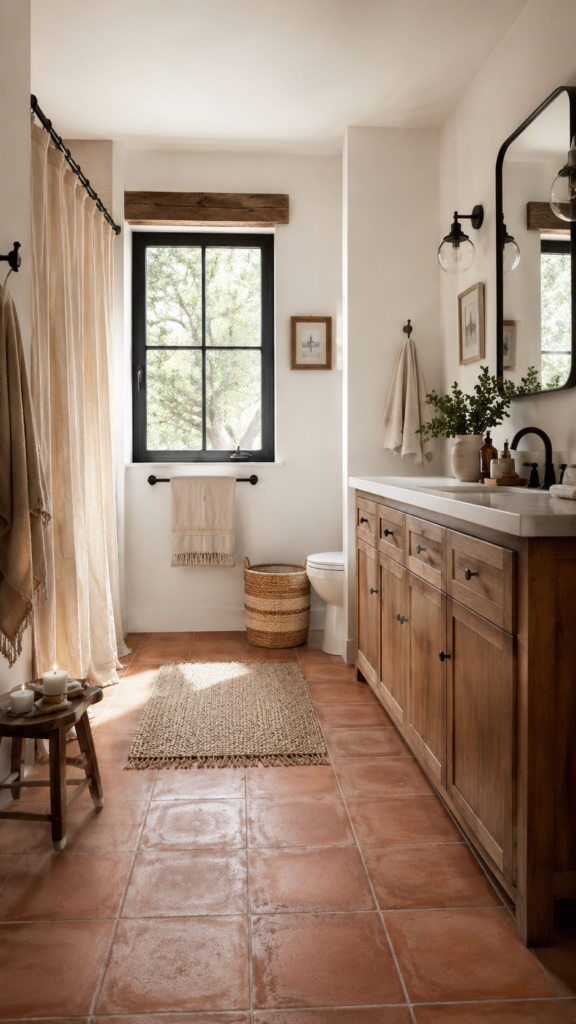
Terracotta Floor Tiles With A Grounded Everyday Warmth For A Welcoming Bathroom
The floor feels lifeless. Everything above it struggles to compensate.
Terracotta flooring changes the emotional center of the room immediately. Instead of cold tile reflecting harsh light, the floor introduces warmth that feels natural rather than decorative. The effect becomes especially noticeable during early morning hours when sunlight begins crossing the floor.
After having this in my own home for months, I noticed the floor often becomes the element people remember most. Warm terracotta paired with ivory walls and muted brass details creates a combination that feels welcoming without looking overly designed. This approach works particularly well in family bathrooms where comfort matters more than showing off trends.
To recreate the look, choose matte terracotta porcelain floor tiles with subtle variation rather than highly uniform pieces. They are easier to maintain while still delivering the visual warmth people love. When the flooring feels this grounded, every other decision becomes easier because the room already has a strong foundation.
Tip: Fix the floor before touching the walls. The order changes everything.
A Sand Beige Limewash Finish With A Soft Relaxed Mood For Greater Depth
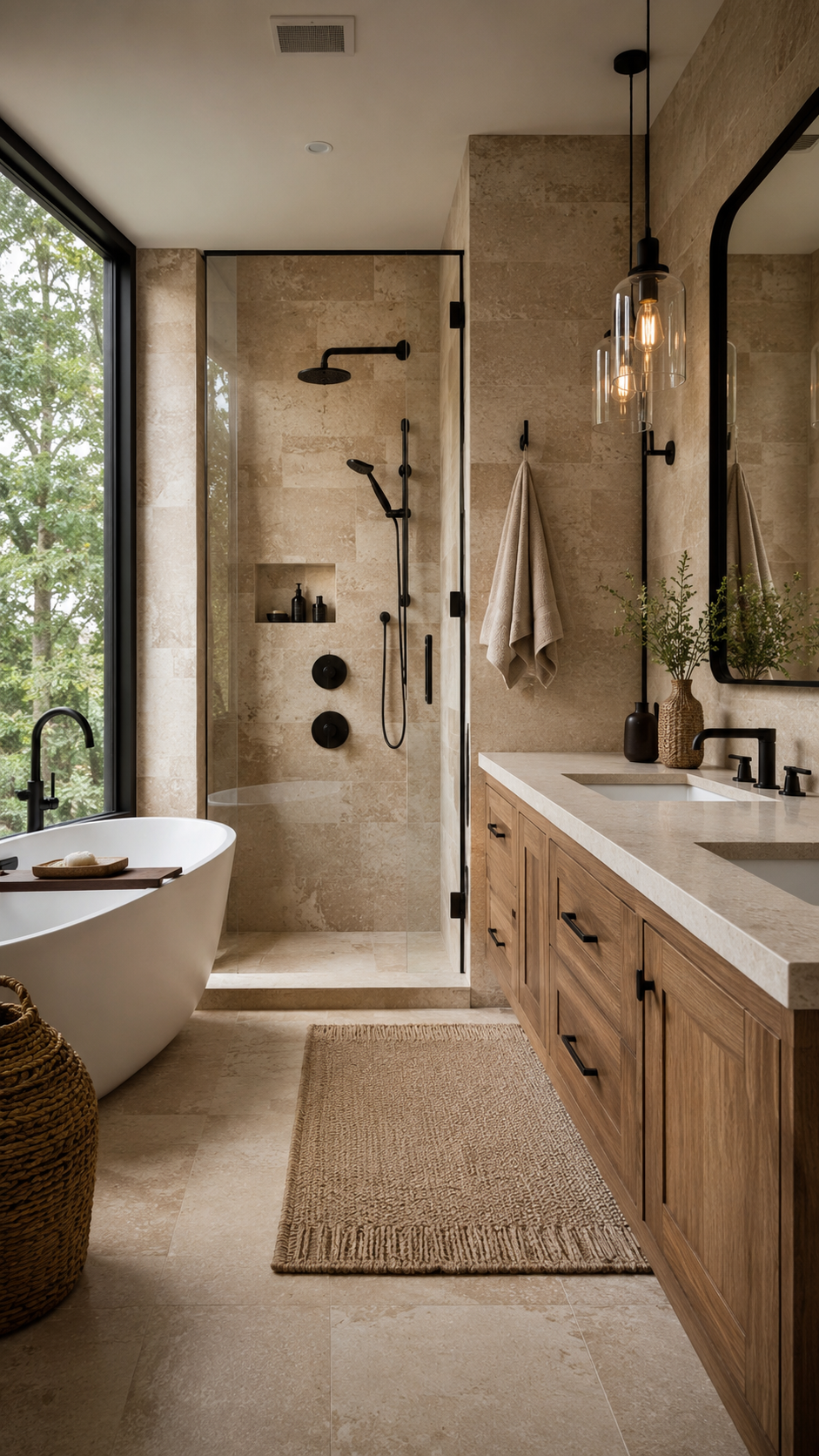
The walls feel flat. The room lacks any sense of movement.
A limewash finish changes the way light behaves across a surface. During the day, subtle shifts appear across the wall, giving the room depth without introducing patterns or busy details. It feels calm, but never boring.
One thing I noticed in real homes is that limewash solves a common earth-tone problem. Many beige bathrooms look one-dimensional because every surface reflects light the same way. A sand beige limewash finish paired with creamy white trim and pale oak accents creates depth without adding clutter. This works beautifully in smaller bathrooms where visual softness is more important than decorative complexity.
A practical approach is applying a warm beige mineral limewash wall finish behind the vanity wall while keeping surrounding surfaces simple. This kind of finish is available in many budget ranges and often looks better than expensive wallpaper once installed. You may find yourself appreciating the walls more than any decorative object in the room.
Tip: Evening light reveals limewash texture better than daylight.
Most people never notice this but it changes everything.
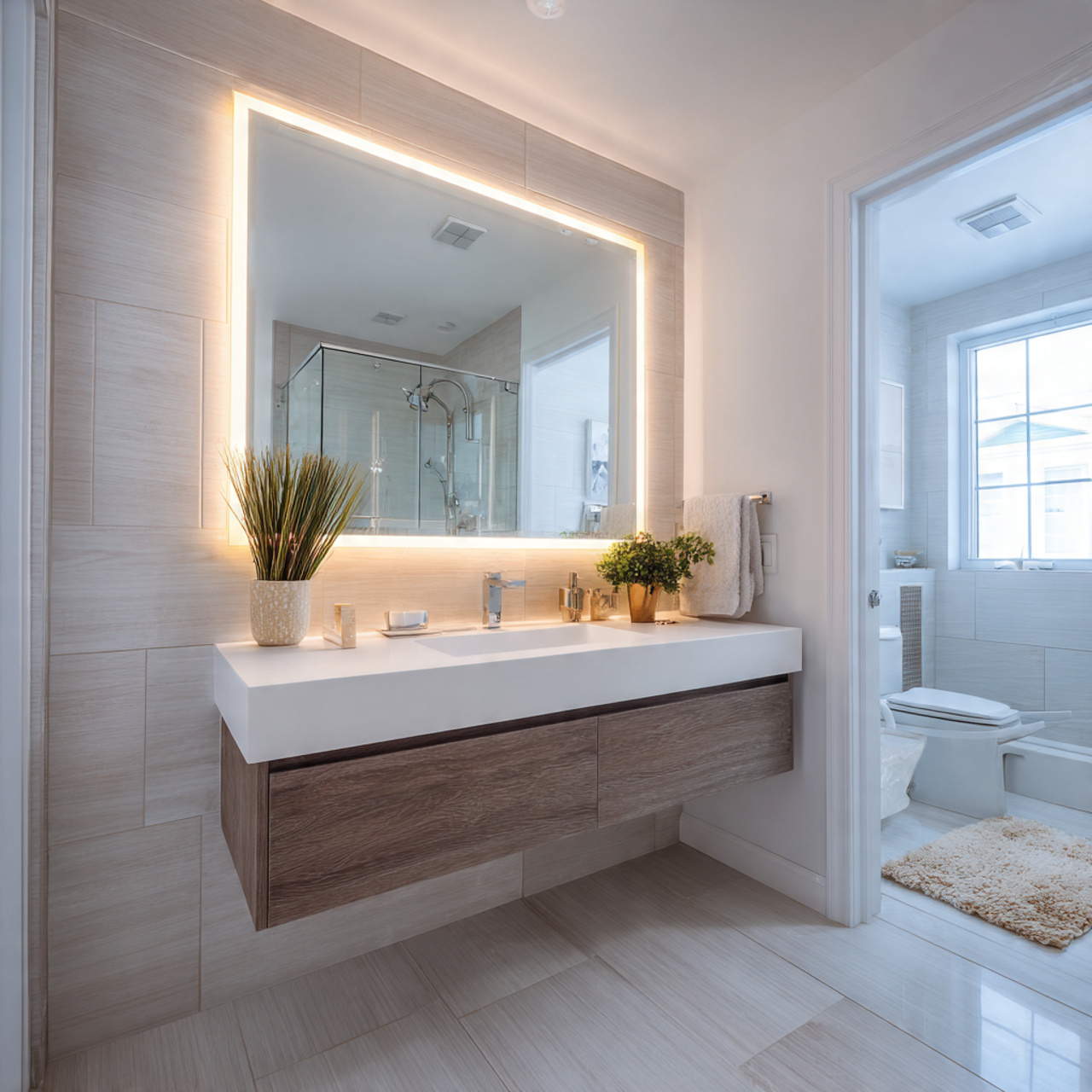
A Floating Oak Vanity With A Calm Daily Flow For A More Spacious Bathroom
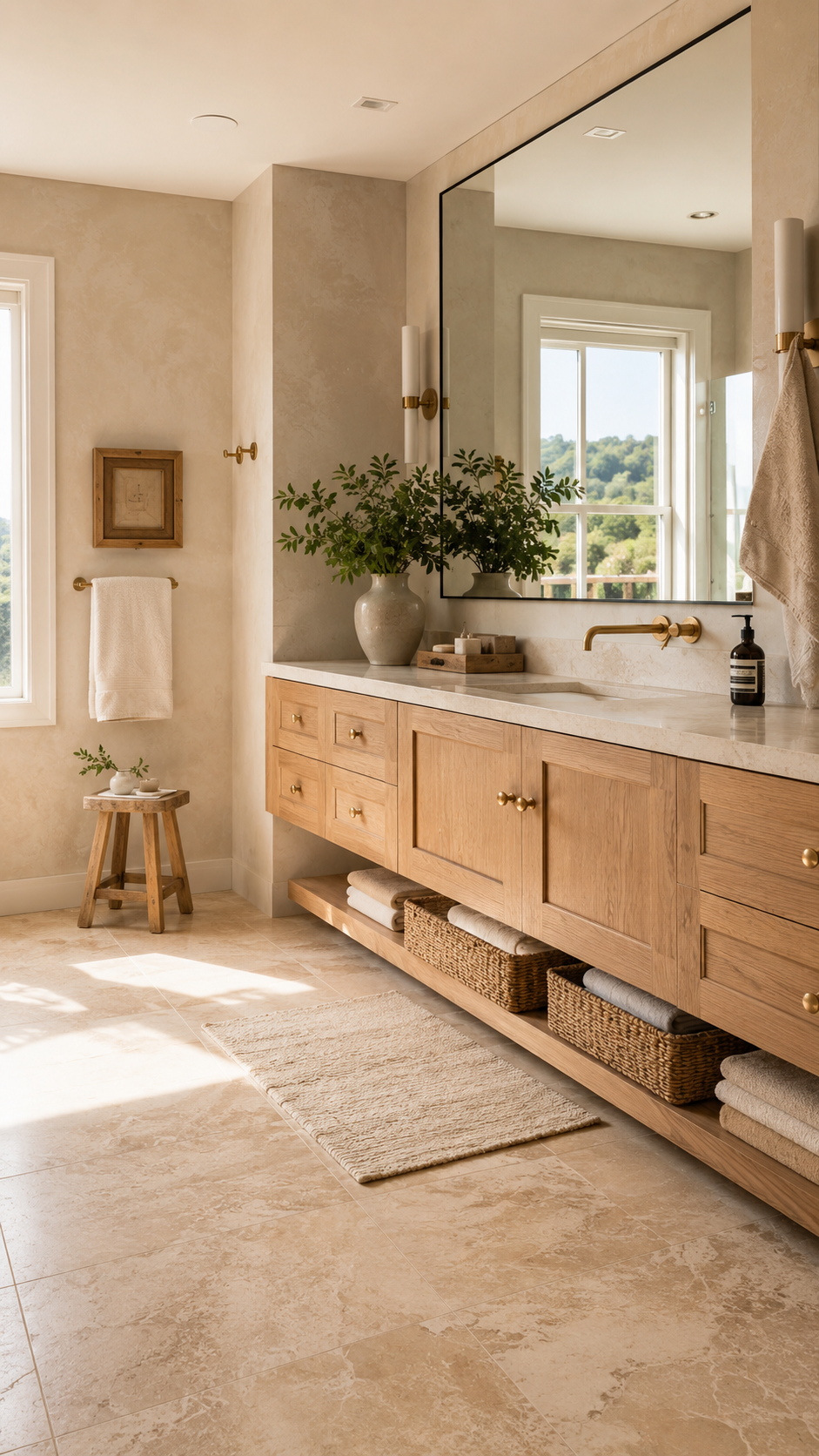
The bathroom feels crowded. Heavy cabinetry is usually the reason.
A floating vanity immediately creates visual breathing room because more floor remains visible. Even in a modest bathroom, this simple change makes the layout feel larger and easier to navigate. The effect becomes stronger when natural light reaches underneath the cabinet.
At first I thought this would not work in family bathrooms because floating pieces often look too modern. After living with this style, I realized the opposite was true. Warm oak paired with cream stone feels approachable rather than stark. The combination works exceptionally well in both contemporary and traditional homes because the natural materials soften the overall look.
Look for a floating white-oak vanity with integrated storage drawers rather than open shelving. Storage keeps the room functional while the floating design maintains visual openness. Once installed, many bathrooms feel significantly larger without moving a single wall.
Tip: The vanity should feel lighter than the floor beneath it.
Olive Green Accents With A Peaceful Evening Mood For Better Color Balance
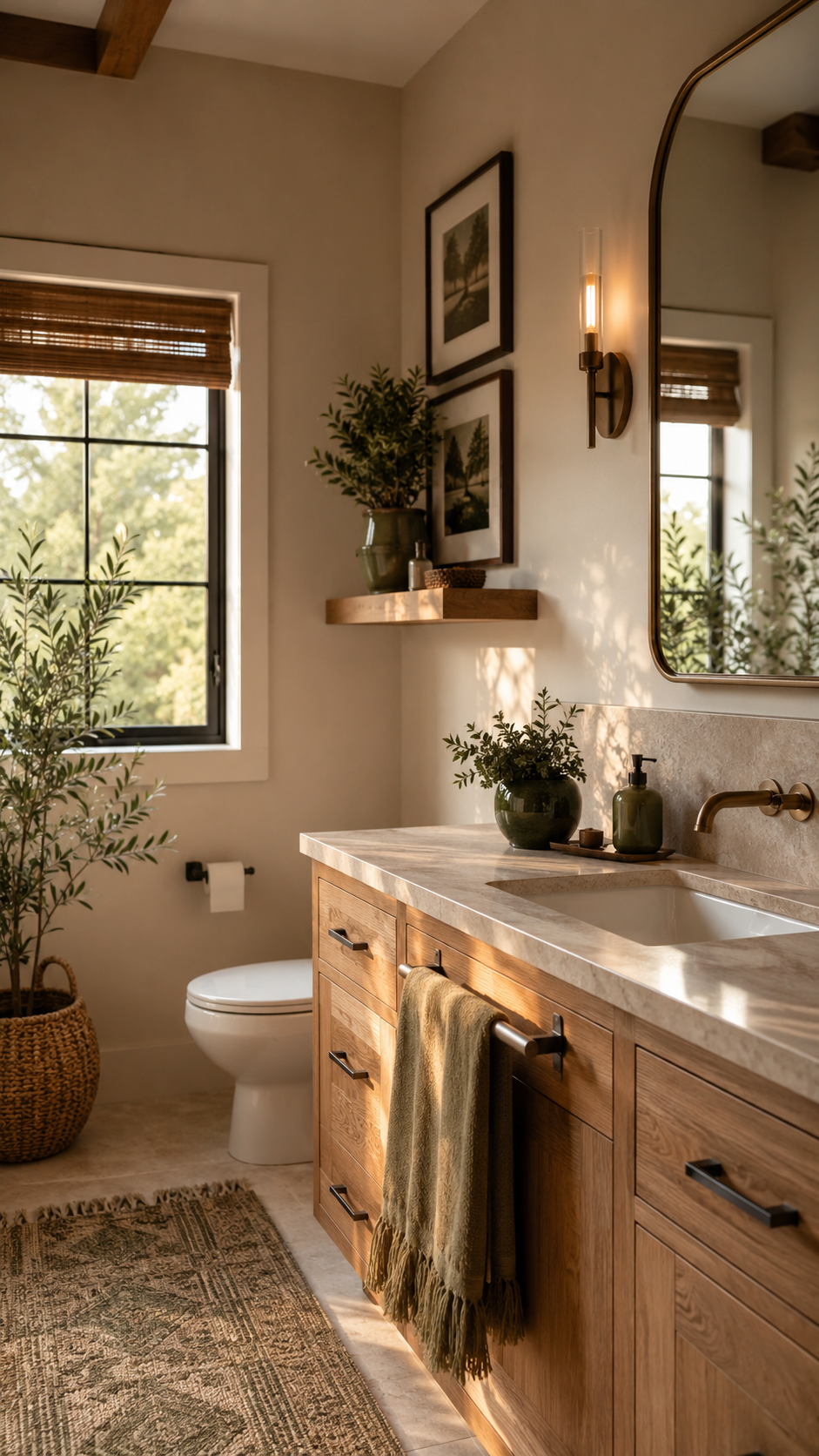
The room feels too beige. Everything blends together.
A carefully chosen olive accent introduces contrast without disrupting the calm atmosphere that makes earth tone bathroom designs appealing. Instead of creating a bold statement, olive works quietly in the background while giving the palette more depth and personality.
I made this mistake twice before understanding what went wrong. Bright greens felt disconnected from the rest of the room, while olive felt natural. Paired with warm beige, walnut wood, and soft ivory, olive becomes one of the easiest ways to add interest without overwhelming the space. This combination works particularly well for bathrooms used heavily in the evening because the color becomes richer under softer lighting.
Start small with a handcrafted olive ceramic accessory set rather than repainting walls immediately. This allows you to test the color relationship before making larger commitments. In many cases, these smaller accents provide all the balance the room needs.
Tip: Small color accents often outperform large painted surfaces.
I got earth tone bathroom designs wrong for almost two years. I kept adding more accessories because I thought the room needed more personality. One weekend I removed half the decor, kept the natural materials, and suddenly the space felt calmer, larger, and much more expensive.
An Arched Wood Mirror With A Relaxed Morning Feel For Softer Visual Balance
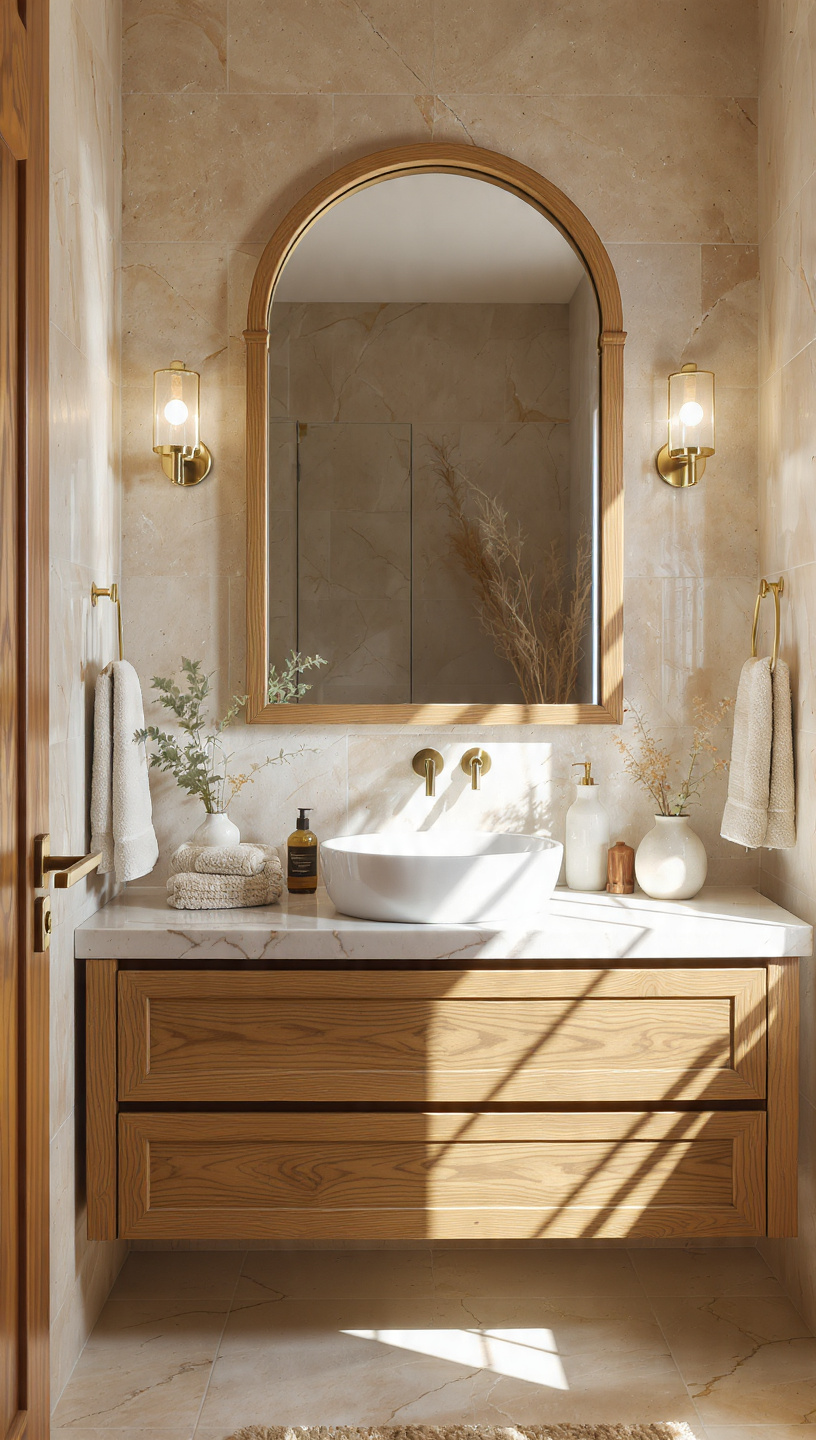
The wall feels too rigid. Sharp lines can make a bathroom feel harder than it should.
An oversized arched mirror introduces a shape that immediately softens the room. Instead of competing with tile, cabinetry, and fixtures, the curved frame breaks up the straight lines that dominate most bathrooms. The result feels calmer before you even notice why.
In my experience, this idea works best with cream tile, warm oak, and soft black fixtures. The color combination feels balanced because every element has a job. After living with an arched mirror for months, I noticed guests often commented on the room feeling welcoming even though they could not identify exactly what changed.
Choose a large oak-framed arched wall mirror with a slim profile and hang it slightly wider than the vanity. The larger scale helps the room feel more custom while reflecting more natural light throughout the day. Once it is installed, the wall starts feeling intentional rather than unfinished.
Tip: Most people buy a mirror that is too small.
Taupe Shower Tile With A Quiet Daily Routine For A Seamless Spa Effect
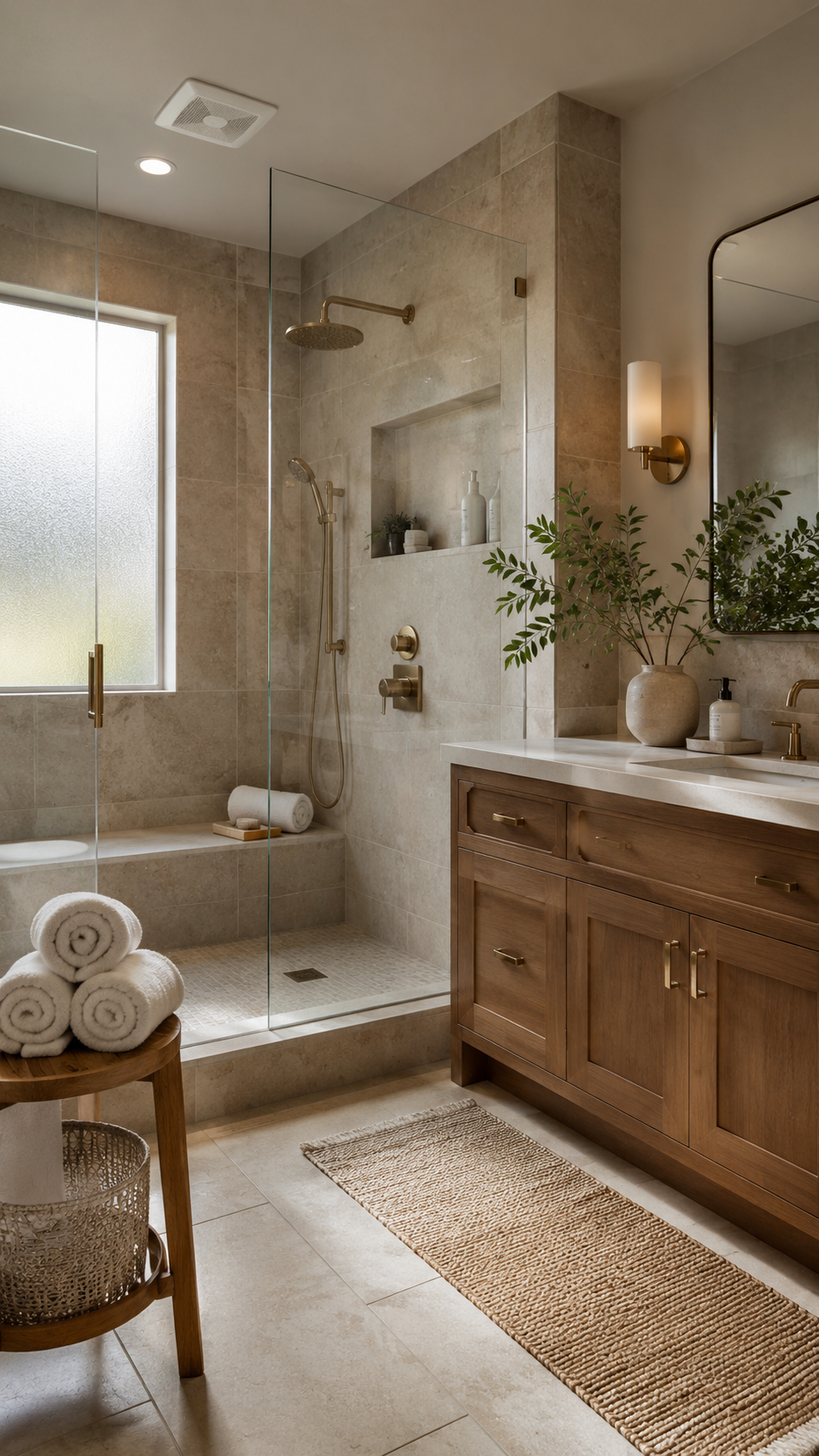
The shower feels visually busy. Too many grout lines and color changes create unnecessary noise.
Large-format taupe tile with matching grout allows the shower to become part of the room instead of competing with it. The eye moves across the space naturally because there are fewer interruptions. This creates a calmer experience every morning.
One thing I noticed in real homes is that earth tone bathrooms often become darker when designers introduce too many contrasting tiles. Taupe paired with warm ivory and muted brass feels lighter because the transitions stay gentle. This works especially well in smaller bathrooms where visual flow matters more than decorative detail.
Install a large-format matte taupe porcelain tile with coordinated grout across the shower walls. The room immediately feels larger because your eye travels farther before stopping. A simpler version often works better than the decorative one.
Tip: Matching grout is one of the most overlooked upgrades.
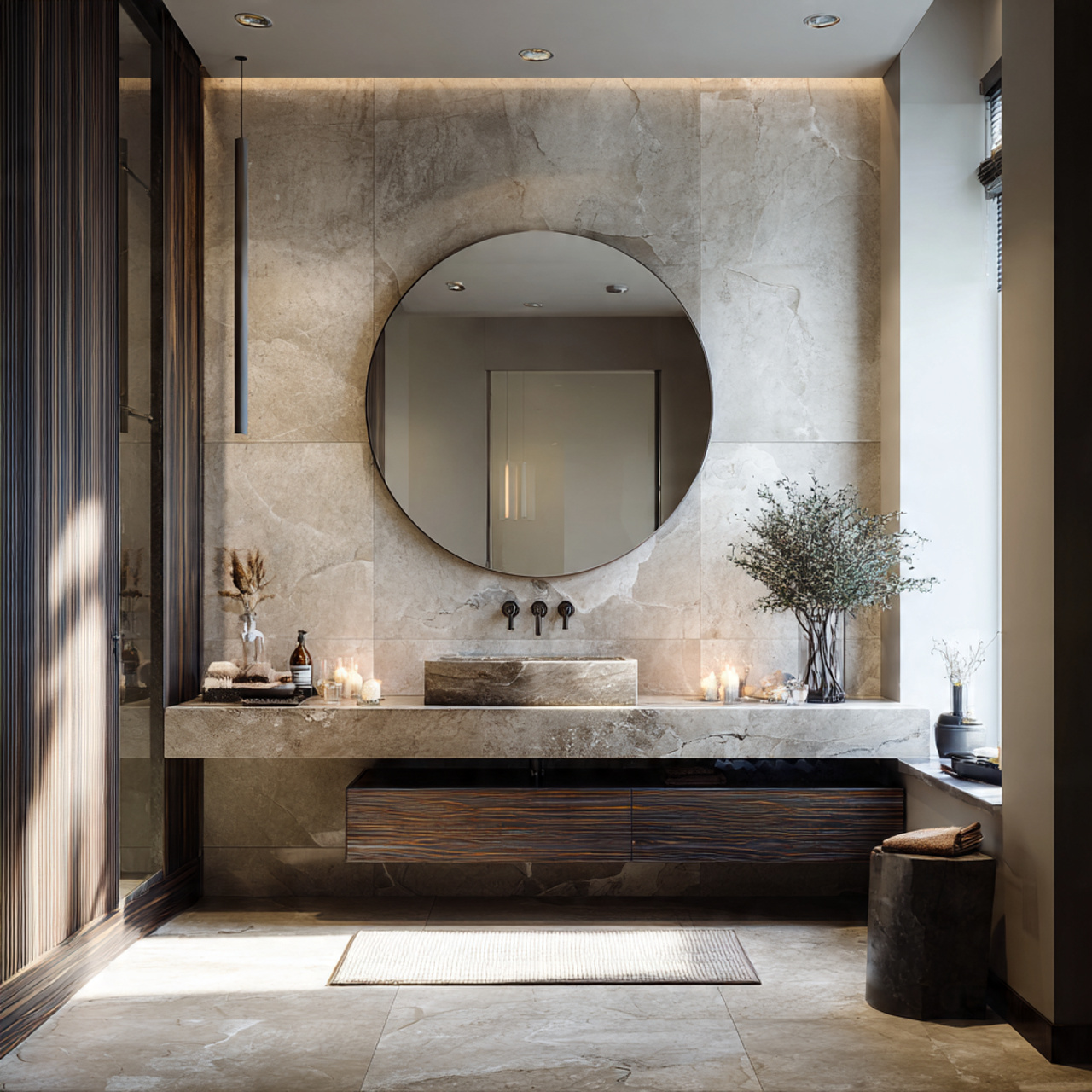
A Stone Vessel Sink With A Collected Feel For Natural Character
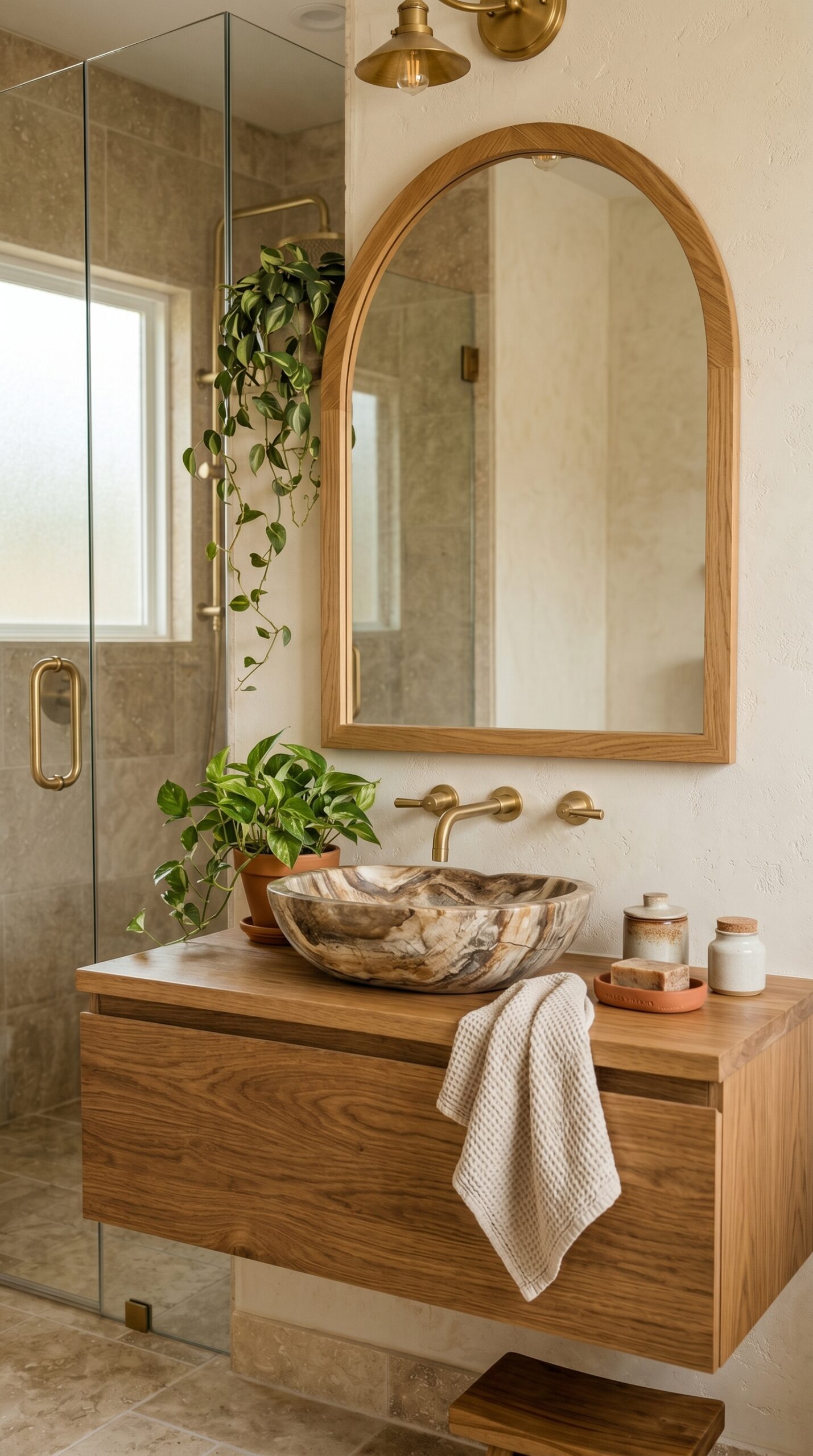
The vanity lacks personality. Everything feels like it came from the same showroom display.
A stone vessel sink creates a focal point without relying on color or decoration. The texture becomes the feature, and that natural variation makes the bathroom feel more collected over time.
After having this in my own home for months, I noticed the sink became the one detail everyone touched. Cream stone, walnut wood, and sand-colored walls create a combination that feels grounded and warm. This works beautifully in guest bathrooms because it creates interest without needing much styling.
Try a light travertine vessel sink with a softly rounded shape rather than a highly polished version. Natural imperfections make it feel more authentic and often more expensive. Once it sits on the vanity, the room gains a sense of character that decorative accessories rarely achieve.
Tip: Texture is often more memorable than color.
This small shift quietly upgrades everything.
Layered Linen Textiles With A Cozy Evening Feel For Greater Warmth
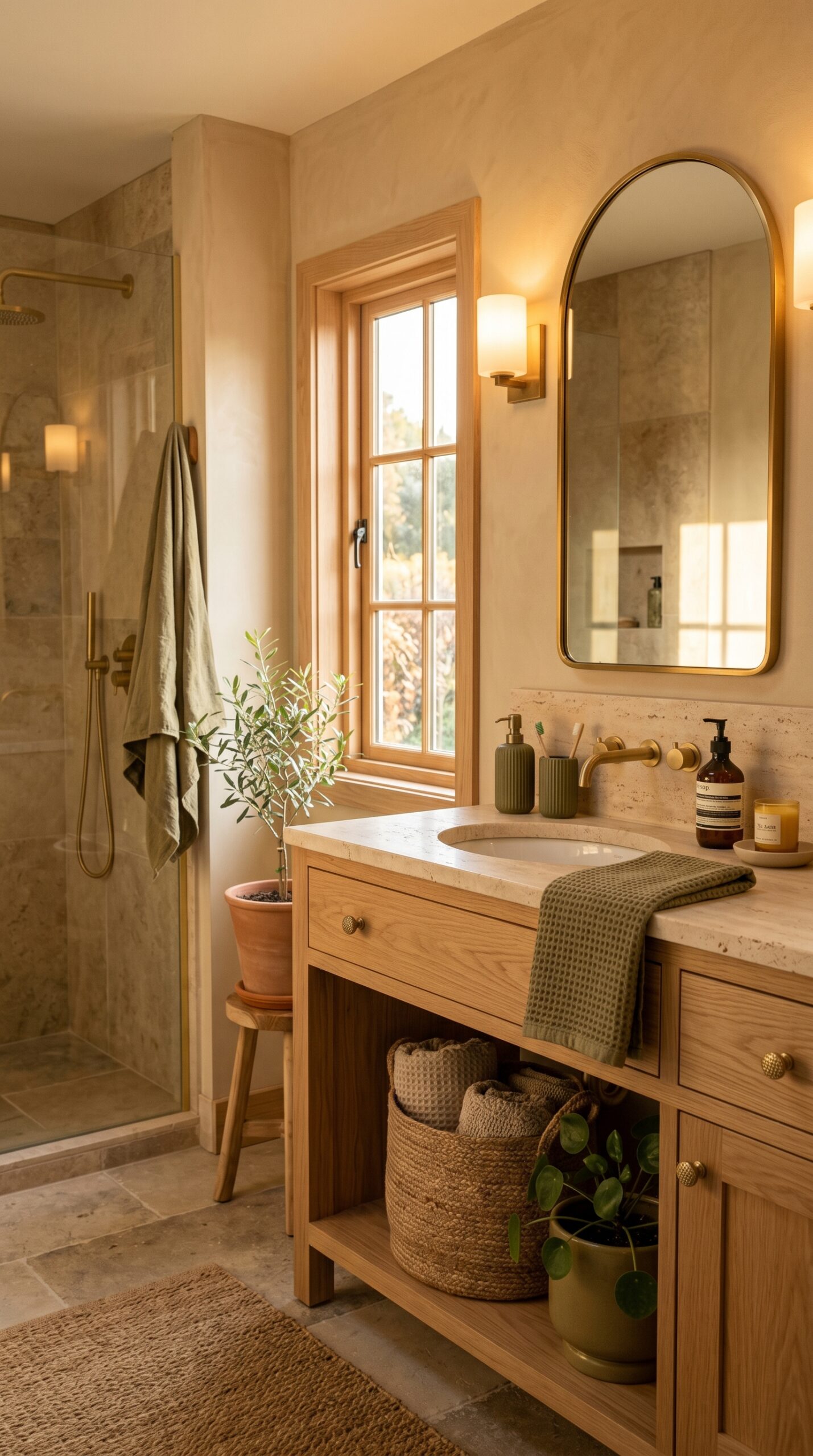
The bathroom feels sterile. Hard surfaces dominate every direction you look.
Layered textiles soften the experience immediately. Thick towels, a woven bath mat, and a linen shower curtain introduce comfort in a way tile never can. The room starts feeling lived in rather than staged.
I learned this lesson after focusing too much on finishes and not enough on touch. Warm beige, oatmeal, and soft ivory textiles create visual depth without introducing another color. This idea works particularly well in family bathrooms where comfort matters every day.
Use a heavyweight linen blend shower curtain with subtle texture as the anchor piece. Pair it with oversized cotton towels and a woven bath mat. The room starts feeling finished even if you change nothing else.
Tip: Touch matters just as much as appearance.
Matte Black Fixtures With A Confident Modern Feel For Better Contrast
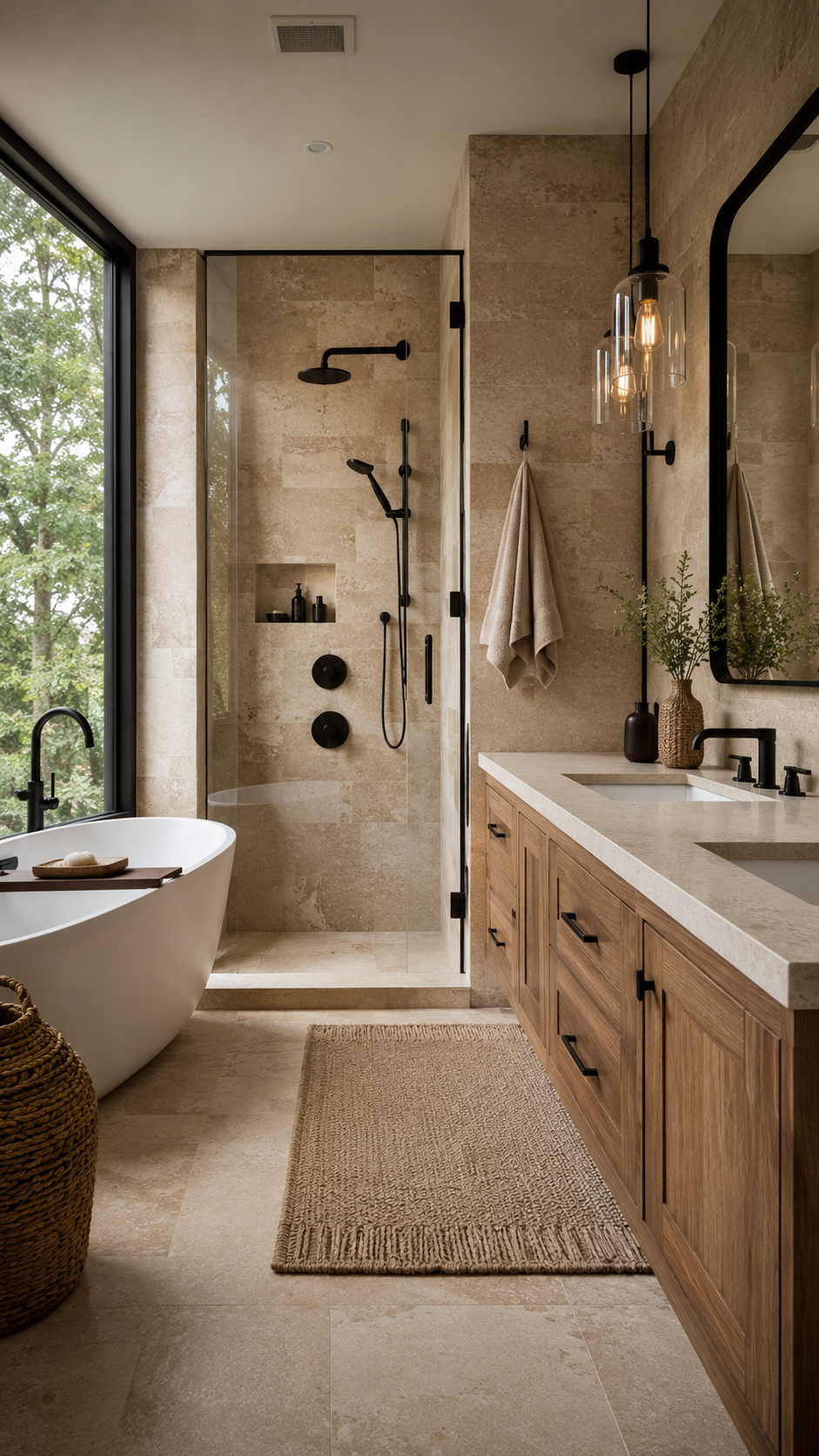
The palette feels blurry. Every element blends together.
Earth tone bathroom designs need contrast somewhere. Matte black fixtures provide that contrast without introducing another color. Faucets, shower hardware, and sconces suddenly define the room more clearly.
I bought brushed hardware first and regretted it almost immediately because it disappeared into the surrounding palette. Matte black paired with walnut, cream stone, and warm beige creates stronger definition. This combination works especially well when natural materials already dominate the room.
Choose a matte black wall-mounted faucet with simple modern lines and repeat the finish throughout the space. Consistency matters more than complexity here. Once the hardware is installed, the bathroom feels more complete and more intentional.
Tip: Repeat the same finish at least three times.
I got earth tone bathroom designs wrong for almost two years. I kept adding more accessories because I thought the room needed more personality. One weekend I removed half the decor, kept the natural materials, and suddenly the space felt calmer, larger, and much more expensive.
I almost abandoned earth tone bathroom designs after one renovation. Everything matched, everything coordinated, and somehow the room felt lifeless. The breakthrough came when I stopped chasing color and started focusing on texture, contrast, and lighting instead.
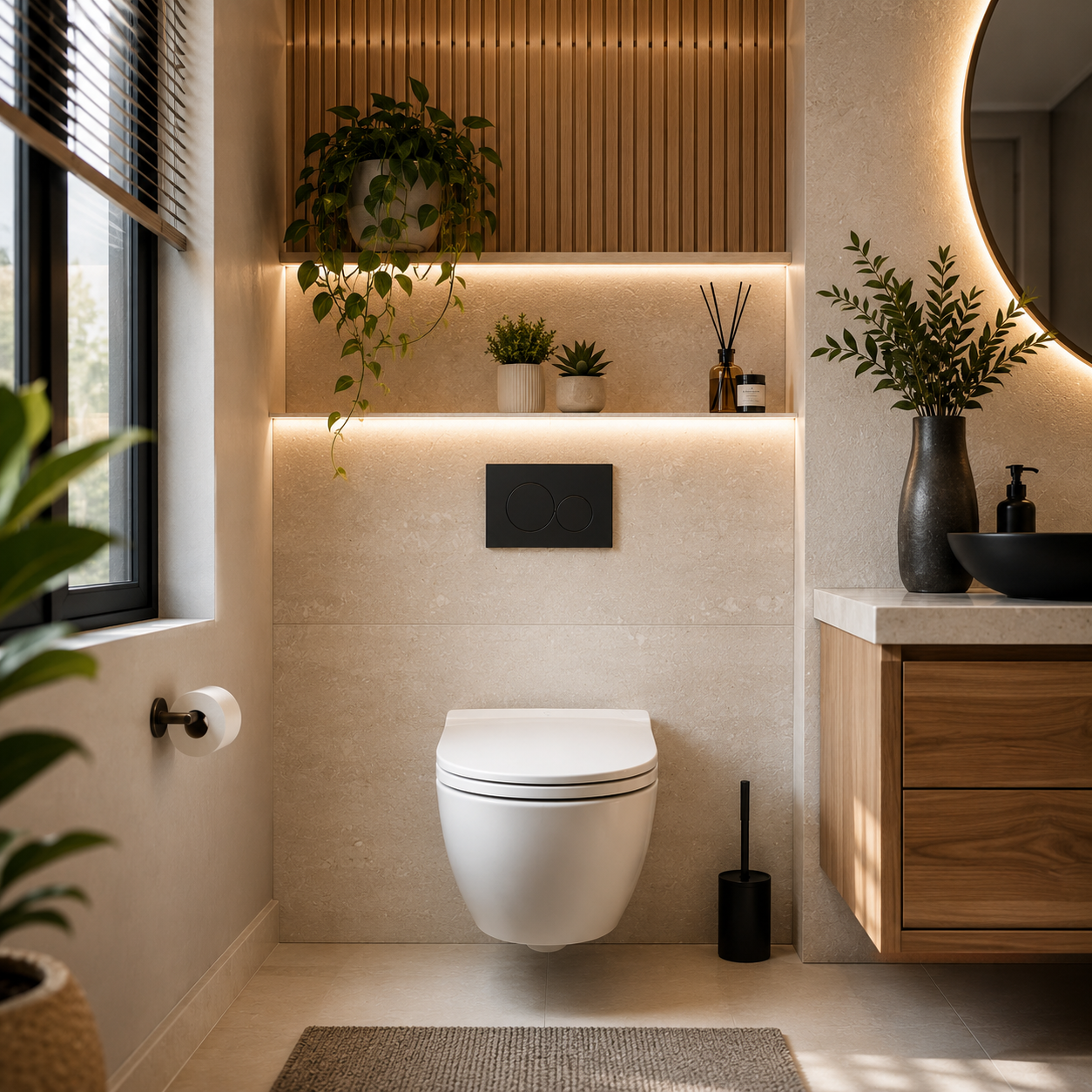
A Fluted Oak Feature Wall With A Boutique Hotel Feel For Greater Depth
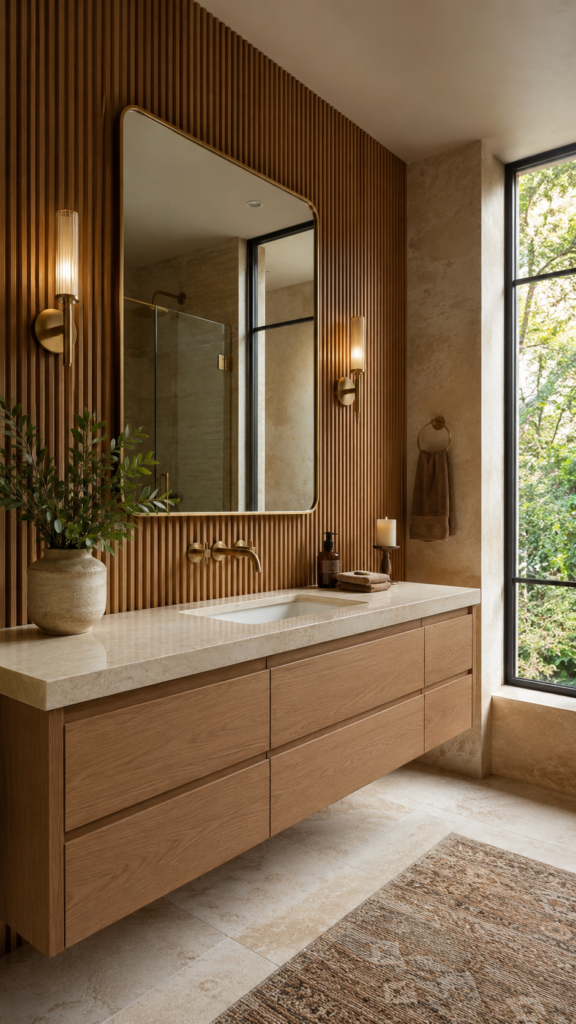
The room feels flat. Even beautiful colors can look one-dimensional without texture.
A fluted oak wall introduces shadows that change throughout the day. Morning light highlights the ridges softly, while evening light creates deeper contrast that makes the room feel richer and more layered. The effect feels custom without relying on expensive decorative pieces.
In my experience, fluted oak works best with warm beige, cream stone, and matte black accents. This combination creates the kind of atmosphere people associate with boutique hotels because the materials feel intentional rather than trendy. After seeing this installed in multiple homes, I noticed it immediately raises the perceived value of the room.
Use a vertical fluted oak wall panel system behind the vanity or bathtub. The texture becomes the focal point before anyone notices the accessories. Once installed, the room feels designed rather than decorated.
Tip: Texture often creates more luxury than expensive materials.
A Freestanding Stone Tub With A Slow Living Feel For Resort Luxury
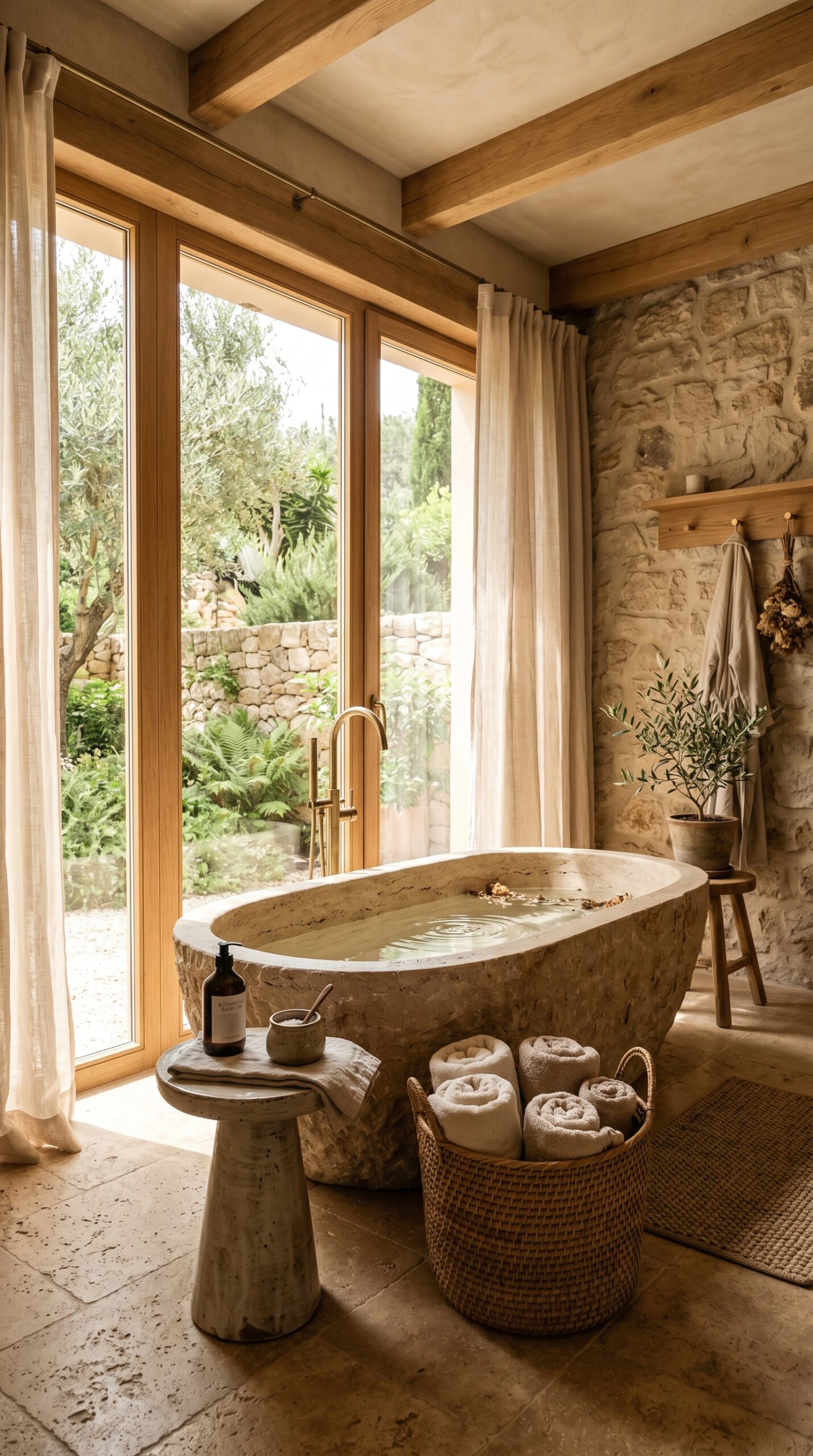
The bathroom lacks a focal point. Everything feels equally important.
A freestanding stone-look tub changes that instantly. It becomes the visual center of the room while reinforcing the natural materials that make earth tone bathroom designs feel grounded and relaxing.
One thing I noticed in real homes is that oversized tubs often fail because the surrounding room feels disconnected. Pairing warm sand walls, walnut accents, and natural stone textures creates a stronger relationship between the tub and the rest of the bathroom. This idea works best in larger primary bathrooms where the tub can breathe.
Choose a stone-look freestanding soaking tub with a matte finish and keep nearby decor minimal. The shape should do most of the work. The room begins feeling like a retreat instead of simply a functional space.
Tip: One strong focal point beats five smaller ones.
Most people wish they had seen this idea first.
A Desert Modern Palette With A Peaceful Escape Feel For Stronger Personality
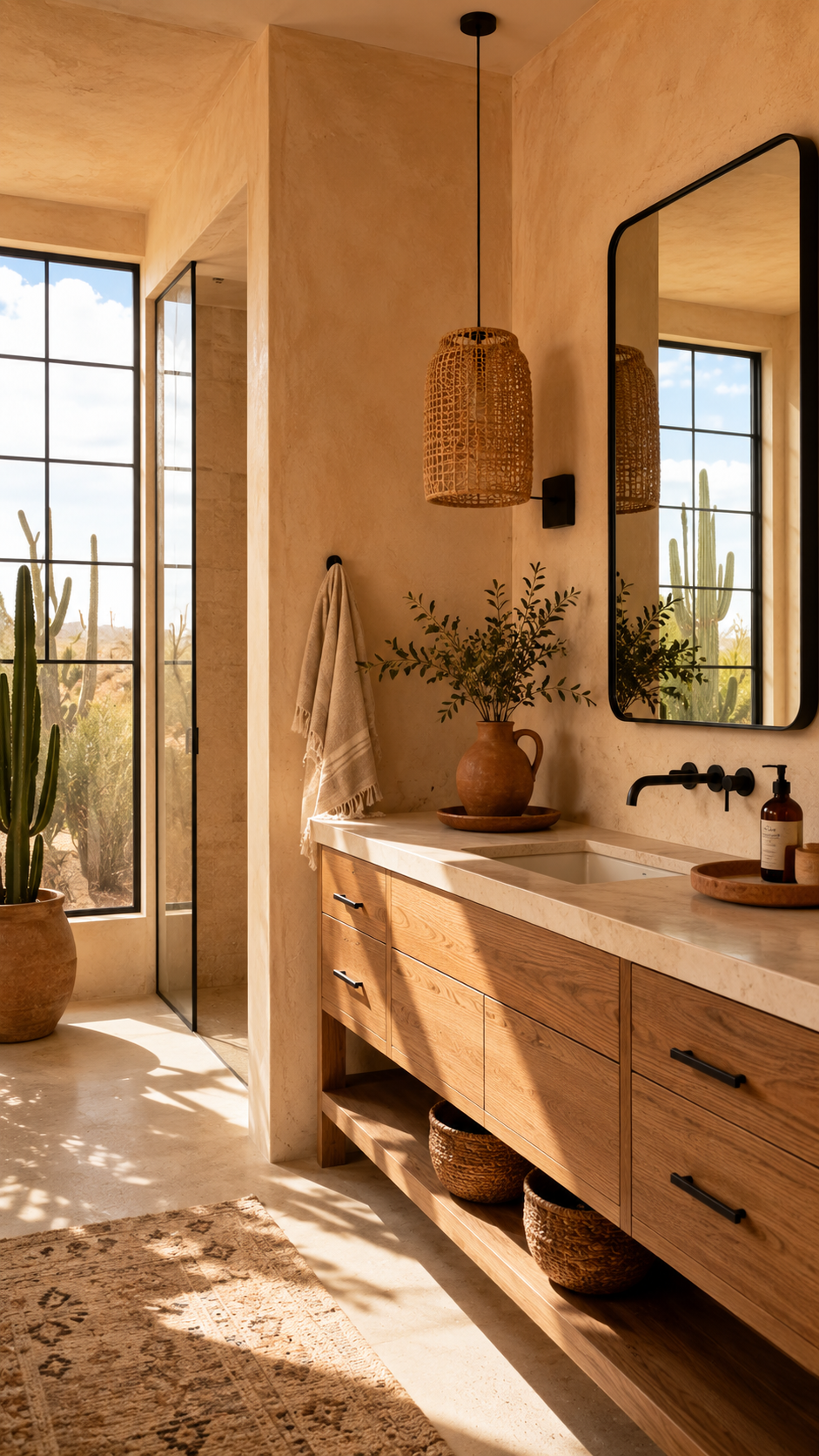
The room feels generic. It could belong to almost anyone.
Desert-inspired styling introduces personality while staying connected to the earth tone palette. Clay colors, sandy neutrals, muted olive, and weathered wood create a space that feels collected rather than copied from a catalog.
I was surprised how much this approach changed the emotional feeling of a room. Terracotta, sand, and soft olive work together because they exist naturally in the same environment. The palette feels familiar even when it is visually distinct.
Add a framed desert landscape artwork set with muted earth tones above a vanity or near the bathtub. The artwork quietly introduces color while supporting the overall palette. The bathroom begins telling a story without becoming busy.
Tip: Art should support the room, not compete with it.
A Renter Friendly Earth Tone Refresh With Everyday Comfort For Instant Warmth
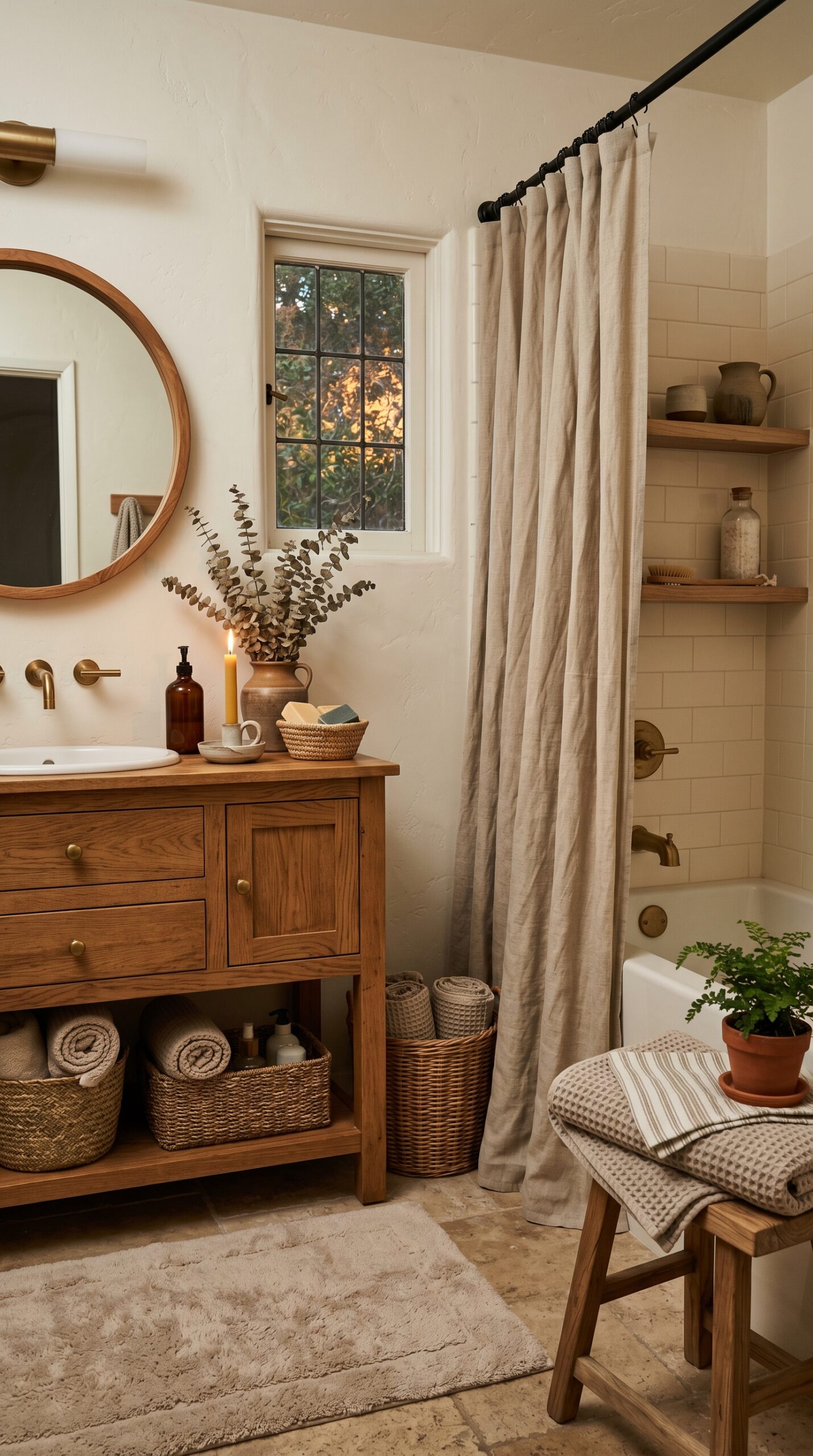
The bathroom feels temporary. Many renters assume they cannot create meaningful change.
Fortunately, some of the strongest earth tone upgrades require no permanent construction. Textiles, lighting, mirrors, and removable finishes can dramatically change how the room feels without affecting the lease agreement.
After helping friends refresh rental bathrooms, I noticed that warm textiles usually create the biggest improvement for the smallest investment. Soft beige, clay, ivory, and natural wood accents immediately reduce the sterile feeling common in rental properties. The room becomes more personal without becoming complicated.
Try a removable linen-look peel-and-stick wall panel system behind the vanity paired with woven storage and warm lighting. The transformation feels surprisingly substantial while remaining easy to reverse later.
Tip: Renters should prioritize texture before color.
Matte Black And Travertine Contrast With A Sophisticated Feel For Better Balance
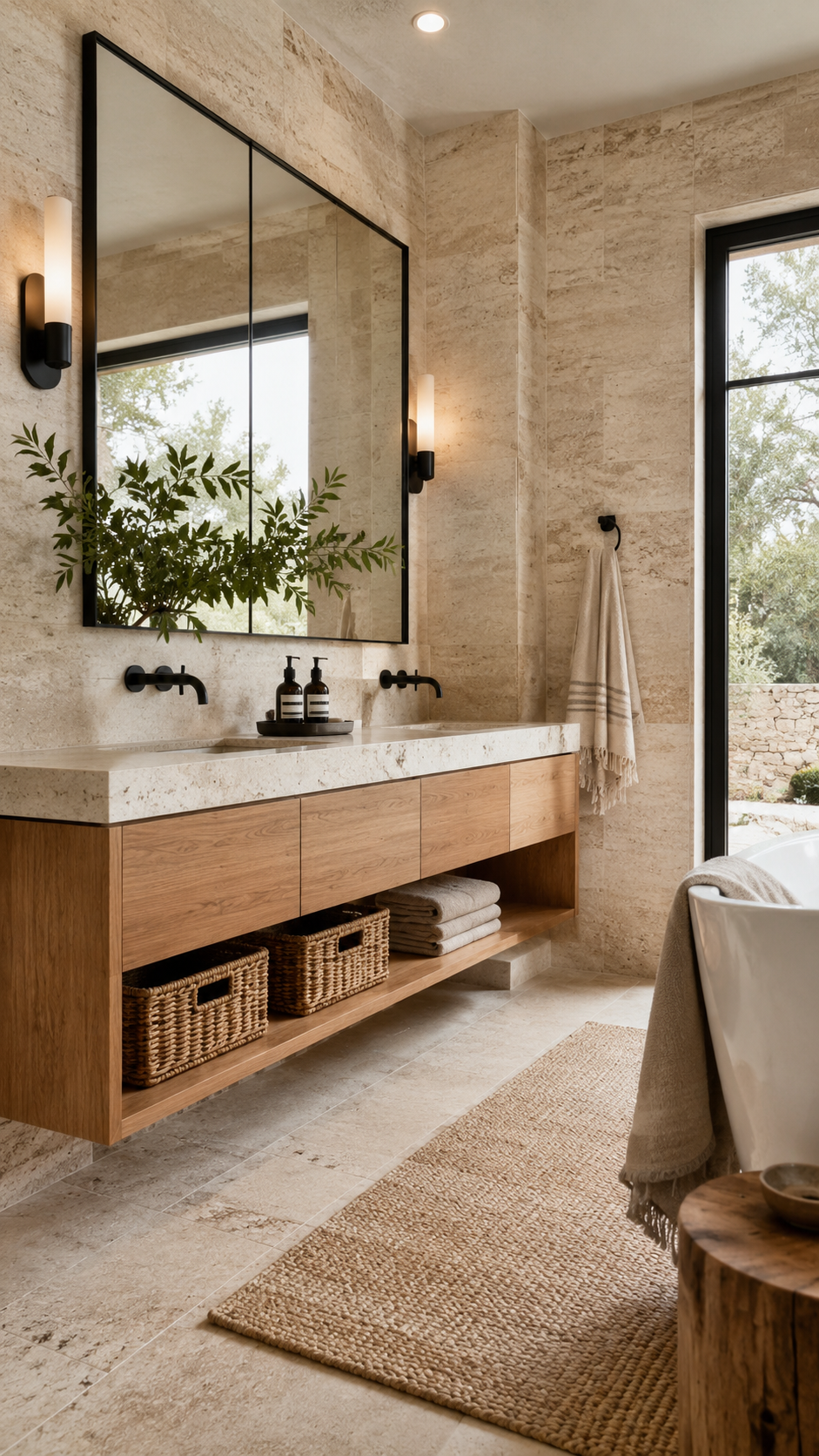
The room feels too soft. Earth tones sometimes need stronger definition.
Travertine and matte black create one of the most balanced combinations available. The stone introduces warmth while the black fixtures provide structure. Together they prevent the room from drifting into a muddy palette.
In my experience, this combination succeeds because every element serves a different purpose. Travertine brings movement, black provides contrast, and warm beige creates continuity between them. The room feels modern without feeling cold.
Install a matte black rainfall shower system with simple geometric lines against a travertine backdrop. The contrast becomes a focal point while still supporting the overall earth tone direction. Once completed, the room feels sharper and more refined.
Tip: Contrast keeps warm palettes from becoming dull.
A Candlelit Earth Tone Retreat With A Quiet Evening Atmosphere For True Relaxation
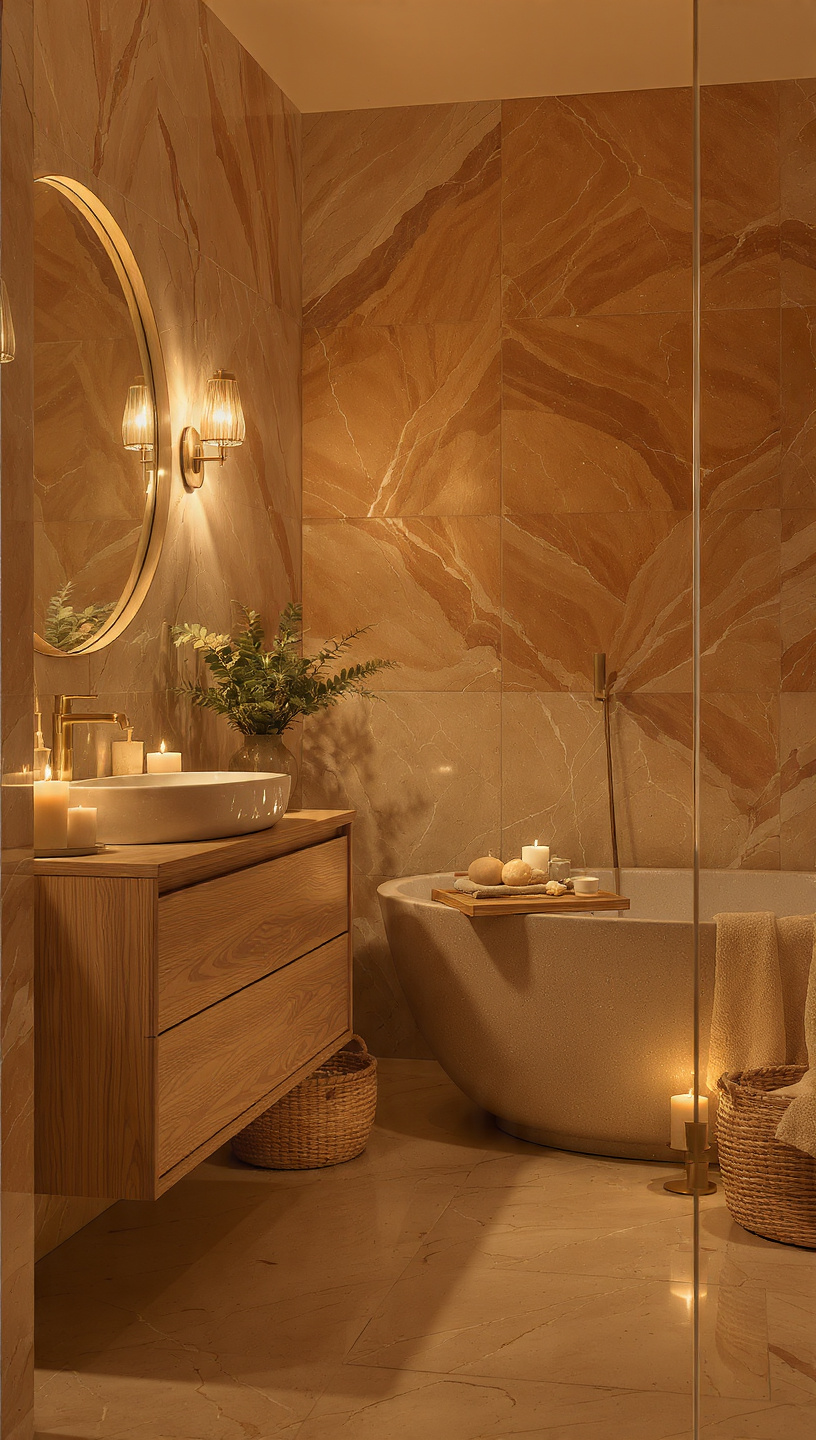
The bathroom feels harsh after sunset. Overhead lighting is often the reason.
Soft layered lighting completely changes how earth tone colors behave. Beige becomes richer, terracotta feels deeper, and wood grain suddenly becomes more noticeable. The room begins feeling slower and more comfortable.
After living with this approach, I realized lighting was more important than several decorative purchases combined. Warm white light paired with clay, walnut, cream, and stone creates a setting that encourages relaxation naturally. This works particularly well in primary bathrooms where evening routines matter.
Use a pair of frosted glass wall sconces with warm white bulbs positioned at eye level. The softer illumination transforms the atmosphere without requiring renovation. The bathroom becomes somewhere you enjoy spending time rather than somewhere you rush through.
Tip: Judge bathroom colors after dark before making final decisions.
This is where the room finally feels complete.
A Real Room Example Using Earth Tone Bathroom Designs
Picture walking into a bathroom just after sunrise. Soft light moves across a travertine wall while a floating walnut vanity anchors the room below. The air smells faintly clean, linen towels rest neatly on open shelving, and a stone vessel sink introduces subtle texture without demanding attention.
Later in the evening, the same room feels completely different. Warm wall sconces illuminate the oak grain, terracotta accessories become richer, and shadows settle gently into the textured surfaces. The bathroom feels calm, welcoming, and personal rather than staged or overly polished.
Color And Material Authority For Earth Tone Bathroom Designs
Warm Sand Beige (#D8C3A5)
This works beautifully on walls because it reflects light without feeling cold. Pair it with walnut wood, ivory textiles, and matte black accents for a balanced palette.
Terracotta Clay (#C46A42)
Use terracotta on flooring, decorative accessories, or niche details. It introduces warmth and works especially well alongside cream and natural stone.
Soft Olive Green (#7D8660)
Olive belongs in accents rather than dominant surfaces. Towels, artwork, and ceramics allow the color to provide depth without overwhelming the room.
Rich Walnut Brown (#5B4636)
Walnut creates structure. Use it for vanities, shelving, or mirror frames whenever the palette needs stronger visual grounding.
Earth Tone Bathroom Designs By Room Size And Light
Small Rooms
One clear focal point beats four scattered pieces every time. Let a vanity, mirror, or feature wall carry most of the visual weight.
Large Rooms
Scale matters more than anything. Small accessories often disappear, so larger mirrors and stronger materials create better balance.
North Facing
These rooms can feel grey most of the day. Warm woods, beige walls, and soft lighting make them feel far more welcoming.
South Facing
Natural light performs beautifully here. Earth tones appear warmer and more honest because sunlight supports their undertones naturally.
East Facing
Morning light feels soft and golden. Beige, ivory, and pale oak often look their best during the early hours.
West Facing
Afternoon and evening light becomes warmer and richer. Terracotta and walnut perform exceptionally well in these conditions.
Common Mistakes That Make Earth Tone Bathroom Designs Feel Flat
Using Too Many Similar Browns
People often assume more earth tones automatically create warmth. Instead, the palette becomes muddy and lacks contrast. Introduce black, ivory, or deeper walnut tones to restore balance. Without contrast, the room feels unfinished.
Choosing Cool Beige Instead Of Warm Beige
This happens because samples are viewed under the wrong lighting. Cool beige often feels grey and lifeless once installed. Warm sand tones create a softer atmosphere. If the wall color feels cold, the entire room struggles.
Ignoring Texture
Many homeowners focus only on color selection. Without texture, even beautiful palettes feel flat and one-dimensional. Introduce stone, wood grain, linen, and woven materials. Texture creates the depth earth tones require.
Overdecorating Every Surface
Bathrooms often suffer when every corner contains accessories. The room loses visual breathing space and begins feeling cluttered. Allow natural materials to remain visible. Simplicity usually feels more luxurious.
Earth Tone Bathroom Designs Comparison Table
| Idea Name | Best Room | Effort Level | Budget Level | Star Rating |
|---|---|---|---|---|
| Travertine Feature Wall | Primary Bath | Takes Time | Investment | ★★★★★ |
| Terracotta Flooring | Family Bath | Takes Time | Investment | ★★★★★ |
| Limewash Walls | Small Bath | Medium | Low Cost | ★★★★☆ |
| Floating Oak Vanity | Guest Bath | Medium | Investment | ★★★★★ |
| Fluted Oak Feature Wall | Primary Bath | Medium | Investment | ★★★★★ |
| Renter Refresh | Rental Bath | Easy | Low Cost | ★★★★☆ |
| Candlelit Retreat | Primary Bath | Easy | Low Cost | ★★★★★ |
| Stone Vessel Sink | Powder Room | Easy | Medium | ★★★★☆ |
Frequently Asked Questions About Earth Tone Bathroom Designs
Are earth tone bathroom designs still popular?
Yes. More people are choosing softer and warmer interiors because they feel easier to live with every day. Earth tones continue performing well because they balance comfort and sophistication.
Do earth tone bathroom designs make a room look smaller?
Not when contrast is used correctly. Warm neutrals paired with lighter accents often make a bathroom feel more inviting and visually balanced.
Are earth tone bathrooms expensive to create?
Not necessarily. Many improvements involve paint, textiles, lighting, and accessories rather than full renovations.
What is the biggest mistake people make?
Most people focus only on color. Texture, contrast, and lighting usually have a greater impact on the final result.
What is one thing I can change this weekend?
Replace harsh bulbs with warm white lighting and introduce one natural texture such as linen, wood, or stone. The improvement is often immediate.
Final Thoughts On Earth Tone Bathroom Designs
Earth tone bathroom designs succeed because they make bathrooms feel more human. Instead of relying on bright finishes or constant visual stimulation, they create comfort through materials, texture, and thoughtful contrast. Once you understand this balance, decorating becomes much easier.
You do not need a luxury budget to achieve the look. Many of the strongest improvements come from lighting, textiles, mirrors, and carefully chosen materials rather than expensive renovations. Small changes often create surprisingly large results.
If there is one lesson worth remembering, it is this. Let the materials do the talking. Natural textures, warm light, and a restrained palette usually outperform complicated decorating every single time.