16 Stunning Shed to Tiny House Ideas That Feel Like Home
Your shed is sitting out there doing nothing useful. Most people walk past it every day without realizing it is twelve steps from becoming a real living space. These 16 shed to tiny house ideas will show you exactly what that transformation looks like.
Right now more people are moving toward backyard living and making the most of what they already own. Converting a shed into a tiny house gives you a private retreat, a guest space, or a full-time home without a mortgage. Every idea here works across different shed sizes, budgets, and skill levels.
Converting a shed to a tiny house works best when you plan the interior first and let every other decision follow from that.
Why Shed to Tiny House Conversions Are Worth Taking Seriously
Most people underestimate what a shed conversion can become. I have walked through backyard studios that felt more personal and alive than apartments three times their size. The difference was never about square footage. It was about every single decision being intentional. When a space is small, nothing is wasted and nothing accidental, and that honesty is what makes a shed to tiny house conversion feel so good to be inside.
Right now more people are choosing smaller, smarter living over larger spaces that sit half empty most of the time. The shed to tiny house movement has grown steadily because the results are visible, achievable, and genuinely satisfying. You do not need a contractor for every step and you do not need a huge budget to get something that feels real. What you need is a clear order of decisions and ideas that have actually worked inside a real small space. [small space storage solutions]
I only share things I would genuinely consider doing in my own home.
16 Shed to Tiny House Ideas Worth Trying in Your Own Backyard
A White Shiplap Feature Wall With Floating Pine Shelves in a Converted Shed Living Corner
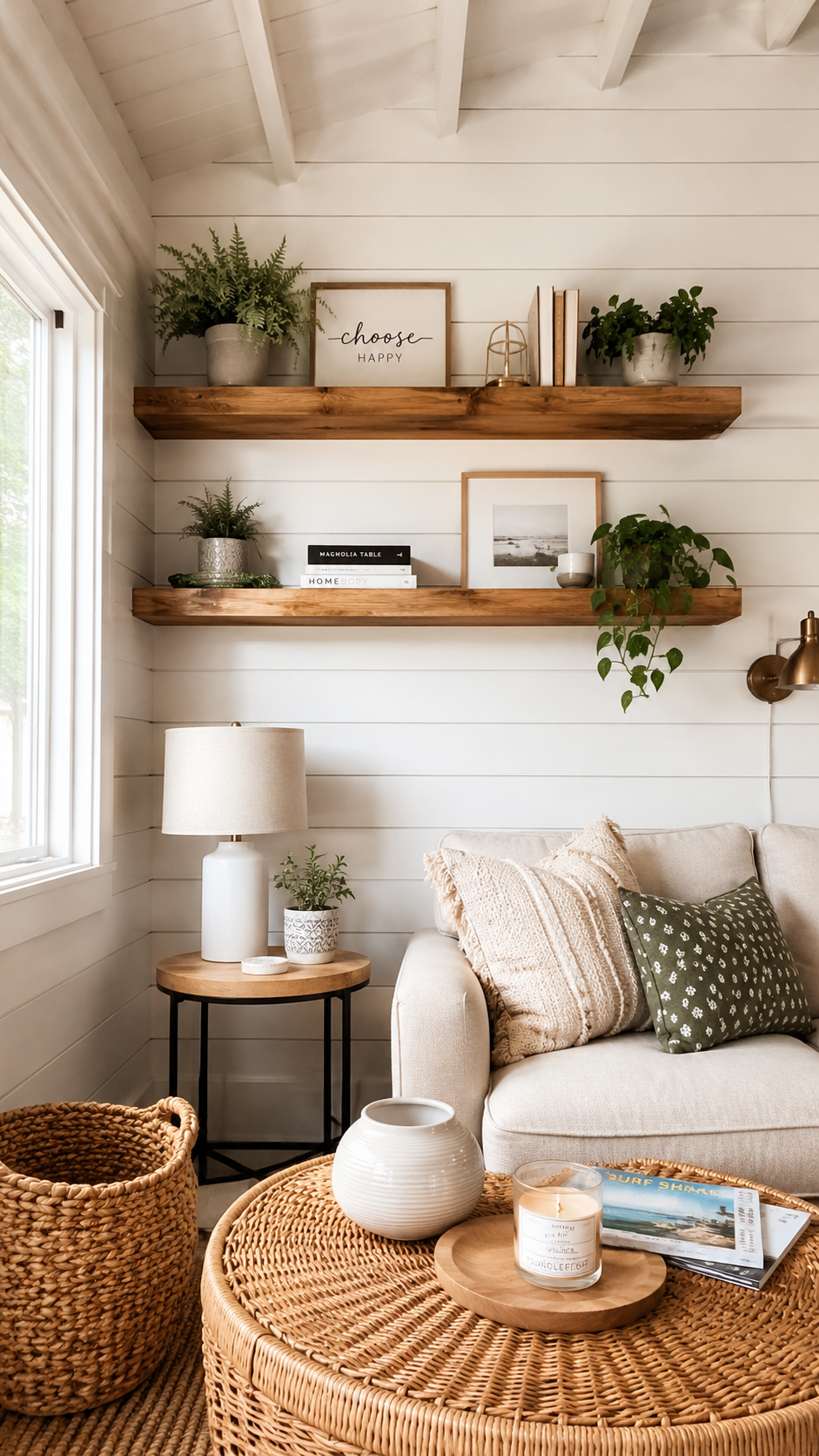
The walls of an empty shed feel industrial and cold the first time you step inside. That flat exposed frame does nothing to help you imagine a real room. A shiplap wall changes that faster than almost anything else you can do, and it does it without touching the structure at all. One wall is all you need to make the whole interior shift from storage to living space.
White shiplap reflects light around a small space and makes a narrow shed feel twice as wide as it actually measures. Paired with floating pine shelves in a natural honey tone, it builds a living corner that reads as warm, considered, and genuinely finished. This combination works especially well in south-facing sheds where natural light hits the white surface and travels across the room through the day. It suits a combined living and working zone better than any other style for a budget build.
Start with one feature wall rather than all four and work outward from there. Pick up a floating pine wall shelf at IKEA — they carry a solid option that never looks cheap and takes about twenty minutes to install. Target also carries ready-cut shiplap boards that work well for this without the need for specialist tools. Worth checking both before you decide on an approach.
Do the shiplap before you paint, the gap lines need filling and sanding first or the painted finish will look unfinished within a month.
A Full-Size Lofted Bed Frame With Warm Edison Lights Above a Tiny House Reading Nook
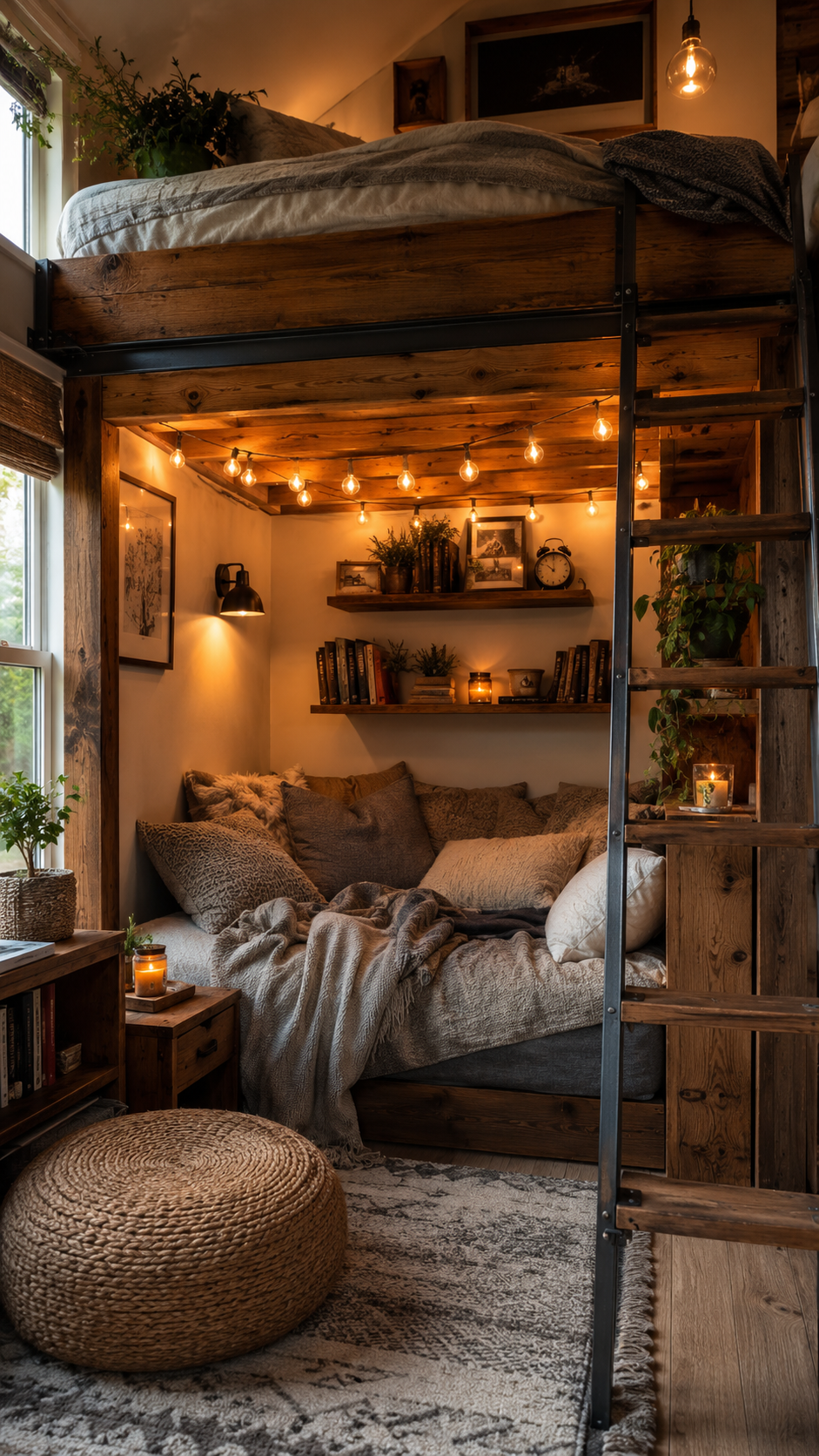
The hardest part of sleeping in a converted shed is feeling like the bed owns the entire room. It sits there all day taking up floor space that you desperately need for everything else. A loft bed removes that problem completely and creates two distinct zones from one vertical move. The floor beneath becomes a reading corner, a desk space, or a wardrobe area that feels like its own room.
A lofted bed in warm natural wood works beautifully against white walls with cream linen bedding above and a small upholstered chair below. Edison string lights hung from the loft frame cast a warm amber glow at night that makes the entire interior feel settled and inviting rather than cramped. This layout suits any shed with a ceiling height of seven feet or more. It is the single most efficient use of vertical space in any shed to tiny house conversion.
Look for a lofted bed frame on Wayfair — they carry multiple solid wood options at reasonable prices and most ship flat for easy delivery to a backyard build. Measure your ceiling height first and leave at least two and a half feet of clearance above the mattress. Worth checking dimensions twice before ordering because returns on large items are slow.
Build the loft frame before you finish the walls — framing into the wall studs gives a much stronger result than surface mounting after the fact.
Most people stop at the sleeping area and forget that daytime living is what makes a tiny house feel like a home. The next few ideas fix exactly that.
A Fold-Down Wall Table Against a Pale Grey Wall in a 10×12 Shed Conversion
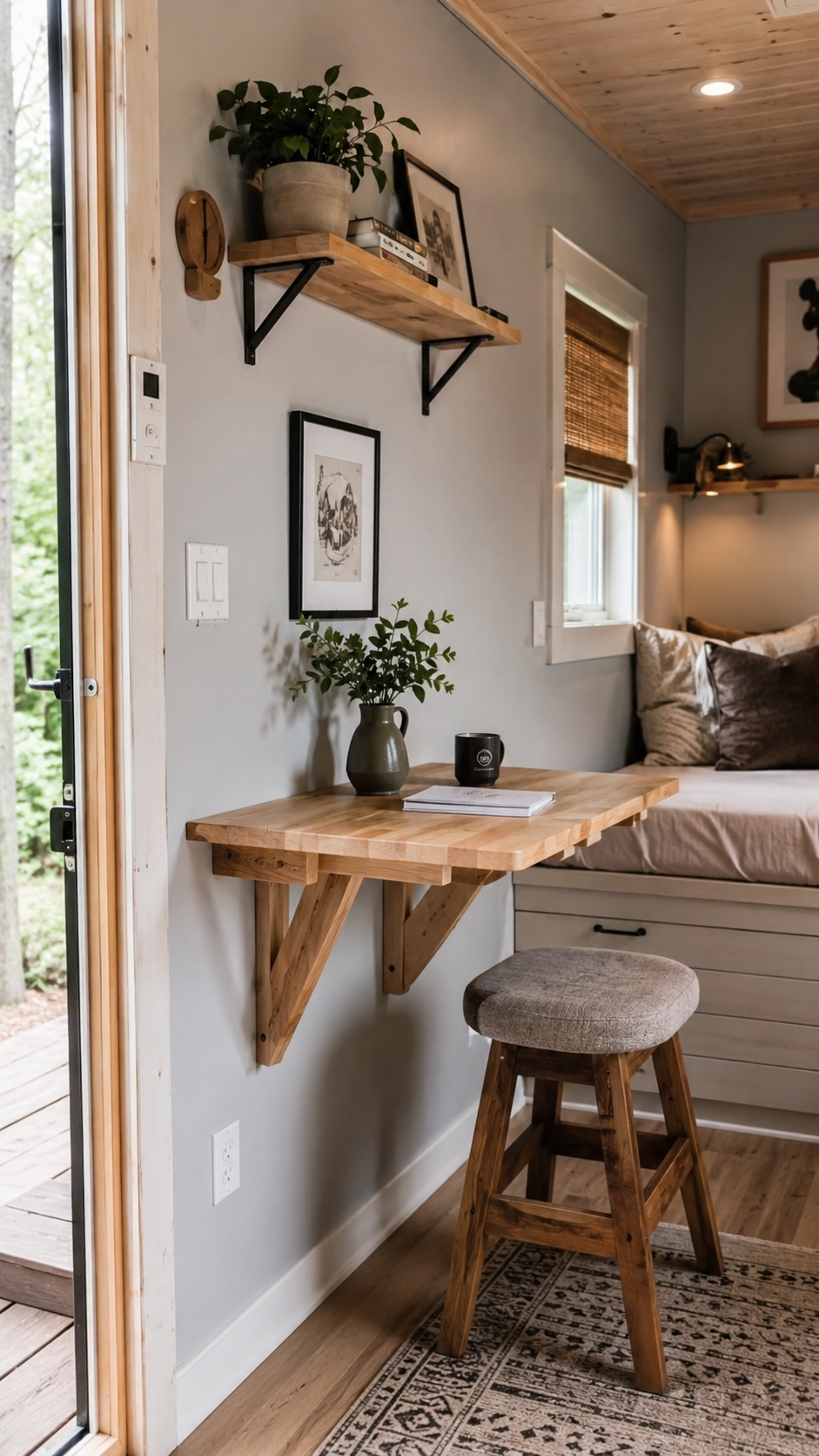
Every tiny house needs a dining and working surface, but a full table takes up more floor space than a shed conversion can afford. The room feels permanently cluttered and there is no clear separation between eating, working, and relaxing. A fold-down wall table solves this completely, adds almost no visual weight when closed, and disappears into the wall until the moment you actually need it.
Pale grey walls make the best backdrop for a fold-down table because the contrast between the wall and the wooden surface reads clearly without competing with anything else in the room. Paired with a honey wood or whitewashed table finish, this combination suits a combined kitchen and living area in any shed between 80 and 150 square feet. It works especially well for people using the space as a full-time studio or a weekend retreat where meals matter but counter space is always tight.
A fold-down wall-mounted table from IKEA costs very little and folds completely flat against the wall. It takes about an hour to install and the result looks intentional rather than improvised. IKEA does this well and the finish holds up to daily use without trouble. I would start there before trying anywhere else.
Mount it at counter height rather than standard dining height — it doubles as a workspace and you avoid the awkward half-standing eating position that catches most people off guard.
A Compact Kitchen Line With Open Shelving and White Subway Tile in a Tiny House Corner
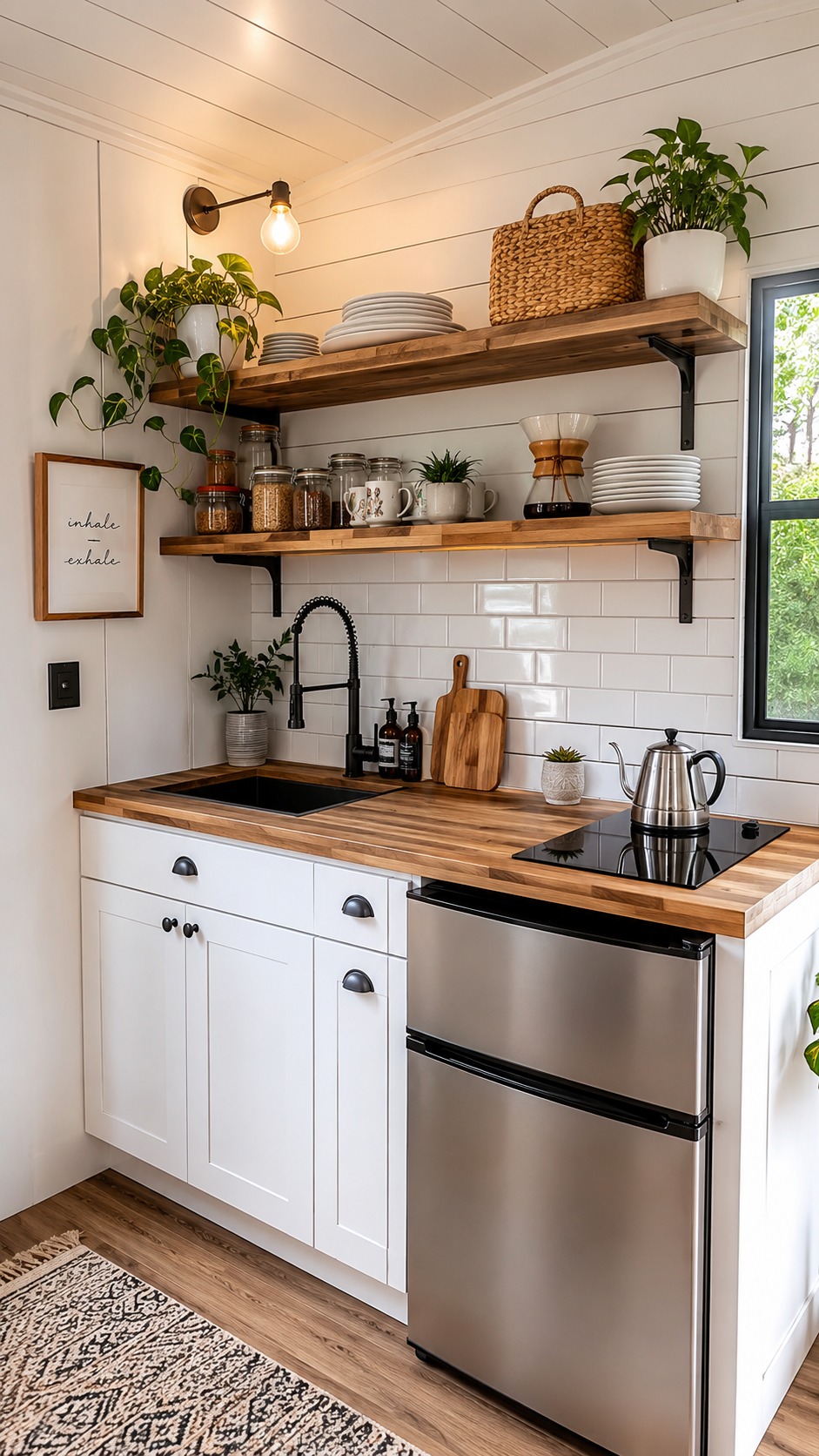
A kitchen in a shed conversion often feels like an afterthought. The appliances end up crowded into a corner, the walls stay bare, and nothing reads as a real kitchen. It just looks like camping equipment pushed against a wall. One straight run of base cabinets with open shelving above and a simple tile backsplash turns that corner into the most-used and best-looking part of the entire space.
White subway tile behind a compact kitchen run reflects light and adds texture without making the space feel smaller. Open shelving in natural wood keeps everyday items visible and accessible, which matters enormously in a space where reaching into deep cabinets wastes real time. Cream cabinetry and white tile work in every lighting condition and suit a shed tiny house oriented in any direction. The combination holds up visually whether the rest of the space is minimal or layered with texture.
Pick up a white subway tile backsplash kit at a home improvement store — most carry peel-and-stick versions that work well in a space not yet connected to permanent plumbing. Target carries open shelving brackets that match natural wood perfectly. I would start with the tile before anything else since it frames every other kitchen decision that follows.
Choose your appliances before you build the kitchen run — measure the actual units first or you will build a beautiful run that is six inches too short for the fridge.
I made that mistake on my first build. Measured the space, forgot to measure the appliance. The cabinet run was perfect. The fridge lived awkwardly in the corner for three months before I fixed it.
A Sliding Barn Door Between the Sleeping Loft Staircase and a Small Shed Living Area
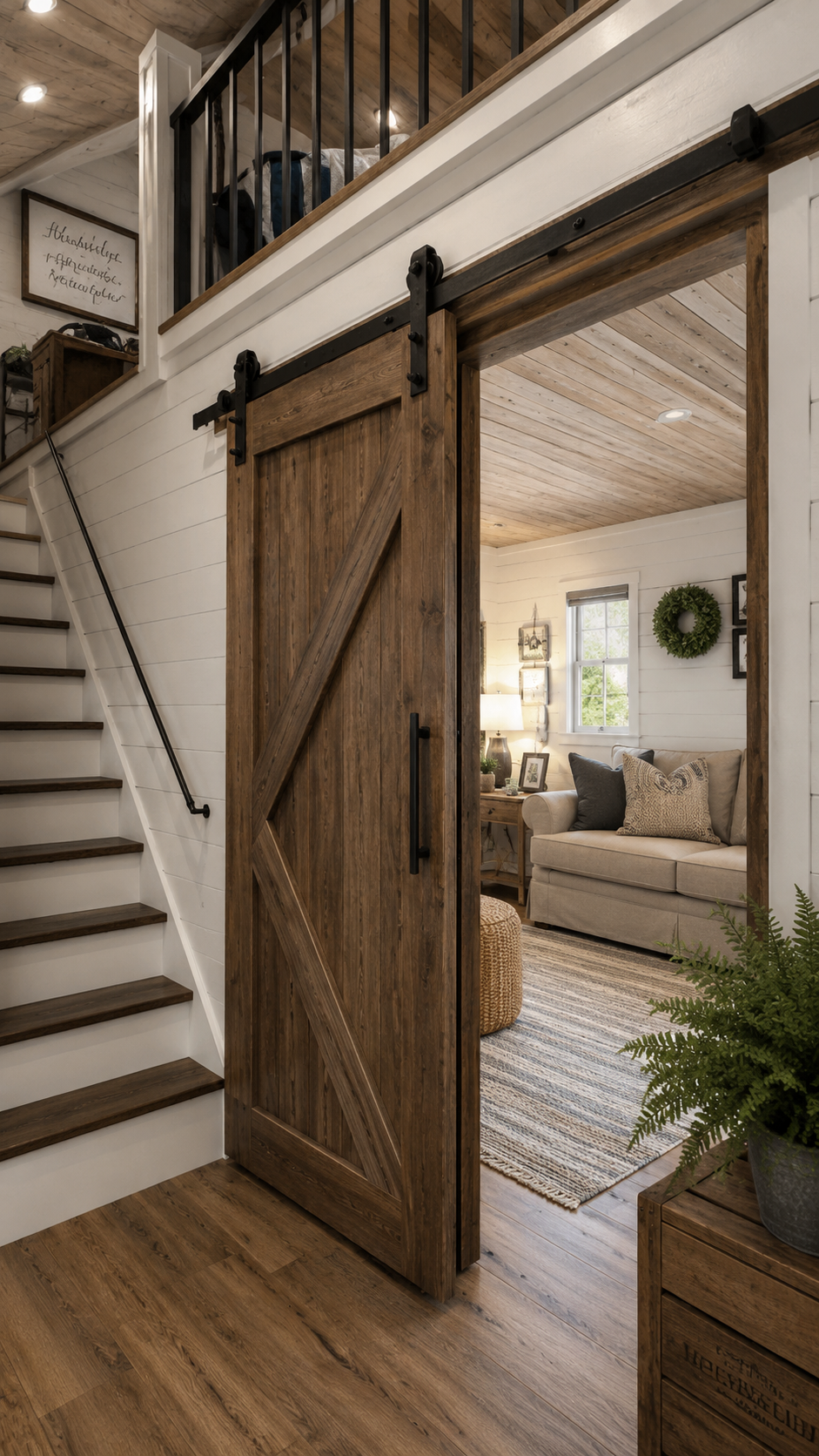
Open-plan tiny houses feel wonderful until you want to sleep past seven in the morning. The moment sound and light travel freely between every zone, the space stops feeling like a real home and starts feeling like one room where you happen to do everything. A sliding barn door costs a fraction of a standard door, requires no floor clearance to swing, and adds more visual character to a shed to tiny house conversion than almost any other single element.
A dark walnut or weathered grey barn door against white shiplap is one of the strongest visual combinations in any tiny house interior. The contrast is immediate and it creates a genuine sense of architectural intention that tells every visitor the space was planned, not assembled from leftover materials. It works best when the door spans the full interior wall height to draw the eye upward and reinforce how tall the ceiling feels.
A sliding barn door kit from Wayfair comes with the hardware, track, and installation instructions together in one box. Most kits fit standard interior openings and take a couple of hours to install with basic tools. Wayfair has a wide range here for every budget and finish. Worth searching before you decide on a price point.
Buy the door before you build the wall opening — the door panel dimensions should determine the opening size, not the other way around.
Nobody talks about sound separation in a shed to tiny house conversion. It makes a bigger difference to daily comfort than almost anything else on this list.
A Tall Narrow Window Cut Into a Shed Wall Flooding a Tiny House Interior With Morning Light
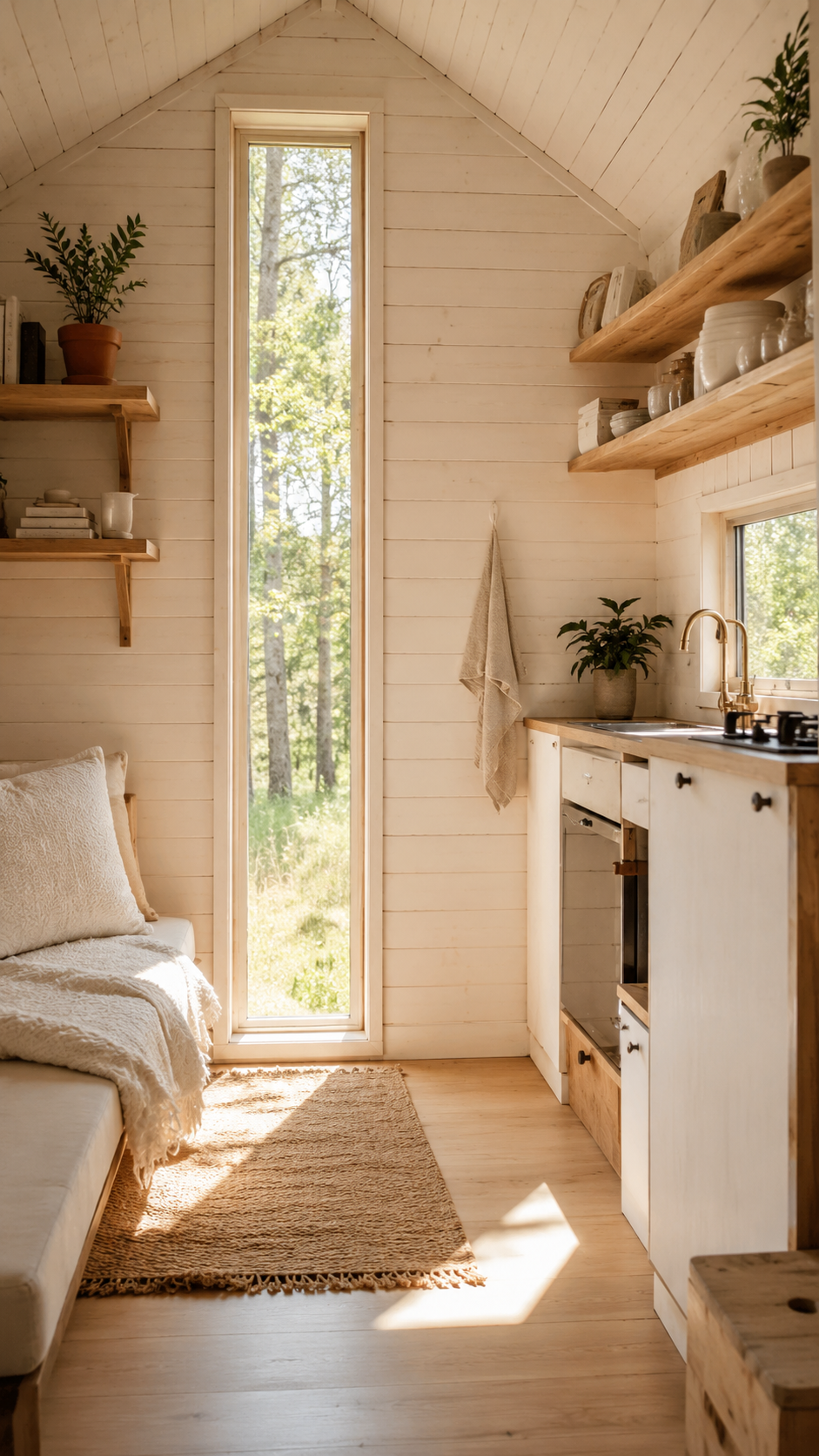
Dark sheds feel like storage rooms no matter how well you decorate them. Natural light is the one thing that transforms a converted shed from a clever project into a space someone actually wants to live in. One tall vertical window on the east or south wall changes the entire mood of the interior from the first morning you wake up inside it. Light this deliberate does not just illuminate the room — it makes the room feel as though it was designed.
A tall narrow window set high on the wall brings in soft morning light without sacrificing the wall space below for shelving, furniture, or storage. Warm white walls amplify that light and carry it further into the interior than any other color choice. This window placement works especially well in a bedroom or reading corner where gentle morning light feels like a natural alarm rather than an intrusion. It suits any shed conversion where the existing window size was never planned for real human habitation.
Look for a fixed skylight window panel or a narrow casement window at your local building supply store — most carry standard sizes that fit between existing wall studs without major structural work. Measure your stud spacing before you buy anything. Worth making one trip to confirm sizing before ordering online where sizing descriptions are not always reliable.
Install the window before you insulate the walls — adding it afterward means cutting through finished surfaces and creating extra work you will regret doing twice.
A Built-In Storage Bench With Cream Cushions Under a Converted Shed Window
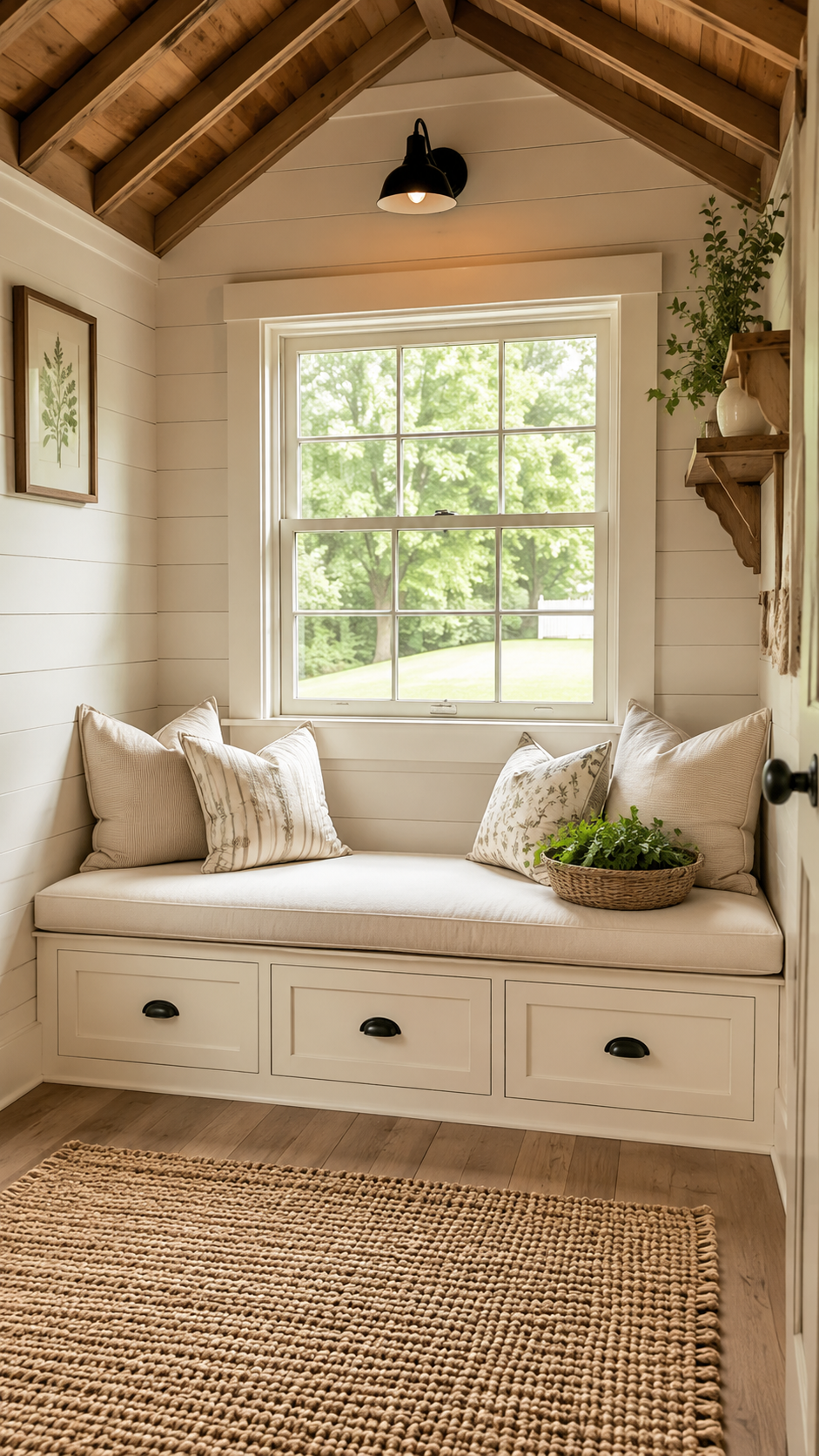
Wasted floor space is the quiet enemy of every shed to tiny house conversion. The area beneath a window is almost always the last place anyone thinks to use, but it is also the most naturally comfortable spot in the room. A built-in bench with storage underneath turns that dead zone into a seating area, a storage solution, and a visual anchor that ties the window into the rest of the interior. It is one of the most efficient additions you can make for the cost involved.
A storage bench in white or pale pine with a thick cream cushion works across almost every interior style. It suits a reading corner, an entry zone, or a window seat looking out over a garden. Paired with linen throw pillows in soft sage or warm terracotta, it creates a settled, layered feeling that takes the space from conversion project to lived-in home. This works best in a south or east facing shed where the window brings in enough light to make the seating genuinely inviting rather than merely functional.
IKEA carries a storage bench with lift lid in white that works perfectly for this without any custom building required. Add a foam cushion cut to size from a fabric store and cover it in whatever textile suits the rest of the room. The HomeGoods version looks far more expensive than it is if you prefer a cushion that arrives already finished. Worth checking both options before committing to either.
Fill the bench with bedding, seasonal items, or anything bulky — that hidden storage is worth more per square foot than any cupboard you could build at the same cost.
After living with a storage bench for six months I started wondering why I had ever put a chair there instead. The bench held three times the storage, took up the same footprint, and the window seat became the spot every guest wanted to sit in before they even noticed the rest of the room.
A Murphy Bed Folded Into a White Wall Panel in a Tiny House Daytime Living Space
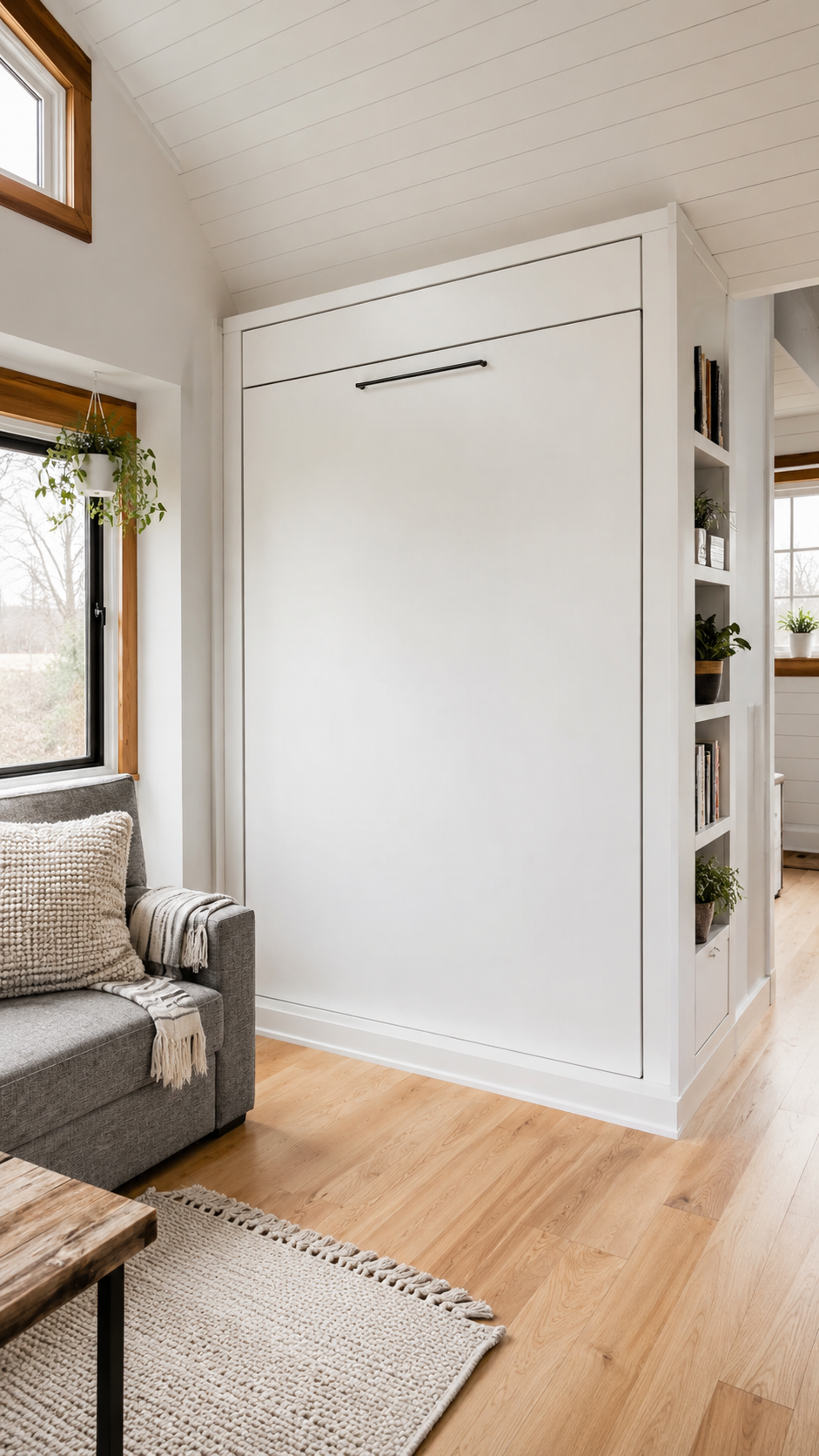
A tiny house that looks like a bedroom all day never feels like a real home. The bed dominates, the room feels purposeless between waking and sleeping, and the space never fully relaxes into a living area. A Murphy bed that folds flush into a white wall panel solves this completely. By day it is a wall. By night it is a bed. The floor belongs to living until the moment you decide otherwise.
A white paneled Murphy bed unit makes the sleeping surface genuinely invisible when folded. The wall reads as a built-in feature rather than a space-saving compromise. Paired with warm wood accents and wall-mounted lights on each side, the living side of the room looks calm and considered rather than temporary and makeshift. This layout suits any shed conversion between 80 and 180 square feet and works especially well when the same space needs to function as a living room, office, and guest room depending on the day.
A Murphy bed wall kit from Wayfair comes with the frame, wall panel, and hardware in one purchase. Most kits accept a standard mattress and take a weekend to install with basic tools. Wayfair carries a wide range here for every budget. I would start there before trying anywhere else.
Use the wall space above the folded bed for floating shelves while it is closed — the shelves fold with the bed and become a bedside surface at night.
The next idea is the one most people think about last. It should actually be one of the first decisions in the entire build.
A Ceiling-Mounted Curtain Track Dividing a Tiny House Into a Sleeping and Living Zone
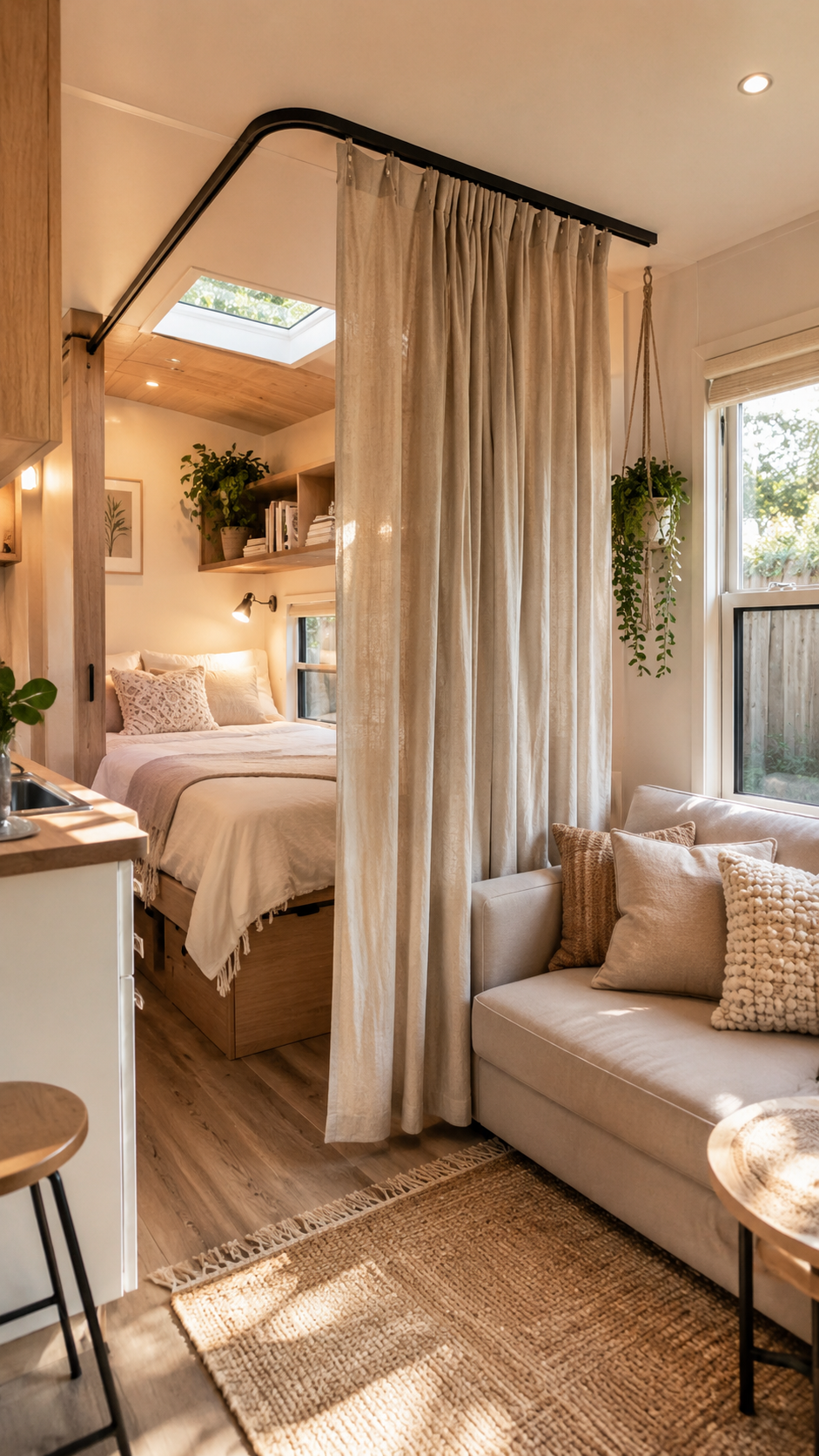
Most shed conversions end up as one open rectangle with no real sense of separate rooms. Everything happens in the same visual field and the interior never develops a sense of genuine layout. A ceiling-mounted curtain track with linen or velvet curtains creates an instant zone division that costs almost nothing compared to any structural option. You can open it fully during the day and close it completely at night for real visual separation.
Linen curtains in warm white or soft cream work beautifully as a room divider because they let light through without being transparent. At night with a lamp on the sleeping side, the curtain creates a soft warm glow that makes the bedroom zone feel genuinely private and considered. Paired with a natural wood ceiling track, the whole installation looks deliberate and architectural rather than improvised. This suits any shed to tiny house conversion where building a full partition wall is not an option or simply not wanted.
A ceiling curtain track kit from IKEA handles this for very little. The KVARTAL system is designed exactly for this kind of use and comes with all the mounting hardware. IKEA does this well and never breaks the budget. Worth picking up in store so you can see the weight and quality of the track before you install it.
Use double-thickness linen rather than a single panel — the light blocking is dramatically better and the drape looks far more considered from both sides.
A Deep Charcoal Exterior With White Window Trim on a Shed Tiny House at Dusk
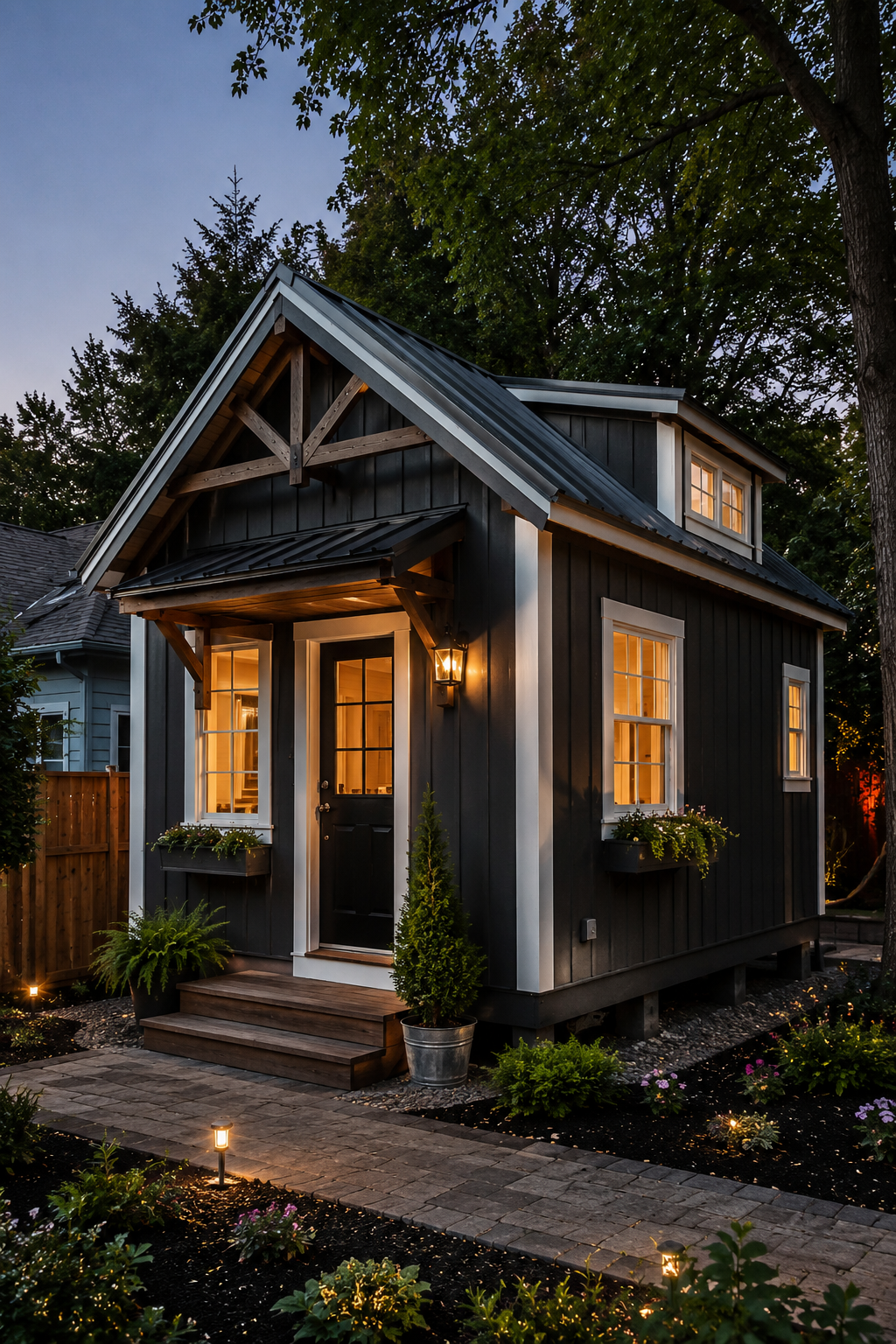
The outside of a shed conversion tells every visitor what kind of space it is before they step inside. Most converted sheds keep the original shed color, which never stops looking like a storage shed regardless of what is happening inside. A deep charcoal or slate grey exterior with crisp white window trim and a black door is one of the most confident and photogenic exterior decisions you can make for a shed to tiny house build. It reads as a real building the moment you see it.
Deep charcoal against white trim creates a contrast that looks sharp in morning light and dramatically warm in the golden hour before sunset. It photographs beautifully, which matters if the tiny house will be a rental or a space you want to share online. Natural wood accents on the porch or around the doorway soften the dark exterior and stop it from feeling cold or unwelcoming from a distance. This exterior palette suits any shed size from 80 to 400 square feet and holds up in every climate.
A quality exterior wood stain in charcoal or slate from your local hardware store goes over most existing shed finishes with good preparation work. Two coats is enough for a finish that holds through multiple seasons. At Home stores carry good deck and exterior stain options that work well on vertical surfaces. Worth checking what is in stock locally before ordering online since colors vary between batches.
Apply the stain in cooler weather rather than full summer heat — the slower drying gives a more even finish with far fewer visible lap marks.
This is where the conversion stops looking like a project and starts looking like a place someone genuinely chose to live.
A Vertical Pocket Planter Wall on the Outside of a Converted Shed Tiny House
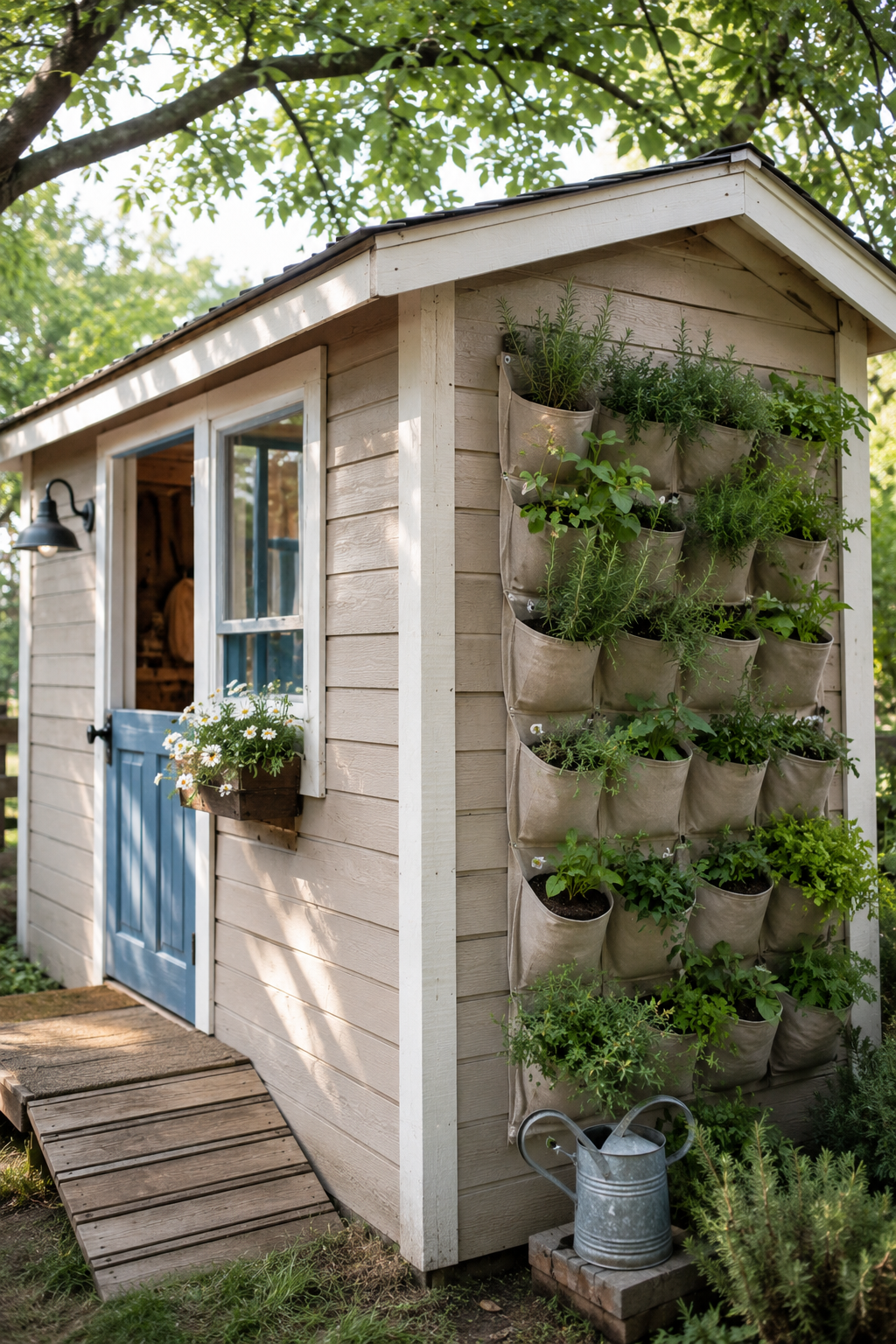
A shed exterior without any greenery looks finished but never quite alive. The wall sits there doing nothing and the space between the shed and the garden never fully integrates. A vertical planter wall on the exterior south-facing side softens the transition between building and garden, adds a layer of insulation to the wall behind it, and gives the entire property a depth that reads as genuinely designed. It costs almost nothing to set up and adds visual value from the day it goes in. [backyard studio ideas]
Deep green trailing plants against a dark charcoal exterior is one of the most striking outdoor combinations for a tiny house. The contrast between the dark wall and the bright foliage is immediate and holds across every season. Pair with terracotta pots at ground level and the palette ties the building to the ground in a way that paint alone never achieves. This planting approach works on any south or west-facing shed wall where the plants will get enough light to establish without constant attention.
A vertical pocket planter from Wayfair or a home garden store comes in multiple widths and installs directly onto an exterior wall with basic screws. Fill it with trailing herbs, succulents, or ferns depending on your light conditions. TJ Maxx often carries terracotta planters in exactly the right tones at a fraction of garden center prices. Worth checking their seasonal section before you shop anywhere else.
Plant the bottom rows first — filling from the top means water drains unevenly and the lowest plants dry out faster than they should.
A Warm Terracotta and Cream Color Palette Throughout a Shed to Tiny House Conversion
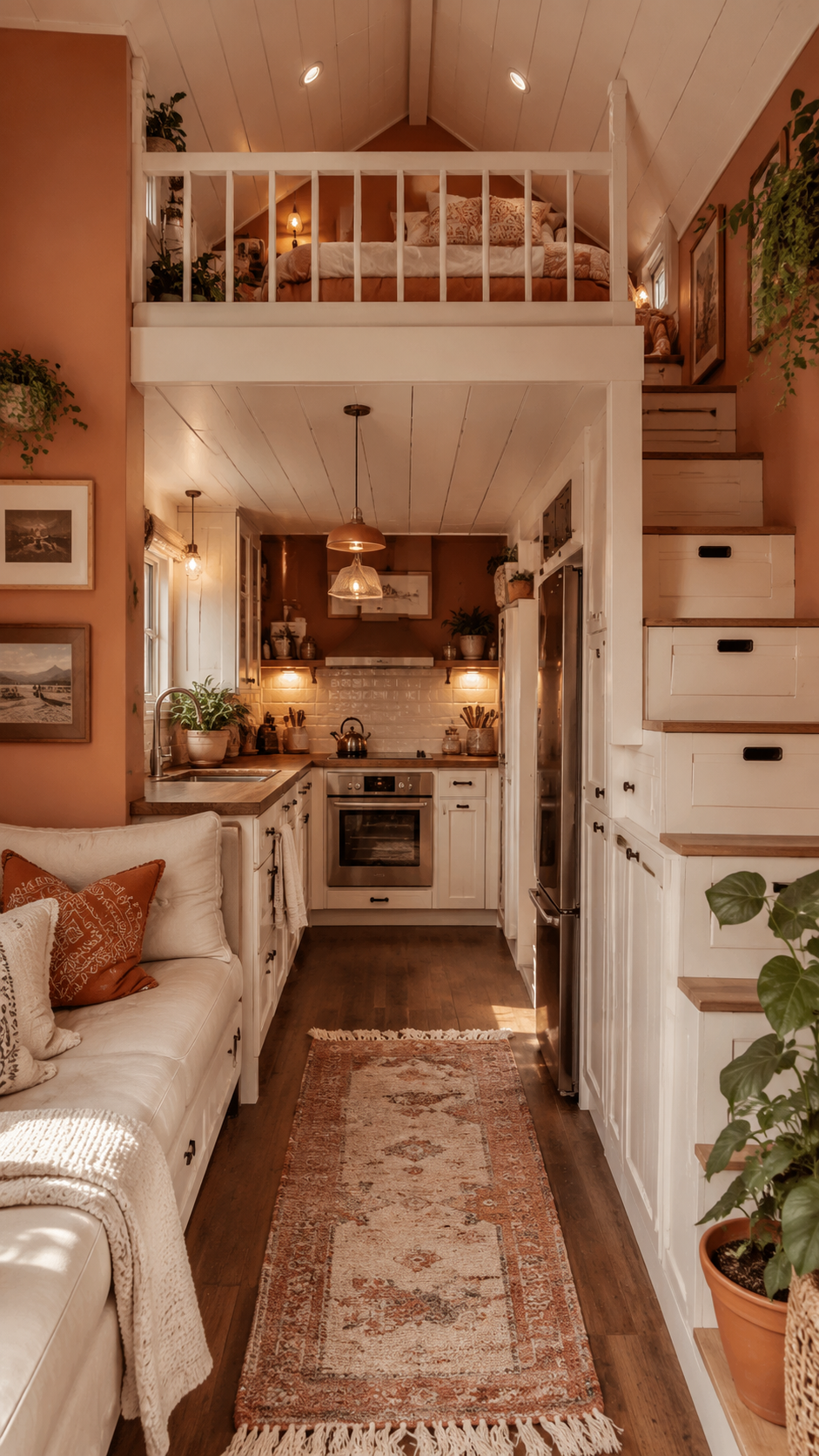
Choosing an interior color palette is where most conversions either come together or start to feel chaotic and unresolved. Most people go all white and find the space feels cold, or they try too many colors and find nothing lands. A two-tone palette of warm terracotta accents against a dominant cream base does something unusual in a small space — it makes every surface feel intentional and the whole interior reads as warm, personal, and genuinely considered.
Terracotta on cushions, planters, and small decor pieces against cream walls and natural wood floors creates a palette that feels grounded and sun-warmed without any visual effort. It suits a tiny house being used as a full-time home, a holiday rental, or a personal retreat because the warmth reads beautifully in both photographs and in person. In a south-facing shed this palette is electric in afternoon light. In a north-facing conversion it actively fights the grey flat quality of the light and consistently wins.
Find a cream interior paint in a warm white with a slight yellow undertone rather than a cool blue white. Benjamin Moore Linen White or similar equivalents at any hardware store get this balance exactly right. Target carries terracotta cushion covers and small decor pieces in this exact tone through most of the year. Worth picking up two or three test pieces before committing to the full palette throughout the space.
Test the cream paint on the wall for three full days before buying all the tins — it shifts noticeably between morning and evening light and you want to see both before you decide.
I spent two weeks trying to decide between a warm white and a cool white for my first conversion. I bought the cool white because it looked better in the tin. I repainted six weeks later. The warm tone changes everything in a small space and no amount of decor fixes the wrong base color.
A Mini Split Air Conditioner Hidden Behind Woven Rattan in a Shed Conversion
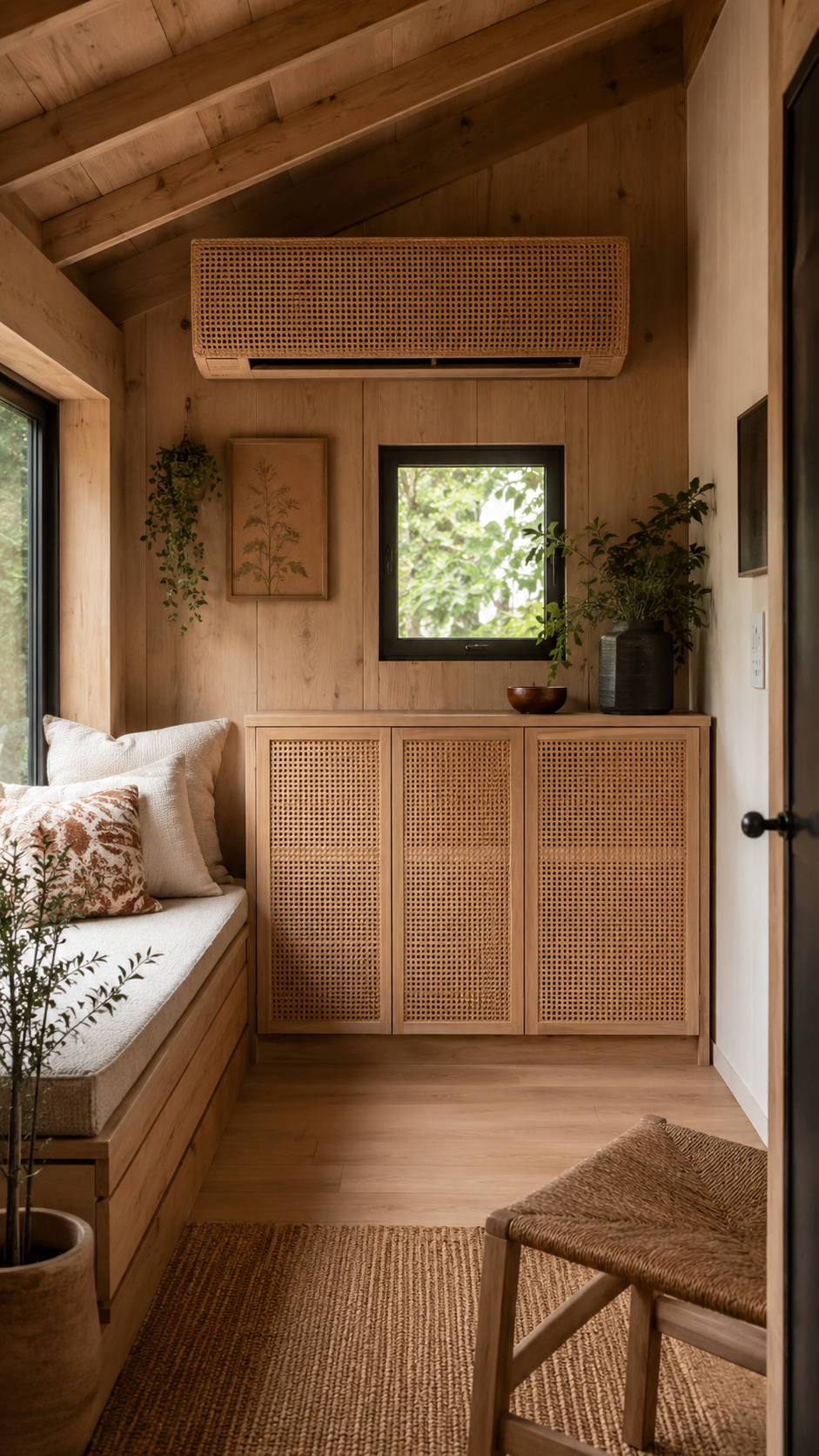
Heating and cooling is the part of a shed to tiny house conversion that most design content completely ignores. The mini split unit goes in, it works brilliantly, and then it sits on the wall looking like a piece of office equipment for the rest of the time the space is in use. A woven rattan panel mounted on a simple timber frame in front of the unit solves the visual problem without blocking airflow and without requiring any modification to the unit itself. It is a small detail that matters every single day.
Rattan in a warm natural tone against white walls reads as a decorative panel rather than a functional cover. Most visitors assume it is a design feature rather than a practical disguise. Paired with trailing plants on nearby shelving, the corner reads as intentional and softly natural. This approach works in any shed tiny house where the mini split sits on an interior wall rather than a less visible exterior-facing position where the aesthetics matter less.
A mini split air conditioner in a 9,000 BTU capacity from Wayfair handles most shed conversions between 100 and 250 square feet comfortably. Installation requires a licensed electrician for the electrical connection but the unit itself is straightforward to position. Wayfair has a wide range here for every budget. Worth getting at least one local installer quote before buying the unit so you know the full cost upfront.
Size the unit to the insulated square footage rather than the total shed dimensions — an oversized unit short-cycles and leaves the space feeling damp rather than comfortable.
A Clawfoot Tub Styled in a Tiny House Bathroom Conversion With Shiplap Walls
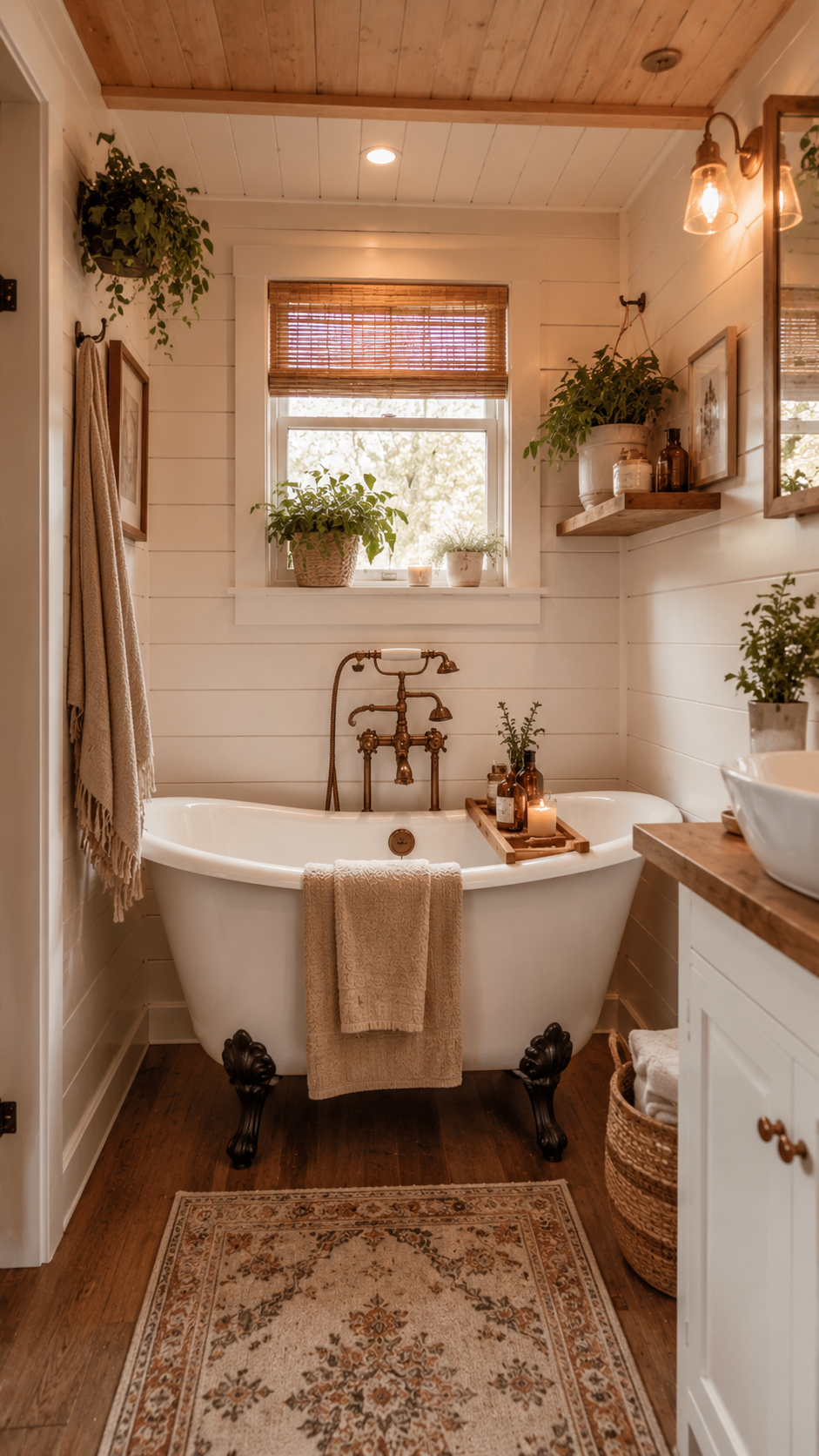
A bathroom in a shed conversion is often the last space anyone thinks seriously about adding, but it is the detail that changes a weekend retreat into a proper full-time living space. A compact bathroom with a clawfoot tub rather than a standard built-in unit uses slightly more floor space but creates an emotional impact that a plain shower cubicle never achieves. Walking into a shed conversion with a real clawfoot tub tells you immediately that the person who built this took every decision seriously.
A white freestanding clawfoot tub against white shiplap walls in a compact bathroom creates a spa-like atmosphere that photographs beautifully and feels genuinely luxurious in a small space. Brass fixtures add warmth against white surfaces and pair naturally with honey wood shelving for towels and toiletries. This works best in a shed conversion where the bathroom is fully separated from the living area and the plumbing connects to a permanent supply. It is the one splurge in a shed to tiny house conversion that pays back in daily experience more than any other.
Wayfair carries compact clawfoot tubs starting at around 54 inches, which fits a shed bathroom with minimal floor clearance to spare. The HomeGoods version of brass tap fittings looks far more expensive than it is. Worth checking both before you buy the tap set separately since the finish quality varies widely across price points.
Run the plumbing before the floor goes down — accessing pipe connections after tiles are set turns a two-hour job into a two-day one.
The next idea costs very little and gets more comments from visitors than almost anything else in a completed shed conversion.
A Covered Front Porch Added to a Shed Tiny House With a Rocking Chair and String Lights
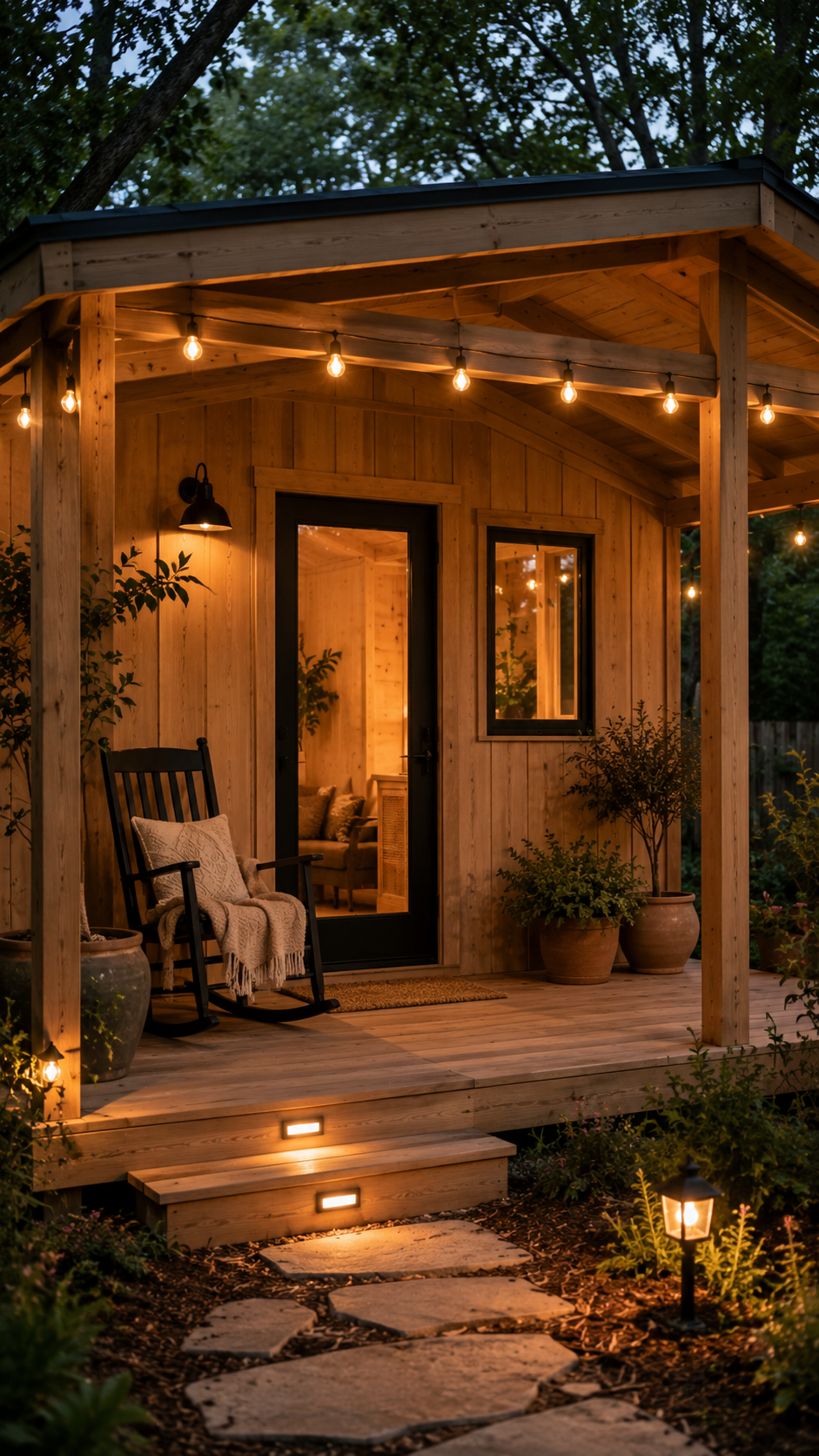
The inside of a shed tiny house can be perfect, but without an outdoor connection the space always feels slightly closed in and self-contained. A small covered porch even four feet deep extends the living area into the outdoors, creates a genuine transitional space, and adds more character to the exterior than any paint color or landscaping decision alone. It makes the shed look like a real dwelling from the first moment you see it from the garden.
A simple lean-to roof over a cedar or pine decked porch with a rocking chair and a strand of warm string lights creates a living moment that works with morning coffee and evening wind-down equally well. The warm glow from the string lights bouncing off the porch ceiling on a summer night makes the whole property feel inhabited and alive in a way that no interior lighting can replicate from outside. This addition suits any shed conversion being used as a full-time home or a high-quality short-term rental.
A weatherproof outdoor string light set from Target or World Market handles this for very little. Both carry warm Edison-style bulb sets in lengths that suit a small porch run perfectly. World Market has interesting options most people overlook and the quality holds up through multiple outdoor seasons. Worth checking their outdoor section before shopping anywhere else.
Hang the string lights before you bring in the furniture — you need clear overhead access to get the height right and the anchor points evenly spaced.
A Cozy Reading Corner With Floor-to-Ceiling Linen Curtains and a Low Velvet Chair in a Shed Tiny House
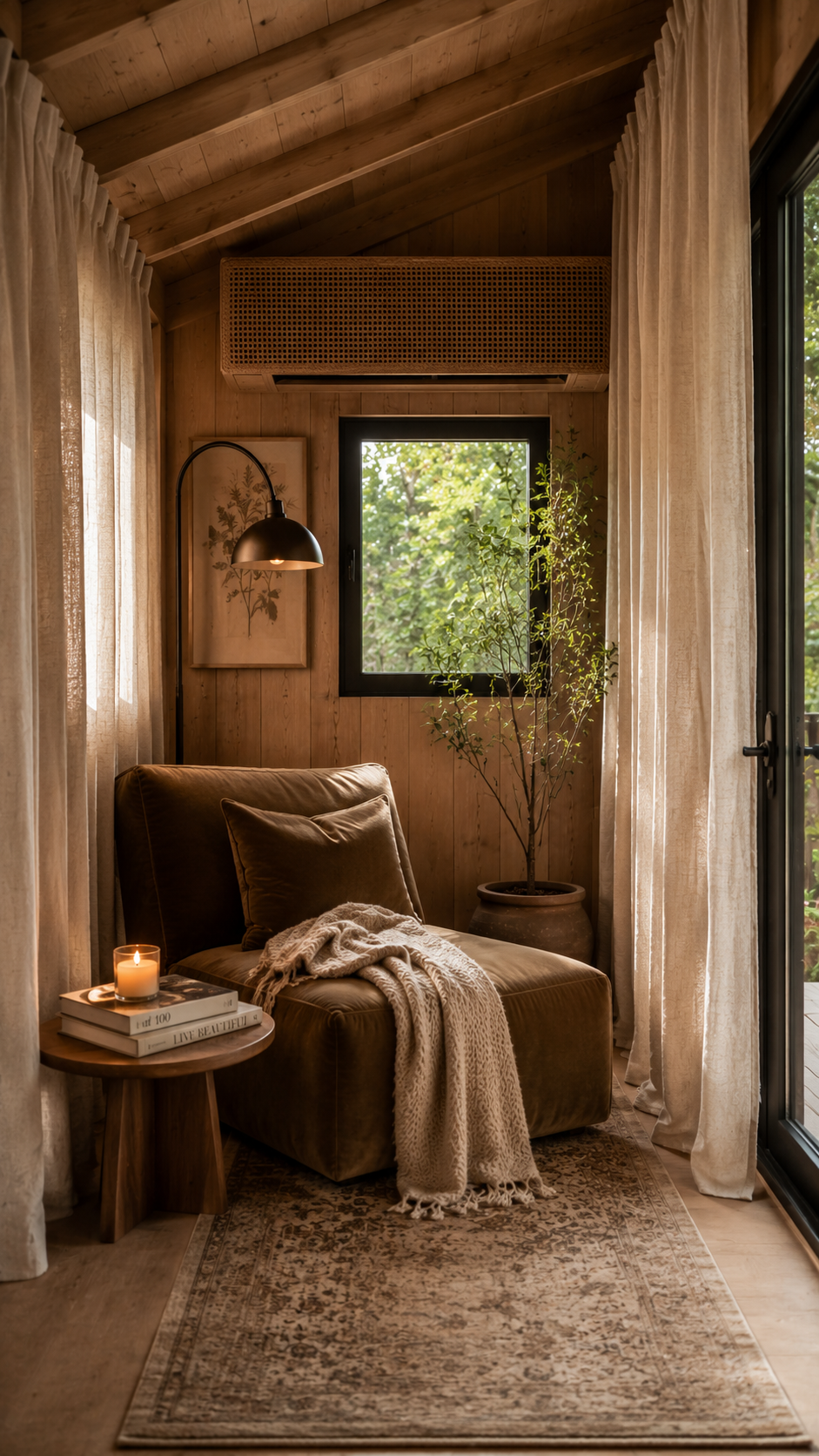
Every shed to tiny house conversion needs one corner that feels genuinely indulgent rather than purely functional. The spaces that people save on Pinterest and return to visit in person are always the ones that have one moment of softness, one place where the practicality of small living pauses for a moment and lets something beautiful happen. A low velvet accent chair, floor-to-ceiling curtains in heavy linen, and a small side table with a lamp creates that corner with very little cost and no structural work at all.
A deep forest green or dusty rose velvet accent chair against cream walls with natural linen curtains creates a contrast that is rich without feeling heavy or overdone. A small wood side table and a simple arc floor lamp complete the corner without cluttering it. This combination works in any corner of a shed conversion not being used for storage or function, and it suits a reading habit, an evening wind-down, or simply a space that rewards the deliberate decision to live well in a small room.
Target stocks these in forest green and warm rust tones that suit this palette perfectly and the quality is consistently good across restocks. The HomeGoods version looks far more expensive than it is. Worth checking both in the same week while stock levels are consistent and comparable.
Place the chair before you hang the curtains — the floor position determines the curtain drop and getting that order wrong means rehemming something that was already the correct length.
A Real Shed to Tiny House Room
Picture a 12 by 16 shed on a south-facing block at three in the afternoon. The white shiplap wall on the far side catches the light coming through the tall east window and carries it all the way to the corner where the fold-down table sits closed against the pale grey wall. The lofted bed is up above, hidden behind a cream linen curtain on the ceiling track, and the storage bench beneath the window holds a cushion thick enough to sit on for an entire evening. The butcher block kitchen runs along the north wall, the warm honey surface glowing under the open pine shelving that holds a few white bowls, three books, and a small terracotta pot with a trailing herb.
By evening the string lights on the covered porch are on and the sliding barn door between the kitchen zone and the sleeping loft is half open. The velvet chair in the south corner holds a throw blanket in warm rust and a paperback left face-down at page ninety-four. The mini split runs quietly. The clawfoot tub in the compact bathroom off the entry is full of warm water and the brass tap catches the last of the daylight coming in through the shiplap wall. This is what a shed to tiny house conversion feels like when every decision was made in the right order and nothing was rushed to get to the next step.
Color Choices That Work in a Shed to Tiny House Conversion
Warm Soft White (#F5F2EC)
Use this on every interior wall as your base color. It reflects light generously without the cold blue quality that pure white carries, and in a small space that warmth makes every surface feel finished and genuinely considered rather than simply painted and left.
Warm Terracotta (#C4622D)
Use this on cushions, small planters, and accent pieces rather than on walls. It brings warmth and grounding against the white base and pairs naturally with honey wood tones and cream textiles to create a palette that feels settled and personal from day one.
Pale Sage (#8FAF8A)
Use this on throw pillows, a single upholstered piece, or outdoor planters at the base of the vertical garden wall. It sits comfortably next to both the terracotta and the warm white and adds a quiet natural element without demanding attention from anything else in the room.
Deep Charcoal (#2C2C2C)
Use this on the exterior only. It transforms the visual identity of the shed from a storage structure to a real building the moment you step back and look at it from the garden. Pair it with bright white window trim and the contrast is immediate and dramatic from every distance.
Lighting and Room Size Guide for a Shed to Tiny House Conversion
Small Rooms
One strong focal light source beats three or four scattered ones every time in a small shed conversion. A single arc floor lamp in the living corner and a strip light under the kitchen shelving gives you two intentional lighting zones that feel considered rather than improvised and layered on top of each other.
Large Rooms
A shed over 150 square feet benefits from zone lighting that defines each area separately. The kitchen, sleeping loft, and living corner should each have their own light source so the larger space never feels like one undifferentiated room when the sun goes down.
North-Facing
This is the trickiest orientation for a shed conversion but it is completely manageable with the right choices. Warm white walls, honey wood surfaces, and terracotta accents fight the grey flat quality of north light better than anything else. Avoid cool grey palettes entirely in a north-facing shed.
South-Facing
This is the best orientation a shed conversion can have and the one that rewards every design decision you make. Strong direct light through the day makes every color look warmer and every surface look more considered. Almost any palette works here and the space earns its warmth without effort.
East-Facing
Morning light comes in strong and golden and then softens gently through the rest of the day. This is a consistent, beautiful light quality that suits a reading corner or bedroom zone particularly well. The light in an east-facing conversion in the early morning is genuinely worth planning around.
West-Facing
Warm afternoon light builds through the day and peaks in the early evening, which means a west-facing shed feels alive and golden at exactly the time most people are actually using the space. Colors look rich and warm in west light and the porch string lights have to work harder to compete with the natural glow.
Common Shed to Tiny House Conversion Mistakes
Choosing Furniture Sized for a Normal Room
Most people buy furniture before they have spent real time in the space and the result is a shed conversion that looks overcrowded from the first day. A standard sofa, a full dining table, and a regular wardrobe do not scale down into a shed. They overwhelm it and eliminate the sense of space that made the conversion worth doing in the first place. Replace full-size pieces with wall-mounted, fold-down, or purpose-built small-space alternatives before you bring anything through the door. A shed that breathes feels twice as large as a shed filled with furniture that belongs in a completely different kind of room.
Installing the Floor Before the Plumbing and Electrical
This is the most expensive sequencing mistake in any shed to tiny house build and it happens more often than any builder will tell you. Beautiful floors go in, the space looks nearly finished, and then the plumber or electrician arrives and needs access to exactly the places that are now covered and sealed. Getting the rough-in for water and electrical done before any finished floor surface is laid saves a significant amount of rework and cost. Plan the full build sequence before you start a single section rather than deciding the order as you go.
Ignoring Ceiling Height When Planning the Sleeping Loft
A loft bed that leaves eighteen inches of clearance above the mattress sounds like a minor inconvenience and feels like a genuine daily problem every morning when you sit up without thinking. Measure the distance from the top of the finished mattress to the finished ceiling before you build anything structural. Seven and a half feet of interior height is the comfortable minimum for a loft that functions without constant frustration. Below that the loft works well as storage or a children’s sleeping space but not as a practical adult bedroom used every night.
Spending the Budget on the Exterior Before the Interior Is Liveable
The exterior of a shed conversion photographs beautifully on day one and then stays the same for years without much attention. The interior is what you live with every single day. Getting the exterior painted, planted, and finished before the interior has working insulation, a real kitchen, a functioning bathroom, and a proper sleeping space is one of the most common regrets in the shed to tiny house community. Finish the interior to a fully liveable standard first and without compromise. The exterior will still be there to improve once you are genuinely comfortable inside. [budget home renovation ideas]
Comparing the Best Shed to Tiny House Ideas
| Idea Name | Best Room | Effort Level | Budget Level | Rating |
|---|---|---|---|---|
| Shiplap Feature Wall | Living Area | Medium | Low Cost | ⭐⭐⭐⭐⭐ |
| Lofted Bed Frame | Sleeping Zone | Takes Time | Investment | ⭐⭐⭐⭐ |
| Fold-Down Wall Table | Dining and Work | Easy | Low Cost | ⭐⭐⭐⭐⭐ |
| Sliding Barn Door | Room Divider | Medium | Investment | ⭐⭐⭐⭐ |
| Murphy Bed Wall Panel | Living and Sleeping | Takes Time | Investment | ⭐⭐⭐⭐ |
| Storage Bench | Entry or Window | Easy | Low Cost | ⭐⭐⭐⭐⭐ |
| Ceiling Curtain Track | Any Zone | Easy | Low Cost | ⭐⭐⭐⭐ |
Frequently Asked Questions About Shed to Tiny House Conversions
What is the best starting point for a shed to tiny house conversion on a small budget?
Start with insulation and then the floor before you touch anything cosmetic. A well-insulated shed that stays warm in winter and cool in summer is a liveable space regardless of what the walls look like. Cosmetic improvements are visible immediately but they sit on top of a cold, damp shell if the basics are not done first. Get the building envelope right and every design decision that follows will feel rewarding rather than temporary and provisional.
Do I need a permit to convert a shed into a tiny house?
Permit requirements vary significantly by location, shed size, and intended use. A shed being used as a full-time residence almost always triggers a permit and inspection process in most jurisdictions. A backyard studio or occasional retreat sits in a grey area that many local authorities handle differently. Check with your local planning office before you start any work rather than after — the cost of getting it right from the beginning is far lower than the cost of undoing finished work to meet a requirement you did not know existed.
What is the minimum shed size for a comfortable shed to tiny house conversion?
A 10 by 12 shed at 120 square feet is the practical minimum for a single-person living space that includes sleeping, cooking, and a small bathroom. Below that the space works as a studio or weekend retreat but the compromises accumulate quickly. A 12 by 16 or 12 by 20 shed gives you enough room to include a sleeping loft, a real kitchen run, and a separate bathroom without the space feeling permanently crowded every time two people are inside at the same time.
Can I insulate a shed to tiny house conversion myself without professional help?
Yes, and it is one of the highest-value things you can do without a contractor. Rigid foam board insulation between the wall studs is straightforward to cut and fit with basic tools you likely already own. The ceiling is the most important surface to insulate first since heat loss through an uninsulated roof in winter is dramatic and immediate. A well-insulated shed conversion uses a fraction of the heating and cooling energy of a poorly insulated one and the comfort difference is felt from the very first cold night.
What is the most common misconception about shed to tiny house living?
Most people assume the hardest part is the building. It is not. The hardest part is editing your possessions down to what the space can comfortably hold and genuinely be used by. A shed tiny house rewards people who have already made peace with owning less. Go through your belongings honestly before you finalize your build plans. The space will feel entirely different depending on which of those two things you do first.
Final Thoughts on Converting a Shed to a Tiny House
A shed to tiny house conversion is one of the most honest building projects you can take on because every decision is visible and nothing hides behind excess space. The ideas in this article work because they all start from the same place — genuine respect for the small space rather than a constant attempt to make it feel like something larger. Start with one idea that excites you more than the others, build it properly, and let it set the quality standard for everything that follows.
The biggest difference between a shed conversion that feels like a real home and one that feels like an ongoing project is not budget or building skill. It is the decision to treat every square foot as genuinely valuable rather than something to be managed and worked around. Small spaces do not need less consideration. They need more of it applied more deliberately and with more patience than a large space ever requires.
You do not need to do all sixteen ideas at once and you should not try. Pick the one that solves your most immediate problem and do it to the highest standard you can manage right now. A single well-executed idea in a small space changes the entire feeling of the interior more than ten half-finished ones ever will. Start this weekend. [tiny house interior ideas]
A few links in this article may earn a small commission at no extra cost to you. I only mention products I would genuinely consider using in my own home.