12 Genius Flower Beds in Front of House That Fix Bland Yards
Most flower beds in front of house look fine at first glance, but something always feels slightly off. The layout feels flat, the colors don’t connect, or the space just doesn’t flow with the house. It ends up looking more like scattered planting than a real design.
What actually makes the difference is structure. When shape, layering, and placement start working together, the entire front of your home feels intentional. That’s when a simple flower bed suddenly looks expensive and complete.
Flower beds in front of house work best when structured layering, defined edges, and balanced plant placement create a clean and visually connected layout.
Why Flower Beds in Front of House Instantly Elevate Curb Appeal
A well-designed flower bed does more than just add color. It creates a visual connection between your house, walkway, and lawn so everything feels like part of one system. Without that structure, even beautiful flowers can feel random and unfinished.
Most people focus only on what to plant, but the real impact comes from how everything is arranged. Once you start thinking in layers, shapes, and focal points, your front yard stops looking basic and starts feeling designed.
Core Flower Bed Ideas for Front of House That Actually Work
Curved Stone Border with Soft Color Layers
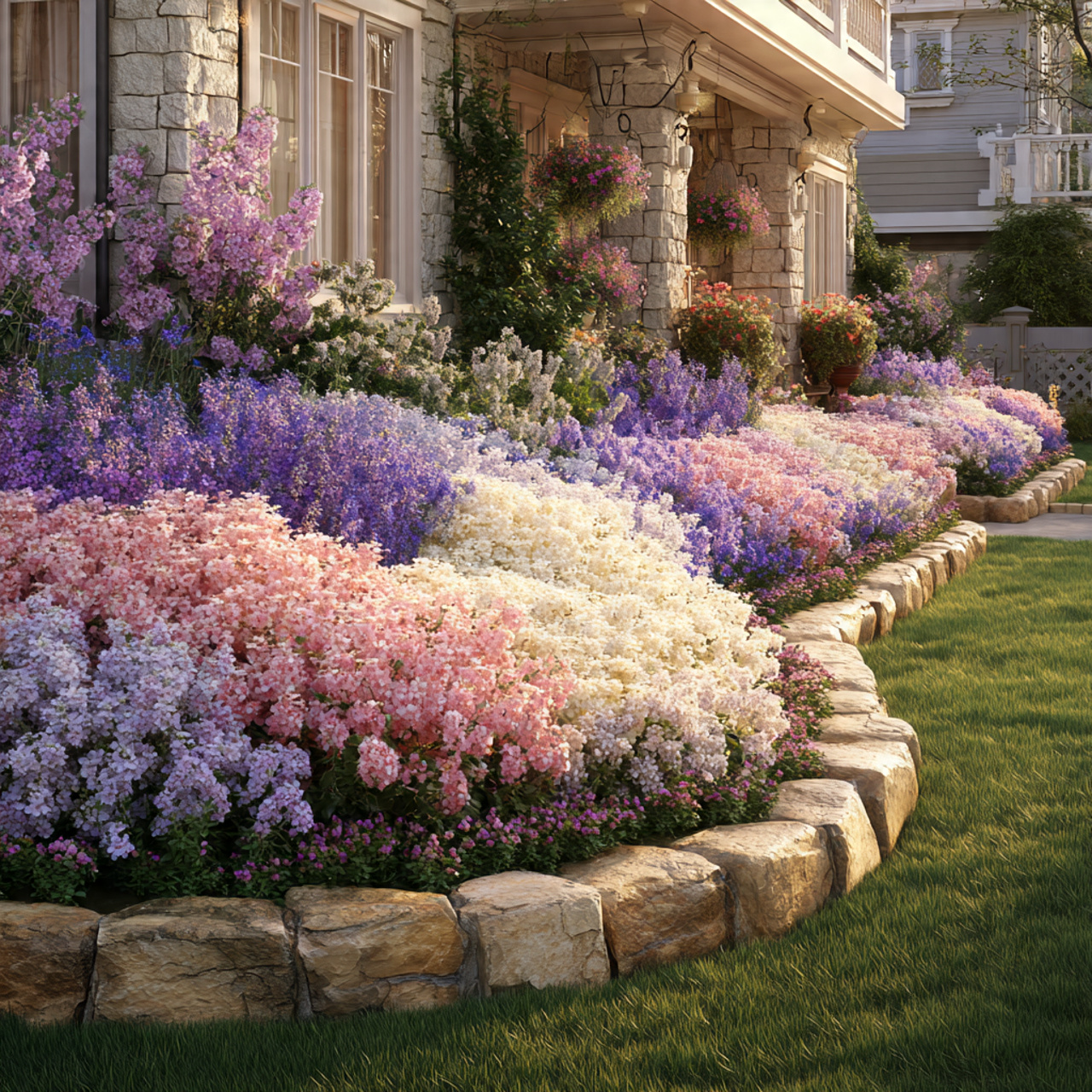
A gentle curve wraps along the front yard, separating lush grass from a layered mix of flowers. Light pinks, soft whites, and touches of lavender spill slightly over a natural stone edge, giving the space a relaxed, lived-in feel.
This works because curves guide the eye naturally. Instead of stopping abruptly, your view flows across the yard, making the space feel larger and more inviting. The soft color palette keeps it calm rather than chaotic.
Start by mapping a loose curve with a hose or rope before edging. Place taller plants toward the back, medium fillers in the center, and soft trailing flowers at the edge to blur the border slightly.
Tip: Keep the color palette limited to three tones so the bed feels cohesive, not busy.
Tall Evergreen Backdrop with Clean Front Bloom Line
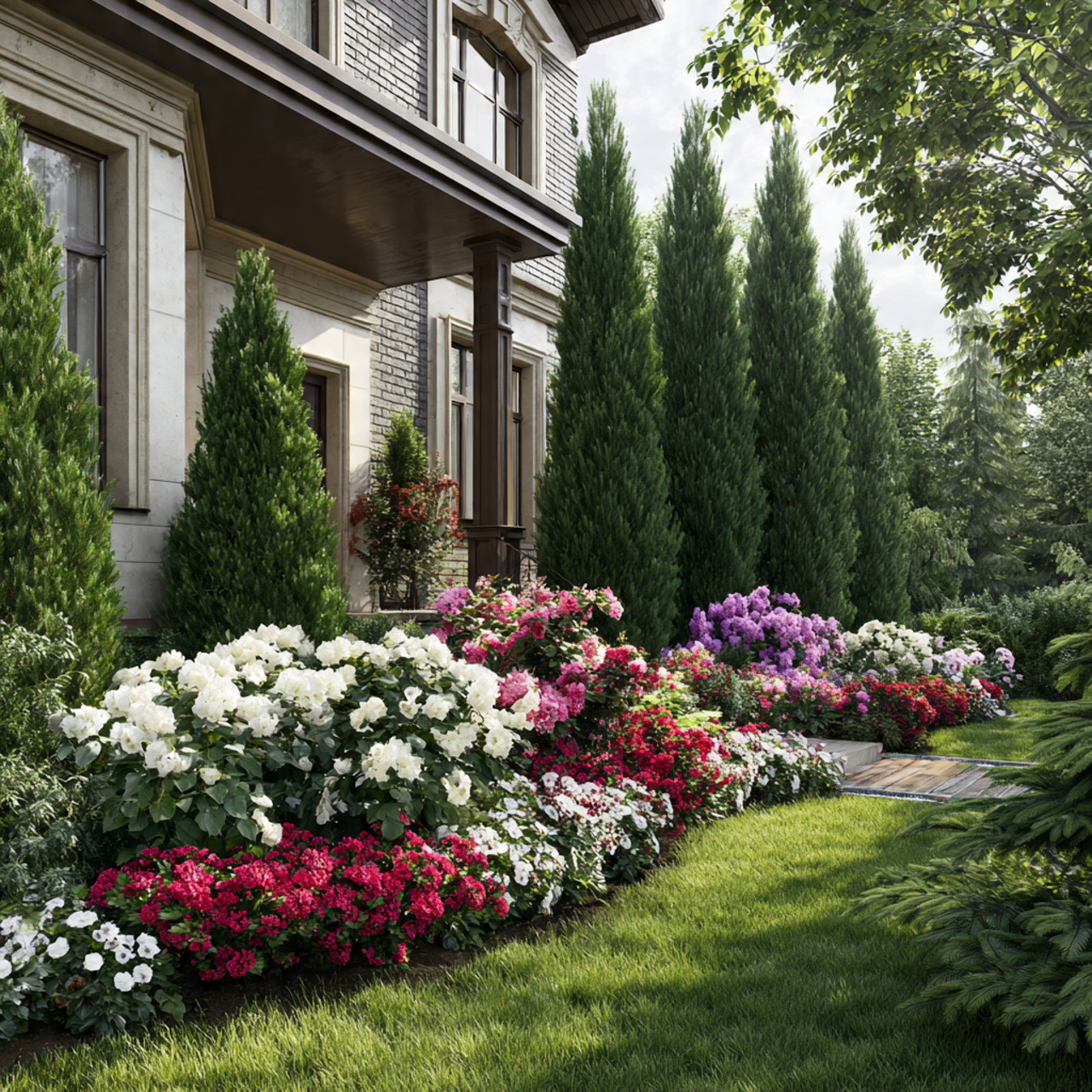
A row of narrow evergreens creates a strong vertical backdrop, while a neat line of low flowering plants runs along the front. The contrast between height and simplicity makes everything look structured and polished.
This works because repetition creates order. The vertical rhythm of the trees anchors the design, while the low flowers prevent it from feeling too rigid or harsh.
Plant evenly spaced evergreens along the back line. Add compact flowering plants in a single repeating pattern along the front to maintain that clean look.
Tip: Stick to one flower type in the front row for a high-end, minimal finish.
Symmetrical Entry Flower Beds That Frame the Walkway
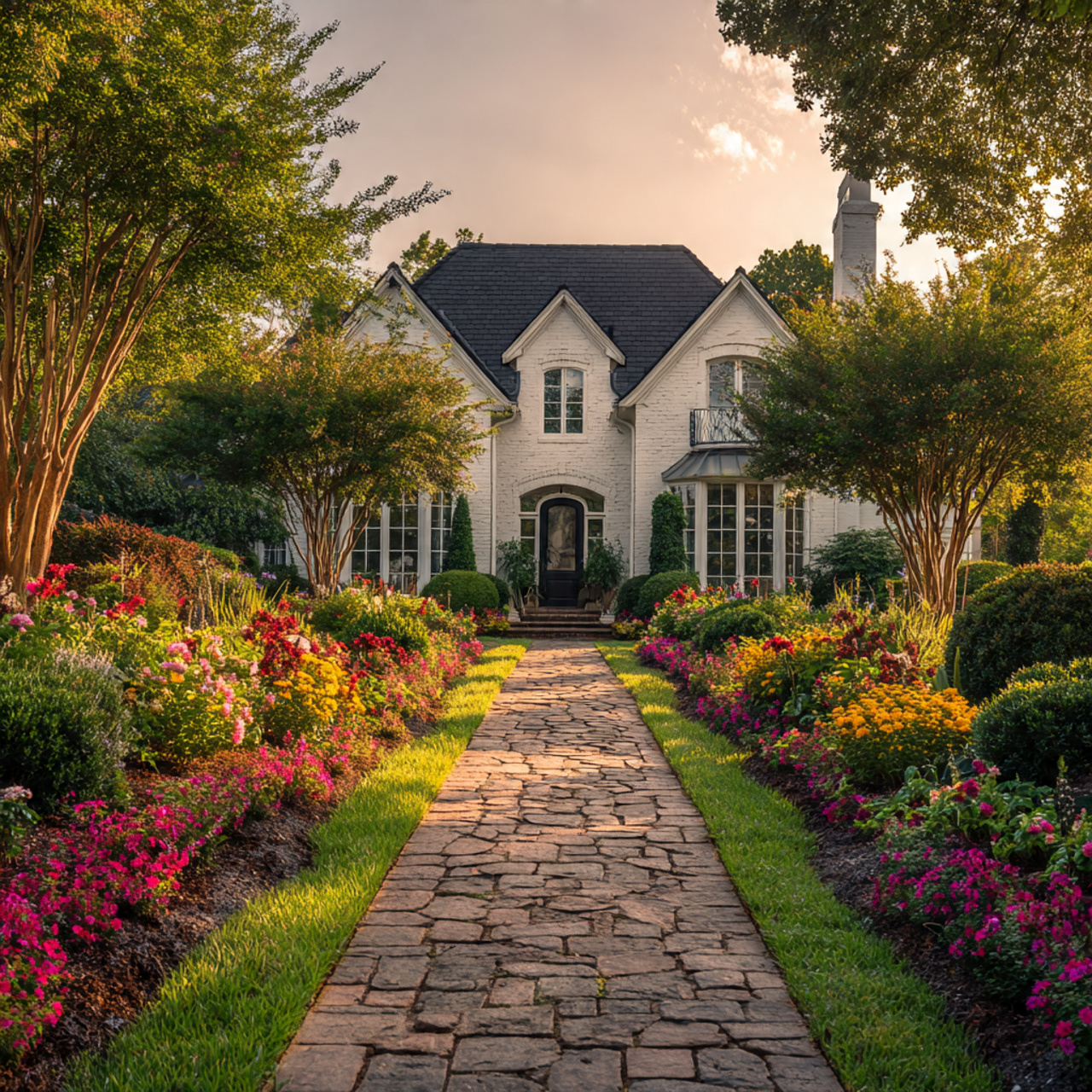
Matching flower beds sit on both sides of the front path, mirroring each other with balanced shrubs and coordinated blooms. The walkway feels like a natural entrance rather than just a path.
This works because symmetry feels intentional and calming. It gives your home a sense of structure that instantly improves curb appeal.
Choose a central path and build identical layouts on each side. Use structured shrubs first, then layer in flowers that match in color and placement.
Tip: Repeat the same plant shapes on both sides to keep the symmetry strong.
Raised Flower Bed with Stone Edging for Depth
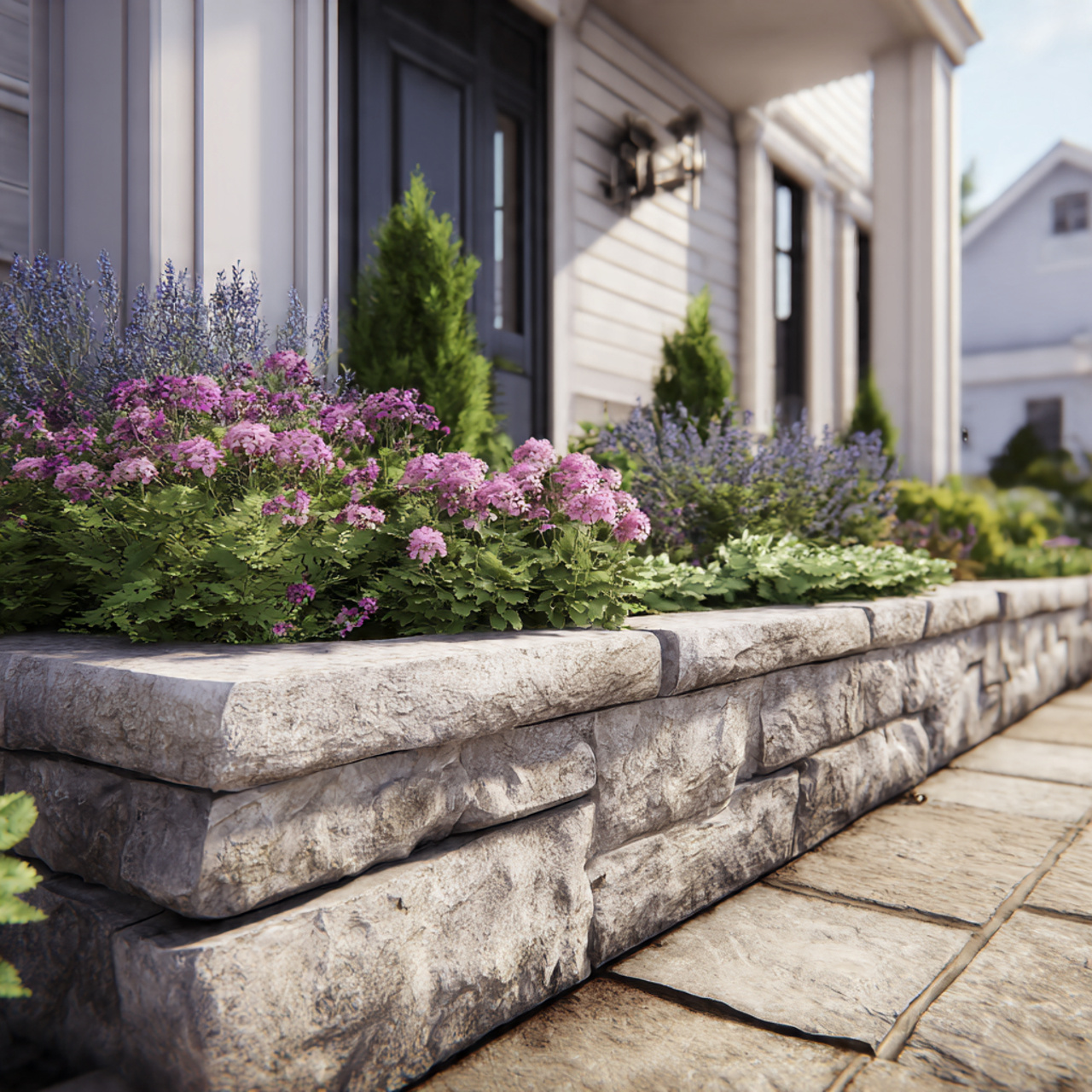
A slightly elevated bed framed with stone creates a layered effect, lifting the plants closer to eye level. Flowers cascade gently over the edge, adding softness to the structure.
This works because elevation adds dimension. It breaks the flatness of a typical yard and makes even simple plants feel more prominent.
Build a low retaining edge using stone or concrete. Fill with quality soil, then plant in layers so taller plants sit toward the back and softer ones spill forward.
Tip: Let a few plants drape over the edge to soften the hard lines.
Minimalist Bed with White Gravel and Sculptural Plants
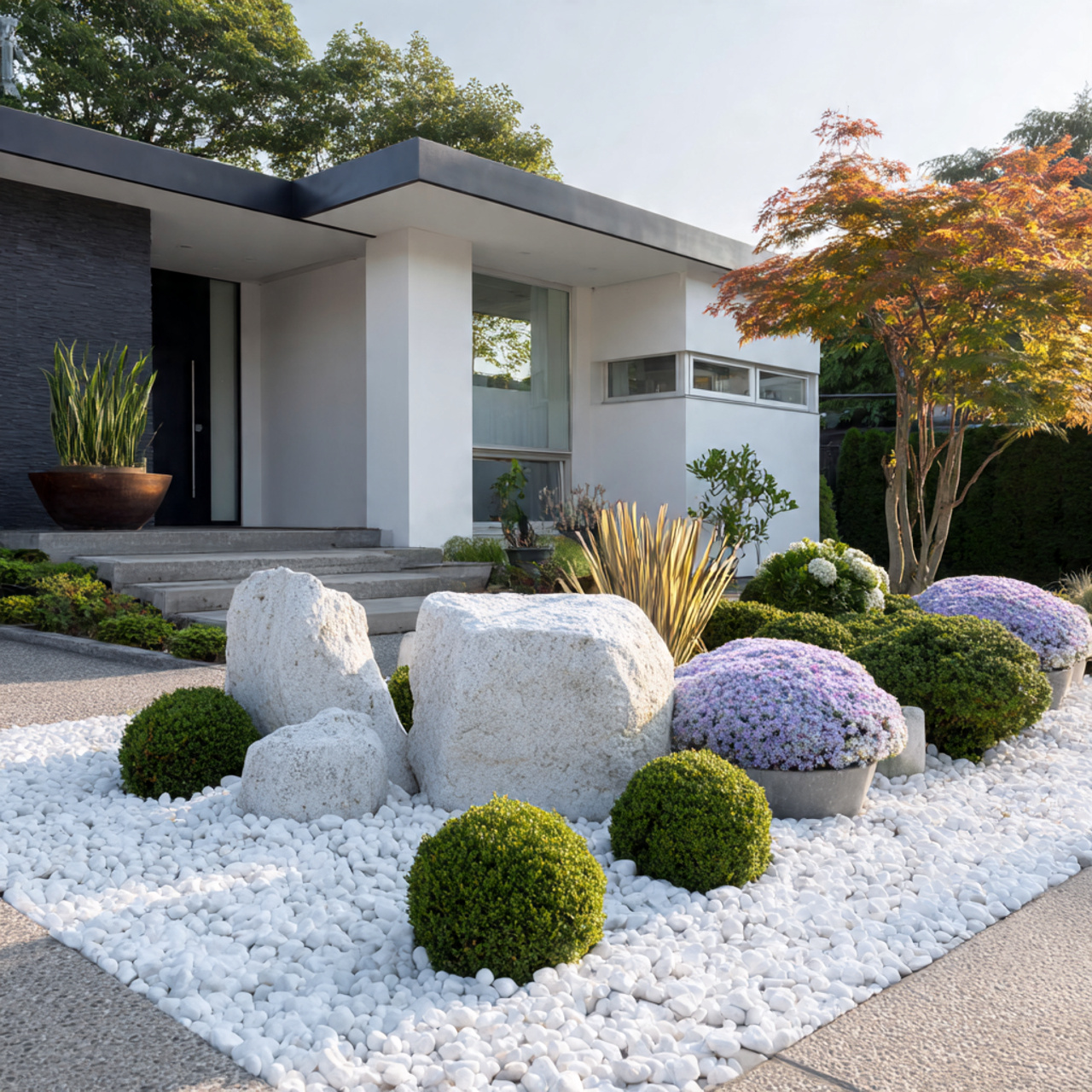
A clean layout with white gravel replaces traditional mulch, while a few carefully chosen plants create a sculptural look. One small tree or bold plant becomes the focal point.
This works because contrast does the heavy lifting. The bright gravel against greenery creates a sharp, modern aesthetic that feels intentional and uncluttered.
Use landscape fabric under white gravel to keep it clean. Add only a few plant types, focusing on shape rather than quantity.
Tip: Choose plants with strong silhouettes instead of relying on flowers for impact.
Tree-Centered Flower Bed with Circular Layers
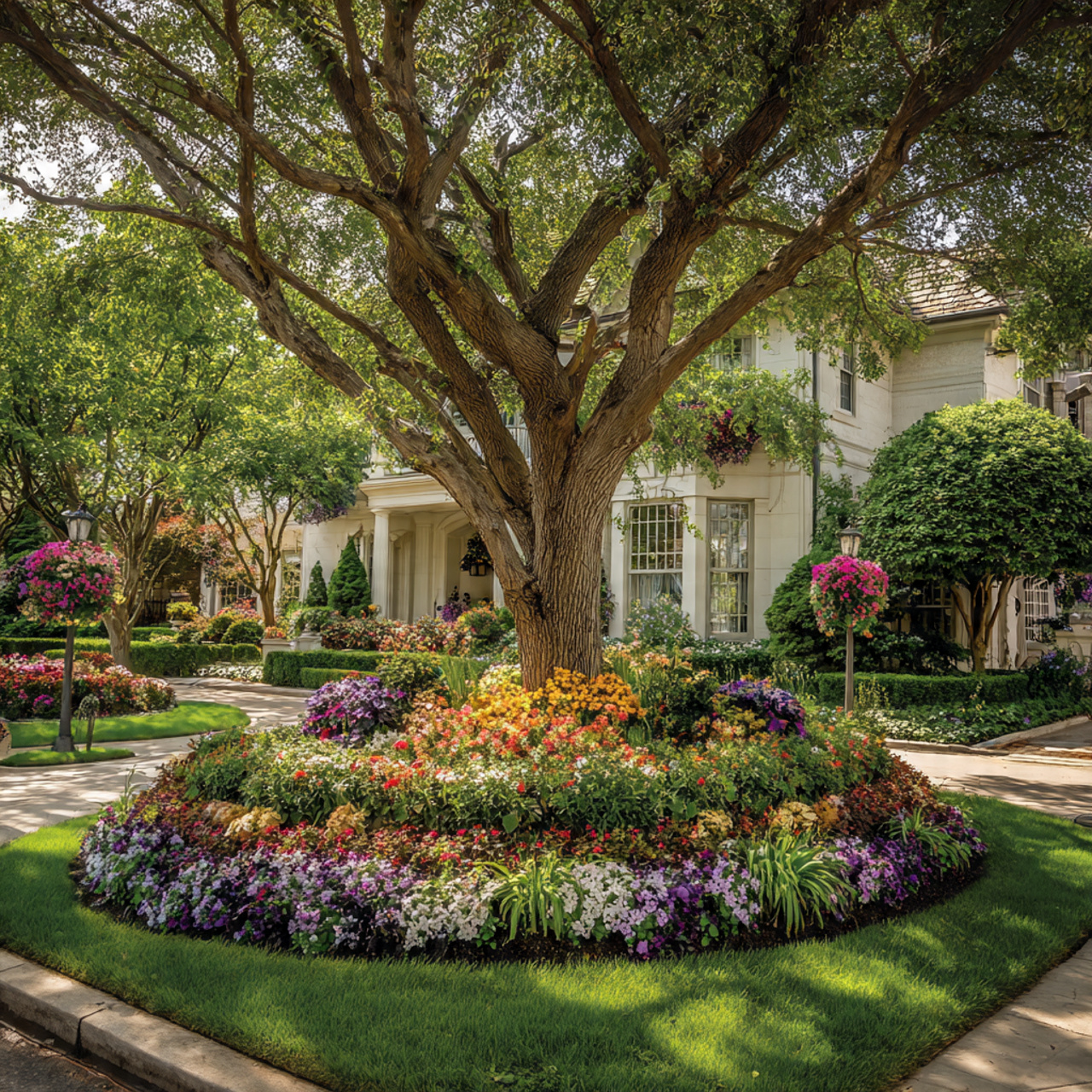
A single tree sits at the center, surrounded by circular planting layers that step down in height. The design feels balanced and complete from every angle.
This works because it creates a natural focal point. The circular layout draws attention inward and keeps the design grounded.
Start with your tree, then build outward in rings. Use taller plants near the center and gradually transition to lower ones at the edge.
Tip: Keep each ring visually distinct by using different textures or colors.
Narrow Side Bed Along Walkway with Vertical Focus
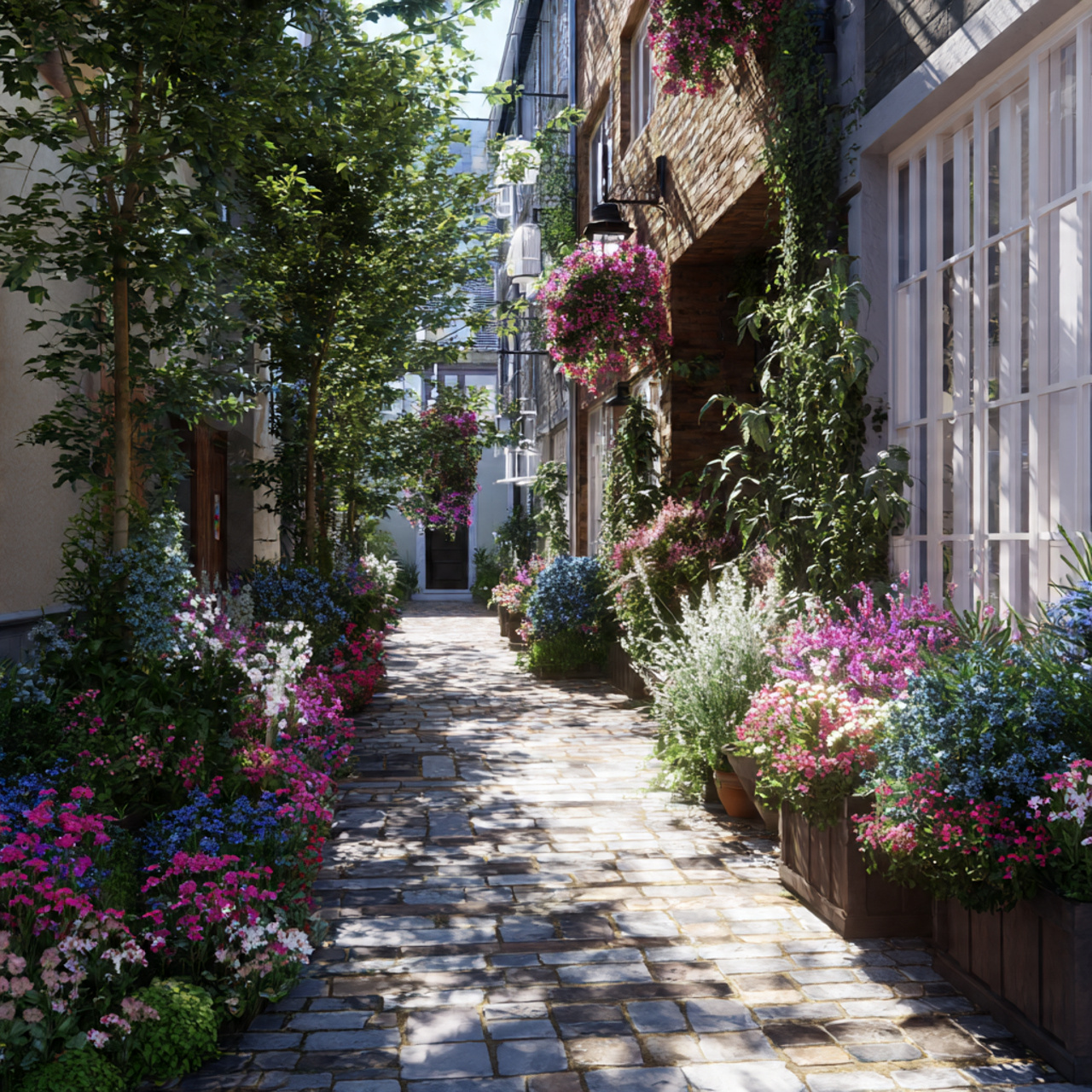
A slim flower bed runs alongside a walkway, using vertical plants in the back and compact greenery in the front. It transforms an overlooked strip into a designed feature.
This works because it maximizes tight spaces. Instead of feeling cramped, the vertical layering adds depth without taking up width.
Plant tall, narrow species along the wall or fence line. Add low-growing plants at the edge to keep the path clean and defined.
Tip: Choose upright plants to avoid crowding the walkway.
Bold Color Block Flower Bed for Instant Impact
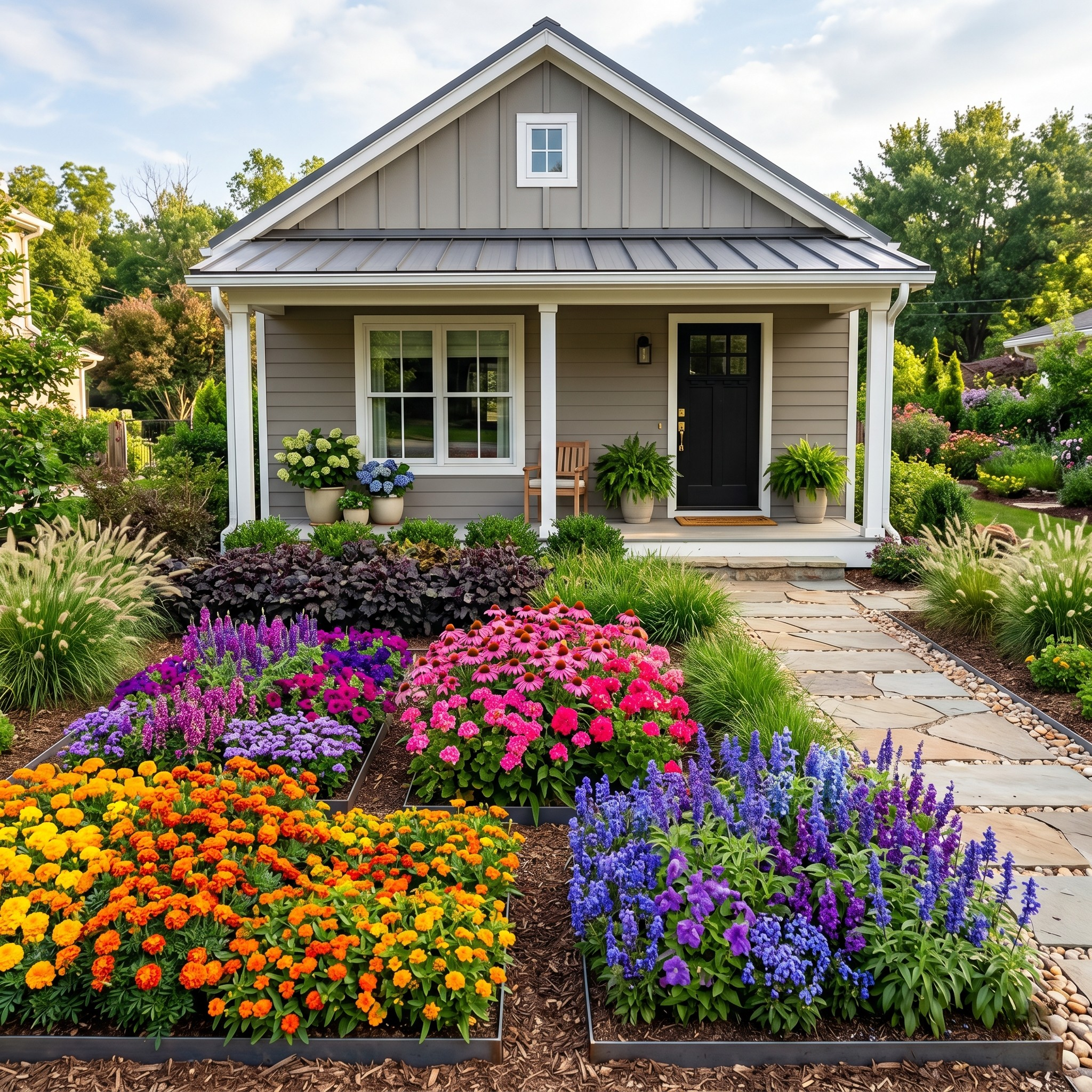
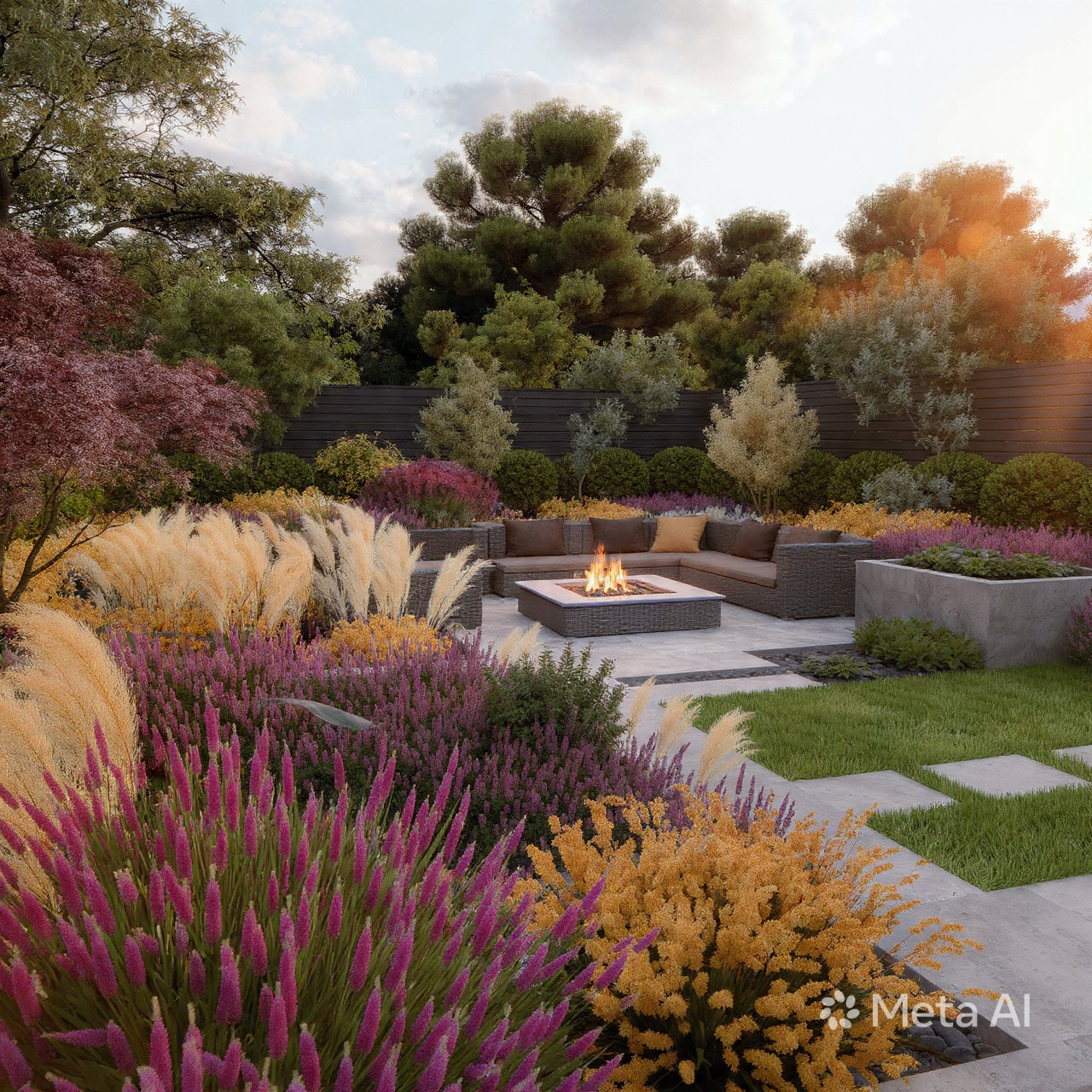
Large sections of the same flower color are grouped together, creating bold visual blocks instead of mixing everything randomly. The result feels intentional and striking.
This works because the eye reads color in groups, not individual plants. Strong color sections feel more organized and impactful.
Pick two or three colors and plant them in clusters. Avoid scattering them evenly so each color stands out.
Tip: Use contrasting colors like purple and yellow for maximum visual punch.
Mixed Texture Bed with Stone and Soft Green Layers
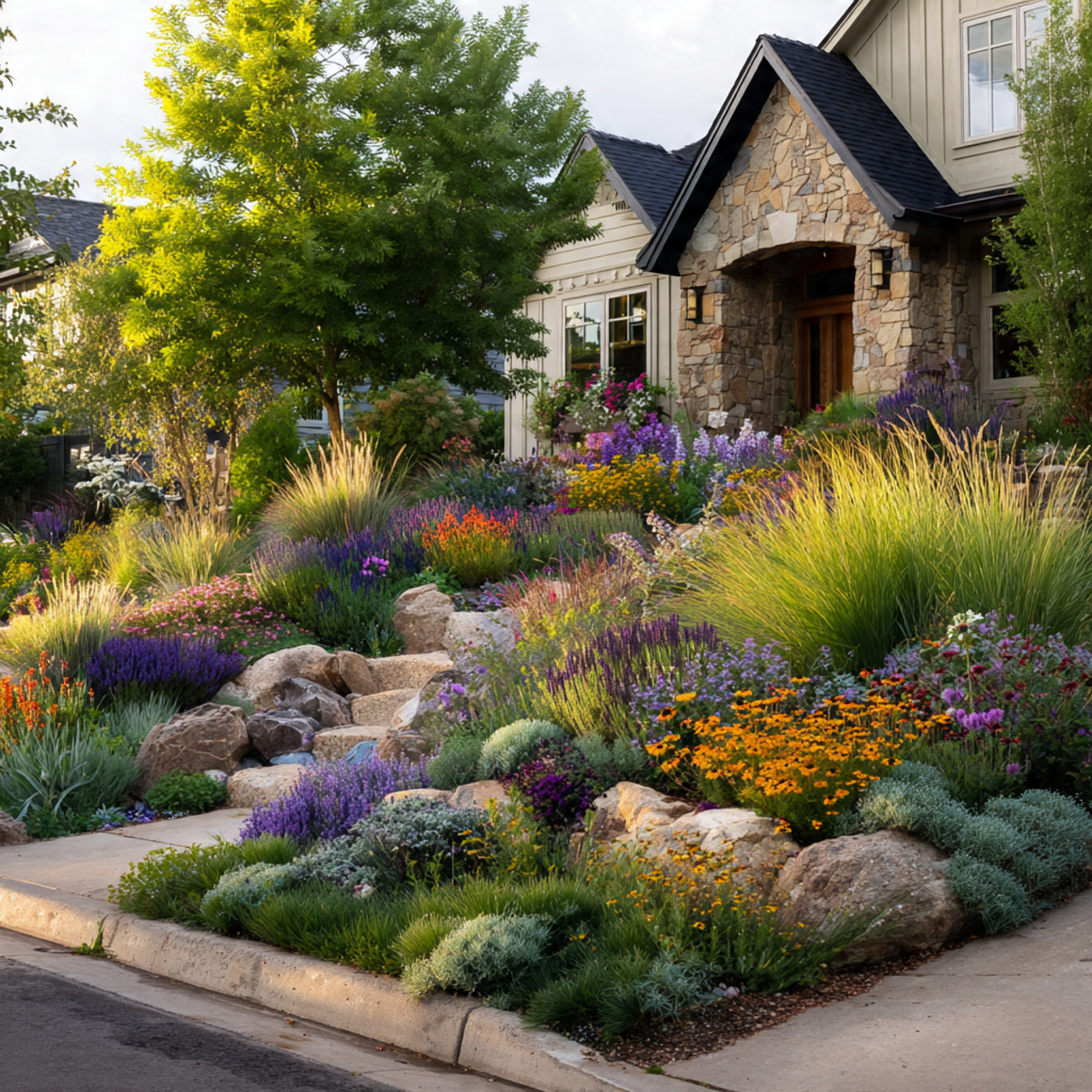
Rough stones, fine mulch, soft grasses, and structured shrubs combine to create a rich, layered texture. Even without many flowers, the bed feels full and interesting.
This works because texture adds depth. When colors are subtle, variation in materials keeps the design engaging.
Mix at least three textures such as smooth stone, feathery grasses, and dense shrubs. Arrange them in layers so each one is visible.
Tip: Keep colors neutral so texture becomes the main feature.
Flower Bed with Integrated Seating Edge
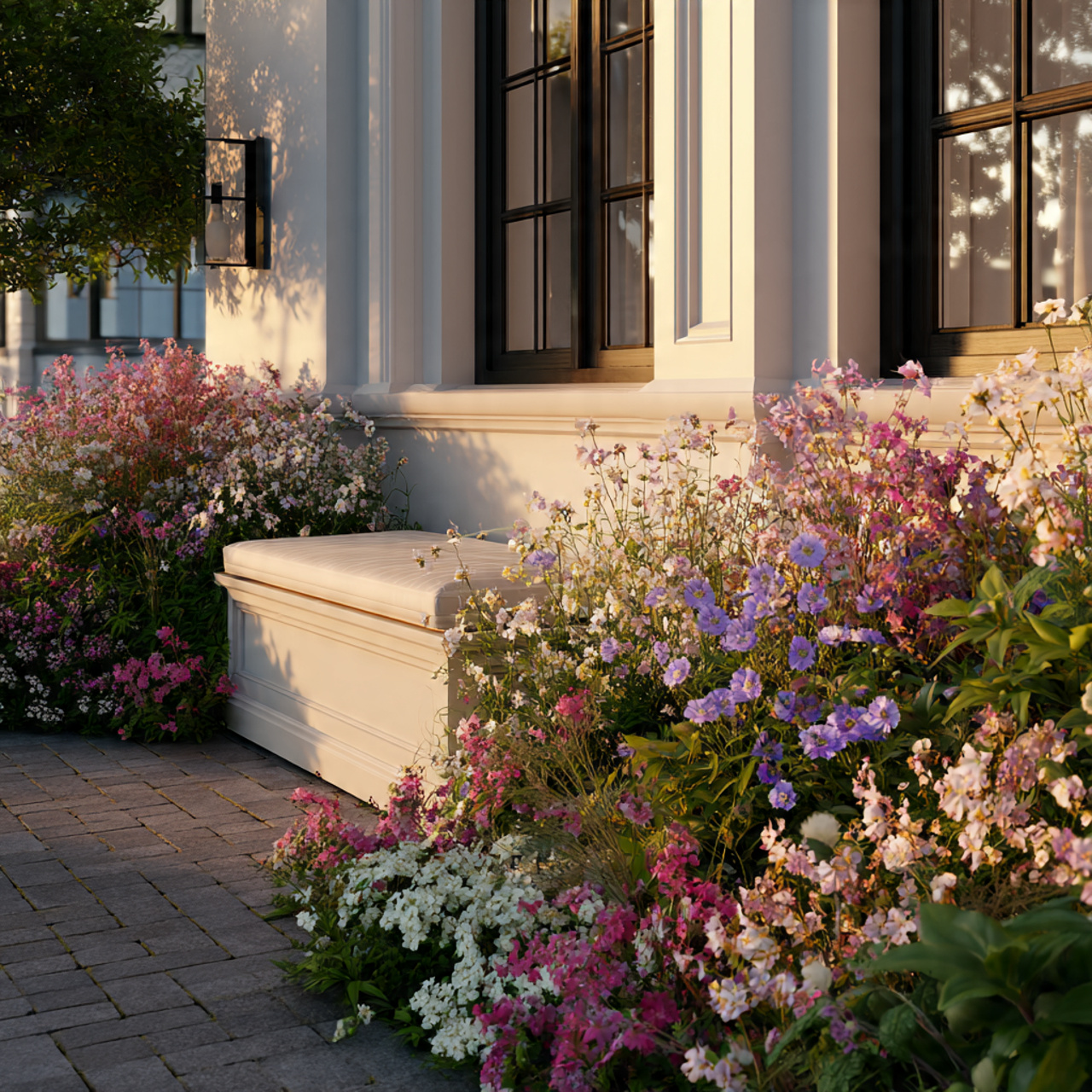
A flower bed wraps around a small seating area or built-in edge where you can sit. Plants soften the space while still allowing it to be used.
This works because it blends function with design. It turns a decorative area into something people actually enjoy.
Create a low wall or edge that doubles as seating. Plant behind it so the flowers frame the space without blocking it.
Tip: Use sturdy materials like stone so the seating feels solid and intentional.
Night-Lit Flower Bed with Soft Glow Highlights
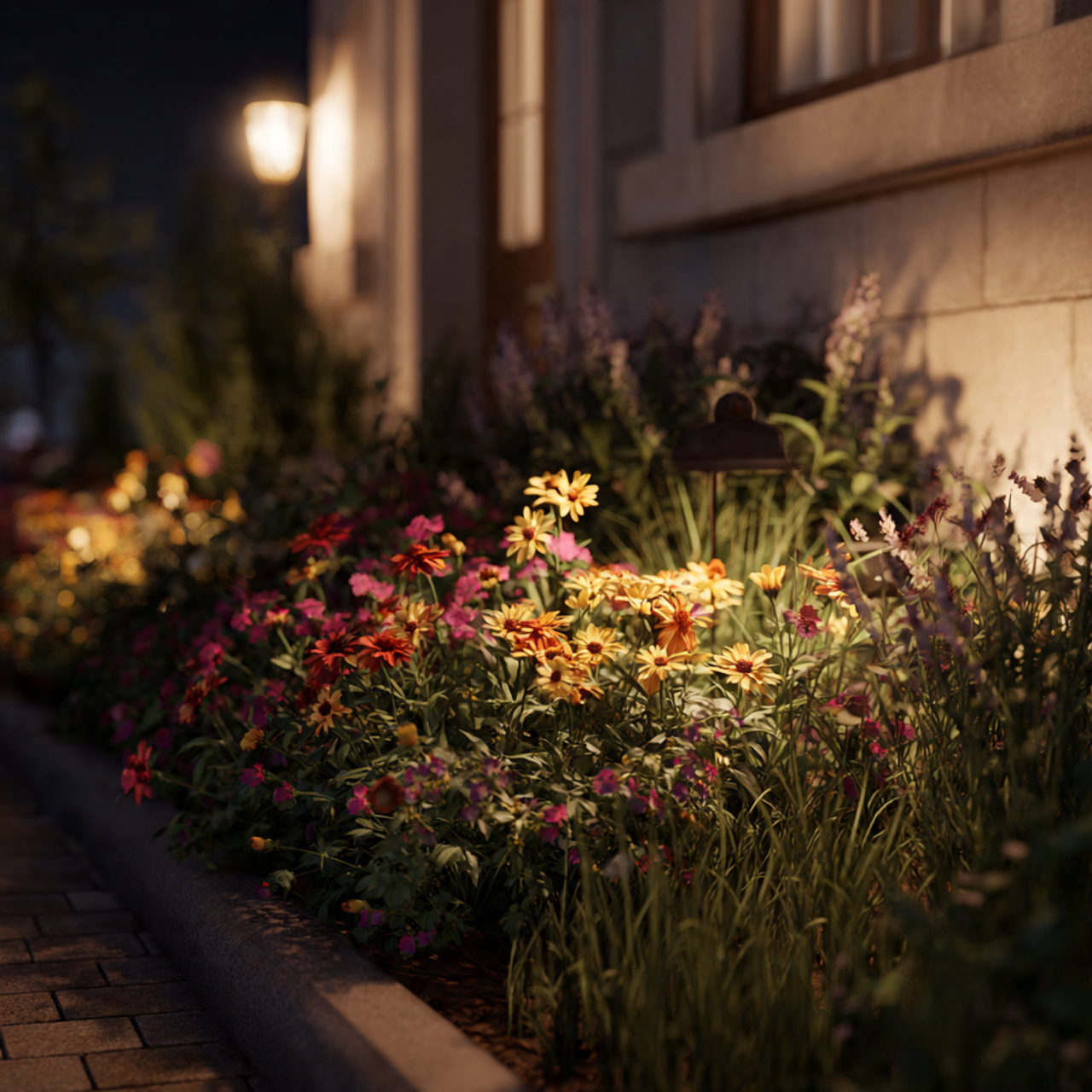
Subtle lighting is placed within the flower bed, casting a warm glow over plants at night. The space transforms completely after sunset.
This works because lighting adds emotion. It highlights textures and shapes that are not visible during the day.
Install low garden lights between plants or along edges. Focus on soft, warm tones rather than bright white light.
Tip: Place lights behind plants to create depth and shadows.
Visit Also: Cheap Fence Ideas Budget
Low-Maintenance Shrub Bed with Seasonal Accent Flowers
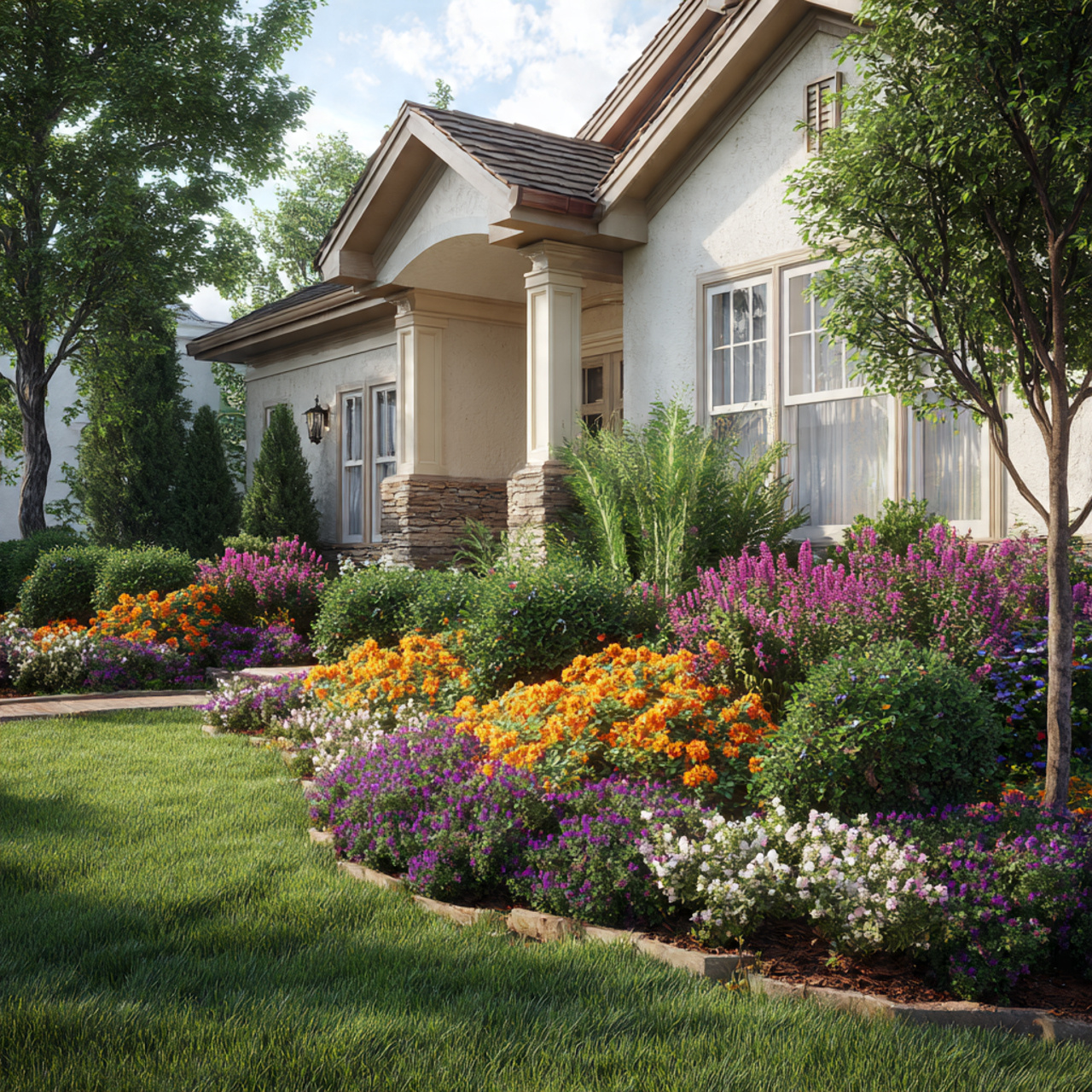
A base of evergreen shrubs keeps the structure consistent year-round, while small seasonal flowers add changing color throughout the year.
This works because it balances stability and variation. The structure stays intact while the look evolves with the seasons.
Start with durable shrubs as your foundation. Add pockets of seasonal flowers in the front layer for easy updates.
Tip: Keep most of the bed evergreen so it never looks empty.
A Real Flower Beds in Front of House Layout That Feels Balanced
You walk up a short path lined with soft greenery, and the first thing you notice is how everything feels calm and intentional. A curved flower bed wraps gently along the front, filled with layered plants that shift from deep greens to soft purples and pale whites. There is a slight scent in the air, and the mix of textures catches light differently as you move.
The layout feels grounded because nothing is random. Taller shrubs sit close to the house, medium plants fill the middle, and low flowers soften the edge near the lawn. It feels welcoming without trying too hard, and the whole space naturally guides your eyes toward the entrance.
Color And Material Authority
Deep Olive Green (#556B2F) works beautifully as a base tone across shrubs and structural plants, creating a grounded and natural feel. It brings a calm, established mood and pairs well with matte leaf textures, bark mulch, and stone edging.
Dusty Lavender (#C4A1C2) fits into mid-layer flowers where subtle color is needed without overwhelming the space. It adds softness and a slightly romantic tone, especially when combined with fine grasses and natural soil textures.
Warm Terracotta (#C65D3B) works best in pots, edging accents, or small flower clusters to introduce warmth. It creates an inviting, earthy mood and pairs naturally with clay materials, brick borders, and sunlit areas.
Charcoal Gray (#3A3A3A) acts as the contrast element through stones or edging, helping define the flower bed clearly. It adds depth and a modern edge while pairing well with rough stone, gravel, or concrete finishes.
Room Size And Lighting Guide
Small Front Yards
Use compact layering with fewer plant types to avoid visual clutter. Keep lighting soft and close to the ground to create depth without overwhelming the space.
Medium Front Yards
Balance open lawn space with structured flower beds so the layout feels intentional. Add pathway lighting to guide movement and highlight key areas.
Large Front Yards
Use wider beds with deeper layering to avoid the space feeling empty. Combine ambient lighting with focal lights to create zones and maintain visual balance.
Low Light Areas
Choose shade-friendly plants with varied textures to keep the bed visually interesting. Use warm lighting to bring out detail that natural light does not highlight.
Common Mistakes
Overcrowding The Flower Bed
People often try to fill every gap with plants, thinking more will look better. This usually makes the space feel messy and removes any sense of structure.
Give plants room to breathe and let each layer be visible. A little spacing actually makes the design feel more intentional.
Ignoring Plant Height Order
Plants are placed randomly without thinking about height, which breaks the visual flow. The result feels flat or chaotic instead of layered.
Always place taller plants at the back, medium in the middle, and low at the front. This simple rule instantly improves depth.
Using Too Many Colors
It is tempting to use every flower color available, but this creates visual noise. The bed ends up looking busy instead of beautiful.
Stick to a limited palette and repeat it across the bed. This keeps everything cohesive and easier on the eyes.
Weak Or Missing Edging
Without a defined edge, the flower bed blends into the lawn and loses its shape. It starts to look unfinished even if the plants are nice.
Add stone, brick, or even clean-cut borders to define the space. A strong edge makes everything look more complete.
FAQ
How do I make flower beds in front of house look more professional?
Focus on layering, clear edges, and a limited color palette. When structure is strong, even simple plants look well designed.
What is the best shape for a front flower bed?
Curved shapes feel more natural and flow better with the yard, while straight lines work well for modern homes. The choice depends on the style of your house.
How many plants should I use in one flower bed?
It is better to repeat a few plant types than to use too many different ones. This keeps the design clean and visually balanced.
Do flower beds need edging?
Yes, edging defines the space and makes everything look intentional. Without it, the design can feel incomplete.
Can I make a low maintenance flower bed?
Yes, use evergreen shrubs and add a few seasonal flowers for color. This keeps the structure consistent with minimal effort.
Conclusion
Flower beds in front of house are not just about planting flowers, they are about shaping how your home is seen and experienced. When structure, color, and layout come together, even a simple space can feel complete and thoughtfully designed.
The key is to focus on balance instead of excess. Once you start layering properly and defining your space, everything begins to look more intentional. That is when your front yard stops feeling ordinary and starts making a lasting impression.