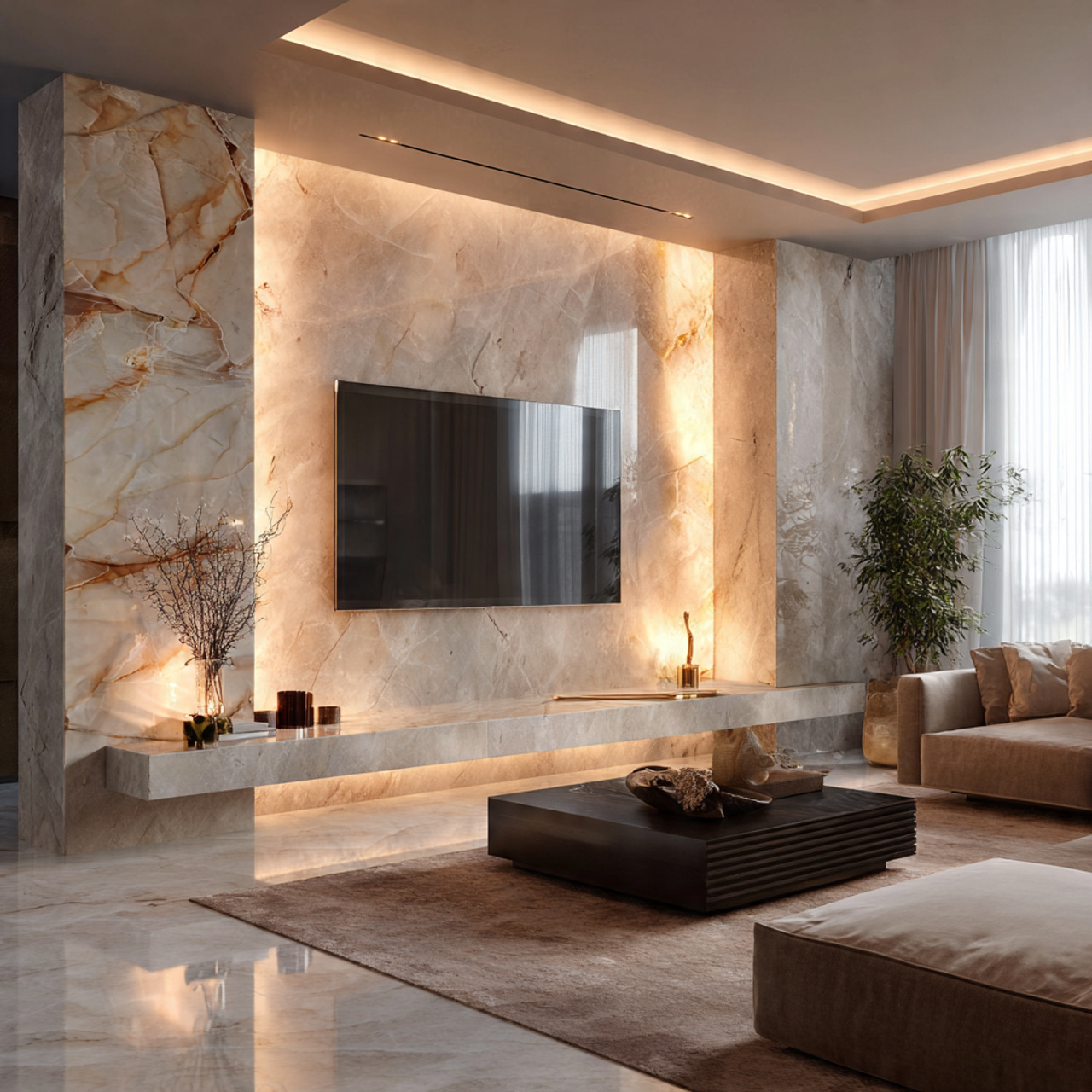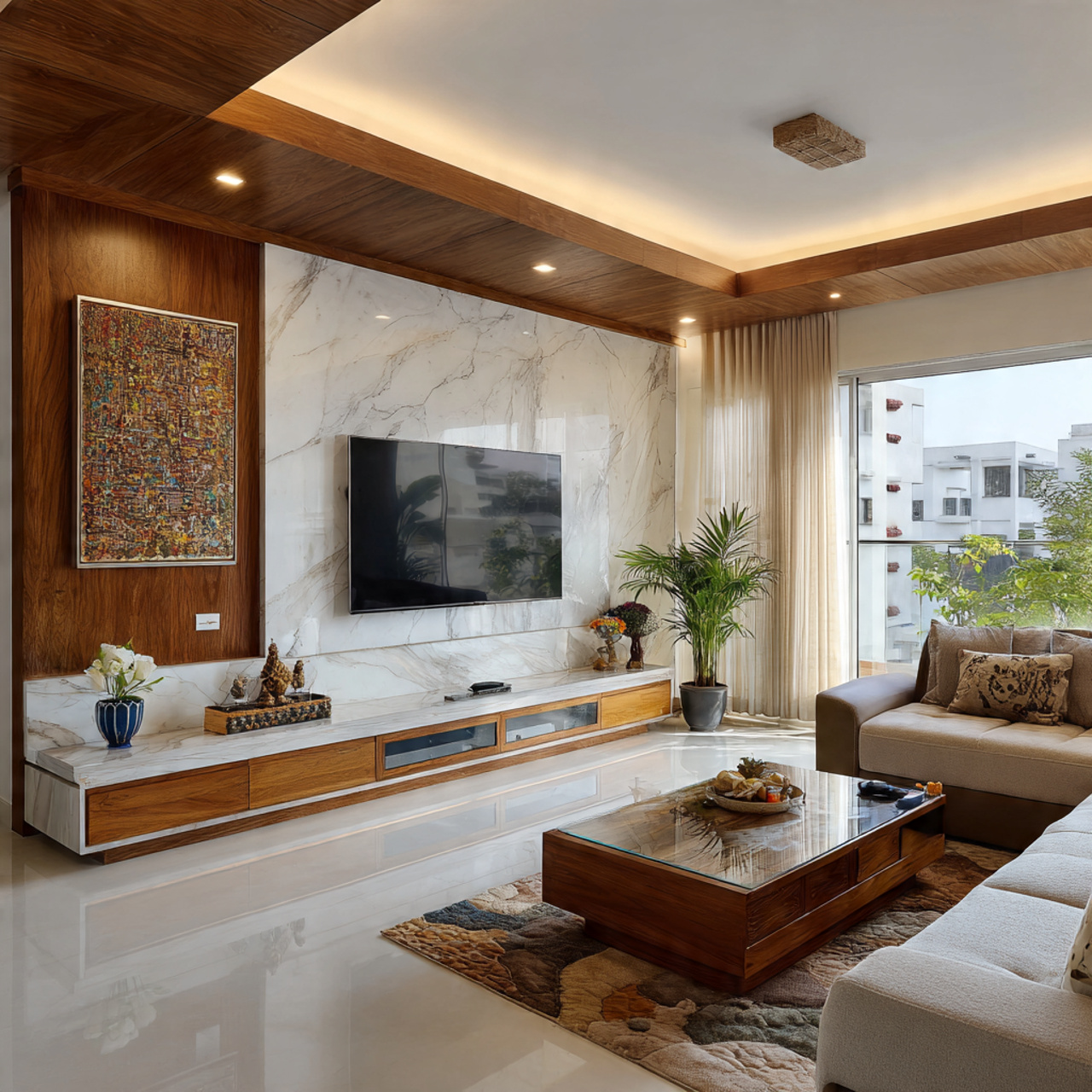
12 Genius Modern TV Wall Units That Fix Awkward Layouts
A well designed TV wall can completely change how your living room feels the moment you walk in. I have noticed that most spaces look unfinished not because of furniture, but because the TV wall feels flat or disconnected. Modern tv wall units solve this by turning a simple screen into a structured, intentional focal point.
In real homes, the difference becomes obvious over time when layout, lighting, and storage start working together instead of competing. Many people assume it is just about adding a panel or cabinet, but the real impact comes from how everything is balanced around the screen. When done right, modern tv wall units quietly shape the entire atmosphere of the room without feeling forced.
Modern tv wall units work best when layout, lighting, and storage are designed together to create a space that feels balanced, functional, and visually calm.
Why Modern TV Wall Units Improve Layout, Comfort, and Visual Balance
Most living rooms feel slightly off even when the furniture is good, and in many cases the issue comes from how the TV area is handled. A plain wall with a mounted screen often creates visual emptiness or imbalance that becomes more noticeable over time. Modern tv wall units solve this by adding structure, depth, and a sense of intention to the space.
What I have seen in real homes is that once the TV wall is properly designed, everything else starts to fall into place more naturally. The seating arrangement feels more grounded, lighting becomes easier to layer, and clutter reduces without needing constant effort. This is why focusing on the TV wall first often leads to a more cohesive and comfortable living room overall.
Core Modern TV Wall Unit Ideas That Actually Work in Real Homes
A Layered TV Wall Unit That Creates Depth Instead of a Flat Screen Look
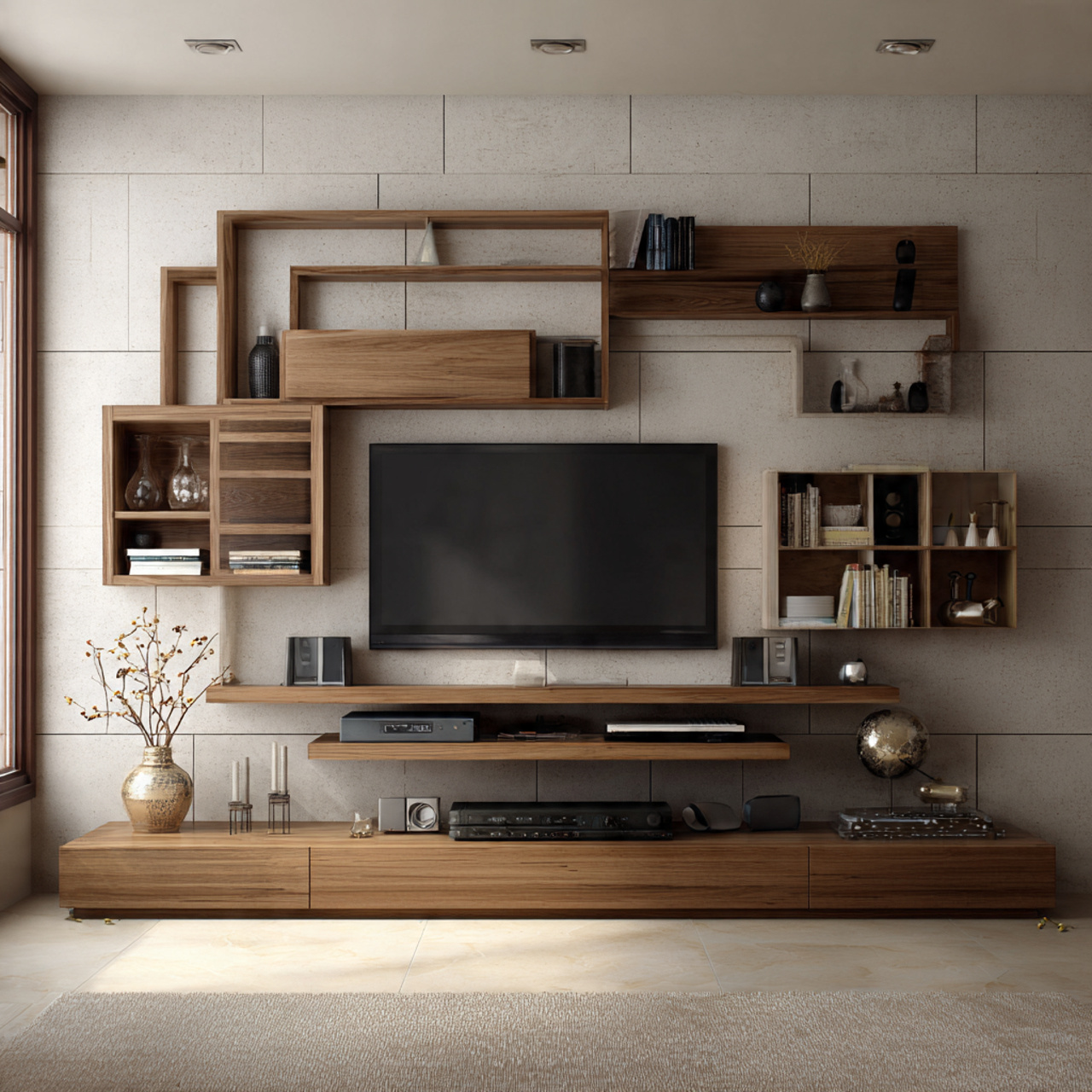
The wall feels soft and structured instead of flat. Subtle layers sit behind the TV, and light creates gentle shadows around them. In the evening, the space feels calm and slightly architectural.
This works because depth helps the TV blend into the wall instead of standing out. I have seen flat walls make the screen feel too dominant. Once layers are added, the whole setup looks more natural.
To apply this, use two or three panel layers with small gaps. Keep colors close to each other for a soft effect. Avoid strong contrast so the look stays calm.
Tip: Keep layers thin so the wall does not feel heavy.
An Asymmetrical TV Wall Layout That Feels Effortlessly Designed Instead of Rigid
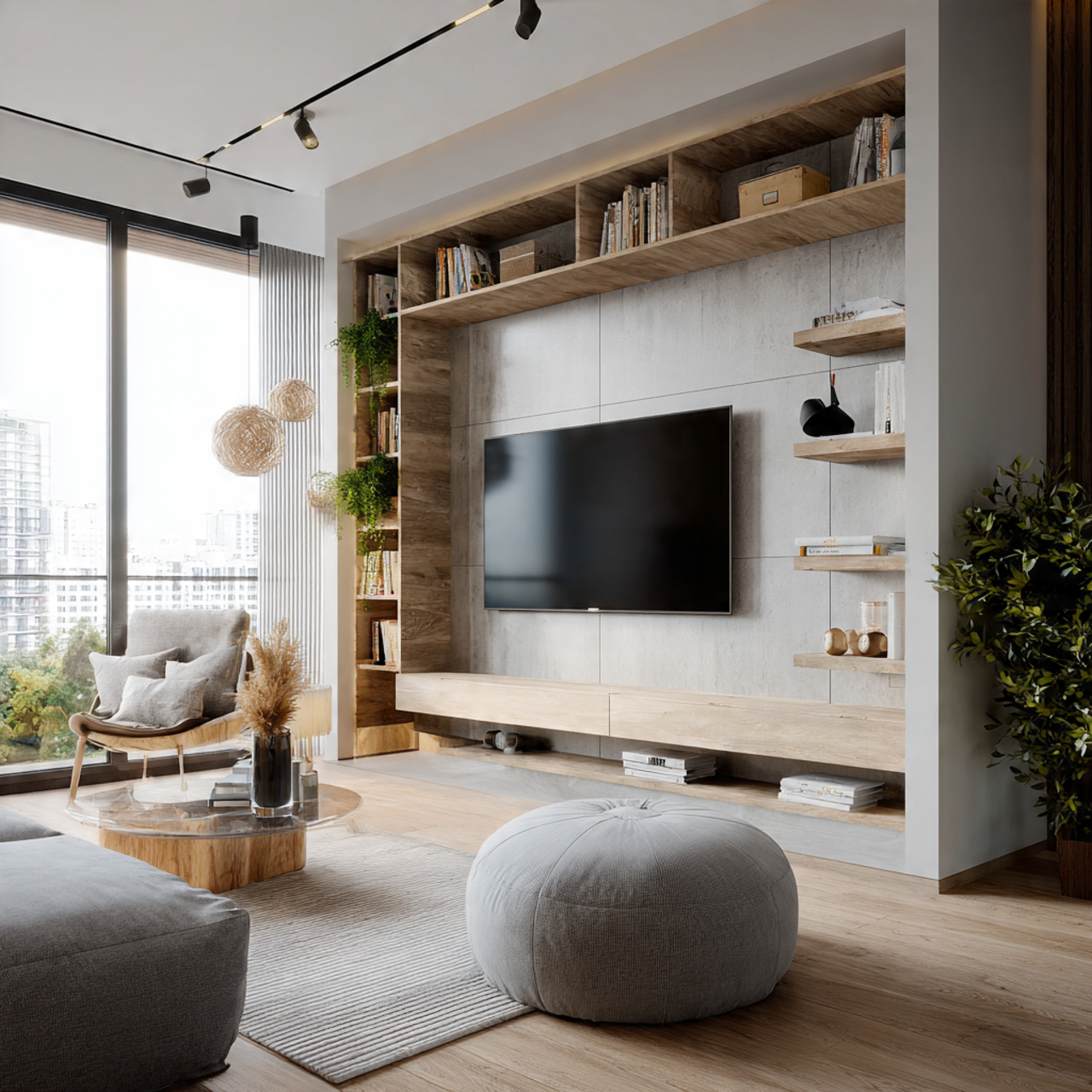
One side of the wall feels slightly heavier, while the other stays clean. The space looks relaxed and more natural, not perfectly balanced. It feels like a real home, not a staged setup.
Symmetry can feel stiff over time. I have noticed that slight imbalance makes the wall more interesting. It keeps the eye moving and adds character.
Shift the TV slightly or add shelves on one side only. Keep the other side simple. This creates balance without strict symmetry.
Tip: Use one strong feature and keep the rest quiet.
A Recessed TV Wall Unit That Makes the Screen Sit Flush and Less Dominant
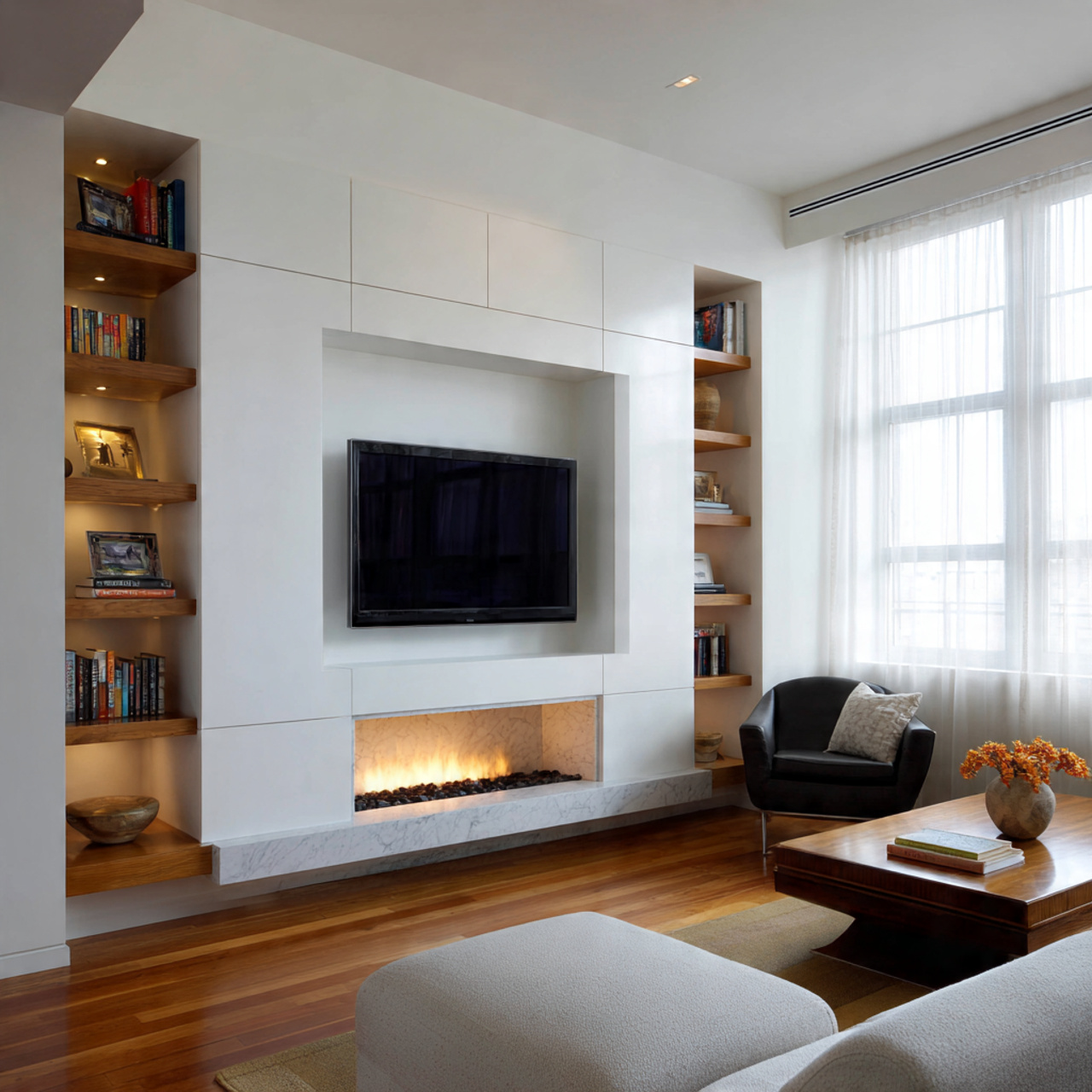
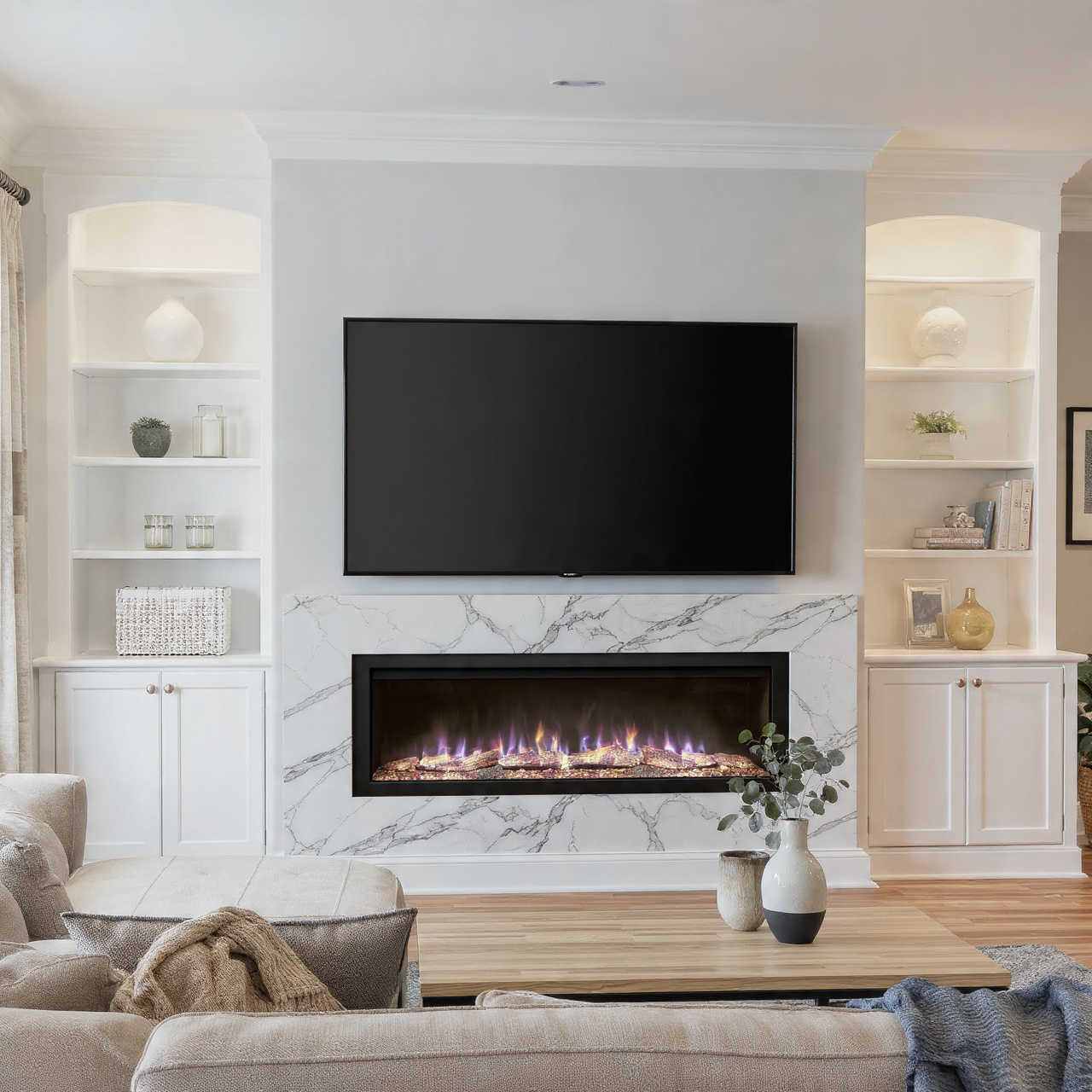
The TV sits slightly inside the wall, not on top of it. This creates a clean frame around the screen. The wall feels more built-in and intentional.
This reduces how harsh the screen looks, especially at night. I have seen this make viewing more comfortable. The TV feels part of the wall, not separate.
Create a shallow niche or frame using panels. Keep edges simple and clean. Avoid thick borders.
Tip: Even a small recess makes a big difference.
A Mixed Depth Cabinet System That Adds Visual Rhythm Without Clutter
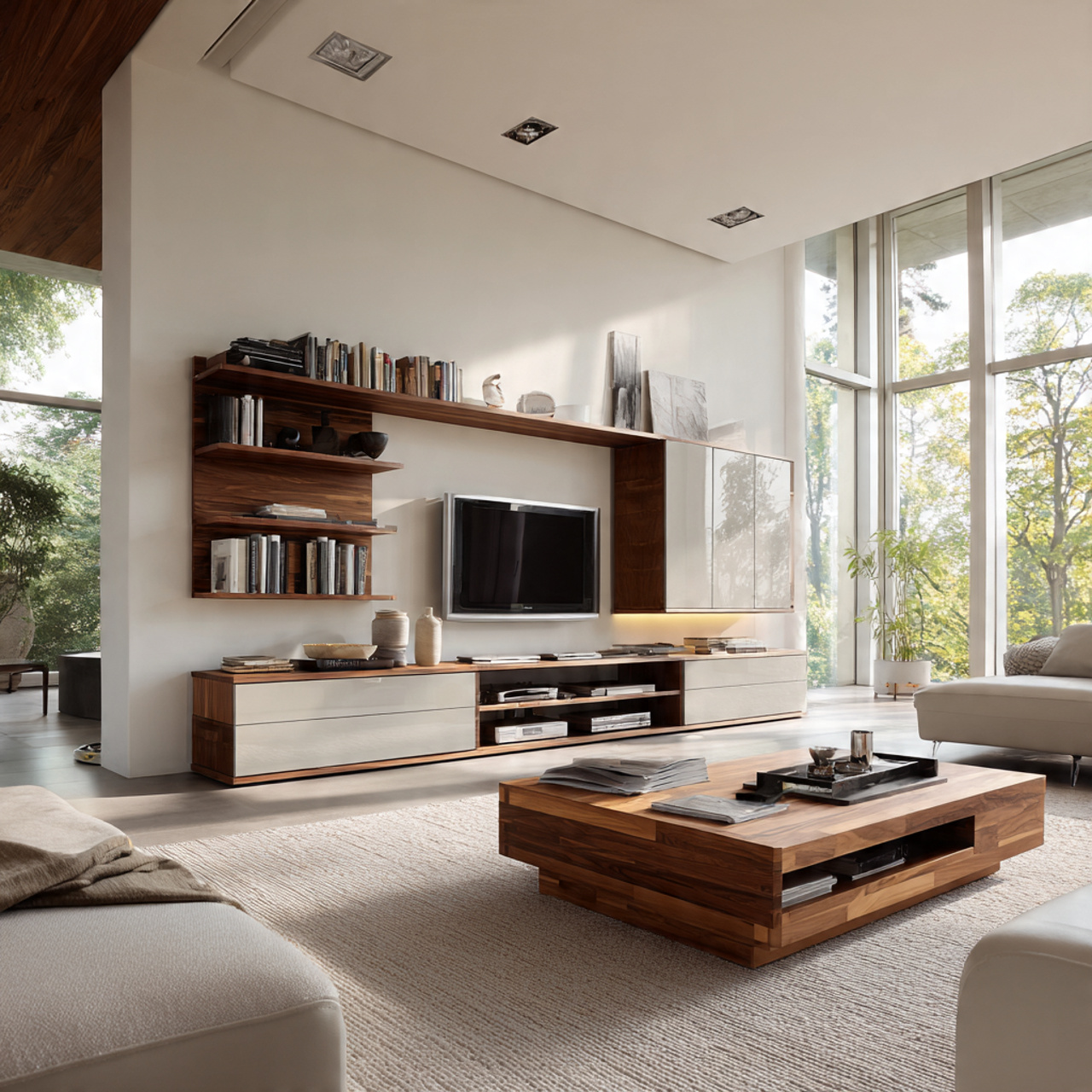
Some cabinets sit deeper while others stay flat. This creates a gentle rhythm across the wall. It feels layered but still clean.
Flat units can look heavy over time. I have seen them feel too blocky. Depth variation adds movement without clutter.
Combine shallow and deep sections carefully. Keep colors consistent so it does not feel busy. Add small open spaces for balance.
Tip: Limit depth levels to keep it simple.
A Vertical Slat Panel with Offset TV Placement That Feels High-End and Intentional
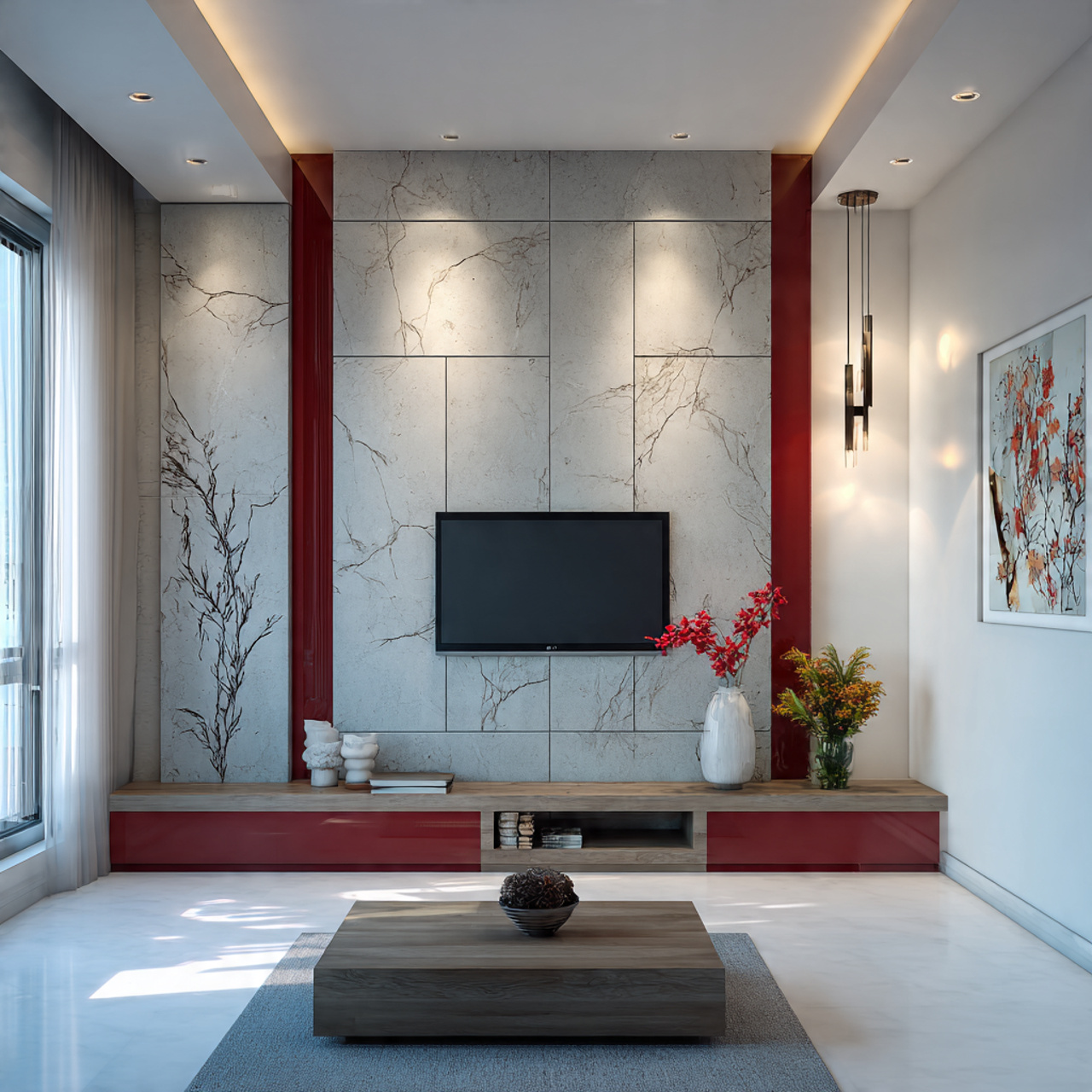
Tall slats run behind the TV, drawing the eye upward. The TV sits slightly off center, which feels fresh. The whole wall looks more designed.
Vertical lines make the room feel taller. I have seen this work well in smaller spaces. The offset placement adds interest.
Use slim slats with even spacing. Place the TV slightly to one side. Keep the rest minimal.
Tip: Avoid mixing too many patterns with slats.
A Floating TV Wall Unit with Shadow Gap Lighting That Feels Soft at Night
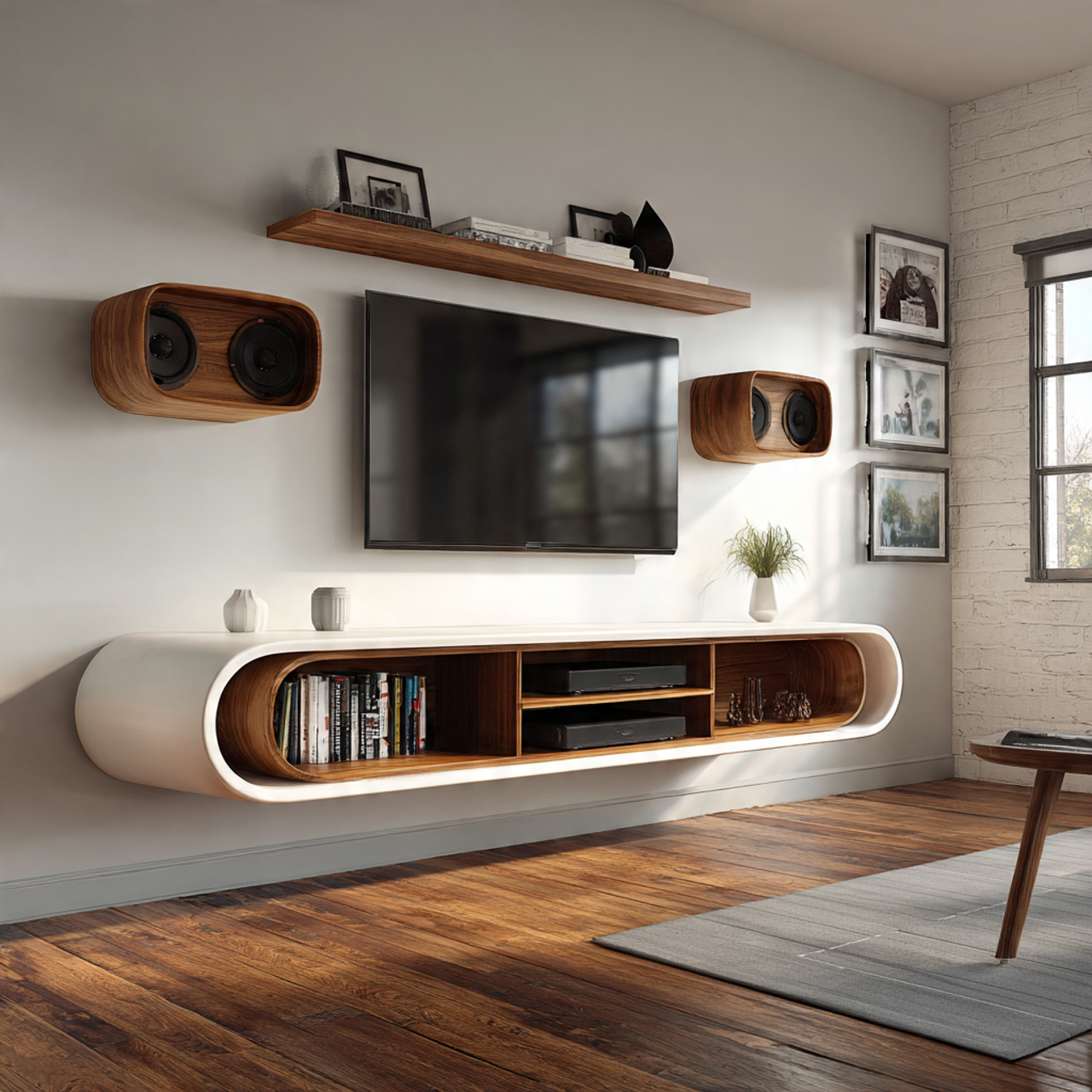
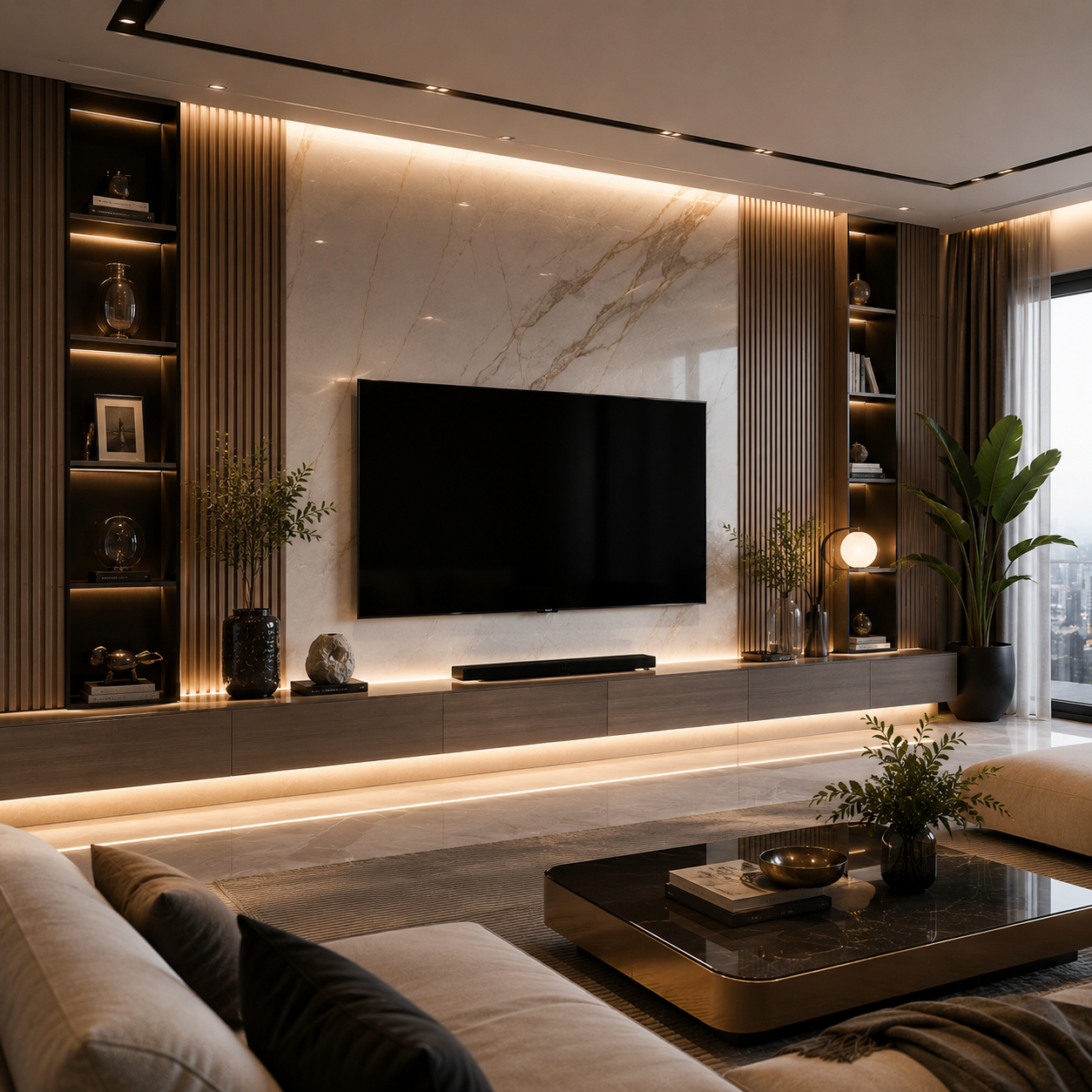
The unit floats slightly above the floor with a soft shadow below. At night, light creates a gentle glow. The space feels calm and light.
Floating units open up the floor visually. I have noticed this makes rooms feel bigger. The lighting adds warmth without being harsh.
Mount the unit with a small gap below. Add soft lighting behind or under it. Keep brightness low for comfort.
Tip: Use warm light for a relaxed feel.
A Stone and Wood Combination Wall That Feels Warm Without Looking Heavy
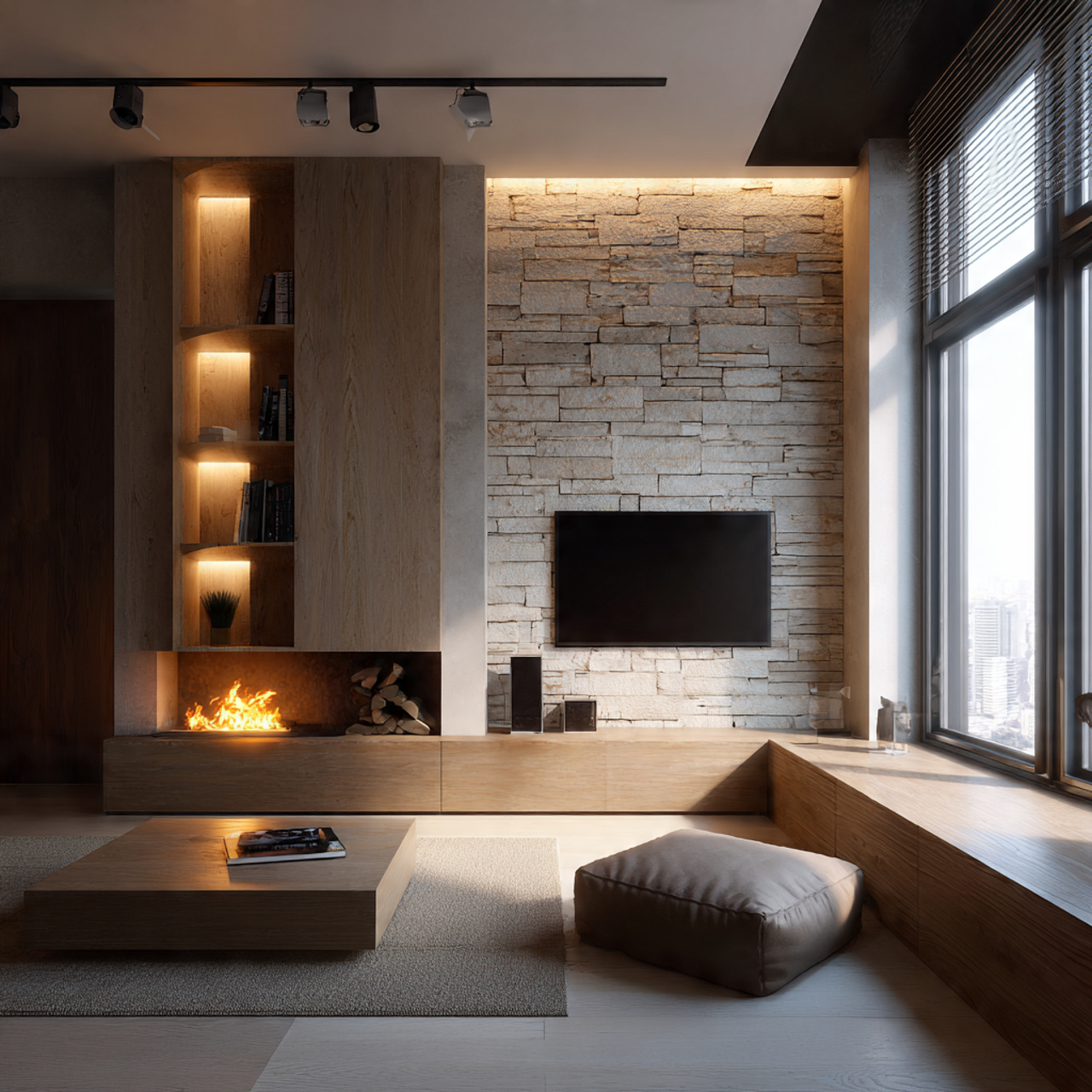
Soft stone texture sits behind the TV, balanced with warm wood. The mix feels natural and grounded. It adds depth without weight.
Stone alone can feel cold. I made that mistake once and it looked harsh. Adding wood softens the space instantly.
Use light stone tones with warm wood finishes. Keep both subtle. Avoid strong contrast.
Tip: Matte finishes reduce glare and reflections.
A Low Profile Extended Unit That Visually Widens the Entire Room
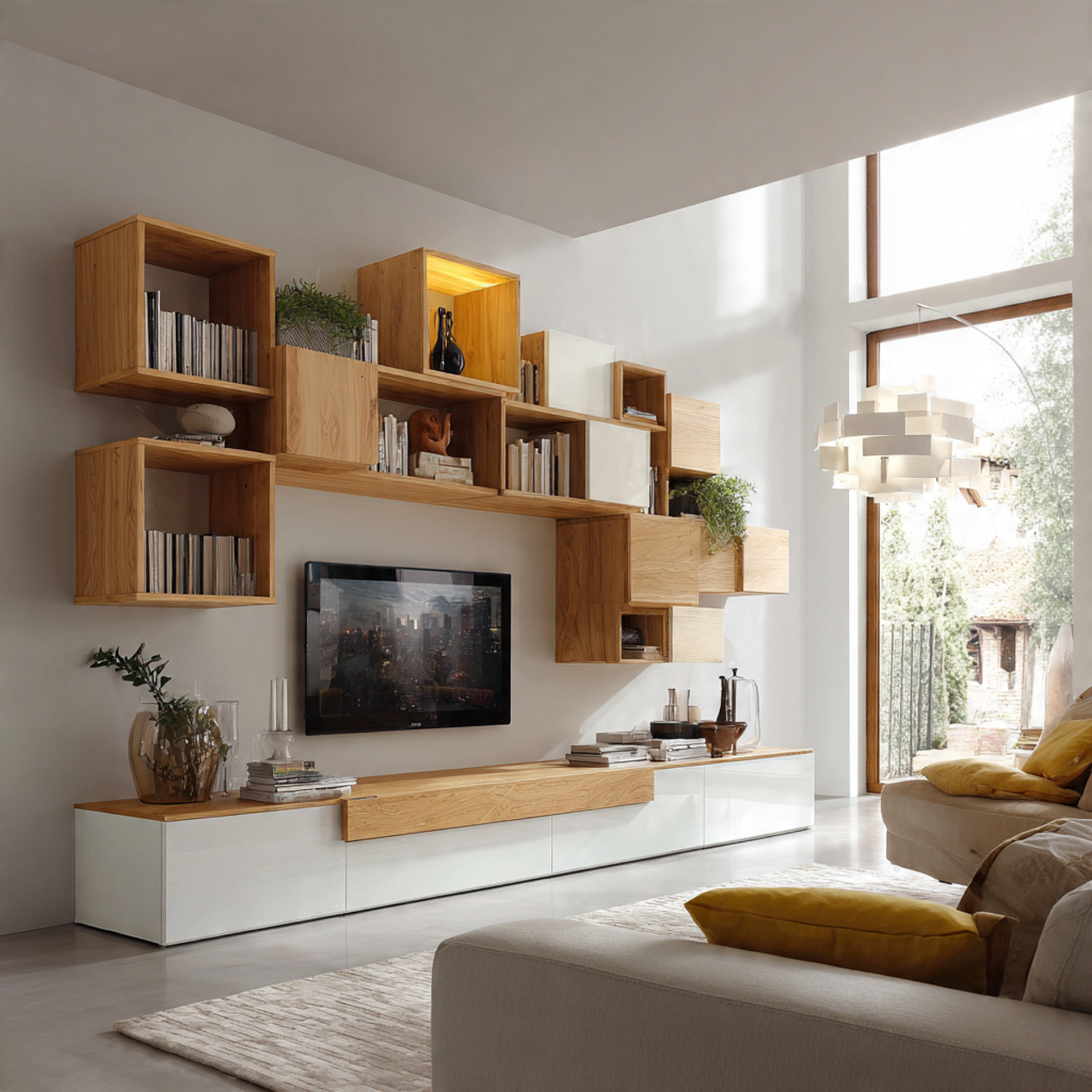
A long unit stretches across the wall under the TV. It pulls the eye sideways. The room instantly feels wider.
Horizontal lines expand the space visually. I have seen narrow rooms feel bigger with this trick. It creates a clean base for the wall.
Extend the unit beyond the TV width. Keep it low and simple. Avoid clutter on top.
Tip: Leave some empty space to keep the line clear.
A Frame Style TV Integration That Blends into Art Instead of Tech Focus
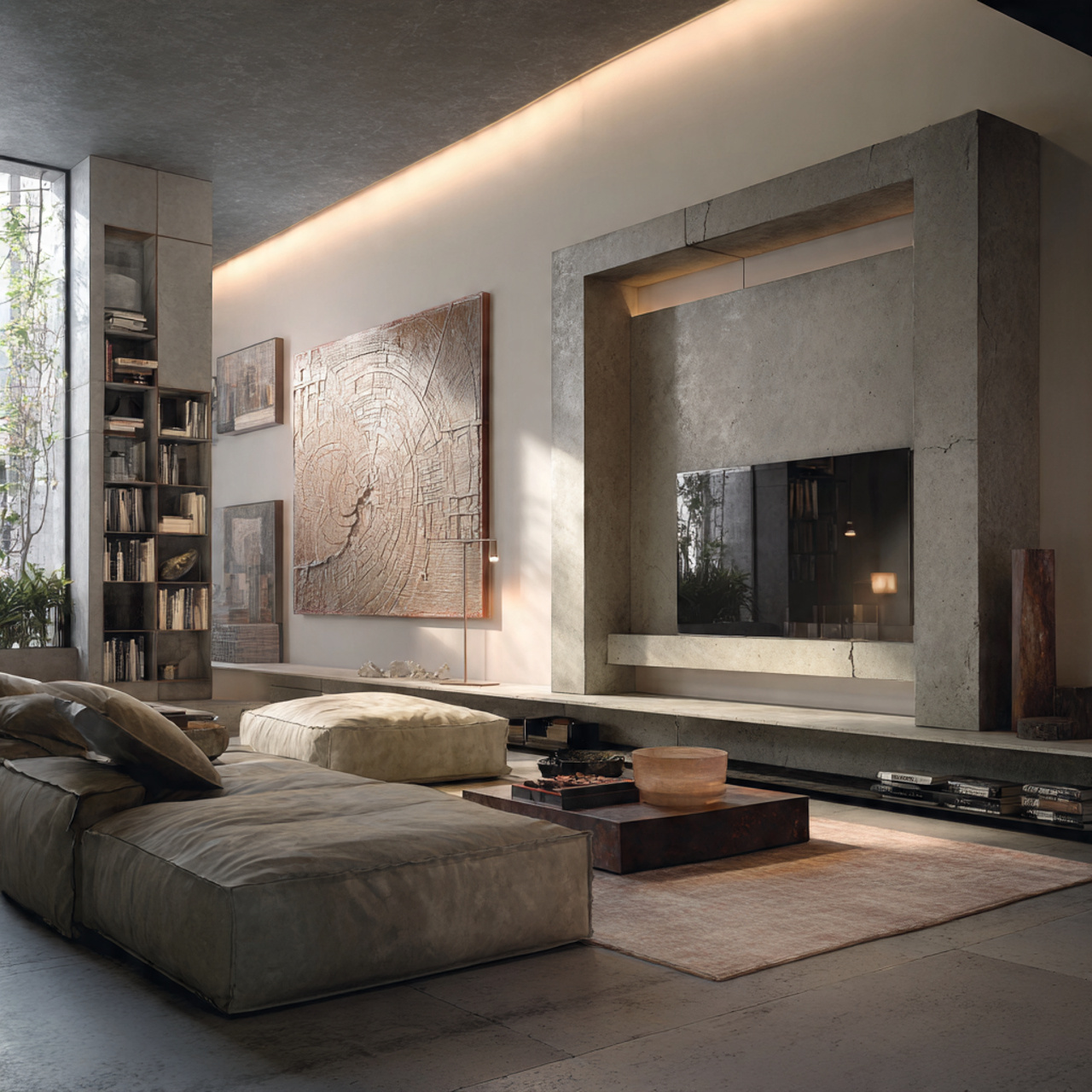
The TV is framed so it looks like part of the wall. When off, it feels like artwork. The space looks less technical.
This changes how the room feels during the day. I have seen it make spaces feel calmer. The TV does not dominate anymore.
Use a slim frame or panel around the TV. Match colors with the wall. Keep decor minimal around it.
Tip: Keep the frame simple and clean.
An Open and Closed Storage Balance That Prevents Visual Noise Over Time
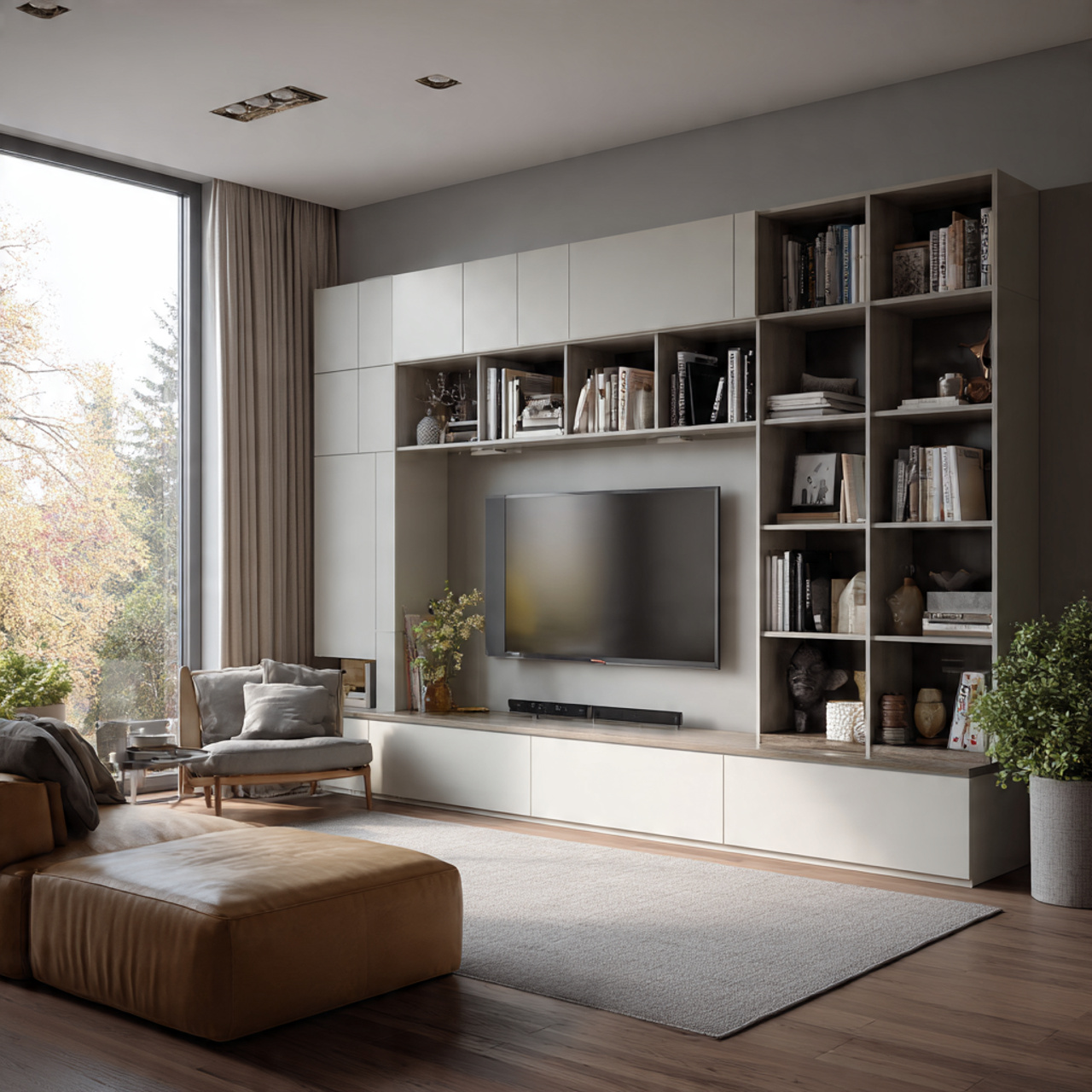
Some storage stays hidden while a few areas are open. The wall feels clean but still lived in. It does not look empty or messy.
Fully open shelves can get cluttered. I have seen them lose their look quickly. Closed storage keeps things under control.
Use closed cabinets for most items. Add one or two open sections. Style them lightly.
Tip: Leave space empty to keep it calm.
A Corner Wrapped TV Wall Unit That Fixes Awkward Living Room Layouts
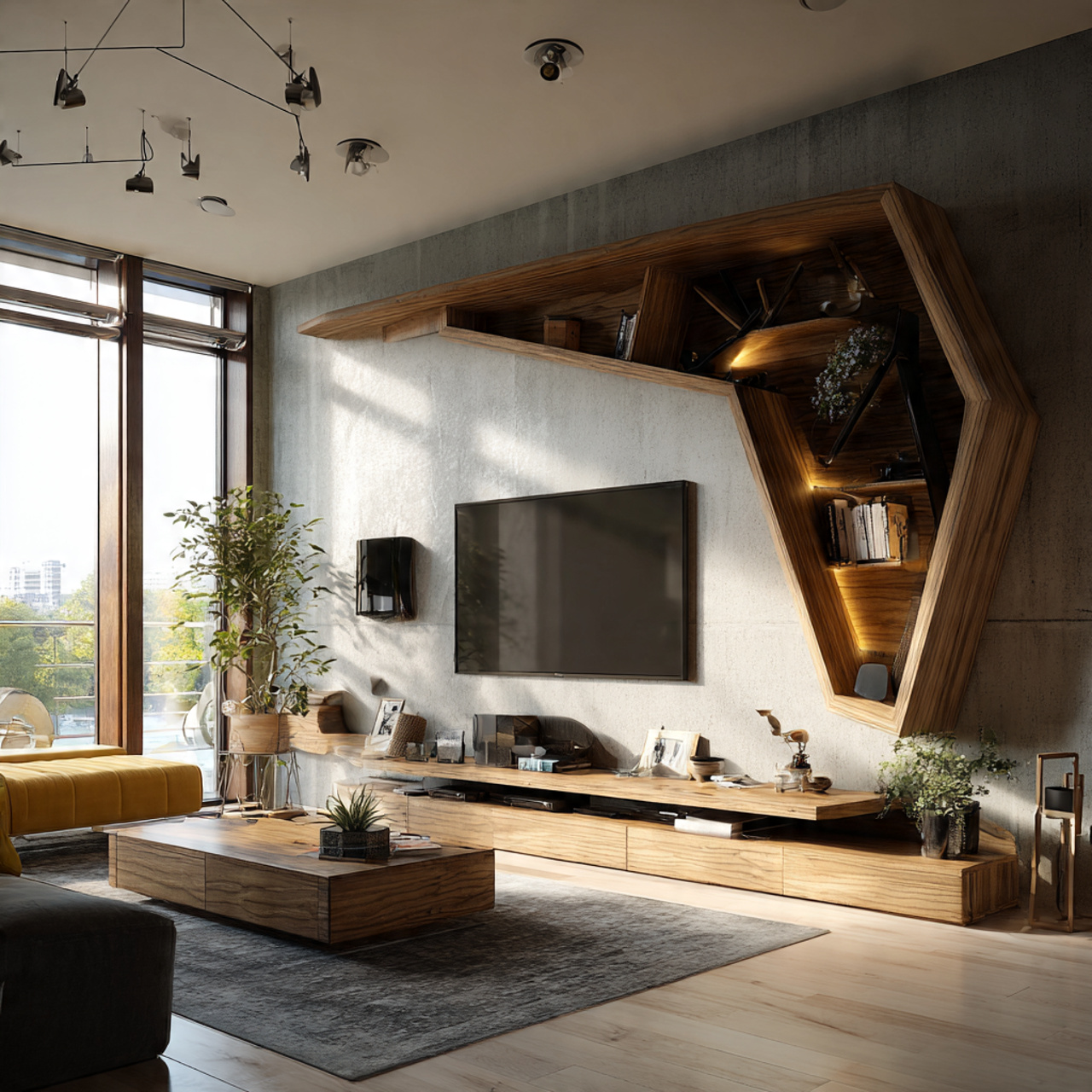
The unit extends into the corner and continues on the side wall. The layout feels connected. The corner becomes useful.
Corners are often wasted. I have seen awkward layouts improve with this idea. It makes the room flow better.
Wrap shelves or panels around the corner. Keep materials consistent. Do not overload the side wall.
Tip: Keep the side lighter than the main wall.
A Textured Plaster or Limewash Wall That Softens the Screen Contrast
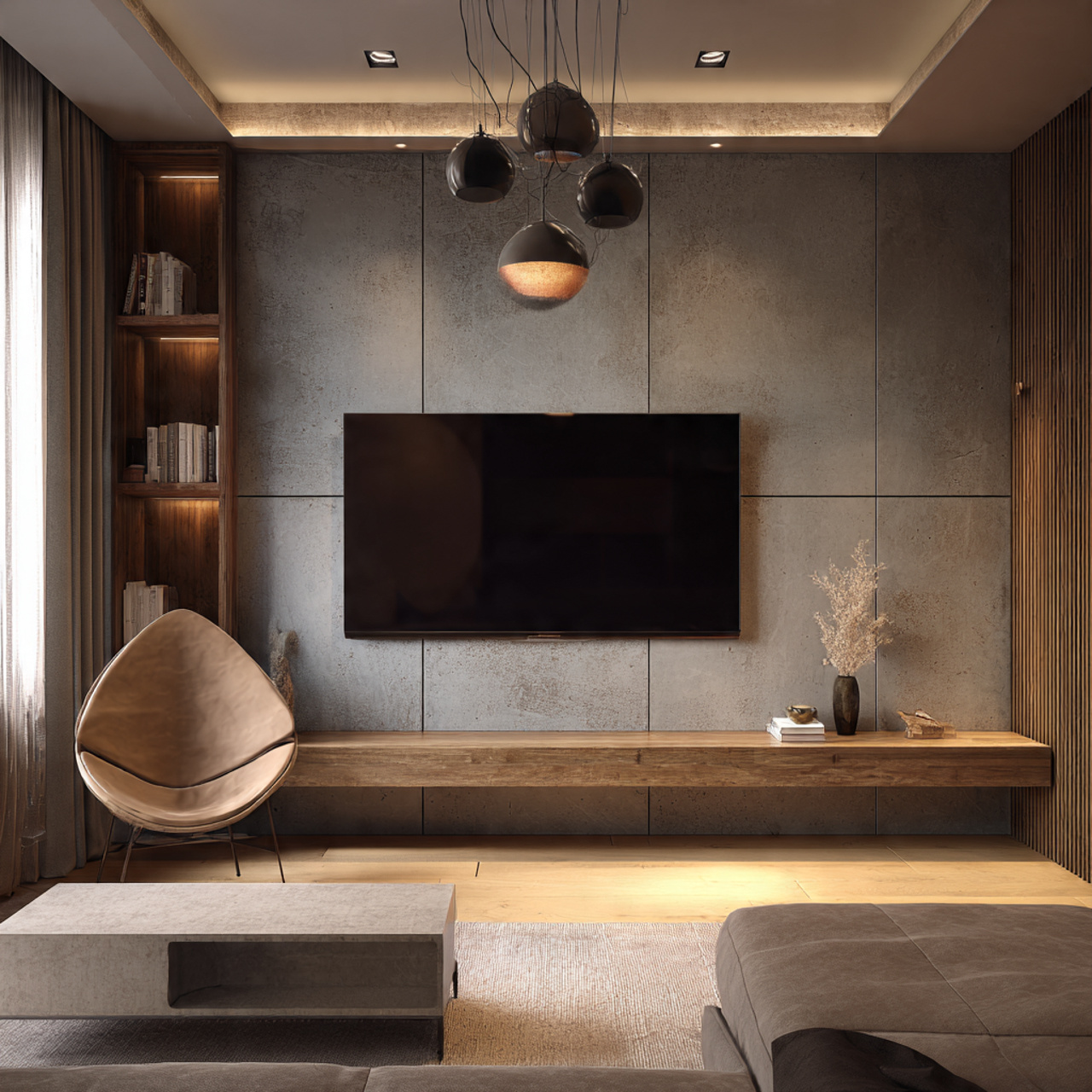
The wall has a soft texture that diffuses light. It feels calm and natural. The TV blends better into the background.
Flat paint can make the screen stand out too much. I have noticed texture softens this effect. It adds quiet depth.
Use light textured finishes in neutral tones. Keep other elements simple. Let the wall stand out gently.
Tip: Choose subtle texture, not rough.
A Dark Layered Back Panel That Reduces Screen Harshness and Eye Strain
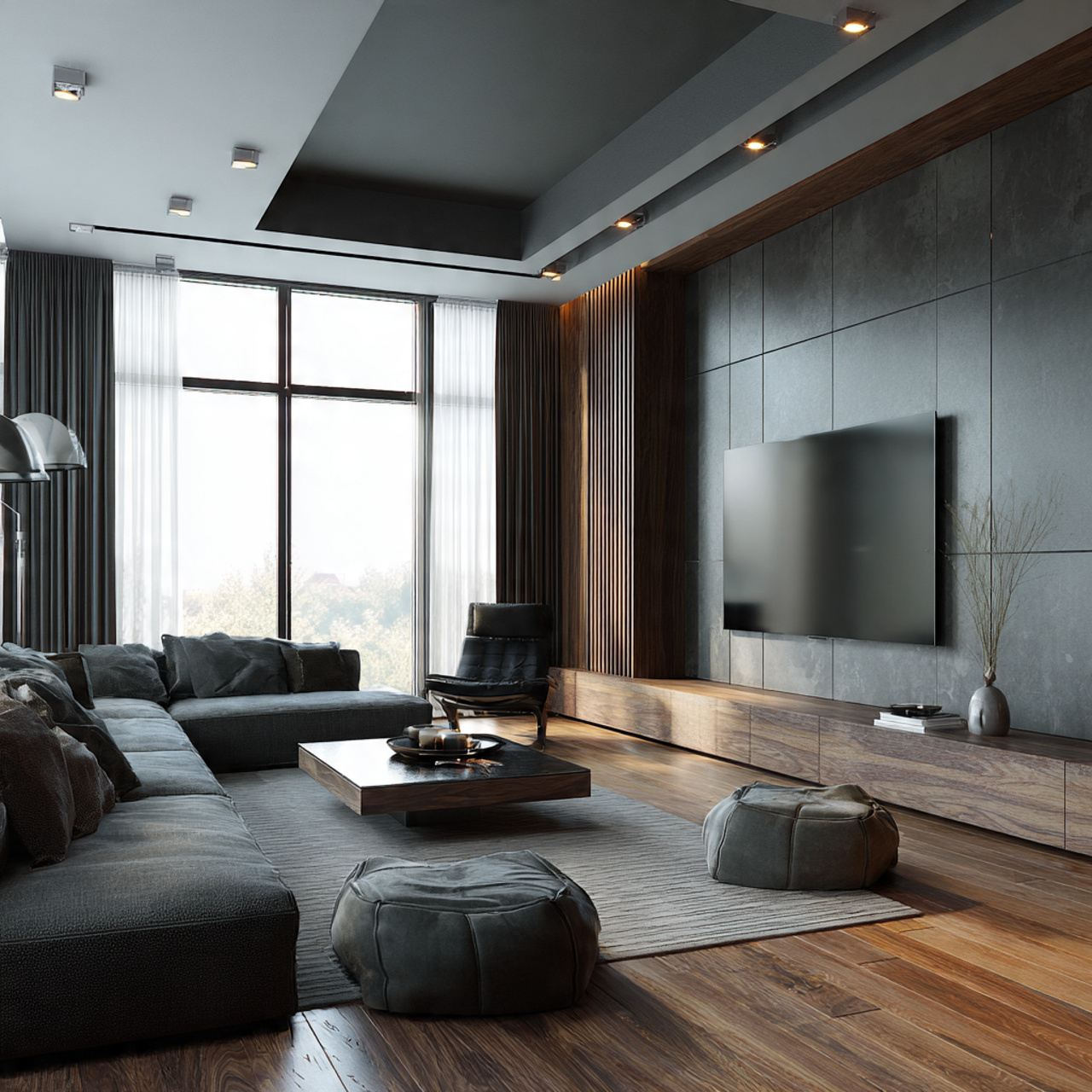
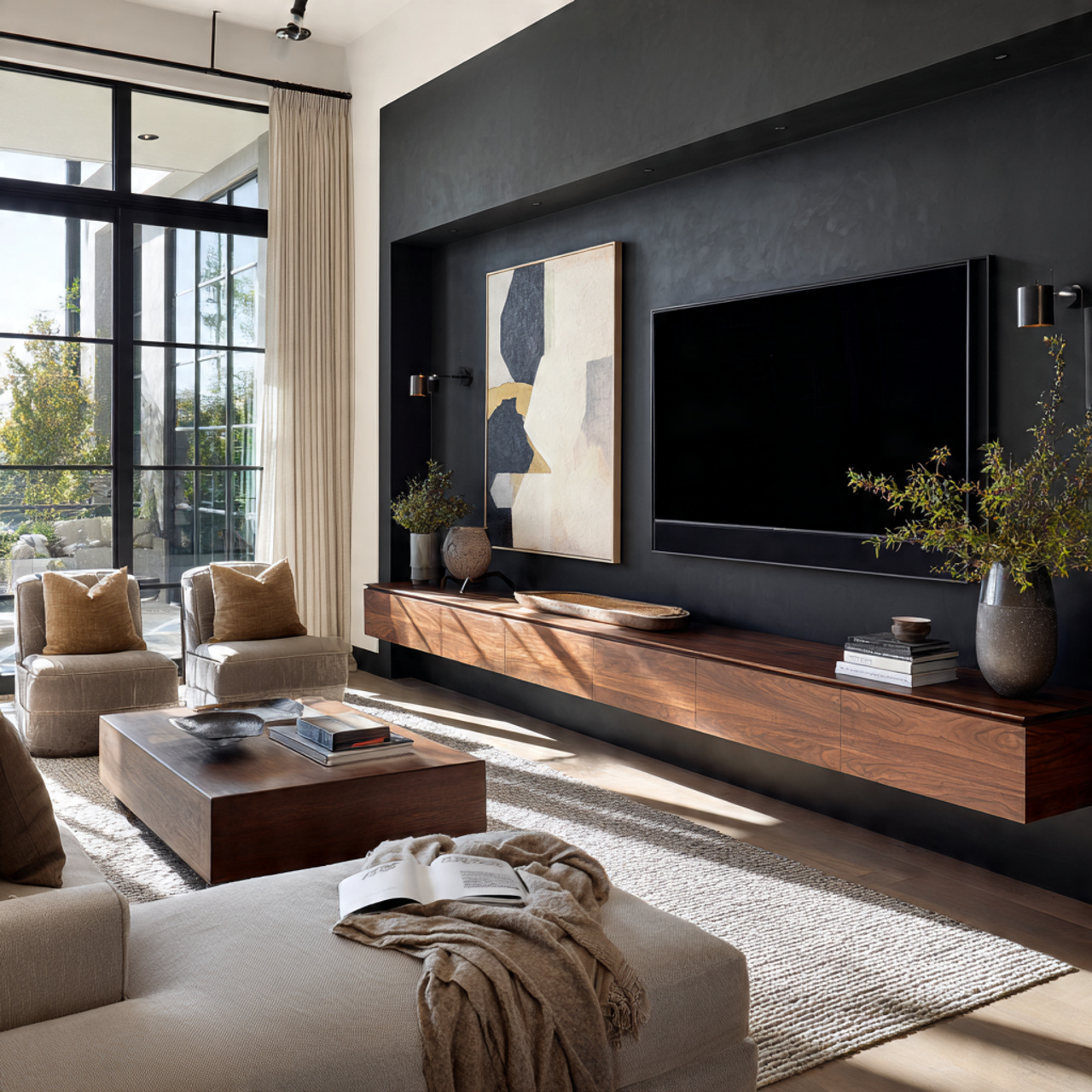
A darker panel sits behind the TV. The screen blends in better. The overall look feels softer.
Bright walls can create strong contrast. I have seen this cause eye strain over time. Dark panels reduce that effect.
Use deep neutral tones behind the TV. Balance with lighter surroundings. Add soft lighting.
Tip: Do not go too dark in small rooms.
Visit Also: Decorative Pillows
Integrated Lighting Zones That Change the Mood from Day to Night
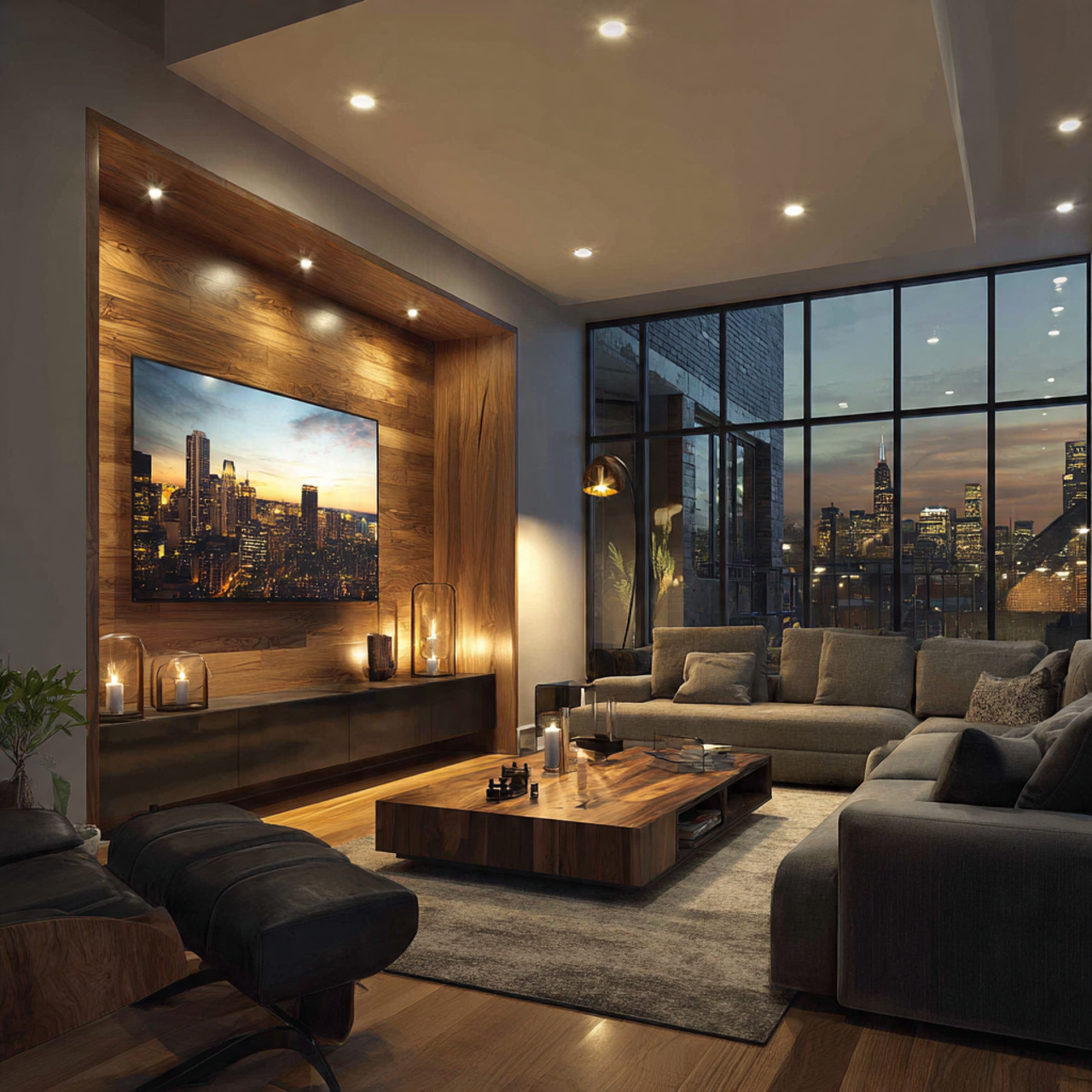
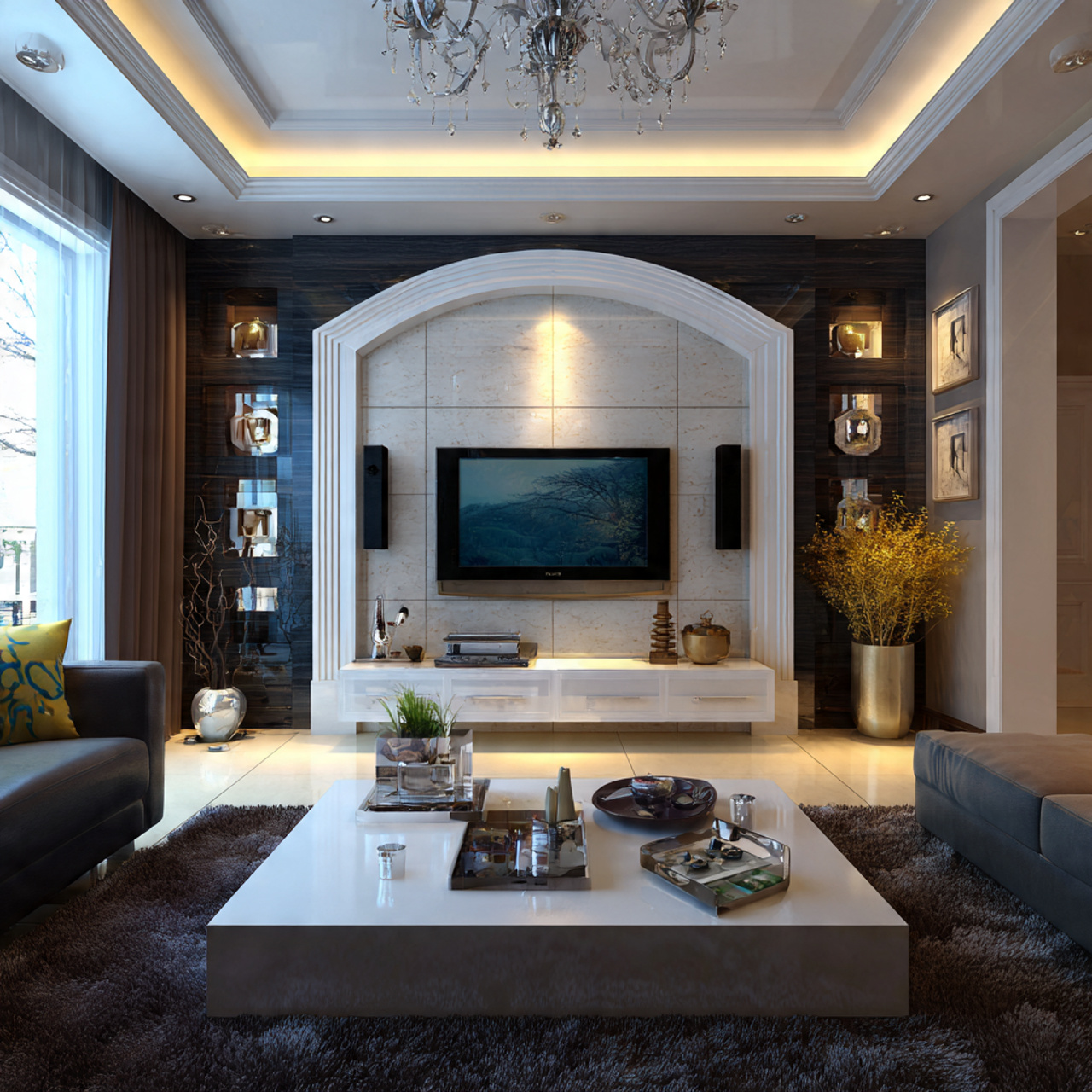
Different lighting layers create a flexible mood. The wall looks clean during the day and warm at night. The space feels complete.
Single lighting often feels flat. I have noticed layered lighting adds depth and comfort. It changes how the room feels.
Use backlighting, ambient light, and soft accents. Keep controls simple. Adjust brightness based on time.
Tip: Warm light works best for evening comfort
A Real Modern TV Wall Units Layout That Feels Calm and Balanced
Soft daylight moves across the wall, catching a light texture behind the TV. The screen sits quietly within the design, not pulling too much attention. In the evening, a warm glow builds around the panels, and the space feels calm and settled.
The layout feels centered but not stiff, with a low unit grounding the wall and light vertical detail adding height. Seating faces the TV naturally without forcing the arrangement. Everything works together, and the room feels easy to use and comfortable over time.
Color and Material Choices That Make Modern TV Wall Units Feel Natural
Warm White (#F2EFE9)
Works well on main walls and large surfaces. It keeps the room bright and soft while pairing easily with wood and fabric textures.
Soft Walnut Brown (#8B6A4E)
Best for cabinets or panels. It adds warmth and makes the space feel grounded while working well with stone and matte finishes.
Muted Charcoal (#3A3A3C)
Ideal behind the TV area. It reduces contrast and helps the screen blend into the wall while pairing with wood and soft lighting.
Textured Beige Stone (#D8D2C8)
Great for feature panels. It adds gentle depth and a natural feel while matching well with wood, linen, and warm neutral tones.
Room Size and Lighting Guide for Modern TV Wall Units
Small Living Rooms
Use light colors and slim units to keep the space open and breathable. Add soft layered lighting so the wall does not feel flat or heavy.
Medium Sized Rooms
Balance the wall with both ambient and focused lighting to avoid dull areas. Use moderate depth so the unit feels designed but not bulky.
Large Living Rooms
Create multiple lighting zones so the TV wall does not feel isolated. Use warm light to make the space feel more comfortable at night.
Low Light Rooms
Rely on warm artificial lighting and soft finishes to keep the space bright. Avoid very dark panels unless balanced with lighter surroundings.
Bright Natural Light Rooms
Use slightly darker tones behind the TV to reduce glare during the day. Add soft evening lighting to keep the space balanced after sunset.
Common Mistakes in Modern TV Wall Units That Affect Real Living Spaces
Placing the TV Too High in Modern TV Wall Units
This usually happens when the TV is aligned with wall design instead of seating level in modern tv wall units. Over time, it becomes uncomfortable to watch and makes the wall feel disconnected.
Lower the TV so it sits at eye level when you are seated. This simple fix improves both comfort and visual balance in modern tv wall units.
Adding Too Many Elements in Modern TV Wall Units
Many people try to add panels, shelves, lighting, and decor all at once in modern tv wall units. The wall starts to feel heavy and loses its clean, calm look.
Keep only a few strong elements and remove the rest. Let the space breathe so the design feels simple and controlled.
Using Glossy Finishes Behind the TV in Modern TV Wall Units
Glossy materials are often chosen for a modern look in modern tv wall units, but they reflect light and create glare. This makes the screen harder to watch, especially during the day.
Use matte or soft textured finishes instead. They reduce reflection and make the viewing experience more comfortable.
Ignoring Storage and Cable Planning in Modern TV Wall Units
The focus often stays on design while practical details are ignored in modern tv wall units. Over time, visible wires and clutter break the clean look of the wall.
Plan hidden storage and cable management from the start. This keeps the setup neat and easy to maintain.
Frequently Asked Questions About Modern TV Wall Units
How do I make modern tv wall units look better?
Focus on layout and keep the wall clean. In my experience, removing extra decor often improves the look more than adding new items. Soft lighting and simple materials also make a big difference.
What is the best height for a modern TV wall units?
The center of the screen should sit close to eye level when you are seated. If the TV is too high, it feels uncomfortable over time. A lower position usually looks and feels more natural.
Are dark panels a good choice behind the TV?
Yes, they help reduce contrast and make the screen easier on the eyes. I have seen dark panels make the whole setup feel more balanced. Just pair them with lighter surroundings so the room does not feel heavy.
Do modern tv wall units work in small spaces?
They work very well if the design stays light and simple. Slim units and soft colors keep the space open. Floating designs can also make the room feel bigger.
How do I keep my modern TV wall units from looking cluttered?
Use closed storage for most items and limit open display areas. I have noticed that too many objects quickly make the wall feel busy. Leaving some empty space keeps the design calm and clean.
Modern TV Wall Units That Finally Make Your Layout Work
Modern tv wall units can completely transform how a living room looks and feels when layout, lighting, and storage are designed together. A well planned tv wall design, balanced media wall setup, and smart tv unit storage can improve both comfort and visual flow without making the space feel crowded.
Start with simple changes like adjusting TV height, refining wall panel design, or improving lighting around the unit. Over time, these small updates create a modern tv wall setup that feels clean, functional, and easy to live in, while giving your living room a more polished and cohesive look.