12 Cozy Breakfast Nook Ideas That Make Kitchens Warmer
Small kitchens often feel rushed and purely functional, but a well designed breakfast nook changes how the space feels every morning. Even a compact corner can become a calm spot for coffee, quick meals, or slow weekend mornings. Over time, I have noticed that adding a breakfast nook makes kitchens feel more personal and lived in rather than just practical.
Many homes already have unused corners near windows, walls, or kitchen transitions that naturally fit a breakfast nook. The surprising part is that these small seating areas often make kitchens feel larger instead of more crowded. When done thoughtfully, a breakfast nook quietly becomes one of the most comfortable spots in the home.
Breakfast nook ideas work best when compact seating, soft lighting, and thoughtful layout create a cozy space that feels natural and easy to use.
Why Breakfast Nook Ideas Are Becoming Essential In Modern Kitchens
Kitchens today are no longer just cooking spaces, and breakfast nook ideas reflect this shift toward more relaxed everyday living. A small seating corner encourages slower mornings, casual meals, and quiet moments that make a kitchen feel welcoming. In many homes, this simple addition becomes the spot everyone naturally gathers without planning.
Another reason breakfast nooks are becoming popular is how well they solve space challenges. Instead of adding bulky dining furniture, a nook uses corners and walls efficiently while maintaining visual openness. Over time, this kind of layout often makes the entire kitchen feel softer, warmer, and easier to live in.
Cozy Breakfast Nook Ideas That Make Kitchens Feel More Inviting
Built In Corner Breakfast Nook That Feels Calm And Comfortable
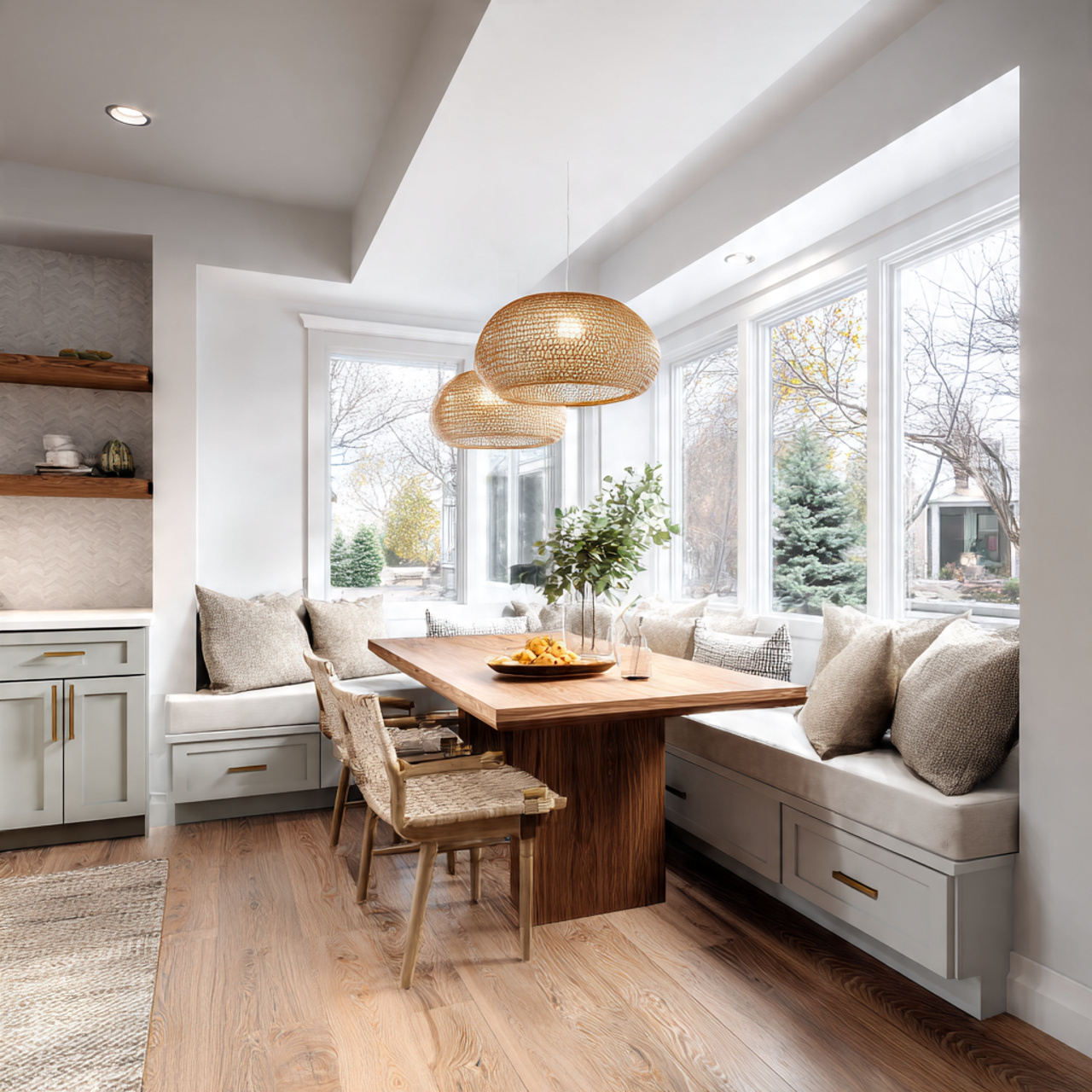
A quiet kitchen corner with a built in bench immediately changes the atmosphere of the room. Soft cushions, a small table, and natural light create a gentle morning space that feels welcoming without trying too hard. In many homes, this corner slowly becomes the place where coffee, quick meals, and casual conversations naturally happen.
Built in seating works especially well because it removes bulky furniture and keeps the layout open. The bench follows the wall, which makes the kitchen feel more spacious and organized. Over time, this arrangement also creates a cozy feeling that standalone chairs rarely achieve.
To apply this idea, look for unused corners near windows or open walls. Even a simple bench with neutral cushions can create a comfortable nook without requiring major renovation.
Tip: Choose cushions in soft neutral fabrics to keep the space feeling calm and flexible.
Bay Window Breakfast Nook Filled With Gentle Morning Light

A bay window naturally creates one of the most beautiful places for a breakfast nook. Morning light spreads across the table, while plants and soft seating make the area feel warm and peaceful. This kind of setting often turns everyday breakfasts into slow, relaxed moments.
The curved shape of a bay window helps define the nook without adding walls or dividers. This keeps the kitchen open while still creating a dedicated seating space. In my experience, this type of layout also makes the kitchen feel brighter throughout the day.
To recreate this look, place a small round table and comfortable seating within the bay window area. Add light cushions and a simple centerpiece to keep the space feeling natural.
Tip: Keep window treatments light to allow natural sunlight to shape the mood.
Small Apartment Breakfast Nook With Compact Seating
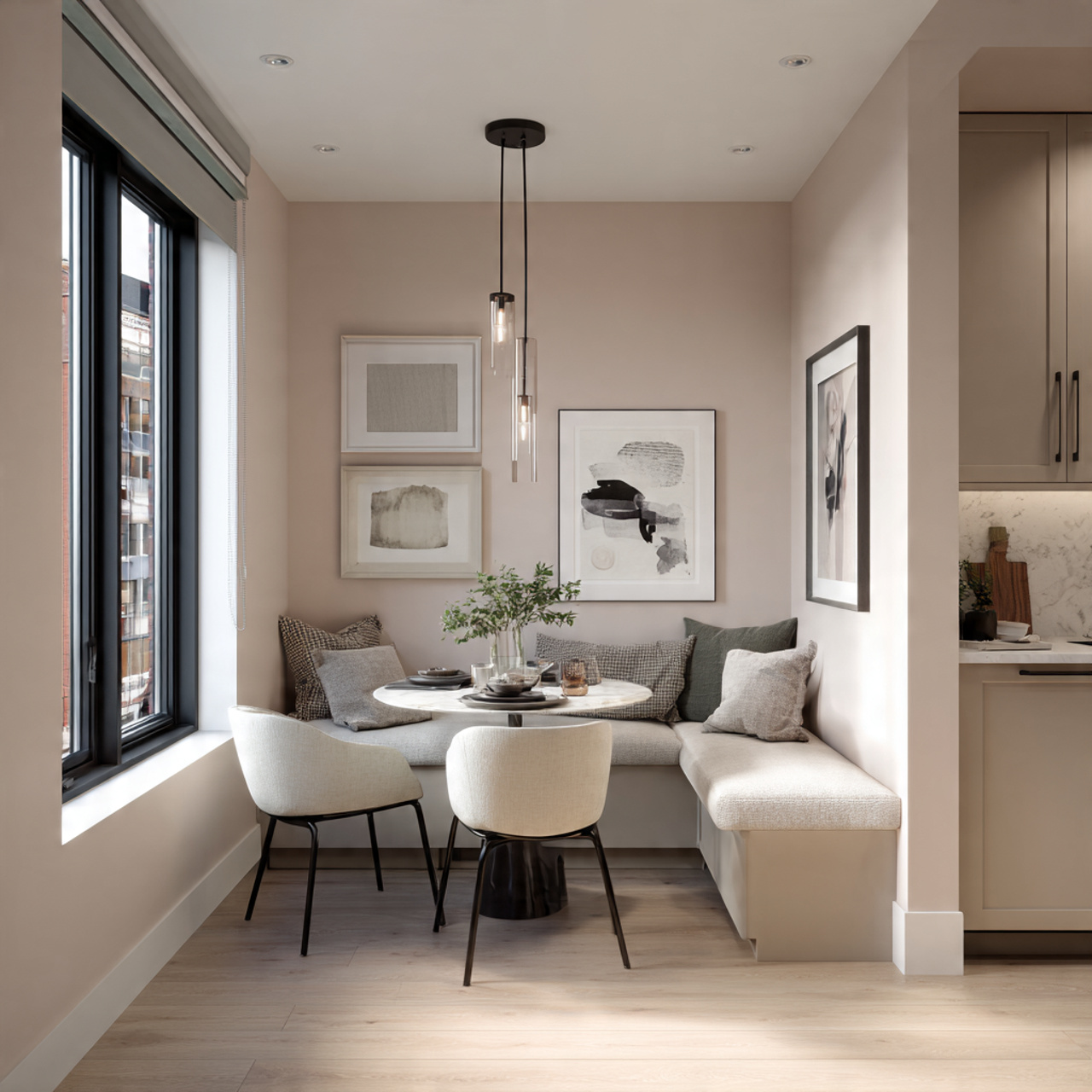
Even the smallest kitchens often have space for a compact breakfast nook. A narrow bench paired with a small table creates a cozy eating area without overwhelming the room. These setups often feel surprisingly comfortable despite their size.
Compact seating works well because it keeps movement smooth in tight kitchens. Slim benches and smaller tables reduce visual clutter while still offering practical seating. Over time, this kind of nook becomes more useful than a full dining table in small homes.
Start by identifying a wall or corner that feels underused. Choose compact furniture that blends with the kitchen rather than standing out.
Tip: Use slim benches instead of chairs to save space.
Round Table Breakfast Nook That Softens The Layout

A round table instantly softens a breakfast nook and makes the space feel relaxed. Without sharp edges, the seating area feels more welcoming and easy to move around. This layout often works especially well in tight kitchens.
Round tables also improve flow by allowing flexible seating arrangements. People can slide in easily, which makes the nook more comfortable for daily use. In many homes, this small change improves the overall kitchen layout.
To apply this idea, choose a compact round table paired with simple seating. Keep the surrounding area open to maintain balance.
Tip: Choose a pedestal table to maximize legroom.
Wrap Around Bench Seating For A Cozy Gathering Spot
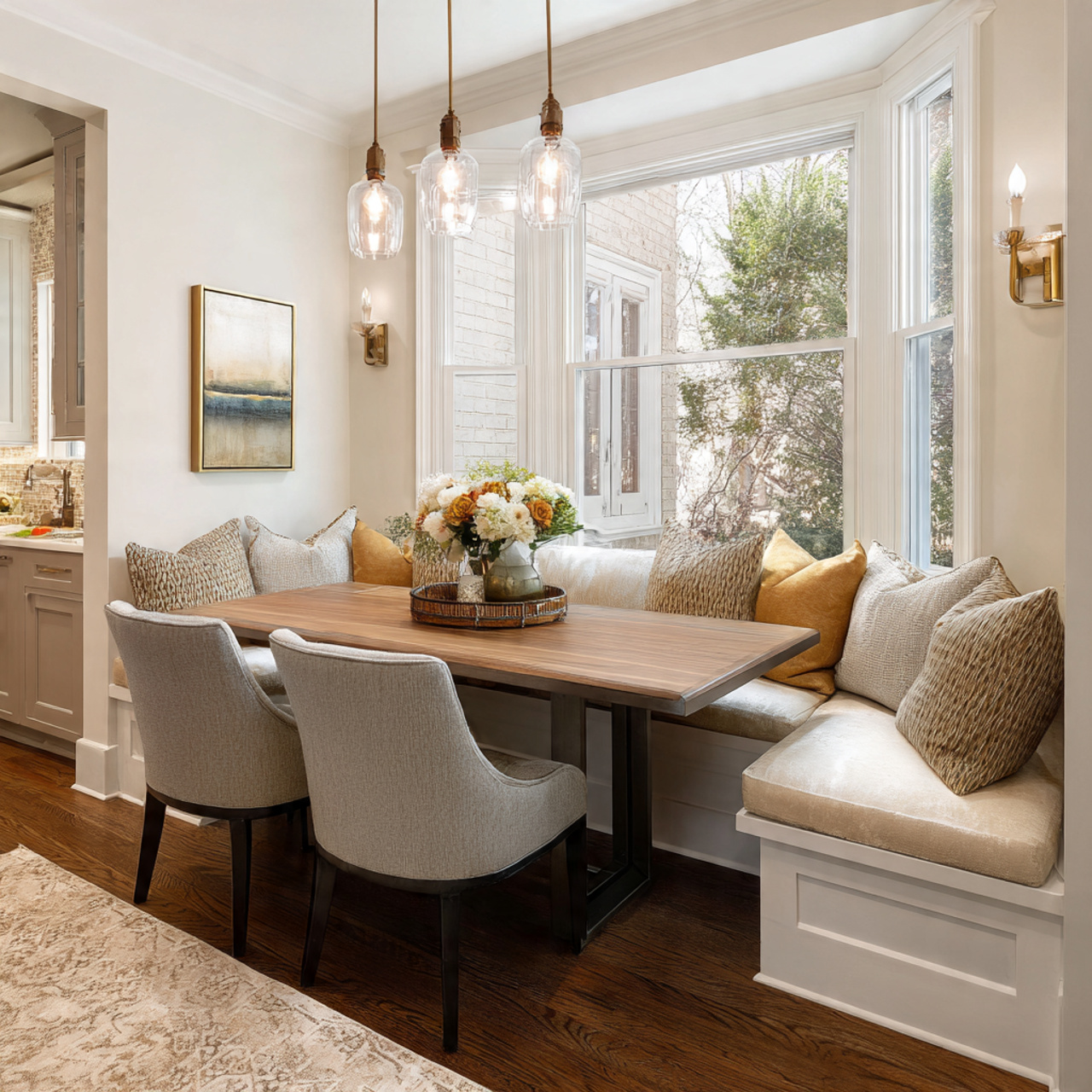
Wrap around seating creates a breakfast nook that feels inviting and practical. Cushions, layered textures, and a simple table transform the corner into a comfortable gathering space. This layout often encourages longer, more relaxed meals.
The wrap around design increases seating while keeping the footprint compact. It also creates a defined zone that feels intentional. Over time, this type of nook often becomes the most used spot in the kitchen.
To recreate this idea, use an L shaped bench with soft cushions. Add a simple table that fits comfortably within the space.
Tip: Use washable cushion covers for easy maintenance.
Glass Window Breakfast Nook That Feels Bright And Airy
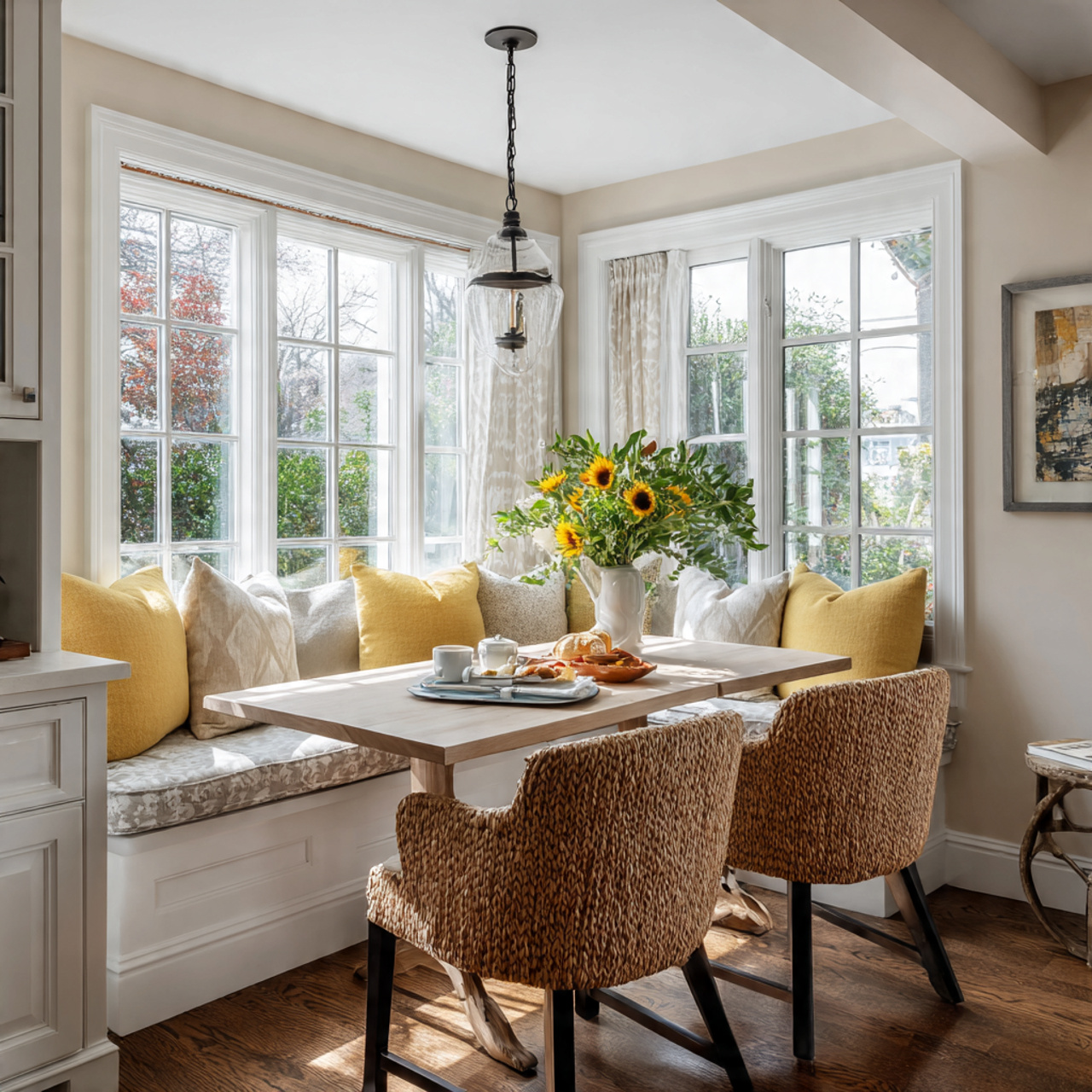
A breakfast nook near large windows feels light and open throughout the day. Sunlight reflects off surfaces, creating a calm and refreshing atmosphere. This type of nook often feels like a small retreat inside the kitchen.
Natural light improves both comfort and visual openness. Even small kitchens feel larger when seating is placed near windows. In my experience, this layout also encourages more frequent use.
Place seating close to windows and keep styling minimal. Let natural light become the main feature.
Tip: Keep decor simple to highlight natural light.
Farmhouse Breakfast Nook With Warm Layered Textures

A farmhouse breakfast nook often feels instantly welcoming with soft cushions, warm wood, and simple styling. A wooden table paired with bench seating creates a relaxed corner that feels comfortable from the first morning. The layered textures help the space feel lived in rather than styled.
This approach works because farmhouse elements naturally soften kitchens that feel too clean or structured. Warm wood tones balance cooler finishes and create a sense of comfort. Over time, this kind of nook often becomes the quiet place where mornings feel slower and more relaxed.
To apply this idea, combine a wooden table with neutral cushions and subtle textiles. Keep decor minimal so the textures become the main visual feature.
Tip: Mix soft fabrics with natural wood tones to create warmth.
Reading Breakfast Nook That Doubles As A Quiet Retreat
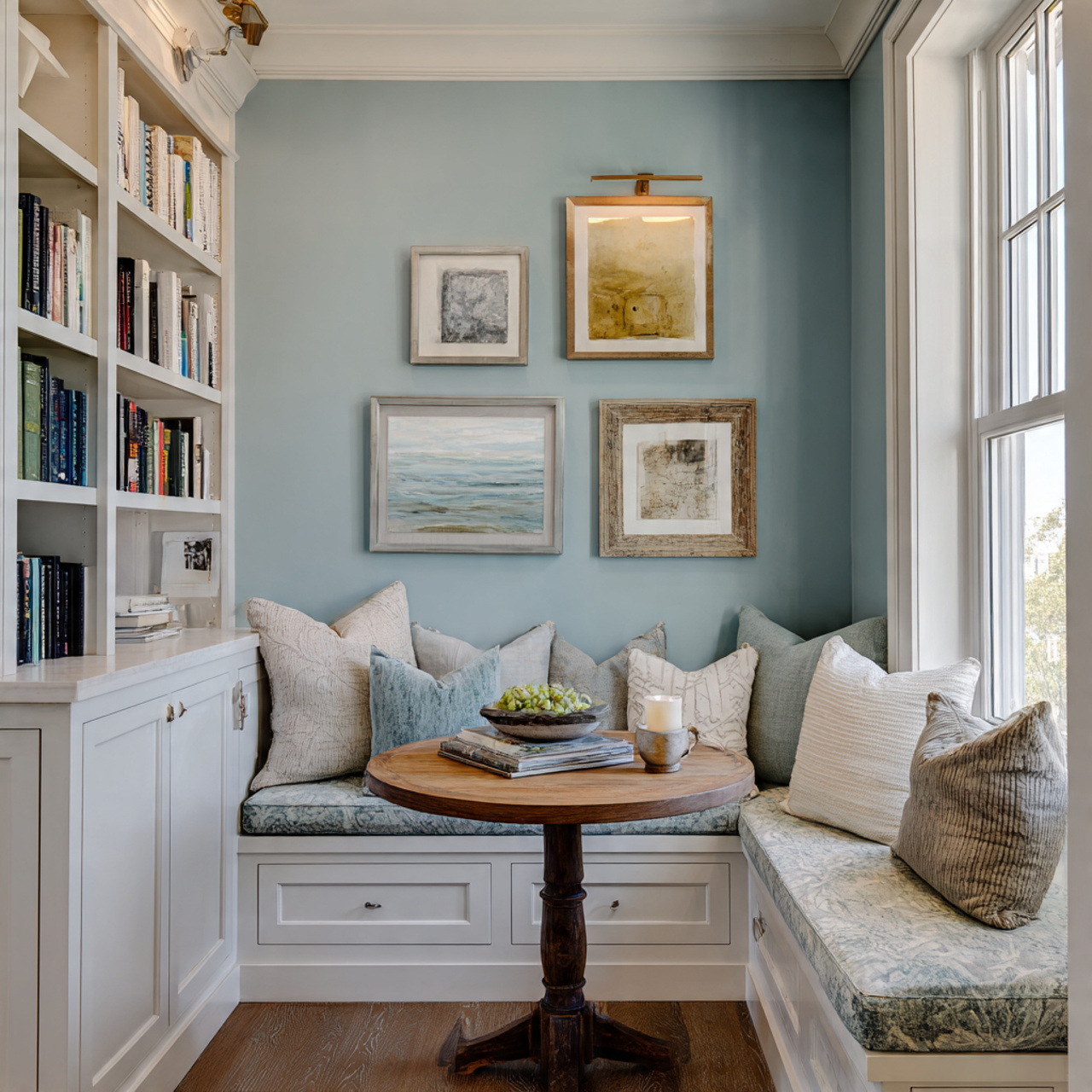
A breakfast nook placed near a window can easily double as a reading corner. Soft cushions, natural light, and a small table create a relaxed space that works beyond mealtime. This kind of nook often becomes a favorite quiet spot throughout the day.
This idea works because it expands the purpose of the space. Instead of being used only for meals, the nook becomes a comfortable sitting area. Over time, these multi use spaces tend to feel more valuable in everyday living.
To create this look, add layered cushions and keep the area uncluttered. Allow natural light to remain the main feature.
Tip: Add a small pillow for extra comfort during longer sitting moments.
Island Extension Breakfast Nook For Open Kitchens
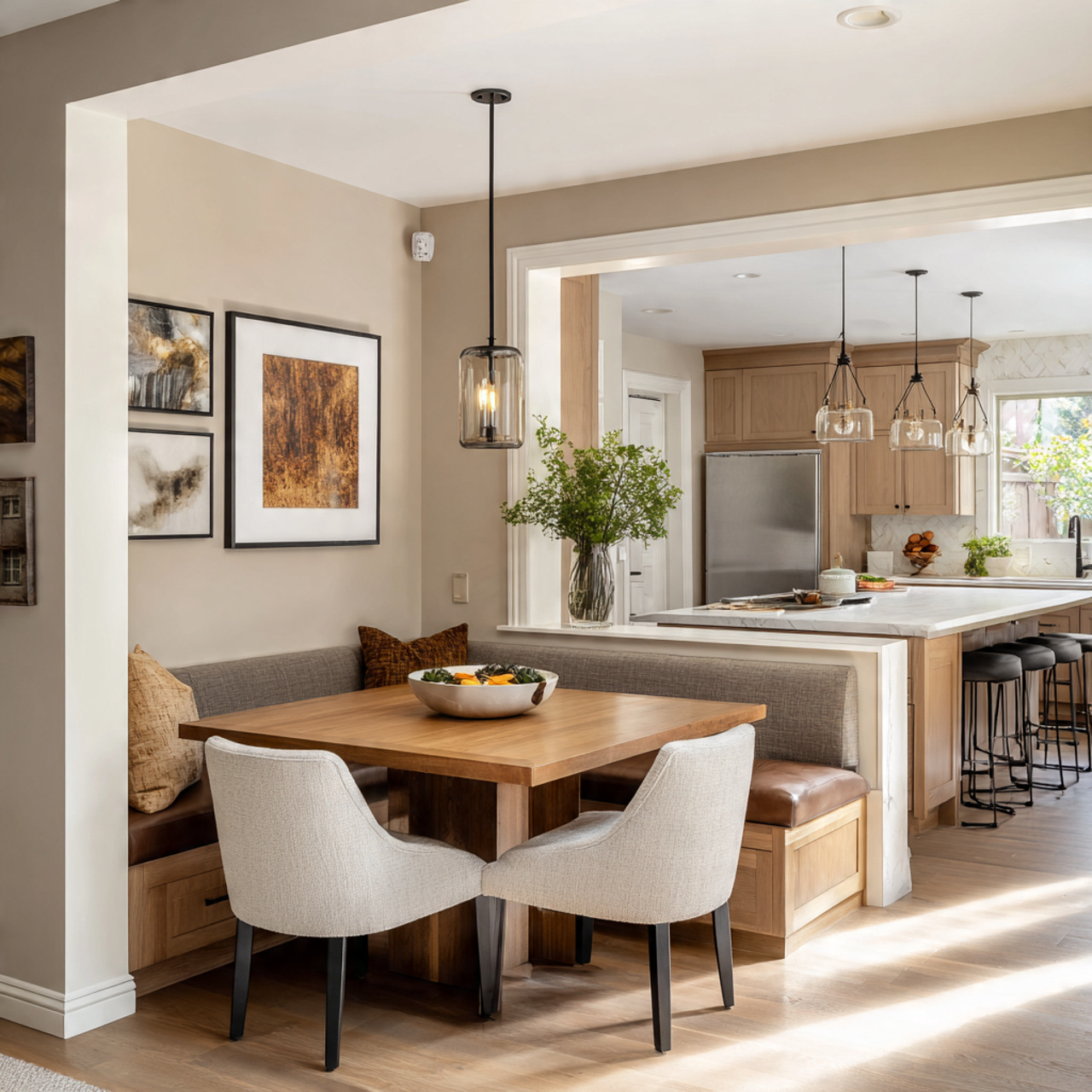
An island extension breakfast nook creates a casual seating area without requiring a separate corner. A bench or small seating area connected to the island creates a natural flow. This layout often works well in open kitchens.
This design works because it keeps everything connected while still defining a seating space. It also avoids adding additional furniture that might crowd the kitchen. In open layouts, this approach keeps the space feeling balanced.
To apply this idea, extend seating from the kitchen island using a small bench or compact table. Keep finishes consistent with the kitchen for a cohesive look.
Tip: Match seating materials with the island for a seamless appearance.
Cottage Style Breakfast Nook With Soft Cozy Character

A cottage style breakfast nook often feels calm and welcoming with light colors and soft textures. A small table, gentle tones, and comfortable seating create a relaxed morning space. This kind of nook often feels timeless and easy to live with.
Cottage styling works because it avoids heavy contrast and keeps the space feeling gentle. Soft materials and light colors help the nook blend naturally with the kitchen. Over time, this approach tends to remain visually comfortable.
To recreate this idea, use light wood tones, soft cushions, and subtle decor. Keep styling relaxed rather than overly arranged.
Tip: Choose soft neutral colors to maintain a calm atmosphere.
Visit Also: Modern Kitchen Design
Small Corner Breakfast Nook With Compact Table
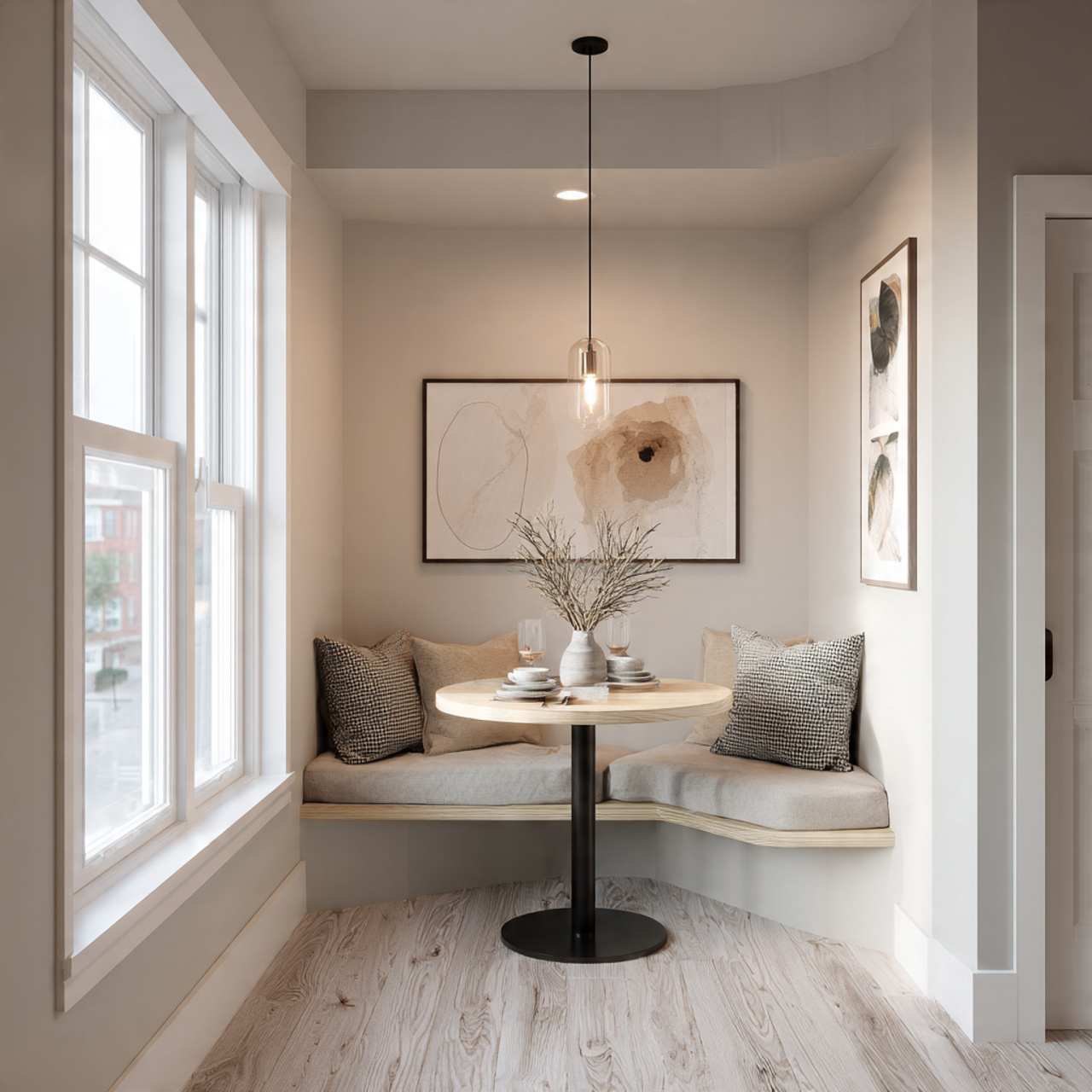
A small corner with a compact table can quickly become a comfortable breakfast nook. Even tight spaces can feel intentional with thoughtful placement. These corners often become cozy morning spots.
Corner seating works because it uses space that often goes unused. A small table keeps the nook practical while maintaining openness. In many homes, this arrangement improves overall kitchen flow.
Start by identifying a quiet corner and adding compact seating. Keep styling minimal for balance.
Tip: Use a round table to improve movement.
Greenhouse Breakfast Nook With Indoor Outdoor Feel
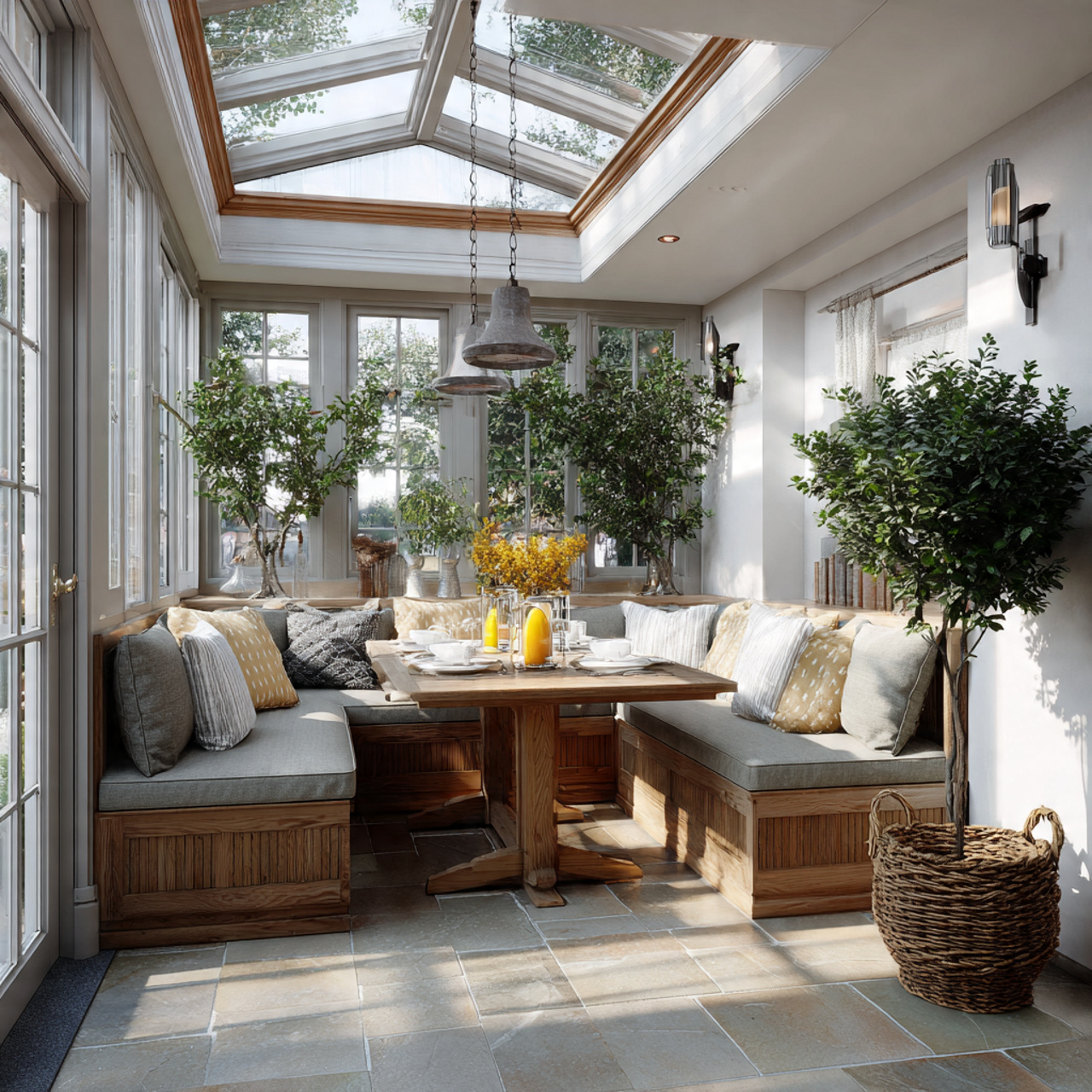
A greenhouse style breakfast nook filled with natural light creates a calm space that feels connected to the outdoors. Large windows, light wood seating, and a few plants make the corner feel fresh and relaxed throughout the day.
This idea works well because natural light and greenery soften the kitchen without adding visual clutter. Glass surroundings also help small kitchens feel more open and airy.
To create this look, place a small table near large windows and add a few plants or woven textures. Keep colors light and materials simple to maintain a balanced feel.
Tip: Use a few small plants instead of many to keep the space calm and uncluttered.
A Real Breakfast Nook Layout That Feels Warm And Comfortable
Morning light filters softly through a nearby window, touching the surface of a small wooden table. A built in bench sits along the wall with layered cushions in warm neutral tones, while a simple ceramic mug and small plant create a quiet lived in moment. The space feels calm and natural, like a place where slow mornings happen without effort.
The layout uses a corner that once felt unused, turning it into a comfortable seating area without interrupting kitchen flow. The bench keeps the space open while the round table softens the layout and improves movement. Over time, this kind of breakfast nook becomes one of the most welcoming parts of the kitchen, offering a balance of comfort, function, and everyday warmth.
Color And Material Choices That Work Beautifully For Breakfast Nooks
Warm Cream (#F2EFE9)
Works beautifully on walls, bench seating, or surrounding cabinetry. This color creates a soft brightness that makes breakfast nooks feel calm and welcoming. It pairs especially well with light wood, linen fabrics, and subtle ceramic accents.
Soft Sage Green (#D8E2DC)
Ideal for cushions, accent walls, or built in seating details. This shade adds a relaxed natural mood that feels fresh without overpowering the space. It pairs nicely with oak wood, woven textures, and matte finishes.
Light Oak Wood (#D6B98C)
Perfect for tables, bench seating, and shelving. This warm tone adds natural texture and prevents the nook from feeling too minimal. It works beautifully with soft fabrics, neutral upholstery, and simple decorative accents.
Muted Dusty Blue (#AAB7C4)
Works well for cushions, painted benches, or subtle decor accents. This tone introduces gentle contrast while keeping the atmosphere calm and balanced. It pairs well with warm woods, brass accents, and soft neutral textiles.
Room Size And Lighting Guide For Breakfast Nook Ideas
Small Kitchen Breakfast Nooks
Use lighter tones and slim seating to keep the space visually open. Natural light and soft textures help small nooks feel comfortable rather than crowded.
Large Kitchen Breakfast Nooks
Use layered lighting and defined seating to prevent the nook from feeling lost. A slightly larger table and soft textures help create a balanced focal point.
North Facing Kitchens
North facing kitchens often feel cooler, so warm wood tones and soft lighting help create comfort. Adding layered textures also prevents the nook from feeling flat.
South Facing Kitchens
South facing spaces already receive strong light, so soft neutral tones help balance brightness. Light fabrics and minimal styling keep the nook feeling calm.
Low Natural Light Kitchens
Add warm pendant lighting or wall lighting to create a cozy atmosphere. Soft reflective materials like light wood or neutral fabrics help brighten the space.
Common Breakfast Nook Mistakes That Affect Comfort And Layout
Choosing A Table That Feels Too Large
This often happens when trying to maximize seating in a small kitchen. Over time, the large table restricts movement and makes the space feel cramped.
Choose a compact table that allows comfortable movement around the seating.
Ignoring Comfortable Seating Support
Many breakfast nooks focus only on appearance rather than comfort. Without cushions or supportive seating, the nook becomes less inviting and rarely used.
Add soft cushions or upholstered seating to improve everyday comfort.
Placing The Nook In A Busy Traffic Area
Sometimes the nook is placed too close to main walkways. This makes the seating feel disruptive and uncomfortable during daily kitchen activity.
Choose quieter corners or walls where the seating feels more relaxed.
Using Harsh Overhead Lighting Only
Bright overhead lighting can make the nook feel cold and uninviting. Over time, this reduces how often the space is used for relaxed meals.
Layer softer lighting such as pendant lights or wall lighting to create warmth.
Frequently Asked Questions About Breakfast Nook Ideas
What is the best place to add a breakfast nook in a kitchen?
The best place is usually an unused corner, near a window, or along a quiet wall. These areas naturally create a comfortable seating zone without interrupting kitchen flow. In many homes, even a small corner can become a cozy and practical breakfast nook.
Can breakfast nook ideas work in very small kitchens?
Yes, even very small kitchens can accommodate a compact breakfast nook. Slim benches, round tables, and corner seating help maximize space without crowding the layout. Small nooks often feel more comfortable than expected when styled thoughtfully.
Are built in breakfast nooks worth it?
Built in breakfast nooks are often worth the effort because they save space and create a cozy atmosphere. They also provide a more permanent and intentional seating area. Over time, these built in spaces usually become one of the most used areas in the kitchen.
What type of table works best for a breakfast nook?
Round or compact rectangular tables usually work best for breakfast nooks. These shapes improve movement and keep the layout flexible. Choosing a table that fits the space comfortably helps maintain a balanced feel.
How do I make a breakfast nook feel cozy and inviting?
Soft cushions, warm lighting, and natural textures help create a cozy breakfast nook. Keeping decor simple also allows the space to feel relaxed and welcoming. Small details like plants or neutral fabrics often make the biggest difference.
Cozy Breakfast Nook Ideas That Transform Everyday Kitchen Corners
Breakfast nook ideas bring comfort and personality into kitchens by turning unused corners into welcoming seating areas. Even small changes like adding a bench, soft cushions, or a compact table can create a space that feels calm and practical for everyday living.
Over time, these cozy corners often become the most loved part of the kitchen, used for morning coffee, quiet meals, and relaxed conversations. Start by identifying a simple corner or window area, and gradually layer comfort, light, and texture to create a breakfast nook that feels naturally inviting.