14 Stunning False Ceiling Design Ideas Designers Love
False ceiling design has become one of the most powerful upgrades in modern interiors. A thoughtfully designed ceiling changes how light spreads, how tall a room feels, and how polished the entire space appears.
In many homes the ceiling is the largest uninterrupted surface, yet it is often ignored. Once you start treating it as a design feature rather than just a structural element, rooms suddenly feel more layered and intentional.
Why modern homes benefit from thoughtful ceiling design
Modern interiors rely heavily on lighting, clean geometry, and balanced proportions. False ceiling design helps hide wiring, integrate lighting, and visually organize a room without adding clutter.
It also allows homeowners to experiment with materials like gypsum, POP, wood panels, or LED lighting layouts. When done well, the ceiling becomes a quiet architectural frame that makes furniture and décor look better.
Modern False Ceiling Design Ideas for Stylish Homes
Modern Floating False Ceiling with Soft LED Glow
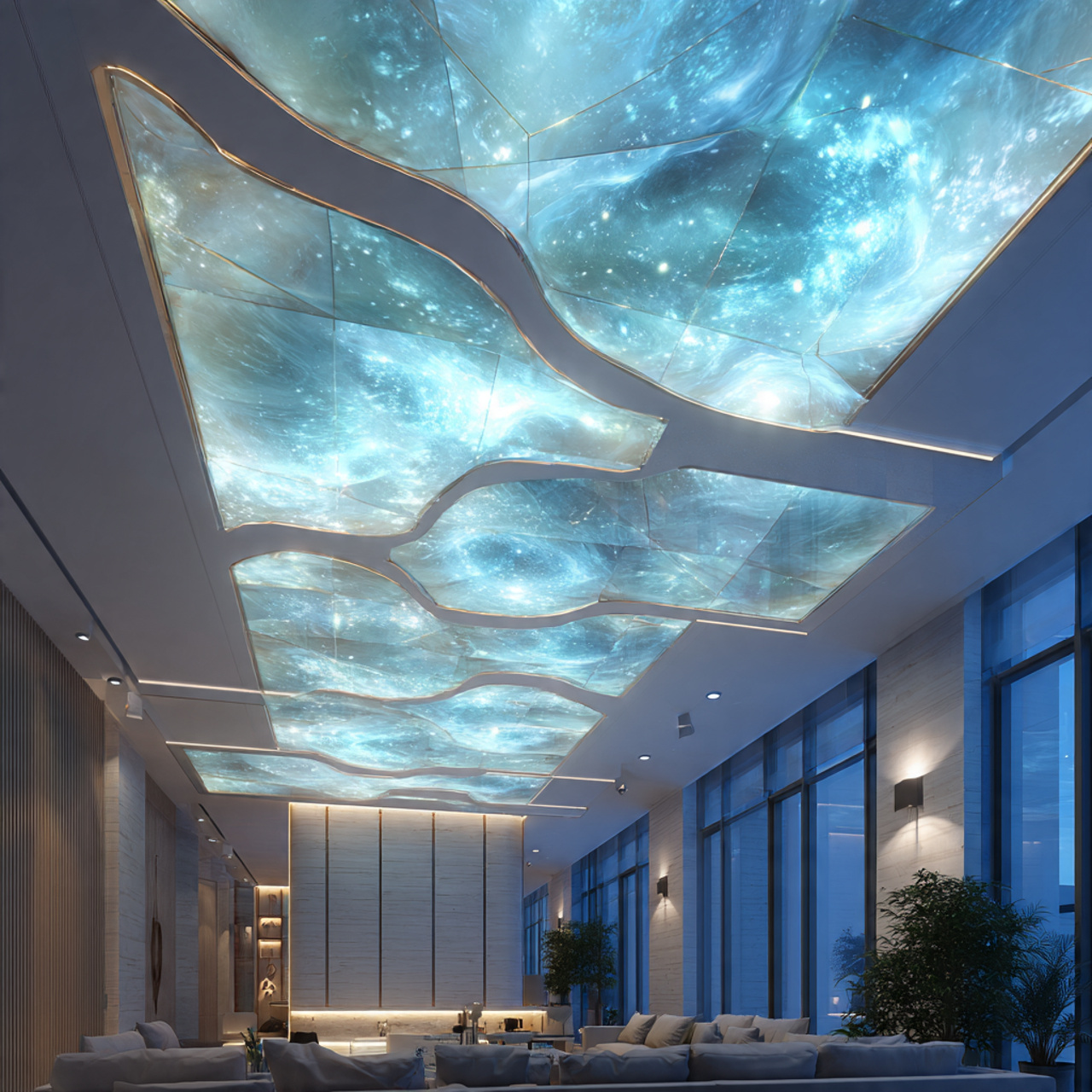
Picture a living room where a slim floating ceiling panel appears to hover above the sofa. A warm LED glow runs along the edge and creates a soft halo that draws the eye upward.
This floating design works because the narrow shadow gap separates the ceiling layer from the walls. The small separation makes the ceiling feel lighter and visually increases the perceived room height.
To recreate this look, build a shallow secondary frame slightly below the main ceiling. Install warm LED strip lighting inside the gap so the light reflects upward instead of shining directly into the room.
Tip: Use LED strips around 2700K to create a soft living room glow.
Luxury Tray False Ceiling with Warm Cove Lighting
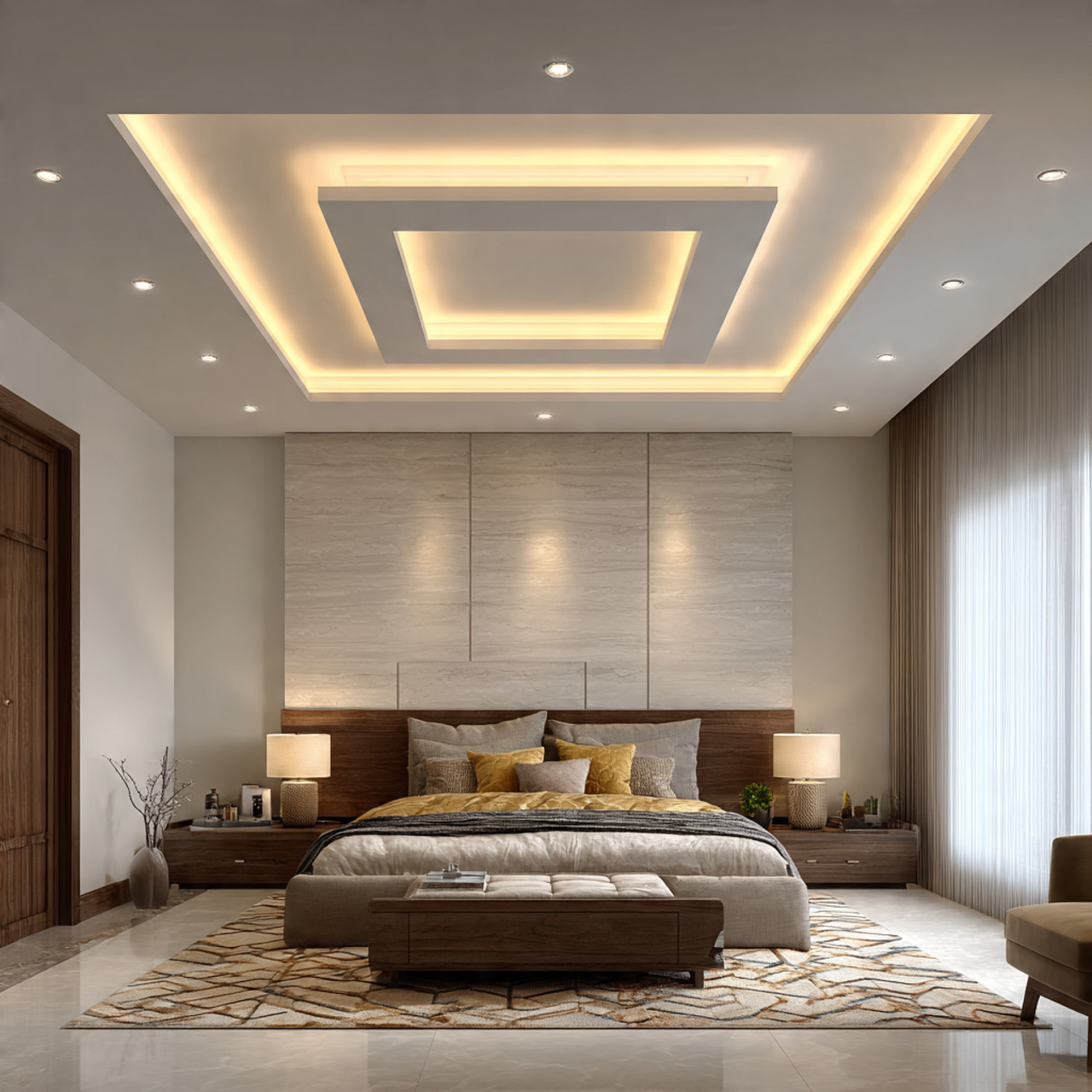
Imagine a dining room where the ceiling gently steps inward to form a recessed tray above the table. Hidden cove lighting lines the inner edge and produces a soft elegant glow.
Tray ceilings introduce depth without making the room feel heavy. The layered structure naturally frames a pendant or chandelier and helps define the dining area.
Keep the outer frame clean and paint the inner tray slightly darker than the rest of the ceiling. This small contrast makes the layered ceiling design stand out.
Tip: Tray ceilings look especially elegant in dining rooms and entry spaces.
Minimal Flat False Ceiling for Calm Modern Interiors
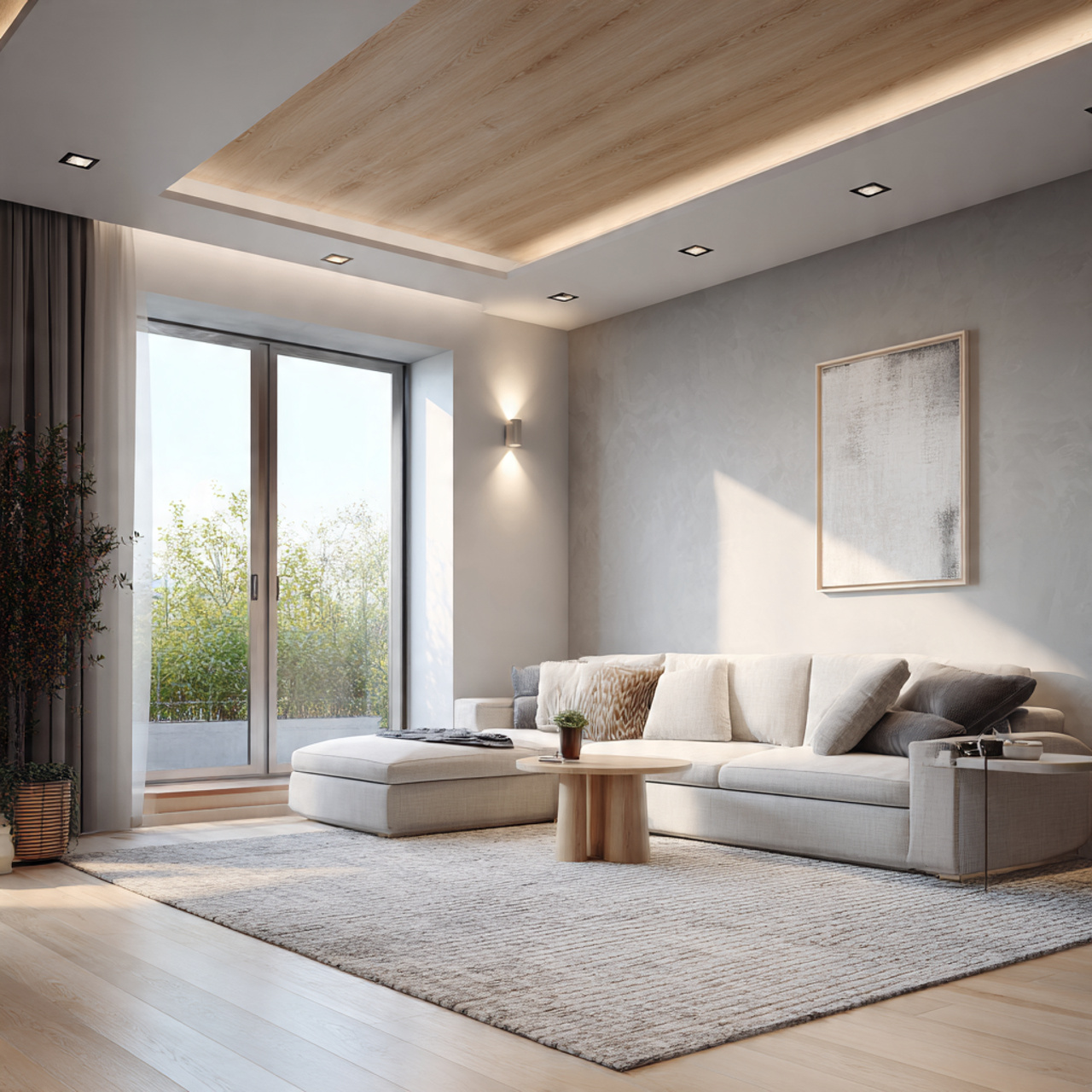
Some of the most refined interiors use extremely simple ceilings. A smooth flat gypsum ceiling paired with subtle recessed lights creates a calm uncluttered atmosphere.
Minimal ceilings allow furniture, artwork, and textures to become the focus of the room. When the ceiling remains visually quiet the space feels more open and balanced.
Install evenly spaced recessed lights and maintain clean edges where the ceiling meets the wall. Avoid heavy moldings so the design stays modern.
Tip: Flat ceilings work beautifully in small apartments.
Gypsum False Ceiling Design with Recessed Spotlights
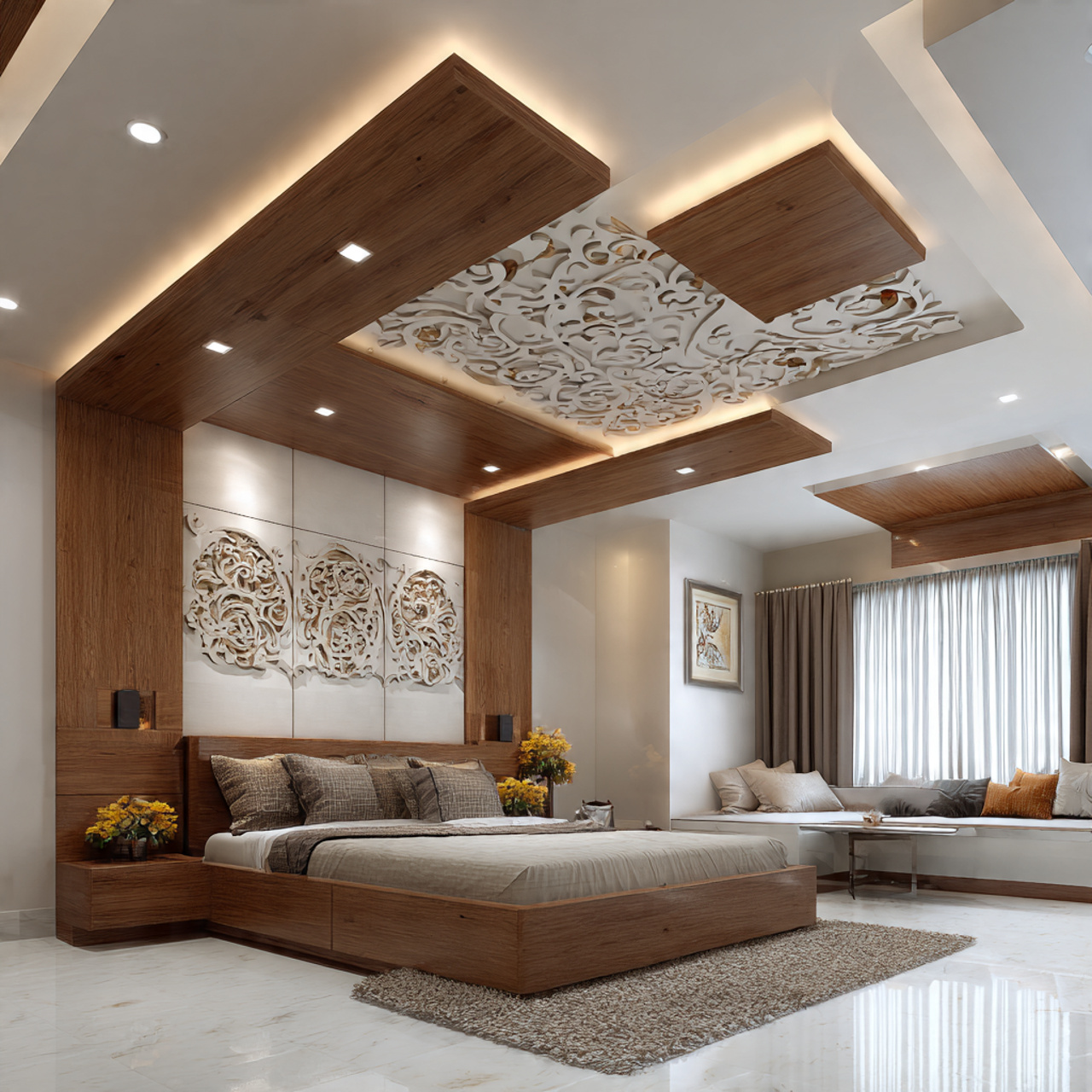
A gypsum ceiling grid combined with adjustable spotlights can dramatically improve how décor and artwork appear. The panels create structure while the lighting highlights specific areas.
Gypsum is widely used in modern false ceiling design because it is lightweight and easy to shape. Designers can create geometric panels, layered frames, or gentle curves.
Place spotlights above seating areas, artwork, or decorative shelves. This layered lighting approach adds both functionality and visual depth.
Tip: Adjustable spotlights allow you to shift lighting focus later.
Stylish POP False Ceiling Design for Living Rooms
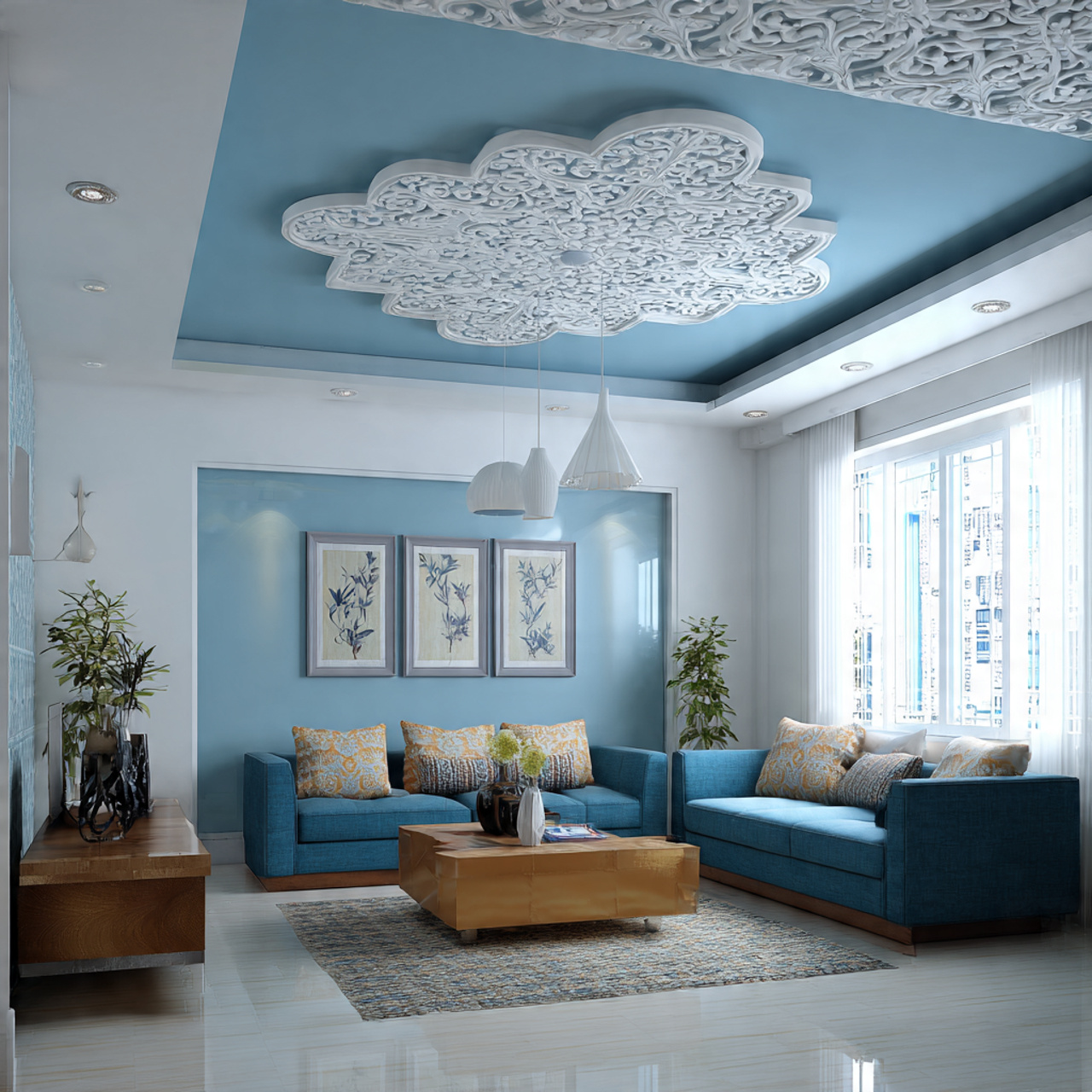
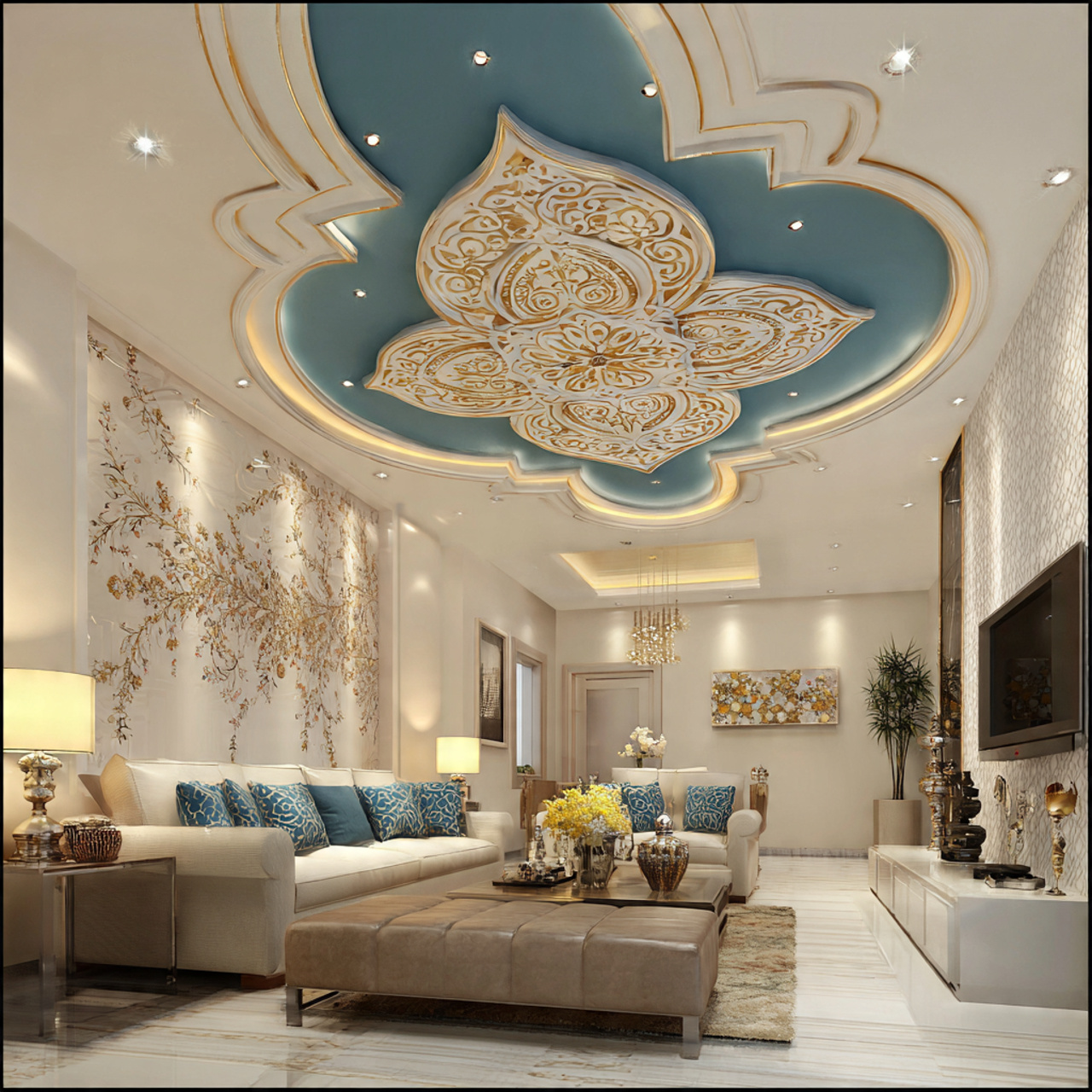
POP ceilings remain popular because they allow flowing shapes and decorative layers. When designed carefully they become the main visual centerpiece of a living room.
Instead of complex patterns choose one sculpted form above the seating area. This keeps the room balanced while still creating a dramatic ceiling feature.
Add hidden LED lighting around the POP structure so the curves appear softly illuminated. The lighting enhances the sculpted design.
Tip: Neutral wall colors help POP ceilings stand out more.
Wood Panel False Ceiling That Adds Natural Warmth
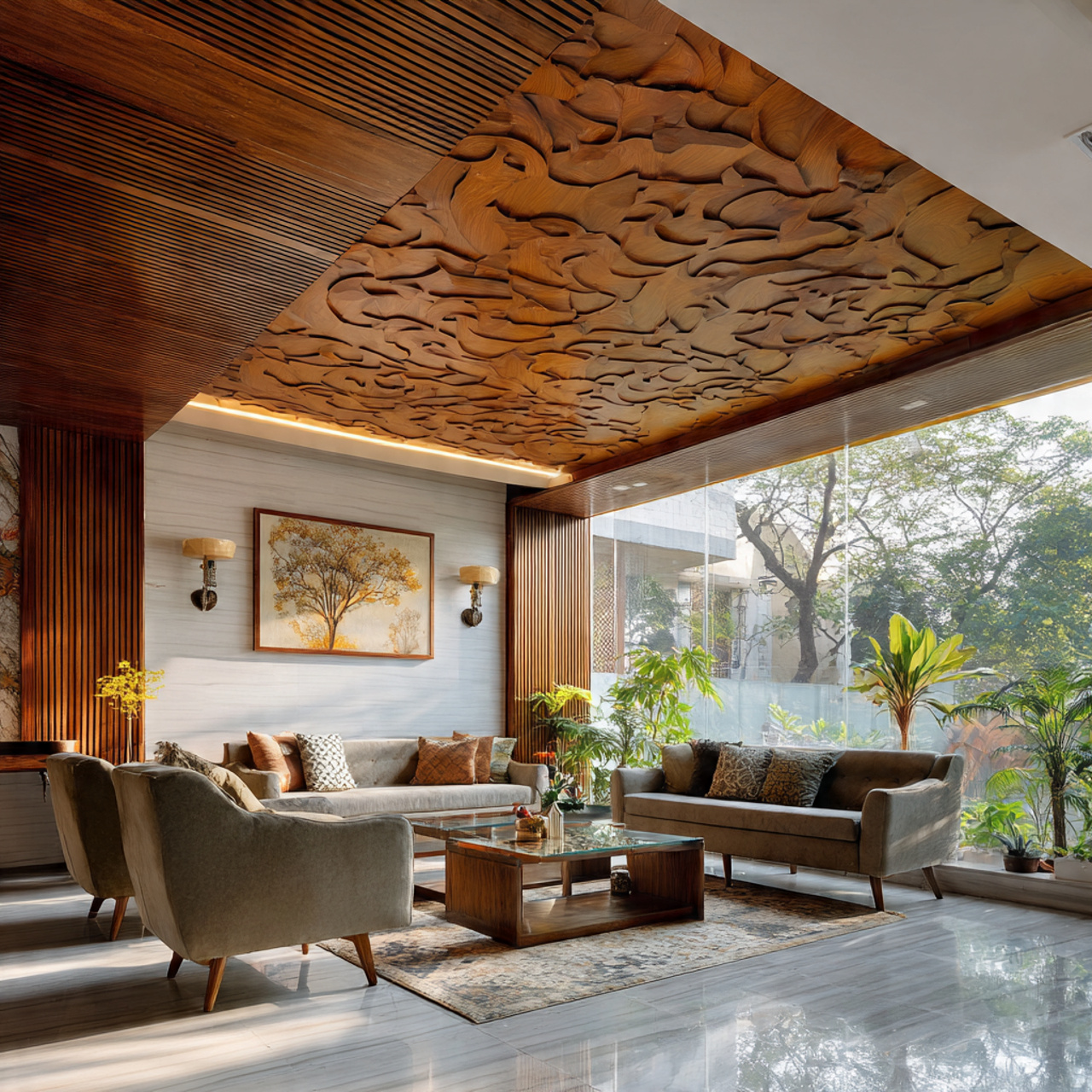
Imagine a dining room where warm wood slats stretch across the ceiling above a long table and soft pendant lighting. This type of wood panel false ceiling design instantly adds warmth and texture to modern interiors.
Wood textures help minimalist interiors feel more inviting. The grain pattern adds depth without requiring additional decoration.
Install narrow wood slats across the longest direction of the room to visually stretch the space. Combine them with subtle linear lighting for a modern appearance.
Tip: Engineered wood panels remain more stable than solid timber.
Modern Kitchen False Ceiling with Profile Lighting
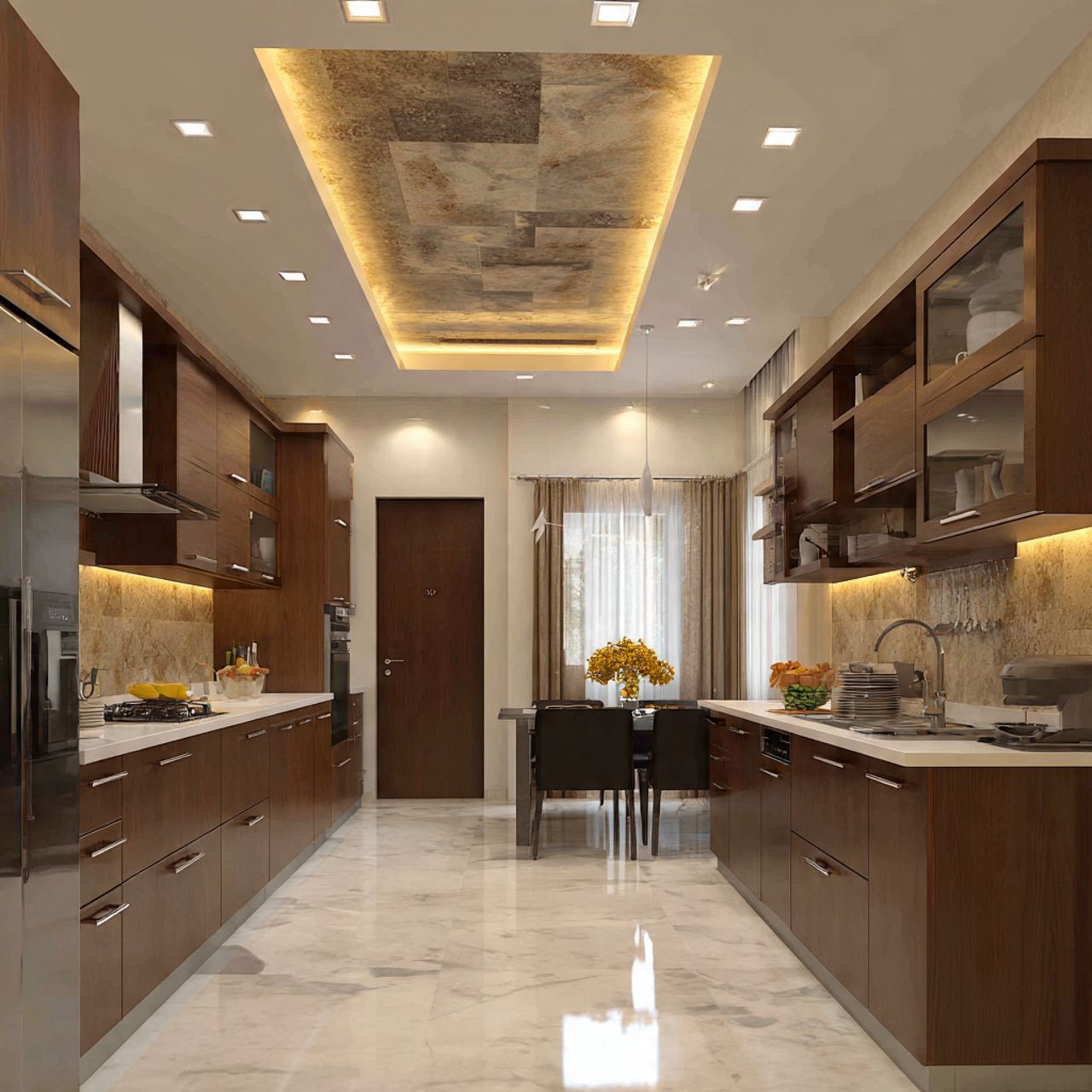
Modern kitchens benefit from structured ceiling lighting. A ceiling band above the island can house slim profile lights and ventilation in one organized design.
Profile lighting creates crisp linear illumination that aligns with cabinet edges and countertops. This makes the entire kitchen feel visually structured.
Use aluminum lighting profiles with integrated LED strips for a seamless appearance. Keep the band shallow so the ceiling height remains comfortable.
Tip: Profile lights also work well in long hallways.
Geometric False Ceiling Panels for Modern Interiors
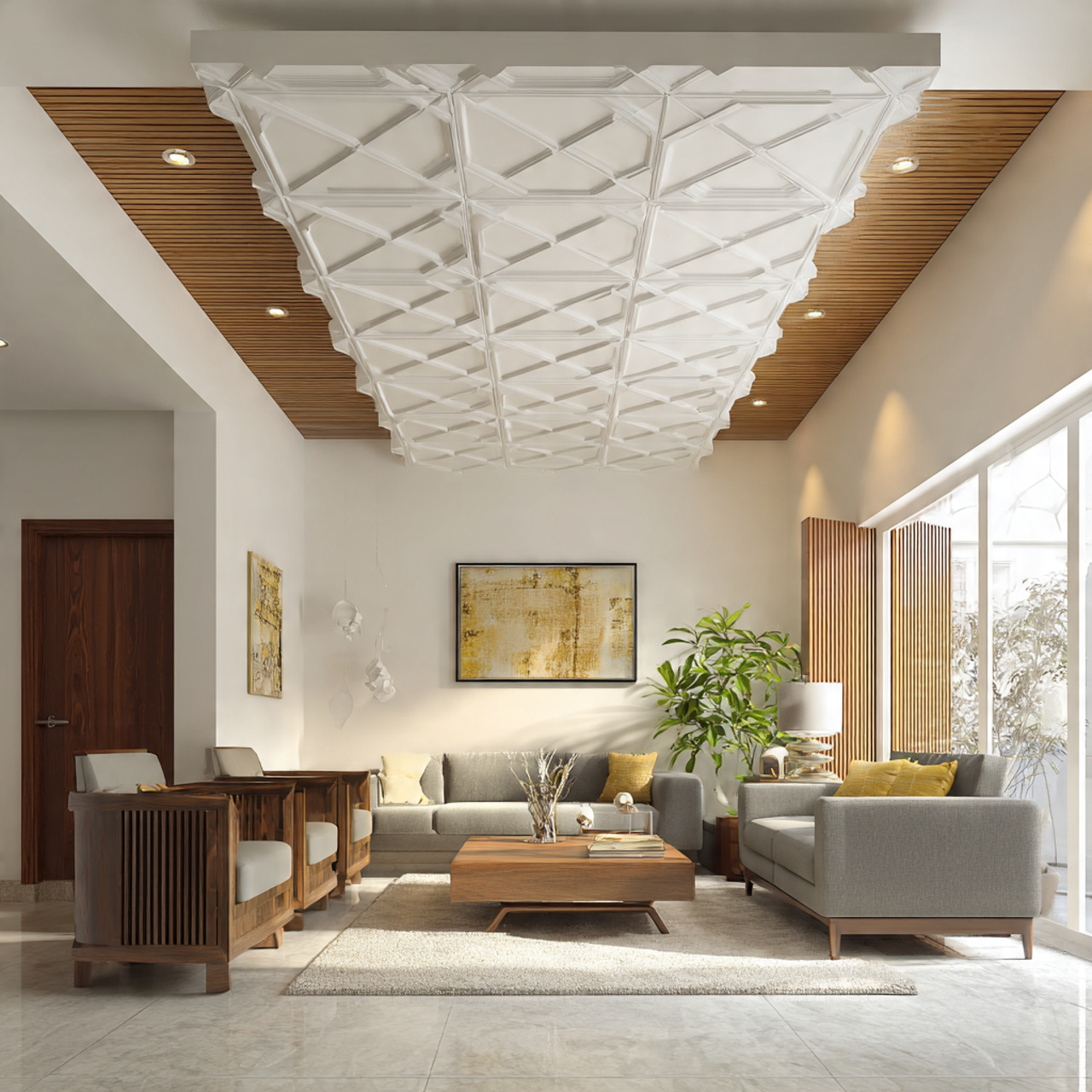
Geometric ceiling panels introduce rhythm and visual movement. Patterns like rectangles or hexagons turn the ceiling into a striking architectural feature.
These designs work especially well in large living rooms where a plain ceiling might feel empty. Geometric patterns also help define seating zones and make a false ceiling design look more architectural and intentional.
Choose subtle differences in paint color or panel depth instead of dramatic patterns. This keeps the design sophisticated.
Tip: Align furniture placement with the ceiling pattern.
Minimal Bedroom False Ceiling with Soft Cove Lighting
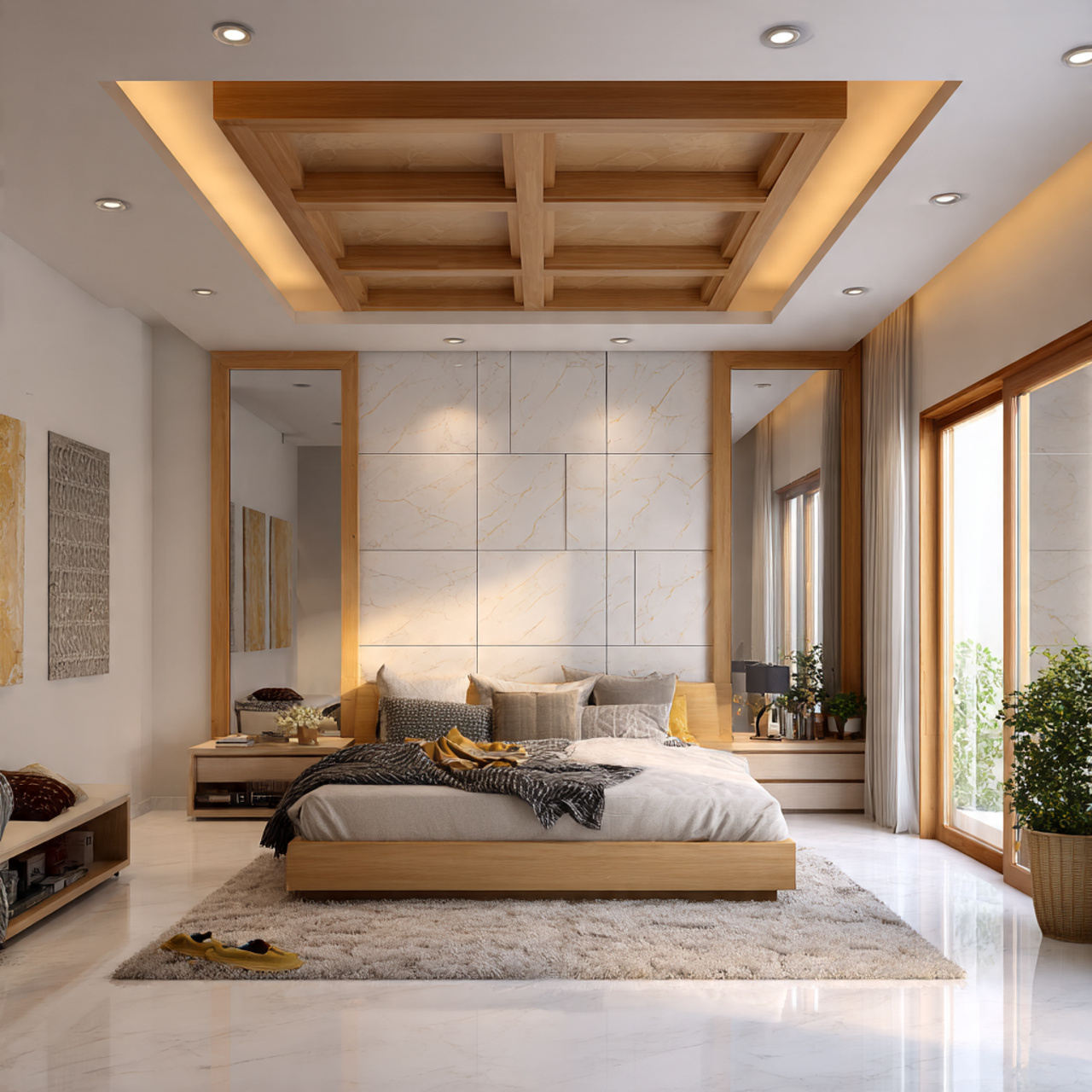
Picture a bedroom where a soft halo of light runs along the ceiling edges above the bed. This type of perimeter false ceiling design creates a calm glow that instantly makes the room feel more relaxing.
The light reflects across the ceiling and spreads evenly throughout the room. This produces a calm atmosphere similar to boutique hotel bedrooms.
Install the cove around the perimeter or behind the headboard wall. Pair it with bedside lamps for practical nighttime lighting.
Tip: Install dimmers so brightness can change easily.
Floating Perimeter Ceiling That Makes Rooms Look Taller
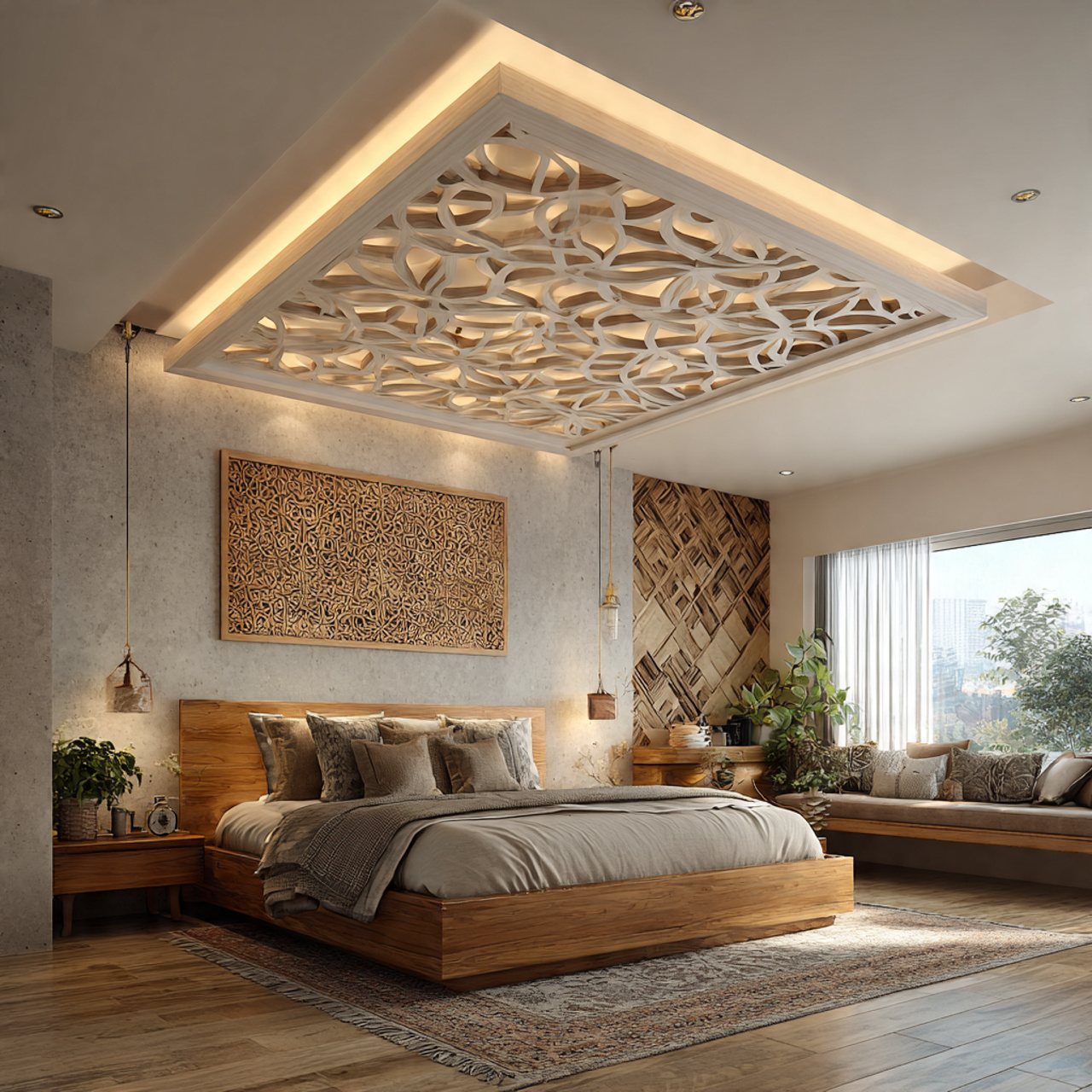
A floating perimeter ceiling creates a border around the edges of the room. Hidden lighting inside the border makes the ceiling appear slightly lifted.
This technique visually increases room height and adds depth to otherwise plain ceilings. Many modern false ceiling design projects use this perimeter lighting trick to make rooms feel larger and more open.
Build a narrow dropped frame around the ceiling edges and hide LED strips inside the gap. The light should reflect upward toward the ceiling.
Tip: Keep the border width consistent on all sides.
Luxury LED Strip Ceiling Design for Modern Living Rooms
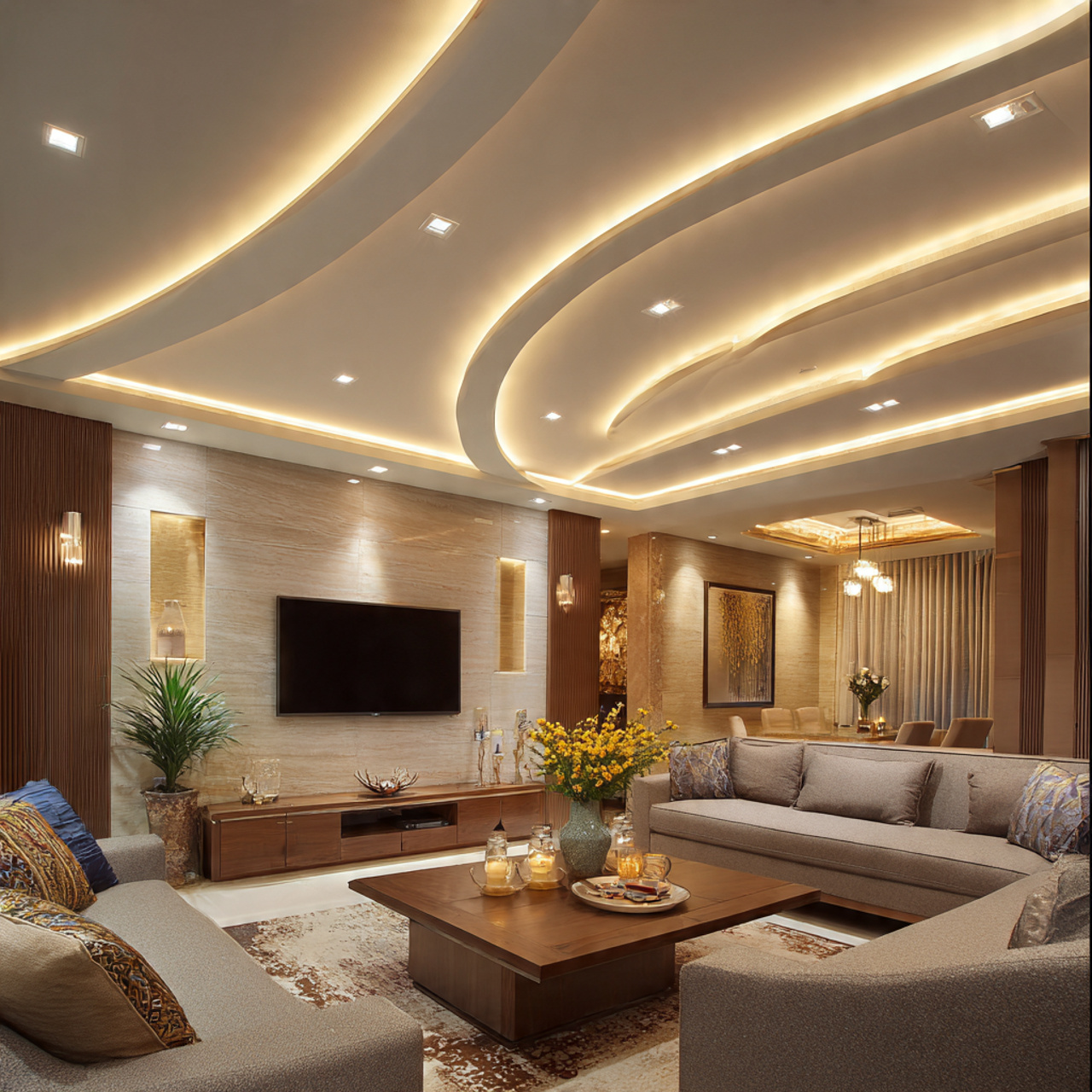
Imagine thin lines of warm light running across the ceiling above a modern sofa and coffee table. This LED strip false ceiling design creates a sleek architectural look that instantly feels modern.
These lighting lines highlight ceiling geometry and improve ambient lighting without bulky fixtures. The design feels modern and visually clean.
Install recessed LED strips within narrow ceiling channels. Keep the lighting pattern simple so the effect looks intentional.
Tip: Straight lighting lines usually look more elegant than complex shapes.
False Ceiling Design That Hides Structural Beams
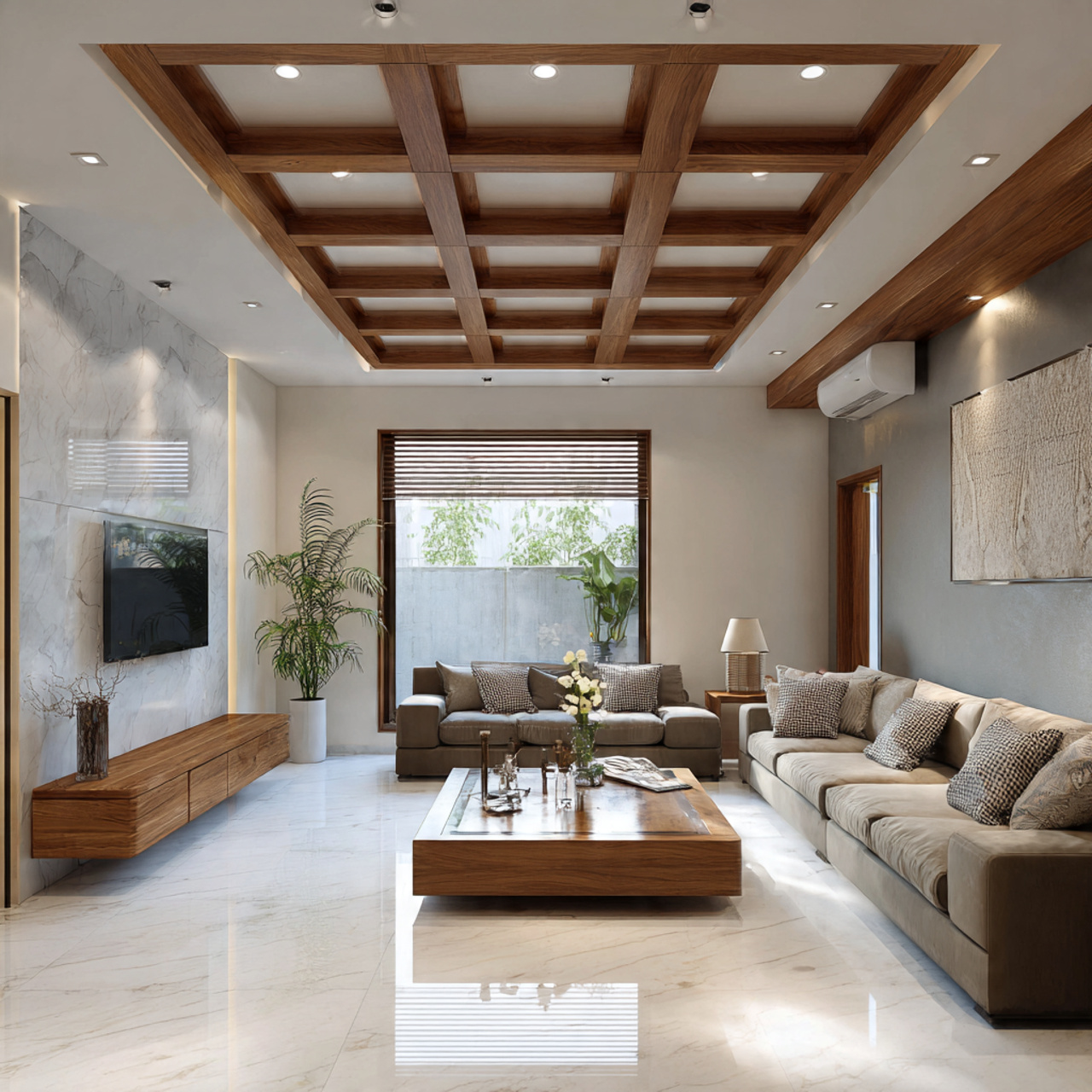
Many homes have structural beams that interrupt the ceiling line. A well designed false ceiling can hide these elements and create a smoother surface.
A shallow soffit built around the beam turns the structure into part of the design. Lighting can also be integrated into the soffit.
This approach works well during renovations where beams cannot be removed. The ceiling design simply incorporates the structure.
Tip: Always confirm structural limitations before covering beams.
Visit Also: Pvc Ceiling Design
Luxury Lobby Style Ceiling with Indirect Lighting
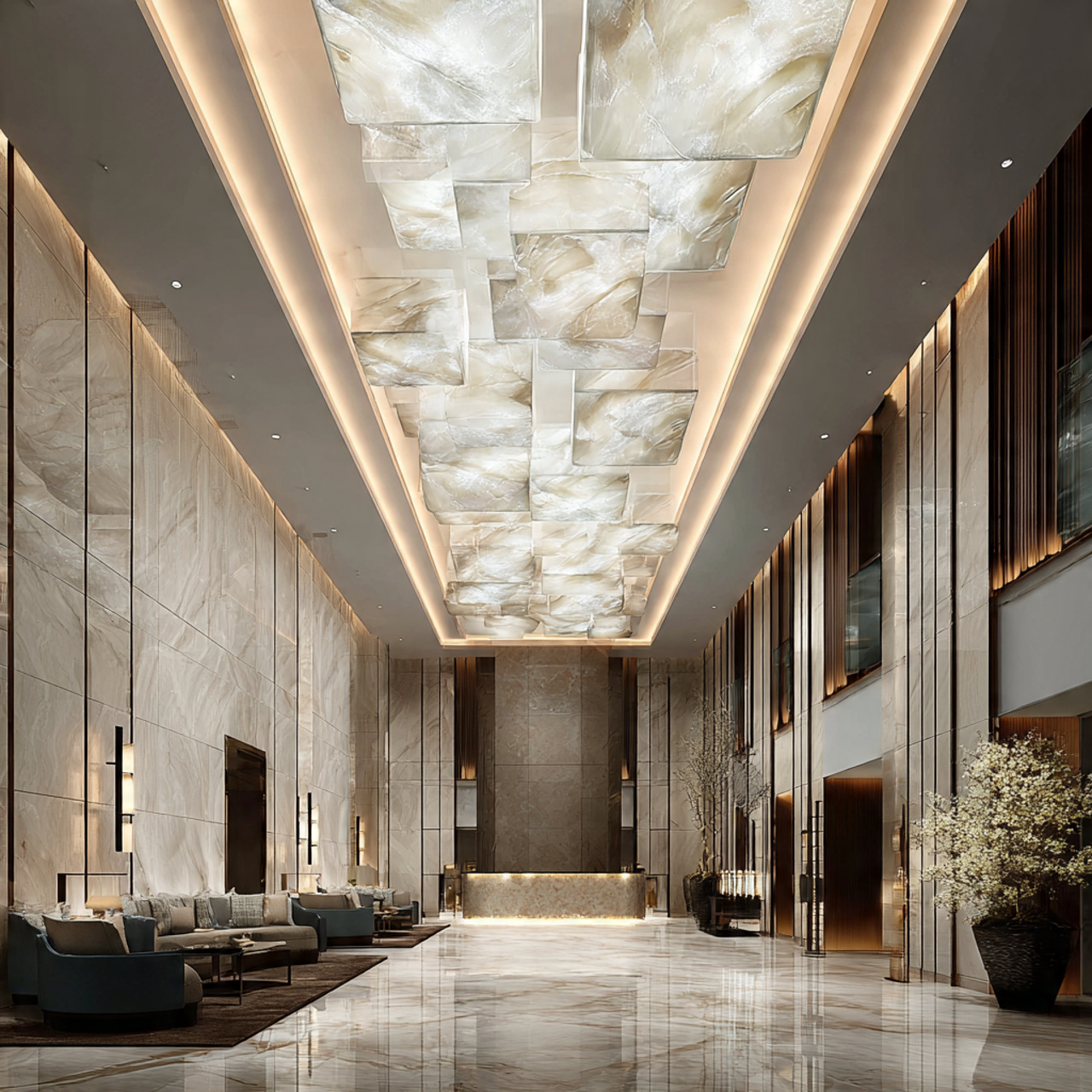
Entry spaces benefit from dramatic ceiling designs. A stepped ceiling with layered indirect lighting creates a strong first impression.
The layered design draws the eye upward and makes the entry feel more spacious. Indirect lighting softens shadows and highlights architectural details.
Combine this ceiling design with a statement chandelier or pendant light. The effect resembles elegant hotel lobbies.
Tip: Keep wall décor minimal so the ceiling remains the focus.
Luxury Ceiling Design with Hidden Perimeter Lighting
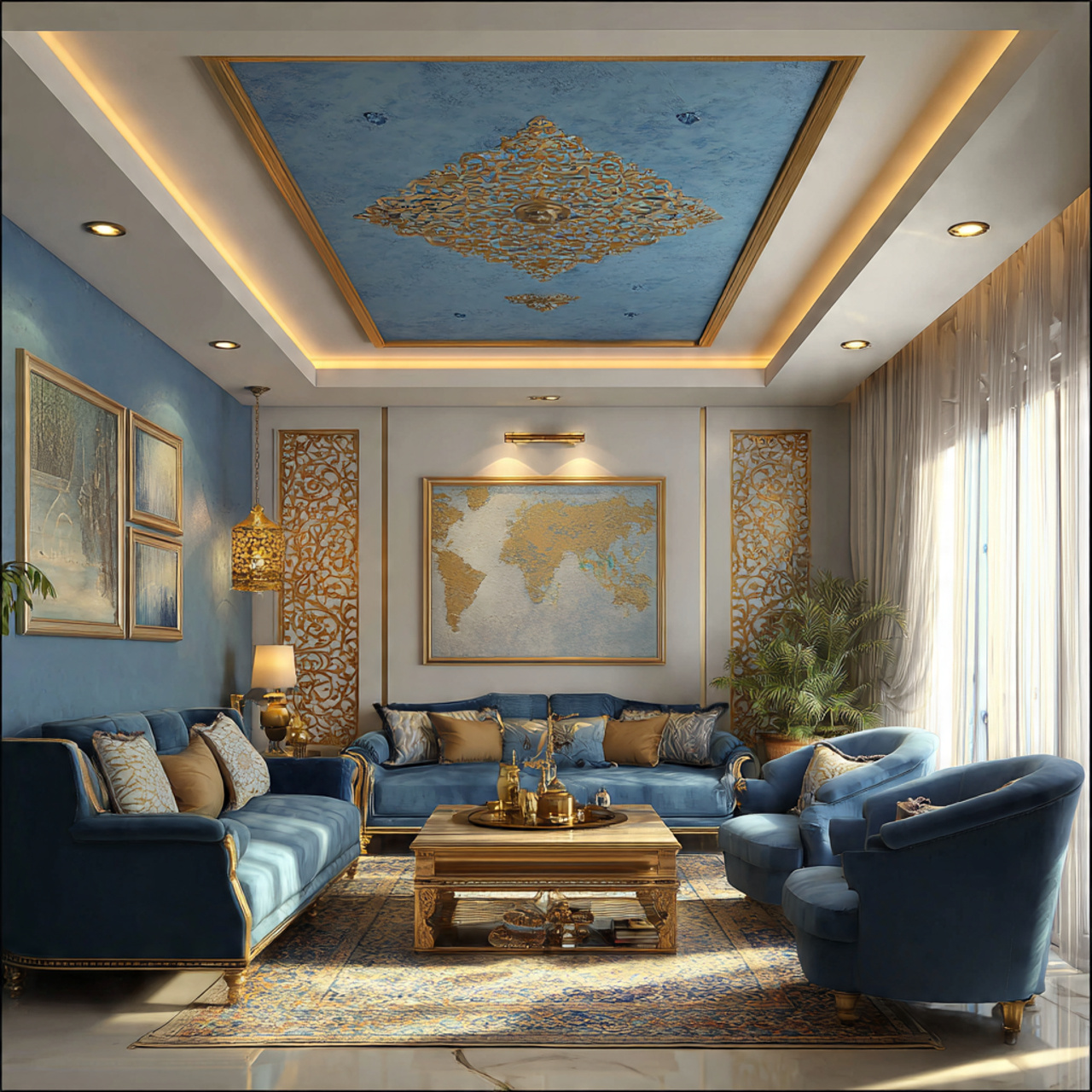
Hidden perimeter lighting creates a soft glow along the edges of the ceiling. The design produces a refined atmosphere without visible fixtures.
The light spreads across the ceiling and gently illuminates the entire room. This creates a calm and luxurious mood.
Install concealed LED strips behind a slim border around the ceiling perimeter. Warm lighting works best for living areas and bedrooms.
Tip: Perimeter lighting pairs beautifully with neutral interior palettes.
A real living room example combining several ceiling ideas
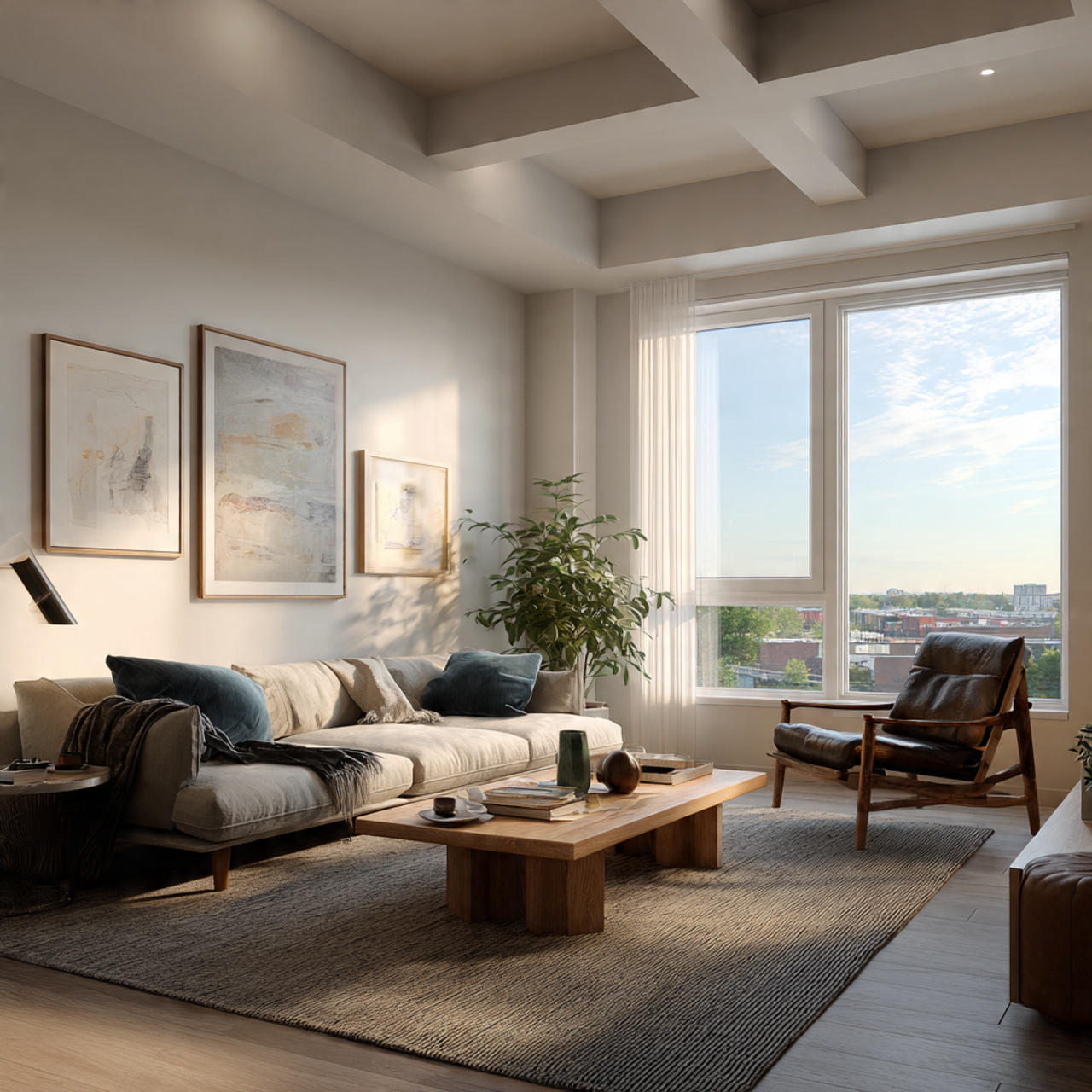
Imagine a warm contemporary living room with a floating ceiling band above the sofa and soft cove lighting around the perimeter. Natural light enters through tall curtains while the ceiling glow gently brightens the room in the evening.
A textured rug anchors the seating area and an abstract painting draws the eye upward toward the layered ceiling. The combination of warm lighting, subtle geometry, and natural materials creates a room that feels comfortable and visually refined.
Color and material authority for elegant ceilings
Soft Ivory (HEX #F5F3ED) works well for most ceilings because it reflects light gently without appearing stark white. Pair it with natural wood or beige textiles for a warm interior palette.
Warm Oak (HEX #C9A676) complements wood ceilings and beam details beautifully. It pairs especially well with linen fabrics, brass lighting, and stone surfaces.
Cloud White (HEX #F7F8F9) creates a bright modern ceiling that enhances natural daylight. This shade works well with dark furniture and black metal fixtures.
Slate Grey (HEX #50565C) can be used inside tray ceilings to add subtle contrast. Pair it with marble textures and matte metals for a refined contemporary look.
Room Size and Lighting Quick Guide
Small Rooms
Use shallow false ceiling drops and soft cove lighting to add depth without reducing headroom. Indirect lighting helps the ceiling feel higher and keeps the room visually open.
Large Rooms
Large spaces can support layered false ceiling structures and multiple lighting zones. Combining recessed lights, cove lighting, and statement fixtures prevents the room from feeling visually empty.
North Facing Rooms
Rooms that receive cooler daylight benefit from warm LED lighting inside the false ceiling. Warm tones balance the cool natural light and create a more comfortable atmosphere.
South or West Facing Rooms
Rooms with strong daylight should use softer indirect ceiling lighting to avoid glare. Balanced ambient lighting keeps the room bright without creating harsh shadows.
Common False Ceiling Design Mistakes
Using Overly Complex Ceiling Patterns
Many homeowners believe complex ceiling designs automatically look luxurious. In reality overly detailed patterns can overwhelm the room and make the ceiling feel visually heavy.
Over time these busy ceilings can start to look outdated and distract from furniture and décor. A better approach is choosing one strong ceiling feature and keeping the surrounding design simple.
Installing Ceiling Lighting Without Dimmers
Ceiling lighting that cannot be adjusted quickly becomes uncomfortable in everyday use. Bright lights that work during cleaning hours often feel harsh during the evening.
Adding dimmers allows the lighting atmosphere to change throughout the day. Without dimmers the room may feel too bright at night and lose its relaxing atmosphere.
Ignoring Room Proportions When Designing a Ceiling
A ceiling design that looks beautiful in a large hall may appear overwhelming in a small bedroom. Proportion always matters more than decoration when designing a false ceiling.
Measure the room carefully before deciding the ceiling layout. Balanced scale ensures the design feels intentional rather than crowded.
Repeating the Same Ceiling Style in Every Room
Using identical false ceiling designs throughout a house can make interiors feel repetitive. Rooms lose their individual character and the home feels less visually interesting.
Mix simple ceilings with one or two statement designs in important spaces. This approach creates contrast and improves the overall flow of the home.
Frequently asked questions about false ceiling design
What is the most popular material for false ceilings?
Gypsum remains the most widely used material because it is lightweight, smooth, and easy to shape. It allows both simple and decorative ceiling designs.
Are false ceilings suitable for small rooms?
Yes, but shallow designs work best. Minimal drops with cove lighting or recessed lights maintain height while adding visual interest.
How much height does a false ceiling reduce?
Most installations lower the ceiling by eight to twelve centimeters. Larger lighting systems or ventilation may require slightly deeper drops.
Which lighting works best with false ceilings?
LED strip lighting, recessed spotlights, and profile lights are the most common choices. They integrate easily into layered ceiling structures.
Can false ceilings improve home value?
A well designed ceiling can increase perceived interior quality and improve buyer impressions. Clean modern ceilings often make rooms feel more finished and attractive.
Bringing False Ceiling Design Into Everyday Homes
False ceiling design is one of those upgrades that quietly transforms how a room feels the moment you walk in. The right ceiling layout improves lighting balance, enhances proportions, and helps the entire space feel more thoughtfully designed without adding visual clutter.
If you want to experiment, start with one simple improvement such as soft cove lighting, a floating ceiling band, or subtle recessed spotlights. Even small adjustments to a false ceiling design can dramatically change how light moves through a room and make everyday spaces feel more comfortable and visually refined.