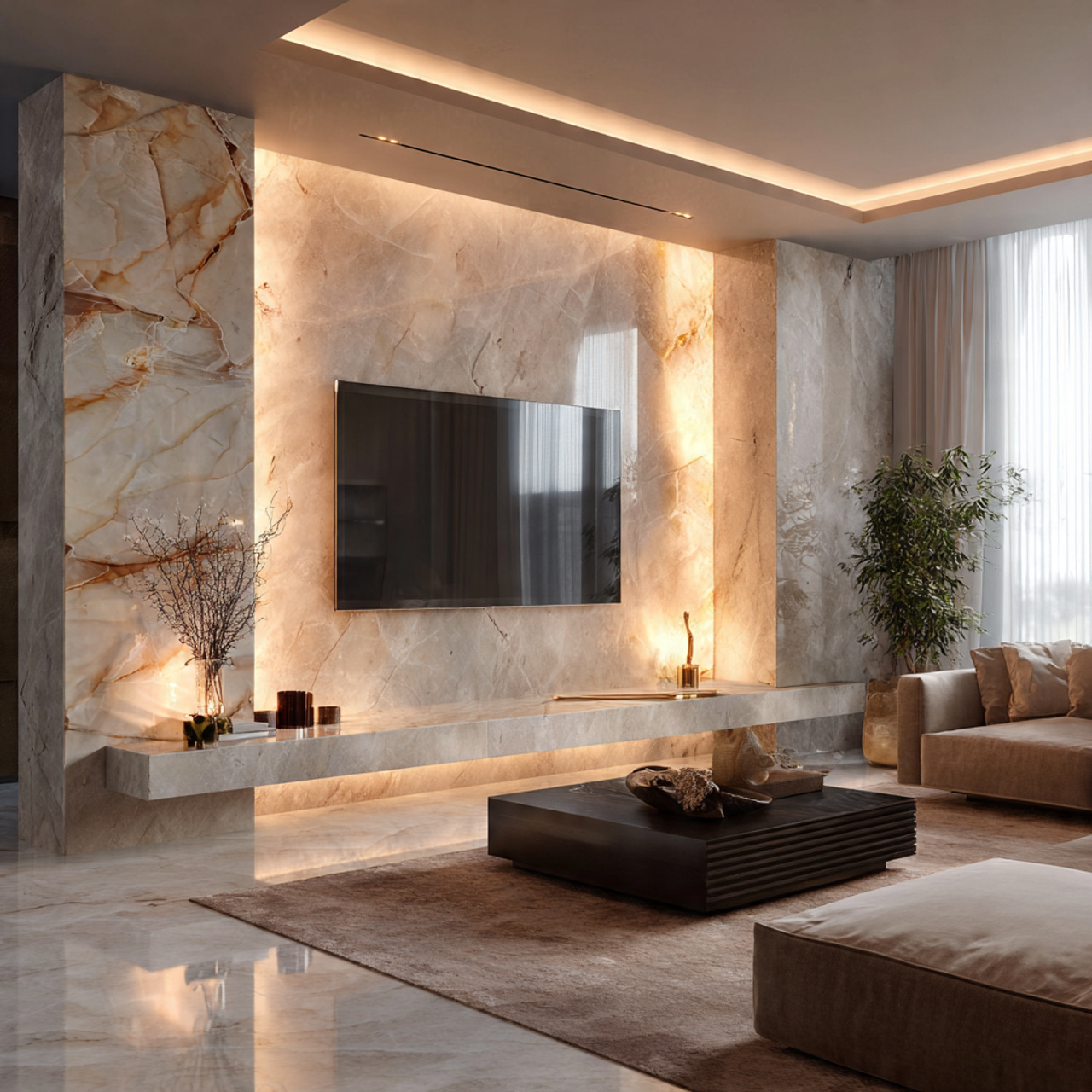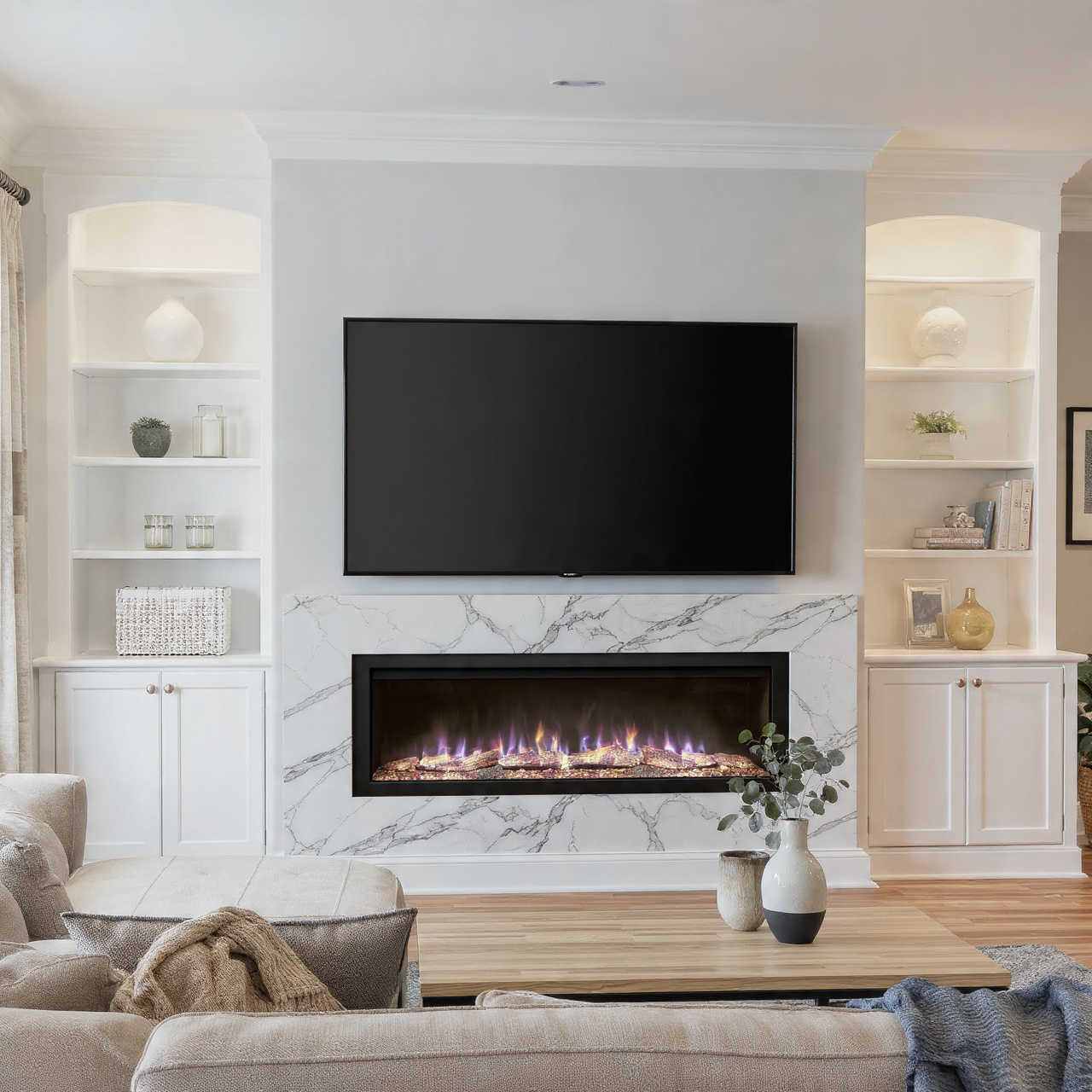
18 Stunning TV Wall Design Ideas for a Modern Living Room
Most living rooms are arranged around the television, yet very few feel intentionally designed around it. The screen often dominates the wall, pulling attention even when it is turned off and quietly affecting the mood of the entire space.
A thoughtful TV wall design changes that experience completely. When proportion, color, and material are handled with care, the room feels calmer, more cohesive, and far easier to enjoy every single day.
Why TV Wall Design Matters More Now
Homes have become multifunctional spaces where relaxing, working, and entertaining all happen within the same walls. When the TV area feels chaotic or visually heavy, that tension lingers longer than people expect.
This is why TV wall design keeps resurfacing as a priority. It is less about decoration and more about creating visual balance so technology supports daily life instead of overwhelming it.
Color & Material Authority
Soft Greige #D6D1C7 is one of the safest backgrounds for a television because it absorbs contrast without flattening the room. It leans warm, works beautifully in matte or eggshell finishes, and pairs effortlessly with linen curtains or cotton upholstery.
Smoky Taupe #A89F96 adds subtle depth without glare, especially in north-facing rooms. Its neutral-warm undertone feels steady in matte finishes and blends well with woven wool rugs and mid-tone woods.
Warm Off-White #F3EFEA keeps smaller living rooms open while softening the visual edge of a black screen. Use it in eggshell for durability and balance it with textured fabrics like linen and brushed cotton.
Muted Clay #C9A28E introduces warmth without trendiness when used on larger TV walls. It carries a warm undertone, performs best in satin or matte, and feels grounded alongside wool throws or leather accents.
Deep Olive #4E5B4A works beautifully in rooms with good natural light, allowing the television to recede visually. Its earthy warmth in a matte finish pairs especially well with natural wood and heavier woven fabrics.
Soft Charcoal #3F3F42 is ideal for evening comfort in media-focused spaces. Keep it matte to avoid reflection and soften it with lighter textiles so the wall never feels oppressive.
Room Size & Lighting Quick Guide
| Room Condition | What Works Best | What to Avoid |
|---|---|---|
| Small rooms | Light matte finishes, shallow panels | High contrast, glossy paint |
| Large rooms | Layered textures, wider consoles | Narrow floating shelves |
| North-facing light | Warm neutrals, wood tones | Cool greys |
| South-facing light | Balanced neutrals, soft contrast | Overly dark heavy walls |
| East-facing light | Warm undertones, textured fabrics | Stark whites |
| West-facing light | Matte surfaces, diffused lighting | Reflective finishes |
TV Wall Design Ideas
Blend the TV Seamlessly Into the Wall for Visual Calm
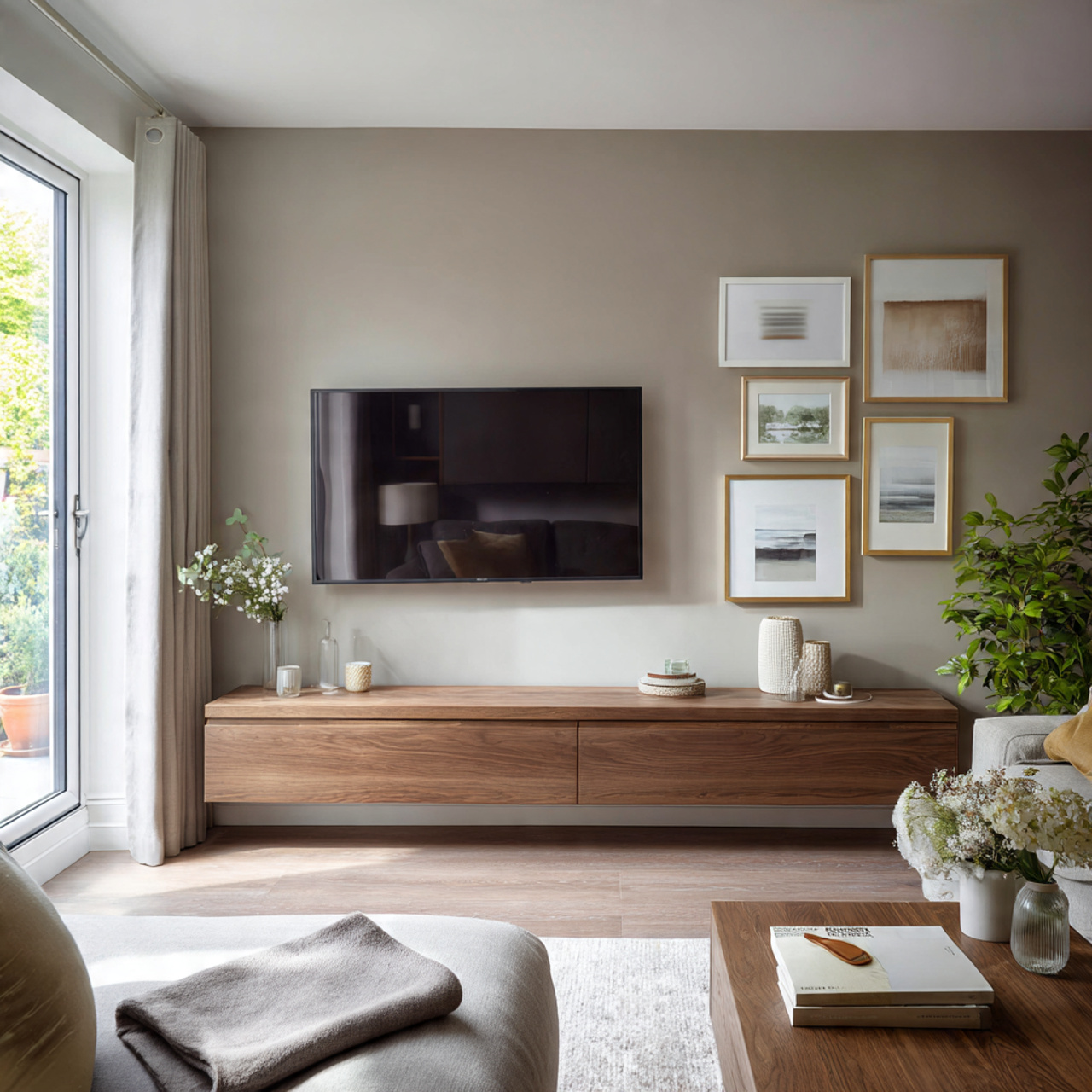
When the wall color closely matches the depth of the screen, the television stops shouting for attention. The room immediately feels more composed because contrast is softened rather than highlighted.
Over time, this reduces visual fatigue and makes evenings feel more relaxed. Many homeowners are surprised by how much lighter the space feels even though nothing dramatic was added.
Choose matte paint and avoid glossy finishes that reflect light.
Tip: Always test your chosen shade behind the actual TV before committing to the full wall.
Anchor the Screen With a Low, Grounded Console

A television mounted above a substantial console feels supported instead of floating awkwardly. That grounding effect stabilizes the entire wall composition.
Living with closed storage underneath also reduces visible clutter, which quietly improves daily comfort. Remote controls, cables, and small electronics disappear rather than competing visually.
Select a console slightly wider than the TV for proper balance.
Tip: Closed cabinetry ages better than open shelving in real homes.
Use Vertical Panels to Subtly Improve Proportions

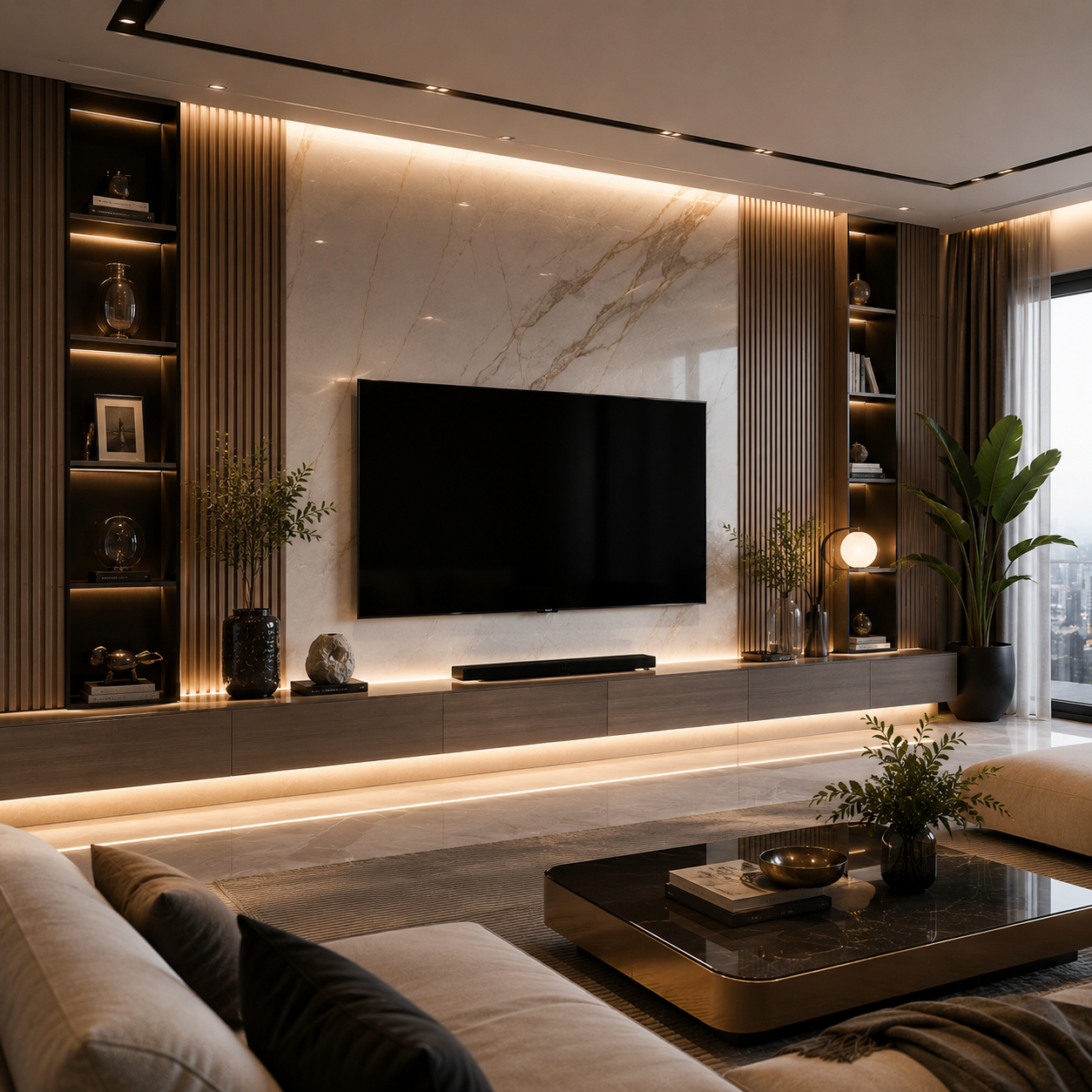
Vertical slatted panels draw the eye upward, which is especially helpful in rooms with lower ceilings. The television becomes part of a structured backdrop rather than a separate object.
This approach adds architectural interest without relying on bold color. It feels refined and intentional instead of decorative for decoration’s sake.
Keep the wood tone warm and not overly dark in small rooms.
Tip: Narrow, evenly spaced slats feel lighter than heavy, wide boards.
Frame the TV With Soft Wall Molding for Structure

Shallow molding around the TV wall creates boundaries that make the screen feel intentional. The wall reads as designed rather than improvised.
This works particularly well in transitional interiors where detail matters but excess ornament feels dated. It also helps the eye settle naturally.
Paint molding the same color as the wall for subtlety.
Tip: High-contrast trim tends to exaggerate the presence of the screen.
Create a Gentle Two-Tone Backdrop for Depth

A slightly deeper tone on the lower portion of the wall can visually ground the TV without making it dominant. The upper portion remains lighter, keeping the room open.
Over time, this layered effect prevents the wall from feeling flat or monotonous. It also hides minor scuffs more effectively in busy households.
Keep both tones within the same color family for cohesion.
Tip: A 60/40 height ratio often feels more balanced than a strict half split.
Integrate the TV Into a Full Storage Wall for Cohesion
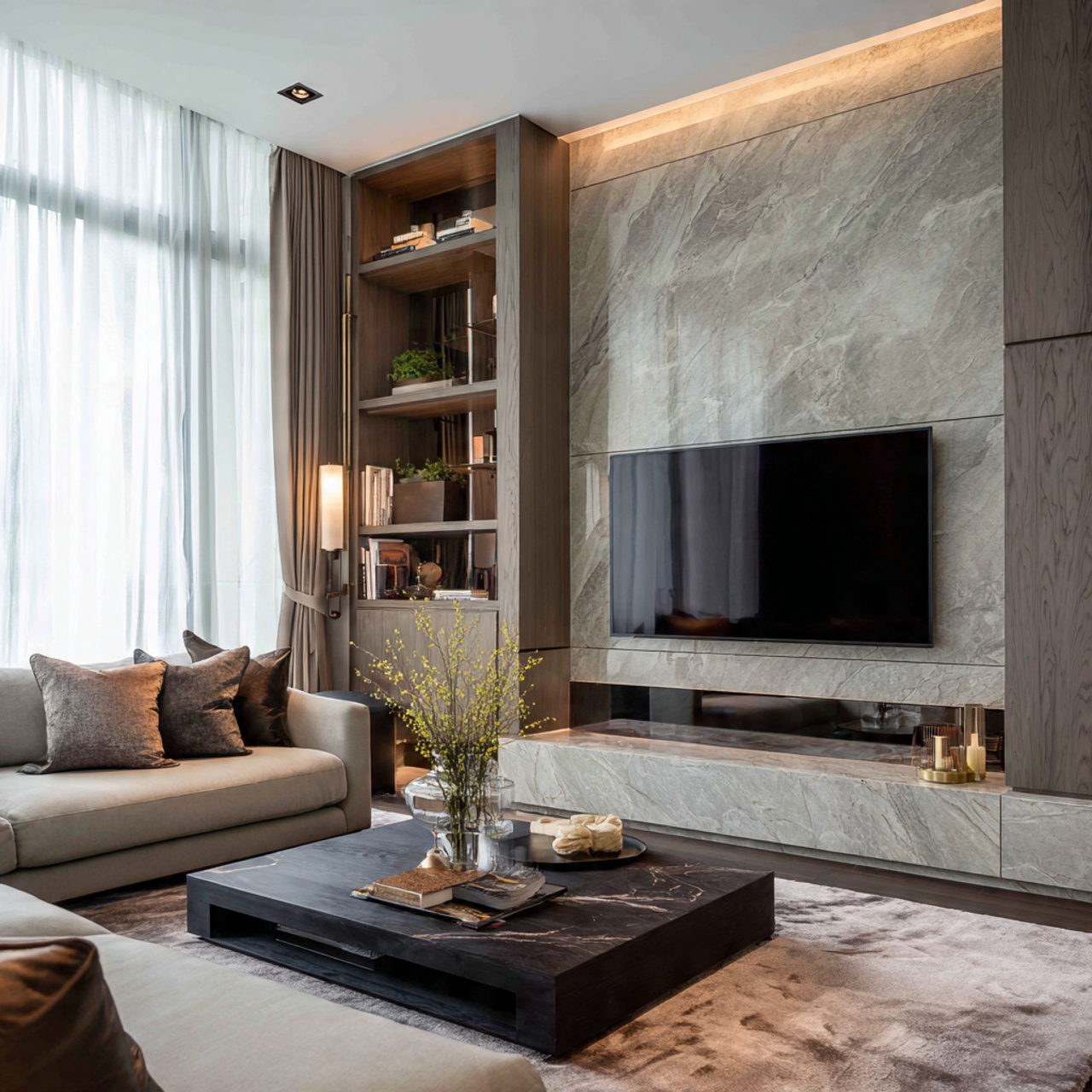
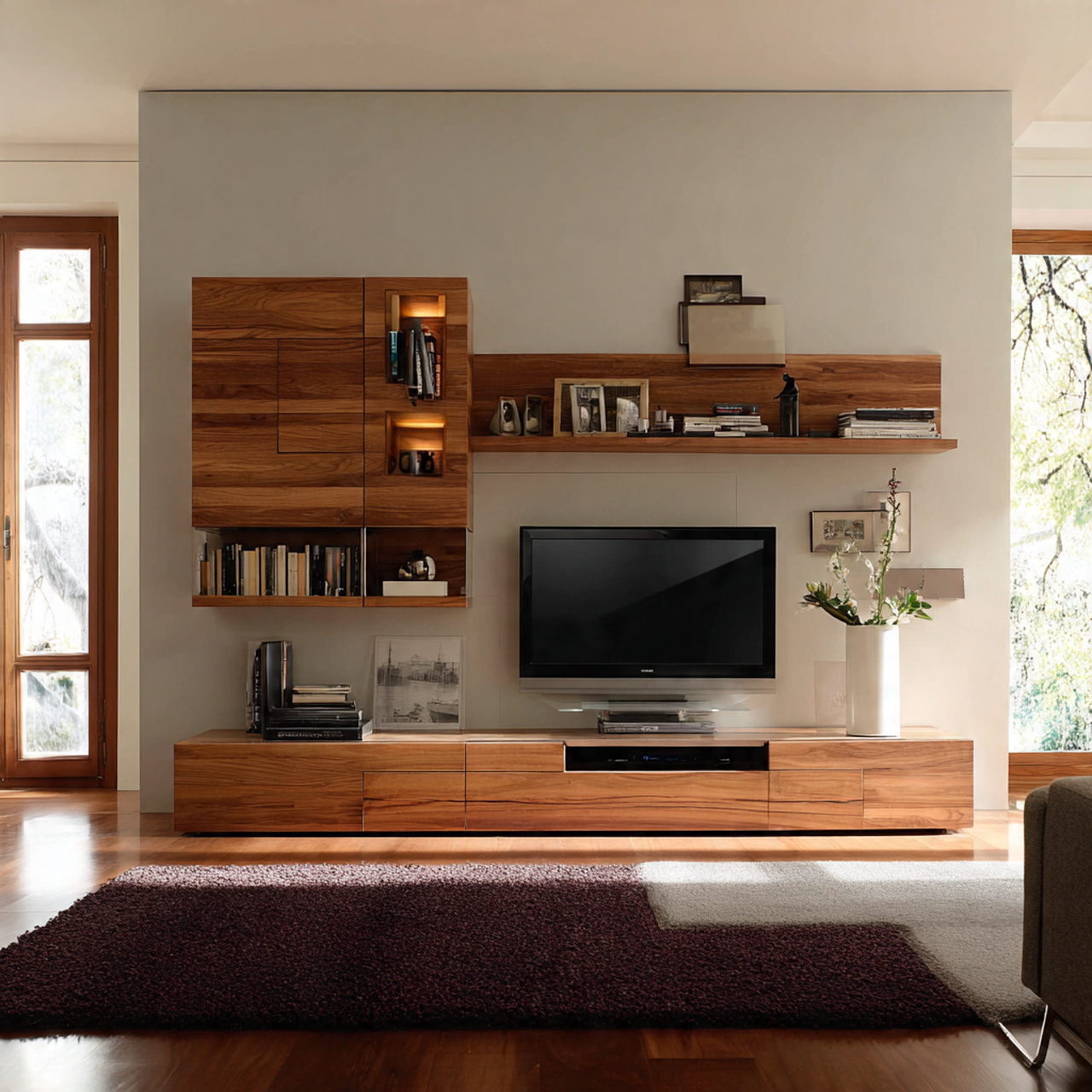
When cabinetry extends beyond the screen, the eye reads the entire wall as one unified feature. The television becomes secondary within a larger composition.
This approach is especially practical for families needing storage without sacrificing aesthetics. It also reduces the temptation to over-decorate.
Keep hardware minimal and finishes calm.
Tip: Push-to-open doors maintain a cleaner visual line.
Choose a Dark Matte Wall for Evening Comfort
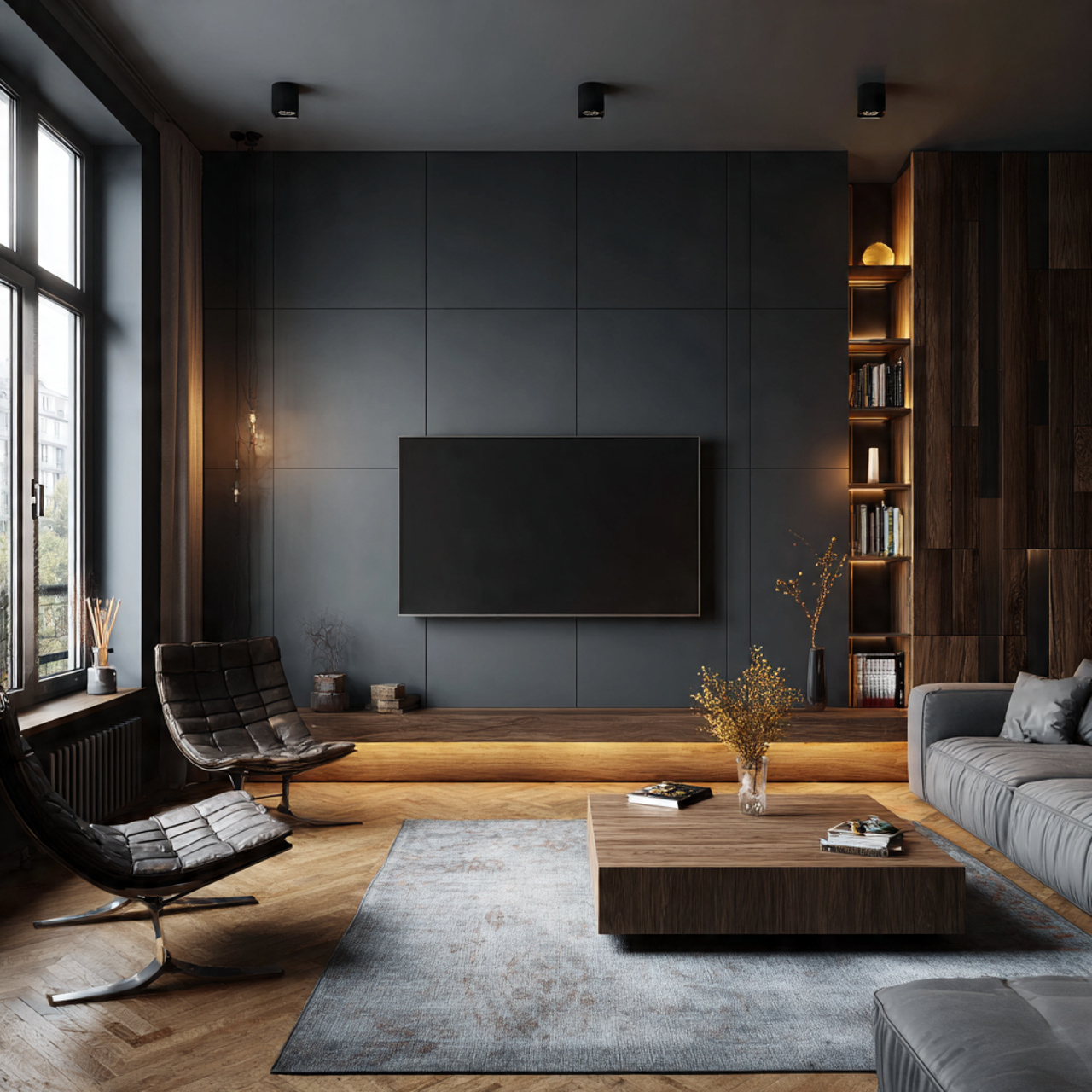
A darker matte wall can make the screen feel less intrusive during nighttime viewing. Glare is reduced and the atmosphere becomes naturally cozier.
People often hesitate with dark colors, but when balanced with lighter furniture, the effect feels intentional rather than heavy. The key is restraint in surrounding decor.
Use warm lighting to soften contrast further.
Tip: Always avoid satin or gloss finishes behind a TV.
Use Texture Instead of Strong Color Contrast
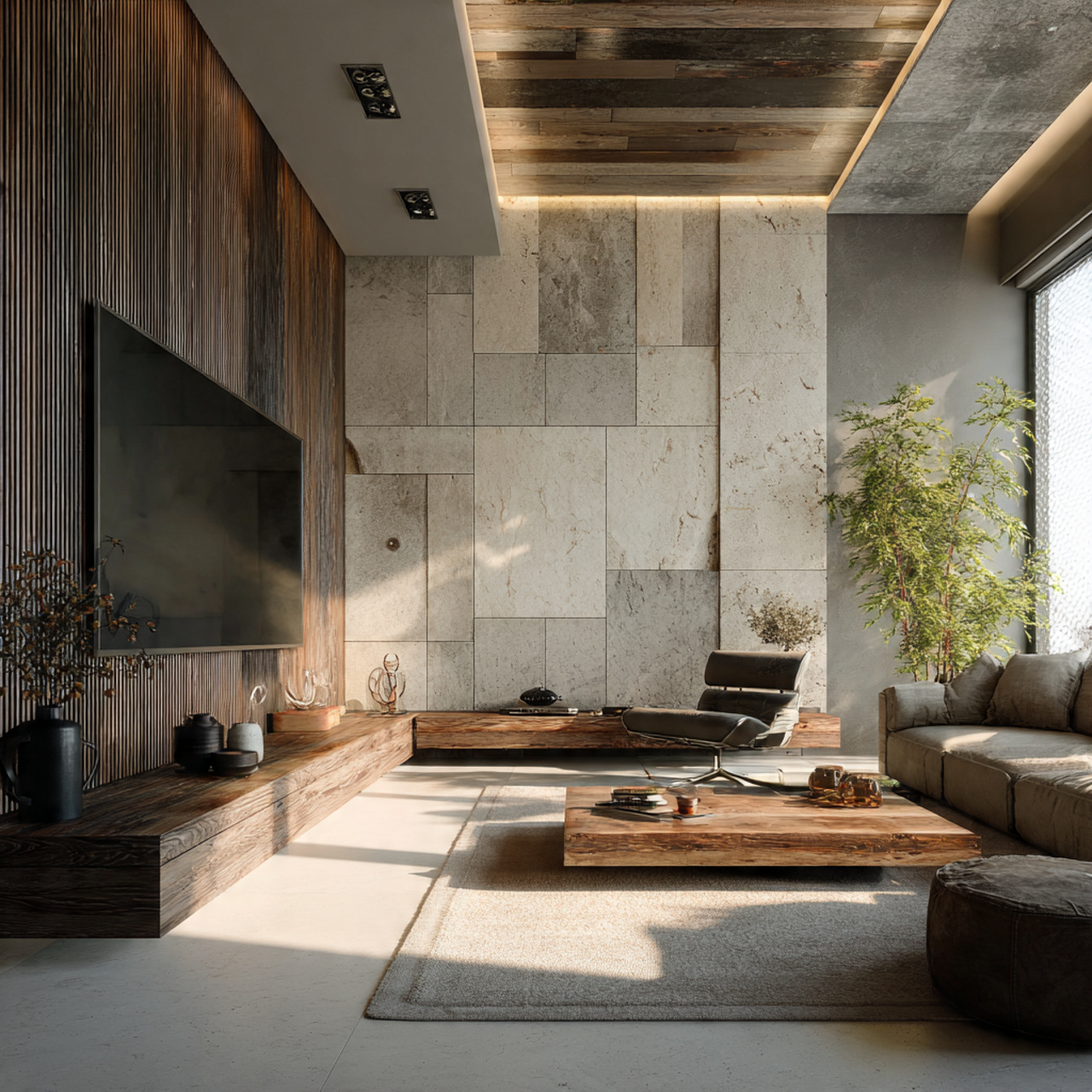
Limewash, plaster, or subtle textured finishes create depth without high contrast. The television blends gently into the surface.
Texture ages better than bold paint statements because it relies on material rather than trend. It also diffuses light softly throughout the day.
Keep adjacent decor simple so texture can breathe.
Tip: View samples in both daylight and evening light before deciding.
Balance the Screen With Asymmetrical Decor
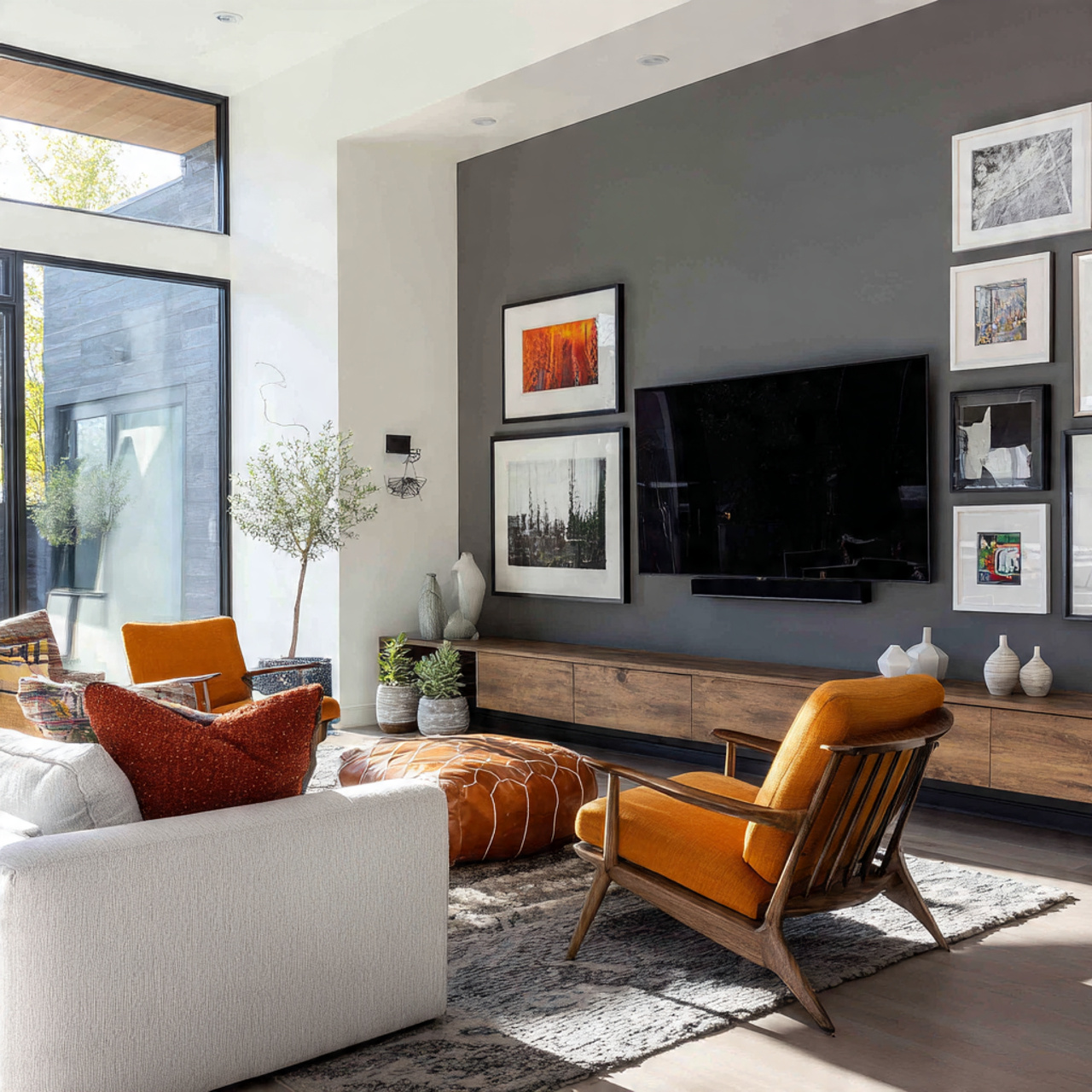
Perfect symmetry can make the TV feel rigid and overly formal. Slight asymmetry, such as a taller shelf on one side, softens that effect.
This arrangement feels more lived-in and natural over time. The wall becomes dynamic without feeling busy.
Limit decorative pieces to avoid clutter.
Tip: One larger object works better than multiple small ones.
Let the TV Share Space With Art for Visual Movement
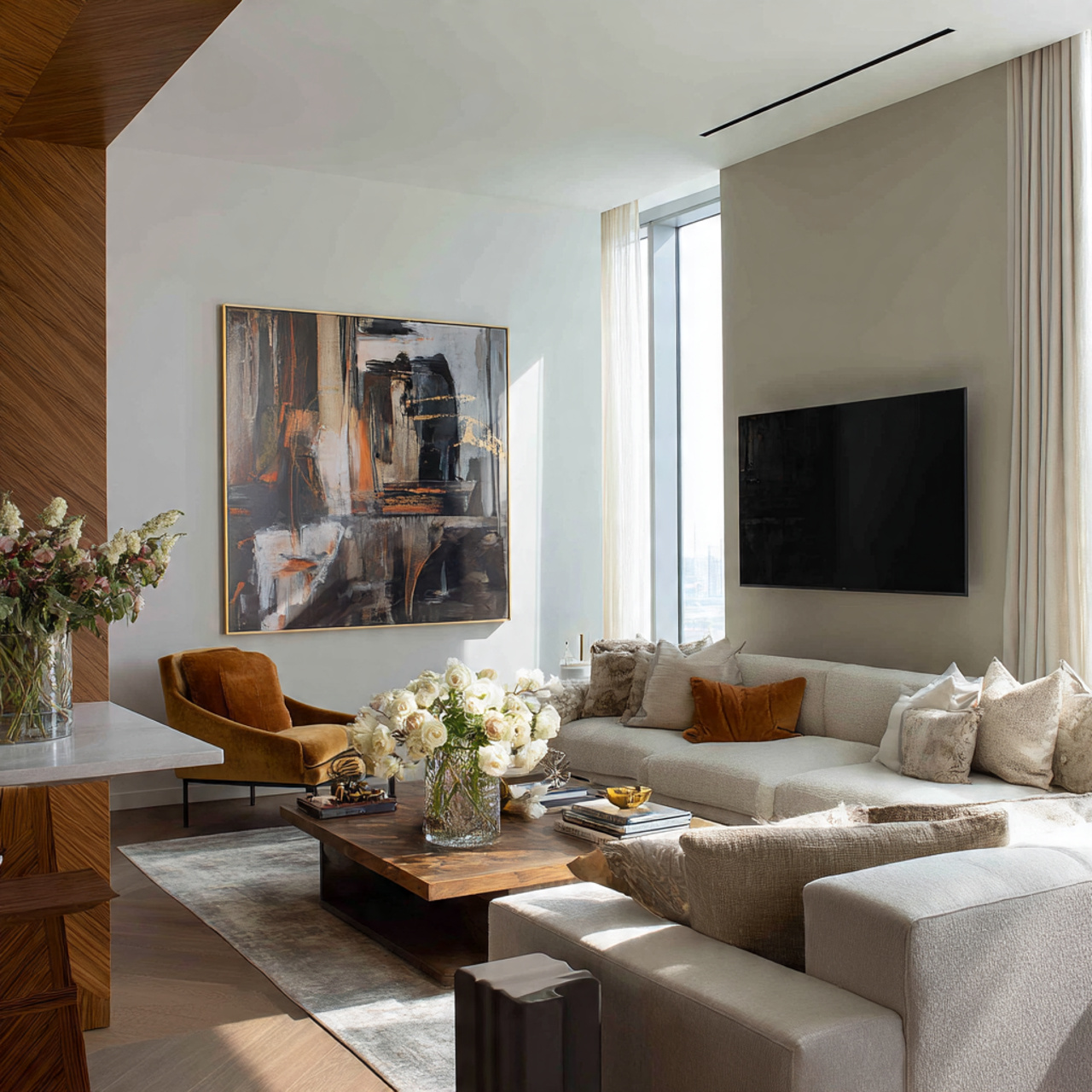
Placing art near the television encourages the eye to travel rather than fixate. The screen becomes part of a broader visual story.
This reduces the sense that the room revolves around technology alone. It also adds personality without overwhelming the space.
Choose art with muted tones and simple compositions.
Tip: Avoid high-gloss frames that reflect light during viewing.
Recess the TV for a Clean Architectural Finish
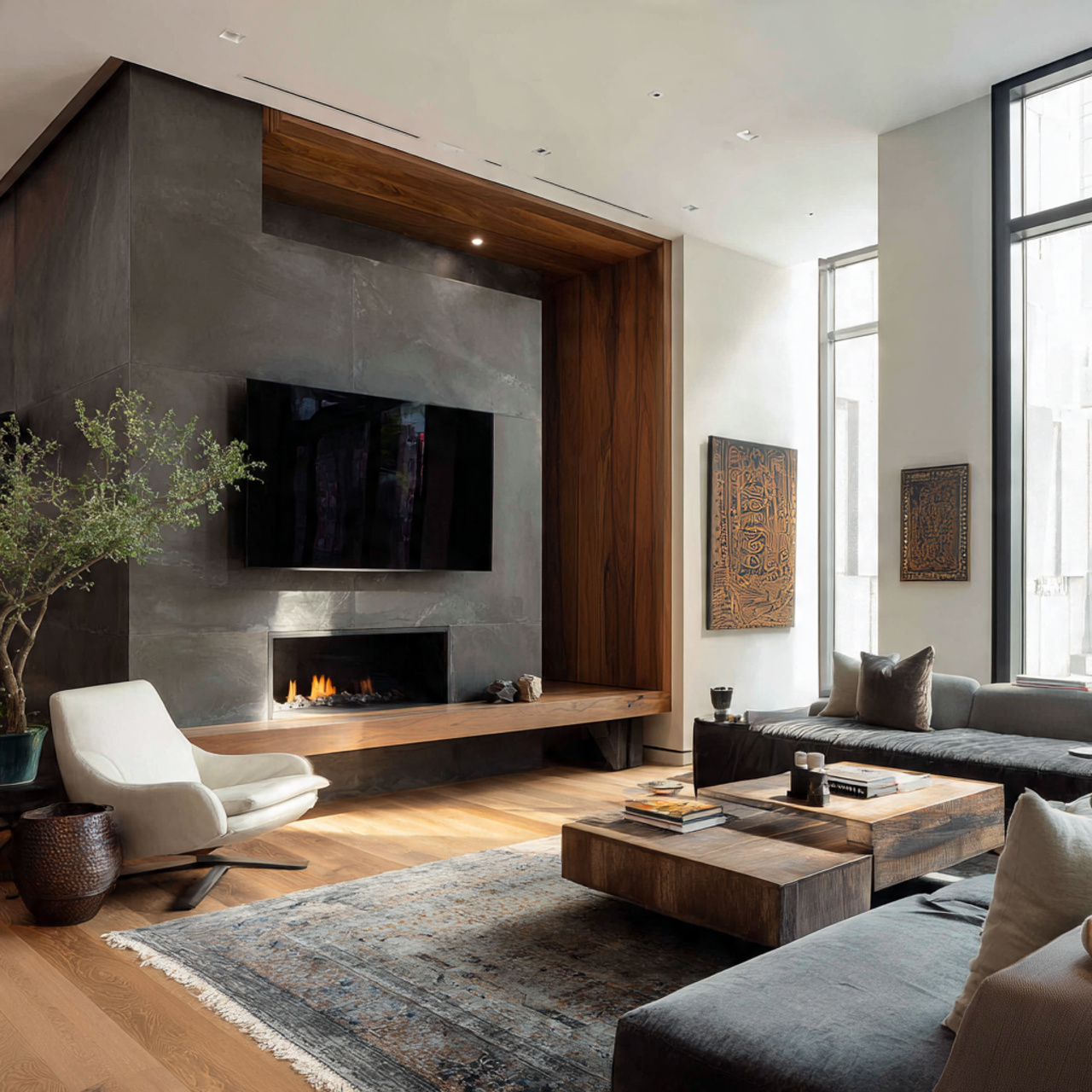
A recessed installation allows the screen to sit flush with the wall. The overall effect feels tailored and thoughtfully planned.
This approach reduces visual bulk and can make even large screens feel less imposing. It also simplifies dusting and maintenance.
Plan wiring and ventilation early.
Tip: Measure depth carefully to avoid awkward protrusion.
Use Warm Wood Elements to Soften Technology
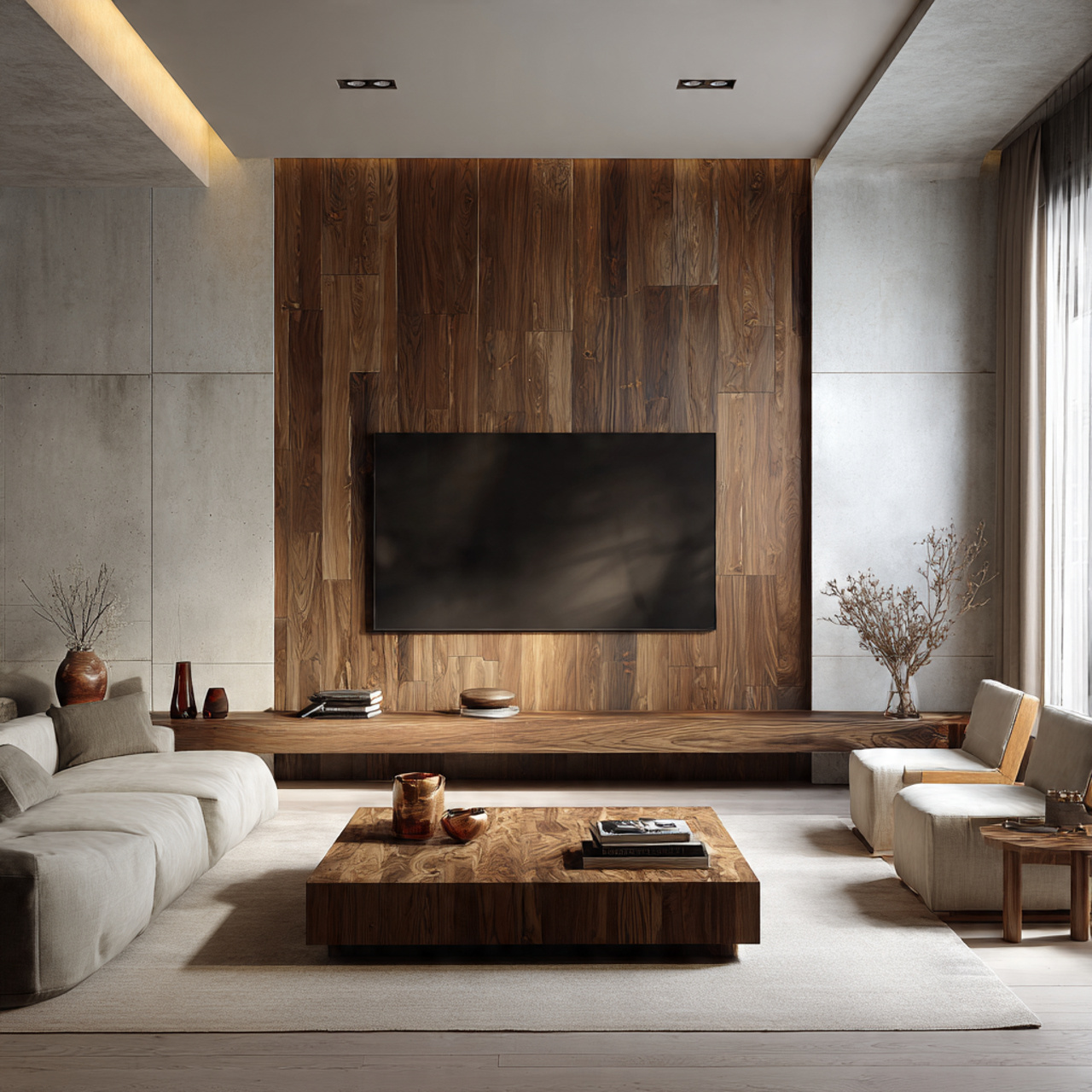
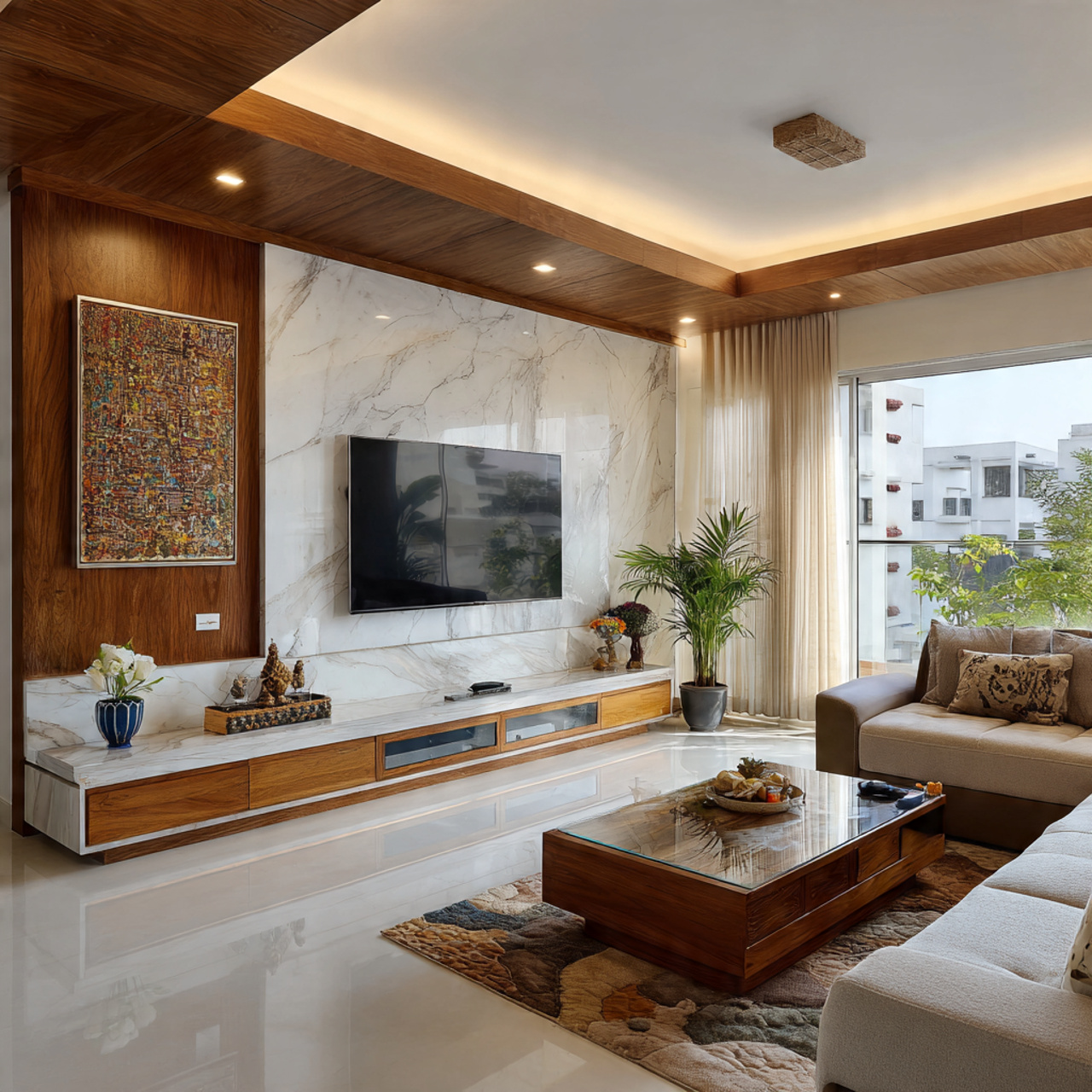
Wood panels, floating shelves, or cabinetry counterbalance the coolness of a screen. The combination feels natural and welcoming.
Warm wood tones also anchor the wall in a way painted surfaces cannot. They bring subtle variation without chaos.
Stick to one consistent wood tone throughout the room.
Tip: Mid-tone woods tend to age more gracefully than very dark finishes.
Hide All Wiring for a Truly Finished Look
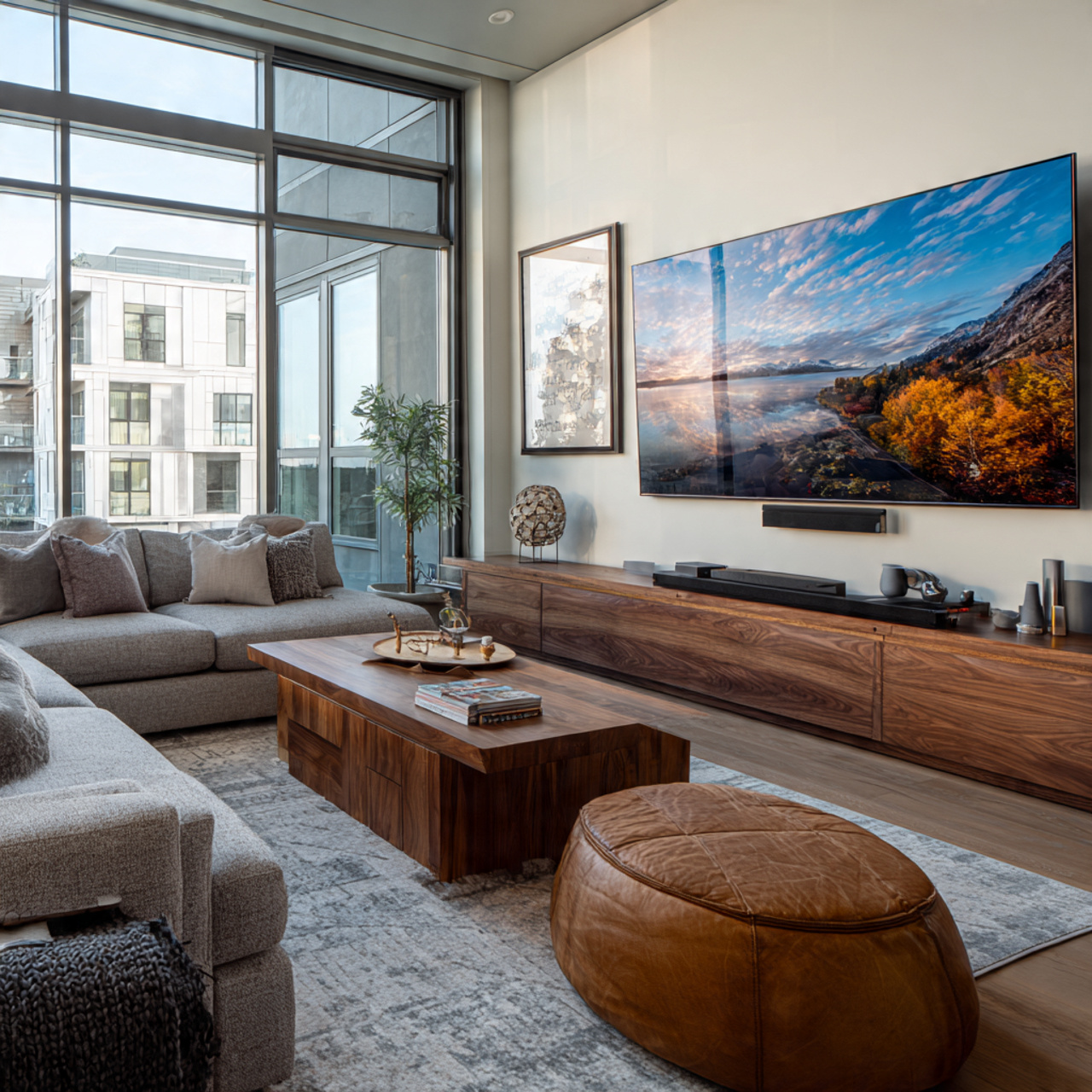
Visible cables instantly disrupt a carefully designed wall. Even beautiful materials cannot compensate for dangling cords.
Concealed wiring improves both safety and aesthetics. The wall feels intentional rather than temporary.
Install conduit or in-wall channels during setup.
Tip: Plan for future upgrades to avoid reopening walls later.
Add Subtle Backlighting for Depth, Not Drama

Soft backlighting behind the TV reduces eye strain during evening viewing. It creates depth without drawing attention to itself.
The effect should feel atmospheric rather than theatrical. When overdone, lighting quickly becomes distracting.
Use warm LEDs with dimmers.
Tip: Keep light sources fully hidden from direct view.
Keep Surrounding Decor Intentionally Minimal

Over-styling the TV wall often makes the space feel cluttered. Negative space allows the design to breathe.
This restraint improves long-term satisfaction because trends change, but simplicity remains timeless. It also makes cleaning easier.
Remove one item if the wall feels busy.
Tip: Edit decor seasonally rather than adding more.
Align the TV at Comfortable Viewing Height
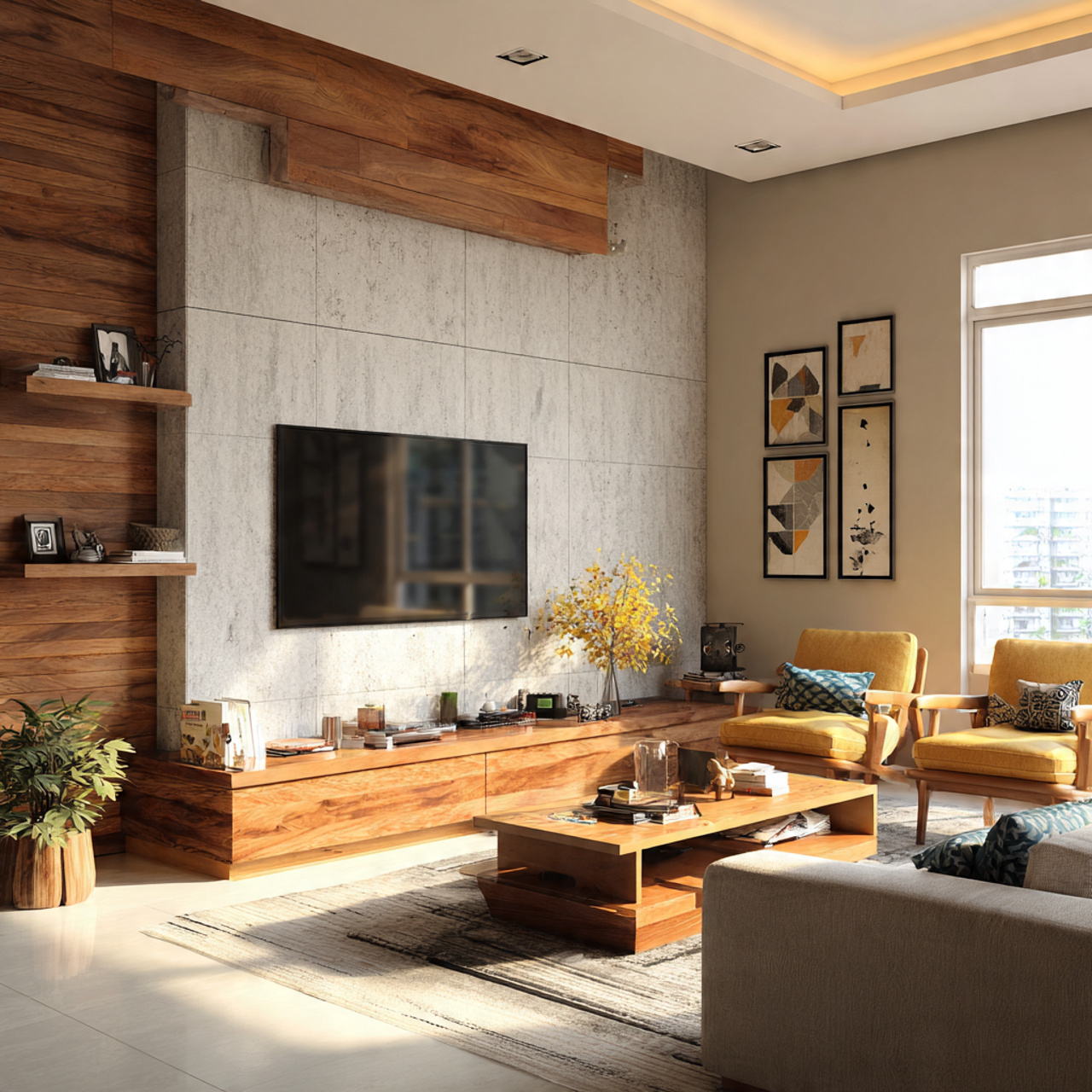
Mounting too high might look dramatic, but it rarely feels comfortable over time. Neck strain becomes noticeable quickly.
Positioning the screen closer to seated eye level enhances daily usability. Comfort should guide decisions more than visual drama.
Test height while seated before final installation.
Tip: Temporary painter’s tape can help visualize placement.
Use Built-In Niches for Subtle Framing
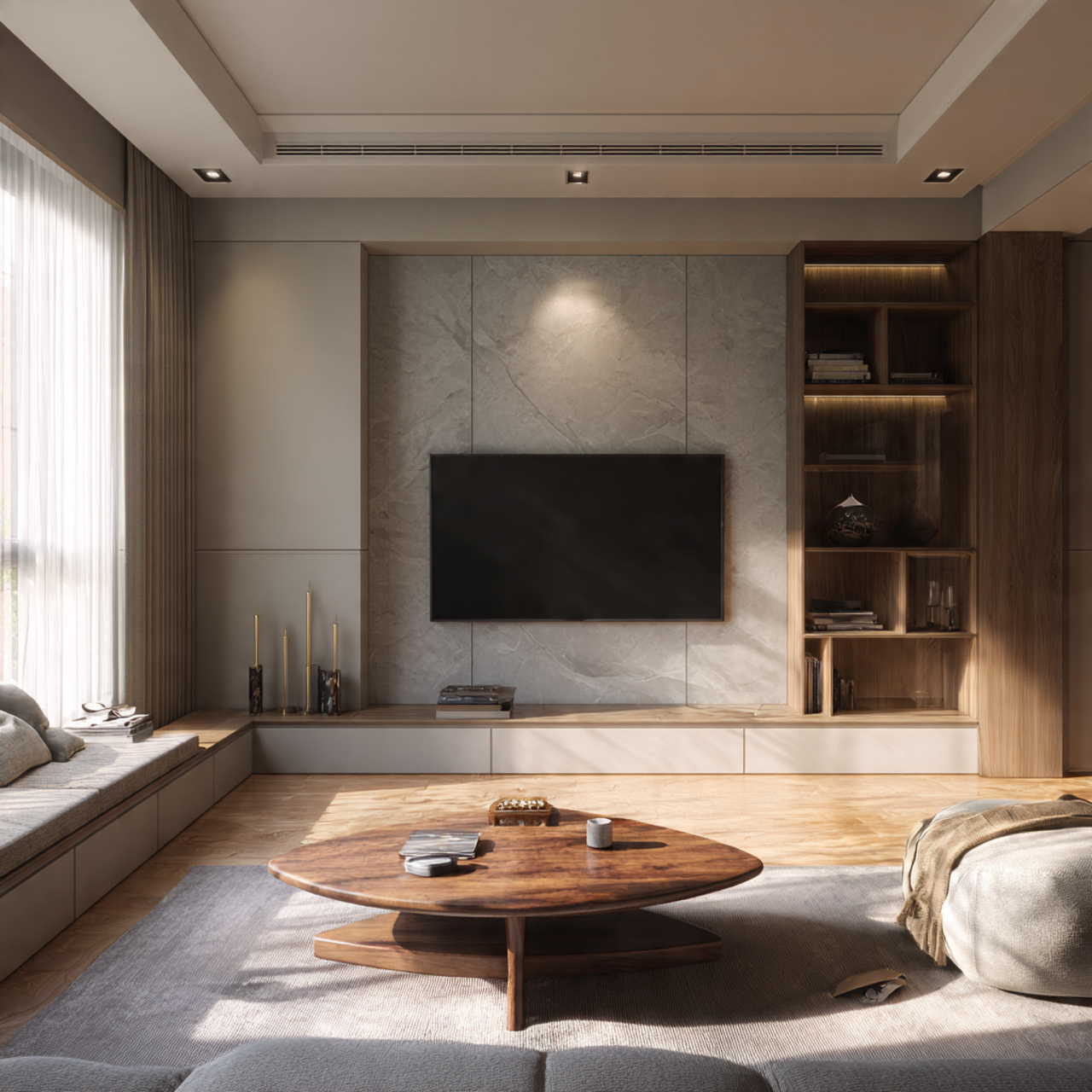
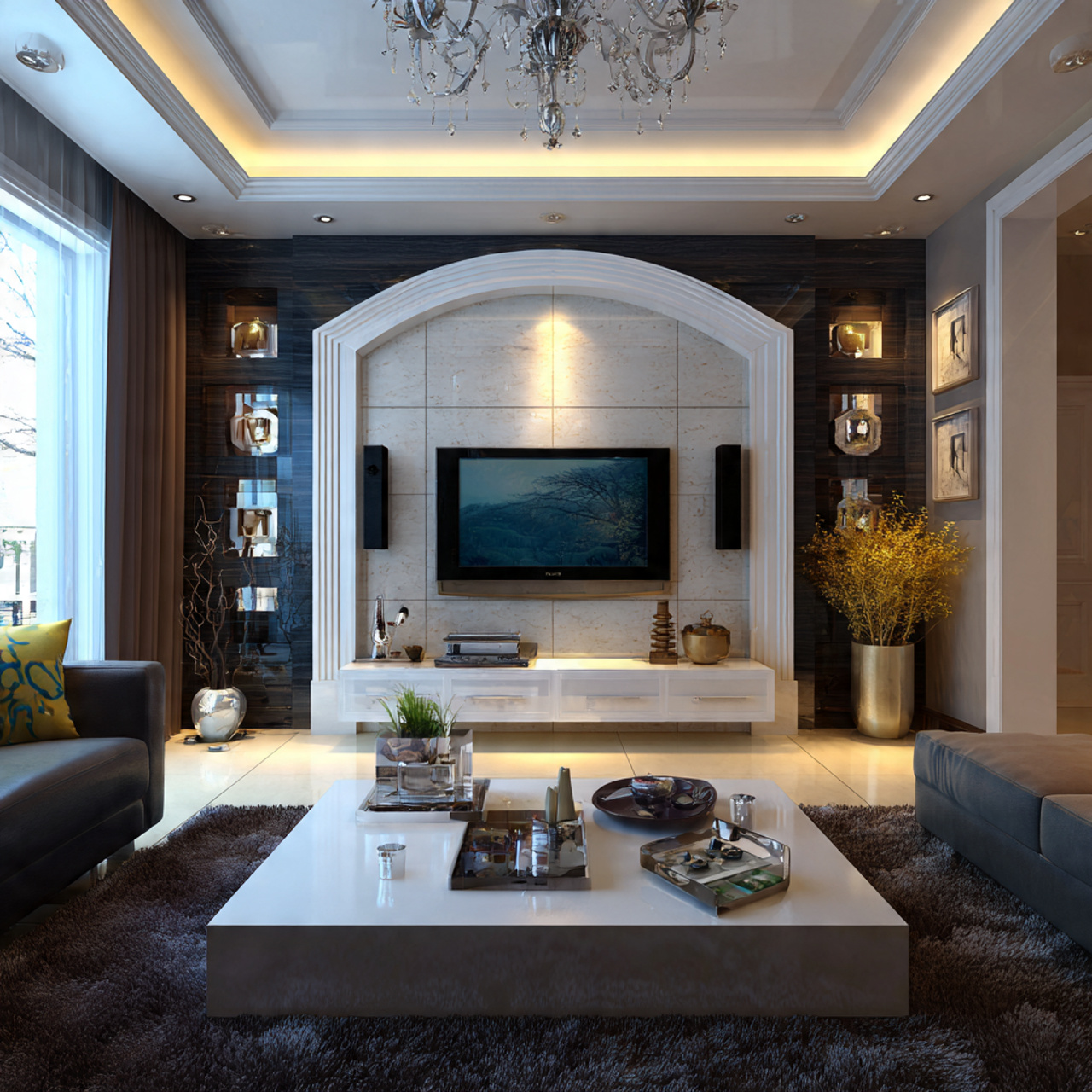
Built-in niches create a soft boundary around the screen without heavy framing. The television feels integrated rather than attached.
This solution works particularly well in modern interiors where clean lines matter. It also adds depth without relying on color.
Keep niche proportions balanced with the room size.
Tip: Avoid making the niche too tight around the screen.
Visit Also: Tv Wall Decor
Treat the TV Wall as a Background, Not the Star
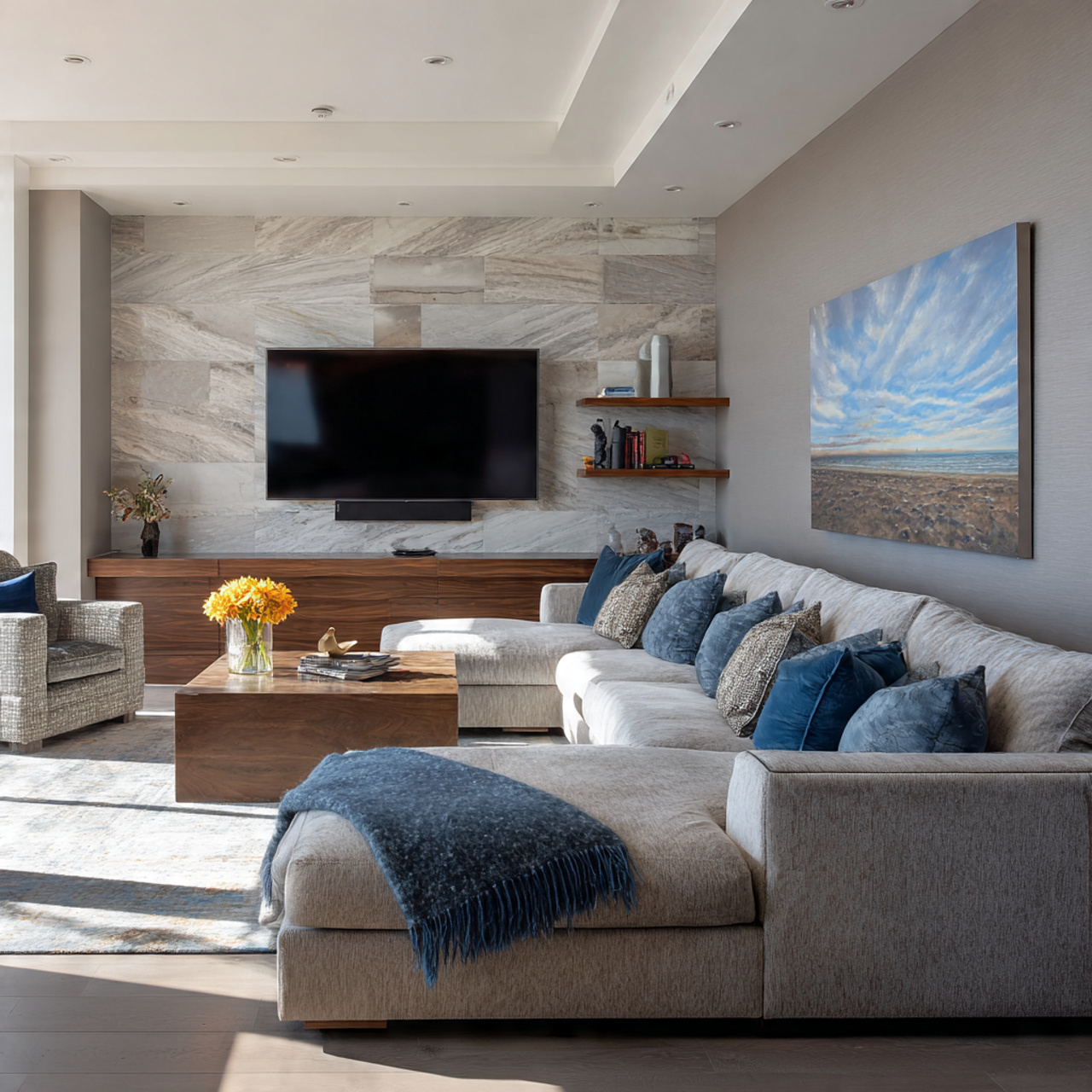
When the wall supports the room instead of competing with it, the entire space feels more harmonious. The TV becomes functional rather than dominant.
Designing the room first and placing the screen second often leads to better long-term results. It prevents overemphasis on technology.
Step back and evaluate the wall with the TV off.
Tip: If the room still feels complete, the design works.
Common TV Wall Design Mistakes
Making the TV the Sole Focal Point
It happens because screens are large and central, but the room quickly feels dominated. Over time, this imbalance creates visual tension.
Shift attention to the entire wall composition. Ignoring this often leads to spaces that feel unfinished despite expensive elements.
Using Glossy Paint Behind the Screen
Gloss appears modern at first, yet reflections quickly become distracting. Daily viewing comfort suffers more than expected.
Switching to matte finishes solves glare issues immediately. Leaving gloss in place usually leads to regret.
Overscaling Decor Around the TV
Large decor meant to distract from the screen can overwhelm the wall instead. The space begins to feel heavy and crowded.
Scaling back restores balance. Oversized pieces rarely age well in living rooms.
Ignoring Lighting Direction
Placing the TV opposite strong natural light creates constant glare. The issue becomes frustrating during daytime use.
Adjusting placement or adding diffused window treatments improves comfort significantly. Neglecting this often results in awkward furniture rearrangements later.
Frequently Asked Questions
What is the best color for a TV wall design?
Neutral tones with warm undertones tend to perform best because they soften contrast without dulling the space. Matte finishes reduce glare and improve comfort over time.
Should the TV wall match the rest of the room?
It should relate to the overall palette, but it does not need to match exactly. Slight variation often adds depth and prevents the room from feeling flat.
Is a dark TV wall suitable for small rooms?
Yes, when balanced with lighter furnishings and good lighting. Dark matte finishes can actually make the screen recede visually.
Are built-ins better than floating units?
Built-ins offer more storage and feel permanent, while floating units feel lighter and more flexible. The choice depends on lifestyle needs.
How do I make my TV wall feel less cluttered?
Hide cables, reduce decor, and focus on proportion rather than adding more elements. Simplicity almost always improves the result.
Conclusion
A well-planned TV wall design is not about creating a dramatic feature but about restoring balance to the room. When proportion, color, and material are handled thoughtfully, the television stops dominating and begins to coexist comfortably.
Start with one small improvement, such as adjusting height or softening the wall color, and allow the design to evolve naturally. The most successful TV wall design choices are the ones that quietly support everyday living.