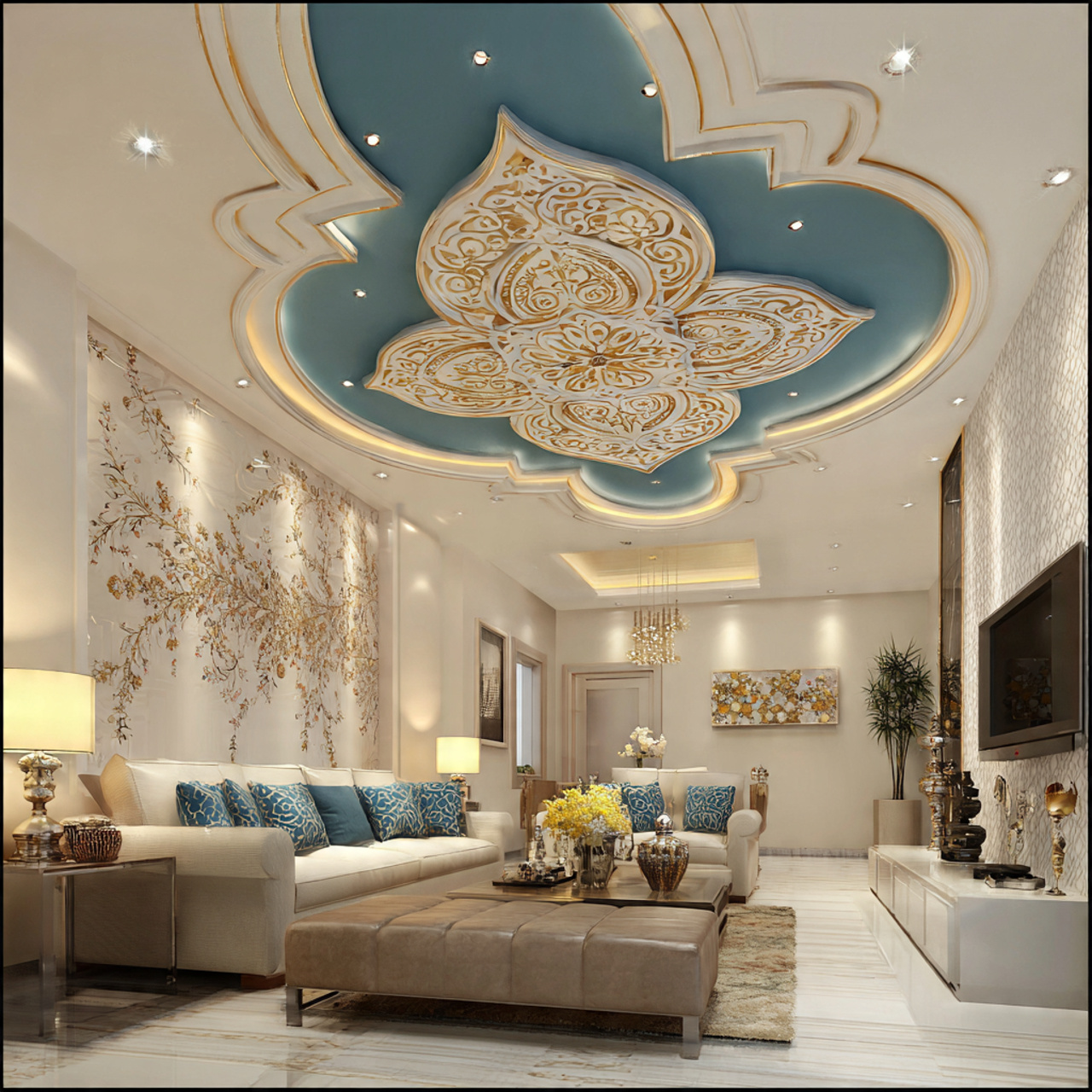
20 Smart Ceiling Design Ideas That Instantly Elevate Rooms
In real homes, ceilings are often decided last, once walls, floors, and furniture have already taken the spotlight. That’s usually when people sense something feels unfinished, even if they can’t name why. Ceiling design quietly shapes how a room feels to live in, not just how it looks in photos.
This guide helps you understand what actually works over time, not just what looks impressive at first glance. You’ll see how different ceiling choices affect comfort, light, and mood in everyday spaces, so your decisions feel intentional rather than decorative.
Ceiling Design Trends and Why They Matter in Real Homes
Interest in ceiling design has grown as homes take on more emotional weight, serving as workspaces, resting places, and social settings at once. Flat, ignored ceilings often make rooms feel incomplete, especially as people spend more hours indoors and notice visual imbalance.
A considered ceiling helps solve common frustrations like rooms feeling harsh, echoey, or visually top-heavy. Over time, people return to thoughtful ceiling treatments because they improve daily comfort without demanding constant updates or trend-driven changes.
Color & Material Authority
Soft White (HEX #F5F5F2) works well on ceilings in rooms where you want light to spread evenly without glare. It has a neutral-warm undertone and pairs best with matte or eggshell finishes for a calm look.
Warm Greige (HEX #D6D1C8) adds subtle depth to ceilings in open-plan homes. Its warm undertone helps connect ceiling and wall planes, especially when finished in eggshell and paired with linen or cotton textiles.
Pale Taupe (HEX #C8C1B8) suits ceilings in rooms that need softness without brightness. It leans warm and works well with satin finishes alongside wool rugs or upholstered furniture.
Cool Light Gray (HEX #E1E3E6) is useful in modern spaces with strong daylight. Its cool undertone balances warm floors and looks best in matte finishes with smooth fabrics like cotton blends.
Charcoal Gray (HEX #3F3F46) creates intentional contrast on ceilings in larger rooms. It carries a cool undertone, works best in matte finishes, and pairs well with velvet or heavier woven fabrics.
Muted Clay (HEX #C2A48A) introduces warmth and character overhead. Its earthy undertone suits satin or eggshell finishes and feels balanced with natural materials like linen and textured cotton.
Room Size & Lighting Quick Guide
| Room Type | Light Direction | Ceiling Design Guidance |
|---|---|---|
| Small rooms | North-facing | Use light, warm ceilings to prevent flatness |
| Small rooms | South-facing | Soft neutrals work without washing out |
| Large rooms | North-facing | Mid-tone or textured ceilings add warmth |
| Large rooms | South-facing | Darker or layered ceilings feel balanced |
| Any size | East / West | Avoid high gloss; use matte or eggshell |
How to Choose the Right Ceiling Design for Long-Term Living
Smooth White Ceiling That Quietly Lifts a Room
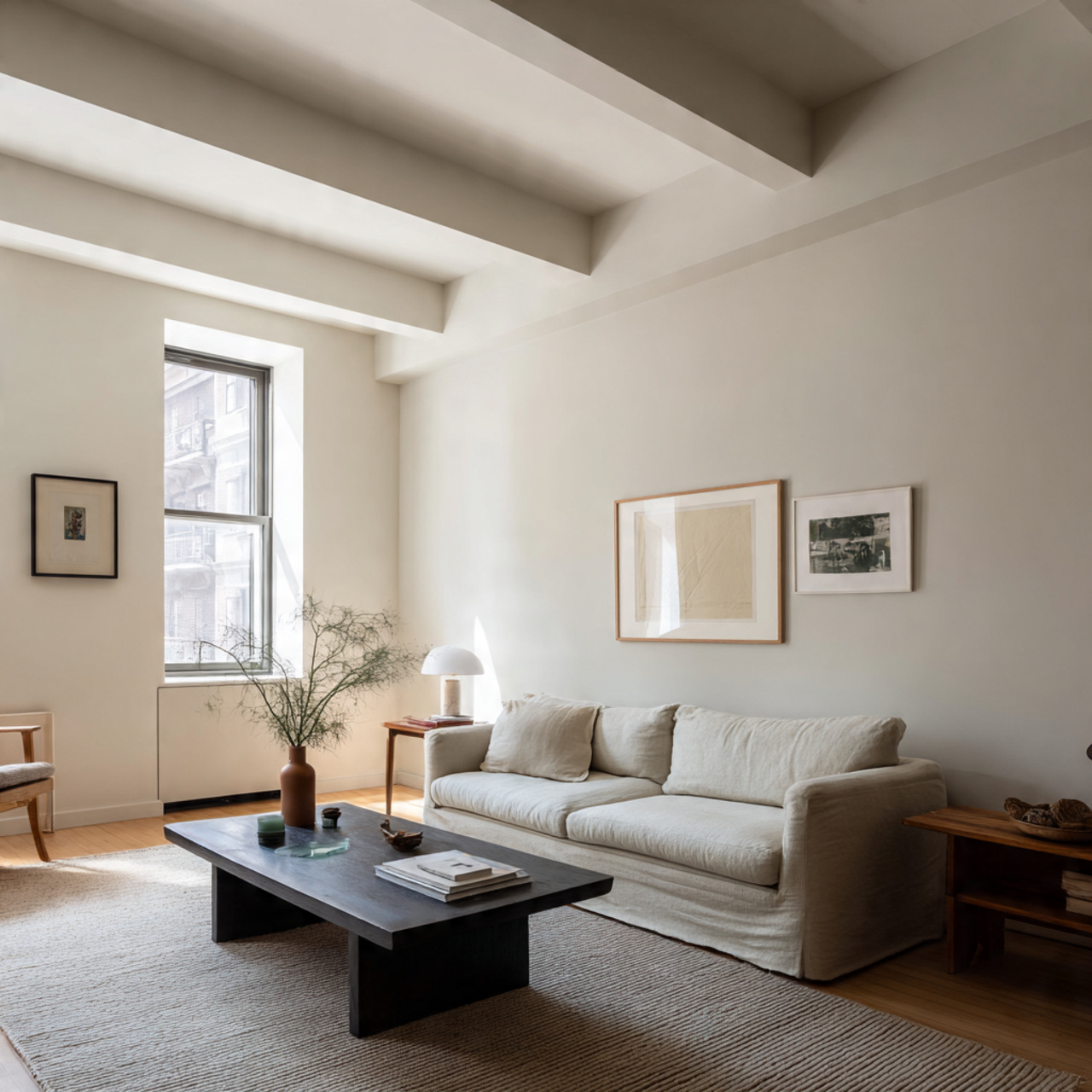
In many real homes, a smooth white ceiling is what allows everything else to feel settled. It creates a clean visual plane overhead, helping furniture, art, and light feel properly grounded instead of competing for attention.
Designers often notice that people relax faster in rooms where the ceiling doesn’t announce itself. Over time, this restraint reduces visual fatigue, especially in living rooms and bedrooms where you spend long hours.
This works best with a true matte or soft eggshell finish to avoid glare. It’s also one of the safest long-term choices when furniture or wall colors may change later.
Warm Neutral Ceiling That Softens Hard Room Edges
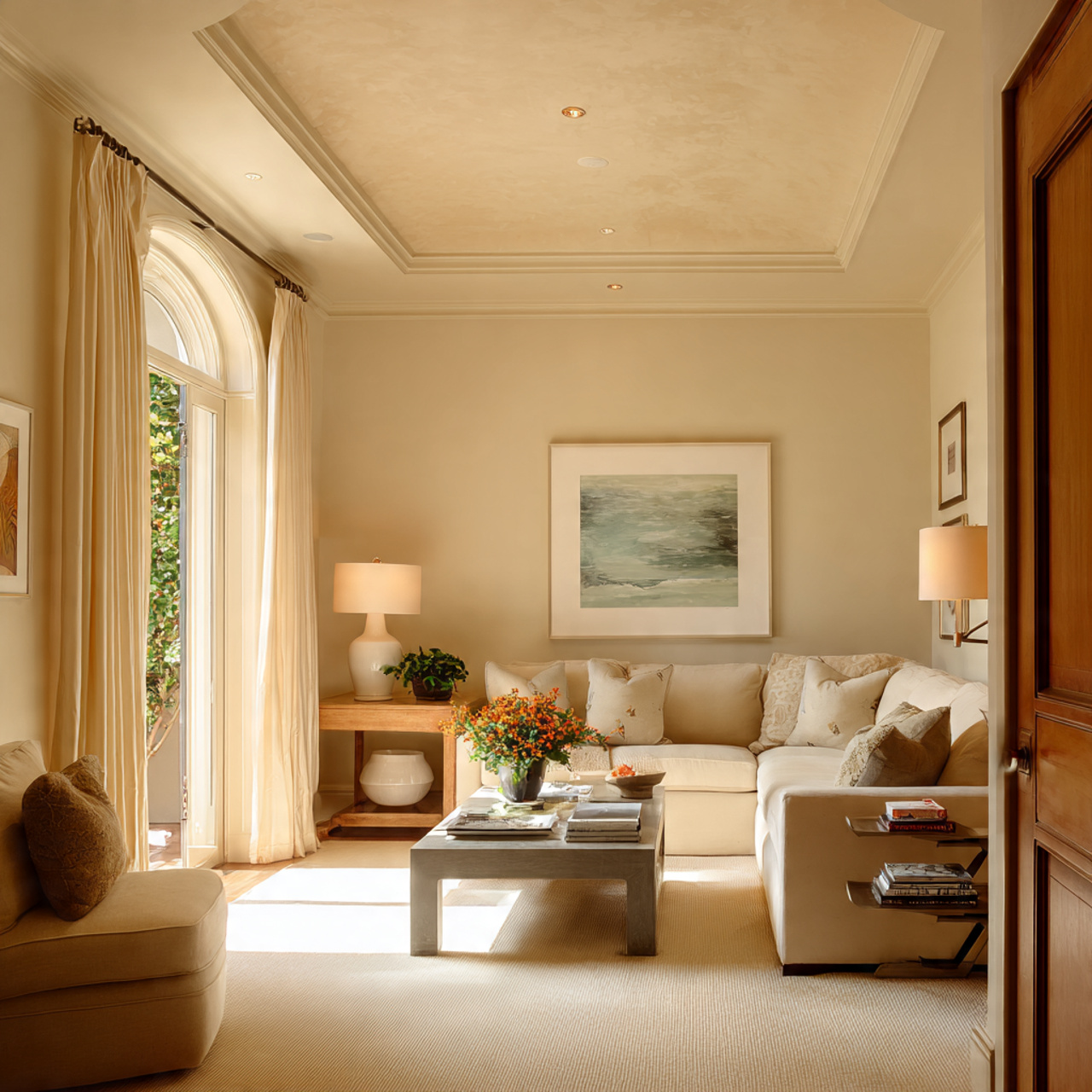
A warm neutral ceiling gently blurs the sharp transitions between walls and overhead space. Instead of stopping the eye abruptly, it allows the room to feel more continuous and forgiving.
In everyday living, this softness matters more than people expect. Rooms feel calmer at night, and harsh corners become less noticeable, which is why families tend to stick with this choice long term.
Warm greige or pale taupe tones work well here, especially in eggshell finishes. They’re easy to live with and don’t demand perfect lighting conditions to look right.
Tray Ceiling With Gentle Depth for Relaxed Elegance
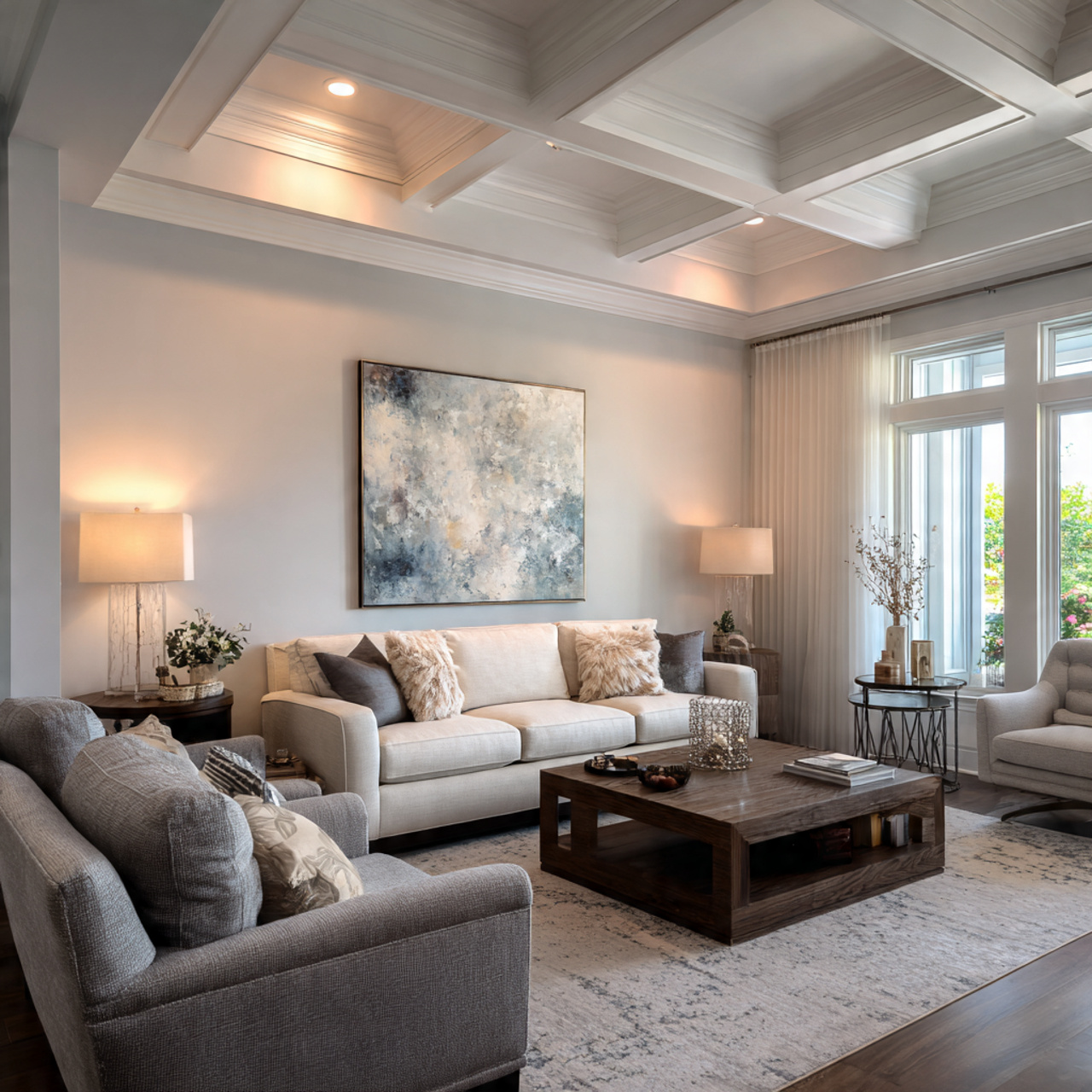
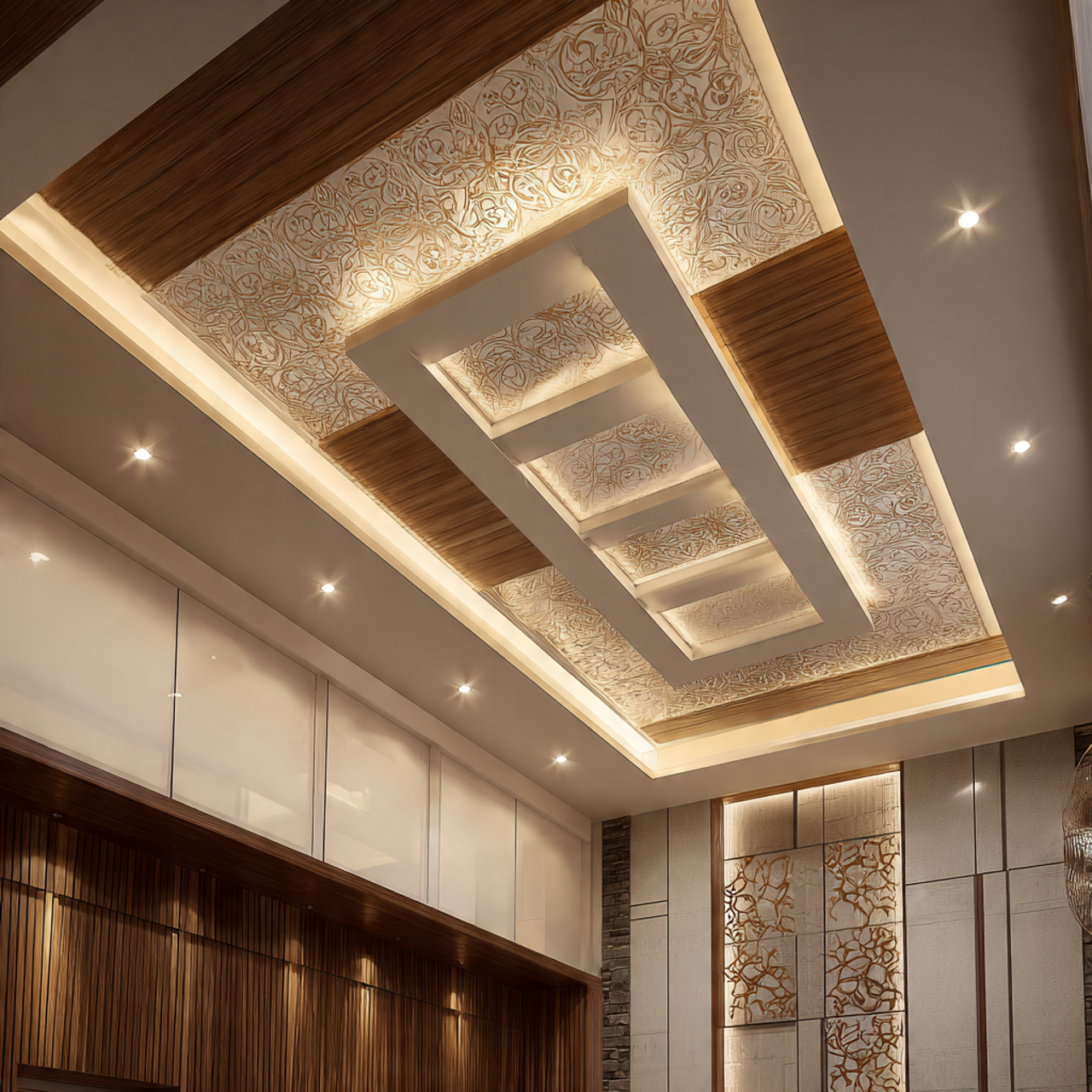
A tray ceiling introduces depth without overwhelming the room. The stepped edge gives the ceiling presence while keeping the center visually light and open.
Over time, this subtle structure adds a sense of order that feels comforting rather than decorative. It’s one of those features people appreciate more as the novelty wears off.
Even simple trays work if proportions are respected. Keeping contrasts soft and lighting indirect helps the design age gracefully instead of feeling showy.
Coffered Ceiling That Brings Architectural Confidence
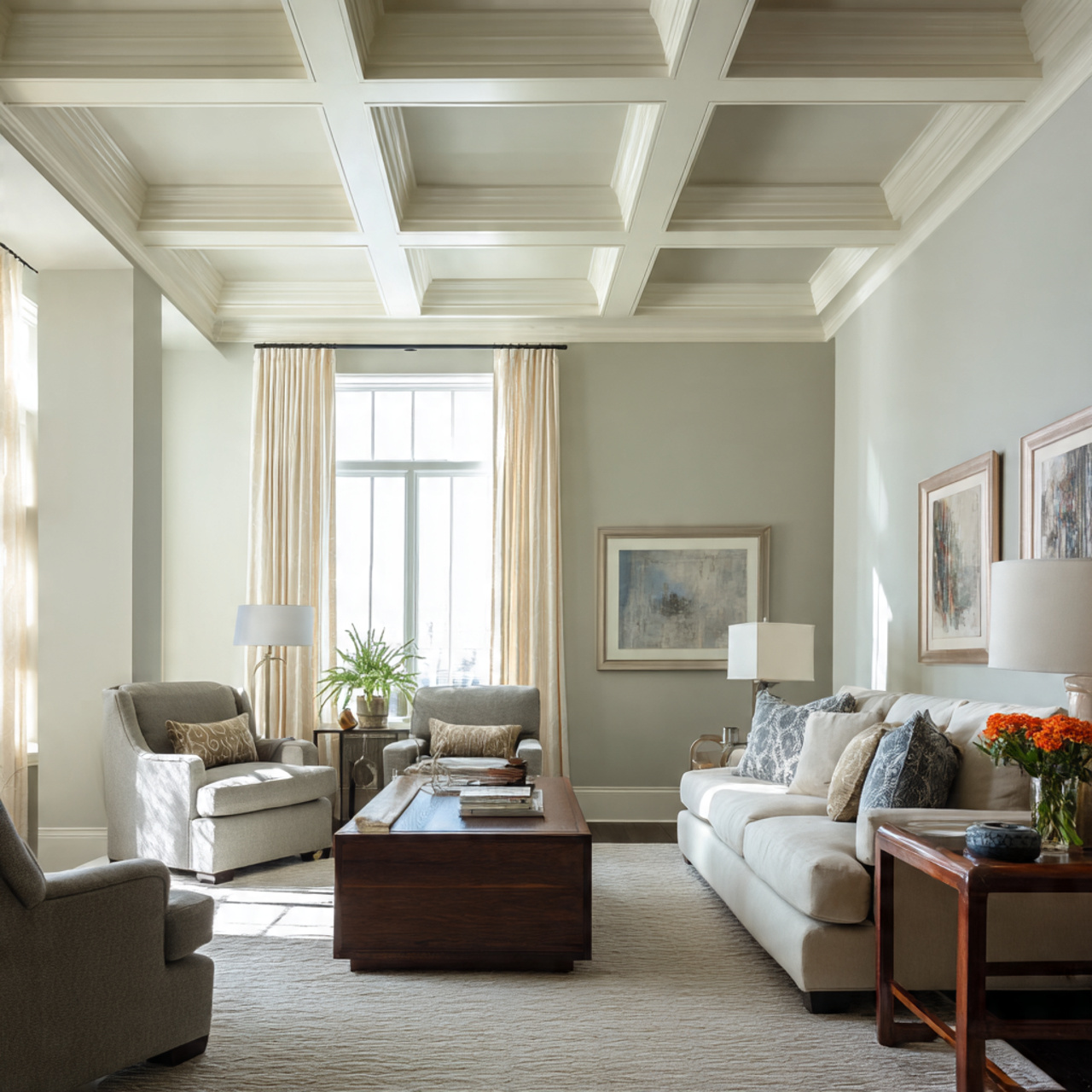
Coffered ceilings change how a room carries itself. The grid pattern creates rhythm and structure, making large rooms feel intentional rather than empty.
In lived-in homes, this structure helps anchor furniture layouts and gives the space a sense of permanence. Clients often say the room feels finished once the ceiling is done this way.
Balanced spacing is key. Shallow coffers with restrained color contrast tend to feel timeless and far easier to maintain visually.
Wood Plank Ceiling That Adds Natural Warmth
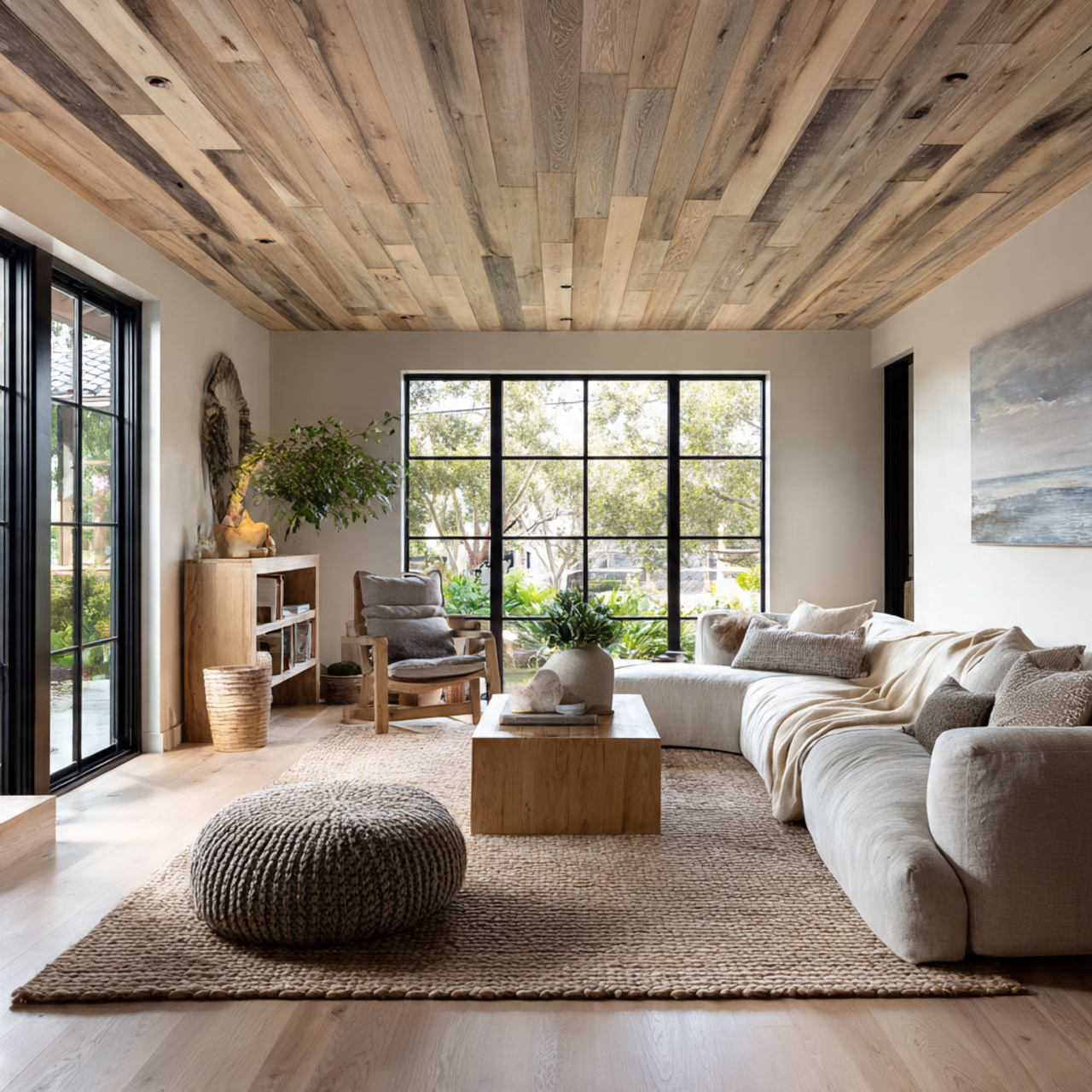
A wood plank ceiling introduces warmth where rooms can otherwise feel flat or sterile. The grain overhead adds texture that feels grounded and human.
Over time, natural materials tend to age emotionally well. Even when styles shift, wood ceilings often remain appreciated because they connect spaces to nature.
Lighter stains and matte finishes are easiest to live with. They soften acoustics and pair naturally with both modern and relaxed interiors.
Light Oak Beams That Frame Without Overpowering
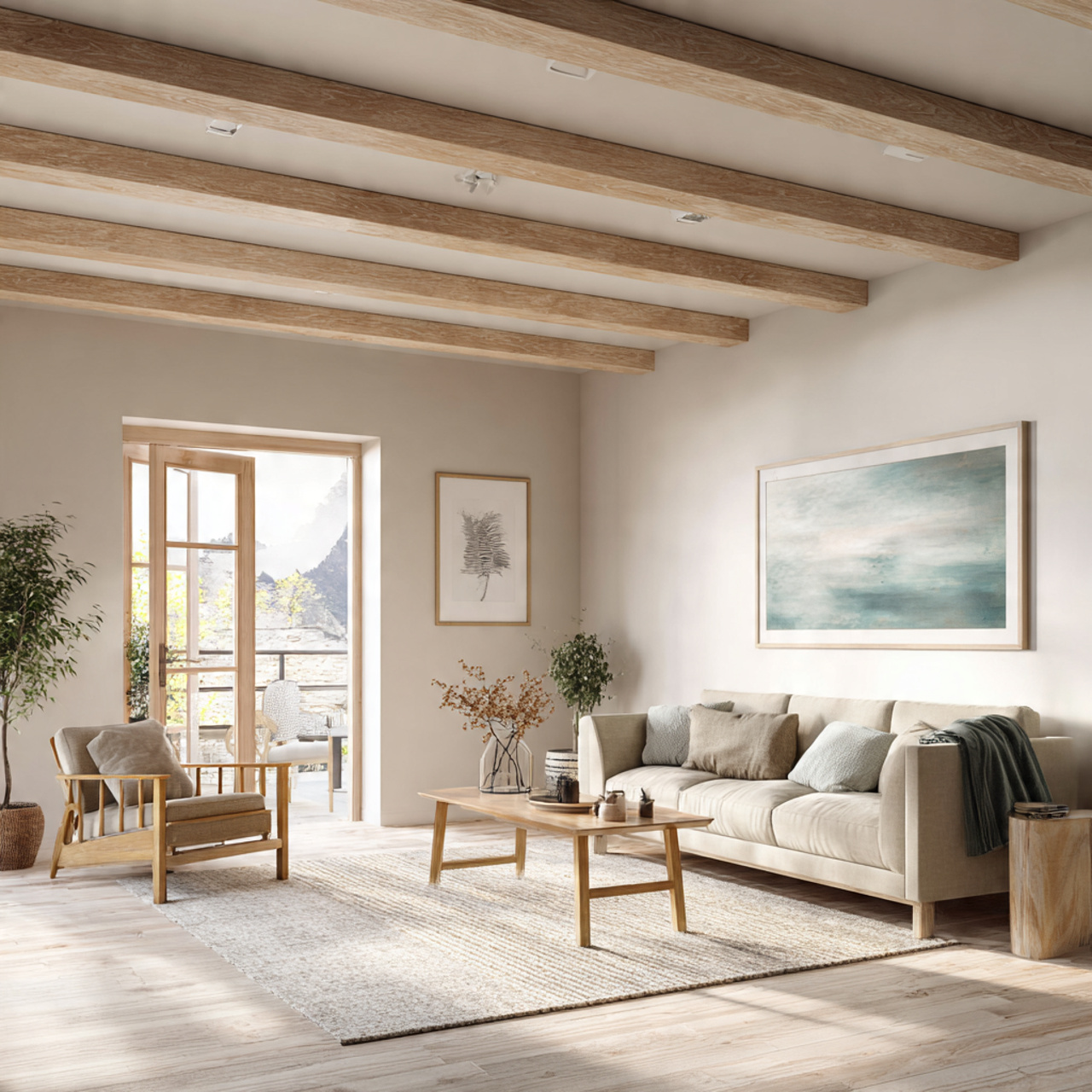
Light oak beams create definition without pulling the ceiling down visually. They give the eye something to follow while keeping the space open and breathable.
In real homes, this balance matters. Heavier beams often feel exciting at first but can start to dominate the room, while lighter tones stay comfortable year after year.
Engineered or faux beams are often enough. Keeping the finish natural and slightly matte helps them blend instead of shout.
Painted Ceiling Matching Walls for Seamless Flow
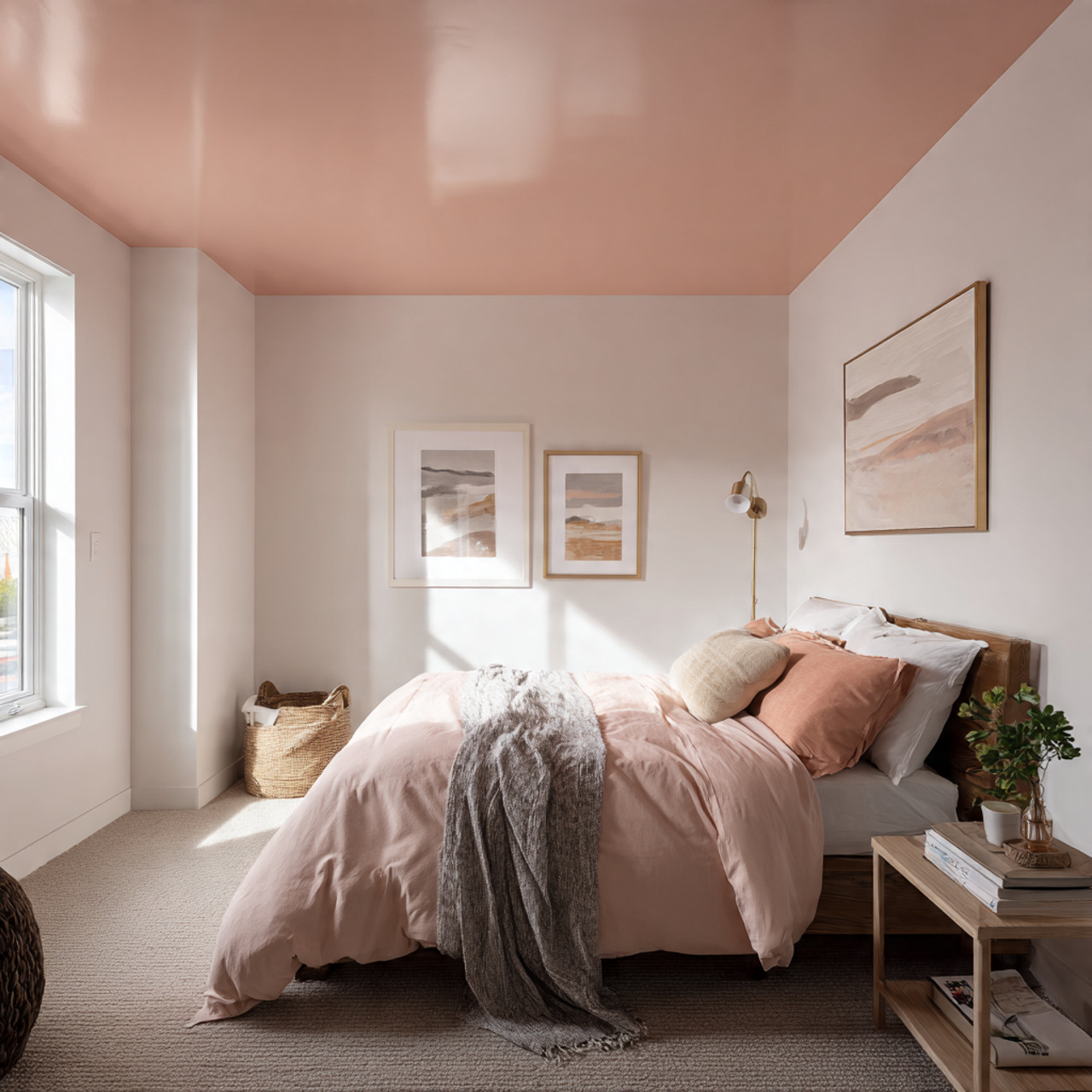
When ceilings match wall color, the room feels wrapped rather than capped. The visual stop disappears, which can make spaces feel calmer and more intentional.
People who choose this often notice the room feels quieter, especially in bedrooms or reading areas. The effect becomes more noticeable over time than on day one.
This works best with mid-light tones and matte finishes. It’s also forgiving when walls aren’t perfectly straight.
Soft Gray Ceiling That Reduces Visual Glare
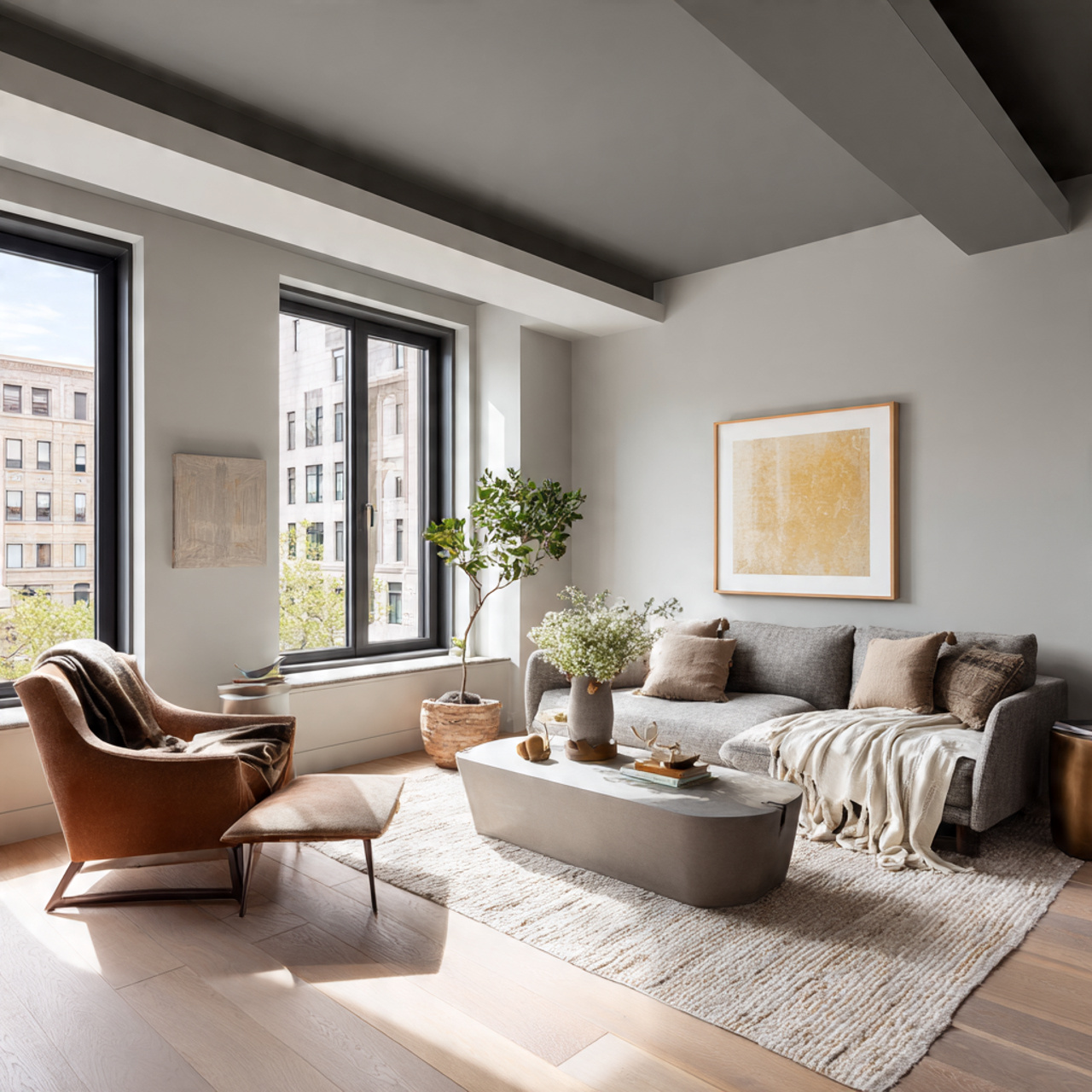
Soft gray ceilings take the edge off bright rooms. They reduce harsh contrast without making the space feel dull.
In everyday living, this makes screens easier on the eyes and daylight more comfortable. Many homeowners appreciate this choice more after living with it for a while.
Stick to light, cool grays in matte finishes. Avoid blue-heavy tones that can feel cold at night.
Dark Matte Ceiling That Creates Evening Drama
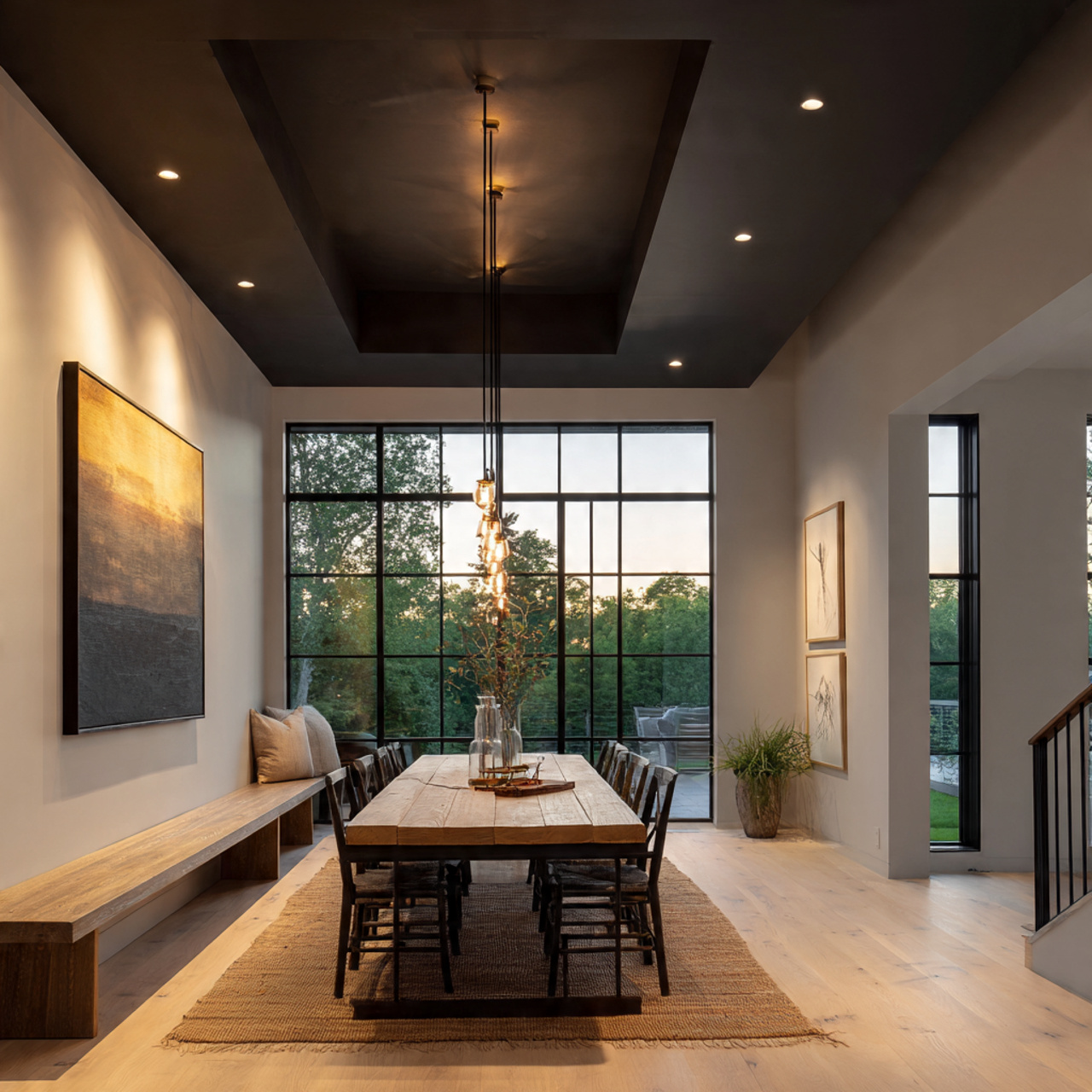
A dark matte ceiling changes how a room feels after sunset. It lowers visual height intentionally, creating a cocooned, intimate atmosphere.
People often worry this will feel heavy, but in practice it can feel grounding and calming, especially in media rooms or dining spaces.
The key is balance. Use it where lighting is layered and walls remain lighter to keep the room from closing in.
High-Gloss Ceiling That Reflects Light Intentionally
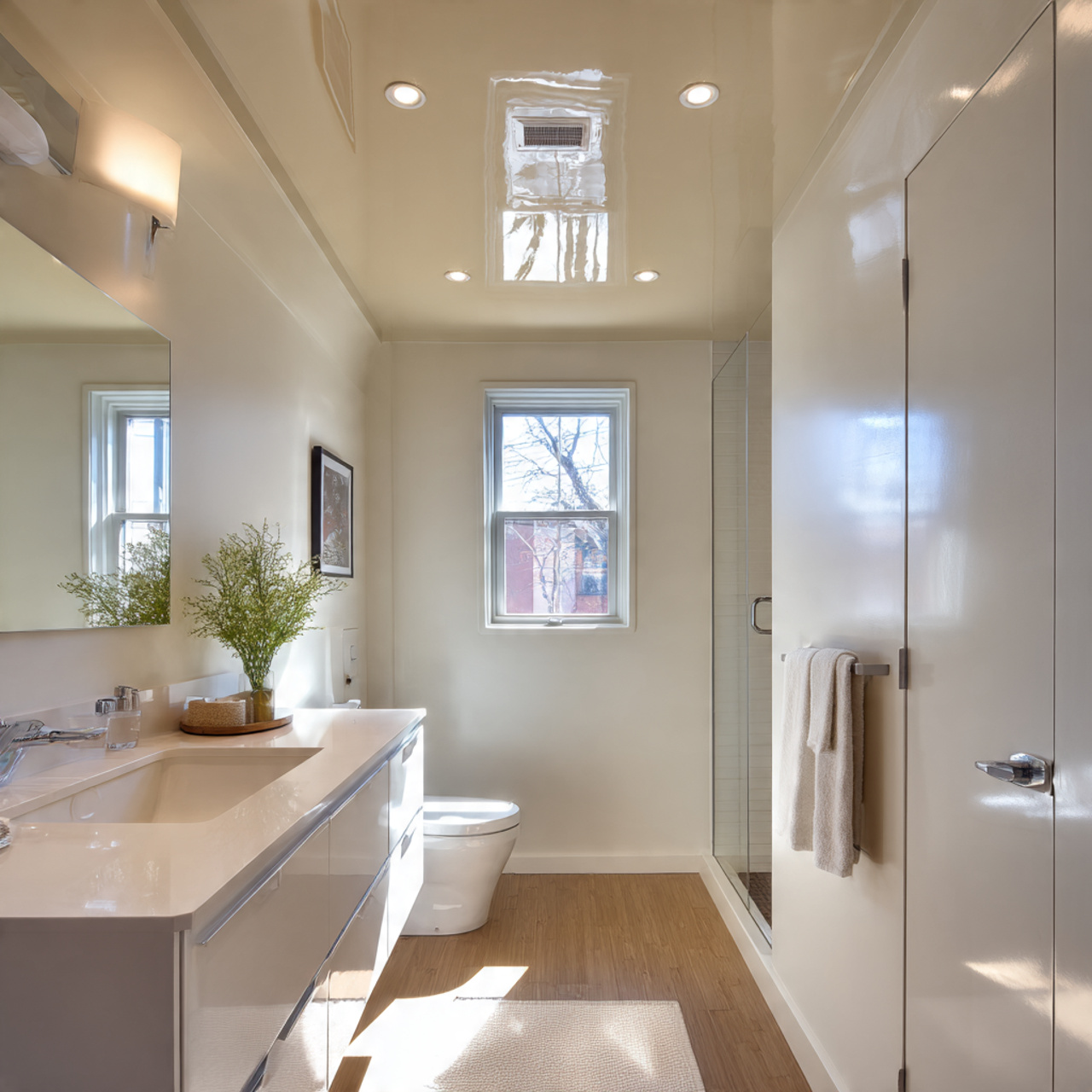
High-gloss ceilings aren’t about shine; they’re about light movement. Used carefully, they bounce light into corners that would otherwise feel flat.
Over time, people either love or regret this choice. The difference usually comes down to placement and lighting quality.
It works best in small rooms with controlled lighting. Clean lines and minimal fixtures help avoid visual clutter.
Subtle Ceiling Molding That Finishes the Room Quietly
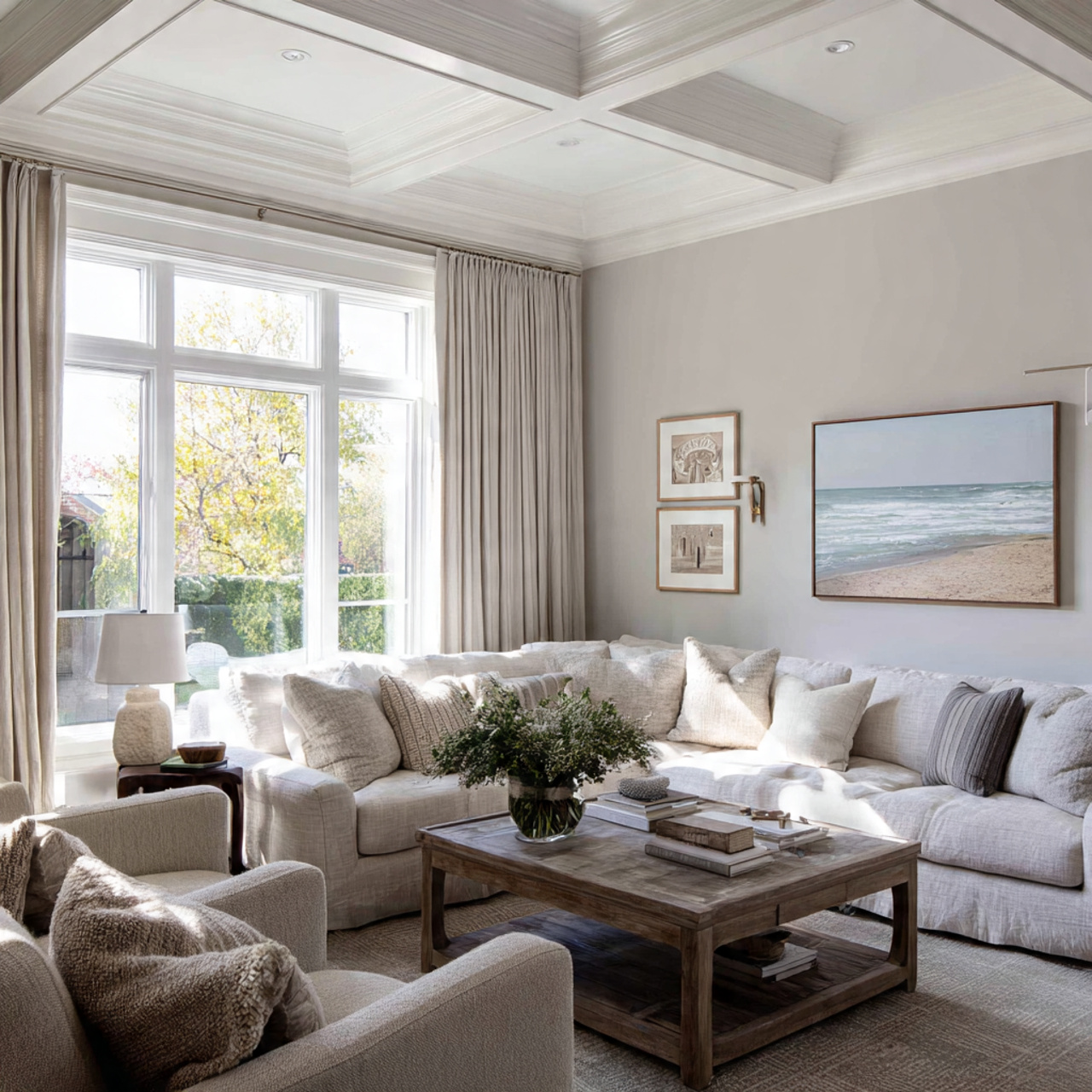
Subtle molding doesn’t call attention to itself. Instead, it quietly signals that the room is complete.
Many homeowners don’t notice it daily, but they feel its absence when it’s missing. This is a classic example of long-term satisfaction over instant impact.
Simple profiles age best. Painted to match the ceiling, they remain adaptable as styles evolve.
Minimal Medallion That Centers the Space Gracefully
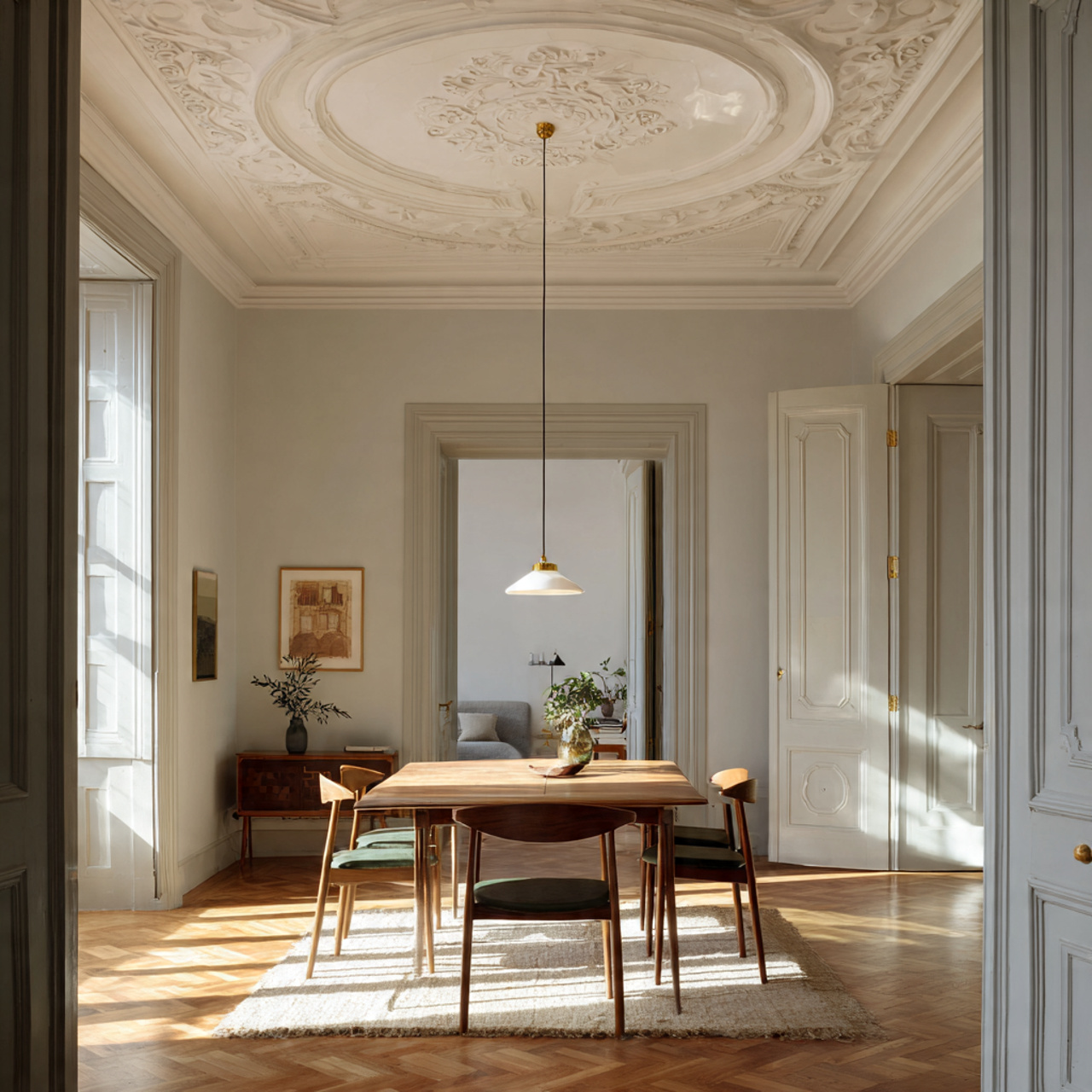
A restrained ceiling medallion gives light fixtures a visual anchor. It helps chandeliers or pendants feel intentional rather than floating.
Over time, this small detail adds balance, especially in dining rooms and entryways. It prevents fixtures from feeling temporary.
Scale matters more than ornamentation. Minimal shapes tend to last longer visually.
Textured Plaster Ceiling With Hand-Finished Character
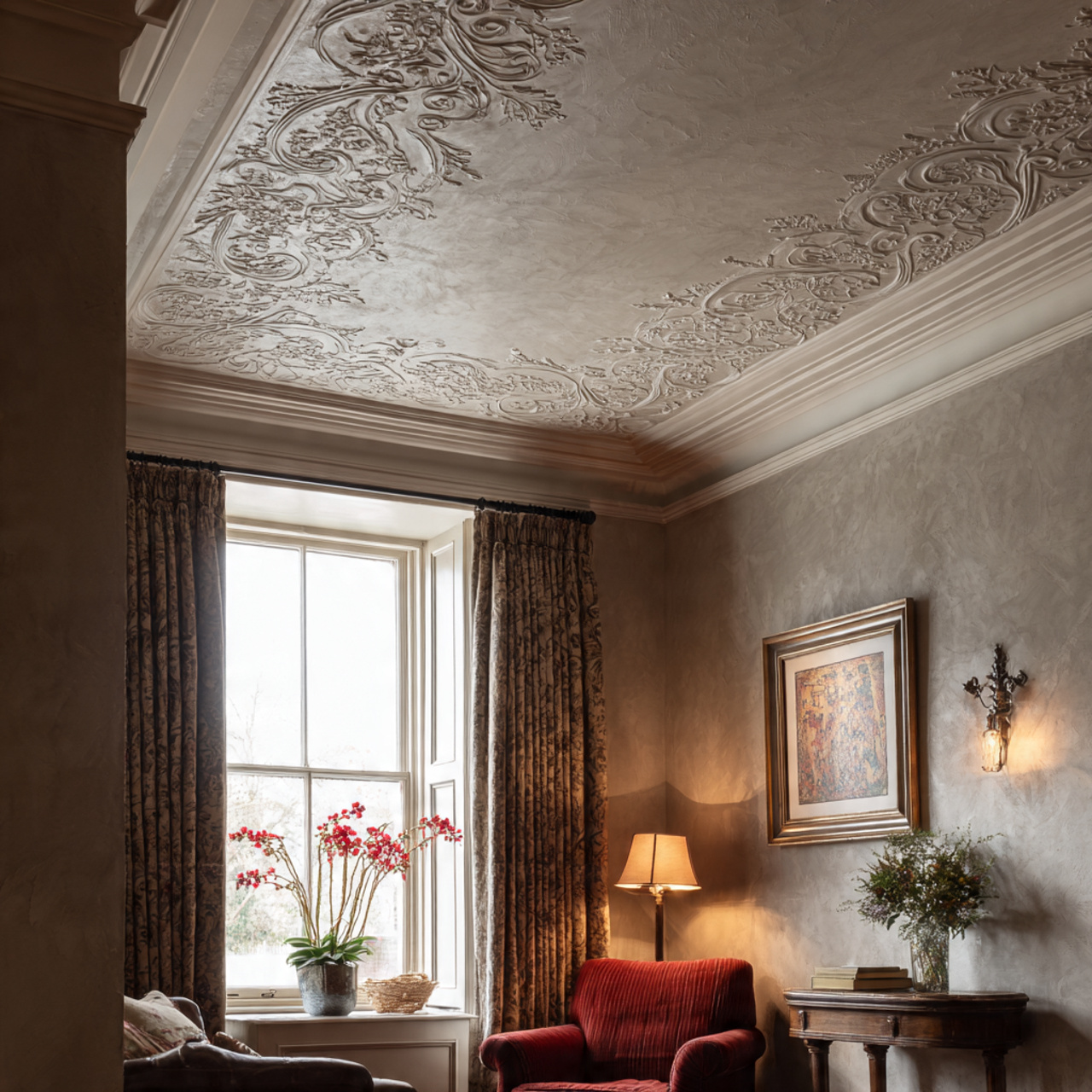
Textured plaster ceilings bring softness through imperfection. The subtle variation catches light gently instead of reflecting it sharply.
People often describe these ceilings as calming without knowing why. That tactile quality makes rooms feel less sterile.
They require skilled application but minimal upkeep. Neutral tones help the texture remain timeless.
Wallpapered Ceiling That Adds Controlled Personality
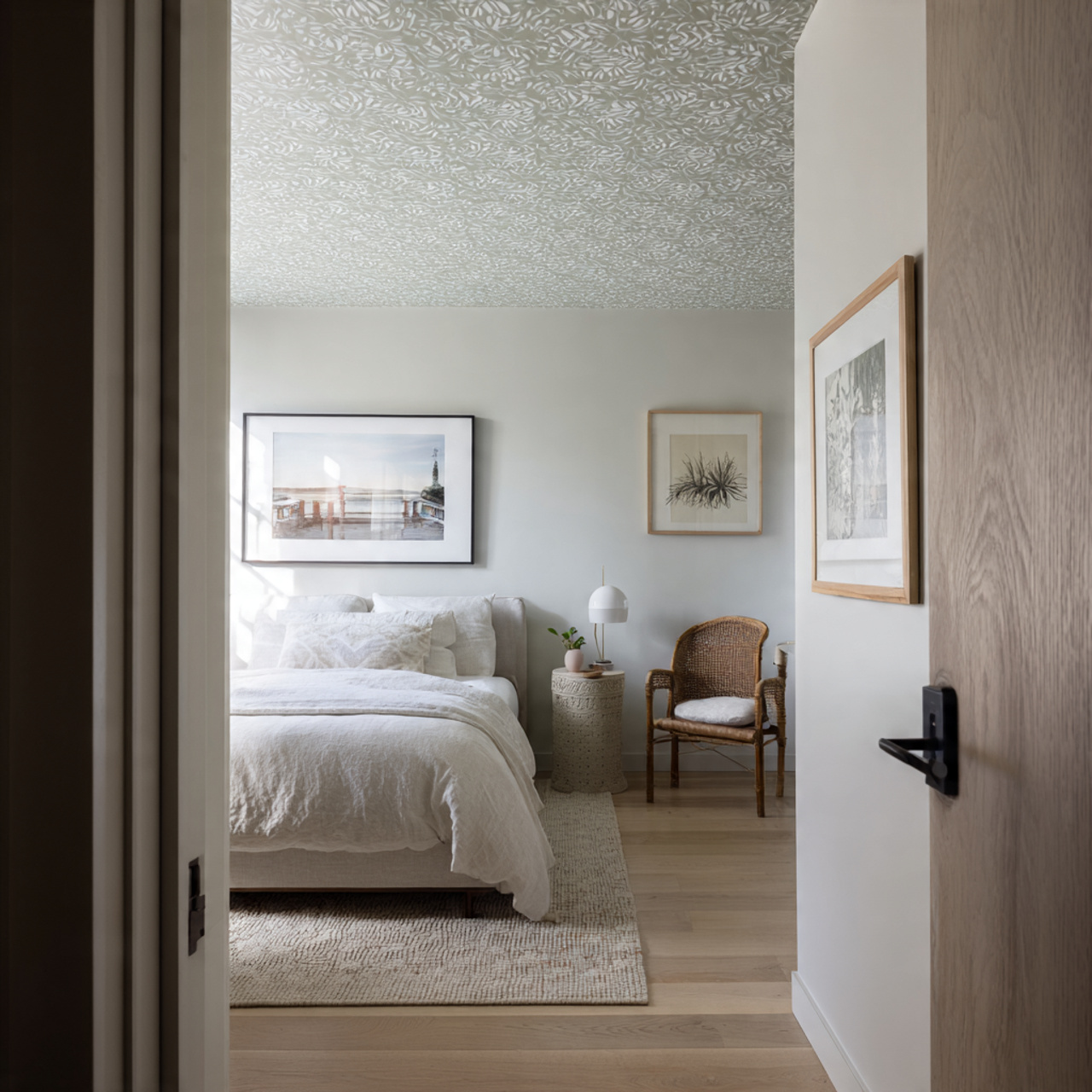
Wallpaper overhead introduces personality without overwhelming walls. It’s a way to add interest while keeping furnishings calm.
In lived spaces, this often works best in smaller doses. Rooms feel curated rather than busy when patterns are restrained.
Stick to low-contrast designs and durable finishes. This keeps the look enjoyable long-term.
Recessed Lighting Layout That Keeps Ceilings Clean
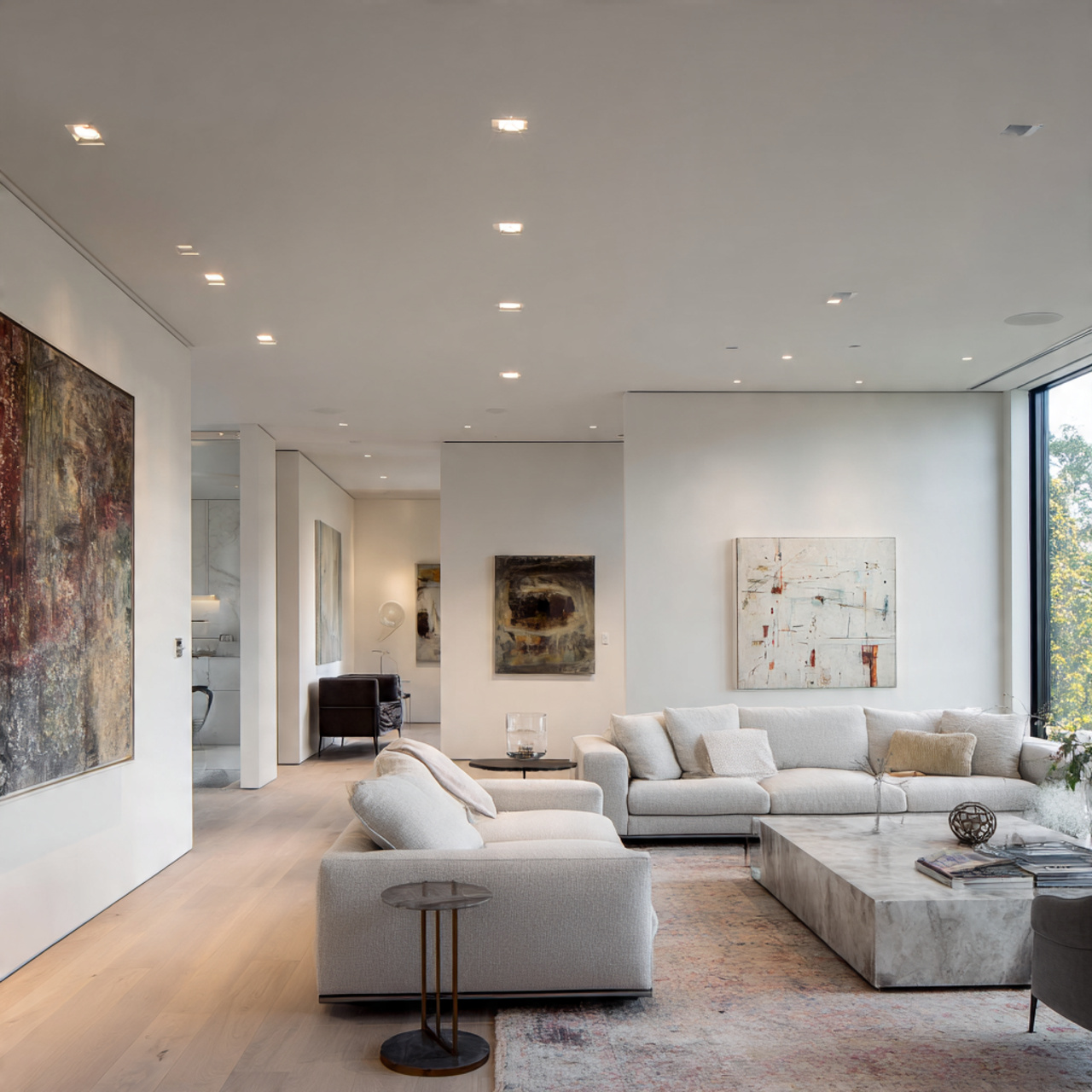
A clean recessed layout lets the ceiling recede visually. The focus stays on the room, not the fixtures.
Over time, this clarity makes spaces easier to rearrange. Furniture changes don’t fight with overhead design.
Spacing matters more than quantity. Fewer, well-placed lights usually feel better than many small ones.
Cove Lighting That Softly Shapes Night Ambience
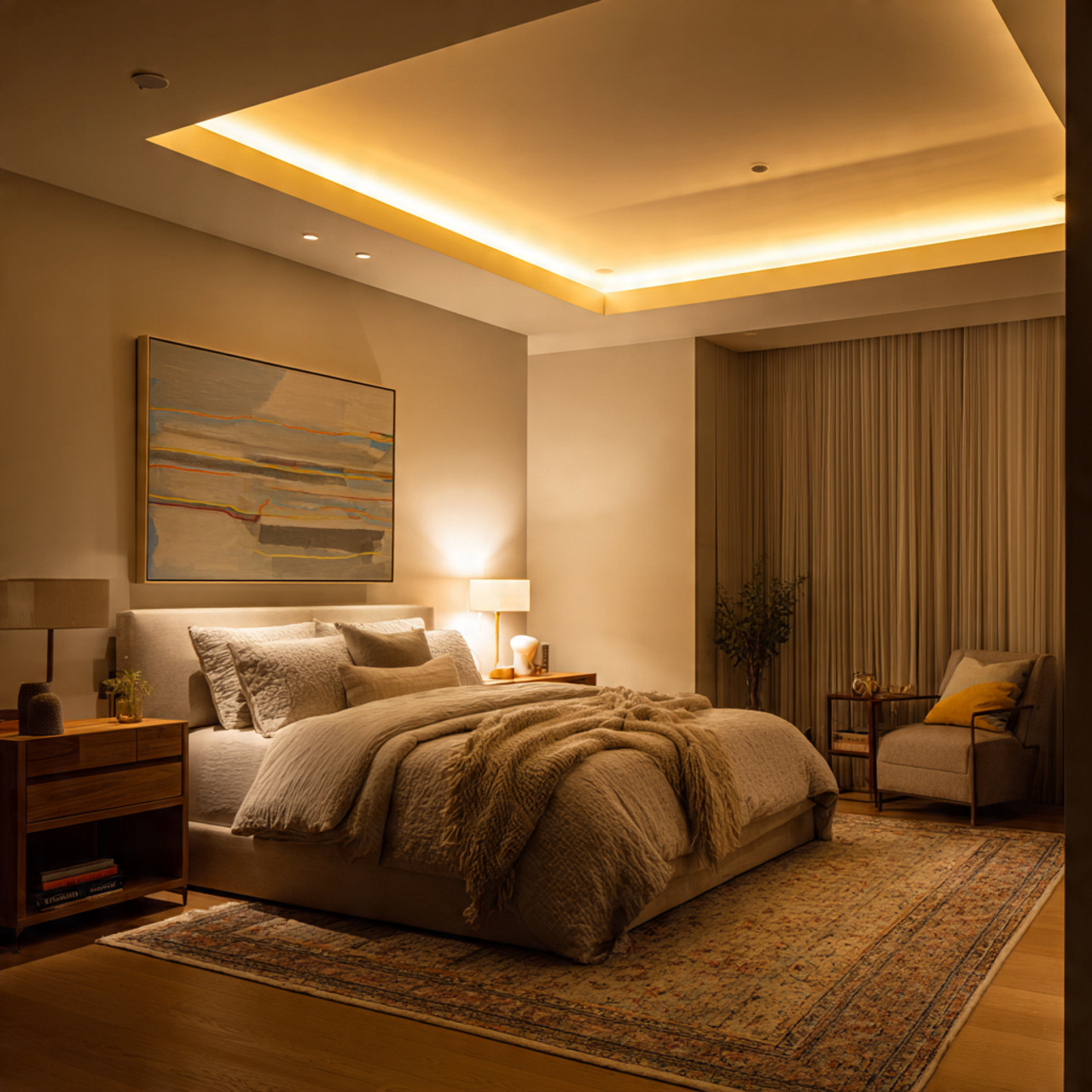
Cove lighting shifts attention from brightness to atmosphere. Light washes the ceiling instead of shining directly down.
In everyday life, this makes evenings feel calmer and less harsh. It’s especially appreciated after long days.
Warm light temperatures work best. Dimmable options give flexibility without visual clutter.
Read
Vaulted Ceiling That Lets the Room Breathe
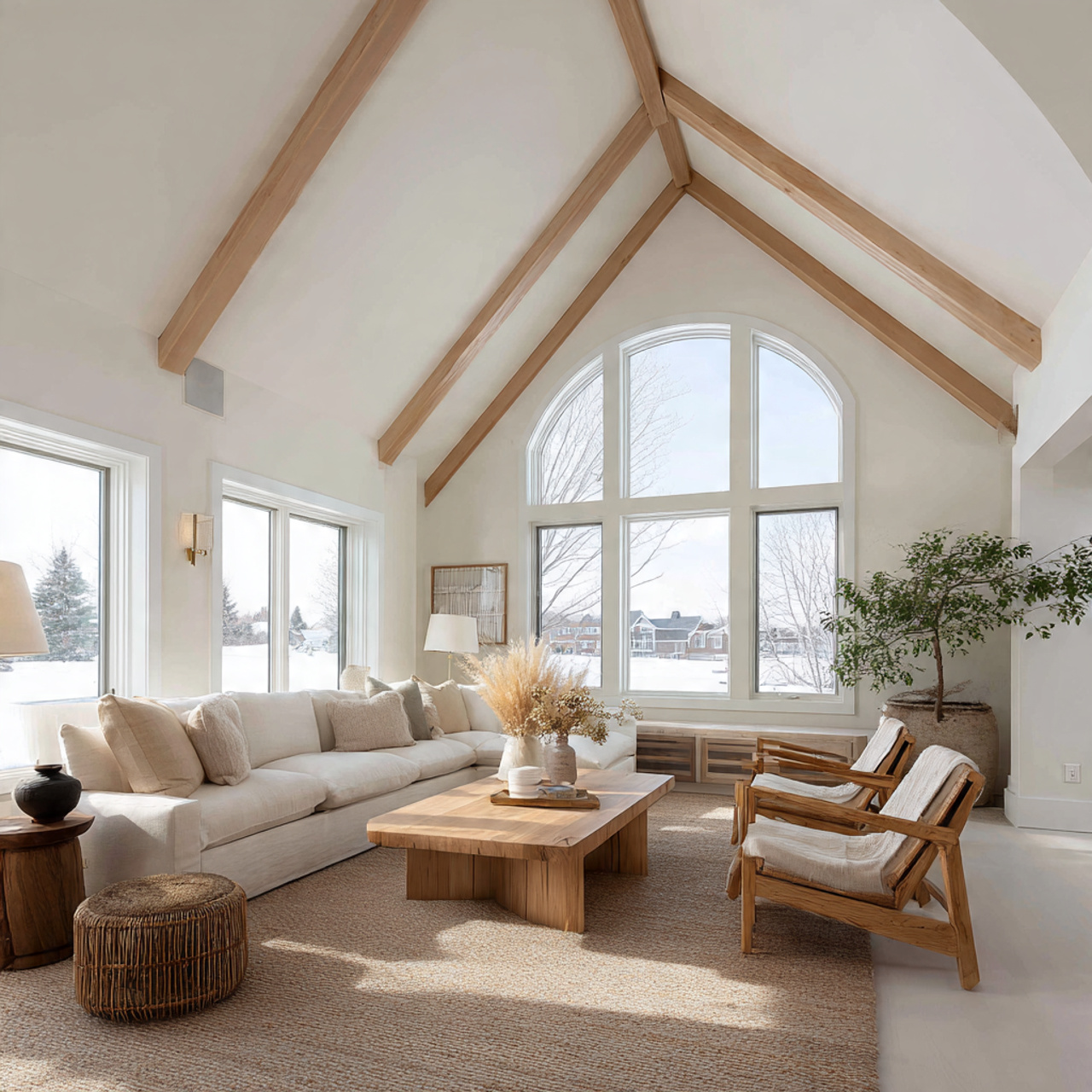
Vaulted ceilings introduce vertical relief. They make rooms feel open even when floor space is limited.
People often notice improved mood and airiness over time. The space feels less compressed, especially in family areas.
Keeping finishes simple prevents echo and imbalance. Light colors help maintain softness.
Visit Also: False Ceiling Design
Sloped Ceiling Styled to Feel Intentional
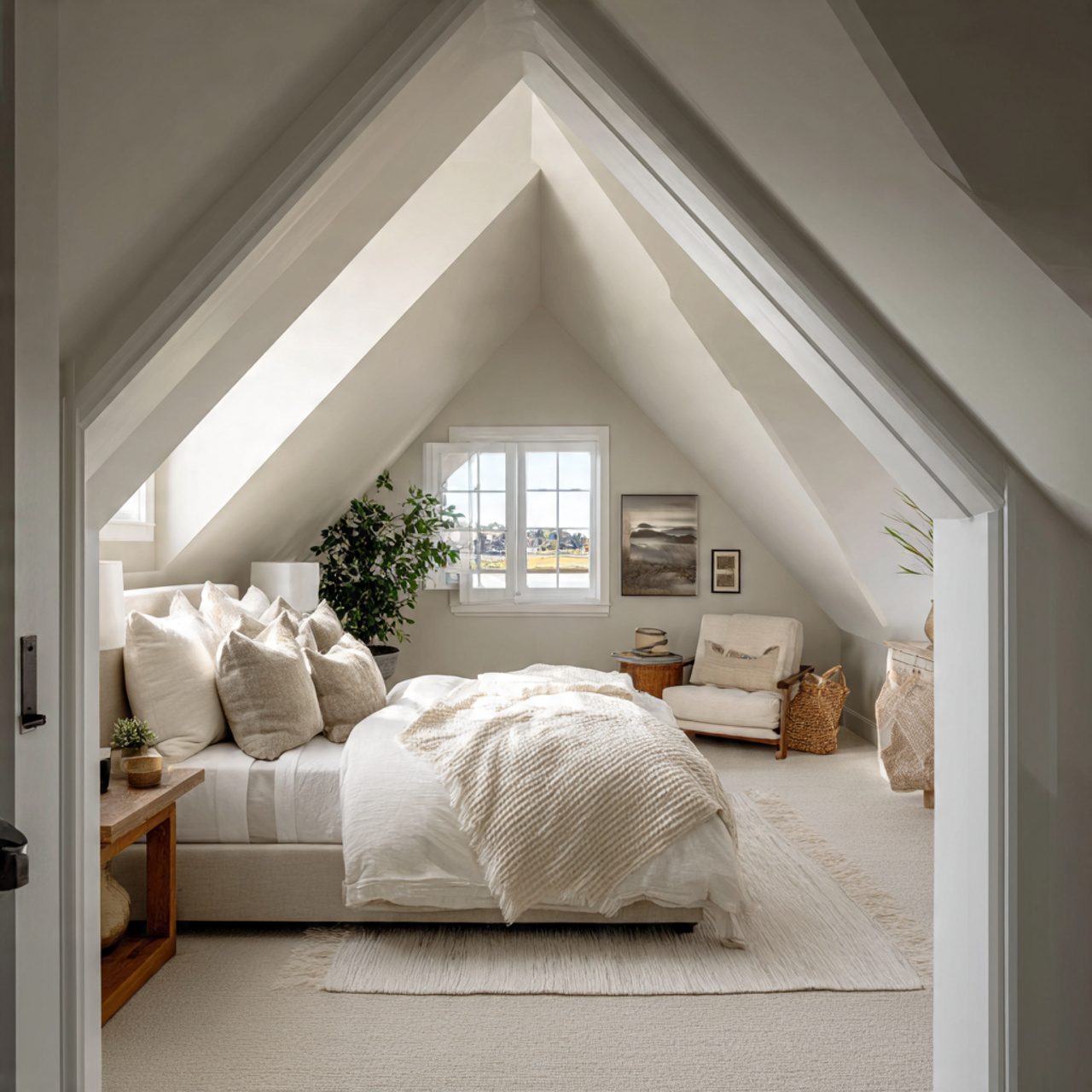
Sloped ceilings can feel awkward when ignored. When designed intentionally, they add character instead of limitation.
Over time, these spaces often become favorites because they feel unique and personal. They break predictability.
Consistent finishes and lighting help unify the angles. Avoid competing design elements.
Ceiling Color Contrast That Anchors Large Rooms
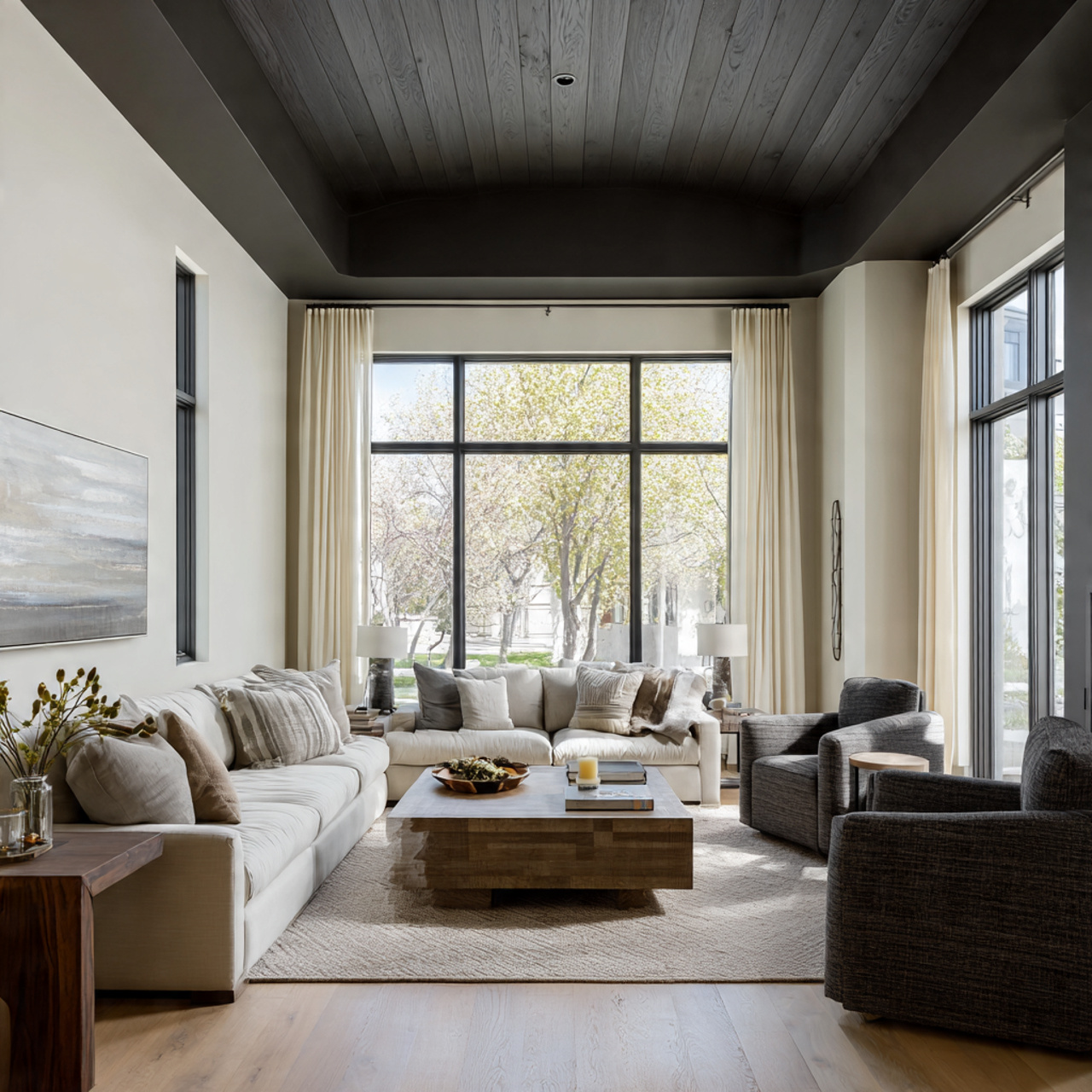
In large rooms, ceiling contrast can bring scale back under control. It visually grounds the space.
People often choose this after feeling rooms look unfinished despite good furniture. The ceiling completes the composition.
Moderate contrast works best. Extreme shifts can feel tiring long term.
Simple Ceiling Design That Lets Furniture Lead
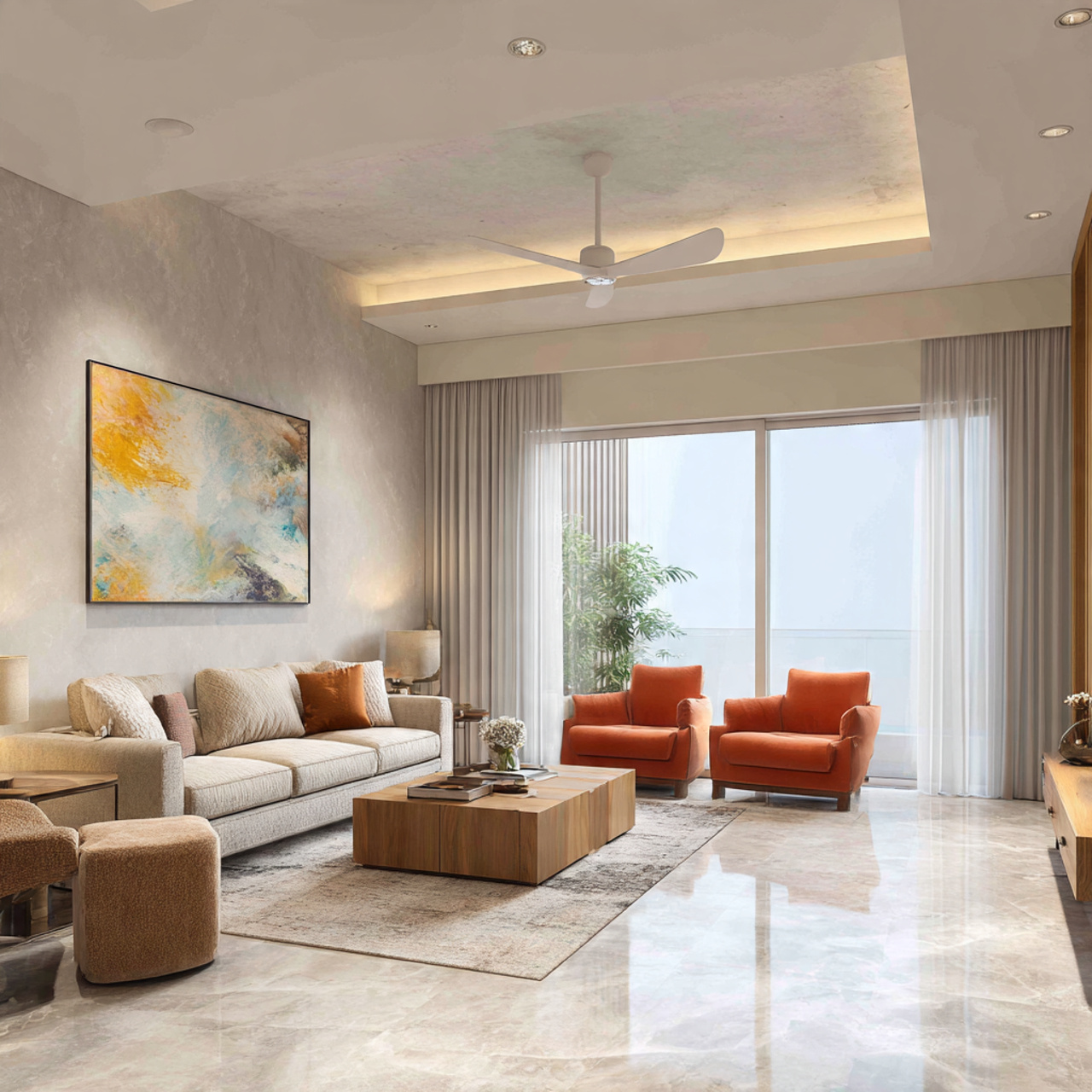
Sometimes the best ceiling decision is restraint. A simple ceiling allows furniture, art, and daily life to take priority.
Over time, this flexibility becomes valuable. Styles can change without needing structural updates.
This approach suits long-term homes. Neutral finishes and clean lines support evolving tastes.
Common Ceiling Design Mistakes to Avoid
Designing the Ceiling Before Understanding the Room
People often choose a ceiling style in isolation because it looks good in photos. Over time, the room can feel visually disconnected or unbalanced.
The fix is to assess furniture scale, wall color, and lighting first. When the ceiling responds to the room instead of leading it, the space settles naturally.
Using Dark Ceilings Without Lighting Support
Dark ceilings are chosen for drama, but without layered lighting they quickly feel heavy. What starts as cozy can turn dim and uncomfortable.
Adding indirect or wall-based lighting restores balance. Without it, the ceiling will dominate instead of enhance.
Over-Decorating Low or Standard-Height Ceilings
Moldings, beams, or patterns are often added to upgrade a room. In lower spaces, this usually compresses the ceiling visually.
Simplifying the design or keeping details shallow preserves height. Ignoring this leads to rooms that feel tighter over time.
Chasing Trends That Don’t Fit Long-Term Living
Trendy ceiling treatments can feel exciting initially. Months later, they often feel distracting or dated.
Choosing restrained finishes and proportions avoids regret. Trend-heavy ceilings are harder to live with than walls or décor.
Frequently Asked Questions About Ceiling Design
Should ceilings always be painted white?
No, but white works when you want light to move freely and nothing overhead to compete. In real homes, people often switch away from white when rooms feel too stark or unfinished rather than brighter.
Do dark ceilings actually make rooms feel smaller?
They can, but not always in a bad way. In rooms meant for relaxing or evening use, darker ceilings often feel comforting rather than cramped when lighting is handled properly.
What ceiling design works best in low-height rooms?
Simple, smooth ceilings with minimal detailing age best. Heavy moldings or strong contrasts tend to shorten the room visually over time.
Are ceiling treatments hard to maintain long-term?
Most simple treatments require no extra maintenance at all. High-gloss finishes and textured surfaces need more care, which is where people often underestimate upkeep.
How do I choose a ceiling design that won’t feel dated?
Focus on proportion and restraint rather than novelty. Designs that support the room quietly tend to stay satisfying long after trends move on.
Conclusion
Ceiling design works best when it supports how a room is actually used, not when it tries to impress on its own. In lived-in homes, the most successful ceilings are the ones that balance light, proportion, and comfort quietly over time. When you choose with long-term feeling in mind rather than short-term impact, the ceiling stops being an afterthought and becomes part of why the space feels settled, calm, and easy to live with.